









xBhpTalks
Needless to say, our time at NATRAX was a lot of fun. Having some of the world’s fastest machines to test at a facility like NATRAX was bound to be. It is a matter of immense pride for us Indians that we have such a facility at our disposal. But we wanted to know more about it so we talked to some key people that have worked tirelessly to see this massive project through. Here are some excerpts from those conversations.
Dr N KARUPPAIAH, Centre Head and Additional Director, NATRAX
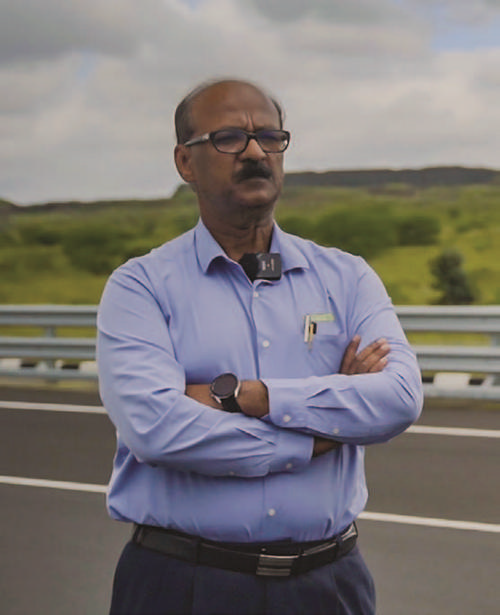
xBhp: How will you describe NATRAX?
Dr N Karuppaiah: The NATRAX facility is one of Asia’s largest proving grounds and the high-speed track is Asia’s fastest and longest such track. This project was conceived by the Ministry of Heavy Industries, Government of India under the automotive mission plan. The goal was to enable the Indian automotive industry to become a global player. The government planned to have such facilities in each corner of the country for easy access. NATRAX is located in central India, in Madhya Pradesh, and we are thankful to the government of Madhya Pradesh for providing us with the land needed for this facility. The primary focus of NATRAX is to meet the developmental test requirements for the Indian automotive industry.
xBhp: Have you been associated with NATRAX right from the beginning and what were the challenges you faced?
Dr N Karuppaiah: Yes, all of us have been associated with this Centre Head and Additional Director, NATRAX DR N KARUPPAIAH project right from the beginning. From when the tender documents were readied to the execution of the design by the consultant, I have been with the project. Once everything was ready, I moved here to oversee and coordinate the construction. In terms of challenges, there were quite a few. From technical to contractual to administrative; there were challenges everywhere but then, it is something that comes with a project like this. In terms of administrative issues, we had to shift the district road, shift the water pipeline, shift the power lines, rehabilitate a village and so on. And like any other project, there were setbacks too but in the end, I can say it gives us all a great amount of satisfaction to have seen this project through to fruition.
xBhp: Since you have dedicated so many years of your life to this project, how do you feel about it emotionally?
Dr N Karuppaiah: It means a lot to me, to say the least. It is like a dream come true. Of course, it needed a lot of perseverance, grit, and determination to deal with the challenges and the setbacks. But then, this is what we set out to do and we are happy to have achieved our goal.
xBhp: NATRAX is primarily meant to be a testing facility but do you have plans to open the place to enthusiasts and petrolheads as well?
Dr N Karuppaiah: I’ll put it this way; there are three categories of application when it comes to the facility. The first one and the primary one is, of course, testing. It is meant for the testing of vehicles being developed by OEMs and also, for tyre manufacturers for evaluating their products. The second category would be for entities like xBhp, people who can use the facility to test and benchmark their machines and push them to their limits. 300 km/h is a massive number but with our high-speed track, it is now possible to do just that. The third category is an interesting one. Ever since the facility was created, there has been a lot of buzz, a lot of enquiries from enthusiasts across the country. They want to enjoy the experience and the thrill of being able to drive at such high speeds.
xBhp: Do you think this will help Indore become a hub for not only testing but manufacturing and automotive media as well?
Dr N Karuppaiah: Absolutely. In fact, Pitampur is already becoming an auto-cluster in the sense that it already has facilities coming up for brands like Volvo, Eicher, Force Motors, Mahindra etc. Even if a new manufacturer is looking to set up a facility, we expect them to do so near Pithampur. It gives them the advantage of being closer to a world-class testing facility. The same goes for the media as well. They can come here and they will have immense opportunities to test the vehicles both subjectively and objectively because of the variety of test tracks that we have. That way they can really benchmark and rate the vehicle thoroughly. Additionally, NATRAX can also complement their subjective evaluation with an objective evaluation of various parameters of vehicle dynamics such as ride, handling, and all that. In that sense, NATRAX is a vehicle dynamics tester’s paradise.
xBhp: About the high-speed track in particular, what was the most challenging part to execute?
Dr N Karuppaiah: The parabolic curve, without a doubt. The construction was a challenge and we had to have special machinery from abroad. Machines such as the Parabolic Sensor Paver. Even in that, the transition portion of the curve was the most challenging part. It has to connect them straight to the parabola so there are variations along three dimensions. It was important for it to provide a seamless drive, it has to feel like there is no transition at all. In terms of that, I’d say that it has been designed very nicely and as you may have experienced, it gives you a sense of safe and comfortable driving even at high speeds. Then another challenge was that the straight had to be absolutely level with a 0% gradient. But the topography of the land was such that we had an altitude difference of 20m from one end to another.
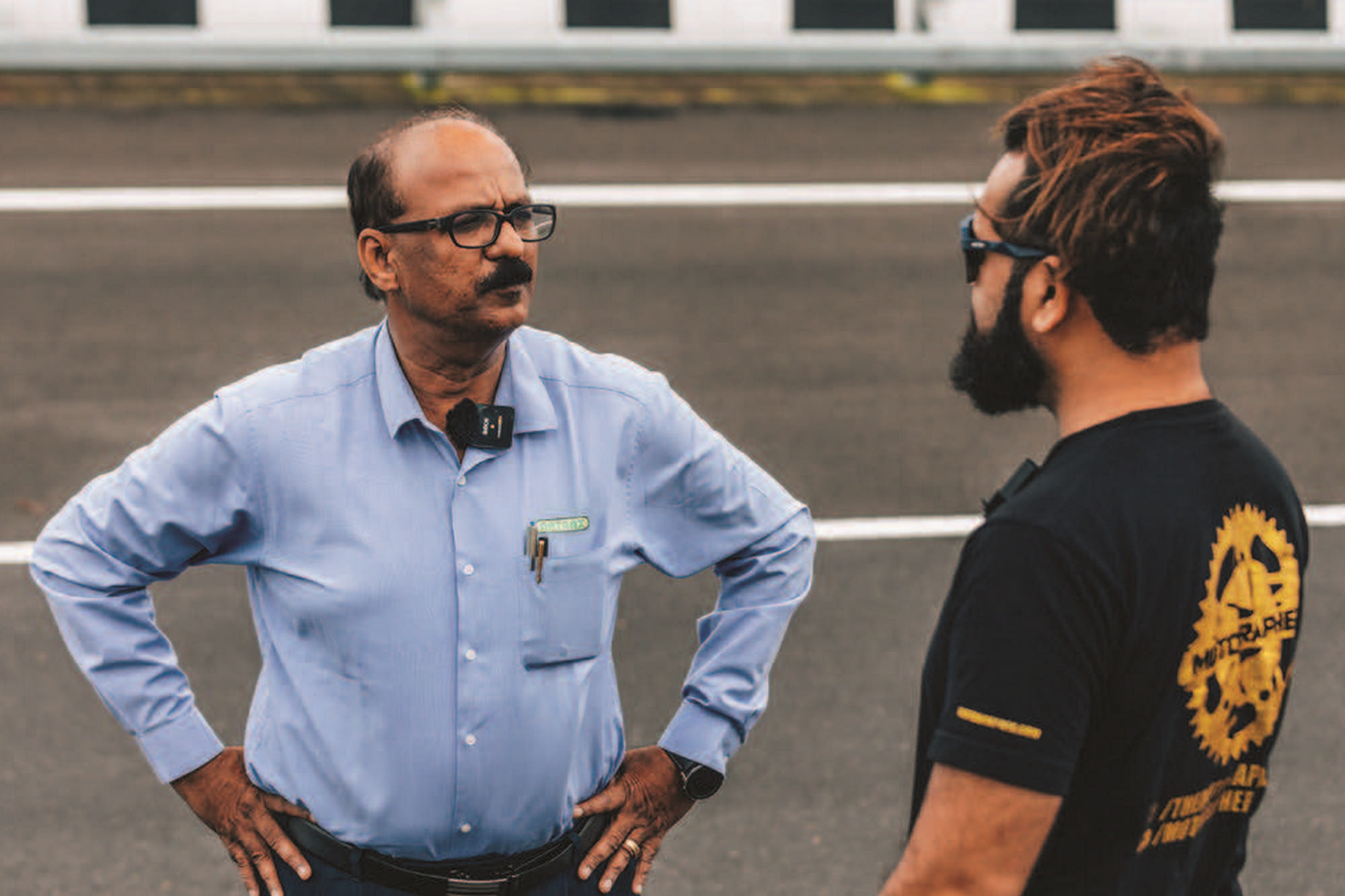
xBhp: How steep is the incline at the parabola?
Dr N Karuppaiah: To achieve a neutral speed of 250 km/h, it has to be 26-degrees. But on NATRAX’s high-speed track, it is a bit less than that. That is because other facilities do not have the advantage of a larger radius of curvature. 1 km, to be precise. We have that so we were able to keep the incline less steep and still achieve the speed we wanted for the curve.
xBhp: How are the 11.3 km of the high-speed track divided?
Dr N Karuppaiah: There are two straights; Northern Straight and Southern Straight that are 2.1 km each. The curved portion is around 2.66 km for each of the parabolas and they are connected to the straights via four transitions that are about 500m each.
xBhp: Can you tell us a little more about the other tracks?
Dr N Karuppaiah: We have 14 varieties of test tracks at NATRAX for comprehensive evaluation of any vehicle. The tracks are divided into three categories. One is to evaluate safety parameters such as braking, steering effort, turning circle diameter and all that. These tracks can also be used for speedometer and odometer calibration along with environmental emission checks such as pass-by noise and so on. The second category is high-performance testing such as top speed, acceleration, fuel consumption, high-speed handling, high-speed stability and so forth. The third category is accelerated durability testing. We have the fatigue track that consists of Belgian Pave, potholes, washboards etc. There is a mix of torture tracks to thoroughly test the durability of vehicles. OEMs cannot have a vehicle being tested for 2 or 3 years or even 2 or 3 lac kilometers so the accelerated durability testing is meant to expedite the process.
xBhp: Do you think we can see a racetrack like the Buddh International Circuit coming up at NATRAX in the future?
Dr N Karuppaiah: Our facility is primarily meant for testing. Both the high-speed track and the handling track serve that purpose. While the handling track is like a mini racetrack in of itself, it was not originally designed for that. But with some modifications and infrastructure additions, it can serve as a racing circuit too but we are not thinking along those lines at the moment.
xBhp: Can the facility be used for hosting events or can it be opened to the general public in the future?
Dr N Karuppaiah: It is certainly a possibility. We plan to open this facility up to the public maybe once a year so that they can come here and get to know that such an amazing facility is available in India. For the events and such, we are planning to keep the facility open for those on Saturdays and Sundays. Planning is the important part since safety and confidentiality are major factors and there can be no compromise on that.
xBhp: Thank you so much for your time, Sir. Is there anything else that you would like to add?
Dr N Karuppaiah: Having created a world-class facility like this is a matter of immense pride and the next step for us would be to operate it professionally. We cannot wait for the automotive industry to start to utilize it as much as possible.
Mr SAGAR BENDRE, Assistant Manager, Track Operation, NATRAX
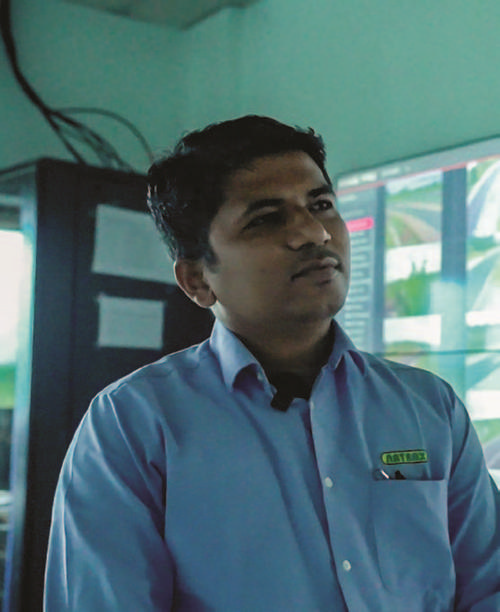
xBhp: How difficult and intricate is the management of Asia’s largest proving ground?
Mr Sagar Bendre: For the management, we have made a dedicated facility that we call PGMS or Proving Ground Management System. So whenever a customer wants to book the facility, they can do so on our website and specify the tracks they want to book. Post that they can come to the facility directly and will be provided with an RFID that will allow them to access the specified tracks. In order to bolster our monitoring system, we have 150 cameras around the entire facility. This is to mitigate any attempts at confidentiality be it on the facility front or the user front. We have visited quite a few proving grounds around the globe but we can say that ours is right there at the leading front.
xBhp: What are your thoughts on the facility that you have been able to build?
Mr Sagar Bendre: I have been associated with the project for almost 12 years. It is a matter of pride for the country and, of course, for me personally. Initially, we called it the Green Field Project as it was nothing but bare land. Seeing it grow from there to the world-class testing facility that it is today has been quite a wholesome experience. I started out as a young engineer here and my experience has been very unique in terms of seeing this entire facility being built.
xBhp: How do you think a facility like NATRAX can benefit the Indian automotive industry?
Mr Sagar Bendre: It was a great initiative by the Indian government which aimed at allowing OEMs to complete the entire development of their vehicles right here in India. With a facility like NATRAX, their development timeline can be drastically shortened. Our facility is like a one-point solution. Initially, our goal was to focus on just development but now we can give homologation, perspective, and certification as well. As an OEM, it is very convenient to come here, carry out the development testing, and once done, submit a vehicle for homologation. Then we take over, conduct our own tests and take care of that. We are looking at different avenues as well. In the beginning, we were focused on vehicle testing but now we are moving towards crash barrier testing as well. We are the only ones in India doing so. Then we are also working towards construction equipment testing and then electric vehicle testing.
Mr S J SRIHARI, Assistant Manager, NATRAX
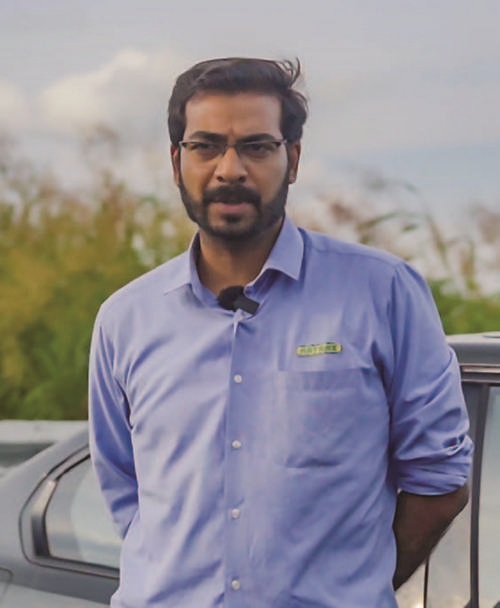
xBhp: How does it feel to be a part of such a project that needs so much commitment?
Mr S J Srihari: First of all, thank you for coming here and it is an absolute pleasure to have you guys here to experience this facility. In India’s context, it was a stellar idea to have such a facility right here in our backyard. Having said that, it was not easy to come up with a facility like this considering the variety of tracks, the length, the technicalities involved and all that. The scale is immense. For example, the high-speed track is 11.3 km long and 16m wide, that’s something you don’t get anywhere. In terms of technicality, as you may have experienced, the track is absolutely flat. At one place the track is above the ground and at one, it is below and despite that, it is completely level so that is a unique feature as well. Having been a part of this project and to have seen it grow, we sometimes forget how big this project was and how massive the result is. But then, having enthusiasts like you here and putting it to use, makes us realize that fact. It is a booster for us.
xBhp: We came to know that the land was provided by the Madhya Pradesh government. In that sense, was there a choice for other locations as well?
Mr S J Srihari: First of all, we are in central India in terms of location. During the discussion phase, we wanted to go with a location that was at a somewhat uniform distance from the different corners of the country. Secondly, we needed good connectivity and here we have that with Bhopal, Pune, and Mumbai. Thirdly, the availability of land and the scale of it that we had here was a major factor too.
xBhp: A term that we have been familiarized with here is Neutral Speed Condition. What does it mean?
Mr S J Srihari: Neutral Speed Condition is a state. Imagine that you are driving at a particular speed and sticking to a particular lane, if you do not have to give any external input to stick to that line, that is a Neutral Speed Condition. Obviously, the vehicle has to be designed correctly and functioning properly. So in our case, 250 km/h is what we have stated for the parabola which means that up to 250 km/h, the vehicle will stick to the decided lane without any inputs. Even then, there are variables so there are different speed ratings for each lane.
xBhp: What are your thoughts on the driver mindset when they are driving around 200 km/h?
Mr S J Srihari: In this regard, I’d say that with a track like ours, it may seem easy. But it is not like you just hop in and go for 200 km/h. One needs to understand the machine, its capabilities and its limitations. One has to know what feedback means what, and what input will do what. In controlled conditions like this test track, one does not realize the difference between 80 km/h and 200 km/h because the reference points are far and few, it is all uniform. Unless the window is open, it is very hard to determine the speed. The human mind and body are not meant for speeds like those and that is why acclimatization is important along with experience and understanding of the machine.
xBhp: Is there anything else that you would like to add?
Mr S J Srihari: I’d just like to say that the government of India has created a great opportunity for all the OEMs and drivers to come and experience this facility. In the longer run, it is going to ensure that we are able to compete on a global level when it comes to the automotive front. And once we are able to do that, we’ll know exactly where we stand. And we are glad that NATRAX can play a pivotal role in achieving that.





