








 Tweet
Tweet
MOTO GUZZI V7 III
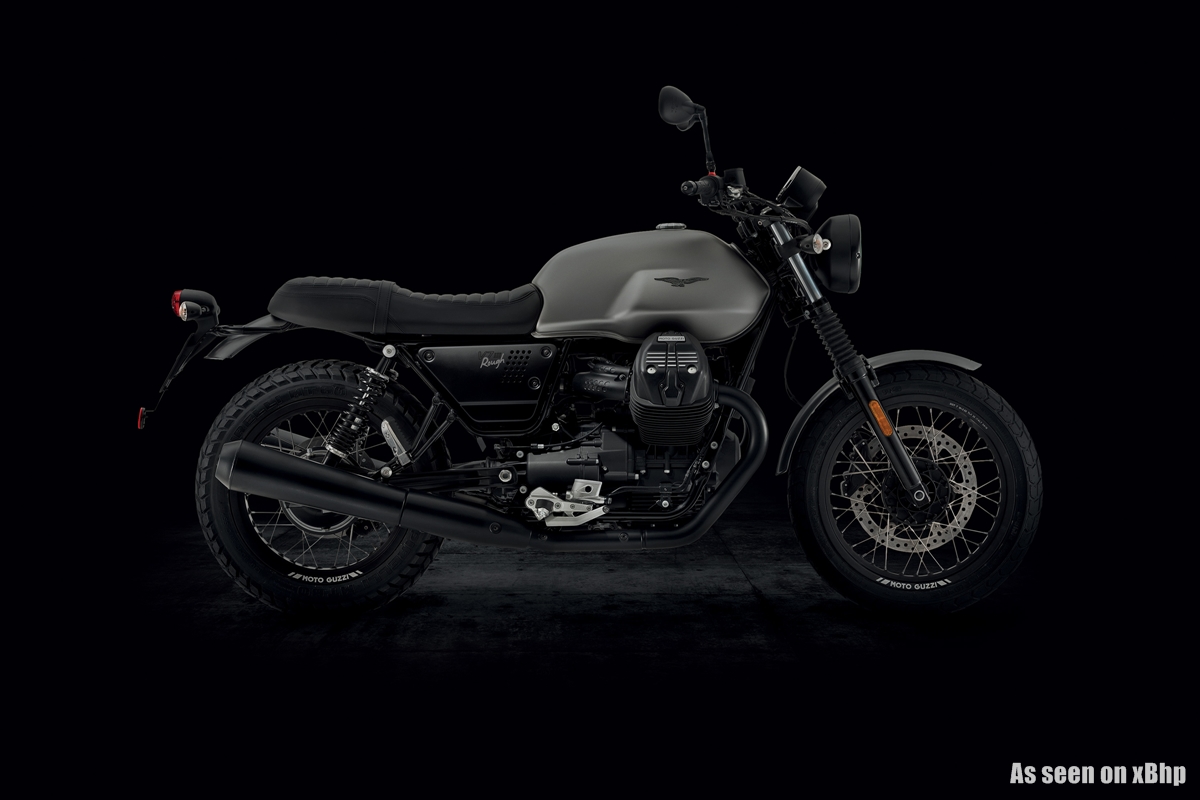
V7 is one of the most celebrated and well-known Moto Guzzi models. This world fame is due to its ability to remain faithful to the expectations and reputation of a legendary brand like Moto Guzzi. Since 1967, the year the first units were sold in Italy, the V7 became a pillar of the product range and the representative of the Italian motorcycle par excellence, standing out for its content and design, highly popular with a transversal and varied public.
More than fifty years from the launch of the first unit, Moto Guzzi V7 III is the third act of a unique story. The challenge of introducing the V7 III was one of the most difficult, considering the emblem and the success of the V7. From 2009 it has also been the brand's most sold model and it constitutes the entry level bike in the Moto Guzzi world.
As was the case with the V7 II compared with the first-born V7, for the V7 III the revamping was profound enough to merit a new progressive number in Roman numerals, that has always distinguished the most popular and long-lasting Moto Guzzi bikes. V7 III is the result of Moto Guzzi's passion, skilfully revamping its best seller, leaving its character and authenticity unaltered, values that are destined to last over time.
There are many excellent twin cylinder engines in the world, but there is only one transversal V and it is the Moto Guzzi twin, born in 1967 out of an ingenious intuition by Mr. Giulio Cesare Carcano and characterized by a configuration of the cylinders so particular that it made it an integral part of the bike's design, like a true modern art metallic sculpture. In the small block version, it has now reached its third evolution and it has been completely revamped comparing with the V7 II engine, with the goal of raising riding pleasure and fun on the road to a maximum, as well as guaranteeing higher performance and reliability.
The aluminium crankcase, stiffened in the key points, uses a crankshaft with inertial calculated to provide a lively response and an adequate engine brake. The lubrication system in the crankcase has been designed to dissipate the heat in the best possible way and to reduce power absorption in favour of both performance and a reduction in fuel consumption. There is also a ventilation system that reduces power loss due to the internal pumping of the crankcase chambers and a reduced capacity oil pump capable of absorbing less power. The oil pump intake duct is new, as is the related by-pass valve and piston cooling oil jets have been introduced that have a flow control and management valve. The alternator cover includes the blow-by gas output.
The interventions introduced one year ago also concerned the upper part of the engine, with new aluminium heads, pistons and cylinders comparing to V7 II, although the bore and stroke values (and therefore the engine displacement) are the same as the previous unit, a specific choice that confirms the V7 III as the Moto Guzzi entry-level motorcycle. As per tradition, the timing is controlled by a pushrod and rockers system with 2 valves per cylinder, but arranged in an inclined position (more efficient) in the head. The fuel system is entrusted to a single-body Marelli electronic injection system managed by an electronic control unit. The exhaust system is complete with dual pipe manifolds that help to improve thermal insulation. With the auxiliary air system intake in the heads, combined with the trivalent catalytic converter, the double lambda probe and the engine design, the Moto Guzzi twin 750 complies with the Euro 4 standard.
Maximum power reaches 52 HP at 6,200 rpm, whereas maximum torque measures in at 60 Nm at 4,900 rpm, with a truly flat torque curve that promise ease of use combined, as always, with that typical character and quick response of a Moto Guzzi engine. The reduced-power version is also available, in line with the limitations set by the A2 class driver's license and ideal for new Guzzi riders, who can also count on the reduced total weight and size and the overall easy ride of all the V7 III versions. Another innovative aspect of the Moto Guzzi engine is the 170 mm dry single disc clutch that increases sturdiness and reliability over time, also decreasing the load on the lever at the handlebar, all to the advantage of modulability and riding comfort. The six-speed gearbox introduced on the V7 II, precise and smooth, is unchanged but now benefits from a different first and sixth gear ratio, both slightly lengthened, handy for taking full advantage of the engine's torque and power characteristics.
V7 III has an ABS braking system and an adjustable MGCT (Moto Guzzi Traction Control) system that can also be disabled. The former is a two-channel Continental system that prevents the wheels from locking up, whereas the latter is a system that prevents rear wheel spin in acceleration. The MGCT system is adjustable to two sensitivity levels, one more conservative and ideal, for example, in poor grip situations due to wet or slippery asphalt and the other is designed to cater to the thrill of riding in safety on dry roads. Another peculiarity of the MGCT system is the possibility of recalibrating the rear tyre circumference, compensating for any wear or the use of a tyre with a different profile than the original so that the traction control system will always be accurate.
V7 III Stone
V7 III Stone stands out for its strong aesthetic and personal connotations. Eclectic and essential, it forsakes any chromium details to embrace the darkness of the matt black paintwork with a brand new matching passenger grab strap. In addition to the Nero Ruvido colour scheme, it is also available in other attractive,satin finish coloursinspired by typical '70s shades: Azzurro Elettrico, Verde Camouflage and Giallo Energico. The total “dark matt” look characterizes the V7 III and distinguishes it from the other versions, but that is not the only difference. V7 III Stone also boasts alloy wheels and single circular display instrumentation. The front fender has also been shortened in order to highlight the essential look of this model.
V7 III Special
Of the V7 models it is the one that comes closest to the spirit of the original model. Classic and elegant, it has numerous chromium parts and decidedly bright graphics. Like the famous 1975 V750 S3, it has the typical coloured stripe on the side fairings under the saddle that complement the matching coloured horizontal bands on the tank. The spoked wheels have polished channels and black hubs; the instrumentation is made up of dual circular displays and the chromium plated steel passenger grab handle comes standard. V7 III Special also has a saddle with “old school” stitching, elements that highlight its classic and elegant roots. The available colour schemes are Nero Inchiostro and Blu Zaffiro.
V7 III Carbon
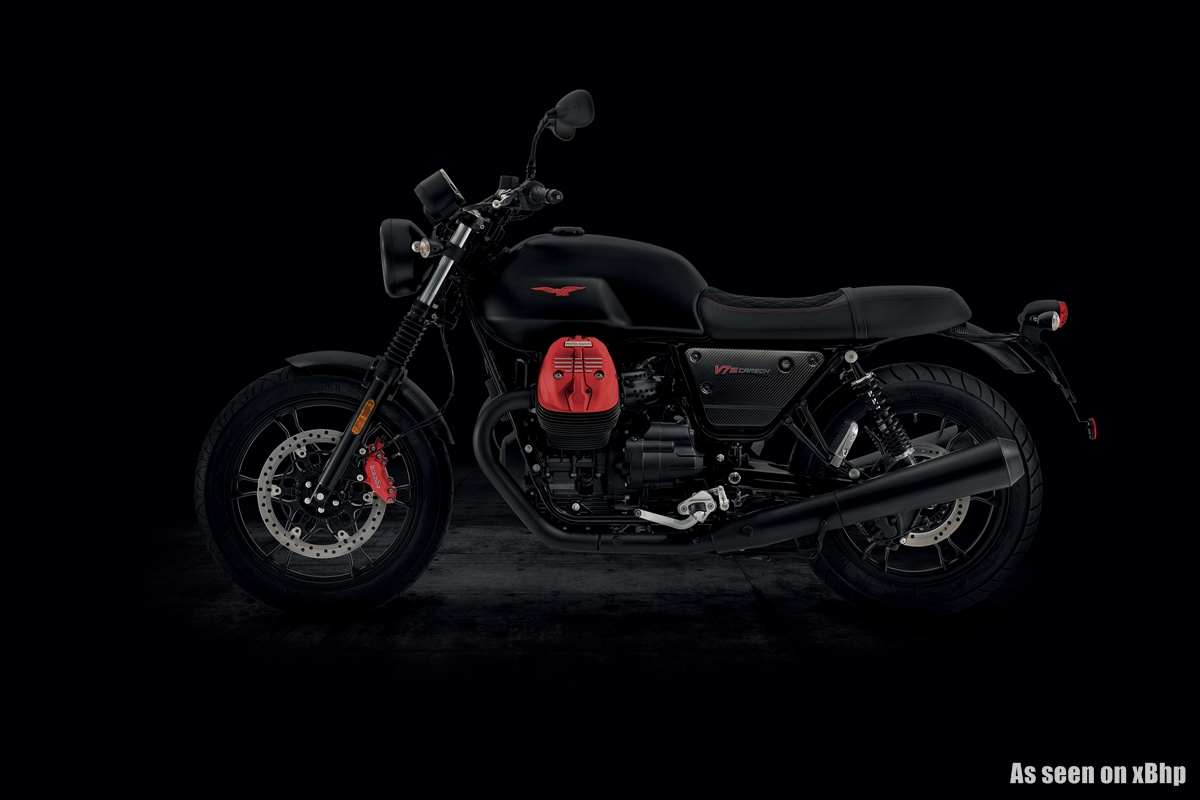
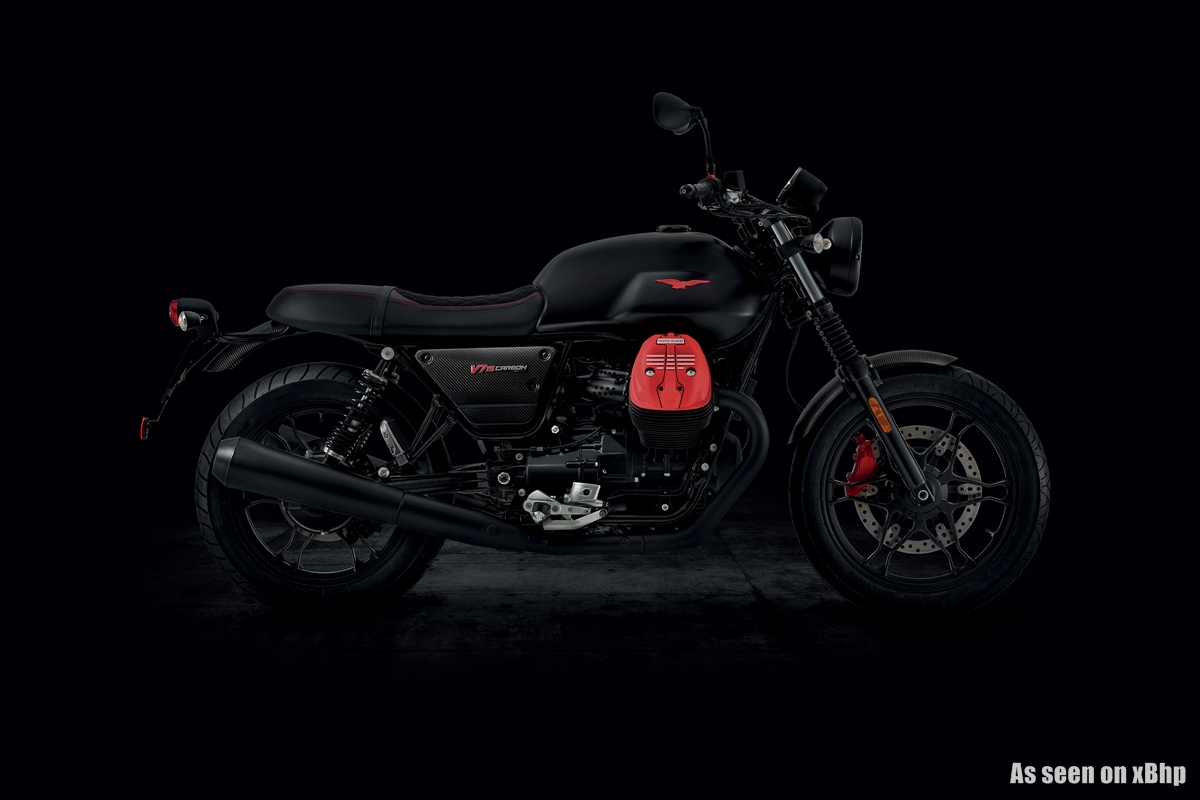
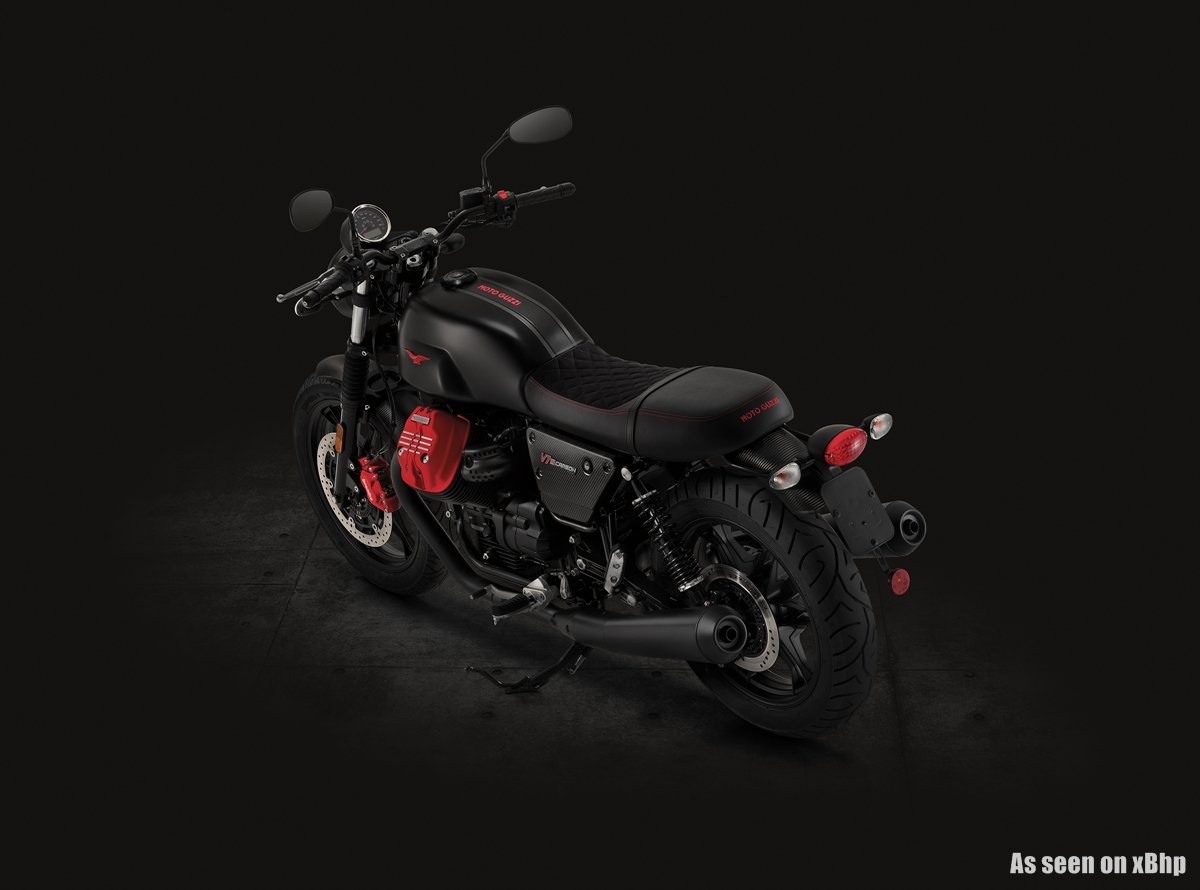
his is currently the only member of the V7 III family built in limited and numbered production, following the happy tradition of having a “limited edition” model in the range. V7 III Carbon celebrates customization, interpreted originally and in good taste, combining the authentic V7 style with the prestigious and modern quality of numerous carbon fibre components, such as the shortened and sleek fenders and the side fairings that enhance the character of the Moto Guzzi best seller to the utmost. V7 III Carbon has a completely matt black look, a shade that enhances the parts in red, the colour chosen for the Brembo front disk brake calliper, the logos on the side fairings and the Eagle on the fuel tank. The 'Made in Mandello' mechanics also stand out thanks to the satin finished red cylinder head covers. The saddle (dedicated only to this model, as it is with the others) boasts brand new water repellent Alcantara®, ideal for outdoor use and weather resistant. The saddle is finished with red stitching that represents rather popular stylistic inspiration that anyone who loves refined details will love. In fact, this model is fully loaded with them: the locking tank cap is made of anodized black billet aluminium and the headlight frame is also black, as are the injector covers and the rear brake master cylinder. The series number of the model is identified by the plate positioned on the handlebar risers: there are 1921 units available, a number that recalls the year that Moto Guzzi was established.
V7 III Rough
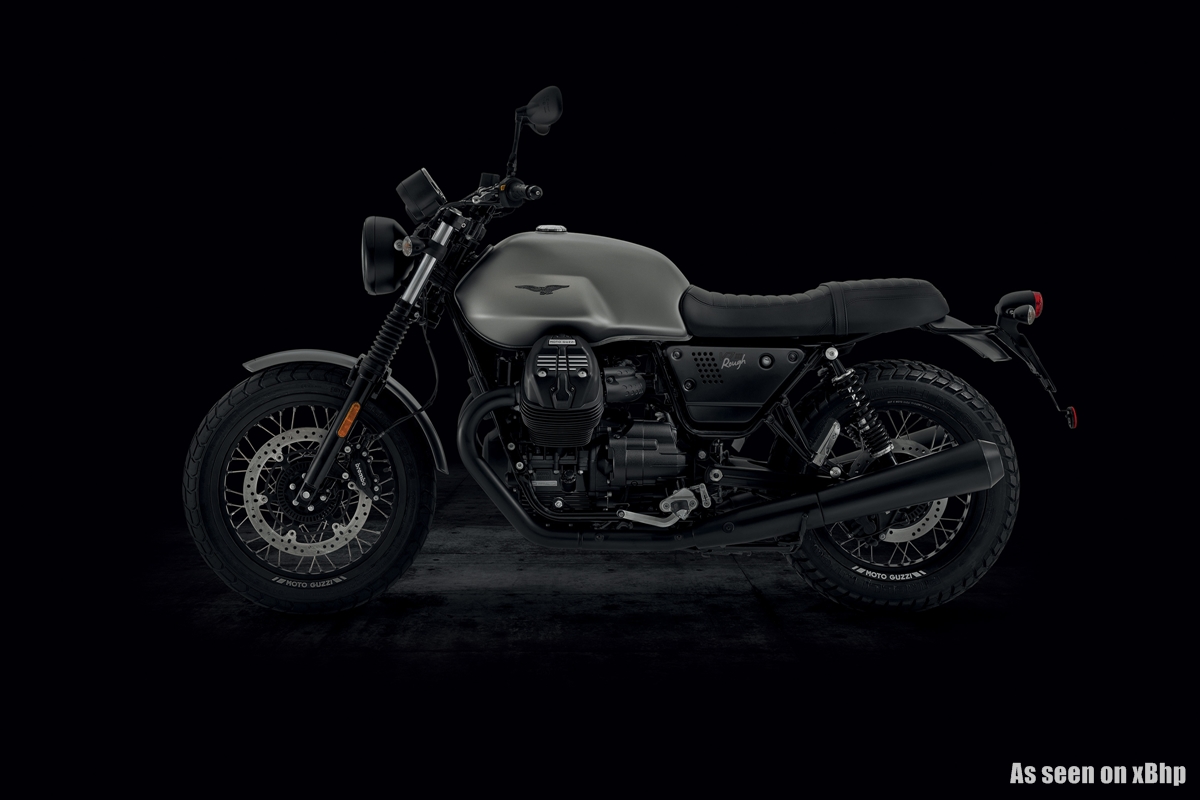
This version stands out for its knobby tyres, mounted on spoked rims and for the many details that give the V7 III Rough an urban country style. The equipment is completed by the dedicated saddle with stitching and a passenger grab strap and the pair of aluminium side fairings. The fenders are made of the same prestigious material. The headlight frame is painted black and the fork stanchions are protected by classic rubber dust covers. This is another element of Moto Guzzi style that transforms the V7 III into a true factory special with just a few skilful touches. The availability of original Moto Guzzi accessories for the V7 III (and for the previous versions) is extremely vast, so you can make this and the other V7 III versions even more personal and exclusive.
V7 III Milano
Which V7 would you want to ride through the city centre streets? Moto Guzzi has the answer with the new V7 III Milano version. This model takes its origins from the V7 III Special and maintains the same typical, classic characteristics such as the dual circular display instrumentation, the chromium exhaust and passenger grab handle, as well as the glossy tank colours, but it distinguishes itself with its alloy wheels that contribute to giving it a more modern appearance. The standard equipment is completed by prestigious details such as the aluminium fenders and side fairings.
V7 III Racer
Produced in a numbered edition, as indicated by the plate located on the upper steering yoke, V7 III Racer is not only the most sporty of the range, but also the one with the most prestigious parts, that once again demonstrate Moto Guzzi's ability to create true custom models. There are numerous technical and aesthetic differences that distinguish it from the previous version and from the other V7 III models. As for the stylistic aspects, V7 III Racer flaunts a stupendous satin finish chromium fuel tank where the red Eagle is prominently displayed. This feature is reminiscent of the “Rosso Corsa” colour chosen to paint the frame and the swingarm: an explicit reminder of the first 1971 V7 Sport series, nicknamed “red frame”. The V7 III Racer's sporty nature is emphasized by its semi-handlebars and its splendid, humped saddle.
In accordance with tradition, the Racer has a single-seatersport bike look, but in reality, this version is approved for two-up riding: in fact, it has pillion foot pegs, whereas the seat cover can be easily removed when necessary. One of the most distinctive features worth a mention is the widespread use of anodized black aluminium. This hand-crafted treatment, which requires superb artisan skill, characterises the side fairings and the throttle body guards, whereas the front number plate is made of brushed aluminium.
The spoked wheel rims have black channels and red Moto Guzzi stickers like the other sport models from the brand, including the Audace muscle bike.Other premium components that stand out are the set-back footpegs machined from solid billets, the lightened steering stem and the steering yoke guard. The most important technical element is constituted by the pair of Öhlins shock absorbers, adjustable in spring preload and in hydraulic rebound and compression, that ensure better capacity to absorb small bumps and at the same time provide better control in sport riding.
Moto Guzzi V7 III: Technical Specifications
V7 is one of the most celebrated and well-known Moto Guzzi models. This world fame is due to its ability to remain faithful to the expectations and reputation of a legendary brand like Moto Guzzi. Since 1967, the year the first units were sold in Italy, the V7 became a pillar of the product range and the representative of the Italian motorcycle par excellence, standing out for its content and design, highly popular with a transversal and varied public.
More than fifty years from the launch of the first unit, Moto Guzzi V7 III is the third act of a unique story. The challenge of introducing the V7 III was one of the most difficult, considering the emblem and the success of the V7. From 2009 it has also been the brand's most sold model and it constitutes the entry level bike in the Moto Guzzi world.
As was the case with the V7 II compared with the first-born V7, for the V7 III the revamping was profound enough to merit a new progressive number in Roman numerals, that has always distinguished the most popular and long-lasting Moto Guzzi bikes. V7 III is the result of Moto Guzzi's passion, skilfully revamping its best seller, leaving its character and authenticity unaltered, values that are destined to last over time.
There are many excellent twin cylinder engines in the world, but there is only one transversal V and it is the Moto Guzzi twin, born in 1967 out of an ingenious intuition by Mr. Giulio Cesare Carcano and characterized by a configuration of the cylinders so particular that it made it an integral part of the bike's design, like a true modern art metallic sculpture. In the small block version, it has now reached its third evolution and it has been completely revamped comparing with the V7 II engine, with the goal of raising riding pleasure and fun on the road to a maximum, as well as guaranteeing higher performance and reliability.
The aluminium crankcase, stiffened in the key points, uses a crankshaft with inertial calculated to provide a lively response and an adequate engine brake. The lubrication system in the crankcase has been designed to dissipate the heat in the best possible way and to reduce power absorption in favour of both performance and a reduction in fuel consumption. There is also a ventilation system that reduces power loss due to the internal pumping of the crankcase chambers and a reduced capacity oil pump capable of absorbing less power. The oil pump intake duct is new, as is the related by-pass valve and piston cooling oil jets have been introduced that have a flow control and management valve. The alternator cover includes the blow-by gas output.
The interventions introduced one year ago also concerned the upper part of the engine, with new aluminium heads, pistons and cylinders comparing to V7 II, although the bore and stroke values (and therefore the engine displacement) are the same as the previous unit, a specific choice that confirms the V7 III as the Moto Guzzi entry-level motorcycle. As per tradition, the timing is controlled by a pushrod and rockers system with 2 valves per cylinder, but arranged in an inclined position (more efficient) in the head. The fuel system is entrusted to a single-body Marelli electronic injection system managed by an electronic control unit. The exhaust system is complete with dual pipe manifolds that help to improve thermal insulation. With the auxiliary air system intake in the heads, combined with the trivalent catalytic converter, the double lambda probe and the engine design, the Moto Guzzi twin 750 complies with the Euro 4 standard.
Maximum power reaches 52 HP at 6,200 rpm, whereas maximum torque measures in at 60 Nm at 4,900 rpm, with a truly flat torque curve that promise ease of use combined, as always, with that typical character and quick response of a Moto Guzzi engine. The reduced-power version is also available, in line with the limitations set by the A2 class driver's license and ideal for new Guzzi riders, who can also count on the reduced total weight and size and the overall easy ride of all the V7 III versions. Another innovative aspect of the Moto Guzzi engine is the 170 mm dry single disc clutch that increases sturdiness and reliability over time, also decreasing the load on the lever at the handlebar, all to the advantage of modulability and riding comfort. The six-speed gearbox introduced on the V7 II, precise and smooth, is unchanged but now benefits from a different first and sixth gear ratio, both slightly lengthened, handy for taking full advantage of the engine's torque and power characteristics.
V7 III has an ABS braking system and an adjustable MGCT (Moto Guzzi Traction Control) system that can also be disabled. The former is a two-channel Continental system that prevents the wheels from locking up, whereas the latter is a system that prevents rear wheel spin in acceleration. The MGCT system is adjustable to two sensitivity levels, one more conservative and ideal, for example, in poor grip situations due to wet or slippery asphalt and the other is designed to cater to the thrill of riding in safety on dry roads. Another peculiarity of the MGCT system is the possibility of recalibrating the rear tyre circumference, compensating for any wear or the use of a tyre with a different profile than the original so that the traction control system will always be accurate.
V7 III Stone
V7 III Stone stands out for its strong aesthetic and personal connotations. Eclectic and essential, it forsakes any chromium details to embrace the darkness of the matt black paintwork with a brand new matching passenger grab strap. In addition to the Nero Ruvido colour scheme, it is also available in other attractive,satin finish coloursinspired by typical '70s shades: Azzurro Elettrico, Verde Camouflage and Giallo Energico. The total “dark matt” look characterizes the V7 III and distinguishes it from the other versions, but that is not the only difference. V7 III Stone also boasts alloy wheels and single circular display instrumentation. The front fender has also been shortened in order to highlight the essential look of this model.
V7 III Special
Of the V7 models it is the one that comes closest to the spirit of the original model. Classic and elegant, it has numerous chromium parts and decidedly bright graphics. Like the famous 1975 V750 S3, it has the typical coloured stripe on the side fairings under the saddle that complement the matching coloured horizontal bands on the tank. The spoked wheels have polished channels and black hubs; the instrumentation is made up of dual circular displays and the chromium plated steel passenger grab handle comes standard. V7 III Special also has a saddle with “old school” stitching, elements that highlight its classic and elegant roots. The available colour schemes are Nero Inchiostro and Blu Zaffiro.
V7 III Carbon
his is currently the only member of the V7 III family built in limited and numbered production, following the happy tradition of having a “limited edition” model in the range. V7 III Carbon celebrates customization, interpreted originally and in good taste, combining the authentic V7 style with the prestigious and modern quality of numerous carbon fibre components, such as the shortened and sleek fenders and the side fairings that enhance the character of the Moto Guzzi best seller to the utmost. V7 III Carbon has a completely matt black look, a shade that enhances the parts in red, the colour chosen for the Brembo front disk brake calliper, the logos on the side fairings and the Eagle on the fuel tank. The 'Made in Mandello' mechanics also stand out thanks to the satin finished red cylinder head covers. The saddle (dedicated only to this model, as it is with the others) boasts brand new water repellent Alcantara®, ideal for outdoor use and weather resistant. The saddle is finished with red stitching that represents rather popular stylistic inspiration that anyone who loves refined details will love. In fact, this model is fully loaded with them: the locking tank cap is made of anodized black billet aluminium and the headlight frame is also black, as are the injector covers and the rear brake master cylinder. The series number of the model is identified by the plate positioned on the handlebar risers: there are 1921 units available, a number that recalls the year that Moto Guzzi was established.
V7 III Rough
This version stands out for its knobby tyres, mounted on spoked rims and for the many details that give the V7 III Rough an urban country style. The equipment is completed by the dedicated saddle with stitching and a passenger grab strap and the pair of aluminium side fairings. The fenders are made of the same prestigious material. The headlight frame is painted black and the fork stanchions are protected by classic rubber dust covers. This is another element of Moto Guzzi style that transforms the V7 III into a true factory special with just a few skilful touches. The availability of original Moto Guzzi accessories for the V7 III (and for the previous versions) is extremely vast, so you can make this and the other V7 III versions even more personal and exclusive.
V7 III Milano
Which V7 would you want to ride through the city centre streets? Moto Guzzi has the answer with the new V7 III Milano version. This model takes its origins from the V7 III Special and maintains the same typical, classic characteristics such as the dual circular display instrumentation, the chromium exhaust and passenger grab handle, as well as the glossy tank colours, but it distinguishes itself with its alloy wheels that contribute to giving it a more modern appearance. The standard equipment is completed by prestigious details such as the aluminium fenders and side fairings.
V7 III Racer
Produced in a numbered edition, as indicated by the plate located on the upper steering yoke, V7 III Racer is not only the most sporty of the range, but also the one with the most prestigious parts, that once again demonstrate Moto Guzzi's ability to create true custom models. There are numerous technical and aesthetic differences that distinguish it from the previous version and from the other V7 III models. As for the stylistic aspects, V7 III Racer flaunts a stupendous satin finish chromium fuel tank where the red Eagle is prominently displayed. This feature is reminiscent of the “Rosso Corsa” colour chosen to paint the frame and the swingarm: an explicit reminder of the first 1971 V7 Sport series, nicknamed “red frame”. The V7 III Racer's sporty nature is emphasized by its semi-handlebars and its splendid, humped saddle.
In accordance with tradition, the Racer has a single-seatersport bike look, but in reality, this version is approved for two-up riding: in fact, it has pillion foot pegs, whereas the seat cover can be easily removed when necessary. One of the most distinctive features worth a mention is the widespread use of anodized black aluminium. This hand-crafted treatment, which requires superb artisan skill, characterises the side fairings and the throttle body guards, whereas the front number plate is made of brushed aluminium.
The spoked wheel rims have black channels and red Moto Guzzi stickers like the other sport models from the brand, including the Audace muscle bike.Other premium components that stand out are the set-back footpegs machined from solid billets, the lightened steering stem and the steering yoke guard. The most important technical element is constituted by the pair of Öhlins shock absorbers, adjustable in spring preload and in hydraulic rebound and compression, that ensure better capacity to absorb small bumps and at the same time provide better control in sport riding.
Moto Guzzi V7 III: Technical Specifications
| Displacement Bore Travel Distribution |
744 cc 80 mm 74 mm 2 valves with light alloy pushrods and rockers |
| Max Power | 38 kW (52 HP) at 6200 rpm |
| Maximum torque at crankshaft | 60 Nm at 4900 rpm |
| Exhaust system | 3-way catalytic converter with double lambda probe |
| Cooling Frame Wheelbase Trail Headstock angle |
Air double cradle tubular frame in ALS steel with detachable elements. 1445 mm 106 mm 26.4° |
| Front suspension Travel: |
Ø 40 mm hydraulic telescopic fork 130 mm |
| Rear suspension Travel: |
die cast light alloy swingarm with 2 shock absorbers with adjustable spring preload (Öhlins fully adjustable for Racer) 93 mm (80 mm shock absorber stroke) |
| Front Brake | Ø 320 mm stainless steel floating discs, Brembo callipers with 4 differently sized opposed pistons |
| Rear brake | Ø 260 mm, stainless steel disc, floating calliper with 2 pistons |
| Front wheel | 18" in lightweight alloy (spoked for Special/Racer/Rough) 100/90 (110/80 R18 as alternative) |
| Rear wheel | 17" in lightweight alloy (spoked for Special/Racer/Rough) 130/80 |
| Saddle height Length Height Minimum ground clearance |
770 mm 2,185 mm 1,100 mm 150 mm |
| Fuel tank capacity | 21 litres (including 4 litre reserve) |
| Kerb weight | 189 kg (Special, Milano 193 kg) |
| Kerb weight* | 209 kg (Special, Milano 213 kg) |
| * Weight with motorcycle ready for use with all operating fluids and with 90% fuel. | |
| Consumption (WMTC cycle) | 5.5 l/100 km (Racer 5.7 l/100 km) |
| CO2 Emissions (WMTC cycle) | 128 g/km (Racer 132g/km) |


