








 Tweet
Tweet
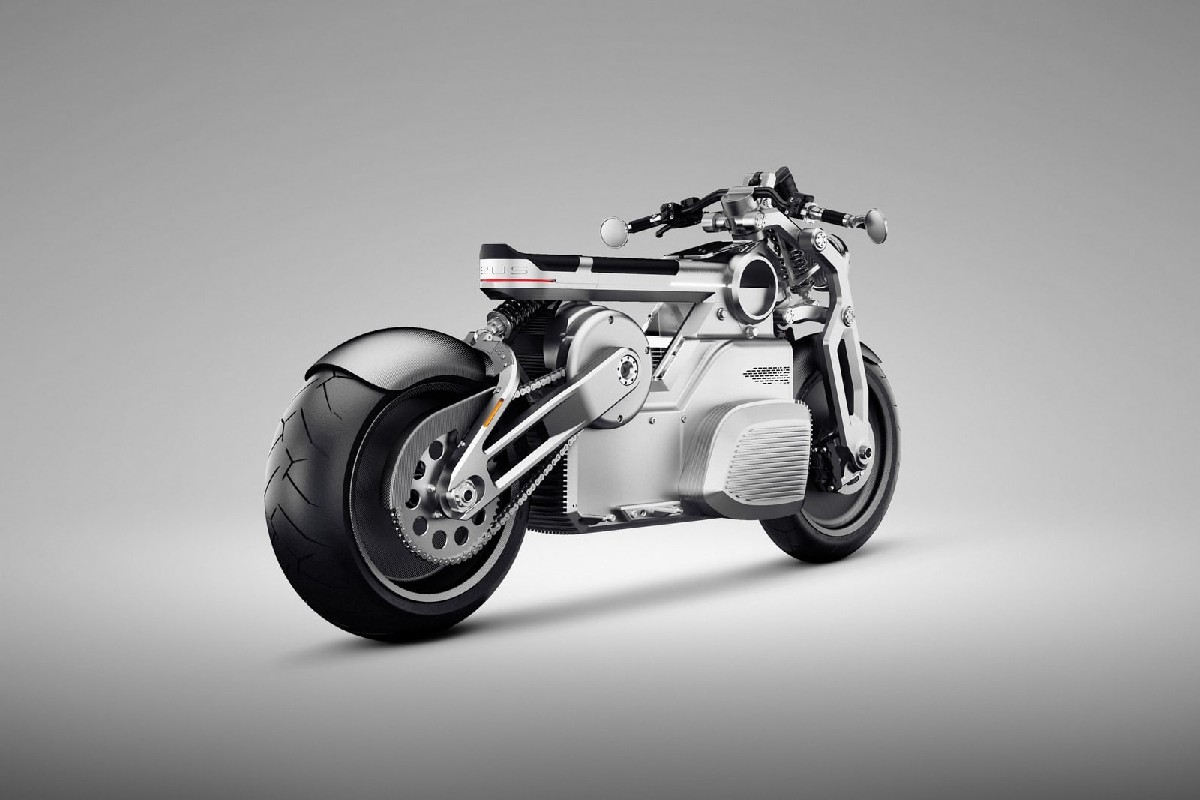
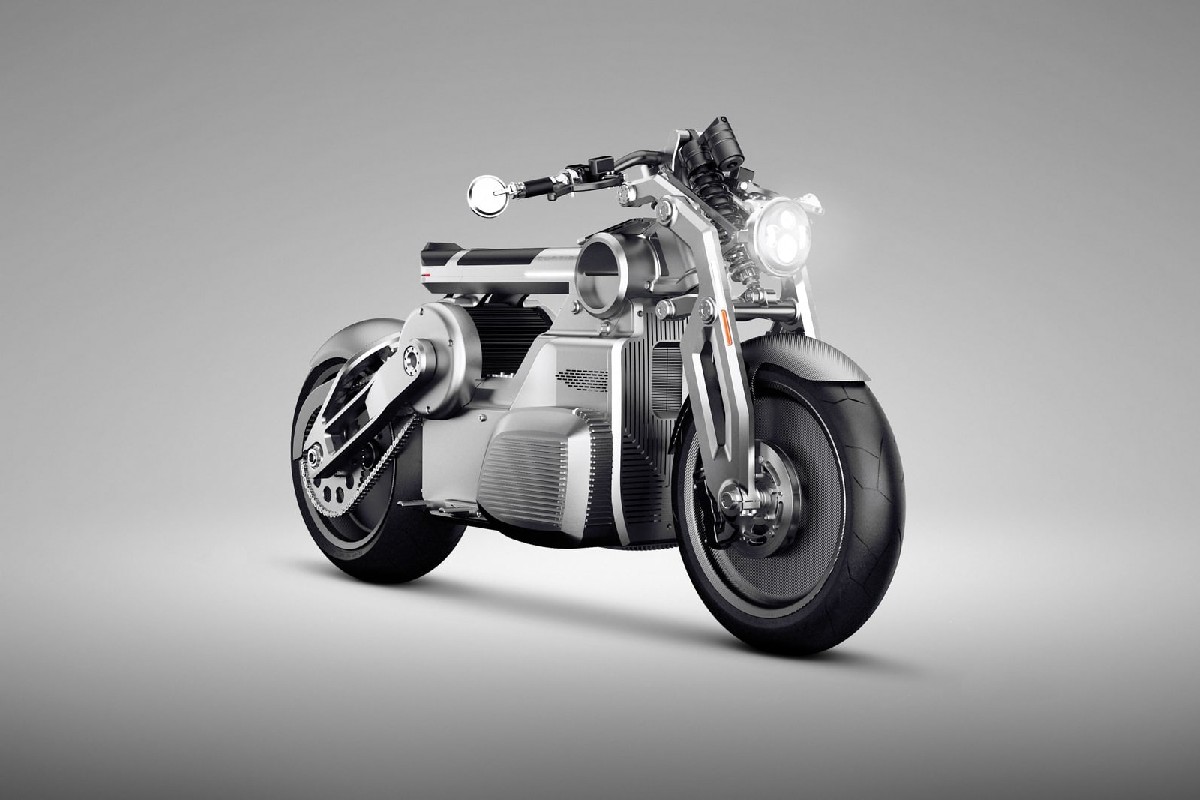
Curtiss motorcycles introduced their concept electric motorcycle, Zeus at the 2018 Quail Motorcycle Gathering. The event took place in Carmel, California. The Zeus not only garnered the attention of the thousands of the attendees, it also won the Most Innovative Motorcycle award as well.
Jordan Cornille, Director of Design, Curtiss Motorcycles said, “What we were really trying to do at Curtiss is redefine the American motorcycle, and so with this new electric technology we didn’t have any limitations on what a motorcycle needed to be, so we were able to completely rethink the packaging of the motorcycle and invent an all new genre.”
The chassis of the Zeus is machined billet Aluminum. The design opts for bolted members rather than conventional welding. The rear suspension uses a center-line cantilever mono-shock, and the front suspension uses a four-link girder mono-shock. Features like these provide the Zeus with a futuristic look. With it comes a design so radical that it defies the conventional motorcycle design ideas.
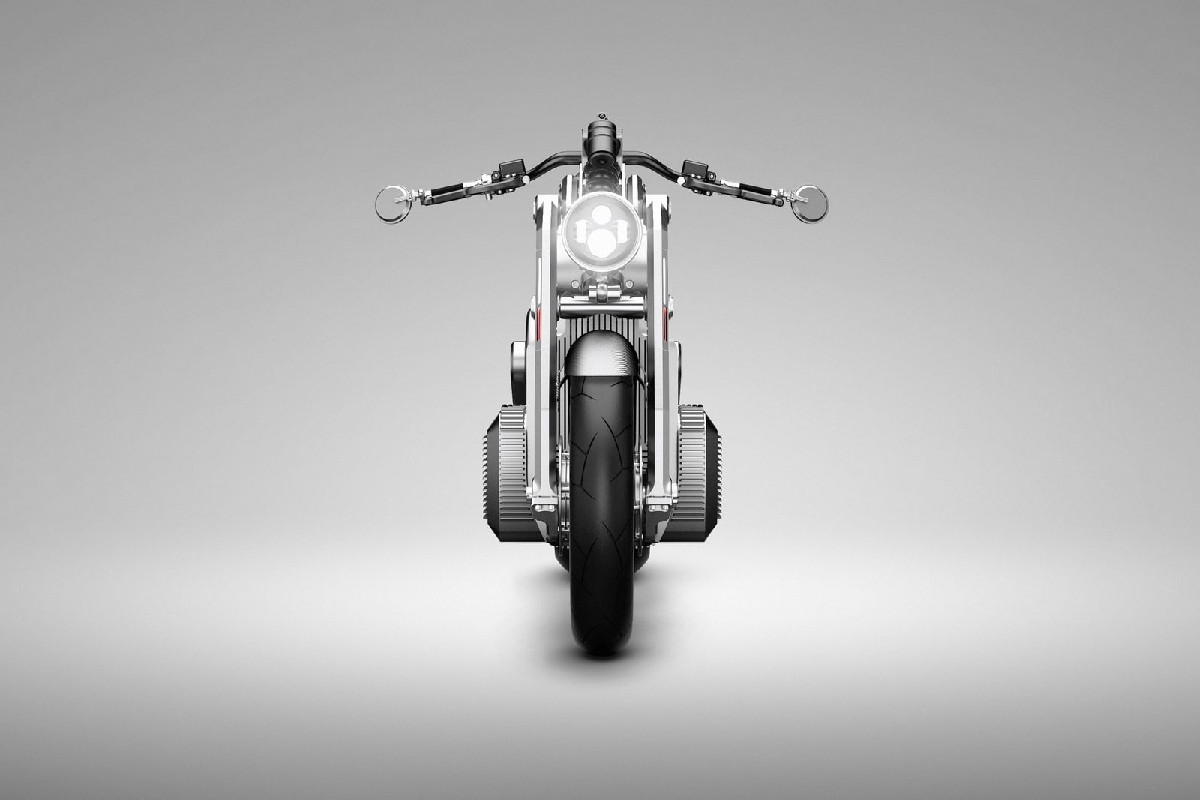
Things get even more innovative when it comes to the ‘engine’ and power. In a partnership with Zero electric motorcycles, Curtiss has developed the all new Curtiss E-twin platform. It consists of two Zero electric motors coupled with a single output shaft. Cornille stated that the two motors working together are good for 393 Nm of torque and 170 bhp of power.
Cornille also said that the Zeus concept is sporting a 14.4 kWh battery pack today, but that he expects the capacity to increase by the time the bike is ready for production. A 14.4 kWh pack is already larger than all but the very largest battery option offered by Zero, but with this much power, that battery could drain quickly.

The production of Zeus is slated to begin in 2019, in order to make a 2020 model year Zeus available to the public.
Curtiss Motorcycles
Glenn Hammond Curtiss was the founding father of Curtiss Motorcycles. He was also one of the world’s most prominent aviation innovators. Glenn Curtiss built his first motorcycle in the back of his Hammondsport, New York bicycle shop. He also developed the most iconic and revered powertrain in motorcycle history – The American V-Twin in 1903. Glenn Curtiss set an unofficial world record of 219.45 kmph, on a 40 horsepower, 4,410 cc V8-powered motorcycle of his own design and construction in Ormond Beach, Florida in 1906.
Source Photos
Jordan Cornille, Director of Design, Curtiss Motorcycles said, “What we were really trying to do at Curtiss is redefine the American motorcycle, and so with this new electric technology we didn’t have any limitations on what a motorcycle needed to be, so we were able to completely rethink the packaging of the motorcycle and invent an all new genre.”
The chassis of the Zeus is machined billet Aluminum. The design opts for bolted members rather than conventional welding. The rear suspension uses a center-line cantilever mono-shock, and the front suspension uses a four-link girder mono-shock. Features like these provide the Zeus with a futuristic look. With it comes a design so radical that it defies the conventional motorcycle design ideas.
Things get even more innovative when it comes to the ‘engine’ and power. In a partnership with Zero electric motorcycles, Curtiss has developed the all new Curtiss E-twin platform. It consists of two Zero electric motors coupled with a single output shaft. Cornille stated that the two motors working together are good for 393 Nm of torque and 170 bhp of power.
Cornille also said that the Zeus concept is sporting a 14.4 kWh battery pack today, but that he expects the capacity to increase by the time the bike is ready for production. A 14.4 kWh pack is already larger than all but the very largest battery option offered by Zero, but with this much power, that battery could drain quickly.
The production of Zeus is slated to begin in 2019, in order to make a 2020 model year Zeus available to the public.
Curtiss Motorcycles
Glenn Hammond Curtiss was the founding father of Curtiss Motorcycles. He was also one of the world’s most prominent aviation innovators. Glenn Curtiss built his first motorcycle in the back of his Hammondsport, New York bicycle shop. He also developed the most iconic and revered powertrain in motorcycle history – The American V-Twin in 1903. Glenn Curtiss set an unofficial world record of 219.45 kmph, on a 40 horsepower, 4,410 cc V8-powered motorcycle of his own design and construction in Ormond Beach, Florida in 1906.
Source Photos




Comment