








 Tweet
Tweet
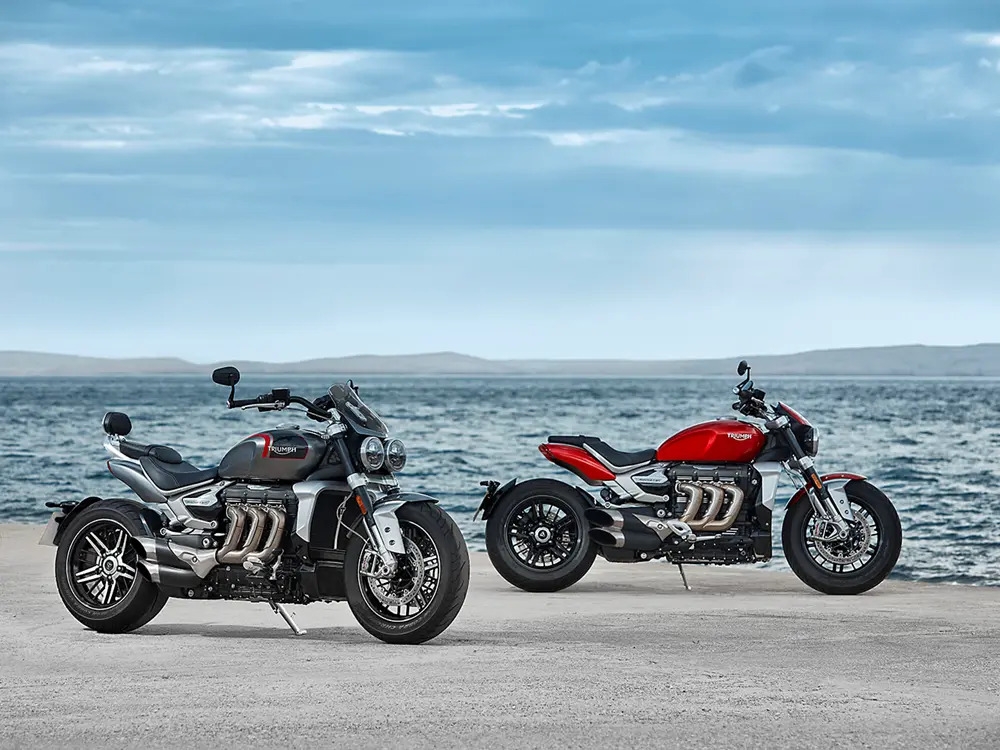
Some time ago, we posted an article about the spy-shots of a new Rocket III and then Triumph finally unveiled a limited edition TFC model of the same. While the TFC was sprinkled with premium parts, it cost a premium too. And now, Triumph has unveiled two more. Welcome the Triumph Rocket 3 R and Triumph Rocket 3 GT.
The biggest highlight of it is, of course, the engine. It has the largest engine fitted to any mass-production motorcycle. The 2500cc inline-3 engine produces a mind-boggling 220 Nm of torque and 164 bhp of power. And yet, the numbers are a hair less than the Rocket 3 TFC but then, the R and the GT are considerably cheaper too.
The new Rocket 3 is also laden with electronics and an Inertial Measurement Unit (IMU) controls the cornering ABS and lean-sensitive traction control. There’s also a new ride-by-wire throttle with 4 riding modes; including Road, Rain, Sport and a user-defined one.
On the new Rocket 3, the chassis employs the engine as the stressed member. The main part of the chassis is made from aluminium with a central spine that bolts around the engine. The spine also acts as the airbox as it is kept hollow. The lighter engine and the above-mentioned construction of the frame has made the new Rocket 3 around 40 kg lighter than the old Rocket.
The suspension system is also new which is made up of 47mm adjustable forks from Showa and a fully-adjustable mono-shock at the rear. The serious propulsion power derived from the engine requires the motorcycle to have serious stopping power as well. Brembo Stylema monobloc callipers do the job well. The rear tyre as expected is a massive 240-section unit.
As we mentioned before, there are two models of the Rocket 3; the Rocket 3 R and the Rocket 3 GT. The R is the naked roadster model and the GT is a bit more biased towards touring or… power cruising? For example, the GT model has its handlebars pulled back a bit and the footpegs are a bit forward as well. But still, most of the things on the two models are similar and the differentiating bits are interchangeable too.
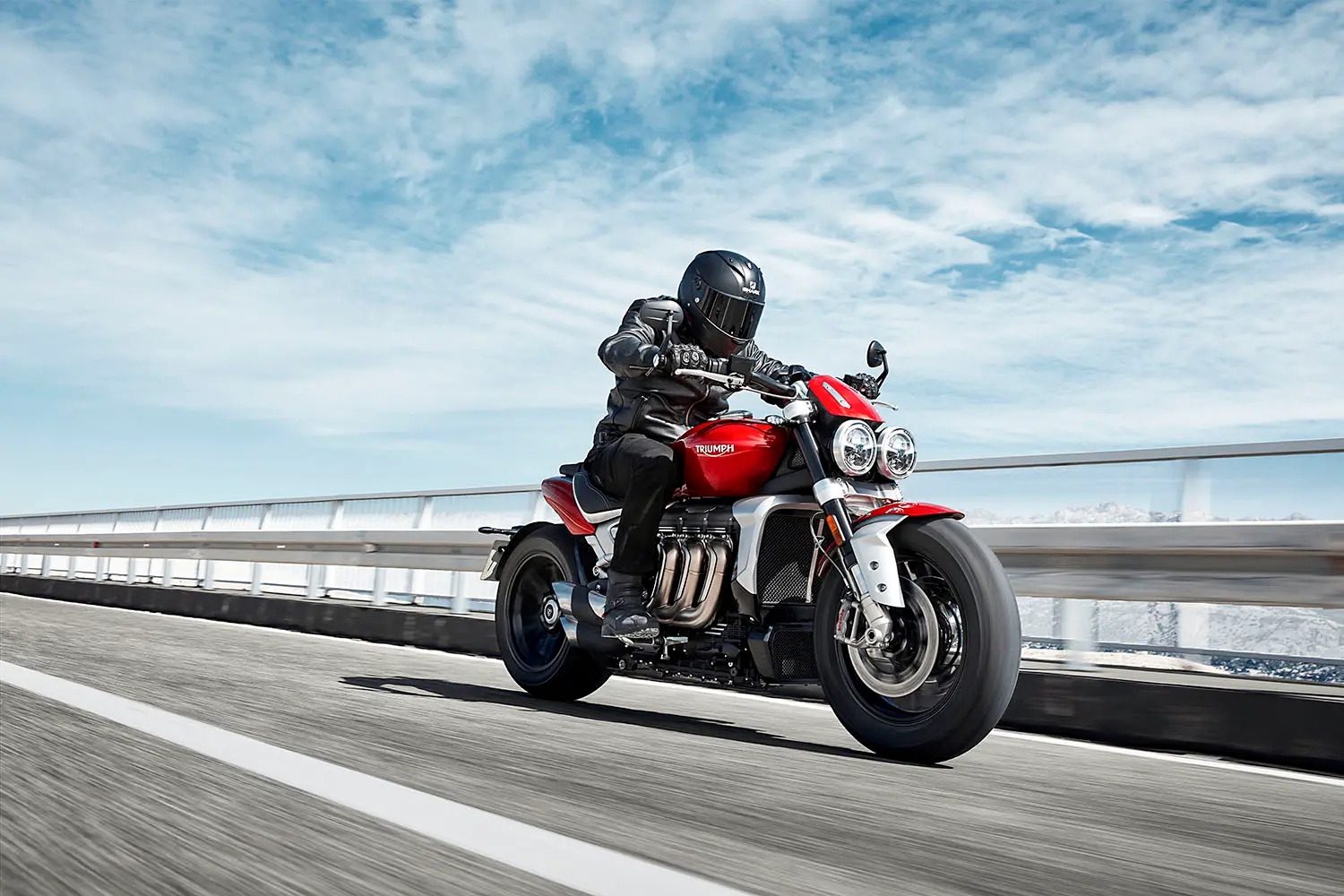
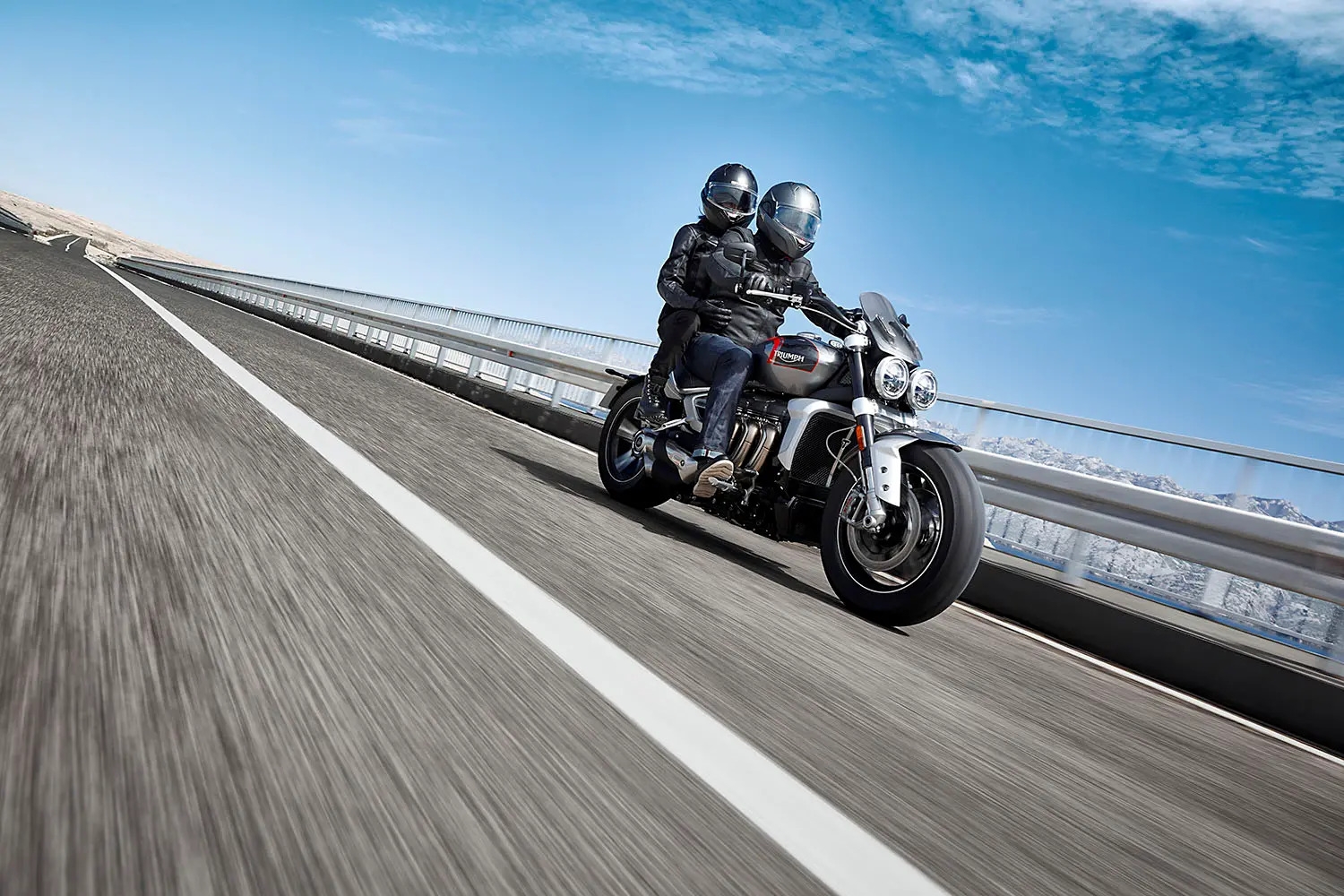
The Triumph Rocket 3 R version is expected to cost £19,500 (~16.3 lakhs) and the GT model is expected to be around £19,900 (~16.6 lakhs).
The biggest highlight of it is, of course, the engine. It has the largest engine fitted to any mass-production motorcycle. The 2500cc inline-3 engine produces a mind-boggling 220 Nm of torque and 164 bhp of power. And yet, the numbers are a hair less than the Rocket 3 TFC but then, the R and the GT are considerably cheaper too.
The new Rocket 3 is also laden with electronics and an Inertial Measurement Unit (IMU) controls the cornering ABS and lean-sensitive traction control. There’s also a new ride-by-wire throttle with 4 riding modes; including Road, Rain, Sport and a user-defined one.
On the new Rocket 3, the chassis employs the engine as the stressed member. The main part of the chassis is made from aluminium with a central spine that bolts around the engine. The spine also acts as the airbox as it is kept hollow. The lighter engine and the above-mentioned construction of the frame has made the new Rocket 3 around 40 kg lighter than the old Rocket.
The suspension system is also new which is made up of 47mm adjustable forks from Showa and a fully-adjustable mono-shock at the rear. The serious propulsion power derived from the engine requires the motorcycle to have serious stopping power as well. Brembo Stylema monobloc callipers do the job well. The rear tyre as expected is a massive 240-section unit.
As we mentioned before, there are two models of the Rocket 3; the Rocket 3 R and the Rocket 3 GT. The R is the naked roadster model and the GT is a bit more biased towards touring or… power cruising? For example, the GT model has its handlebars pulled back a bit and the footpegs are a bit forward as well. But still, most of the things on the two models are similar and the differentiating bits are interchangeable too.
The Triumph Rocket 3 R version is expected to cost £19,500 (~16.3 lakhs) and the GT model is expected to be around £19,900 (~16.6 lakhs).


