Since '02 xBhp is different things to different people. From a close knit national community of
bikers to India's only motorcycling lifestyle magazine and a place to make like-minded biker
friends. Join us
xBhp was born more than 16 years ago and since then we've had a chance to ride or drive hundreds of machines
running on two wheels or four wheels, and sometimes even three wheels. We are not done yet, and this list is
still growing. In these pages, we take a deep dive in the treasure trove of our ride experiences and bring
you all that we have ridden or driven.
Machines Done 433
|
Total Cubic Capacity 178731
|
BHP 56456
Yamaha Tracer 9 GT Review: Tourer by Design. Sportbike at Heart.
890CC117BHP93NM
Oct 2026
Sundeep Gajjar
Bikes,Motorcycles,Yamaha
Having ridden so many motorcycles over the years, I am usually pretty adept at figuring out what a particular motorcycle is aimed at and who it is intended for. But when I swung a leg over the Yamaha Tracer 9 GT in New South Wales, Australia, it took me a while to figure out what it really is. Is it a sportbike? Is it a tourer? Can it Adventure? But that is also a welcome surprise because what better way to find out what a motorcycle is all about than to ride it extensively. So, come along for the ride as I review the Yamaha Tracer 900 GT.
There is something quite futuristic about the name Tracer. I don’t know where Yamaha got it from, but if I were to take a guess, I’d say it is because this is a motorcycle that lets you trace a route on a map and get there without much fuss. On-road, off-road or even on a racetrack, it has the ability to cover a lot of ground.
And after spending some time with the Tracer 9 GT in New South Wales, Australia, I can see why the name fits. This is an adventure-style touring motorcycle, but underneath all that practicality is a very familiar Yamaha recipe. You have the Delta Box frame and, more importantly, the company’s brilliant CP3 three-cylinder engine. It is an engine that Yamaha has used across several motorcycles, from the MT-09 to the R9, and here it gets a slightly different job to do.
The Tracer 9 GT is essentially the middle of three variants in the range, sitting between the standard Tracer 9 and the more heavily equipped GT+. The GT gets a lot of the technology and touring equipment you would want, including semi-active suspension and panniers, while the GT+ takes things even further with additional radar-assisted rider aids and technology.
After riding it for around 100 km, the first thing that struck me was how easy the Tracer is to ride. It doesn’t feel particularly heavy, and the upright riding position makes it immediately approachable. Yamaha’s 890cc three-cylinder has already proved itself in several applications, and it works just as well here. 117 bhp, 93 Nm, and a broad powerband. It has enough character and performance to make this feel like a proper sports motorcycle, while also having the flexibility required of a touring machine.
That versatility is probably the best thing about the CP3. It doesn’t matter whether Yamaha puts it in a naked motorcycle, a sports bike or a tourer; the basic character of the engine remains one of its biggest strengths. The Tracer also gets a quickshifter that works both ways, along with a long list of electronic rider aids. There is no shortage of information on the Tracer 9 GT either. A seven-inch colour TFT display puts a lot of it right in front of you, while a joystick-style controller on the left handlebar lets you navigate the various functions.
It is impressive, although the sheer amount of information can feel a little overwhelming initially. Once you spend enough time with the motorcycle, however, it becomes easier to find your way around. The same controller also operates the electrically adjustable windscreen. At 5’11”, I found the screen perfectly useful, although even with it raised all the way, I was still getting quite a bit of wind buffeting. I would probably look at adding a small extension to the top of the screen for better protection on long rides.
The Tracer 9 GT gets KYB semi-active suspension, developed specifically for this motorcycle. The front suspension is adjustable for preload, while the electronically controlled system works with the different riding modes. That means the motorcycle can alter its suspension behaviour depending on how and where you are riding. Whether the road is smooth or broken, the idea is to give you the right balance of comfort and control without requiring you to constantly adjust the suspension yourself.
It is exactly the sort of equipment that makes sense on a motorcycle designed to cover long distances. On the GT+ you get Y-AMT, which is Yamaha’s automated transmission. It has been a divisive addition, to say the least. I gave it a try on the MT-09 a while ago. No clutch and hand-controlled gears in manual mode take some getting used to, but I had a good time with it once I spent enough time with it.
Now, the Tracer is, first and foremost, a touring motorcycle, and its riding position makes that very clear. You sit upright, the controls fall easily to hand, and the whole motorcycle is designed around covering plenty of kilometres without making a fuss.
There is plenty of equipment to support that purpose as well. You get keyless operation, cruise control, ABS, traction control and multiple riding modes. The panniers are standard on the GT and can be remotely locked, opened and closed, which is a particularly useful touch when you’re travelling with luggage. Even the ignition switch has a slightly futuristic feel to it, with a rotary-style control rather than a conventional key-operated setup.
One of the coolest helmets ever in the Axor lineup, the Apex Gloss Carbon looks awesome… but it also offers class-leading protection with a lightweight construction and tons of comfort for long rides.
The technology continues at the front with the Matrix LED headlight. This is something I haven’t really seen executed quite like this on a motorcycle. Some of the design and components also seem to take inspiration from Yamaha’s R-series motorcycles, giving the Tracer a slightly sportier appearance than you might expect from a touring machine. The GT+ goes one step further with adaptive Matrix LED lighting, which can alter the illumination depending on the traffic ahead.
The seats, too, are designed with long-distance comfort in mind. And that is really what the Tracer does well: it takes a performance-oriented engine and chassis and wraps them in something that you could happily spend an entire day riding.
Yamaha has clearly made sure the Tracer isn’t left behind when it comes to electronics and rider assistance. And that matters because this isn’t an inexpensive, basic touring motorcycle. It is meant to compete with some very sophisticated machinery, and it certainly has the technology to do so.
There is also something reassuringly Yamaha about the Tracer 9 GT. The Delta Box frame gives it a sporty foundation, while the CP3 engine provides the performance and character. At the same time, the upright ergonomics, suspension, electronics and luggage make it a very capable long-distance motorcycle.
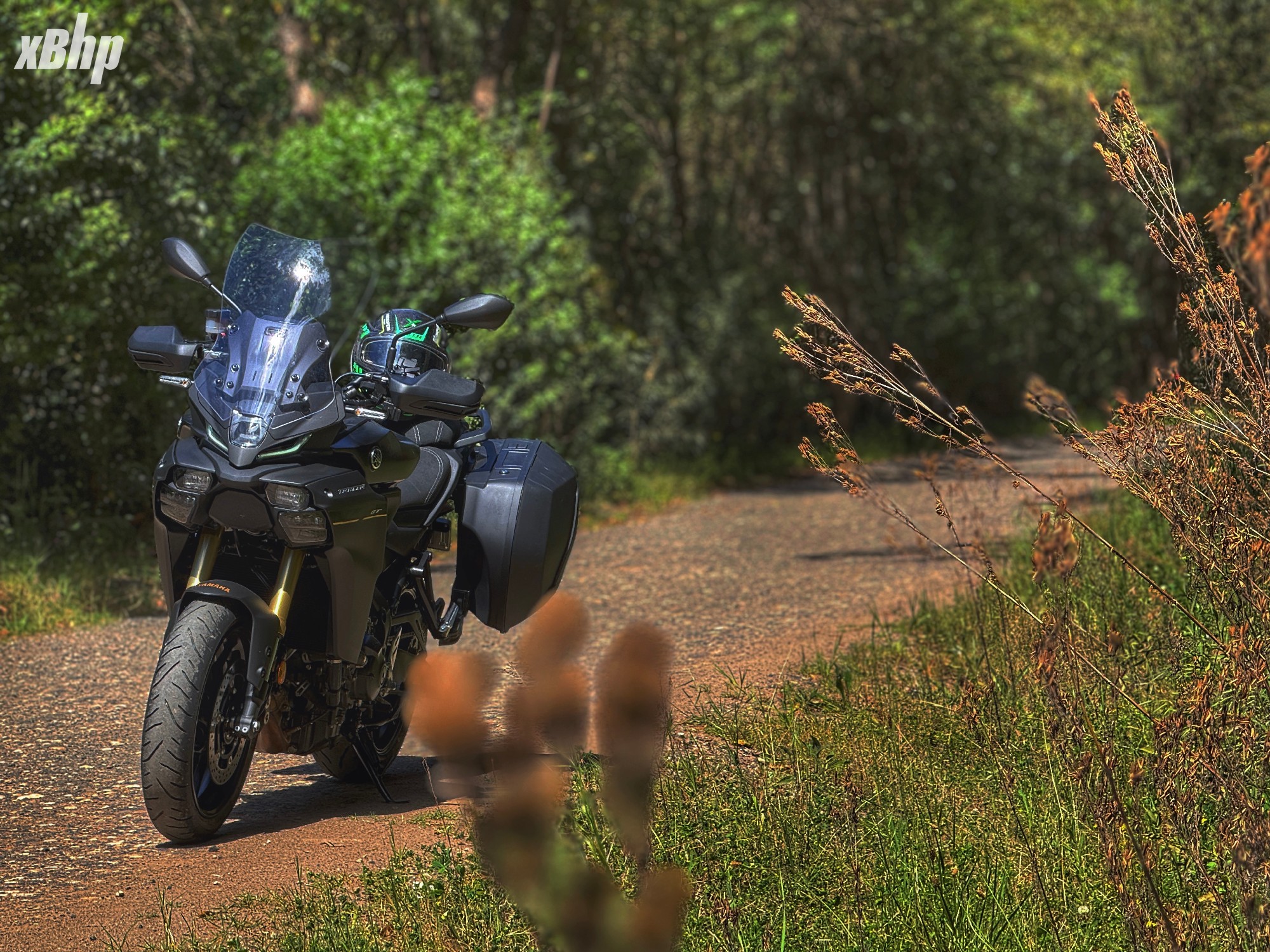
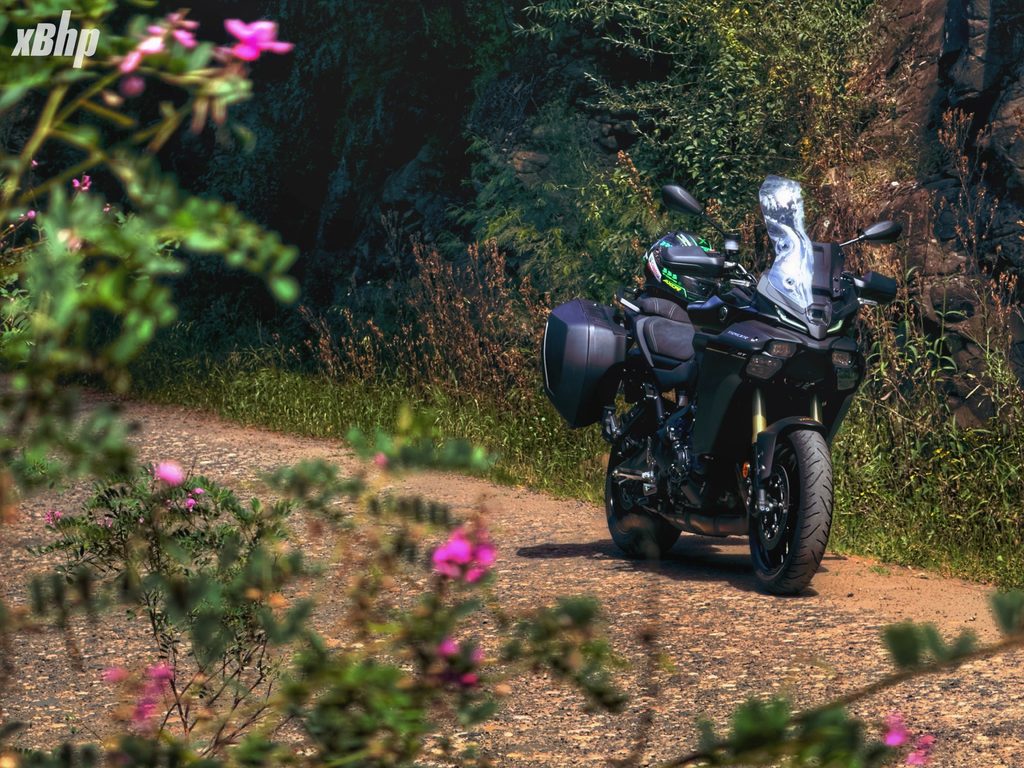
I also like the way it looks. The blacked-out version we have here has a purposeful, almost mean appearance that suits the motorcycle’s character. Yamaha also offers it in silver and Yamaha Blue, both of which have their own appeal.
And after riding the Kawasaki H2 and doing the Bathurst 1000 on it, jumping onto the Tracer was a reminder of just how different two motorcycles can be. The H2 is an entirely different kind of machine. The Tracer doesn’t try to be extreme. Instead, it feels like a motorcycle that wants to make big distances easy. There are, of course, plenty of alternatives. If you want something more extreme, there are motorcycles such as Ducati’s Multistrada or the Triumph Tiger, while the BMW F 900 range occupies another part of this segment.
But the question isn’t really about which motorcycle is the most capable. It is about what you actually intend to do with it. So, how much adventure bike do you really need? That’s probably the most important question to ask before buying a motorcycle like this. Do you really need something as large as a 1,200cc or 1,300cc adventure motorcycle? Or would something lighter make more sense?
Yamaha’s own Ténéré 700, for example, is more focused towards serious off-road riding. And if hardcore off-roading is genuinely what you intend to do, you could make an argument for going even lighter, perhaps to a 250cc or 450cc motorcycle. But if most of your riding is going to be on the road, with the occasional excursion onto a rough track or unpaved route, the Tracer 9 GT makes a lot of sense. You could even fit a set of dual-purpose tyres and make it a little more capable away from the tarmac.
Because ultimately, that’s what I like about this motorcycle. It isn’t trying too hard to be an adventure bike. It is a fast, comfortable and technologically loaded touring motorcycle that happens to have the ability to tackle a bit of rough stuff when required. In some ways, it feels like a superbike in disguise, except one that you can actually ride across a country without destroying your back. And for the kind of riding most people will actually do, that’s probably more than enough motorcycle.