Since '02 xBhp is different things to different people. From a close knit national community of
bikers to India's only motorcycling lifestyle magazine and a place to make like-minded biker
friends. Join us
xBhp was born more than 16 years ago and since then we've had a chance to ride or drive hundreds of machines
running on two wheels or four wheels, and sometimes even three wheels. We are not done yet, and this list is
still growing. In these pages, we take a deep dive in the treasure trove of our ride experiences and bring
you all that we have ridden or driven.
Machines Done 433
|
Total Cubic Capacity 178731
|
BHP 56456
Mahindra XUV 3XO ZNG Review
1,197CC110BHP200NM
Oct 2026
xBhp
Cars,Mahindra
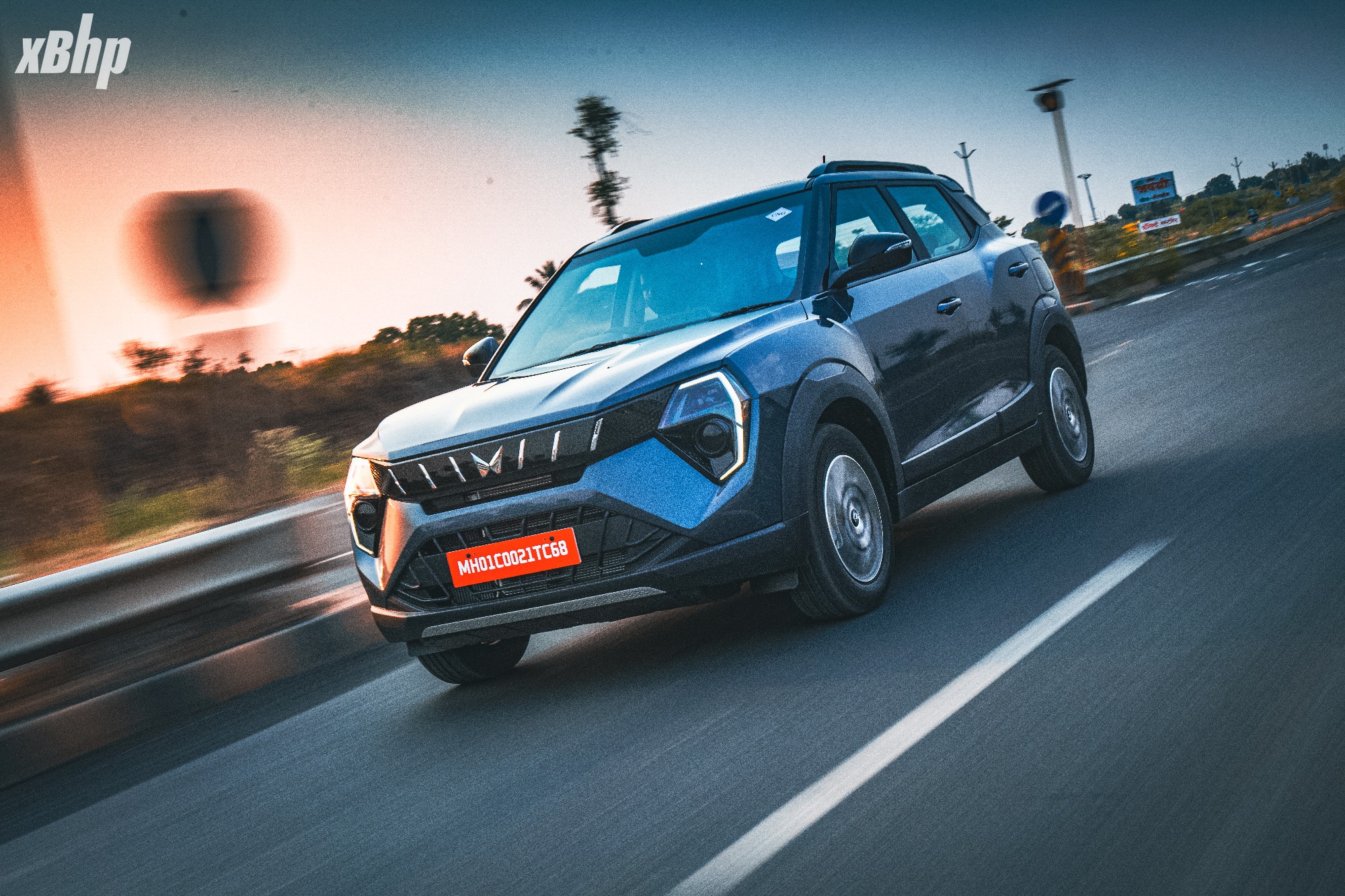
A CNG SUV on a racetrack? That certainly wasn’t on my usual list of expectations. Yet after driving the new Mahindra XUV 3XO ZNG on the roads of Delhi NCR, we found ourselves at Urban Racer in Gurugram. It was an unusual setting for a car built around affordable running costs, and precisely what made this first drive interesting.
CNG cars have traditionally come with an unwritten bargain: spend less on fuel, accept less performance. Mahindra wants to rewrite that bargain. ZNG, pronounced ‘Zing’, promises the economy of CNG without sacrificing the turbocharged character of the XUV 3XO. I was more curious about that promise than any mileage figure.
The ZNG uses Mahindra’s 1.2-litre, three-cylinder mStallion turbocharged engine. It makes 110 bhp and 200 Nm between 1,500 and 3,500 rpm. Here’s the interesting bit: Mahindra quotes those same outputs in petrol and CNG modes. Revised turbo and ECU calibration, along with a 10-bar CNG injection system, are key to making that possible.
Now, Mahindra claims a 0-100 km/h time of 11.8 seconds. We did not test the car for that, but I believe it is doable. Why? It is because of the torque. The 200 Nm of torque that the engine produces is impressive, but more important is how it arrives. You have a chunk of it available from just 1,500 rpm. And this is not just for the 0-100 number. That is not what this car is aimed at. It is aimed at effortless performance in everyday conditions.
That is what I found out during our road driving test. In daily driving, you have traffic, good roads, bad roads, and therefore, varying speeds. You find yourself in various spots in the rev range, and that is what tells you more about a car than anything else. This car has grunt everywhere you expect to find yourself in a daily driving situation. To me, that is more important than outright performance.
A six-speed manual sends power to the front wheels. It gives you control over which part of the torque band to use, something I appreciate as a driver. But there is another side to that coin: in heavy NCR traffic, you still have a clutch pedal to work. An automatic CNG option would make a lot of sense here, and its absence is perhaps the most obvious limitation of the package.
The car can start in CNG mode, lets you switch fuels and moves to petrol automatically when CNG runs low. I like that flexibility. If you’re heading out on a longer road trip, you don’t want your route dictated entirely by the nearest gas station.
Then came Urban Racer. Let me be clear: we weren’t there to set lap records, and the XUV 3XO ZNG is not pretending to be a hot hatch. But putting a CNG SUV into a controlled driving environment changes the questions. Instead of asking only what it will save, you start thinking about its responses, steering, weight transfer and overall composure.
The fundamentals are familiar XUV 3XO: MacPherson struts up front, a twist-beam rear suspension, disc brakes at all four wheels and selectable steering assistance. The track experience gave the day a welcome enthusiast angle. It didn’t replace a properly instrumented performance test, but it made Mahindra’s intention clear: the ZNG is being presented as a car you can enjoy driving, not just one you can justify buying.
Our blue-grey test car looked much like any other XUV 3XO, and that’s a good thing. The distinctive lighting, upright stance and familiar cabin remain. With a 2,600 mm wheelbase, there is useful passenger space inside a body that’s still under four metres long. Depending on the variant, features include 10.25-inch displays, dual-zone climate control, a sunroof or Skyroof and Dolby Atmos audio. Not every version gets every feature.
One practical question with CNG is luggage. Mahindra has packaged two cylinders beneath a flat boot floor, leaving 270 litres of space, compared with 364 litres in the regular 3XO. That’s clever packaging, but it is still a smaller boot. For a short break it may work nicely; for a fully loaded family road trip, I’d check the luggage fit first.
Six airbags, stability control and ISOFIX mounts are standard, along with CNG-specific leak detection. The regular XUV 3XO earned five stars in Bharat NCAP testing, although that should not be mistaken for a separately published ZNG crash-test rating.
Mahindra quotes 24.7 km/kg certified CNG efficiency. We didn’t conduct a fill-to-fill economy test, so real-world mileage remains an open question. The ZNG launched in four manual variants, priced from 9.99 lakh to 12.27 lakh, ex-showroom. Ultimately, the savings will depend on how much you drive, local CNG prices and how convenient refuelling is on your regular routes.
What stayed with me after the Delhi NCR drive and the session at Urban Racer wasn’t just a specification. It was the fact that someone had decided a CNG car deserved to be talked about in terms of driving enjoyment. The ZNG still has compromises: a smaller boot, no automatic and fewer high-end options than some petrol variants. But a factory-CNG SUV promising its petrol sibling’s full 200 Nm is a genuinely interesting proposition.
If you cover serious kilometres, have easy access to CNG and still enjoy driving a manual, this deserves a look. I would want a longer stint before delivering a final verdict on fuel economy or ownership. For a first encounter, though, the XUV 3XO ZNG does something refreshingly different: it makes a conversation about CNG end with the word ‘fun’.