Since '02 xBhp is different things to different people. From a close knit national community of
bikers to India's only motorcycling lifestyle magazine and a place to make like-minded biker
friends. Join us
Since our first roadtrip in 2006, xBhp has ridden in more than 63 countries on some of the most exotic
motorcycles and cars that this planet has to offer... And the ride is still on. In these pages, let us take
you on a journey through memory lanes of all these roadtrips. We are publishing one roadtrip at a time, so keep coming back for more!
COUNTRIES 64
ROADTRIPS 89
|
KMS 42504
BHP 1573
From Kashmir to Kanniyakumari | Xplore India on XSR155
Measurement System: Speed in km/h and fuel in litres
Machine: Yamaha XSR155
There are some journeys every Indian motorcyclist has imagined at least once. And that is doing Kashmir to Kanniyakumari; the great north-to-south line across India. It is the kind of ride that lives for years inside saved maps, bookmarked videos and late-night conversations between riders. Everyone knows someone who has planned it. Many have calculated the kilometres. Some have shortlisted the motorcycle, riding gear and luggage.
But the conversation usually ends with the same word: “Someday.” Sometimes it’s about leaves. Sometimes it’s the budget. Sometimes family responsibilities take over. At other times, the fear is more personal. What if the road becomes too difficult? What if the weather turns against us? What if the motorcycle develops a problem far from home? What if the body gives up before the destination arrives?
When it comes to what makes Kashmir to Kanniyakumari intimidating is not just one thing or another. What actually makes one hesitant is the sheer scale. This ride covers a large part of India, and a diverse country like ours stretches across climates, languages, food, terrain, traffic patterns and cultures. It asks a rider to keep waking up and moving, even after the initial excitement has settled. And perhaps that is why the most challenging kilometre of K2K is not somewhere in the mountains or on an endless highway. It is the first one.
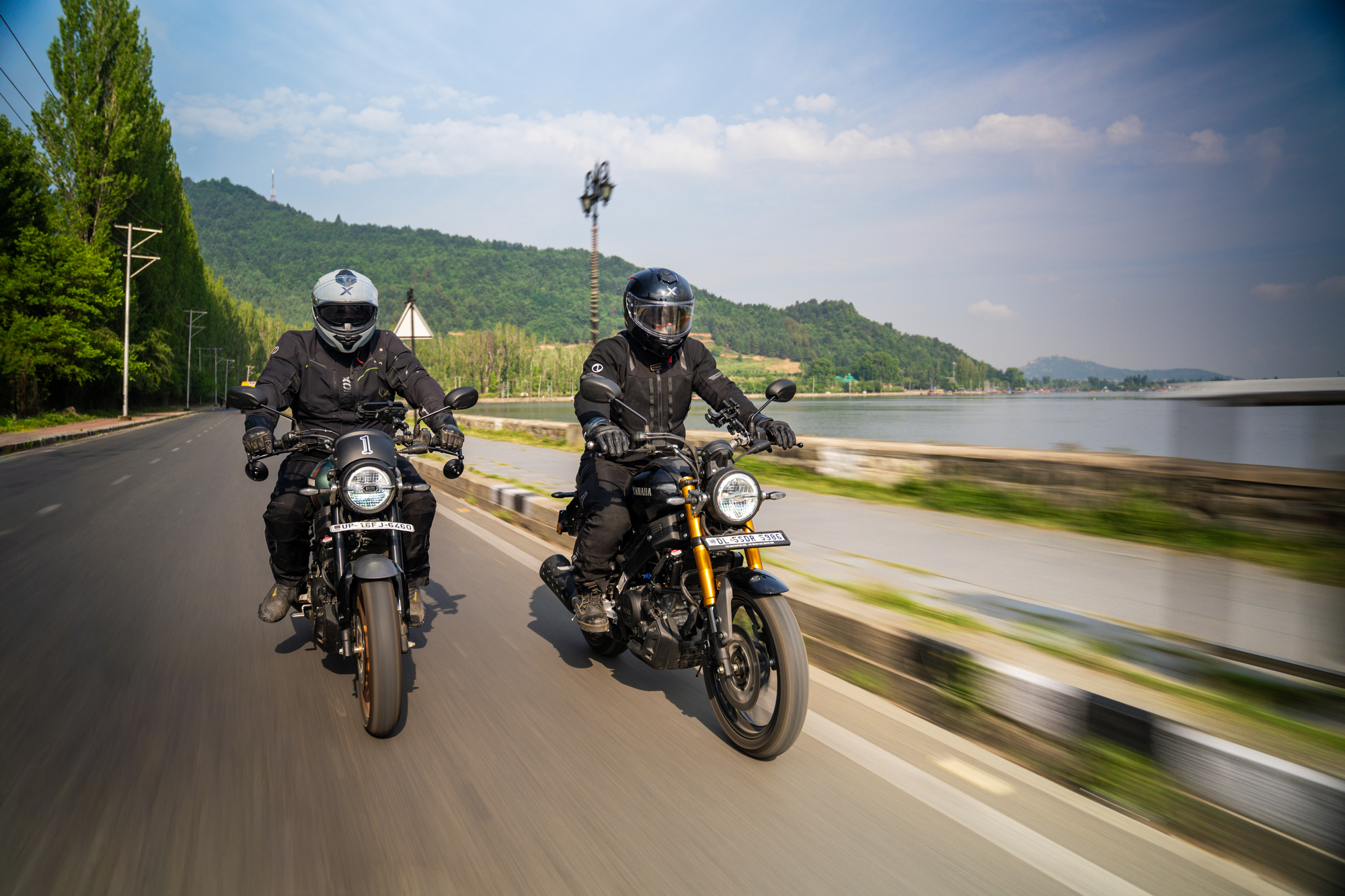
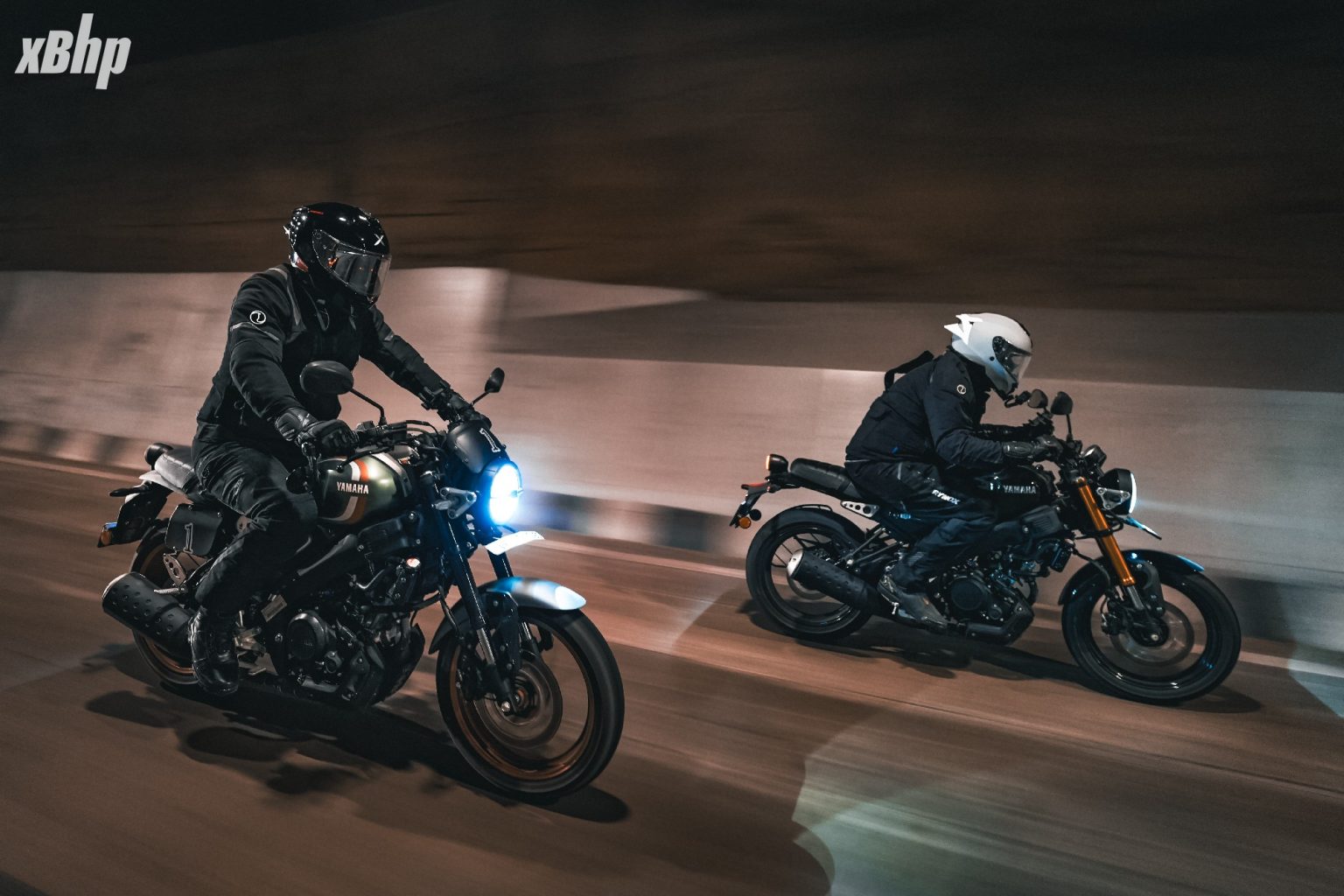
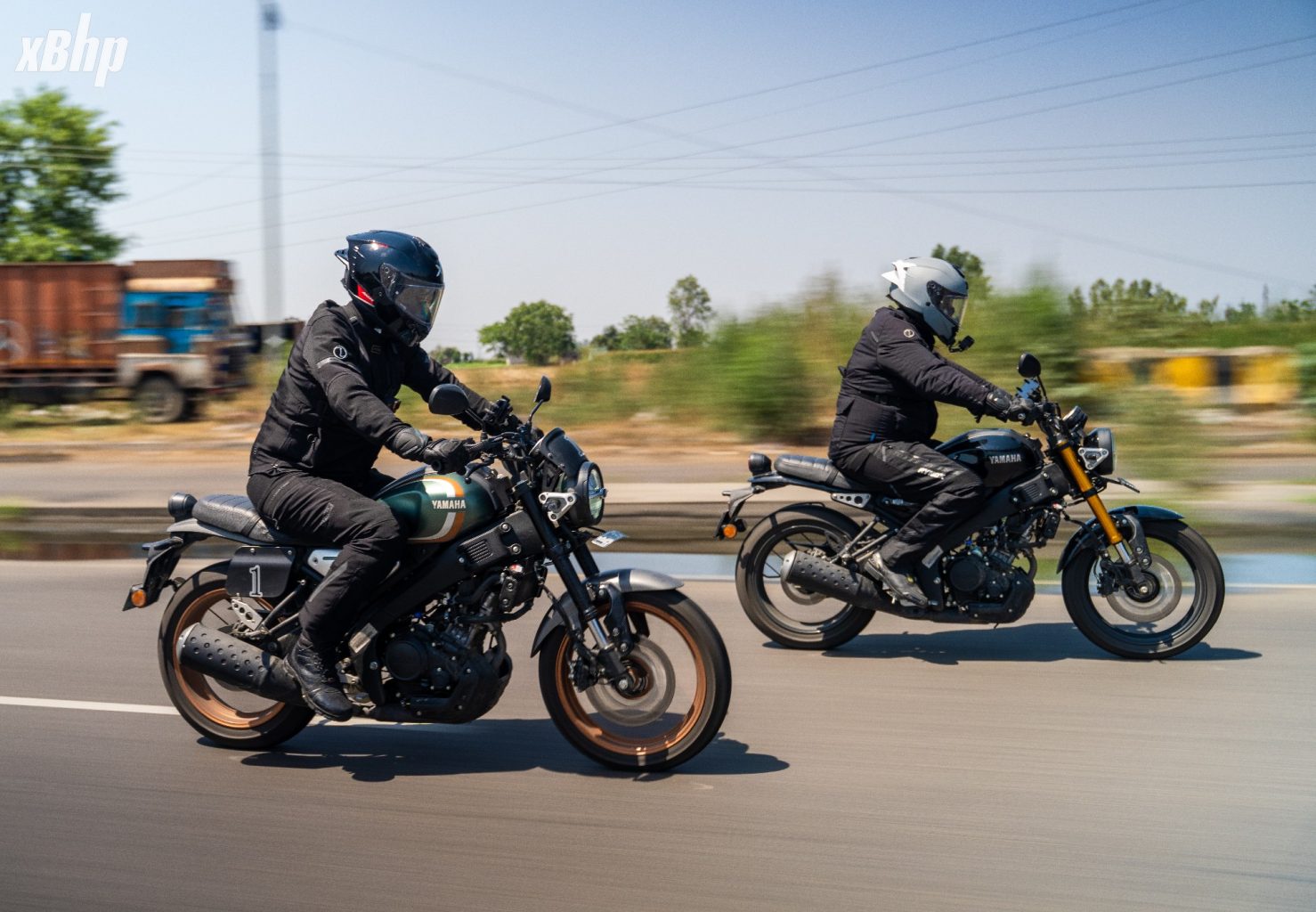
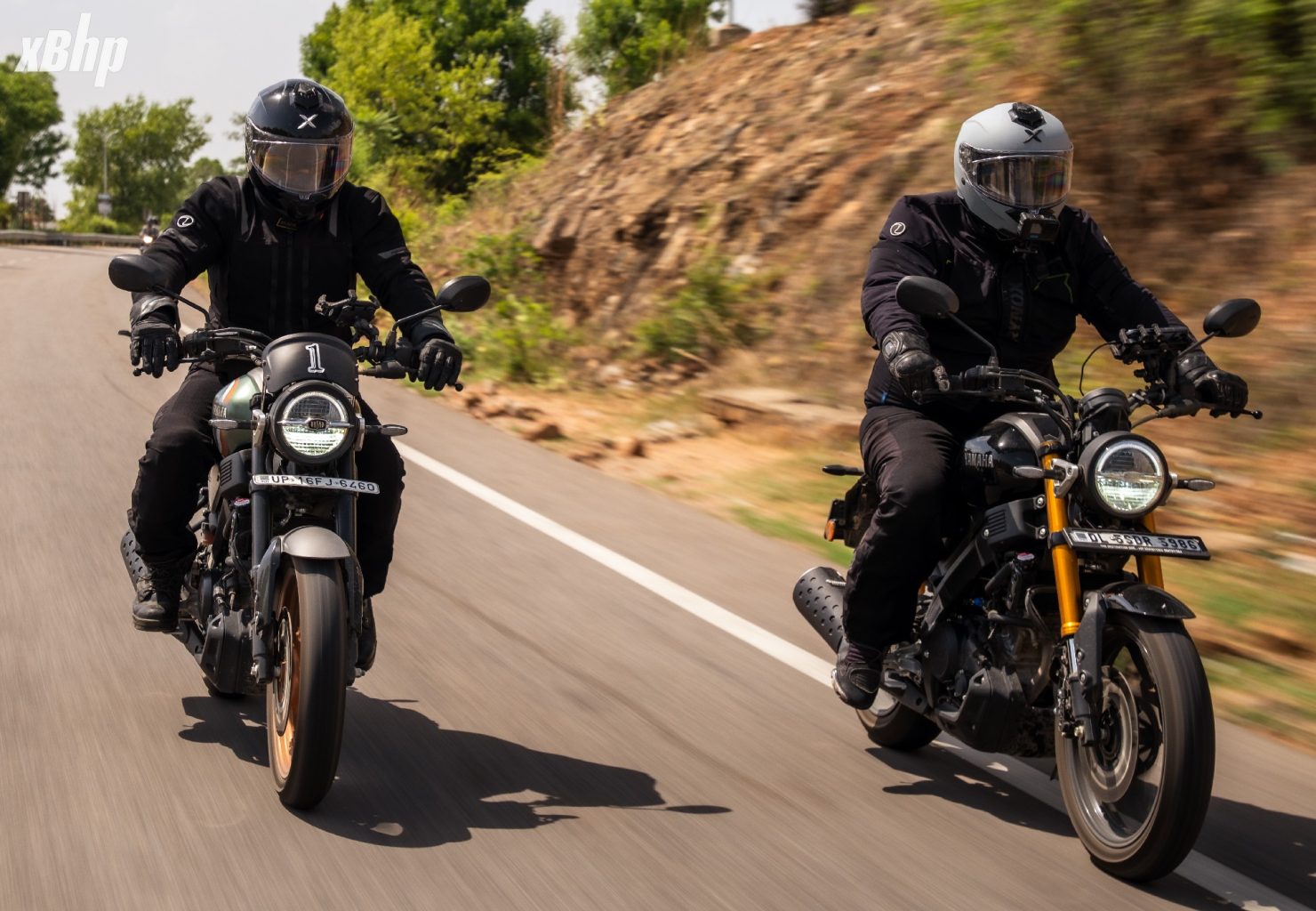
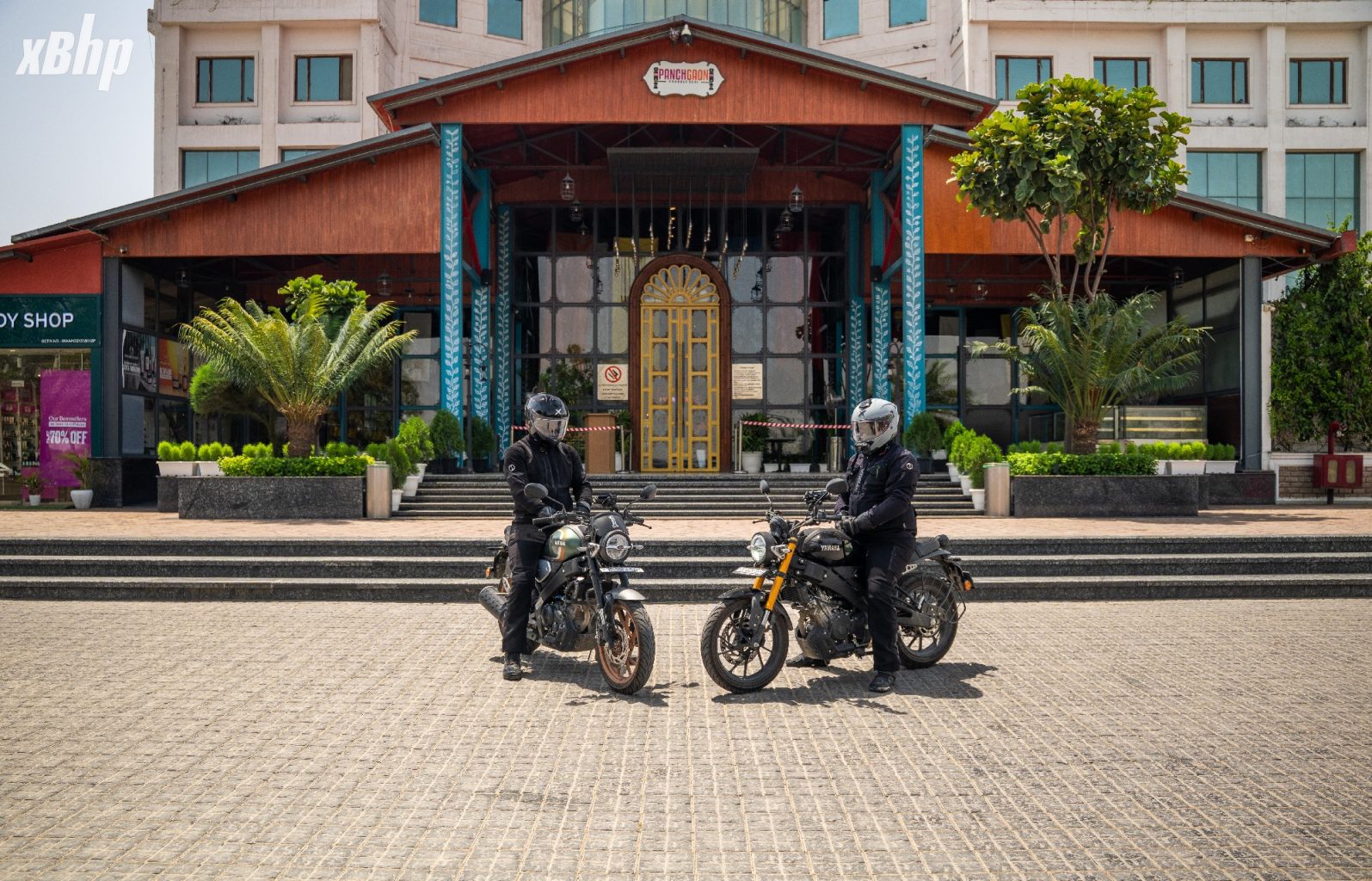
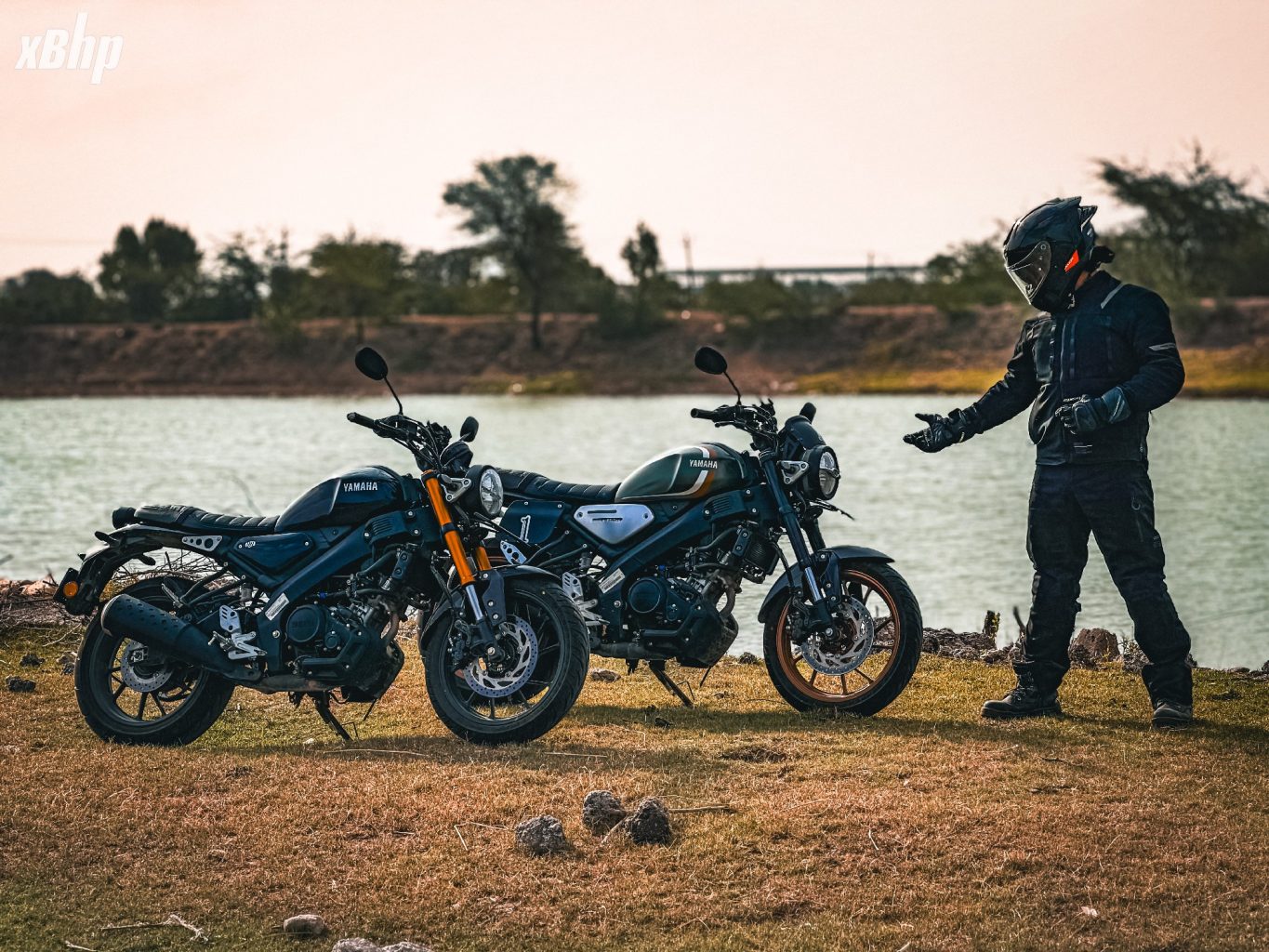
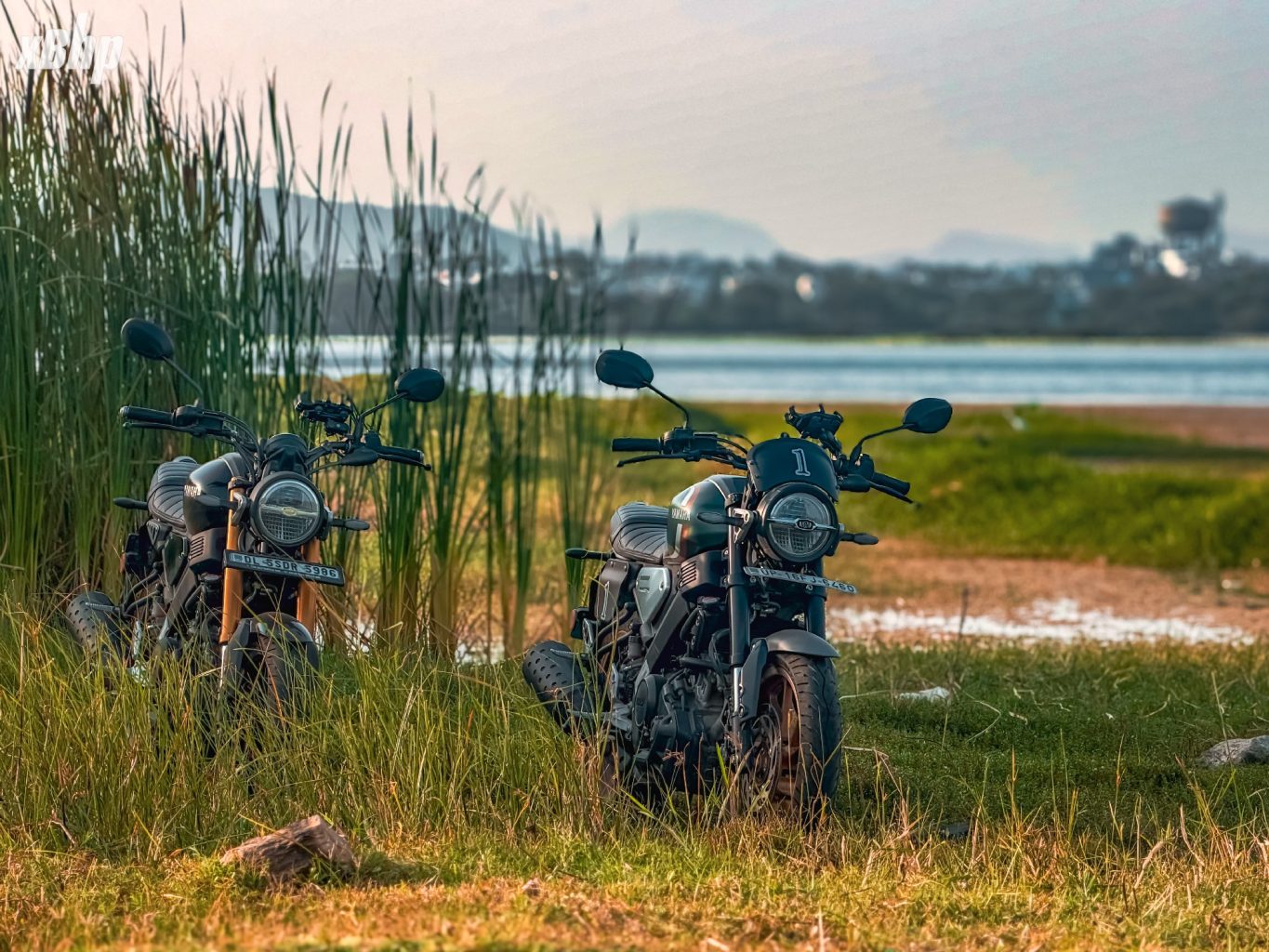
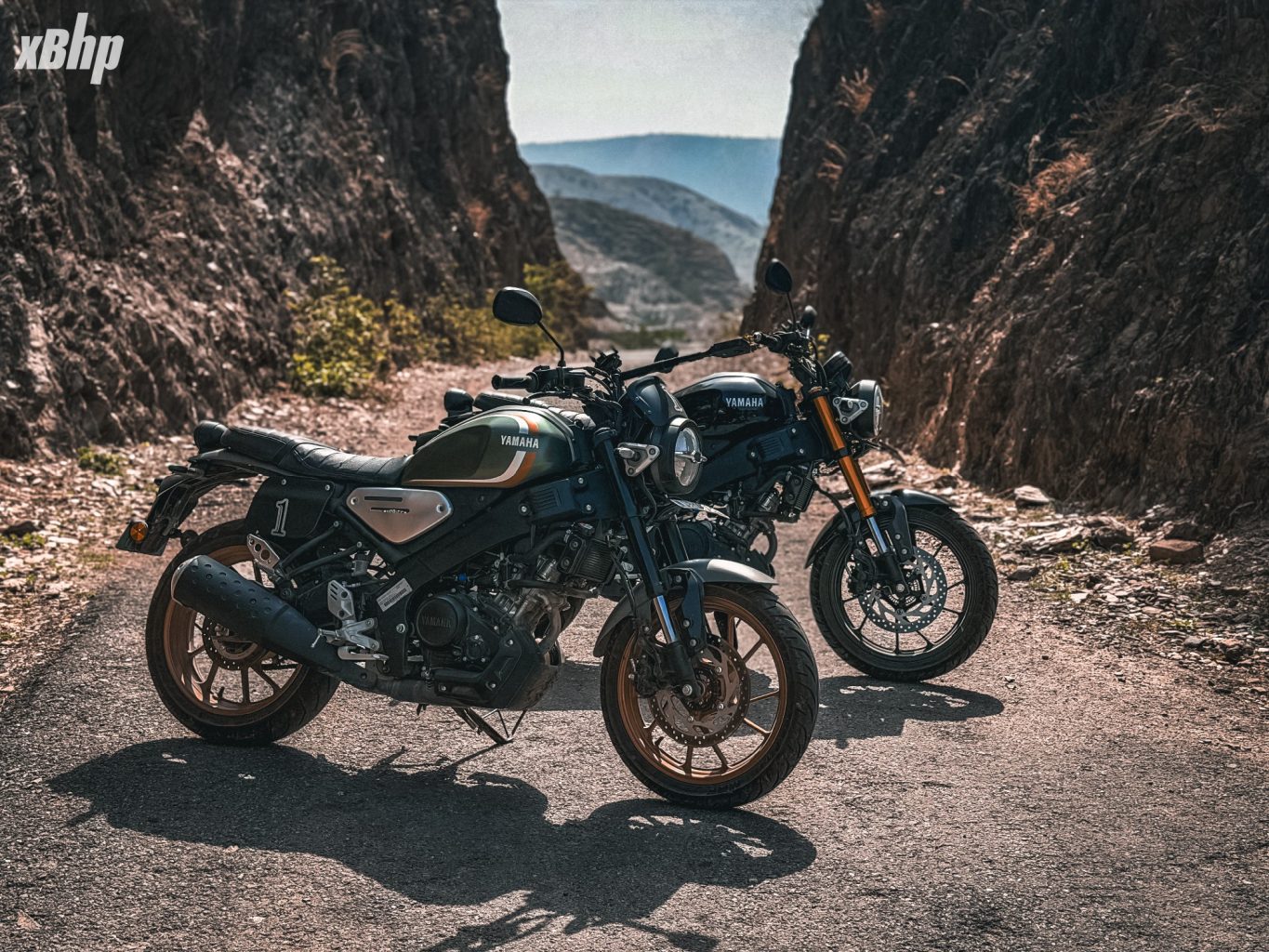
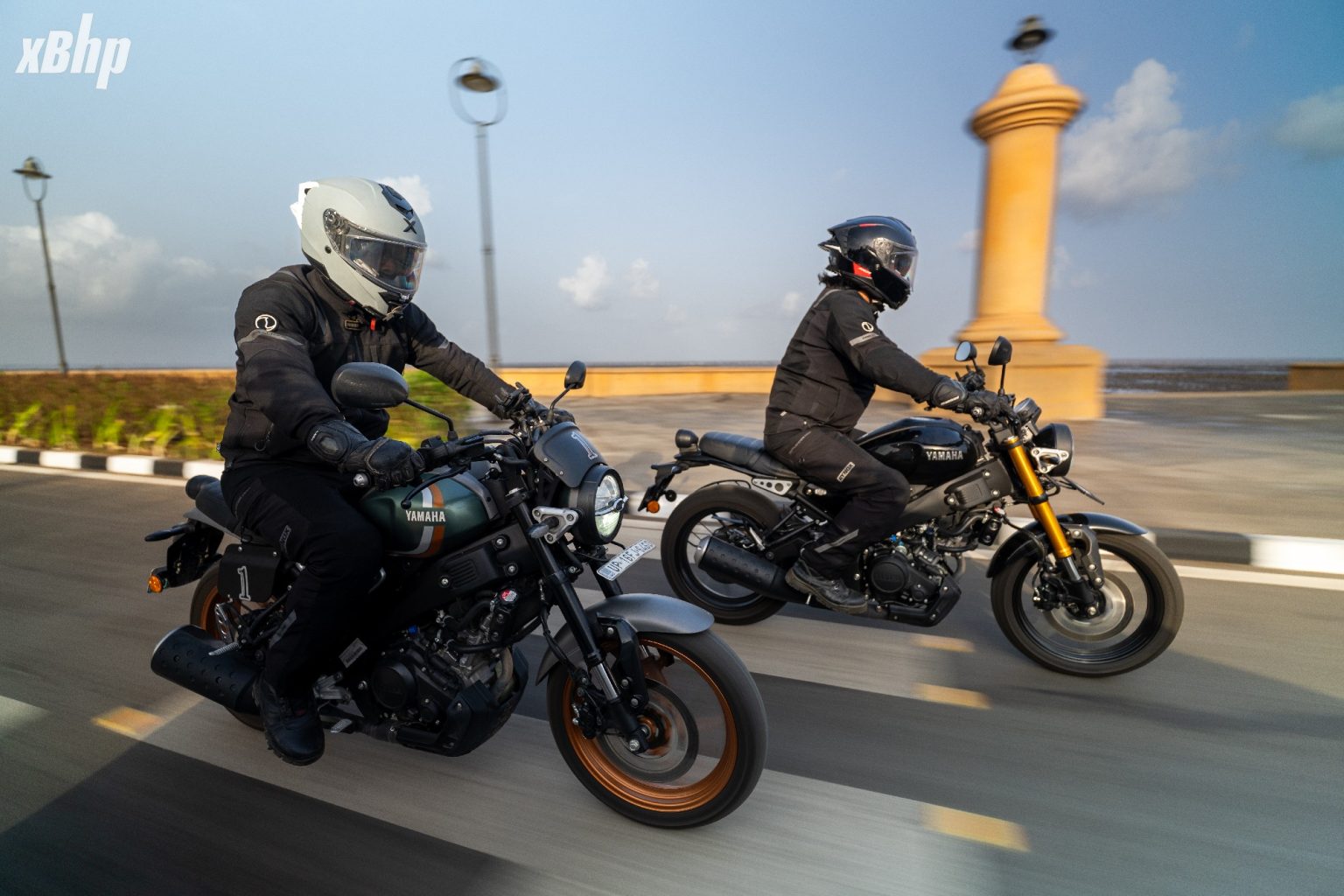
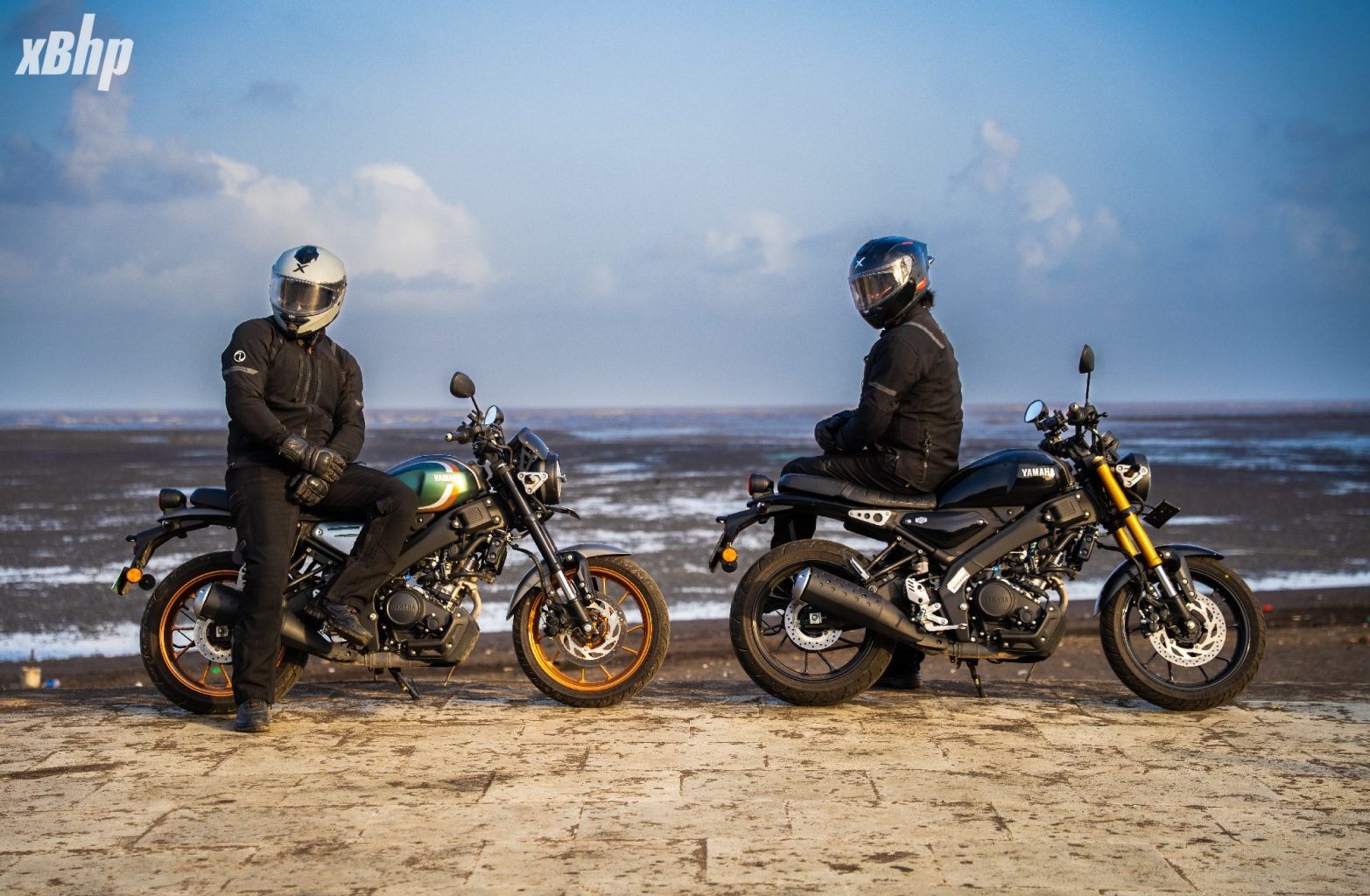
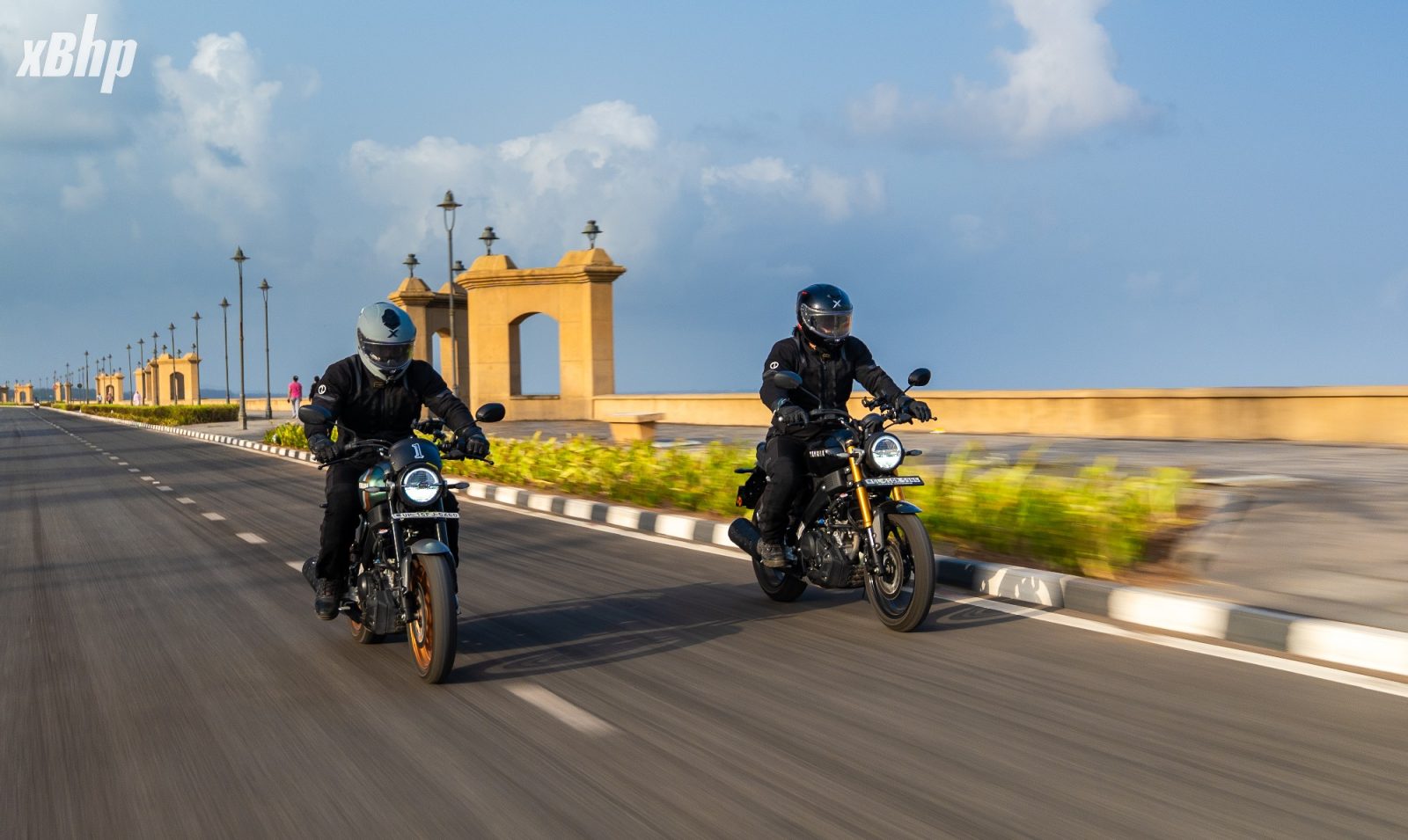
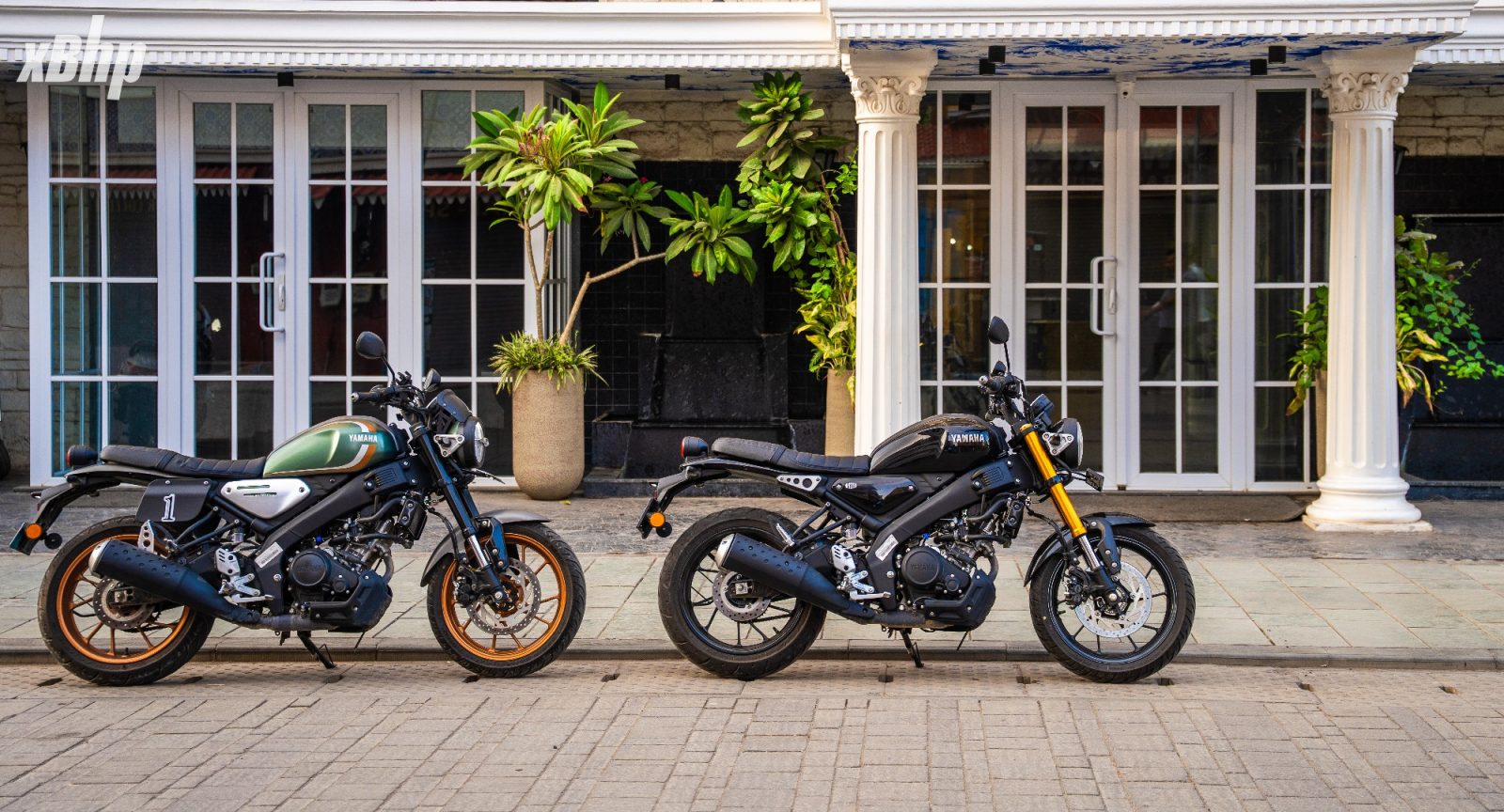
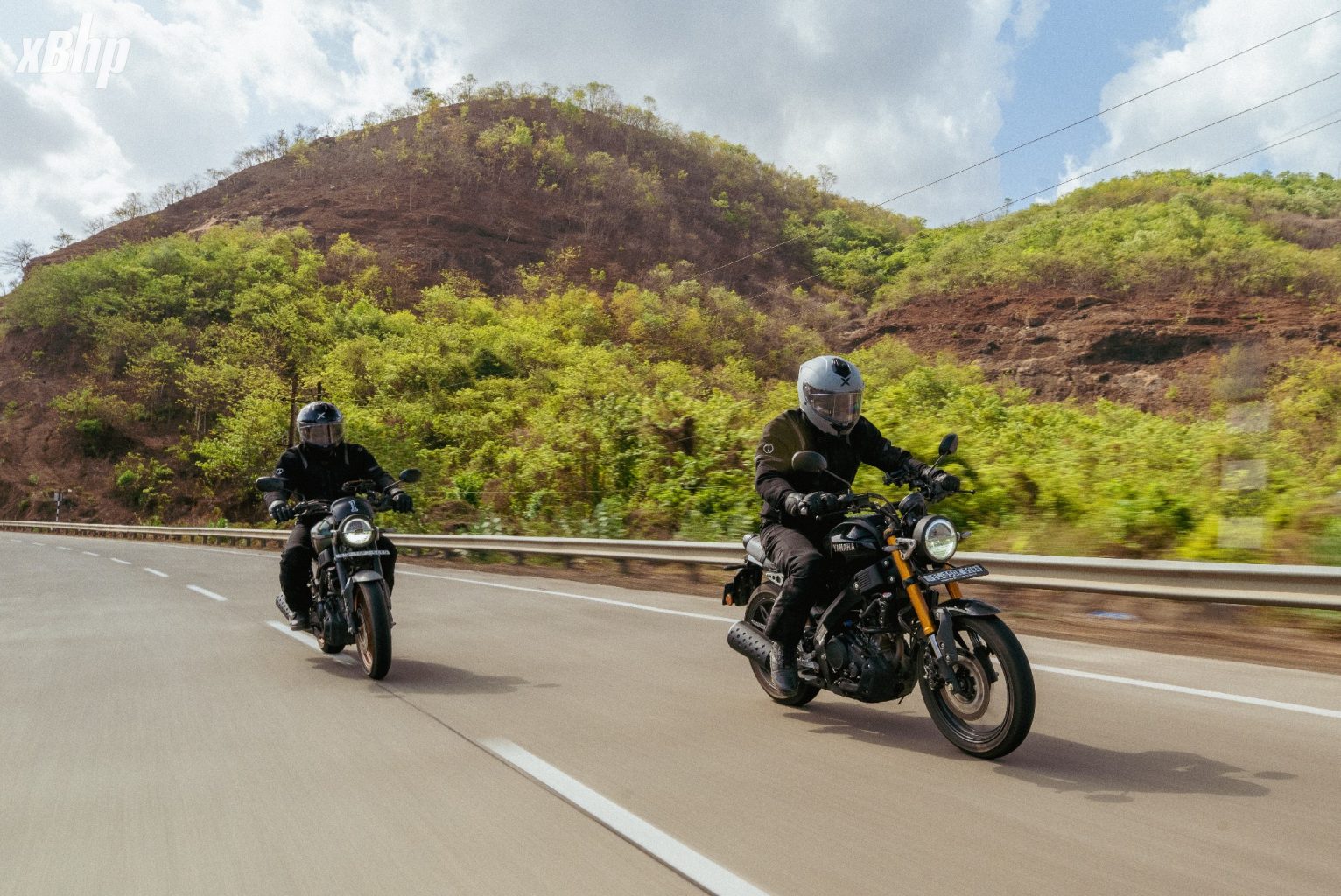
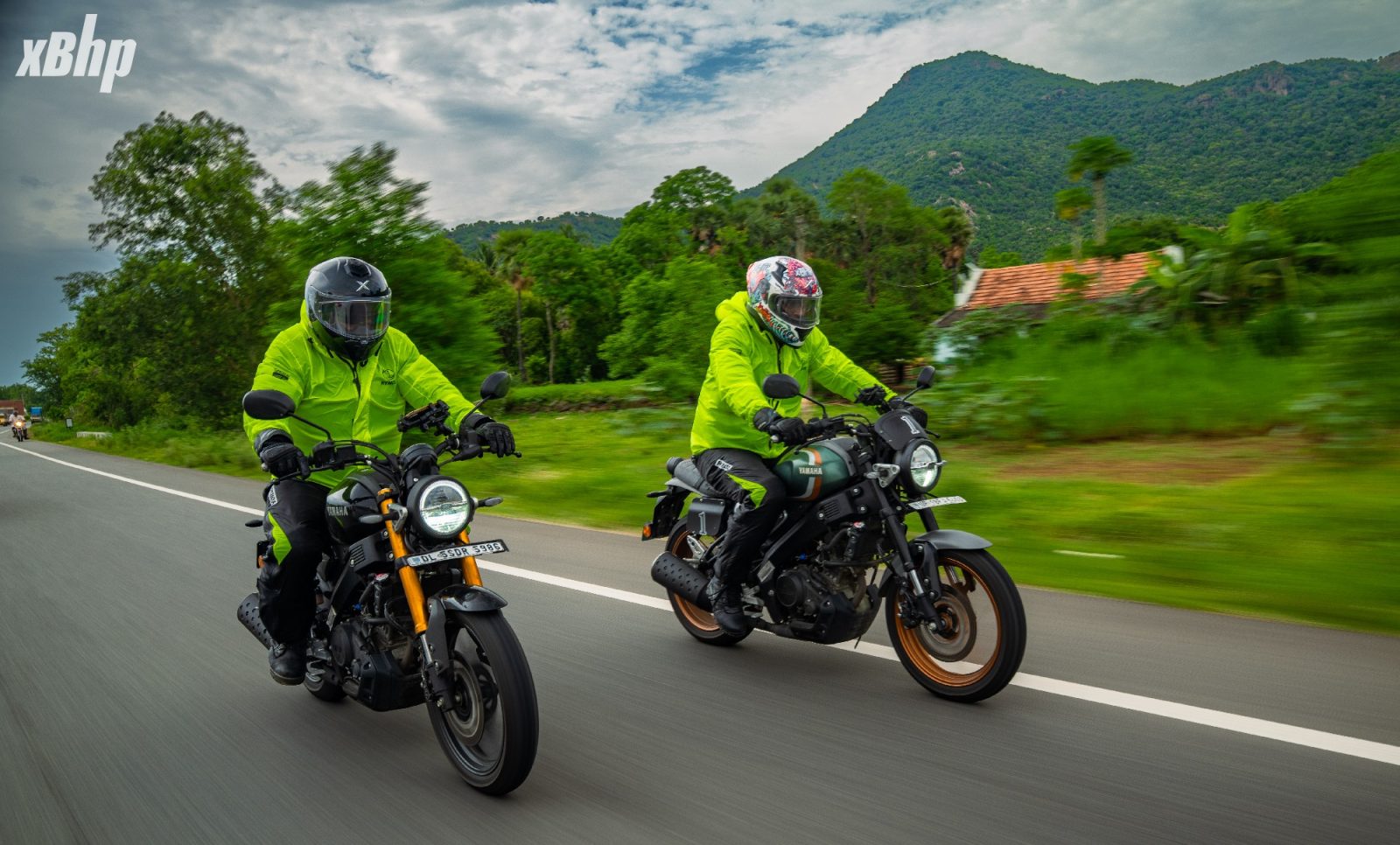
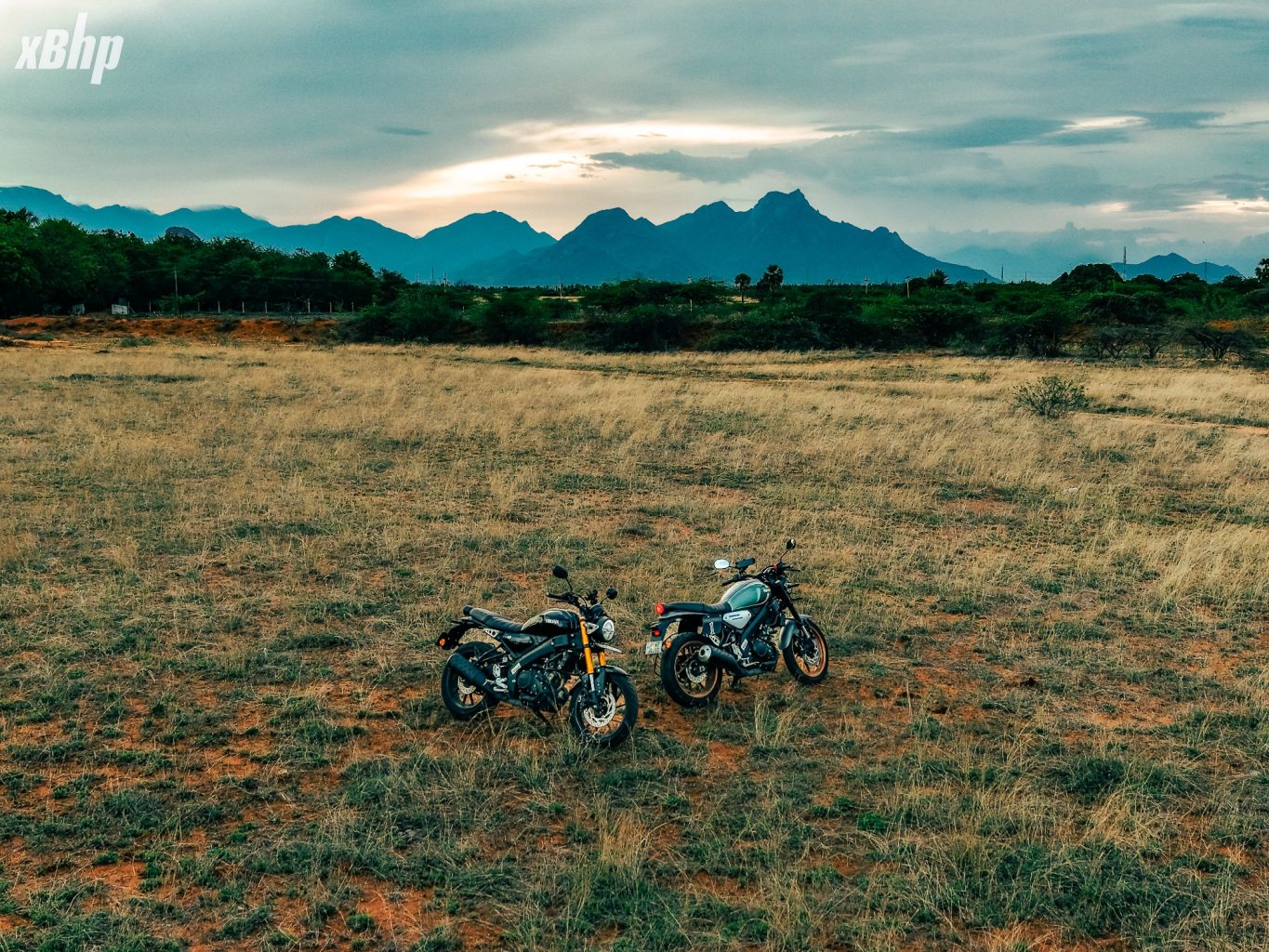
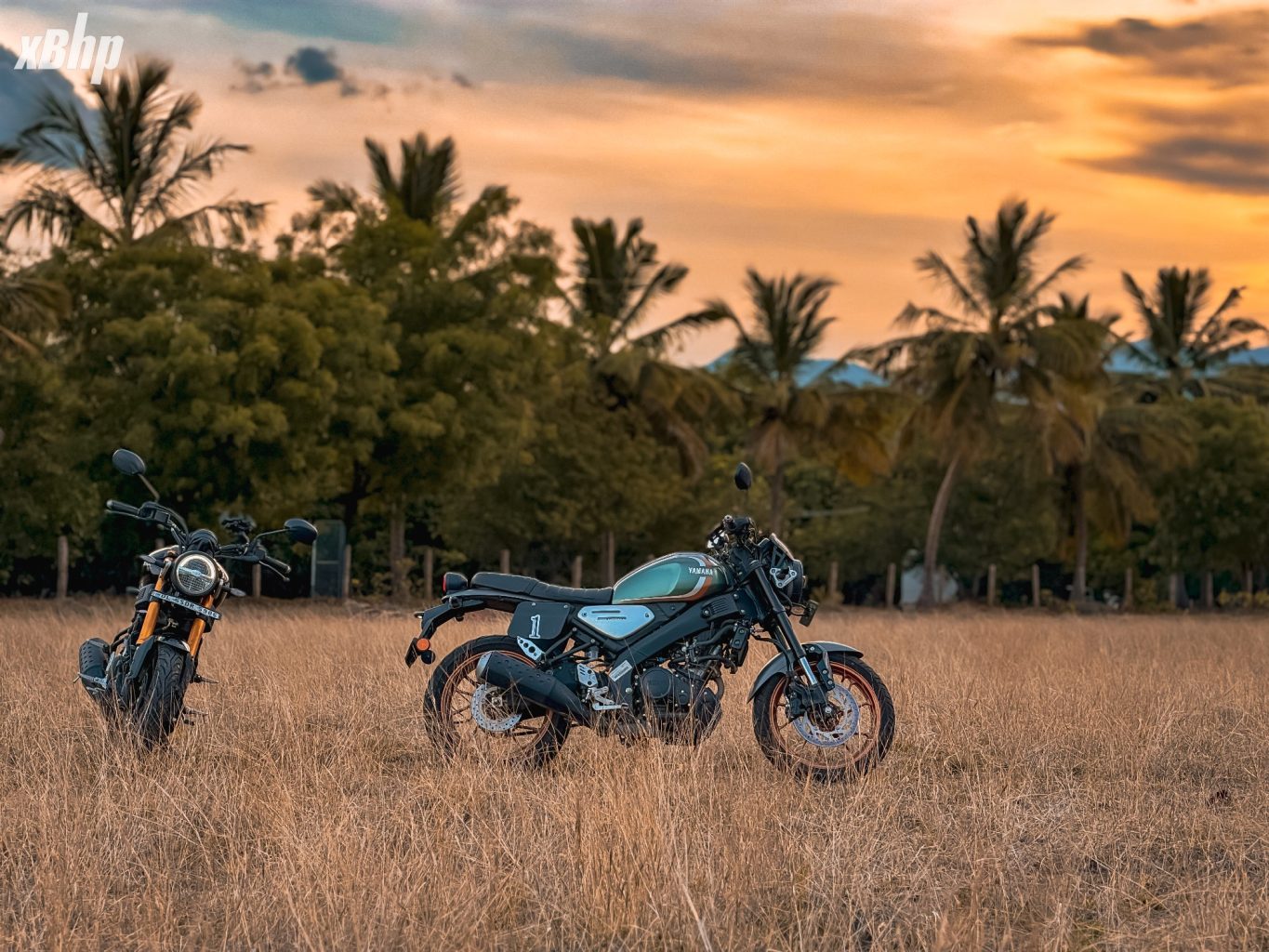
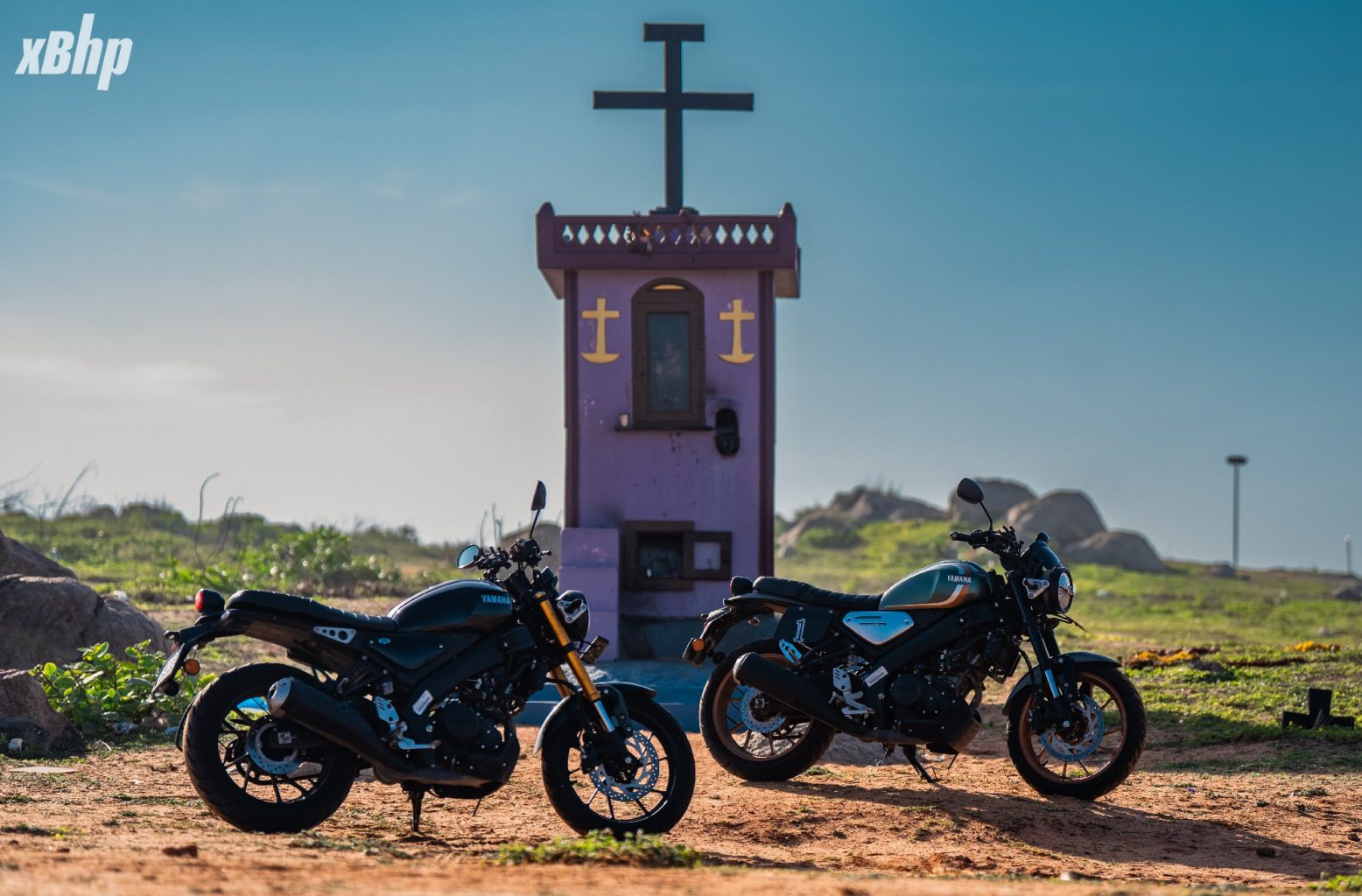
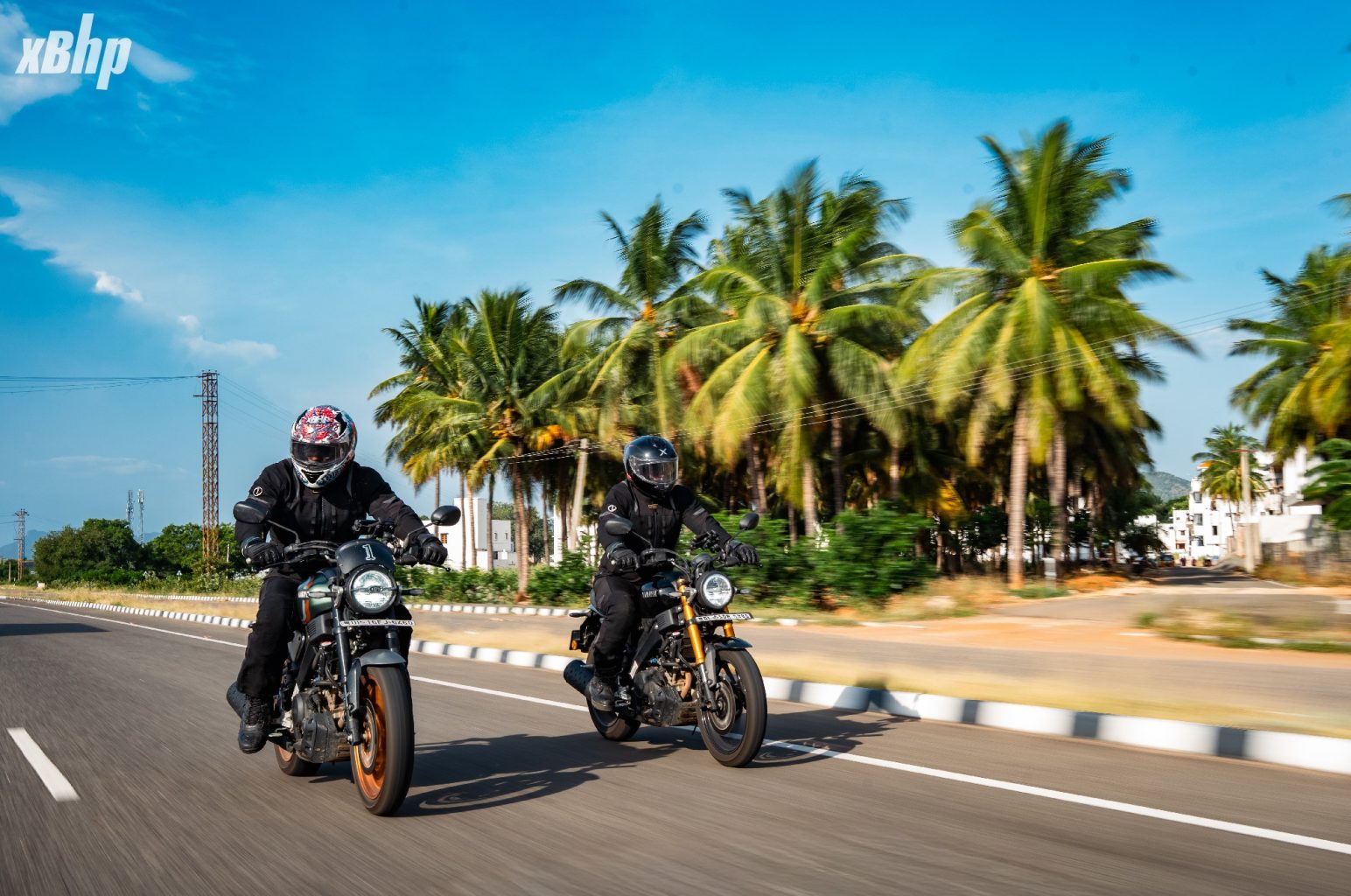
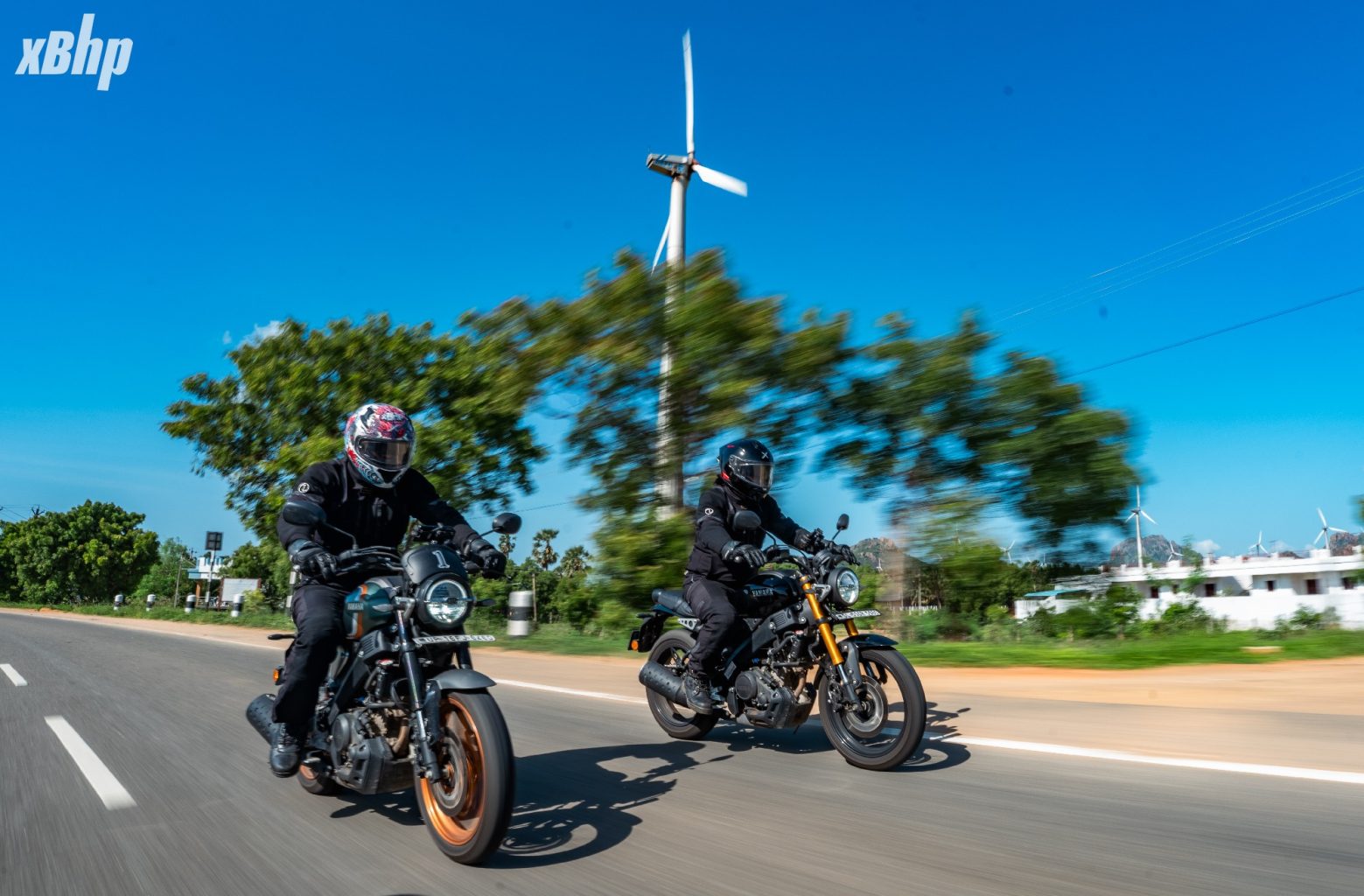
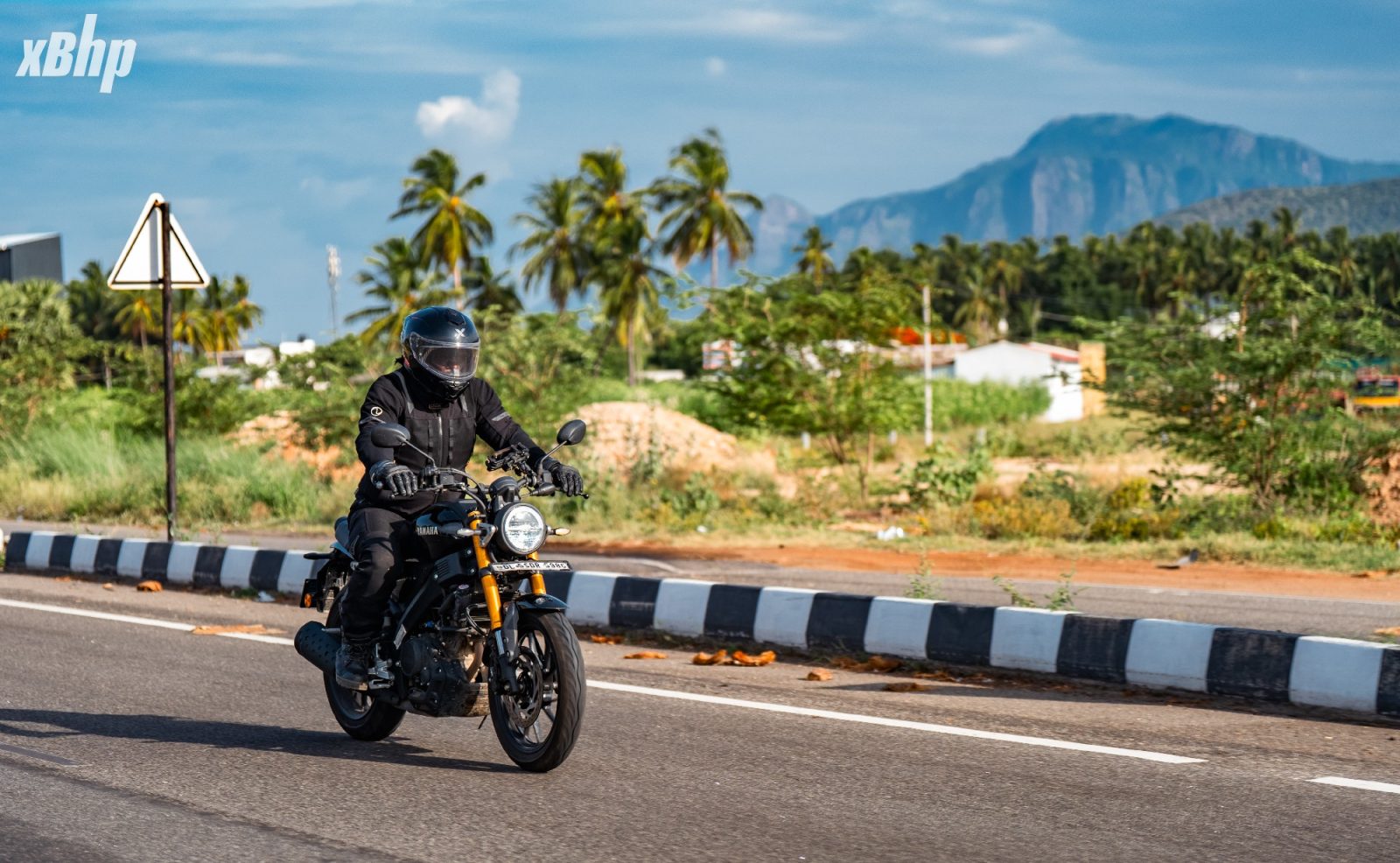
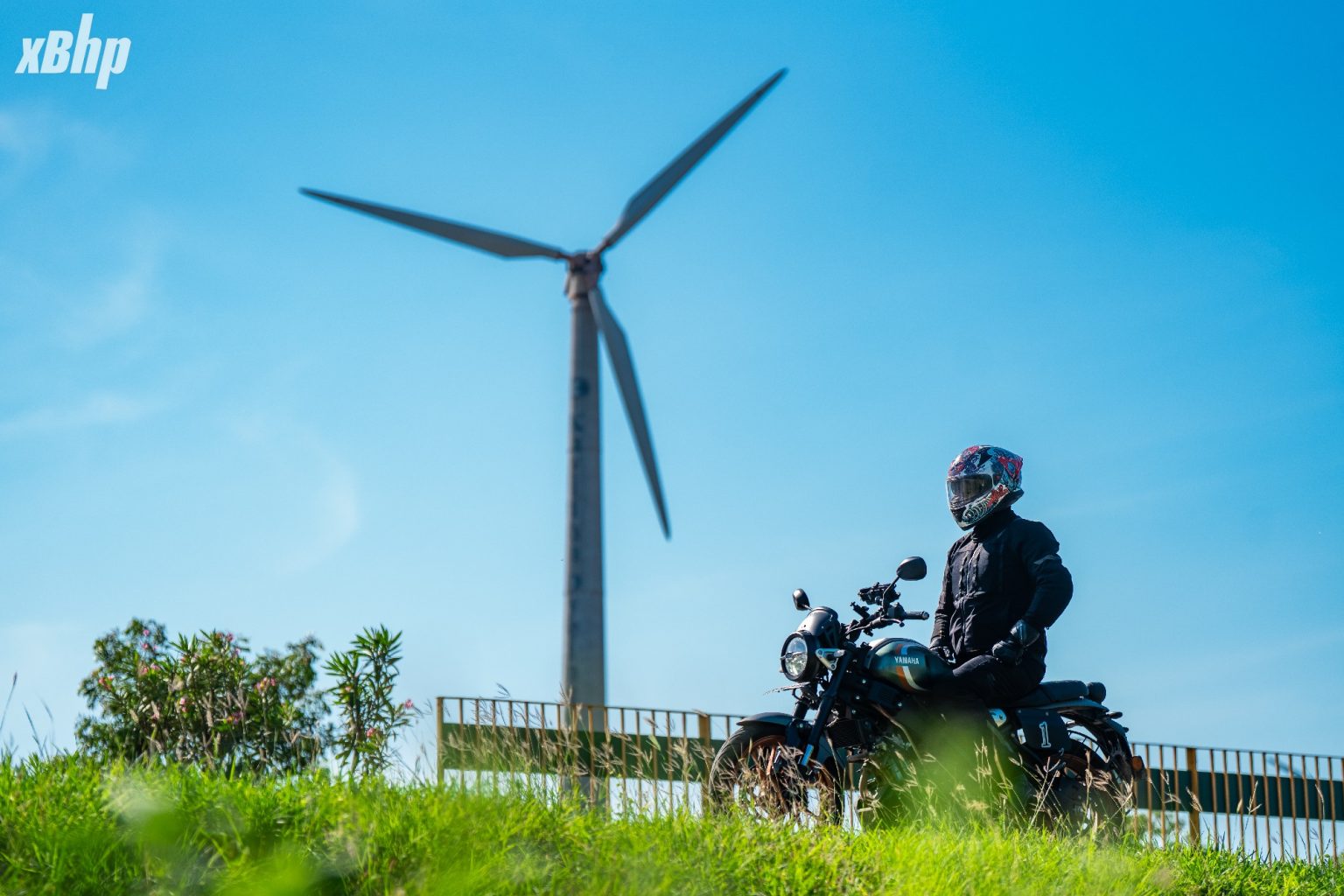
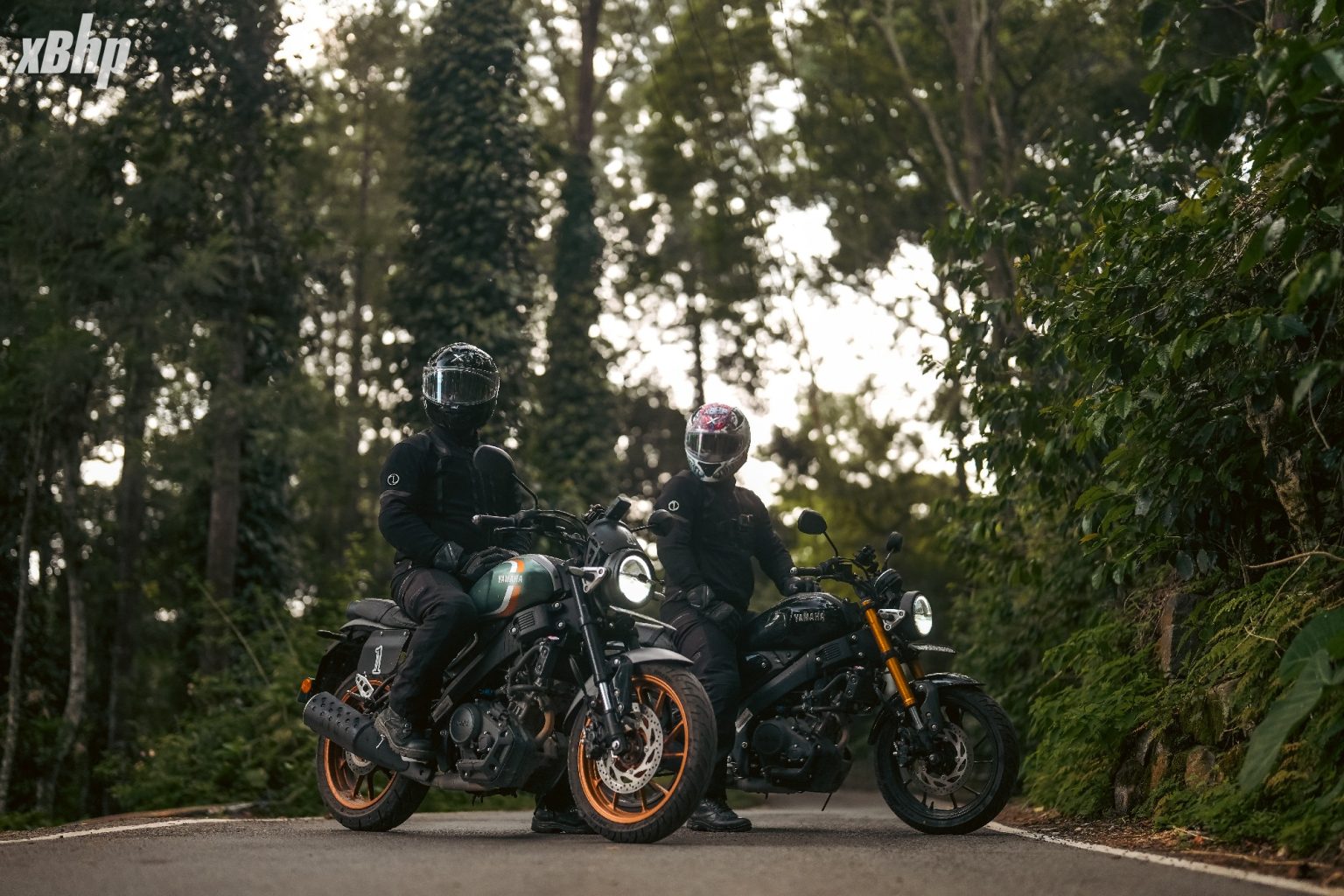
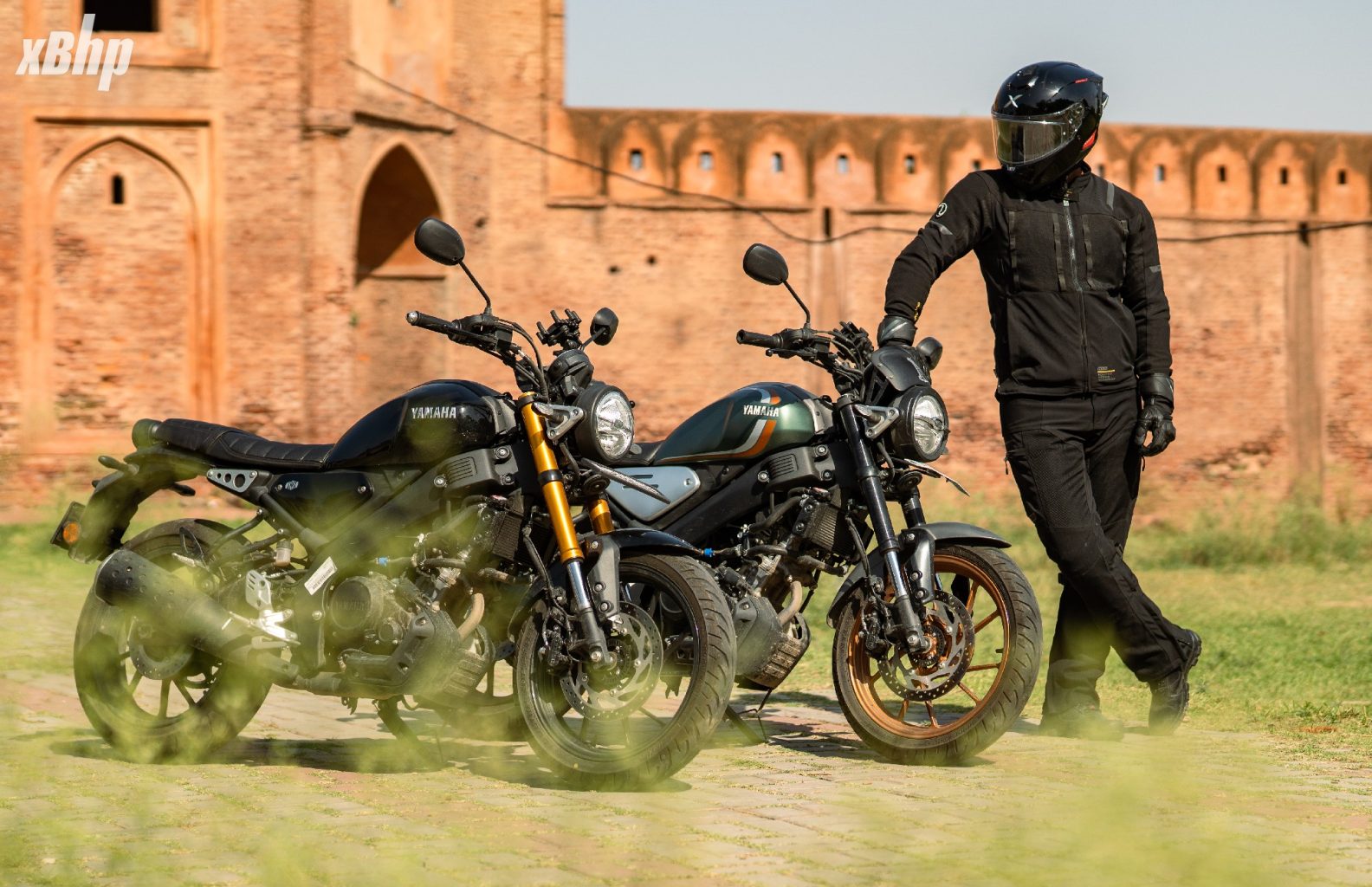
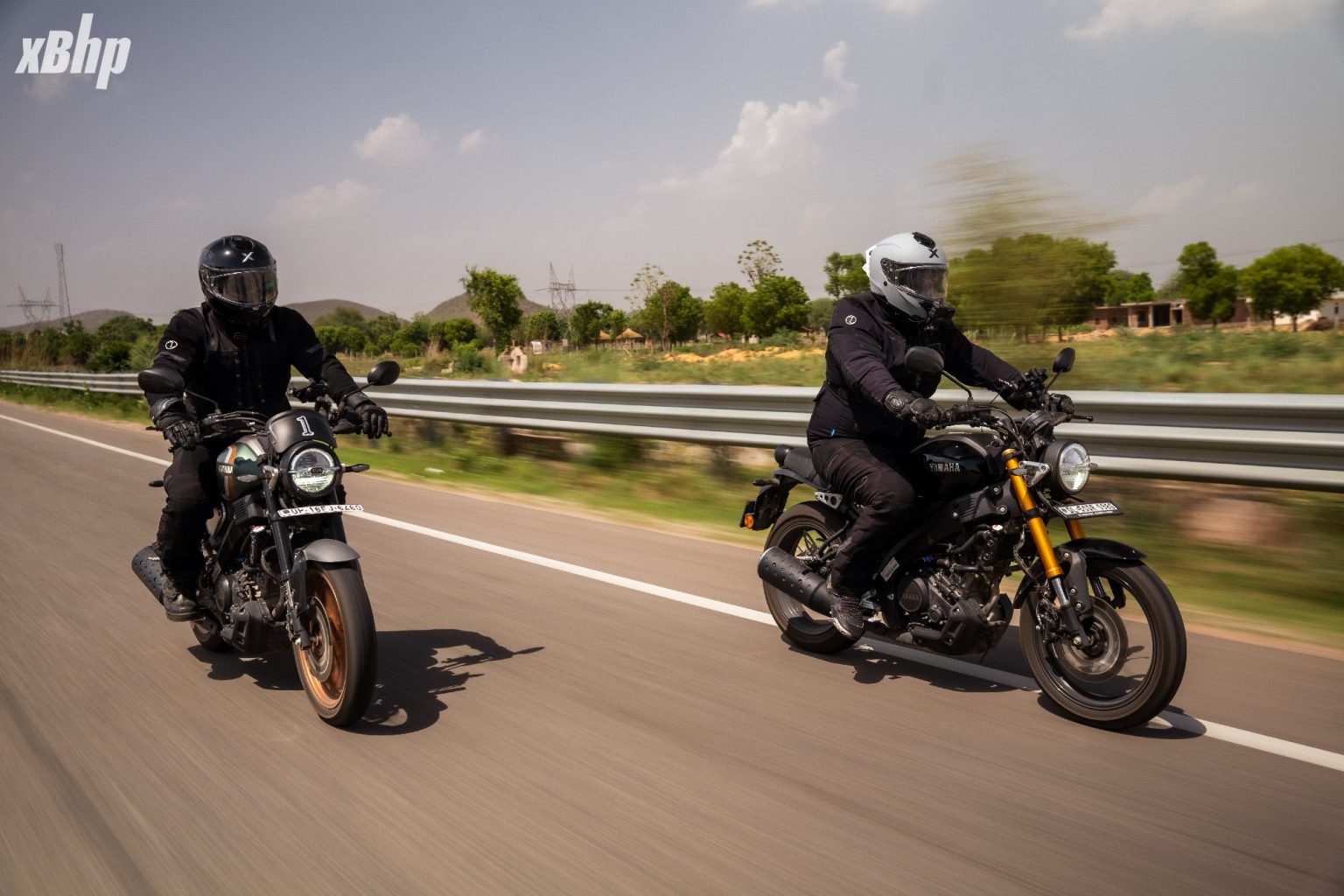
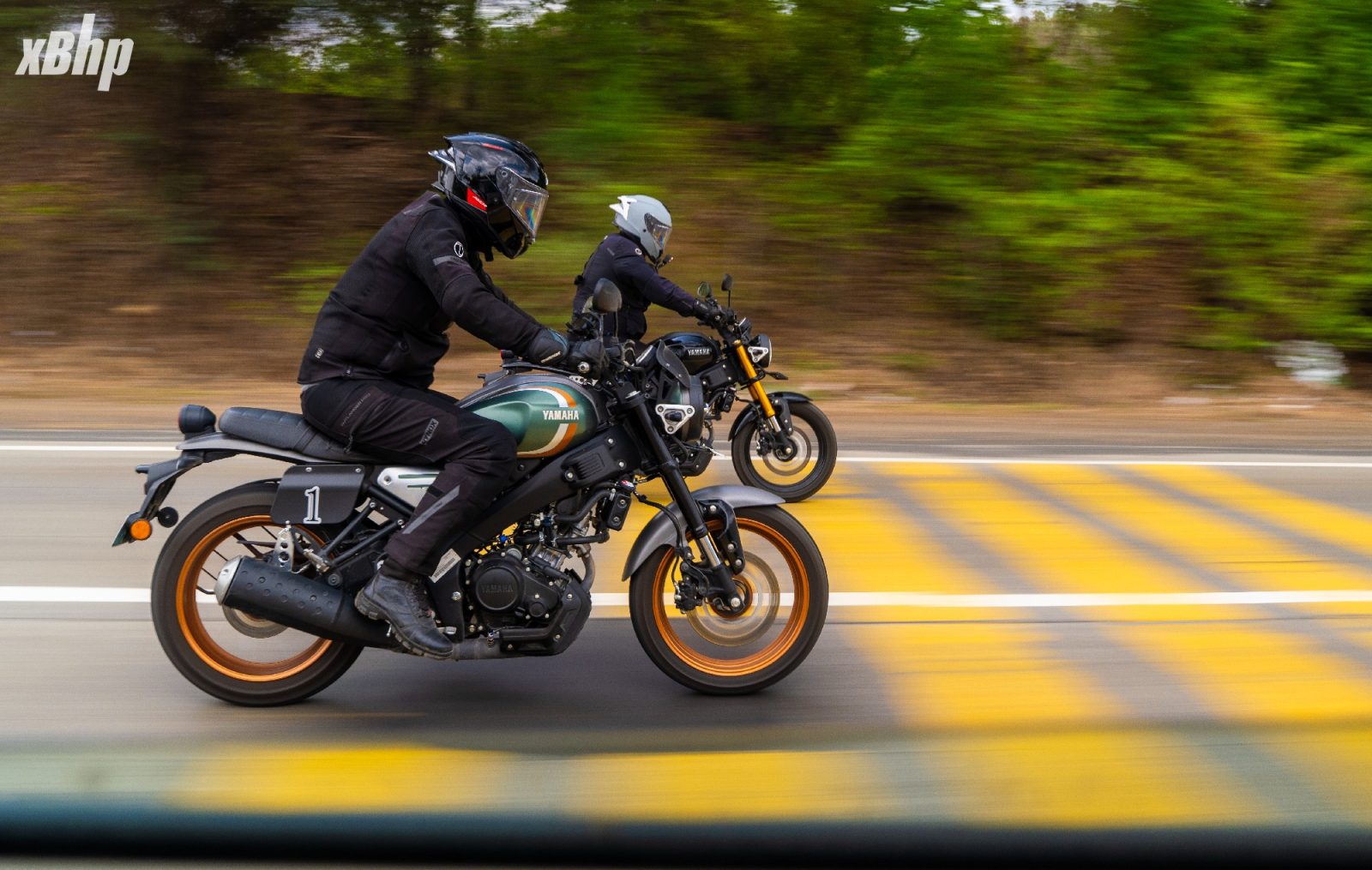
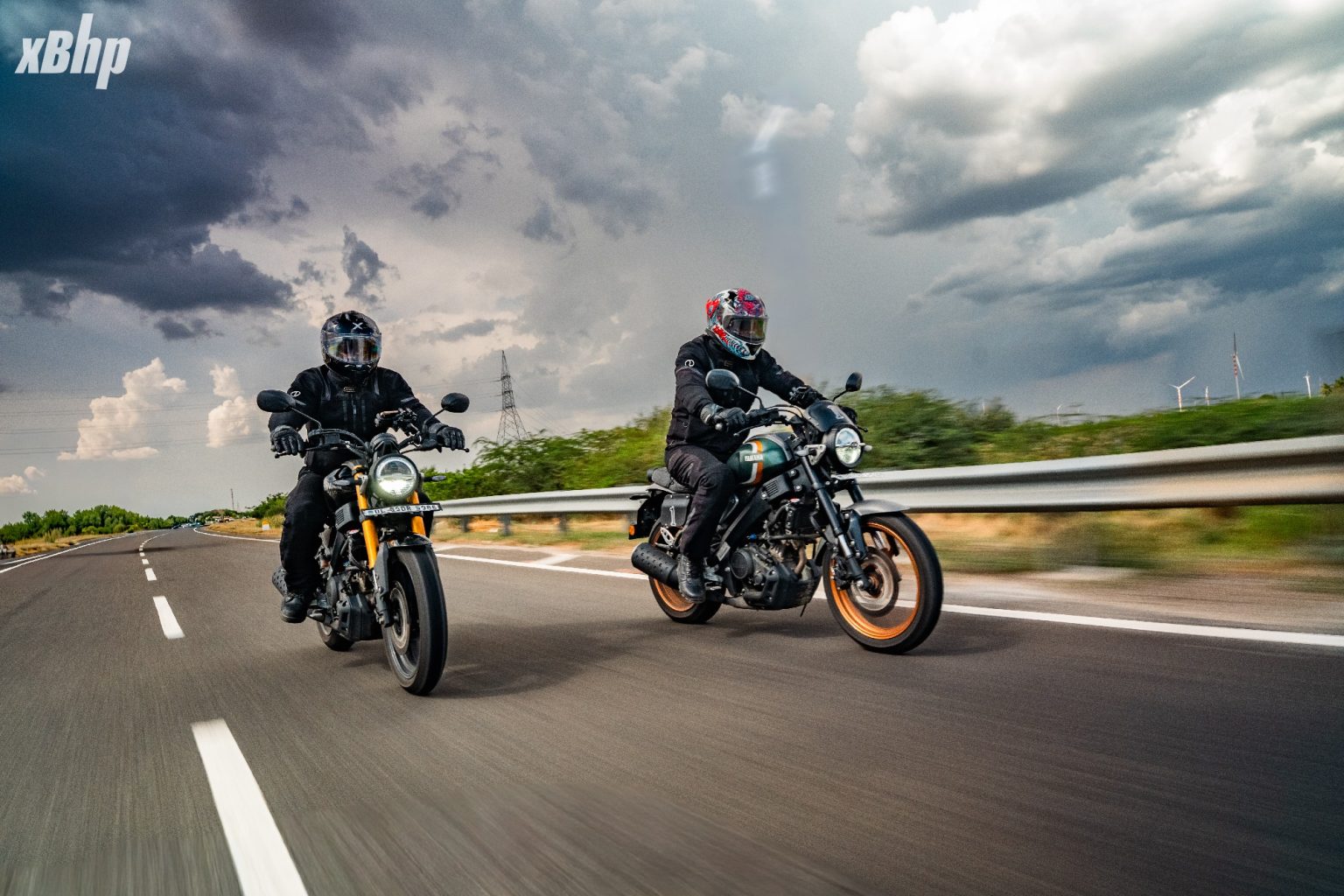
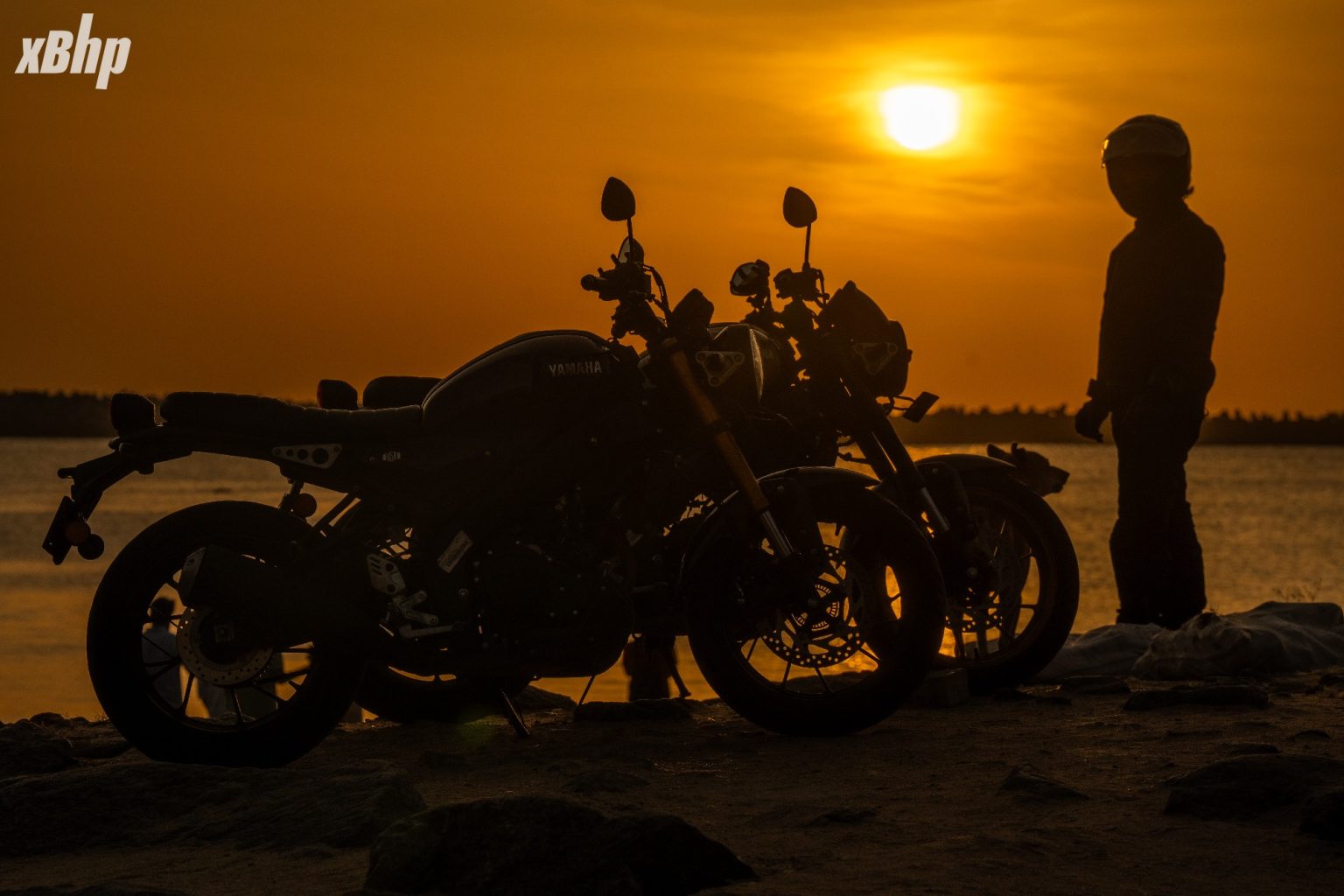
For this journey, we had two Yamaha XSR155s, nearly 6,000 kilometres of India ahead of us and a simple thought behind the project: to experience the country through a motorcycle whose own philosophy resembles India.
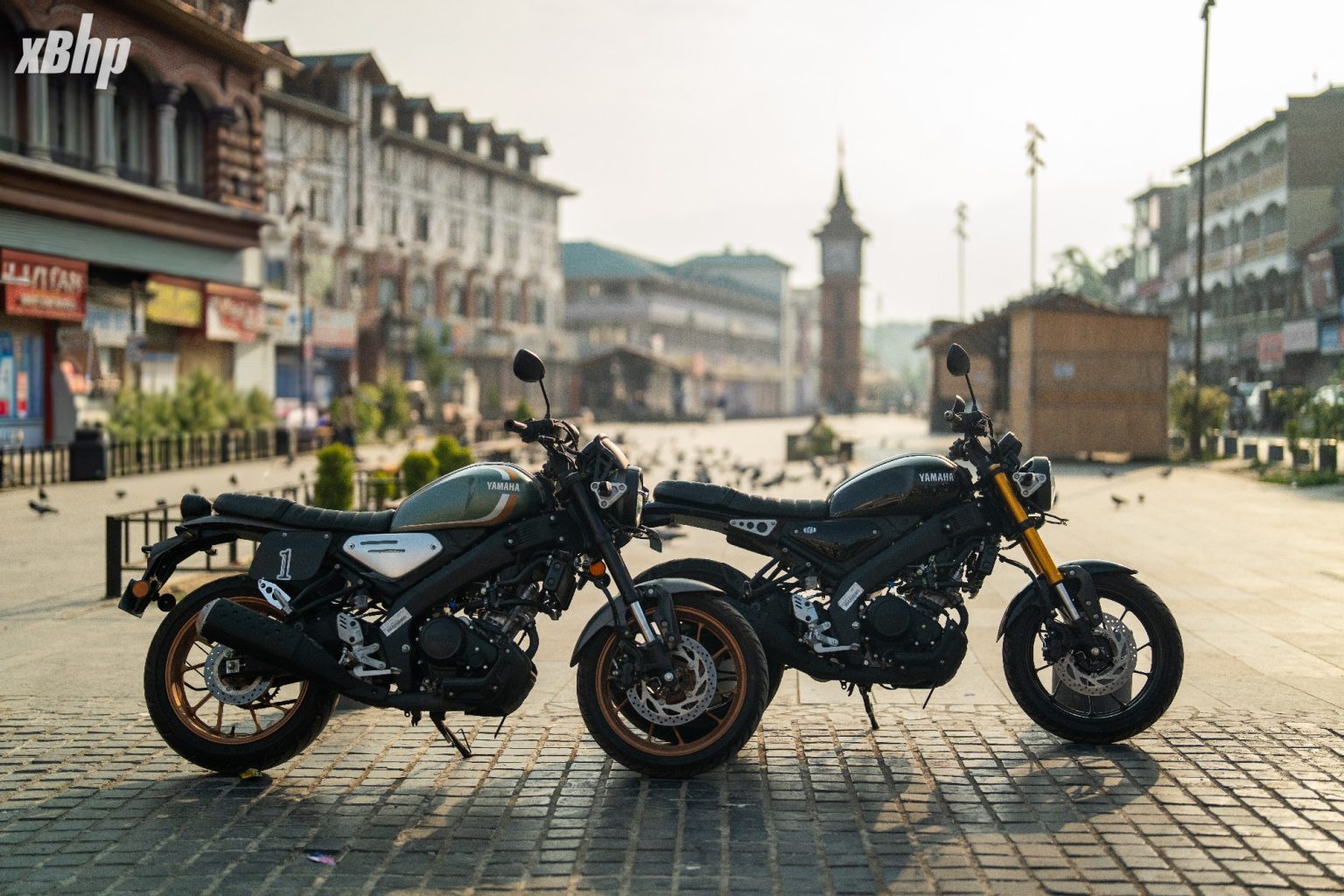
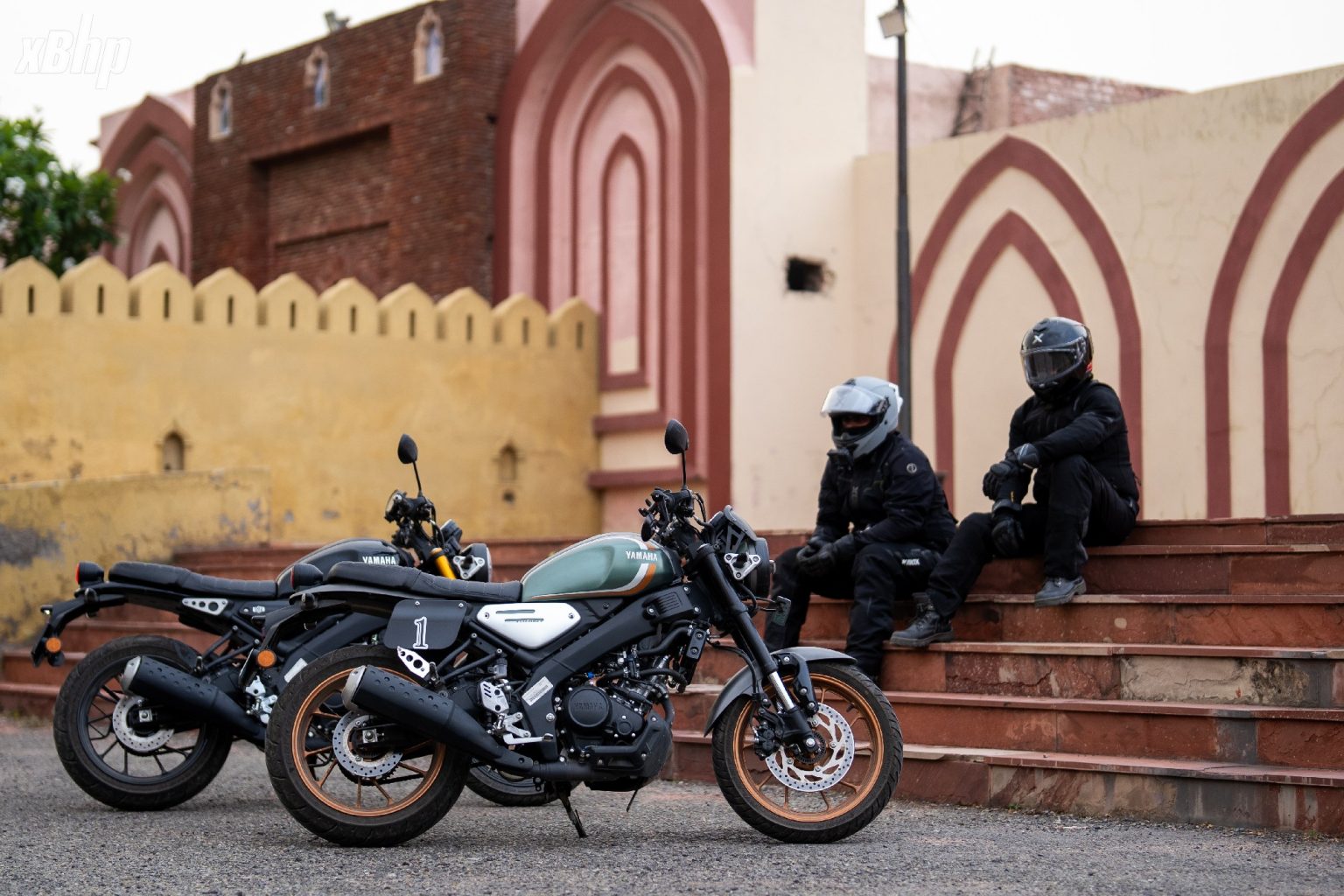
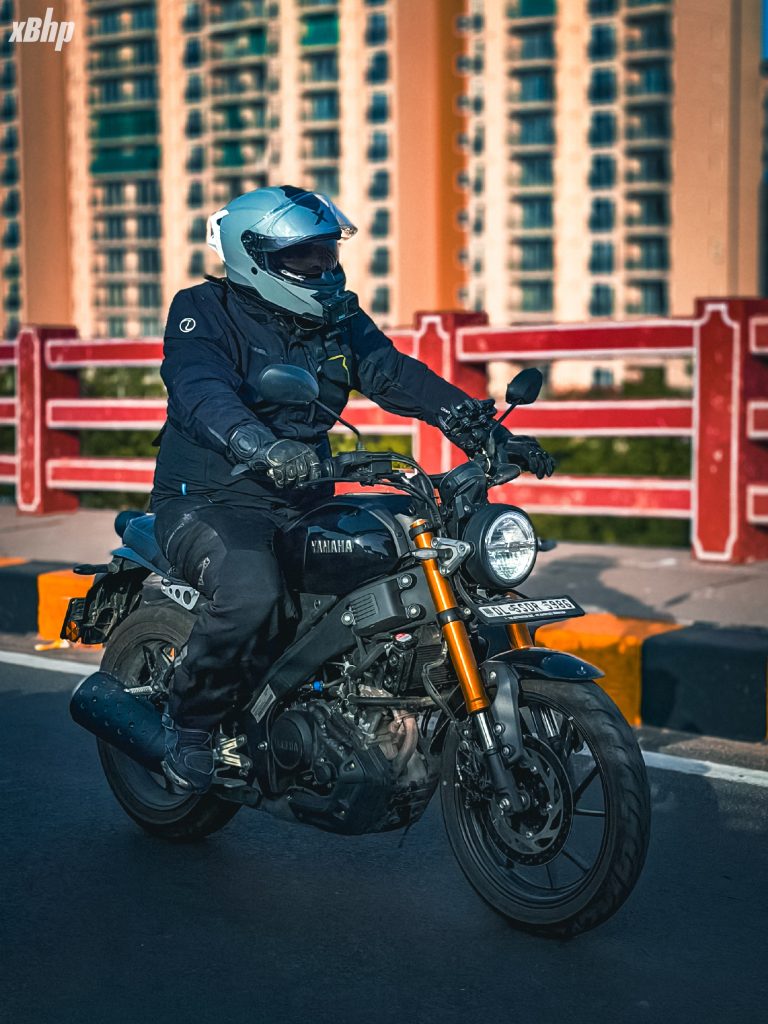
The Yamaha XSR155 is a modern-retro roadster. Its round headlamp, uncluttered bodywork, sculpted tank and classic silhouette look towards motorcycling’s past, but underneath sits thoroughly modern engineering.
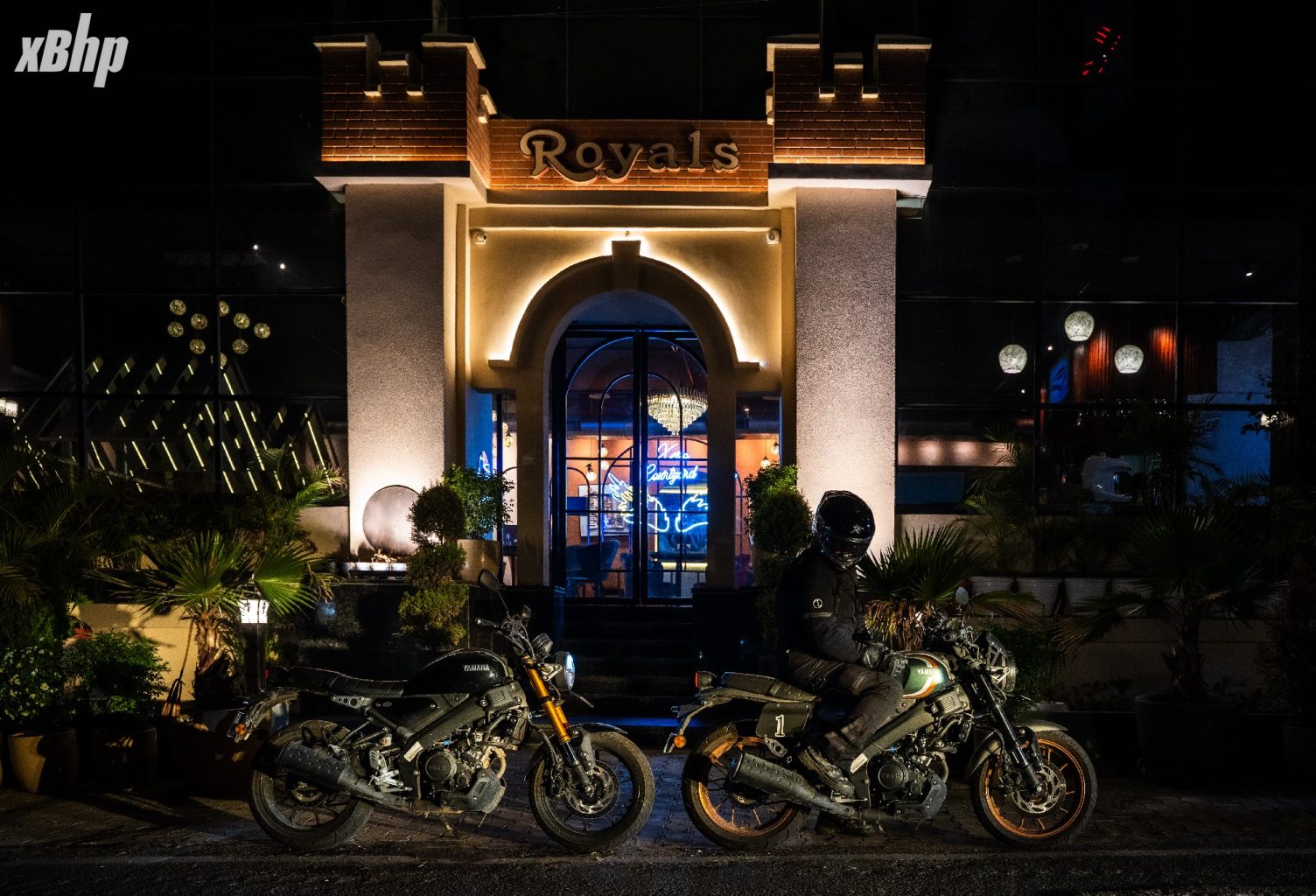
India works through a similar contrast. We are a country where ancient forts overlook modern cities. Glass towers rise beside old markets. Young riders meet at contemporary cafés before riding through streets shaped by centuries of history. Traditions remain deeply rooted, even as the country moves relentlessly towards what comes next.
Modernity wrapped in heritage. That became the soul of #XploreIndiaOnXSR.
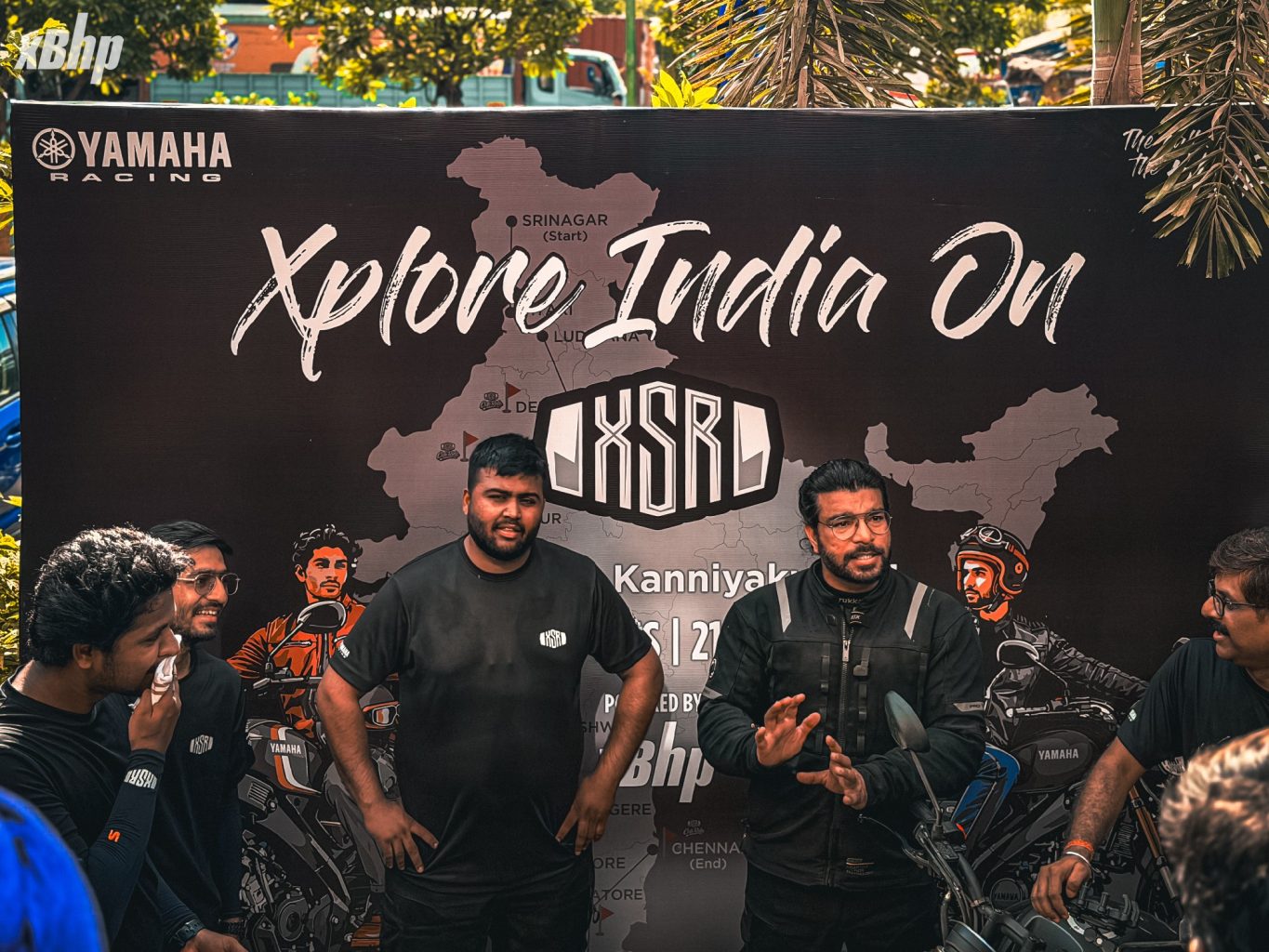
Two riders. Two motorcycles. Twenty-one days. Mountains, borders, cities, ghats, coastlines, racetracks, temples, lakes, cafés and a constantly changing menu. This was not merely a ride through India. It was India experienced one road, one meal, one conversation and one cup of tea at a time.
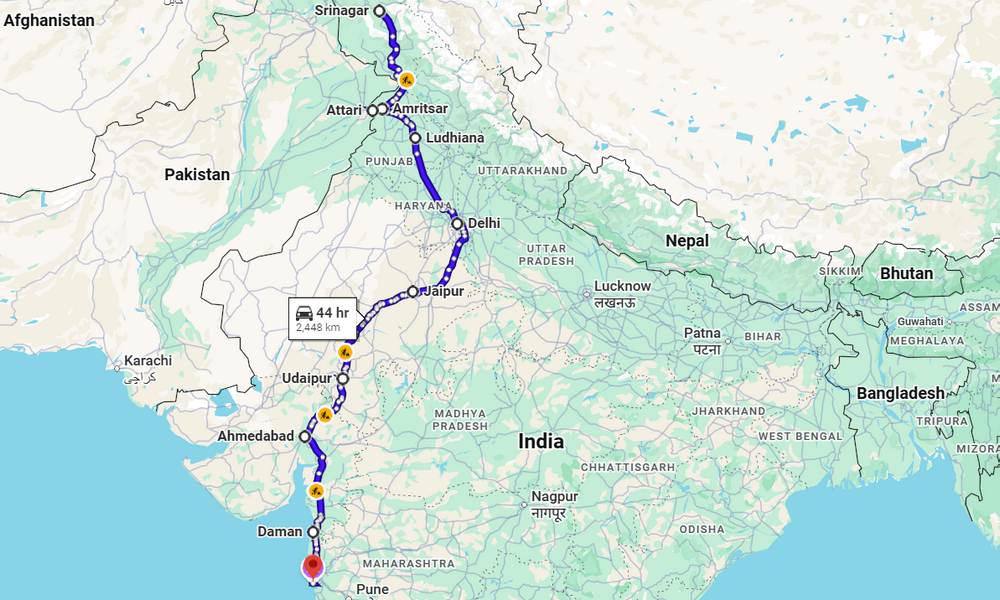
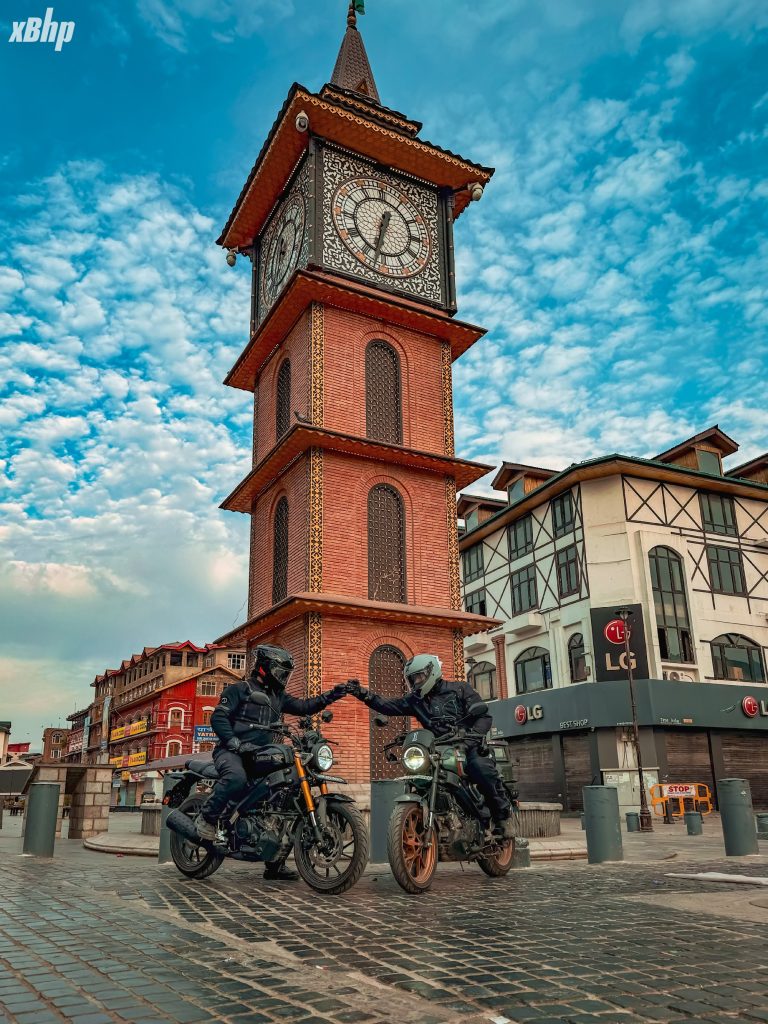
Srinagar: The Journey Begins Beside Dal Lake
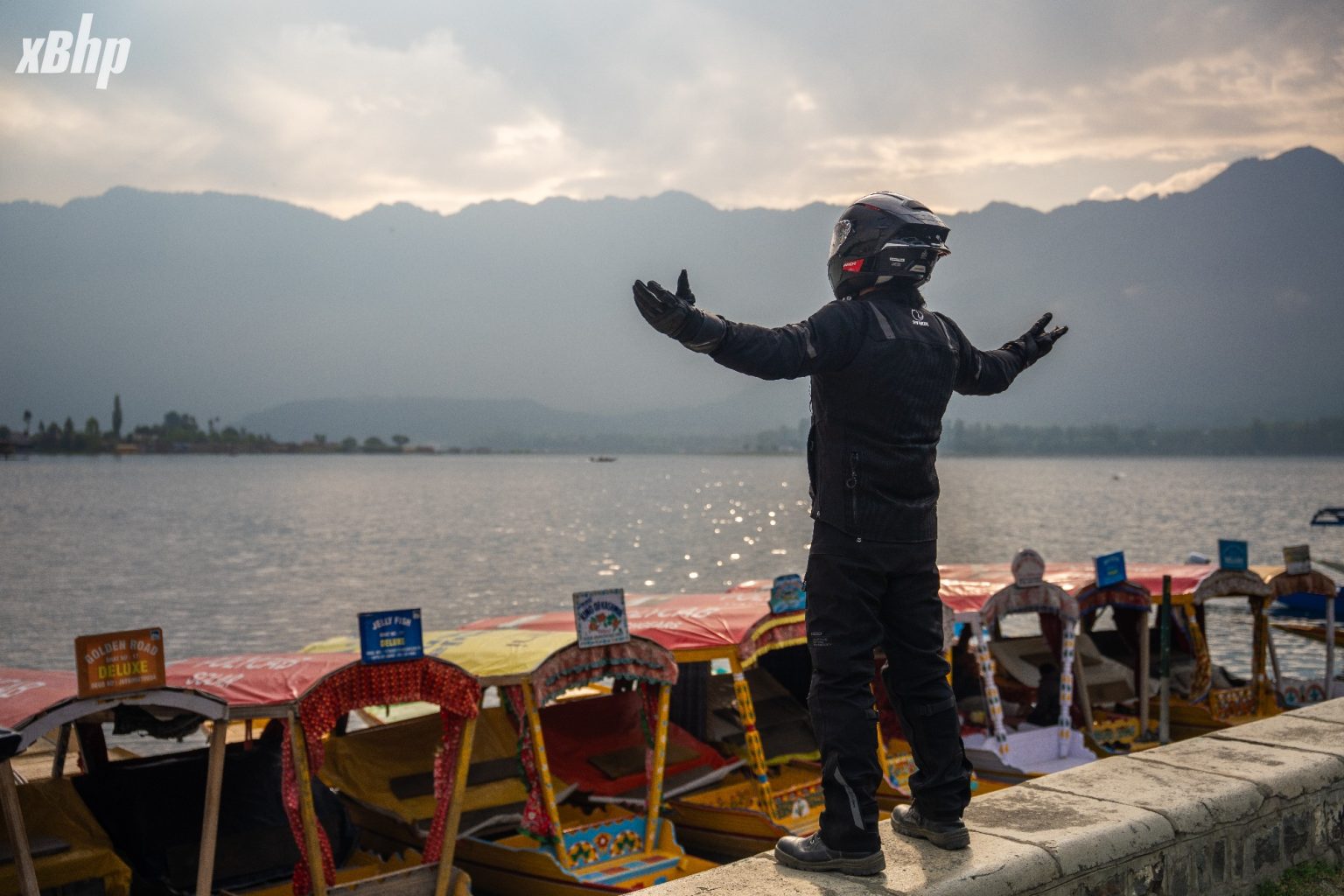
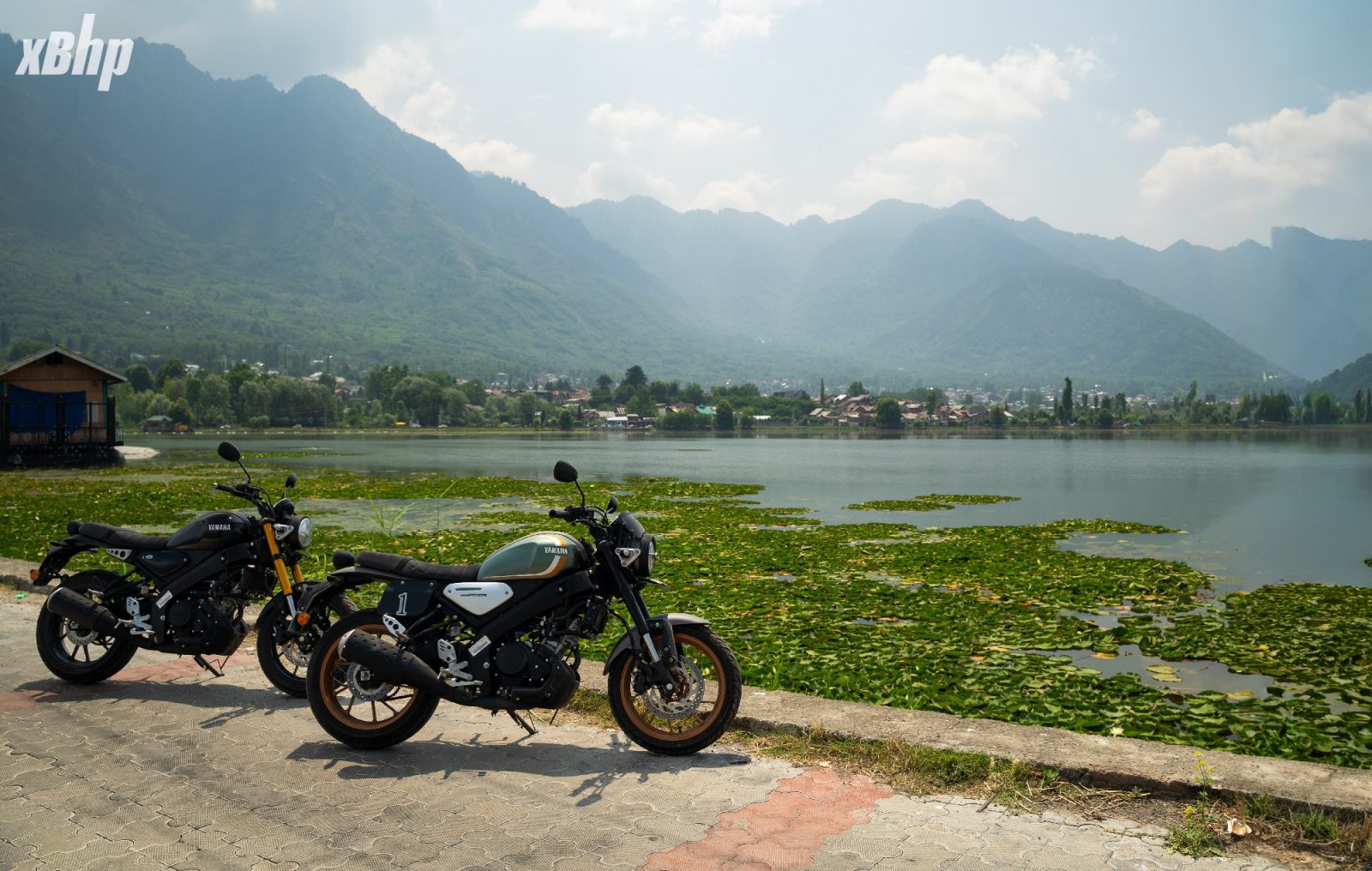
There is no ordinary way to begin a ride in Kashmir. Even before the motorcycle starts, the landscape makes the moment feel larger than the plan. Srinagar wakes up gently. Light settles over Dal Lake, shikaras begin moving across the water, and the mountains frame the city without ever allowing you to forget where you are.
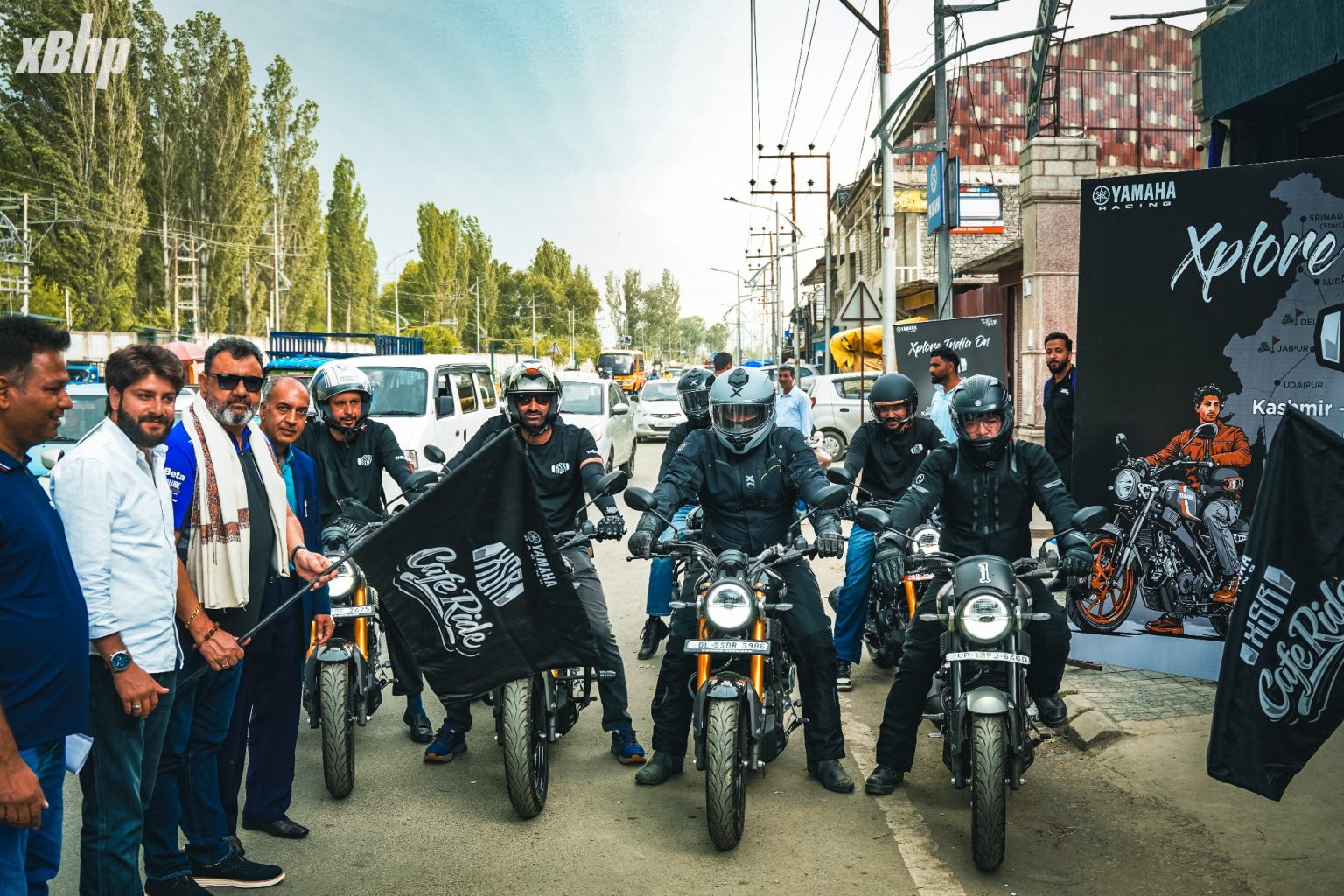
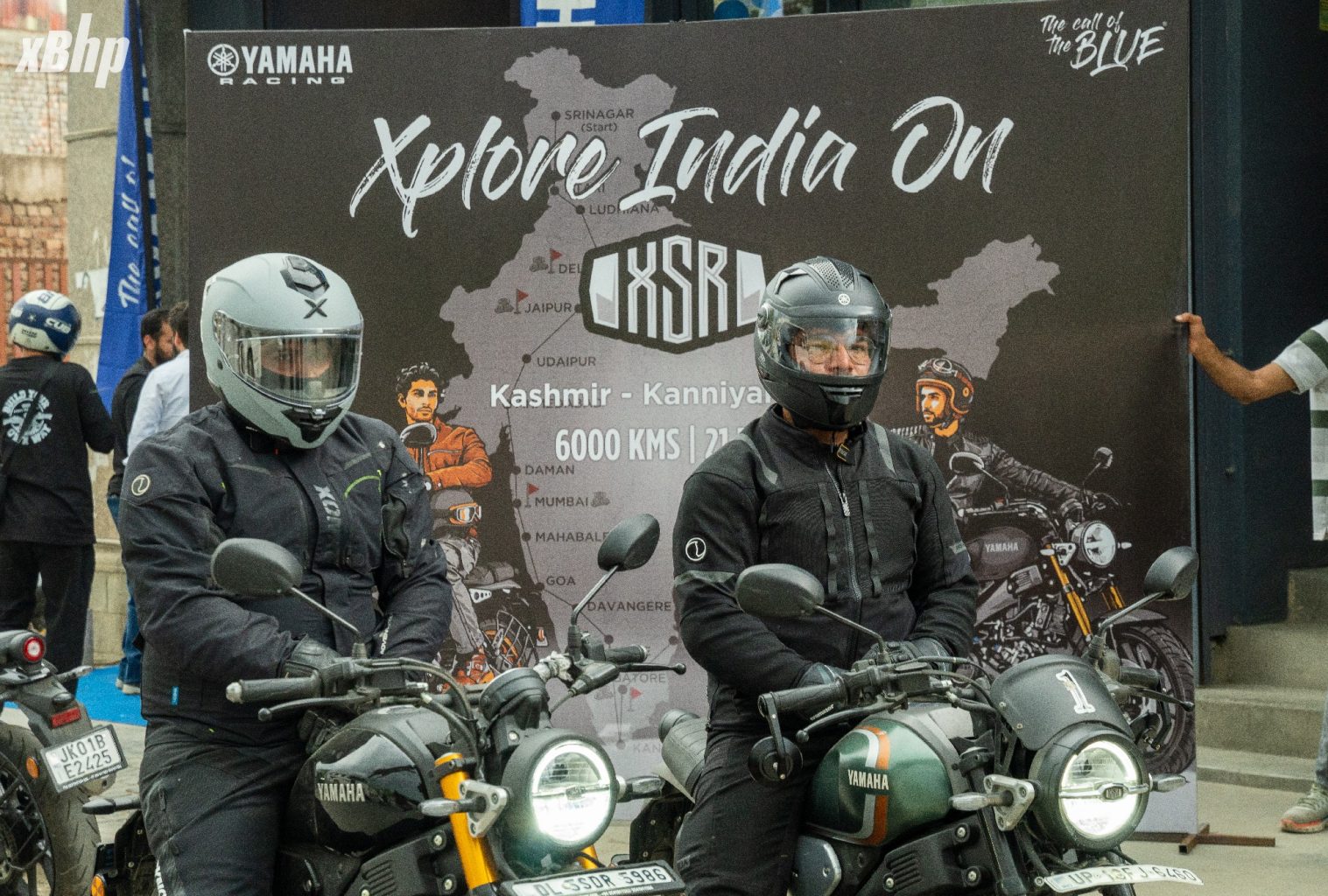
Dal Lake became our first visual introduction to the journey. Houseboats rested over still water, colourful shikaras moved through the morning reflections, and the road around the lake offered the kind of opening sequence that no production team could manufacture. The motorcycles looked almost understated against it all. Our two XSR155s had reached Srinagar from Delhi, and seeing them ready for the flag-off transformed months of planning into something suddenly real. Until then, K2K existed in spreadsheets, route plans, presentations and phone calls. Now it was sitting in front of us on two wheels.
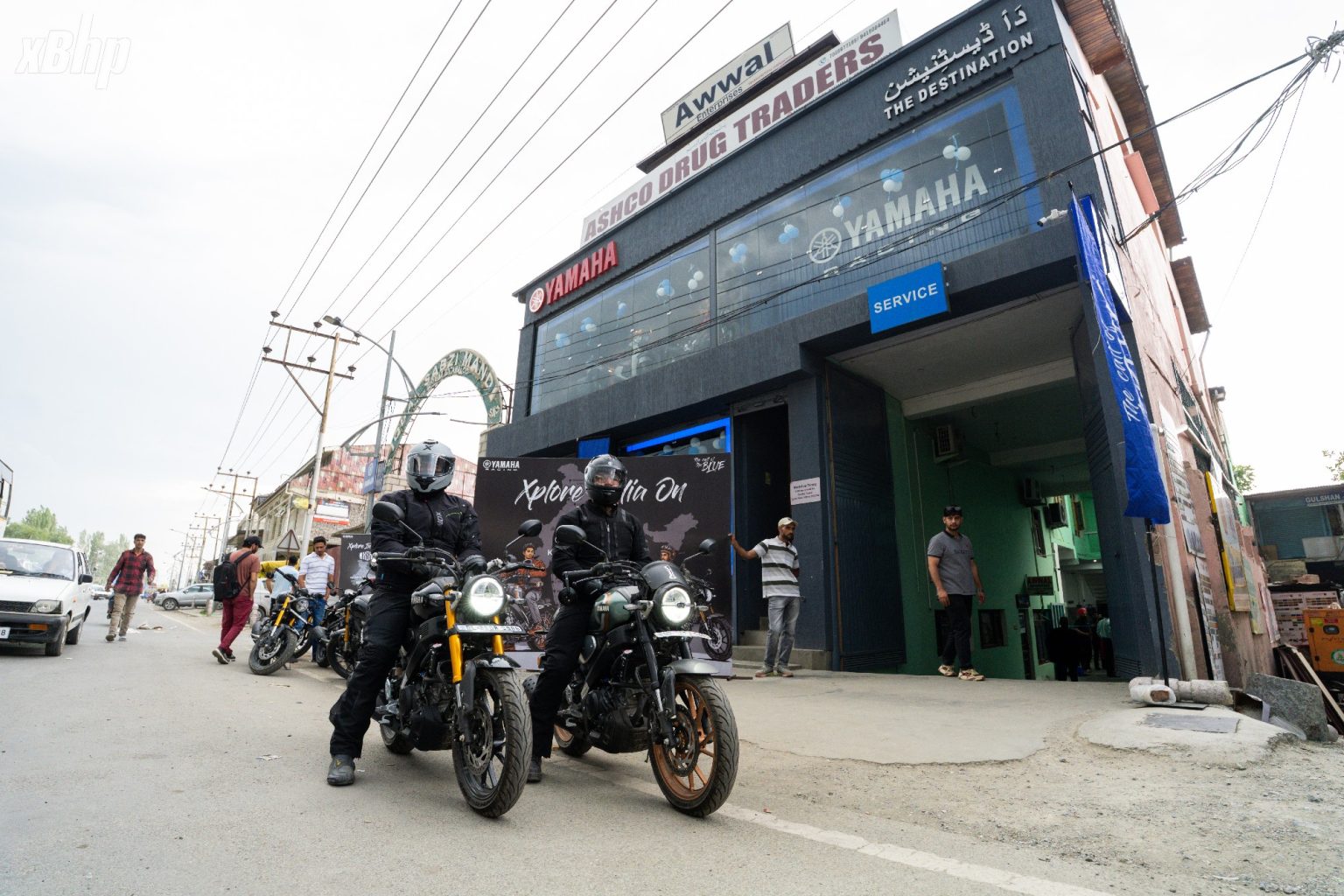
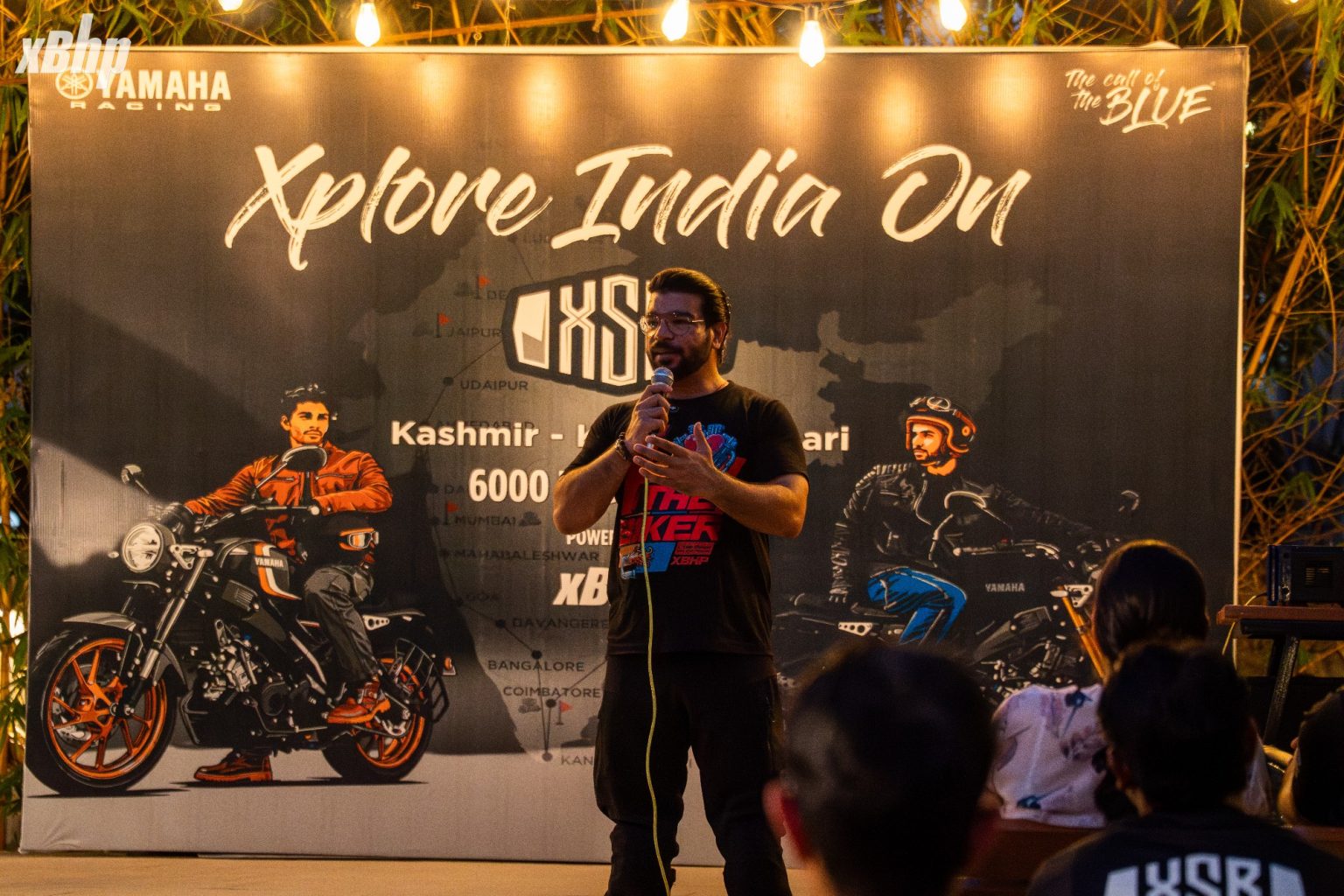
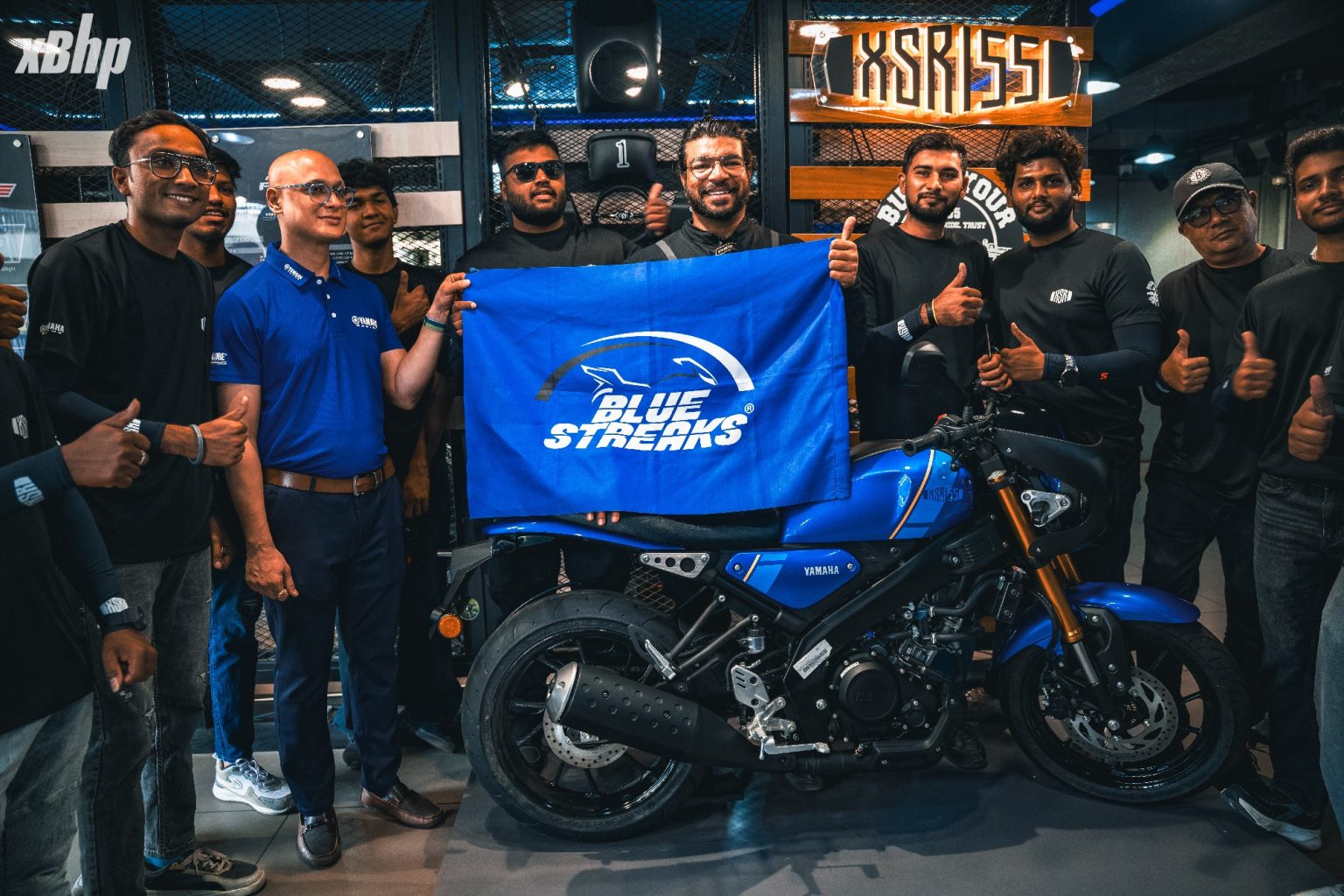
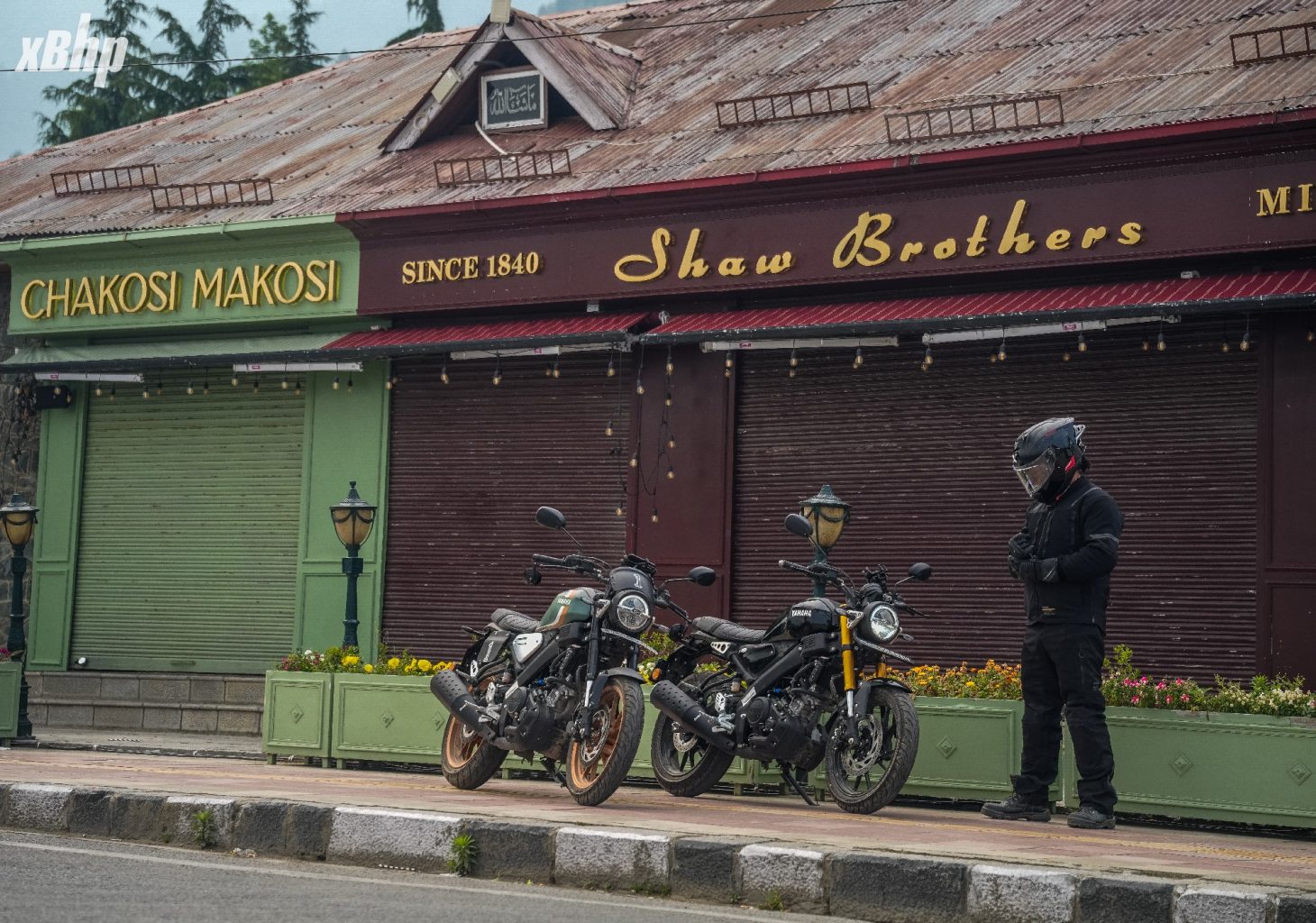
Srinagar was more than just the starting point of #XploreIndiaOnXSR; it was where the journey first became a shared emotion. The meetup was also marked by the inauguration of the Srinagar Blue Square dealership of Yamaha, from where we officially began our ride. It brought local XSR and Yamaha riders together against the breathtaking backdrop of Kashmir, with around 20 local Yamaha riders joining in to be part of the occasion. Conversations flowed around motorcycles, routes, and the excitement of what lay ahead. The warmth of the community, combined with the beauty of Srinagar, gave the ride the perfect emotional send-off.
Before leaving, Kashmir gave us an essential part of its hospitality: kahwa. The warm, fragrant tea felt perfectly suited to the cold morning. The gentle spice, saffron, nuts and warmth did more than prepare us physically. It slowed the moment down. Instead of rushing into the route, we stood holding small cups and allowed the scale of what lay ahead to sink in.
A roadtrip across India is also a journey through how the country eats and drinks. Every region has a flavour that makes sense only when experienced in its weather and landscape. Kahwa in Kashmir was not simply a beverage. It was the first taste of the road. Then the engines started. The 155cc single-cylinder motors settled into their familiar note. The round LED headlamps came alive. Luggage was checked one final time. And Srinagar began disappearing in the mirrors.
Kashmir’s Mountain Roads: Learning Not to Hurry
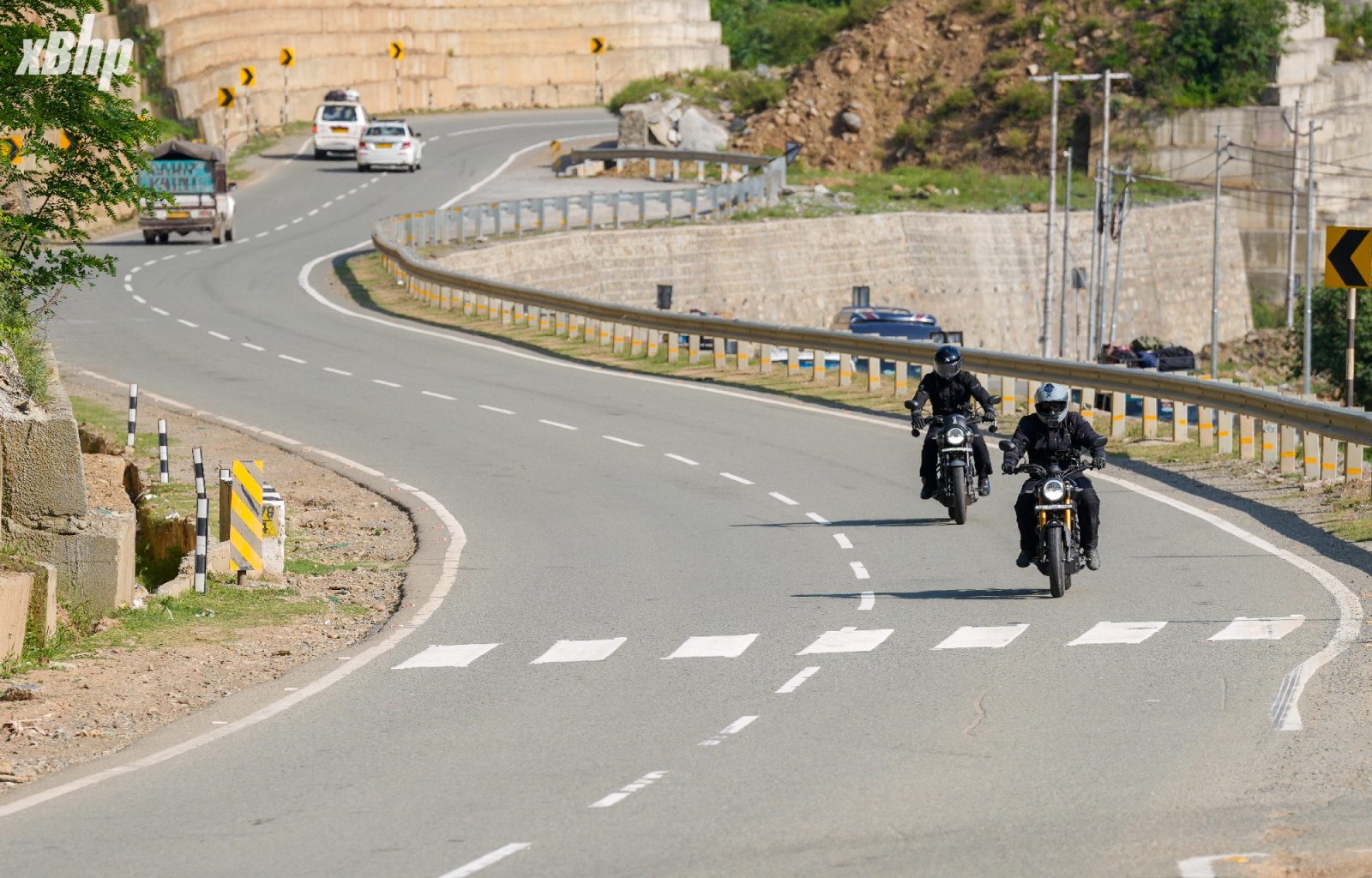
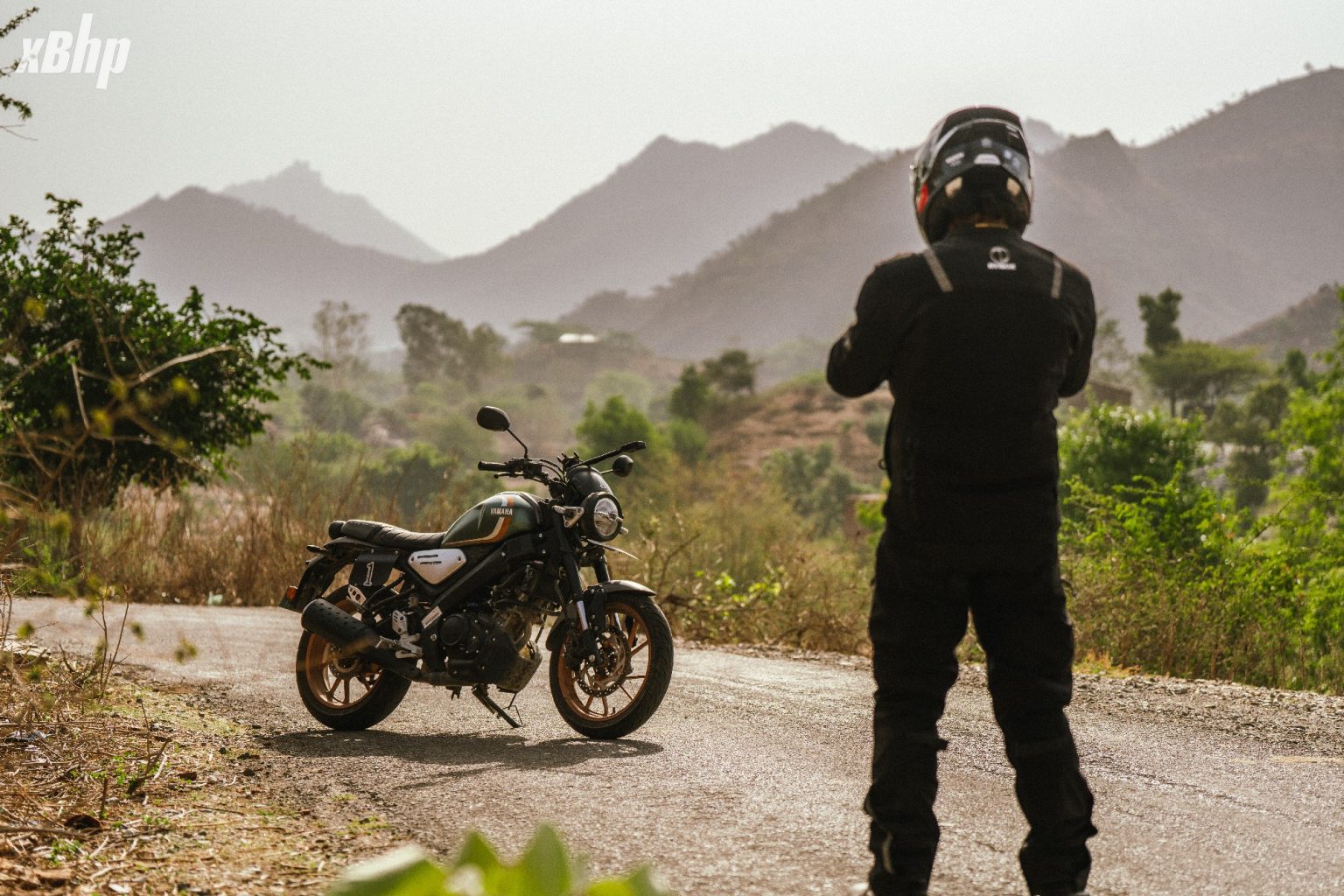
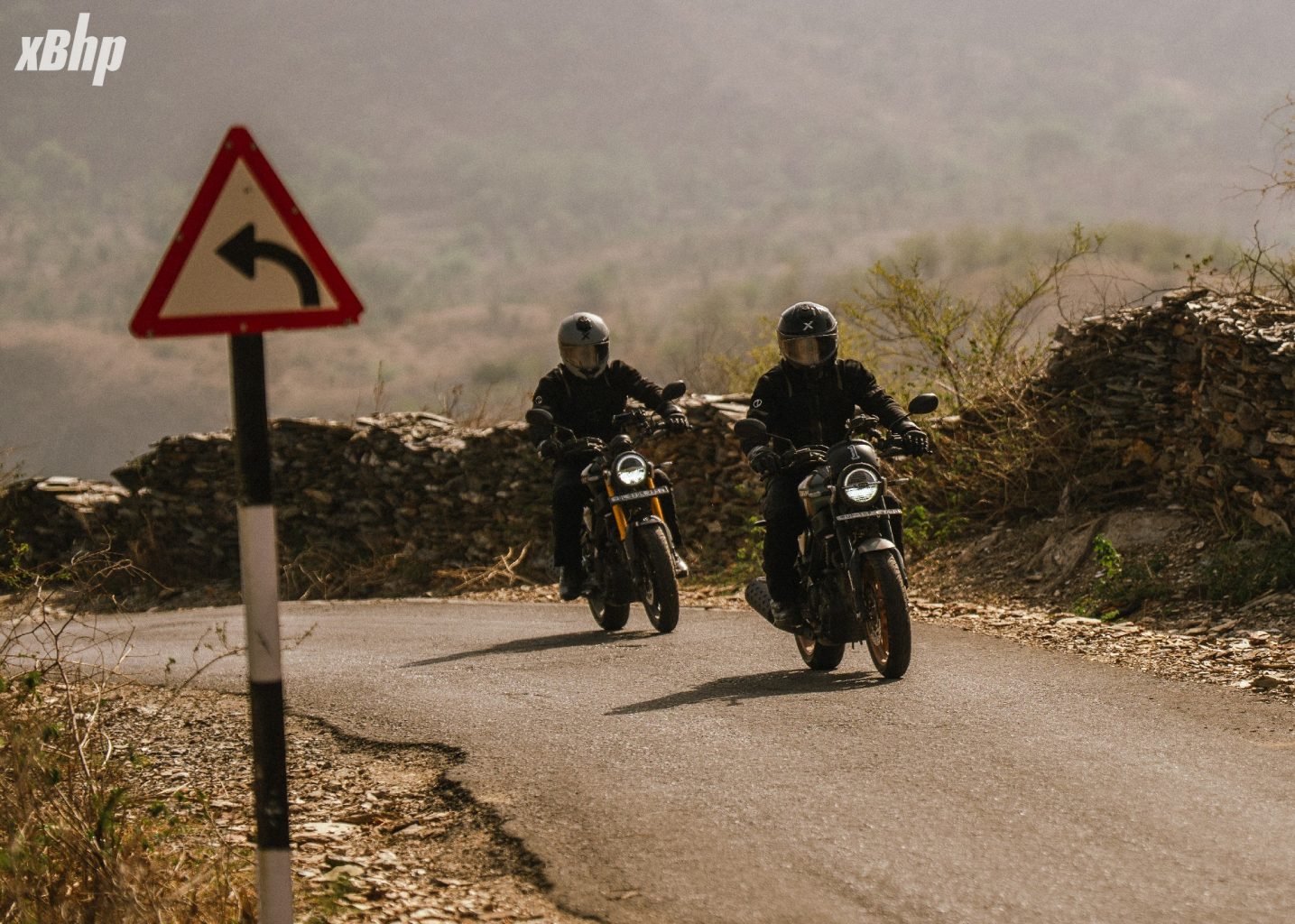
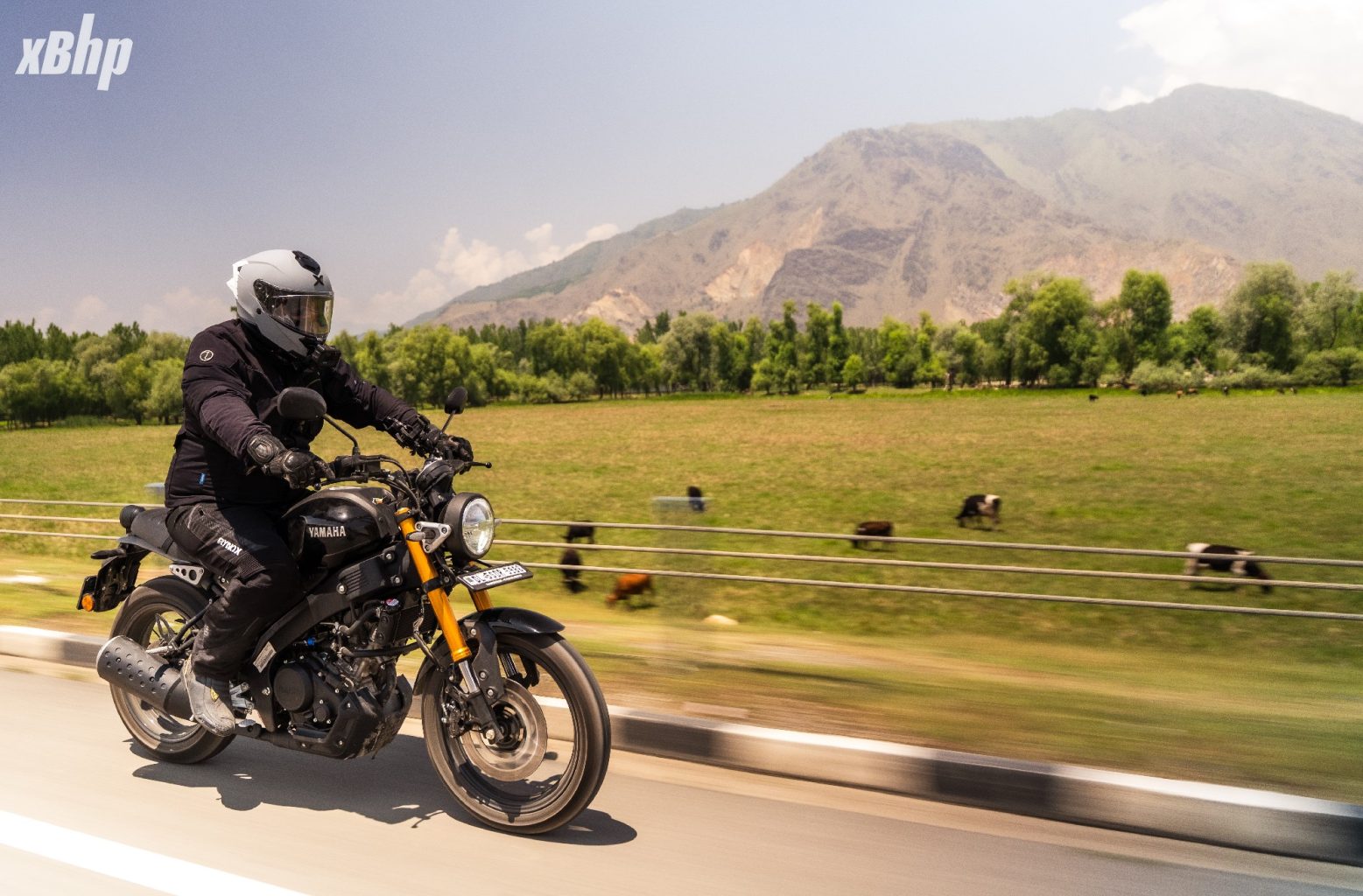
The first stretches outside Srinagar taught us something that would remain relevant throughout the journey. The road does not care about your itinerary. It has its own rhythm. There were sections where the mountains opened beautifully, and the XSRs flowed through long bends. There were stretches slowed by traffic and construction. We passed through tunnels that swallowed the sound of the motorcycles and released us into completely different landscapes. Sometimes a planned ten-minute camera halt became forty minutes. At other times, an unplanned view made us stop immediately.
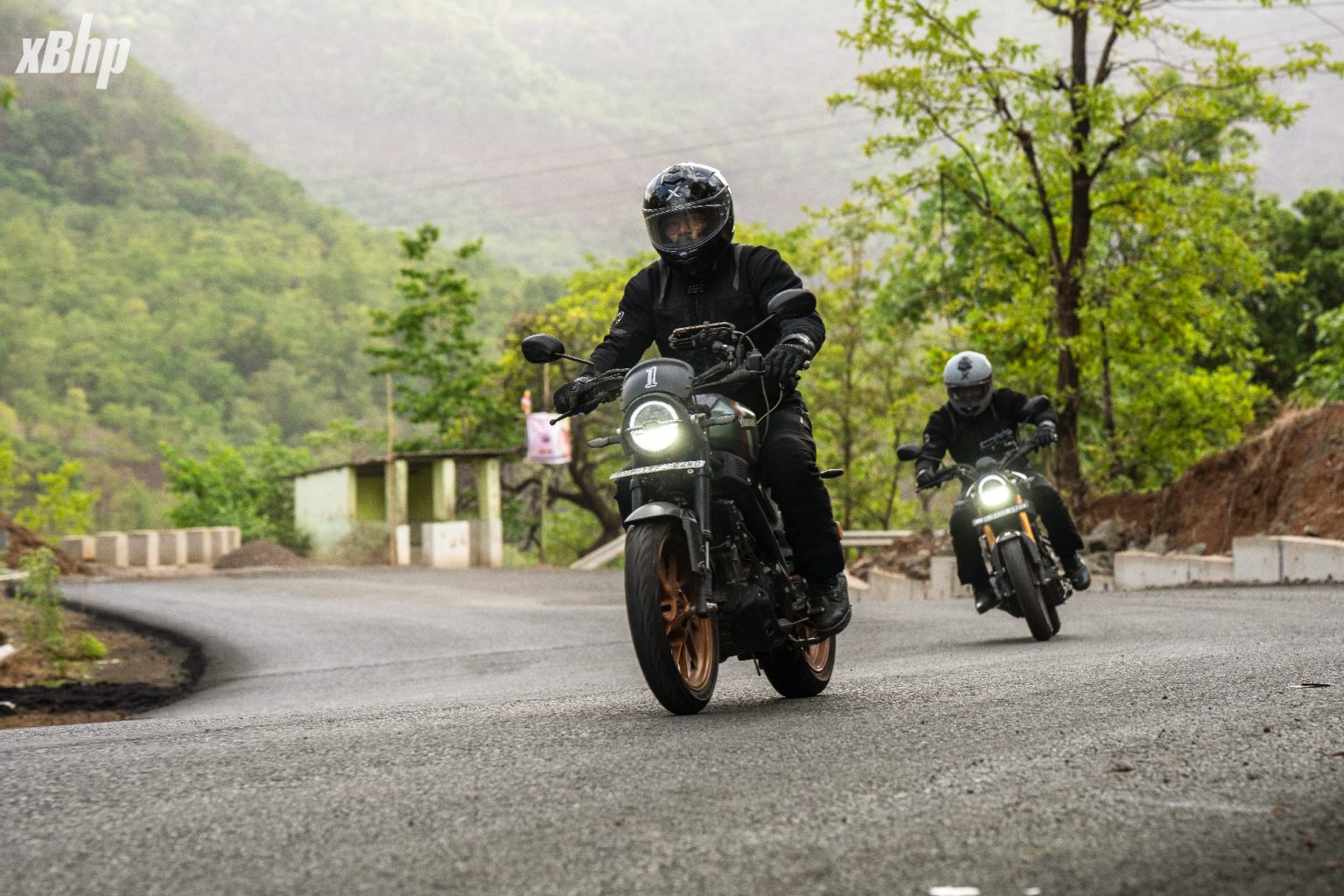
The mountains kept reminding us that efficiency is not always the purpose of travel. The XSR155 felt particularly easy in this environment. At around 137 kilograms, it never demanded excessive physical effort. It could be turned around for another camera run without a struggle, guided through traffic gaps and placed naturally into a corner. Its Deltabox chassis and upside-down front fork gave it an alert but composed feel. The motorcycle changed direction without drama, and the upright riding position allowed us to observe the landscape rather than remain folded into an aggressive posture.
Yet we were not consciously reviewing it. That stage came much later. In Kashmir, we were simply thankful that the motorcycle did not distract us from where we were. The engine’s lower range remained manageable through slow traffic, while the Variable Valve Actuation system gave it extra energy when the road opened, and the revs climbed. The power never felt intimidating, and that became an advantage on unfamiliar roads.
Some motorcycles constantly encourage you to go faster. The XSR, on those mountain roads, encouraged us to keep moving without rushing. And when the scenery is that beautiful, speed feels like a waste.
From Kashmir to Punjab: When Rain Joins the Ride
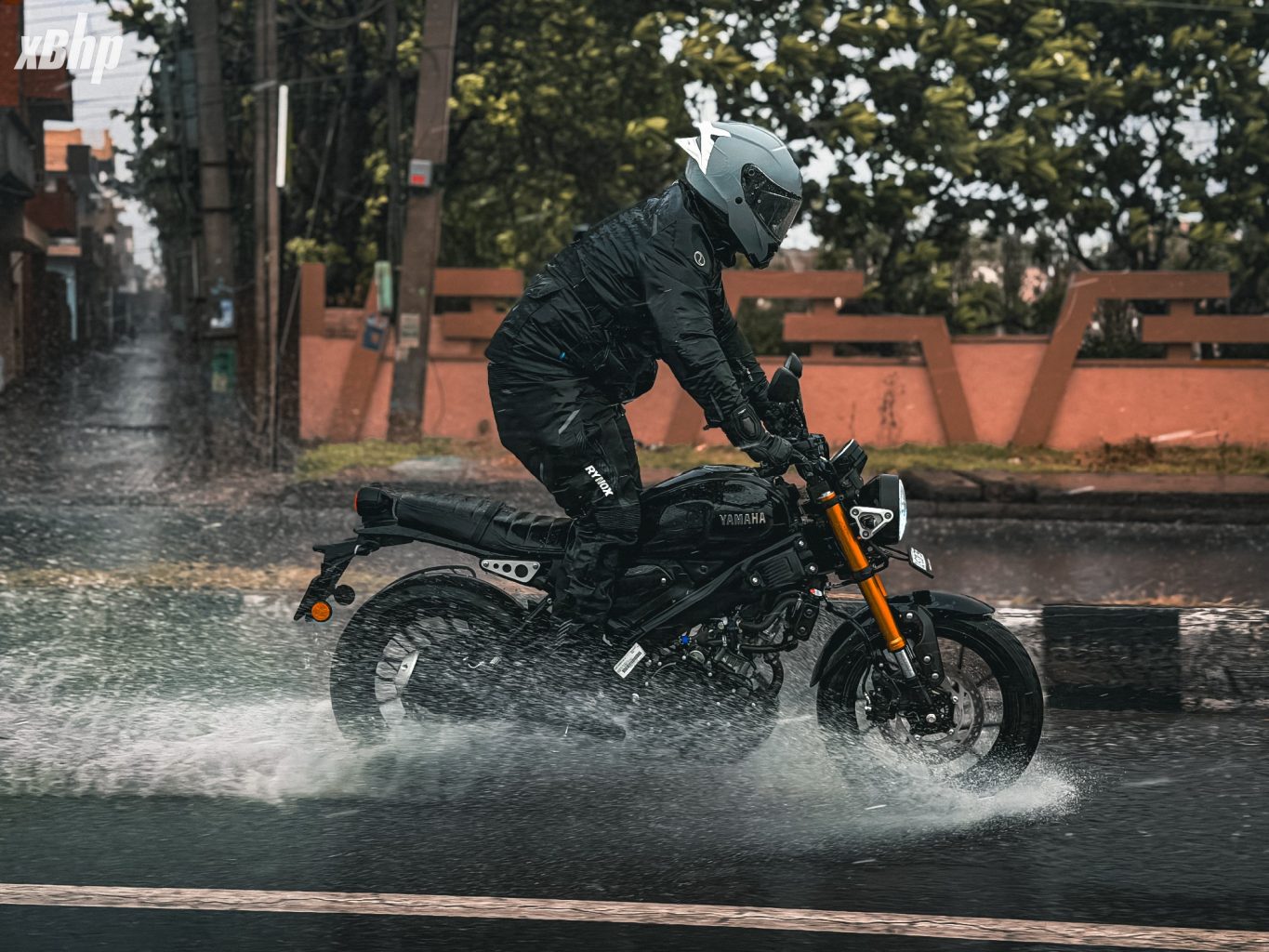
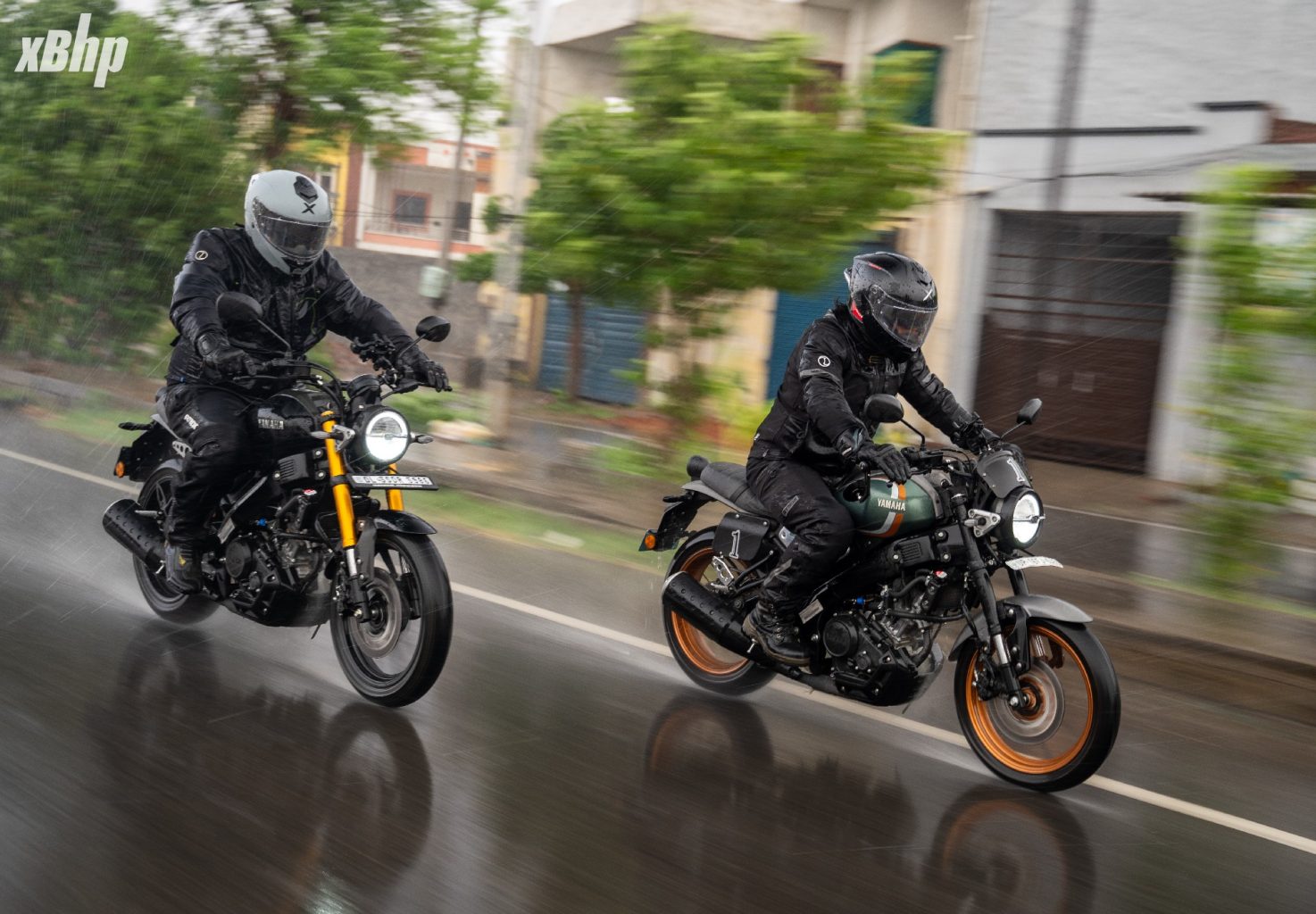
As we moved away from Kashmir, things started to change. The cold reduced. The roads widened. Traffic increased. The mountains gave way to the plains. Then came the rain. It was not a drizzle added conveniently for a cinematic atmosphere. It was the kind of rain that forces a rider to reconsider every input. Visibility reduced. The road surface darkened. Painted lines and metal covers demanded greater caution. Water collected on the visor faster than it could be cleared.
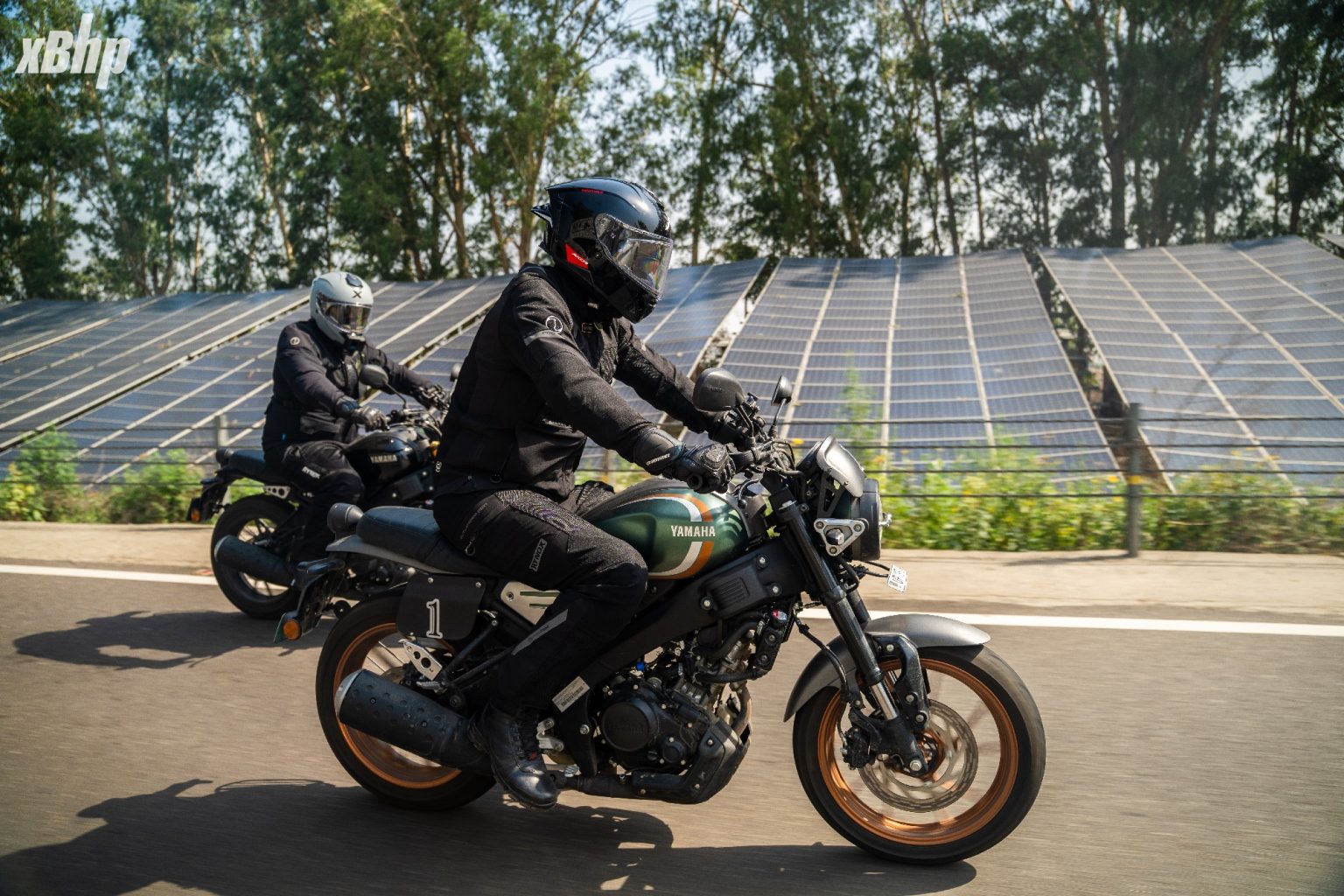
Rain has a way of exposing both rider and motorcycle. Every sudden throttle movement matters more. Every braking point requires additional thought. Every corner has to be read differently. The XSR155’s tractable power delivery helped considerably. The throttle did not feel choppy or too eager. Throttle control came easily and naturally. The chassis too remained composed. Moreover, the traction control system was there to have our backs in case things went a little awry.
Electronics do not replace judgement. Traction control cannot correct every mistake, and ABS does not allow a rider to ignore wet-road discipline. But when you are far from home, riding through unfamiliar rain, these systems reduce the mental load. The motorcycle remained predictable. That was the important word. Not dramatic. Not invincible. Predictable.
At one point, the obvious question came through the intercom. “Shall we take a halt?” For how long? Five minutes? An hour? Until the sky cleared completely? A cross-country journey cannot always wait for perfect conditions. Nor should it recklessly fight bad ones. So, we chose the middle path. “Let us take it slow.” Sometimes courage on a motorcycle is not a heroic charge into the storm. It is simply continuing carefully.
Kilometre by kilometre, the nervousness reduced. Not because the rain immediately stopped, but because we adjusted. Our speed came down. Inputs became smoother. Distance from other vehicles increased. The weather stopped feeling like an enemy and became part of the ride. Punjab had given us a memorable welcome.
Attari: Riding Towards the End of a Road
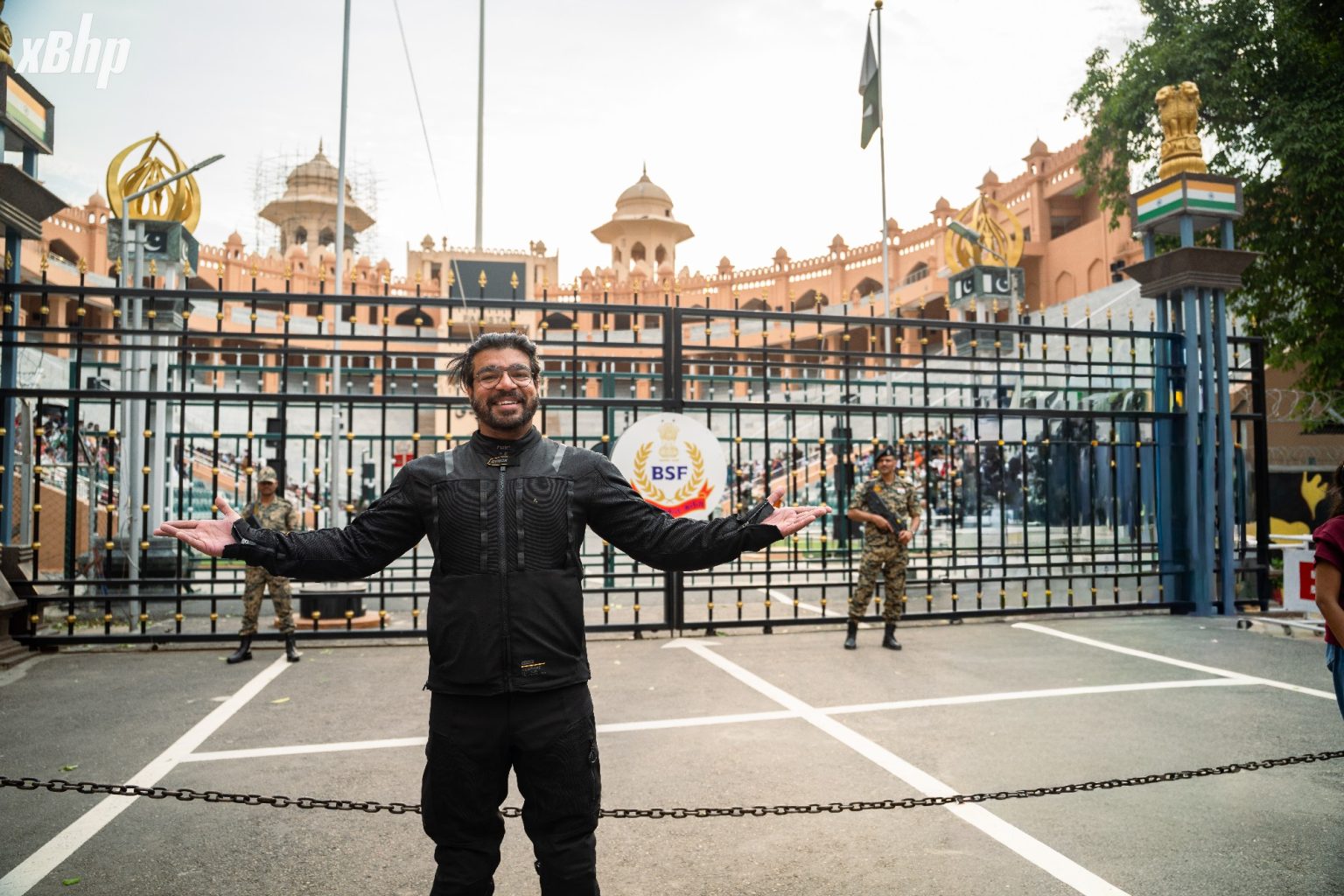
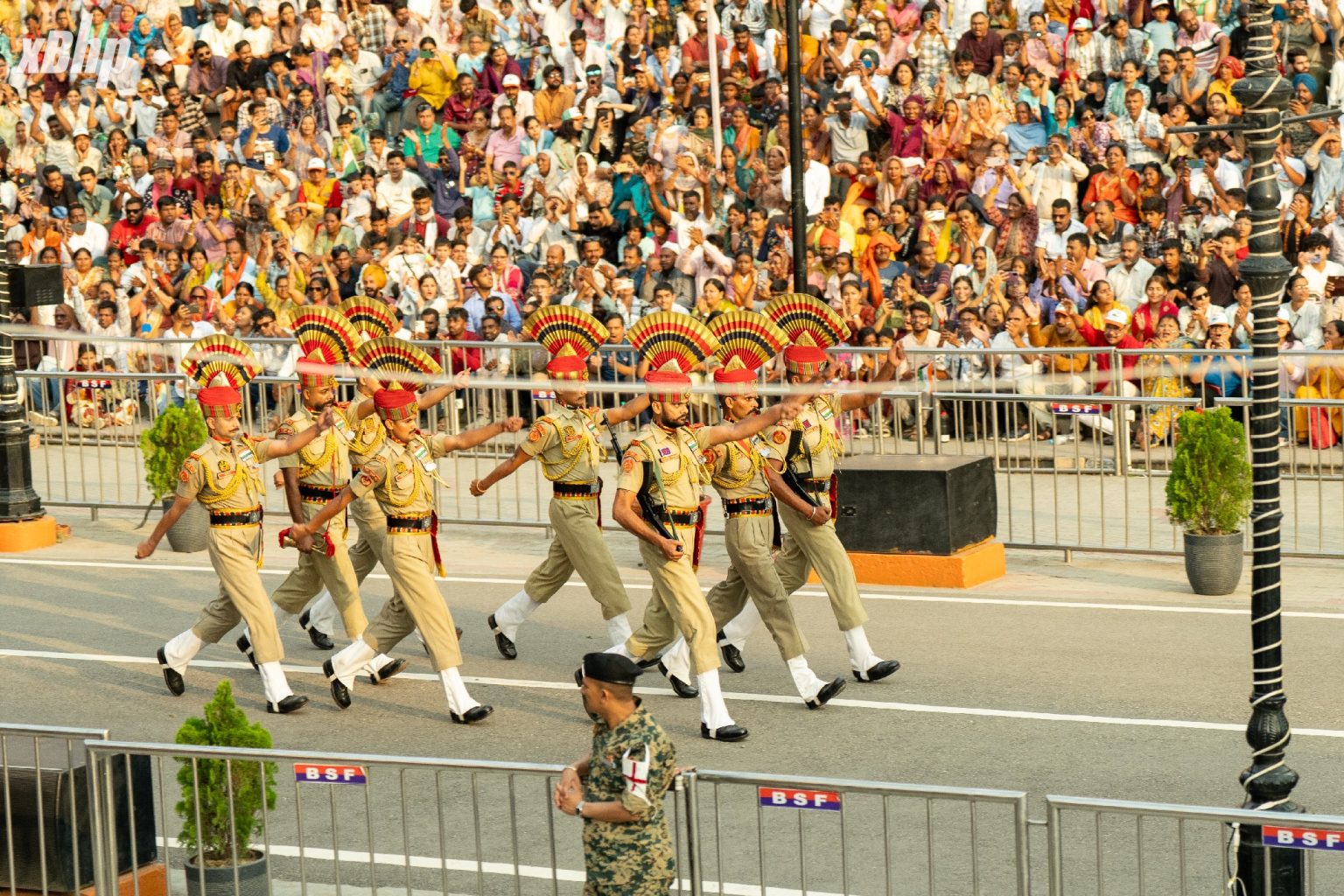
Our next emotional landmark was the Attari-Wagah border. Motorcycles usually represent movement. They are associated with the freedom to continue; to take another road, enter another town or ride towards another horizon. A border changes that meaning. At Attari, the road itself carries a sense of conclusion. As we moved towards the last accessible kilometres before the international boundary, the atmosphere became more intense.
The place is layered with history, patriotism, separation and ceremony. It is crowded with people, but the thought of a line dividing two countries creates a strange personal stillness. The two XSR155s had travelled out of Kashmir, through rain and into Punjab. Parked near the border, they represented movement at a location defined by limits. It was one of those moments where the journey became larger than the machinery. The motorcycle brought us there. The place made us stop thinking about motorcycles.
Amritsar: Golden Silence, Generous Food and a Tall Glass of Lassi
The next morning brought us to the Golden Temple. After rain, highways and the energy of Attari, Sri Harmandir Sahib changed the rhythm completely. We entered with our heads covered and shoes removed. The marble felt cool underfoot. The golden structure reflected in the Amrit Sarovar, while prayers and hymns softened everything around us.
For a few minutes, there was no route. No schedule. No production plan. No question about the next fuel stop. Only silence and gratitude. Long journeys are full of emotional contrast. The same rider who spends hours concentrating on traffic can become completely still inside a spiritual place. The same day can contain exhaustion, excitement and peace.
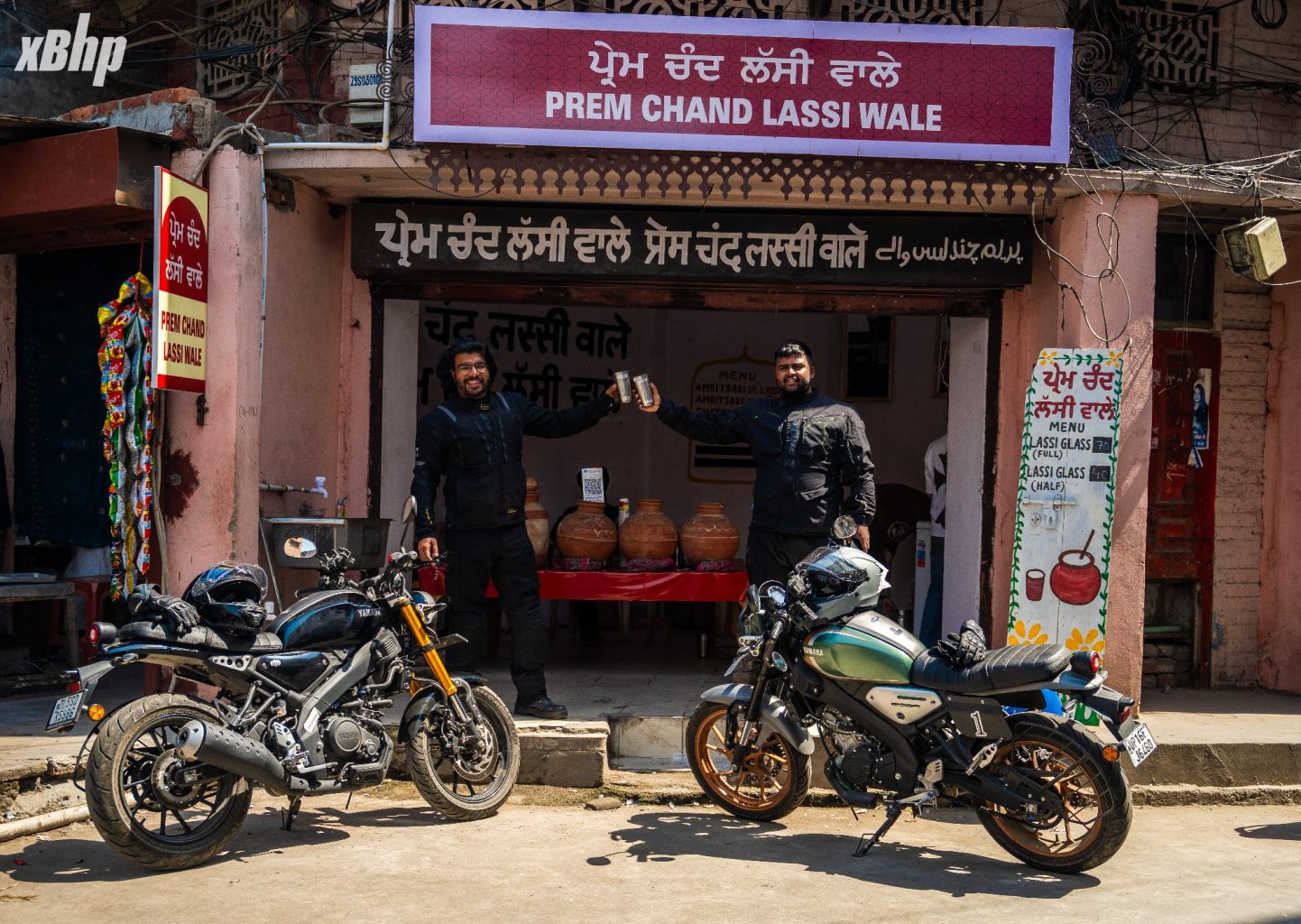
The Golden Temple reminded us that covering distance is not the only way to move forward. Sometimes you move by pausing. Outside, Amritsar returned us to a different sensory experience. The food here sets the tone for the city’s personality; rich, bold, and generous. Restraint in Amritsar feels like blasphemy. And no Amritsar stop could feel complete without lassi. Thick, cold and topped generously, it was less a drink and more a meal in itself. After the warmth of kahwa in Kashmir, the lassi marked how quickly both climate and culture had changed.
That contrast was the journey. A cup of spiced tea in the cold valley. A heavy glass of lassi in Punjab. Same country, different worlds. Carrying the lightweight peace from the Golden Temple and the scrumptious weight of a proper food stop, we carried on towards Ludhiana.
Ludhiana to Delhi: When a Roadtrip Finds Its Routine
By the time we rode from Ludhiana towards Delhi, the journey had started developing a rhythm. Wake up. Pack. Check the motorcycles. Load the luggage. Find breakfast. Ride. Stop for fuel. Shoot. Turn around for another rolling shot. Ride again. Reach on time, or sometimes later than planned. Back up footage. Charge equipment. Sleep. Repeat.
From outside, a cross-country roadtrip often appears to be an uninterrupted sequence of perfect roads, drone shots and sunset photographs. The reality is far more ordinary. There are damp gloves that refuse to dry. There are hotel rooms entered after midnight. There are meals selected because they are available, not because they are memorable. There are wrong turns. There are delays. There’s missing stuff. There are quiet fuel stops with fatigue taking over. There are boring stretches where nothing happens.
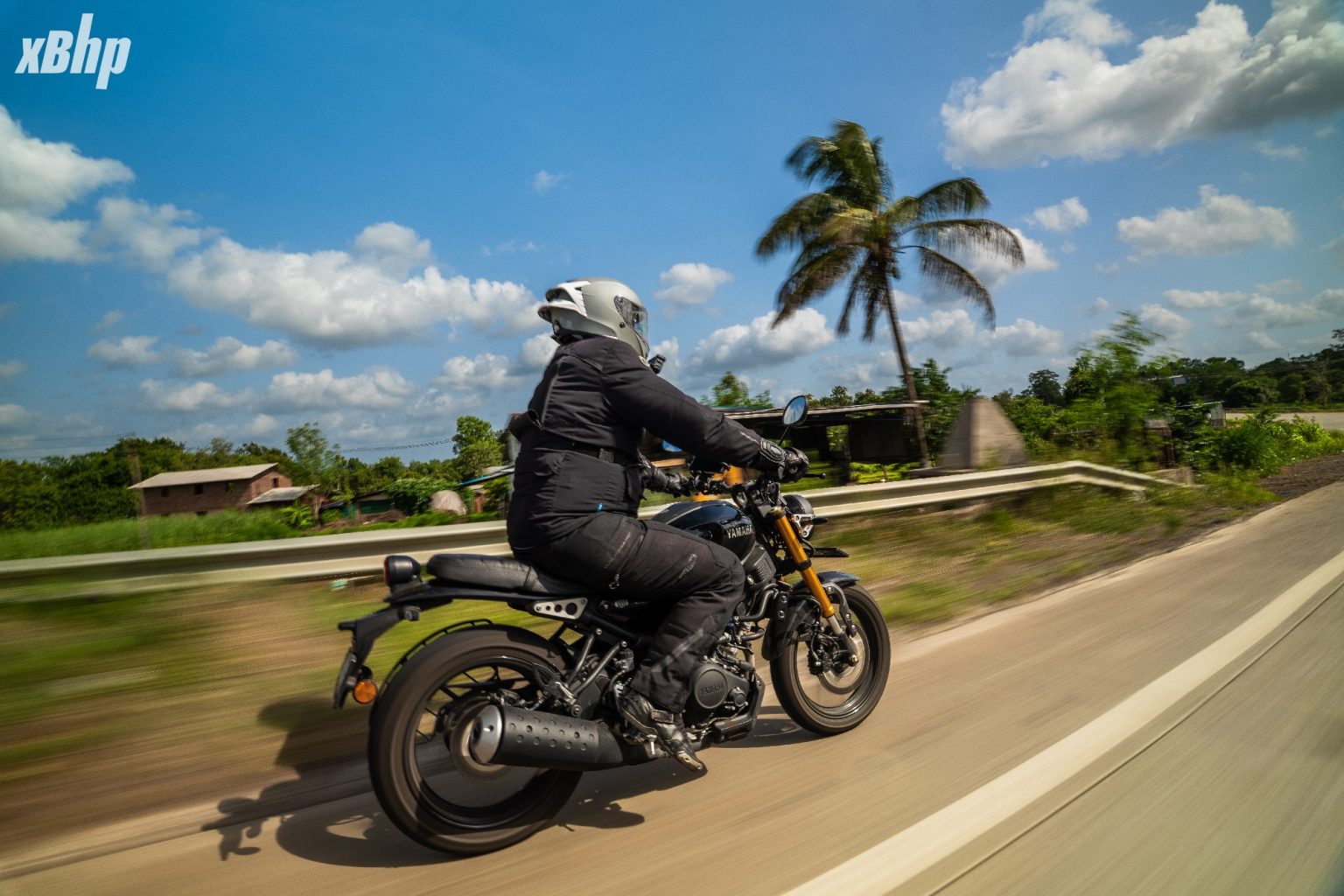
Just road. But this is also where one begins to understand a motorcycle. Short rides tell you a bit about the motorcycle’s character. Long rides reveal whether you want to keep riding it or not. The XSR155 has a light clutch, manageable weight and comfortable ergonomics. This stuff makes a difference. Honestly, no motorcycle can ever completely mitigate fatigue. But some motorcycles make things easy. So even after a full riding day, you are ready to ride the next day again.
The fuel tank is a bit of a thinker. 10L requires some planning. But on the flip side, the engine is so fuel-efficient that there’s rarely a moment where a fuel station is too far away. Also, the 6-speed gearbox helps here. In the top gear, the motorcycle moves briskly while remaining stress-free and fuel-efficient. Finally, the VVA system helps you with some poke when it is needed… in situations such as brisk overtakes. But then again, this ride was not a sprint. It was a marathon. And marathons need you to keep going.
Delhi: Two Riders Become a Community
Delhi was expected to be another major stop on the route. It became much more. Entering Delhi meant moving from open highways into flyovers, traffic, metro lines, dense neighbourhoods and a city that seems determined never to slow down. The XSR155 adapted naturally. Its compact size made city riding easier, the upright posture offered good visibility, and the light clutch reduced fatigue through repeated stop-and-go movement.
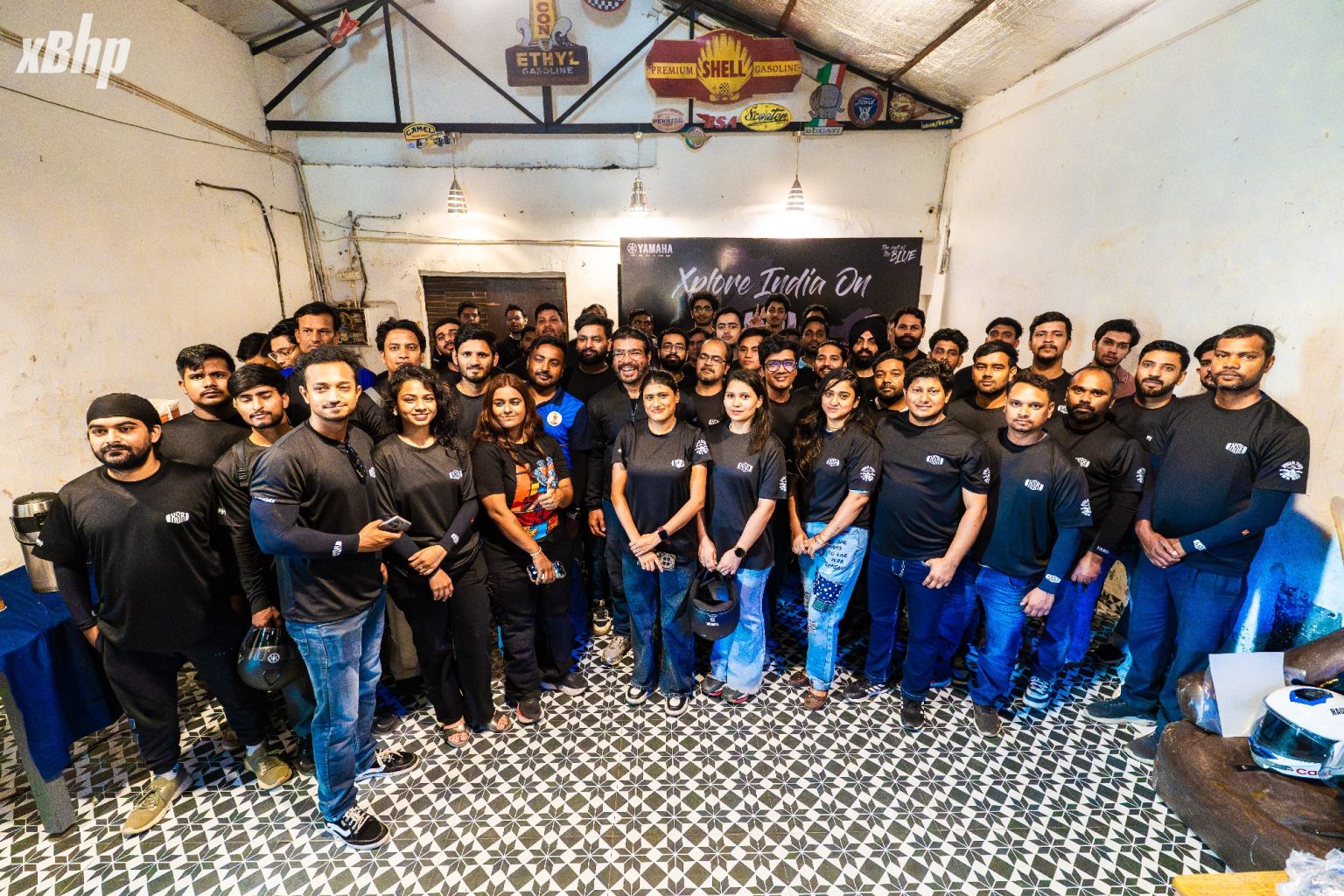
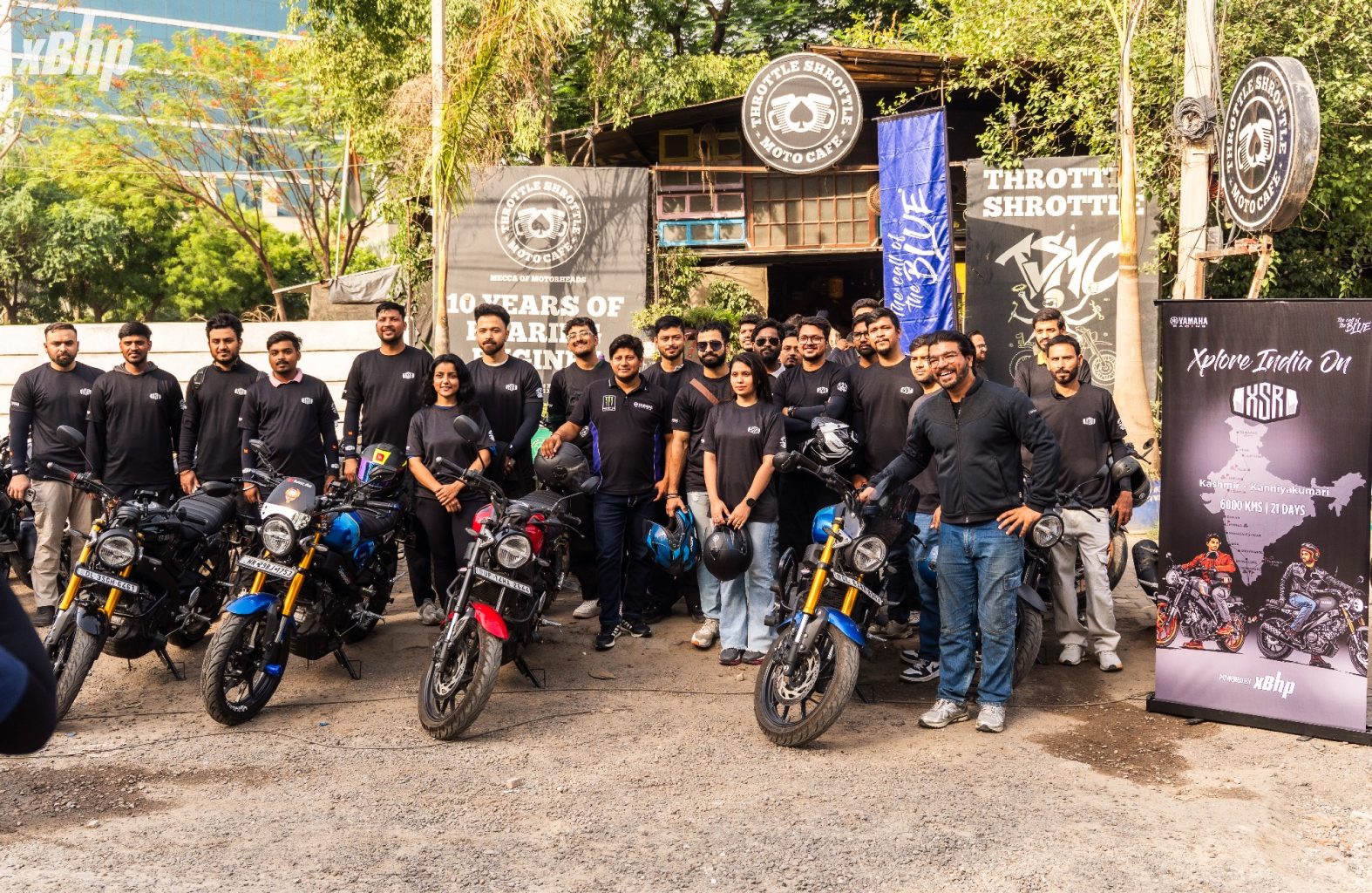
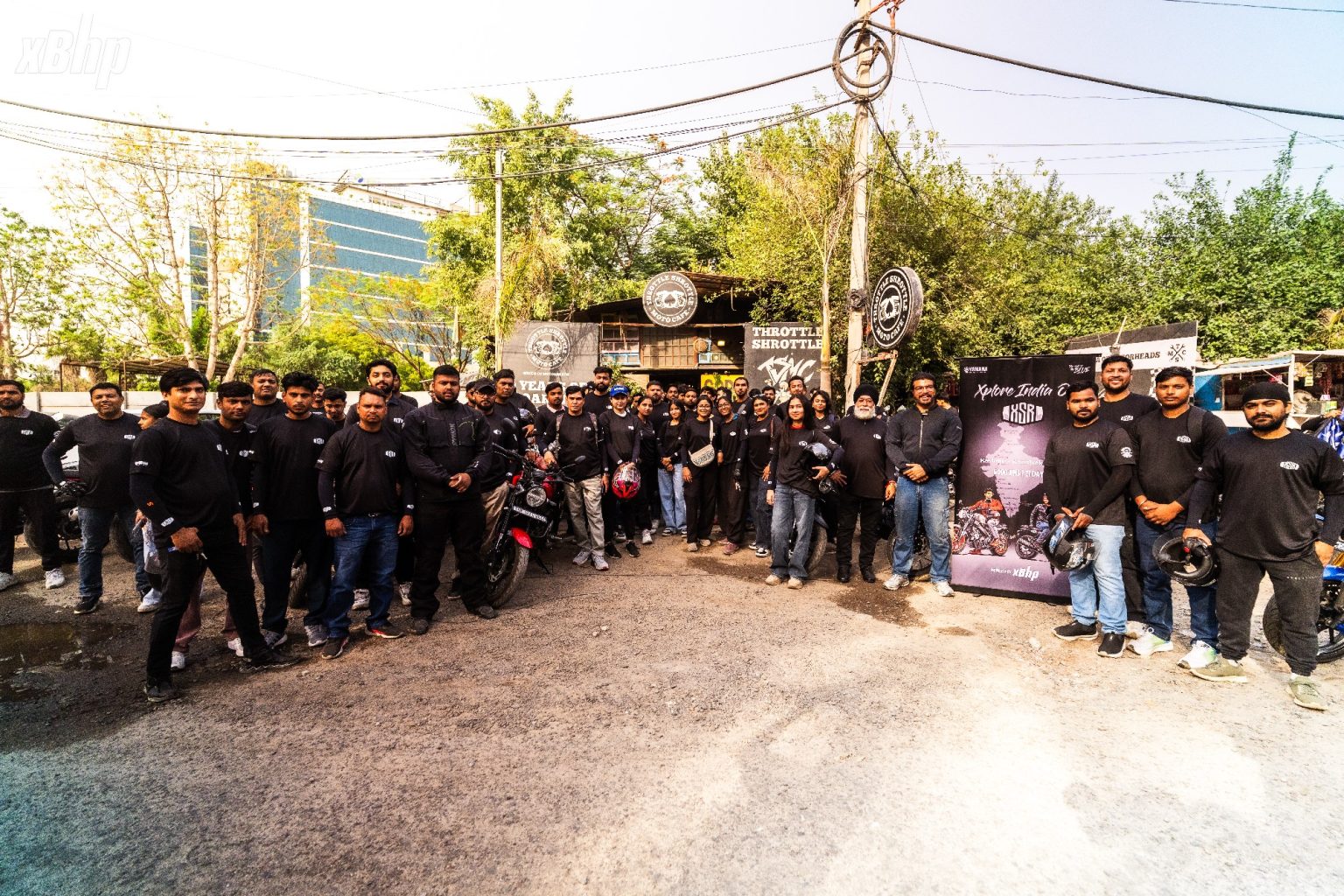
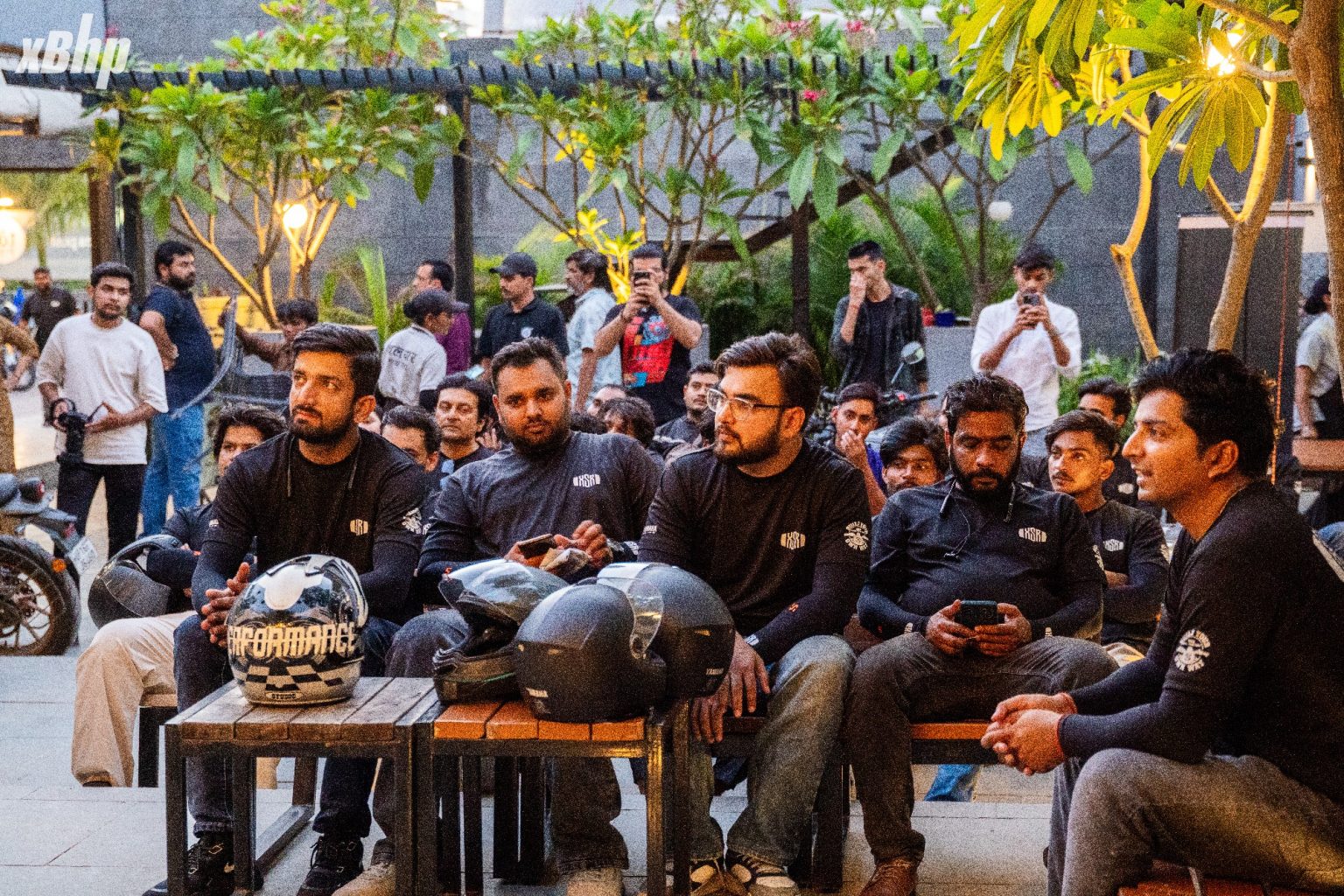
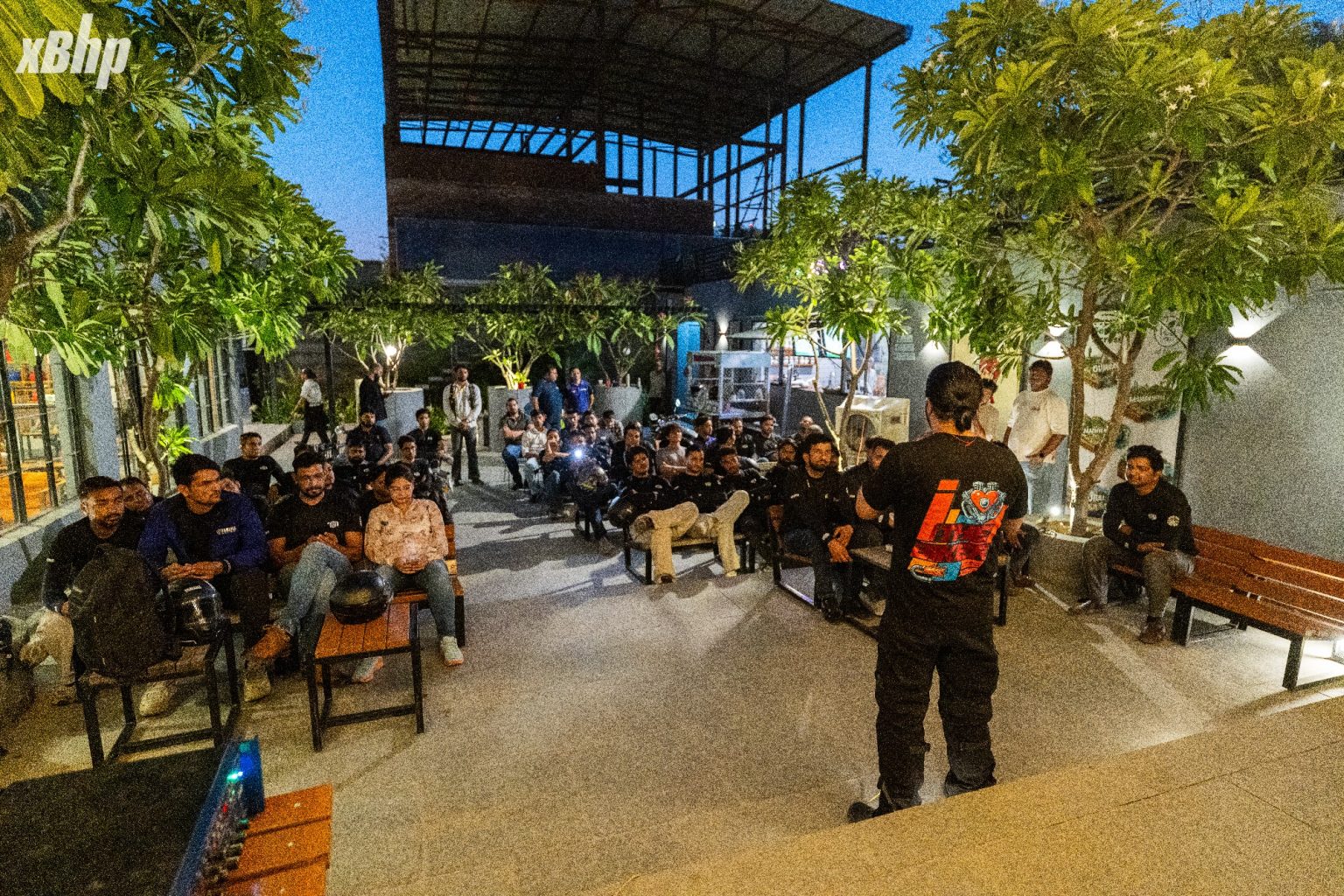
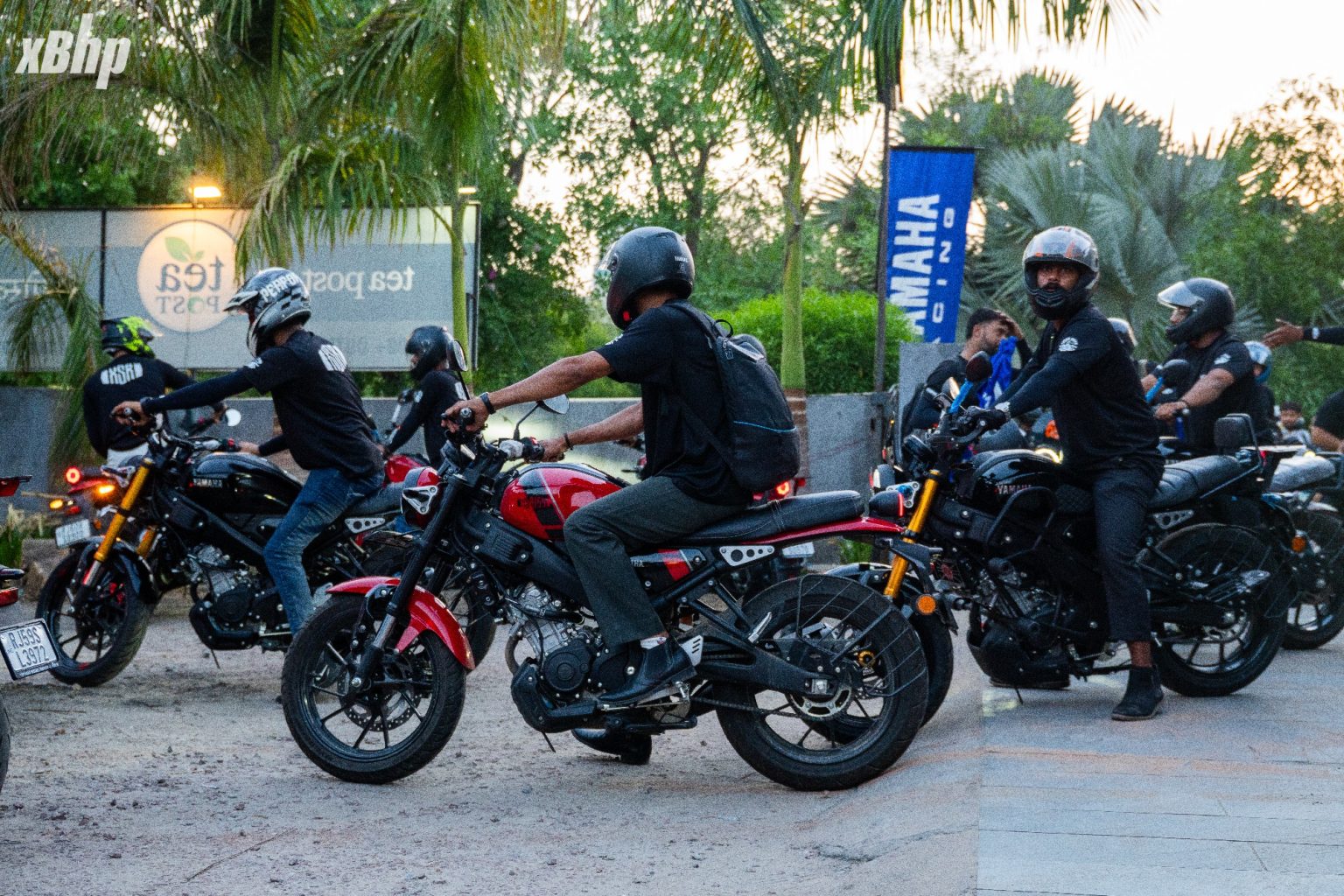
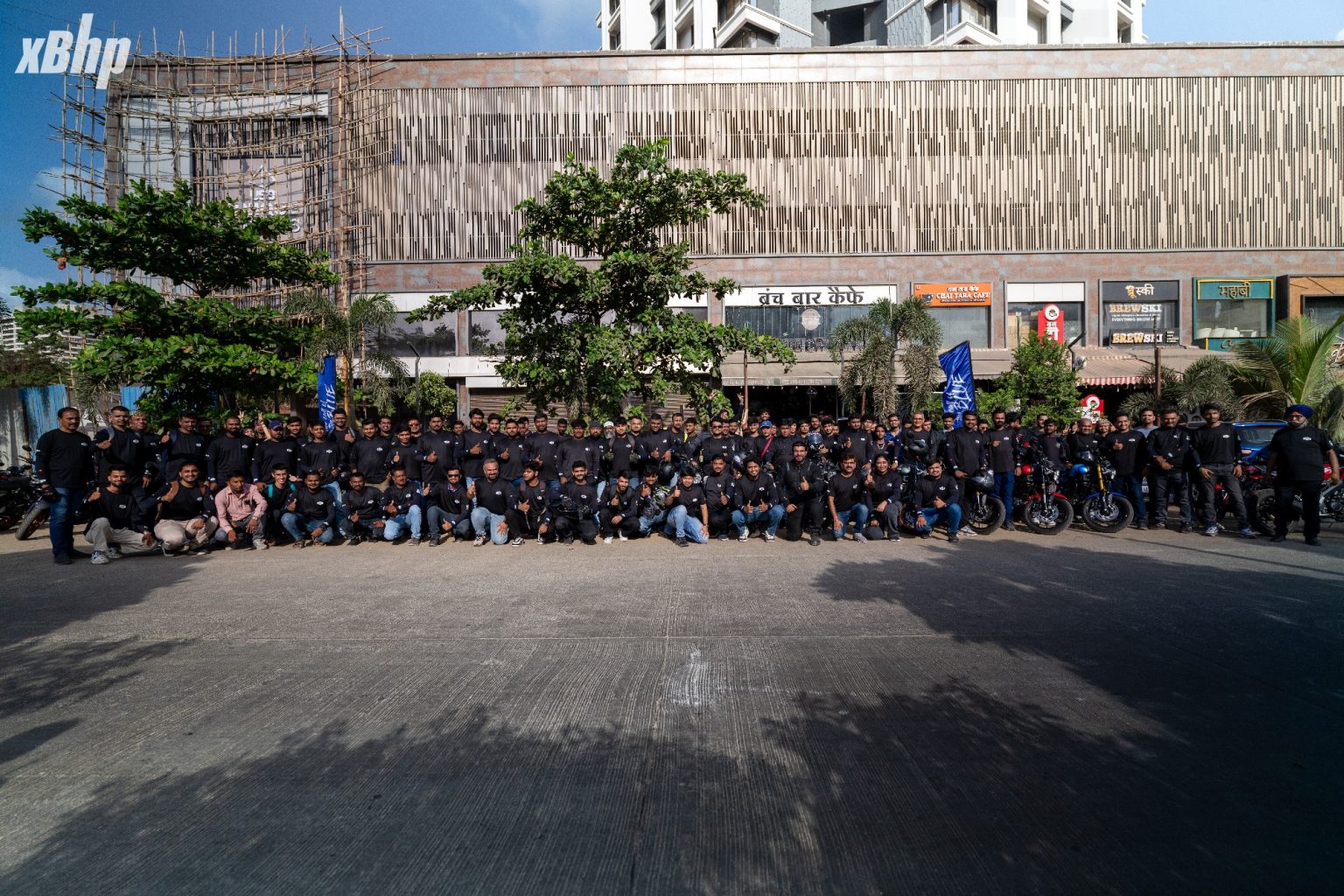
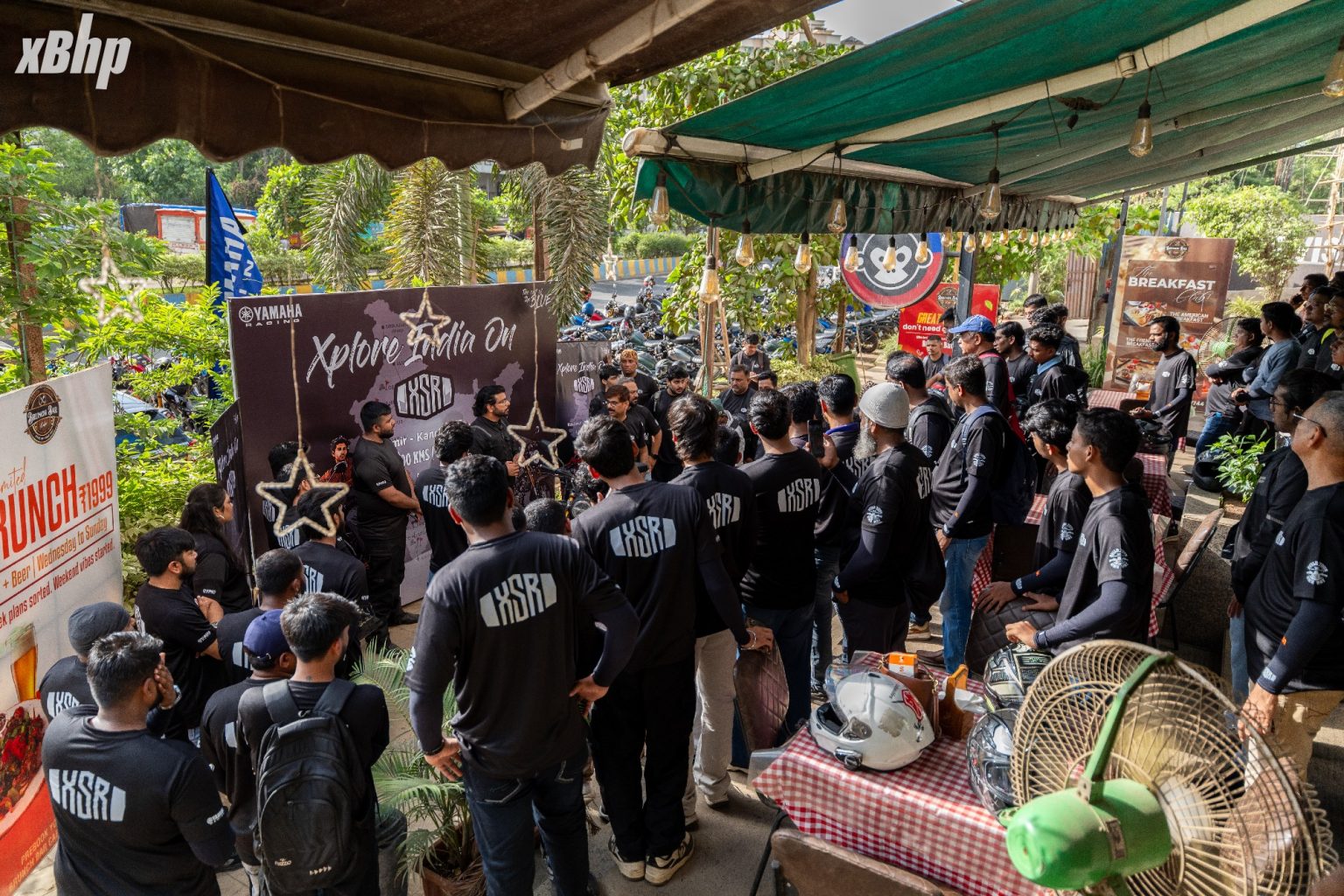
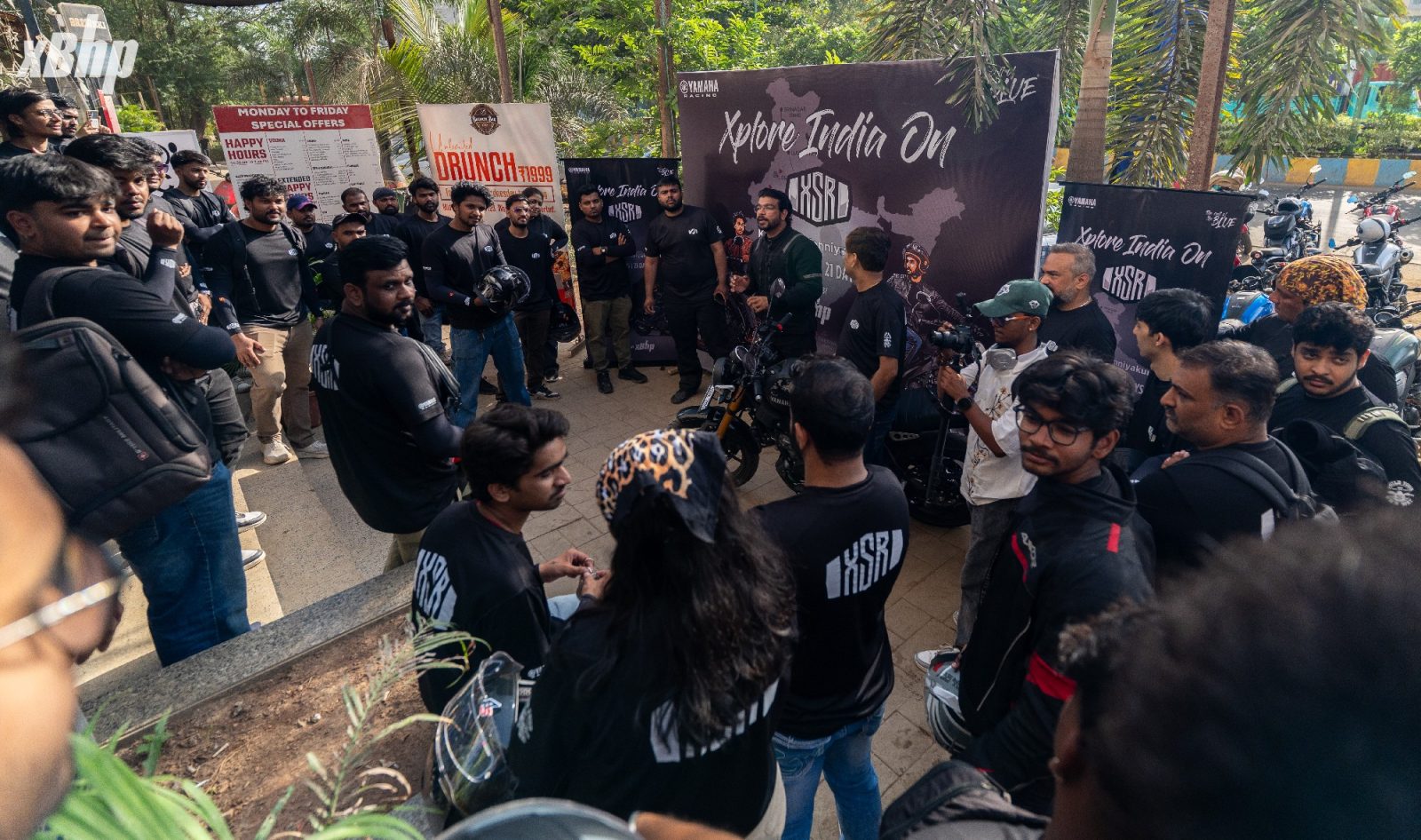
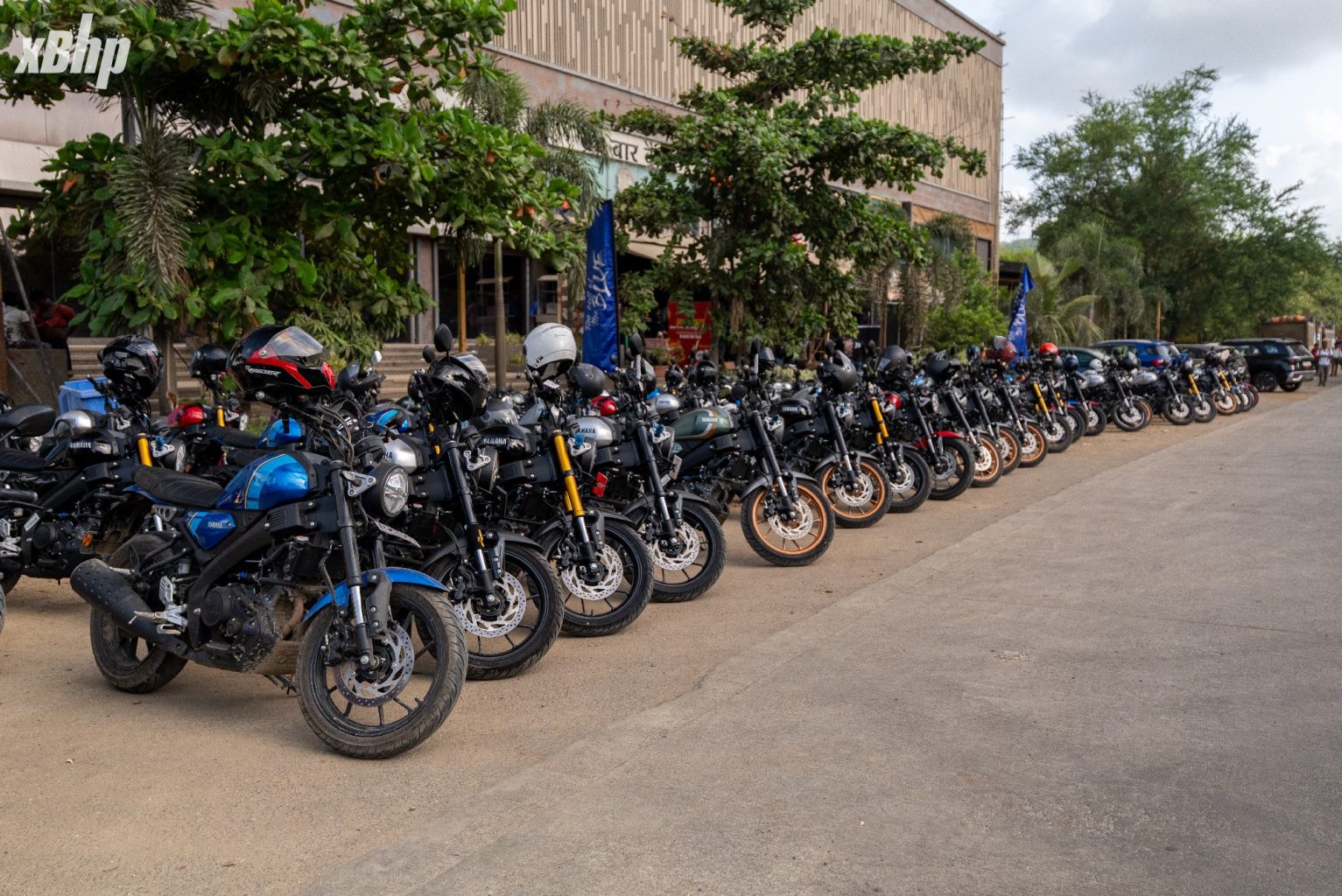
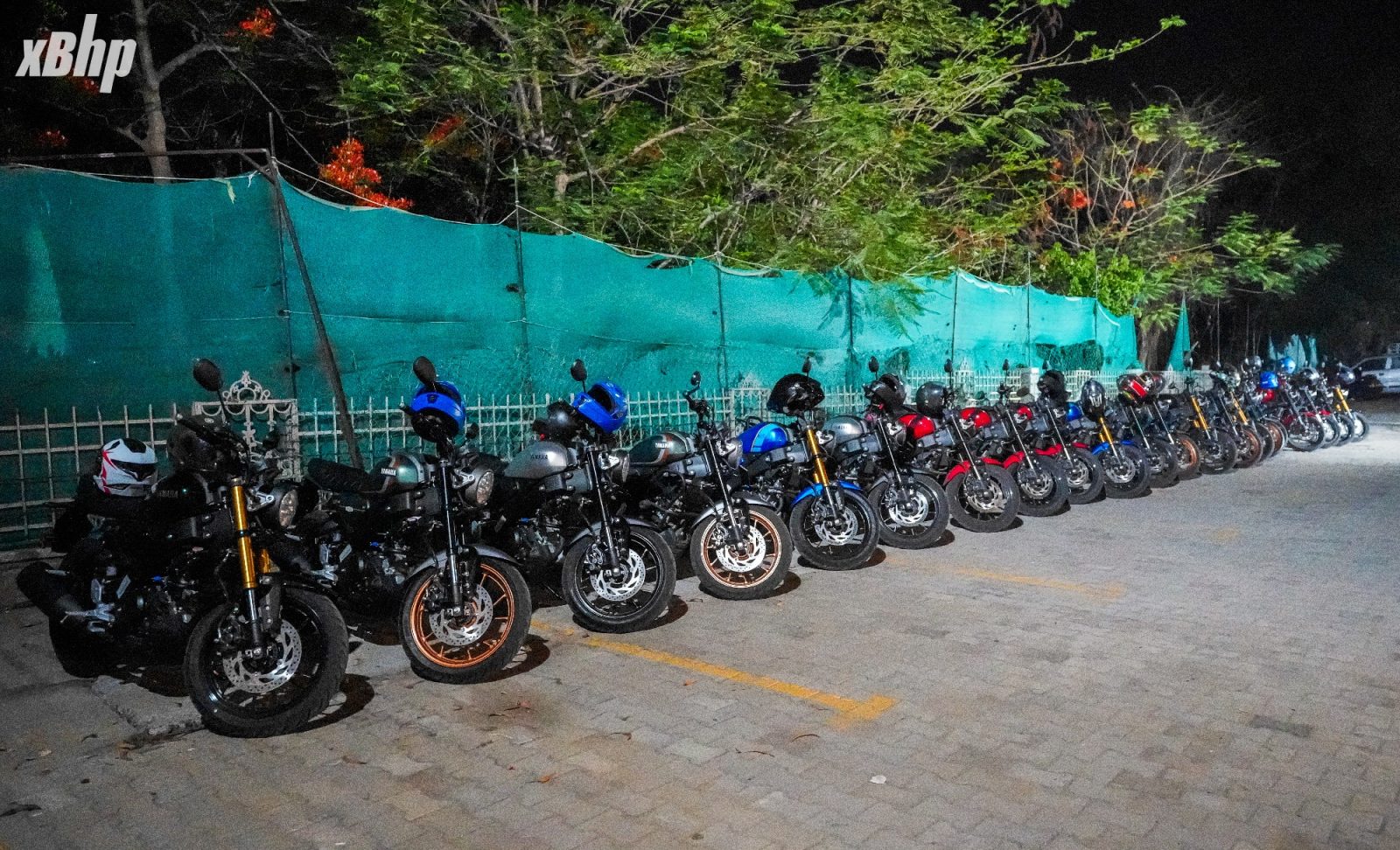
But the motorcycles were no longer travelling alone. More than 150 XSR riders joined the Delhi café ride and meetup at Throttle Shrottle. One motorcycle arrived, then another, and another. Soon, the parking area became a sea of round headlamps, colours, riding jackets and conversations. Some riders had travelled across Delhi. Others had come from outside the city. Some had followed xBhp for years. Many were meeting us for the first time. Within minutes, none of it mattered. Motorcycles have a remarkable way of making introductions unnecessary. “How long have you owned it?” “What modifications have you done?” “Where have you ridden?” “Are you riding to Kanniyakumari?”
The two XSRs that had started from Srinagar were now standing among more than 150 members of the same family. They were dusty and loaded, visibly different from the clean city motorcycles around them. That dirt became their credibility. People did not need a presentation about whether the XSR could travel. The evidence had ridden into the café. For a few hours, the journey stopped belonging only to us. It belonged to everyone who had ever opened a map of India and wondered: “Could I do this too?” When we left Delhi, the fuel tanks were full. But more importantly, we left carrying the energy of an entire community.
Delhi to Jaipur: The Country Changes Colour
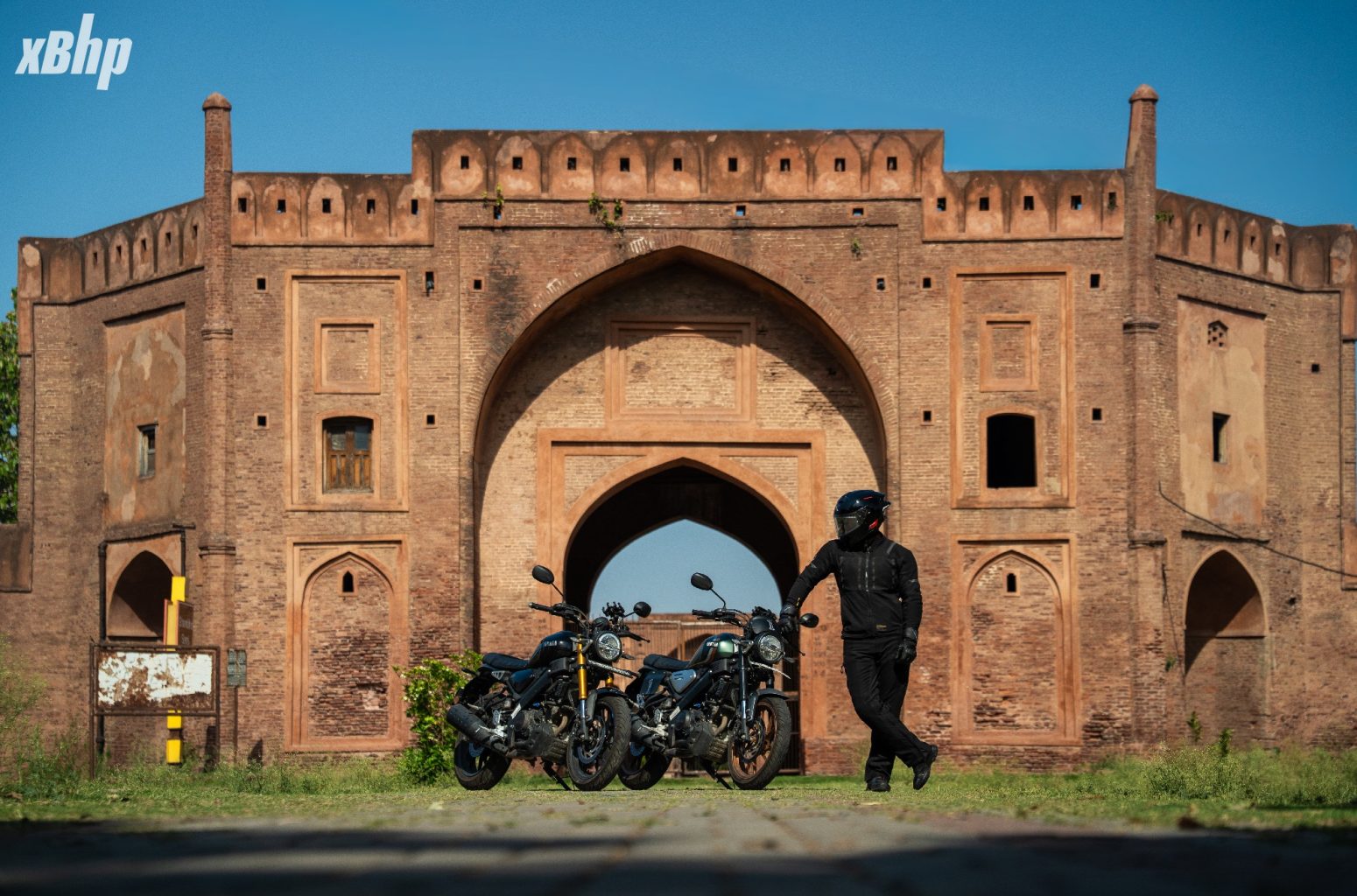
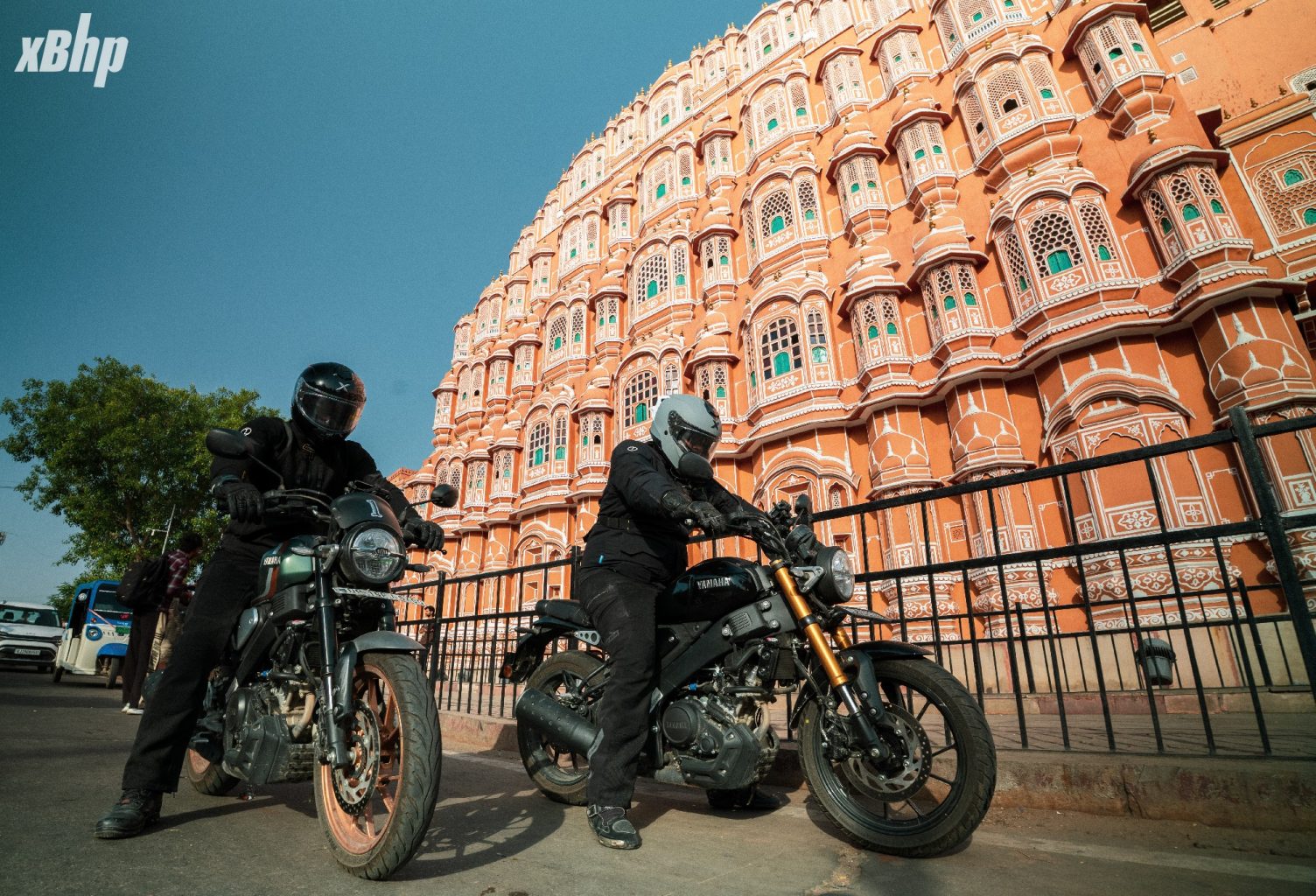
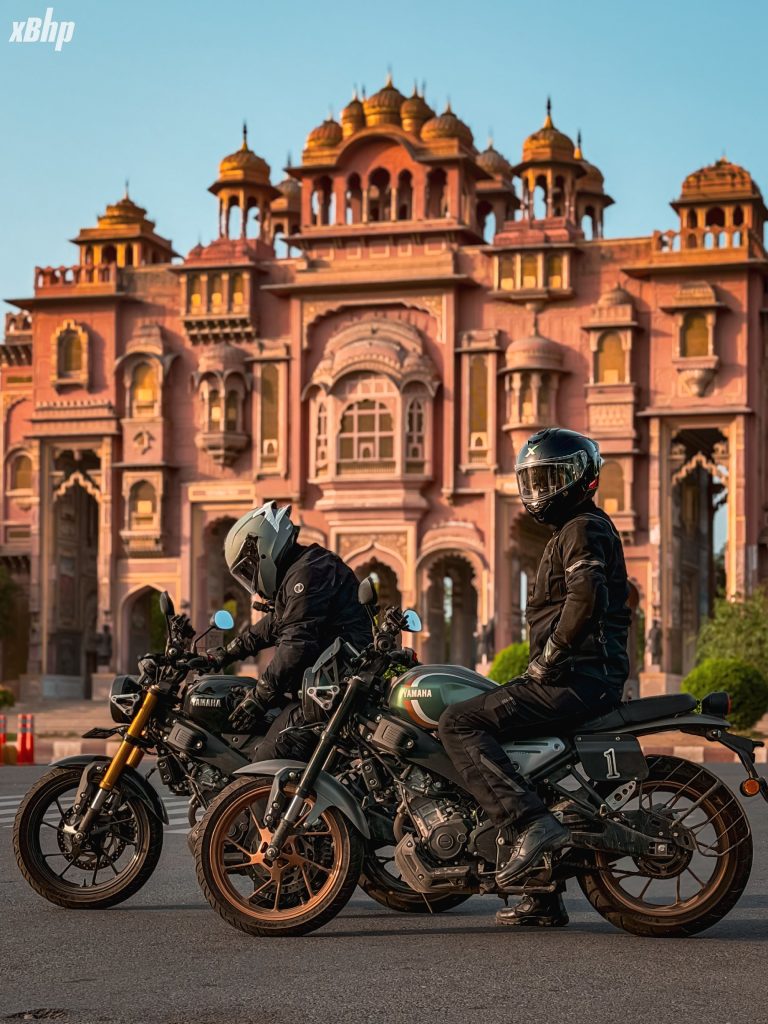
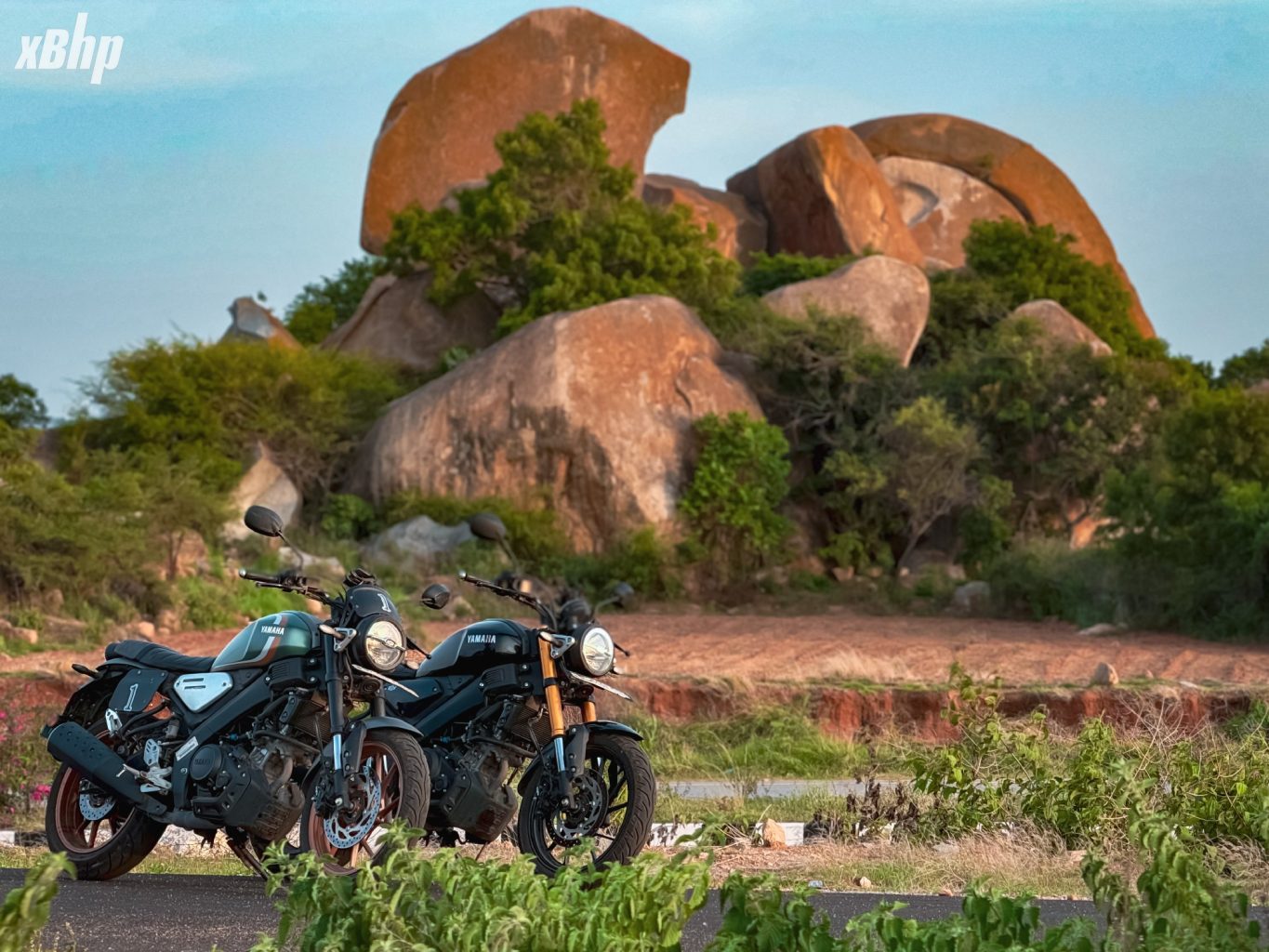
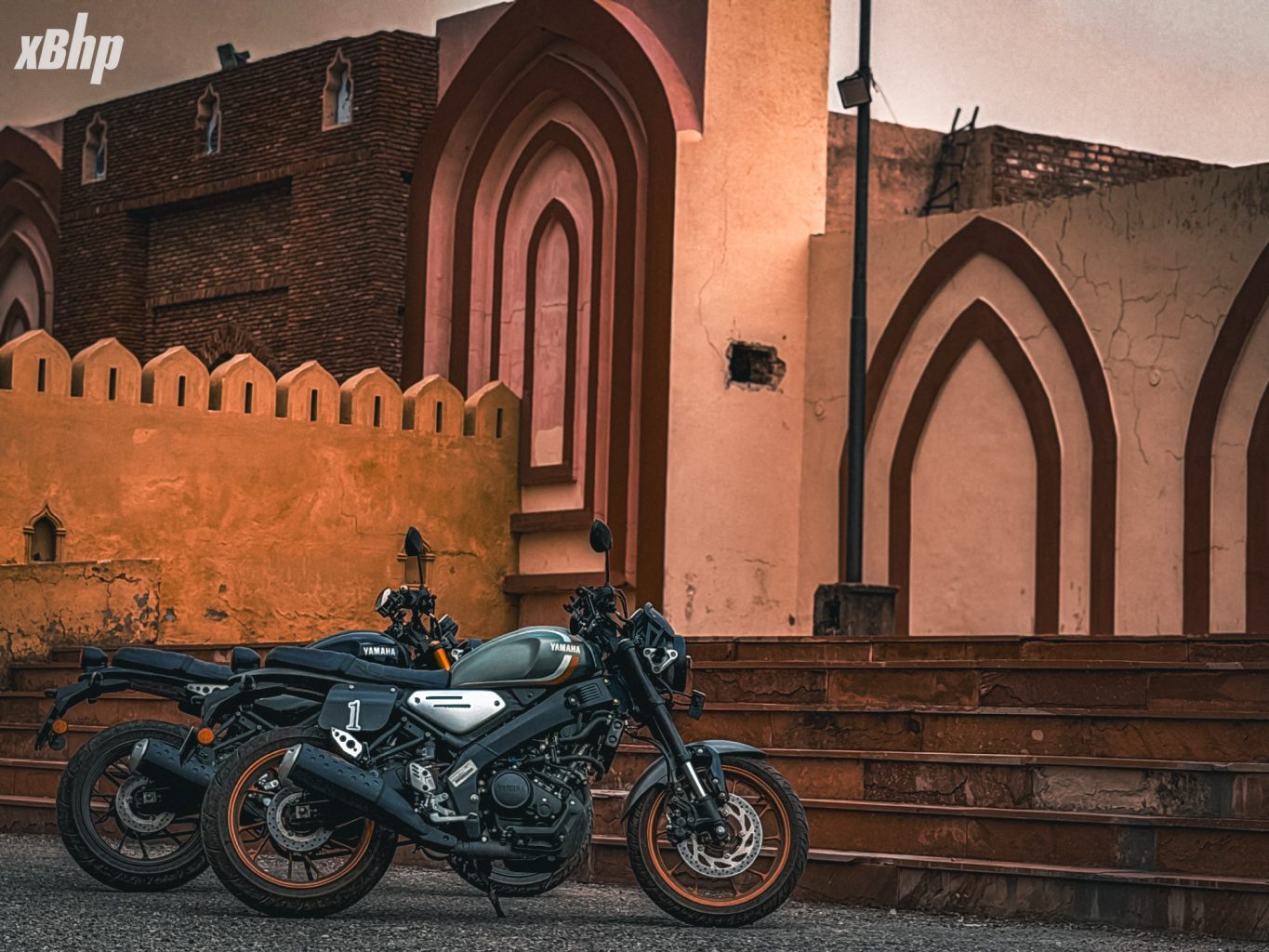
The road from Delhi towards Jaipur marked another transition. Urban density gradually opened into Rajasthan’s warmer light. The colours became deeper. The horizon felt wider. The architecture began carrying stories older than the roads beneath our tyres. Jaipur seemed like the perfect place to complement the modern-retro XSR155. Against the rugged Aravalli backdrop at Nahargarh Fort, the XSR155 produced a strange paradox. It did not look like a vintage motorcycle that was pretending to bring back to life a bygone era. But it did not look disconnected from it either. Perhaps that paradox is what a perfect modern-retro strives to achieve.
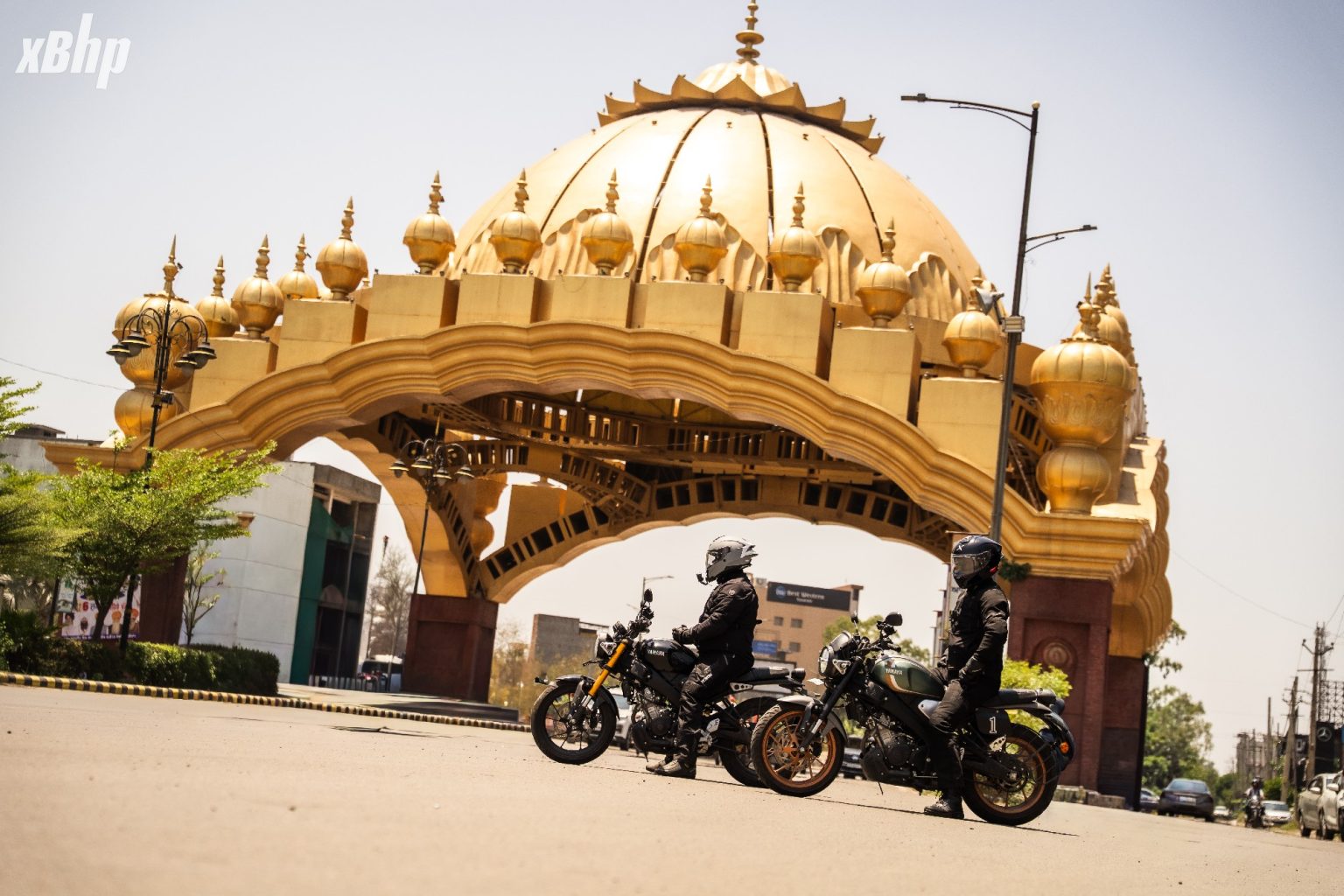
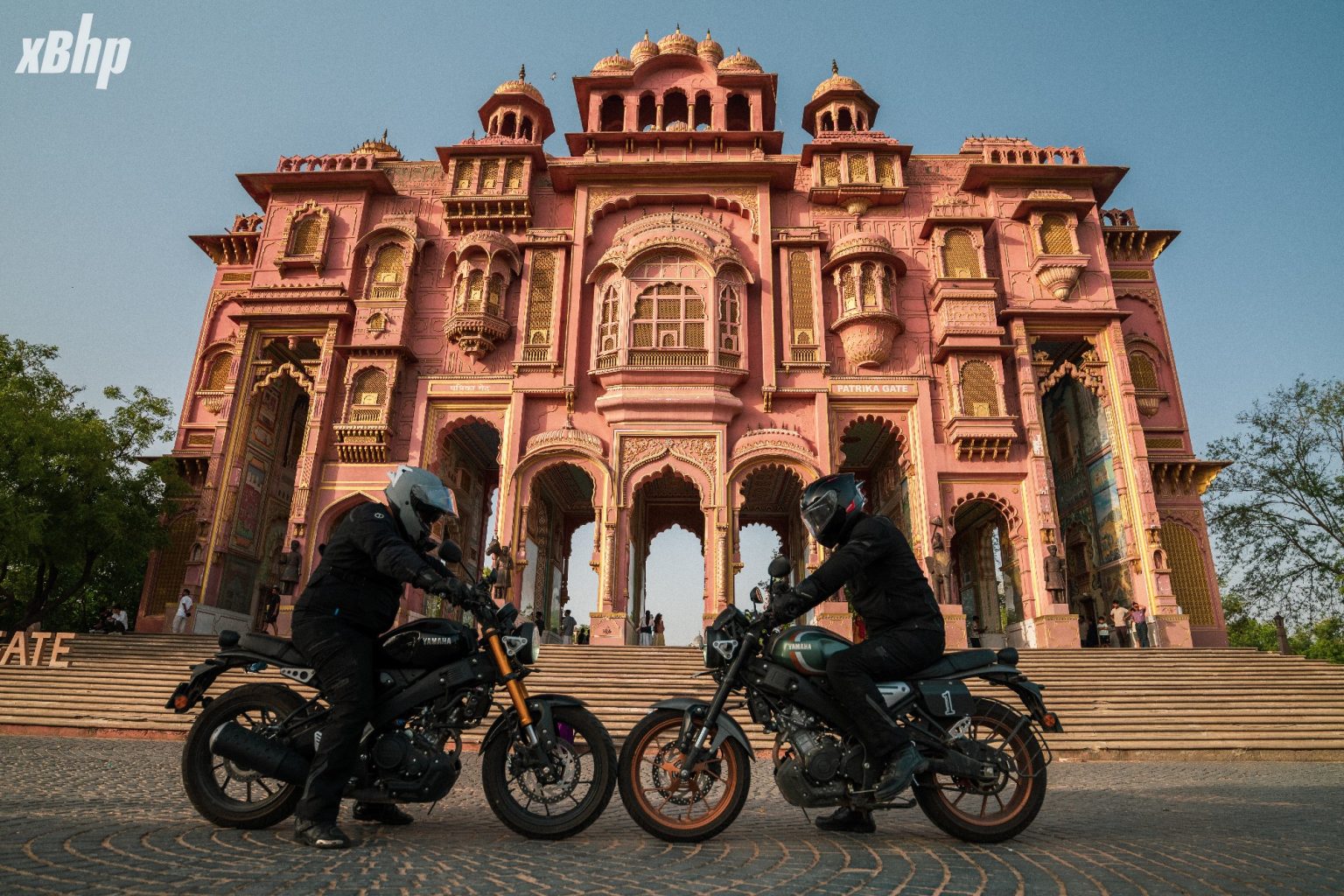
Its round headlamp and simple silhouette referenced the past, while the upside-down fork, digital instrumentation, modern chassis and safety electronics kept it rooted in the present. That balance was exactly what Jaipur represented. Then came Patrika Gate, where arches, colours, painted details and symmetry made every frame feel almost too perfect. The gate is contemporary, but its design draws heavily from Rajasthan’s architectural and artistic traditions.
Once again, the old and new did not compete. They completed each other. The motorcycle blended in effortlessly. And Jaipur’s contribution to the culinary side of the journey arrived in the form of its famous pyaaz kachori. Hot, crisp and filled with a spiced onion mixture, it was the kind of roadside breakfast that makes complete sense only when eaten fresh, standing near the motorcycles, while discussing the day’s route. A roadtrip meal does not need elaborate presentation. Sometimes all it needs is hunger.
The Jaipur XSR café meet brought local riders into the story. Around 40 XSR155 owners joined the gathering, and once again, helmets rested beside coffee cups while conversations moved freely. Motorcycles became routes. Routes became plans. Plans became stories. And stories eventually came back to motorcycles. The café was not simply a venue. It became another milestone.
Jaipur to Udaipur: When the Destination Stops Mattering
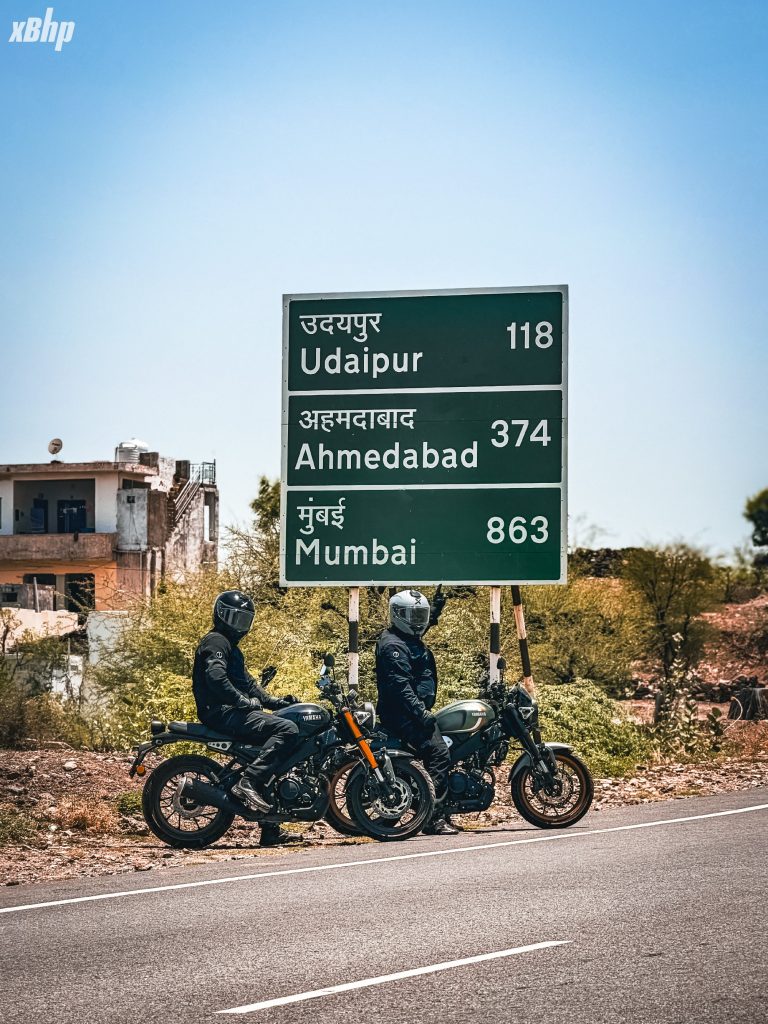
From Jaipur, we headed to Udaipur. The open highways of Rajasthan allowed both the man and the machine to settle into a rhythm. These are the sort of sections where the XSR feels inseparable from the rider. It feels completely at ease. The engine is smooth, the motorcycle is light, and the riding position is natural. It just keeps going like zen. At higher speeds, overtakes may seem like a bit of a hassle, but the VVA system is there to provide you with the grunt you need. Even though this is just a 155cc motorcycle, it also reminds you that nothing beats good engineering.
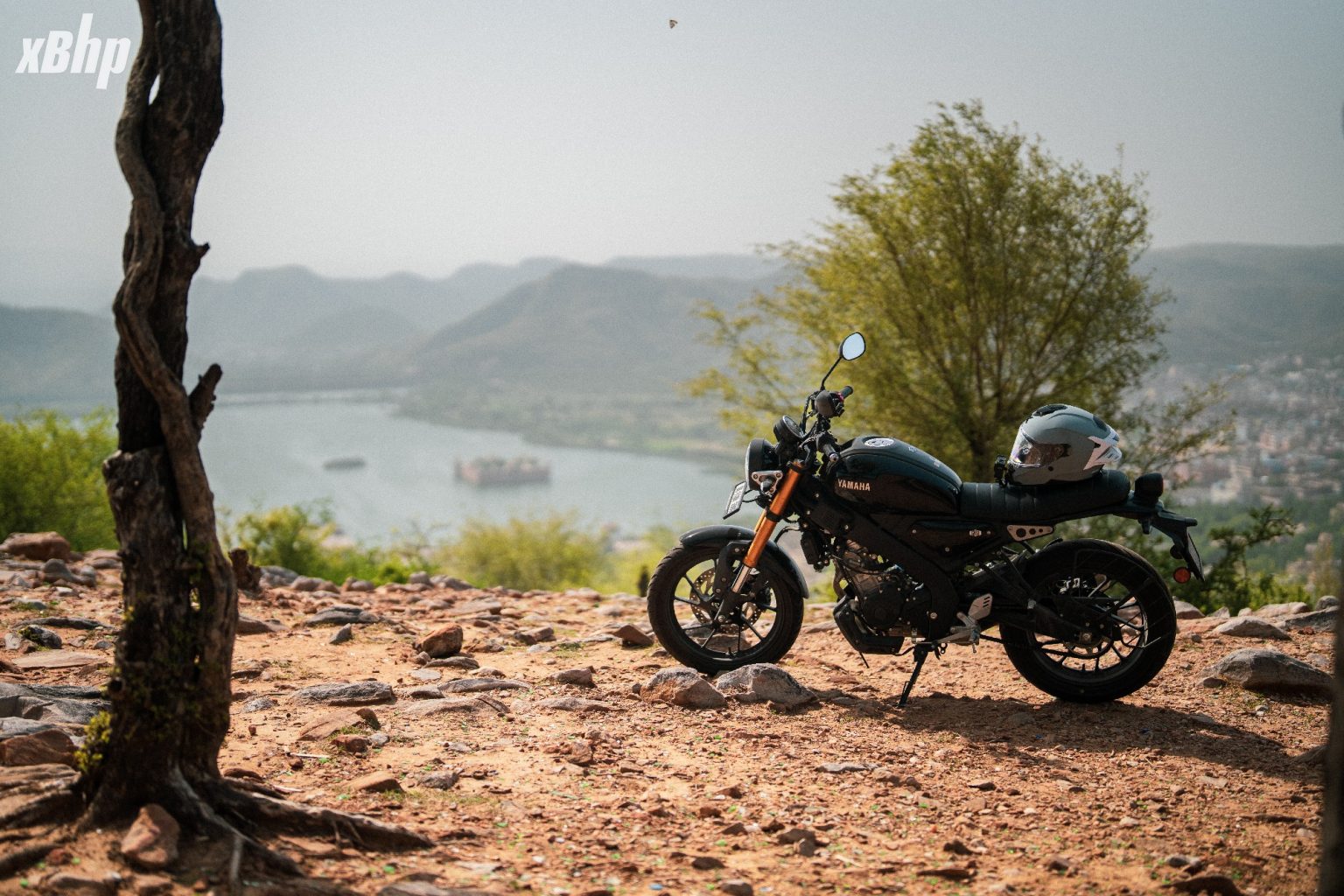
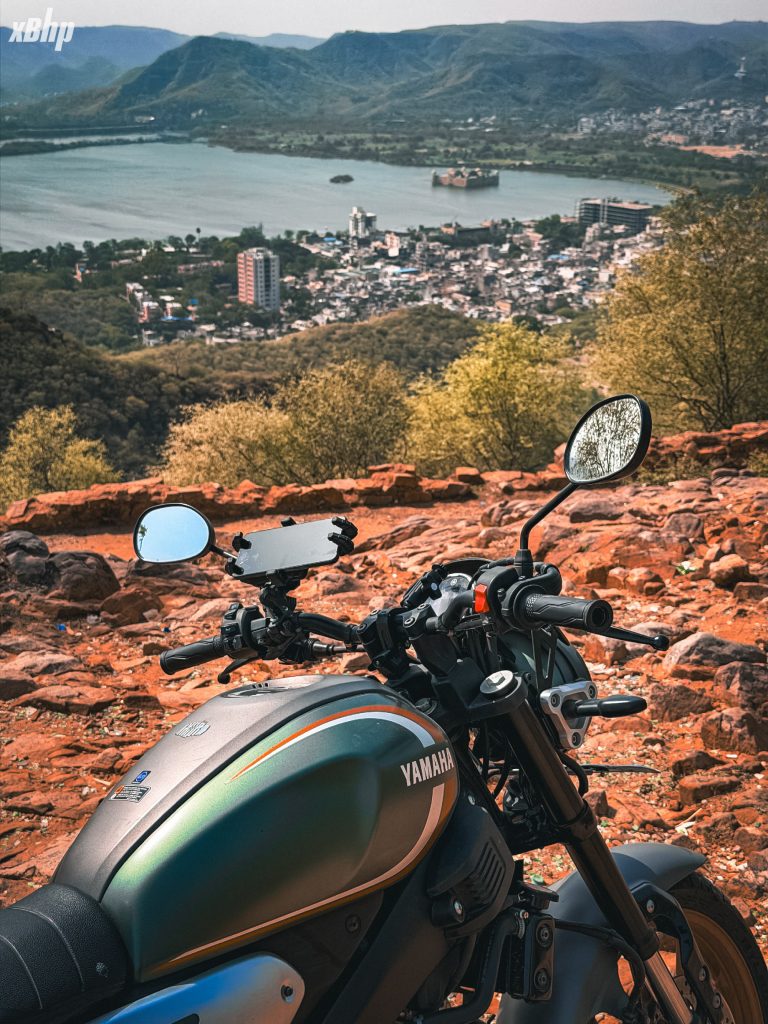
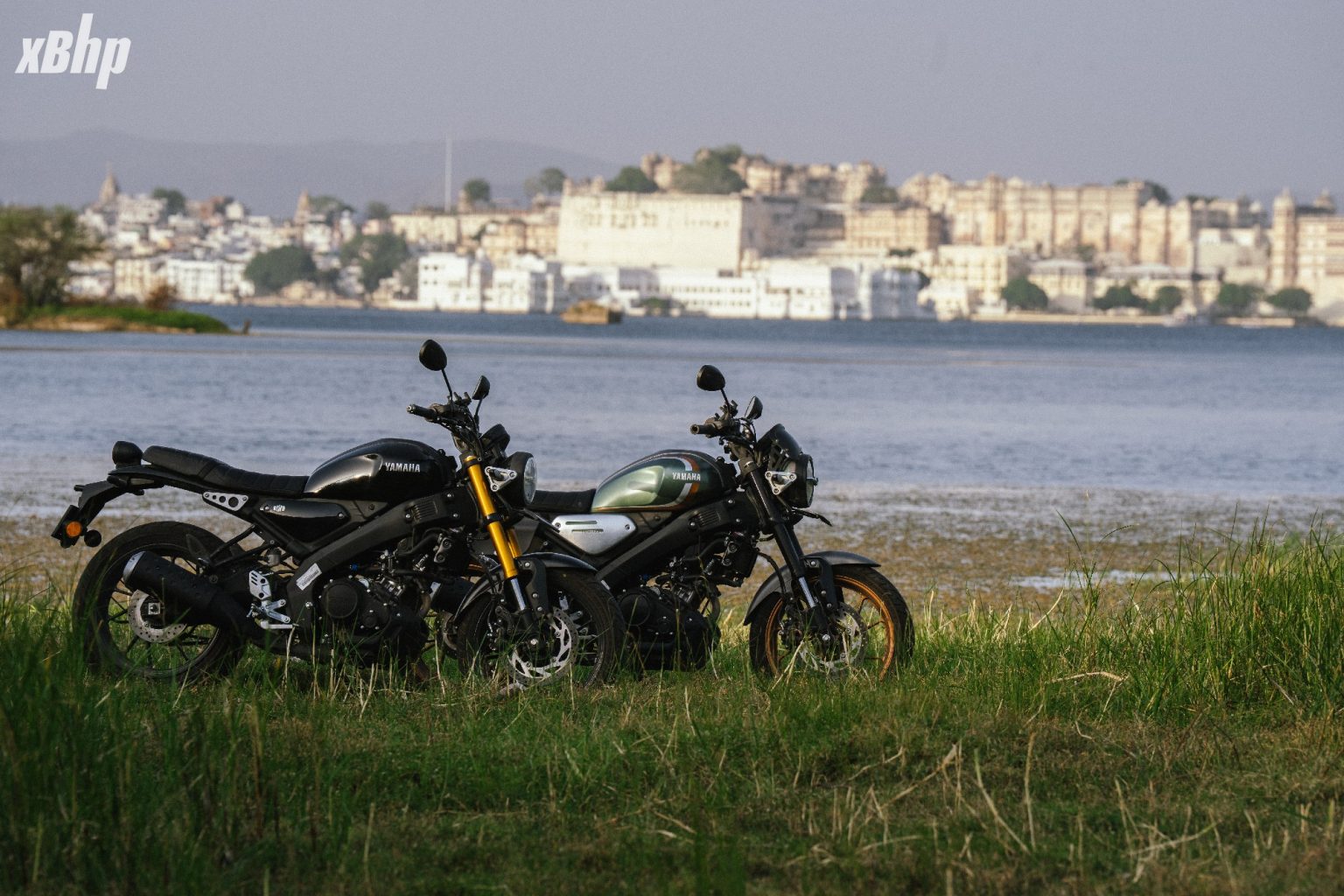
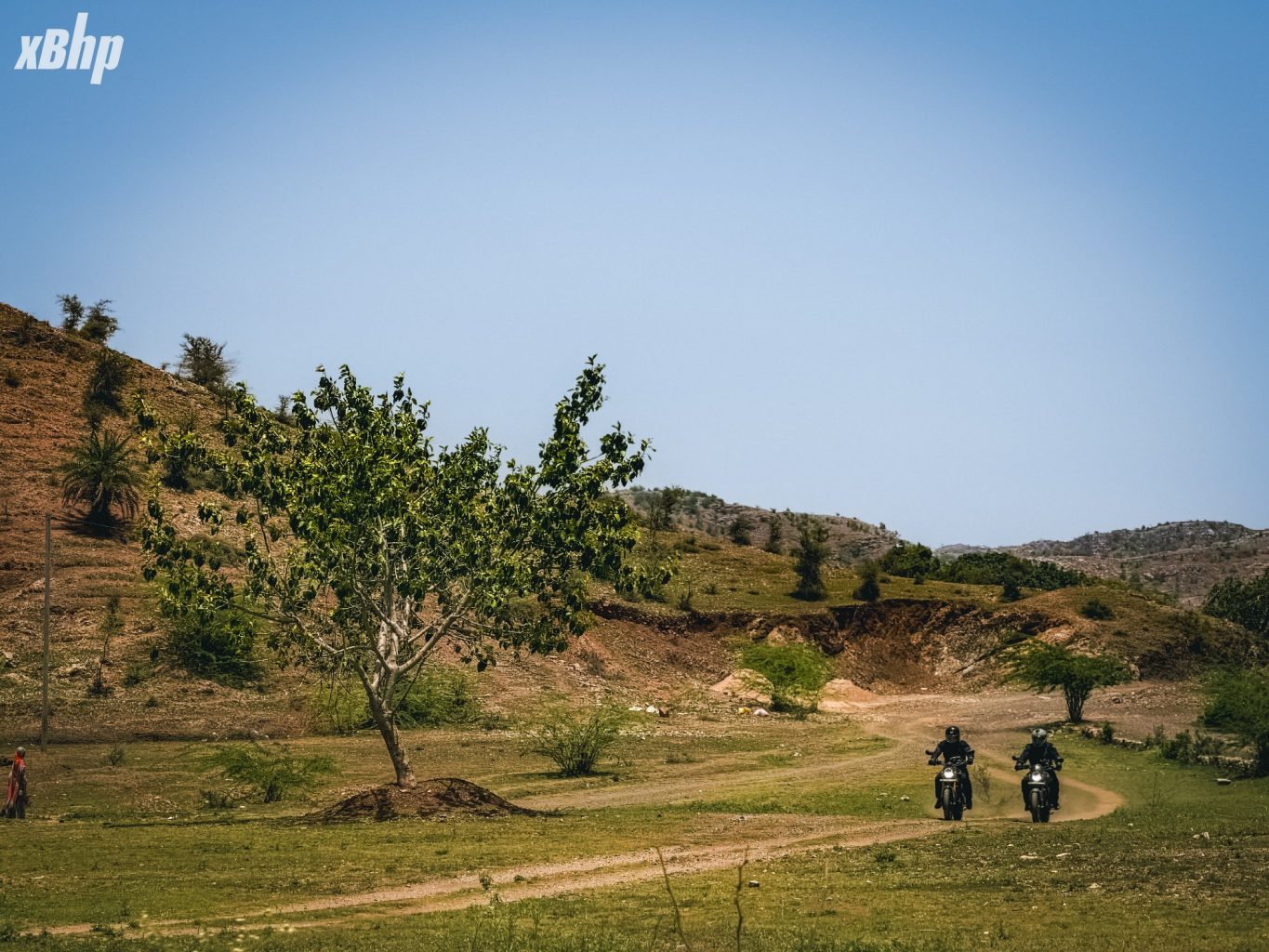
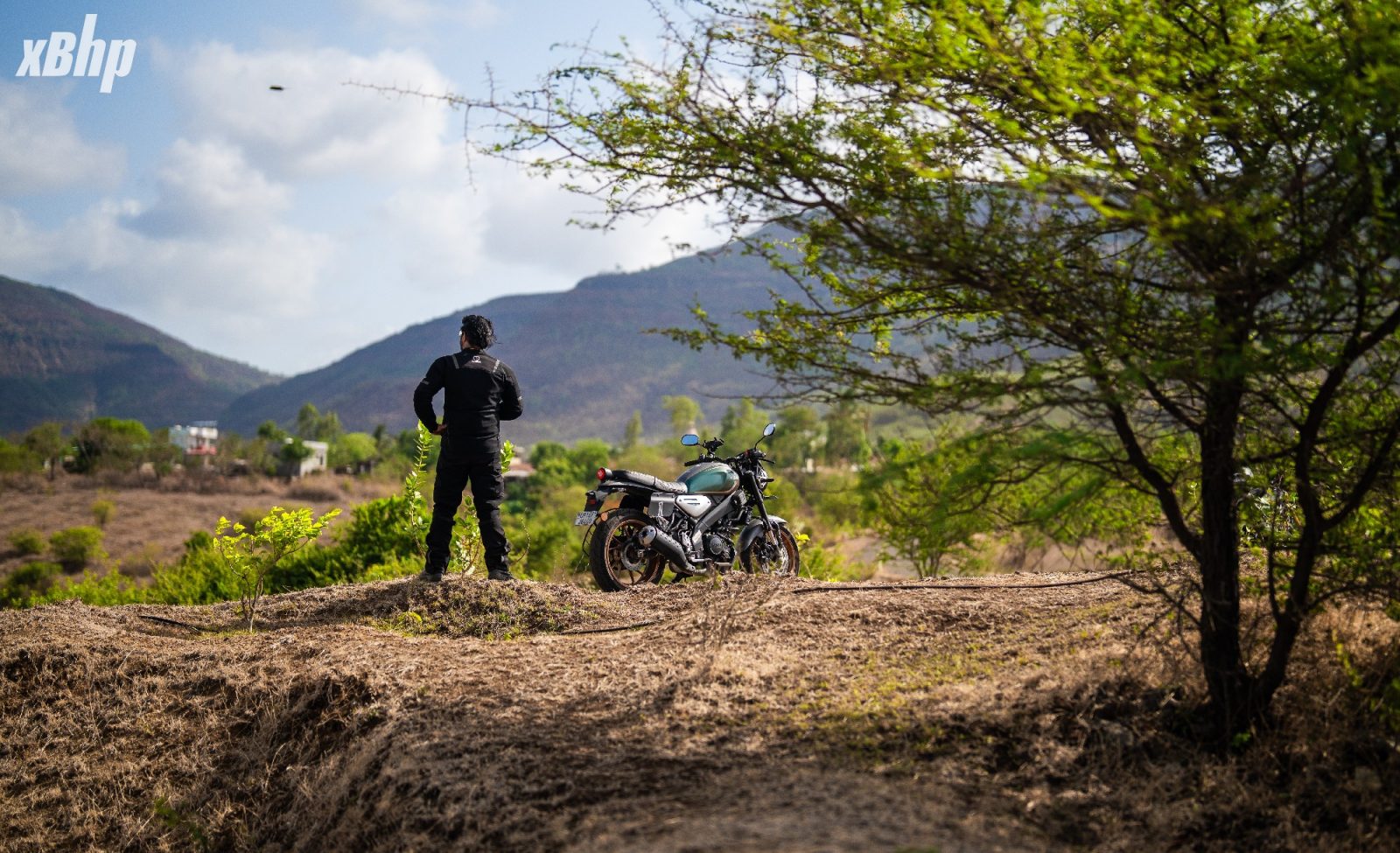
Then came Udaipur. It was like someone pressed the pause button on the travel video that we were in. Jaipur was bold with its colours and grandeur. The City of Lakes had a softer charm to it. The many lakes reflecting the city and the sky above it… it was almost like meditation. And the best part was yet to come. As we rode towards Raita Hills, the city began to disappear. The roads became narrower, traffic became sparse, and everything was quieter. Nothing but rolling hills and the view of the valleys; it did not feel like Rajasthan. As a metaphor, it felt like an oasis in a desert. For a few moments, nobody spoke.
The motorcycles stood beside us, their engines slowly cooling after the climb. The XSRs looked small against the scale of the hills, yet reaching that point on them made the experience feel even more personal. Raita Hills was not one of those places that needed a monument, a café or a grand structure to make an impression. Its beauty came from the absence of everything unnecessary.
No city noise. No crowds around us. No urgency. Just the hills, the wind, the motorcycles and an uninterrupted view that seemed to stretch forever. That moment also captured what this journey was slowly teaching us. A motorcycle journey frequently begins with the rider chasing a finish line. Reach the next city. Complete the planned distance. Stay on schedule. Get the required shots. Move again. But sometimes, a place makes the destination temporarily irrelevant.
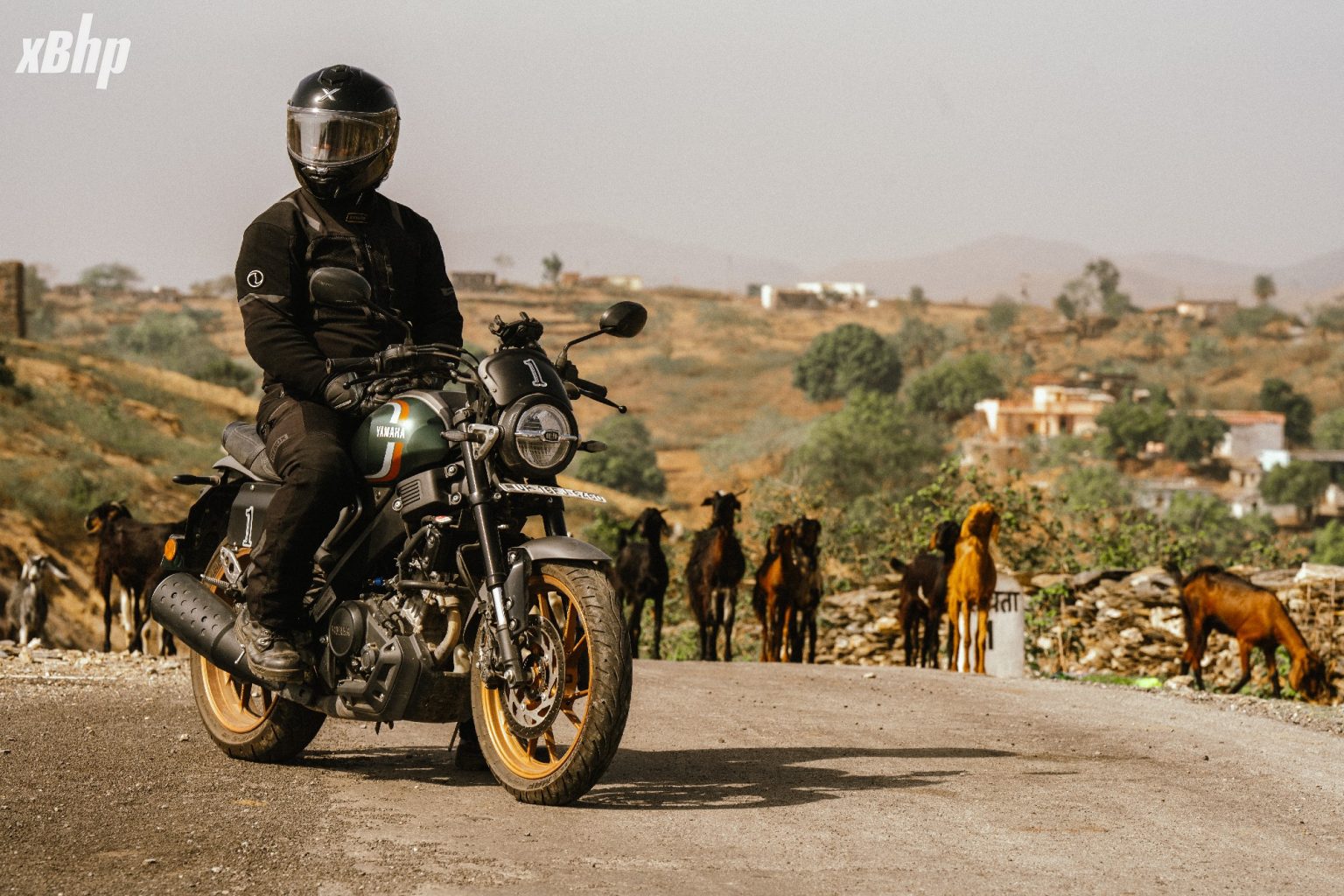
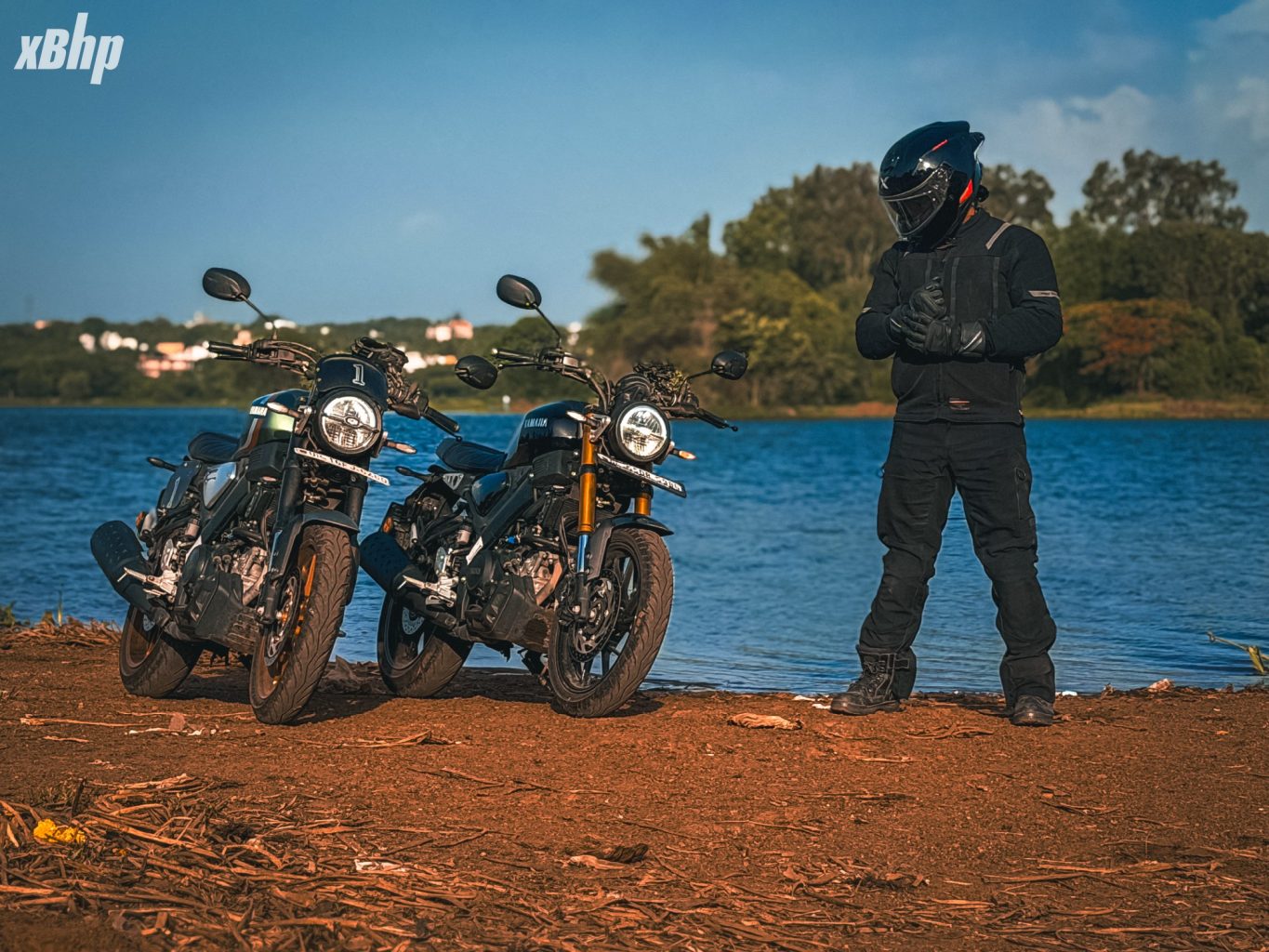
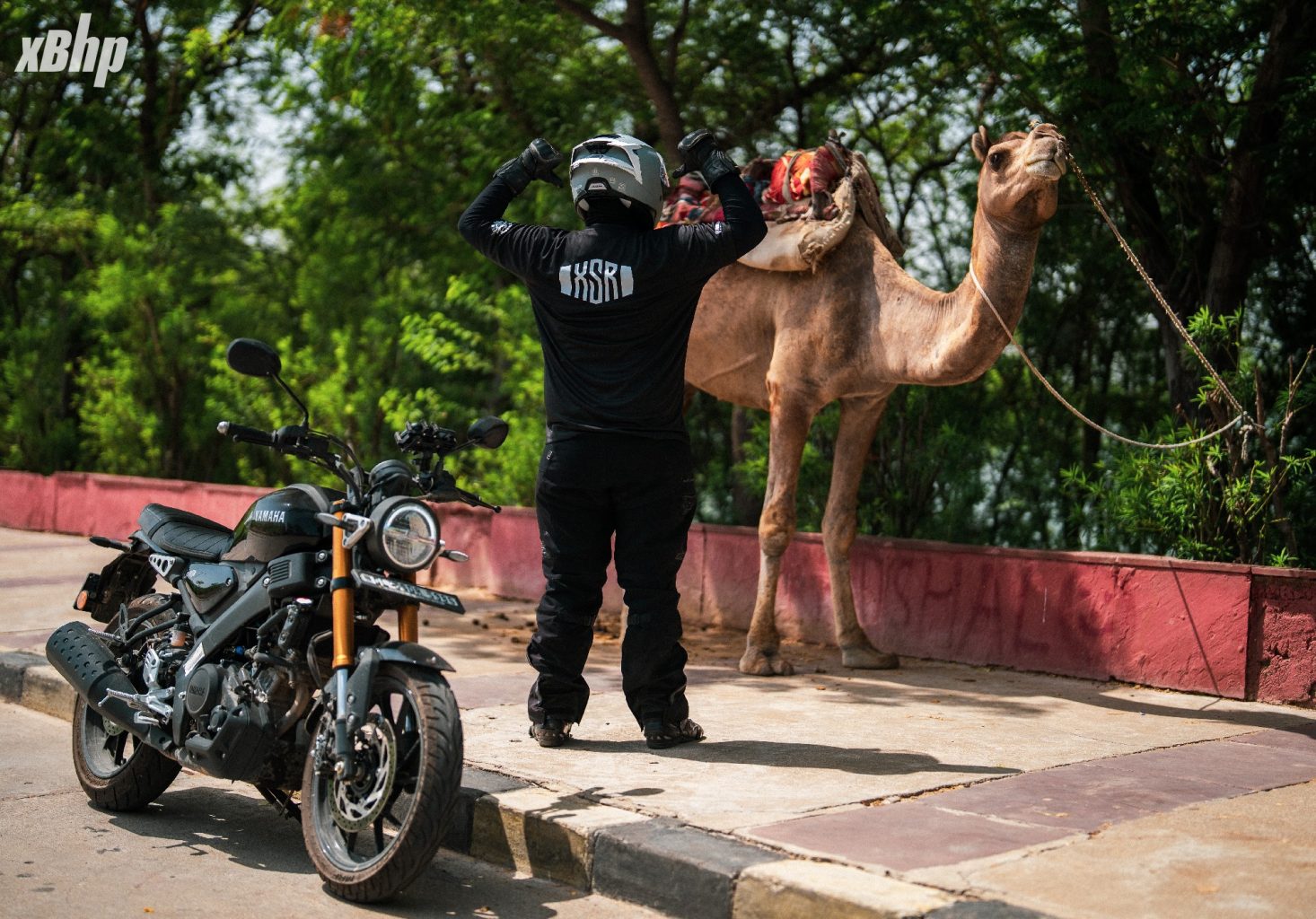
The Rynox Outlander Pro riding gear kept us protected and comfortable through the changing weather and demanding conditions of our K2K journey.
Raita Hills did exactly that. For a while, Kanniyakumari stopped being the goal. The kilometres remaining did not matter. We were not thinking about the next hotel, fuel stop or departure time. The road beneath us, and the place it had unexpectedly revealed, felt enough. That is one of the quieter transformations created by long-distance travel. You begin by counting the kilometres remaining. Slowly, you start noticing things that cannot be quantified.
Udaipur is one of the places that reaffirms one of the biggest clichés for travellers… it is not about the destination; it is about the journey. And high above the city, with the two Yamaha XSR155s resting beside us and the Aravallis stretching endlessly ahead, the roadtrip stopped feeling like a distance we had to conquer. It began feeling like a life we were fortunate enough to inhabit.
Udaipur to Ahmedabad: Heat, Highways and an Unexpected City Ride
The route from Udaipur towards Ahmedabad changed the environment once again. Udaipur’s lakes and rolling hills transitioned to wider tarmac, heat, and the urban hustle. Arriving in Ahmedabad, we had covered close to 2,000 km since we departed from Srinagar. It was not only a reminder of the roads that were in the rearview mirror, but also of the major part of India that was still firmly in our view.
This was the difficult middle of the journey. The beginning no longer felt recent, and the destination still felt very far away. The excitement that had carried us out of Kashmir now had to be replaced by routine and discipline. Wake up, load the motorcycles, ride through the heat, stop for fuel, capture the journey and continue. At this stage, the XSR155 had also settled into its role.
We were no longer discussing the motorcycle at every halt. Its controls, power delivery and balance had become familiar. We knew the speed at which it felt most relaxed. We understood its fuel range. We knew how it behaved with luggage and how much room was required to plan a safe overtake. Familiarity is one of the greatest compliments a touring motorcycle can receive. The machine was slowly disappearing from our conscious thoughts.
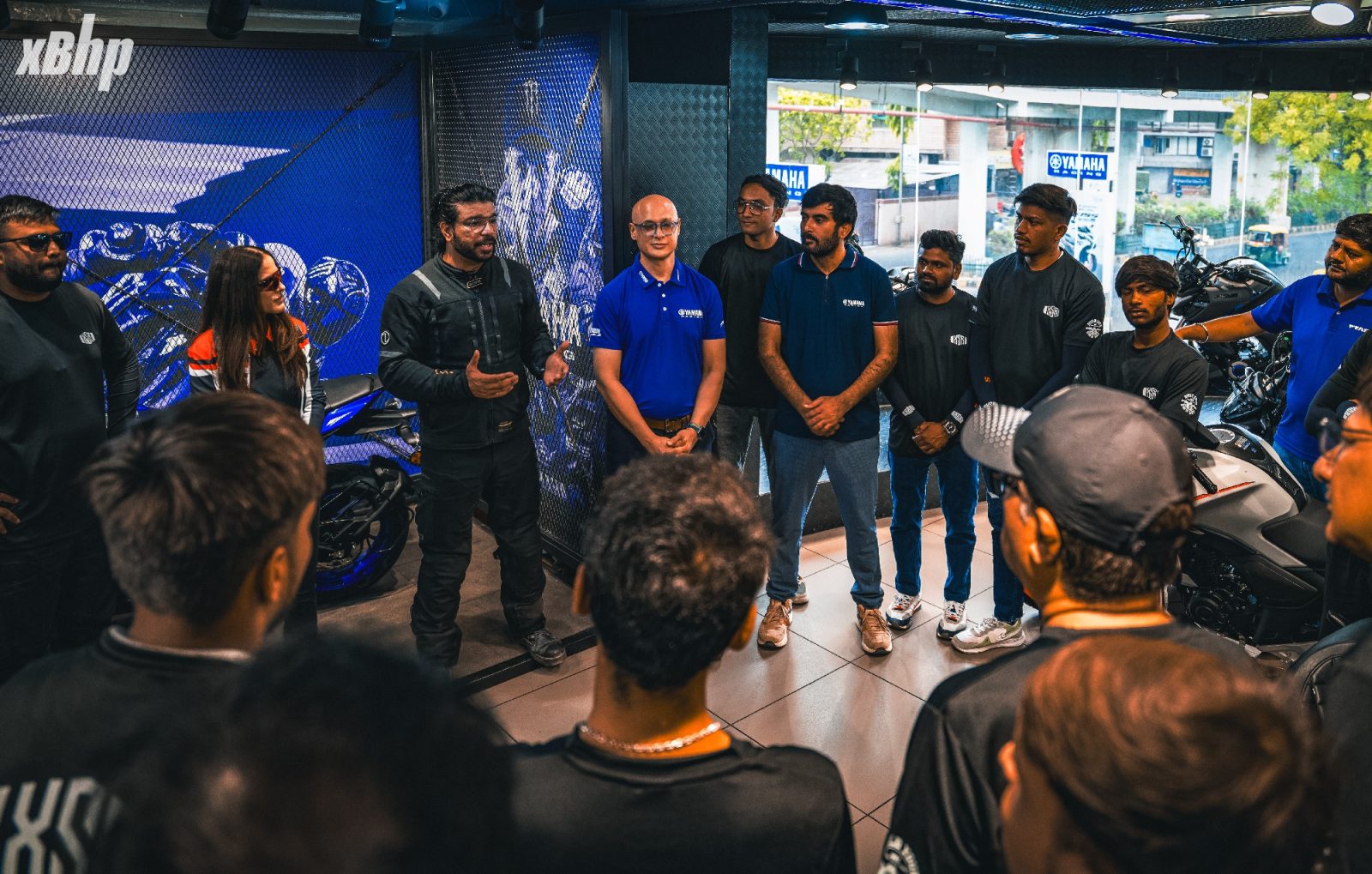
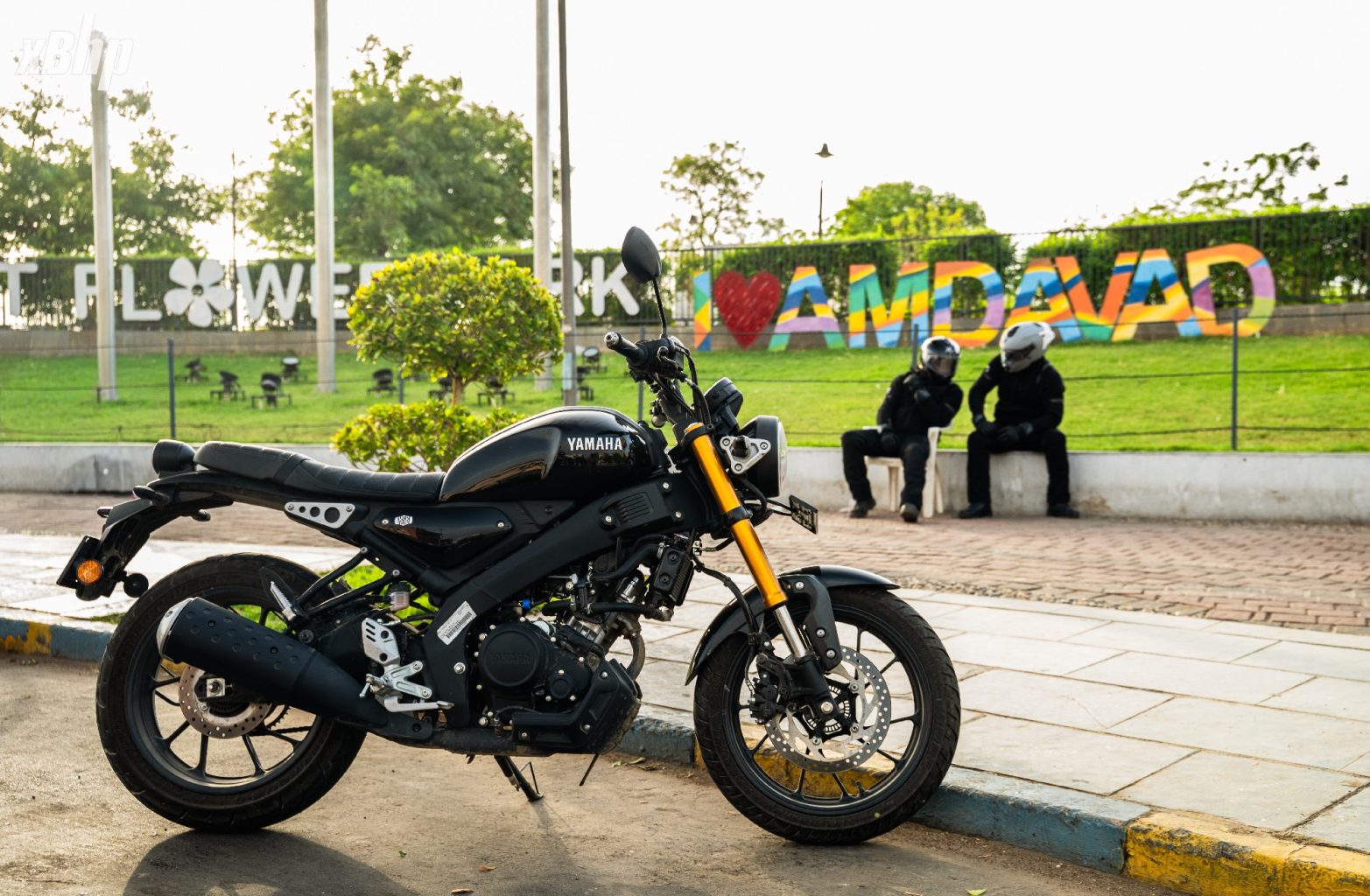
It was simply doing its job. Ahmedabad, however, had an unexpected chapter waiting for us. What was initially supposed to be a straightforward halt at a Yamaha Blue Square showroom spontaneously turned into an impromptu XSR café ride and community gathering. Word travelled quickly, and before we knew it, more than 50 local XSR riders had assembled to welcome us. The Yamaha Blue Square showroom forecourt was filled with more than 50 XSR155s, riders, helmets, introductions and conversations.
There had been no need for an elaborate build-up. The motorcycles themselves became the invitation. Some riders had been following the journey online. Others came simply because they heard that two XSR155s travelling from Kashmir to Kanniyakumari had reached their city. A few wanted to ask about comfort and fuel efficiency. Some inspected the luggage setup. Others were more interested in the rain we had faced in Punjab or the roads through Rajasthan.
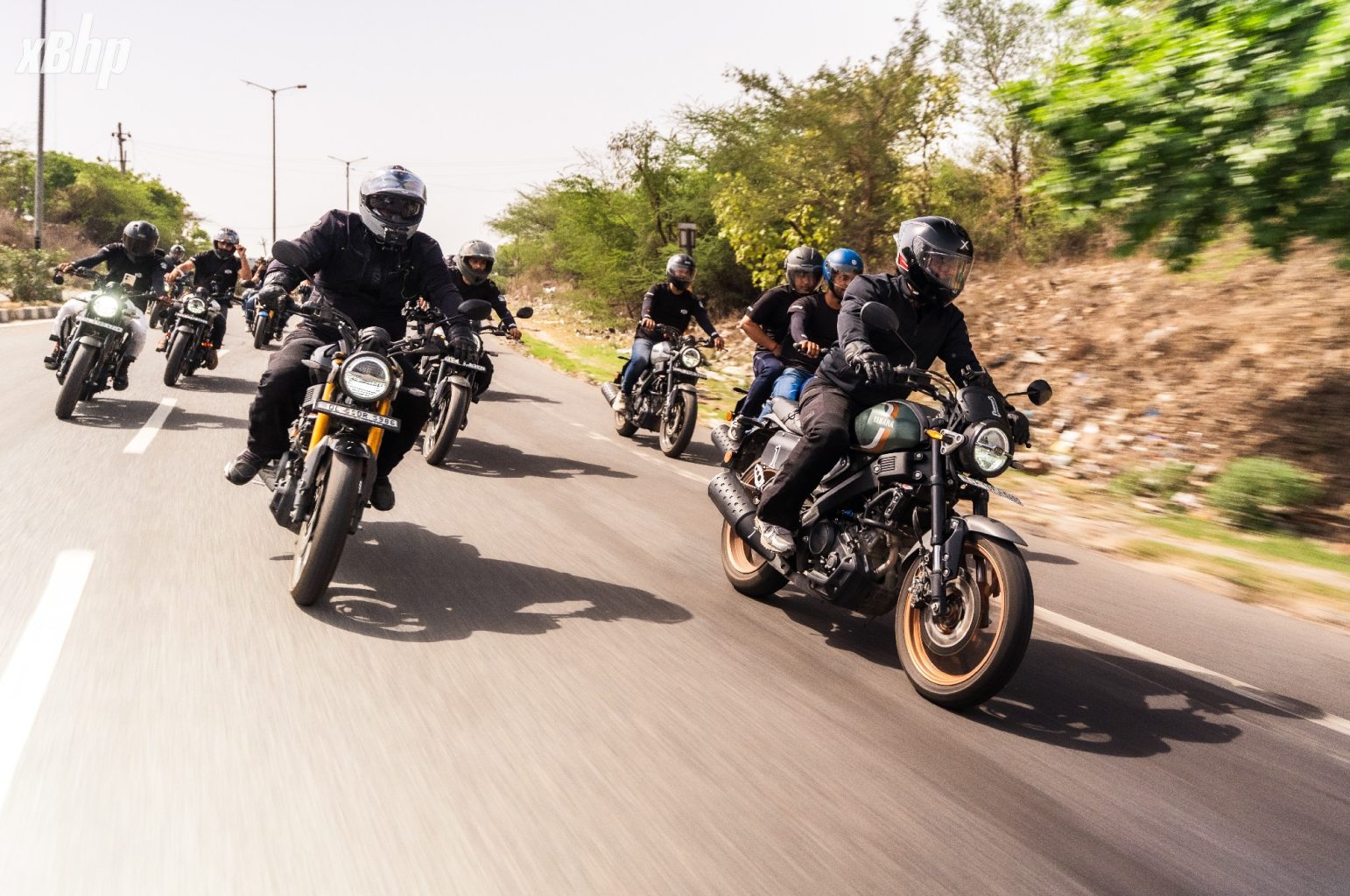
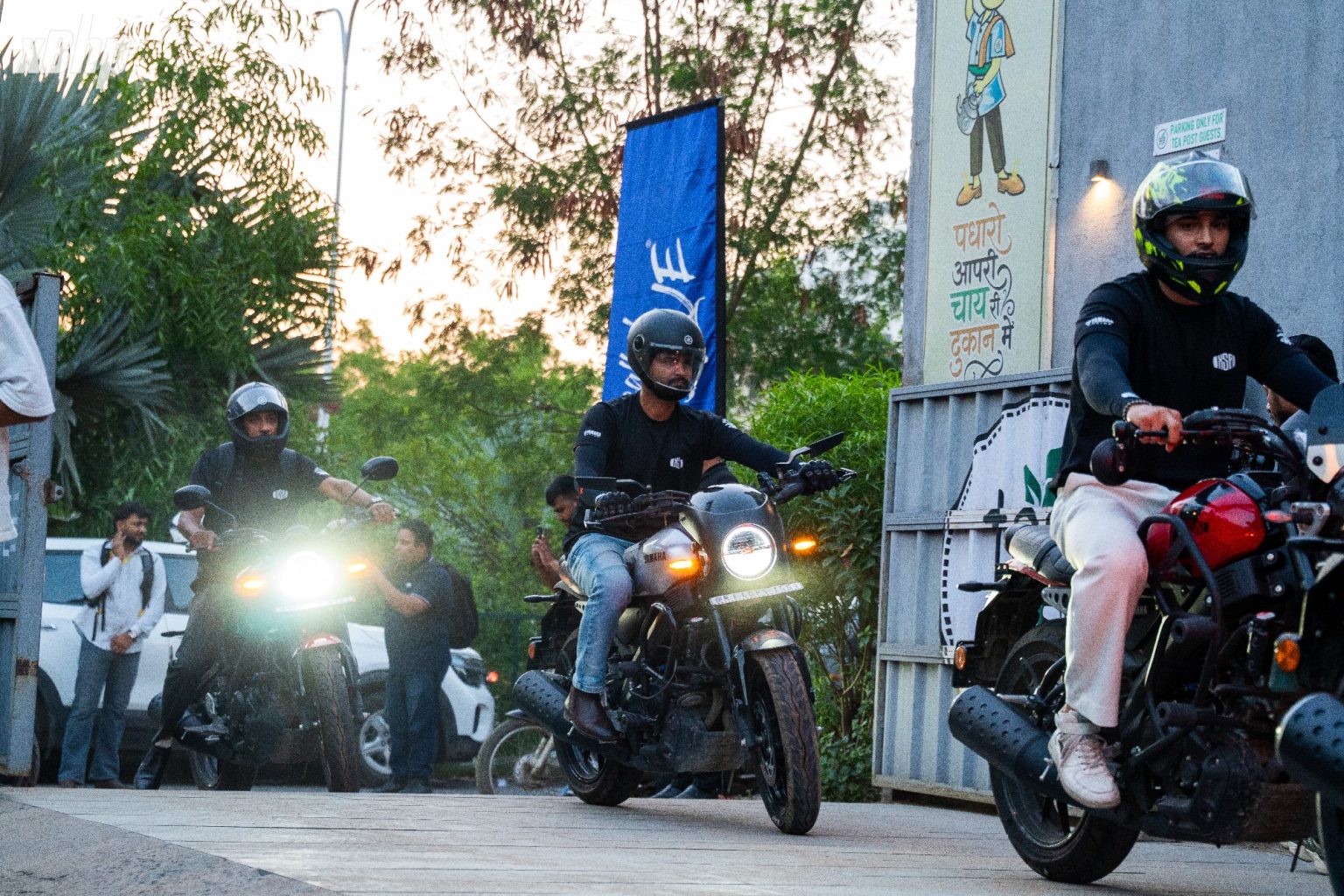
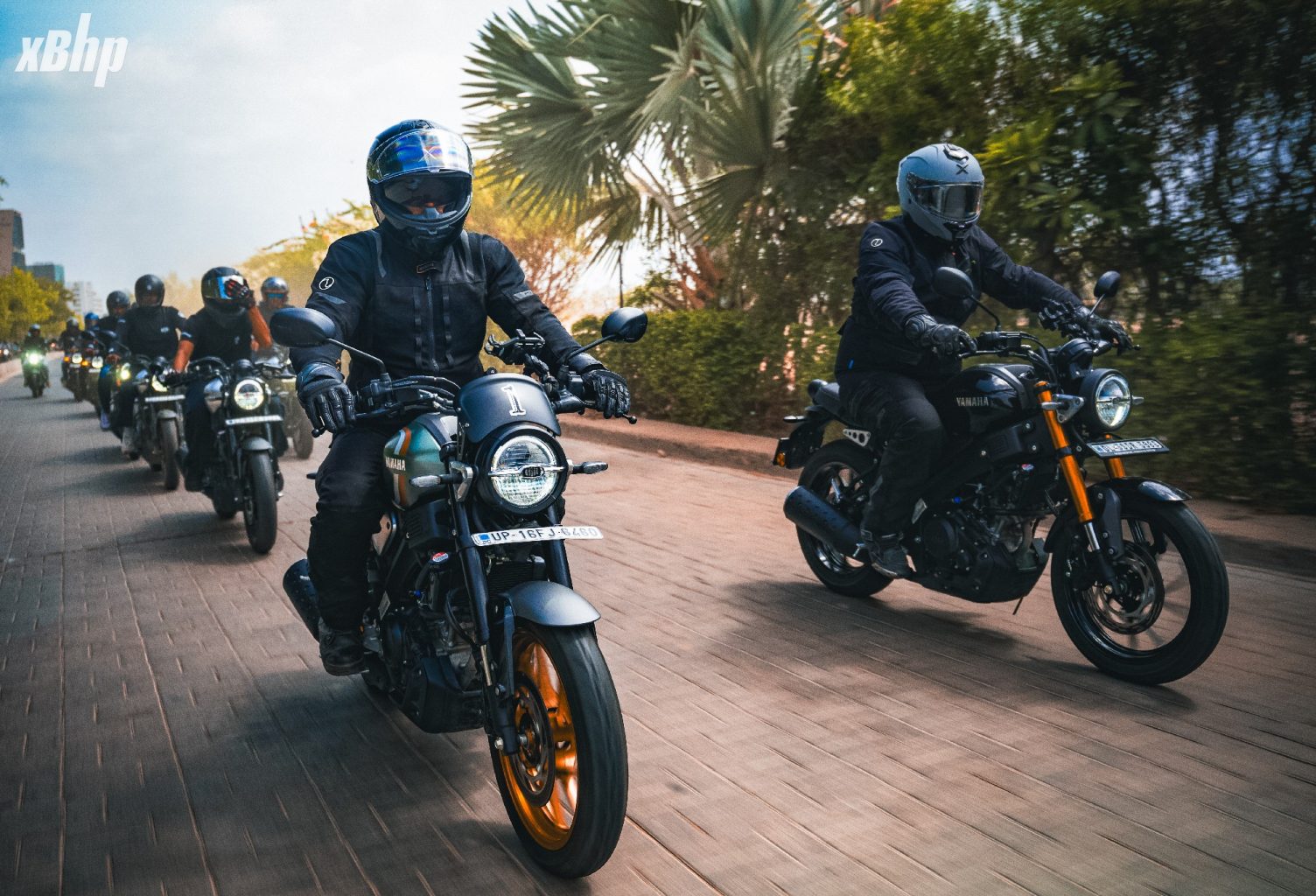
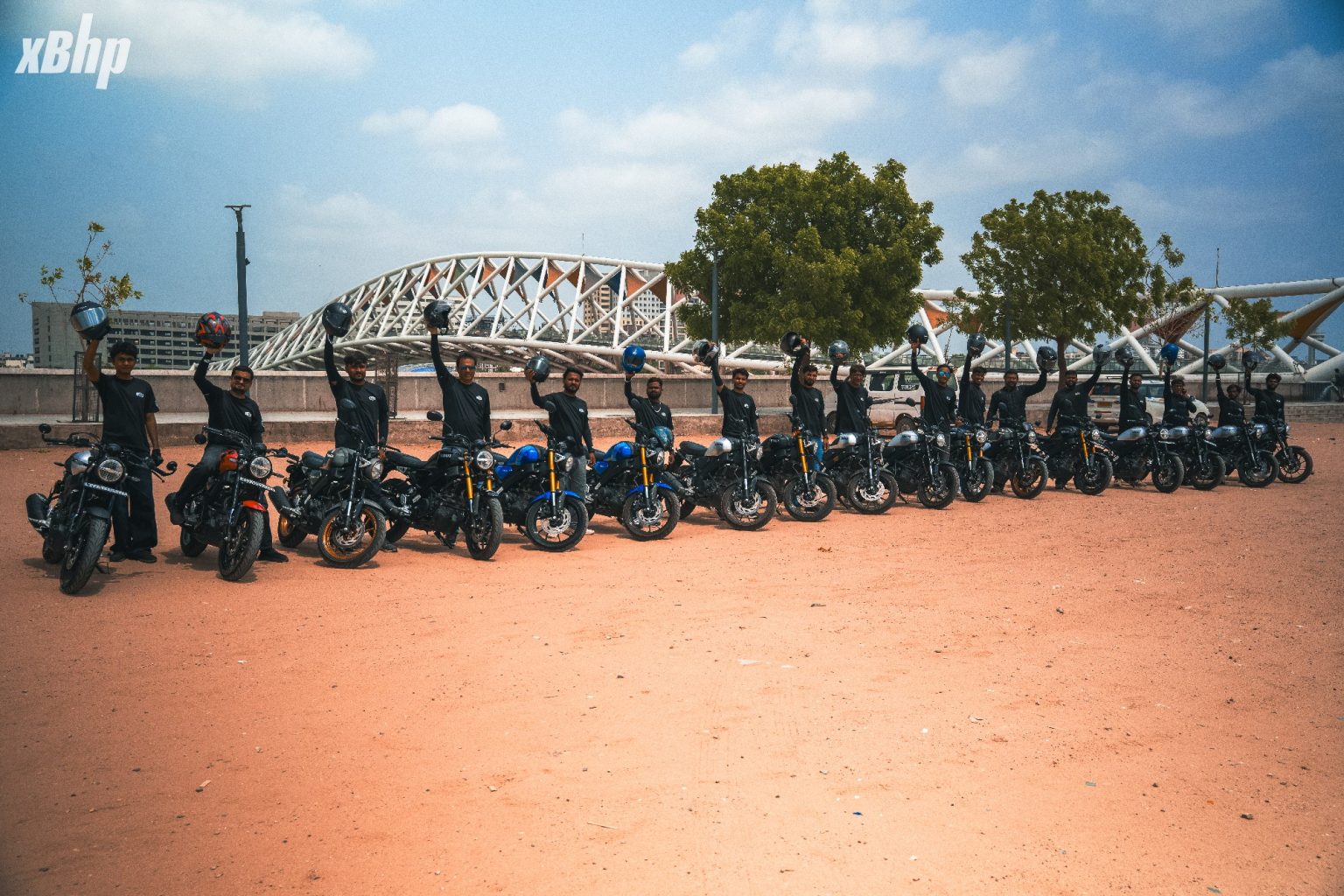
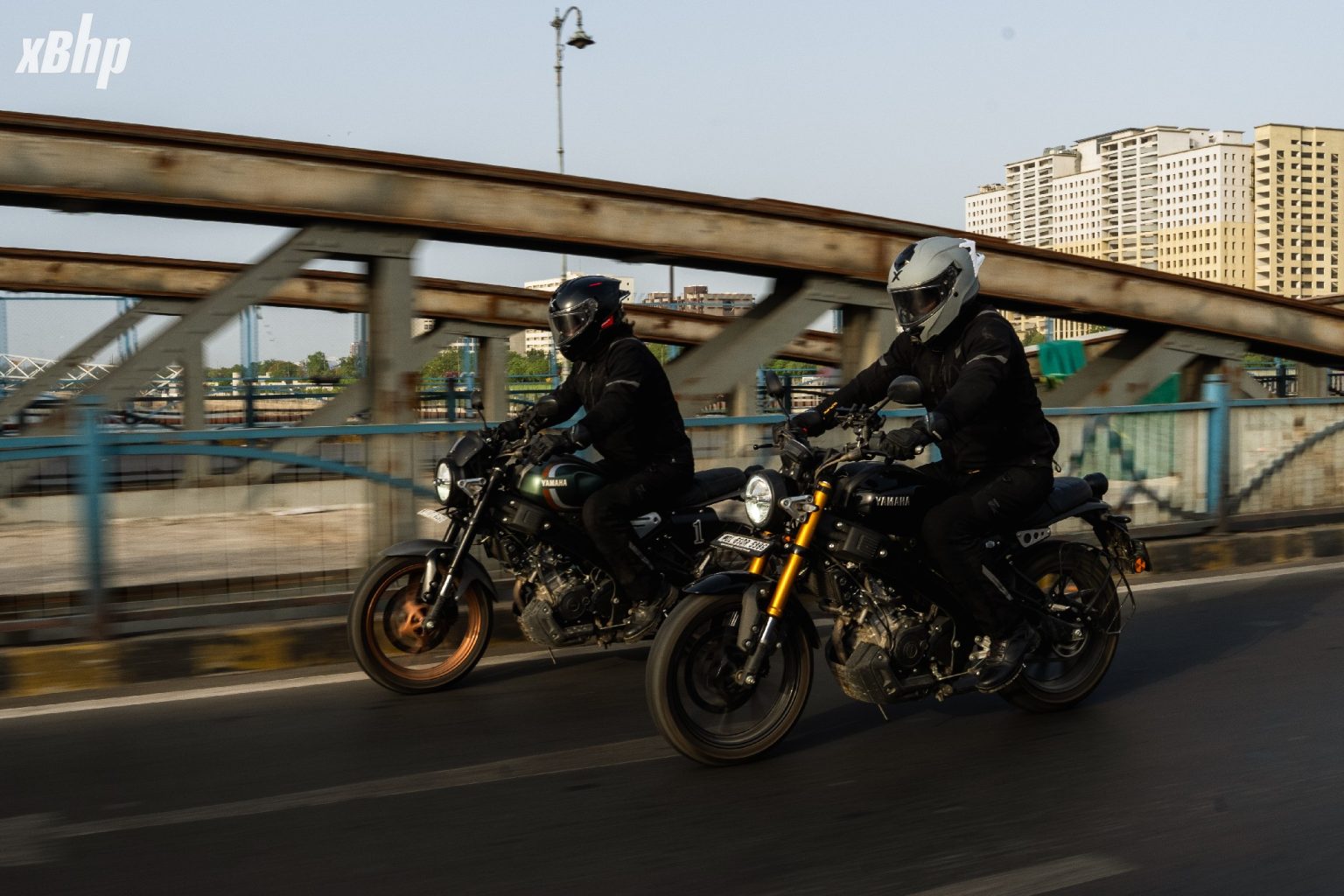
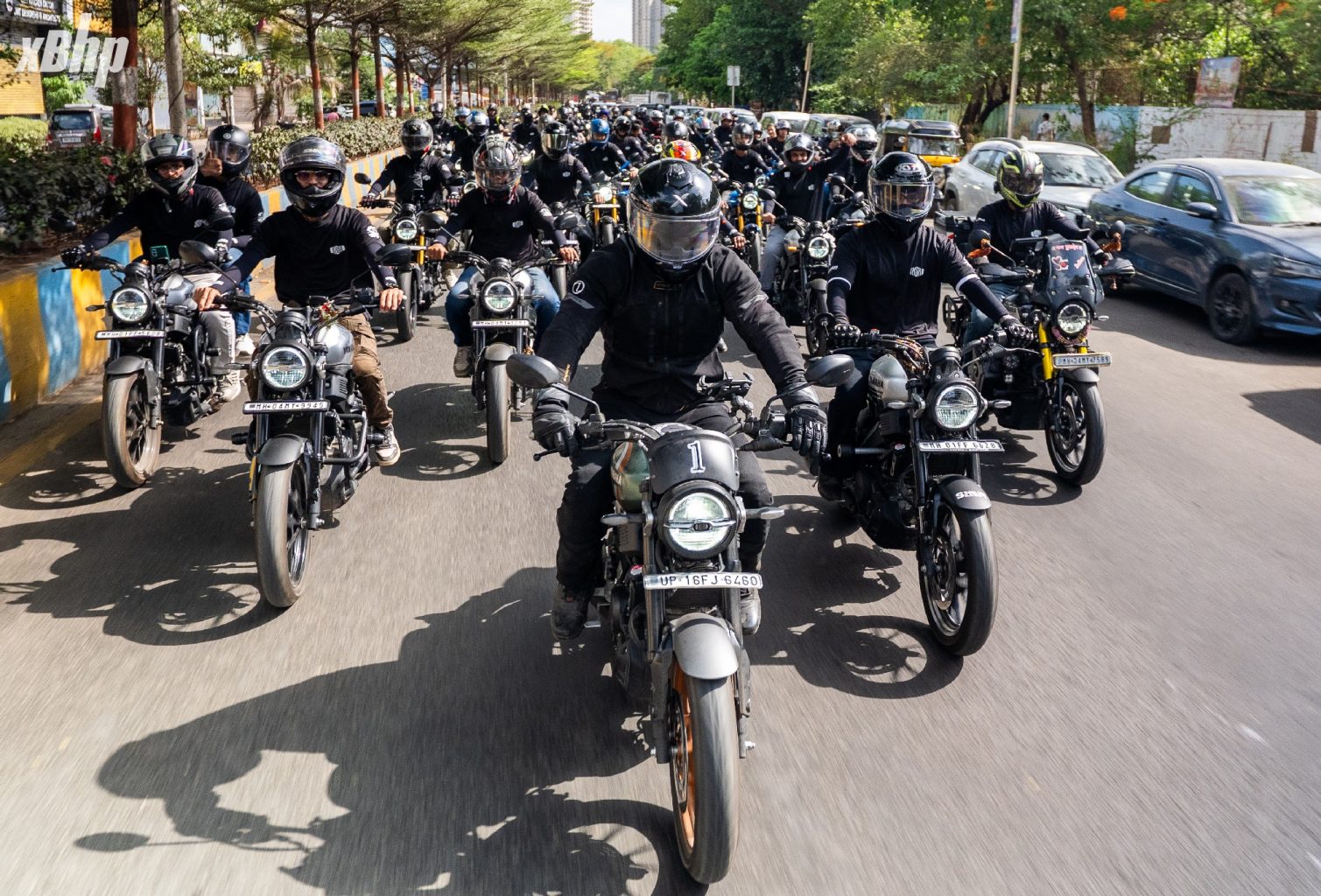
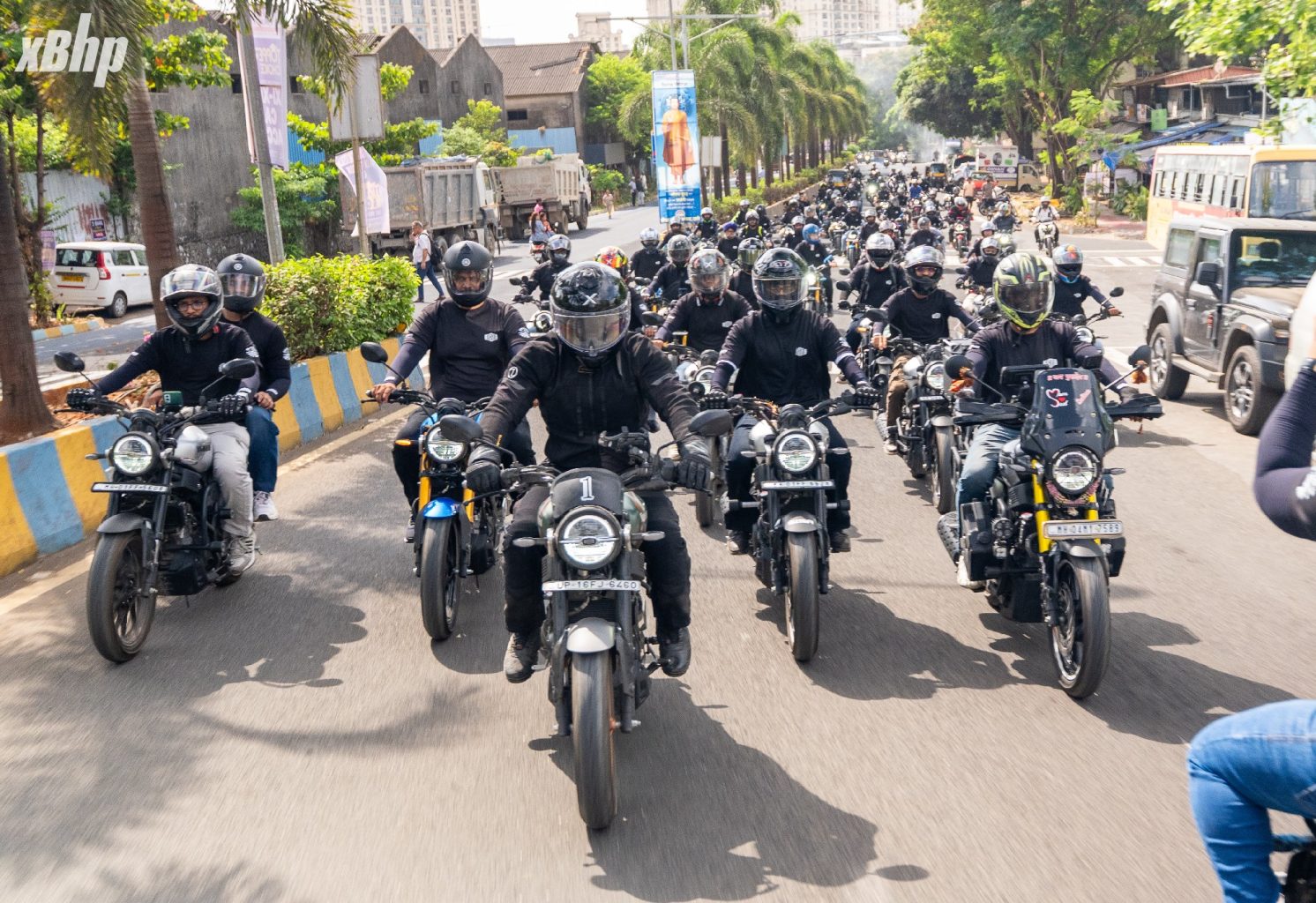
But soon, the questions gave way to something better. “Let us ride together.” And that was how a planned halt became one of the most organic community moments of the journey. We rolled out of the Yamaha Blue Square showroom with over 50 XSR riders following us through Ahmedabad. The sight was special, with round headlamps appearing one after another in the mirrors, different colours and individual touches, but all connected through the same motorcycle.
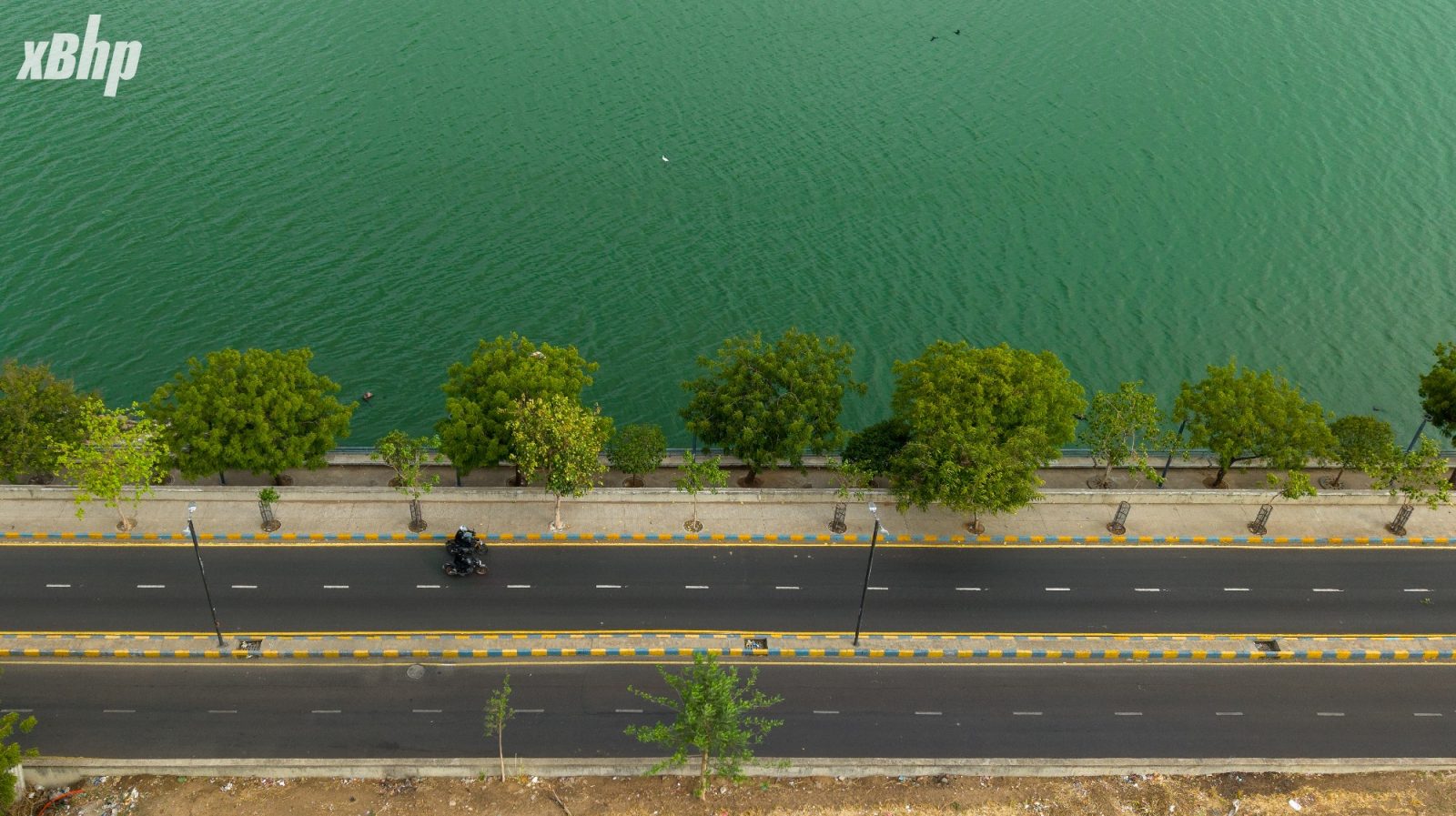
The ride moved through Ahmedabad’s streets before reaching the roads beside the Sabarmati Riverfront. The Riverfront has transformed the banks of the Sabarmati into a continuous public waterfront in the centre of the city, with long promenades running along both sides of the river. From the saddle, the open riverside views offered a striking contrast to the density and movement of the surrounding city.
On one side was Ahmedabad’s fast, modern urban energy. On the other was the calm stretch of the river. And between them rode a long formation of Yamaha XSR155s. For a motorcycle built around the idea of blending classic character with contemporary engineering, the setting felt almost symbolic. The XSRs looked equally natural against Ahmedabad’s older streets and along the clean, modern lines of the riverfront.
As picturesque as it was, this moment was not about the perfect frame. It was about the power of the motorcycling community. 50+ riders, a fair few whom we had never met, became a part of this ride. If that does not tell you about the pull of this brotherhood, we do not know what will. There are no lengthy introductions; you just start the engines and ride together. And by the time the helmets come off again, the strangers no longer feel unfamiliar.
The larger #XploreIndiaOnXSR project had been designed to connect with Yamaha riders through café rides and shared riding experiences in different cities. But Ahmedabad’s gathering felt especially meaningful because of how naturally and unexpectedly it came together. It did not feel like an event inserted into the journey. It felt like the city had joined the journey itself.
After the ride, the conversations continued around the motorcycles. Riders exchanged stories, photographs, routes and plans. Some spoke about rides they had already completed. Others talked about journeys still waiting for the right time. And once again, our Kashmir-to-Kanniyakumari ride stopped feeling like the story of only two riders. For a few kilometres through Ahmedabad, it belonged to more than 50 of us.
The city also added another memorable food chapter to the roadtrip: Kathiawadi cuisine. After a full day of riding through the heat and the excitement of the impromptu community ride, the robust flavours arrived at exactly the right time. Bajra rotla, vegetables, pulses, chutneys, pickles and the balance of spice, sweetness and rustic comfort turned the meal into recovery.
Every regional meal had begun reflecting the landscape and personality around it. Kahwa warmed Kashmir’s cold mornings. Lassi matched Punjab’s generosity. Pyaaz kachori carried Jaipur’s boldness. Kathiawadi food felt rooted, substantial and deeply comforting after a long day on the road. Ahmedabad gave us more than another city on the route.
It gave us an unplanned ride, a moving formation of over 50 XSRs along the Sabarmati, new friendships and another reminder that the most memorable parts of a journey are often the ones that never appeared in the original plan. We had arrived expecting a halt. We left carrying the energy of an entire city.
Ahmedabad to Daman: A Different Kind of Coast
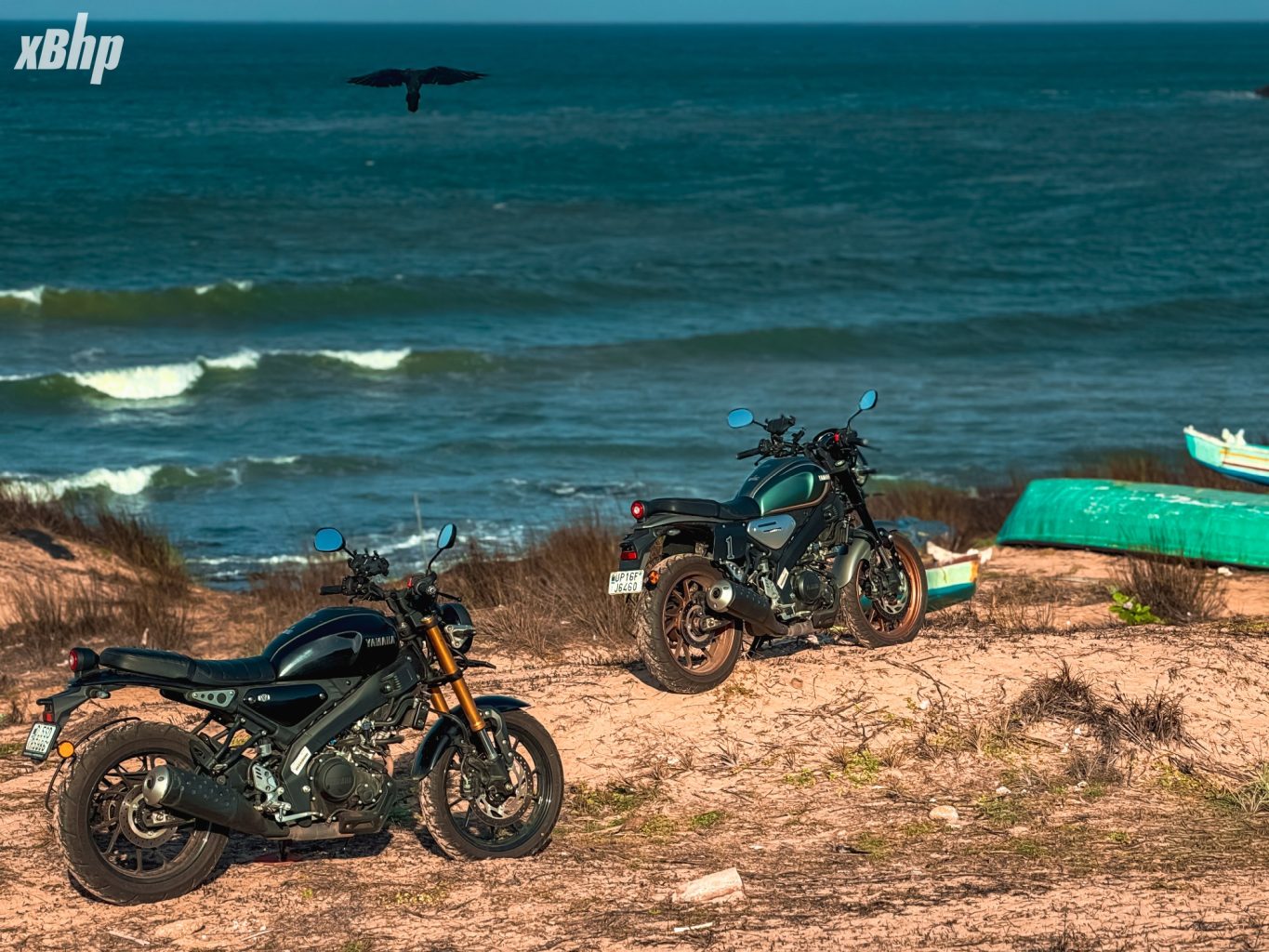
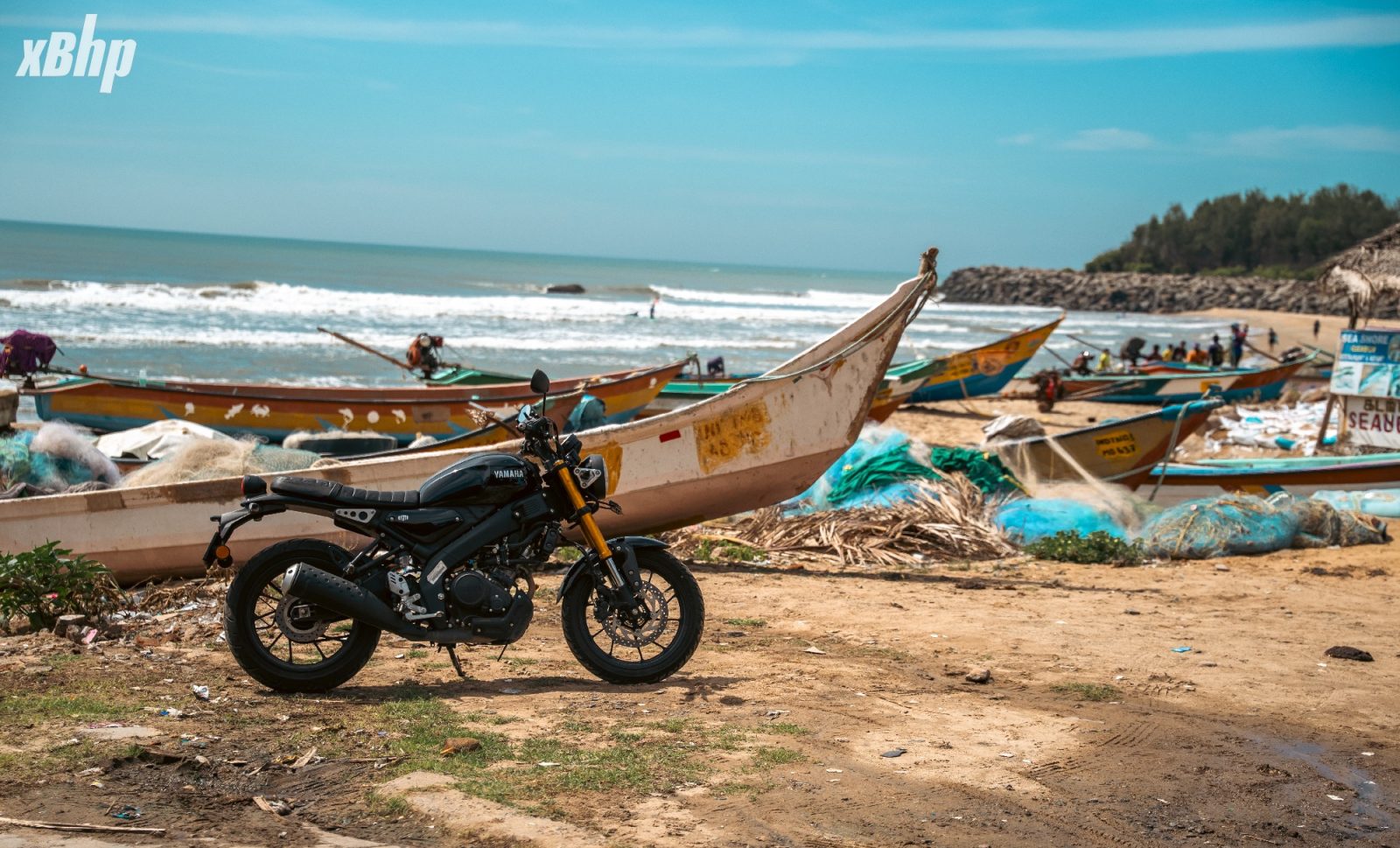
From Ahmedabad, we moved towards Daman. The transition to the coast brought relief from the intensity of inland heat. Daman’s personality felt completely different from the cities behind us. At Devka Beach, the coastline was darker and more rugged than the conventional image of a golden sandy beach. The black sand, rocky edge and muted Arabian Sea gave the place a raw visual character.
The XSRs looked particularly striking against the dark shore. Daman’s architecture added another layer. Colourful facades, churches, old streets and the Portuguese-era character around Moti Daman created a setting where time seemed to overlap. Within the old fort area, historic structures, administrative buildings, churches and the old lighthouse contributed to a visual language far removed from the mountains where we had begun. Yet the motorcycle continued to fit.
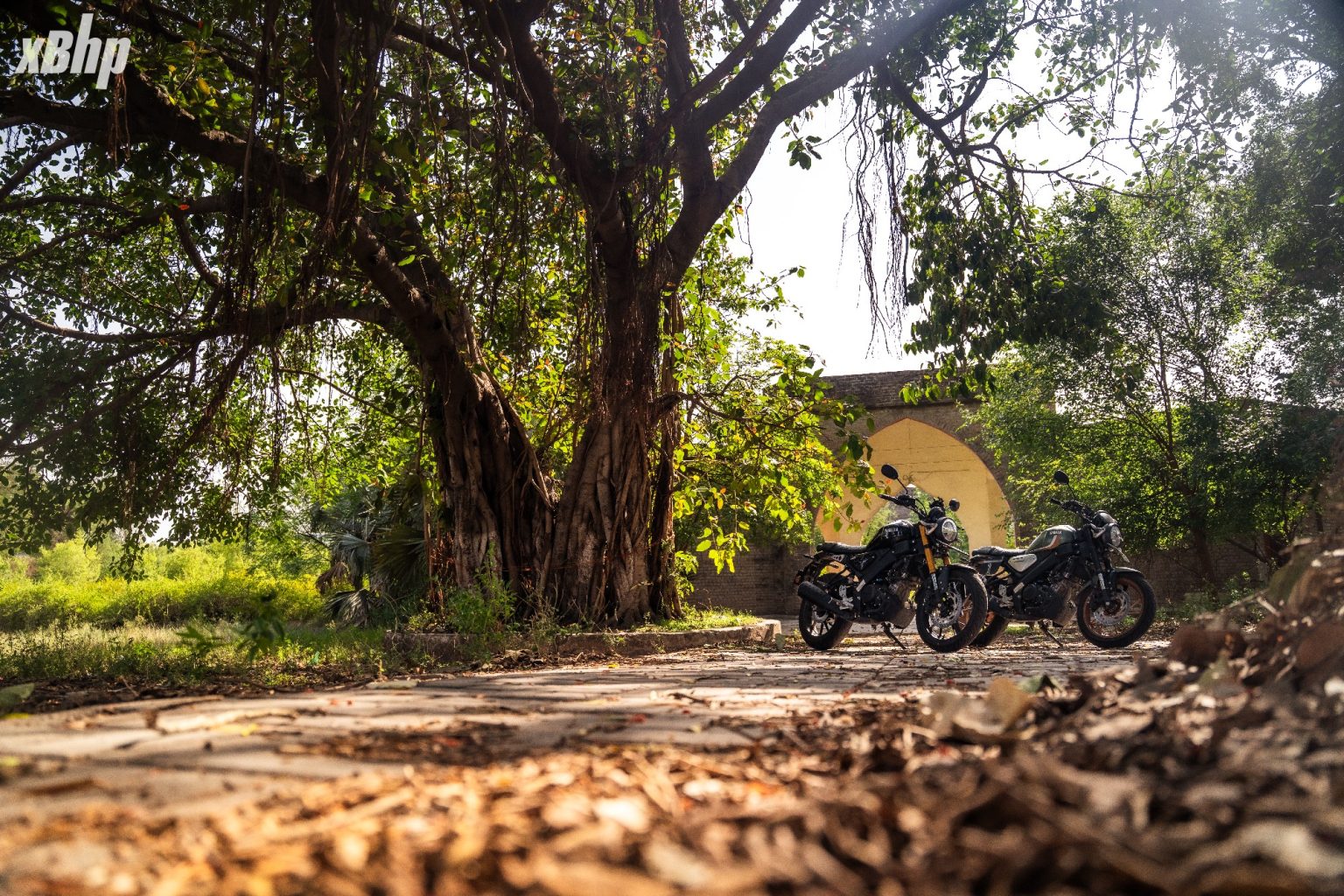
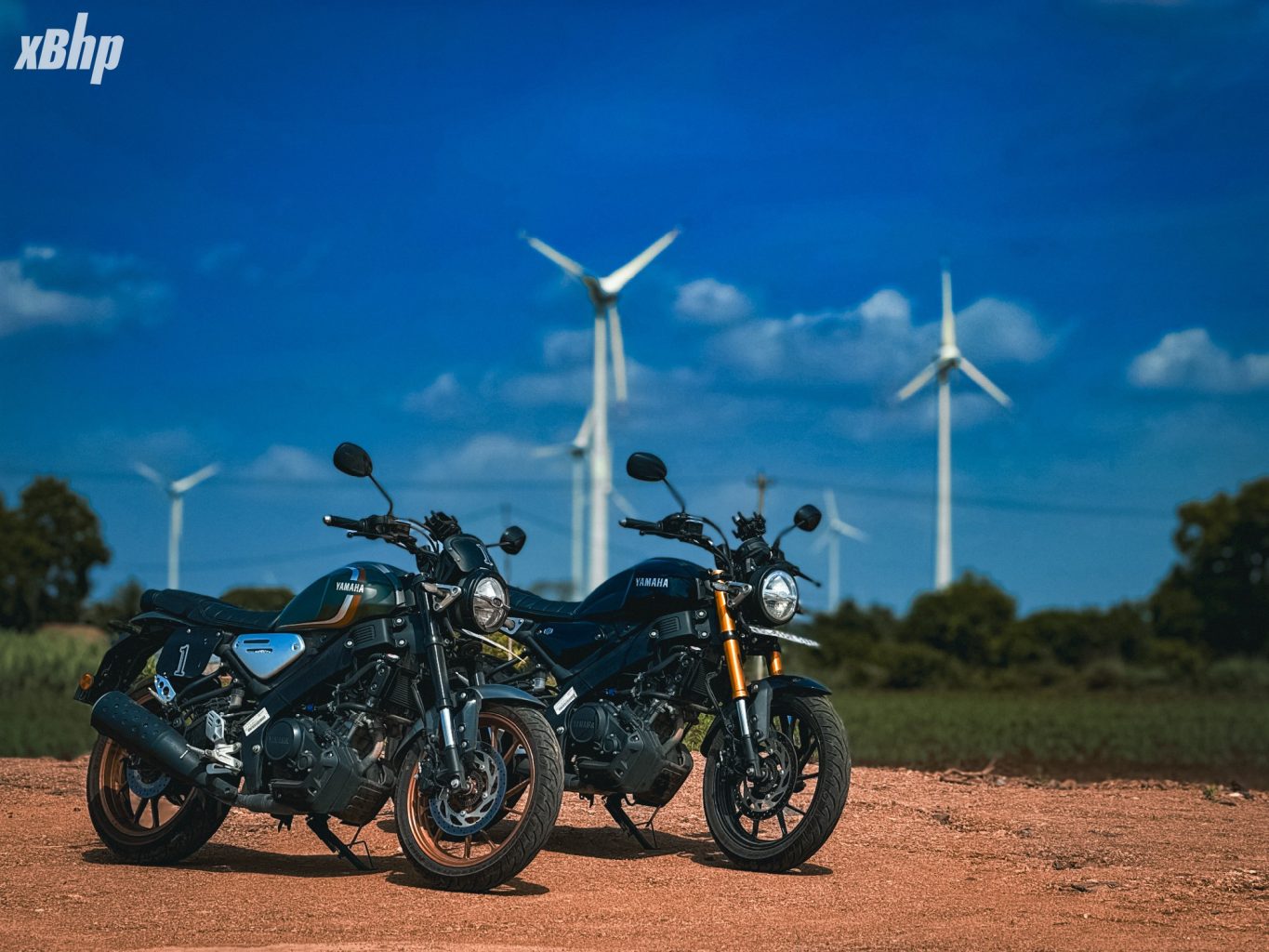
That became a recurring theme. The XSR never appeared to belong to only one kind of background. It worked against Srinagar’s water, Jaipur’s forts, Udaipur’s lakes and Daman’s colourful coastal architecture. The motorcycle did not change. India kept changing around it.
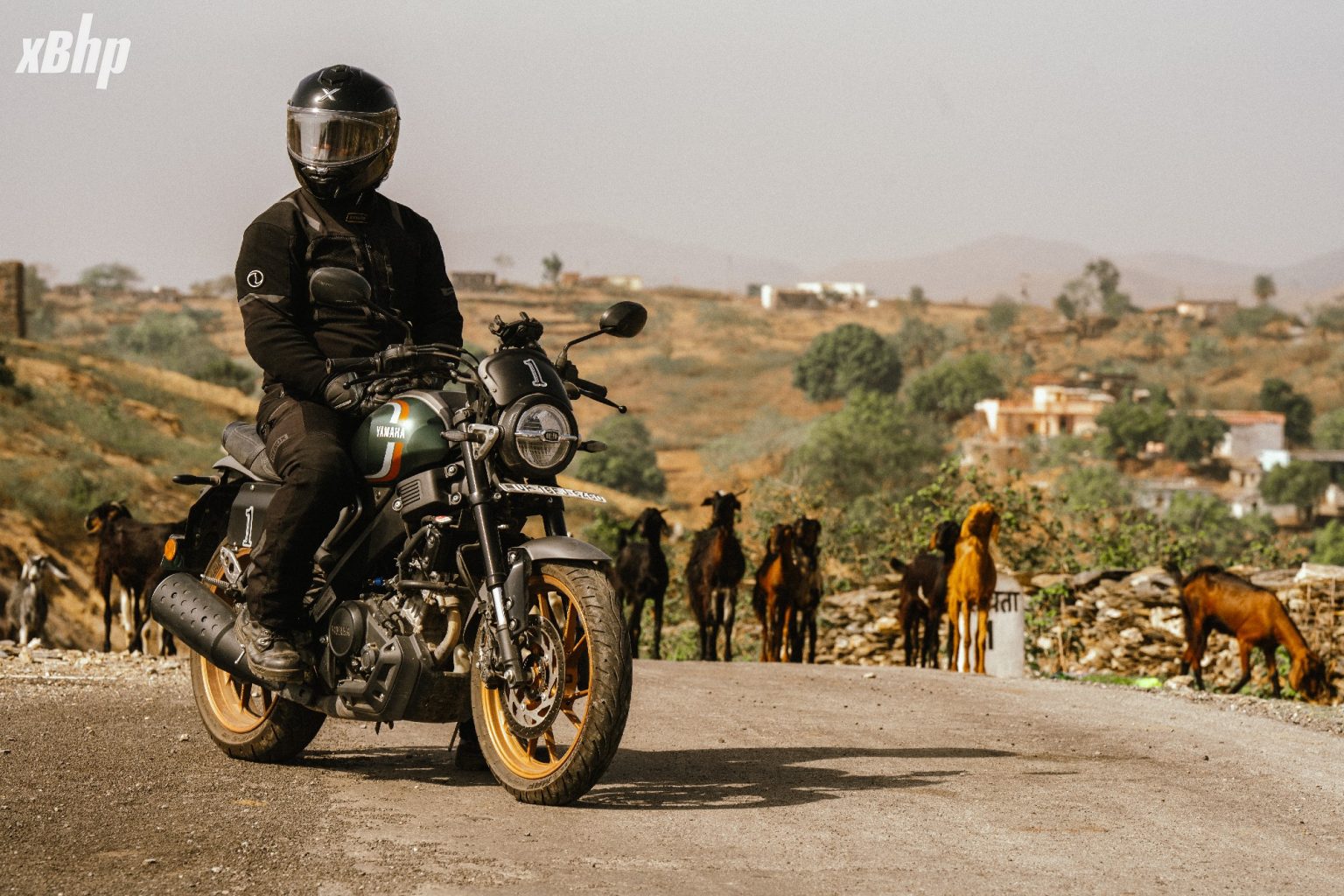
The Axor Brutale Dual Spoiler helmet kept us protected and comfortable throughout the K2K ride, with ECE 22.06, DOT, and ISI certifications, efficient ventilation, Pinlock-ready vision, and dual spoilers designed for added stability at speed.
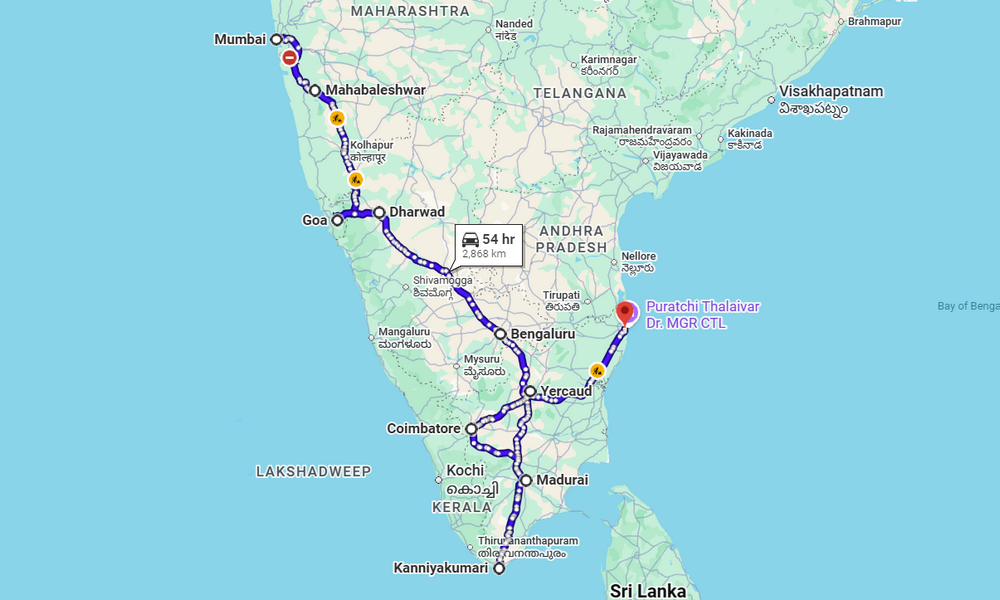
Daman to Mumbai: Entering a City That Never Pauses
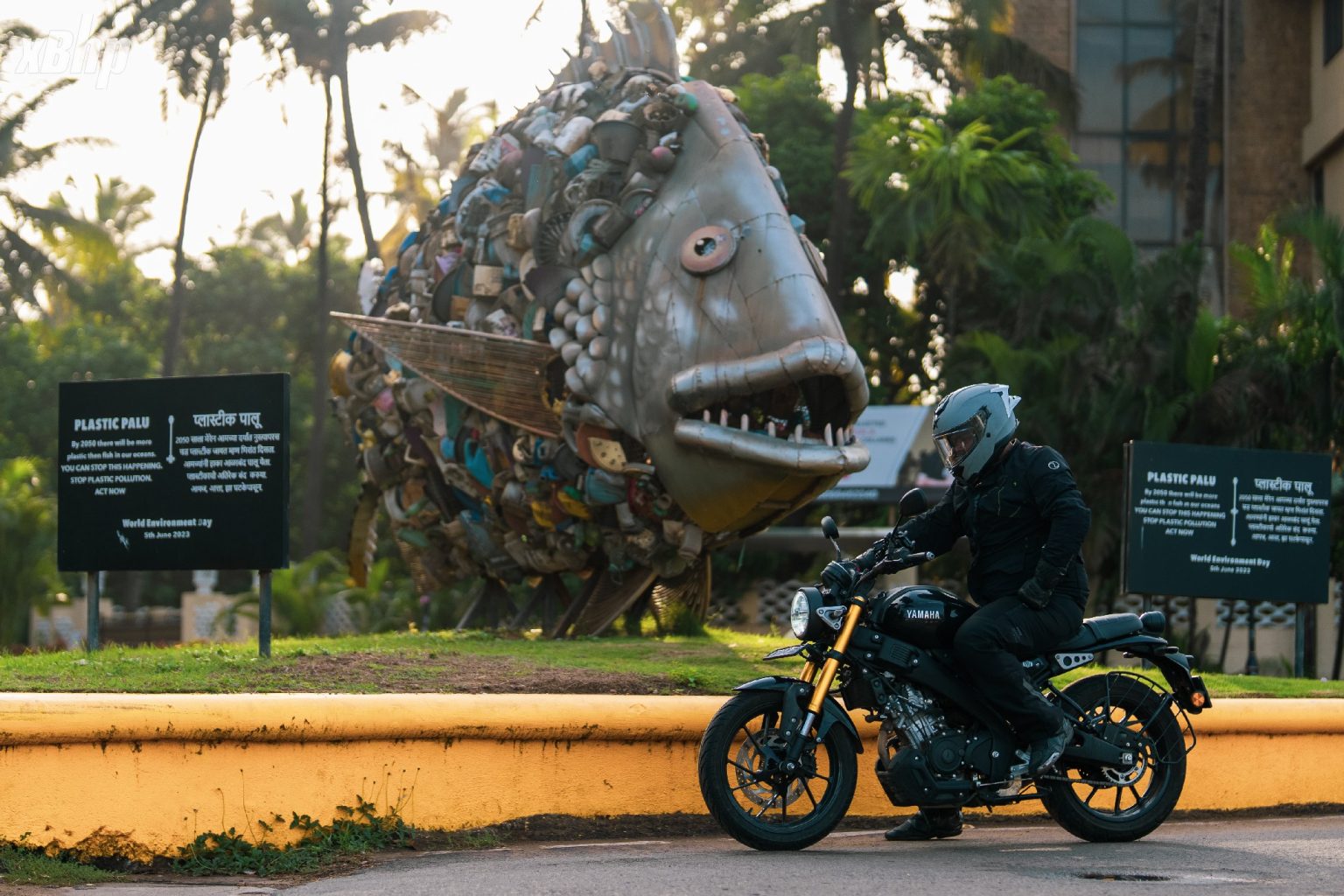
The distance from Daman to Mumbai may not appear intimidating on a route sheet, but Mumbai adds complexity that cannot be measured in kilometres. Traffic thickens gradually, then completely. The pace becomes inconsistent. A short distance can take longer than an entire open-highway stretch. The XSR’s lightweight nature became particularly valuable here. At approximately 137 kilograms, it remained easy to guide through traffic, reposition during shoots and manage during repeated stops.
The assist and slipper clutch reduced effort. The upright stance improved awareness. The engine remained tractable at lower speeds. Mumbai was a reminder that touring performance is not only about cruising speed. It is also about how little energy the motorcycle consumes from the rider when the road becomes difficult.
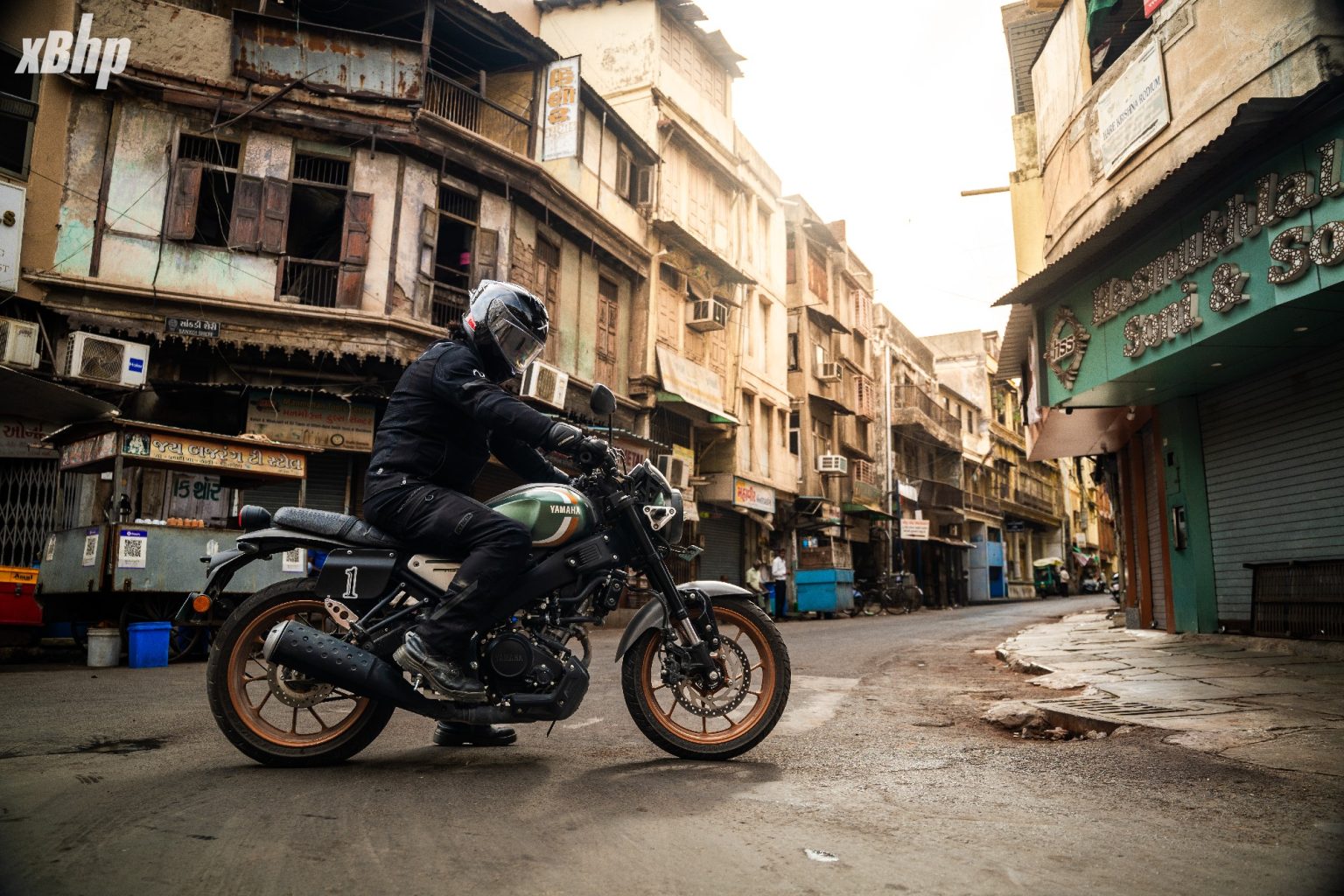
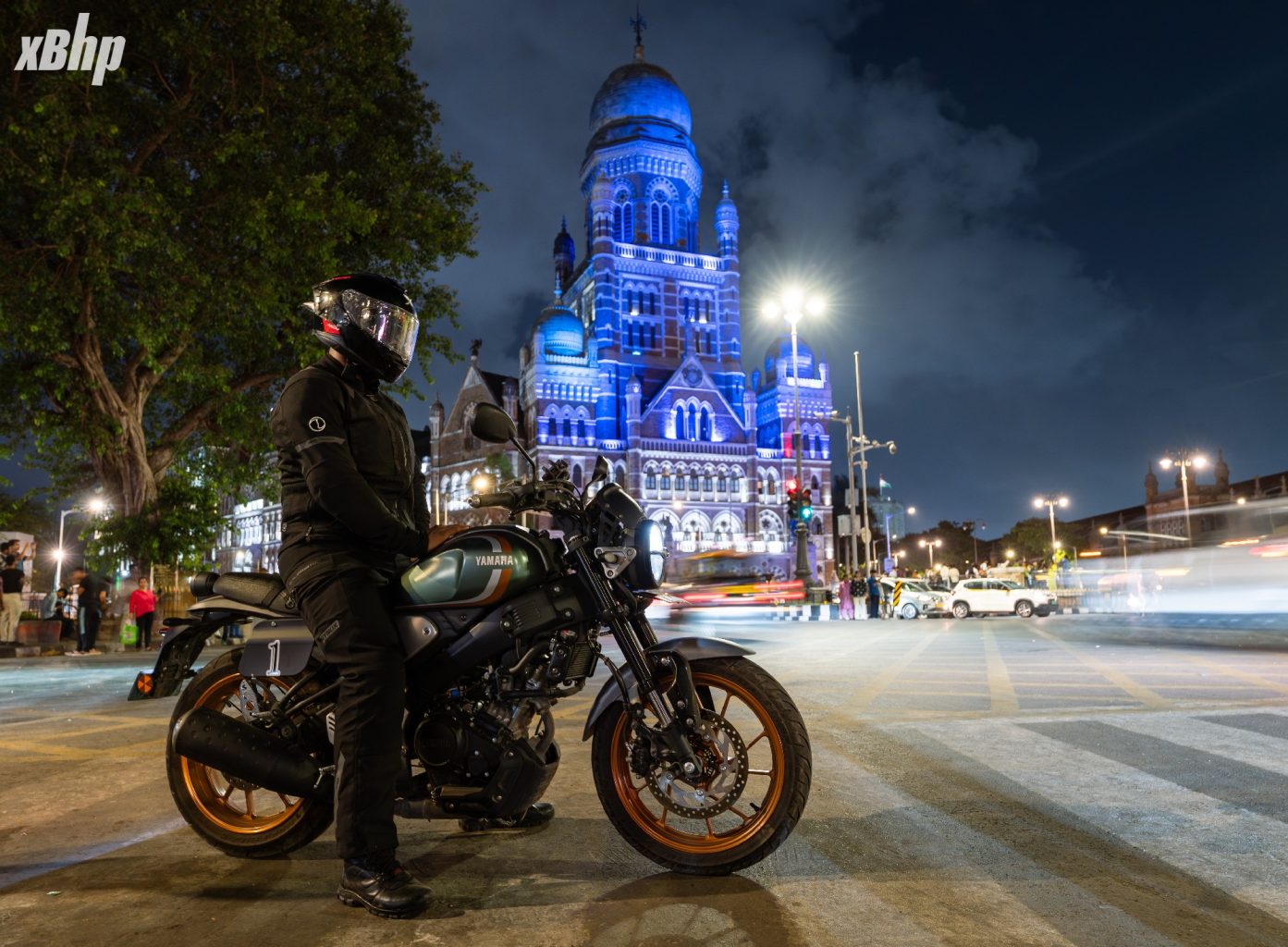
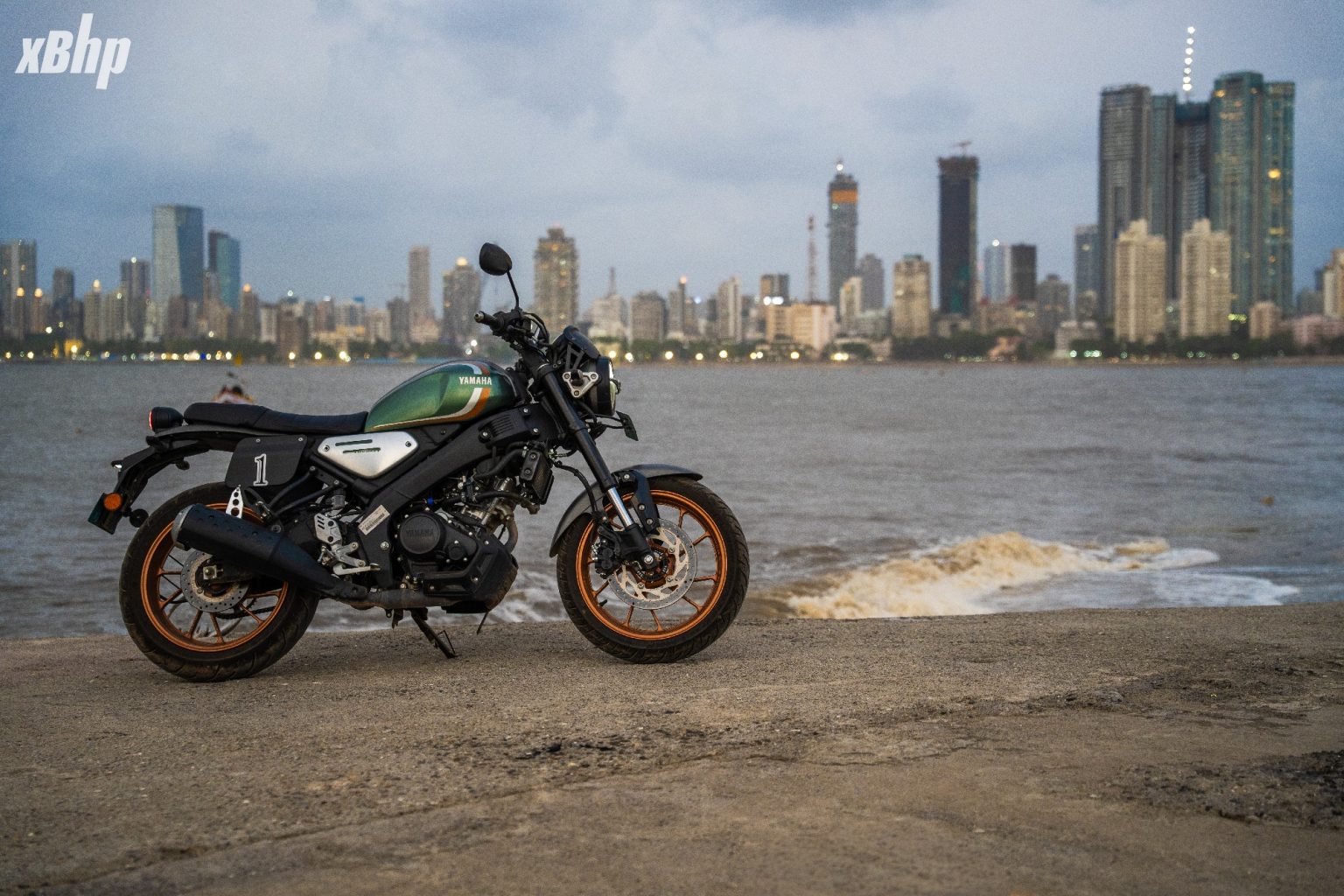
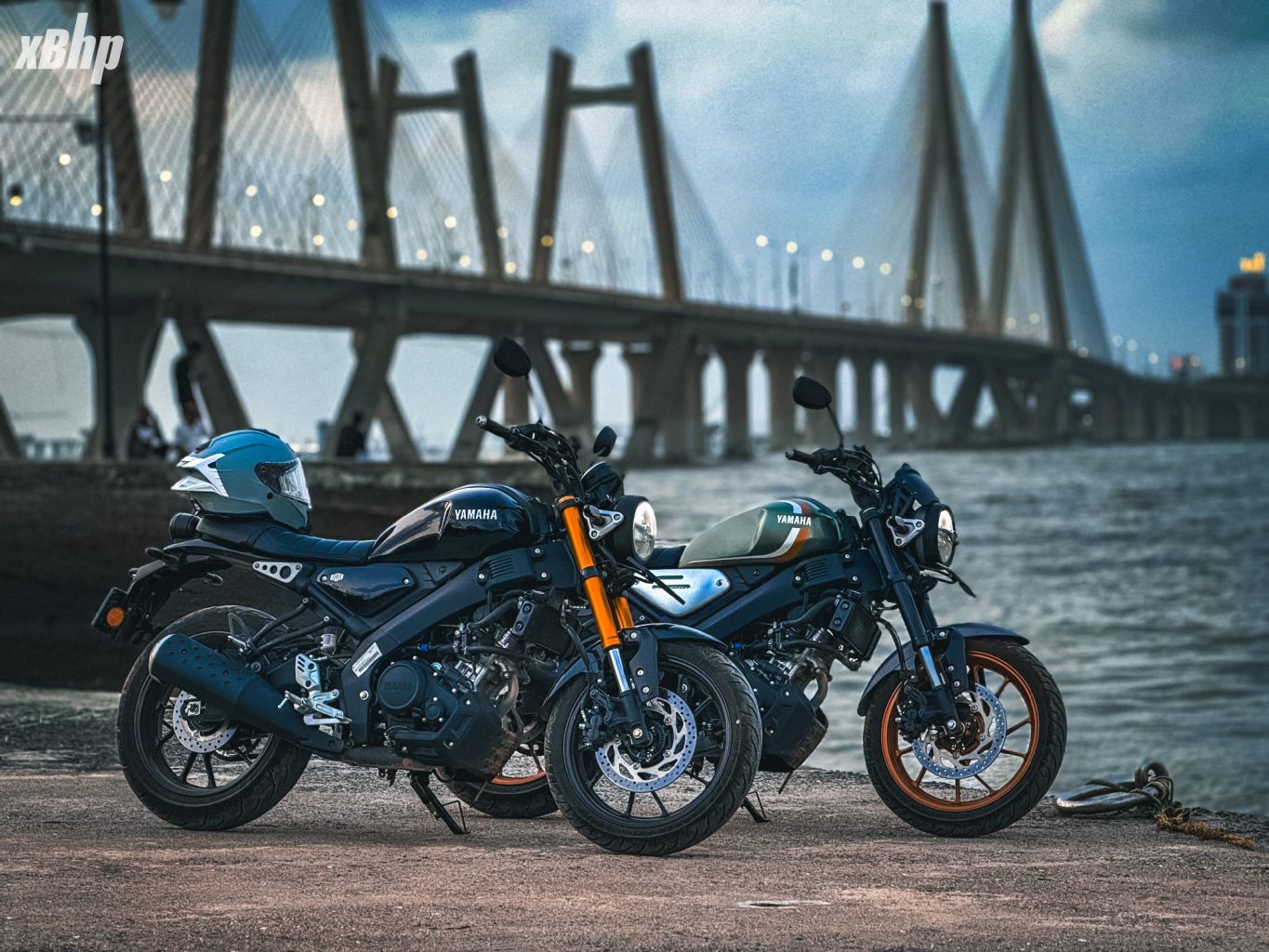
Visually, the city is a contrast. You get to see modern Mumbai when you look at the Bandra-Worli Sea Link stretching over the sea. Then take a look at the Chhatrapati Shivaji Maharaj Terminus, still referred to as CST. It has a Victorian form laced with Indian architecture, which captures the city’s older identity. A modern sea bridge, a historic railway terminus, and once again, India’s past and future existed within the same ride, and the XSR looked natural in both settings.
Mumbai also brought more than 100 XSR155 riders together for the city’s café ride and meetup. The energy was different from Delhi and Jaipur, because every city’s motorcycle culture carries its own personality. But the pattern remained familiar. Bikes arrived. Helmets came off. Strangers started talking. People inspected the two machines that had travelled down from Kashmir. They asked about comfort, fuel range, rain, luggage and whether the bikes had faced any issues. The questions were practical because the dream was practical. Many riders do not need convincing that K2K is beautiful. They need reassurance that it is possible. As we left Mumbai, the motorcycles were no longer merely transport or campaign subjects. They had become answers.
Mumbai to Mahabaleshwar: From Noise to Mist
Leaving Mumbai delivered one of the most dramatic transitions of the ride. The city’s movement gradually reduced. Buildings thinned. Roads began climbing. The temperature changed, and the route towards Mahabaleshwar drew us into the Western Ghats. Within a few hours, Mumbai’s horns, lights and compressed movement were replaced by curves, green valleys and mist. That contrast is India.
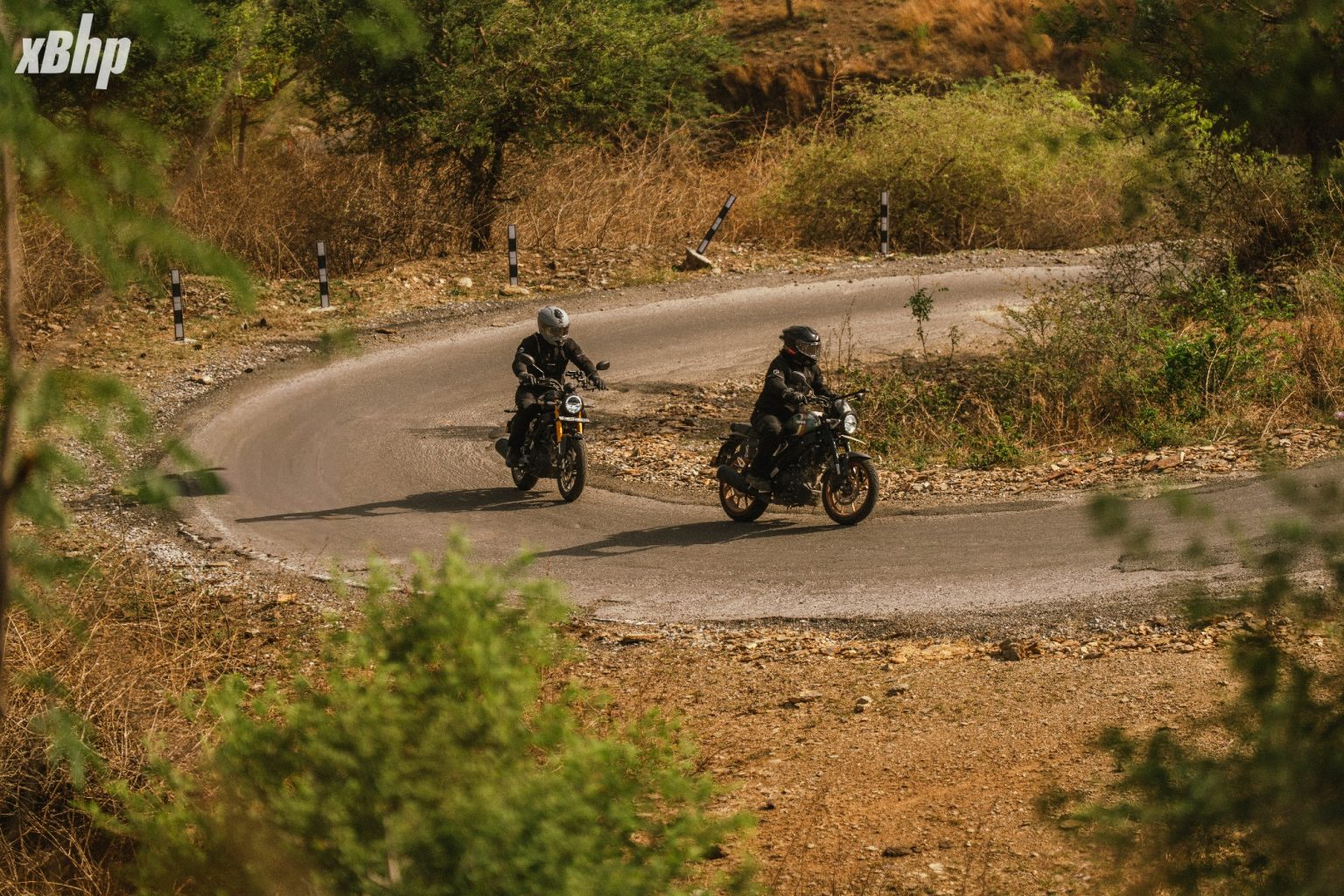
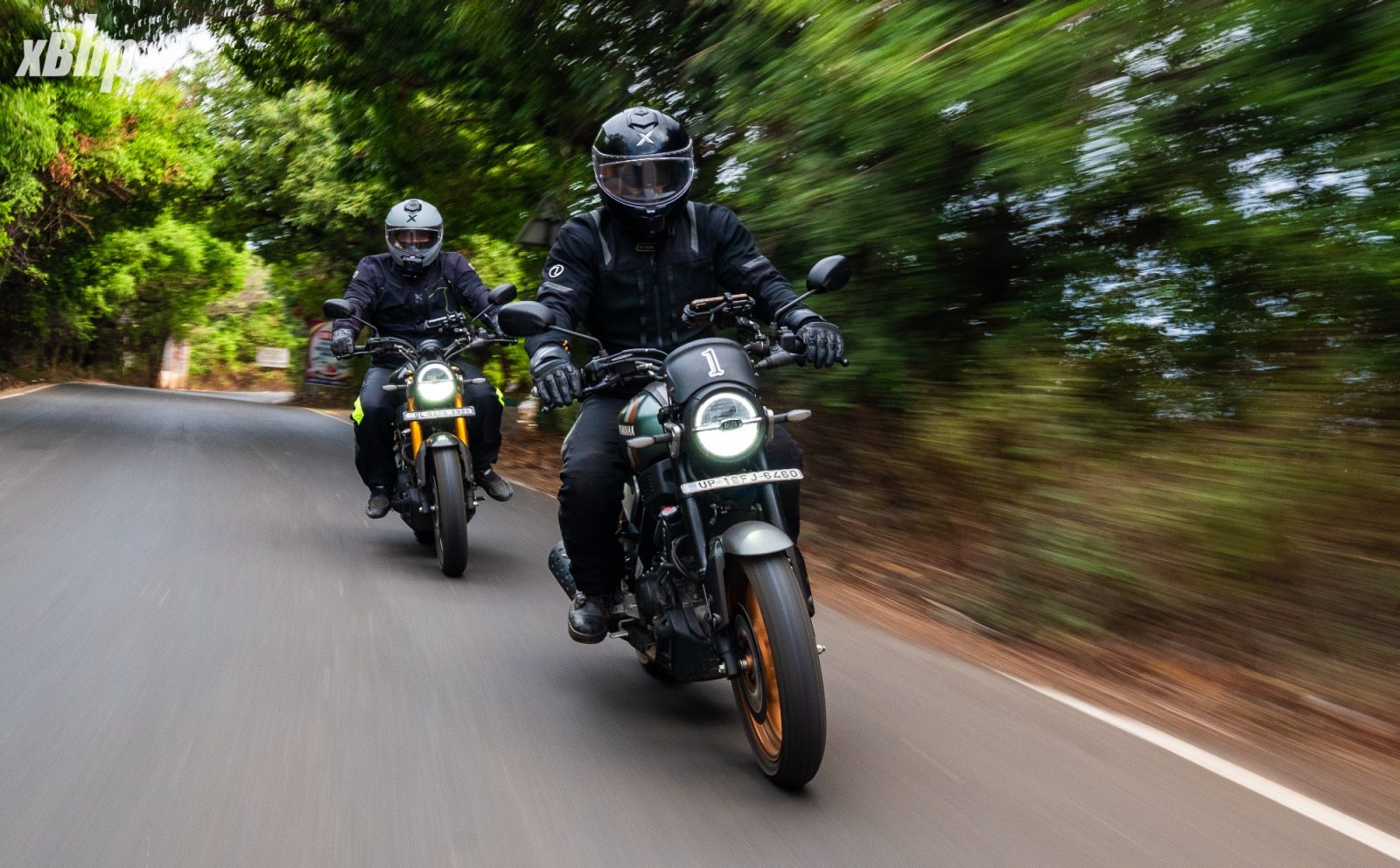
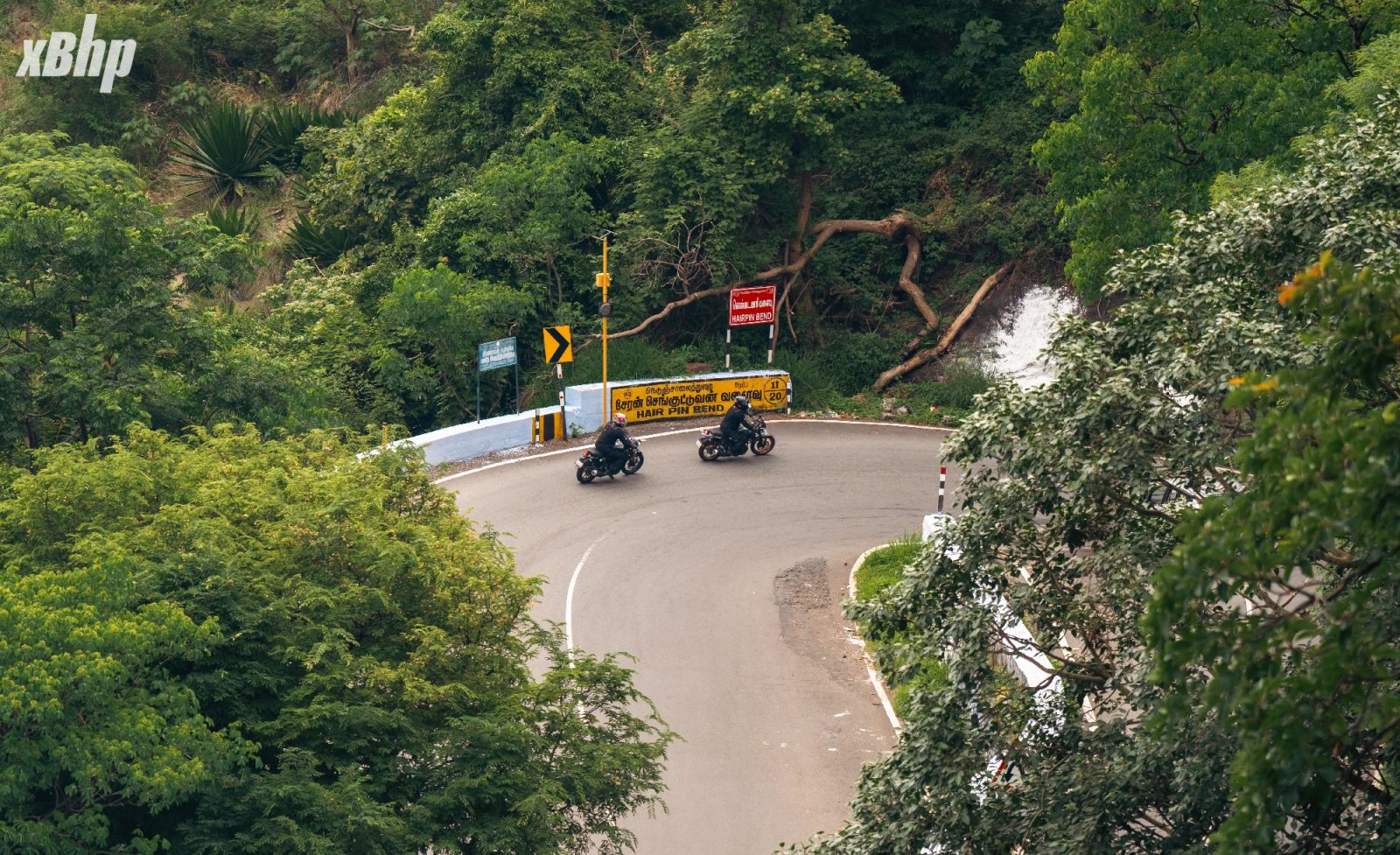
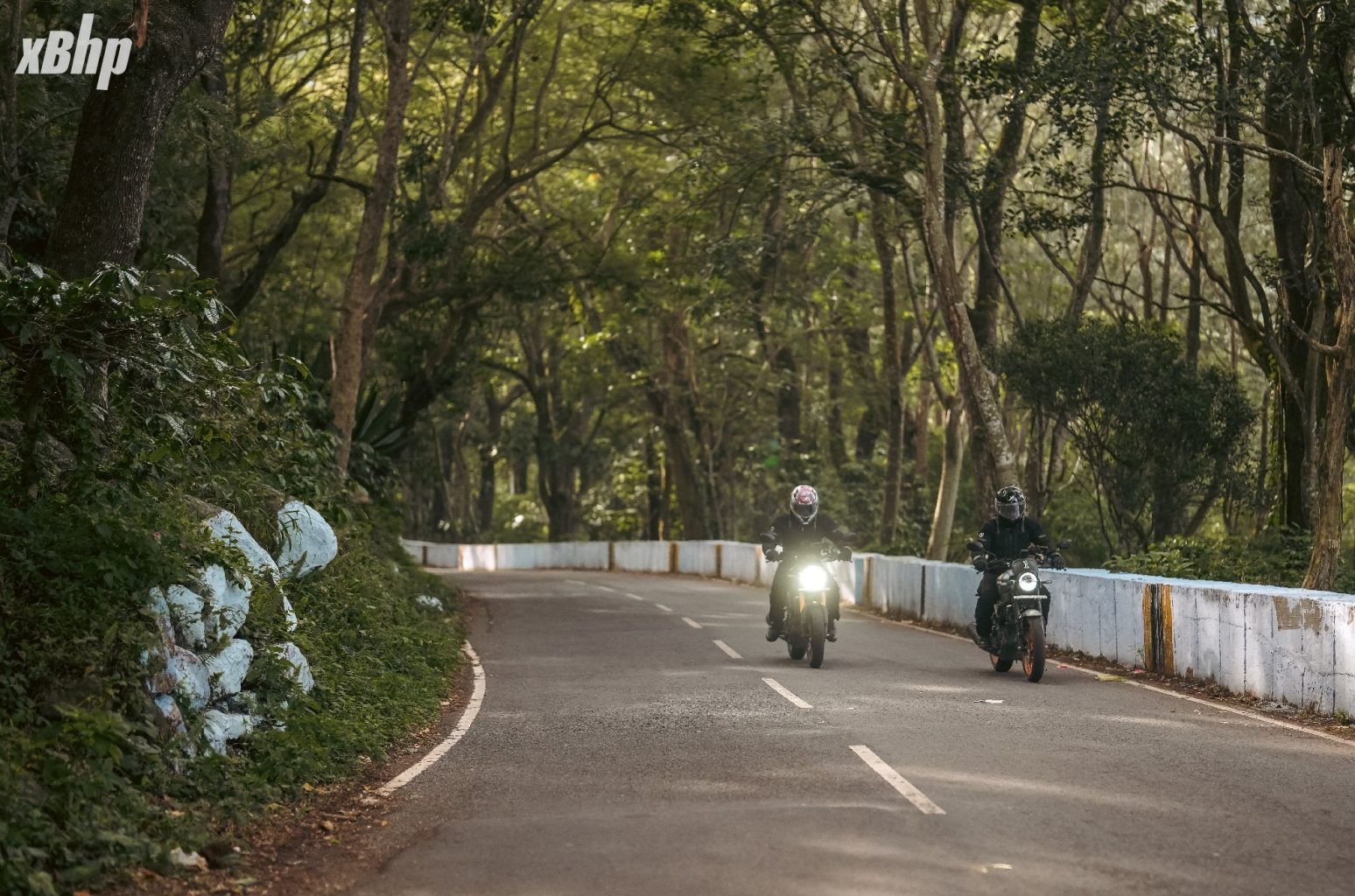
Chaos and calm are sometimes separated by only a few hundred kilometres. The ghats brought playfulness back into the ride. After long highways and city congestion, the XSR155 felt eager through the bends. The Deltabox chassis provided a strong sense of connection. Direction changes were easy, and the USD front suspension helped the motorcycle remain composed under braking and corner entry. The engine’s upper range became more enjoyable here. The VVA system allowed the motorcycle to pull with greater enthusiasm when revved, while the six-speed gearbox encouraged an involved riding style.
Yet the performance remained accessible. The XSR did not demand expert-level commitment to become enjoyable. This is a quality we appreciated the most. On a ride where effort and fatigue vary from day to day, if a motorcycle can still feel manageable, sometimes even enjoyable, then you’ve got your hands on a stellar machine. In Mahabaleshwar, the cooler air restored some energy. The fatigue did not disappear, but the road gave something back. Sometimes the body becomes tired before the heart does.
Mahabaleshwar to Goa: Following the Green Road South
Riding from Mahabaleshwar to Goa, we witnessed a constant change in the shades of green. The cool, misty, and relaxed rhythm of the Konkan Coast gradually shifted to warmer air, denser vegetation, and the unmistakable feel of coastal Maharashtra. A traditional meal with a glass of solkadhi completed the sense of this transition. Made with kokum and coconut milk, this beverage is a fine balance of flavour: tangy, rich, mildly spiced, and deeply refreshing. It is exactly the kind of drink you appreciate almost too much after hours of humid roads.
By then, we had realised that food on a long roadtrip is never just fuel. It becomes an emotional reset. A warm meal can soften a difficult morning. A familiar flavour can momentarily reduce homesickness. And sometimes, a glass of something completely new can make you feel connected to a place you are only passing through. Kahwa had introduced us to Kashmir’s cold mornings. Lassi had carried Punjab’s generosity. Pyaaz kachori had matched Jaipur’s bold personality. Kathiawadi food had restored us after Gujarat’s heat. And now, solkadhi gave us the refreshing taste of the Konkan before the road carried us into Goa.
By this stage, the XSRs had stopped feeling like motorcycles we were evaluating. We knew the sound of the engines every morning. We could estimate the fuel remaining without constantly checking the display. We knew exactly where each luggage strap had to sit. We knew how the motorcycles would react before a corner and how much room we needed for a safe overtake. That is what long journeys do. They turn machinery into familiarity. And familiarity into companionship.
When we finally reached Goa, the motorcycle attracted people naturally at the many cafés we visited. Someone would first notice the round headlamp, then the luggage, and finally the dust and road grime accumulated over thousands of kilometres. “Where are you riding from?” “Kashmir.” “And where are you going?” “Kanniyakumari.”The expression usually changed when they realised that the journey was being completed on two 155cc motorcycles. There remains a belief that long journeys require large engines.
Bigger motorcycles certainly make high-speed cruising and overtaking easier. They can carry luggage with less effort and often provide greater wind protection. But an engine cannot provide patience. Displacement cannot replace planning. And horsepower cannot make the decision to begin. The road does not know what capacity is written on the motorcycle. It only knows whether you continue to show up. And by the time we reached Goa, carrying the taste of solkadhi, the humidity of the Konkan and thousands of kilometres behind us, the two XSR155s had shown up every single morning.
Goa to Dharwad: Correcting the Route and Finding Benne Dosa
From Goa, we turned inland and rode towards Dharwad, which was our actual halt in North Karnataka. Leaving Goa meant moving away from the coastal mood and back into the interior. The roads, vegetation and architecture changed once more. Dharwad has a quieter, more academic and cultural character than many of the larger cities on the route. It felt like a useful breathing point between Goa and Bengaluru.
And then came breakfast. Benne dosa. Crisp, buttery, and served with delicious accompaniments, just the kind of food for a reset of the palate and a reminder of the location. Indulgent, through and through. Once again, a regional dish became part of the route’s memory. We could have described the journey through fuel stops and toll plazas. Instead, we remembered it through kahwa, lassi, kachori, Kathiawadi food, Soul Kari and benne dosa. India’s food map had become as important as its road map.
Dharwad to Bengaluru: The Modern City Meets a Retro Roadster
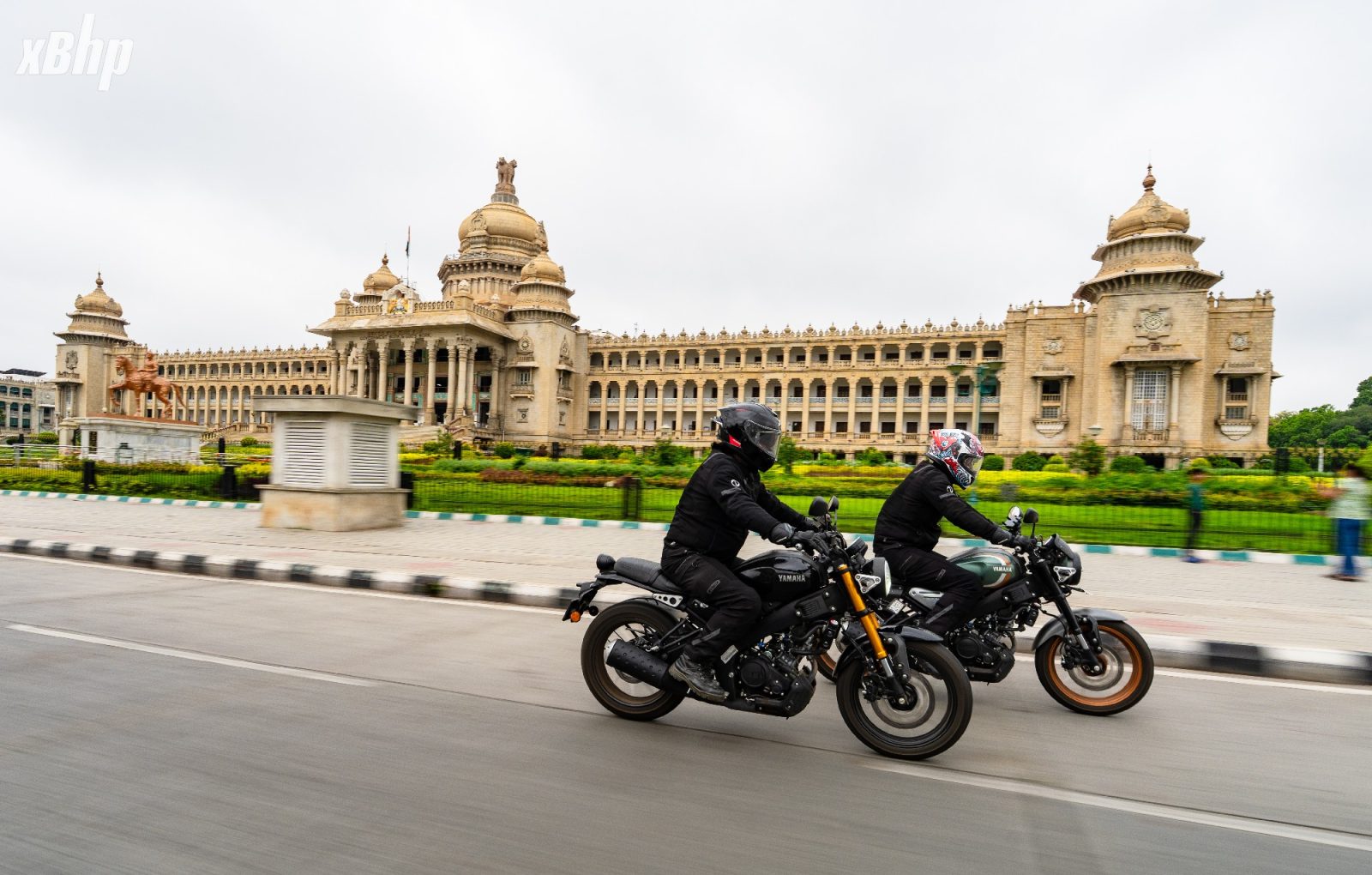
The road from Dharwad towards Bengaluru brought us deeper into Karnataka and returned us to a modern urban environment. The traffic was demanding, but the city’s young motorcycling culture, independent cafés, technology-driven identity and constant movement created another natural home for the XSR155. At Vidhana Soudha, the motorcycle stood before one of Bengaluru’s defining landmarks. The massive granite structure, completed in the 1950s and designed with Indian architectural influences, represented another meeting of tradition and modern institutions.
The XSR’s proportions looked almost delicate against the scale of the building, but philosophically the pairing worked. Both drew from older Indian or classic design cues without belonging to the past. Bengaluru also reinforced why the XSR had integrated so seamlessly into the journey’s café culture. It did not appear too precious to ride. It did not appear too utilitarian to admire. It could arrive dusty after hundreds of kilometres and still become a visual centrepiece outside a café. More importantly, it remained approachable. People came closer, asked questions and imagined themselves riding it. That ability to start conversations became one of the motorcycle’s strongest qualities throughout K2K.
Bengaluru to Madurai: Krishnagiri and the Road into Tamil Nadu
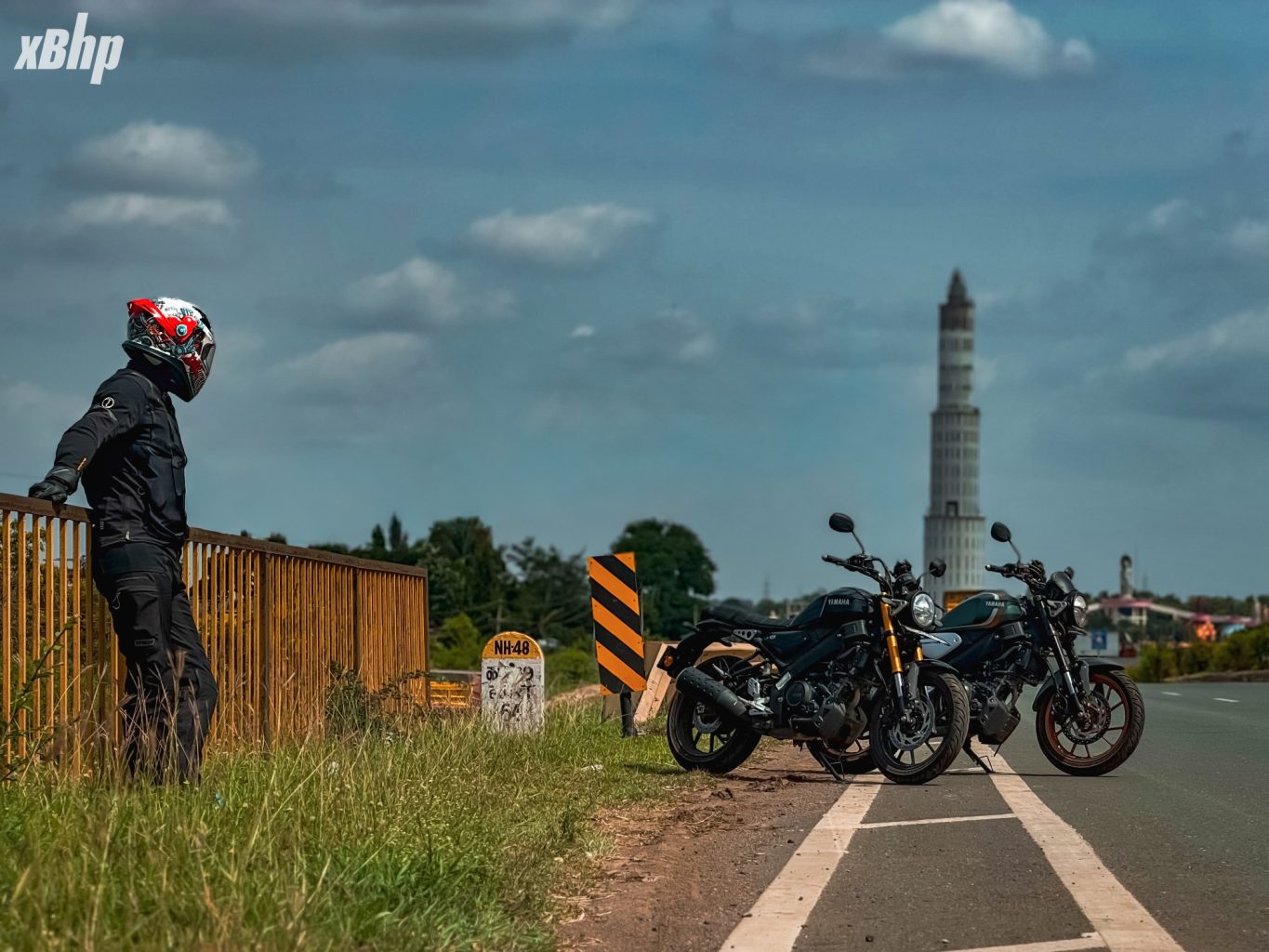
The road south from Bengaluru carried us towards Tamil Nadu. Signboards changed language. Food stops changed character. The visual rhythm shifted from Karnataka’s city-and-highway mixture into Tamil Nadu’s open roads, towns, rock formations and increasingly warm air.
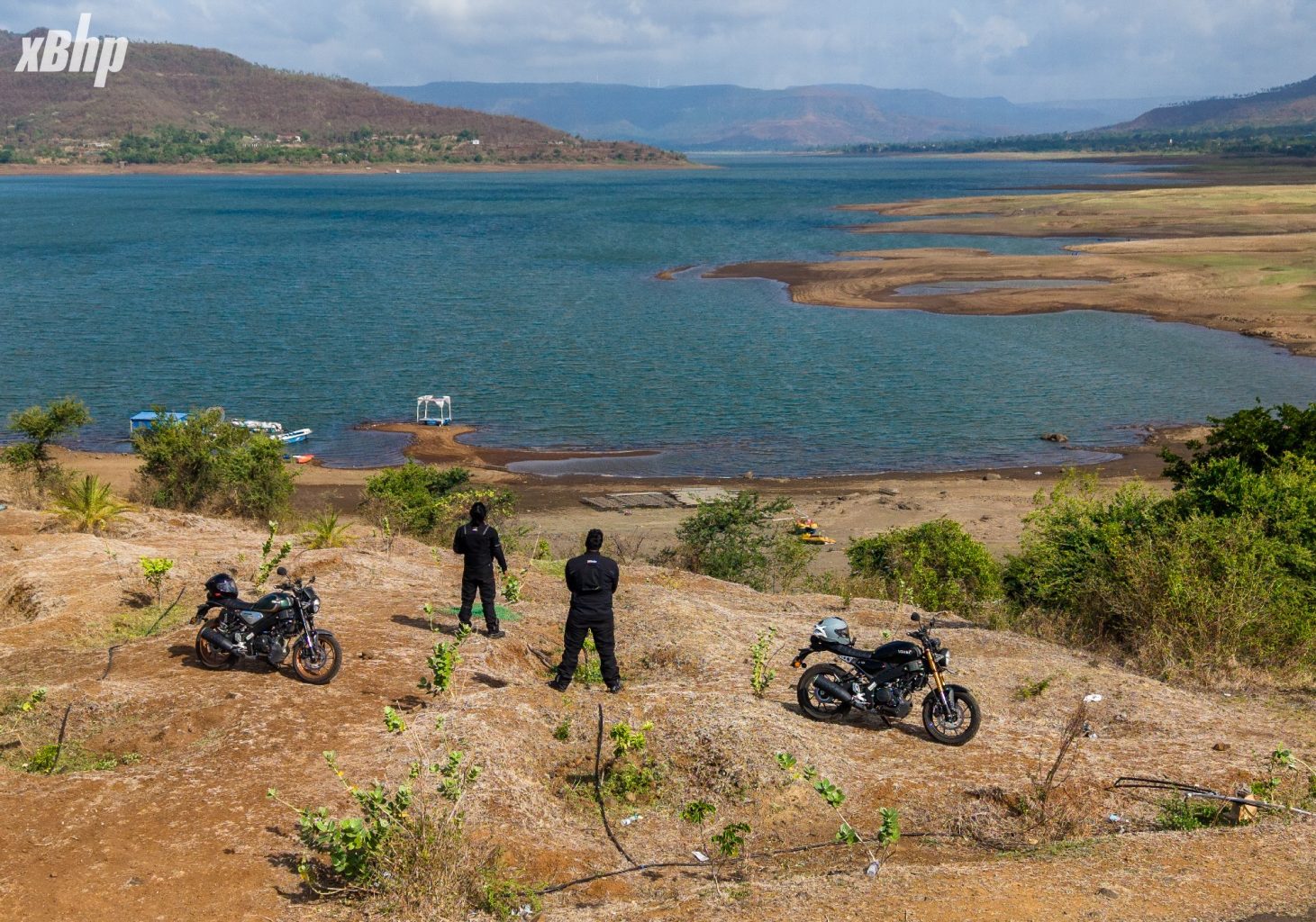
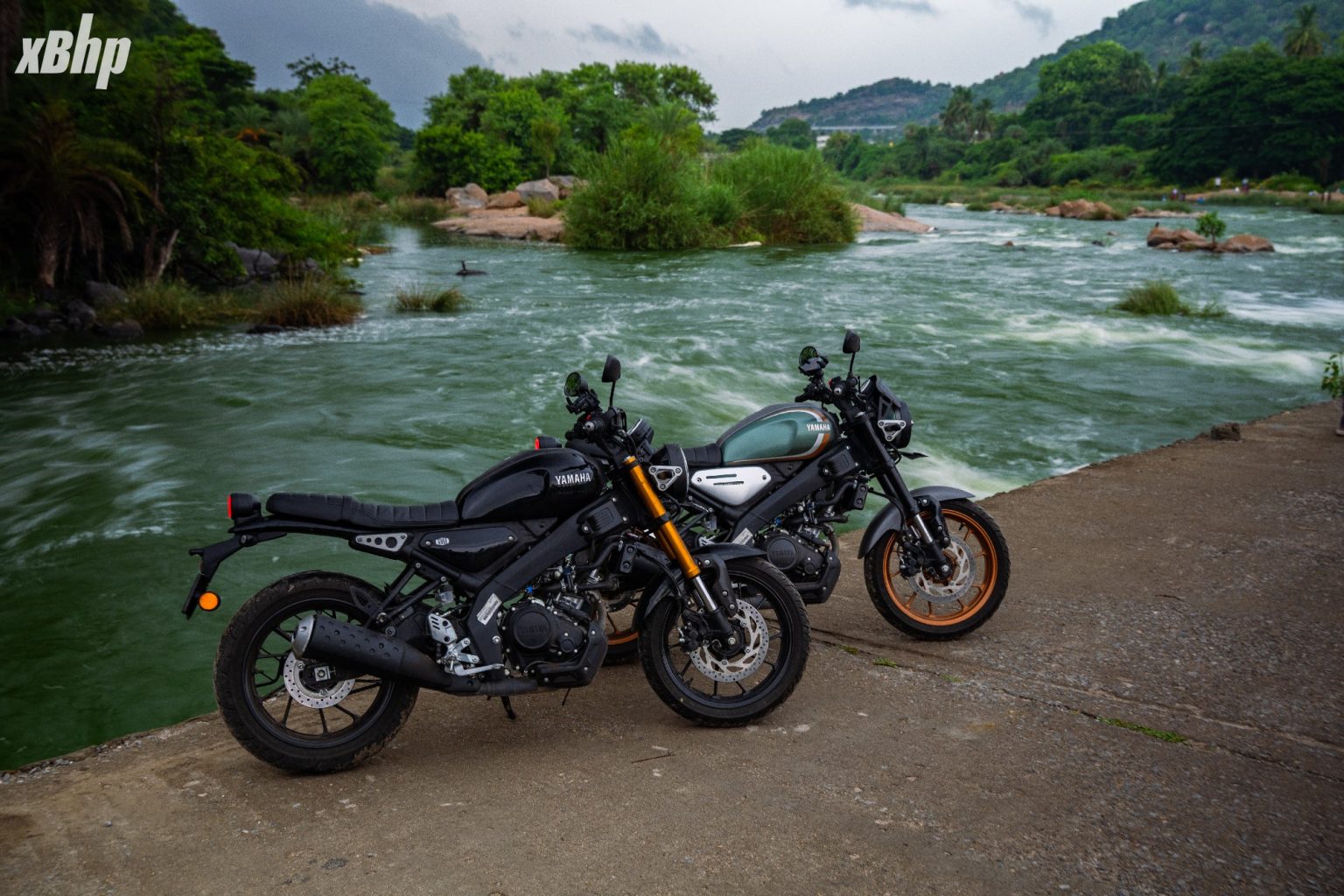
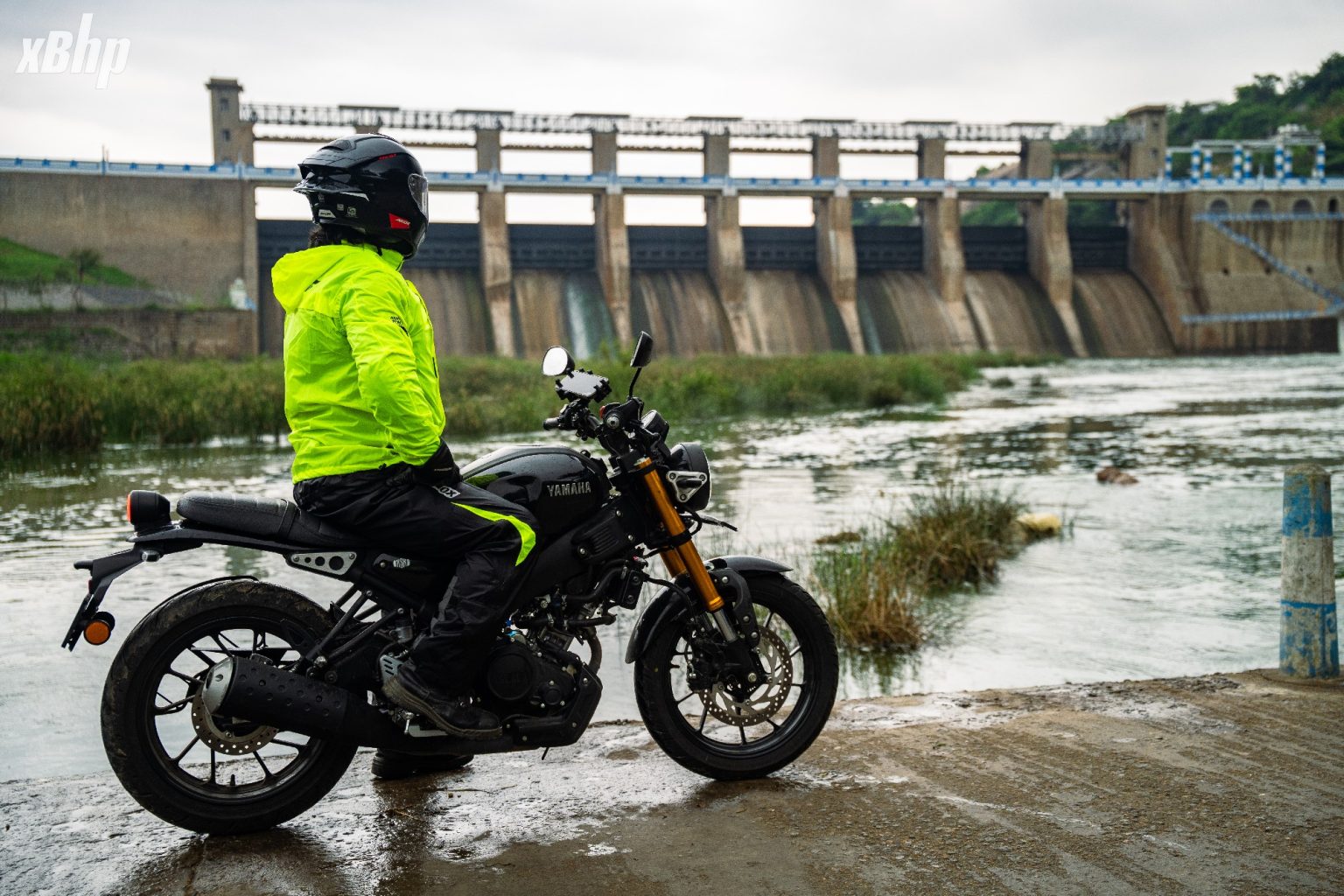
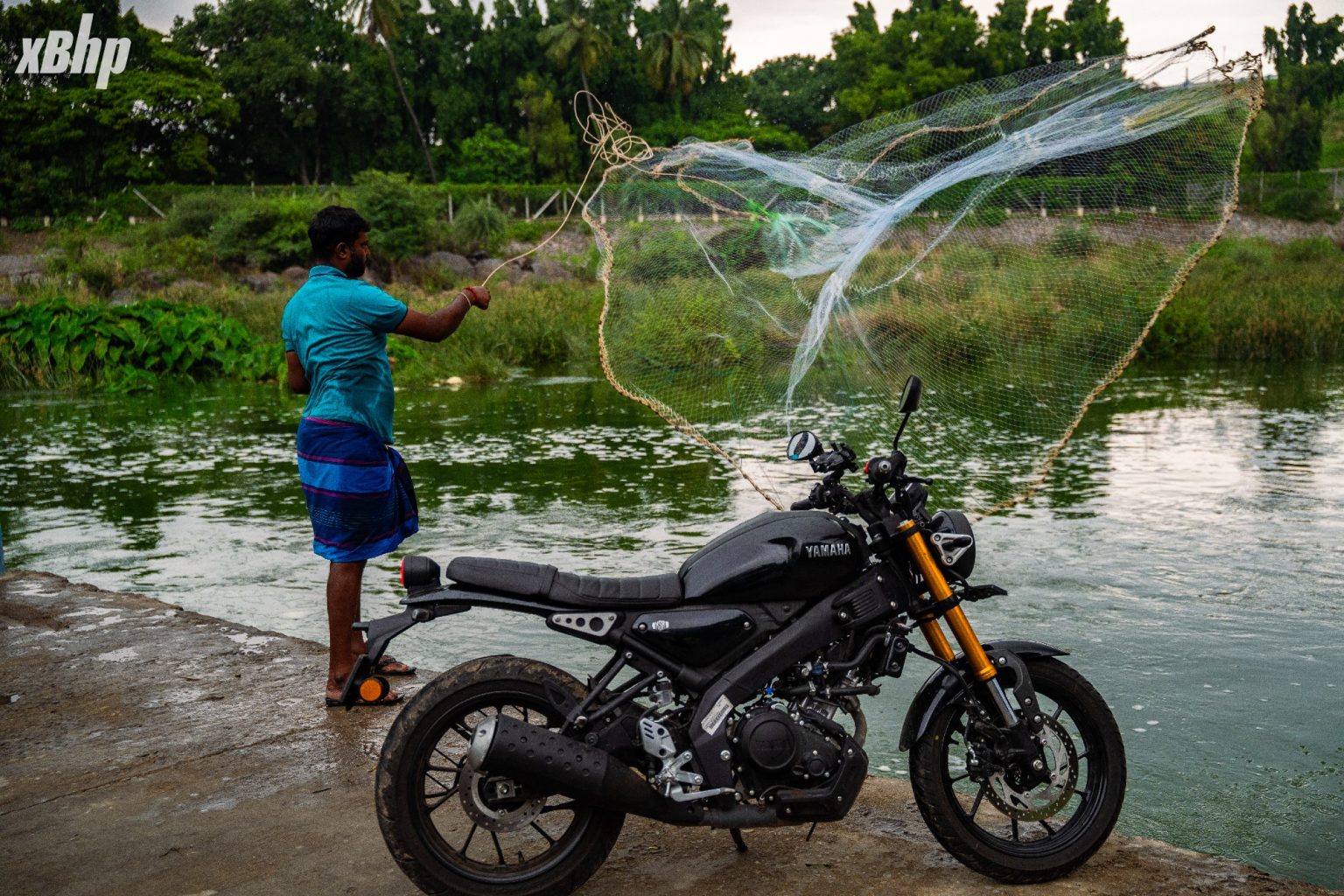
Near Krishnagiri, we spent time around the dam and reservoir landscape. The water, hills and open space provided another pause before the longer push towards Madurai. Krishnagiri Dam also represented a different kind of Indian landmark. Unlike the forts, temples and colonial-era structures we had visited, it reflected modern infrastructure built to support agriculture and communities. The route kept reinforcing the idea that India cannot be understood through only its most famous monuments.
The Rynox H2Go Pro 3 rainwear kept us dry through unpredictable K2K downpours, thanks to its 15,000 mm waterproof shell, breathable construction and high-visibility detailing built specifically for motorcycling.
The country also lives in reservoirs, highway towns, roadside restaurants, industrial stretches, farms and the smaller places travellers often pass without stopping. The heat became more intense as we progressed south. This was where the XSR’s straightforward ergonomics continued to matter. The riding position allowed some movement, and the lightweight motorcycle remained easy to manage when physical energy dropped.
The engine stayed refined through long operating hours, and its cooling system handled the changing climate without drama. After the rain in Punjab and the cooler ghats, southern heat presented the opposite test. The motorcycle adapted. So did we.
Madurai: Colour, Faith and the Meenakshi Temple
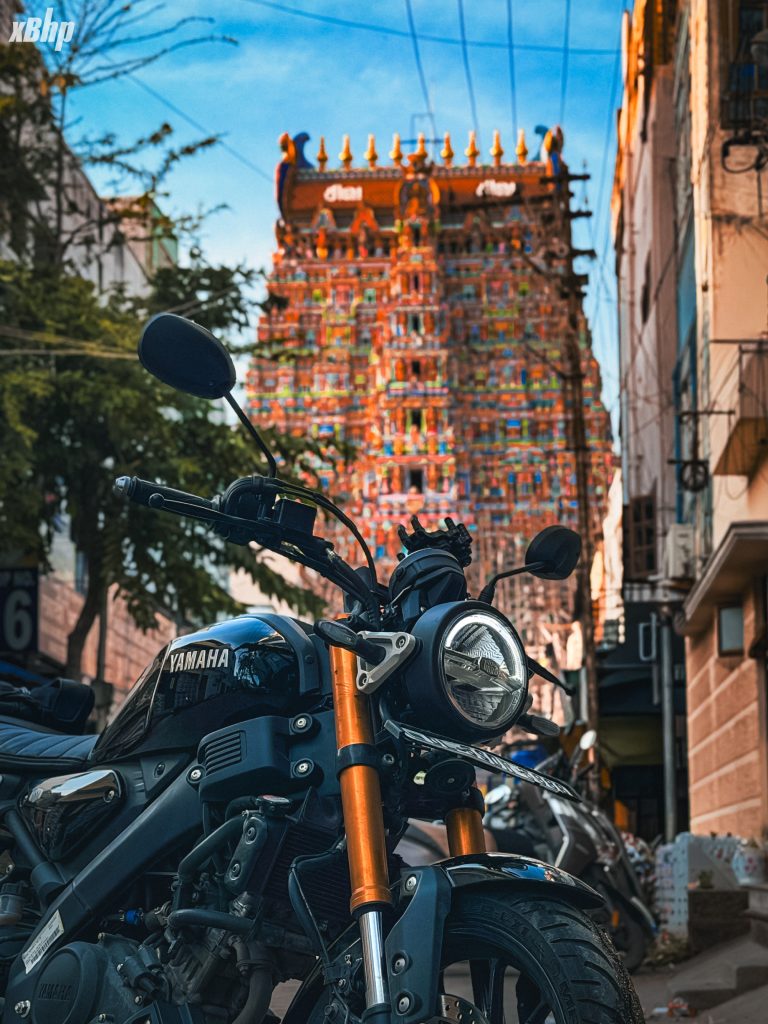
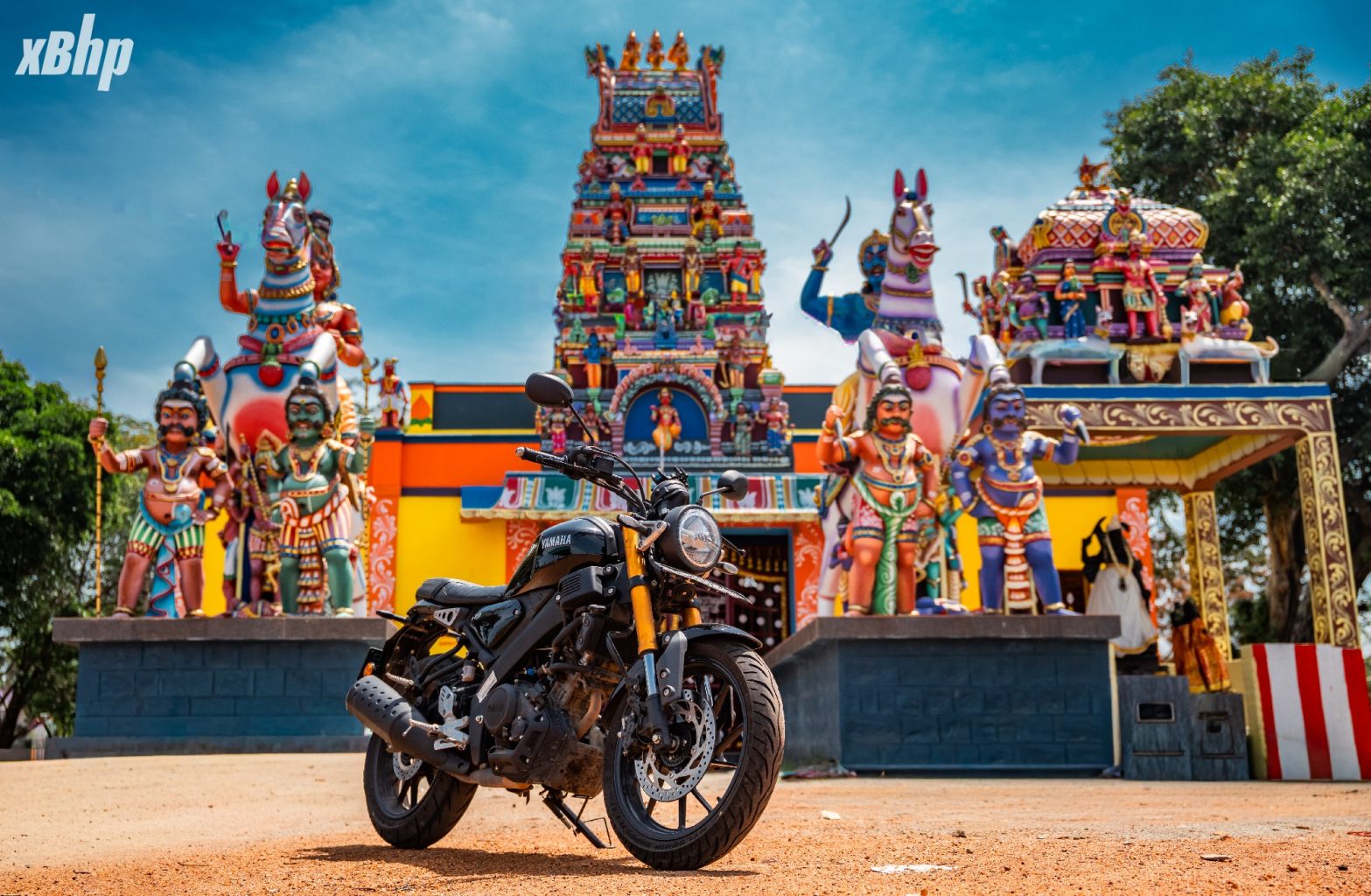
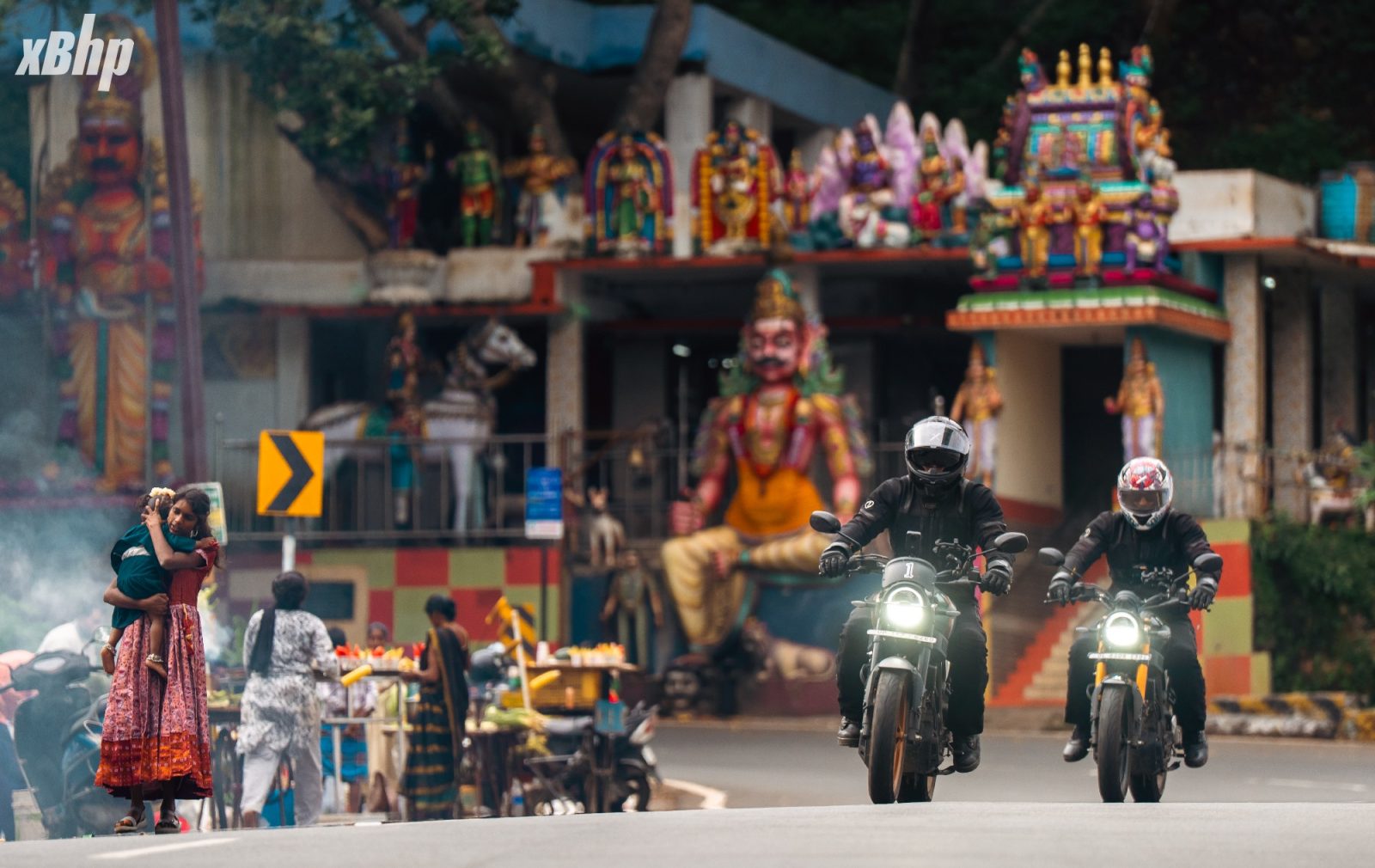
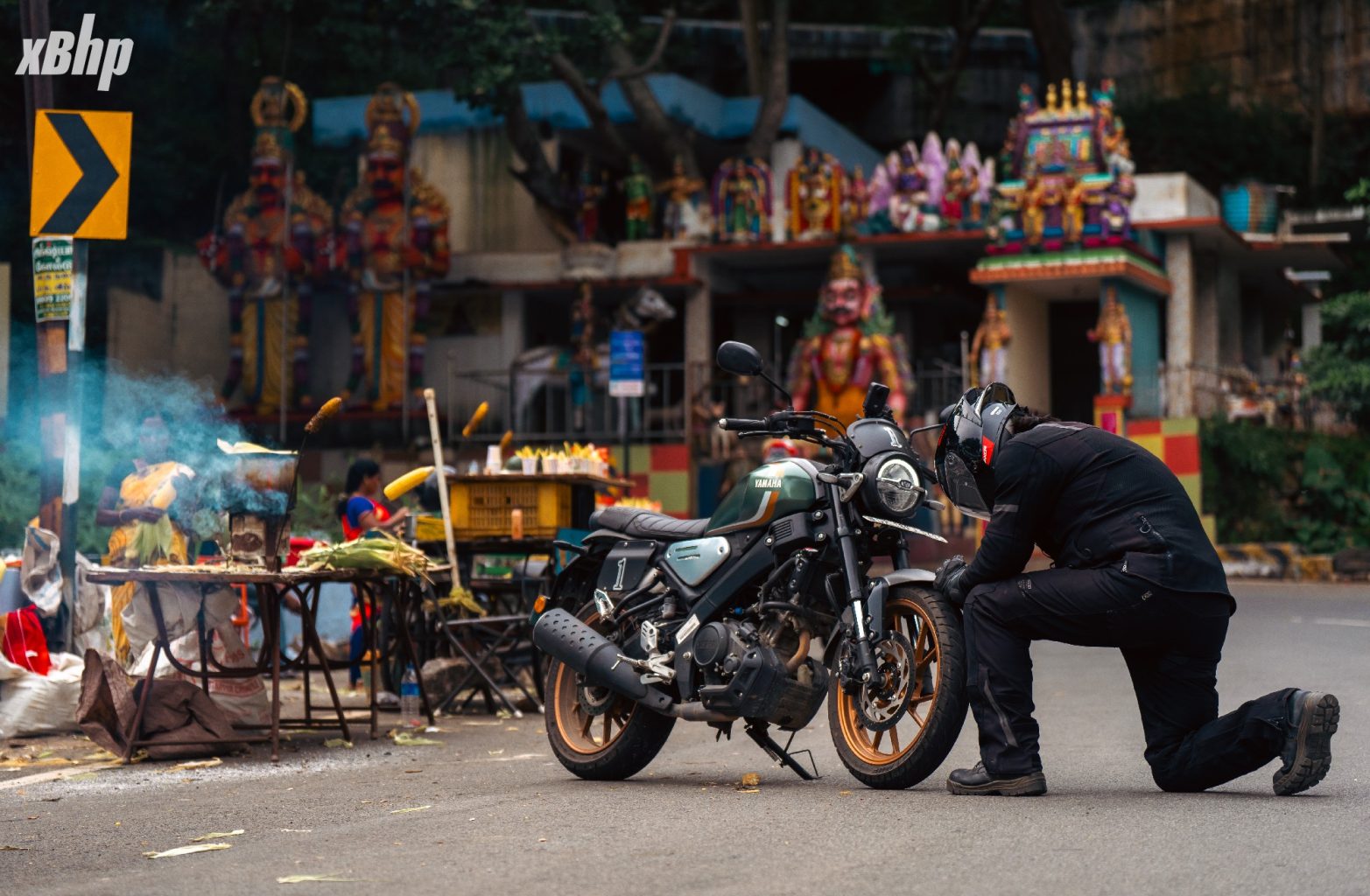
After Bengaluru and Krishnagiri, the next stop on the ride was Madurai, home to the Meenakshi Sundareswarar Temple. It was the most spiritual stop of the southern leg of our ride, and the Meenakshi Sundareswarar Temple was the highlight, of course. Visually too, the temple is a highlight of the city. Its gopurams are a blend of astonishing sculpture and striking colours. The roadtrip had begun beside Dal Lake, moved through the Golden Temple, crossed forts, colonial architecture, modern bridges and government buildings, and now reached one of South India’s most recognisable sacred complexes.
Every stop had represented a different version of India. The XSRs waited outside, carrying dust from thousands of kilometres and looking more travelled than new. That felt appropriate. The motorcycles had begun the ride as pristine products. By Madurai, they had acquired a patina that no customisation kit could replicate. Rain marks. Dust. Small evidence of daily use. They now looked as if they belonged to the road.
Madurai to Kanniyakumari: The Last Road South
When we began in Srinagar, Kanniyakumari was only a distant name on the map. By the time we left Madurai, every signboard made it real. For weeks, reaching the southern tip had been our goal. Despite it being a stone’s throw away now, we were not in a hurry. The riding routine had become a way of life: checking the motorcycles, loading up the luggage, and endless days in the saddle. A few days of that routine later, we were on the home straight.
So, we slowed down. The XSRs no longer felt like motorcycles we were testing. After carrying us through cold mountains, heavy rain, city traffic, hot highways and winding ghats, they had become companions whose every sound and response felt familiar. Then the road opened towards the sea.
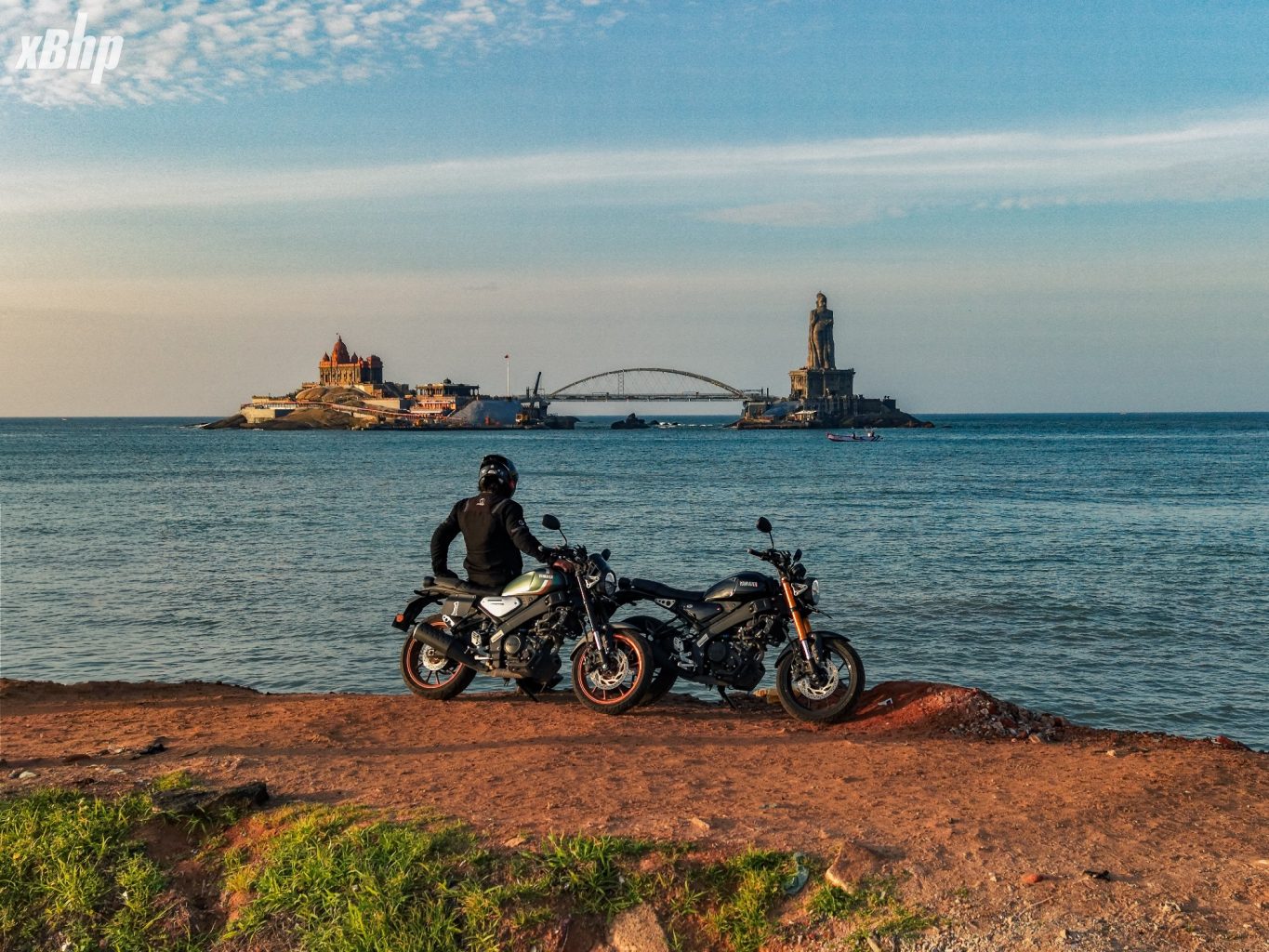
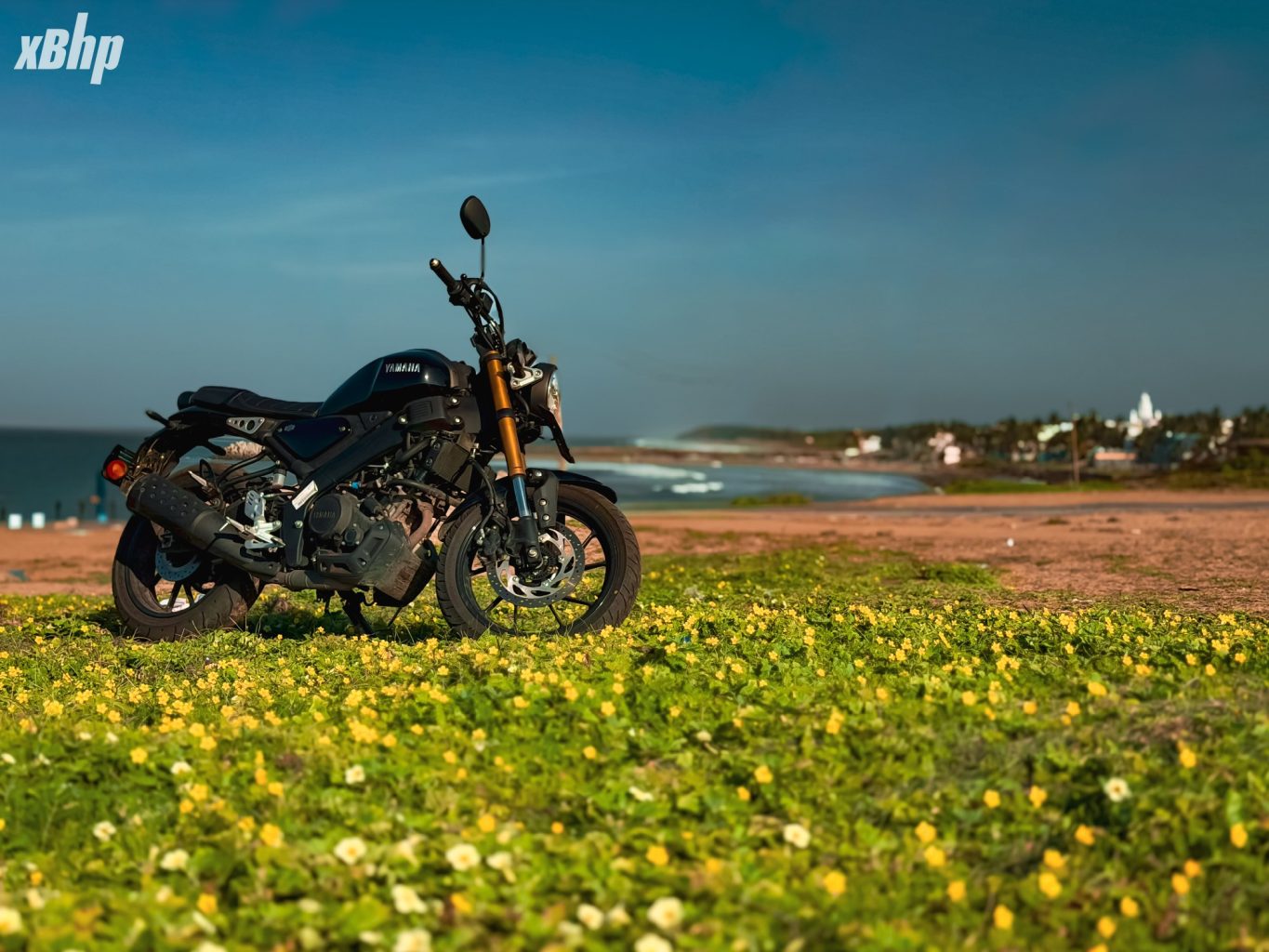
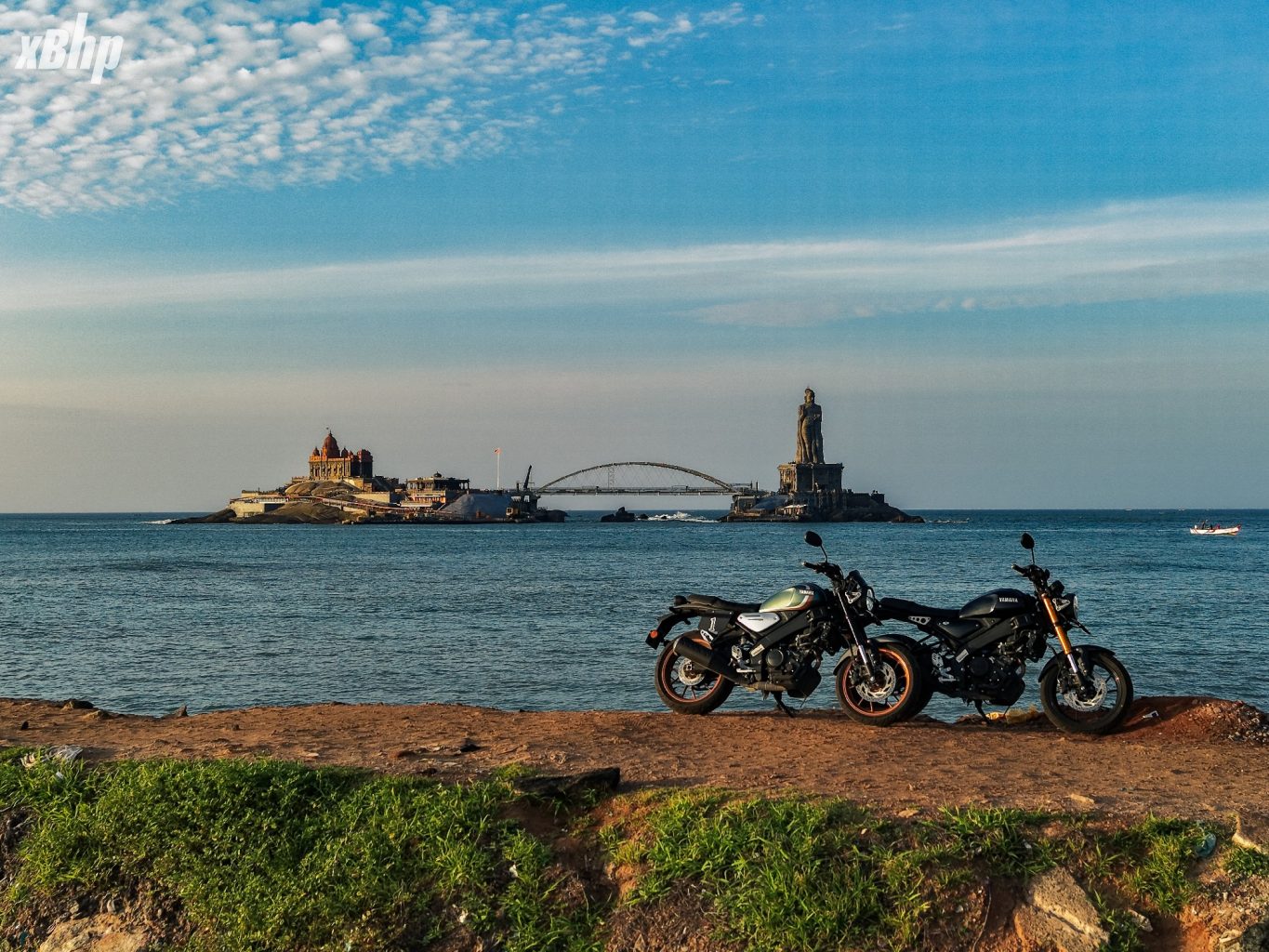
Kanniyakumari is a special place for more than one reason. It is the southernmost tip of India. It marks a place where the Arabian Sea, the Bay of Bengal, and the Indian Ocean meet. Upon reaching our destination, we should have celebrated, but there was nothing. We simply stood with our motorcycles, trying to grasp the scale of the ride and the endless water in front of us. We even forgot how much distance we had covered. These types of rides aren’t dictated or described by the odometer. They are described by the experiences: Kashmir’s cold, Punjab’s rain, the silence of the Golden Temple, Delhi’s energy, Jaipur’s colours, Udaipur’s calm, Ahmedabad’s community, Daman’s coastline, Mumbai’s chaos, Goa’s cafés and the warmth of the South.
The two XSRs were covered in dust and road grime. They were no longer new or perfect, but they now carried stories. So did we. Kanniyakumari did not feel like a place where we had conquered India. It felt like the place where we understood how much more of India was still waiting to be explored. The destination had been reached. But the road had only made us ready for the next one.
Kanniyakumari to Coimbatore: The Road Continues After the Finish Line
Reaching Kanniyakumari completed the symbolic K2K journey. But our road did not end there. From the southern tip, we turned north-west towards Coimbatore. That decision changed the emotional structure of the ride. We had reached our destination, but there was more to do. Journeys conclude, but there is always another road, another city, another place worth exploring.
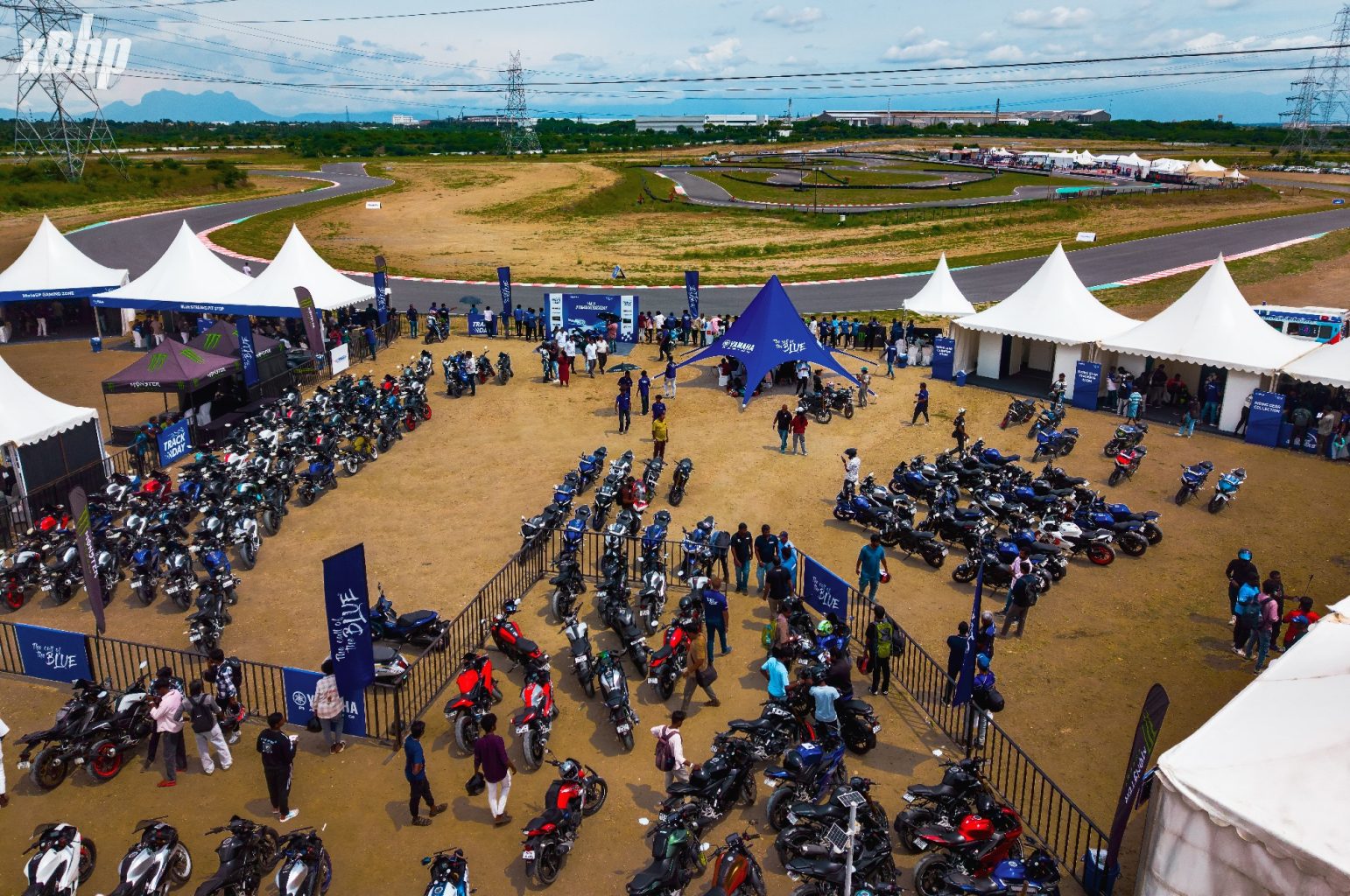
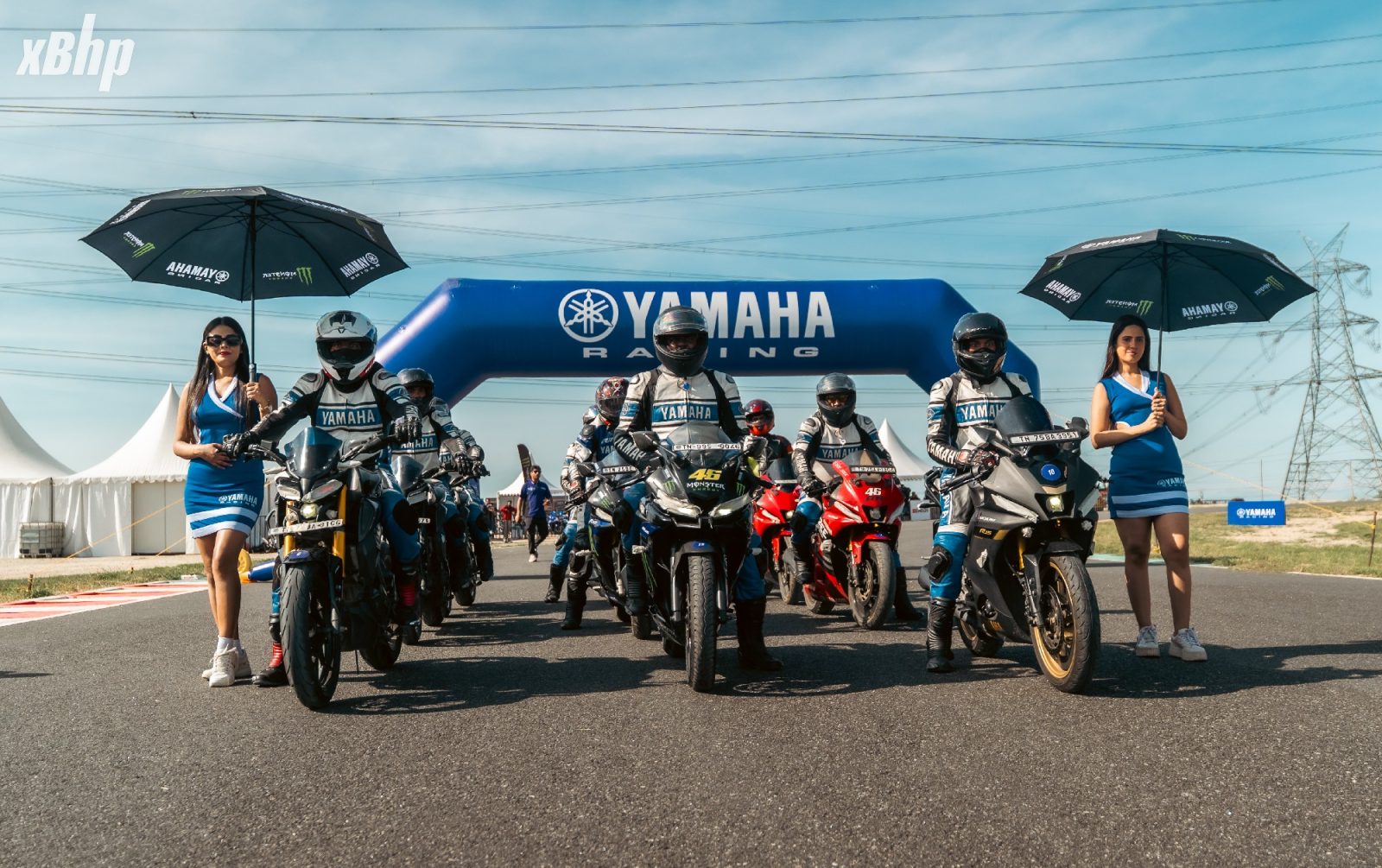
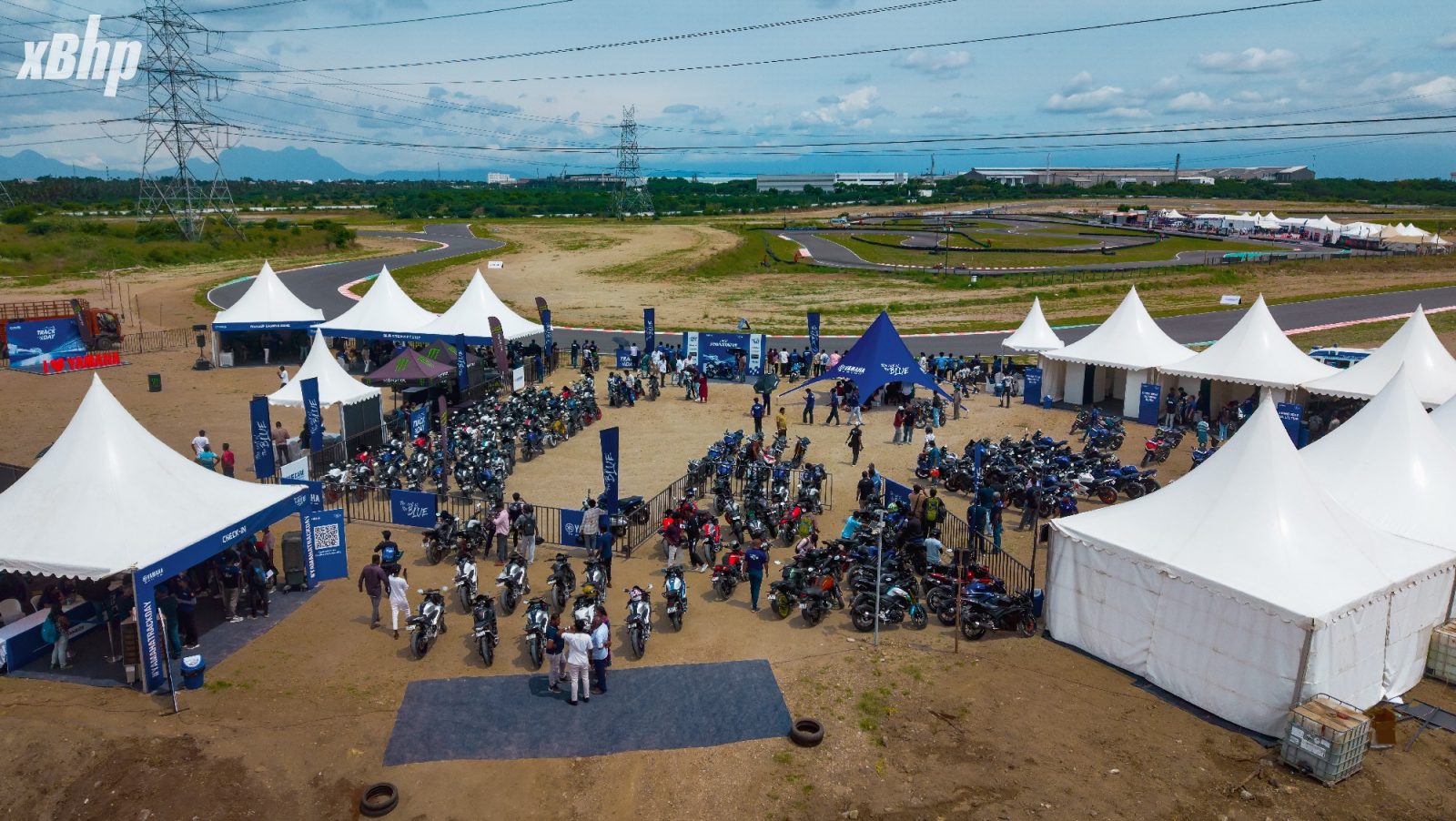
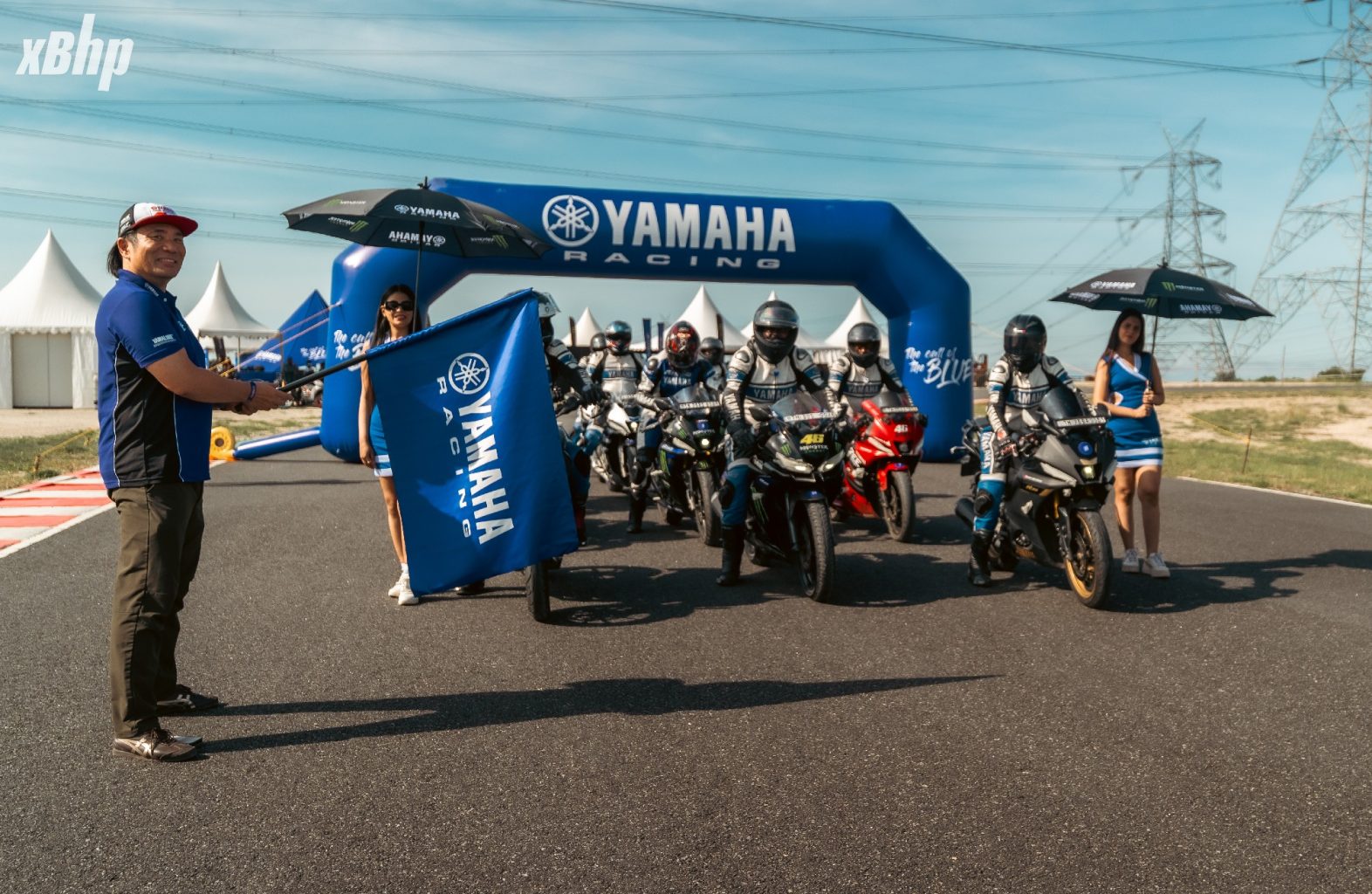
In Coimbatore, the campaign entered an entirely different environment: Yamaha’s Track Day at the CoASTT High Performance Centre. After riding around the country and cruising our way through public roads, traffic, rain, heat, and so on, riding on the racetrack felt unreal. The event at CoASTT saw participation from more than 200 Yamaha owners. The overall attendance was over 500!
Yamaha’s trainers advised riders on racing lines, body position, braking, lean angles, and throttle control. And as we rode on the racetrack, the contrast of the experience could not have been stronger. For weeks, the XSR155 had demonstrated versatility through everyday India. At Coimbatore, the motorcycle returned to the performance side of Yamaha’s identity. The same machine that had stood beside Dal Lake, crossed wet Punjab roads, navigated Mumbai traffic and reached Kanniyakumari was now part of a professional track environment.
It was not about setting lap records. It was about completing the picture. The XSR155’s modern-retro design may attract the first glance, but underneath sits a platform shaped by Yamaha’s performance engineering. K2K had shown the “retro”. Coimbatore reminded us of the “sport”.
Coimbatore to Yercaud: One More Climb
From Coimbatore, we moved towards Yercaud. After the emotional intensity of Kanniyakumari and the focused energy of the racetrack, the climb towards the hill station felt like a return to the quieter language of motorcycling. Curves. Elevation. Cooling air. Trees closing around the road.
The XSR155 once again felt completely at home. Its light chassis and responsive handling made the climb enjoyable without requiring extreme speeds. By then, the rider and motorcycle were deeply familiar. We no longer thought consciously about the clutch, throttle or steering. The responses had become instinctive. This is perhaps the most meaningful stage of a long ride. At the beginning, every feature is noticed. By the end, the best features disappear. They become trust.
Yercaud, Mahabalipuram and the Final Run to Chennai
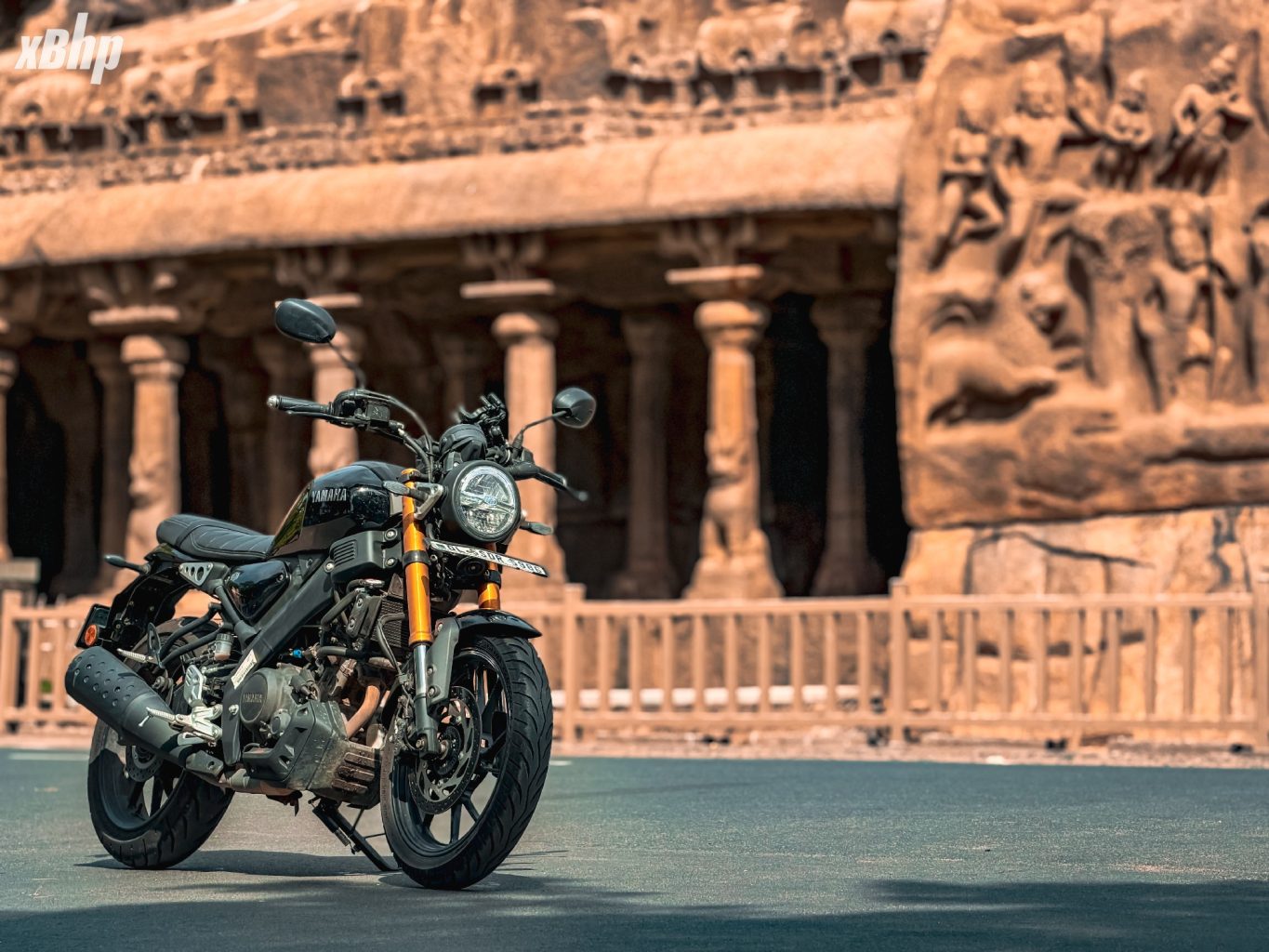
As we made our way towards Chennai for the final leg of the ride, we got another taste of India’s rich heritage at Mahabalipuram, also known as Mamallapuram. Sitting along the Coromandel Coast, the Pallava-era monuments here are a reminder of just how far India’s artistic and architectural legacy goes, with much of what you see dating back to the seventh and eighth centuries. From rock-cut caves and monolithic rathas to open-air reliefs and temples, there’s plenty to take in, with the iconic Shore Temple standing proudly by the Bay of Bengal.
After riding a motorcycle defined by the phrase “modernity wrapped in heritage”, Mahabalipuram felt like a fitting final cultural stop. The progression from rock-cut to proper structures portrays the evolution of design. And alongside all that, we had the XSR155 representing the aforementioned evolution in a package- modern retro! The motorcycle carried old-school visual cues interpreted through modern manufacturing.
The monuments represented ancient ideas preserved in stone. Both spoke, in very different ways, about how the past continues influencing what comes next. From Mahabalipuram, the road led into Chennai. The journey finally concluded with another XSR café ride and community interaction, completing the circle that had begun in Srinagar.
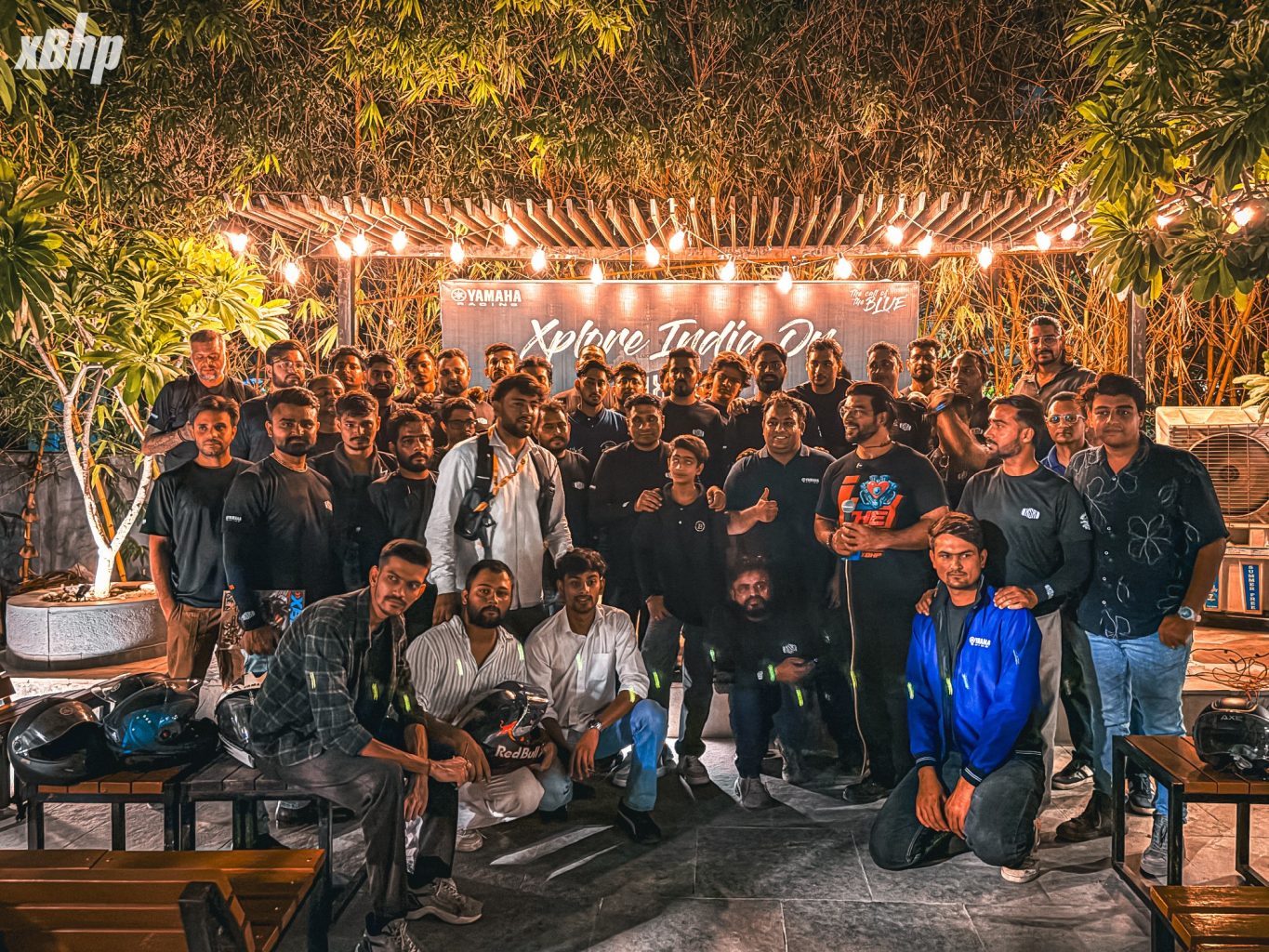
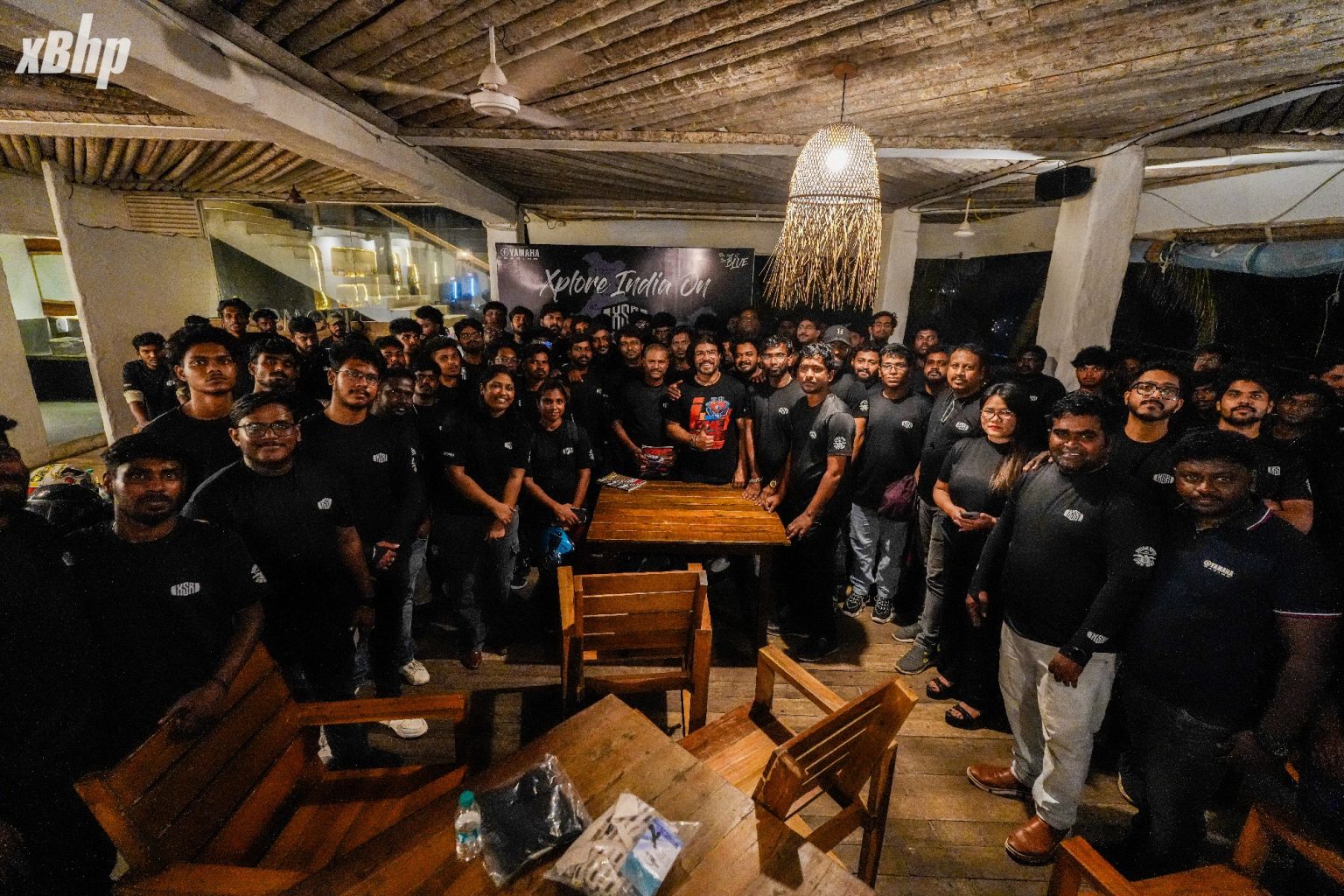
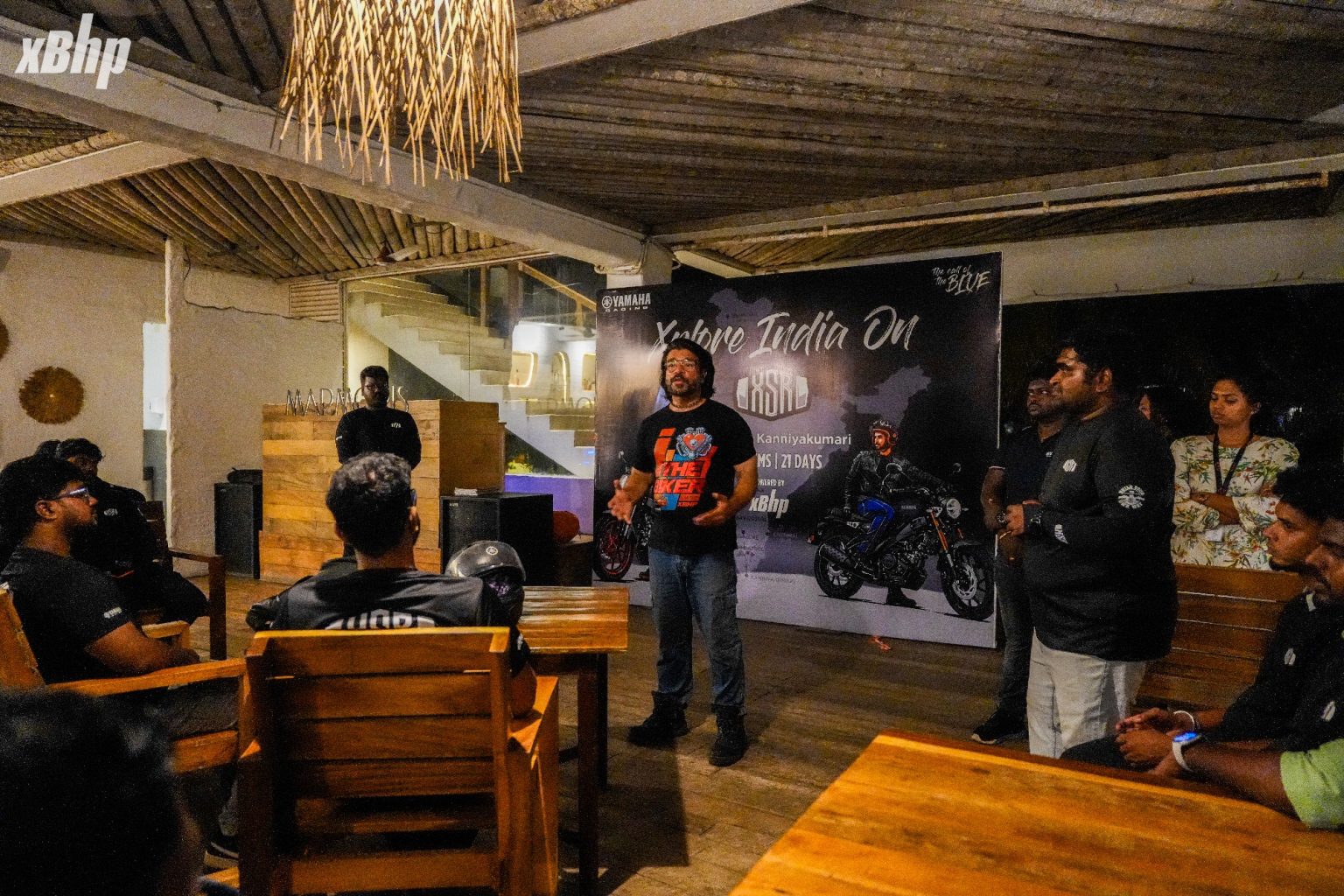
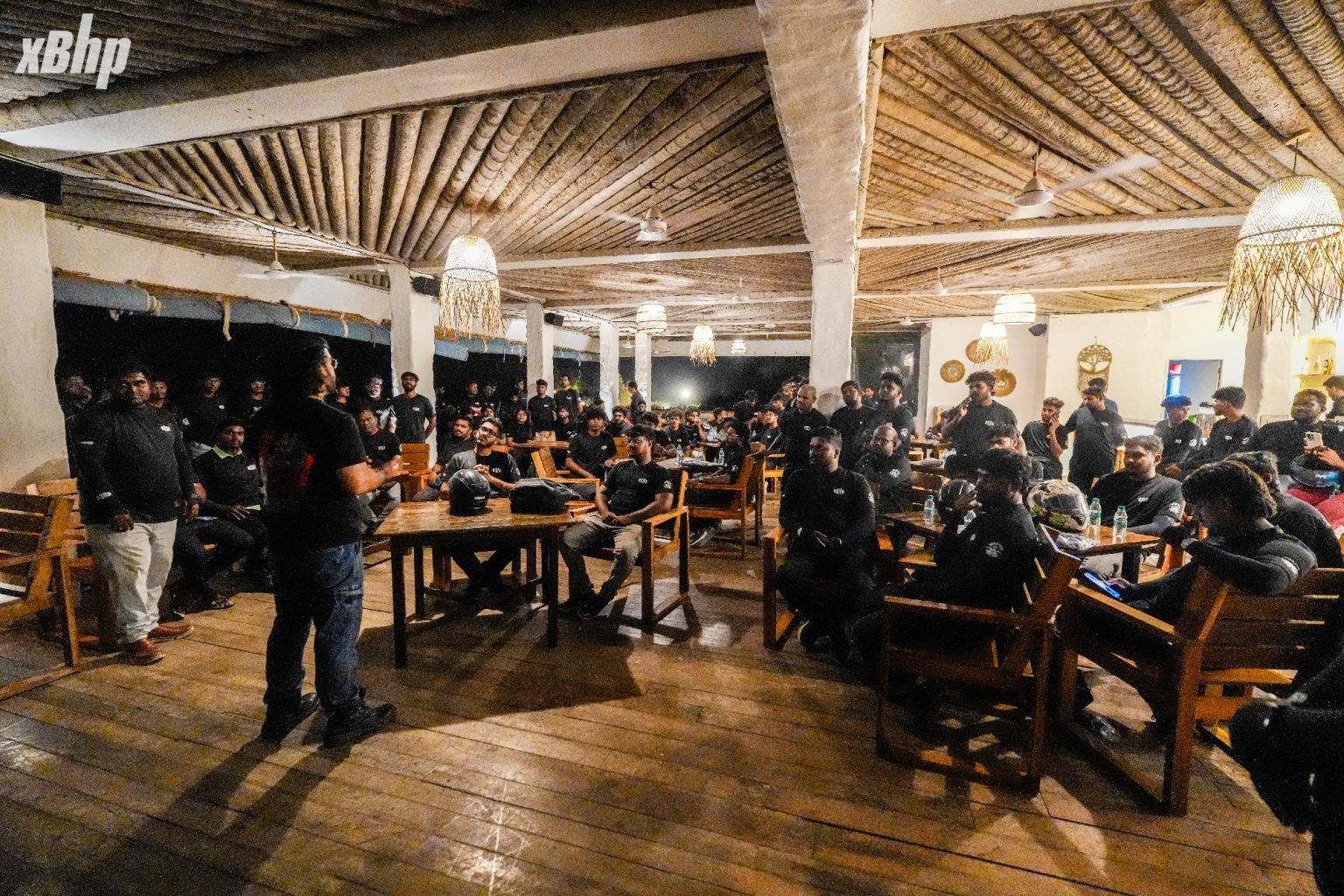
It was here that we saw over 100 XSR riders come together, turning the coastline into a celebration ground for the community. The gathering marked the conclusion of the all-India K2K campaign with the XSR 155, making it a truly historic moment for everyone present. Riders gathered around the two XSRs and asked about the route, the challenges and the experience of taking a 155cc motorcycle across India, and for us, it was a fitting reminder that while the ride may have ended geographically, the community and stories created along the way would continue far into the future. The project had started with two riders and two motorcycles. It ended with communities across India woven into its story.
Living with the Yamaha XSR155 Across India
A roadtrip of nearly 6,000 kilometres cannot avoid discussing the motorcycle. But this ride was never designed as a laboratory review. Throughout this ride, we discovered the strengths of the motorcycle naturally.
Starting with the engine, we have a 155cc, liquid-cooled, fuel-injected, 4-valve engine with VVA or Variable Valve Actuation. It makes 18.4 PS of power at 10,000 rpm and 14.2 Nm of torque at 7,500 rpm. But as always, as important as they are, these are still numbers. What makes the motorcycle work so well is something you discover as you ride it more and more. The engine’s greatest strength was its dual nature. At lower revs, it remained friendly, tractable and easy to control through cities, rain and café arrivals. Higher in the rev range, VVA gave it enough enthusiasm to keep highways and ghats engaging.
The six-speed gearbox allowed us to use the available performance effectively. The assist and slipper clutch reduced effort in traffic and made downshifts smoother. The Deltabox frame, aluminium swingarm, USD front fork and linked rear suspension created a balanced chassis. It remained agile in the mountains and ghats, while offering sufficient stability on highways. The kerb weight is the XSR155’s biggest draw. At 137 kilos, it is a very easy motorcycle to manoeuvre even with the fatigue that comes with covering long distances daily.
The traction-control system proved valuable during the rain-soaked stretch in Punjab. Dual-channel ABS added confidence during braking on unfamiliar roads. Again, neither system replaces responsible riding. But both reduce uncertainty. The 10-litre fuel tank is not massive but gets the job done. A larger tank would have simplified some sections, but the engine’s efficiency prevented range from becoming a constant concern.
Wind protection was minimal, as expected from a roadster. Soft luggage had to be tied thoughtfully, and the motorcycle’s ground clearance required care over damaged surfaces when fully loaded. The XSR155 never pretended to be a dedicated adventure motorcycle. That honesty became part of its appeal. It was simply a well-engineered roadster being asked to travel far. And it did. Morning after morning. State after state. Without making the journey about mechanical drama. Its most impressive quality was not outright acceleration or top speed. It was how rarely it complicated our lives. Dependability is not always exciting enough for social media. On a cross-country ride, it becomes deeply emotional.