







 Tweet
Tweet
 First Aid: Handling Post Accident Situations.
First Aid: Handling Post Accident Situations- Yours' or others' accident.
Purpose of the topic: To enable readers to understand the most common injuries after an accident, what they should do and what to avoid. To clarify them about injuries they might have not faced yet. Readers should be able to take care of the other accident victims in case they meet with an accident or instruct bystanders in case of their own accident.
Caution: Extremely graphic images and descriptions in this topic. Be mentally strong and take care while showing the topic to sensitive people or minors.
Before sharing my experiences on the topic, it is worth mentioning that everyone riding on a motorcycle should be properly equipped with a helmet, a pair of gloves, boots, protective jacket, etc, no matter what. Adult or child, rider or pillion, daytime or night time, 30 kmph or 130 kmph, city or the highways, nothing matters after all. Accidents happen anywhere, at any speed, and all can get damaged alike. But enough about riding gears, as this article isn’t about Safety Precautions before one rides. It’s about AFTER an accident.
Coming to the topic, a road accident is an unintentional collision of a road vehicle with another vehicle or person, usually resulting in loss to life, limb or the vehicles involved. Leaving aside the loss to vehicles, let’s focus on the more painful losses. An accident has basically 2 phases, or stages:
1. Airborne Stage: A collision first results in the vehicle/ person’s kinetic energy (motion) being released. In simple words, the immediate collision results in the motorcycle and the rider being hurled and/or scraped until they finally come to a stop, either by friction or by a movable or immovable object.
A person in this stage has to rely solely on his reflexes to avoid damage, as much as possible. Not much can be done in this stage as the speed of events turn too fast for the human body and mind to react in time. However, a good rider can program himself to avoid some damage:
• Mentally program yourself to leave the motorcycle in mid-accident phase, otherwise the damage to life and limb will be more, in most cases. My own fracture was caused largely due to me grabbing the bike’s handlebars hard in mid air. Result? The entire weight of me and more importantly, my bike came down upon the crashing right arm, which snapped instantly.
• Try landing on your feet first. Landing on your feet often results in lesser impact. On the flip side, landing on head, shoulder or sideways will almost always result in neck, collarbone or arm’s fracture (yes, even with a helmet on). This vague method might not always succeed though.
• In most cases, braking hard is a better option than to crash into something else. So, if the need arises, brake hard even if it results in locking up the tyres. Remember, if the tyres lock up you lose grip but you might escape unhurt. Still, if your tyres lock up, its advisable to leave the brake for a moment and then brake again.
• Make maximum use of hands to avoid crashing into obstacles, or to reduce the impact.
See, I understand that the first point mentioned above seem like something that only a yoga guru can do. I never claimed that controlling your reflexes is easy. But if you do manage to control them, you might just escape a hospital in 2 days, instead of 6-7 months in case of a fracture or even worse, muscle injuries.
2. The After Collision: The crash causes many after effects, such as:
• Injuries, which maybe mild or severe injuries, hidden or apparent injuries,
• Some new enemies, such as the person you crashed into, by-standers, etc.
• The vehicle’s losses, which are not too relevant here,
It is very important to understand the kind of injuries a crash might bring with it, and how to deal with them prematurely, before an ambulance arrives. Some of the common injuries which can occur are explained below:
1. Body Part cut off: Ok, I know it sounds too graphic, but please read it once. If a small body part is cut off, it is possible to reattach it using a surgery. So, take the body part with you in the ambulance. A mechanic in Ajmer got his thumb cut off while he was working on cleaning the running chain of a motorcycle. Thankfully, he took the bloodied cut thumb piece with him to the hospital, an emergency surgery was performed on him with his hands made numb and insensitive through an injection. Now, he’s back on job although with stitch marks.
In case of any body part cut off, try knowing the blood group of the injured person and try arranging the blood through a blood bank or a person who’s having the same or a donor blood group, as the person will need blood in almost all cases.
2. Fractures: A bone fracture is defined as the complete or partial cracking of a bone, often caused due to heavy physical impact on it. Fracture can occur in any bone of the body, and multiple fractures can happen too. Fractures have different degrees of impact and thus dealing with them in each case is different.
A Fracture is a very serious injury with the following implications:
1. A sharp pain around the fractured bone, if the bone can’t be kept straight. This pain could be intolerable, completely IIIrd degree, so take care of a fractured patient very carefully. Shaking, moving could make the pain intolerable.
Also, in case of another person’s accident and fracture, try protecting that patient from any further damage, from crowds, traffic, etc. Remember, the fractured person is always weaker than you are, so its your moral responsibility to help him/ her.
2. The impacted area’s bones break and hang down, and in most cases can’t support itself. The bone should be kept straight (in its normal position) or further damage might occur. And yes, this further damage can result in death too. Various emergency tools are available for fracture patients, like arm sling, neck support, etc. See images below to understand what I mean:
These are the MAIN/ COMMON types of fractures:

A. Compound/ Out of Skin: The most painful type fracture in which the broken bone tears the skin and is visible. This is a very complicated situation, which sometimes requires sterilized steel hammers to be used, to reinsert the bone back. Since 3rd degree pain is involved in this fracture which can make you unconscious, doctors use an injection that makes the body part insensitive to any sensation.
So, don't try to realign the bone or push a bone that's sticking out back in. That would be fatal.
B. Comminuted & Transverse: These are 2 different types of fractures, but they’re quite similar. It is identified by the body part gets bent, appears deformed, etc. but no bone visible here. Although, bleeding might happen. The end care may involve either a plaster or a steel rod/ plates inserted through operation. Plastered bone takes more time for recovery, while you can start using rod supported bone lightly, about 15-20 days after the operation. And then another operation may happen after 1.5 years to remove the steel plates/ rod.
But for immediate first aid, take the following care:
* Try giving the patient a clean bandage to apply himself to the bleeding, if any, until further help can be provided. Let the patient do it himself the least painful way.
* Keep the bone straight, or in its normal or least painful position. Then, try immobilizing the area above and below the fracture. The parts should not move.
Guys, I’m sorry but you must understand what happens during a transverse/ comminuted fracture:
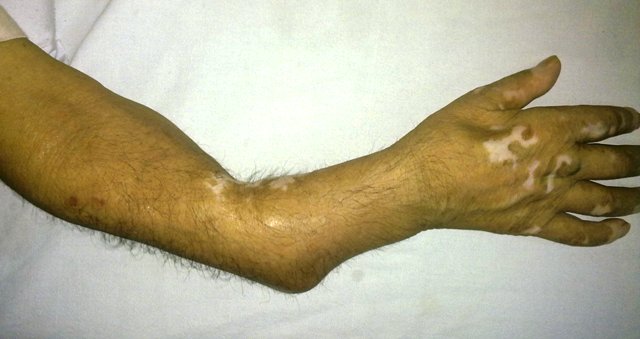
C. Hairline Fracture: This is the fracture in which bone breaks partially, but it might break fully if not taken care of. So, immobilize the affected body part immediately after fracture, by not moving it and later getting it plastered.
As far as immediate care is concerned, there is nothing much to say. Just that if you feel a sharp pain, do not use/ move/ jerk the body part at all. Immobilize it as quickly as possible by getting it plastered.
Common measures for all fractures:
* Try keeping the patient still and composed. Try relaxing the patient. If proper care is taken the patient can recover without much pain in the process, and so better let the patient know that. The patient must not panic.
* Don’t move the patient. If you want to move the patient, tell him to move himself slowly. If he requires support to stand up, etc, hold & lift the body part which is not injured at all, on his permission.
* In Hospital, get an internal bleeding test (MRI) done, and determine if a nerve-repairing operation is necessary or not. If internal bleeding comes in the way of the bone marrow, the patient might die in a matter of hours.
Multiple Fractures: Multiple or more than one fractures are much more dangerous & painful than a single fracture. For example, if right arm is fractured, a person can support himself by holding his hanging right arm with left hand. And the same patient can walk with some help.
But what will happen if both arms get fractured? Or one arm and neck fractured? Such a patient is like a crying deadbody. Pardon me for using the word, but my point is that such patient can’t move or stand up or walk, instead can just cry lying on the road. How will you take such a person to hospital or ambulance without further damage, keeping all fractured bones straight or in position?
Well, in case of multiple fractures, each fractured area must be immobilized by using fracture aids one by one in this order:
Different types of Finger Aids:


Arm Sling:


The above is not a proper sling. Its just for suggestive purpose.
Neck Support:

Once the aids are in place on the patient’s body, ONLY then one should move the patient and that too slowly, without jerks. Pay attention to the patient’s cries, as they may be sign of further damage due to the movement.
Caution: Don’t let Ambulance staff take a multiple fracture patient without the aids in place. The Ambulance boy is no doctor, remember? He’s just a person given Rs. 800 per patient taken to hospital, or so. He wants his job done as quickly as possible, anybody living or dying is not his problem. Blunt & Insensitive Comment by me? Well, welcome to India then.
3. Swelling: Light to moderate Swelling can be handled by applying ice packs, i.e. ice wrapped in cloth, towel, etc. Don’t put it directly over wounds, put it only on swollen skin. “Combiflam” is the tablet the patient can take without doctor’s prescription, for swelling, in case ice is not available.
4. Foreign Object Pierced: If another metal/any object pierces any part of the body, take the pierced object as it is, with the patient to the hospital. An emergency operation can solve it painlessly and with least damage. If the object is immovable like a gate, railing, etc, get it welded/ broken and then take the object’s portion with the patient to the hospital. Never ever try to pull out a pierced object yourself, as this may have dangerous consequences.
Why Non-violence is the right policy, especially after an accident.
We may crash due to our own mistake, someone else’s mistake or maybe both. Your immediate perception of the accident maybe dictated by the “sudden shock” you receive during an accident, and thus you might consider the other person to be responsible, even if its largely your own mistake.
The first lesson is to calm down. Never ever pick up a fight with the person you crashed into. Try using comforting phrases like “Relax”, “Are you ok?” with the other person, even if he gets aggressive. If your ego allows, say Sorry too. Try helping the other person if he’s injured. Fighting would be the most stupid thing a biker can do, I assert. The reasons for my statement are:
1. The person you crashed into, can be anyone- a minister’s son, a Policeman in plain clothes, a criminal, etc. and if you being an ordinary person, get physical with someone of this category, be prepared to bear all kinds of legal and illegal tortures and problems. Yes, I said legal and illegal. This is India. Am I clear enough on this?
2. Understand that after an accident, there may be “hidden” injuries which you might not discover as yet, but they may be aggravated in case of suffering further blows to the injured area. A hidden fracture in your fingers’ bone(s) will make matters worse if you make a tight fist out of your hand. Then you can’t run away or beg for mercy once you discover that your finger is “hanging”, accompanied with severe pain.
3. Crowd can make anyone a target. If you start picking up a fight, in a busy street, you’re more likely to be “mobbed”, than if you stay calm!
Keep these final points in mind:
• If you’re really injured seriously, don’t hold back the noise. Shout. Apart from the psychological “relief from pain” benefit, the other benefit is that this gathers a crowd, and the other person’s chances of escaping or further hurting you become grim. This attention also avoids you from oncoming traffic, until you can walk to the footpath or a safe area.
• Always account and count your injuries instantly after the accident, before you stand up and try to walk. Try understanding which body parts are hurt, and in what way (muscle injury/ fracture/ scratches/ wounds/ something pierced). Often, after an accident, body becomes numb with shock, and a person might not realize correctly which parts are affected.
• If you really want a legal action against the person, be aware that alongwith the other person’s vehicle, your own bike must be kept in the Police Station, as long as the case is pending. And in India, accident victims are never given punishments above 2-4 months imprisonment, unless a specific bad intention/ violence is proved.
Purpose of the topic: To enable readers to understand the most common injuries after an accident, what they should do and what to avoid. To clarify them about injuries they might have not faced yet. Readers should be able to take care of the other accident victims in case they meet with an accident or instruct bystanders in case of their own accident.
Caution: Extremely graphic images and descriptions in this topic. Be mentally strong and take care while showing the topic to sensitive people or minors.
Before sharing my experiences on the topic, it is worth mentioning that everyone riding on a motorcycle should be properly equipped with a helmet, a pair of gloves, boots, protective jacket, etc, no matter what. Adult or child, rider or pillion, daytime or night time, 30 kmph or 130 kmph, city or the highways, nothing matters after all. Accidents happen anywhere, at any speed, and all can get damaged alike. But enough about riding gears, as this article isn’t about Safety Precautions before one rides. It’s about AFTER an accident.
Coming to the topic, a road accident is an unintentional collision of a road vehicle with another vehicle or person, usually resulting in loss to life, limb or the vehicles involved. Leaving aside the loss to vehicles, let’s focus on the more painful losses. An accident has basically 2 phases, or stages:
1. Airborne Stage: A collision first results in the vehicle/ person’s kinetic energy (motion) being released. In simple words, the immediate collision results in the motorcycle and the rider being hurled and/or scraped until they finally come to a stop, either by friction or by a movable or immovable object.
A person in this stage has to rely solely on his reflexes to avoid damage, as much as possible. Not much can be done in this stage as the speed of events turn too fast for the human body and mind to react in time. However, a good rider can program himself to avoid some damage:
• Mentally program yourself to leave the motorcycle in mid-accident phase, otherwise the damage to life and limb will be more, in most cases. My own fracture was caused largely due to me grabbing the bike’s handlebars hard in mid air. Result? The entire weight of me and more importantly, my bike came down upon the crashing right arm, which snapped instantly.
• Try landing on your feet first. Landing on your feet often results in lesser impact. On the flip side, landing on head, shoulder or sideways will almost always result in neck, collarbone or arm’s fracture (yes, even with a helmet on). This vague method might not always succeed though.
• In most cases, braking hard is a better option than to crash into something else. So, if the need arises, brake hard even if it results in locking up the tyres. Remember, if the tyres lock up you lose grip but you might escape unhurt. Still, if your tyres lock up, its advisable to leave the brake for a moment and then brake again.
• Make maximum use of hands to avoid crashing into obstacles, or to reduce the impact.
See, I understand that the first point mentioned above seem like something that only a yoga guru can do. I never claimed that controlling your reflexes is easy. But if you do manage to control them, you might just escape a hospital in 2 days, instead of 6-7 months in case of a fracture or even worse, muscle injuries.
2. The After Collision: The crash causes many after effects, such as:
• Injuries, which maybe mild or severe injuries, hidden or apparent injuries,
• Some new enemies, such as the person you crashed into, by-standers, etc.
• The vehicle’s losses, which are not too relevant here,
It is very important to understand the kind of injuries a crash might bring with it, and how to deal with them prematurely, before an ambulance arrives. Some of the common injuries which can occur are explained below:
1. Body Part cut off: Ok, I know it sounds too graphic, but please read it once. If a small body part is cut off, it is possible to reattach it using a surgery. So, take the body part with you in the ambulance. A mechanic in Ajmer got his thumb cut off while he was working on cleaning the running chain of a motorcycle. Thankfully, he took the bloodied cut thumb piece with him to the hospital, an emergency surgery was performed on him with his hands made numb and insensitive through an injection. Now, he’s back on job although with stitch marks.
In case of any body part cut off, try knowing the blood group of the injured person and try arranging the blood through a blood bank or a person who’s having the same or a donor blood group, as the person will need blood in almost all cases.
2. Fractures: A bone fracture is defined as the complete or partial cracking of a bone, often caused due to heavy physical impact on it. Fracture can occur in any bone of the body, and multiple fractures can happen too. Fractures have different degrees of impact and thus dealing with them in each case is different.
A Fracture is a very serious injury with the following implications:
1. A sharp pain around the fractured bone, if the bone can’t be kept straight. This pain could be intolerable, completely IIIrd degree, so take care of a fractured patient very carefully. Shaking, moving could make the pain intolerable.
Also, in case of another person’s accident and fracture, try protecting that patient from any further damage, from crowds, traffic, etc. Remember, the fractured person is always weaker than you are, so its your moral responsibility to help him/ her.
2. The impacted area’s bones break and hang down, and in most cases can’t support itself. The bone should be kept straight (in its normal position) or further damage might occur. And yes, this further damage can result in death too. Various emergency tools are available for fracture patients, like arm sling, neck support, etc. See images below to understand what I mean:
These are the MAIN/ COMMON types of fractures:
A. Compound/ Out of Skin: The most painful type fracture in which the broken bone tears the skin and is visible. This is a very complicated situation, which sometimes requires sterilized steel hammers to be used, to reinsert the bone back. Since 3rd degree pain is involved in this fracture which can make you unconscious, doctors use an injection that makes the body part insensitive to any sensation.
So, don't try to realign the bone or push a bone that's sticking out back in. That would be fatal.
B. Comminuted & Transverse: These are 2 different types of fractures, but they’re quite similar. It is identified by the body part gets bent, appears deformed, etc. but no bone visible here. Although, bleeding might happen. The end care may involve either a plaster or a steel rod/ plates inserted through operation. Plastered bone takes more time for recovery, while you can start using rod supported bone lightly, about 15-20 days after the operation. And then another operation may happen after 1.5 years to remove the steel plates/ rod.
But for immediate first aid, take the following care:
* Try giving the patient a clean bandage to apply himself to the bleeding, if any, until further help can be provided. Let the patient do it himself the least painful way.
* Keep the bone straight, or in its normal or least painful position. Then, try immobilizing the area above and below the fracture. The parts should not move.
Guys, I’m sorry but you must understand what happens during a transverse/ comminuted fracture:
C. Hairline Fracture: This is the fracture in which bone breaks partially, but it might break fully if not taken care of. So, immobilize the affected body part immediately after fracture, by not moving it and later getting it plastered.
As far as immediate care is concerned, there is nothing much to say. Just that if you feel a sharp pain, do not use/ move/ jerk the body part at all. Immobilize it as quickly as possible by getting it plastered.
Common measures for all fractures:
* Try keeping the patient still and composed. Try relaxing the patient. If proper care is taken the patient can recover without much pain in the process, and so better let the patient know that. The patient must not panic.
* Don’t move the patient. If you want to move the patient, tell him to move himself slowly. If he requires support to stand up, etc, hold & lift the body part which is not injured at all, on his permission.
* In Hospital, get an internal bleeding test (MRI) done, and determine if a nerve-repairing operation is necessary or not. If internal bleeding comes in the way of the bone marrow, the patient might die in a matter of hours.
Multiple Fractures: Multiple or more than one fractures are much more dangerous & painful than a single fracture. For example, if right arm is fractured, a person can support himself by holding his hanging right arm with left hand. And the same patient can walk with some help.
But what will happen if both arms get fractured? Or one arm and neck fractured? Such a patient is like a crying deadbody. Pardon me for using the word, but my point is that such patient can’t move or stand up or walk, instead can just cry lying on the road. How will you take such a person to hospital or ambulance without further damage, keeping all fractured bones straight or in position?
Well, in case of multiple fractures, each fractured area must be immobilized by using fracture aids one by one in this order:
Different types of Finger Aids:
Arm Sling:
The above is not a proper sling. Its just for suggestive purpose.
Neck Support:
Once the aids are in place on the patient’s body, ONLY then one should move the patient and that too slowly, without jerks. Pay attention to the patient’s cries, as they may be sign of further damage due to the movement.
Caution: Don’t let Ambulance staff take a multiple fracture patient without the aids in place. The Ambulance boy is no doctor, remember? He’s just a person given Rs. 800 per patient taken to hospital, or so. He wants his job done as quickly as possible, anybody living or dying is not his problem. Blunt & Insensitive Comment by me? Well, welcome to India then.
3. Swelling: Light to moderate Swelling can be handled by applying ice packs, i.e. ice wrapped in cloth, towel, etc. Don’t put it directly over wounds, put it only on swollen skin. “Combiflam” is the tablet the patient can take without doctor’s prescription, for swelling, in case ice is not available.
4. Foreign Object Pierced: If another metal/any object pierces any part of the body, take the pierced object as it is, with the patient to the hospital. An emergency operation can solve it painlessly and with least damage. If the object is immovable like a gate, railing, etc, get it welded/ broken and then take the object’s portion with the patient to the hospital. Never ever try to pull out a pierced object yourself, as this may have dangerous consequences.
Why Non-violence is the right policy, especially after an accident.
We may crash due to our own mistake, someone else’s mistake or maybe both. Your immediate perception of the accident maybe dictated by the “sudden shock” you receive during an accident, and thus you might consider the other person to be responsible, even if its largely your own mistake.
The first lesson is to calm down. Never ever pick up a fight with the person you crashed into. Try using comforting phrases like “Relax”, “Are you ok?” with the other person, even if he gets aggressive. If your ego allows, say Sorry too. Try helping the other person if he’s injured. Fighting would be the most stupid thing a biker can do, I assert. The reasons for my statement are:
1. The person you crashed into, can be anyone- a minister’s son, a Policeman in plain clothes, a criminal, etc. and if you being an ordinary person, get physical with someone of this category, be prepared to bear all kinds of legal and illegal tortures and problems. Yes, I said legal and illegal. This is India. Am I clear enough on this?
2. Understand that after an accident, there may be “hidden” injuries which you might not discover as yet, but they may be aggravated in case of suffering further blows to the injured area. A hidden fracture in your fingers’ bone(s) will make matters worse if you make a tight fist out of your hand. Then you can’t run away or beg for mercy once you discover that your finger is “hanging”, accompanied with severe pain.
3. Crowd can make anyone a target. If you start picking up a fight, in a busy street, you’re more likely to be “mobbed”, than if you stay calm!
Keep these final points in mind:
• If you’re really injured seriously, don’t hold back the noise. Shout. Apart from the psychological “relief from pain” benefit, the other benefit is that this gathers a crowd, and the other person’s chances of escaping or further hurting you become grim. This attention also avoids you from oncoming traffic, until you can walk to the footpath or a safe area.
• Always account and count your injuries instantly after the accident, before you stand up and try to walk. Try understanding which body parts are hurt, and in what way (muscle injury/ fracture/ scratches/ wounds/ something pierced). Often, after an accident, body becomes numb with shock, and a person might not realize correctly which parts are affected.
• If you really want a legal action against the person, be aware that alongwith the other person’s vehicle, your own bike must be kept in the Police Station, as long as the case is pending. And in India, accident victims are never given punishments above 2-4 months imprisonment, unless a specific bad intention/ violence is proved.
Guys, I'm Samarth Singh and a right arm (humerus) fracture occured to me in an accident on 3rd Aug 2010, caused due to lack of headlights on the other motorcycle. My helmet saved me as good as it could, but my right arm cracked then and there.
In the hospital, on a stretcher, while I was staring at the double tubelights and leaking walls on the hospital roof, I had made up my mind to do something to raise awareness about riding gears and common sense on road.
While I couldn't do much about it till now, due to lack of support in Ajmer, this article is something I planned and did it somehow. Thanks for reading.
In the hospital, on a stretcher, while I was staring at the double tubelights and leaking walls on the hospital roof, I had made up my mind to do something to raise awareness about riding gears and common sense on road.
While I couldn't do much about it till now, due to lack of support in Ajmer, this article is something I planned and did it somehow. Thanks for reading.





Comment