







 Tweet
Tweet
An interesting new approach to designing riding gloves. The article not just detail about glove design requirements but also brings up a surprise stating that most of even the best known brands do not really meet with the full CE specs for motorcycling gloves.
News picked up from this link:
Articulated Hand Armor Makes These The Safest Gloves Ever
Articulated Hand Armor Makes These The Safest Gloves Ever by Wes Siler
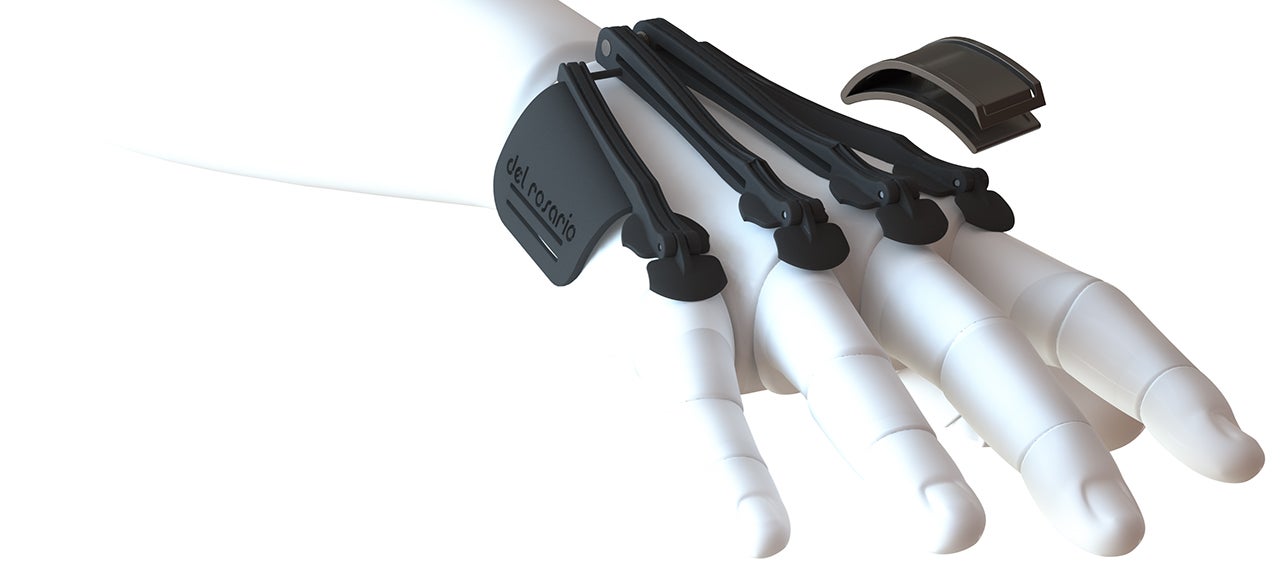
Traditional gloves sacrifice outright protection for hands from crushing, abrasion and falls in order to retain freedom of movement and tactile feel. These new gloves from a Manhattan start up aim to fix that.
Motorcyclists may be familiar with the name Del Rosario thanks to the company's wild-looking concept helmet from a few years back. The intention has always been to realize that idea in production form, but, in the wacky world of venture capital, it's iPhone apps without business models that have been sucking up all the cash while something actually capable of saving lives is left to bang its concussion-free head on the wall.
So, designer John Del Rosario asked himself what an easier, lower-cost item of clothing would be where he could still utterly redefine the category's idea of injury prevention. The answer was gloves. It's not only motorcyclists who are in need of a better solution, but other users who have to deal with regular falls will be able to benefit too — soldiers and extreme sports athletes.
Just before they enter production, we asked John all about them.
Oh, and your'e going to read some safety jargon in here. The quick guide is that "CE" refers to a set of safety standards the EU has been set for any item of safety gear. Safety glasses must carry "CE" approval specific to them, as does everything else from condoms to, well, gloves. Lacking a unified system of American safety standards, CE has become the internationally recognized definition of what "safe" means. In some cases, there's different levels of protection specified by a "1," "2" or "3" after "CE," the higher the number, the safer the standard, with each number typically doubling the protection of its predecessor.

IW: What's wrong with traditional gloves?
JDR: Everything. Traditional gloves — as cool and high-tech as they look — have nowhere near the functional protection their appearance would imply. Everyone just plays a shell game where they change a few aesthetics, but with no actual progression in safety.
There's a minimum CE safety standard for motorcycle gloves in the books, but as far as I know, Halvarssons in the only company currently selling a true CE2 model — a winter glove. Racer is also worth mentioning. A pretty great, no BS company and, for a while, it looked like they also had a couple of certified pairs. Those are no longer offered. An insider explained that they advertised their models as CE2 in anticipation of passing the tests, but it turns out they didn't, so they got scrubbed. Having said that, for most city riders, they should be fine.
People find it hard to fathom that their favorite brand somehow uses vague marketing lingo to imply that their gloves will protect them in a crash, without actually backing that up with real safety. They'll show you all sorts of product labels and stickers claiming a bunch of standards, but consumers are easily confused. Many motorcycle gloves that wear a CE label are actually certified as work gloves and come nowhere near true motorcycle safety.
Most people also have the wrong idea of what actually happens in an accident. I'm constantly seeing guys posting pics of their scratched-up gloves online. Their assumption is that they landed hands-first and the gloves miraculously took the brunt of the impact. But, if you actually analyze slo-mo video of high-speed falls, you'll notice that, on asphalt, it's usually ass-first, then feet, then hands. The reason people think they landed hands-first is because that's what hurt the most. If they actually landed on their hands, there's a high chance they'd be broken. In high speed crashes such as in MotoGP, you can actually see the riders lift their hands off the asphalt due to the extreme heat the friction causes.
Read more here: http://indefinitelywild.gizmodo.com/...now-1591767487
News picked up from this link:
Articulated Hand Armor Makes These The Safest Gloves Ever
Traditional gloves sacrifice outright protection for hands from crushing, abrasion and falls in order to retain freedom of movement and tactile feel. These new gloves from a Manhattan start up aim to fix that.
Motorcyclists may be familiar with the name Del Rosario thanks to the company's wild-looking concept helmet from a few years back. The intention has always been to realize that idea in production form, but, in the wacky world of venture capital, it's iPhone apps without business models that have been sucking up all the cash while something actually capable of saving lives is left to bang its concussion-free head on the wall.
So, designer John Del Rosario asked himself what an easier, lower-cost item of clothing would be where he could still utterly redefine the category's idea of injury prevention. The answer was gloves. It's not only motorcyclists who are in need of a better solution, but other users who have to deal with regular falls will be able to benefit too — soldiers and extreme sports athletes.
Just before they enter production, we asked John all about them.
Oh, and your'e going to read some safety jargon in here. The quick guide is that "CE" refers to a set of safety standards the EU has been set for any item of safety gear. Safety glasses must carry "CE" approval specific to them, as does everything else from condoms to, well, gloves. Lacking a unified system of American safety standards, CE has become the internationally recognized definition of what "safe" means. In some cases, there's different levels of protection specified by a "1," "2" or "3" after "CE," the higher the number, the safer the standard, with each number typically doubling the protection of its predecessor.
IW: What's wrong with traditional gloves?
JDR: Everything. Traditional gloves — as cool and high-tech as they look — have nowhere near the functional protection their appearance would imply. Everyone just plays a shell game where they change a few aesthetics, but with no actual progression in safety.
There's a minimum CE safety standard for motorcycle gloves in the books, but as far as I know, Halvarssons in the only company currently selling a true CE2 model — a winter glove. Racer is also worth mentioning. A pretty great, no BS company and, for a while, it looked like they also had a couple of certified pairs. Those are no longer offered. An insider explained that they advertised their models as CE2 in anticipation of passing the tests, but it turns out they didn't, so they got scrubbed. Having said that, for most city riders, they should be fine.
People find it hard to fathom that their favorite brand somehow uses vague marketing lingo to imply that their gloves will protect them in a crash, without actually backing that up with real safety. They'll show you all sorts of product labels and stickers claiming a bunch of standards, but consumers are easily confused. Many motorcycle gloves that wear a CE label are actually certified as work gloves and come nowhere near true motorcycle safety.
Most people also have the wrong idea of what actually happens in an accident. I'm constantly seeing guys posting pics of their scratched-up gloves online. Their assumption is that they landed hands-first and the gloves miraculously took the brunt of the impact. But, if you actually analyze slo-mo video of high-speed falls, you'll notice that, on asphalt, it's usually ass-first, then feet, then hands. The reason people think they landed hands-first is because that's what hurt the most. If they actually landed on their hands, there's a high chance they'd be broken. In high speed crashes such as in MotoGP, you can actually see the riders lift their hands off the asphalt due to the extreme heat the friction causes.
Read more here: http://indefinitelywild.gizmodo.com/...now-1591767487





Comment