








 Tweet
Tweet
In the last two decades or so, rider aids have been all the rage in motorcycles. While the need for more power and more speed remains, using that power and reaching those speeds is risky business. Rider aids were being developed to do just that. But most of them are reactive and not preventive in the sense that they act once the deed is done. Prevention requires prediction and Japs are doing just that. Kawasaki Corner Prediction System has just been patented and here's all about it.
ABS, Traction Control, Wheelie Control, Slide Control and so on. Rider aids come in handy when you find yourself in a hairy situation. While the opinions of the fraternity are polarized, we can't argue with the fact that they have made riding relatively safer. A small (not always though) price (reduced feel) for more safety.
Innovations have been pouring in from all around the world in terms of advancements of these aids. From Ducati's radar system or Motorcycle to Vehicle communications system by Bosch, the development is moving at an unprecedented rate. Adding another dimension to the above, Kawasaki has jumped on the bandwagon by patenting a Corner Prediction System.
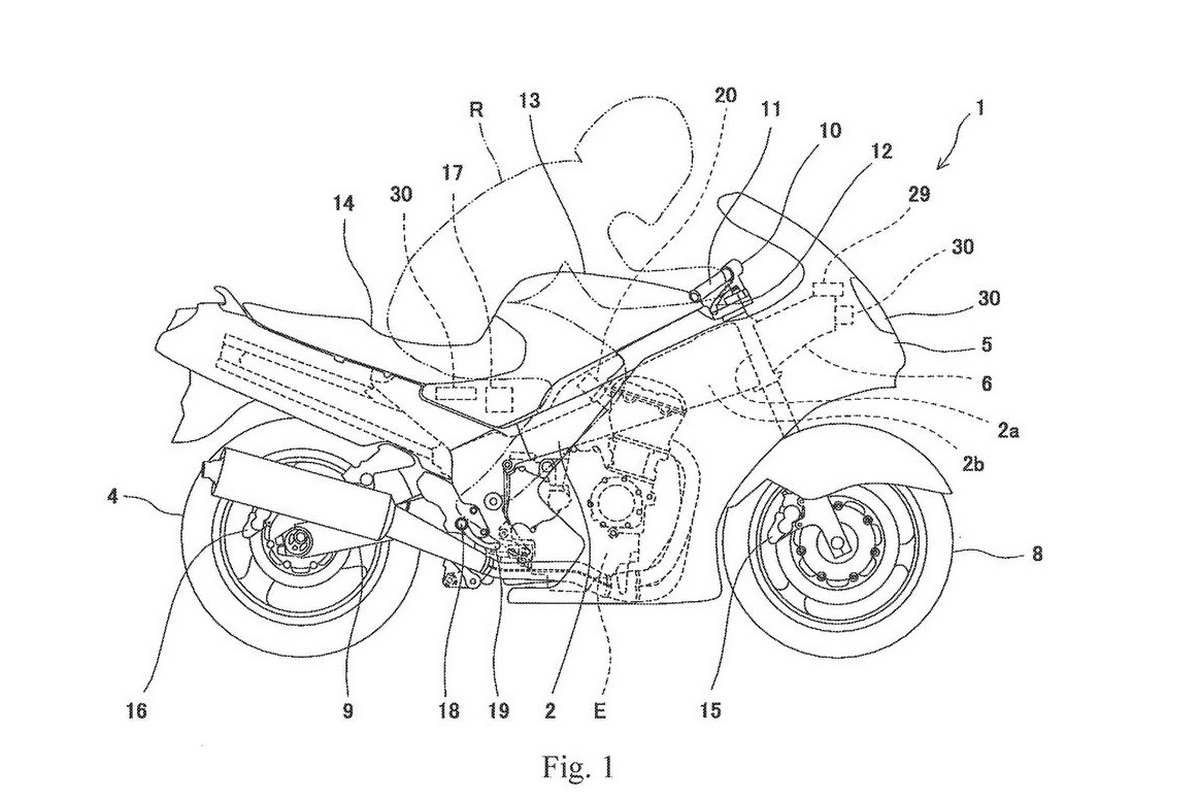
Kawasaki Corner Prediction System aims to add a foresight of sorts for the already present safety systems such as ABS and Traction Control. They aim to do that by increasing the number of inputs that they work on in order to make them better prepared for the situation that lies ahead. In this case, a corner. The result would be a bike that automatically adjusts settings in anticipation of a corner before the rider even starts to turn in.
The focus elements in the Kawasaki Corner Prediction system are a camera, a laser sensor, a built-in satellite-navigation system, and an array of load sensors in the seat and footpegs. Along with the existing sensors for things such as the throttle position, speed, lean and braking, they feed the onboard computer with valuable information.
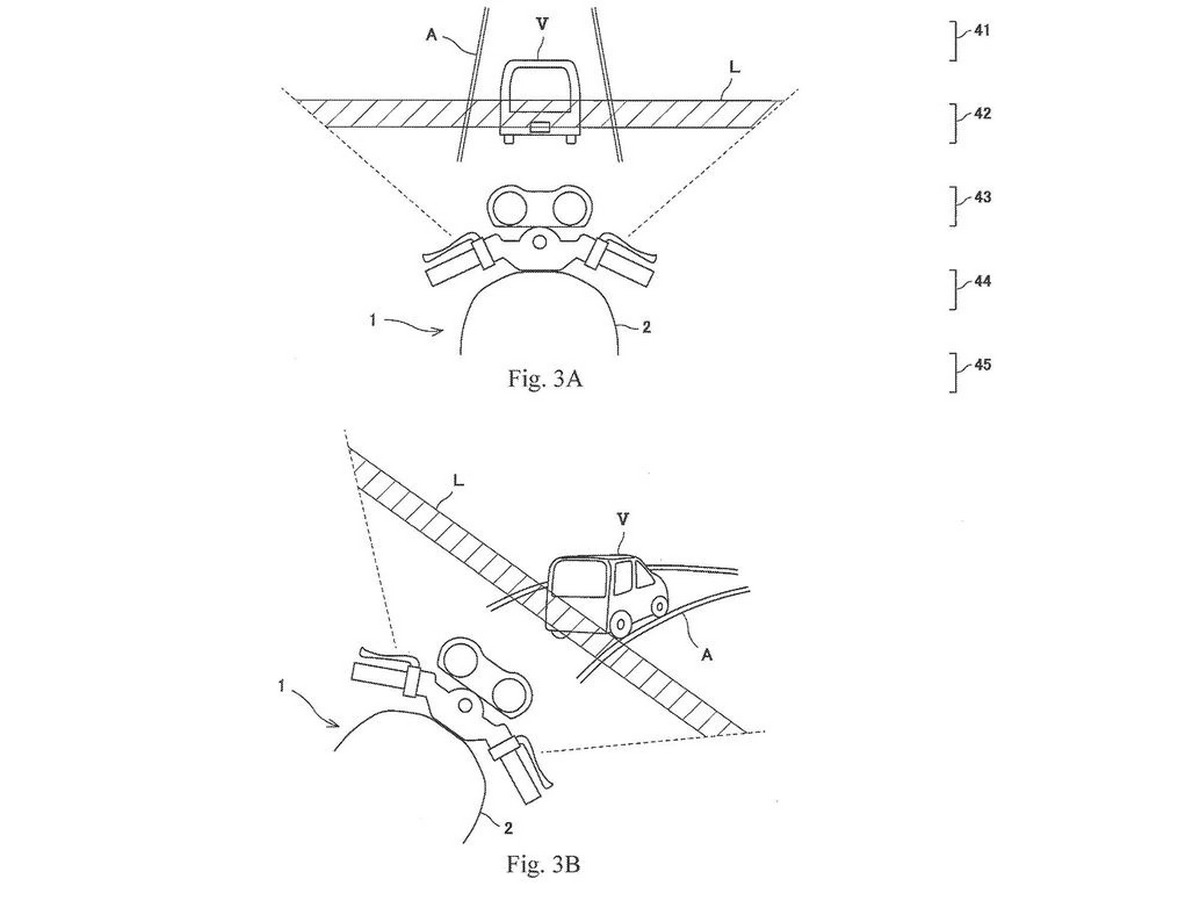
That information, in turn, is used by the computer to better prepare the bike for the oncoming corner. The camera and the laser sensor are housed in a transparent front section. So while laser measures the distance to vehicles (or objects) ahead, the camera uses image recognition to monitor road markings. The information, combined with the maps built into the SatNav can work to predict corners and even their radius.
While that may seem all gizmo-ey and whatnot, there's more. The Kawasaki Corner Prediction System also uses a rider posture sensor. Load sensors in the seat and the footpegs determine the rider's position. And since riders always shift their body weight before a corner, this proves to be another crucial input for the computer to predict an oncoming corner.
In front of the above, the blinker sensor, which detects where you are about to turn (if you're indicating, that is), seems rather dull. Even when it is used in conjunction with the navigation system's maps.
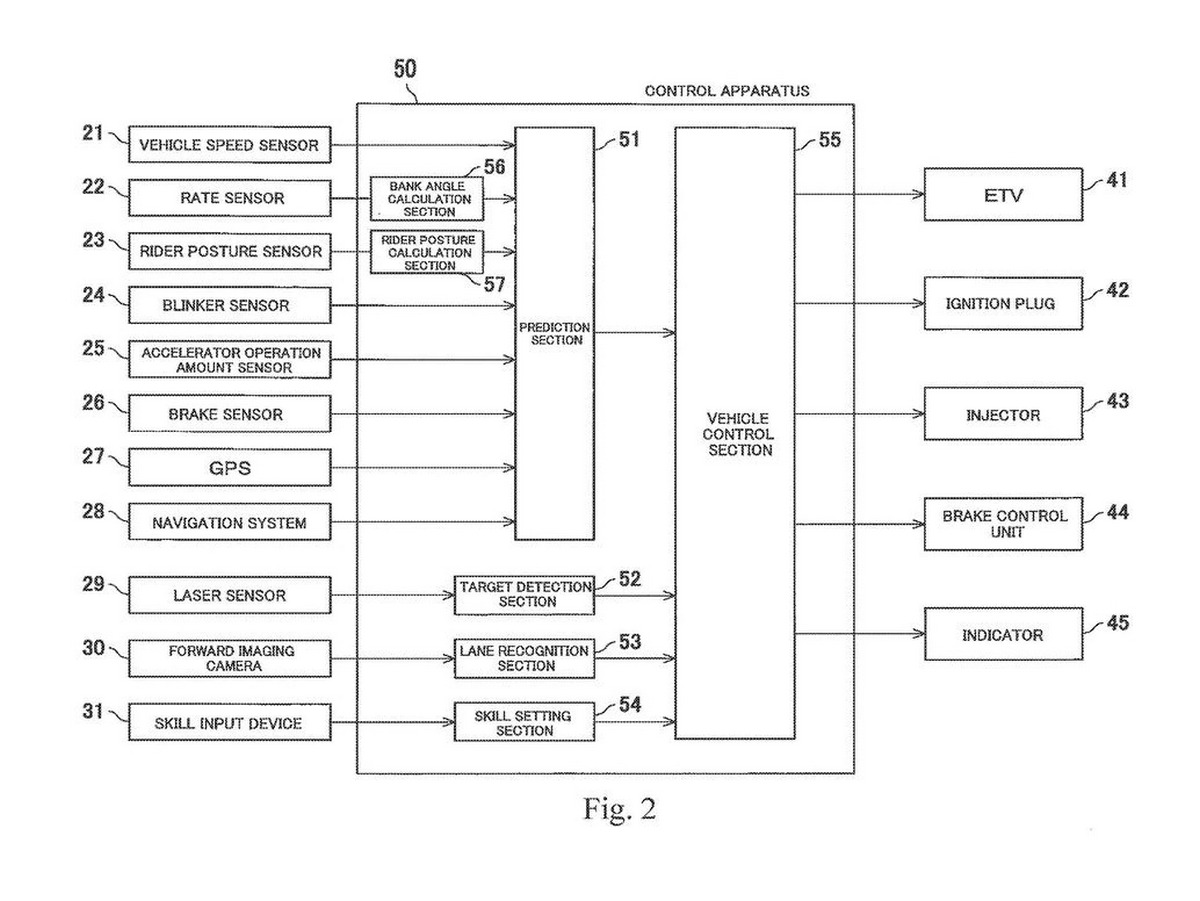
So much data that we have to rewind a little. So the following are the inputs or the sources of input; bank angle (with the IMU or the inertial measurement unit), rider posture, blinker sensors, speed sensor, throttle position sensor, brake sensor, GPS, and navigation. All this data is then fed to the part of the onboard computer that handles 'prediction'. And voila, an all-knowing motorcycle.
But just knowing is not enough. The prediction carved out by the computer is then sent to the vehicle control section which then merges it with the data from the camera and the laser installed upfront. The final step is a tad analogue. A switch that allows you to set your own level of skill; beginner, intermediate, or advanced. Basis this, commands are sent to individual parts of the bike such as the throttle valves, ignition, injection, and ABS. That switch though shall be used with ego set aside for better results.
Interestingly enough, despite all of that going on in the background, the developers are trying their best to mask all this in order to not rob the rider of the all-important 'feel'. While that may be a long shot, whatever you just read also seemed like a long shot a few years ago.
Source
ABS, Traction Control, Wheelie Control, Slide Control and so on. Rider aids come in handy when you find yourself in a hairy situation. While the opinions of the fraternity are polarized, we can't argue with the fact that they have made riding relatively safer. A small (not always though) price (reduced feel) for more safety.
Innovations have been pouring in from all around the world in terms of advancements of these aids. From Ducati's radar system or Motorcycle to Vehicle communications system by Bosch, the development is moving at an unprecedented rate. Adding another dimension to the above, Kawasaki has jumped on the bandwagon by patenting a Corner Prediction System.
Kawasaki Corner Prediction System aims to add a foresight of sorts for the already present safety systems such as ABS and Traction Control. They aim to do that by increasing the number of inputs that they work on in order to make them better prepared for the situation that lies ahead. In this case, a corner. The result would be a bike that automatically adjusts settings in anticipation of a corner before the rider even starts to turn in.
The focus elements in the Kawasaki Corner Prediction system are a camera, a laser sensor, a built-in satellite-navigation system, and an array of load sensors in the seat and footpegs. Along with the existing sensors for things such as the throttle position, speed, lean and braking, they feed the onboard computer with valuable information.
That information, in turn, is used by the computer to better prepare the bike for the oncoming corner. The camera and the laser sensor are housed in a transparent front section. So while laser measures the distance to vehicles (or objects) ahead, the camera uses image recognition to monitor road markings. The information, combined with the maps built into the SatNav can work to predict corners and even their radius.
While that may seem all gizmo-ey and whatnot, there's more. The Kawasaki Corner Prediction System also uses a rider posture sensor. Load sensors in the seat and the footpegs determine the rider's position. And since riders always shift their body weight before a corner, this proves to be another crucial input for the computer to predict an oncoming corner.
In front of the above, the blinker sensor, which detects where you are about to turn (if you're indicating, that is), seems rather dull. Even when it is used in conjunction with the navigation system's maps.
So much data that we have to rewind a little. So the following are the inputs or the sources of input; bank angle (with the IMU or the inertial measurement unit), rider posture, blinker sensors, speed sensor, throttle position sensor, brake sensor, GPS, and navigation. All this data is then fed to the part of the onboard computer that handles 'prediction'. And voila, an all-knowing motorcycle.
But just knowing is not enough. The prediction carved out by the computer is then sent to the vehicle control section which then merges it with the data from the camera and the laser installed upfront. The final step is a tad analogue. A switch that allows you to set your own level of skill; beginner, intermediate, or advanced. Basis this, commands are sent to individual parts of the bike such as the throttle valves, ignition, injection, and ABS. That switch though shall be used with ego set aside for better results.
Interestingly enough, despite all of that going on in the background, the developers are trying their best to mask all this in order to not rob the rider of the all-important 'feel'. While that may be a long shot, whatever you just read also seemed like a long shot a few years ago.
Source


