Since '02 xBhp is different things to different people. From a close knit national community of
bikers to India's only motorcycling lifestyle magazine and a place to make like-minded biker
friends. Join us
xBhp was born more than 16 years ago and since then we've had a chance to ride or drive hundreds of machines
running on two wheels or four wheels, and sometimes even three wheels. We are not done yet, and this list is
still growing. In these pages, we take a deep dive in the treasure trove of our ride experiences and bring
you all that we have ridden or driven.
Machines Done 424
|
Total Cubic Capacity 177549
|
BHP 54589
Bajaj Chetak C2501 First-Ride Review
2.5 kWhCC3 (peak)BHP62 (peak)NM
Jan 2026
xBhp
Bajaj,Electric,Scooters
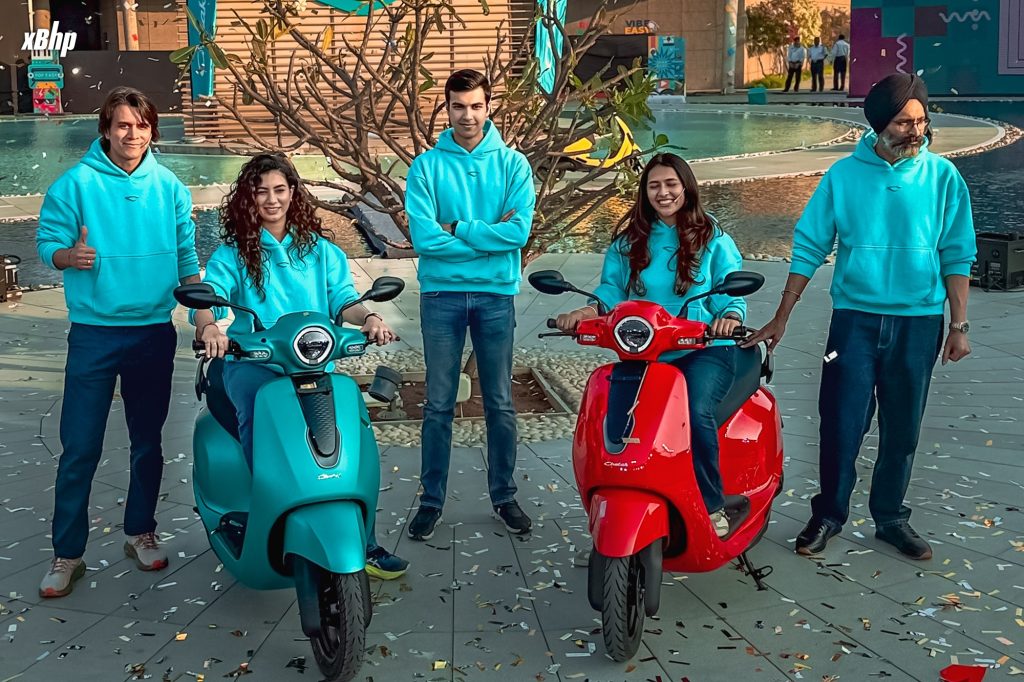
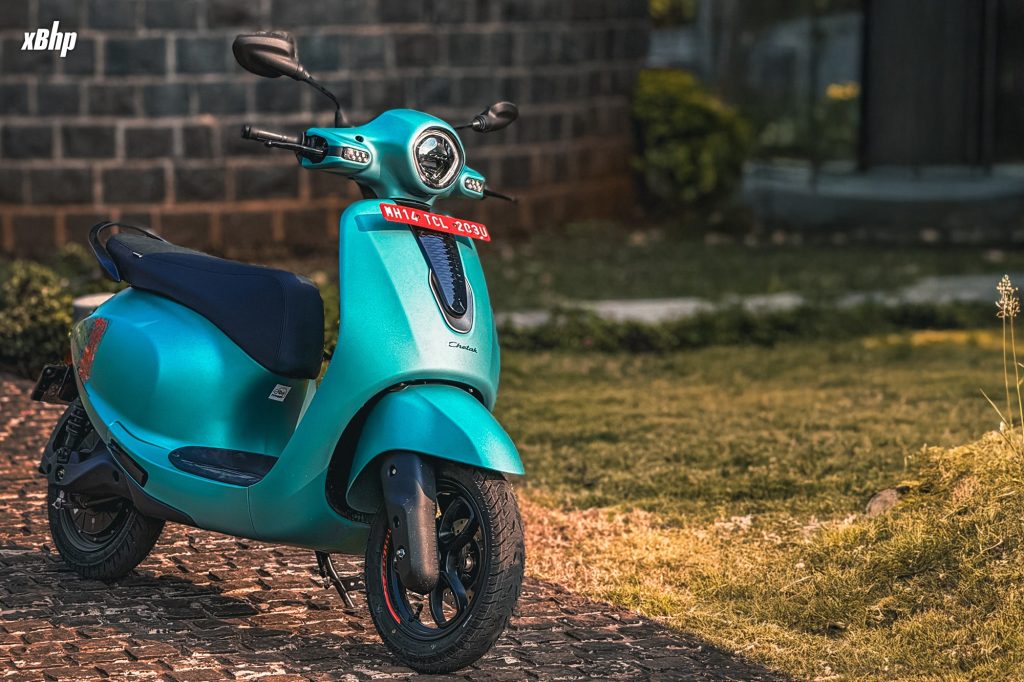
Bajaj Chetak made quite a comeback when it was launched to much fanfare. It had been a legendary name in the Indian two-wheeler circuit, so the comeback was bound to make waves. Interestingly, it came prepared for the modern world in an electric avatar. There have been a fair few variants to date, but this is by far the most approachable one. So, let us see what the Bajaj Chetak C2501 is all about in this first ride review.
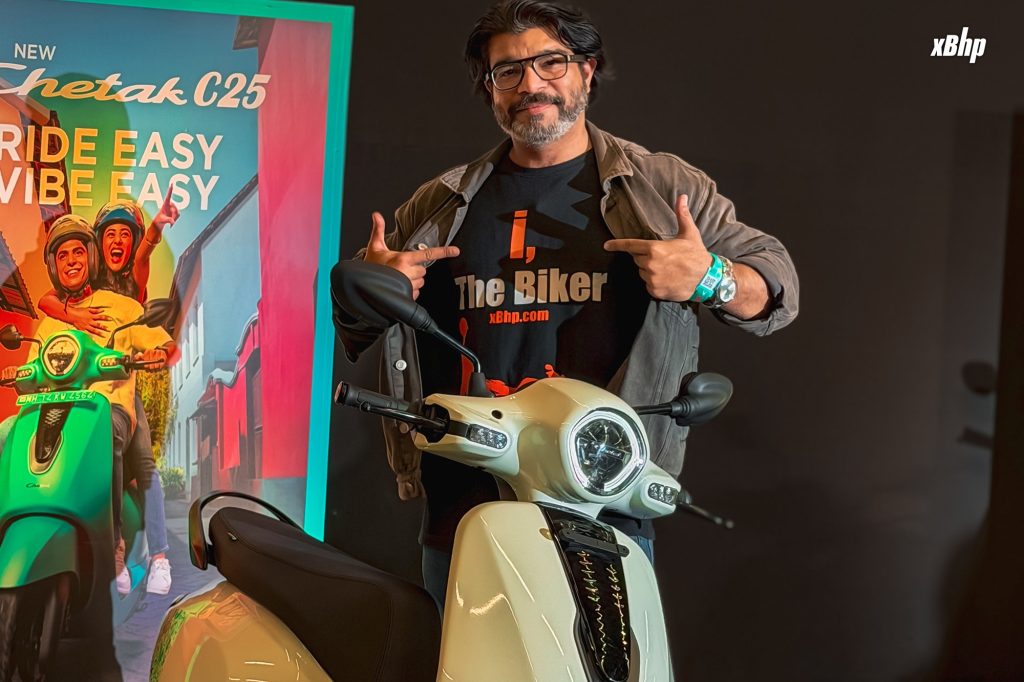
The 25 in the name represents the battery size, and the 01 means that it is the first one in the 2.5 kWh variants. The 01 also represents that there may be more variants with the same battery size. As you can tell, Chetak 30 and 35 series have 3.0kWh and 3.5kWh batteries respectively.
Now, this is not just a cut-down variant with a smaller battery pack. This is a completely new scooter with a new chassis and underpinnings. The Chetak C2501 is smaller, lighter, and aimed at first-time EV buyers or riders who want something friendly, unintimidating, and easy to live with in the city.
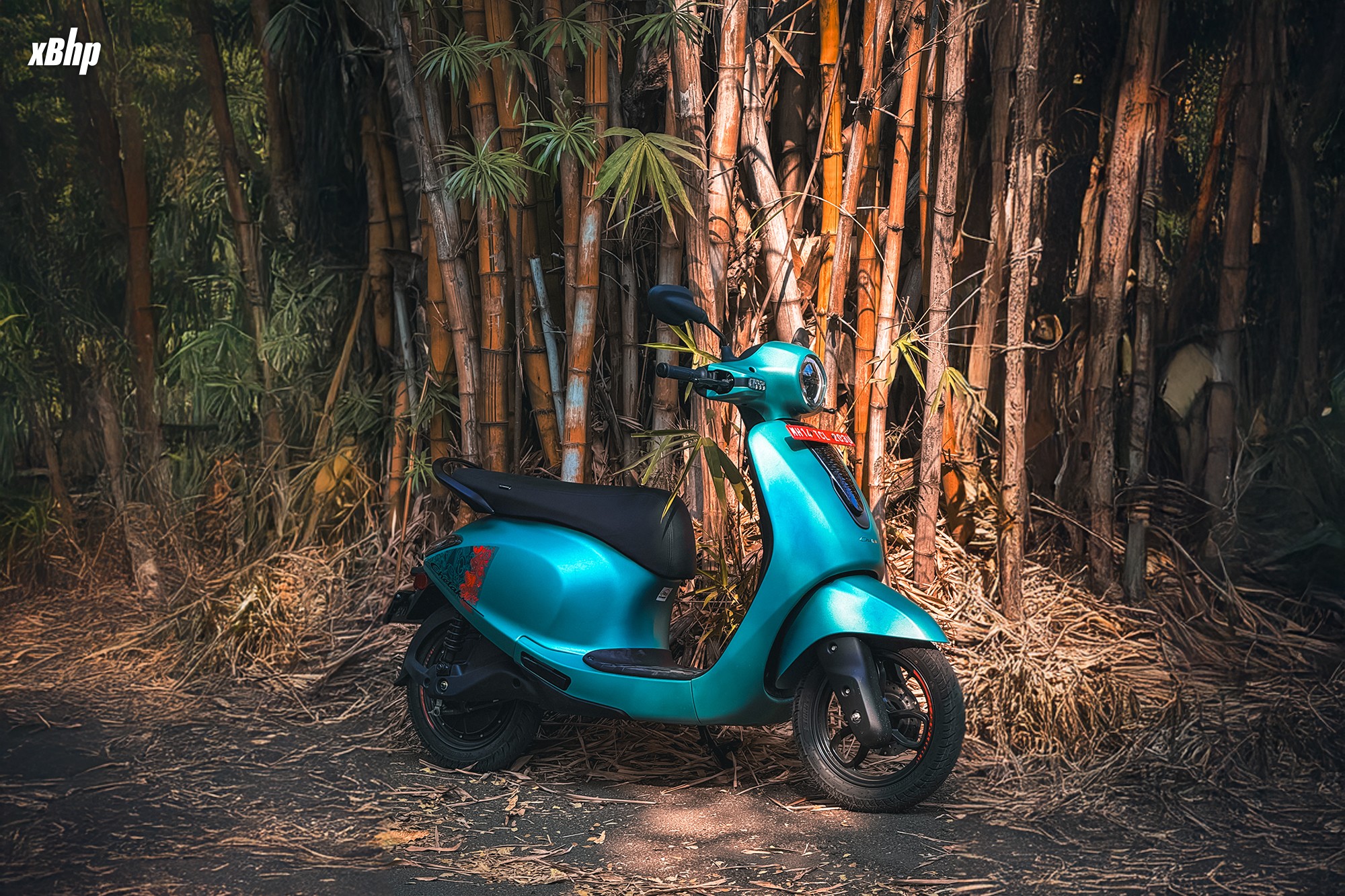
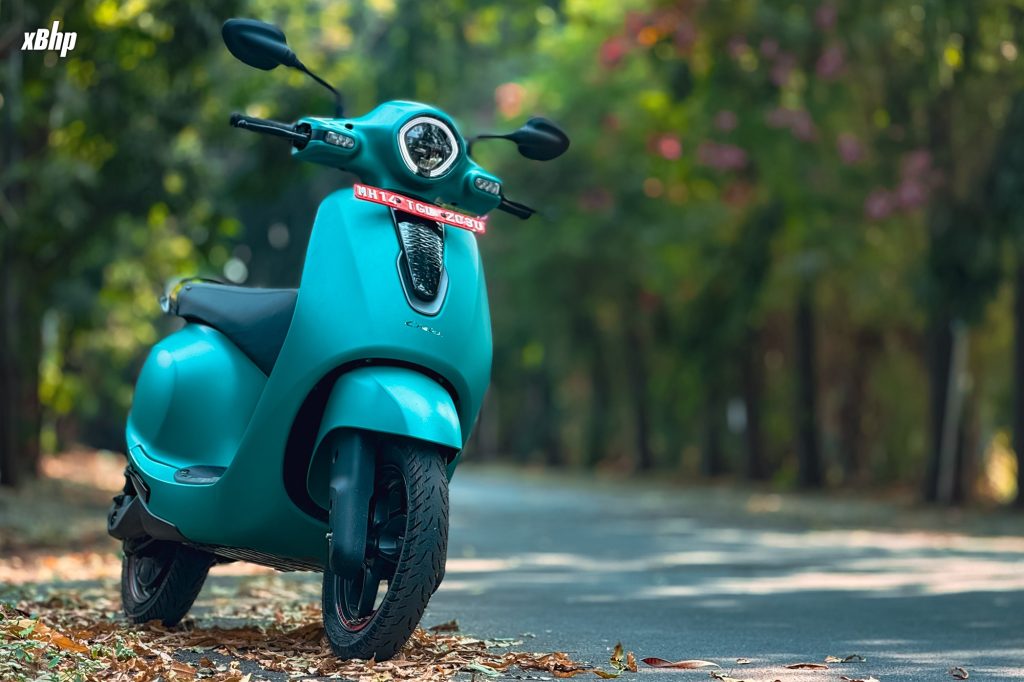
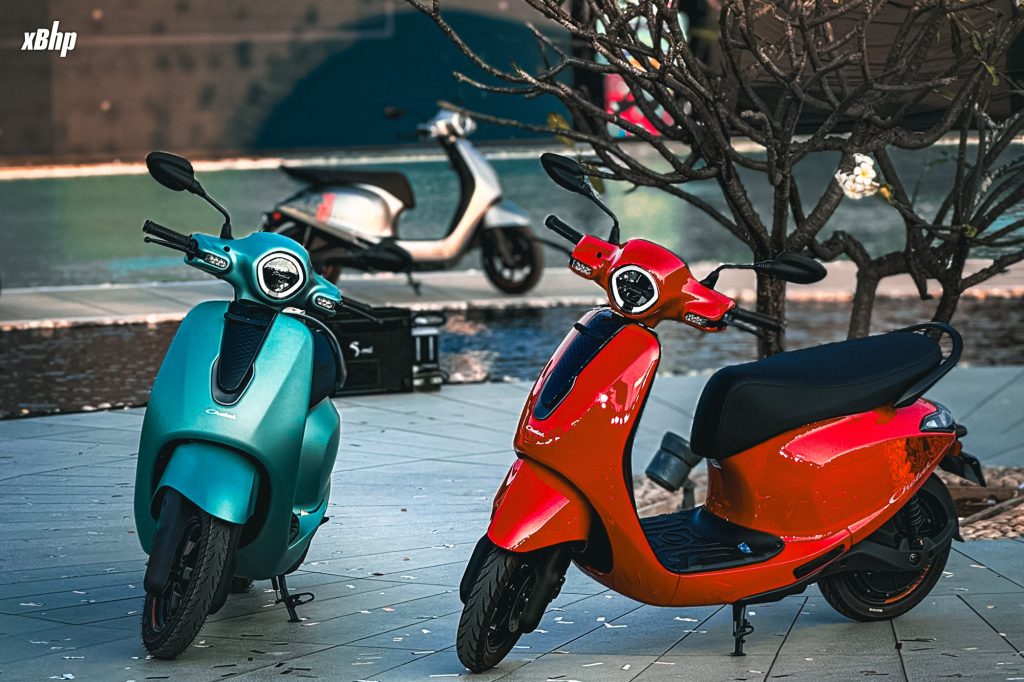
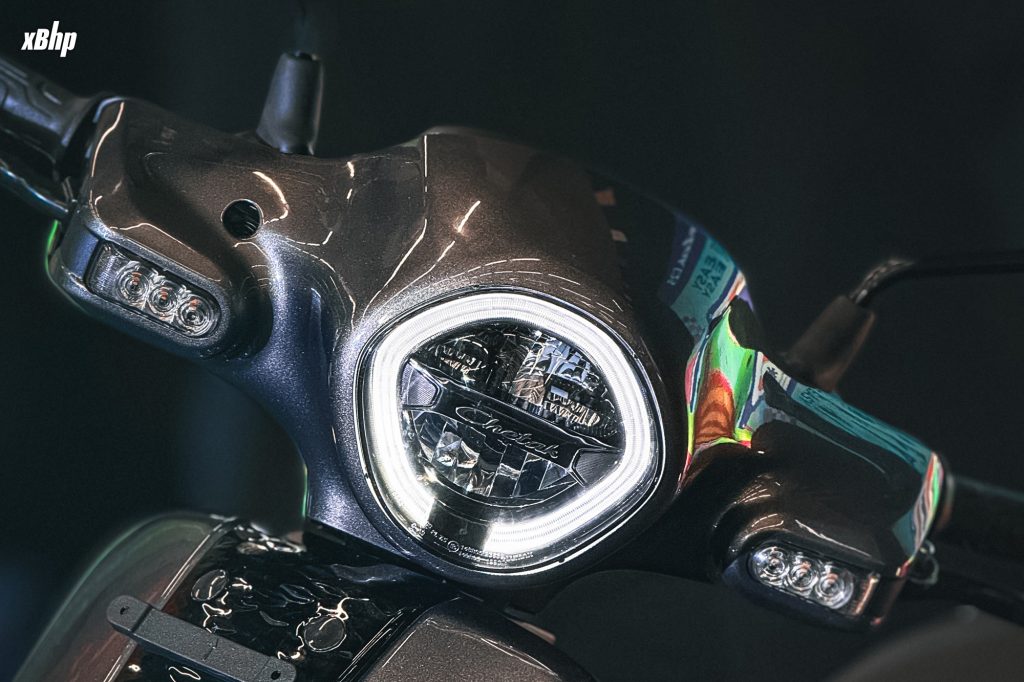
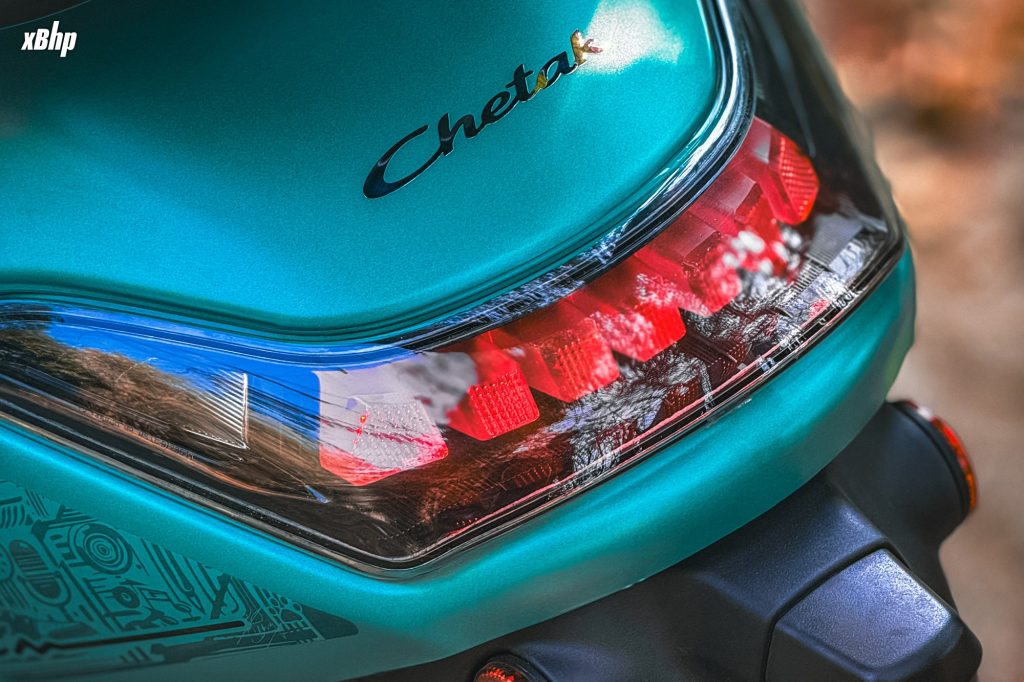
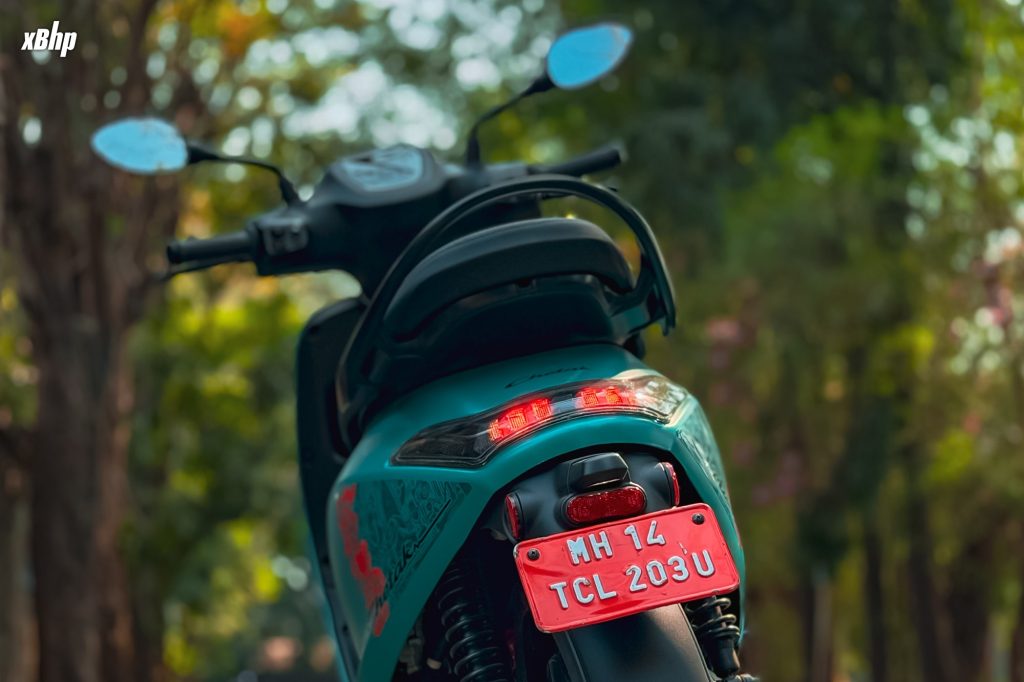
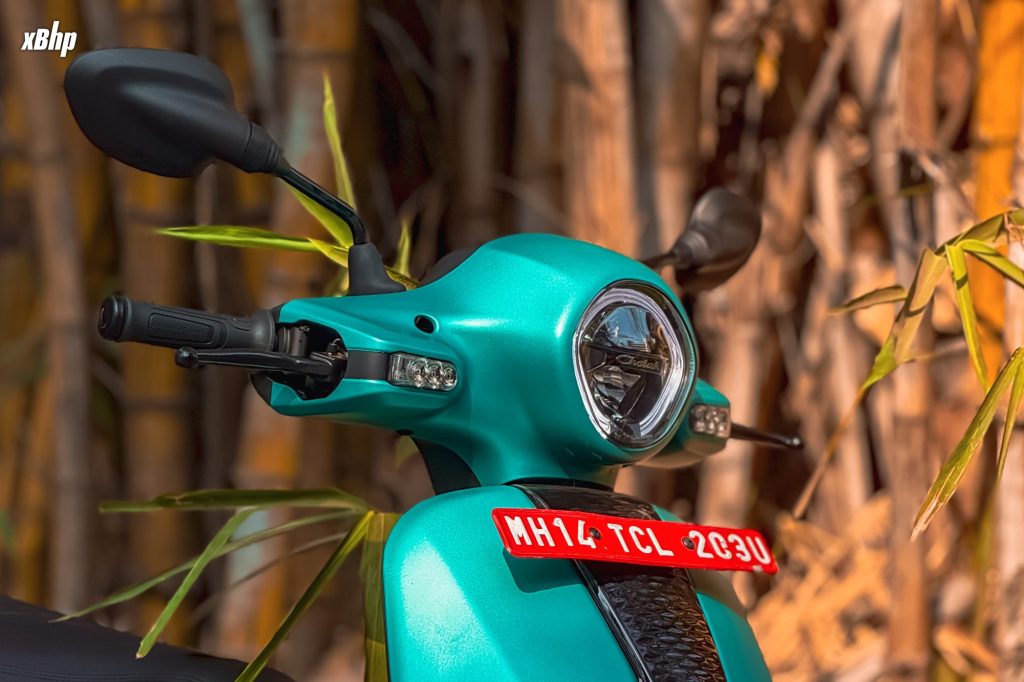
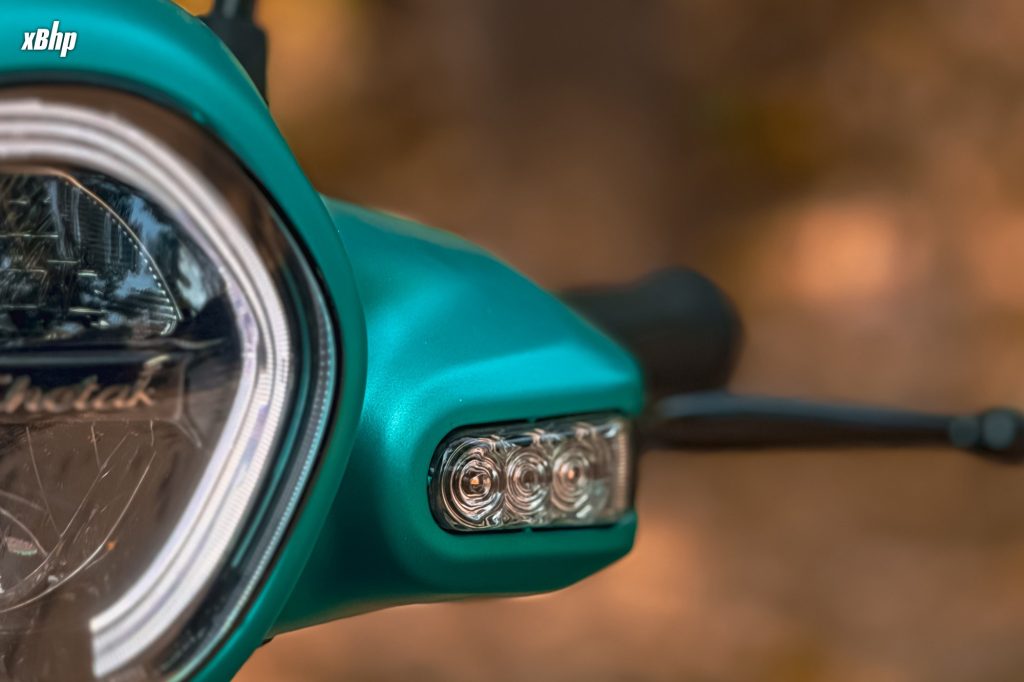
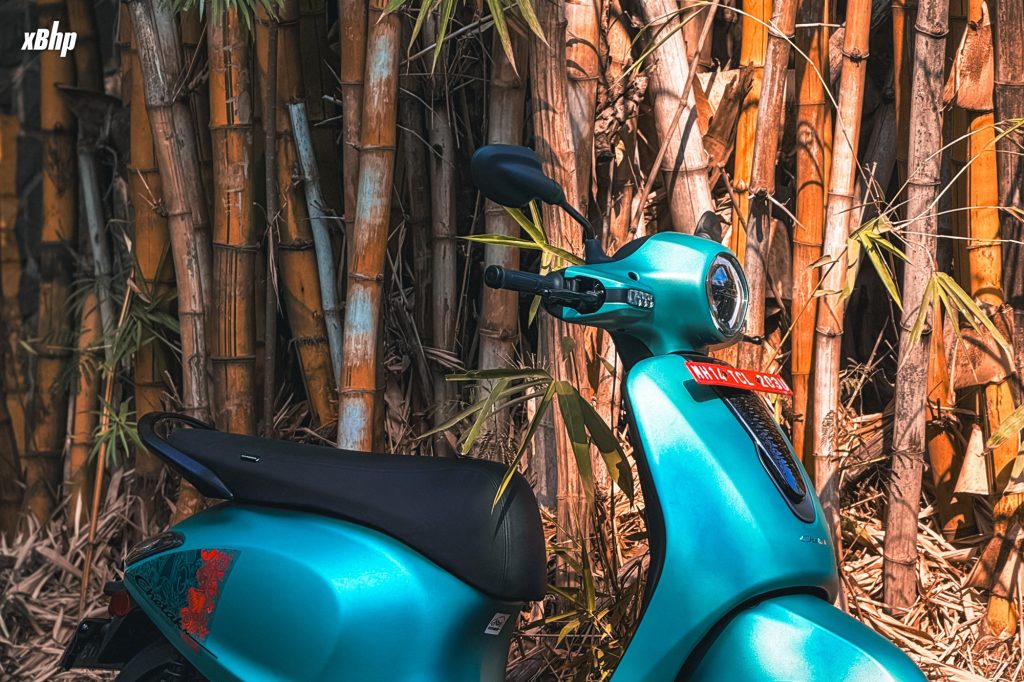
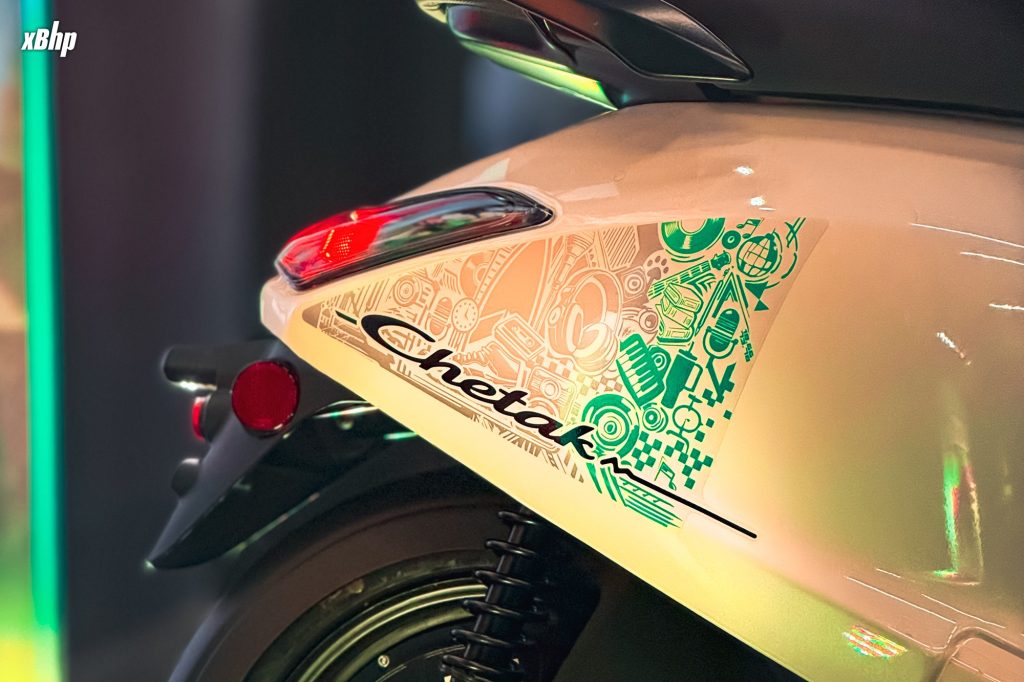
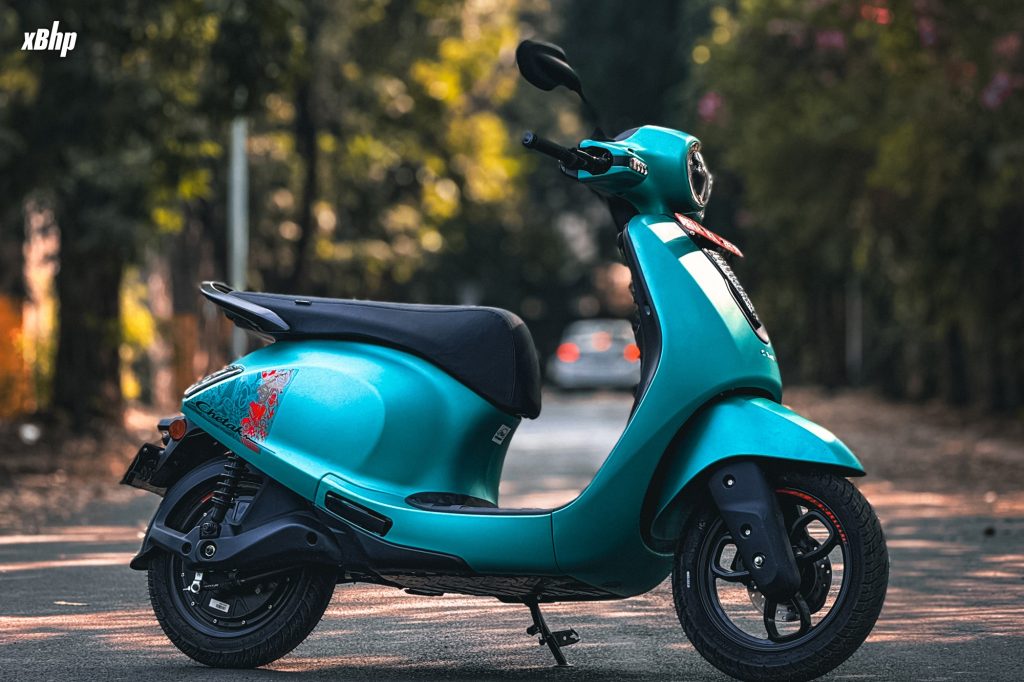
The overall silhouette is familiar to the rest of the Chetak lineup. The headlamp shape immediately tells you this is a Chetak, but everything around it is new. The body panels are different, the indicators are now positioned higher up, the side profile is slimmer, and the rear gets a single-piece tail lamp.
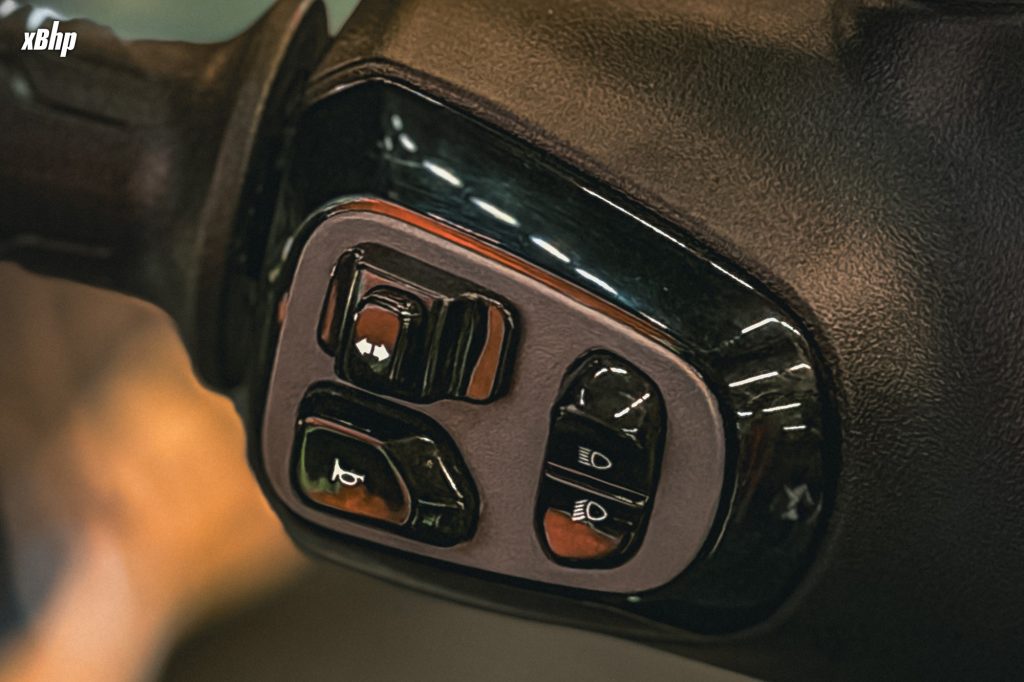
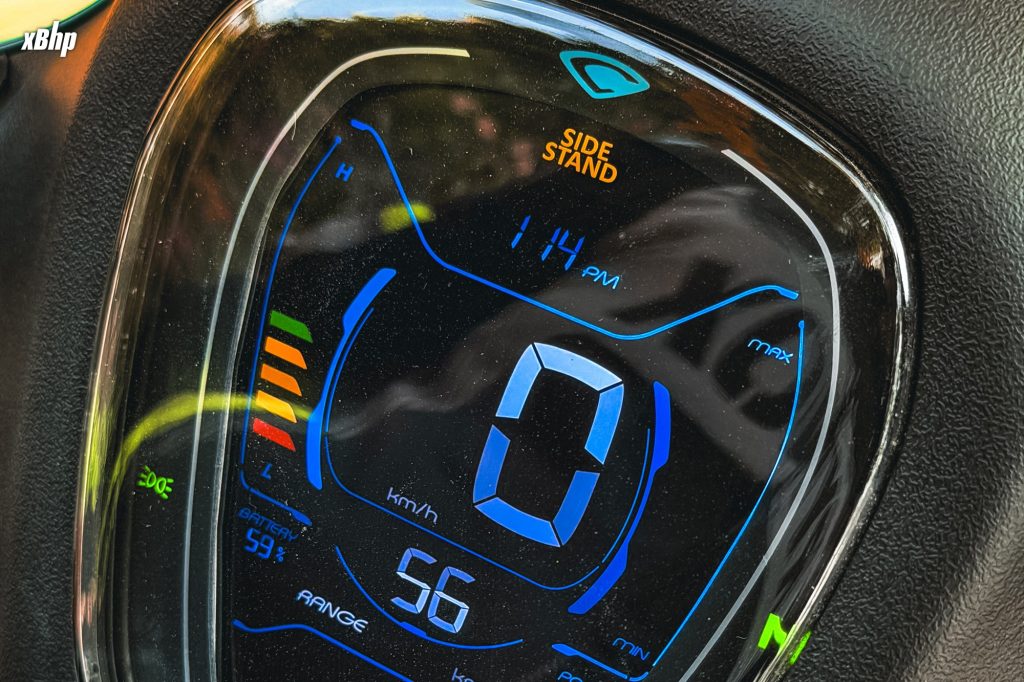
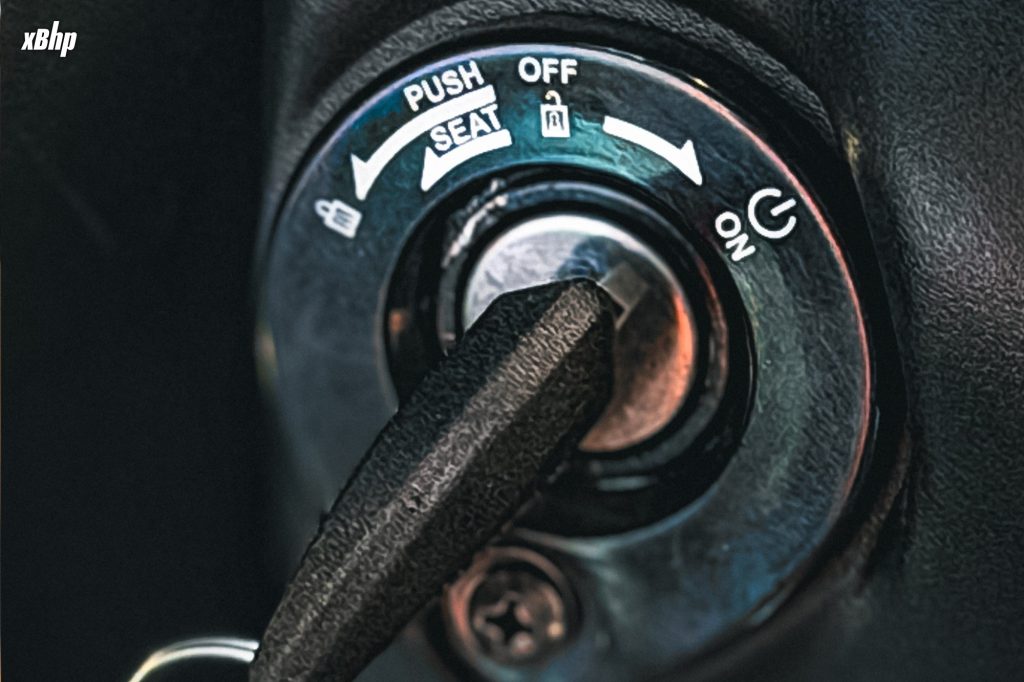
What stays though, is the metal body. That’s something Chetak buyers value, and Bajaj has retained it here. As a result, the scooter feels solid to the touch. You also get a new reverse LCD, which is simpler than the TFT units on higher variants but perfectly legible and functional. The switchgear is new too, designed specifically to keep costs in check. But none of that has seemingly affected the perceived quality.
Underneath the bodywork is a brand-new platform, developed to accommodate the smaller battery. The wheelbase is about 100mm shorter than the bigger Chetaks. Also, unlike the bigger Chetak models, the C2501 uses a direct hub motor.
Power figures stand at 2.2kW peak and 1.8kW continuous, with a top speed limited to 55 km/h. This scooter is designed for city use, not highway sprints, so that should not be a deal breaker. There are two riding modes: Eco and Sport. Eco mode is usable but a bit too relaxed and limited to 45 kays an hour. Sport mode is where the scooter feels alive. Throttle response is immediate, acceleration is brisk, and it never feels out of place in an urban commute.
Flyovers and inclines aren’t a problem, even with some traffic around you. And because it’s a hub motor, the scooter is almost silent, with just a faint high-frequency whirr if you listen closely. Smooth and refined, exactly what you expect from an EV, and the Chetak C2501 delivers.
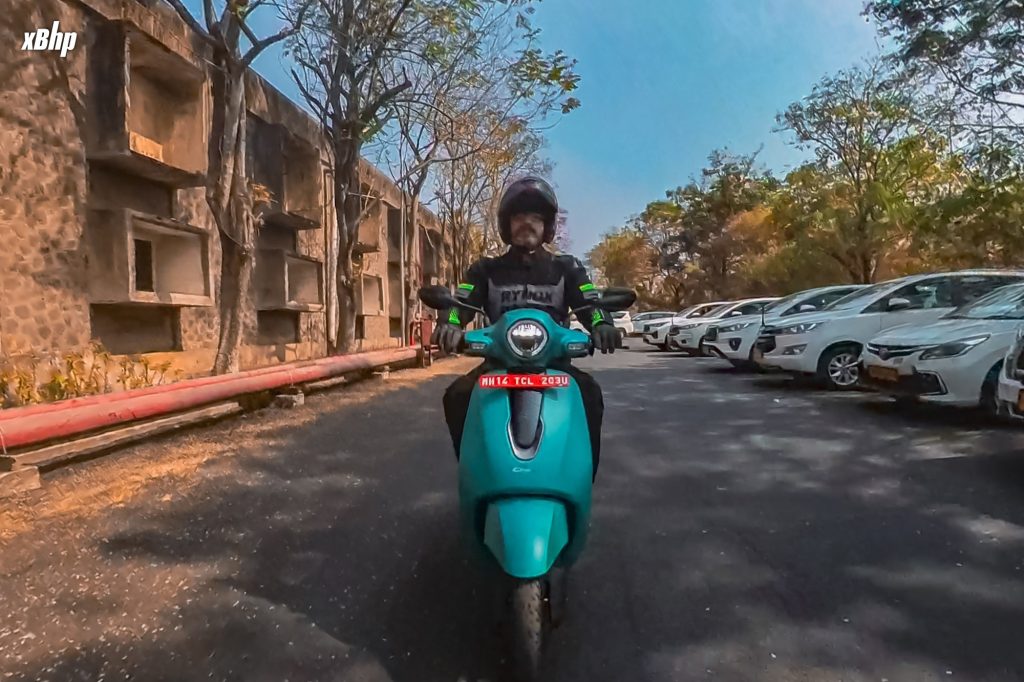
Another thing you notice about the Chetak C2501 is how compact it feels. The seat height is 763mm, and it weighs just 108 kilos. Despite the diminutive size, it did not feel cramped. There’s good space on the floorboard, and the seat itself is nicely shaped. I had enough space, but riders around 6ft or may need to manage their knees for full steering locks. Overall, this is a very approachable scooter, especially for newer riders.
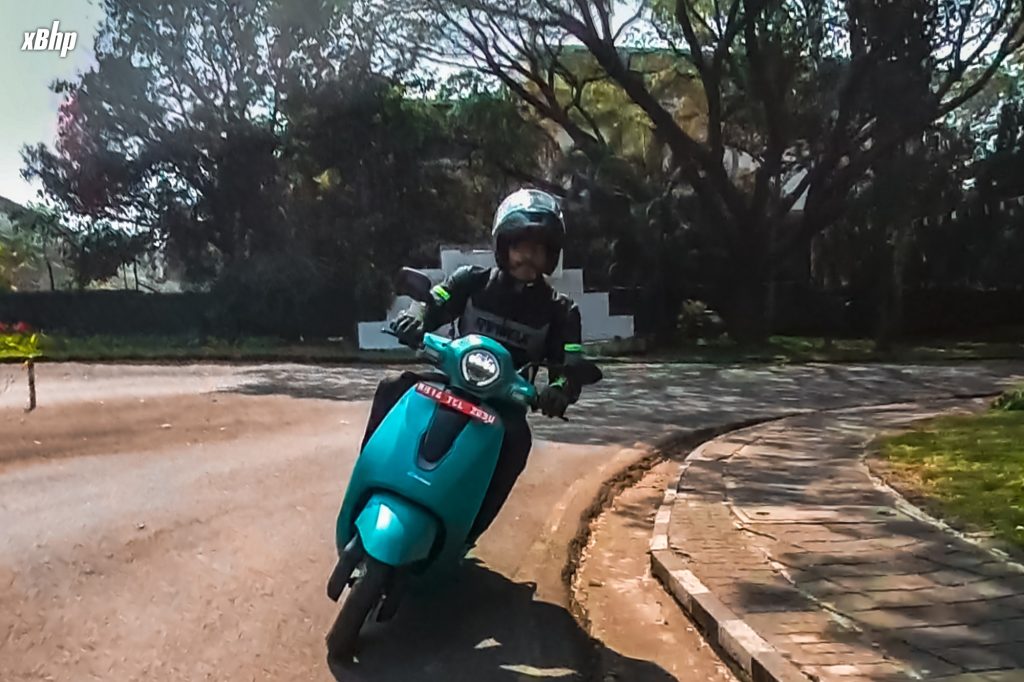
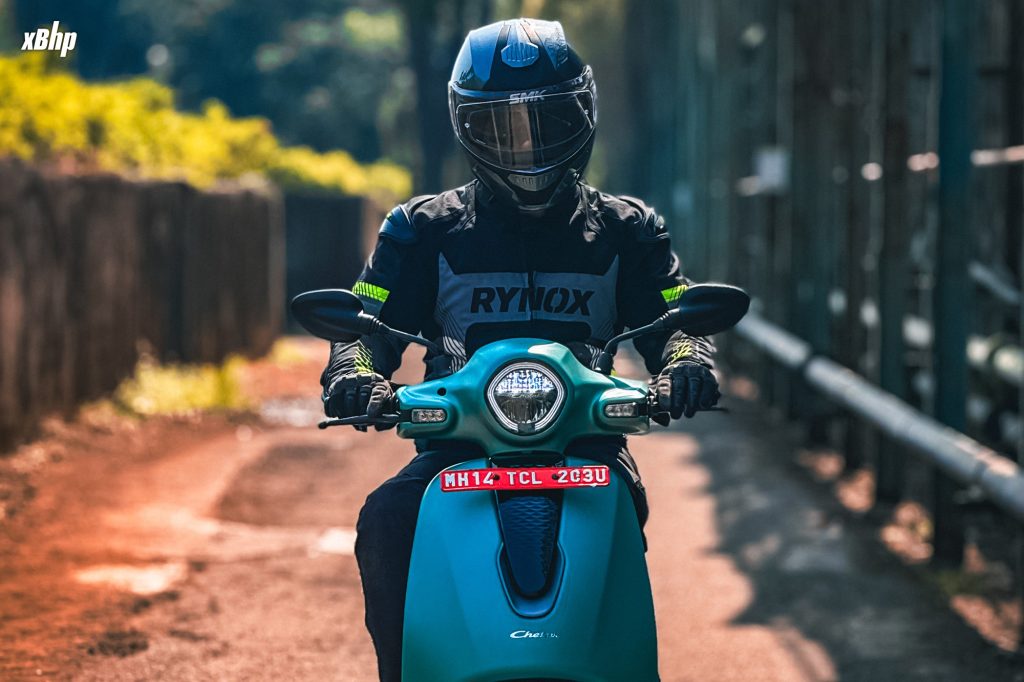
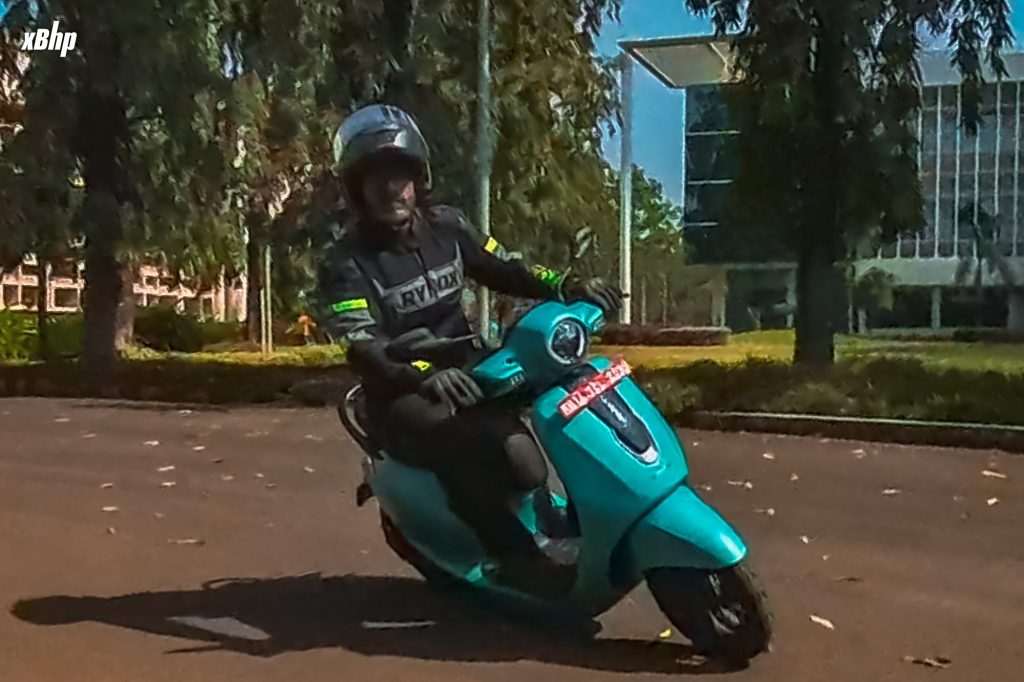
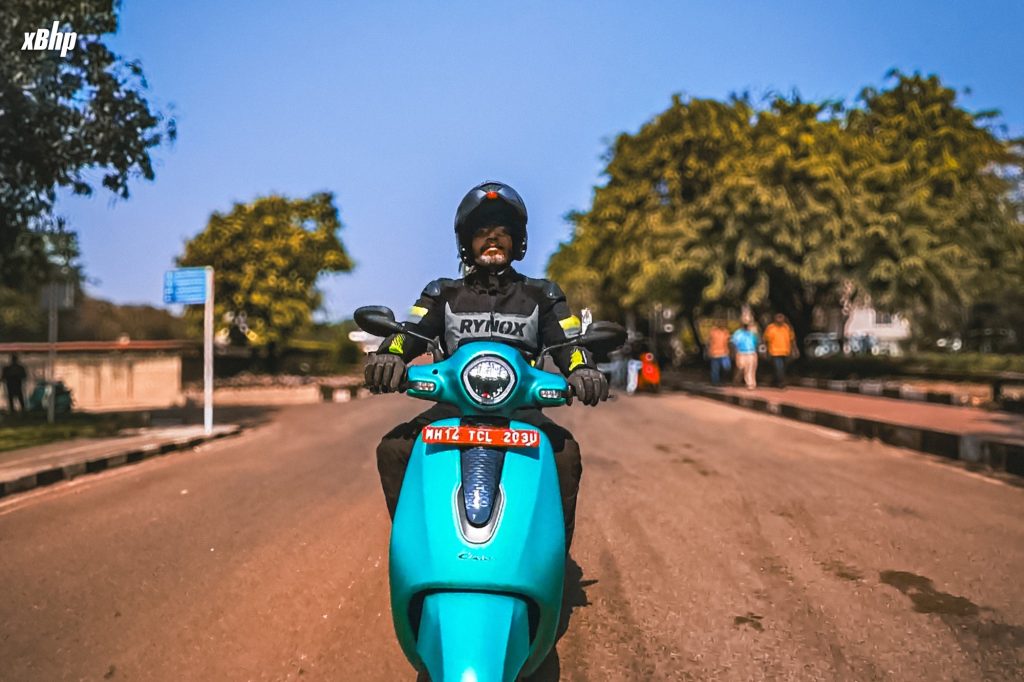
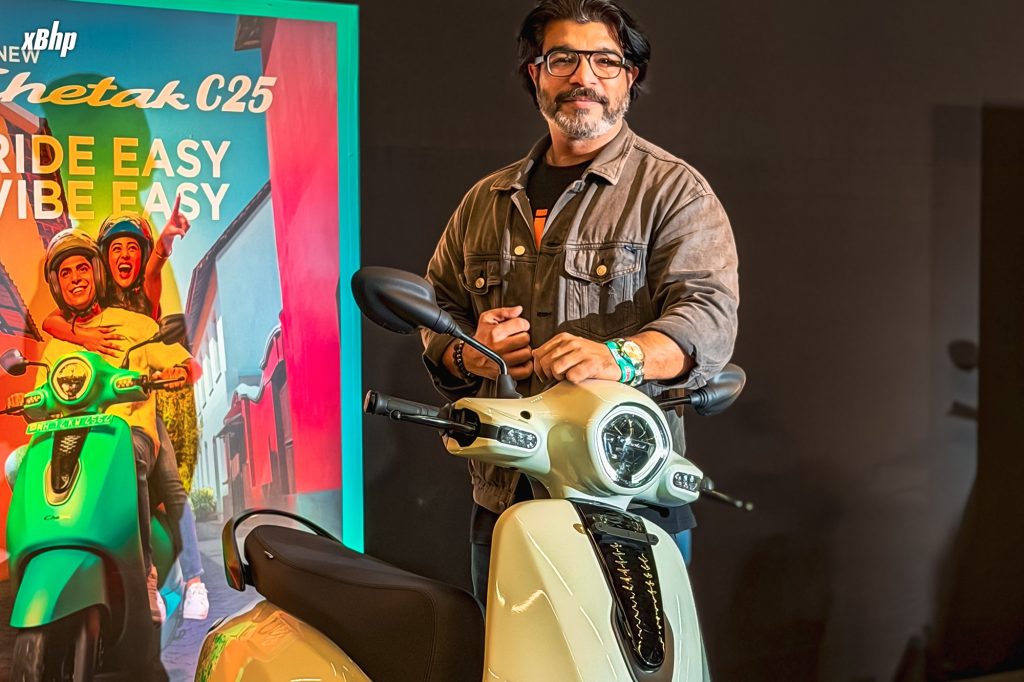
The riding gear seen here comes from Rynox, and the seen here is the Apex Evo Jacket, perfect for everyday rides. A stellar combination that blends comfort, everyday usability and protection in a package that makes you stand out!
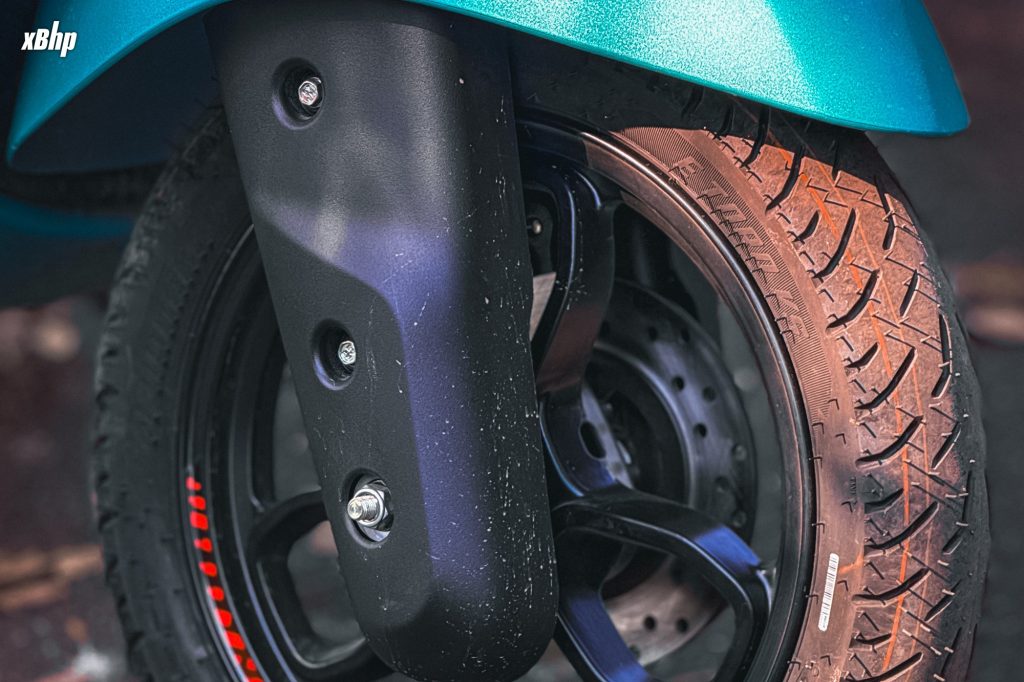
Handling is where the Chetak C2501’s lightweight chassis really pays off. The scooter feels light and nimble, but never twitchy. Bajaj has gone with slim tyres, but grip levels are surprisingly good. Yes, wider tyres would look nicer, but dynamically, these work just fine. Suspension duties are handled by telescopic forks at the front and a well-tuned rear setup. The rear suspension feels composed over bad roads.
The front, however, is on the softer side. Over larger bumps or a series of broken surfaces, you do feel a few thuds coming through the handlebars. It’s not alarming, but it does remind you to slow down over rough patches. Braking is handled by a front disc brake, which is great to see at this price point. Braking performance is more than adequate for city riding thanks to the disc brake at the front.
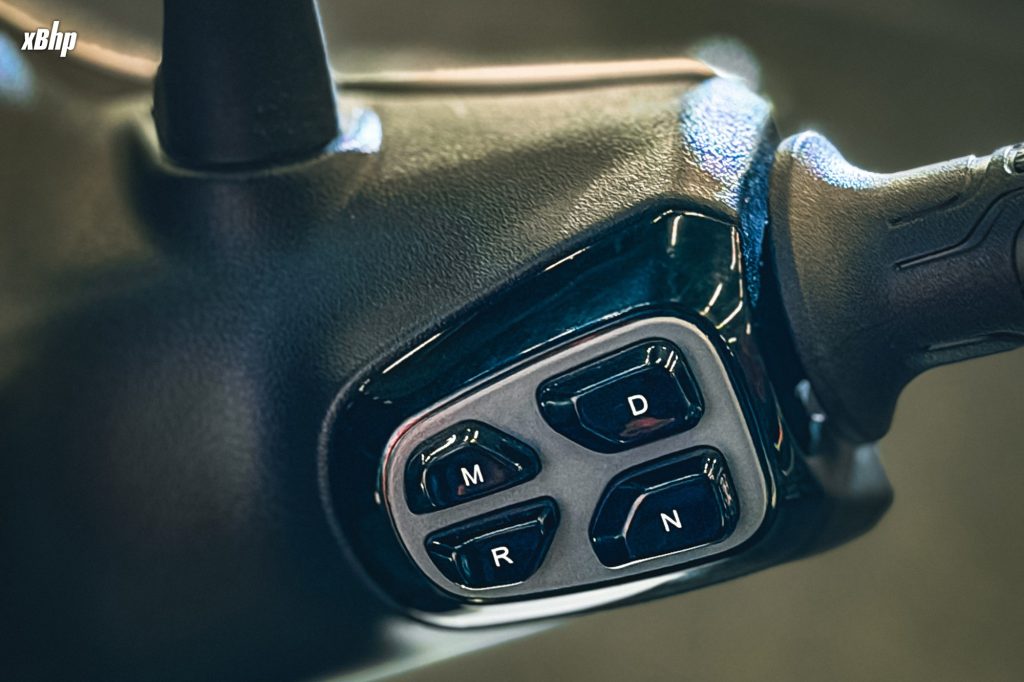
A simple yet nifty addition is the Neutral button. As you can tell, M is for changing modes, D is for Drive, and R is for Reverse. and N is for Neutral. At traffic stops or otherwise, you can engage N and it deactivates the throttle to avoid any mishaps or unintended launches.
Charging is handled via a 750W offboard charger, which means you do have to carry it with you. Bajaj claims a 0-100% charge time of 3 hours 40 minutes, which is very reasonable for a 2.5kWh battery. Range is rated at 113km certified, with a realistic expectation of around 90km, which should be more than enough for most urban users.
The Chetak C2501 is priced at INR 91,400, which makes it good value for money. But there is a catch. Bajaj offers what they call TecPac, and without it, you only get the Eco mode. As mentioned earlier, it is limited to 45 km/h, and that is a tad too slow. But the good news is that the TecPac costs INR 3,000, and with it, the scooter costs INR 94,400, which is still a very good value for what the scooter offers.
Overall, the Chetak C2501 is small, simple, affordable, and genuinely pleasant to ride. It doesn’t try to overwhelm you with features or performance, but it delivers exactly what an urban electric scooter should: ease of use, refinement, and confidence. As long as your commute doesn’t involve sustained high-speed riding, this is a scooter that makes a lot of sense. It is a good addition to bring new buyers into the Chetak family and strengthen Bajaj’s EV portfolio.