Since '02 xBhp is different things to different people. From a close knit national community of
bikers to India's only motorcycling lifestyle magazine and a place to make like-minded biker
friends. Join us
xBhp was born more than 16 years ago and since then we've had a chance to ride or drive hundreds of machines
running on two wheels or four wheels, and sometimes even three wheels. We are not done yet, and this list is
still growing. In these pages, we take a deep dive in the treasure trove of our ride experiences and bring
you all that we have ridden or driven.
Machines Done 424
|
Total Cubic Capacity 177549
|
BHP 54589
Lamborghini Urus | Raging Bull at large!
3,996 V8CC650BHP850NM
Dec 2019
Sundeep Gajjar
Cars
When it comes to automobiles, clutches are important. Be it bikes or cars, or something else, clutches are important. A good one makes the vehicle better. A bad one leads to a lot of frustration. But can it lead to a good thing too? Logic says no, but history says yes. Because the car that we are talking about here belongs to a brand born because of that. The car is Urus and the brand is well… the perennial poster car maker- LAMBORGHINI!
Yep, that’s perhaps the first time we have used shouty capitals and why not? After all, from video games to scale models, the cars of Sant’Agata Bolognese are one of the most sought-after pieces of automotive art/engineering. And the Urus marks a new chapter in the history of the brand. So when we got to drive one right here in New Delhi, emotions ran high, and heads rolled!
The thing about the Urus is that it is not a landmark car for Lamborghini just because it is an SUV. It is also because it departs from the engines that Lamborghini usually puts in their crazy cars. It does not have a V12. It does not have a V10. It is not even naturally aspirated anymore. What powers the Urus is a twin-turbo V8, and while it may seem like a departure gone too far, it still retains the ethos of Lamborghini. More on that later, because first, a brief history lesson to embolden the importance of Urus.
The journey of Lamborghini started in 1963. The first car they made was called the 350GT, which came out in 1964. It was powered by a V12 designed by famed engineer Giotto Bizzerini. Such was the talent of Signore Bizzerini that the original V12 designed by him was in use till 2011!
What is the significance of that engine? It powered the Miura, a mid-engined rocket ship, the fastest car in the world of its time, perhaps the spiritual predecessor of all modern mid-engined cars, and one of the most beautiful cars ever made. Then, the Countach. The scissor-door supercar, one of the most radical in the history of cars, powerful and expressive of the emotion and the passion that the brand backs all of their cars with. Then, the Diablo, another fastest in the world title, still one of the craziest cars ever made, and exceptionally beautiful. And finally, the Murcielago, the legend, the fighter jet for roads with automatic air ducts, and again, terrifying power.
Bizzerini’s original V12 was retired for a new, built-from-scratch V12 that found its home in the hypercar of dreams… the Aventador. Apart from the V12, the only other engine configuration used by Lamborghini was the naturally-aspirated V10 that powered the Gallardo, the bestselling Lamborghini ever and its successor- the mighty Huracan.
Only two configurations in a history of almost 60 years… the reason? Lamborghini wanted their supercars to have nothing but the best. And in our opinion, the best… they are! Everything associated with Lamborghini incites animated gestures, breathlessness, and screams. Once you catch your breath, that is. If you ever get a chance to see a Sant’Agata Bolognese bull in flesh, hear it, and if you are lucky, see it in action, you’ll know what we are talking about.
Back to the point now, the Urus. Now we know how special this car is, even as an idea. And it was a million times more special for Lamborghini because they had to make it. It had to stand out. A mere SUV with off-road cred wouldn’t cut it. SUV aside, it still had to be a Lamborghini. So how do you make a front-engined, twin-turbo V8-powered SUV and call it a Lambo? You get it made by Lambo. That’s all there is to it.
Did you know that this is not the first SUV from Lamborghini? That honour goes to LM002. Never heard of it? We thought so. Like all Lamborghinis, that car was out of this world, and unfortunately, that is where it stayed. So we are sure that the countless hours spent by the honest workers of Lamborghini were even tougher with the inevitable question looming all over them- “Is the world ready for an SUV from Lamborghini?”
Honestly, no. But this time around, in a good way. The Lamborghini Urus is unlike anything else ever seen donning the utility avatar. One look at it and you know what you are in for… the only problem is that you don’t. Being humans, we have preconceived notions and beliefs, and every once in a while, there comes something that shatters all of them and carves a place in the now rebuilt belief system. Urus is that very thing!
First, let’s talk about the name- Urus. We know that Lamborghinis are named after bulls. And not just random bulls, legendary ones like the Murcielago, claimed to be standing still even after 24 sword stabs or the Reventon, known for having killed a famous bullfighter. And those are supercars. Here we are talking about a big-guns-blazing SUV. So the Urus, also known as Aurochs, was large (and ferocious, of course), wild, and known to be the ancestor of domestic cattle. Sadly (or maybe fortunately), it went extinct in 1627, but it is back and this time, in car form. It is still pretty wild though!
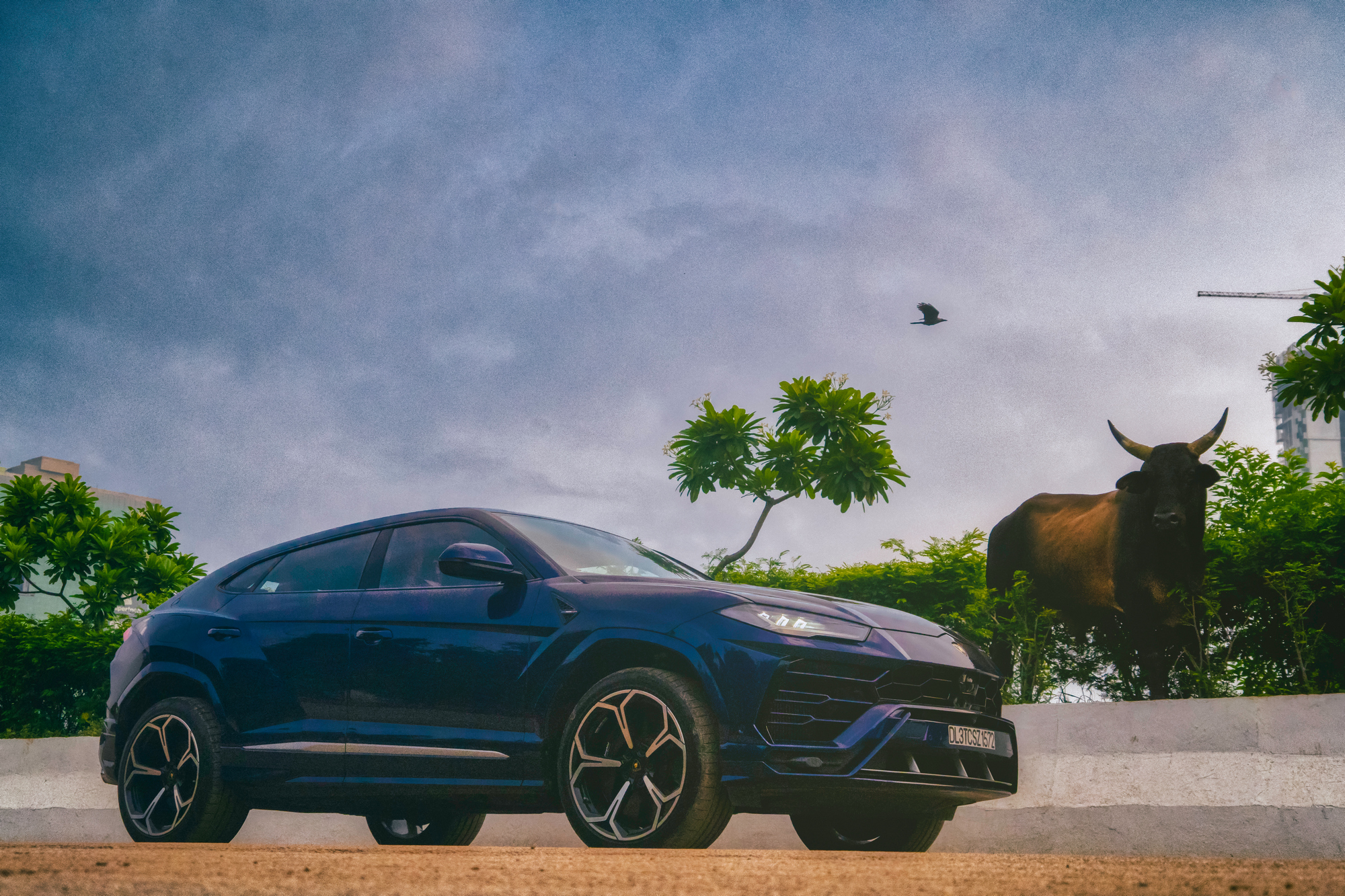
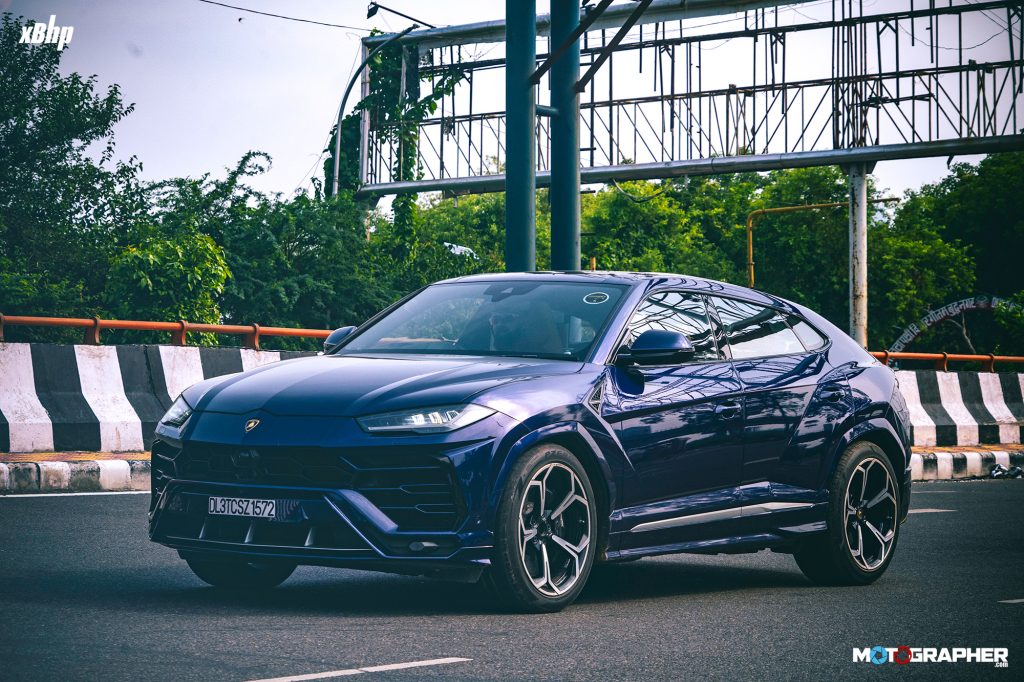
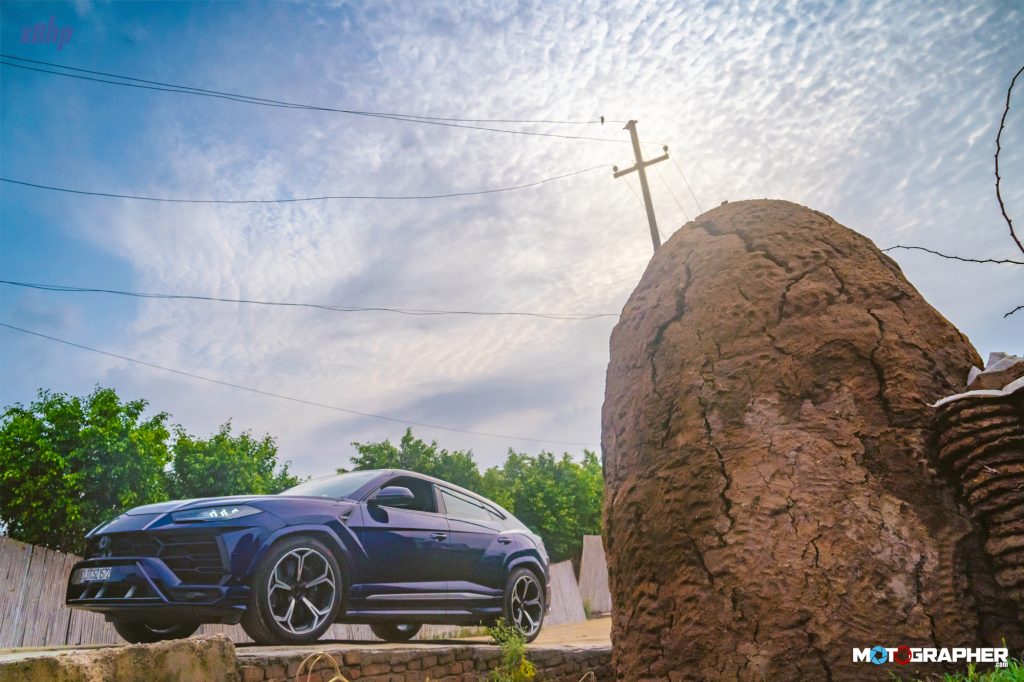
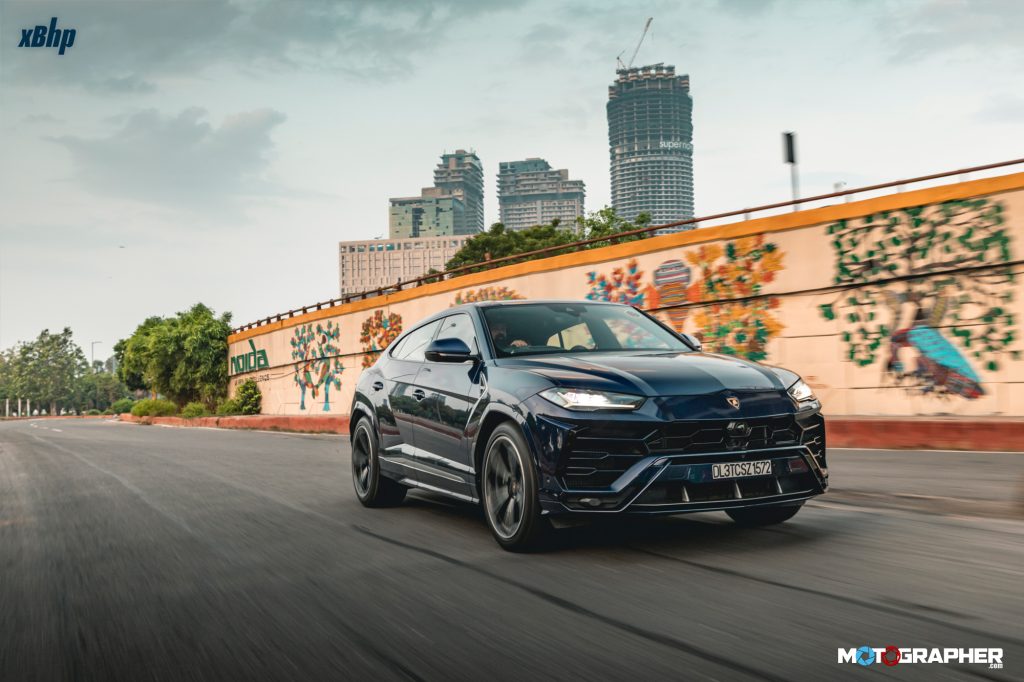
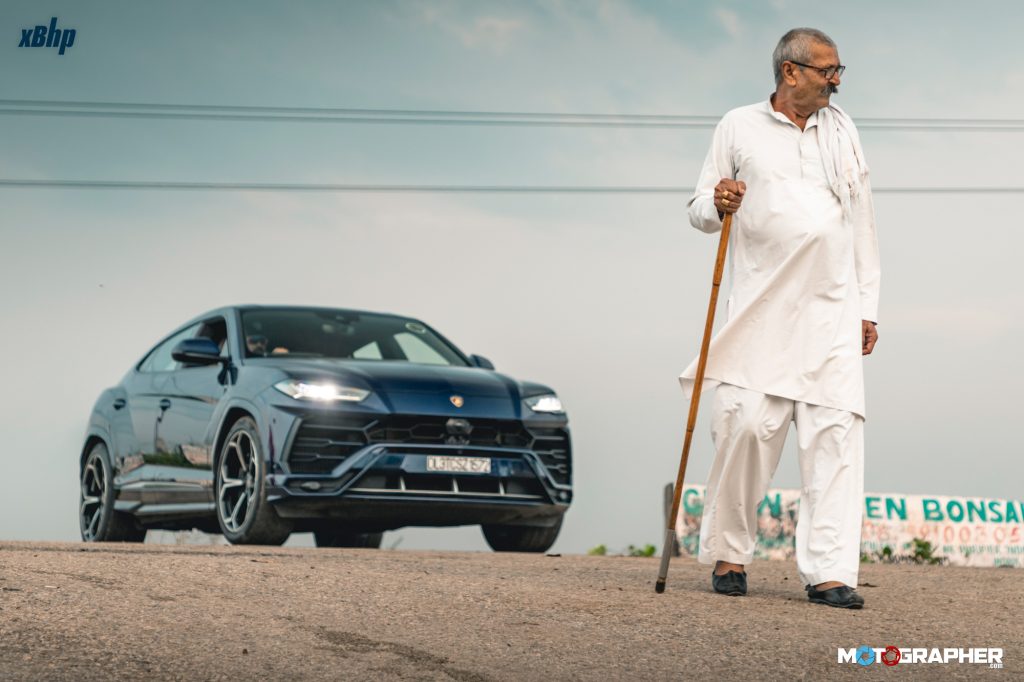
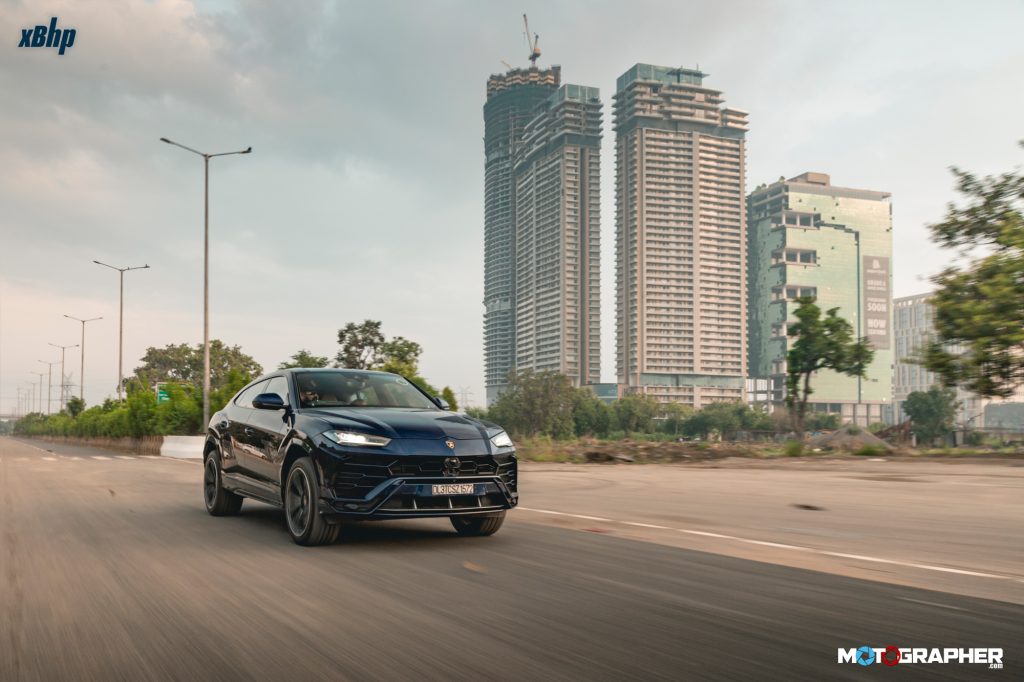
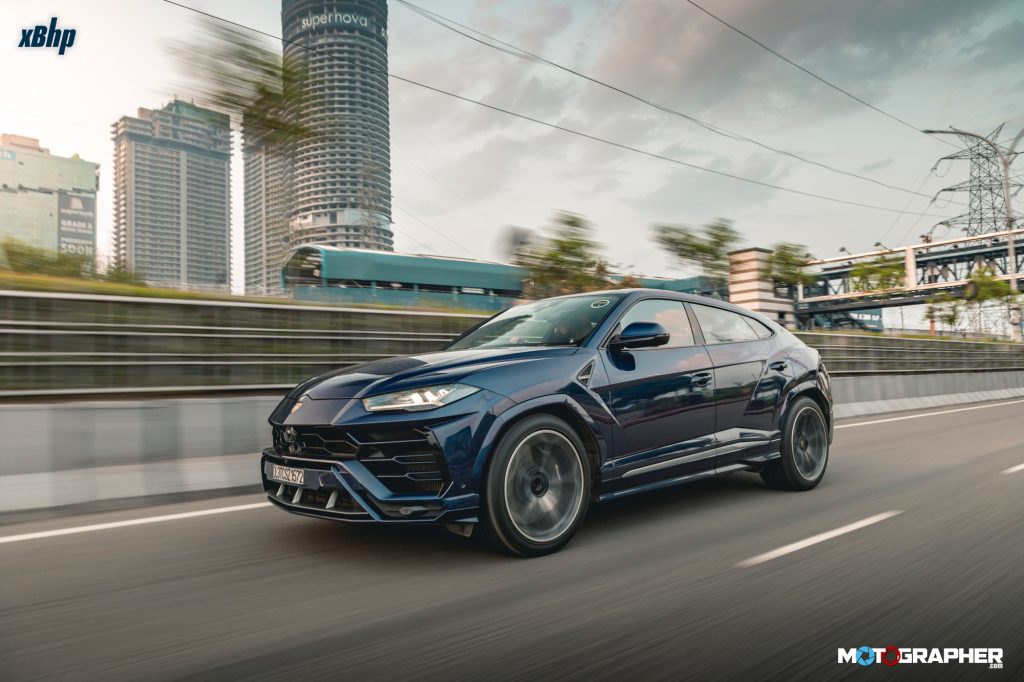
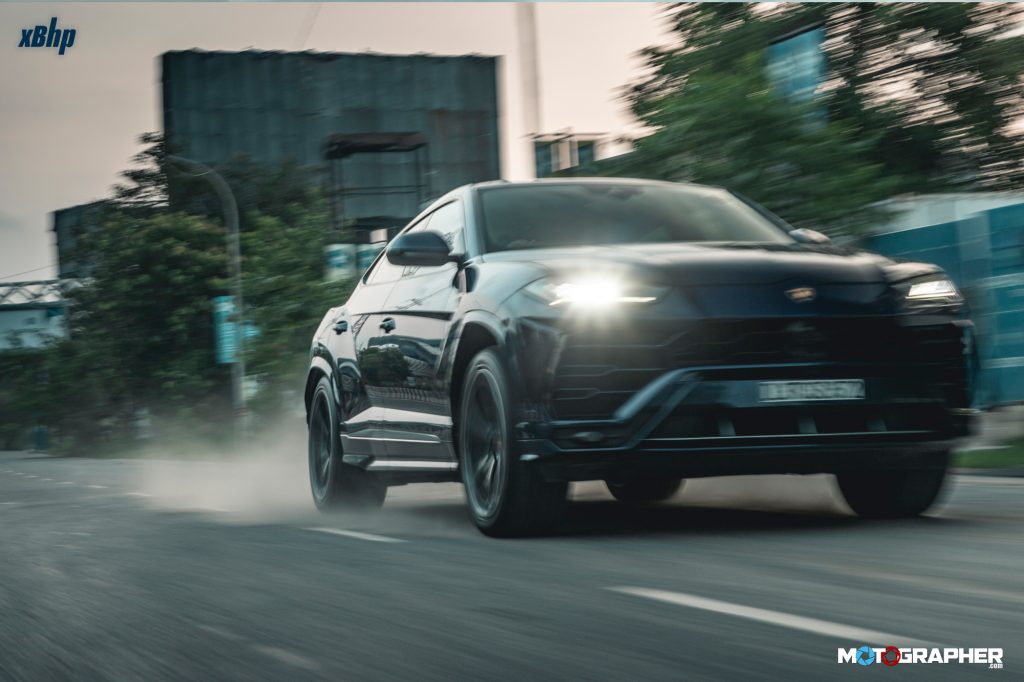
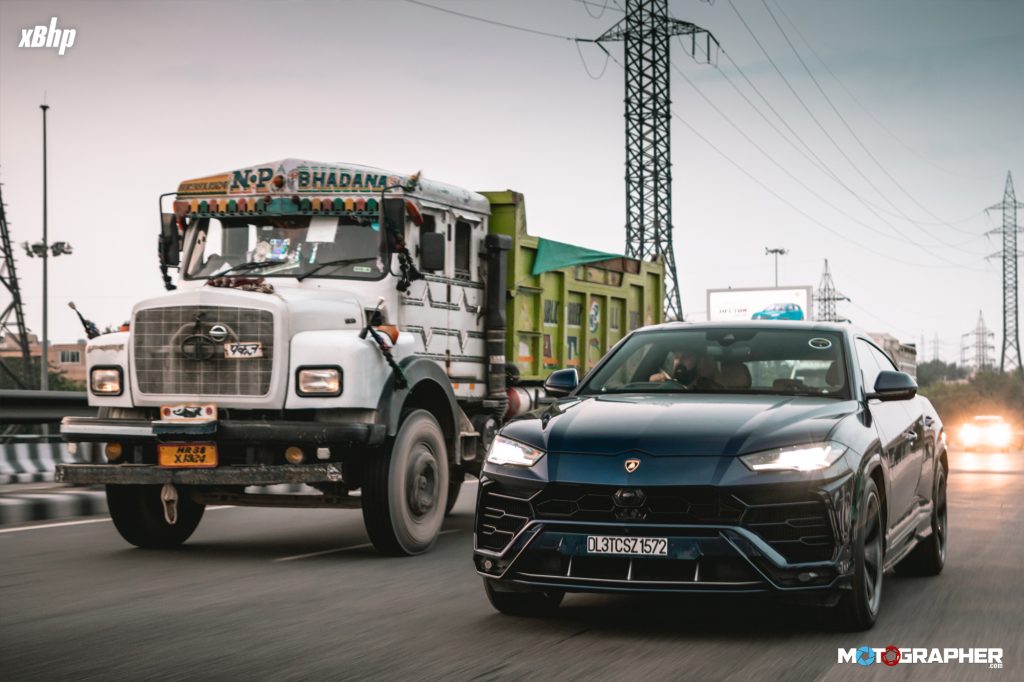
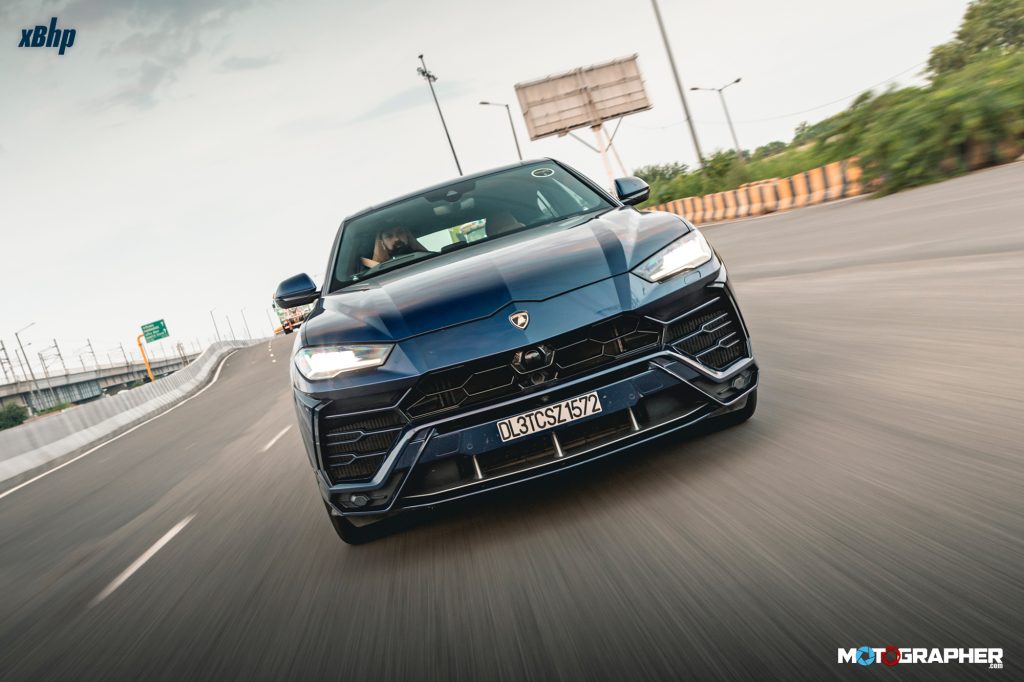
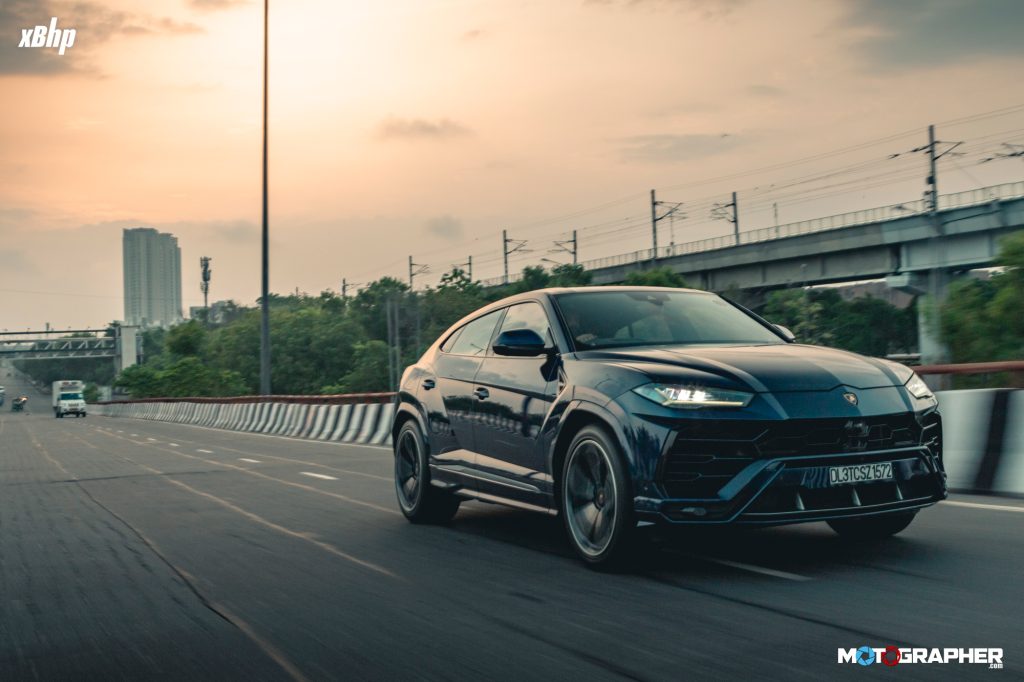
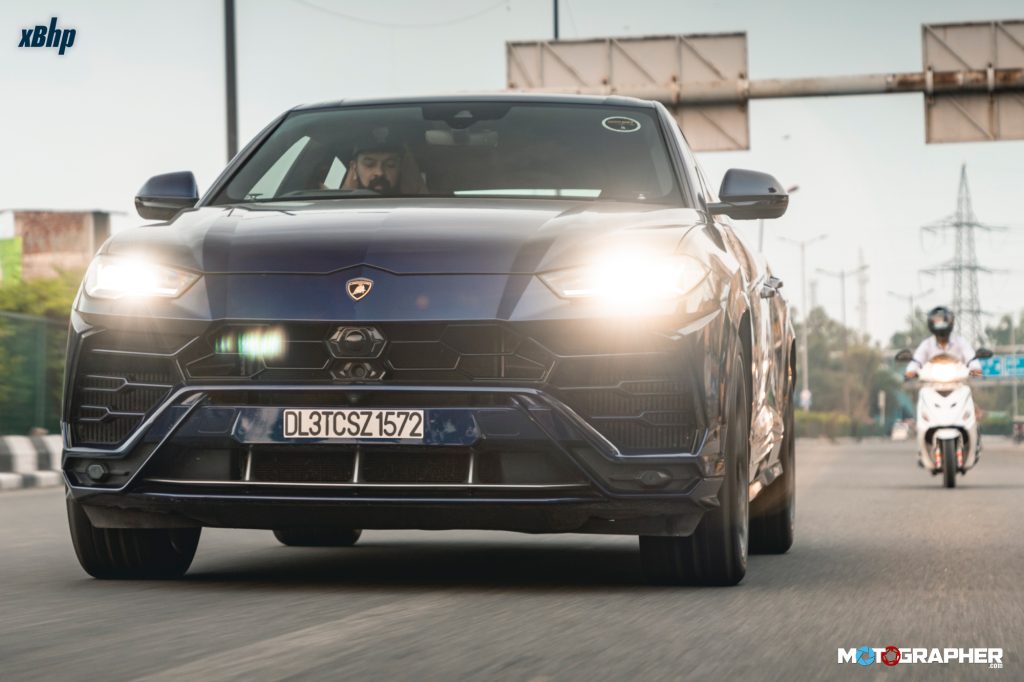
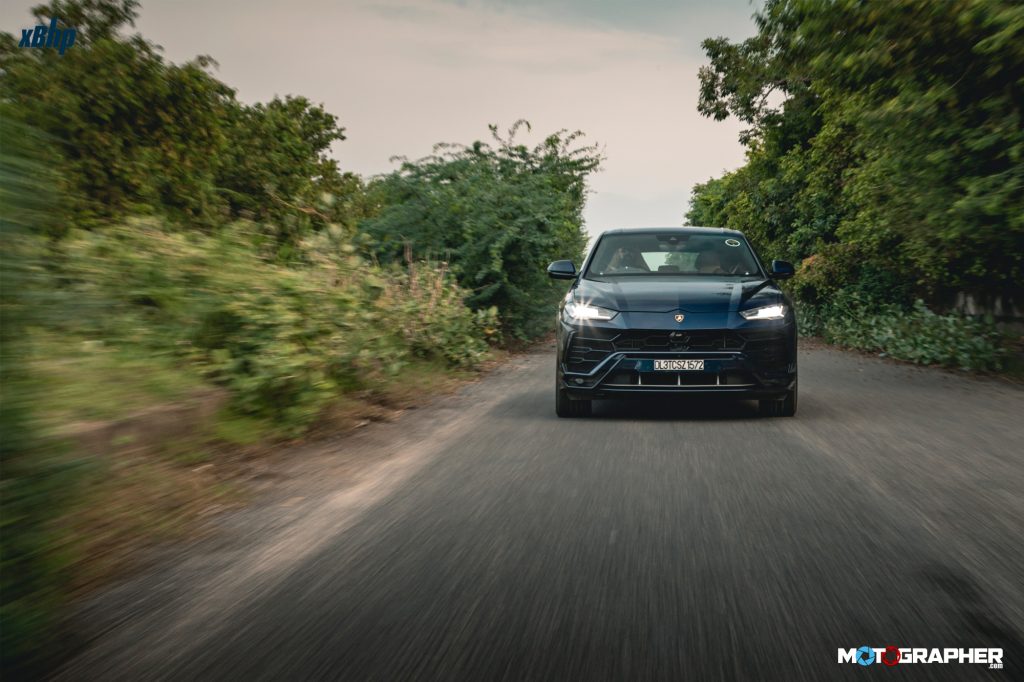
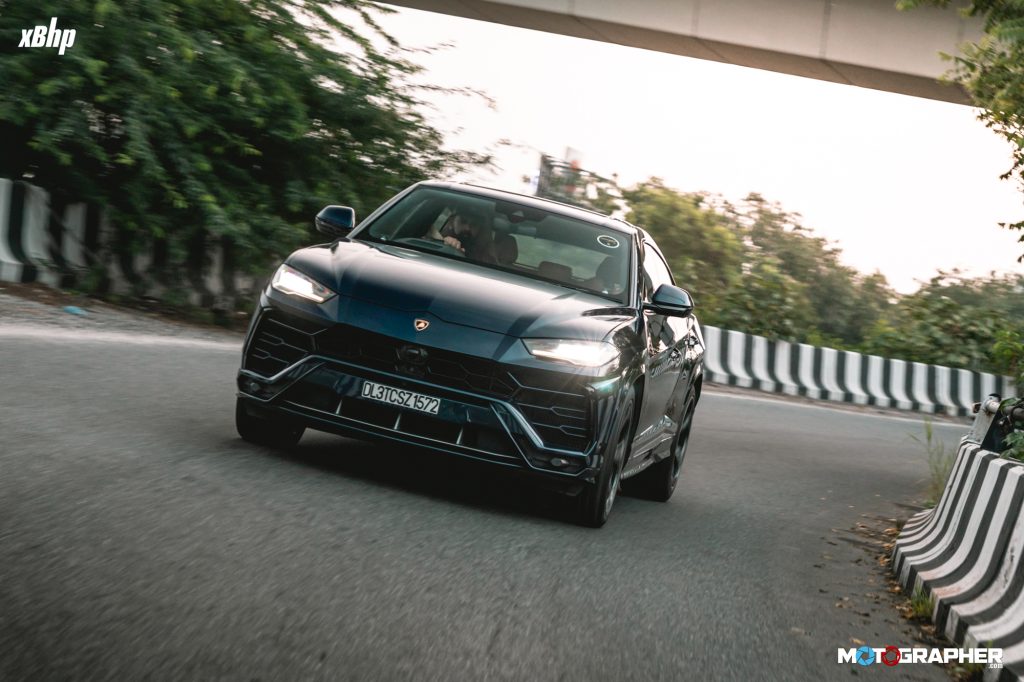
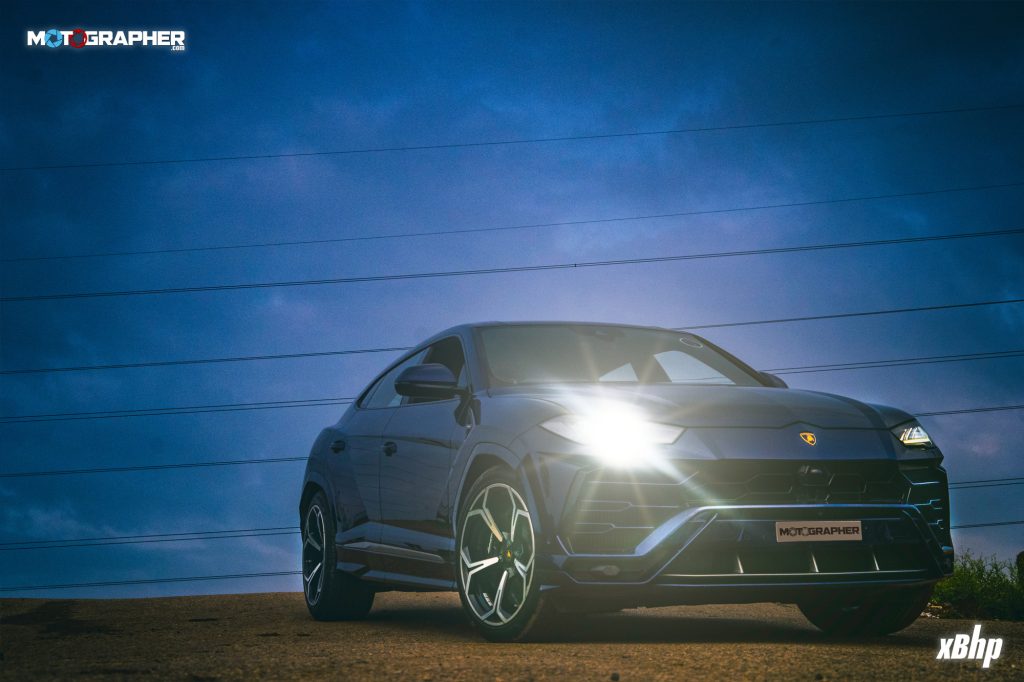
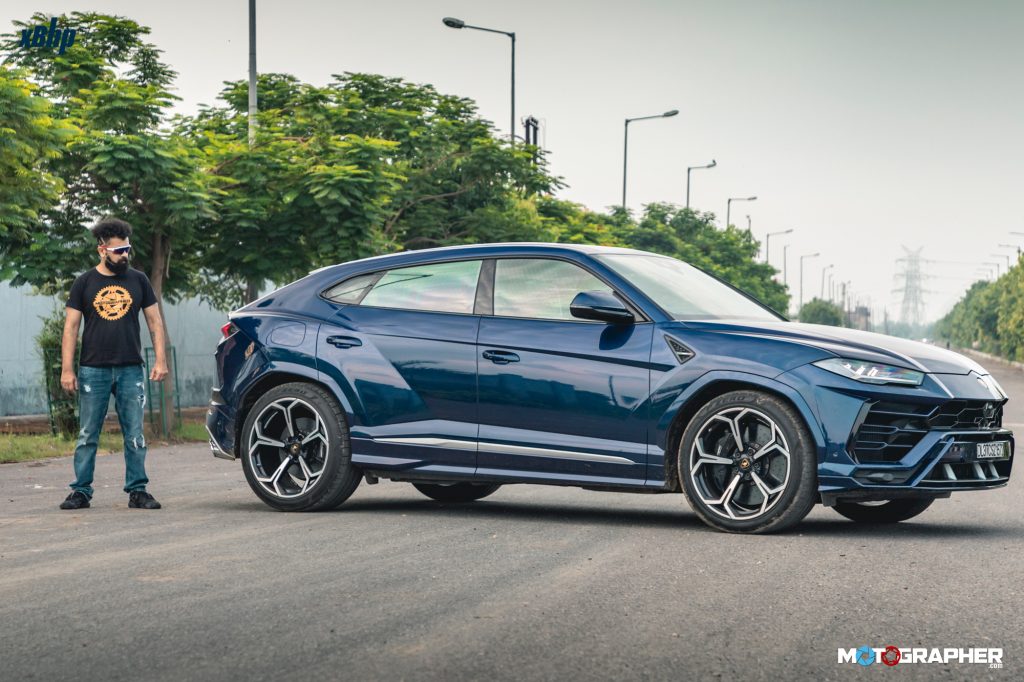
Making a car look like an SUV is not that hard. The Urus looks every bit like an SUV. Making it look like a Lamborghini is the hard part. And Centro Stile (Lamborghini’s design centre) pulled it off, and it almost looks effortless. Even if camouflaged, one could easily tell that the Urus is a Lamborghini. The hints start at the front. Sleek, sporty and sharp headlights with the familiar Y are an unmistakable signature of the brand.
Continuing with the front, the mount on the hood, the supercar-style fenders with large air intakes and the low and aggressive stance further protrude the Lamborghini-ness of this SUV. Then come the massive wheels (21” standard with options of 22” and even 23”!) that also sport a striking design. In our opinion, the Reventon had the best wheels ever and not just among Lamborghinis but among every car ever made. The ones of the Urus do come really close though.
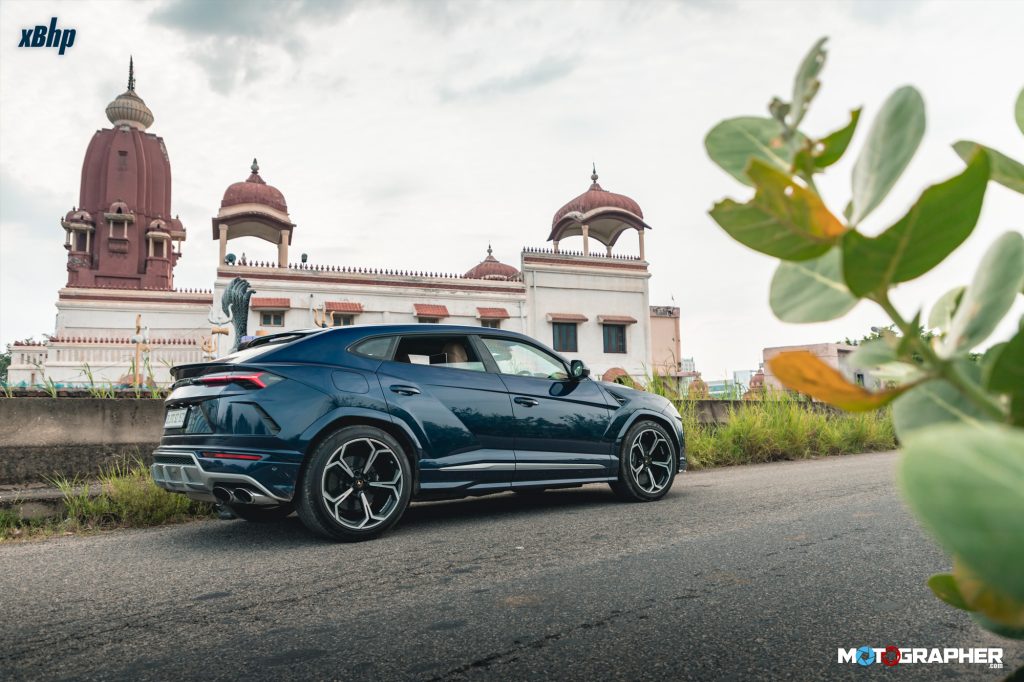
Through the wheels, you also find the biggest brake rotors ever seen on a production car. 17.5” carbon-ceramic rotors perform phenomenally, but in addition to that, they also put out there the intent of the car. The frameless doors, a sloping roof line, sharp edges and design along the length of the car further strengthen the relation this car has to Sant’Agata Bolognese.
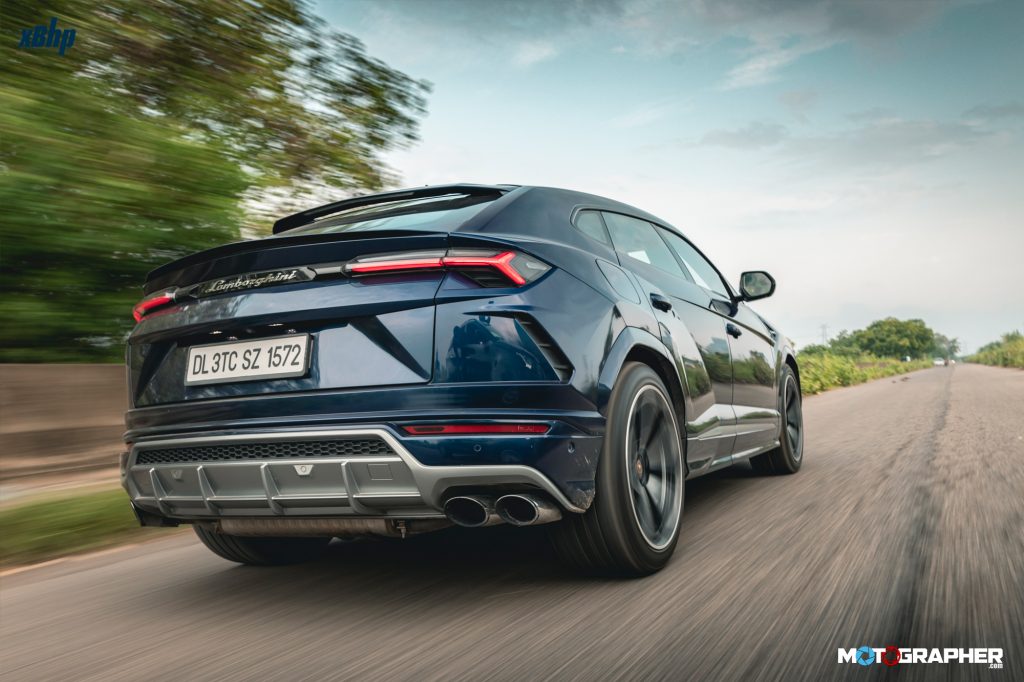
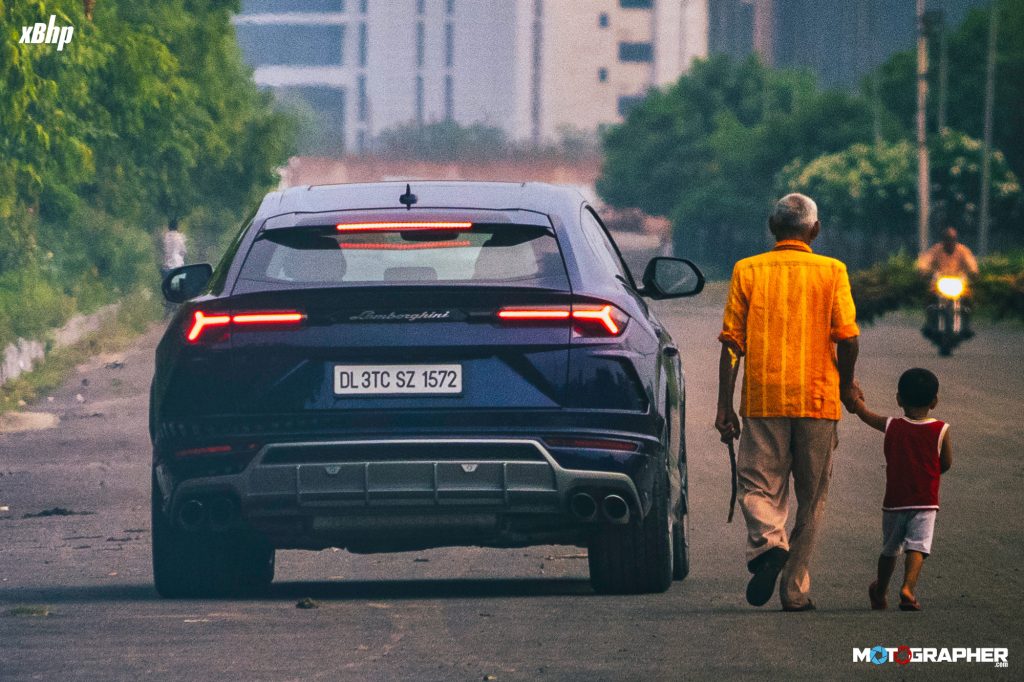
The rear completes the traditional Lambo look and stance with a low-slung rear diffuser and integrated tailpipes. The integrated tail lamp also embodies the familiar Lamborghini Y design theme. Also present are the hexagonal elements in the front, the Raging Bull badge in the centre of the front and the Lamborghini logo in the rear.
Form is often rendered useless when it does not serve a function. Thankfully, that is not the case with the Urus. Every crease and crevice on the exterior, from the integrated rear spoiler to the bold front intakes, serves one purpose- aerodynamic efficiency.
After all, a 2,200 kg car won’t go from 0-100 km/h in 3.6s with brute force alone. Another minor detail… the flow of the air from the front is directed in a way that it assists brake cooling as well. And we believe those huge binders do need a lot of that. Especially with what the Urus is capable of.
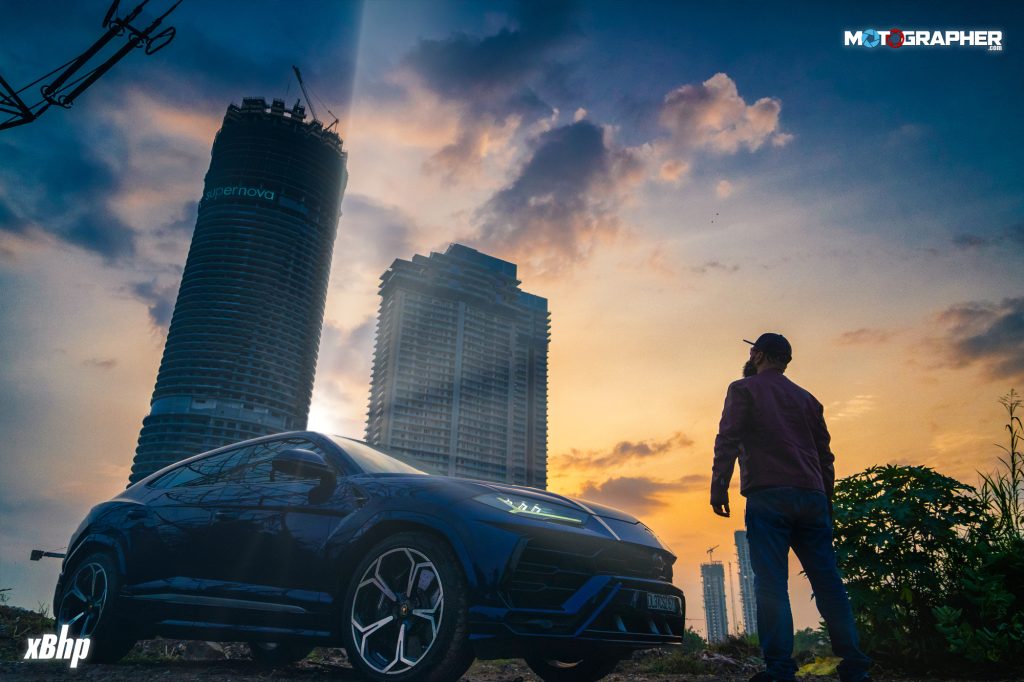
Regardless of the angle from which you are looking at it, Urus looks purposeful, tasteful, proportionate and utterly menacing. People may have had their apprehensions when they first got to know about an SUV coming from Lamborghini, but all of those fears were rendered unfounded when the car debuted.
The inside of the car is a heady amalgamation. Creature comforts in spades, in addition to the emotive Lamborghini touch, is a mix that could have gone horribly wrong. But the right proportion that the manufacturer has achieved makes it one of the best cabins seen on four wheels. There are more luxurious options available, as well as sportier ones. But none blends these two as seamlessly and as tastefully as the Urus does.
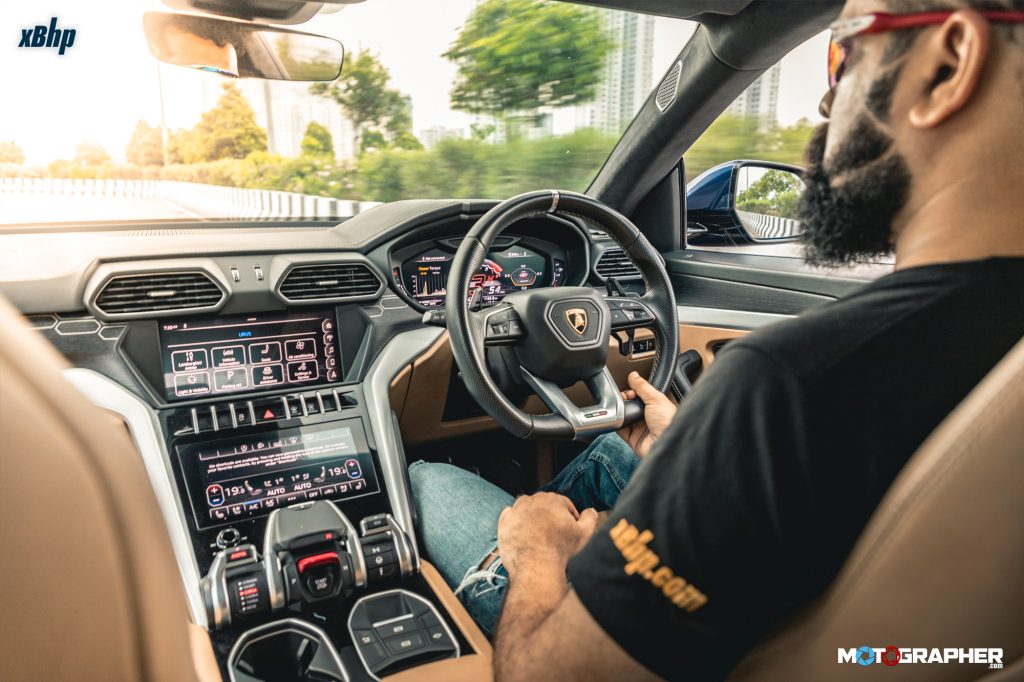
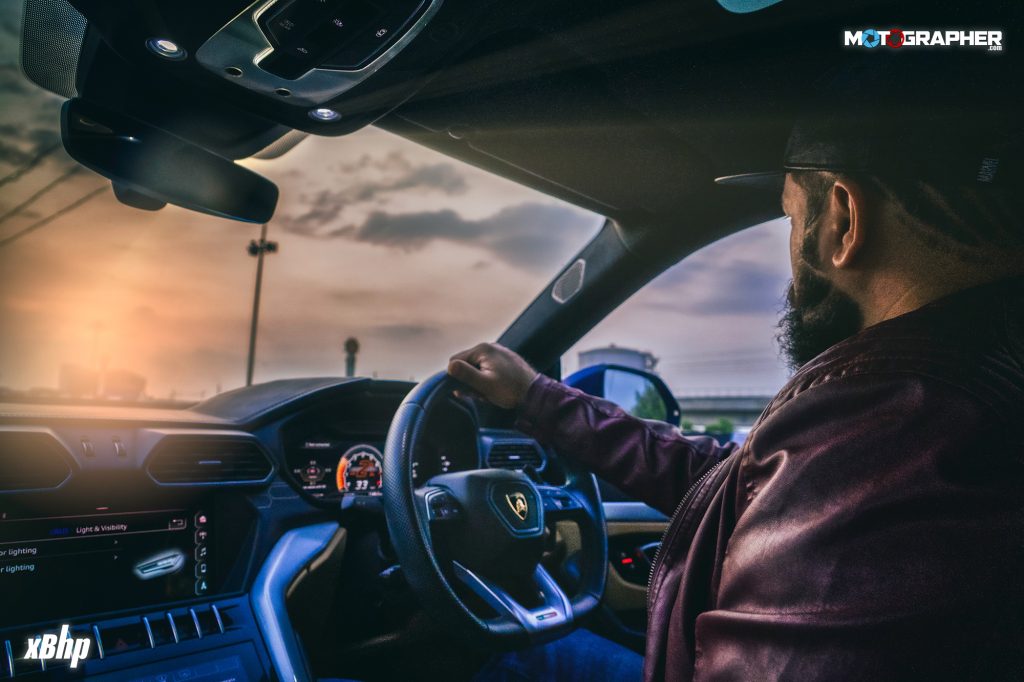
Sit inside the car, and once again, the hexagonal elements are in abundance, and the whole dash sports a slim Y profile. The sport seats are low and comfortable for both the driver (correction: PILOT!) and the passengers. All the controls are within comfortable reach. The dash consists of not one, not two, but three different screens.
The first one, right in front of the vibration-dampening steering wheel, is the most familiar with a Lambo-style rev counter and speedo. The other two are in the centre of the whole console, with one working towards the infotainment functions and the other carrying out the duty of controlling the comfort functions, also featuring haptic feedback for the added personal touch.
The lower screen is also handwriting compatible, in addition to the functions being natural-dialogue-controlled functions. With the Lamborghini, you are on top of the world, and they say it gets lonely there. So, you can simply talk to your Urus, and it’ll probably make for a better conversation than you can have with most people.
Continuing the modern touch, there’s a phone compartment with wireless charging, USB, Bluetooth, DVD and a kickass sound system. We are talking Bang & Olufsen 1,700-watt kick-ass sound system! But the soundtrack of that twin-turbo V8 still pips even that good of a system. Finally, Android Auto, Apple CarPlay, and smartphone interface and smart display for the rear seat as well, are also available as add-ons.
Now, two of the coolest things in the cockpit of the Urus are the starter button and the Anima Selector. While the aircraft-like starter button reminds one that the car is a Lamborghini (because the luxurious touches can easily lead one astray to think otherwise), the Anima Selector, which controls the dynamics of the car, has a quirky way of telling you that it is an SUV.
The Anima Selector is like a mode selector, but much fancier and functional. The modes are: Strada (Street), Sport and Corsa (Track)… the usual deal. Except it isn’t. The additional modes called Neve (Snow), Terra (Dirt), and Sabbia (Sand) are a quirky way of just putting out the minor fact that this Lamborghini can get the job done off the tarmac as well. The job? Relentless domination.
These modes are not just fancy names either. There is a reason why Lamborghini states that these change the soul of the car. The modes change aspects such as torque distribution, intervention levels, suspension settings, and even the height of the car. Makes it seem like that all-in-one sofa bed from those infuriating commercials. Only the Urus is a 305 km/h capable one, and that makes it just the opposite of infuriating.
Another very Lamborghini move is the addition of EGO mode. In this one, you can set up the car the way you like, down to the minutest of details and settings. Complexities are in abundance here, so unless you spend your days on racetracks, stick with one of the preset modes. No hard feelings, but it is just that they have made the car, they have tested it extensively, so they kinda know better.
The seats, despite their sporty appearance, are fully electric, 12-way adjustable, and heated. Options include 18-way adjustable ones, and even with functions like ventilation and massage. And it is still a Lamborghini that we are talking about. On the rear as well, there are options of either two seats or a bench layout, the latter of which makes the Urus a comfortable 5-seater Lamborghini.
And then there’s boot space as well. 616 litres with the rear seats in their default position and 1,596 litres with them folded. A truly utilitarian Lamborghini. We are not sure how Signore Lamborghini felt about SUVs, but regardless of that, he will be proud because in the end, he also wanted Lamborghini to be making road cars… brilliant ones at that.
The interior is a cocktail of exotic materials such as Alcantara, aluminium, carbon fibre, wood, and the finest hand-stitched leathers. The permutations and combinations of the choice of material and customisation are almost infinite. So if only getting your hands on a Urus is not enough, you can truly make it your own by specifying your requirements.
And now to the aspect of a supercar that is the most fun, even more so in the case of Lamborghini and double even more so in the case of the Urus. Are we exaggerating? Not really. The Urus is perhaps unlike anything you may have ever driven. And the first sign of the things to come your way comes right after you push the starter button.
The exhaust note, the sheer racket, is bloody brilliant! It throws you off balance as it suddenly starts to feel like a super sports car till the commanding piloting position reminds you that you are in an SUV. The pops, the crackles, the turbo scream and the growl, it sounds ungodly. You can just keep blipping away all day, and we assure you wholesome entertainment even without engaging the car into drive.
Hey, it is an SUV. It is supposed to be quiet inside a cabin. How can one call that V8 quiet? And yada and yada and yada. This is in Sport and Corsa mode. In Strada, it sounds much more sedate, and it is almost whisper-quiet inside the cabin… almost.
Now, what is it like to drive? Well, let us start by saying that the engine, while not a conventional Lambo V10 or V12, the powerplant of the Urus is a very capable substitute. Plus, they say it was more practical too. We wonder what they meant by that… Engage it into drive and off you go. Even in Strada, the Urus does not feel like an SUV, going by the way it moves. The acceleration is absolutely brutal, and we trust Lamborghini, so we did not try to test the top speed.
While we did not time it on a stopwatch, in Corsa mode, Urus flashed from double to triple digits in a blaze of glory. So the 0-100 km/h in 3.6s is not just a number on paper. But more than that, the best part about the car is the 8-speed gearbox. 850 Nm of torque is no joke, and that is why, even if you find yourself in a gear or two higher, a firm push of the pedal is rewarded with joyful thrust.
We also put Lamborghini’s soul-swapping claim, and with small changes in almost every dynamic aspect of the car, every mode makes the Urus feel like a different car. In Strada, it is quiet, sedate and can go around town like a regular car. But it never seems too much on the back foot. Almost always ready to go ballistic at the drop of a hat.
Put it in sport and immediately the throttle response is crisper and the car feels more agile. Quick changes in direction or rolling getaways and overtakes, it all seems effortless. Put it in Corsa and prepare to put to shame some of the lighter sports cars. We have driven our fair share of supercars, and the Urus feels no less. We have already filed a report for the disappearance of the claimed 2,200 kg kerb weight of this monster.
Now, Lamborghini is one of our favourite brands, and we have driven a Gallardo and a Huracan. We loved both of them. And driving the Urus in some heavenly way feels so much like those and, in essence, like a Lamborghini. It is an SUV, and those were supercars, and yet, passion for certain things always makes its way into your work, no matter how diversified the field is. Again, we do not know if it is the sound, the character, or simply admiration for the brand, but some sacred feeling or emotion binds every Lamborghini ever made.
Anyway, sentimental downpour aside, Urus has another nifty trick up its sleeve, much like its supercar and hypercar brethren, and that is 4-wheel steering. While the system has helped the likes of Huracan Performante and Aventador SVJ (Super Veloce Jota… how cool is that!) rip racetrack records to shreds, it has helped the Urus be a true multi-faceted car.
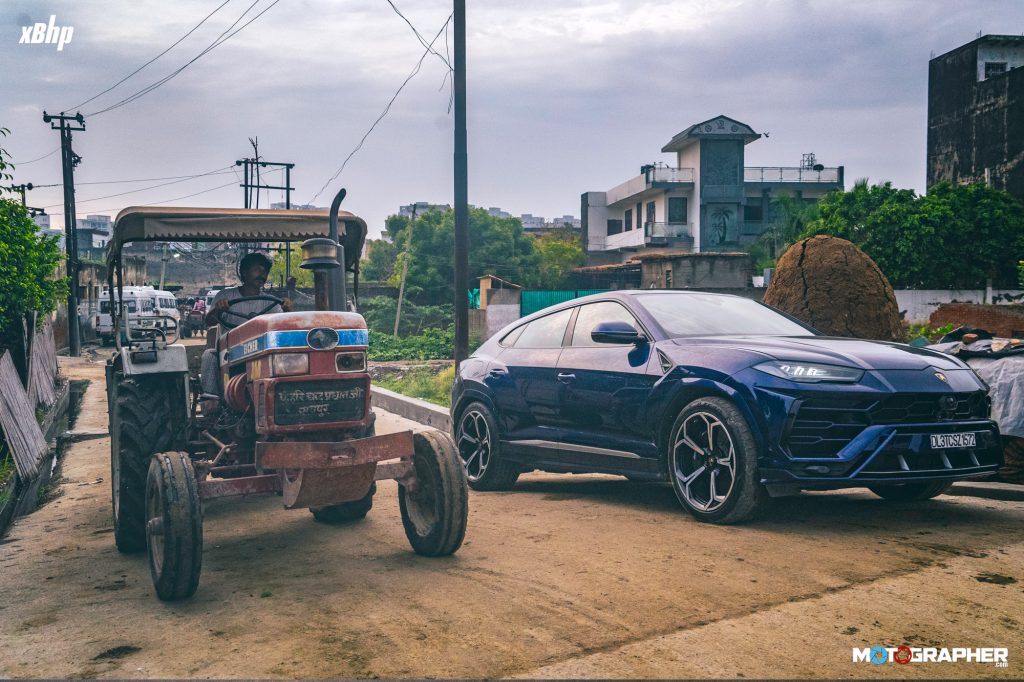
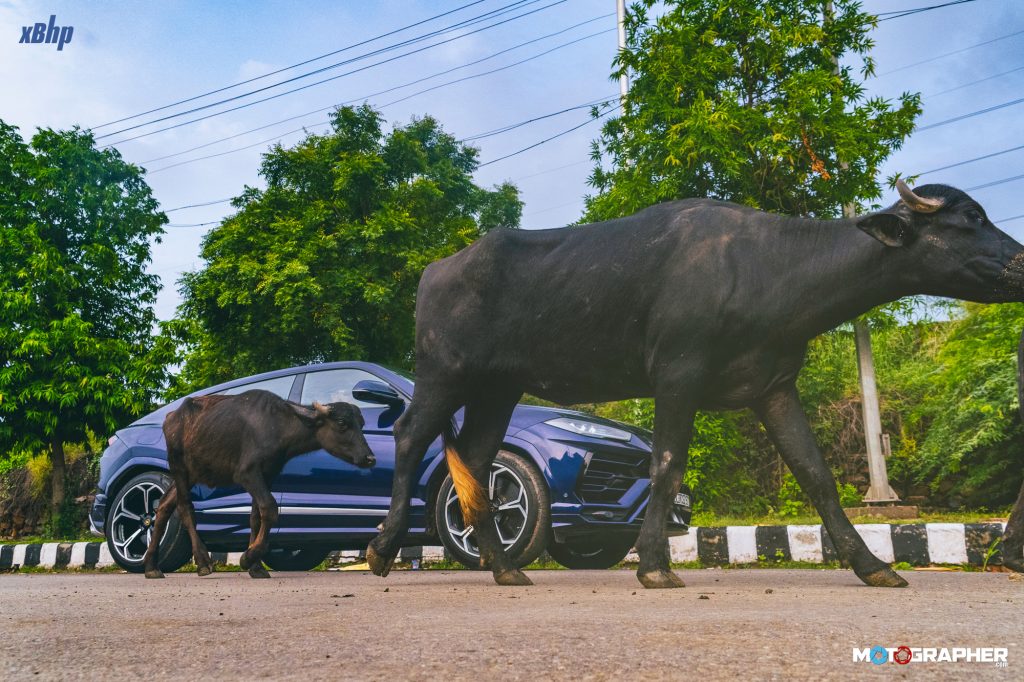
The Lamborghini 4-wheel drive system enables the Urus to dispatch low-speed or tight manoeuvres with ease, handle high-speed turns, in some ungodly way, like a supercar, and makes it a very capable off-roader too. While we did not test out the last one, the other two we experienced aplenty. With the way Urus dealt with tight spaces, we kinda understood what Lamborghini meant when they said that they wanted this car to be a very practical Lamborghini.
Now, suspension also has a big part to play in the kind of poise and confidence the Urus displays. Adaptive air suspension with Active Roll Stability Control ensures that the computer onboard is getting every bit of information from the surface, and the computer makes sure that the countermeasures are ready for every kind of curveball you can throw at it.
An example could be a low-radius corner that you happen to take at rather high speeds. Do that and the car tracks straight and true and never wavers from its line. The reason? As soon as a situation like that is sensed, the outside suspension is stiffened, and you almost feel like that corner was a figment of your imagination. Witchcraft? Yes. But all the electronics never rob you of feeling because in Sant’Agata Bolognese, they believe that the feel of driving a Lamborghini is a thing not to be tampered with… or maybe it was us who believed that and still do!
And then there were tyres. Pirelli makes 6 different kinds of tyres for the Urus, and Pirelli P Zeros are standard (GOLD STANDARD!). If you fancy taking the Urus to an epic battle with the wilderness, Scorpions are available too. But we would advise that if you plan to do that, invest in the off-roading package as well, which will equip the Urus with specific metal-reinforced bumpers and additional underfloor protection for off-roading.
The final pillar of the ultra-awesome handling package of the Urus is the braking system. We have already mentioned that the carbon-ceramic anchors on the Urus are the biggest ever on a production car. Frankly, they had to be. More than 2 tonnes moving at unfathomable speeds, you need brakes… and balls. One small gripe here is that despite all the stopping power, the brake pedal did feel just a smidge spongy.
Now, two more things that we’d have liked a little better. First, in Corsa Mode, the gearbox of the Urus feels a tad… grabby, if you know what we mean. It is not as slick as the one on the Huracán. And second, the exhaust note. Don’t take it the wrong way, the Urus sounds amazing with a growl in the beginning and the roar around the top end. The only problem is that, in line with the precedent set by Lambo, it falls a little short. It is not our fault that other Lamborghinis sound just fantastic, so they spoiled us in the first place.
Now, just to make it official, we will paste the spec sheet around the end or so but to be honest, this was not a review. A car like this… cannot be reviewed. It may sound outrageous, but just think about it. Hundreds of people have worked on the smallest of details that the Urus is in possession of. Quite a few, very seasoned ones at that, may have tested it tirelessly to make sure that the Urus did not falter and walked the path paved by Automobili Lamborghini with pride.
So how can a couple of people judge it bit-by-bit for what it is in a span of a few hours and 30-odd kilometres? We can’t. Probably no one can. And if someone thinks they can, to each his own, and we won’t even contest that. One thing that stands undisputed though… is that Lamborghinis are f**king amazing and the Urus is every bit the Bull it was meant to be. Thank god that some people did not understand clutches very well and were too engrossed to admit it…