Since '02 xBhp is different things to different people. From a close knit national community of
bikers to India's only motorcycling lifestyle magazine and a place to make like-minded biker
friends. Join us
xBhp was born more than 16 years ago and since then we've had a chance to ride or drive hundreds of machines
running on two wheels or four wheels, and sometimes even three wheels. We are not done yet, and this list is
still growing. In these pages, we take a deep dive in the treasure trove of our ride experiences and bring
you all that we have ridden or driven.
Machines Done 431
|
Total Cubic Capacity 178725
|
BHP 55886
Volvo EX90 Review | A Scandinavian date in Rajasthan
105 kWhCC456BHP670NM
Sep 2026
xBhp
Cars
Some cars make sense the moment you see the specification sheet; others need the right surroundings before their philosophy really comes through. The new Volvo EX90 falls firmly into the second category.
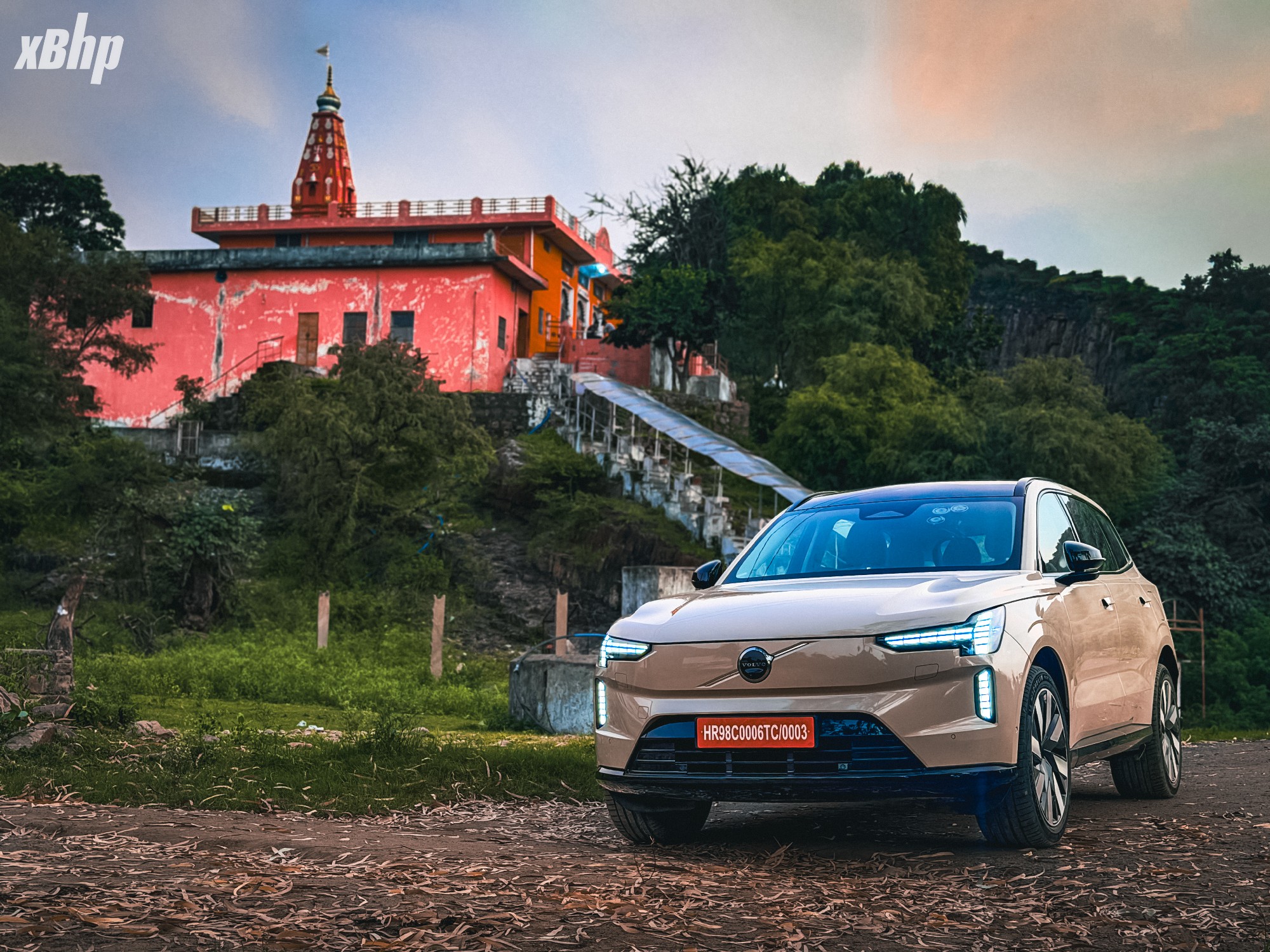
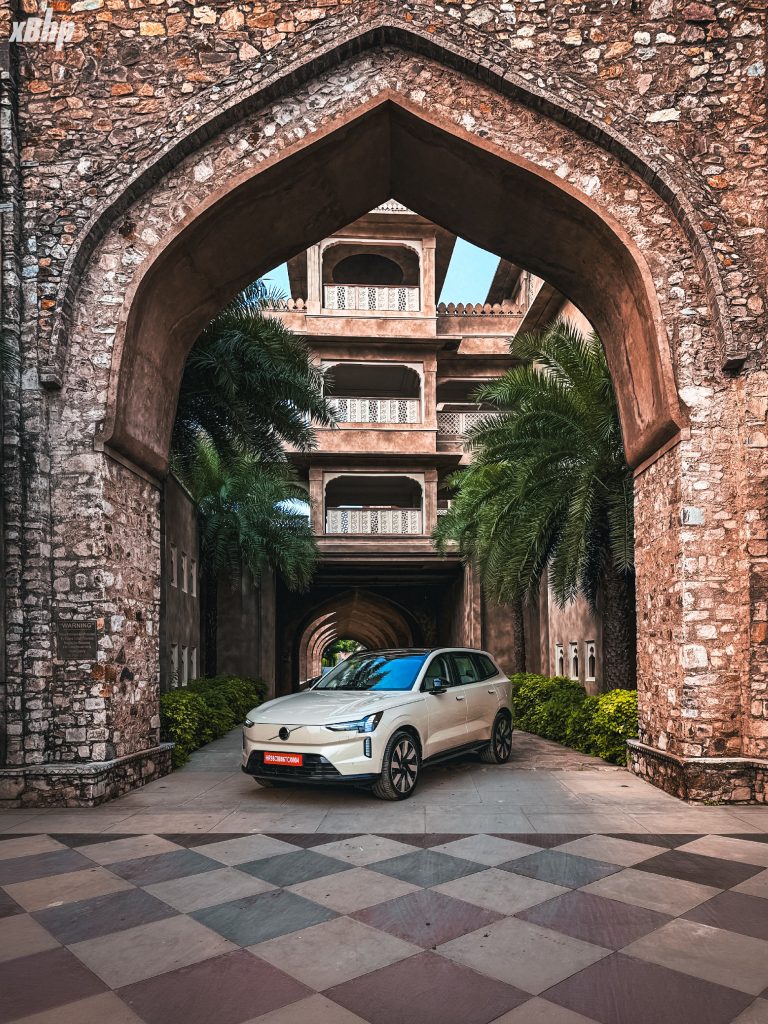
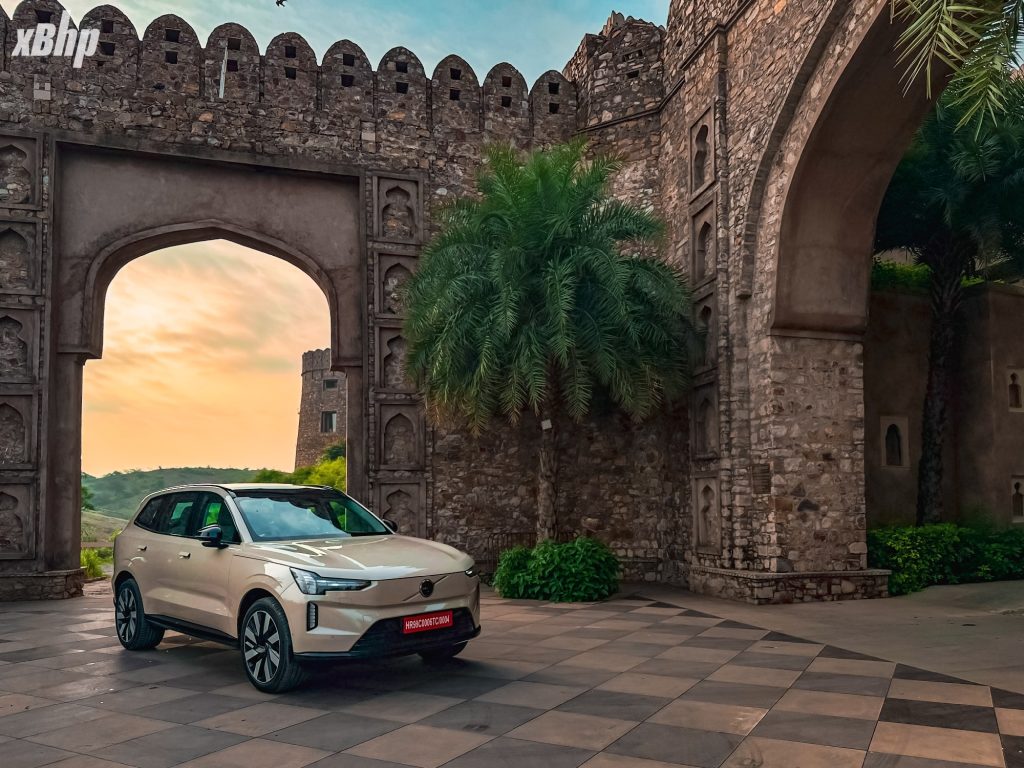
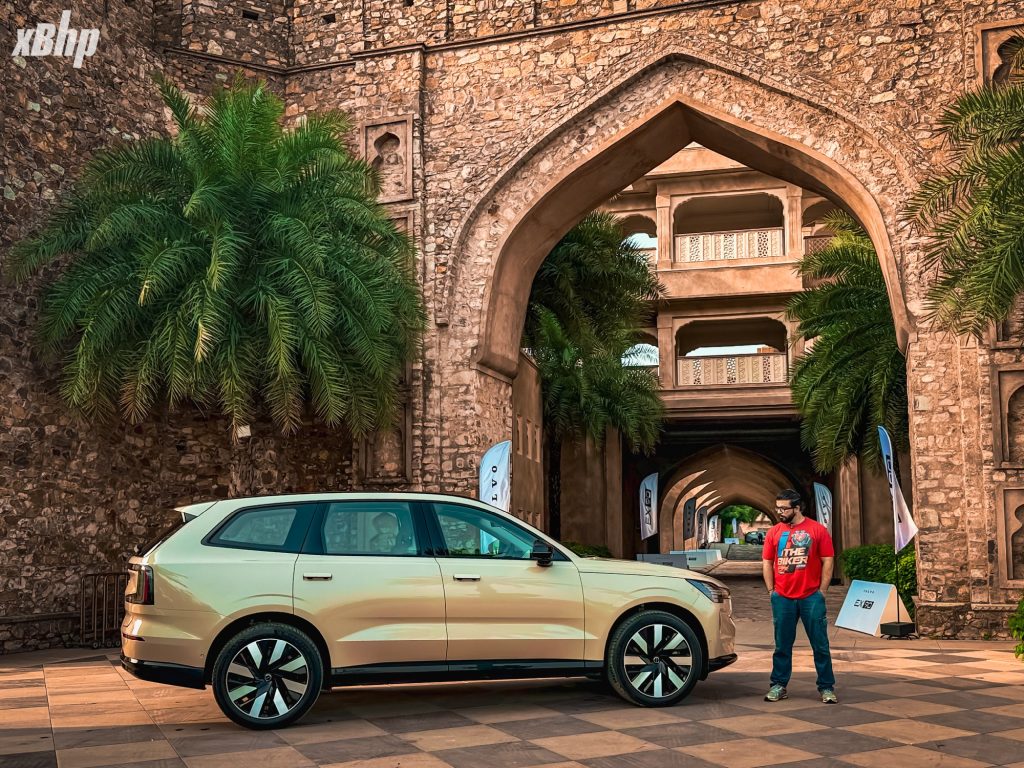
Our first proper experience with Volvo’s electric flagship began at the spectacular Six Senses Fort Barwara, near Sawai Madhopur. Surrounded by Rajasthan’s rugged landscape and vast open stretches, the historic fort made an unusual contrast to one of the most technologically advanced Volvos ever made. From there, we drove the EX90 towards Sawai Madhopur and further towards Ranthambore, experiencing it through a mix of open roads, smaller town sections, and the kind of relaxed driving environment that perhaps suits this car better than anywhere else.
By the end of the drive, one thing became quite clear: the EX90 is not trying to redefine Volvo. It is trying to take everything Volvo has always represented and reinterpret it for the electric era.
For decades, Volvo has almost become synonymous with one word: safety. That philosophy remains central to the EX90, but the approach has changed dramatically. Earlier, automotive safety was primarily about protecting occupants when an accident happened. With the EX90, Volvo is increasingly trying to use technology to prevent that accident from happening in the first place.
The car surrounds itself with an invisible shield of cameras, radars, and ultrasonic sensors, feeding information into a powerful central computing architecture. The suite is exhaustive: adaptive cruise control, Pilot Assist, collision avoidance, and door-opening alerts.
More interestingly, the EX90 is not only watching the world outside; it is also paying attention to the people inside. Its Driver Understanding System monitors driver attentiveness, while cabin occupant-sensing technology detects even the slightest movement inside. It is a fascinating evolution, from creating a strong protective shell to creating a car that is constantly trying to understand its environment. Thankfully, this technology never feels intrusive; it simply exists as a defining, quiet characteristic.
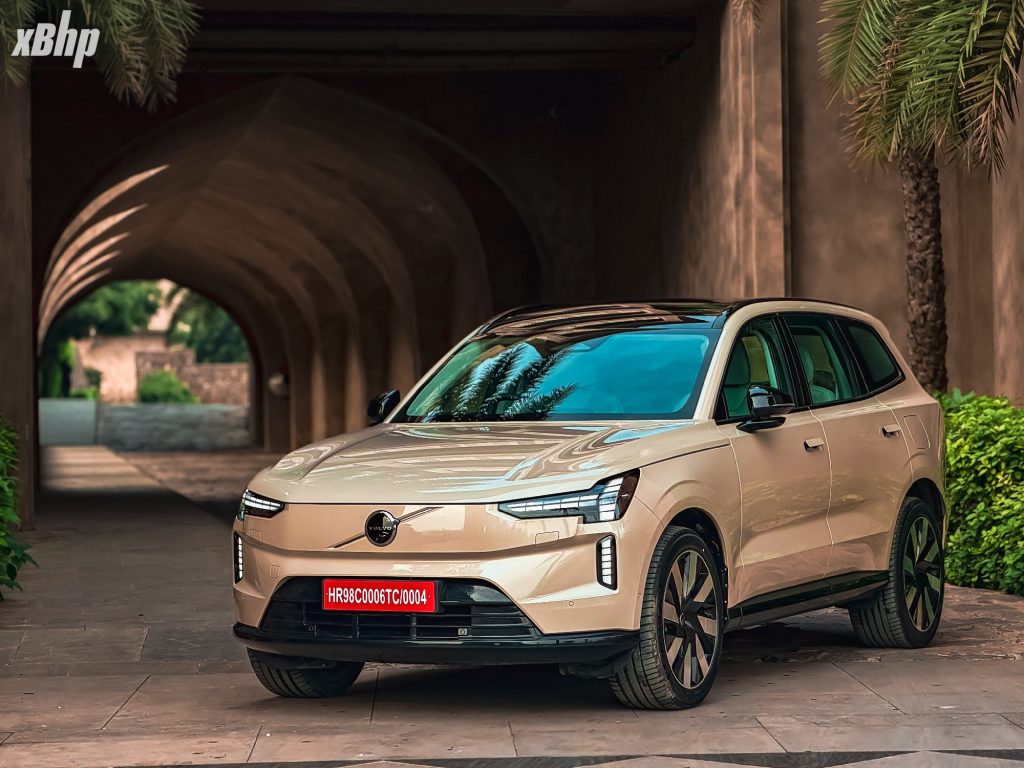
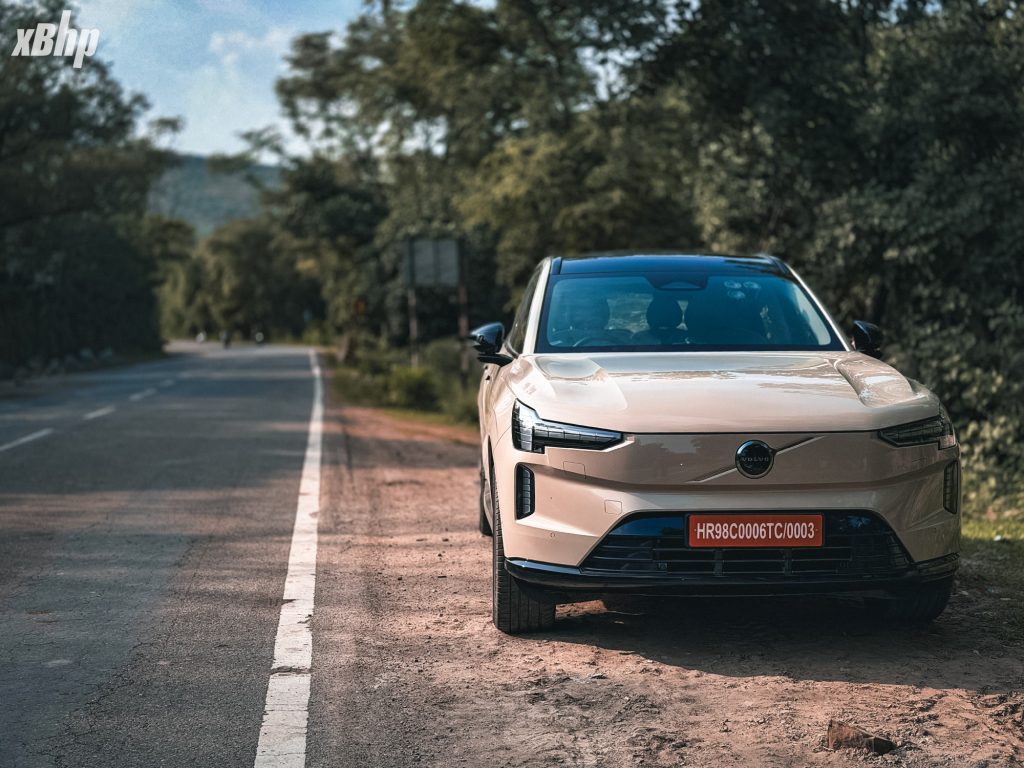
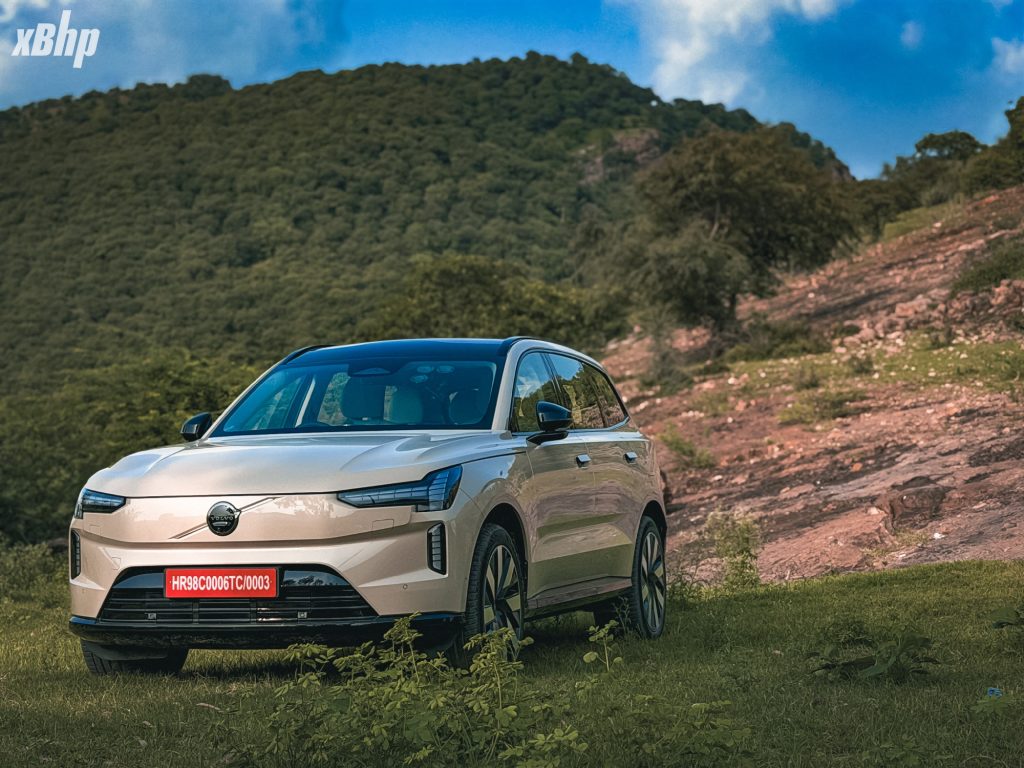
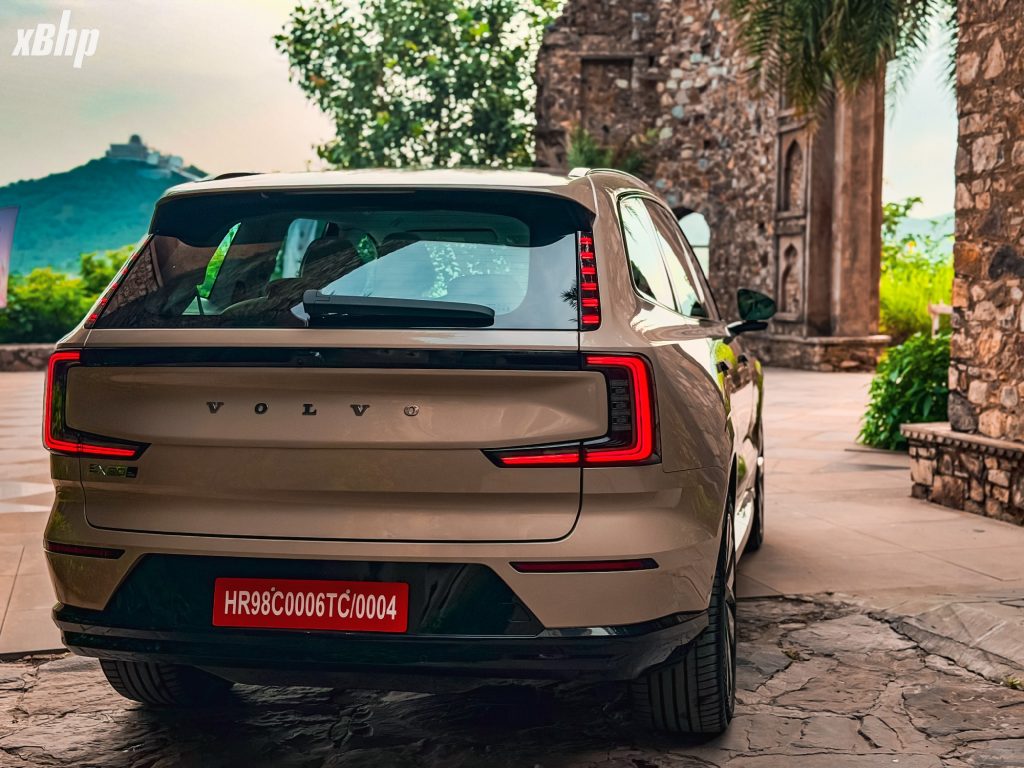
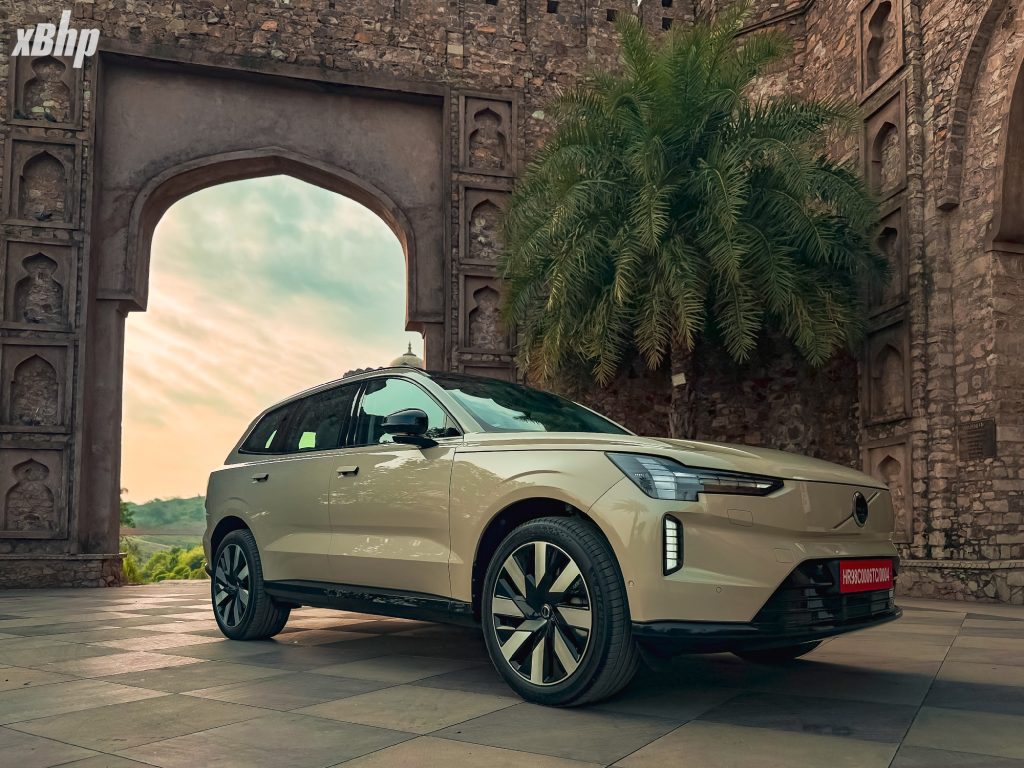
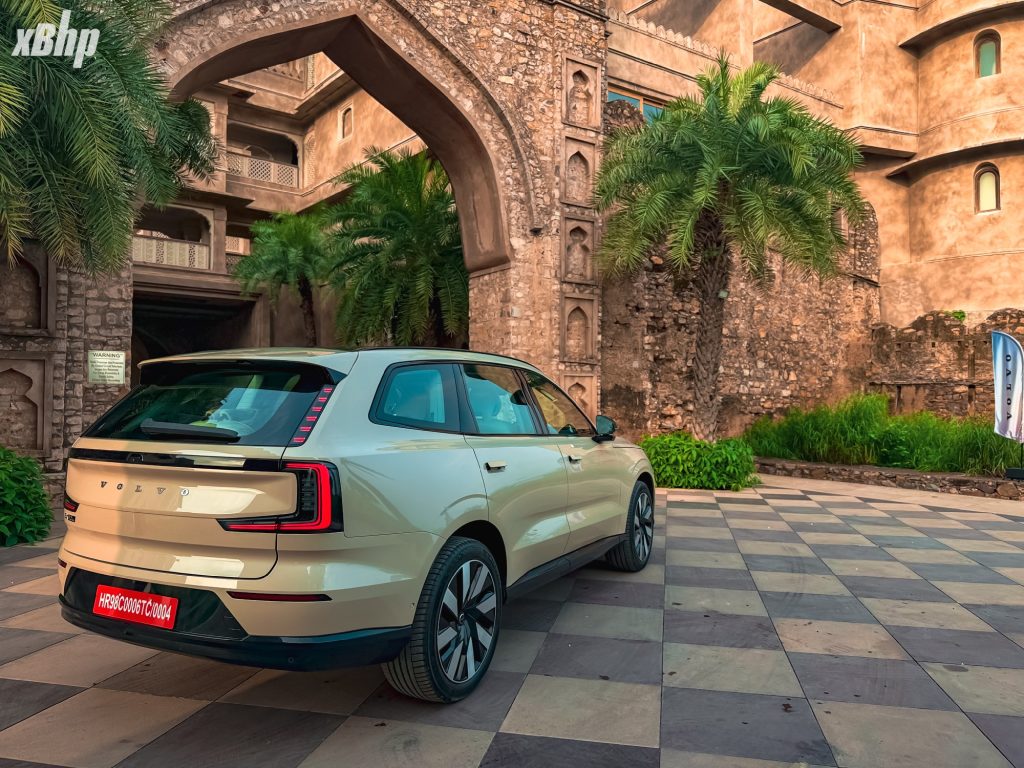
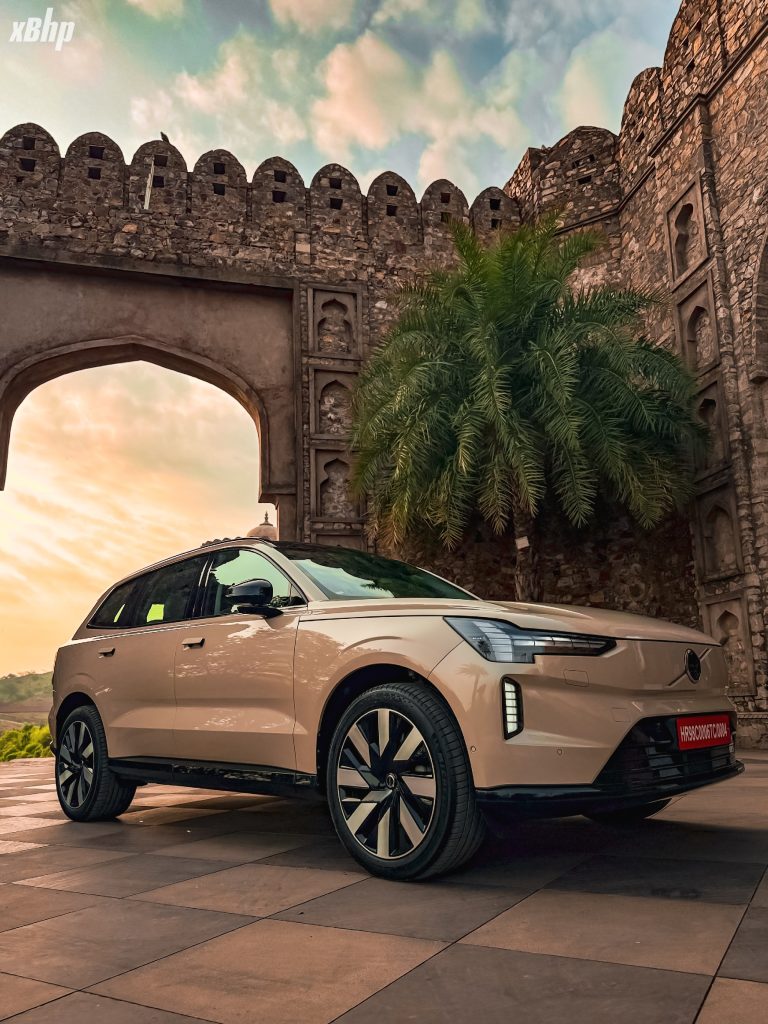
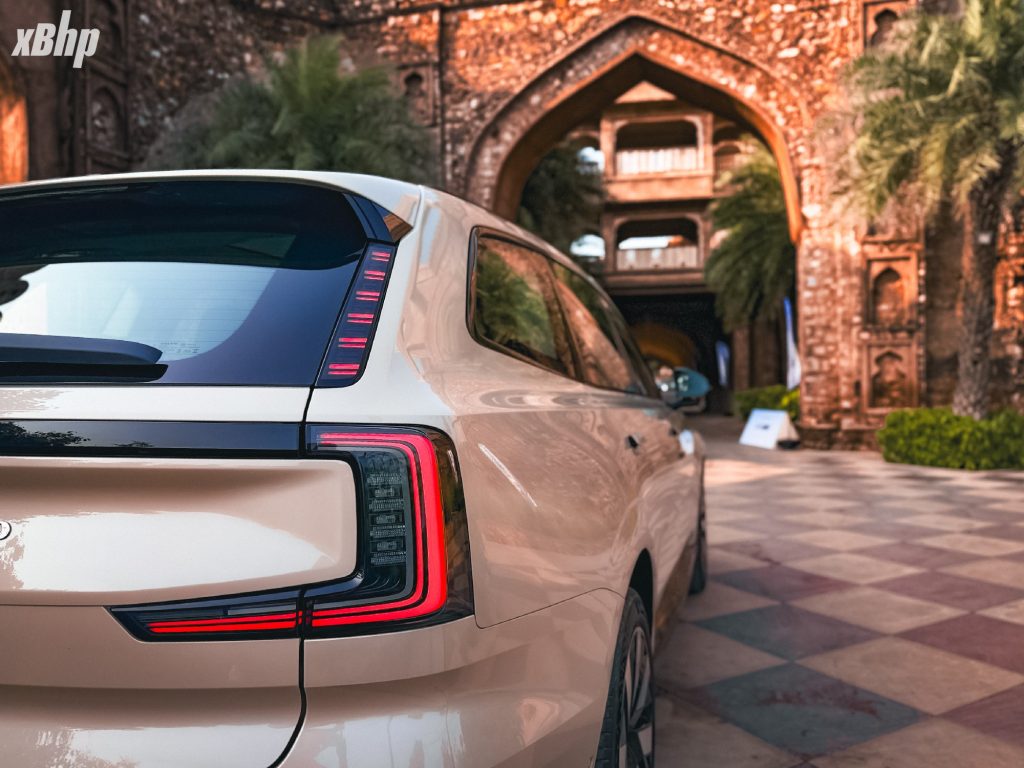
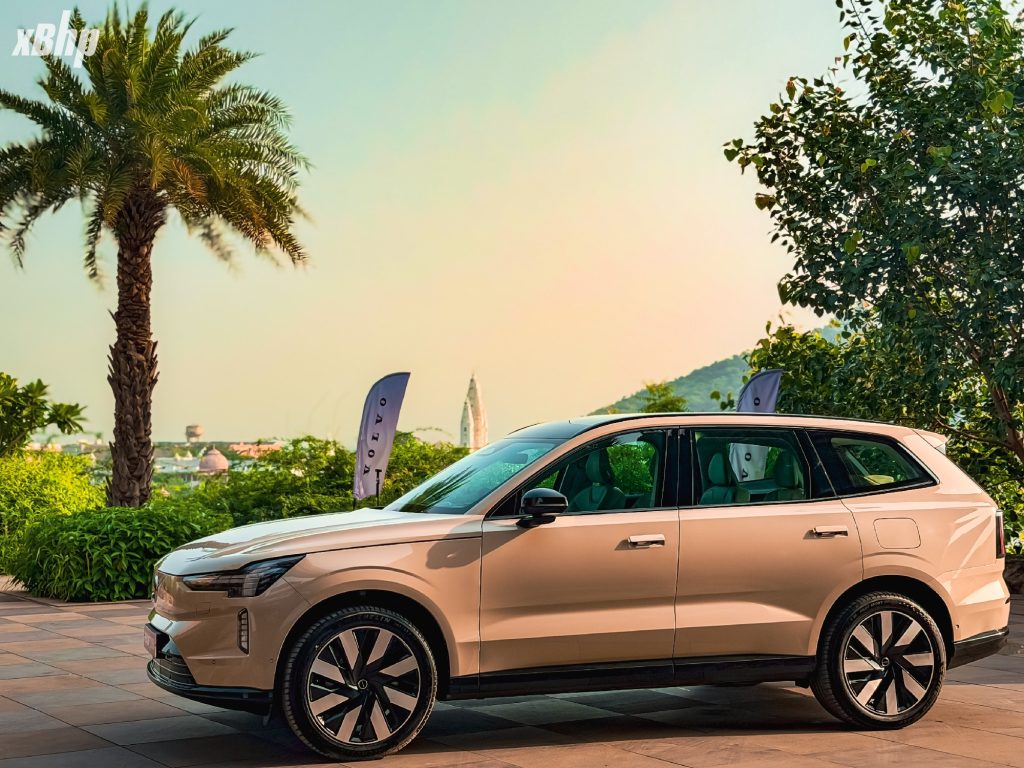
At 5,037 mm long with a 2,985 mm wheelbase, there is no hiding the EX90’s flagship proportions. Yet visually, it remains remarkably restrained. The familiar Thor’s Hammer lighting signature has evolved for the EV era, and the smooth, closed front gives it a cleaner appearance than Volvo’s combustion-powered SUVs. At the rear, the new split vertical LED light signature is particularly distinctive after dark.
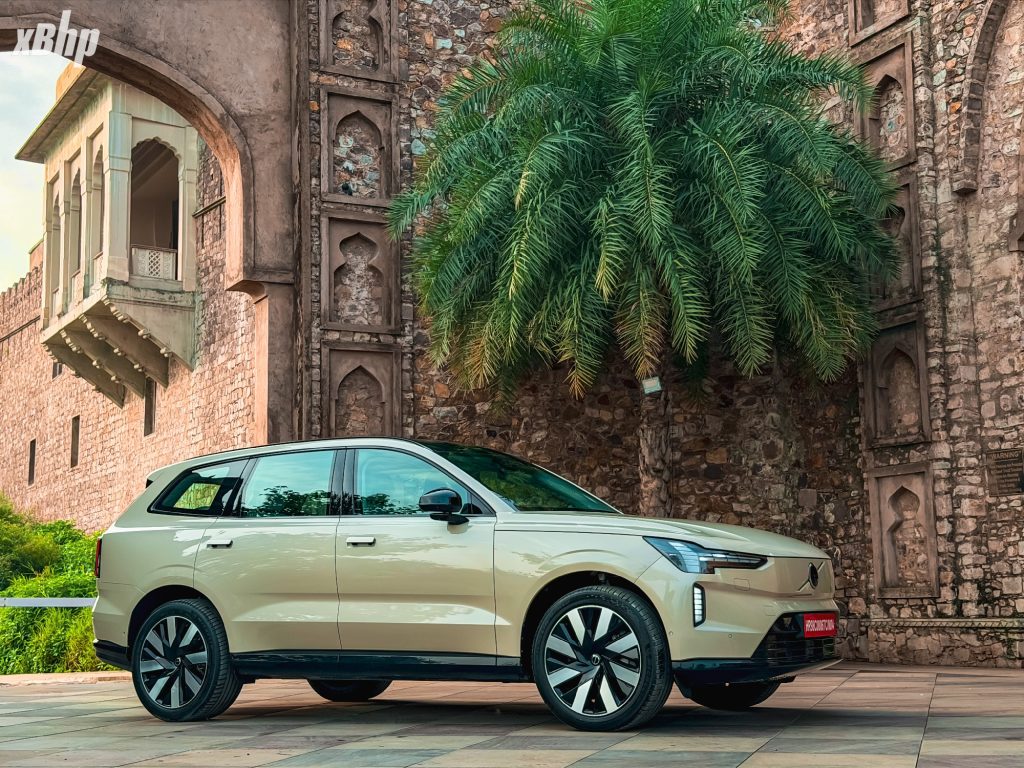
That Scandinavian restraint suited the surroundings at Six Senses particularly well. Against centuries-old stone architecture, the EX90 looked futuristic without looking out of place. It is modernity without excess, achieving an impressive aerodynamic Cd of 0.29 despite its sheer size.
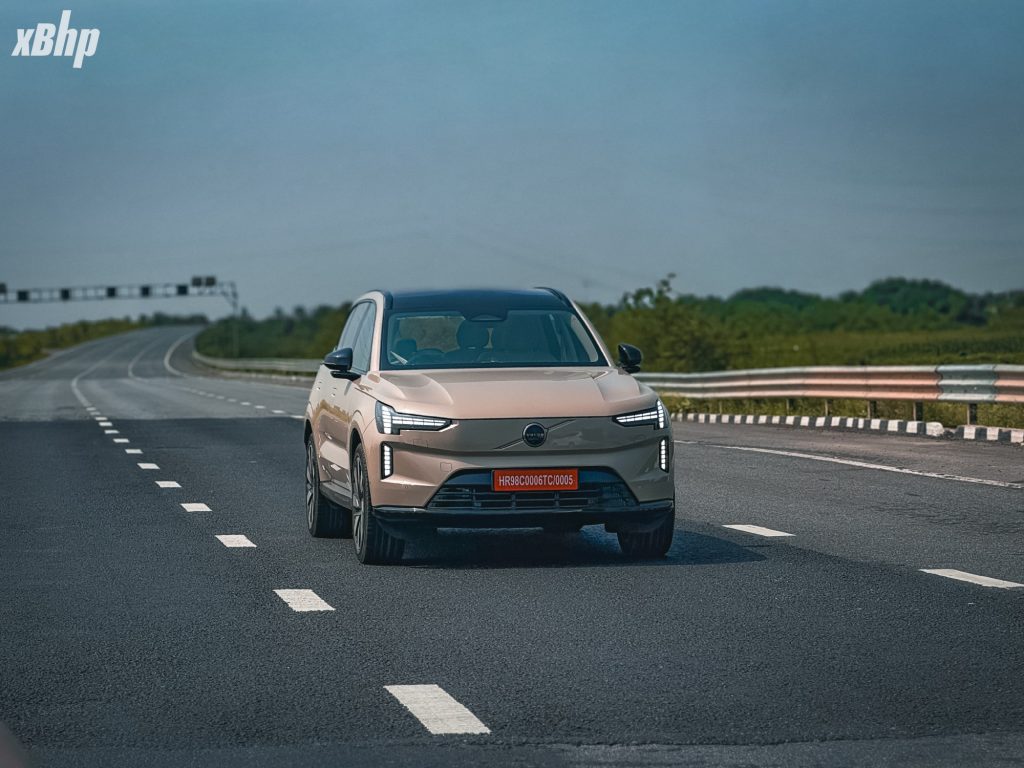
Pulling away from the fort and heading towards Sawai Madhopur, the first thing that stands out is not the performance; it is the silence. Volvo talks about the “comfort of silence,” and on these open roads, that phrase starts making sense. The absence of an engine is only part of it; road and wind noise are so well controlled that they create a remarkably calm sanctuary.
The four-corner air suspension isolates the cabin beautifully, settling into an effortless rhythm. With ground clearance of up to 250 mm, it possesses the kind of usable height that is essential for Indian conditions. While you never completely forget its 2,689 kg kerb weight, the way the chassis manages that mass is impressive. The steering is easygoing rather than aggressively sporty, encouraging you to cover long distances without a hint of fatigue.
Of course, “relaxed” doesn’t mean slow. The EX90 Twin Motor produces approximately 456 hp and 670 Nm of torque. Press the accelerator hard, and this large six-seat SUV responds with the immediacy we now expect from a premium EV, reaching 0–100 km/h in a claimed 5.5 seconds.
On the open roads outside Sawai Madhopur, the performance felt amusingly effortless. There is no dramatic engine note or gearbox theatrics. You simply gather speed with surprising urgency. However, after a few spirited bursts, we found ourselves naturally returning to a smoother driving style. That, perhaps, says more about the car’s character than the 0–100 figure ever could.
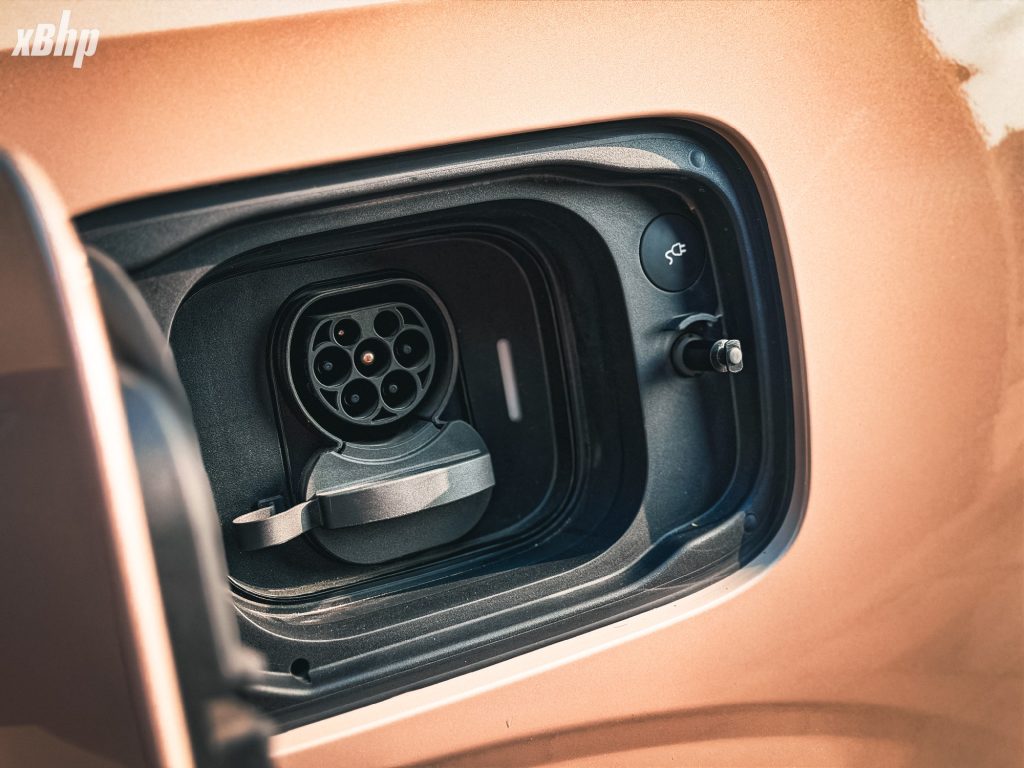
Underneath the EX90 sits a substantial 106 kWh battery, offering up to 625 km of WLTP range (with ICAT figures for India reaching 724 km). While real-world range will vary with driving style and Indian temperatures, the real technical highlight is the 800-volt electrical architecture.
This brings the EX90 in line with the latest generation of EV technology, allowing for higher charging performance and better electrical efficiency. The architecture is even designed for bidirectional charging, potentially allowing the car to act as an energy storage device for your home in the future.
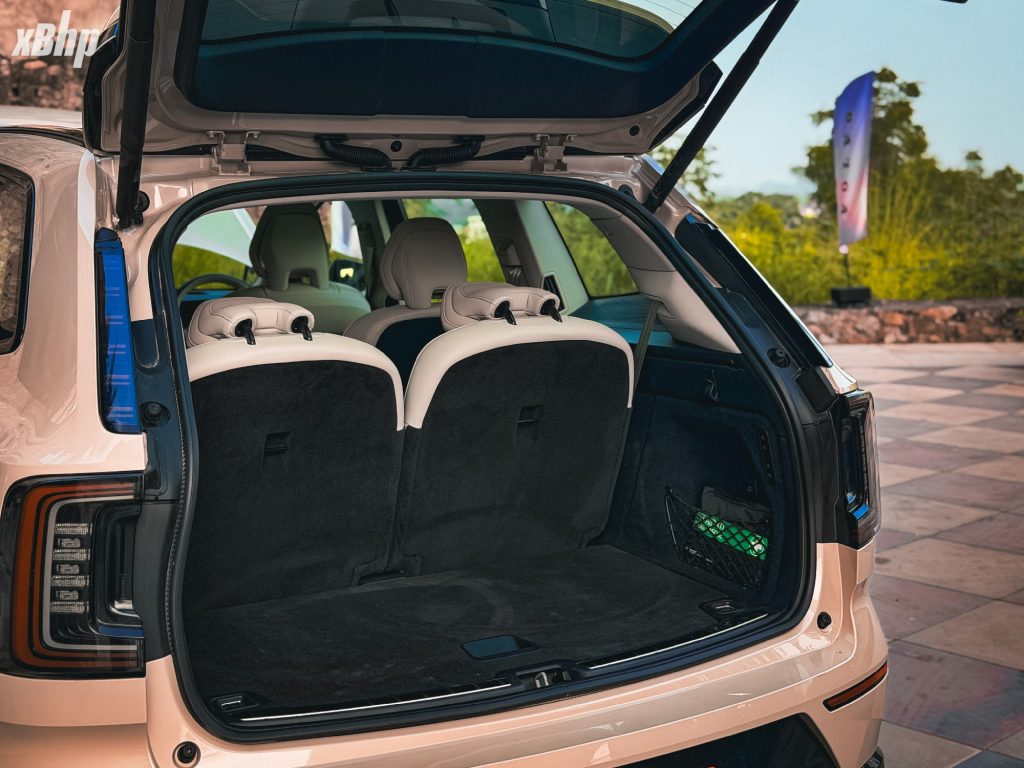
The Indian-spec EX90 features a 2+2+2 configuration with individual captain seats in the second row. This instantly elevates the cabin from a family-hauler to a luxury vehicle designed around passenger comfort.
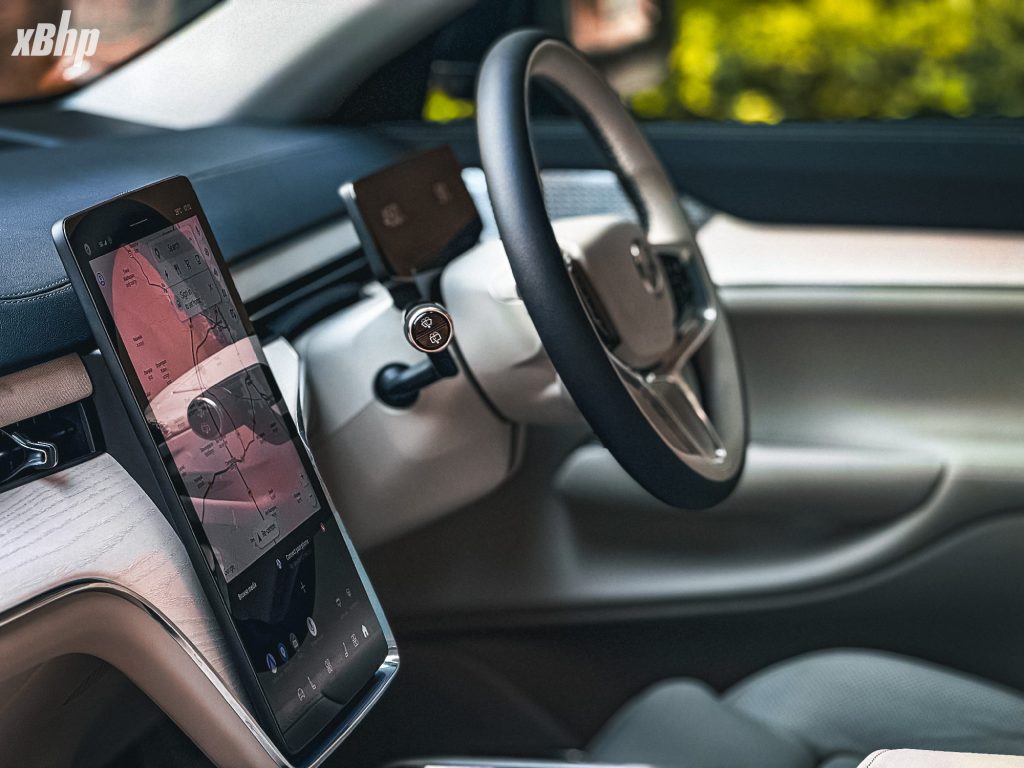
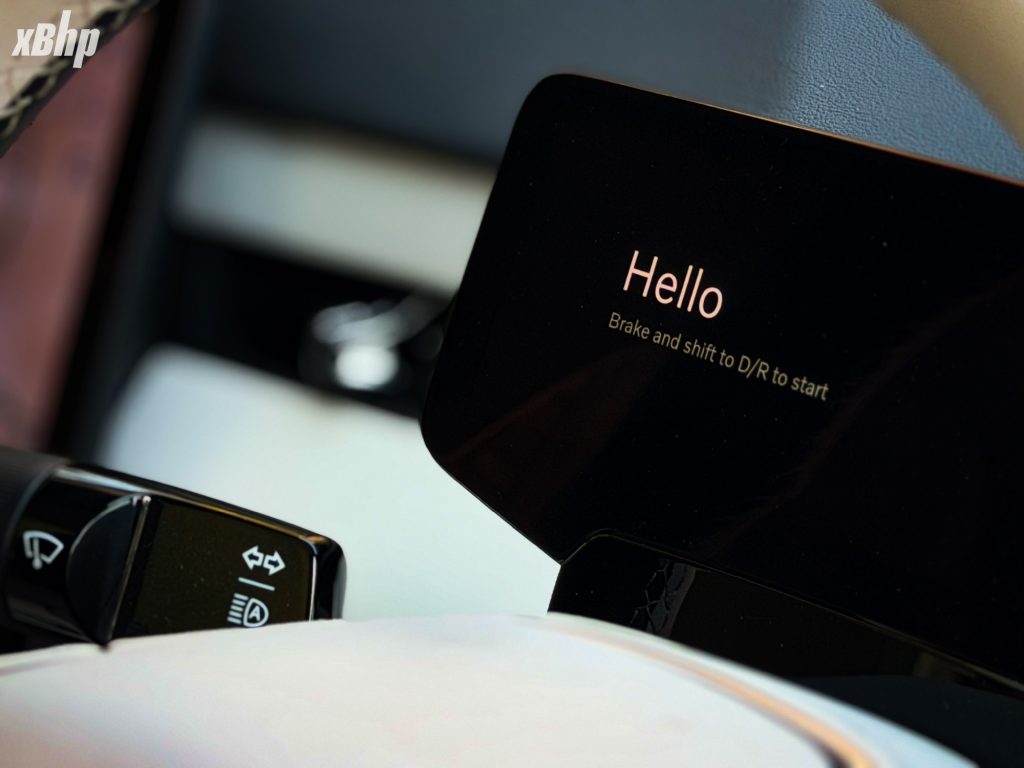
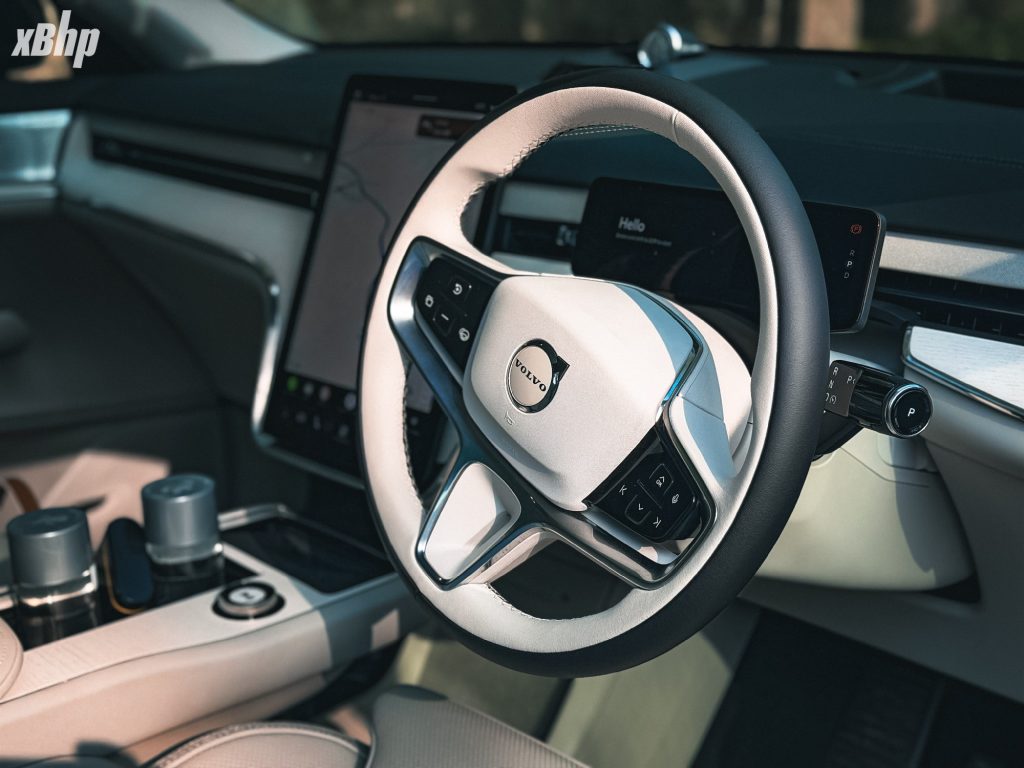
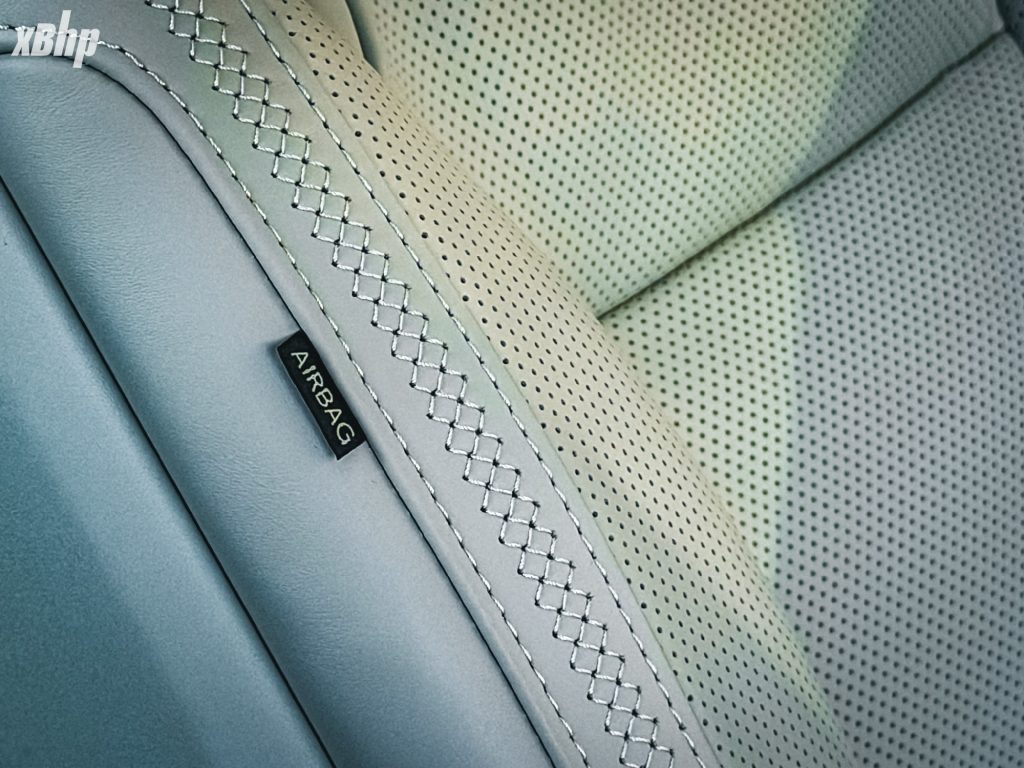
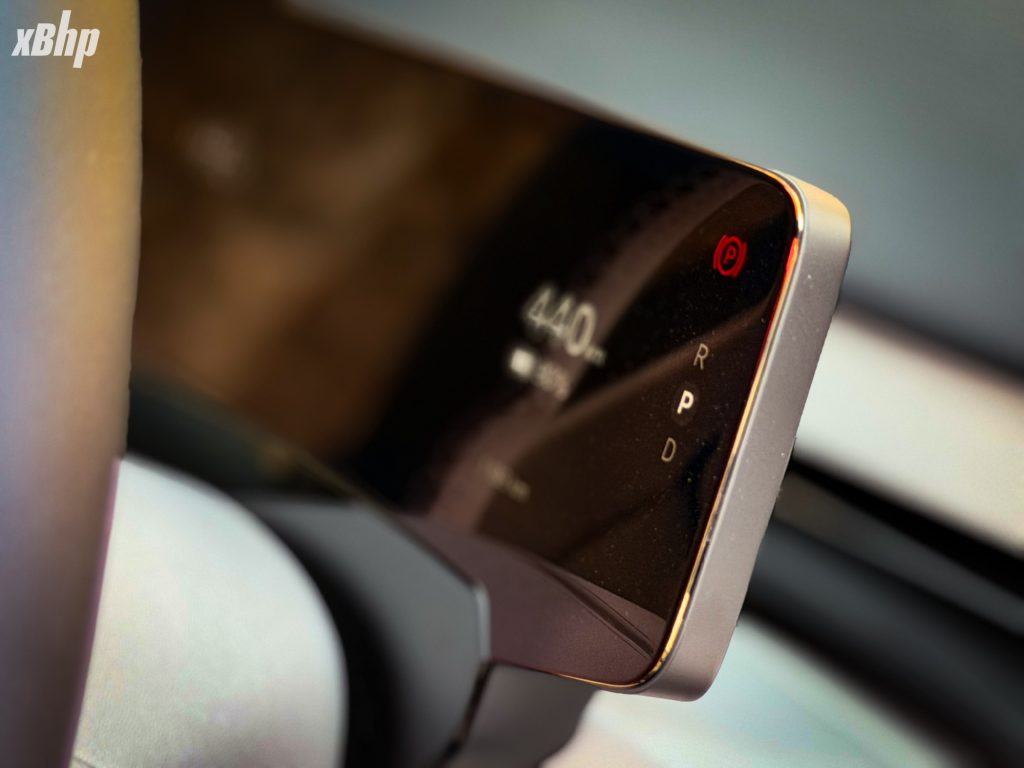
The interior is a masterclass in minimalism. A 14.5-inch portrait infotainment screen dominates the dashboard, integrated with Google services and over-the-air update capabilities. While the minimalism is beautiful, some frequently used functions might have benefited from physical buttons. Nevertheless, the execution is stunning, featuring ventilated Nappa leather, massage functions, and a panoramic glass roof.
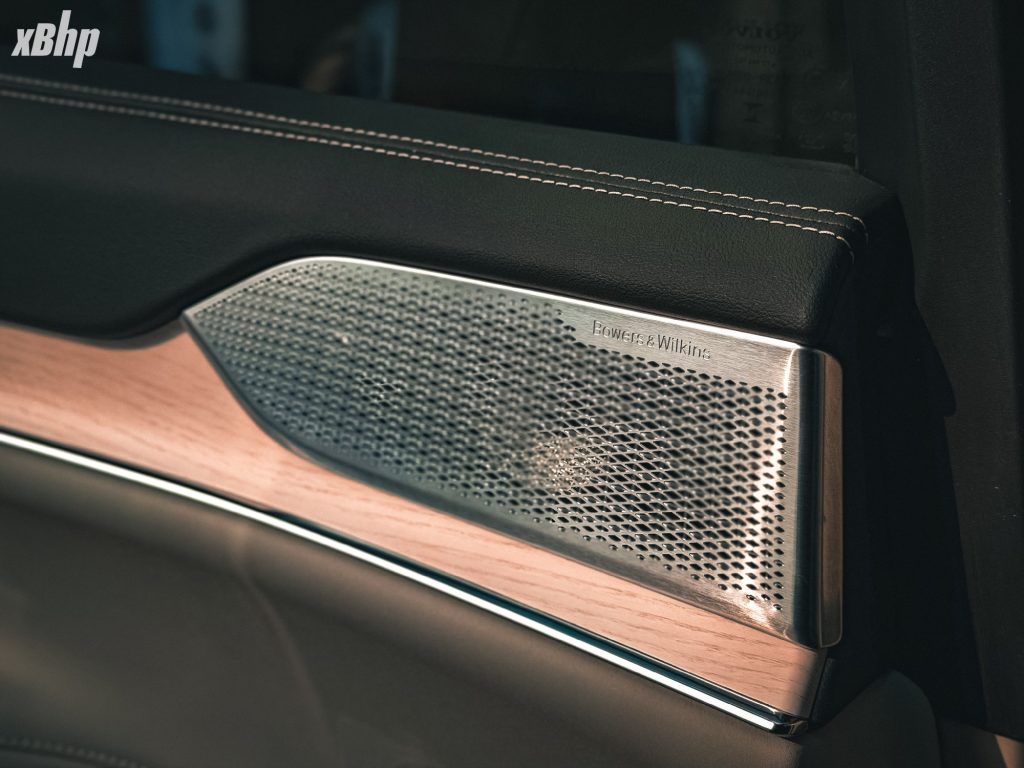
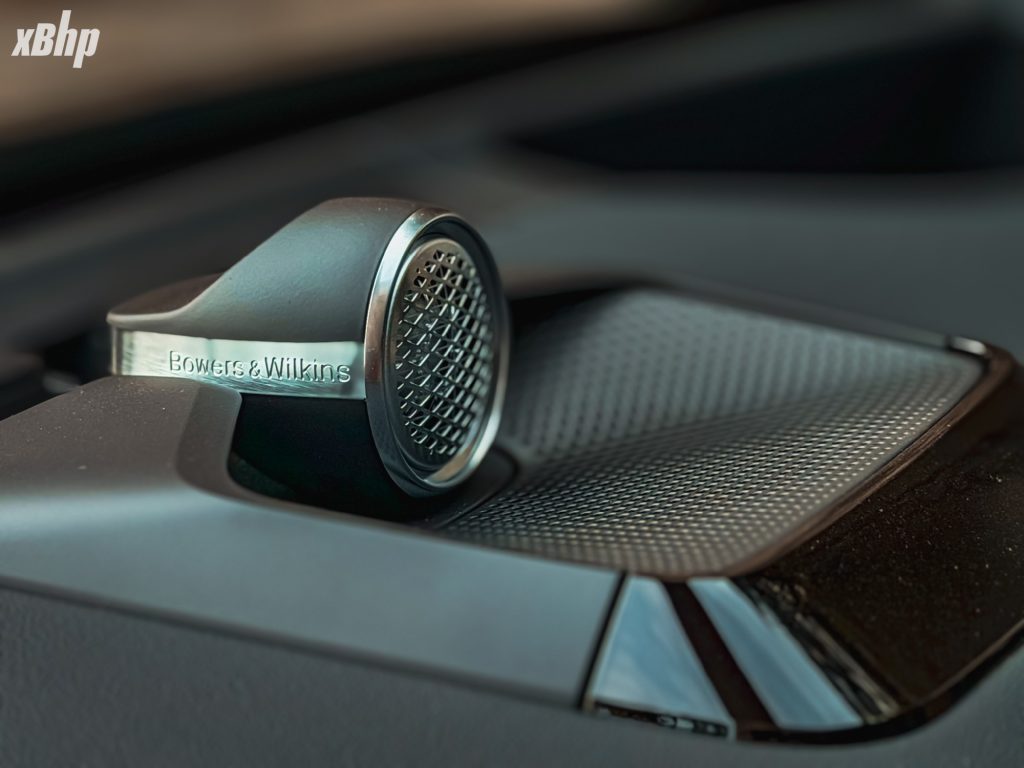
One feature deserves a special mention: the Bowers & Wilkins audio system with Dolby Atmos. Volvo has integrated an “Abbey Road Studios Mode,” inspired by the legendary London studio. Inside such a quiet cabin, the audio experience is transformative. The EX90 is almost engineered around removing unwanted sound so that you can choose exactly what you want to hear.
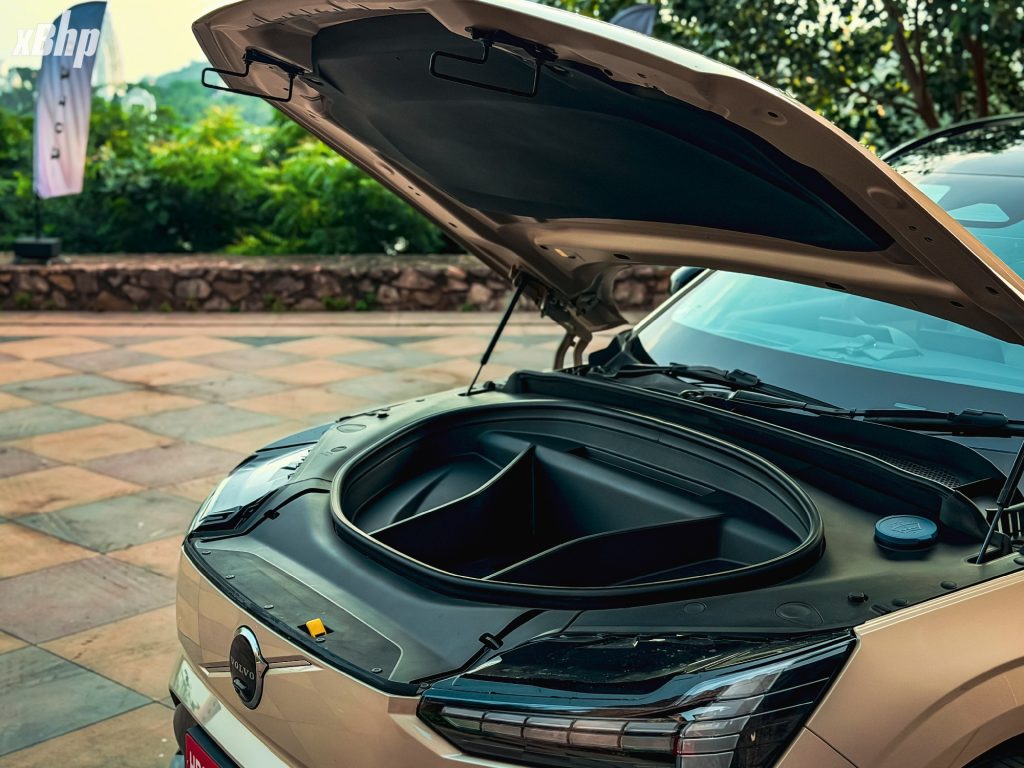
Despite the luxury, practicality hasn’t been sacrificed. Even with all three rows up, you get 324 litres of boot space, expanding to 690 litres with the third row folded. There is also a 46-litre “frunk” under the bonnet. Crucially for Indian travellers, the specification includes a full-size spare wheel, a small detail that becomes vital once you leave the major cities.
Driving back through the Rajasthan landscape, the EX90 feels like the ultimate expression of the Volvo philosophy. It doesn’t overwhelm you with drama or unnecessary flash. Instead, it revolves around reducing effort. The suspension softens the road, the drivetrain removes noise, and the safety systems watch the world for you.
Decades ago, Volvo became famous for asking how a car could better protect the people inside it. With the EX90, that question has evolved: How much can the car understand and anticipate before those people ever need protecting? The answer, delivered amidst the historic walls of Barwara, is exactly what you’d expect: quietly, intelligently, and without unnecessary drama.
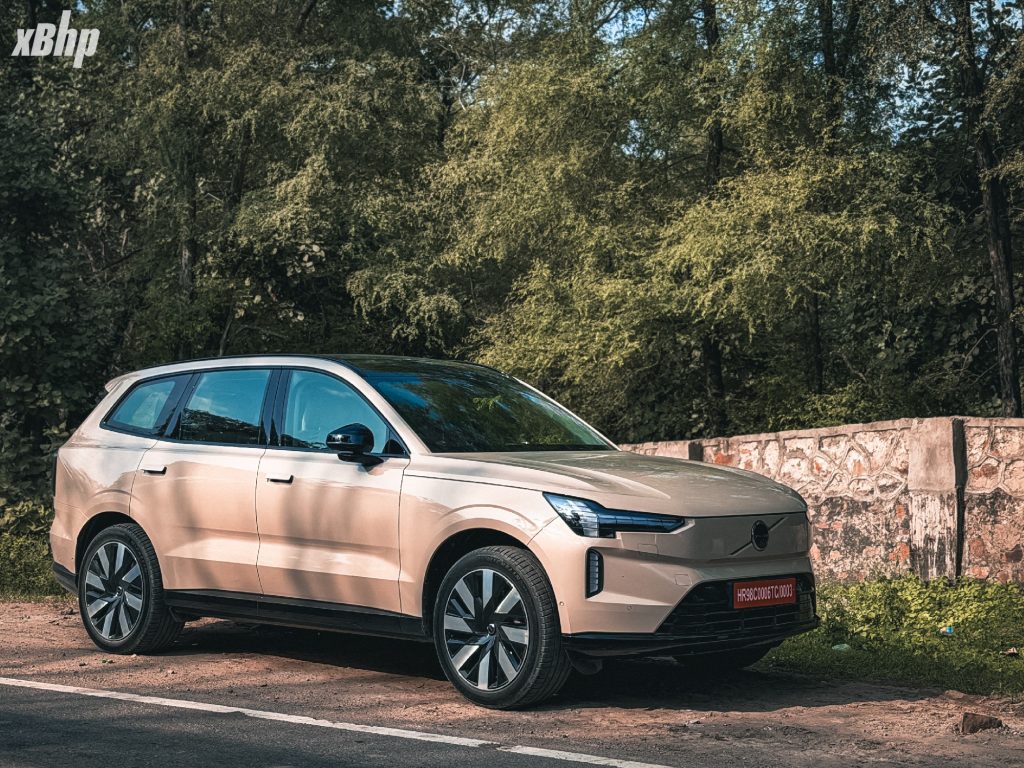
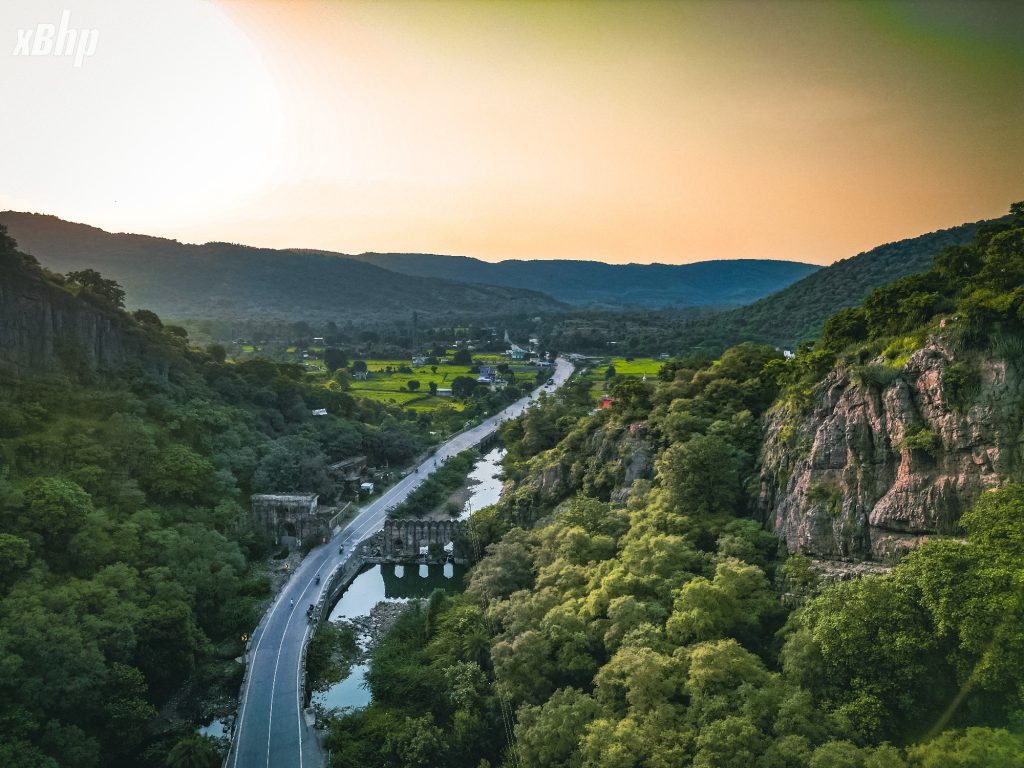
Here are some stunning pictures from our time in Rajasthan…