Since '02 xBhp is different things to different people. From a close knit national community of
bikers to India's only motorcycling lifestyle magazine and a place to make like-minded biker
friends. Join us
xBhp was born more than 16 years ago and since then we've had a chance to ride or drive hundreds of machines
running on two wheels or four wheels, and sometimes even three wheels. We are not done yet, and this list is
still growing. In these pages, we take a deep dive in the treasure trove of our ride experiences and bring
you all that we have ridden or driven.
Machines Done 424
|
Total Cubic Capacity 177549
|
BHP 54589
Ferrari Portofino Driven | Giallo Modena Portofino
3,855 V8CC591BHP760NM
Sep 2019
Sundeep Gajjar
Cars,Ferrari
Serendipity. It is such a beautiful word with a meaning so deep that it can carry stories in itself. Overused and misplaced as it may be, this story that we bring to you is very much contained in this word. This is the story of us driving a Ferrari. A Ferrari Portofino, to be precise. Why does this word describe the crux of our story?
Google serendipity and it says the meaning of the word is ‘the occurrence and development of events by chance in a happy or beneficial way.’ And that is exactly what happened. We, being motorcyclists, never in our wildest dreams thought that we’d revere a four-wheeled cage. And what’s more, the existence of Ferrari itself is nothing short of fortunate happenstance.
In order to support our statement, we’ll have to go back in time. We all know that Enzo Ferrari was the founder of the prancing pony brand, but do you know that there were many instances and aspects of his life that could have led him on a different path entirely? The first one is enough to support our statement. Enzo Ferrari never wanted to build cars! He saw Felice Nazzaro’s win at the 1908 Circuito di Bologna when he was 10 years old, and since then, all he wanted to do was be a racing driver.
Apart from that, the fact that he was a part of the Italian Army during World War I also points to so many things that could have gone wrong, and if they did, the beauties that we see strutting around wearing a prancing pony might never have existed. In 1916, Enzo’s father and brother died as a result of a widespread flu outbreak, and in 1918, Enzo himself became severely sick because of the flu pandemic! We were not kidding now, were we?
After being discharged from the army, Enzo wanted to try his hand at something he really wanted to do. After a lot of initial struggle, he landed a place in the racing department of Alfa Romeo as a driver. He was a brilliant driver and was doing well for himself… that is, until 1925. Antonio Ascari died in the French Grand Prix, and that left Enzo deeply shocked, because of which his mind drifted away from racing. And finally, in 1932, after the birth of his son, he retired.
While Enzo was not involved in racing directly, he shifted his focus to the management and development of Alfa Romeo race cars. As a result, Scuderia Ferrari (literally meaning Ferrari stable) was formed in 1929 and served as the racing division of Alfa Romeo. The team was wildly successful, and also, this was also when the famed ‘prancing horse’ emblem started to appear on the team’s cars.
The story of how the famed Ferrari emblem, the prancing horse, came to be is also an interesting one. Francesco Baracca, an Italian fighter plane pilot, was the one who created the emblem and sported it. During World War I, he gave Enzo a necklace with the emblem prior to takeoff. In 1918, Baracca was shot down and killed by an enemy plane, and it was in his memory that Enzo Ferrari used the prancing horse to create an emblem. The same emblem is what all the modern Ferraris so proudly sport.
After a good run sprinkled with some tough times, Scuderia Ferrari was dissolved in 1937. Enzo continued to work for Alfa Romeo for a while before he left in 1939. That is when he founded Auto-Avio Costruzioni, which supplied parts to other racing teams. Despite being under a contract clause that restricted Enzo from racing or designing cars, he manufactured two cars in 1940 for the Mille Miglia, an endurance race.
But the hardships were far from over for Enzo, as after World War II broke out, his factory was forced to undertake war production by the government. After the bombing of the factory, Ferrari relocated from Modena to Maranello, and it was only after the end of the conflict that he decided to make cars bearing his name. Finally, Ferrari S.p.A. was founded in 1947, and the rest, as they say, is history. From being rated the most powerful brand in the world in 2014 to the 1964 Ferrari 250 GTO becoming the most expensive car in history in June 2018, Ferrari has done it all. And all of that with the rather… eventful… inception of the company!
Coming to us folks at xBhp, well, the story of our brush with cars may not be that interesting. But to justify the beautiful start of this piece, we have to put it out there. We are motorcyclists at heart, and nothing can change that. Motorcycles have let us see the world in its highest standard of beauty, as stated by the numerous roadtrips we have done around the world. But then, we have been in and out of touch with cages too, and quite a few of them have left us… fascinated. More than we’d like to admit.
Since we have tried our hands on some of the most exquisite cars in the world, the inclination towards Ferrari was natural. Some of the best-looking and best-sounding cars in the world, made in Italy and with mind-numbing performance? We are on! And a lot of that performance and panache is because of a very simple reason. Ferrari has long been regarded as one of the oldest and most successful racing teams at the top of the sport- F1. After all, 16 constructor championships and 15 drivers’ championships aren’t very easy to come by.
Our first brush with the prancing horse was with a Ferrari 458 Spider. Beautiful on the outside, opulent on the inside, a beast when it comes to performance. Just the retractable hardtop is enough to blow someone’s mind away. A V8 which makes 600+ horsepower, propelling a car that weighs just a touch over 1400 kg, it’ll make you forget about everything else.
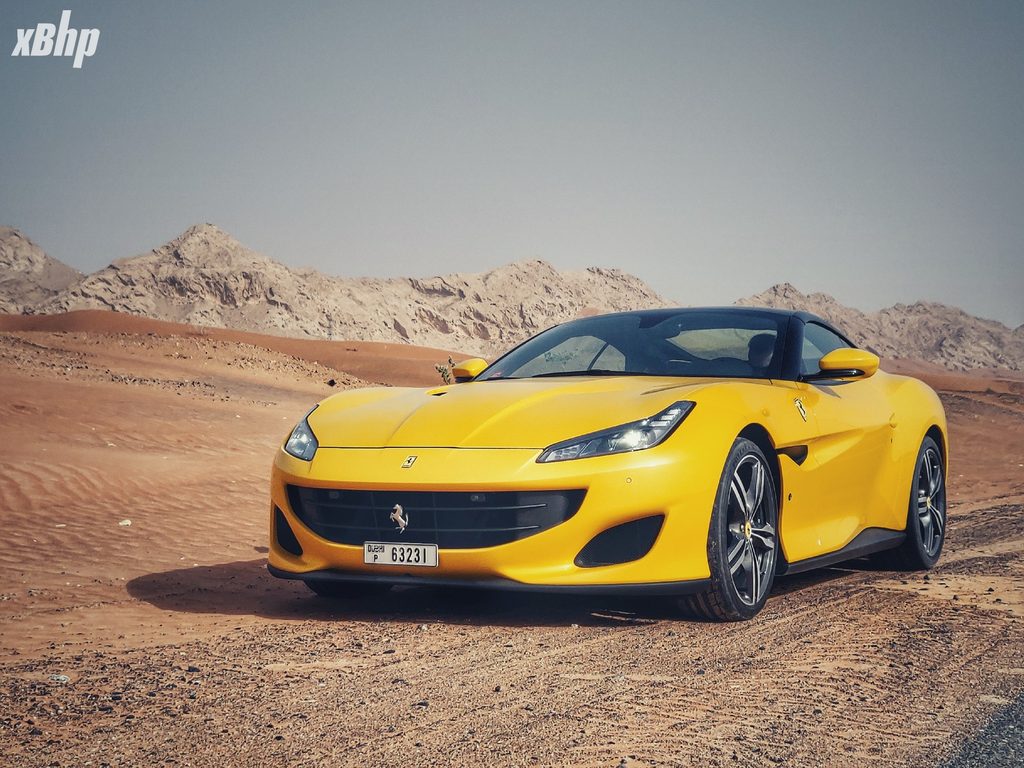
Our next one is the car in discussion here, the Ferrari Portofino. Now, before we start to spill the details on the Ferrari Portofino, let us tell you that it is an entry-level Ferrari. The most basic Ferrari. And despite being that, it’ll set you back by about INR 3.5 crores! And once you experience the Portofino, once you sit in the car and drive it, you never really come back. AND YOU KNOW why: entry-level as it may be, it is a true Ferrari.
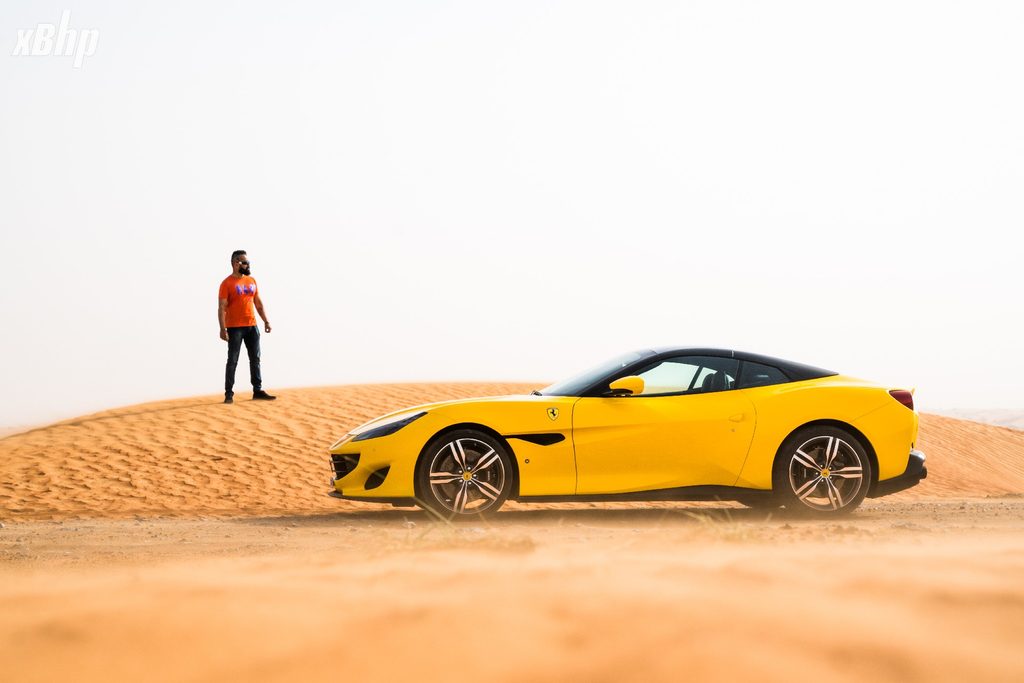
The Ferrari Portofino was unveiled in 2017 as the successor to the Ferrari California T. The Ferrari California T was a grand touring sports car, so the Portofino also builds itself along the same lines- a hard-top 2+2 convertible (we’ll talk about that in a bit). While the Ferrari California was quite successful commercially, a lot of people complained that it was the least Ferrari-ish Ferrari. Although many would disagree with that, Ferrari made sure that they took everyone’s opinion into consideration when they came out with the Portofino. Right from the looks to the exhaust note, the Portofino exudes oodles of presence and panache.
The predecessor of the Portofino, the Ferrari California series of cars were Ferrari’s entry-level cars. The first California, introduced in 2008, was powered by a naturally aspirated 4.3L V8 engine. Despite being an entry-level Ferrari, its price was similar to the base price of the Ferrari F430 when it came out. Second California, the California 30 came out in 2012 with more power and less weight. A major design overhaul, to appease the people who thought that the California was ‘lesser Ferrari’, came in 2012 with the California T. With the revised styling and a new twin-turbo V8, it somewhat hid the gaping lack of character of the older California.
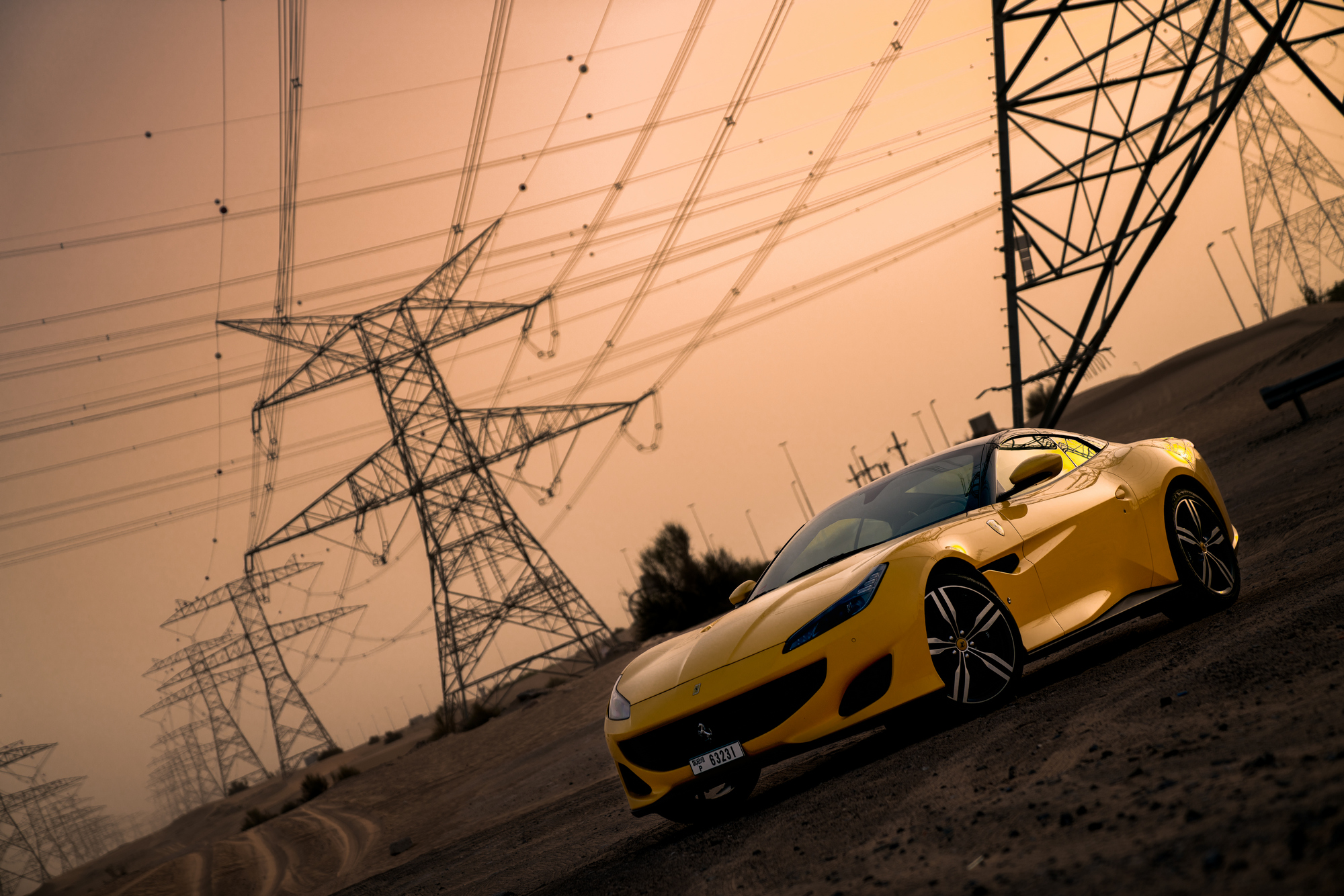
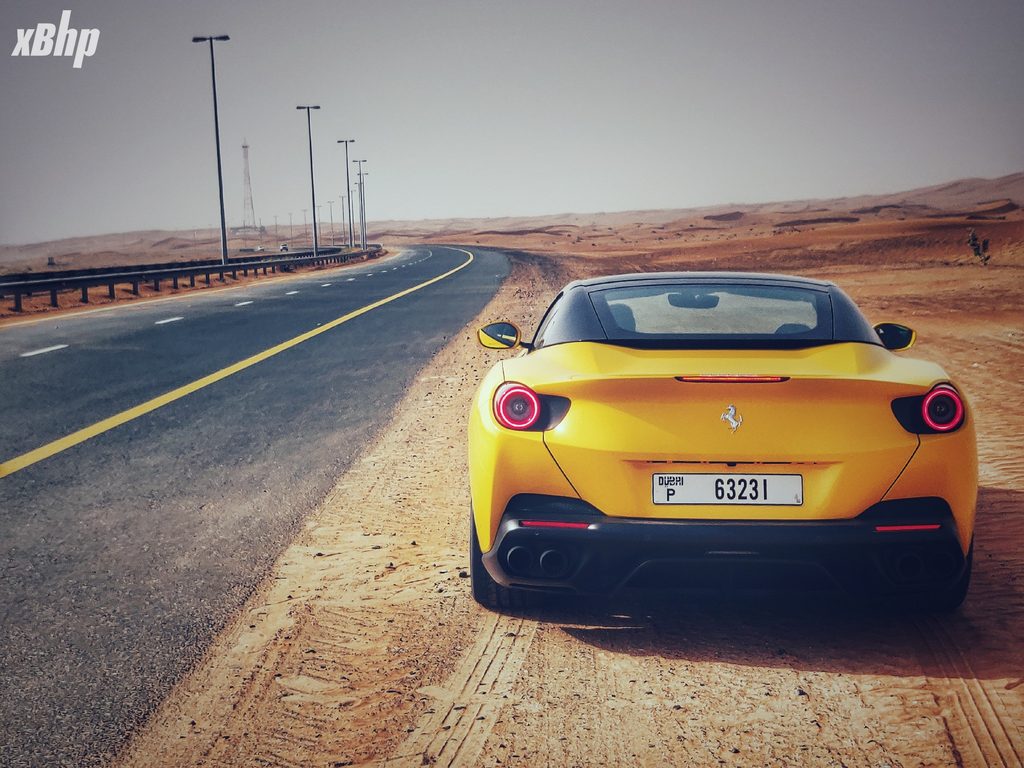
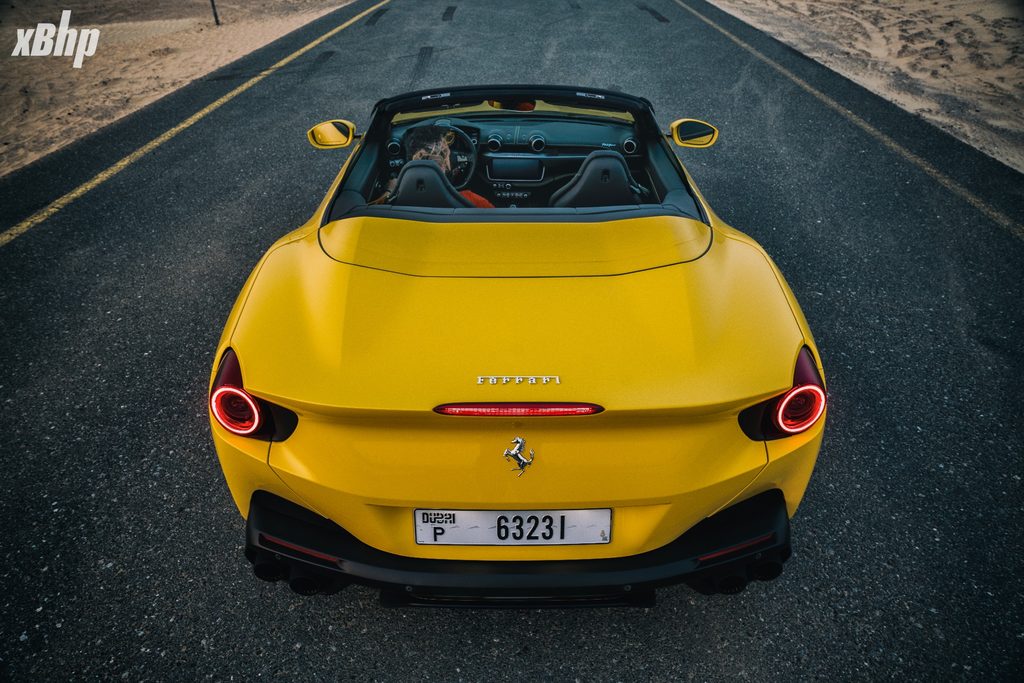
Coming back to the Portofino, this car is immensely beautiful from every angle you look at it. The rear with the 4-pipe exhaust and single-round taillamps, the scoops and skirts on the side, the sultry headlights on the front and the lines and curves of the Portofino portray Ferrari’s emphasis on making it look worthy of carrying the Ferrari badge. The front of the car (hood) houses the 3855cc, twin-turbo 90° V8, which makes around 591 Bhp of power at 7500 rpm and 760 Nm of torque between 3000 and 5250 rpm. And yes, we will talk about the performance too… in a bit. Before that, the experience of being in and around a Ferrari.
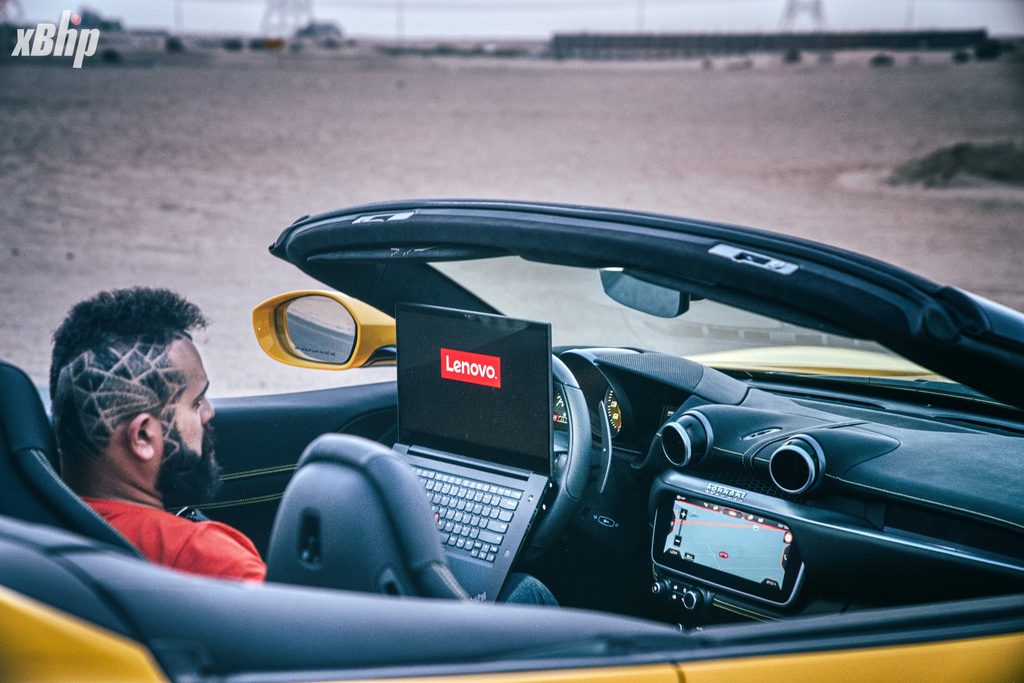
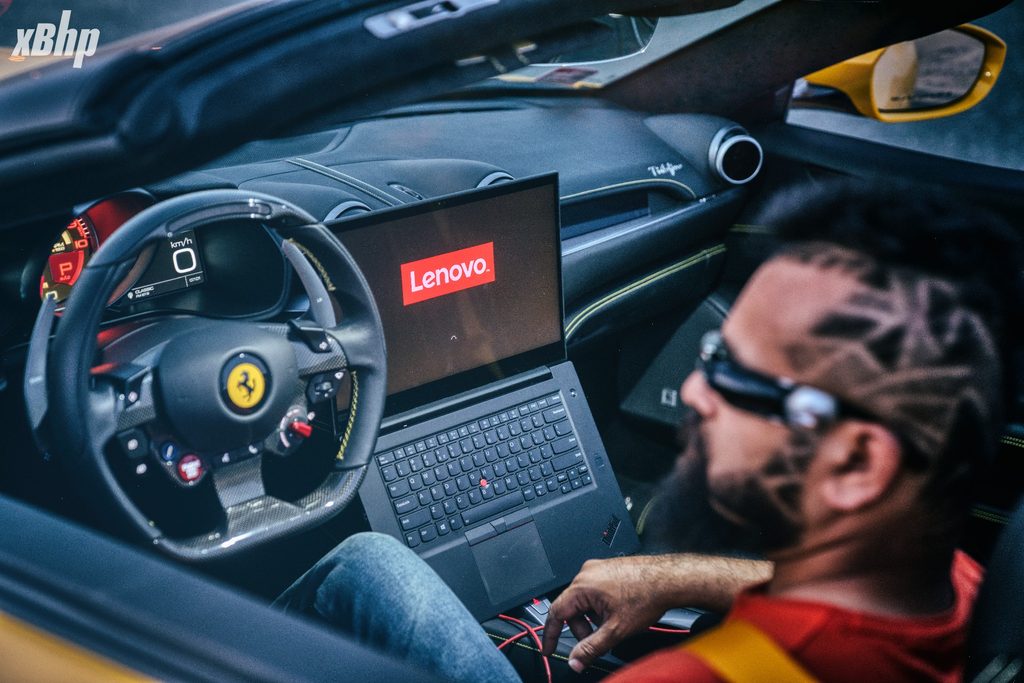
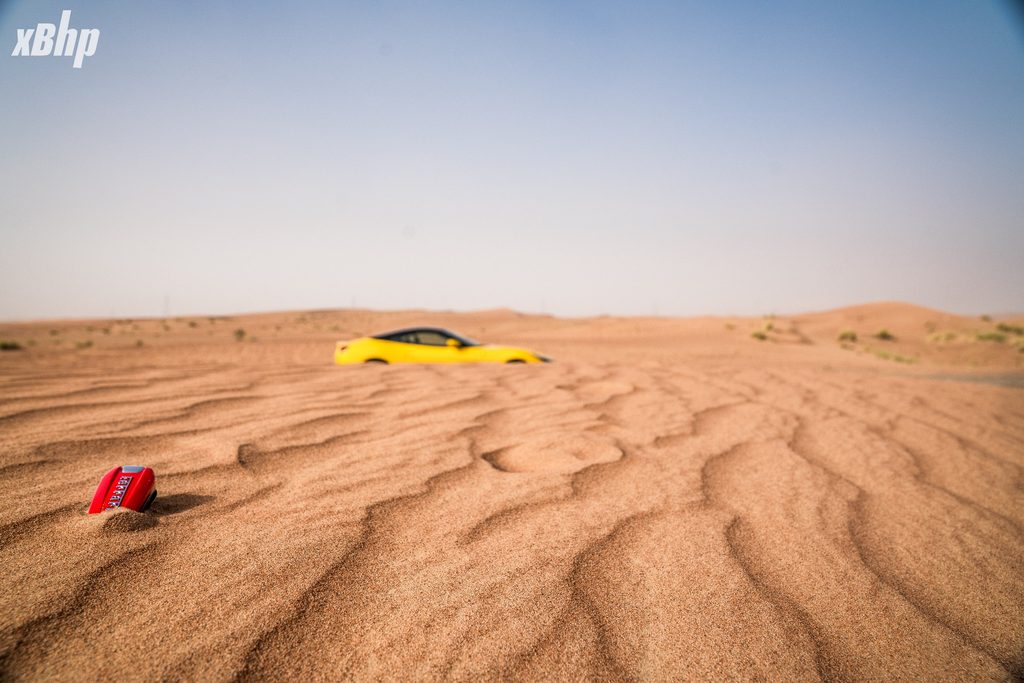
Starting with the key, it’s beautiful, red and something that, if shown, lets people know that you have succeeded at life… at least materialistically. And once you get in the car, you do not have to stow the key away in your pocket as you do with regular cars. There is a dedicated slot that perfectly fits the keys to your Portofino because… Ferrari! Inside the car, the thing that draws your attention the most is the gigantic infotainment screen. And the things it can do… well, let us tell you.
So, the seats in the Portofino have a little lever-like thing with which you can move the seat forward and rearward, plus up and down. But that’s old school. Right beside the lever, there is a button that brings up the seat control on the infotainment screen. From there, you can adjust every aspect of the seat, be it the seating comfort or… thermal comfort. That’s Ferrari speak for heated seats. The same goes for climate control. While there are regular buttons and knobs for the same, the climate control menu on the infotainment screen offers a much more comprehensive experience of adjusting the temperature inside the cabin.
Another notable feature of the screen is the navigation system. It has a feature called points of interest, which can tell you about places like restaurants, bars, banks and all that you can think of. And then that yellow pod of a tachometer… iconic. Ferrari has made it a point that everything that a driver needs to do can be done from the steering wheel. Even for the blinkers, the buttons are placed on the steering wheel! On either side of the tachometer, we have a screen. The left one shows you the status/vitals of the car, i.e. engine temperature, tyre pressure, tyre temperature and such. And the right one, while programmable, is mostly used to display speed, which is kinda important in a 590 bhp car! But the best part still is the lights on the steering wheel that blink red when the redline is approaching and blue when you need to upshift. That’s as close to a Formula 1-like-feel mere mortals can get.
The most ridiculously entertaining part of a convertible vehicle is to watch the roof come on and off, and this fact cannot be denied. In a Portofino, the hardtop takes 14s to go off and 14s to come back on! And it can even be done on the move, albeit only at lower speeds. The engineering prowess is on full display during this process as the trunk, which opens like a regular trunk to access the boot, opens in a completely opposite direction during the roof-off and roof-on. And there’s that… we have Miyagi’d you on the convertible-awesomeness of the Portofino. Now there is a fly in the ointment… the rear seats. They are… meagre to say the least, and they are hard to justify. But what would be even harder to justify is the situation where there are more than two people in a goddamn Portofino!
Now, the best aspect of a Ferrari- the performance. Firstly, when compared to the California, the chassis is all-new, resulting in 35% more stiffness and 80 kg of weight loss! That translates to a car with a kerb weight of 1664 kg, 590 bhp of power and 760 Nm of torque. Crunching numbers- the Ferrari Portofino will dispatch a 0-100 km/h sprint in 3.5s, 0-200 km/h in 10.8s and will reach a top speed in excess of 320+ km/h. Obviously, we did not get to test the top speed, but who is stopping us from some acceleration tests! Floor the pedal and it pushes you backwards in the seat, sounding every bit the Ferrari that it is. The exhaust note is enough to send someone into a frenzy.
Paddle-shifters are every enthusiast’s dream nowadays, and of course, the Portofino gets that. All that power is brought down to the tarmac through an F1-style dual-clutch, 7-speed transmission, which we must say is a joy to go through. It is instantaneous, it is seamless, and it is just Stupefacente. While you are admiring the smoothness of the engine, you almost forget how awesome the steering is in this car. It is very direct, positive and responsive. And all that power needs strong anchors to bring the car to a halt. So, Portofino, being the responsible little maniac that it is, can control that power with carbon-ceramic disk brakes that will bring it to a halt from 100 km/h in less than 35 metres!
With all the safeguards in place, such as the roll-bars, airbags and such, it is really easy for one to really enjoy driving this car without being intimidated by the performance. And while the tag of entry-level Ferrari may mislead some, let us give you an example of its insane performance. The Portofino makes more power, has better acceleration and has almost the same top speed as Ferrari’s V12 flagship from less than a decade ago- the 575 M. And yet, the Portofino is a car that can be driven daily. The ride quality is plush, and the engine builds the power in a controlled manner. While this may rob the Portofino of the ability to shave some more seconds on the track, the Portofino is supposed to be a story of versatility.
As the end of our tenure with the Portofino neared, we were rather emotional. Now, you see, the thing is that the cars remain a Google image search for most or a poster at best. Or maybe they can collect scale models as we do. But then, getting to experience a car like this… even if it is just blipping the throttle at a standstill, is like a slow materialisation of all our childhood dreams. While we did anticipate an exhilarating experience when we were waiting for the Portofino to come to us, the real thing just blew us away. And it’s things like these that make us believe in serendipity despite being stern believers in working for it…