











All posts by Sunil Gupta
Kawasaki Ninja 300 Review
 May 2013
 Sunil Gupta
 Bikes,Kawasaki,Motorcycles
Text & Photos: Gourab Das/ MG
Ninja for one has remained the only Japanese brand which is yet to get diluted by the onslaught of winning the volume game by launching a value for money product of the bigger sibling. When the initial stories of Ninja were doing the rounds there were lots of speculations of a cheaper Ninja 250R donning a single cylinder bike to compete with the likes of CBR250 but finally when the first news of Ninja 300 came it felt like a masterstroke.
By launching a 300cc they not only kept the brand value intact but have probably taken the coveted status of the biggest brand among the Japanese manufacturer. Also by this they have taken the 250cc warfare to a new level. In marketing language it is said that the leader should always attack him and take the game to a new level. Ninja 300 is exactly how a leader should respond and innovate the category .Yes it is a unmistakably a Ninja and follows the line as the elder sibling but what it does offer is more performance and new generation styling to make one happy.


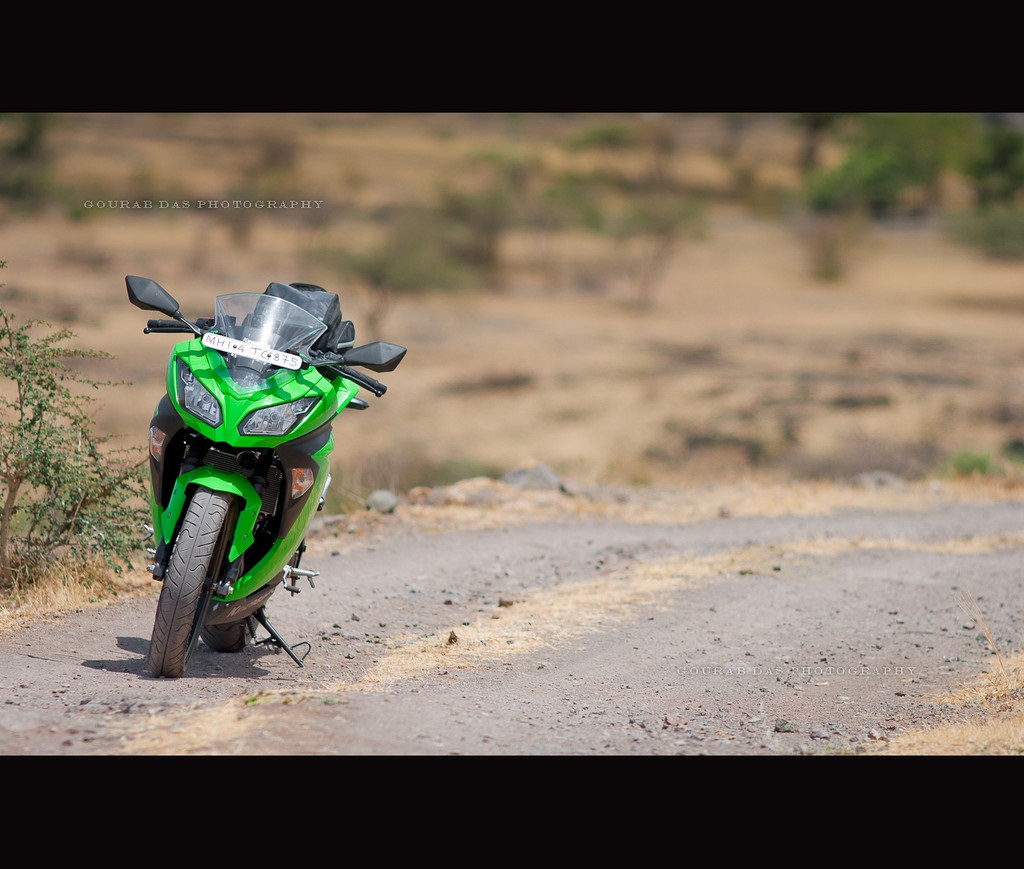
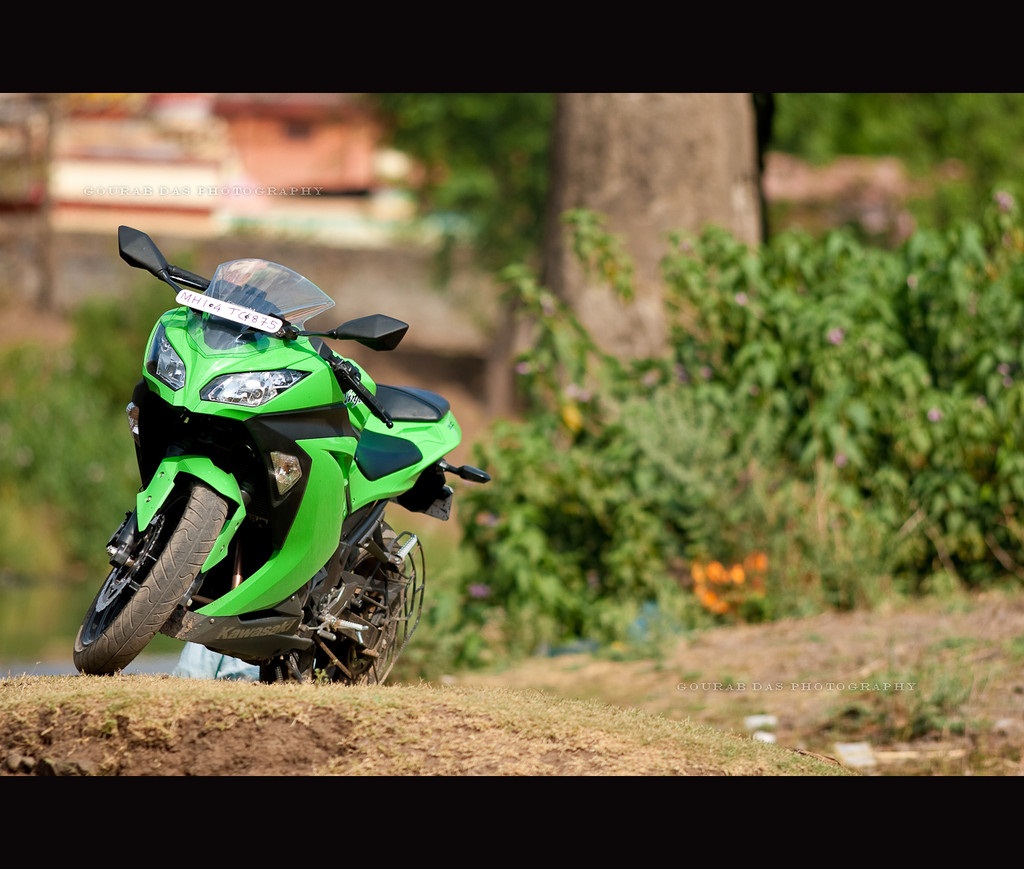
I will not start writing the technical specs and other details which are there in 10 of other reviews which I myself had also gone through many a times. This is more of a ride based article rather than an out an out first impression to give you a better idea as to how this bike will feel and perform on our Indian roads, the images will also give that impression as the usual close up shots will be missing. There is so much information about Ninja 300 over the net that saying the obvious doesn’t make it interesting or different.
I got the bike for more than a day and this impression was made while riding the bike for more than 700 kms over a span of two days across various riding conditions.
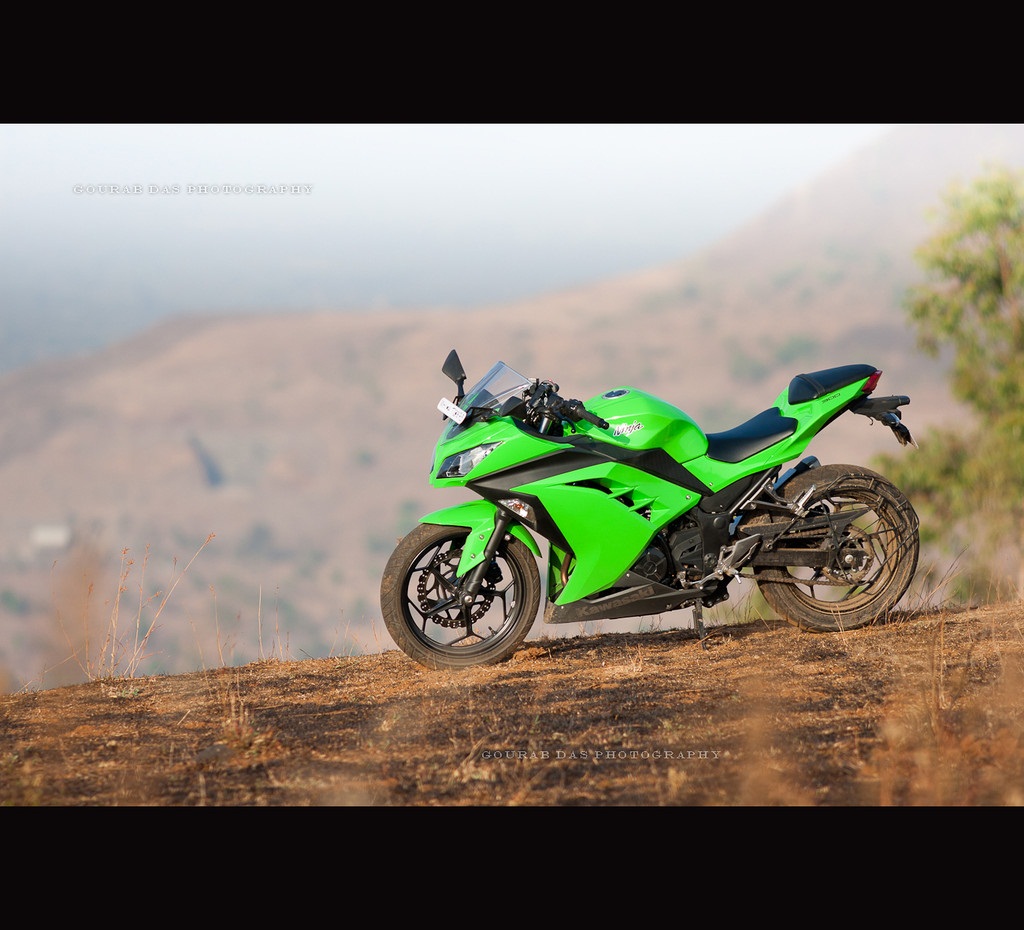
There is no denying the fact that Ninja 300 with the new design has now become even more desirable and personally I’m in love with that white colour. The edgy sharp styling can be more appreciated in the white colour. Saw the bike first time when I went to cover the launch event and from that day I’m in love with that white colour


When I got the bike it was already 10.30 and we had to ride through peak Pune traffic for the initial 20-25kms. Within the first km the difference from the Ninja 250R was clearly evident. While the 250R is very sluggish at low rpms and you feel the urge to go to the higher revs as soon as possible but the 300R is a very usable to ride through the city. The newly designed air ducts works pretty decently and the heat in the stop go traffic is quite manageable. This was tested when the temperature was around 37 degrees in Pune. After riding through the traffic for nearly 45 minutes it was time to hit the highway.
Coming back to the bike basics the riding posture is decently sporty. There is no undue pressure on wrist or shoulders. The power delivery is very smooth and the motor is rev happy like the earlier one. There was no combustion noise or any other additional noise coming from engine or any other part of the bike. Almost all the characteristics of the old Ninja are carried forward and like the older version this one is also rock stable at any speeds and over any sudden undulations / bumps on our highway. This to me is a very important characteristic in judging a bike as speed can be achieved easily but how it’s behaving at that speed is more important as this aspect lends to a feeling of safety. 160 is a breeze on this bike and the amount of confidence the bike provides will see you the north of 140 for most of the time. Infact the first time I hit 150kmph I didn’t even realize that the bike is doing 150.
One more thing which impressed me a lot is the fact that the vehicle rolls at as low as 40kmph in 6th gear with zero snatching.
We also had a chance to ride the Ninja 250R during the test period and this is what came in terms of in gear speed


Max speeds in each gear
Gear Ninja 300 Ninja 250R
1st 62 60
2nd 92 90
3rd 116 115
4TH 142 ~140 (Couldn’t hit the rev limiter)
5th 163 Couldn’t hit the rev limiter
100kmph at various gear at what rpm
6th gear 7k 7.5k
5th gear 8k, 8.25k
4th gear 9.25k, 9.5k
From above numbers its quite clear that there is very little to choose between the max speeds in each gear but the similarities ends there difference lies in the fact that how you are reaching there. Ninja 300 is much faster than 250, there was one occasion when I was riding the Ninja 250R and closing the gap with Ninja 300. My co-rider on Ninja 300 just had a glance and opened the throttle and galloped ahead leaving no chance to me whatsoever. This was when I was fully crouched and was doing ~145 and my co-rider was seating upright.
Coming on to the handling part cornering is fun and as well as forgiving on this bike. Feels planted firmly and the seat also aids in easy side to side movement. Doesn’t stick to the rider bottom. Although I felt that the suspension is on the softer side than the previous generation and little stiffer will make the handling even more sharp. Other than a very narrow tricky ghat section or when you are stuck in traffic in a ghat section you don’t need to put the bike in 1st gear.


Given the fact that we had so much time at our hand we decided to take the bike off the road. To my surprise the bike was very composed even on that terrain although the fear of bending the alloy on a test vehicle didn’t allow me to push the bike the way I would have liked. Also as the suspension was softer most of the shocks were soaked by the bike and very little was transferred to the rider.
Another thing which surprised me was the fact that the vehicle doesn’t tire you much even after a long ride. I rode for almost 10 hours on a hot summer day on a fully faired sports bike and there even after I left the saddle I had the zeal and energy to do another 500kms. Also the bike doesn’t heat up at all even after long hours of high speed riding.
Like the Ninja 250R there is a hook below the pillion seat which helps in tying any sort of luggage that you want to carry. Also unlike the Ninja 250R there is a grab rail for a pillion, no wait it is there but disguised, cleverly designed under the pillion seat so that pillion had something to hold.

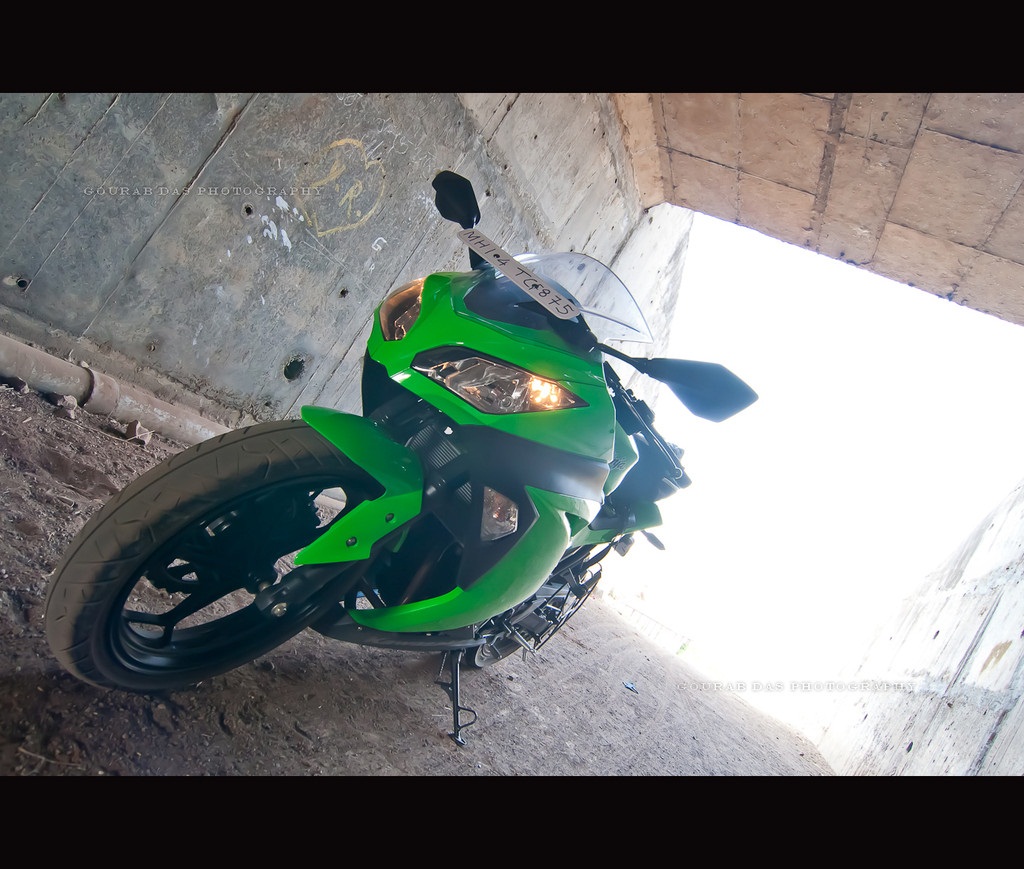

Finally coming on to the negatives the first notable thing is the front brake. The “Hand of god” (This is what I used to call the brakes of Ninja 250R) is missing in this bike and there was fair amount of free play in the bike given to us for testing. I missed the very sharp point blank braking of Ninja 250R where just a little feathering with a single finger was enough to reduce the speed on this bike.
The other notable negative was the smaller windscreen as compared to Ninja 250R. The wind turbulence felt on an open stretch is considerably higher than the Ninja 250R, an aftermarket windscreen will make it better both functionally and aesthetically
Also many might find this vehicle to be smaller as compared to the older Ninja which actually it is but I like the compactness of any bike if it is well put together.
Many people might have noticed the fact that I have missed an important addition to this new Ninja “ The Slipper Clutch”. Well from the test ride I felt that a slipper clutch is a more important feature in higher cc where the speeds are much higher and a wrong shift may result in losing balance of the bike. I tried aggressive downshifts on a Ninja 250R and never felt that the vehicle is going out of control. Probably in rains when you are in tricky situation the slipper clutch will be helpful.
This is the bike to own for every enthusiast and the only stopping factor could be the PRICE!
Note: The Ninja 250R tested was with Pirelli Sports Demon and not the stock setup

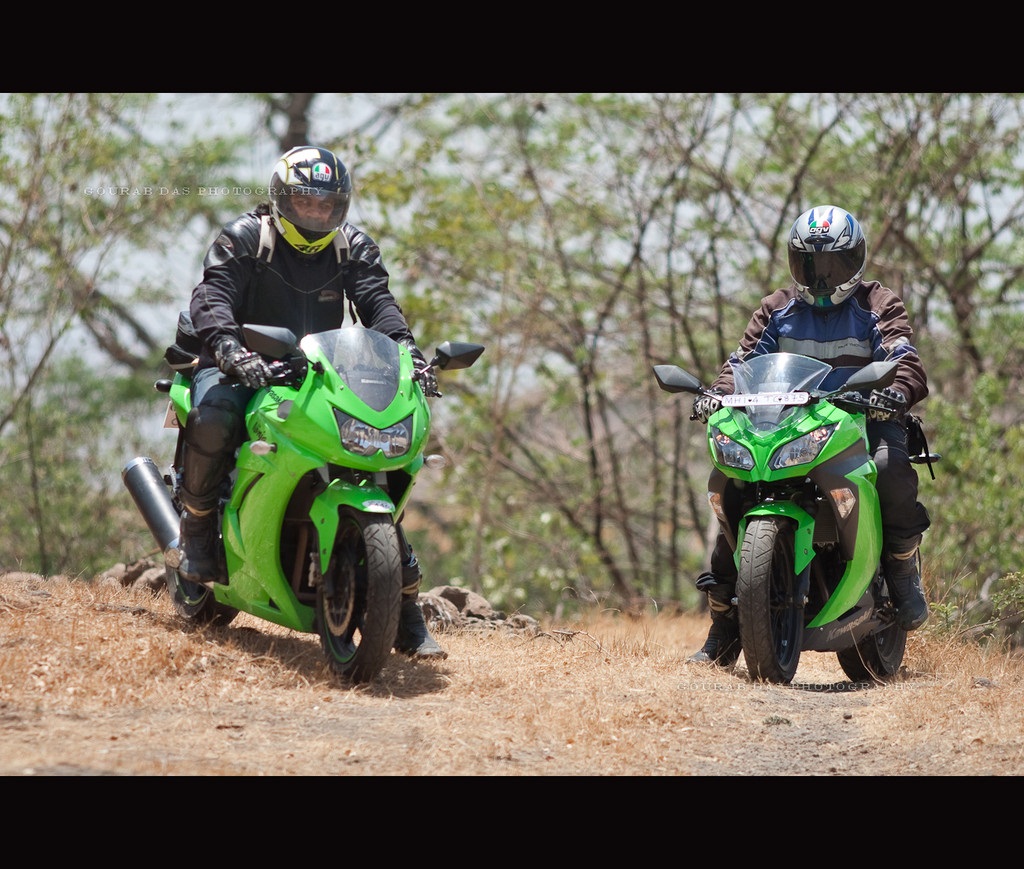


Key highlights
1)The styling make you give it a second look.
2)Stability of the vehicle, scores 100/100
3)Effortless cruising at speeds of 150kmph
4)Doesn’t tire you even after a long stint of 300-400km
5)Almost nil vibrations throughout the rpm range
6)Very good gear shift quality
Impression by a current Ninja 250R owner (Ashutosh Adkar) about the new Ninja 300
1. Looks sharper but smaller than the Ninja 250R. Looks better from all the angles that the current version.
2. The riding position is a little cramped compared to the NInja 250R, the footpegs seemed to be pegged a little higher
3. The instrumentation cluster looks modern an is easy to read even in direct sunlight.
4. Starting from a stopping, the 300 seems to have a little more spunk in the lower end of rev range. This should help drivability.
5. The engine is peaky and makes most of its power after 9K RPM. I found it little less rev-happy than the 250R.
6.The windscreen was smaller and less effective than the one on the 250R.
7. The power delivery is very very linear.
8. Slipper clutch reduces the possibility of wheel locks during downshifts. However, if you use downshifts to reduce speed, the slipper clutch takes that possibility away.
9. Brakes seemed adequate to me.
10. Seating was very comfortable (especially compared to the 250R) and also the suspension did a pretty good job of soaking up the bumps on the road. Seemed to be on a softer setup.
11.Unfortunately didnt get a chance to test the handling  but I expect it to be atleast on par with the Ninja 250R, probably even better. The bike was very composed even at speeds of 150+
Things I liked:
Sharp Looks
New instrument cluster
Seating position and comfort.
Slipper clutch allows aggressive downshifts
High speed stability
The overall quality seemed top notch.
Things I didnt like as much:
Looks a little short when viewed from upfront
Windscreen could have been more effective , possible after market options.
Power delivery too linear.
Overall, I think this is once again do it all bike. It can do track days, long distance touring, effective commuter. It can also take on some poor roads.
With a premium of only 50-60K over the current 250R you get a modern motorcycle that is more powerful and looks better. Anybody looking for a 250R should seriously consider this instead.

KTM 390 Duke Review
 Apr 2013 Sunil Gupta
Bikes,KTM,Motorcycles
Apr 2013 Sunil Gupta
Bikes,KTM,MotorcyclesIntro: You all know about the KTM 200 and its look alike KTM 125. What we did not know that they were not twins, but a triplet! Bikers and Bikernis please welcome the third of the mini Dukes: KTM 390. However one is no slouch (not that its other siblings were). Here we get you the first ride review of this pocket rocket from our Australian rider friend, Mark Hinchliffe.
Mark Hinchliffe ([email protected]) is a senior motorcycle journalist in Australia who has been writing reviews, bike travel and motorcycle industry news for more than a decade for newspapers, magazines and on-line sites such as News Ltd metropolitan newspapers, Australian Provincial Newspapers, Australian Road Rider, 2wheels, Cruiser & Trike,mcnews.com.au and the forthcoming website, **********.com.au which he will edit.[/B]
KTM has expanded its range of street bikes built in India with the versatile 390 Duke. Since 2011, KTM has been building the 125 and 200 Dukes at the Bajaj Chakan factory in Pune. KTM PR manager Thomas Kuttruf says the arrangement with the minority shareholder has given the Austrian company an improvement in quality.
“We can learn a lot from these guys in manufacturing a quality bike in high quantities,” he says. Bikes sold in Europe are returned to the Austrian factory for quality checks while bikes exported to the rest of the world are quality checked at the Pune factory under strict KTM guidelines.
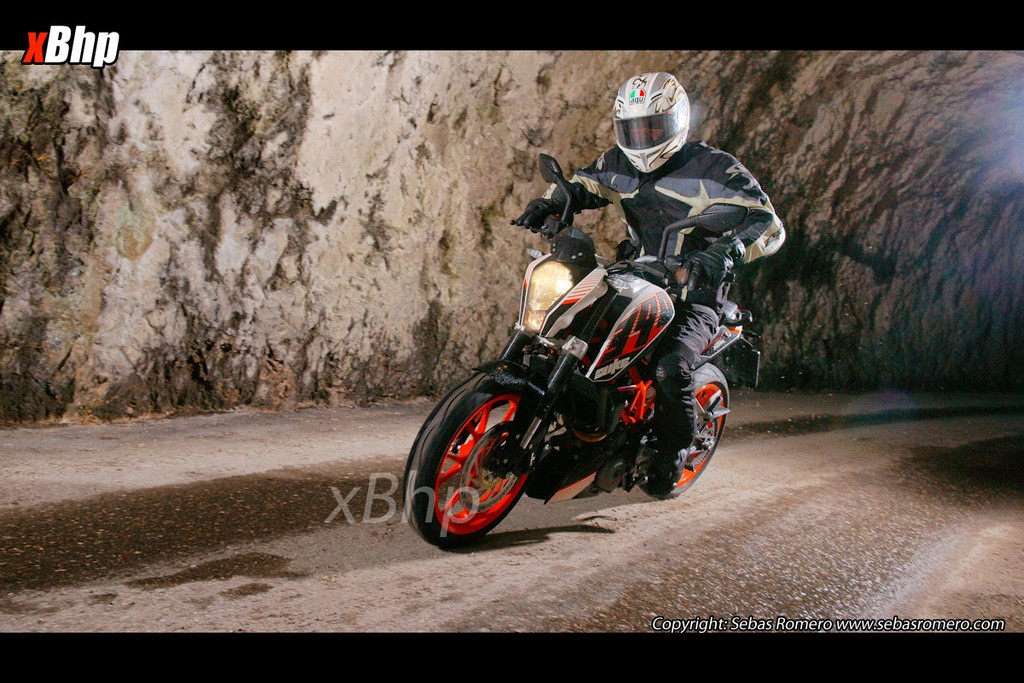

The full-size bike features safe anti-lock brakes, quality suspension components, an efficient engine and a sizzling modern style that will suit many riders. The 390 fills the hole between the 200 and 690 Dukes and the company is so confident of its success it will be the first KTM to be sold in all 76 markets around the world where they have dealers. Previously, their 200 Duke was the most popular KTM street bike.

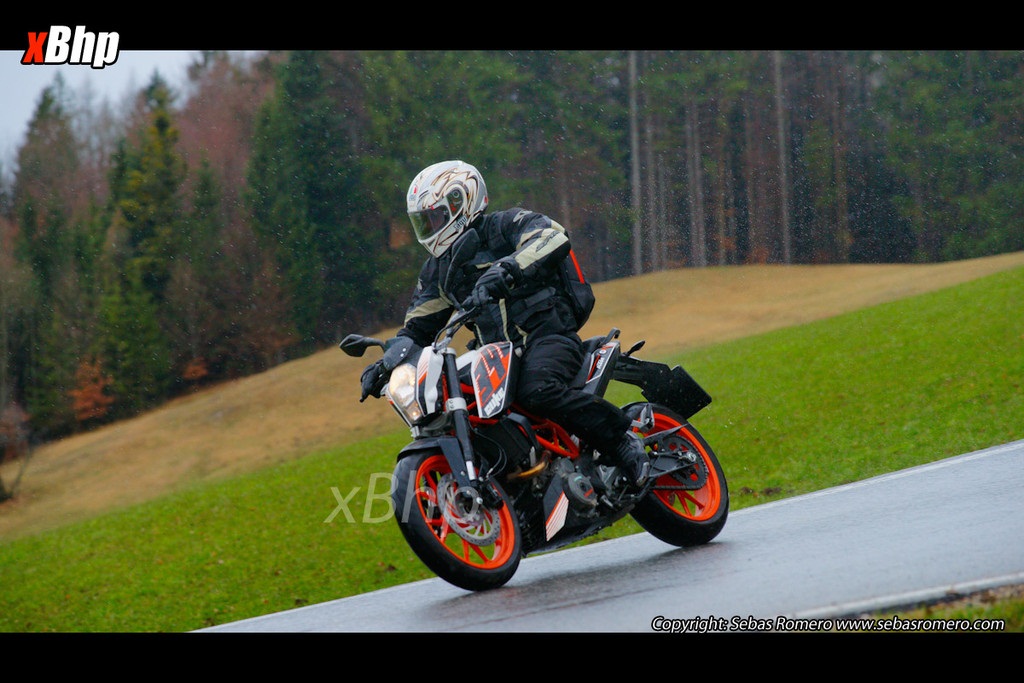

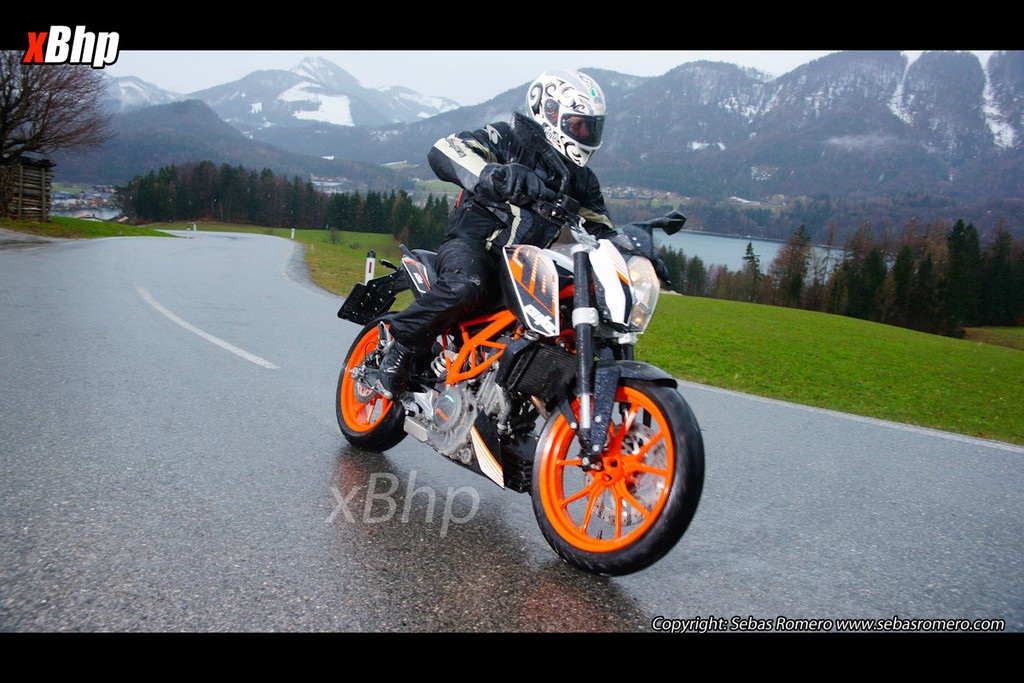
This bike is built with the same frame as the 125 and 200 Dukes, but with an all-new 375cc single-cylinder engine. It’s an over-square unit which means the bore is bigger than the stroke, so it revs higher and achieves its power and torque at higher revs than normal. But don‘t expect a zinging little buzz box that rattles the fillings out of your teeth, vibrates the mirrors so you can’t see what’s behind you and makes your fingers go numb after an hour in the saddle. Quite the opposite.
This is a versatile engine that seems to have plenty of torque for casual acceleration, smooth delivery of power through the range and only minor tingles through the seat of your pants.
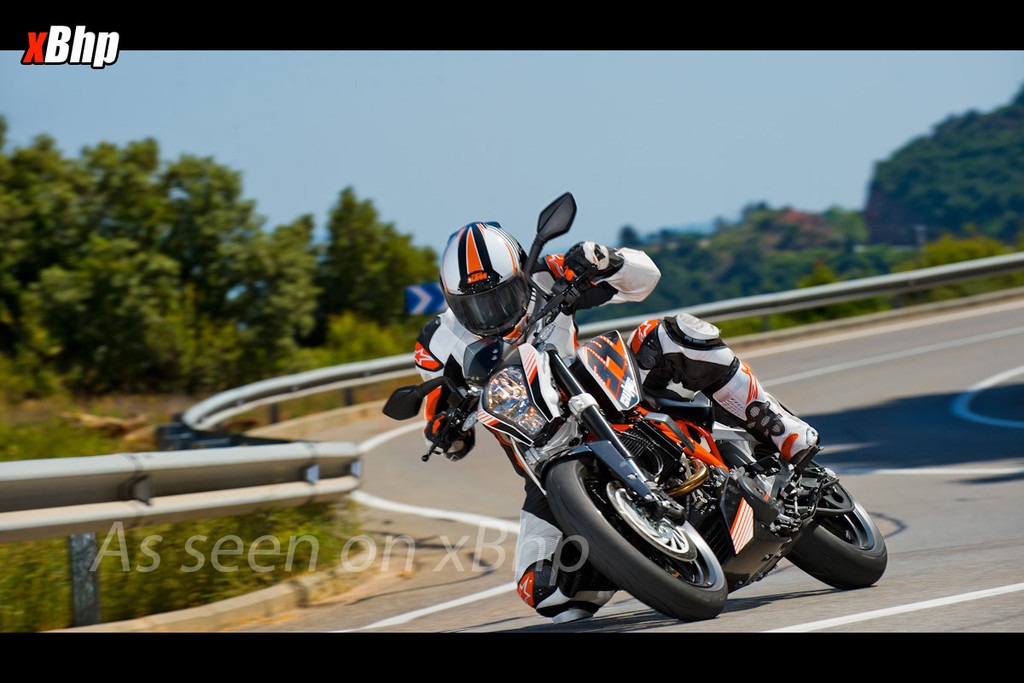
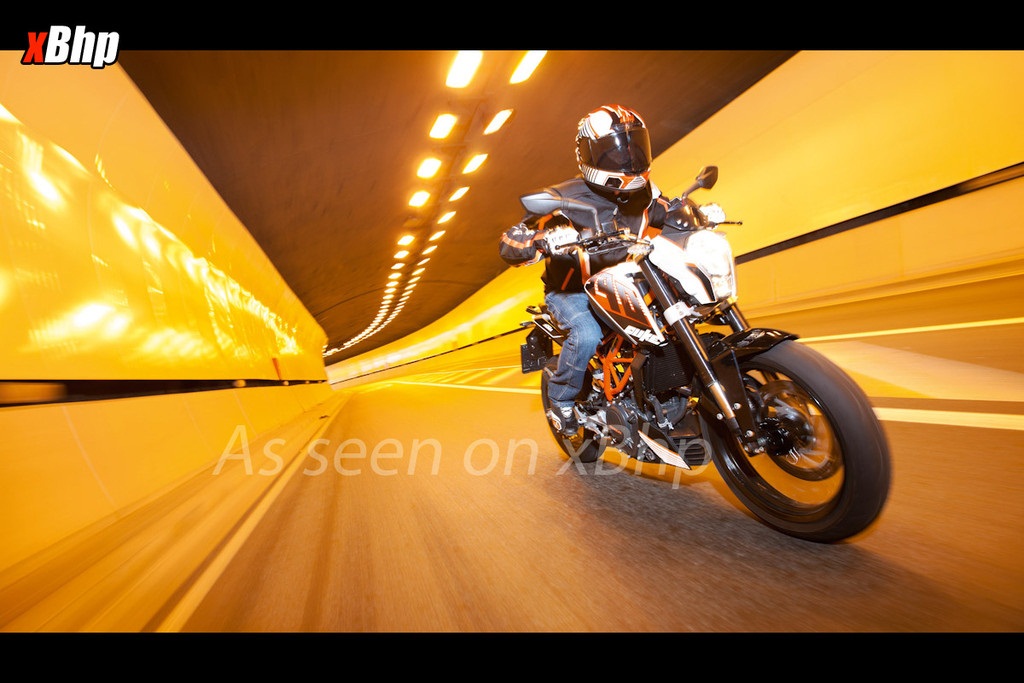

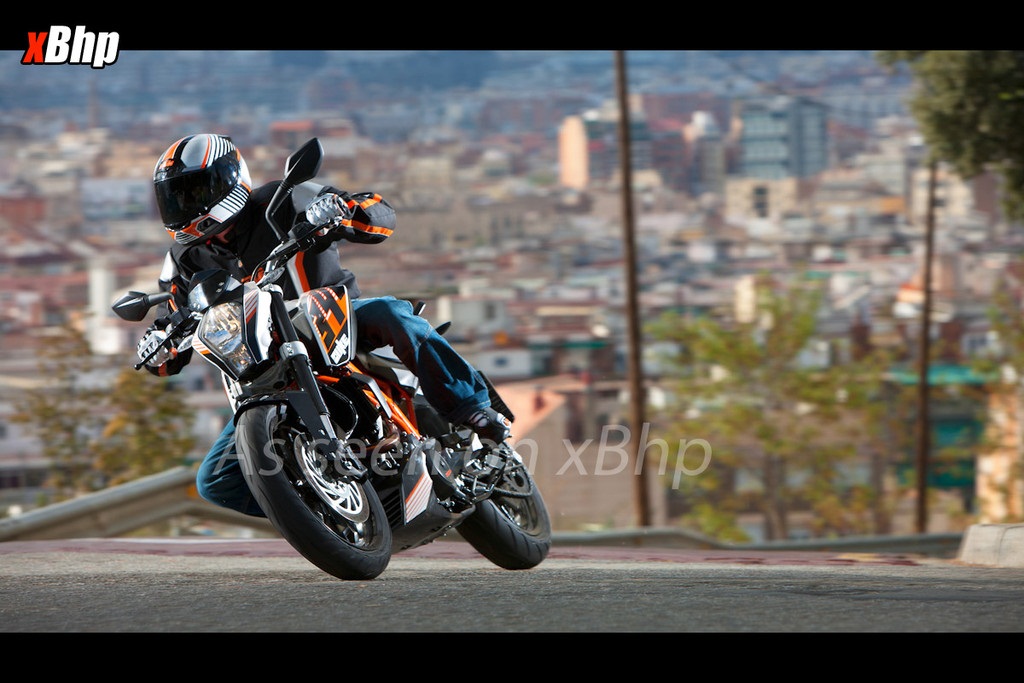
However, if you do want to explore the upper limits of its peak performance, you can easily keep it spinning between the peak power/torque revs of 9500 up to the abrupt limiter at 10,500rpm by working the trouble-free six-speed transmission. It’s a slick little box with neutral very easy to find and no “angel” gears.
Hit the highway and it will spin along effortlessly at 5000 rpm in sixth gear at 100 km/h from where it will accelerate with a quick click down a gear. Point it up a hill and the bike doesn’t become asthmatic, thanks to its light weight of just 150 kg fully fueled.


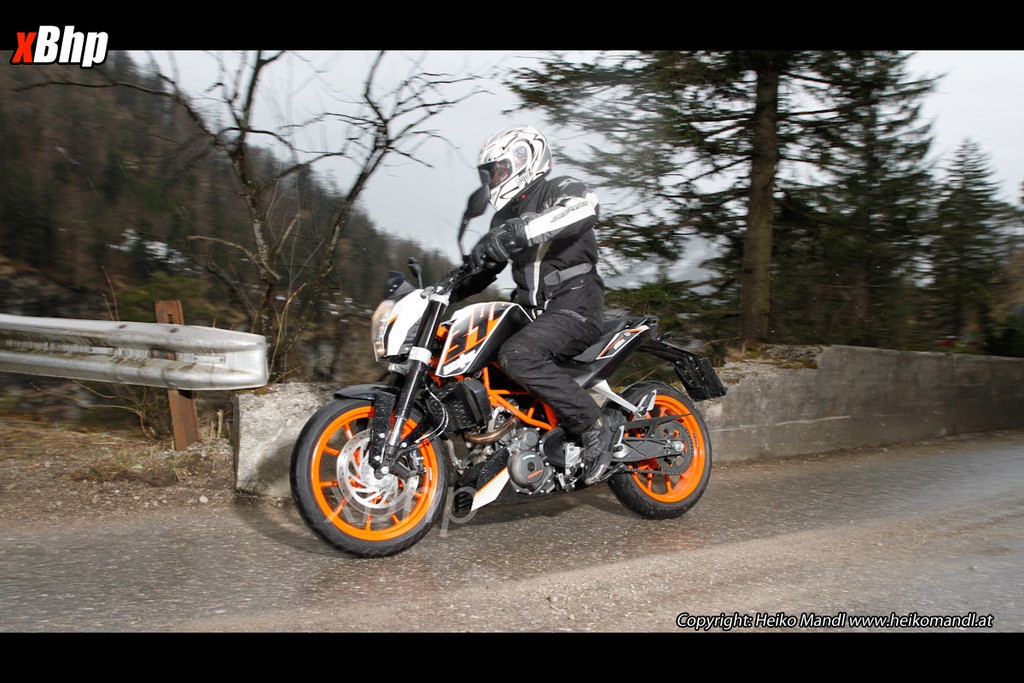
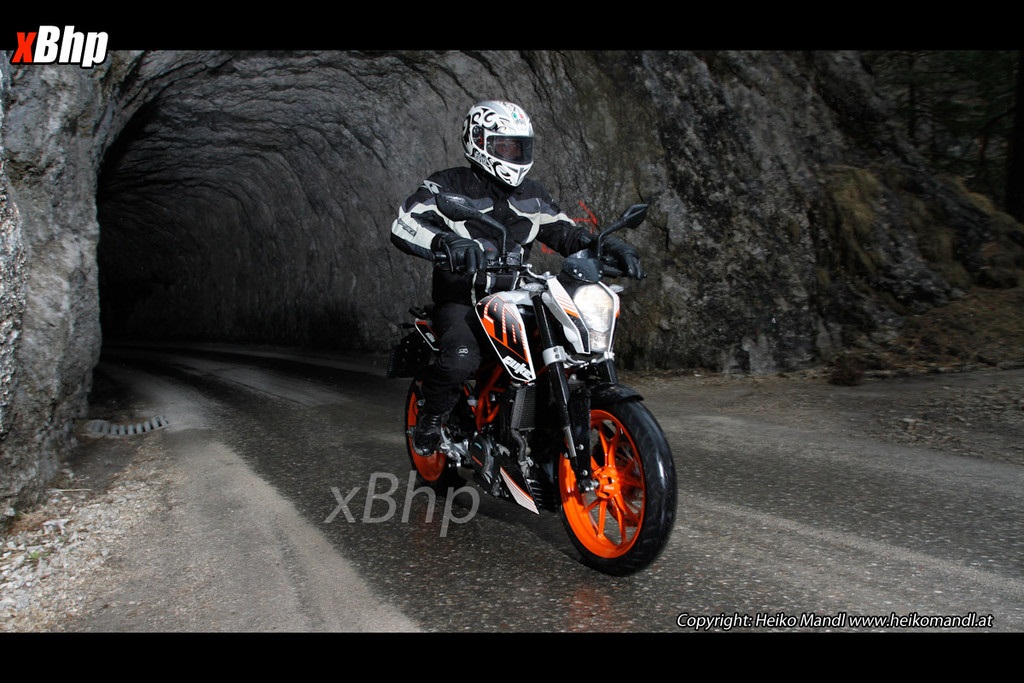
KTM claims fuel economy of just 3.4L/100km which should be good for a range of about 300 km, which is more than enough for this style of street bike. Its light weight makes it very easy to flick around in traffic or through a tight set of corners. Meanwhile, the 1367 mm wheelbase and wide handlebars provide stable handling at high speeds. Handling is ably complemented by quality WP Suspension, a wholly owned subsidiary of KTM. It has 150 mm of travel at both ends so it should be capable of absorbing the impact of most potholes, however, on the world launch in Austria it was difficult impossible to tell on their silky smooth road surfaces. Its light weight also means it pulls up very quickly, ably assisted by quality Bosch ABS brakes and calipers made in India under licence to Brembo, hence “BYBRE” stamped on the side rather than “BREMBO” which indicates Italian manufacture.

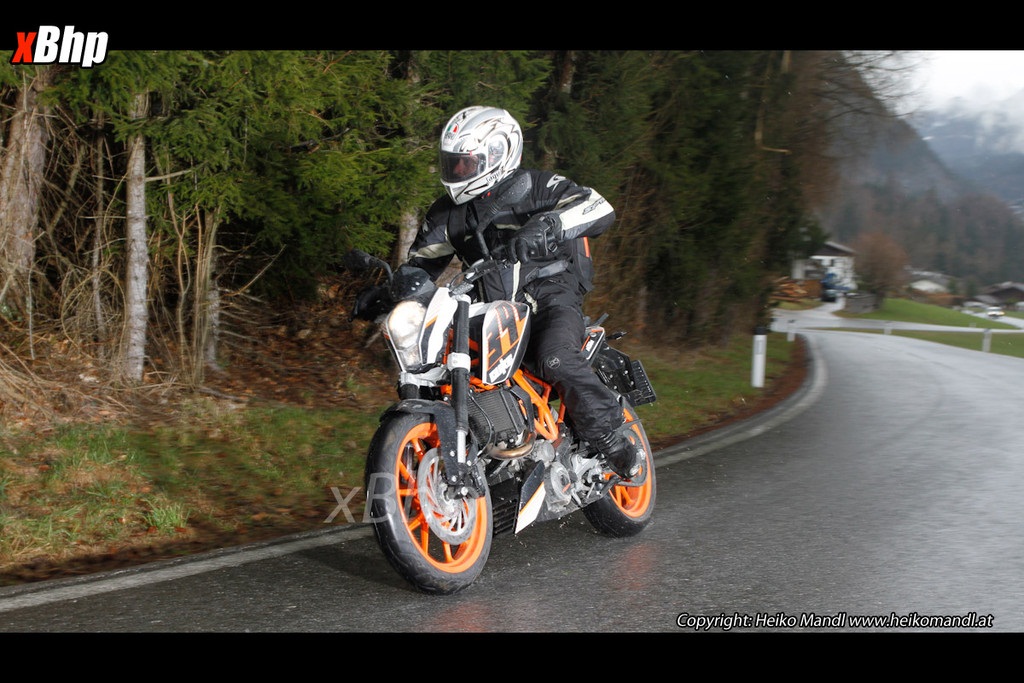
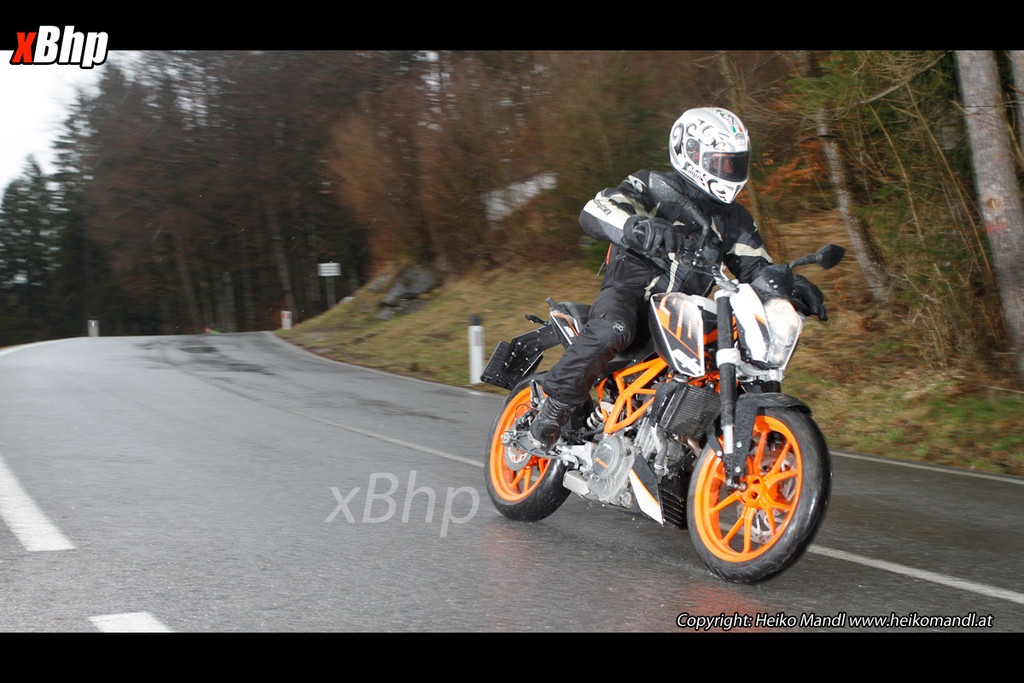
The sit-up-and-beg riding position is comfortable with short people able to tough the ground from the 800 mm seat as it is quite thin at the front. Tall people may feel a little cramped in the legs as the pegs are set high and back for ground clearance. However, the flat and hard seat provides plenty of fore and aft movement so most riders can get comfortable.

KTM has a range of accessories including handguards, a tank bag and rear rack and soft bag that replaces the rear seat.


DSK Hyosung GV650 Aquila Pro and GT650R Review
 Jan 2013 Sunil Gupta
Bikes,Motorcycles
Jan 2013 Sunil Gupta
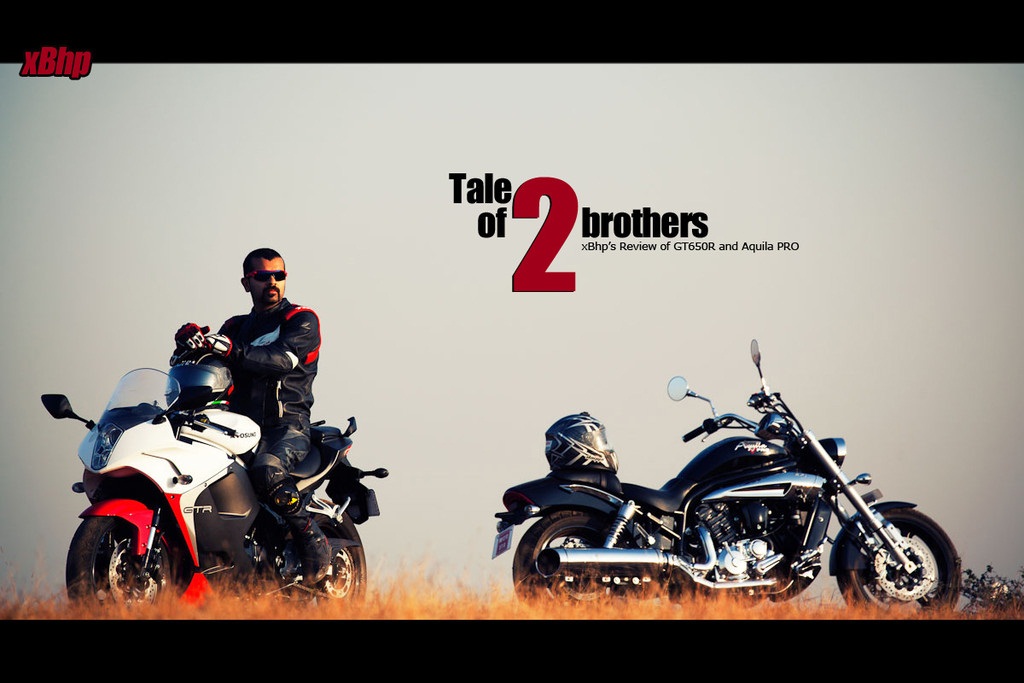
Bikes,MotorcyclesThe DSK Hyosung GT650R Review and GV650 Aquila Pro Review: Tale of 2 Brothers
Text & Photos: Sunil Gupta/ Sunilg & Sundeep Gajjar/ Sunny

If you are an Indian and love motorcycles, this is perhaps the best time to be here. We are sitting at a point when a revolution is about to begin. In fact, it has already begun. All the motorcycle manufacturers that have ruled the world but have ignored us (or were forced to ignore us) are lined up at our doorsteps to sell us whatever they can. Just a few years ago, we had a few commuters in the name of motorcycles and fewer 150/180s for the enthusiasts among the crowd. But now, if you have money to spend, you’ll be left confused with the options ahead of you. Yet there exists a large gap between the quarter litre and full blown litre class (and above) machines. This is the area where the options are few and the potential is huge.
A few years ago, the now defunct Garware Motors along with S&T Motors from Korea had tried to fill this void with the launch of the GT650R and the ST7. They were successful to some extent thanks to nonexistence of any competition at that time, though Bajaj/Kawasaki spoiled their party by launching the Ninja 650R right before the launch of Hyosung bikes with a price tag that was mouth-watering. Yet, thanks to the classy robust looks of their bikes, they managed to sell quite a few units despite the brand Hyosung’s relatively low penetration in the Indian market and more so the hearts & minds of the Indian buyers, compared to other Japanese brands. Unfortunately, their sales were further hampered by the quality issues in the bikes that started cropping up quite regularly. This was a huge blow to the reputation of a company that was still trying to find its base in a sensitive market like ours. However, one must give credit to them for not being discouraged. Instead they seem to be quite steady, however shaken, on their path to be reckoned as a serious player. But since Garware handed over the controls of the company to the Maharashtra based DSK group, you can see a whole lot of energy and aggression. The new company, DSK Hyosung, announced its presence with the launch of the GT250R just a few months earlier. This bike too has a huge potential provided that they bring the cost down significantly. They promise that they will, once their Indian manufacturing plant is ready.
And now there is something more coming up from the stable of the DSK Hyosung which we believe has a huge potential to bring the company back on track. The company has added the Hyosung GV650 Aquilla Pro cruiser to its portfolio, which will be sold alongside the ST7. Also the GT650R is going to get a facelift in its 2013 avatar when it comes up with a fresh dual tone paint scheme and new decals along with a remapped ECU and some other cosmetic changes.
We got an exclusive chance to test ride the GV650 and the 2013 GT650R in Pune right before its official launch in Mumbai on January 16, 2013. Here’s our take on what we think about these bikes. First we meet the GV650 Aquila (Eagle, in Latin) Pro.
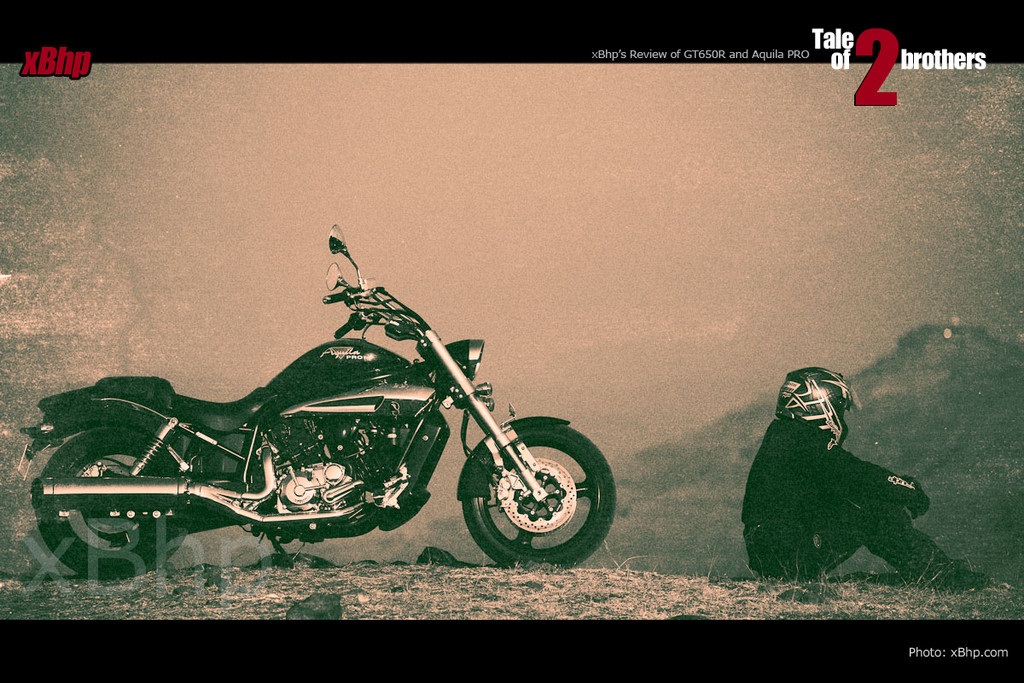

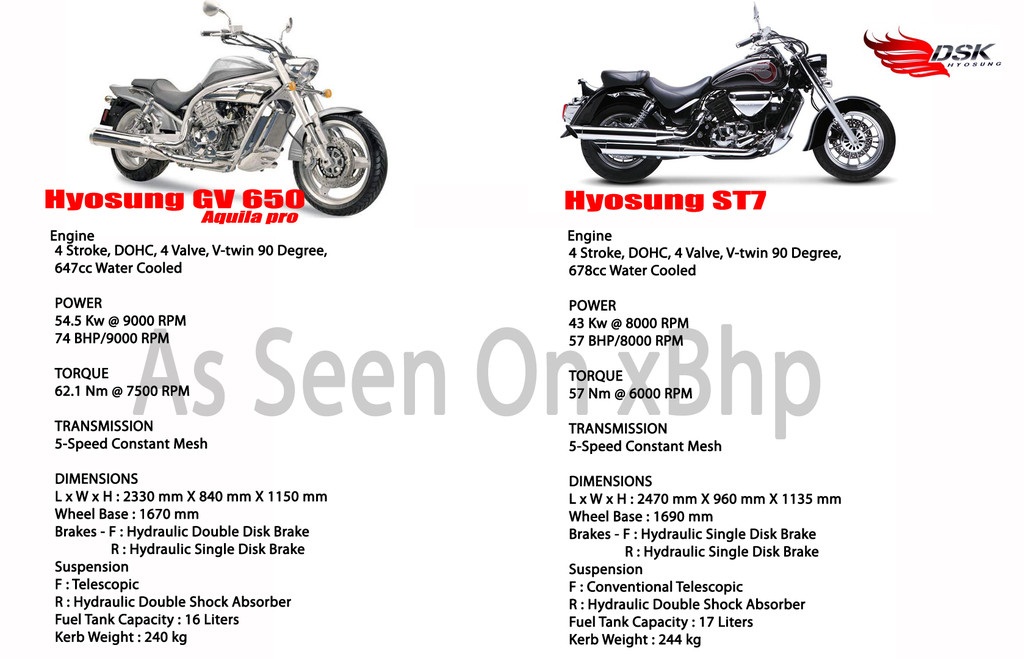
Engine & Performance: Sitting at the heart of Hyosung GV650P is a fuel-injected, liquid cooled, 647 cc, 4 stroke, 2 cylinder, DOHC engine that pumps out a healthy power output of 74 BHP at 9000 RPM and 62 nm of torque at 7500 RPM. The power is delivered to the rear wheel with the help of a belt drive and 5-speed gearbox. This engine as we all know is based on the Suzuki’s SV650 engine which is a time tested machine as this is basically the same engine that has been powering most of the Hyosung bikes. This engine can push the GV650P to achieve a claimed top speed of 195 KMPH. The bike that we had for the test already had around 2000 Km on its odo and felt super smooth and eager to rev across the rev range without any signs of stress whatsoever, even when being pushed hard. There were some vibrations felt in the higher revs, but nothing that should put off a potential buyer. There was sufficient low end torque to keep the momentum, without having to shift regularly, even in heavy traffic. The gear shifts were smooth and positive, without any hint of false neutrals or ‘notchiness’ whatsoever. The exhaust note is a very typical growl of a V-twin, though slightly on the smoother side.


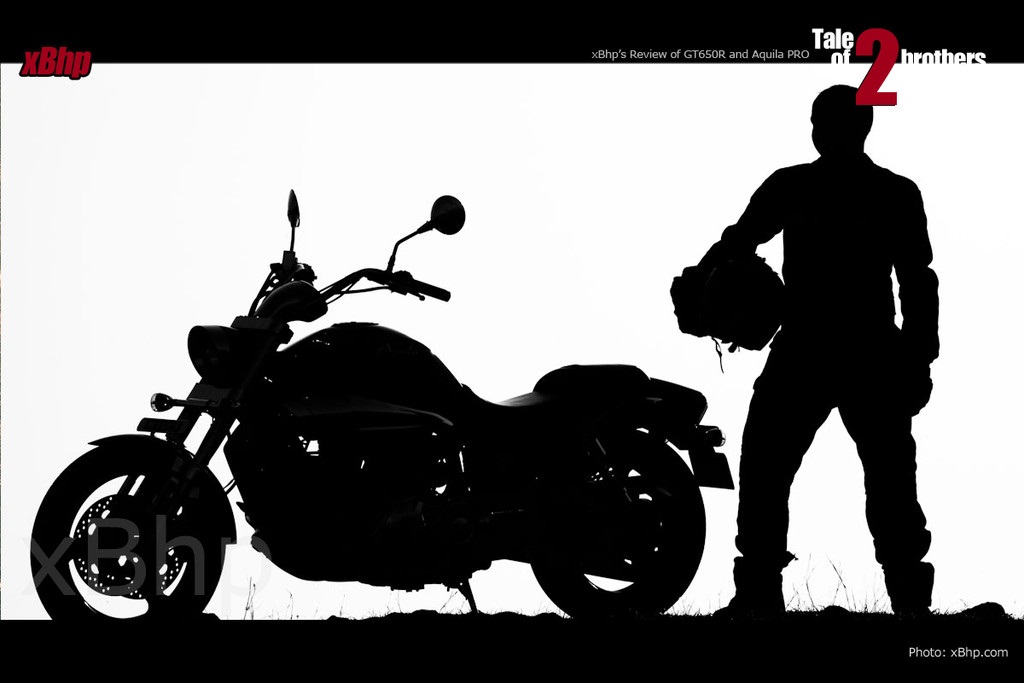
Looks and styling: In the looks & styling department, the GV650P will give you full bang for your buck. There is a liberal dose of finish black paint with just the right mix of chrome on the exhaust pipe, tank scoops, headlight and other body parts. The low slung body and the metal pipes running along the entire length of the fuel tank remind you very much of the Harley-Davidson V-rod, yet it is able to maintain its originality and uniqueness thanks to the jumbo-sized fully chrome exhaust pipe and the fully chrome chiselled tank scoops that have EFI written over them. Sitting atop the meaty inverted telescopic forks is the round, reflector type headlamp unit with a ring of chrome. Then we have a compact fully digital white backlit console, minus a tachometer. The switch gear plastic quality leaves nothing to be desired. The Aquila Pro would be available in 3 colours: Shadow Black, Lava Red and Phantom Silver.


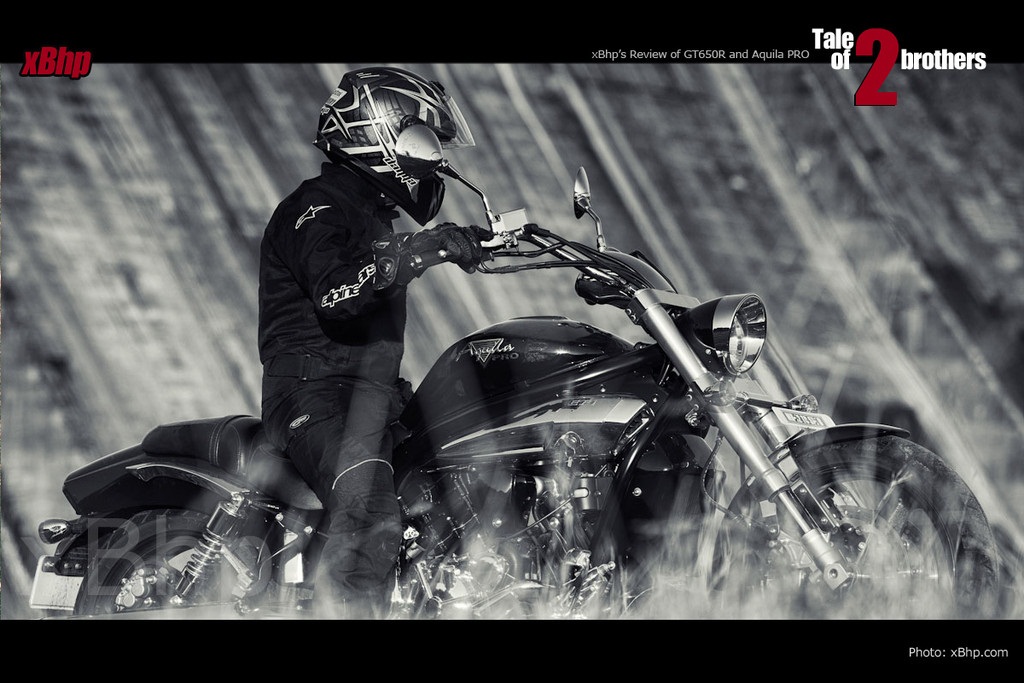


Handling, Ride Quality and Comfort: The cruisers are never known for their handling and manoeuvrability. In fact, this is precisely the reason a lot of people don’t like cruisers. However, sitting astride the GV650 we realize that all cruisers are not lazy! This bike really surprised us with its ability to move around and cutting through the traffic even in peak traffic hours in a city like Pune. Though it has its limitations and must be ridden like a cruiser. We had many instances of unintentional footpeg scraping riding on the Ghats in Pune whenever we tried to take a tighter line. You cannot really hope to sweep the corners or sneak through the non-existent gap between cars. In fact, the farthest point of the front tyre is far away from the rider; you have to be as careful as if driving a hatchback.
The sitting posture, as with any other cruiser, would require the rider to be sitting upright with the legs fully stretched to reach the forward set gear shifter and the rear brake pedal. The taller riders would really feel at home sitting on the bike, though even at about five and a half feet I didn’t find myself trying too hard to reach the footpegs. The seat is comfy and plush and big enough to accommodate the rear of even the widest among us. Also, it comes with the backrest for the pillion rider for added safety and comfort.
The Aquila Pro also stops as reassuringly as it goes from standstill to 60 or 100. The brakes have a nice progressive feel and the twin disks at the front and the single disk at the rear do the needful really well without giving you those ‘oh-shit’ moments.

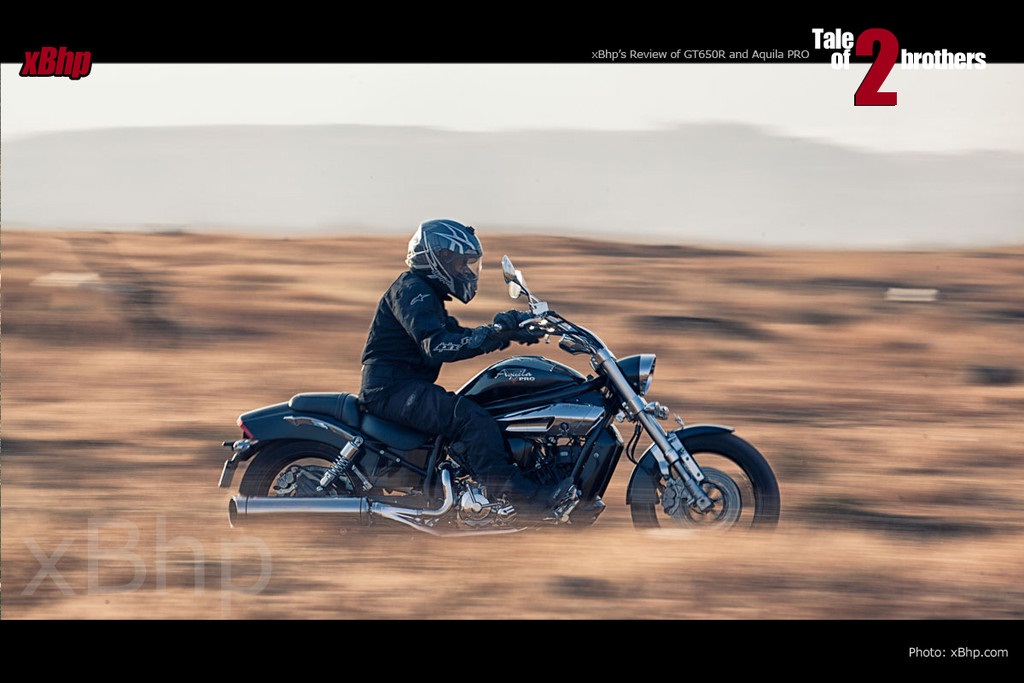
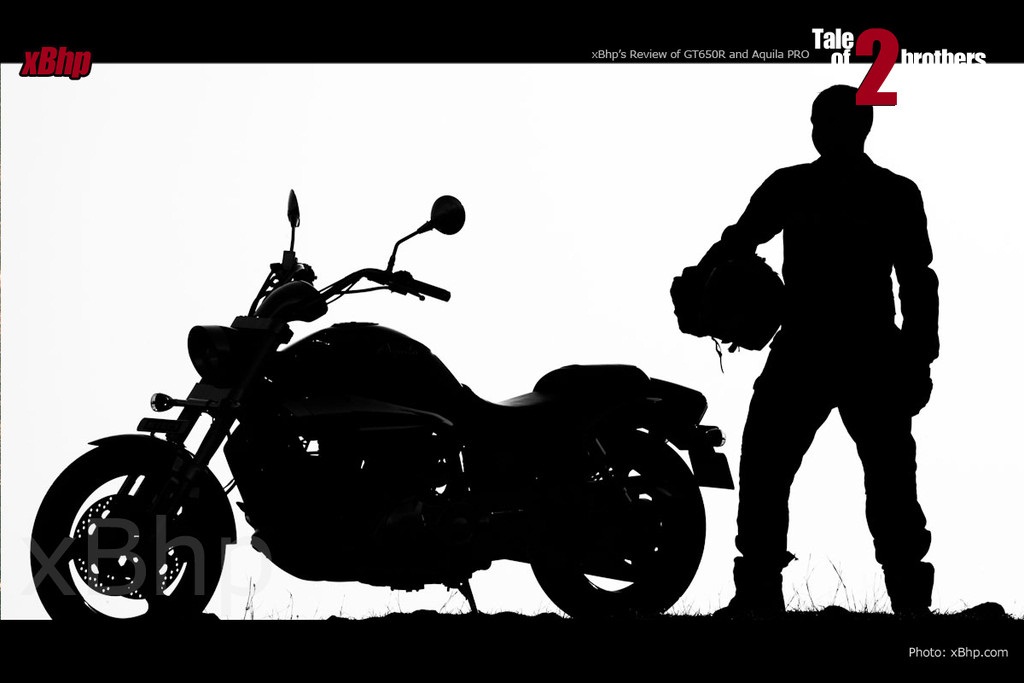
Overall: The DSK Hyosung GV650 Aquila Pro really has everything that should make it sell. For those with a bit over half a million rupees in their pocket and looking for something other than an HD or the Ninja 650 or who can’t wait for the Triumph to open their shop in India, it is a good option. It looks good, it rides even better, and at 4.99 lacs ex-showroom Delhi, makes it very attractive. But getting a good bike with good price tag probably is just the job half done. The harder part is to win the confidence of the buyers and that can only be done through a robust and effective service network and the right kind of marketing. And whatever we have known of Mr. Shirish Kulkarni, the Managing Director of the DSK Hyosung group, he seems to be damn serious about making it work. Here’s wishing all the best to DSK Hyosung. Hope they’ll keep making their bikes better.




The 2013 GT650R
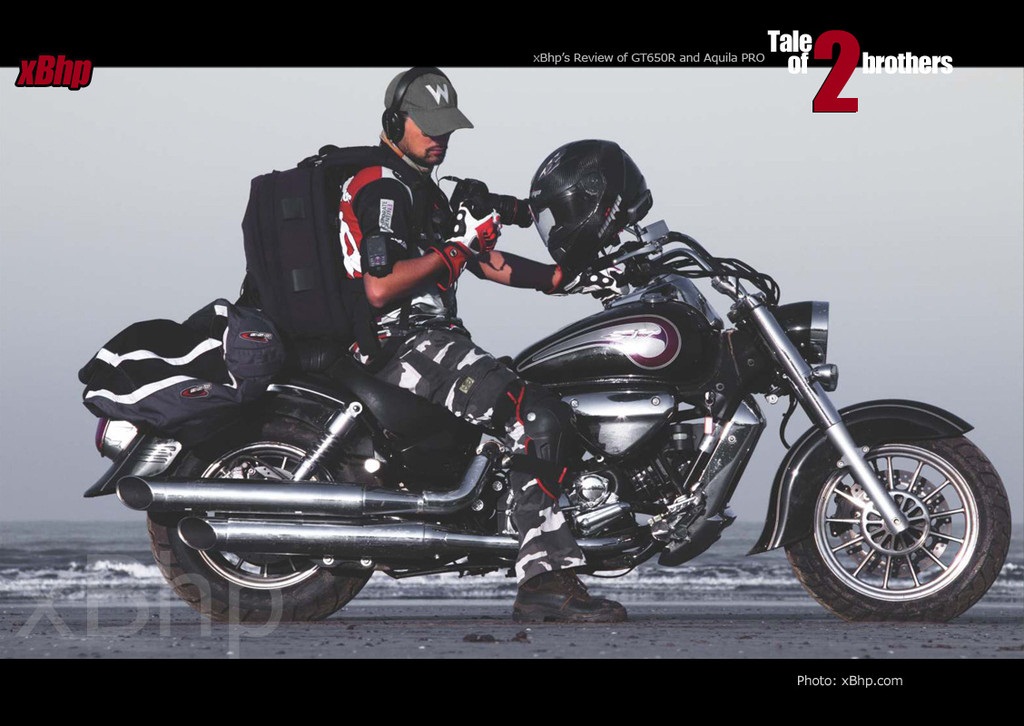
Hyosung does know a bit or two about making fantastic looking bikes. The new 2013 GT650R is no exception. In an era where ‘smaller is better’ in fast bikes, they seem to stick with the ‘big is bold’ mantra, and seem to get away with it, both sides pleased.
Let’s face it; the GT650R is a poor man’s superbike.
Visual
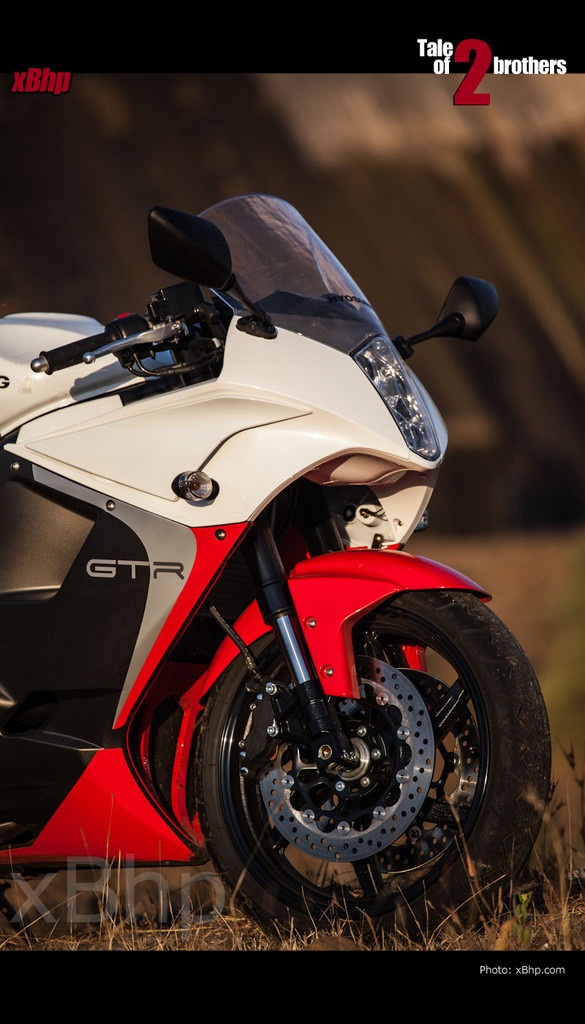
In looks it is not confused at all. It knows that is it made to impress the young crowd. It is flashy, got loads of plastic at the right places and that huge exhaust reminds me fondly of the ZX12R, which was one of the first big bikes I ever laid my eyes on. The eyes follow it’s very decisive muscular lines smoothly. The change in the 2013 version is the front headlight assembly, which is tapered and the upper fairing seems to have gone through some CAD updates giving it a more contemporary look. Other than that the instrument cluster has got an orange LCD in lieu of the white one. I also think the stickering on the 2013 GT650R has been done very tastefully.
Overall, this bike can hold its own, as far as looks go, along with the big players in the industry.


Aural
It sounds good with its beefy exhaust and the roar of the V-twin only gets better in the higher revs. With a few options now being available from manufacturers like Two Brothers, Scorpion and Venom you can treat the guys behind you, to a great soundtrack!
Performance
The GT650R mill boasts of enough power to almost propel it to the double century mark. On the speedo you can see around 210 kmph crouched. It produces 73 HP @ 9000 RPM and around 6 Kgm of torque @ 7200 rpm. The earlier issues of the power delivery glitches have been sorted out, but not completely. This issue is not present in Aquila GV650 at all since it uses a different FI unit altogether. However, this does not really spoil the overall ride quality too much.


Handling and Braking
The handling, though not top notch, is good enough for some fast track days and mountain cornering. The brakes do feel a little spongy but they do the job, although I could do with a little more bite and feedback, especially from the front. Handling has also gotten a little better thanks to the new Japanese KYB (Kayaba) front USD shock absorbers and the new Bridgestone stickier tyres (compared to the previous Shinkos).


Though it is not a major update but the bike is definitely a little better. I would love to see it getting lighter and punchier along with a 1000CC version (though the company has denied any interest in a litre class).


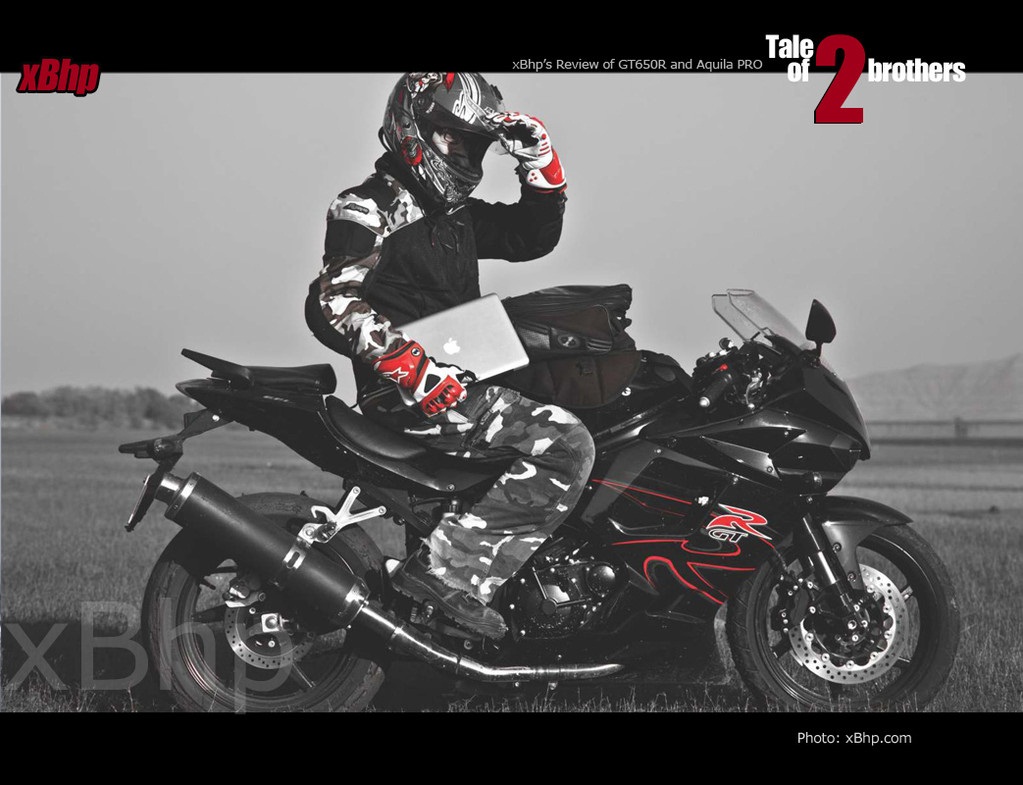
The Older GT650R
Bajaj Discover 100T Review and Ride Report
 Jan 2013 Sunil Gupta
Bajaj,Bikes,Motorcycles
Jan 2013 Sunil Gupta
Bajaj,Bikes,MotorcyclesJust six months after the double whammy of Pulsar 200 NS & Discover 125 ST, Bajaj is ready to shake up the fortunes at the bottom of the pyramid with its latest bike, the Discover 100 T. The Discover 100 T stands out like the proverbial cat amongst the 100 cc pigeons. It has just the right amount of bulk and chiseled cuts, which give it the quintessential feeling of “majbooti” that is quite rare in this segment. No wonder then that the Discover 125 ST is flying out of the showrooms.
Text: Mihir
Photos: Gourab Das (MG)


Not only the Discover 100 T look good but it is also well made. It backs up its perception of durability with excellent fit and finish. Details like 100 T’s chrome lined instrument console, aluminum foot-pegs and intricate alloys give it a premium feel. It has a wide, long and well padded seat coupled to slightly lower handlebars giving it a comfortable, upright seating position, only grouse being that the knee recesses could’ve been a little bit more accommodating.

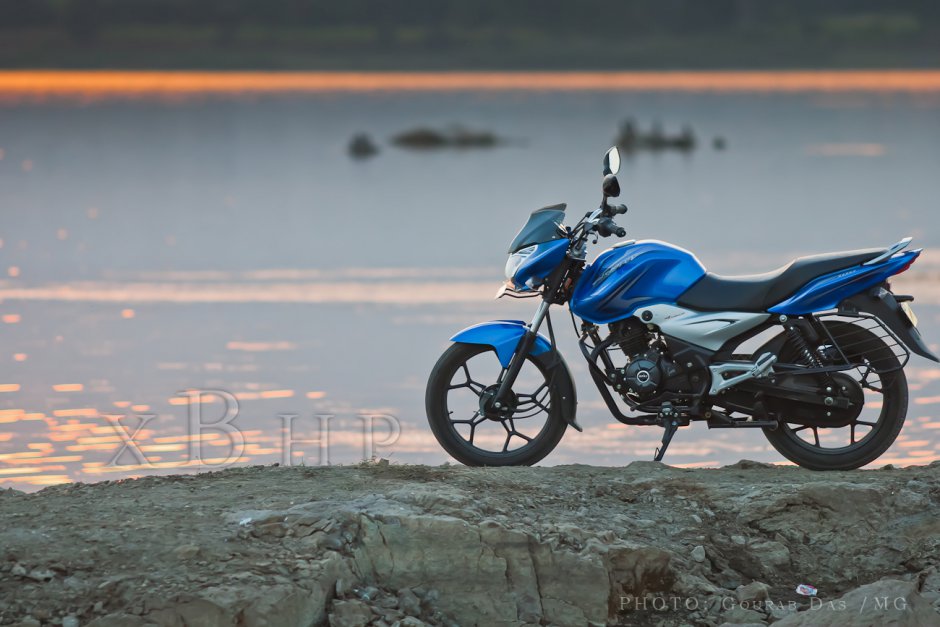
The Discover 100 T is the first 100 cc motorcycle to get a 4-valve, dual-spark head, which has made the engine remarkably unconstrained and free revving compared to the old Discover 100’s unit. Being the lowest displacement engine here, coupled to a 5-speed ‘box, having slightly taller gear ratios has given it a clear advantage in the fuel efficiency stakes, but it doesn’t have the low-end thrust of its 110 cc competitors. However, it has a decent mid-range as evident from its tractability from low speeds in higher gears as well as its ability to cruise comfortably at 80 kph. It also has excellent top-end punch as evident from its triple digit top speed, although the engine does sound harsh in the upper reaches of the rev range. Overall refinement is better than the 4-valve mill of the Discover 125 ST, which itself was an improvement over the 4-valve mill of the Pulsar 135 LS. The combustion noise is well controlled, but there’s a peculiar clatter audible every time you give it some gas. The gearbox is fairly smooth, though it could have done with more feel and longer throw, while the clutch feels a bit heavy to operate.

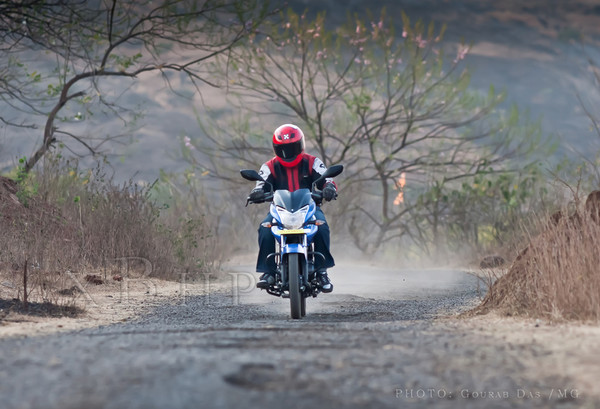

The Discover 100 T has by far the best chassis-suspension setup in its segment, and the absence of the 125 ST’s monoshock is never felt on the move. It is softly sprung and well damped giving it a remarkably pliant ride quality and at the same time it also has the longest wheelbase and highest kerb weight in class giving it class-leading stability on the highways. Handling too could have been class-leading if only it had wider, softer compound tyres and had ditched that ribbed tread pattern for the front wheel. An optional disc brake too would have been splendid, not only to rein in the additional performance but also as a long-term policy to democratize its proven superiority over drums, in the larger interest of improving road safety.
Now that you have a brief idea about Bajaj’s latest offering, let’s find out how it stacks up against its fierce competitors, the Honda Dream Yuga/Hero Passion X Pro siblings & the Suzuki Hayate.

Design & Engineering (Discover 100 T – 9, Honda Dream Yuga – 7, Passion X Pro – 7, Suzuki Hayate – 5)
The Dream Yuga in stark contrast to the Discover 100 T sticks to a conventional shape and simple lines of the Honda Shine. While the Discover 100 T looks like a good amalgamation of different design elements, the Dream Yuga looks like one seamless unit. The Passion X Pro with its tall, narrow headlamp, small tank extensions and slim, plain side panels, looks svelte but very similar to the Passion Pro, in spite of having entirely different underpinnings. The Hayate, looks dated not just compared to the Discover 100 T but also compared to age-old designs of the Shine (Dream Yuga) & Passion. All thanks to the rustic design of its big, un-painted side panels, the fenders, the blinkers, the exhaust and even the design of the decals, the tank and the bikini fairing being it’s only saving grace.
Both the Passion X Pro & especially the Dream Yuga have excellent build quality. The Dream Yuga’s twin pod instrument console though dated is well finished and easy to read. The X Pro’s semi-digital rectangular console is a novelty in this segment, but has no added functionality over an analog console, while the Hayate’s console not only looks dated but also incredibly cheap. Sadly, none of them sport a tacho, which frankly is worth way more than the little cost saving achieved by excluding it.
The Dream Yuga and the Passion X Pro both have straight, flat tanks with no knee recesses, which make them feel puny especially the X Pro due to its slender tank. The Hayate has excellent ergonomics. Its stubby tank has perfectly shaped knee recesses and a comfortable seat. However, the handlebar could have been a little lower.
Performance & Refinement (Discover 100 T – 9, Dream Yuga – 10, Passion X Pro – 9, Hayate – 6)
The Dream Yuga and the Passion X Pro share the same gem-of-a-powertrain. The engine is a remarkably refined unit, which revs freely and sweetly through the rev range and even sounds sporty, if a bit buzzy at the top. It has excellent low-end and mid-range performance as well as a decent top-end. It is coupled to a smooth, tactile gearbox with 4 well matched gear ratios coupled to a featherweight, progressive clutch. Only the most enthusiastic of the riders will feel the absence of the 5th cog. In many ways the Dream Yuga’s engine gearbox combo is even better than the Shine’s, which isn’t as eager to rev, as relaxed to cruise or as fuel efficient. Whatever little tinkering that Hero has done to the Dream Yuga’s engine for that additional 0.2 PS power output has only resulted in a slightly lower refinement rather than any tangible gains in performance. The Hayate’s engine has a strong low-end, but it is lazy to pick up revs and does not have the lively top-end performance of its competitors. It goes about its business very silently but has a rather tinny exhaust note. It has a smooth shifting ‘box with short ratios which coupled to it reluctance to rev makes it feel constricted, while its excessive engine braking makes matters worse.
It’s high time that all the bikes in this segment made a transition to the 1-down 3/4-up shift pattern, which is a global standard. It enhances rider safety by minimizing the risk of a rider accidentally shifting into neutral mid-corner and losing control of the bike.
Dynamics (Discover 100 T – 7, Dream Yuga – 6, Passion X Pro – 6, Hayate – 4)
The Dream Yuga is sprung slightly on the stiffer side which can be felt while riding over the bumps and ruts. Honda has given it a longer wheelbase over the Twister and Shine, giving it good enough stability on the highway in spite of its light kerb weight. The Passion X Pro shares the same platform but has adopted a slightly shorter wheelbase, softer suspension setup and a segment first, 90 mm rear tyre. Ride quality feels slightly better than the Dream Yuga but still not quite in the league of the Discover 100 T. Handling of both the bikes can be described as good enough for the segment and sub-par overall as the humble chassis suspension setups employed by these, or for that matter any commuter bike in the country are not really the last word in rigidity and mechanical grip. This is a serious and often unsaid issue with all the four bikes present here. While riding along on the highway, following a lorry at 70 kph, none of these bikes’ engines lack the power to overtake the lorry in front. But all of them lack the requisite road holding and braking capability to handle panic braking at that speed, if something like a stray animal or a crater full of gravel were to suddenly appear in their path.
The X Pro is also the only bike of the bunch to offer an optional front disc brake. The Hayate disappoints in dynamics, thanks to its antique tubular swing-arm and a lackluster chassis suspension setup. The front end feels too light even without a pillion on board while the soft springs fail to inspire any confidence in the turns, even those encountered during slow speed commuting in city confines.
Pricing and Features (Discover 100 T – 8, Dream Yuga – 7, Passion X Pro – 8, Hayate – 9)
The Discover 100 T retails for Rs. 56,500 (On-road, Pune) and is available in a single variant loaded with a lot of standard kit like alloy wheels, electric start, DC headlamp and a maintenance free battery. The Dream Yuga’s only variant that comes with an electric start is equipped with alloy wheels and tubeless tyres and costs Rs. 58,200. The drum brake variant of the Passion X Pro with electric start, alloy wheels, tubeless tyres retails for Rs. 58,000. Opt for a disc and the cost goes up to Rs. 60,200, which is well worth the upgrade. The Hayate is a whopping 7-10k cheaper than the other three with its one and only variant equipped with alloy wheels and electric start retailing for Rs. 49,000.
The Hayate is comprehensively outclassed in this group, but then don’t forget that it at least got shortlisted for this comparison for being better than similarly priced rivals like the Splendor +/Pro/NXG, Passion Pro, Discover 100, CD-Deluxe etc.
The Discover 100 T presents a tempting alternative to plain-jane Honda & Hero twins. It’s got the style, the speed, the dynamics and also the economics going for it. The Yuga & the X Pro hold just one ace in their hand, the engine. The creamy refinement, the sheer tractability, the sweet exhaust note, the surprising sportiness & the gutsy performance needs to be experienced to be believed. It puts all arguments to rest, like for example this one.
Overall (Discover 100 T – 32, Dream Yuga – 30, Passion X Pro – 30, Hayate – 24)
A special thanks to Puneet for helping us out in the photoshoot
Mahindra Pantero Review
 Jan 2013 Sunil Gupta
Bikes,Mahindra,Motorcycles
Jan 2013 Sunil Gupta
Bikes,Mahindra,MotorcyclesText & Photos: Sunil Gupta/ Sunilg
Mahindra 2 Wheeler’s entry into the two wheeler market was an explosive one, thanks to the one motorcycle they put on display, Mojo, along with the Stallio that actually went on sale. But as the dust from that explosion started to settle, it became apparent that explosion, wouldn’t cause any damage to the sales of the existing players. In fact, a few months down the line M2W had to remove the Stallio from the market, due to some issues that were damaging the company’s reputation as a potential serious player. Since then the company has been relying solely on its scooters (Rodeo and Duro) to defend its territories and gain further ground in the market.

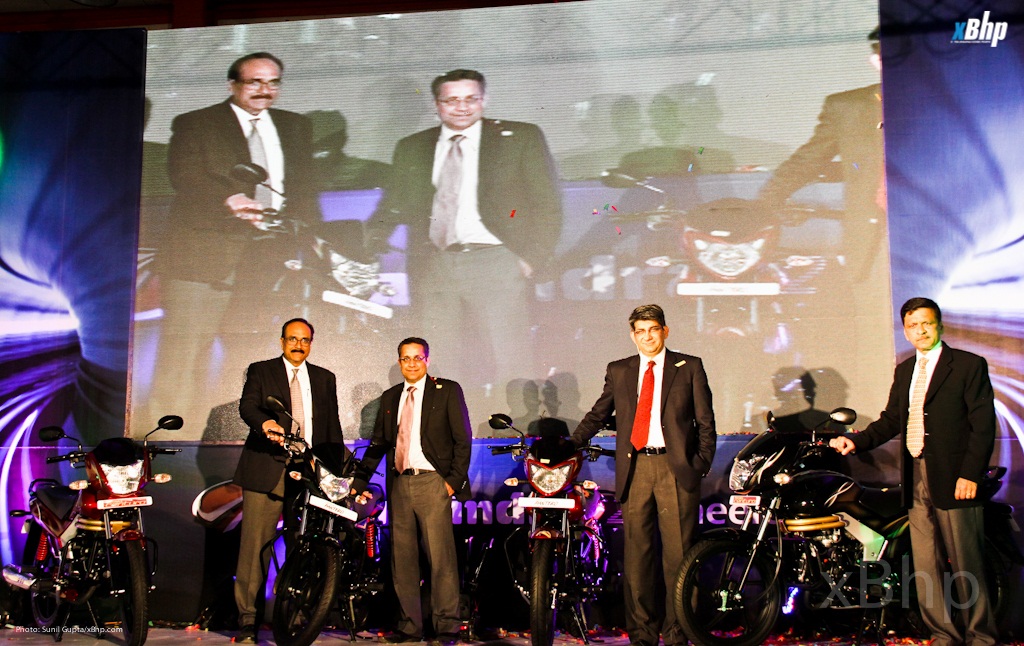
Forced by the flak they faced over Stallio, Mahindra 2 Wheelers seems to have been working hard. There have been consistent efforts at their end to stage a comeback, and while everyone guessed that they would make their comeback with the launch of Mojo, M2W decided to play it safe and re-enter the segment that has the largest volumes. This past weekend, they unveiled 2 of their new motorcycles in front of a select group of media in Pune. While everyone was aware of the first one – the 110 cc Pantero, they surprised us with the unveiling of another bike in the commuter segment – The Centuro.
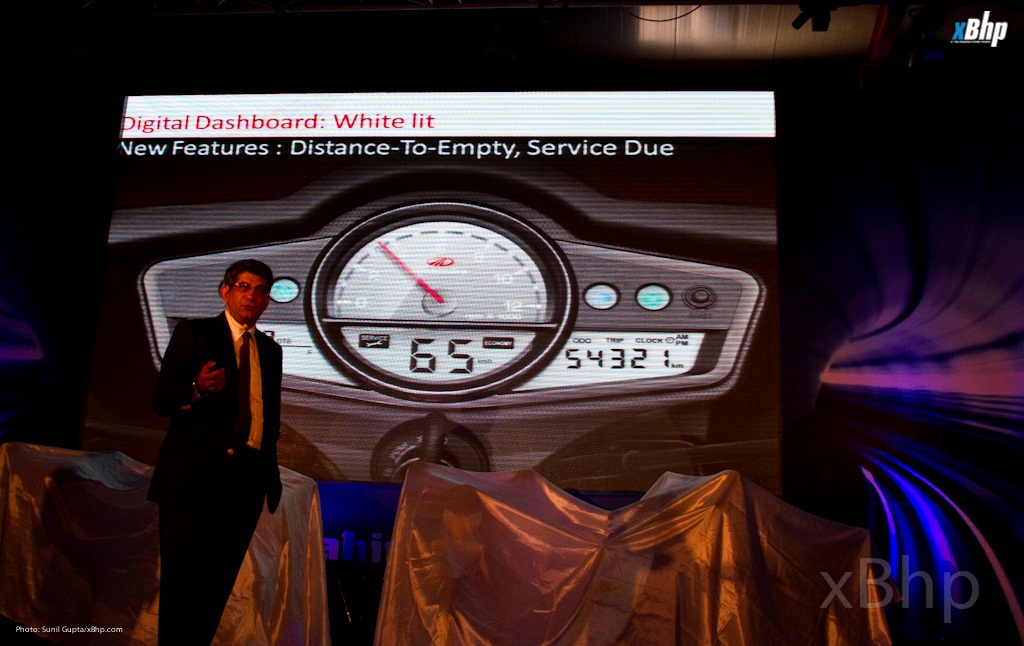
The Centuro has a lot of ‘first-in-its-class’ features. The Centuro is being powered by the same 110 cc MCI-5 (micro chip ignited 5-curve) engine that is fitted on the Pantero. As per them, this entirely new engine has been developed by Mahindra 2-Wheelers at their new R&D house in Pune in just 18 months. Though we did not ride the Centuro, we were told that what differentiates the Centuro riding experience from the Pantero, is the way the engine has been tuned. The Centuro seems to have been tuned for a more ‘peppy’ riding experience, without compromising much on the fuel economy. The Centuro delivers 8.5 BHP @ 7500 RPM and 8.5 Nm @ 5500 rpm. Feature wise, the Centuro comes fitted with a Central-Locking Anti-Theft system with engine immobiliser and a remote 128 bit encrypted Flip Key – A feature that we have not seen in bikes till now. It also has “Find Me Lamps” feature that will makes the turn indicators blink simultaneously at the touch of a button on the remote, making it easier to find the bike in a crowded parking lot. There is also a fully-digital console, with an inbuilt service indicator and Distance To Empty Fuel calculator, that should come handy in day-to-day riding. There are also bright LED tail and pilot lamps. Mahindra calls these pilot lamps “Guide Lamps” as they remain on for 7 seconds during the night time even after you take out the key and turn off the engine, which would keep your way illuminated to make easier for you to find your way in the darkness. Styling wise, the Centuro wore a more solid and robust look than the Pantero. It has been fitted with a pair of golden bars under the tank, which would remind you of the Mojo. It also claims to have the category-best ground-clearance of 173 mm with a seat height of 800 mm and maintenance free battery.

Mahindra Centuro


Pantero First Ride report & Impressions:
Engine & Performance: As said earlier, the Pantero is powered by Mahindra’s all new 110-cc MCI-5 engine, which delivers a peak power output of 8.5 BHP at 7500 RPM. It also gives an ARAI certified fuel average of 79.4 KMPL. This bike has been benchmarked against the category-bestseller Passion Pro from Hero and gives a 0-60 KMPH timing of 8.85 seconds against Passion Pro’s 9.17 seconds (as per Mahindra). For an 110cc motor, the engine did feel responsive and eager. There is reasonable low end torque too. Even with 2 heavy riders and a steep incline, the bike didn’t disappoint, though you have to keep the expectations realistic and not ask for too much out of 8.5 BHP. The Pantero did well in the initial rev range; however, once you go past the 6K RPM mark, the engine starts showing signs of stress and you start feeling a lot of vibrations. Though there were no false neutrals or clinks, we didn’t find the gearbox to be the smoothest.



Please note that the above graphs/pictures have been taken from the official presentation slide that was shown to us at the time of unveiling.
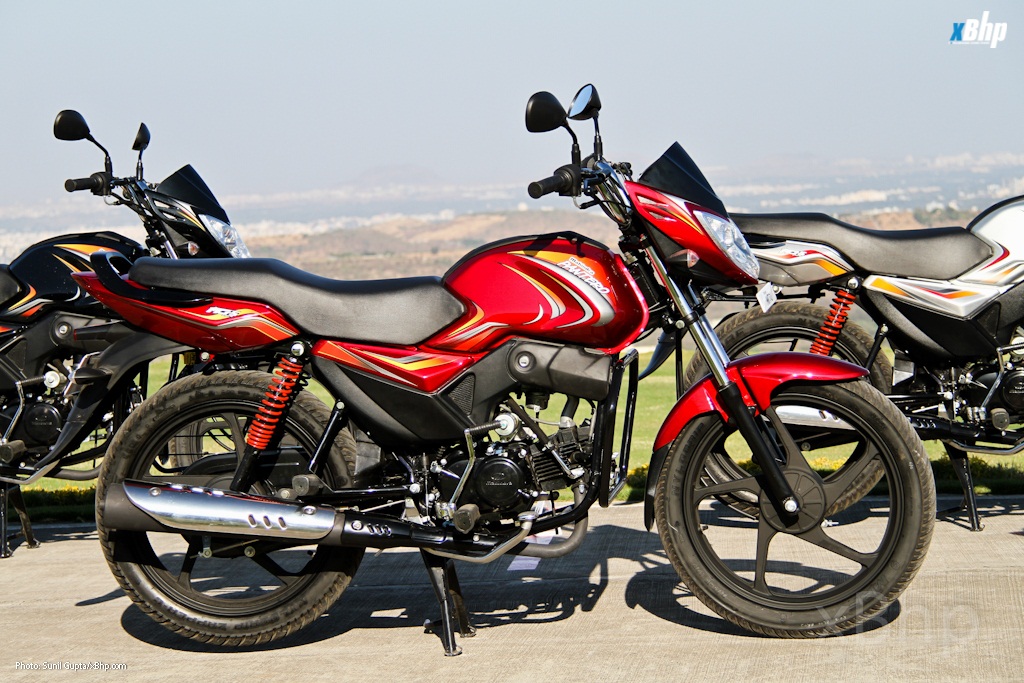
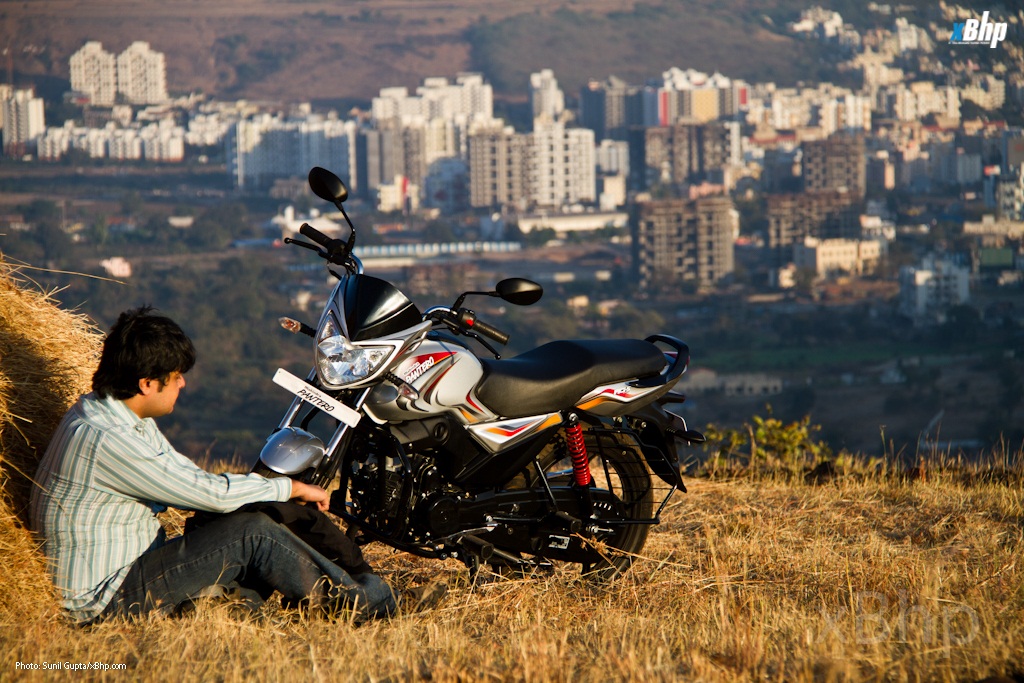
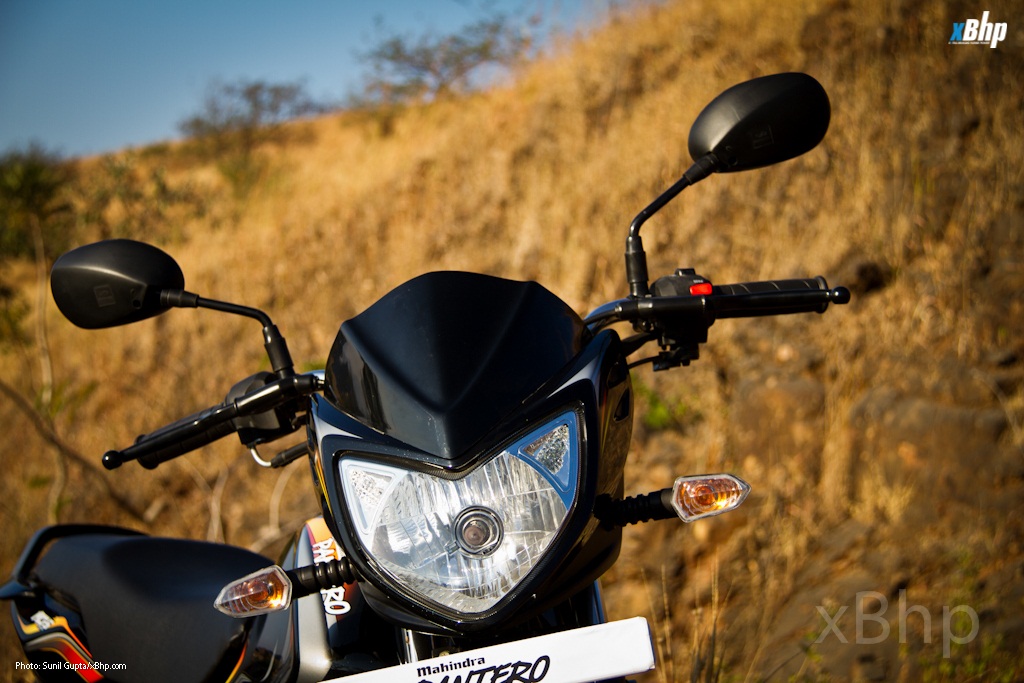
Styling: The Pantero has been given very contemporary looks, which won’t make it stand out in the crowd, but won’t leave you with much to desire. It has got a very sleek styling, with a bikini fairing upfront and LED pilot lamps. The tail lamp also has been fitted with LEDs. The overall styling of the Pantero is not very different from its predecessor, the Stallio; however, it now dons a set of new vibrant graphics to make it stand out from the Stallio. The Pantero is available in 4 colour schemes: Fiery Red, Sterling Silver, Blazing Black and Cool Black. The engine, exhaust pipe and alloys have been given an all-black treatment. The exhaust pipe comes with a chrome-plated heat shield. The compact looking tank has a 12 L capacity and has an aircraft type tank lid. There is also a plastic tank protector, running along the entire length of the tank, to protect the tank from scratches from your belt buckle and/or the zip of your jacket. At the rear, the LED tail lamp and the black rear grab rails, along with the clear-lens turn indicators give it a fresh look.





The Pantero will be available in following 4 different variants:
T1: Self Start, alloy wheels, digital speedometer
T2: Self Start, alloy wheels, analog speedometer
T3: Kick Start, alloy wheels, analog speedometer
T4: Kick start, spoke wheels, analog speedometer.
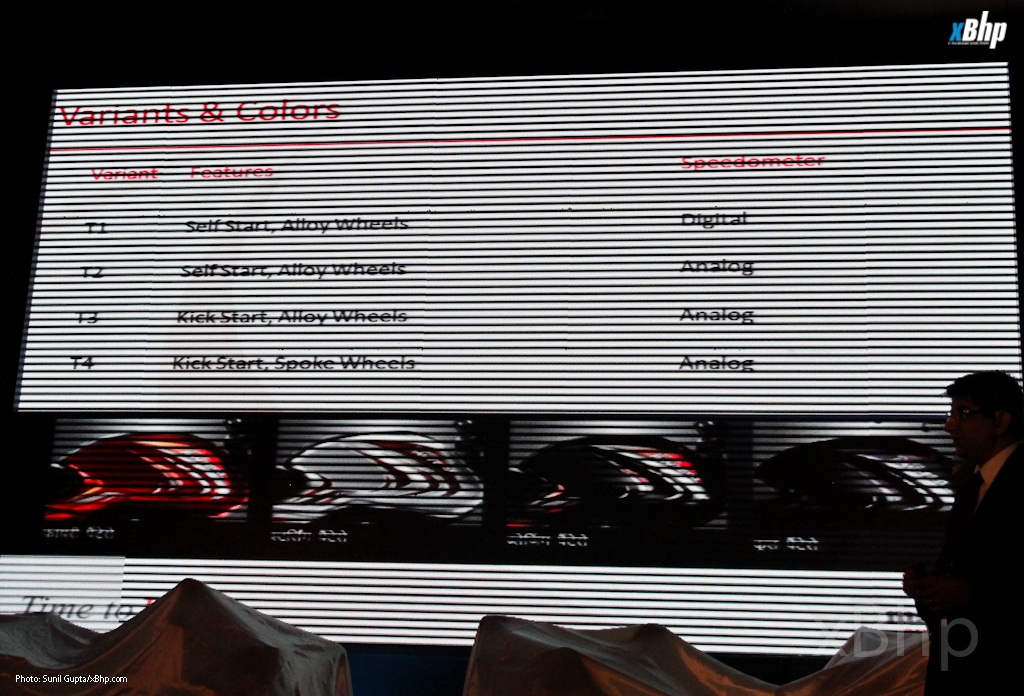
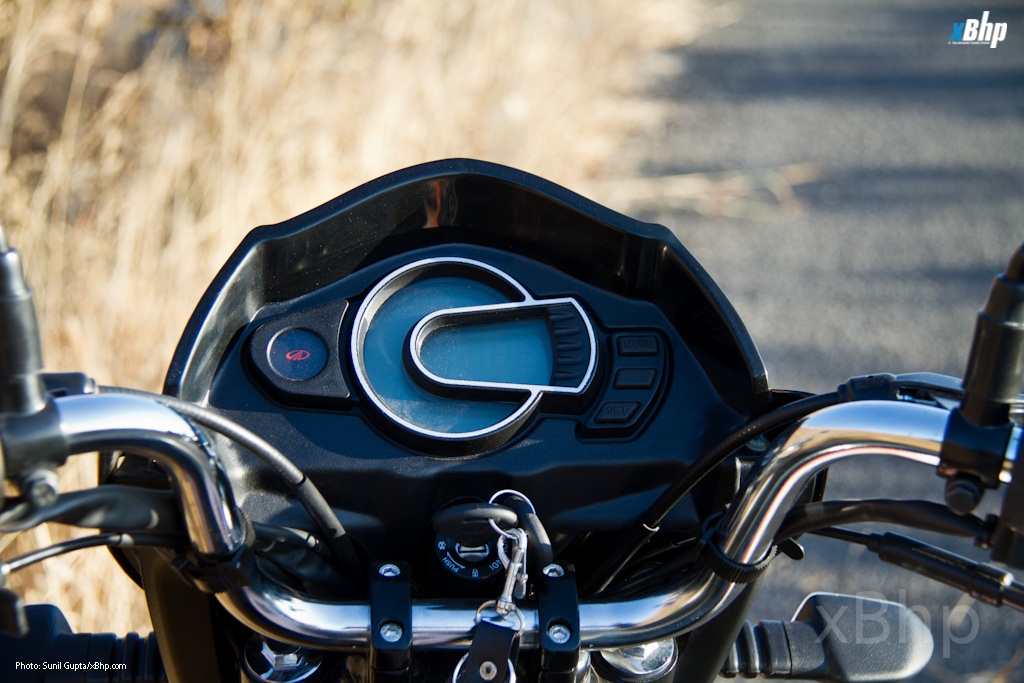
The one we rode was the T1 variant with the fully digital console that has been taken straight from their scooter, Rodeo. The console backlight color is orange and it has digital tachometer, fuel gauge, clock, odometer and trip meter along with the digital speedometer.
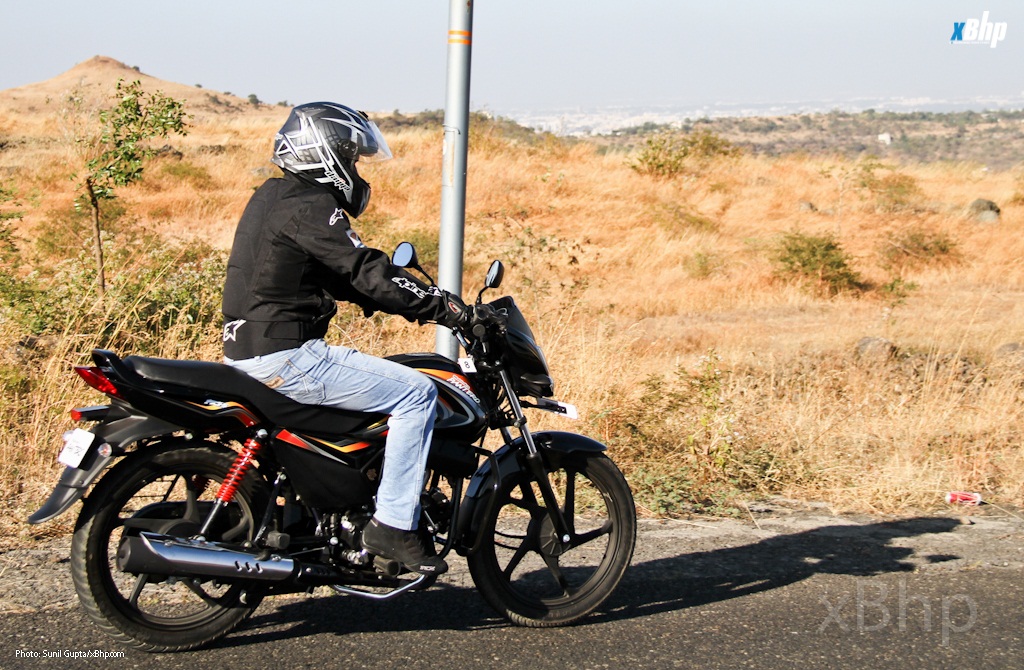
Handling & Ride Comfort: Mahindra believes that handling and manoeuvrability is the USP of this bike. They had even put up a slalom track for all the test riders, to test its maneuverability. The Pantero did feel sleek and easy to maneuver, taking all the quick turns with ease, which should make it fun to ride in city traffic conditions. The basic suspension setup of telescopic upfront and twin shock absorbers at the rear does its job with aplomb and left us impressed with the comfort it provided even off-road, with more than 150 kg payload on board. The comfortable seat just added to the overall ride quality.
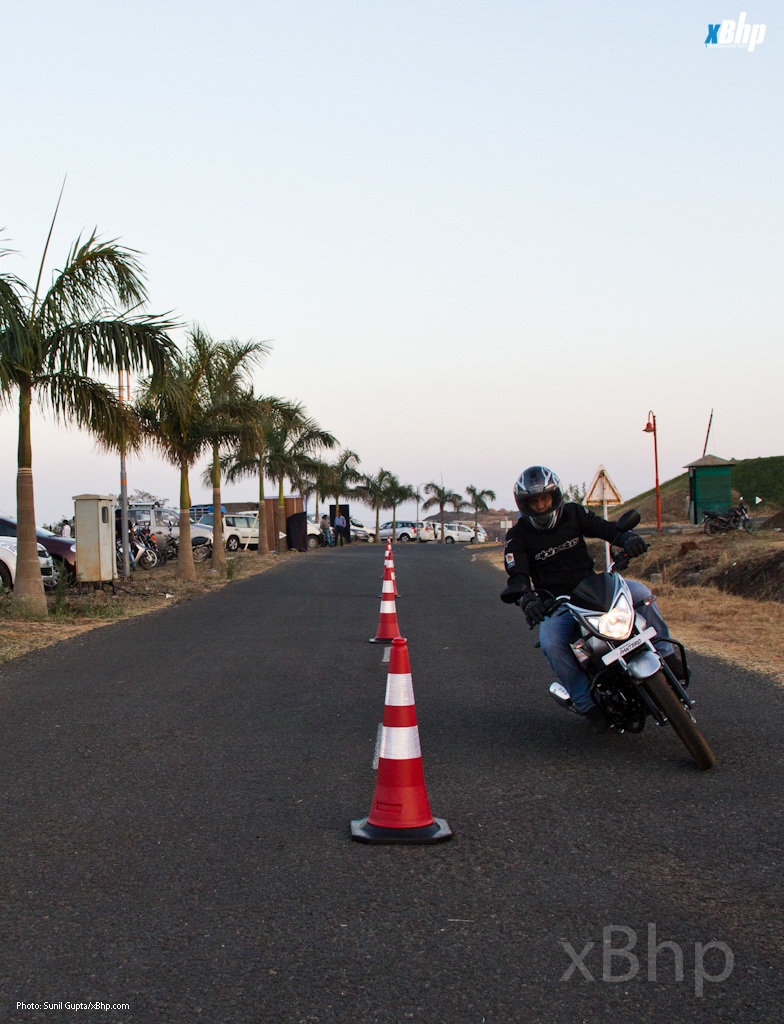
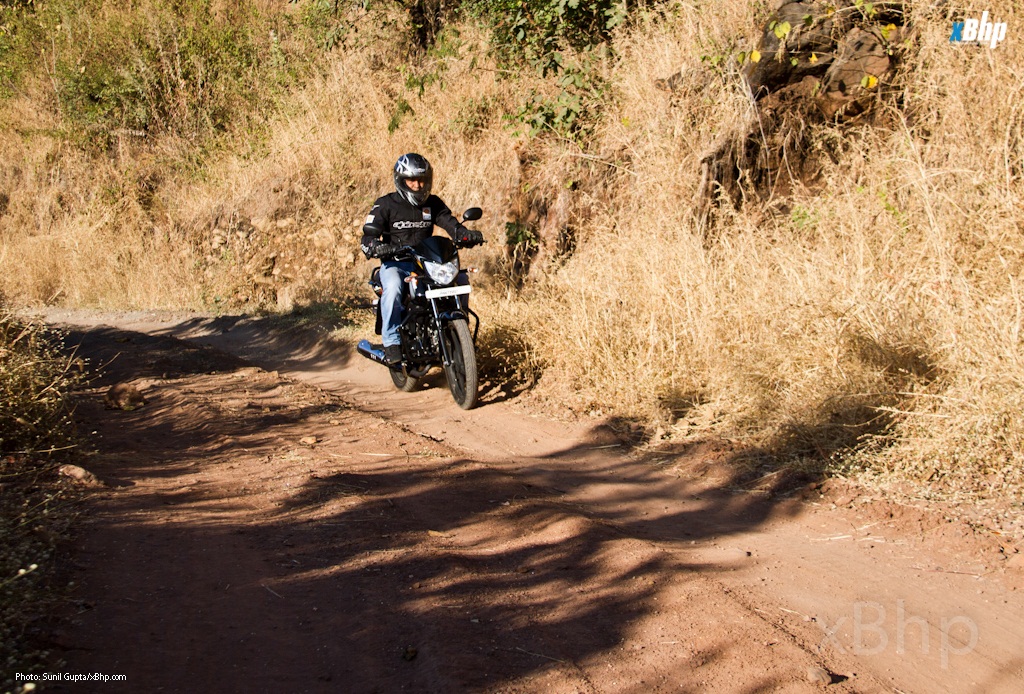

The Pantero has a seat length of 774 mm, which makes it the longest seat in its class. This should be an advantage for the riders & pillions with a heavy build. Particularly in rural areas where you find people riding three-up.

On the brakes front, the Pantero comes with the drum brakes on front and rear, which is good enough for coming to halt from moderate speeds in reasonable time. However, we do feel there should’ve been a disk brake variant for added safety. The drum brakes just won’t cut in case of real urgency.

Overall: The Pantero is quite a commendable effort from Mahindra to re-enter the motorcycle market. Especially if you consider that they accepted their mistake by recalling the Stallio from the market. It has everything that the competition is offering in this category. It is a huge improvement over the Stallio. There don’t seem to be any serious problems with the product that would put a potential buyer off of.
However, we must add, this market is already full of products that look the same and offer similar features, and they command the consumers’ trust because they have been there in the market for many years now. To pull these consumers towards it, Mahindra really needs to price it sensibly as that would be the deciding factor for most customers.
TVS Phoenix 125 Review
 Oct 2012 Sunil Gupta
Bikes,Motorcycles,TVS
Oct 2012 Sunil Gupta
Bikes,Motorcycles,TVSText & Photos: Sandeep Goswami/ Old Fox
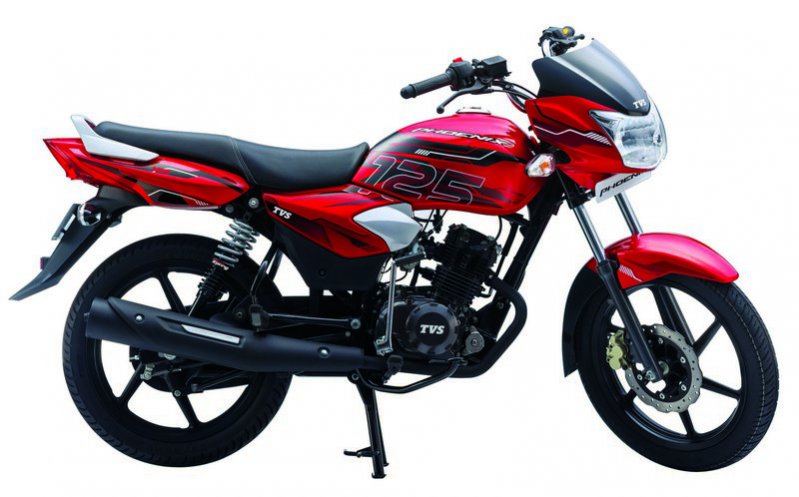
11 BHP mobikes ruled the roost two and a half decades ago when the RX-100 made as much power. And it was a ‘performance’ motorcycle of its time. That similar power figures are found on a humble everyday commuter bike today is a glaring example of change that has happened to the motorcycling scenario in our country over the years. TVS renters the commuter ‘bread and butter’ motorcycle market with its all new Phoenix 125 this season. With happy memories of the Victor and not so happy one’s of the Flame, it is heartening to see them take this decisive step back into the main-stream market. Even though the Apache series has been relatively successful in its own right, the performance motorcycle market still remains a niche arena with the real volume sales persisting in the pure commuter sector. The Phoenix is thus a much awaited step in the right direction and time shall tell whether this motorcycle rings true to its mythical name and brings resurrection to the TVS brand in volume sales too.
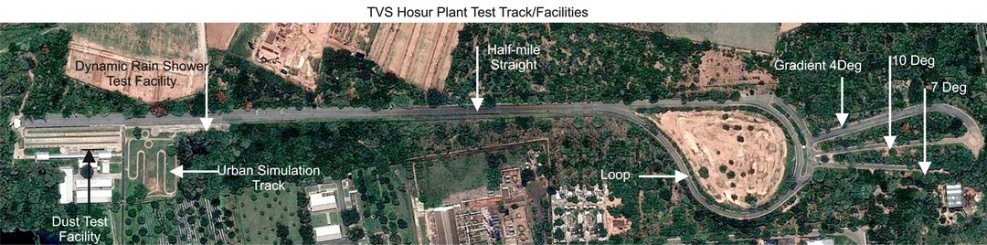
The company has a solid R&D base, an area where expertise comes through experience and nothing but time can bring in that experience. Their sprawling facility at Hosur, just on the border between Tamil Nadu and Karnataka, is spread over 400+ acres of a lovely mix of greenery, neat white-washed buildings and clean tarmac connecting them. The uniformed staff makes it appear as a small world of its own and exudes an aura of purposefulness all over. We were given access to the test track which is actually a series of test facilities spread over a large area and includes primarily a half mile straight followed by a loop for high speed runs. Three roads extend like spokes of a wheel from the loop, each descending at a different gradient angle (4 deg, 7 deg and 10 deg) to assess the gradability of the bikes. There’s an urban simulation track which is a narrow cemented track comprising of series of convoluted loops, U-turns and figure of eight’s ideal for testing low speed controllability and maneuverability of the bike. There also is a track with artificial pot-holes, one with a sinusoidal wave like undulations and a very rough cobbled path to test the bike’s suspension, handling and controllability on such surfaces. Rarely has a review ride been given access to such varied facilities for test-riding a new product.
The Phoenix 125 is, as the name suggests, a 125cc motorcycle which has been built to design specification generated through data inputs from not just TVS’s own experience over the years but also through an active country-wide customer aspiration survey. The result is a simple yet very functional design that is as feature packed as the best in its class and uses several new aspects of ideas and technological inputs. The Ecothrust engine (economical and yet with enough thrust) seems to be a pretty straightforward piece of engineering, sweeping 124.5cc with a bore and stroke of 57 x 48.8mm respectively. The Aluminum cylinder block has a moly-coated piston reciprocating inside with chrome-plated piston rings adding long operating life and reliability to the power-plant. Developing 11 PS at 8000 rpm and a peak torque of 10.8 Nm at a mere 6000 rpm needs just a 4-speed gearbox that proves sufficient to transmit the power effectively to the rear wheel. The engine has a very flat torque curve precluding frequent gear shifts which makes a typical commute through the urban/semi-urban dense traffic a stress-free experience. Just roll that right wrist when you need the ‘go’ and you get it without much ado. The engine has excellent gradability which I experienced as pillion (with a TVS rider at the helm) as we rode up the 10 deg grade, puttering along at 30 kph in 3rd gear, without a gasp from the motor! This bike will surprise a few in the hills with its climbing prowess alone.
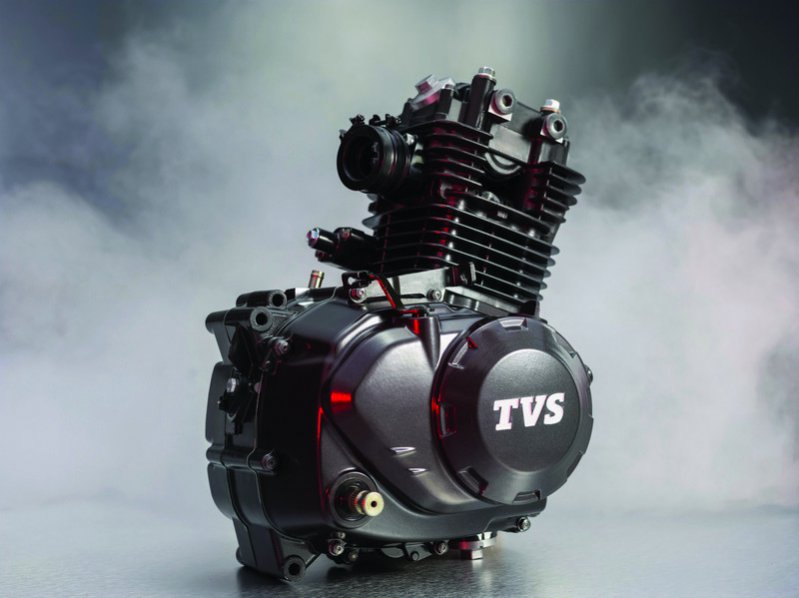

Straight line acceleration feels brisk and even though there are perceptible gaps between the gears (with just 4 speeds to spread the entire rpm range through), the precise shifting box and that light responsive clutch allows for smooth and quick shifts to build up speed quickly. The CV carburetor is well matched to the engine respiration and there are no flat-spots whatsoever when pulling the engine through the revs. In fact the engine lineage goes back to the very sweet and successful Fiero power-plant of a decade and a half ago, with the bottom end components of the Phoenix engine having been derived from the same. No wonder it felt so smoothly tractable.
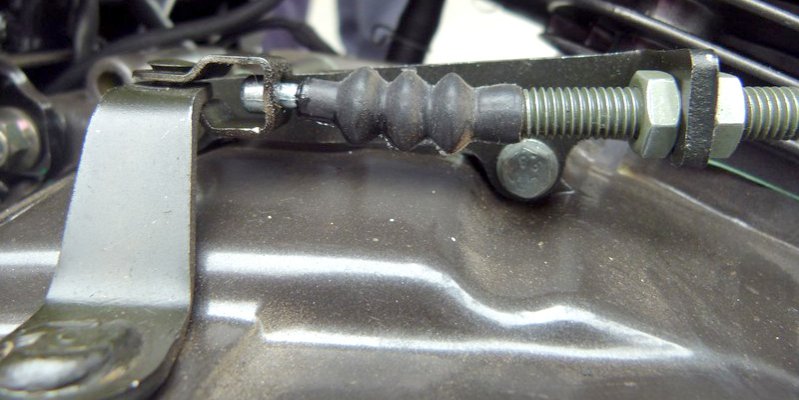


The suspension is an area of lots of new development riding piggy-back on conventional design. The dual rear shock set-up has the newness in the shock-absorber design. The ‘series spring’ is actually a set of two springs with differing compression/rebound response placed one above the other around a single damping unit. The lower spring is softer in response while the one on top is harder. The lower spring compresses quickly in response to small road undulations and once it reaches its limit of travel, the upper one starts compressing giving a very progressive compression feel. Of course there’s some overlap between the two spring compression’s and that’s what makes the feel so progressive. The damping is well matched to this two-spring set-up and also works well in sync with the front telescopic set-up. The veracity and efficacy of the suspension became apparent on the artificial pot-holed and the sinusoidal tracks at the test facility. The suspension is tuned as much for rider comfort as it is for superior road-holding with the dual springs improving tyre-to-road contact by an appreciable margin. The wheel doesn’t skim over undulations as is usually the case with most bikes with simpler suspension set-ups as this one but dips into the pot-hole or rides over the crest with more positive tyre contact which allows time for the suspension to absorb the vertical accelerations involved avoiding sudden transfer of those forces directly to the rider. Comfort and road-holding, both get a fillip thus.



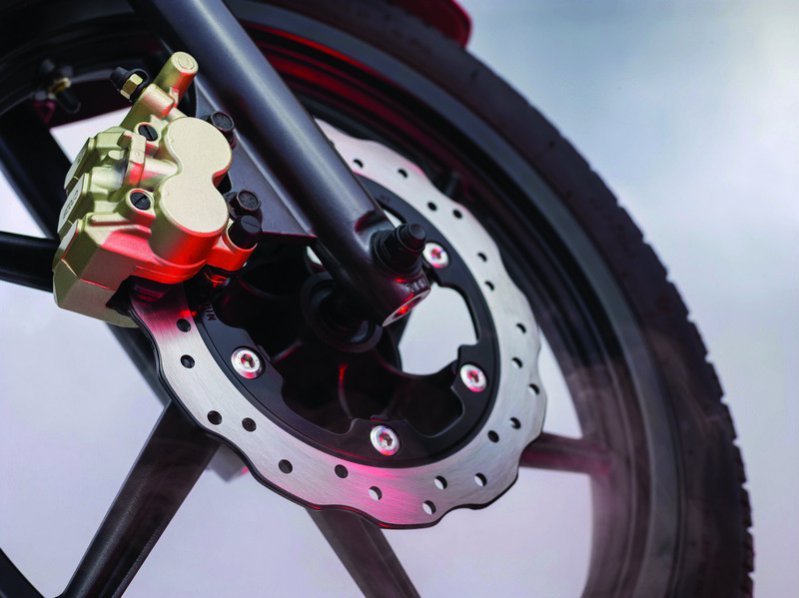
The Phoenix handles well, not just as well as most commuters but a tad better than them though it does have its limitations at the edge of its performance envelope, again like its brethren in the segment. Like when leaning over as close to its top speed on even slightly rough tarmac, there’s a perceptible vagueness in the steering response. But then the segment this bike is addresses to and its usual utility blanket does not include such antics and so it really isn’t a short-coming in the truest sense. Braking is great with that powerful and gradable 240 mm disc up front and a good bite from the 130 mm rear drum. The specially developed tyres (90/90-17 rear and 2.75/90-17 front) also play a decisive role in the traction equation, the straight line stability under hard braking amply demonstrated when a reviewer over-shot his braking point after the long straight by a wide margin and came to a stop after an almost 40 ft slide with the rear brake locked and the tyre smoking away to glory! The poor rider froze on the controls and there were no inputs from him whatsoever in contributing to the stability of the bike. Not the best way to test the edge but the inadvertent demonstration freed the rest from the onus of trying such stuff ourselves. Verdict: the Phoenix is pretty stable even under very ham-handed hard braking.

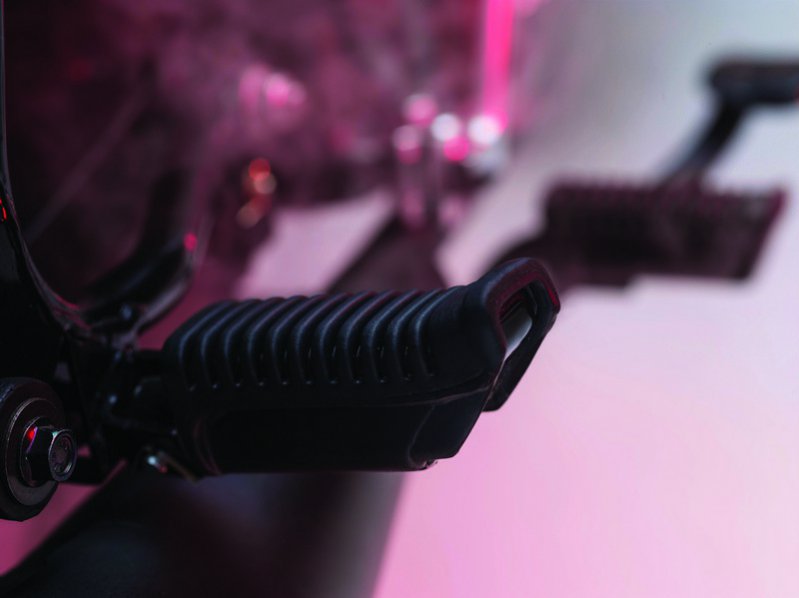
The handlebar-seat-foot-peg relationship is spot on for a commuter and wouldn’t be bad for long hours on the saddle too. As is the seat with improved polymer compounding that reduces areas of high contact pressure on the seat, distributing the load better across the entire seat. Attention to detail like a dual-texture seat cover with a non-slip part for the rider and a perforated better breathing one for the pillion, the positive routing of cooling ram air over the engine and away from the footpegs reducing ‘heat-on-the-legs’, the hazard lights that blink all four trafficators for use in low visibility conditions, the better breathing and more efficient paper-element air filter and the modular engine layout that makes maintenance easy are elements that make a worthwhile product even better. The lights look good though all our riding was during those hours of bright sunshine but the 35w wide-reflector headlamp should be more than adequate for everyday use. The instrument console is also pretty uncluttered with a digital arced-tape speed display and tell-tale indicators for low battery, low fuel and service interval warning. The latter three show up only if there’s a problem, remaining invisible if the battery is well charged, the fuel level is above reserve and the service due is yet some appreciable miles away. There’s a trip meter too along with the digital odometer.


TVS bikes of the yore usually suffered from questionable build quality, especially with those plastic parts but things seem a lot better with the Phoenix. The side panels show a lot of gusseting and ribbing that leads to better rigidity of the components. The zero-gap dies actually leave zero-gap in the tailpiece and elsewhere where two panels meet up. The battery compartment on the left is open-able with the bike key while the air-filter side needs a 4-head screw driver to open up. The 5 Ah battery seems adequate for the purpose and the smallish self-starter motor just needs to whir for a moment before the engine kicks into life. The fuel tank fills up at 12 ltrs and expecting a real world mileage of anywhere between 50-55 kmpl, a range of more than 600 kms makes it a ‘fill-er-up-once-a-week’ bike. Even the inevitable trips to the distant Himalayas (Ladakh) will ensure enough fuel in a tank for a return trip between Tandi and Karu without refuelling!


The Phoenix looks promising and supremely functional as a commuter bike. The fit and finish befits almost a premium bike (just run your hand lightly along the fuel tank or any of the other panels and you’ll know what I mean), is robust, an unusual mixture of simplicity and technological advancement and comes from an organization that has a very focused set of resources, both materiel and human, which precludes the possibility of debilitating glitches in the product. At about Rs. 53,000/- ex-showroom for the disc brake version (some 2000/- less for the drum one), this motorcycle is a very well put-together one and owning one should be a good experience for any one.
| TVS PHOENIX TECHNICAL SPECIFICATIONS | ||
| ENGINE | TVS Phoenix Drum | TVS Phoenix Disc |
| Bore (mm) X Stroke (mm) | 57.0 X 48.8 | 57.0 X 48.8 |
| Displacement | 124.5 cc | 124.5 cc |
| Compression ratio | 9.4 : 1.0 | 9.4 : 1.0 |
| Maximum power | 8.1 KW (11PS) @ 8000 RPM | 8.1 KW (11PS) @ 8000 RPM |
| Maximum torque | 10.8 Nm @ 6000 RPM | 10.8 Nm @ 6000 RPM |
| TRANSMISSION | ||
| Clutch Type | Wet – multi plate | Wet – multi plate |
| Transmission | 4 speed constant mesh | 4 speed constant mesh |
| DIMENSIONS | ||
| Overall length | 1985 mm | 1985 mm |
| Overall height | 1065 mm | 1065 mm |
| Overall width | 740 mm | 740 mm |
| Wheel base | 1265 mm | 1265 mm |
| Kerb weight | 114 kg | 116 kg |
| Ground clearance | 165 mm | 165 mm |
| SUSPENSION | ||
| Front suspension | Telescopic oil damped. | Telescopic oil damped. |
| Rear suspension | Twin, 5 step adjustable hydraulic shocks with series spring | Twin, 5 step adjustable hydraulic shocks with series spring |
| TYRE | ||
| Front tyre | 2.75 x 17 | 2.75 x 17 |
| Rear tyre | 90 / 90 x 17 | 90 / 90 x 17 |
| BRAKES | ||
| Front Drum / Disc | Hand operated, Internally expanding, 130mm dia drum | Hand operated, Dia 240mm disc |
| Rear | Foot operated, internally expanding, 130mm dia drum | Foot operated, internally expanding, 130mm dia drum |
| ELECTRICALS | ||
| Ignition system | DC – Digital TCI | DC – Digital TCI |
| Battery | 12V 5Ah | 12V 5Ah |
| Head lamp | 12V, 35/35W x 1 | 12V, 35/35W x 1 |
| Tail lamp/Brake lamp | 12V, 5/21W x 1 | 12V, 5/21W x 1 |
| Horn | 12V, DC | 12V, DC |
| CAPACITIES | ||
| Fuel tank including reserve | 12 litres | 12 litres |
| Reserve | 2 litres | 2 litres |
A rendezvous with Mighty BMW K1300S – The Sauvé Hulk!
 Jul 2012 Sunil Gupta
Bikes,BMW,Motorcycles
Jul 2012 Sunil Gupta
Bikes,BMW,MotorcyclesText: Sandeep Goswami/Old Fox
Photos: Sandeep Goswami/ Old Fox & Sunil Gupta/ Sunilg

Did you know that at times a motorcycle tyre can talk to you? That it can give a running commentary of all that’s going on beneath its contact patch. Ever experienced practical lessons in the physics of friction and traction from your bike, live and as you ride? Go ride the BMW K1300S if you haven’t experienced anything like that till now and want to. This bike has the most communicative front end of any bike that I have ever ridden, big, medium or small in size, weight or performance. The front suspension is just….ah! well, all in good time. Let’s be a little systematic with the review, build a preamble of sorts about the bike first and not jump the gun in enthusiasm.

The K-1300 is an evolution of the previous K 1200 series from BMW. The 1200 was in its time the most powerful offering from the Blue Propeller but was beset with some niggling issues that possibly contributed to its not really catching the fancy of the discerning motorcyclist. Intermittent fueling, jagged off and on-throttle response, a clunky gearbox and a slight high-speed instability were the major grouses that needed rectification. BMW Motorrad went about evolving the 1200 into a new model not just by solving those issues but by virtually building a new motorcycle altogether in the K 1300 series. The K1300S is the fully-faired hyper-tourer that we are reviewing here. The ‘R’ is the naked version with essentially the same hardware but some tweaking to give it a different and more aggressive character. And of course it is ‘naked’.
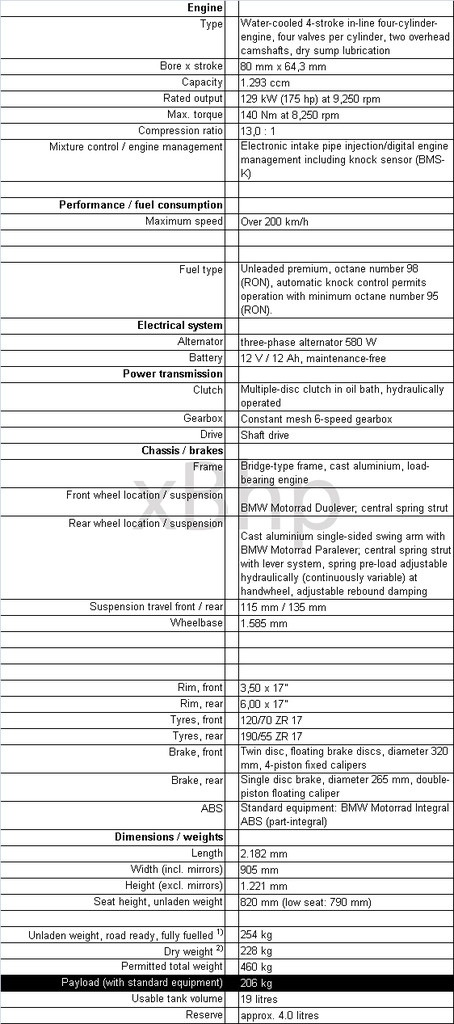
The engine of the K1300S is a 1293cc unit, an increase in capacity by 136cc over the base 1200 one, achieved by increasing the bore by 1mm and stroke by 5.3mm and the power has been upped by some 8 bhp with a proportionate increase in torque. The transverse 4 cylinder in-line engine is inclined at 55 deg forward and is as long legged in feel and performance as they come. This is a blisteringly fast bike, no second opinions about that. Sub 4 sec 0-100 kph timings stand testimony to that. The new engine however gives a far wider and smoother torque and power spread which allows the rider to slot in sixth and then just roll that throttle to swoosh past other traffic.

The bike is big and imposing to look at though nicely proportioned. Looks sleeker, slimmer and slicker than the Hayabusa. With a wheelbase of 1585 mm and measuring a little more than 2 meters in length (2182 mm in fact), it is a lot of motorcycle between the wheels. And weighing in at 254 kg fully fuelled, it isn’t light either. But get it rolling and feel the length and weight shrink into controllable dimensions pronto. The front fairing is big, dominated by that single casing dual bulb headlight that has a ‘candle-stand’ parking light inside. The stalk-mounted RVM’s look delicate but are robust enough to withstand wind blasts of 300 kph that the bike is capable of! The tail looks a trifle anemic but then the taper proportion is possibly dictated more by the demands of aerodynamic streamlining than sheer aesthetics. The moulded ‘contoured’ seat looks expansive and comfy. The single-sided swing-arm with that famous Paralever shaft drive is a visual treat for the technical minded.
Insert the key and turn it clockwise to switch on the electrical and ignition. The console lights up orange and the rectangular LCD display on the right (beside the white-dialed analog speedometer and the smaller tachometer to its left) shows basic info in default – clock, odometer reading, ABS available, fuel level and engine temperature as vertical strip indications and gear position. There’s an ‘info’ button on the left handlebar cluster using which you can toggle through a variety of info menu’s on the same LCD.
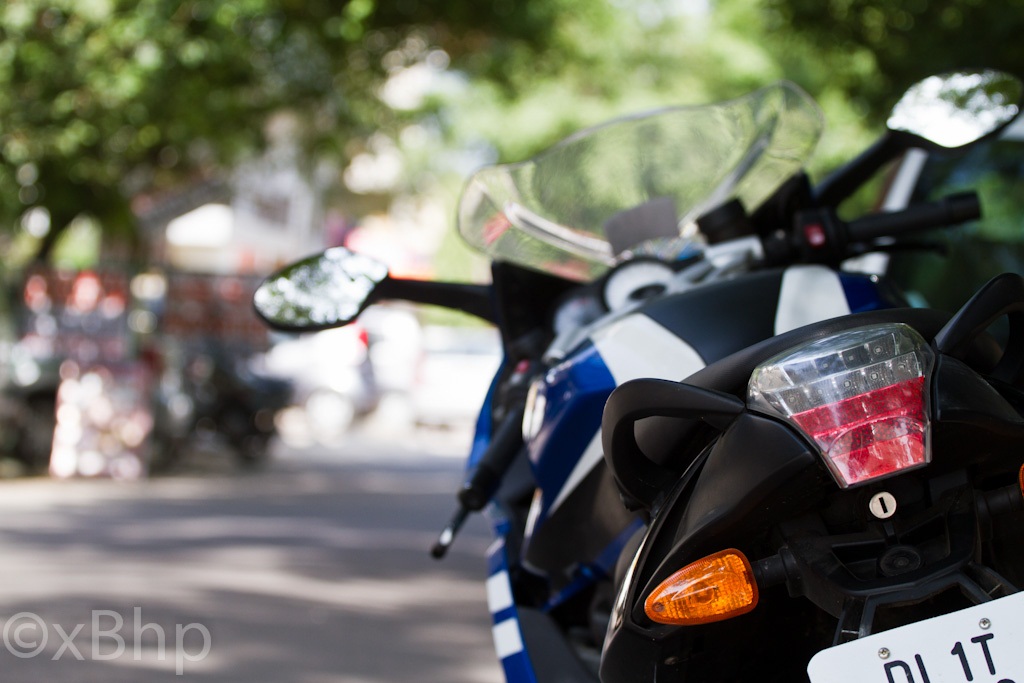

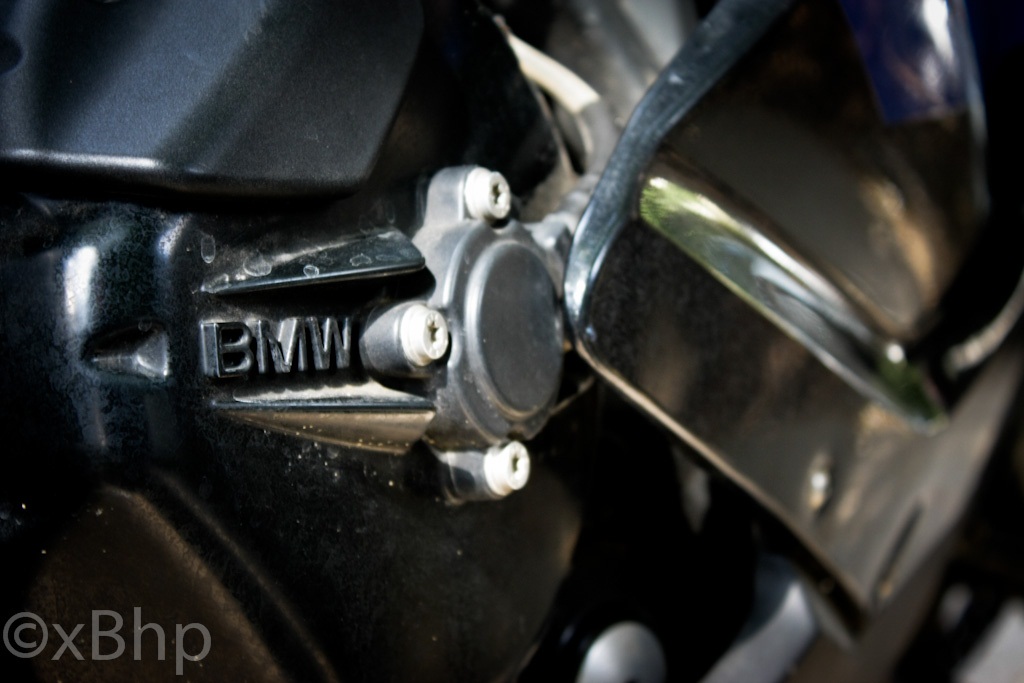
The red engine kill switch on the right also doubles as the starter switch. The engine will not start if the bike is in gear and the side-stand is down. Push the starter and after a longish whirr, the engine comes to life with a muted growl. Sounds delicious even at idling. Settling to a sub-1000 rpm idle, the warm up time is short in Delhi’s hot summer and within less than a minute we are ready to roll. Blipping the throttle reveals an engine very eager to be revved and promises good fun on the move. Pull in the heavy but smooth hydraulically actuated clutch and slot the bike into 1st gear. A solid ‘thunk’ announces you have some 170+ bhp tugging at the rear wheel at the drop of that clutch now. Gently roll the throttle as you release the clutch and you’re moving. The front end that seemed unusually heavy while the bike was parked becomes progressively light and starts sending back a clear stream of contact info from the front tyre. The blinking red ‘ABS-engaged’ indication next to the gear position indication on the LCD goes off once you get rolling. Shifting through the firmly shifting but slightly clunky gearbox has the bike pulling effortlessly and smoothly across the rpm band, with an aggressive change in the engine note and behavior past the 4000 rpm mark. Vibrations are next to nil till about 7000 rpm whereon they are mild right to the redline.

Power to be safe and effective needs control and that’s where the handling and braking prowess of the bike comes to the fore. The BMW patented Duolever front suspension was introduced in the 1200 series earlier as the Telelever system and does business in the 1300 in a slightly new avatar. This makes the bike’s feel and response to steering inputs quite different from what we are used to with conventional telescopic forks. In tandem with the Paralever system doing duty at the rear end, this gives the bike exceptional handling behavior. Read about this novel suspension in detail below.
BMW DUOLEVER EXPLAINED
The telescopic front fork has dominated motorcycle front suspension design for decades now and the improvements brought about by USD forks have further strengthened its stranglehold. But this dominance does not mean there are no other options and also that those other options are inferior by default. The telescopic front suspension, for all its apparent simplicity, ease of production and familiarity is weighted down by an inherent drawback. Since the telescopic fork handles the combined forces of steering and suspension through common physical components, both of these are directly transmitted to the rider through the handlebars/clip-ons. Though interestingly, this drawback is considered a distinct advantage by some who take these forces as feedback information. Whether the rider necessarily needs feedback of such magnitude is the debate. In addition, the telescopic fork induces dive on braking and is also weak in torsional stiffness. To understand torsion, grab hold of the front wheel and try to twist it while keeping the handlebars straight and rigid. Though no noticeable twist occurs when you apply force by hand but the tubes tend to twist relatively easily during cornering at speed and especially on rough surfaced turns. Something which is not at all desirable from a control point of view.


The Duolever front suspension on the K1300 series is an evolution of the Telelever system from the K1200 which in turn is based on the principle design by Norman Hossack, a British engineer who once worked on McLaren race cars and later moved into motorcycle suspension design. The Duolever suspension in principle separates the braking/suspension forces from the steering forces. There are separate and discreet components to handle suspension duties and steering. This means that the rider only controls and feels the steering inputs while the suspension forces are transmitted directly to the motorcycle chassis. So steering the bike becomes easier and more precise. But more importantly, the struts for mounting the front wheel can thus be made as stiff and rigid as desired and so torsional stiffness is vastly improved. This results in far superior steering accuracy and directional stability than is possible with the telescopic fork.

Ironically, the basic design comes from cars vis a vis the way the front wheels are suspended in a car. The Duolever system uses two ‘wishbones’ mounted one above the other. ‘Wishbones’ are triangular components with mounting holes at all three vertices. The ‘double wishbone’ arrangement has the base of both connected to the bike frame and the apex of the triangles connected to the wheel mounting struts (the wheel struts are a visual parallel to the twin forks but rigid in construction). A shock-absorber/damper unit connects the wheel strut head (which moves up and down as the wheel encounters road undulations) with the frame of the bike. A steering head located on the bike frame right above the double wishbone set-up links the handlebars with the wheel struts through a hinged linkage. This linkage is just there to help steer the bike and has no role to play in handling suspension forces. So the wheel is steered independent of the up-down suspension travel.
From a rider’s point of view, the Duolever feels quite different compared to the telescopic fork.
• There is no noticeable front end dive under hard braking. So the rider would be decelerating a lot quicker than he would realize since he’s used to gauging the severity of braking though the front end dive. The excellent ABS here helps a big deal as it avoids the nasty consequences of inadvertent and dangerous over-braking as the lack of ‘dive’ feedback can make the rider brake beyond the limits of available traction. No dive means full suspension travel is available to tackle road undulations and thus improve road-holding.
• Allied with the rear Paralever arrangement, the Duolever system allows for near constant wheelbase, irrespective of whether the bike is accelerating or braking hard.
• Compared to the reduced ‘trail’ under hard braking in telescopic fork equipped bikes, the Duolever suspension ensures constant trail and so predictable bike geometry and dynamics over the entire performance envelope.
• The far superior rigidity of the Duolever system leads to better feedback to the rider though it takes time for someone to get the best gains when switching over from telescopic forks.
Also check out these links for more details on the Hossack Suspension
Hossack-Design.co.uk :: Design and Theory
The single-sided swing-arm at the rear with the 3rd generation Paralever system is another excellent piece of engineering. BMW has cleverly combined the drive shaft and the swing arm into one structural element by housing the drive-shaft inside the swing-arm. The increased depth of the swing-arm would have been needed anyways to provide for the necessary rigidity. Check out how increasing depth of a beam increases its rigidity by holding a plastic ruler flat at the edge of a table and pressing down its free end. It is easy to bend it. Now hold it edge-wise and the same ruler becomes almost impossible to bend! The Paralever system forms a structural parallelogram much like a double-wishbone in cars and holds the rear suspension in constant orientation with respect to the rest of the bike during acceleration and braking. The earlier Monolever would let the rear wheel ‘ride’ up the shaft under acceleration making the rear end squat sharply, something that was unnerving with throttle changes during a turn. The Paralever now adds tremendously to the bike’s lateral stiffness, so much so that the engine has been made a stressed member of the bike frame and the swing-arm has been mounted directly to it. In this 3rd generation system, the control arm has been moved above the drive-shaft thus increasing ground-clearance and the rear drive has a hollow axle to save weight. As for the benefits of all this sophistication, you get exceptional straight line stability at all speeds and perfectly neutral steering that simply and effectively follows the rider’s steering inputs to the‘t’.
All right…enough on the suspension phew! Braking on the K1300S is phenomenal…period. The lever did feel a trifle spongy at first but once the brakes were used on the move, the feedback and sharpness was nothing short of near perfect. Combine that with an efficient ABS, there’s loads of peace of mind for the rider attempting emergency stops. The 320mm four-pot front dual discs seem capable of stopping a freight-train, what of a motorcycle. Add that inherent anti-dive from the Duolever front and what you get is surer and stronger stops than any. The brakes are configured such that using only the front also operates the rear while using the foot pedal operates the rear disc alone. There’s the ASC (Anti-Slip Control) that is a form of traction control which prevents the rear from spinning under acceleration under low traction conditions. It sure blunts the sharpness of the power delivery but under low traction conditions like wet, slushy or gravel-strewn roads, the edge could well take the rider over the edge. So thank you for modern electronics.
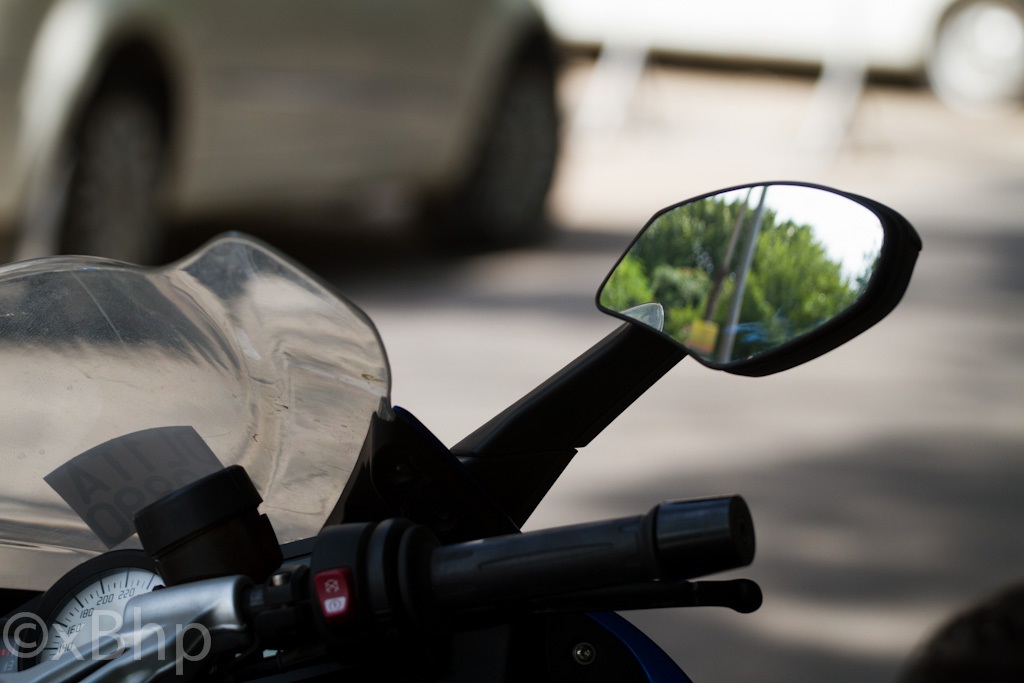
The lights are good with a nice broad beam-spread and are bright in intensity. The low-high beam selector is built into the day-flash switch itself – press the switch lever inward to flash the lights and pull it outward to switch to high beam. The horn in typical European ‘polite’ fashion was weak for our roads and not taken seriously by other road users. The turn indicators are on the left handlebar switch cluster much like on the Japanese bikes, a welcome change from the earlier BMW tradition of mounting them on the right side. The handlebar is just wide enough to provide good leverage for low speed control but the bike does feel heavier at typical urban speeds than it actually is. The seat is plush and roomy, both for the rider and the pillion. But the plushness could mean that long stints on the saddle could become tiring in the absence of a firm support underneath. The foot-peg, seat and handlebar relationship does feel spot-on and the slight crouch helps you get behind that substantial fairing up front and so out of most of the wind blast. The mirrors, as mentioned earlier are pretty functional, clear across the rpm range and look trendy with those built-in trafficators.
We did not have the bike for long with us but the on-board info indicated a fuel consumption of 7 ltrs/100kms which comes to about 14 kmpl – not bad at all for what lies between the wheels and the way it makes those wheels go! The range is again about the same as any big bike sold here – with a 22 ltr tank, you ride about 250 odd kms before needing to refuel. Of course a compression ratio of 13 demands premium 95 octane or higher fuel.
The K1300S is a hyper-tourer par excellence. A tad unexciting for some but when it comes to stretching those long legs on endless tarmac that stretches beyond the horizon; I would unhesitatingly pick this suave well-heeled Hulk as my ride.


Mahindra Rodeo RZ review
 Jun 2012 Sunil Gupta
Mahindra,Scooters
Jun 2012 Sunil Gupta
Mahindra,ScootersMahindra recently launched the face-lifted version of the Rodeo, one of the many scoots that are powering the Mahindra 2 wheelers bandwagon for quite some now in the absence of any motorcycle in their portfolio. The Rodeo was launched by Mahindra as a peppy and rugged scooter targeted towards the young just-into-the college type crowd. It has been there in the market and has made its own space in the scooter market. And with the upgraded version of its hard-working sibling Duro out in the market for some time now, it was high time that Mahindra gave Rodeo a decent facelift too.
xBhp was there during the launch of the new Rodeo RZ and here is an account of our brief rendezvous with it.
Text & Photos: Sunil Gupta

Mr. Viren Popli, Senior VP, Strategy and Market Development, Mahindra Two Wheelers talking about the Rodeo RZ
First of all, the new Rodeo RZ gets its name from the all new 125 cc Z-series engine that it has been fitted with. This new engine, along with a new carburetor system and the dual-curve digital ignition, produces a peak power output of 8 bhp at 7000 rpm and a torque of 9 Nm at 5500 rpm. It also promises to deliver a more punchy performance without compromising on the fuel economy front. The Rodeo RZ with its new engine now claims to give an ARAI certified figure of 59.5 KM per liter and is also claiming a best-in-class pickup.


The new engine did feel punchy and relaxed even while carrying a 67 kg rider and going uphill. We managed to clock a figure of 5.6 seconds going from zero to 50 kmph that was calculated by the inbuilt acceleration timer (more on that later). This figure was tested on 2 different scooters and came out to be the same.

Styling wise, there aren’t too many changes except new, minimalistic decals on the body panels. And it is not a sure shot headturner either. There are quite a few color options available though to match your taste. It is available in 7 different colors now.
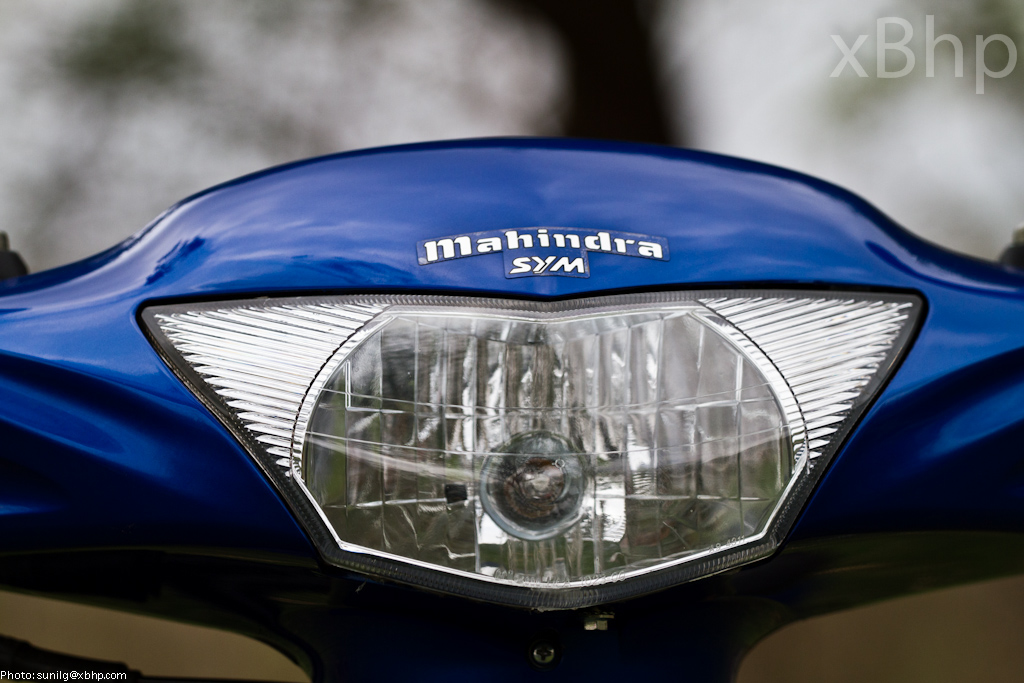


The ground clearance on the new Mahindra Rodeo RZ has improved and now stands at 154 mm (124 mm with Rider + pillion weighing around 150 Kg in total) that seems better than the competition with Suzuki Swish at 140 mm and Honda Activa at 150 mm.


Features: Unlike the motorcycle market where the performance figures are a big deciding factor, a customer who is going to buy a scoot wouldn’t really care much about these numbers as the difference between various products’ performance figures isn’t that huge. What a customer looks into a product like this is the riding comfort, convenience to carry some luggage, styling, and “add-on” features (all this while the price and all important mileage figures have been taken care of). And this where M&M is trying to make some inroads.
The Rodeo RZ is fully loaded with features that will make heads turn. It has got an all-digital console including digital tachometer and digital clock and 7 color backlight options to choose from, front refueling, best-in class “illuminated” under-seat storage (22 L), Mp3/mobile charger, four-in-one anti-theft key, side stand buzzer, overspeed alarm, and a 0-50 acceleration timer to name a few.
For us, the main USP of the Rodeo RZ was its all-digital console. It was full of freebies and useful features. Apart from the speedometer and the tachometer, it also had the following options available in digital format: Odometer, Trip meter, Clock, A-T (acceleration timer), and M-T (time taken to cover a measured distance??). And it is not done yet. The backlight has 7 different colors available that you can select according to your mood or the color of yours or your girlfriend’s tee.

Then, there is front-refueling that is a plus feature as neither you nor your pillion will have to get off the scooter while refueling. Then you have a four-in-one anti-theft key and a bonus mp3/mobile recharging point (#WhereIsThatLikeButton) that is surely going to be a handy feature.
Move a little back, and you have this “illuminated” 22 L underseat storage. Yes, bright LEDs light up the storage space as soon as you lift up the rear seat. No more ‘groping in the dark’ now to find your keys or other items in case your scooter is parked in a dark place. The storage space is large enough to carry a half-face helmet and will still have a lot of space left over. We tried to put our Daijya full-face helmet in but it proved to be a bit too big for the under-seat storage.
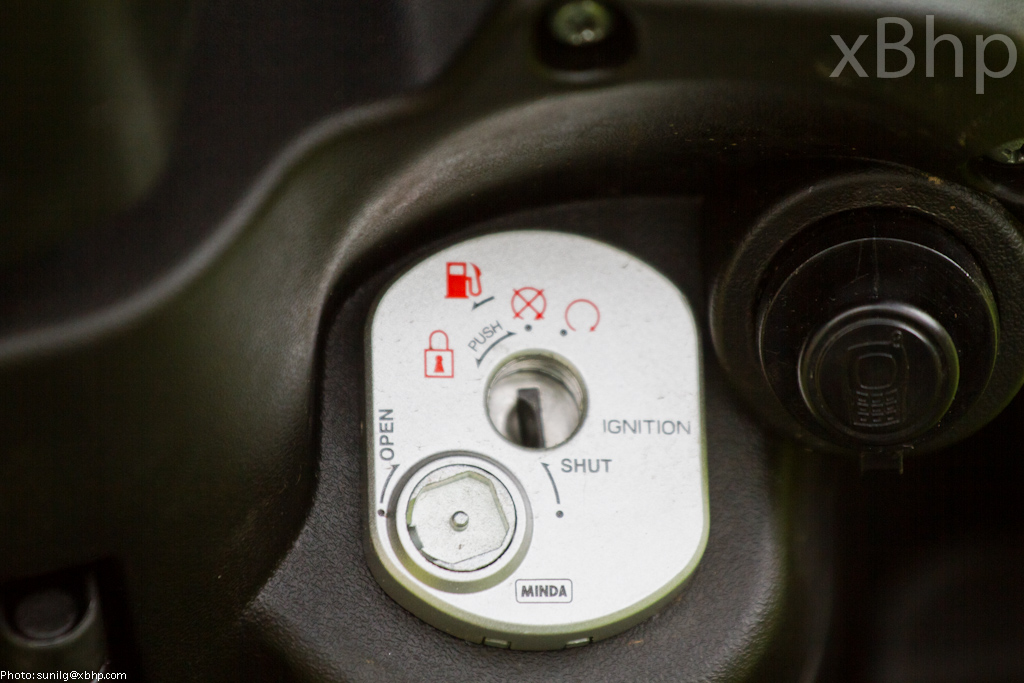

The RZ also has a quite irritating and so a useful side-stand buzzer in case you tend to forget to disengage it.
Then, there is this over-speed alarm in the Rodeo RZ. There is no ‘sound alarm’ per se, but the entire digital console turns red if you go above 60. But this red light wasn’t quite visible during the day time and also won’t be visible in case you have already selected the red color as the backlight color. So this limits the usefulness of the overspeed alarm.

Features comparo – Again provided by Mahindra and Mahindra
And lastly, unlike the previous Rodeo that had a not so accurate fuel gauge, this new version has new patented pressure sensors fitted inside the tank (and not just a float valve mechanism) to accurately gauge the actual fuel level and give the correct reading.
There is one more thing that is worth mentioning here, though it is not a feature of the scooter per se. In case you are thinking about buying the new Rodeo RZ and want to test ride it, just give these guys a call and the test machine will be delivered at your doorstep for you to test ride. And this is something of a ‘revolutionary’ step in this 2-wheeler industry where the customers don’t get that kind of a royal treatment that even a rare 4-wheeler customer gets.
Riding comfort/Handling/Braking: Sitting on it, the Rodeo RZ doesn’t really give the feel of a ‘big scooter,’ but it feels compact and easy. The sitting posture is upright and easy on the joints. Coming to the handling bit, the chassis and suspension setup did feel strong. The front dual telescopic suspension does its job quite effortlessly. With drum brakes at both rear and front, the braking was quite sharp and effective, though we did feel uncomfortable during hard braking. Particularly, braking on a wet surface didn’t inspire any confidence at all. There is no scope of any adventure during the rains and it will leave you yearning for a softer tyre for more grip in case you are riding it monsoons in a city like Mumbai where the tarmac is of worst quality at best.

Price wise, the Rodeo RZ has been launched at a price tag (ex-showroom) of AP – Rs.49,575 /-, Kerala – Rs 49,410/-, TN – Rs. 50,710/ and Karnataka – Rs. 48,930/-, respectively, which is around 2500 higher than the Duro but seems justified given the features packed in it.
So clearly, Mahindra wants you to “Do More” with your scooter and not just settle with anything less. There does exist a big market for a feature-packed product like this, but whether or not they will be able to sell this scooter well will now depend upon their marketing strategy and how well they have trained their sales team so that he/she could explain and sell all these features to a prospective buyer. A bigger dealer network and more visibility will also go a long way in selling this scooter.

Bajaj Discover 125ST Review – The Urban Sports Tourer
 Jun 2012 Sunil Gupta
Bajaj,Bikes,Motorcycles
Jun 2012 Sunil Gupta
Bajaj,Bikes,MotorcyclesThe Discover series of bikes has been a runaway success for Bajaj Auto in the “Deluxe Commuter” category (the category above the entry level motorcycles). Well known as an extremely fuel efficient brand, the Discover has found favor among both the young and mature commuter crowd. Launched in 2004, Bajaj has managed to keep the Discover brand fresh with timely upgrades. These upgrades included changes in the engine platform to cosmetic/feature upgrades. But till now the silhouette has always been essentially the same as the one launched in 2004.
Text: Satadal Payeng (Payeng)
Photos: Gourab Das (MG)
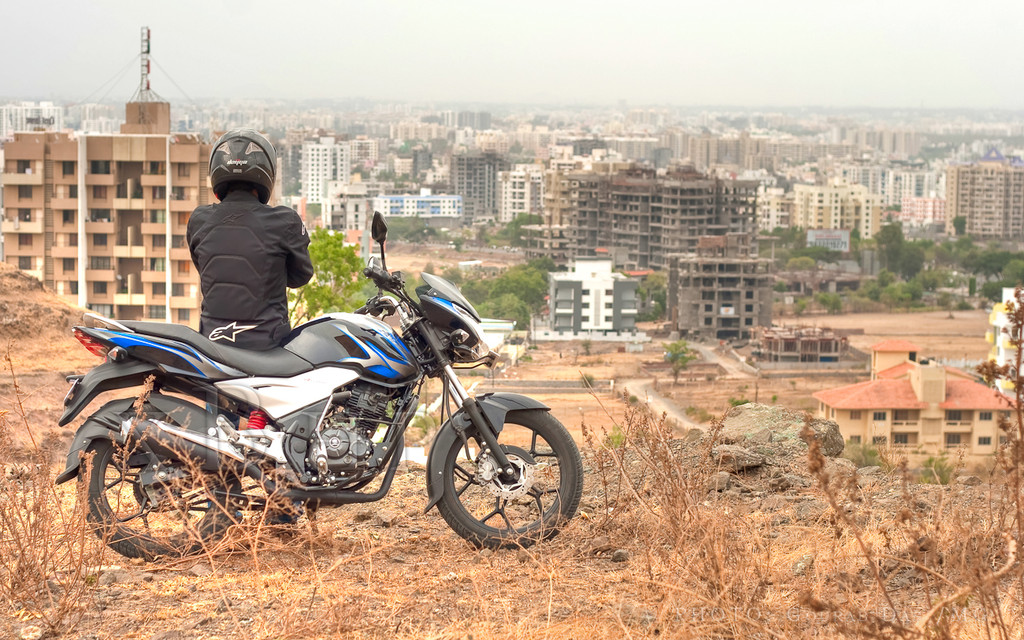
The Discover 125ST which represents the next generation Discover and also the flagship variant (older Discover models will be on sale alongside) is an all new model altogether. Everything about the Discover 125ST is brand new including the styling, engine, chassis and the ride experience. I take one for a test ride to “Discover” more about it.
Discover 125ST in a nutshell
USP (Unique Selling Proposition): Discover brand name, handsome big looks for its segment, first in segment monoshock suspension.
Good Bits: Surprisingly “fun” handling for a commuter, rev happy 4 valve DTS-I engine.
Things that could improve: Features like a digital speedo display, LED tail lamps can be re-introduced
What does the “ST” in Discover 125ST stand for?
According to Bajaj, the “ST” in the name stands for “Sports Tourer”. This is not to be confused with the Recreational Touring kind of bikes but more in terms of an Indian commuter who does long distance travel and an endeavor to make his commute less stressful.
Styling, Design, Fit and Finish: “Elevates from Deluxe Commuter to Stylish Commuter”
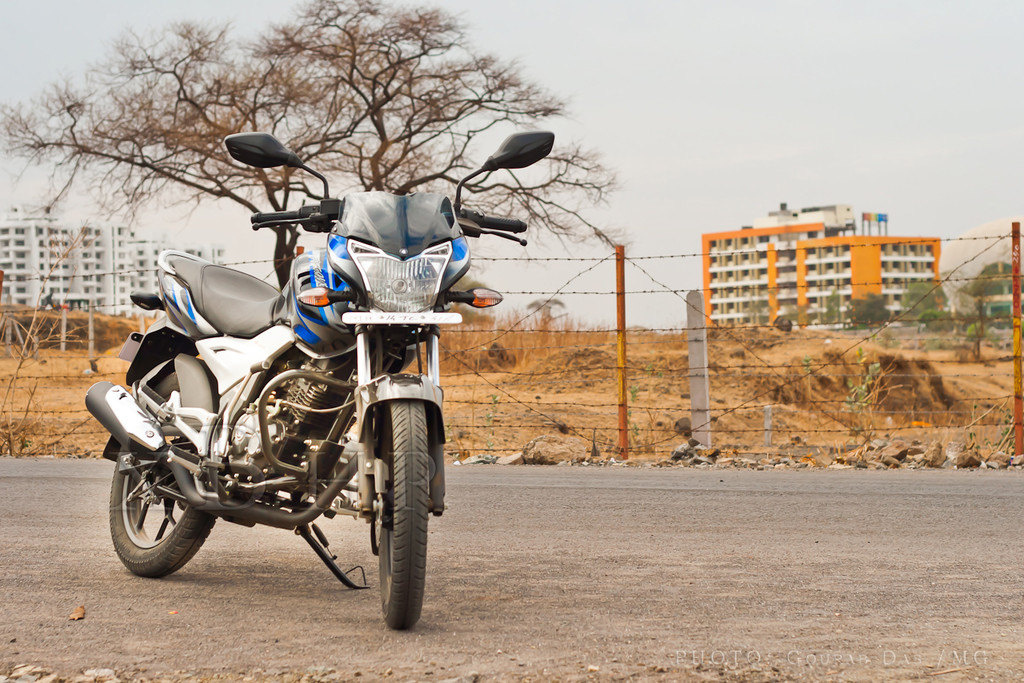
In flesh the Discover 125ST doesn’t look like a 125 cc and can easily pass of as a 150 cc bike. The bike has handsome and muscular proportions and looks much bigger than the current Discover 125 or the Honda Shine. Resemblance to the current Discover range is there in the form of tail lights which have a similar design theme, the chrome masked headlamp and also the decals remind you of the older/current Discover models. But apart from that the rest of the bike is different.
Personally I would have preferred a simpler design for the alloys and the rear mudguard/hugger. The Discover 125ST is a Déjà vu of a couple of bikes. The headlamp for example reminds that of the Pulsar, from the sides the tank has traces of that of the Suzuki GS150R (accentuated by the scooped rider seat) and the rear panels of the bike has very Honda Unicorn type of lines (the monoshock only adds to it). Before anyone cries copycat, the Discover 125ST somehow clicks visually and after spending some time with it, even starts to appear distinctive.
The design intent of the new model is definitely sportier but at the same time it does not let go of its commuter roots. If the old/current Discover caters to the “Deluxe Commuter” category (with bikes like the Hero Splendor, Honda Shine etc.), the new Discover 125ST now addresses the “Stylish Commuter” category (which has got bikes like the Yamaha SS125, Hero Glamour, Honda CBF Stunner). The fit and finish is at par with the other offerings in this segment. It would have been good to have a digital speedometer display and LED tail lamp (this one actually mimics the design of the LED taillamp of the current Discover) though.
Ergonomics, Riding Stance: “No-nonsense, Good Boy ergonomics”
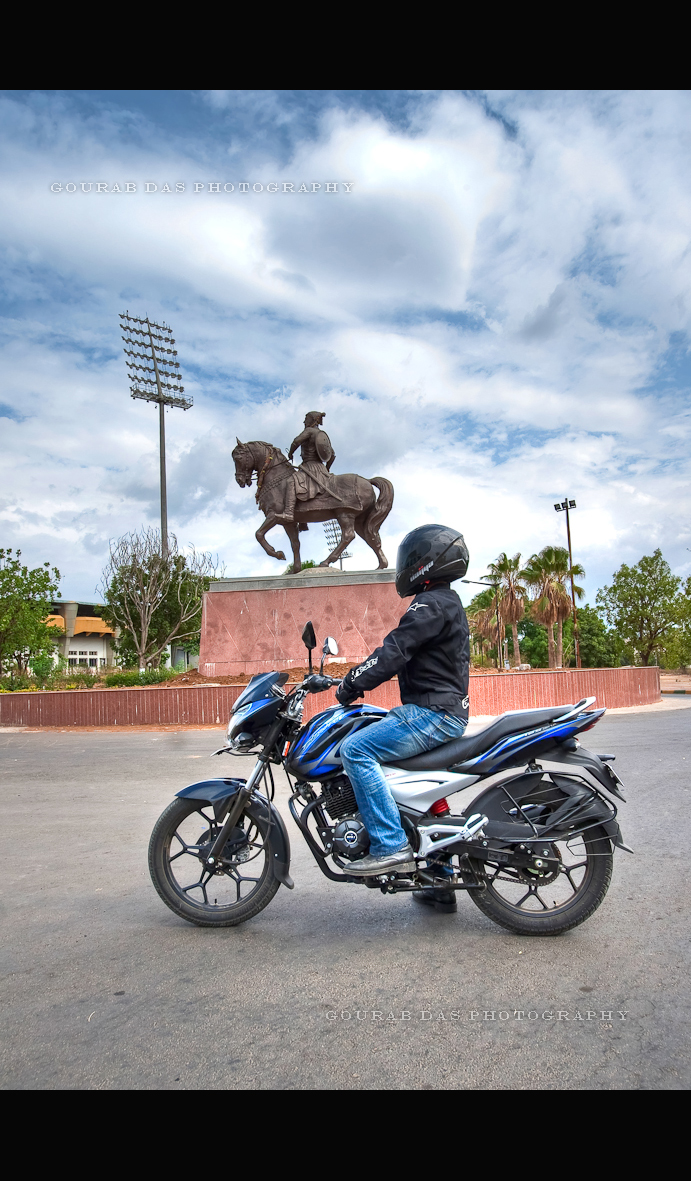
The new Discover 125ST might have slight sporty intent in its design, but swinging a leg over the scooped rider’s seat will instantly make it obvious that it is basically a no-nonsense commuter. The foot pegs are placed forward and the handlebars are placed at a comfortable height. The handle bar-seat-foot peg relationship makes you feel like an obedient and responsible “good boy”.
My short legs are very sensitive to seat height and let me state that the rider’s seat on the Discover 125ST is one of the best for short guys. The scooped seat makes it possible for short legs to place both feet with confidence on the road. The Discover 125ST might look big in size (compared to other commuter bikes), but the weight is distributed on the bike in such a manner that it has a light front end which results in an easy to maneuver, light and easy handling. The turning radius is also small, resulting in very easy and tight u-turns.
In short the ergonomics on the Discover 125ST is a commuter’s delight with no sporty intent whatsoever.
Engine Performance: “4 Valve head makes for an unstressed top end”

Commuter motorcycles are usually about low and mid range performance. Most commuters hardly take their bikes above 60-70 kmph. Therefore every commuter bike out there including the old/current Discover models are tuned to perform at low-mid engine speeds. The new Discover 125ST becomes the first bike in the “commuter” category to feature a 4 valve head. This lets the engine breathe easily at higher engine revs and the light valve train ensures a stress free power delivery of 13PS from the 125 cc DTS-i (Digital Twin Spark Ignition) engine. The power/torque delivery is linear and the gearing on the bike ensures that the bike has enough poke at low speeds. One can easily potter around at speeds as low as 35 kmph in top gear (5’th) and yet pick up cleanly without any snatching.
The Discover 125ST does around 70 kmph quite cleanly. It is the performance post 70 kmph which comes as a surprise for a commuter. The engine feels unstressed and eager to rev even when the speedometer needle goes past the 90 kmph and breaches a speedo indicated 100 kmph plus speeds. The 4 valves per cylinder does its job well here. The engine and exhaust note remains quite civil and quiet till the 70 kmph mark, but as the speedo needle goes past that mark, the exhaust note makes a pronounced sporty grunt. The engine might feel unstressed doing 90-100 kmph but then at those speeds you do get to experience “sporty vibes” (pun intended). Nothing disturbing but just a mild tingling sensation at the foot pegs and handle bars.
The older Bajaj built engines had a snatchy feel to it. But of late the new generation of Bajaj built engines like the XCD 135, Pulsar 135LS and the current Discover models has got a well built and built to last feel to it. The Discover 125ST is built on the same platform of new generation engines and has got similar well built feel to it. One noteworthy feature of this new 125 cc, 4 valve engine air cooled engine is the cooling fins which have a corrugated design. This reportedly helps in increasing the cooling rate of the engine.
Clutch & Gearbox: “All izz well”
The clutch is delightfully light for a commuter and the 5 speed (one down – four up) gearbox does its duty well. The gears ratios are spaced in such a manner that it makes for an effortless ride for a city commute.
Ride and Handling: “The ghost of Karizma”

Commuter bikes are not meant to attack corners or play “Rossi” on the streets. Also barring the Pulsar 135LS, Bajaj bikes are never spoken for their handling prowess. But the handling of the Discover 125ST made my jaw drop. The Discover 125ST takes corners in a manner which is eerily reminiscent of the Hero Karizma.
Like the Discover 125ST, the Karizma has got a light front end. Around corners the Karizma feels like it’s got over steering tendency (getting into a corner too fast) which puts the heart in the mouth of the first time rider but as the bike enters into the corner, the chassis somehow keeps the bike in a straight and stable line and the corner is taken smoothly. This makes even dumb novices feel like “Wow.. I can corner too..!!”
Bajaj seems to have somehow cloned the handling characteristic of the Karizma on the Discover 125ST..!! The Discover 125ST handles almost exactly like how it feels on the Karizma. i.e. enters into a corner bit too eagerly, but somehow maintains its line and makes a clean exit. Leaving a “Main bhi Rossi” impression on the rider.
I hope you noticed that the Discover 125ST is the first sub 150 cc commuter bike in India to feature a monoshock suspension (its got Gas Filled “Nitrox” can as well). Even at max speed the Discover 125ST retains its composure and its very stable on the road. The ride is slightly on the sporty/firmer side but nevertheless is comfortable.
Brakes: “Decent for a commuter but can be better”
The 200 mm front disc brake offers better stopping than drum brakes would but it needs a bit more effort from someone who is used to modulating the front brakes of bikes with 1 or 2 fingers. Considering most Indian commuters still apply the rear brakes more than the front brakes, I guess the current set up would do just fine with them.
Conclusion: “Stylish looks and features but with strong commuter values. The handling zapped me”
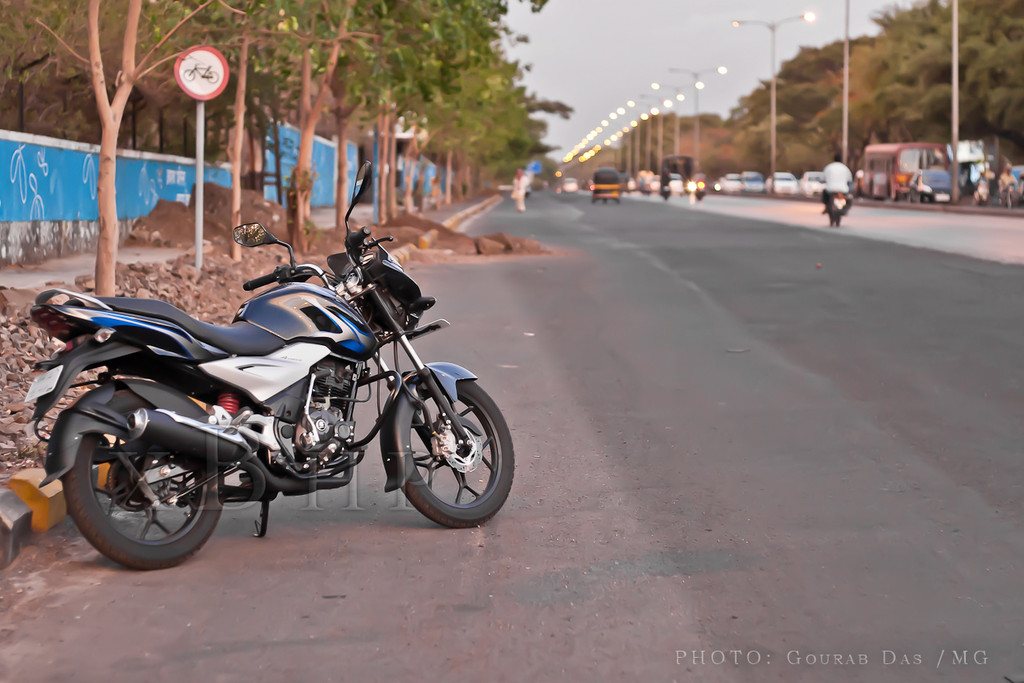
The Discover 125ST looks big and handsome, has got features to showoff like the first in class monoshock and 4 valve engine and got an extremely agile and sporty handling with comfortable ergonomics. Fuel efficiency has never been an issue with Discover (and Bajaj) bikes and we can safely expect a decent fuel efficiency figure from this new Discover as well.
The bike might not attract the “Sporty Commuter” crowd (the market for Pulsar, Apache, FZ etc.) but at an on road price of around Rs. 60,000, it seems like a fair deal and the bike has the makings of a best seller. Most importantly for Bajaj despite the sporty intent in its styling, the Discover 125ST still retains its “Mass Appeal”.


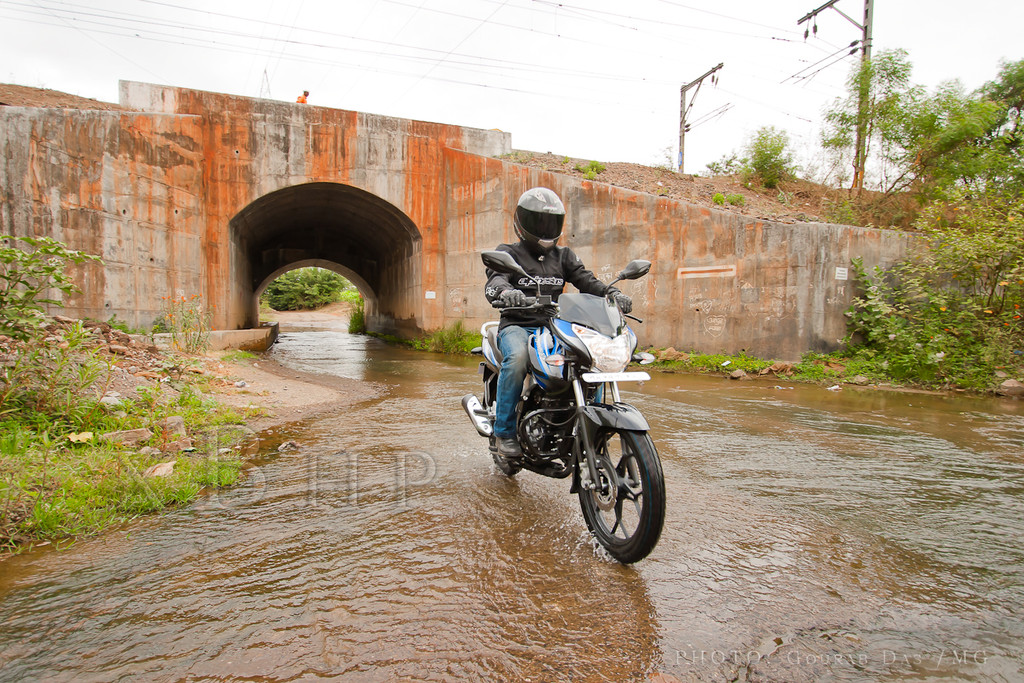

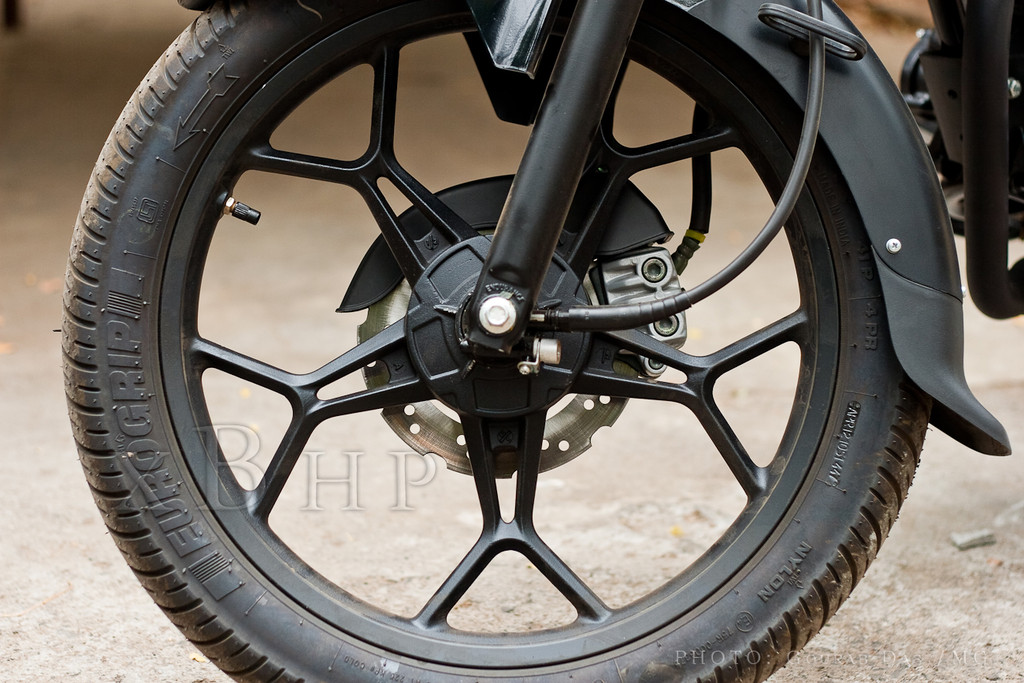

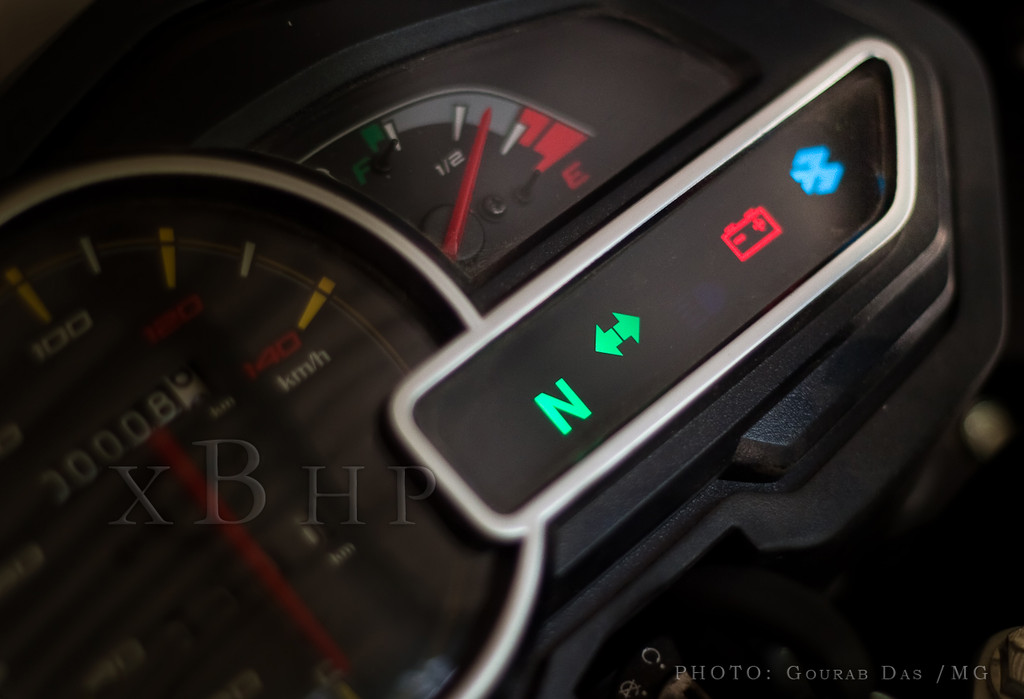


Hyosung GT250R Review: xBhp’s Ride Report
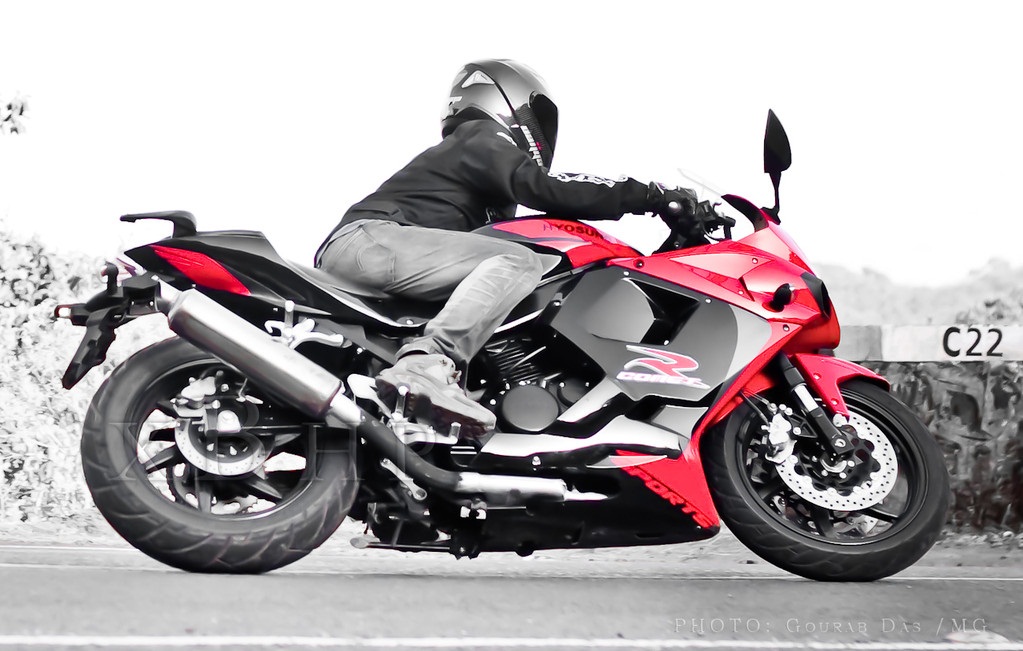 May 2012 Sunil Gupta
Bikes,Motorcycles
May 2012 Sunil Gupta
Bikes,MotorcyclesText: Satadal Payeng
Photos: Gourab Das/ MG
Special mention: I would like to thank MG for the amazing photos and the best ever photo shoot of my life till date.
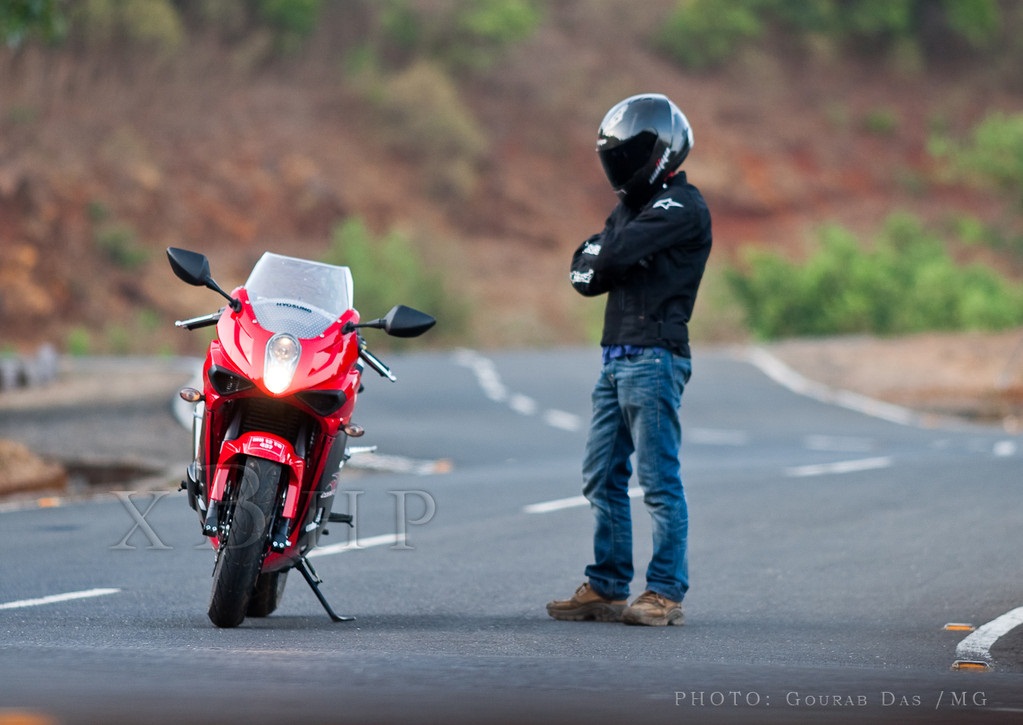
Hyosung GT250R: In a nutshell
USP (Unique Selling Proposition): Superbike like looks and street presence, Superbike like ergonomics
Good bits: Engine is very likeable, smooth and linear in its power/torque delivery; handling is confidence inspiring and fun to ride
Bits that could improve: Brakes, tyres, attention to details/finish on certain parts
Ride Review:
It is easy to label the Hyosung GT250R as another Superbike wannabe, but is it really so? After clocking 230 kms and spending some quality time (8 hours) with the Hyosung GT250R, if I have to sum up the essence of the bike, it would be, “Very close to a Superbike attitude & ride experience”.
My one liner about the bike means that there is more to the GT250R than just a full fairing. Like a true blue super sports (600cc/1000cc) bike, the Hyosung GT250R is actually impractical as a daily commute tool and more of an occasional toy.
Posted below is the detailed ride review of the Hyosung GT250R along with the ride experience of the same in [i] City [ii] Ghats and [iii] Highways
Styling, Fit & Finish: “It’s hard for the average Joe to tell that the GT250R is not a 600/1,000 cc bike”
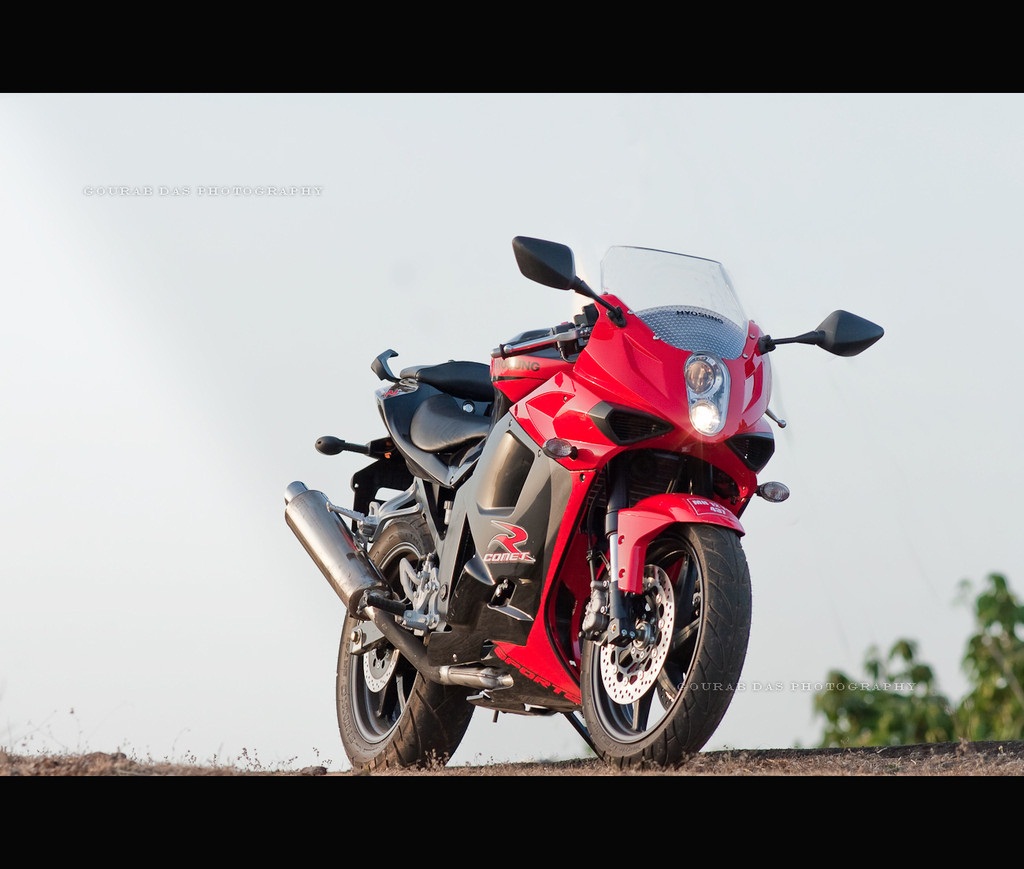
It is difficult for someone who is not that much into bikes, to believe that the GT250R is not a 10 lakh plus bike..!! Yes Sir, the GT250R is BIG in size. The GT250R shares identical dimensions with its elder sibling the GT650R. The size of the GT250R itself is reason enough to generate the interest/desire of the “desi” biker.
Along with the big dimensions the GT250R comes loaded with twin disc brakes at the front, upside down front forks and a 150 section rear tyre. In fact none of the other currently available small capacity full faired bikes in India, the R15, CBR 150R/250R or the Ninja 250R have the same kind of road presence as the GT250R. But all that bulk on the GT250R makes it tip the scales at a lardy 188 Kgs Kerb Weight..!!
Design wise the GT250R actually is slightly dated by international standards. The GT650R/250R is designed like the 600/1,000 cc bikes from the nineties. But since “desi” bikers missed those nineties and “pre” nineties Superbike era, the Hyosung GT brothers will still cut the mustard as a modern design in present day India.
So much for the burly good looks but a closer inspection reveals that Hyosung could have given the bike better fit and finish in certain parts. The seat cover material, plastic texture on the instrument control, the finishing of the ignition key slot, material used for the grab rails (which by the way looks out of place on a bike designed like a super sports) etc. doesn’t give the impression of a “Premium” offering. The speedometer console also could have been designed better for a more up market and technical feel.
The GT250R looks handsome even if with a somewhat dated design. I personally liked the exhaust of the GT250R better than the one on the GT650R. With a little bit of attention to details and some improvement in fit & finish on certain parts, Hyosung can make the bike even more classy and premium.
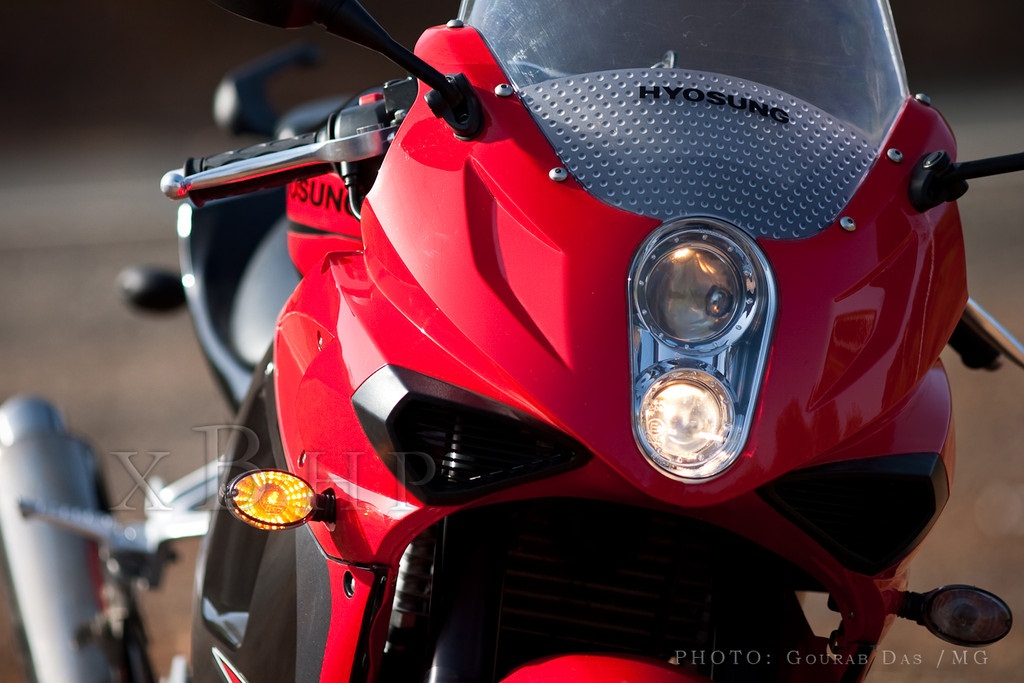

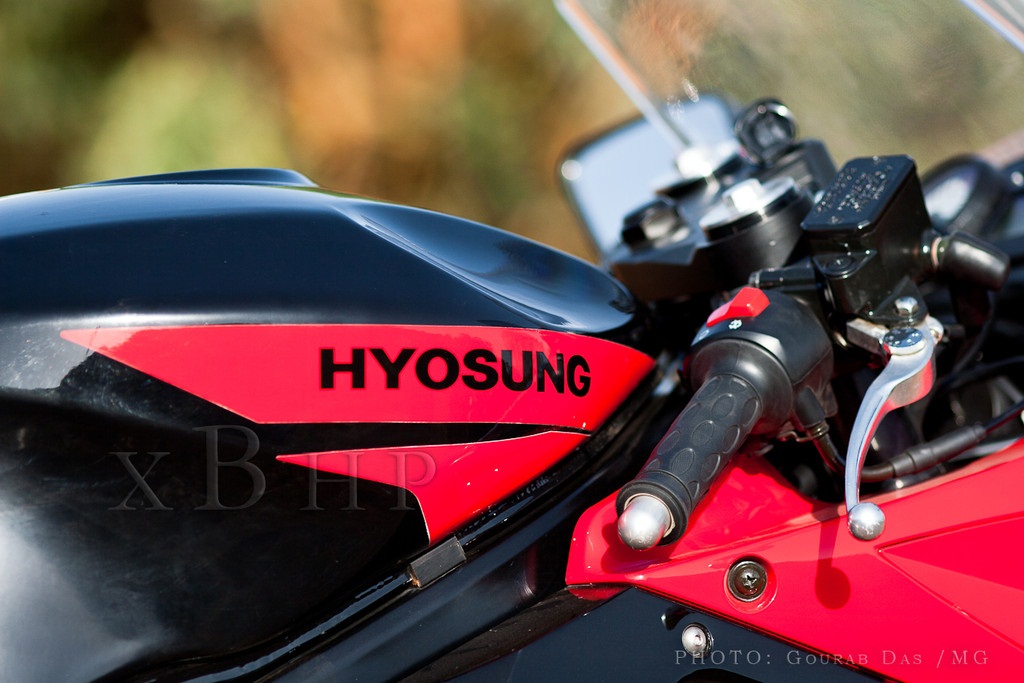


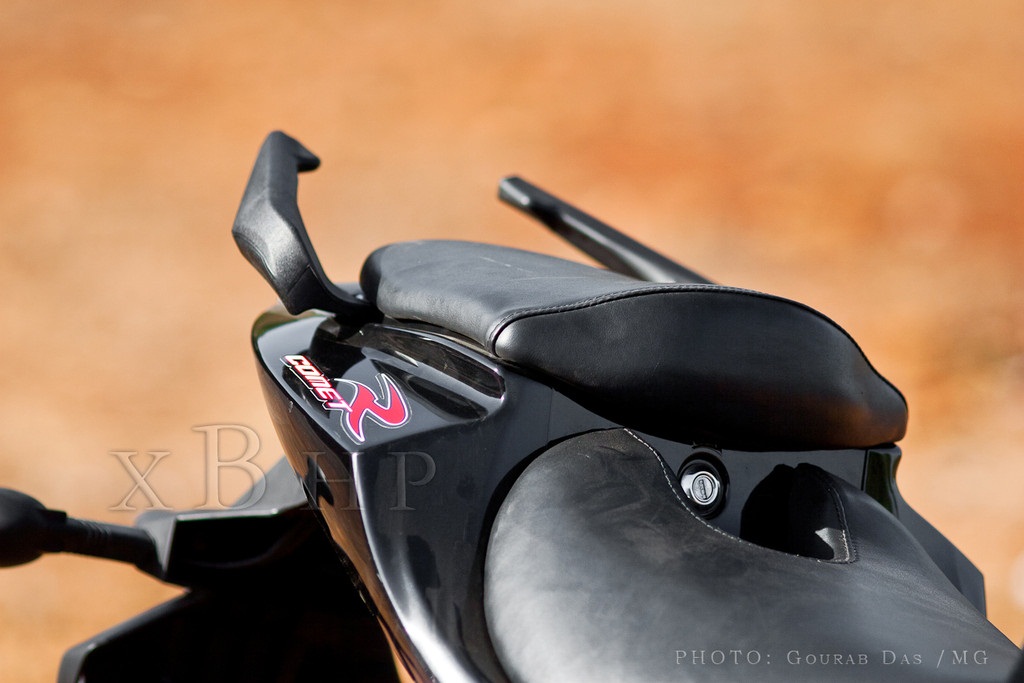
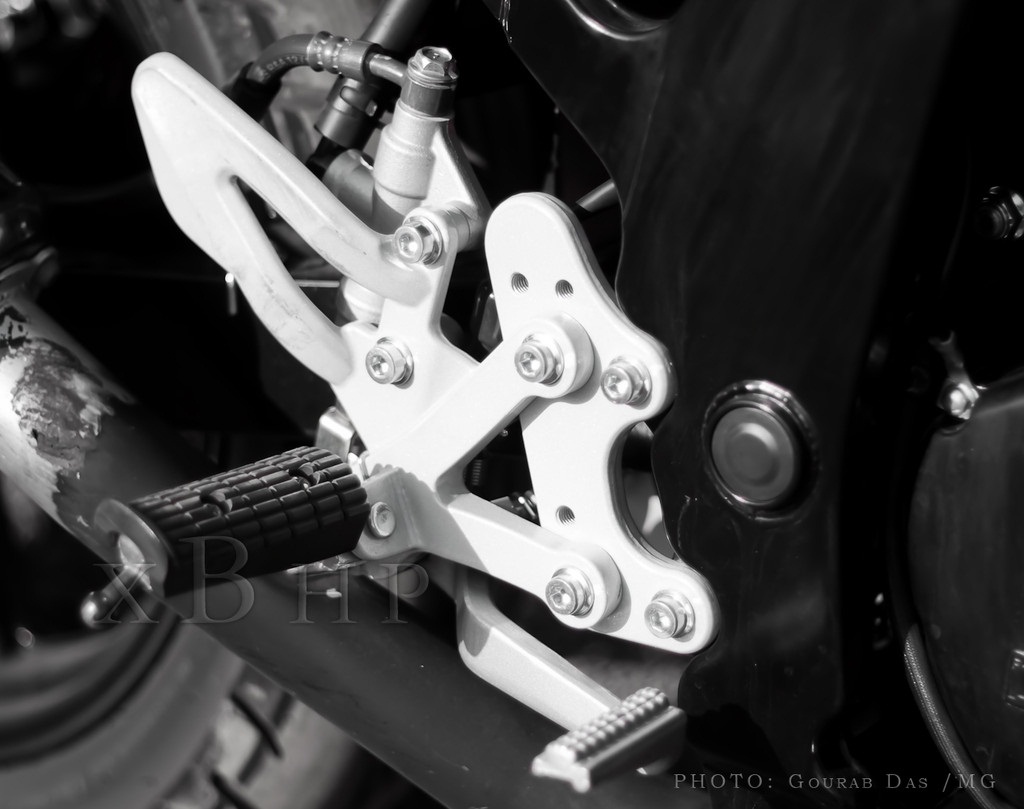


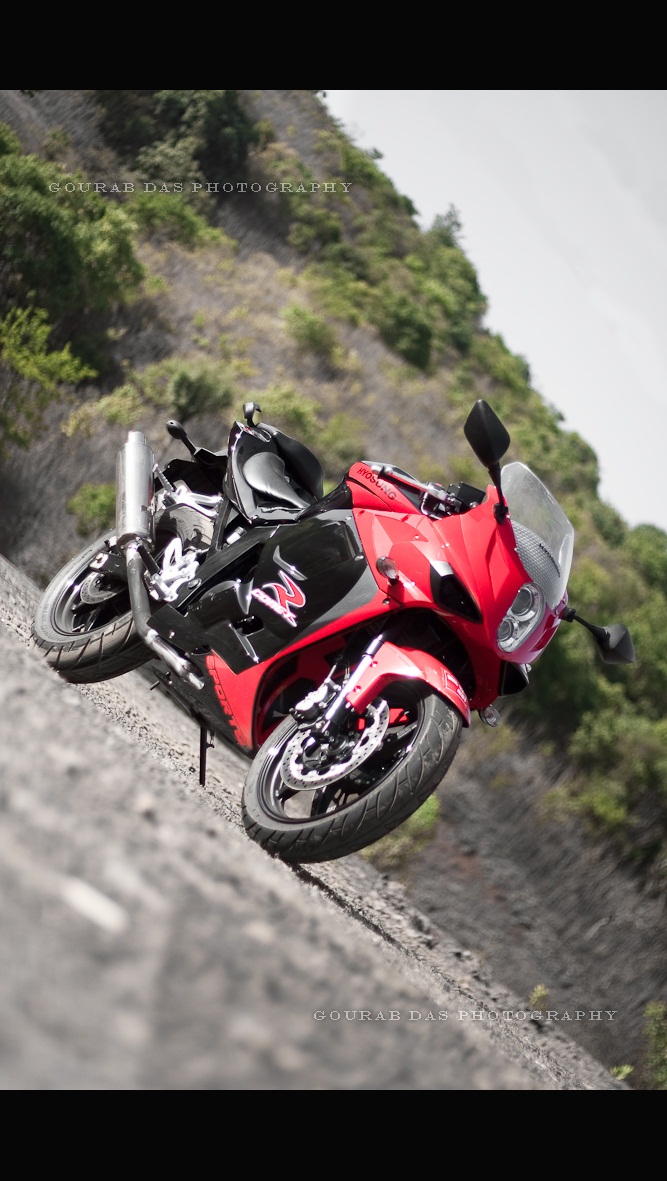
Ergonomics: “Hardcore and aggressive riding stance on the GT250R makes the Yamaha R15’s riding stance feel very comfortable..!!”
Swinging a leg over the big and burly looking GT250R will put a big smile on guys with short legs. I am around 5’5, and was extremely pleased to find the seat height of the GT250R very friendly for short legs. Therefore even with an extremely heavy 188 kgs of kerb weight, I was very comfortable and confident while putting both my feet on the ground. At the same time the GT250R is spacious enough to tall guys as well. MG is around 5’11 and even he had no issues at all.
The riding position/stance is another USP of the GT250R. The handlebars of the bike is positioned like a 600/1,000 cc super sports bike. Leaning forward to reach for the handlebars and putting your feet on the rearset footpegs, let me tell you that a 600/1,000 cc Superbike don’t feel too different..!! Even the huge tank of the GT250R between your legs enhances that Superbike feel. The massive tank is also quite practical as it lets your thighs get a grip, which lets you not to put your body weight on the arms/wrists. The low positioned handlebars do limit the extent to which the steering can be turned lock to lock. This results in a huge turning radius for the bike. It actually takes an entire double lane road to turn around the bike..!!
Guys who curse the Yamaha R15’s riding position as too sporty should take a day’s spin on the GT250R.. The next day, they’ll rate the R15 as a comfortable street bike. There is no second opinion that due to the aggressive “superbike” like riding stance, the GT250R is impractical bike for city commutes/daily rides. Impractical yes, but once you are on the GT250R, you can sense it that all eyes on the road are on you.. as you are aware that everybody around know that you are on a “DHOOM MACHALE” bike..!!
This actually sets GT250R apart from any other 250 cc bike in the world. No other 250 cc bike in the world will give you the authentic stance of a Superbike.
Engine Performance: “Smooth, Linear, Likeable engine with decent overall performance”

The GT250R wakes to life with a typical V-Twin burble. Having ridden the GT650R earlier, I was expecting the GT250R to have similar vibey and noisy motor. But I was pleasantly surprised to find that the GT250R does not have any pronounced mechanical clatter and also was quite smooth right down from low revs to its redline.
Had the bike been at least 20 Kgs less in weight, performance from the same engine would have felt zippier. The GT250R’s engine is not an out and out fire breather but then it’s no slouch either. In fact in overall performance, the GT250R felt shade better than the Honda CBR250R and just a notch below the Ninja 250R.
The power and torque is quite linear with no particular favorite rpm spot. The characteristic of V-Twin engine is it’s torque delivery and the GT250R’s engine doesn’t disappoint on that front. The bike does a 100 kmph at a leisurely 6,500 rpm in top gear. The tachometer might indicate that the engine doesn’t build revs that fast, but then one doesn’t need to redline the V-Twin engine to see speeds of 140 plus kmph on the speedo. The bike also has good on the roll on (acceleration in the same gear) performance. Another feature worth mentioning if the electronic fuel injection that performed flawlessly during the 230 kms test ride experience.
I managed to see a speedo indicated top speed of 150 kmph and felt that had there been a further open stretch of road, the bike could have done slightly more as well. The best part about the 250 cc V-Twin engine is that it is quite relaxed even at high rpms/speeds.
Engine heat:
In a V-twin cylinder engine, the rear cylinder doesn’t get the same amount of air flow while riding as the one at the front; therefore with an air cooled V-twin engine heat is actually not very surprising. On the GT250R engine heat was felt on the inner thighs. It was specially noticeable at slow/city/traffic riding speeds. During the ride I noticed that there are a few ways in which one can “try to beat the engine heat”, i.e. prevent the heat from reaching your inner thighs.
[i] Ride when the ambient temperature is cool (like in the mornings/evenings). The daytime sun during the peak Indian summer won’t help cool the air cooled V-Twin any faster.
[ii] Riding about 80 kmph and above is enough to cool the engine and not let it fry your legs
On 600/1,000 cc Superbikes a rider has no option but to take the heat generated by the engine in their stride. Therefore if someone is in love with the GT then he/she can always say that the engine heat adds to the “Superbike” character of the bike. But personally I would have preferred things to remain cooler.
Clutch & Gearshift: “The absence of 6’th gear is hardly felt”
The GT250R might have just 5 gears but those 5 gears are well spaced out and one doesn’t really miss the need for an extra gear. The clutch is well weighted had no issues while engaging/releasing the gears. The gears on my test bike was a bit clunky though.. not bad but not slick either. Also the shift effort could have had slightly more positive feel to it, especially while slotting into neutral. But let me add that there were no missed gear shifts during the entire test ride experience.
Ride & Handling: “Predictable and sporty handling for the road”

The GT250R comes with thick upside down front forks, a frame which is essentially is a cradle frame but with perimeter elements (not a proper perimeter frame though) and a linked type monoshock rear suspension. All these, along with a long wheelbase and low center of gravity give the GT250R very sporty handling. The crouched forward riding position and low seating also helps get the center of gravity lower. Handling is very stable at high straight line speeds and confidence inspiring and predictable around corners as well. In fact even the handling gives the feel of riding a 600/1,000 cc “Superbike”.
Expecting a 600/1,000 cc Superbike to be nimble like a light weight street bike is preposterous. In similar fashion expecting the GT250R to be nimble in traffic would also be not right. The GT250R feels best on the highway or around twisties. The ride is also not bad as well for a sporty bike. It is neither too soft nor too stiff. The link type rear monoshock provides a good combination of ride quality and cornering fun.
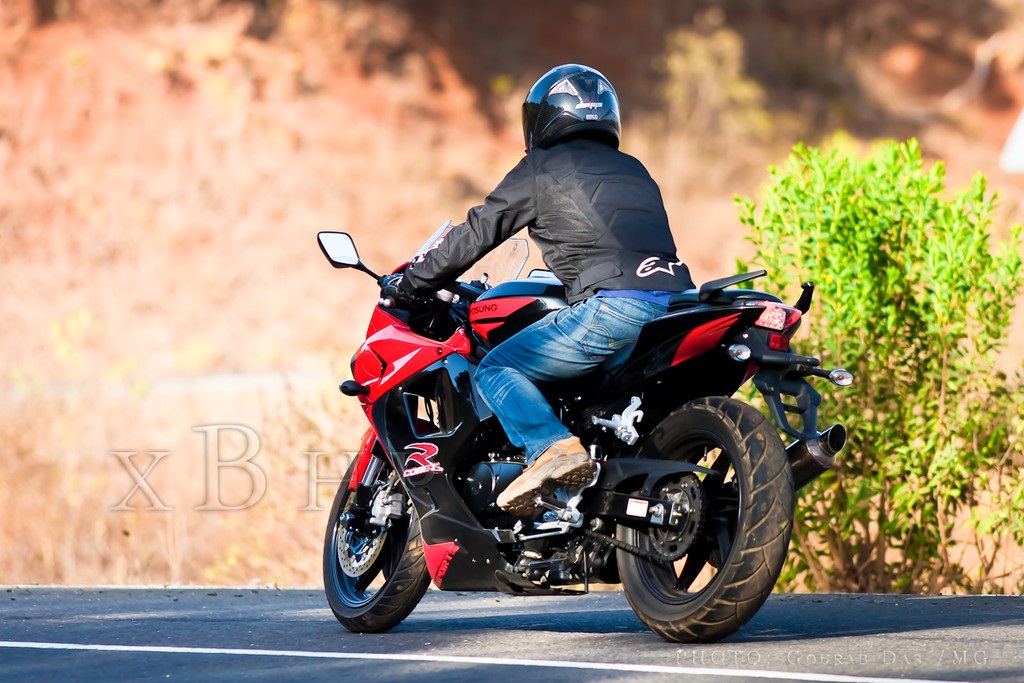

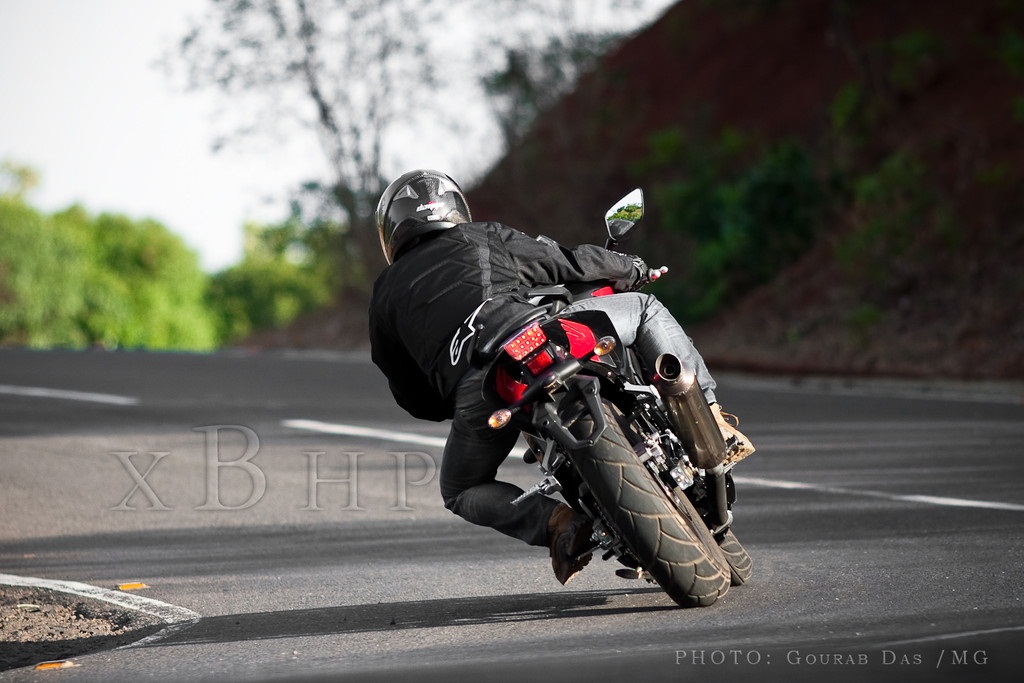


So far the GT250R had come across as a likeable package. Even with the idiosyncrasy and impracticality of almost riding a Superbike with a 250 cc heart, the GT250R is able to carry it off with élan. Had the brakes been as potent as the twin disc set up at the front looks, it would have been almost a near perfect experience.
The brakes on the GT250R are not horribly ineffective but just that I wasn’t 100% confident with its feedback. While braking I wasn’t sure if I needed to apply less or more pressure with the fingers. I am sure that after spending some time with the GT250R, one would be able to adjust with the brakes. But the “Shinko” make tyres that come fitted on the GT250R should be on the must change list.
The tyres lack grip and under hard braking they tend to skid even on perfect tarmac. It was due to two such minor skids while riding on city roads, I was not fully confident leaning over the bike around the twisties. It is not a big issue though as there are a lot of good tyre options available (with the same tyre size and specifications) as an after market fitment. Anyone who is in the mood to get the GT250R should definitely change the stock tyres to some better tyre brands like “Pirelli” to enjoy the handling potential of the bike.
Electricals: “All izz well”
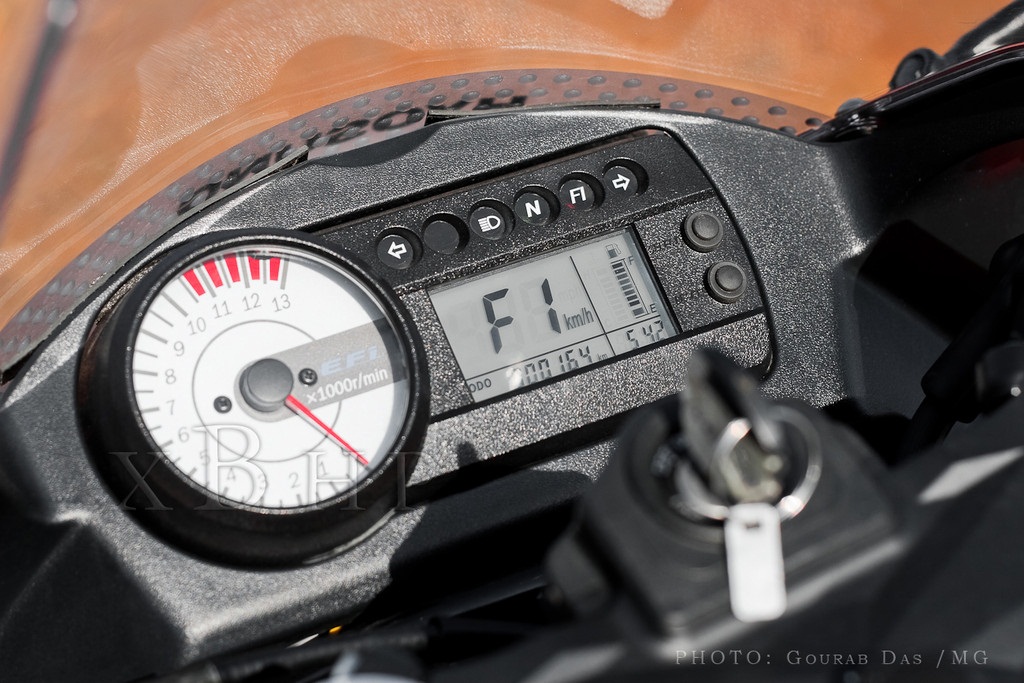
The GT250R comes with a twin projector headlamp set up. These lamps do a good job of lighting up the road ahead. Like on imported bikes, the low beam doesn’t stay “ON” permanently, but can be switched On/Off. The GT250R also gets a neat looking LED tail lamp cluster and a digital speedometer + analog tachometer combo, which looks quite basic and could have been designed better.
To start the GT250R one has to press the clutch lever every time, even when in neutral. Also once started, if the side stand is put down, the engine will die down if one tries to slot it into gear. This according to me is a neat safety feature.
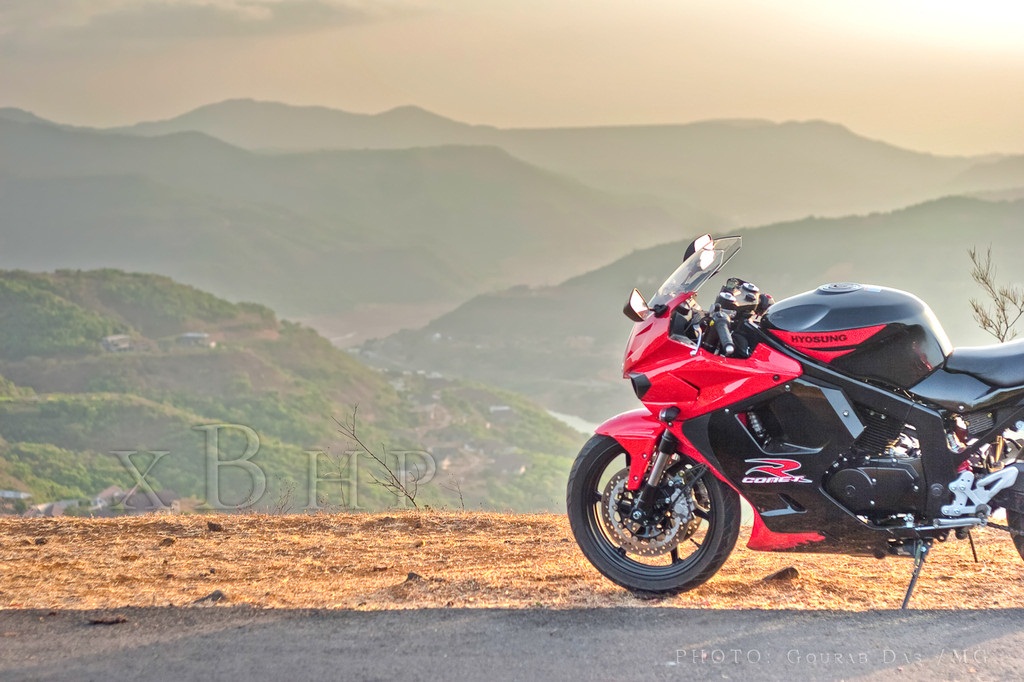

City Ride Experience
Not the most ideal place to ride the GT250R. Due to its big size and weight and also due to its “extra large” turning radius, this bike in the city is like a cat in water. Also due to slow moving traffic, the engine doesn’t get sufficient cooling and eventually the inner thighs of the rider will start to feel the engine heat.
That aside, the GT250R is definitely an attention magnet drawing second looks from the crowd.
Ghats /Hilly Twisties Ride Experience
Carving corners on smooth roads is what the GT250R loves to do. Thanks to its sporty and stable handling this bike is in its elements around the twisties. It was just that my experience with the tyres in the city did not let me enjoy the GT250R to its full potential. The suspension could be stiffened up further if one needs a focused track bike like experience, but the standard suspension setting is also quite good for spirited cornering.
Highway Ride Experience
I enjoyed riding the GT250R the most on the highways. Maintaining 100 plus kmph speeds was effortless and enjoyable. Due to the crouched riding posture wind blast is not felt as the full fairing and the visior cuts through the air around the bike. With the smooth V-Twin engine, it was a blast riding the GT250R at 130-140 kmph speeds on the wide, straight highways.
The riding posture being slightly less aggressive than the GT650R also helped matters. I did a near non- stop highway stretch of around 100 kms and could have ridden more if I did not have MG waiting for me for the photo shoot.
Final Verdict:
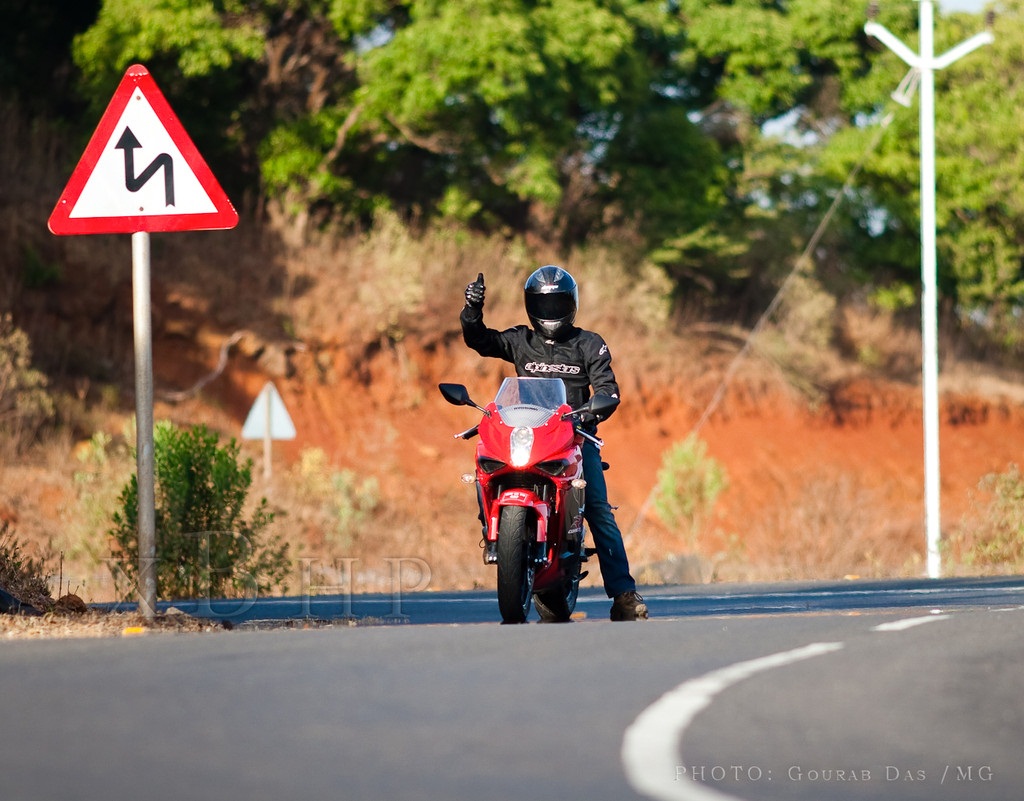
GT250R is not a bike that everyone can live with. Due to its size, weight and extreme riding posture, the GT250R is impractical for everyday use. It is a “once a month” or maybe at best “once a week” kind of bike. This means that the owner has to either have a car of another bike in his garage for daily usage. The GT250R is not perfect either, the brakes could be better (tyres can be easily replaced with better ones), the fit and finish can definitely improve and the bike should ideally lose at least 15 kgs of weight.
Having said that, the GT250R does have a Soul and a Character of its own that sets it apart from the other 250 cc bikes. It has the “Soul of a Superbike” (and not just a bike with a plastic full fairing) and a “Hardcore” character.
Ladies and gentleman, the GT250R has landed in India, Hardcore riders may apply..!!
Hyosung GT250R Technical Specifications
ENGINE
Type: Air cooled V-Twin (75˚) with oil cooler
Displacement: 249cc
Bore x stroke: 57 mm x 48.8 mm
Compression ratio: 10.1:1 ~ 10.3:1
Max. Power: 27 Ps @ 10,000 rpm
Max. Torque: 22.07 Nm @ 8,000 rpm
Fueling: Fuel Injection
CHASSIS
Frame: Double down tube, double cradle frame
Tyre size front: 110/70-17 (Radial Tubeless)
Tyre size rear: 150/70-17 (Radial Tubeless)
Fuel tank capacity: 17 liters
DIMENSIONS
Wheel base: 1,435 mm
Overall width: 700 mm
Overall length: 2,090 mm
Overall height: 1,130 mm
Min. ground clearance: 155mm
Kerb weight (with 90% fuel , tools, etc.): 188 kgs
ELECTRICALS
Battery: 12v, 10 Ah


