

Since '02 xBhp is different things to different people. From a close knit national community of bikers to India's only motorcycling lifestyle magazine and a place to make like-minded biker friends. Join us

Castrol Power 1

Scan – see – think – act.

Our Partner

Announcement

Collapse
No announcement yet.

Making of Kawasaki Ninja 300 San

Collapse
X
 
  • Filter
  • Time
  • Show
Clear All
new posts

  • Re: Rizoma Garffio LED Indicator lights

    Made from Nylon 66. Have had no problems with them whatsoever. Will last as long as the bike.

    Originally posted by Yamahanut View Post
    Can you please tell me what material was used for making these mounting plates and how it has lasted over the last year and half or so?
    Only a biker knows why a dog sticks his head out of a car window.

    Multum in Parvo - Much in Little

    "Yes, it is FAST! No, you CAN'T ride it!" - http://www.xbhp.com/talkies/general-...a-300-san.html

    Comment


    • Happy New Year!!!

      The first weekend of the new year was a get together with Kawasaki Mumbai Group at Eat Around the Corner, Bandra, Mumbai. It was a really nice enjoyable time with some great people. As the saying goes "You meet the nicest people on motorcycles". A few pics of the event:

      Click image for larger version

Name:	P_20160103_083525_1.jpg
Views:	1
Size:	109.1 KB
ID:	1927652

      Click image for larger version

Name:	IMG-20160103-WA0041.jpg
Views:	1
Size:	105.7 KB
ID:	1927653

      Click image for larger version

Name:	IMG-20160103-WA0003.jpg
Views:	1
Size:	106.3 KB
ID:	1927654

      Click image for larger version

Name:	IMG-20160103-WA0038.jpg
Views:	1
Size:	103.6 KB
ID:	1927655

      Mehul Kumar, one of our group members was offered to try out Ninja San. I have asked him to write about his experience over here. In the meantime here is a small video log made by him.

      Only a biker knows why a dog sticks his head out of a car window.

      Multum in Parvo - Much in Little

      "Yes, it is FAST! No, you CAN'T ride it!" - http://www.xbhp.com/talkies/general-...a-300-san.html

      Comment


      • Re: Happy New Year!!!

        Originally posted by abhimanyu31 View Post
        The first weekend of the new year was a get together with Kawasaki Mumbai Group at Eat Around the Corner, Bandra, Mumbai. It was a really nice enjoyable time with some great people. As the saying goes "You meet the nicest people on motorcycles".
        Great stuff!

        Are you the 2nd one from right (red/black jacket, holding the backpack)?
        Awaiting future mods.
        Got a $5 head? Get a $5 helmet.
        Because everyone who passes, isn't a martyr!

        Bullet Service Guide CBR 250R Parts Manual Fz16 service manual - https://drive.google.com/file/d/0B1-...VFQmJzakk/view
        Hero Moto Corp Bikes' Parts RE STD 350 Wiring Diagram (CI) Service Manual - Classic 350/500
        ZMR parts - https://drive.google.com/file/d/0B-U...it?usp=sharing
        P200NS Spares' prices - https://docs.google.com/spreadsheet/...taGd5R2c#gid=0

        Comment


        • Re: Happy New Year!!!

          Originally posted by Divya Sharan View Post
          Great stuff!

          Are you the 2nd one from right (red/black jacket, holding the backpack)?
          Awaiting future mods.
          Yes. That is me.

          Future mods are taking time as we are facing a bandwidth problem. Currently, stage 1 mods of my Ford Fiesta ST project are being carried out by Motozone. Hence, while all parts have arrived and are in place we are waiting to complete the what is in hand before starting on Ninja San. This stage of mods is going to much more complicated and requires careful execution so will be done at a deliberate pace. Just to give an idea; it will consist of the stage 1 cams that we have procured along with flowed head (the head will be put onto a flow bench) as part of the tuning.
          Only a biker knows why a dog sticks his head out of a car window.

          Multum in Parvo - Much in Little

          "Yes, it is FAST! No, you CAN'T ride it!" - http://www.xbhp.com/talkies/general-...a-300-san.html

          Comment


          • Re: Making of Kawasaki Ninja 300 San

            The next couple of posts lay down the foundation for the next set of changes we are making to Ninja San. We are now entering the realm of engine working and hence it is important to understand why before the how is addressed. The posts are technical in nature and may not be of interest for most people. However, we have tried to keep the language very simple and tried to simplify the explanation as much as possible. We promise you that if you take the effort to read through the explanation it will be worth your while in understanding the why as the explanation is universally applicable.
            Last edited by abhimanyu31; 02-17-2016, 11:46 PM.
            Only a biker knows why a dog sticks his head out of a car window.

            Multum in Parvo - Much in Little

            "Yes, it is FAST! No, you CAN'T ride it!" - http://www.xbhp.com/talkies/general-...a-300-san.html

            Comment


            • Re: Making of Kawasaki Ninja 300 San

              ^^^Been waiting long for this one. Please carry on!
              Got a $5 head? Get a $5 helmet.
              Because everyone who passes, isn't a martyr!

              Bullet Service Guide CBR 250R Parts Manual Fz16 service manual - https://drive.google.com/file/d/0B1-...VFQmJzakk/view
              Hero Moto Corp Bikes' Parts RE STD 350 Wiring Diagram (CI) Service Manual - Classic 350/500
              ZMR parts - https://drive.google.com/file/d/0B-U...it?usp=sharing
              P200NS Spares' prices - https://docs.google.com/spreadsheet/...taGd5R2c#gid=0

              Comment


              • Camshafts – The gatekeepers to the kingdom of Power!

                Camshafts, what are they? If Alice were to ask Mad Hatter this question he would reply that they are those infuriating things that go round and round to make things go up and down and drive him up the wall!!!

                4 Stroke Engine Basics

                To understand the importance of cams and their role in engine character and how they affect performance we will go back to basics of 4 stroke engines.

                Click image for larger version

Name:	4-Stroke Diagram.jpg
Views:	1
Size:	85.9 KB
ID:	1929809
                Pic.1: Representation of a typical 4 - stroke petrol engine.

                Above is a typical representation of a 4-stroke petrol engine. Most diagrams and illustrations would combine (c) Ignition and (d) Expansion into one illustration and represent the typical cycle in 4 illustrations of the 4-stroke cycle.

                Lobes; just lumps of metal?

                When you take look at a cam you will note that it is just a metal rod with bulging lumps of metal on it. So what is so special about these bulging lumps of metals that are more commonly know as lobes?

                Click image for larger version

Name:	round lobe 2.jpg
Views:	1
Size:	49.7 KB
ID:	1929810
                Pic.2: A typical cam lobe


                Let us take a closer look at the lobe and find out what is what. Pic. 2 is an illustration depicting a camshaft lobe. These lobes are the gatekeepers. They literally open and close (not exactly but more on that later) the gates i.e. the Valves. Therefore, they are the gatekeepers to the kingdom of power and valves are the gates to that kingdom.

                Click image for larger version

Name:	cam_dia.jpg
Views:	1
Size:	114.8 KB
ID:	1929811
                Pic.3: What is where on the cam lobe.

                As per the illustration in Pic. 3 there are 10 major aspects of the lobe (intake & exhaust). They are:

                1. Nose: This is point of maximum lift possible.
                2. Flank: The side of the lobe. The shape is like a ramp.
                3. Opening Clearance: The opening clearance of the ramp. The area of flatness before the opening ramp starts.
                4. Closing Clearance: The closing clearance of the ramp. The area of flatness before the opening ramp starts
                5. Base circle: This is the portion at the base of the cam between opening clearance & closing clearance.
                6. Exhaust opening Starts: The point at which exhaust valves start to open.
                7. Exhaust closing Starts: The point at which exhaust valves start to close.
                8. Intake opening Starts: The point at which intake valves start to open.
                9. Intake closing Starts: The point at which the intake valve start to close.
                10. Intake to Exhaust Max lift Separation: The distance between the max lift of Intake and Exhaust Maximum Lift point i.e. 1 (the Nose).


                As you will note from the diagram there is an elaborate profile of the ramp to dictate the opening of the valve, which starts (for exhaust) at point 6 and reaches a maximum at point 1 and starts closing at point 7.

                Similarly for inlet the valve starts to open at point 8 and reaches a maximum opening at point 1 and starts to close at point 9, it will again open when the valve stem comes in contact with point 8. Similarly, exhaust valves will go through the process.

                So the big question is what about closing of the valve? Does it not have a ramp? The answer is that the valve needs to close in the time taken by the cam to rotate through the base circle. The closing of the valve is not dictated by a ramp profile. It is wholly dependent on the valve spring.

                The rate of closing is completely dependent on rate of the valve spring. The rate of spring needs to be such that in theory it needs to close the valve completely before (for exhaust) point 3 or point 8 (for inlet). However, there are significant variables involved in selection right valve spring. There is a balance that needs to be maintained to ensure the rate of closure of the valve while at the same time the mechanical loads do not overwhelm the springs’ natural frequency, which can lead to a phenomena called valve spring ‘surge’ where the spring starts to bounce uncontrollably which will disrupt the proper functioning of the valves. A recent example of this is the 2011 ZX10, which was halted from going to the market when engineers discovered that there was valve spring surge happening with the ones installed.

                Hence, while the spring looks like a simple thing it has enormous implications on the functioning of the engine. So for people who talk about requiring stiffer springs; just poking a stiffer spring into the valve train may actually lead to drop in performance rather than a gain if the application is not correct.

                “You can ask me for anything, except time” – Emperor Napoleon Bonaparte.

                While Pic 1 with its illustrations shows the various phases of the 4-stroke cycle there is one fundamental and critical aspect missing in these illustrations i.e. time.

                If you take closer look at (a) intake phase, you will note that the intake valve open during phase. Similarly, you will also note that (e) exhaust phase shows the exhaust valve as open. Therefore it would be easy to assume that the valves open and close instantaneously. However, time is a very precious commodity and the gatekeepers (cams) have very little of this commodity to complete their task.

                At 6000 rpm in an engine like Ninja 300, the piston travels from top to bottom within a span of five thousandths of a second!!! The illustration (a) shows the intake valve is open during the intake phase. The (b) compression phase shows that both the valves are closed during this phase. Therefore as per illustrations (a) and (b) the opening and closing of the intake valve has to be accomplished during the intake phase.

                Therefore, as per the first illustration (a) of intake, if the cams start to open the valves at the beginning of the stroke when the piston is at Top Dead Centre (henceforth called TDC), by the time the valves were open fully the piston will have travelled a long way down due to the piston speed and there would not be enough time to close the valve before the piston reaches the bottom of the stroke at Bottom Dead Centre (henceforth called BDC).

                Consequently, if the valve is fully shut by the end of the stroke which is when the piston reaches BCD, the valves will not have remained open long enough to draw in decent quantity of air and fuel. Without decent quantity of air and fuel, the engine will not make enough power. Also under the above scenario the valve will time to remain open at its maximum further limiting the amount air fuel flowing into the cylinder.

                The fact of life is that valves cannot open instantaneously. For example, in Ninja 300 the stock lift of inlet valve is 7.79 mm. Therefore, if the above-mentioned situation held true then the valve would have to travel 7.79 mm to open to it maximum and then 7.79 mm back to return to the valve seat. All of this needs to happen in five thousandth of a second. Still think there is enough time to make it happen?

                So what is the solution? By allowing the inlet valve to remain open after BDC and into (b) compression phase, the air fuel mixture which is rushing into the cylinder can further capitialise on the momentum it has generated to pull even more air fuel in to the cylinder. The number of degrees of rotation the camshaft allows the inlet to stay open for after BDC is known as “lag”.

                Similar is the case of exhaust valve. If the exhaust valve opens at the BDC at the beginning of (e) exhaust phase and closes TDC when the exhaust phase is completed and the (a) intake phase once again starts, it will not have enough time to expunge the burnt air fuel gases. When burnt gases are not properly scavenged, they impede the flow of fresh air fuel mixture, which degrades the performance further.

                The solution to allow for more time for exhaust gases to be expunged is to again open the valve early. By opening the valve before BDC of (d) power/expansion phase we allow the exhaust gases to expunge in sufficient quantities that it does not impede fresh air fuel charge. The number of degrees of rotation between the exhaust valve opening and the BDC is known as ‘lead’. By opening the exhaust valve early we can ensure that the exhaust valve is completely open at the beginning of the (e) exhaust phase. In fact most cams are designed to hold the exhaust valve open throughout the (e) exhaust phase and beyond TDC as the (a) intake phase begins.

                Early opening of the exhaust valve before BDC of (d) power/expansion phase also helps ensure that the rising piston meets less resistance on its way up and late closing of the valve at (a) intake phase ensures that all the waste gases are evacuated emptying the combustion chamber. The exiting gases due to their speed create a vacuum that is take advantage of when we start opening the intake valve early before the piston reaches TDC in (a) intake phase (essentially the valve is opened before the (a) intake phase begins and the (e) exhaust phase is completed). This early opening allows us to take advantage of the vacuum created by the exiting exhaust gases to help draw in fresh air fuel mixture.

                Due to the above scenario there is short period when the inlet valves and exhaust valves are both held open. This phase is known as ‘valve overlap’. The unit of measure for ‘lag’, ‘lead’ and ‘valve overlap’ is ‘degrees’. The term ‘duration’ is used to describe the ‘degrees’ an individual valve is held open.

                Therefore, the main definitions related to valve timing are:

                1. Degrees: The unit of measure to determine valve opening.
                2. Duration: Is the term used to describe the ‘degrees’ an individual valve is held open.
                3. Lag: The duration a cam is allowed to stay open after BDC.
                4. Lead: The duration a cam is opened before BDC.
                5. Valve Overlap: The duration that exhaust and inlet valve allowed staying open simultaneously.


                The Theory in Practice

                How an engine behaves is dictated to a great extent by the design of the cam lobes. How long they keep the valves open, when they open them and how far they open them.

                A typical modern day sports bike is designed to deliver loads of power at very high revs. Thus cams for such applications need to have lots of lead, lag and overlap to allow significant amounts of air fuel mixture to be crammed in during the extremely short periods of time with great regularity. However, there is a trade off. Such designs allow some amount of incoming mixture to escape un-burnt due to the lengthy overlap. This creates a relatively weak low-range performance.

                The opposite is true for a low revving engine with a long stroke. Here the amount of lead, lag and overlap is considerably less, as there is more time available to go about their business. However, for a high revving engine, this is no option, as cams just don’t stay open long enough to allow a large volume of air fuel mixture to enter into the combustion chamber.

                Engine designers need to decide on the right compromise for the engine at the design stage. If a valve is opened too soon or too late it has an effect on the previous as well as the subsequent stroke. The problem is that the effect varies depending upon where the engine is in the rev range.

                If the inlet closes later at high revs there is more benefit to be had over the detrimental effect it will have for closing late in the compression stroke stage. On the flip side, at low revs the air fuel mixture has not built the momentum to pull more mixture into the combustion chamber and will push back the incoming mixture into the inlet track as the compression stroke begins. Thus creating a weak low rev power band.

                The later you close the inlet valve the more top end power will be created at the expense of low and mid range. The opposite is true for creating a strong low and mid range. As a general yardstick if advancing the inlet then exhaust is retarded to create increase in overlap. And if inlet is retarded, then exhaust is advanced to decrease valve overlap.

                With a proper understanding of how cams work, their effects on engines and with a set of aftermarket camshafts that are designed with a particular set of characteristics in mind one can completely change the character of the engine and unleash hidden power. This is of course if you have the ability to check valve to piston clearances and the ability to properly assemble and build the top end of the engine.
                Last edited by abhimanyu31; 02-18-2016, 04:29 PM. Reason: correction
                Only a biker knows why a dog sticks his head out of a car window.

                Multum in Parvo - Much in Little

                "Yes, it is FAST! No, you CAN'T ride it!" - http://www.xbhp.com/talkies/general-...a-300-san.html

                Comment


                • Originally posted by abhimanyu31 View Post
                  The Theory in Practice
                  Very educative post Pratik. As most things in engineering, it is a tradeoff between power at high revs and torque at low revs.

                  Just this morning i was reading about Ducati's approach to this problem with respect to the Multistrada. Please do read about the Ducati DVT engine, i am sure you will love the tech wizardry involved in it.

                  ----consecutive posts auto-merged-----

                  Also please have a look at Point No. 4, i believe you have mixed it up a bit.
                  Biking is not about what you have between your legs, its all about how well you use it!!!!!!!

                  Give your details here if you want to help your fellow xBhpian stranded in your city

                  Touring Blog: Cycling in Mongolia!

                  Comment


                  • Originally posted by The Monk View Post
                    ----consecutive posts auto-merged-----

                    Also please have a look at Point No. 4, i believe you have mixed it up a bit.
                    Only a biker knows why a dog sticks his head out of a car window.

                    Multum in Parvo - Much in Little

                    "Yes, it is FAST! No, you CAN'T ride it!" - http://www.xbhp.com/talkies/general-...a-300-san.html

                    Comment


                    • Quantum of Performance

                      Quantum of PerformanceClick image for larger version

Name:	photo_2016-03-14_11-58-54.jpg
Views:	1
Size:	108.1 KB
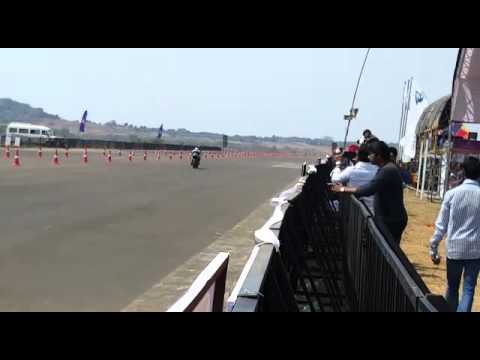
ID:	1932002rd position. Vijay also says that he missed a beat when changing from 3rd to 4th gear (in practice the bike has clocked under 14 seconds). It is also note worthy that the Yamaha R3 in the 1st position had a Bazzazz quick shifter, which is worth 0.200 to 0.300 seconds in itself. The Ninja 300 did not have a quick shifter (something we will remedy soon).

                      Last edited by abhimanyu31; 03-15-2016, 11:45 PM.
                      Only a biker knows why a dog sticks his head out of a car window.

                      Multum in Parvo - Much in Little

                      "Yes, it is FAST! No, you CAN'T ride it!" - http://www.xbhp.com/talkies/general-...a-300-san.html

                      Comment


                      • Re: Quantum of Performance

                        Haha. Great to see the results and would have been awesome to see your bike with you riding! Tough luck, hope you participate the next time when your bike is even faster
                        Biking is not about what you have between your legs, its all about how well you use it!!!!!!!

                        Give your details here if you want to help your fellow xBhpian stranded in your city

                        Touring Blog: Cycling in Mongolia!

                        Comment


                        • Re: Quantum of Performance

                          Originally posted by The Monk View Post
                          Haha. Great to see the results and would have been awesome to see your bike with you riding! Tough luck, hope you participate the next time when your bike is even faster
                          Will definitely try to be there. Last couple of times we were not able to take part due to unavoidable circumstances. Hopefully next year we will be taking part.
                          Last edited by abhimanyu31; 03-15-2016, 02:36 PM.
                          Only a biker knows why a dog sticks his head out of a car window.

                          Multum in Parvo - Much in Little

                          "Yes, it is FAST! No, you CAN'T ride it!" - http://www.xbhp.com/talkies/general-...a-300-san.html

                          Comment


                          • Re: Making of Kawasaki Ninja 300 San

                            Bro, I guess this article is about your bike

                            Check out this Ninja 300 with over 100 upgrades from MotoZone | Motoroids

                            Isnt it ?
                            R15S - Current
                            Honda Dio - Current
                            TNT 600i - Sold
                            Classic 500 - Sold
                            Pulsar 220 dtsi - Sold
                            Yamaha YBX125 - Sold

                            Comment


                            • Re: Making of Kawasaki Ninja 300 San

                              Originally posted by TheArcher84 View Post
                              Bro, I guess this article is about your bike

                              Check out this Ninja 300 with over 100 upgrades from MotoZone | Motoroids

                              Isnt it ?
                              I assume it's not ! Because the bike in article is said to be built from scrap (declared totaled).

                              Comment


                              • Re: Making of Kawasaki Ninja 300 San

                                Motozone's bike is Phoenix whereas Pratik's bike is Ninja San and in white
                                sigpic

                                i can smoke urs, but urs can't mine!!!

                                http://www.xbhp.com/talkies/pit-stop...-concepts.html

                                Comment

                                Working...
                                X