











All posts by Sundeep Gajjar
BMW C 400 GT First Ride: City slinging Grand Tourer
 Apr 2022
 Sundeep Gajjar
 BMW,Scooters
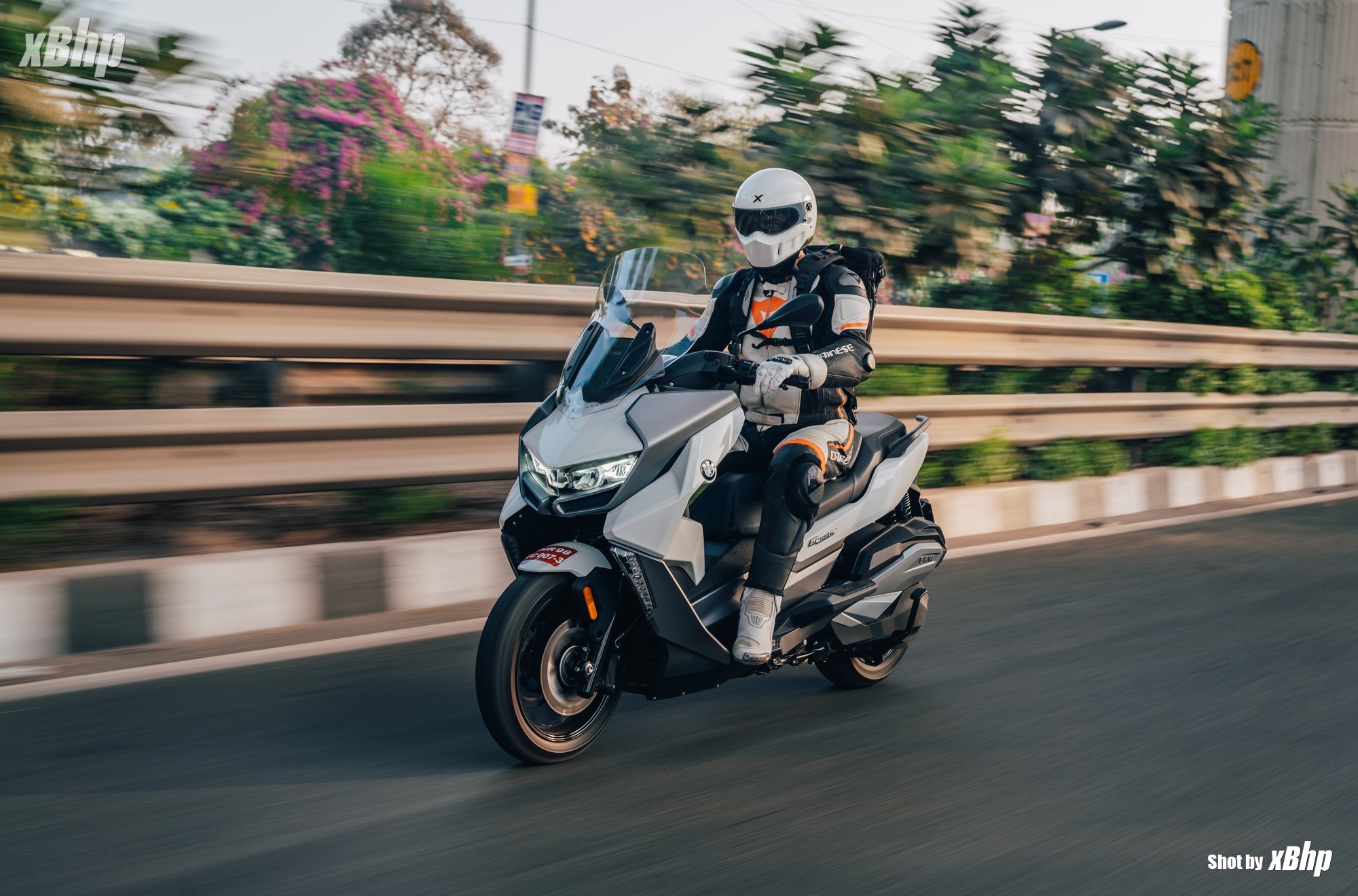
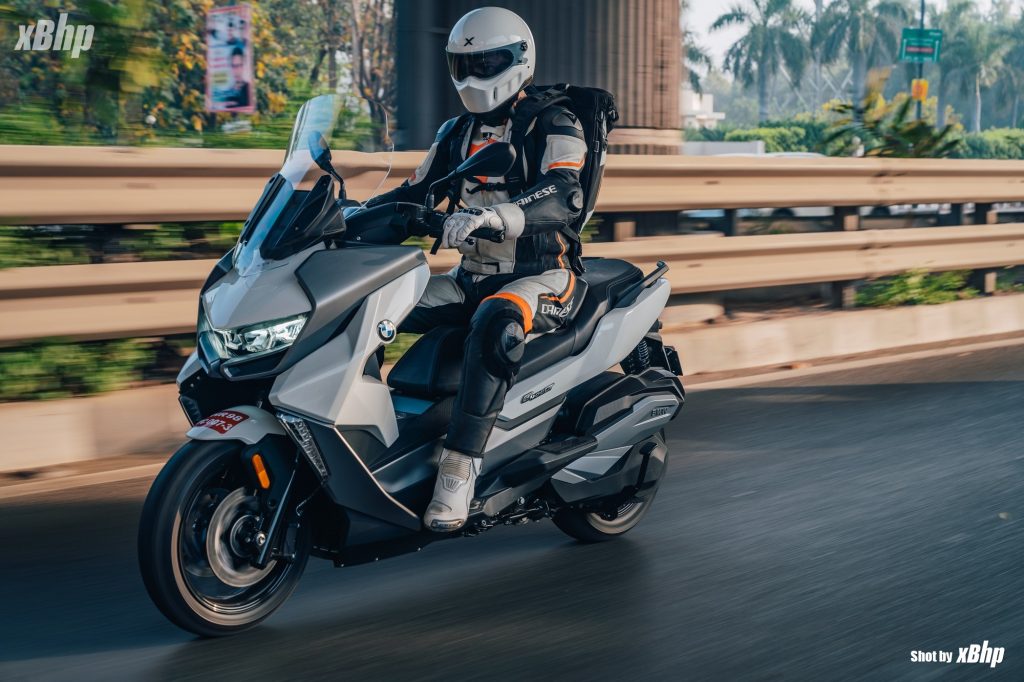
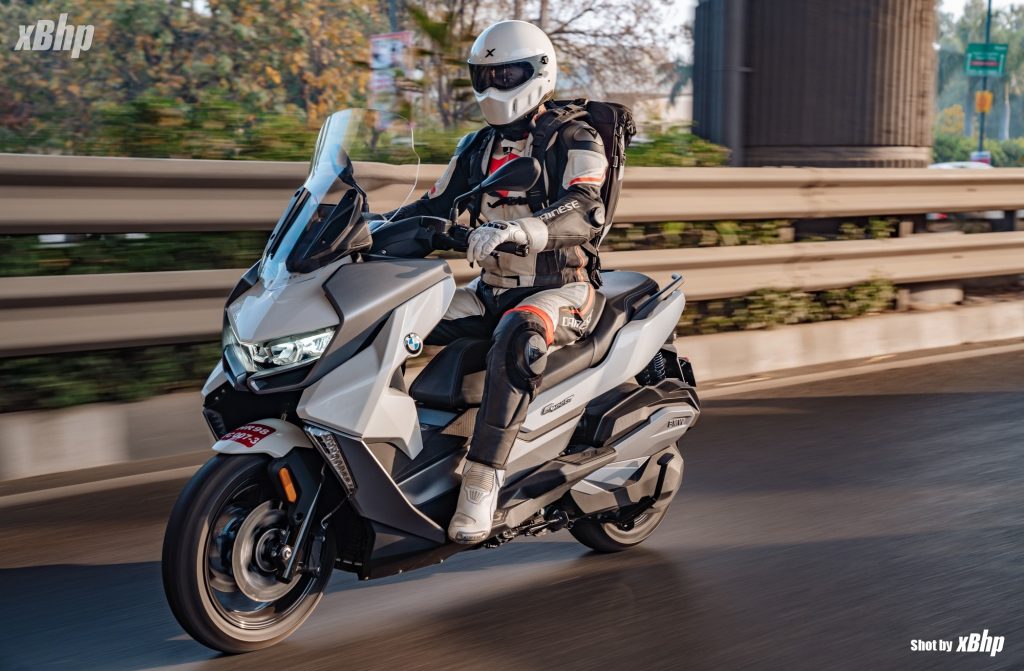
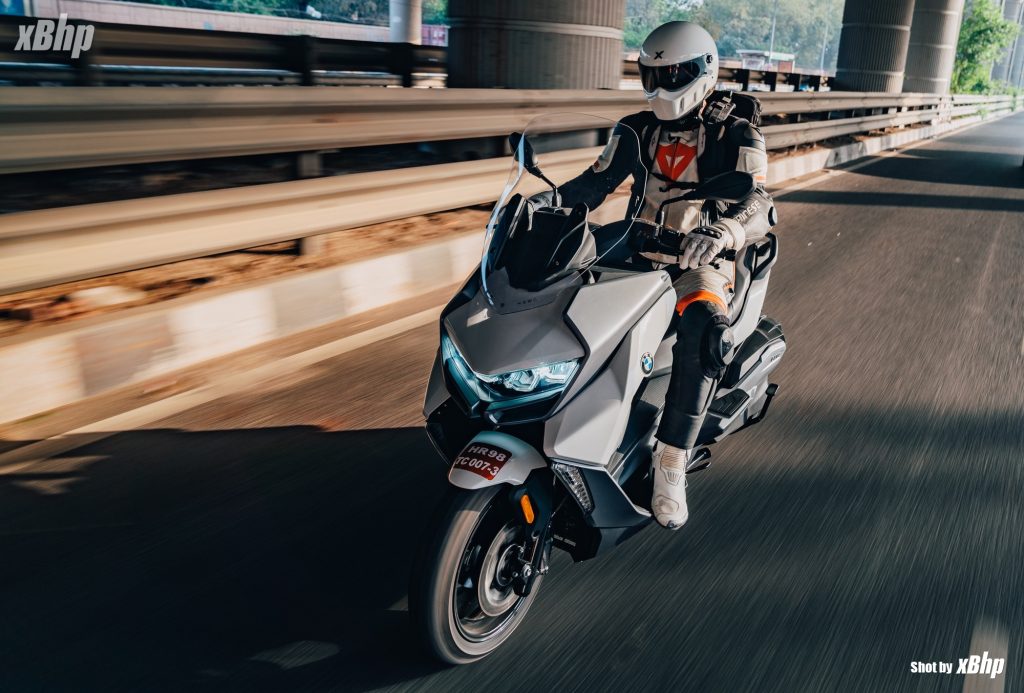
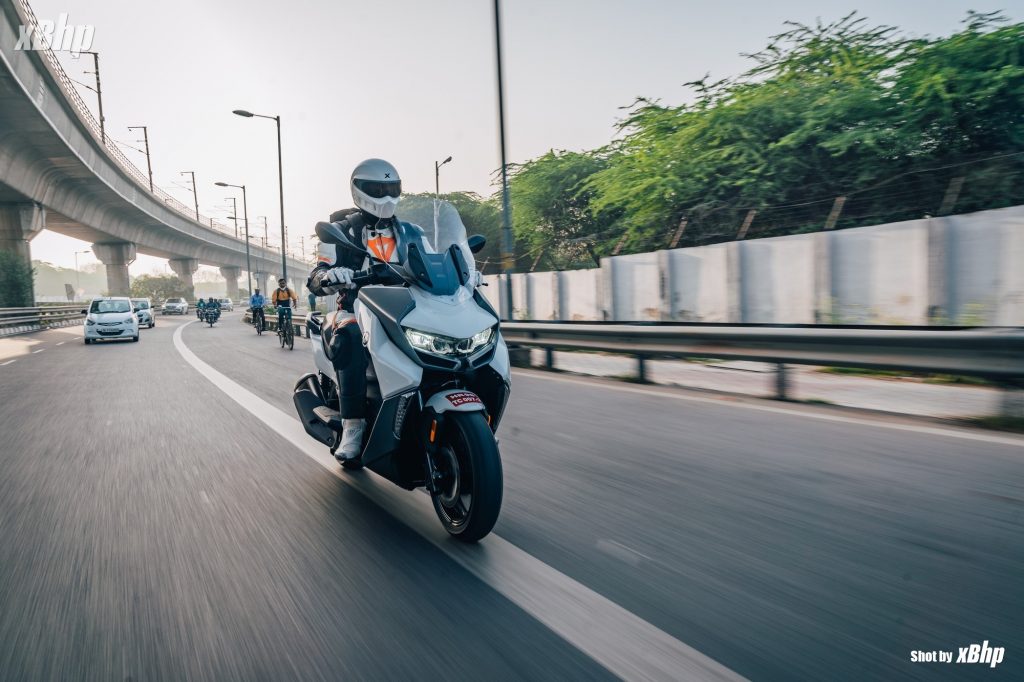
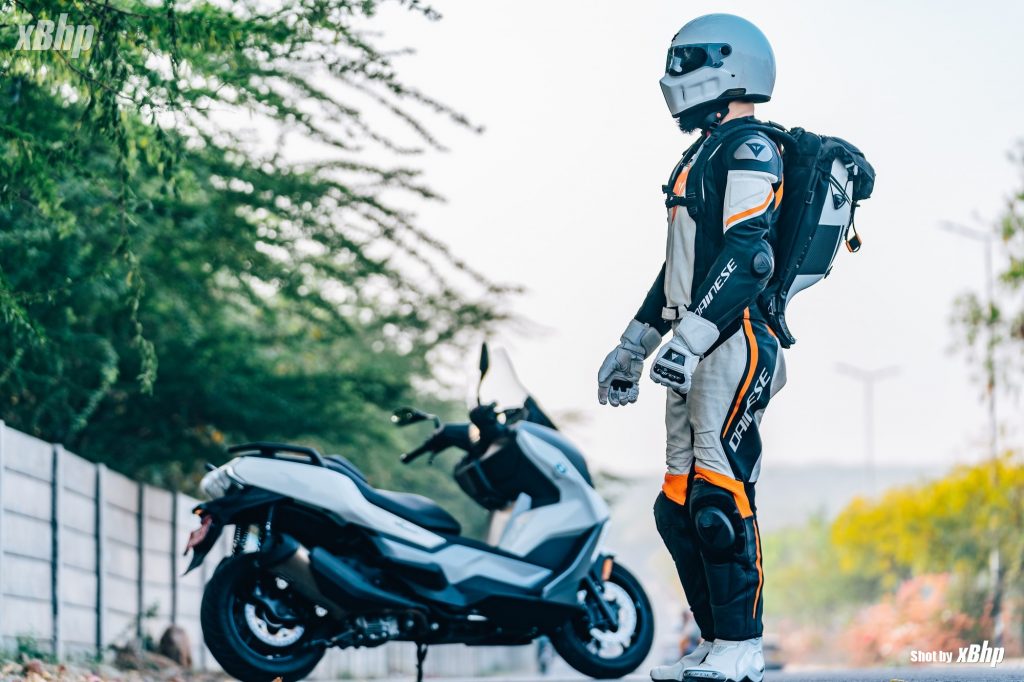
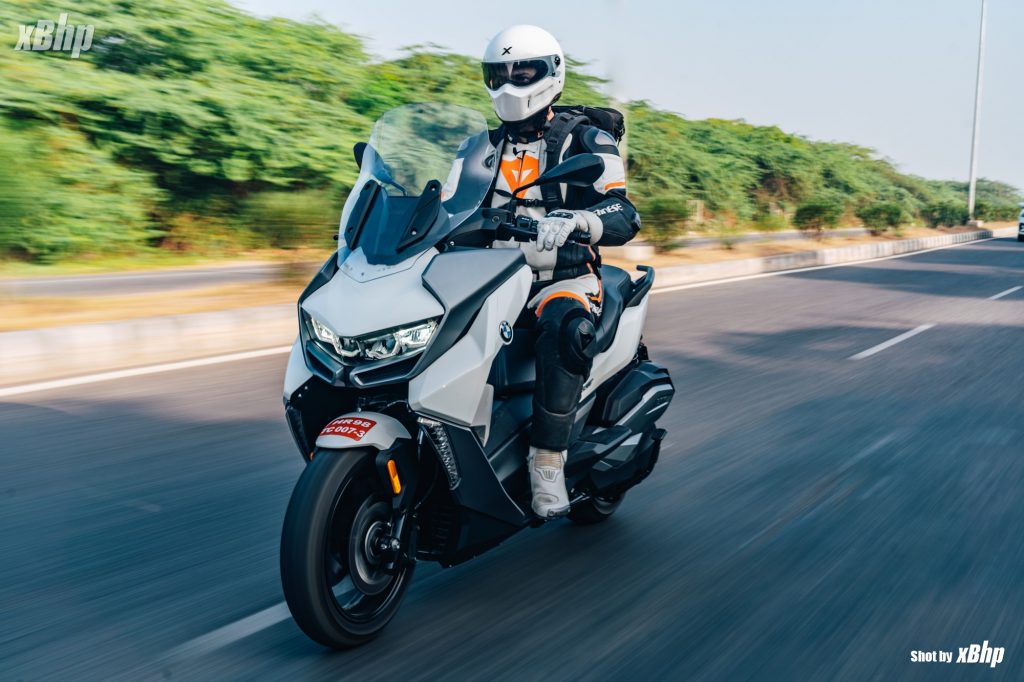
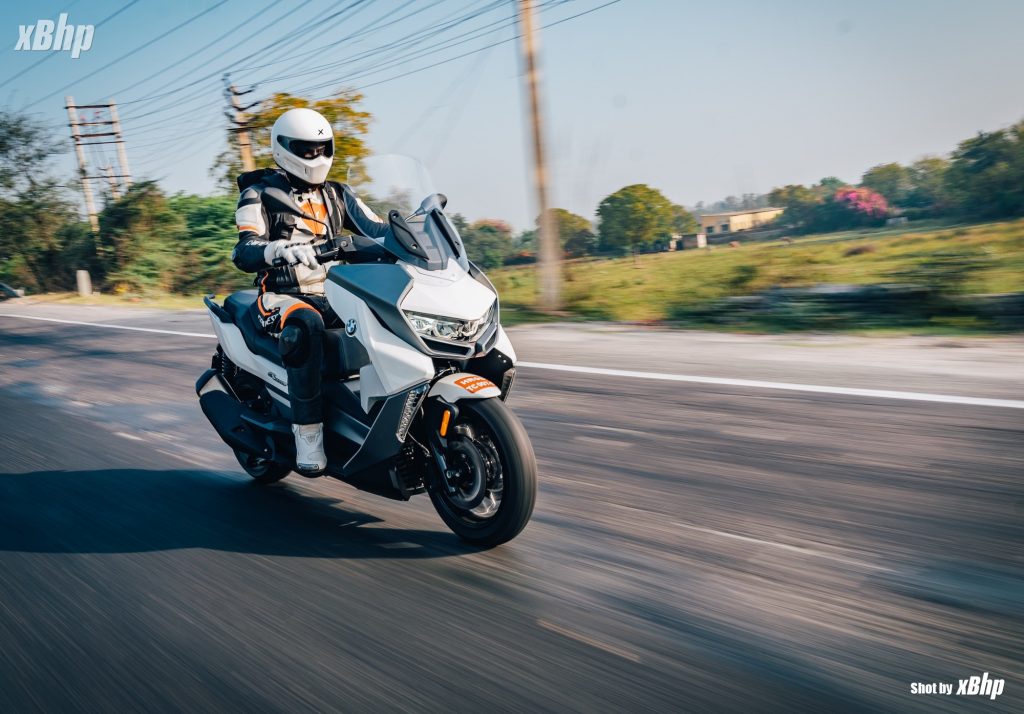
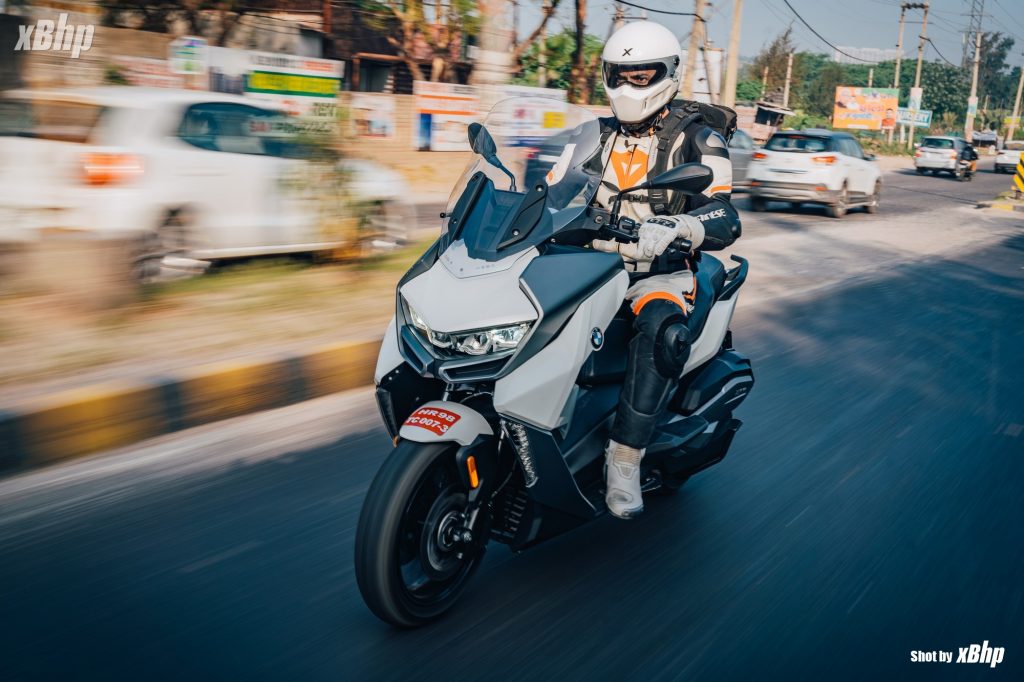
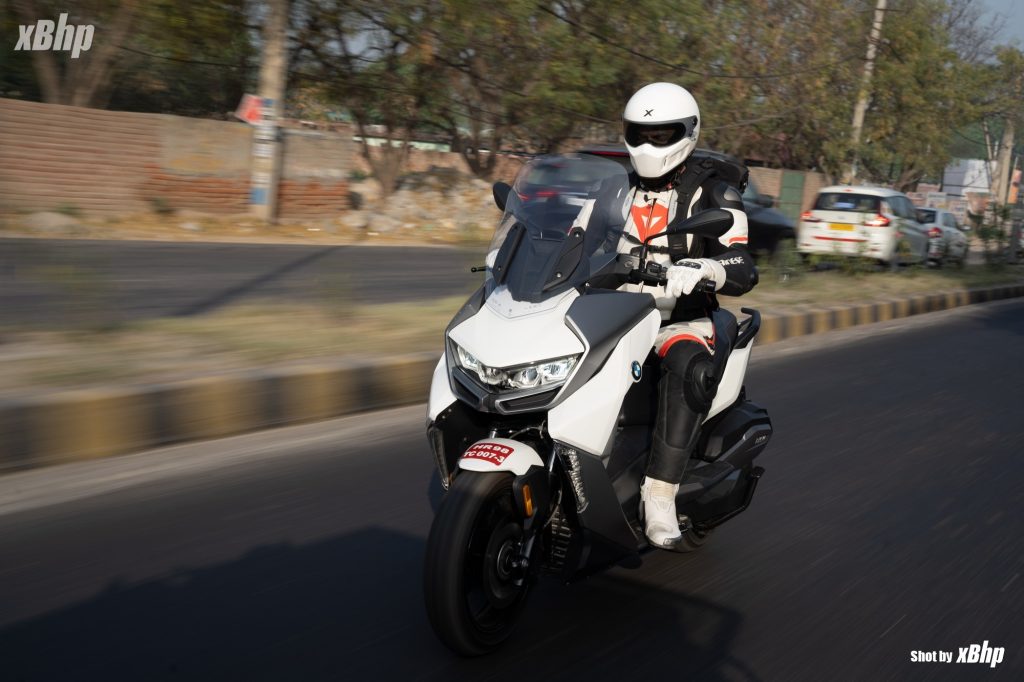
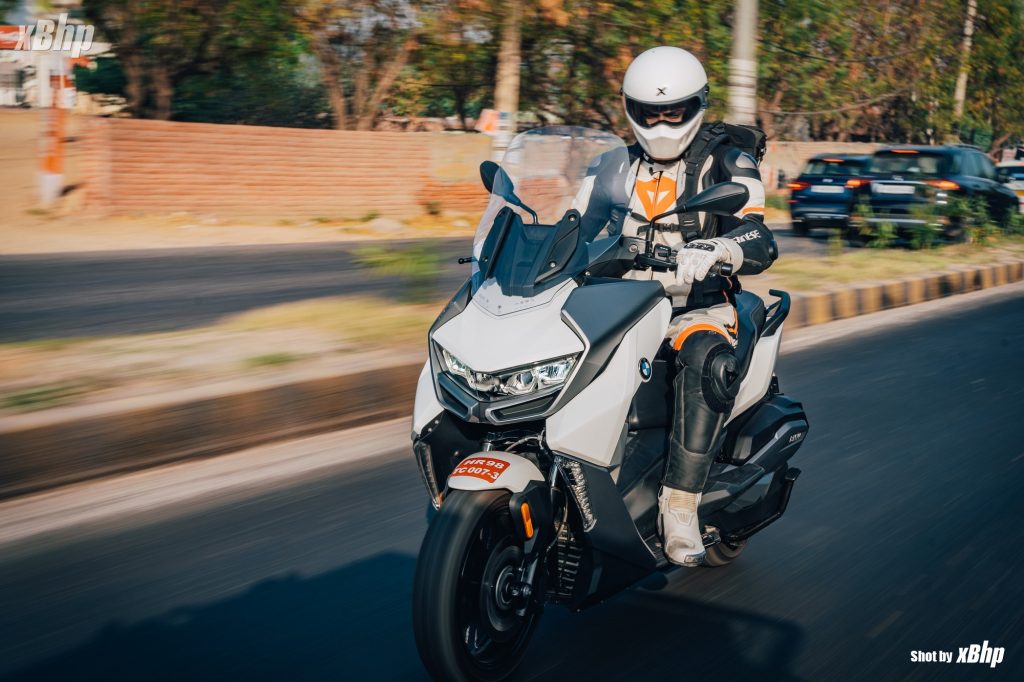
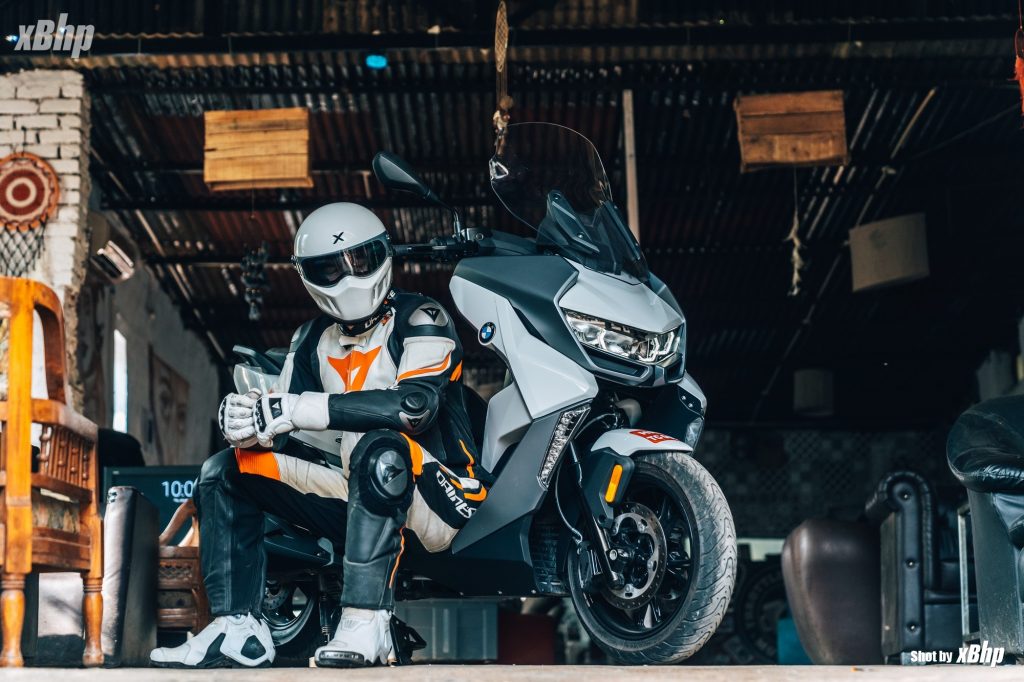
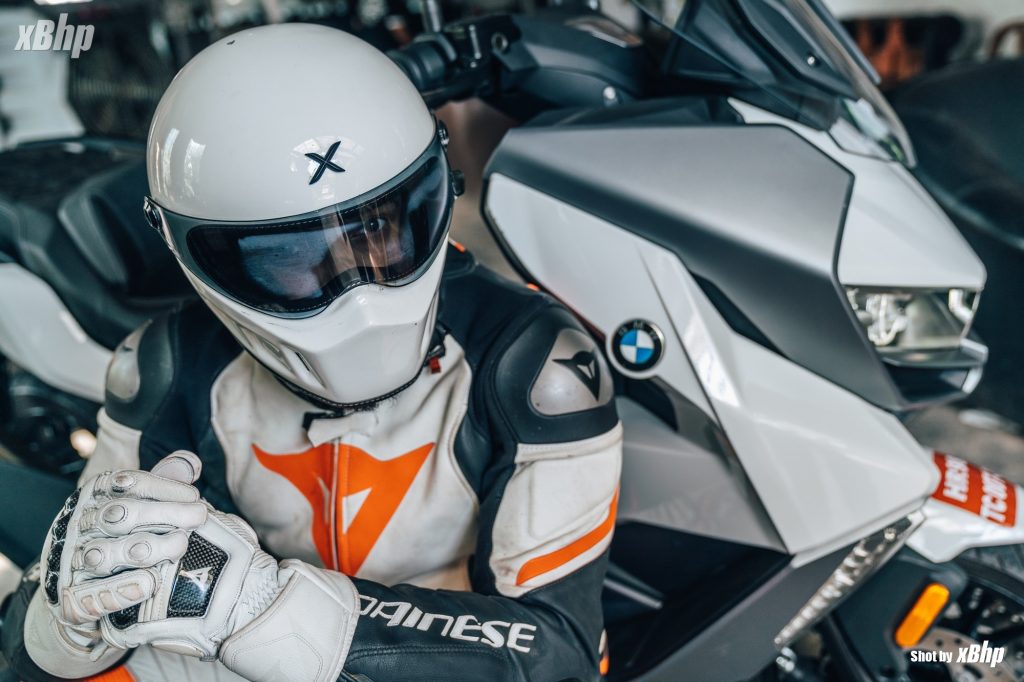
Imagine being out for a ride or something and stumbling upon something like this plying on the roads? It would be hard to tell your exact response but among other things, the following two questions will most likely be there: “How is it so cool?” and “How much do I have to pay to be on it?” The BMW C 400 GT is that cool!
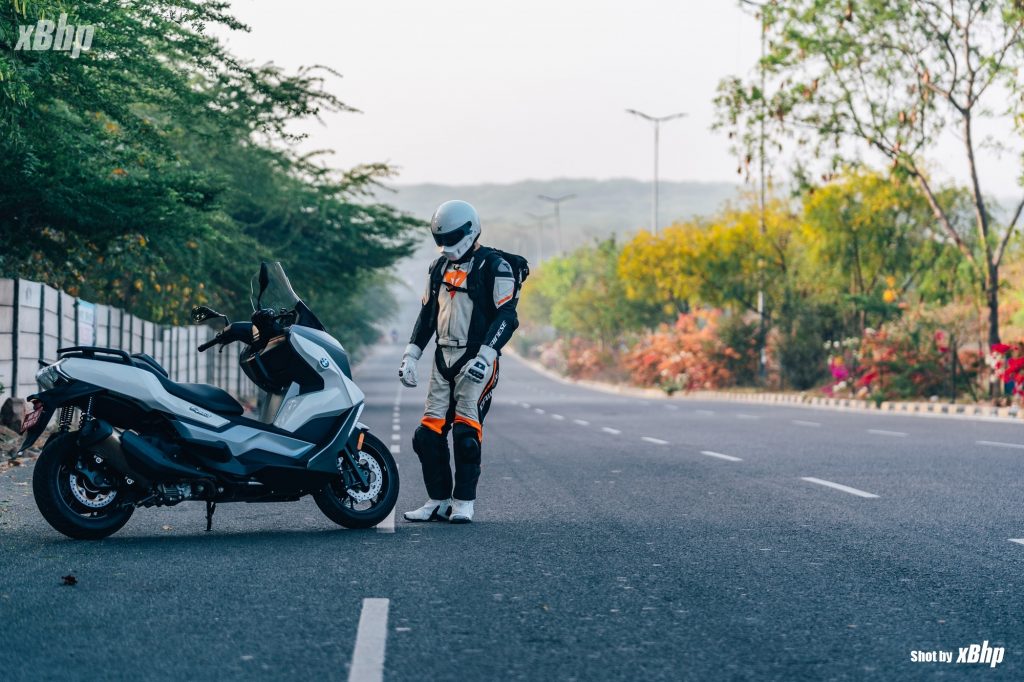
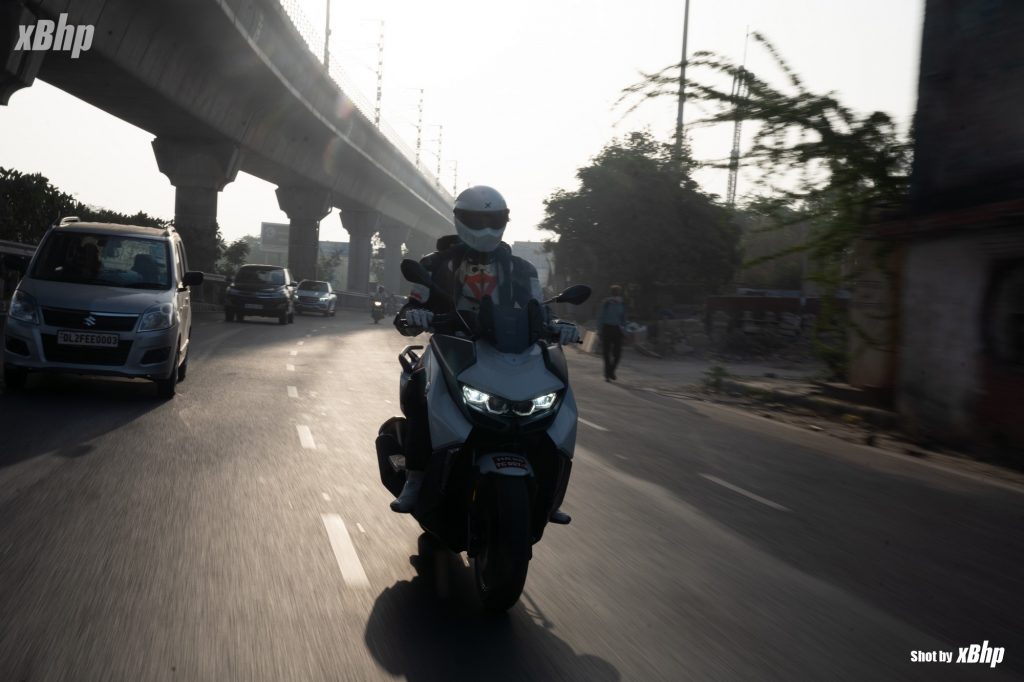
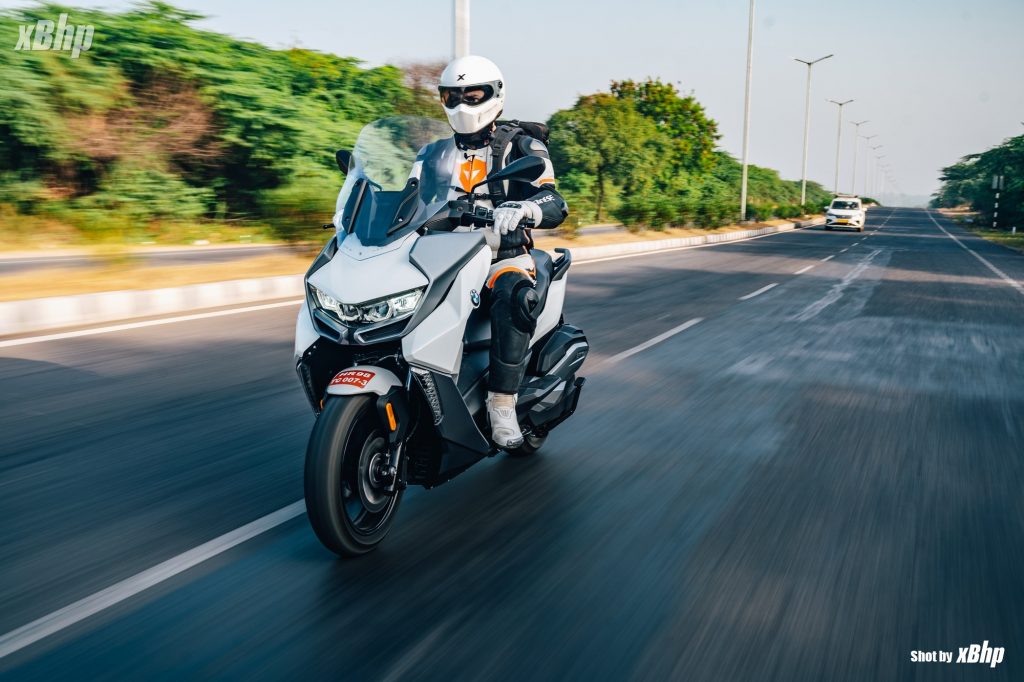
On the road, few things get more attention than it and few can keep up with it. It is one of the most distinguishable two-wheelers in the market today. Notice how we said two-wheelers and not just scooters. BMW was too proud to make a scooter. So they made something that resembles a scooter. We got a chance to take the BMW C 400 GT out for a spin and here’s what we think.
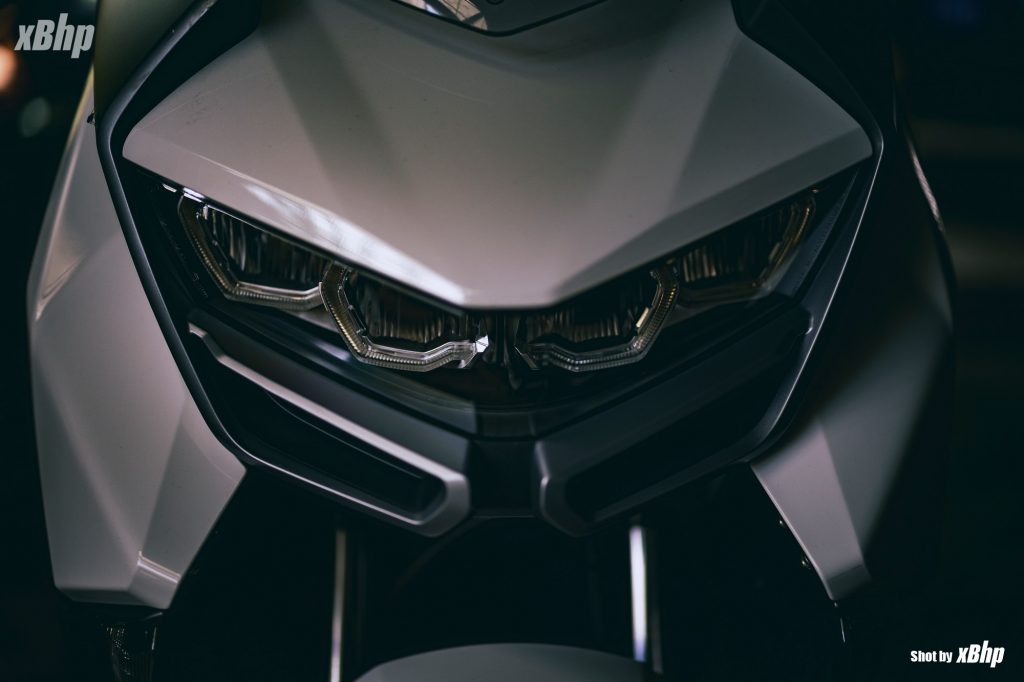
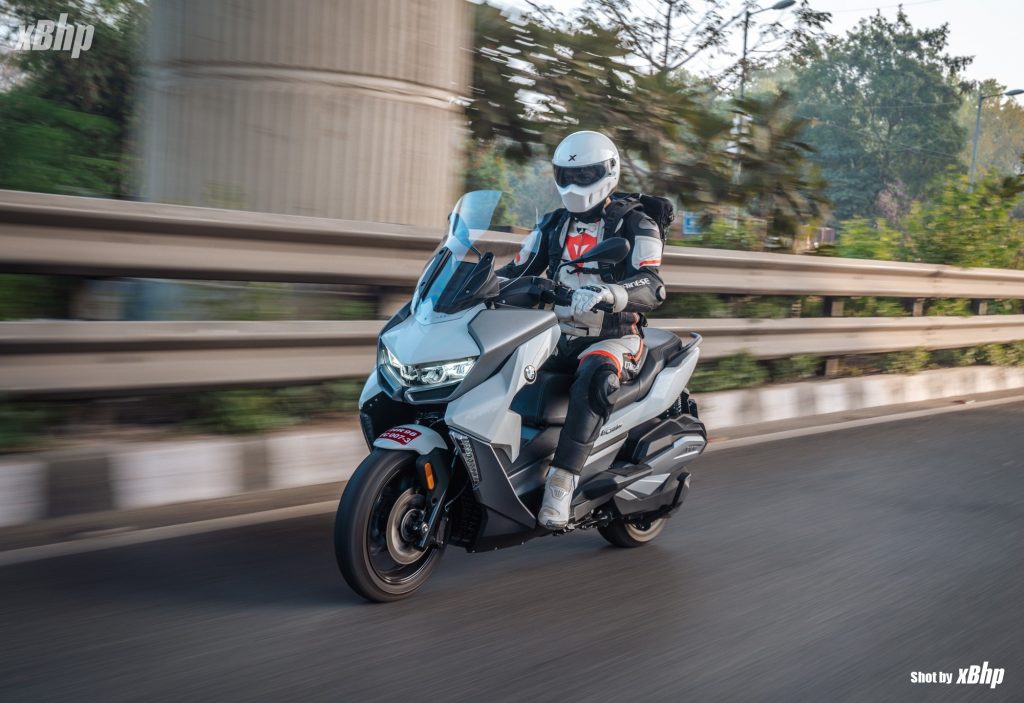
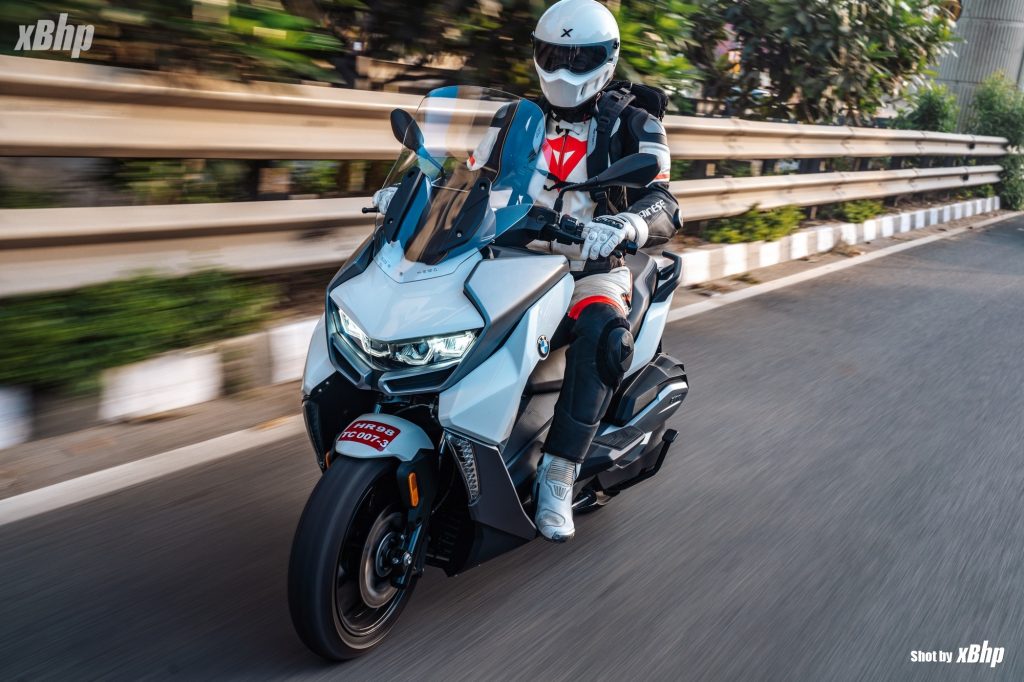
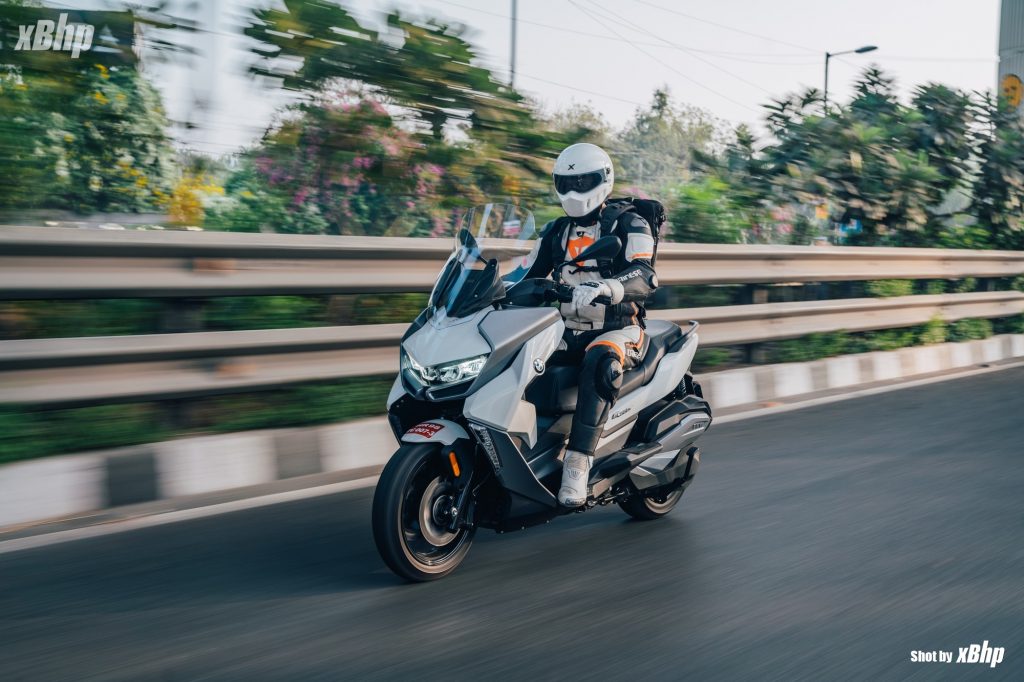
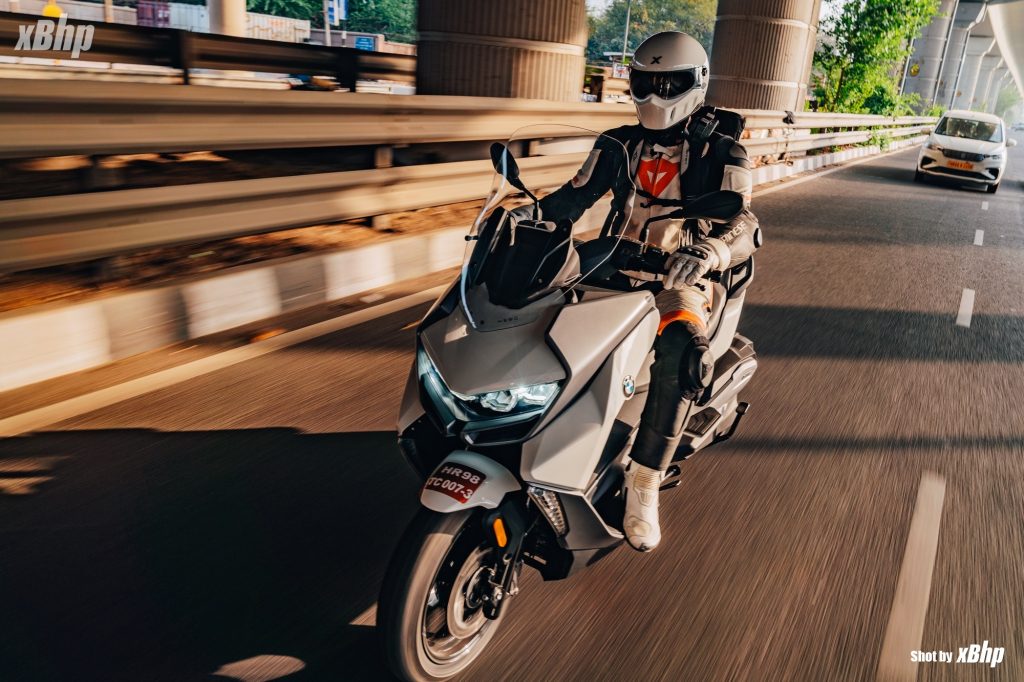
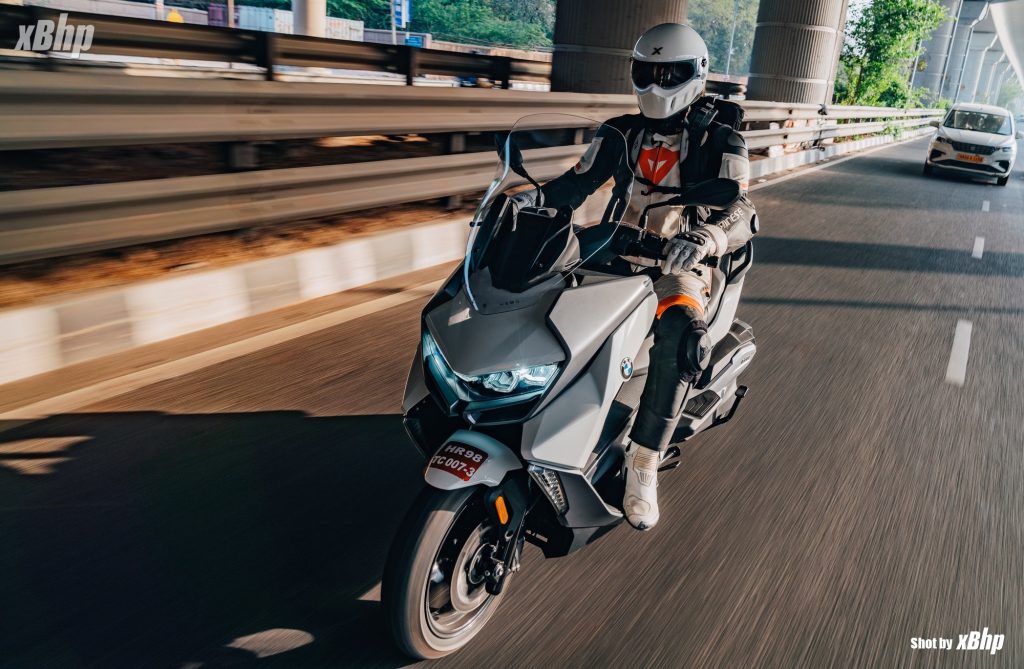
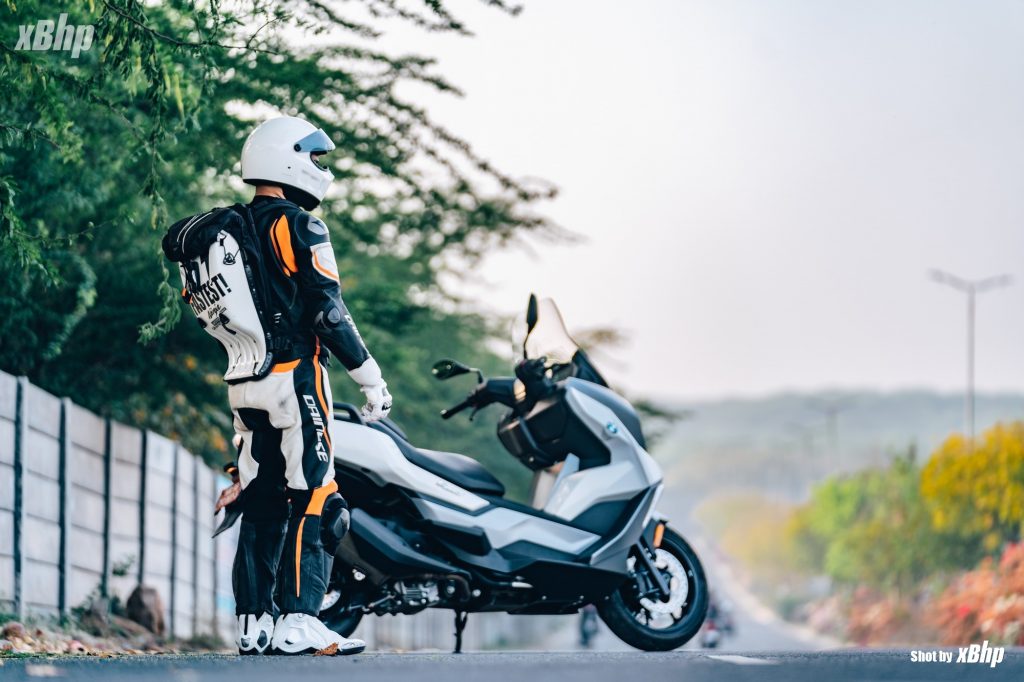
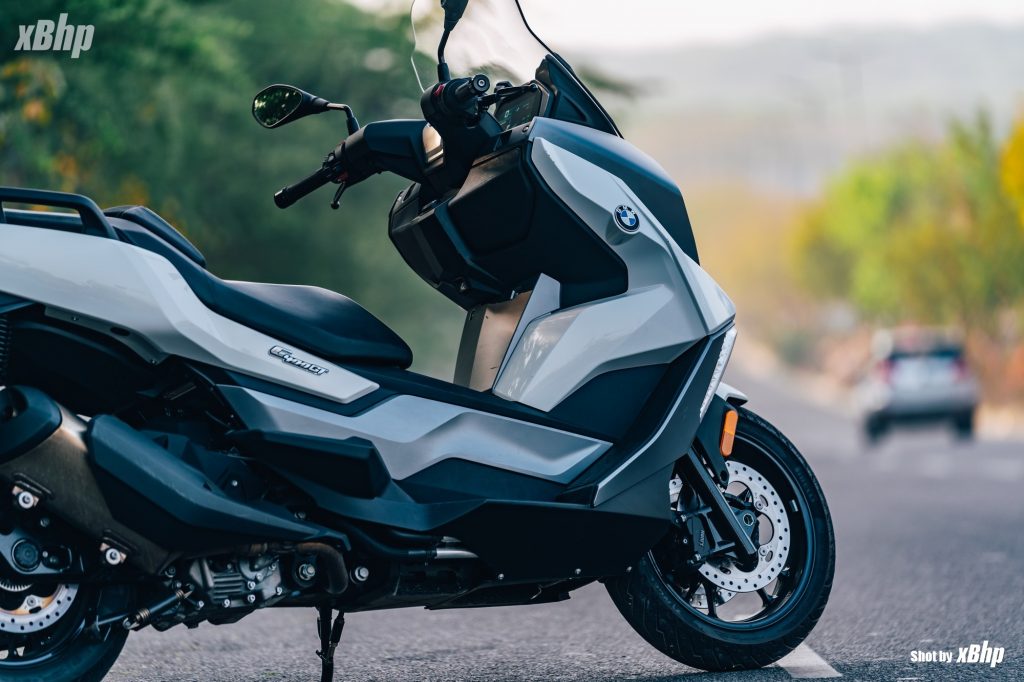
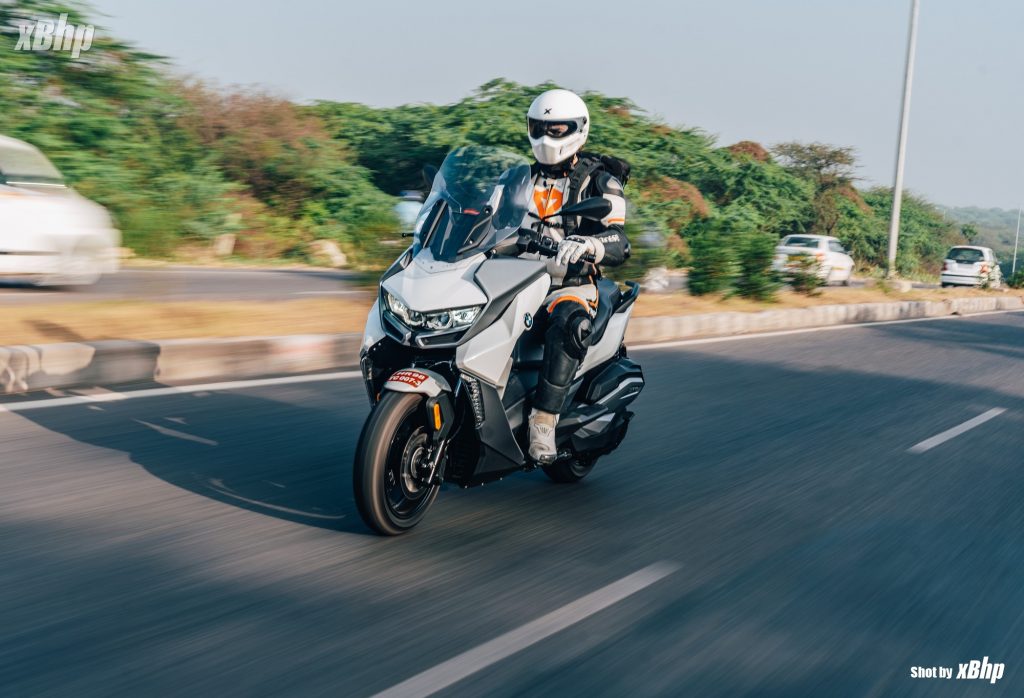
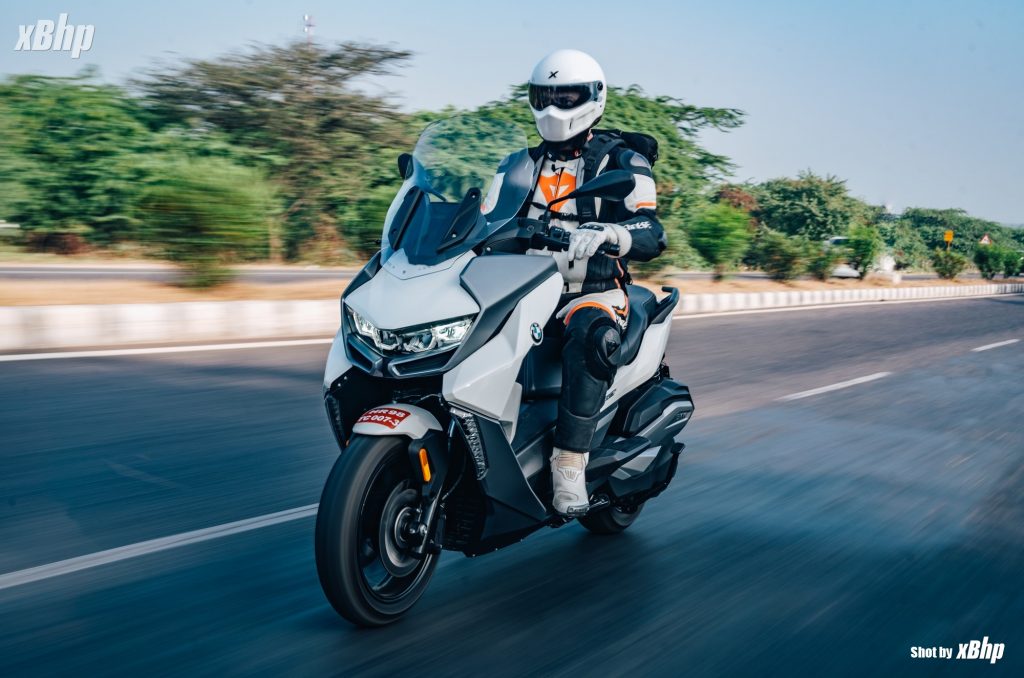
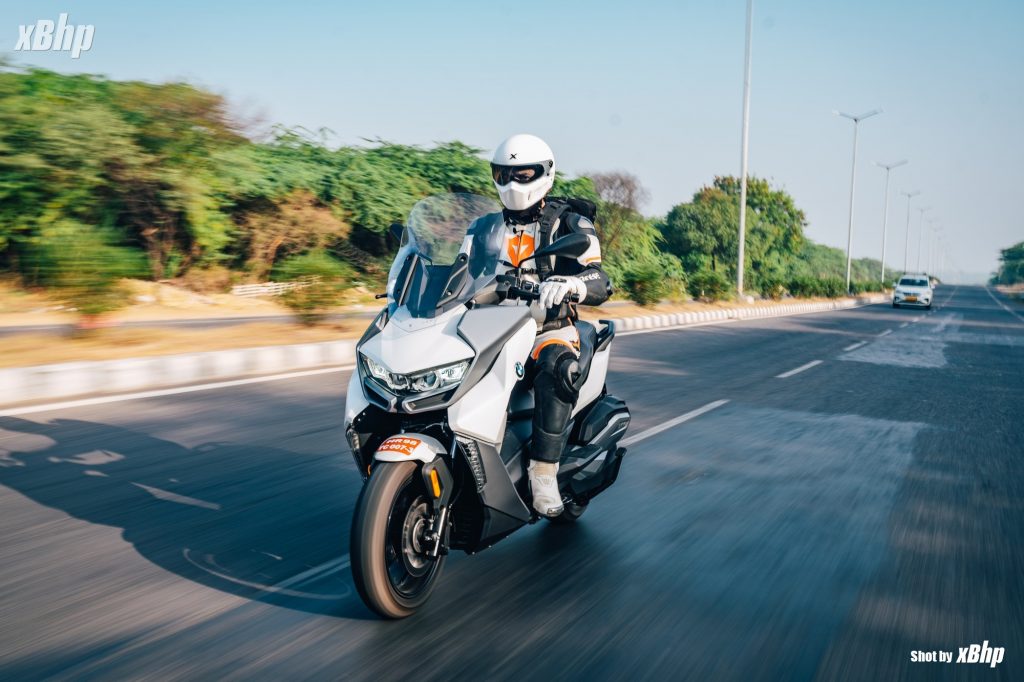
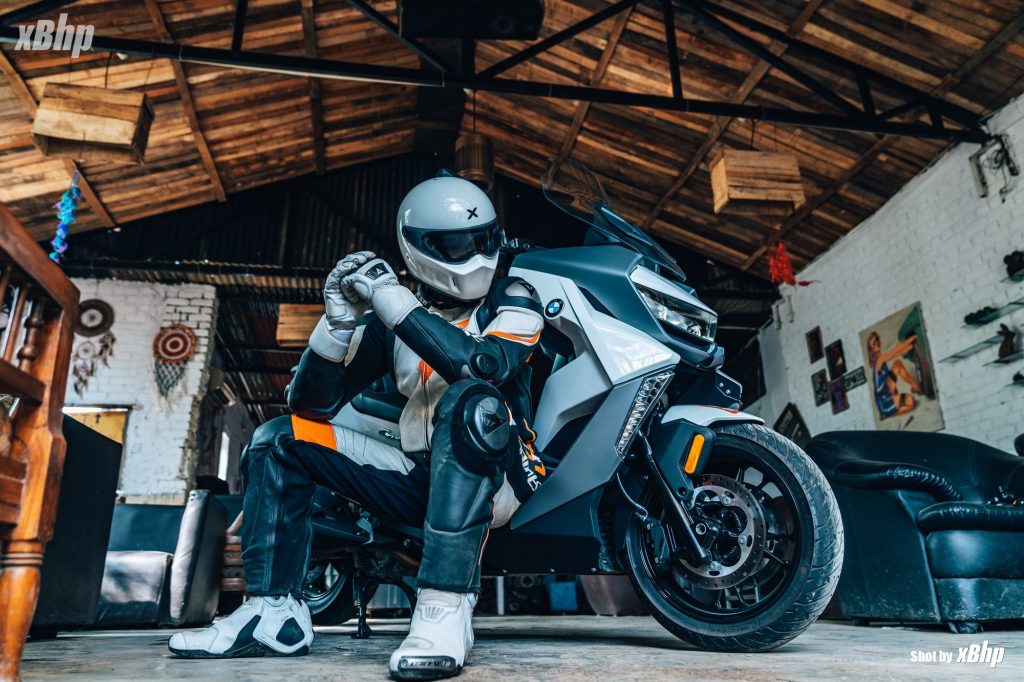
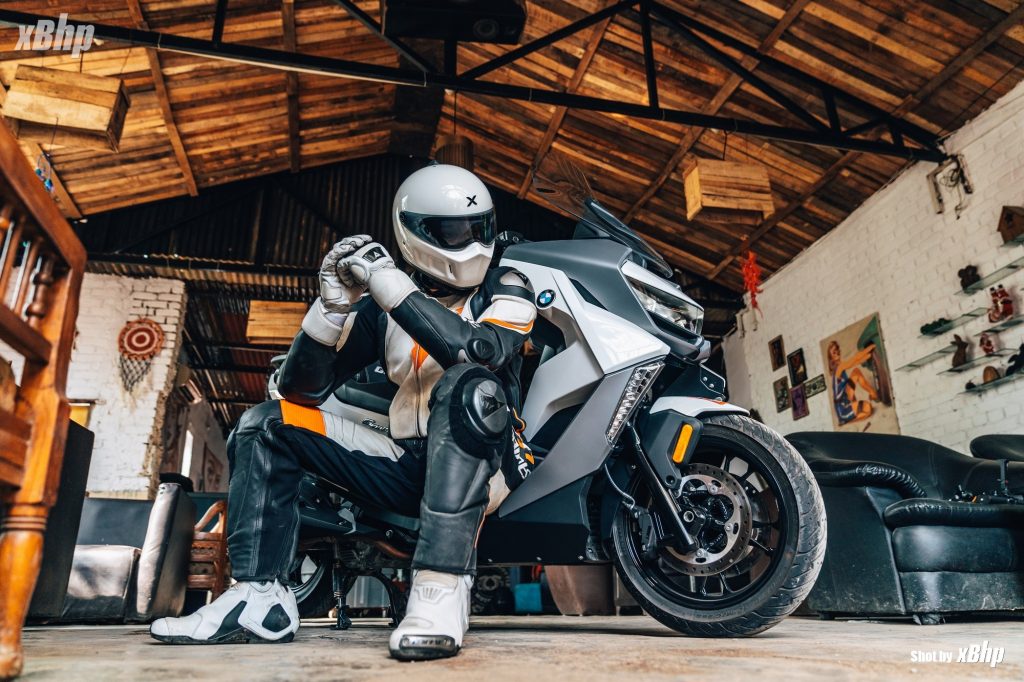
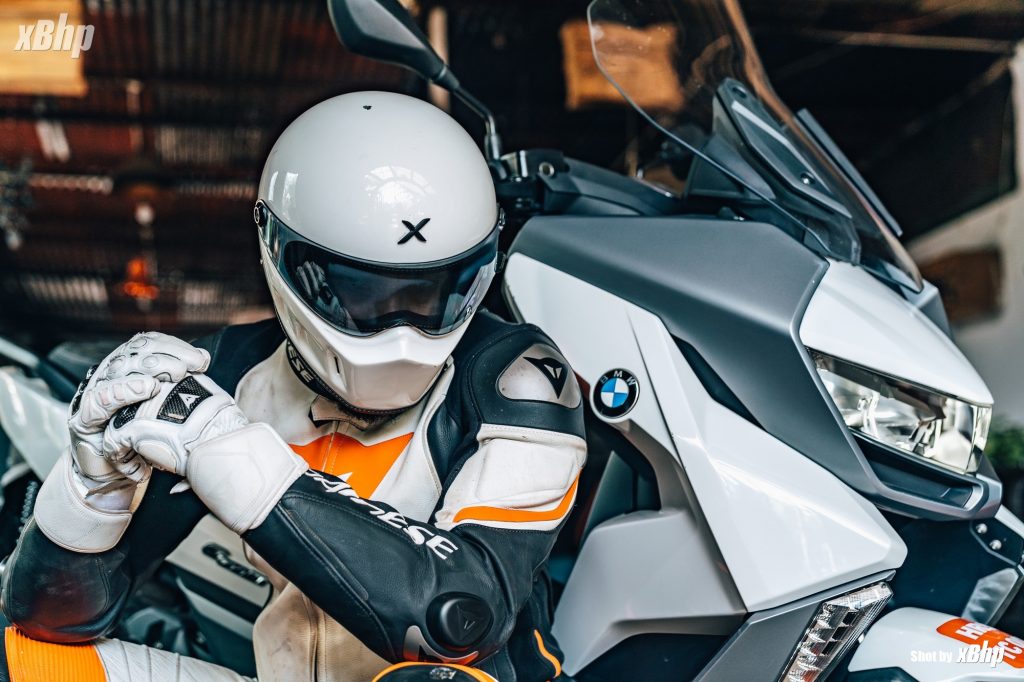
As we mentioned, it’d be remiss to categorize it as a scooter, at least the Indian definition of one. It is much bigger for one thing. Those dual-discs at the front are hard to miss. So is the massive windscreen. This thing has a wheelbase of around 1,565mm! Talk about taking GT seriously. Overall, it is not as radical as the C1 from BMW, a scooter with a roof, but the C 400 GT is also an attention hog but for good reasons.
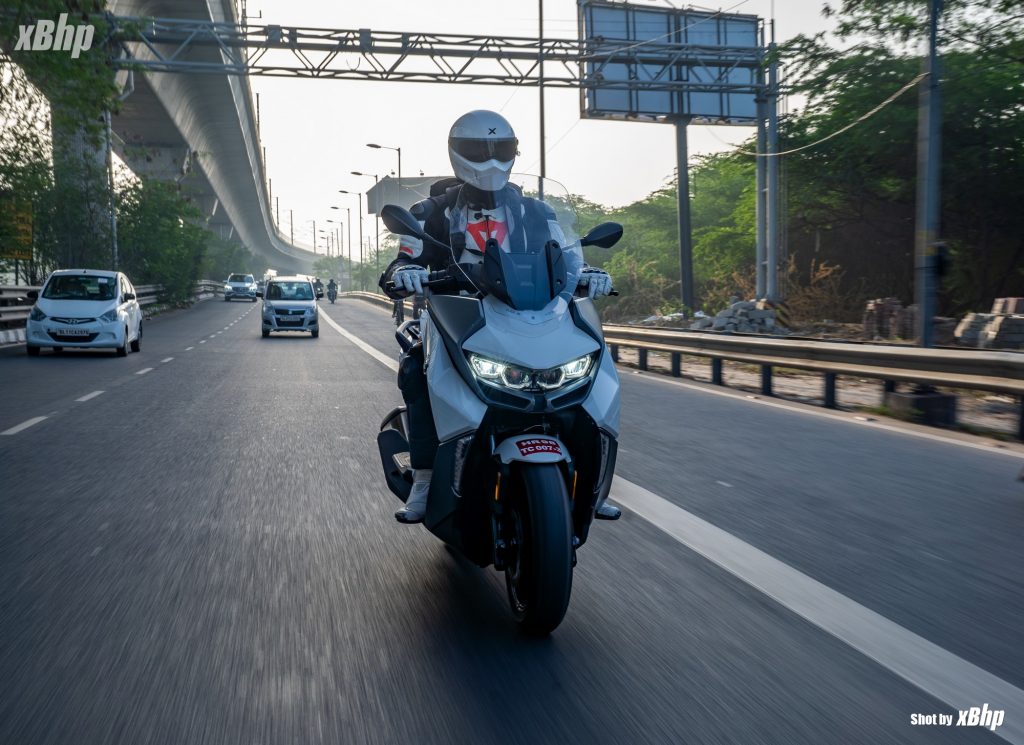
The rider’s seat has an integrated backrest and the passenger seat has footboards instead of footrests. And it is so comfortable that the temptation to take it out for a long ride is hard to resist. We have ridden around India on an Ntorq 125 and it was a lot of fun. On the BMW C 400 GT though, it would have been something else entirely. The ergonomics are so wonderfully executed. The riding posture is as comfortable as it gets and the seat is just magic, in addition to being huge.
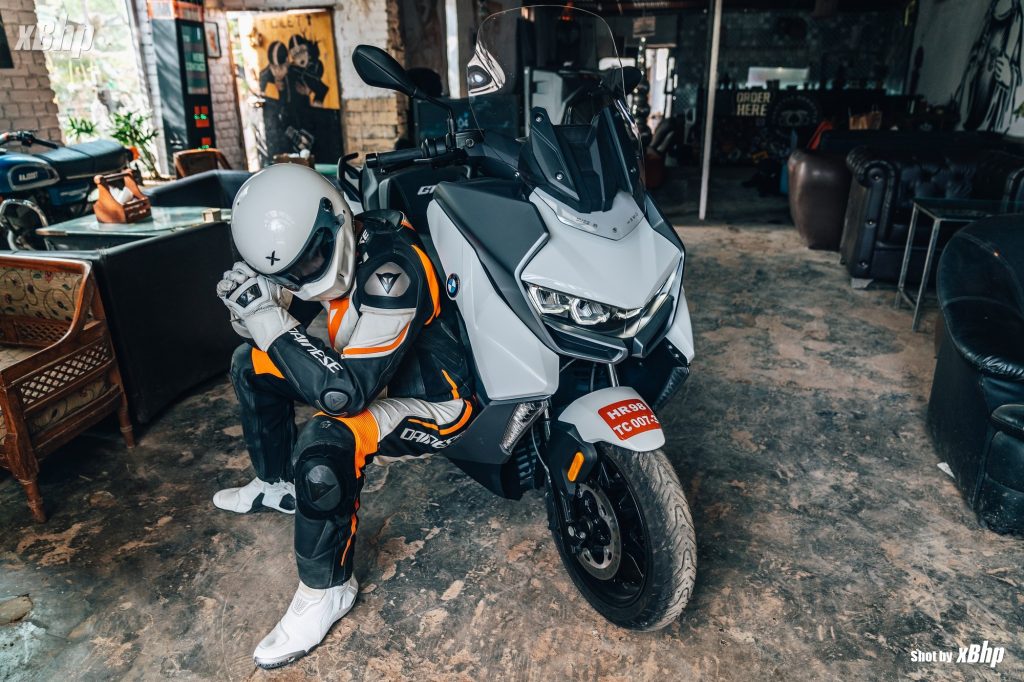
One of the best hangouts for motorcyclists in Delhi, Throttle Shrottle Moto Cafe is our go-to spot on most riding days.
But all that aside, the motor on this thing is where the magic lies. 350cc, single-cylinder, water-cooled, 34 horses and 35 Newton-metres. More than enough to exceed or match most of the machines out there. BMW claims the scooter is good for a top speed of around 139 km/h. So when you want it to, it can zing!
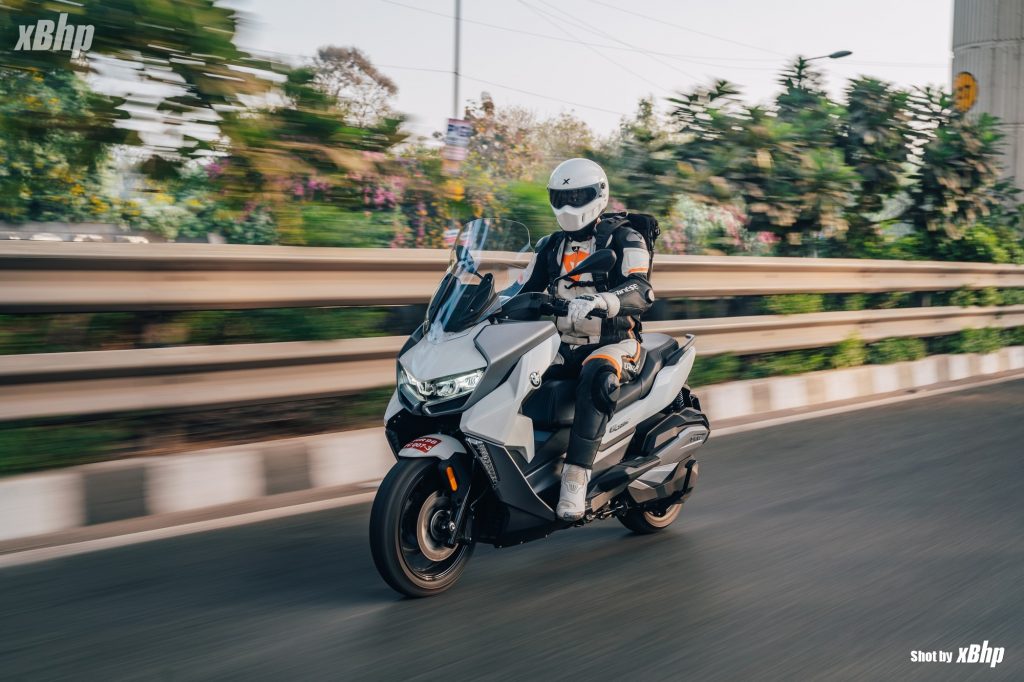
The C 400 GT is heavy, yes, but the engine never lets it feel that way. The engine is so punchy and more than anything, so smooth. There are some nifty tricks that the C 400 GT employs to achieve this like a torsionally stiff drivetrain swing arm with a quirky swing arm bearing that ensures minimum vibration.
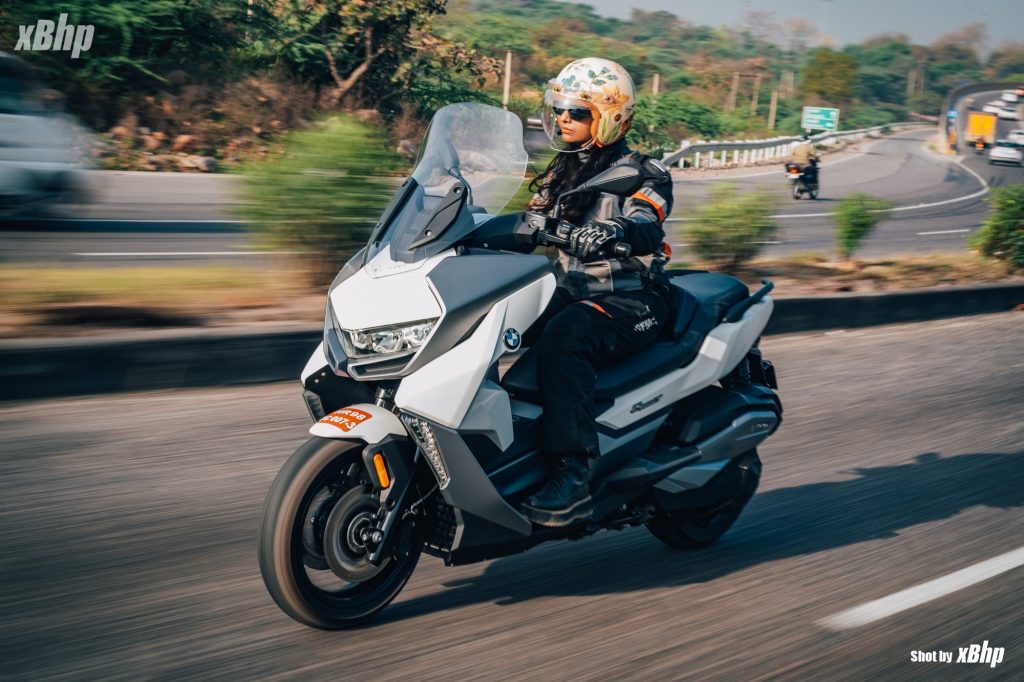
Rynox Storm Evo is an all-rounder with excellent protection, light weight, and all-season compatibility with its mesh design along with rain and winter liner compatibility.
This scooter can pull and really pull. It is not going to any acceleration records but it does what it is supposed to do, so well. And that is GT’ing… or cruising. Riding it on open roads is so effortless that is why I think one can easily tour on the C 400 GT… even two up. Even more so considering you have a 13-litre fuel tank from which you can expect between 320-350 km with ease. The transmission is a stepless CVT unit. According to BMW, the engine and transmission are both designed and coupled to maximize efficiency.
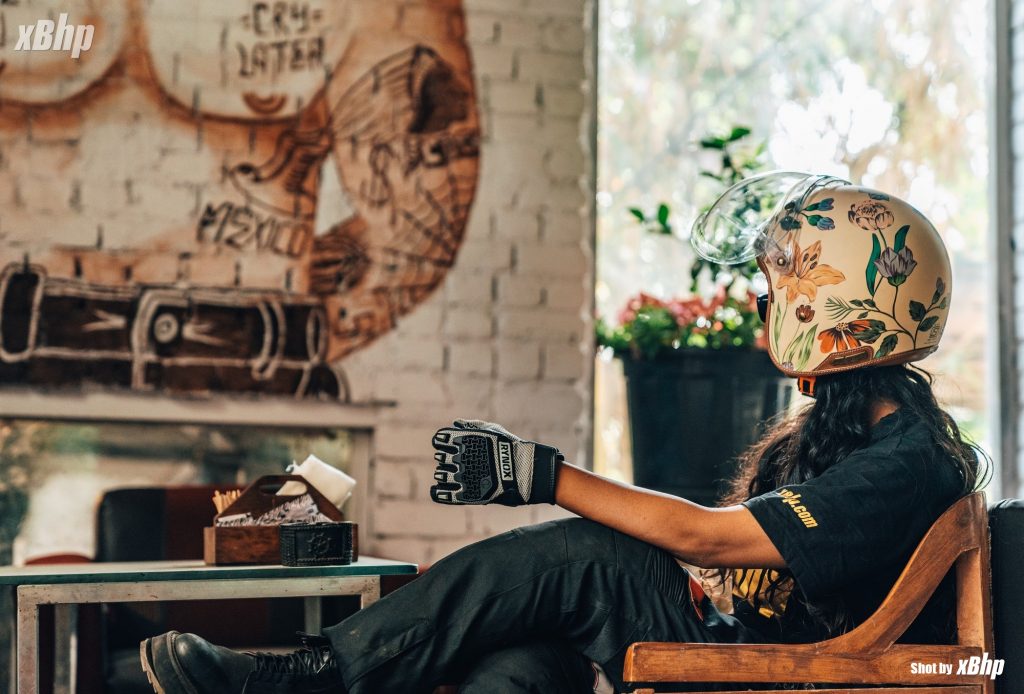
The Ibiza helmet from Axor’s Retro Jet Girls line is ISI certified for safety, with a bubble visor and a floral design for an unmistakable presence.
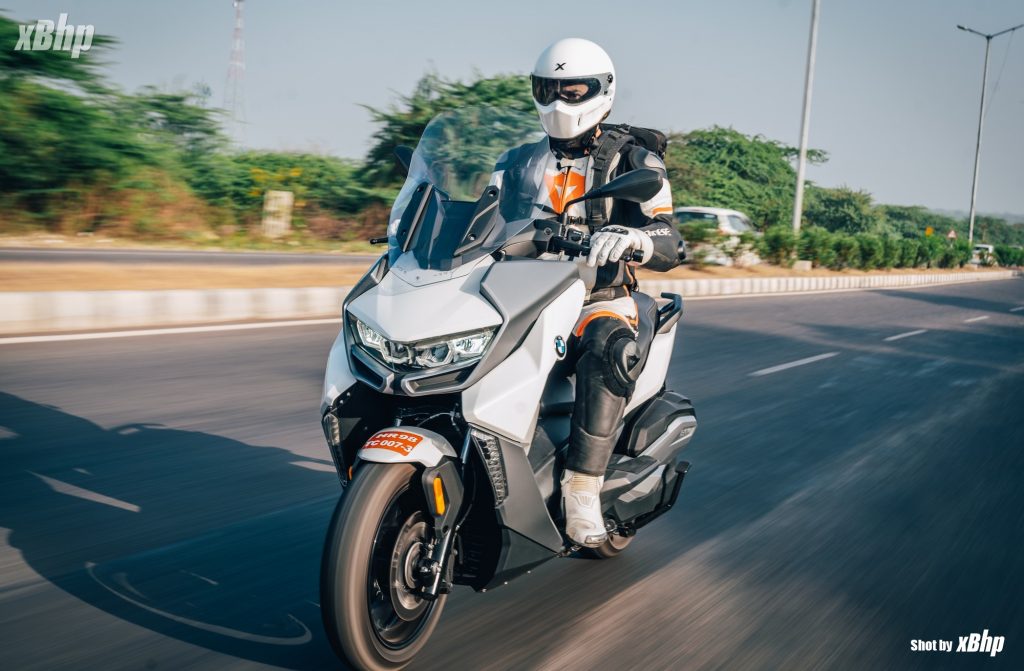
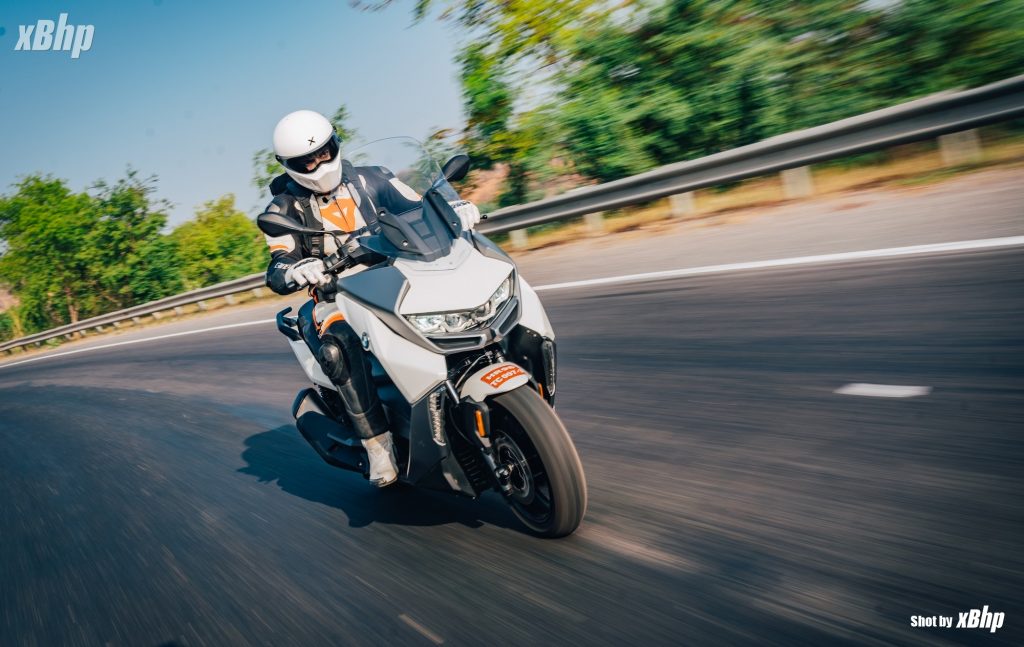
We like how it handles too. It is less scooter-like and more motorcycle-like. Dynamic is rightly used by BMW to describe this scooter. On winding roads, this one is a lot of fun to thrash around. The contributors here are wheels, 15-inchers on the front and 14 on the rear and the taut suspension system comprising 35mm forks at the front and double spring struts on the rear.
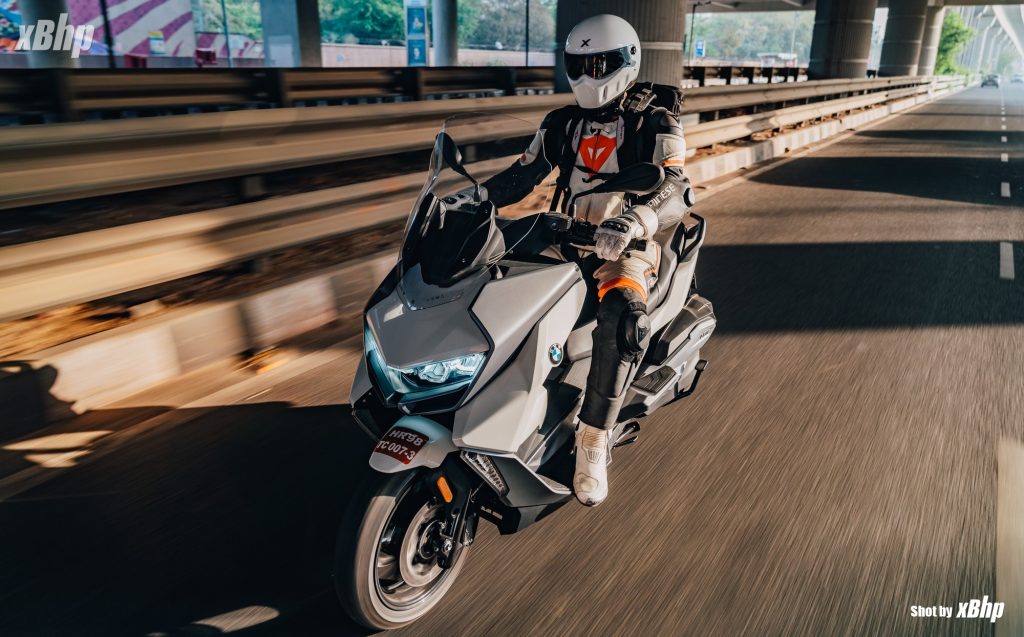
Brakes though are the highlight here. Dual discs mean a fair bit of bite but I loved the progressive feel they offer. We also appreciated the stability that the C 400 GT possesses. A long wheelbase and a low centre of gravity help here. The larger wheels, good suspension, and stellar brakes; it has all you need for some spirited riding sessions. I also like the chunky tyres on the C 400 GT. It gets a 120 section tyre on the front and 150 on the rear, from my time, we could tell that the grip they offer is more than ample. Finally, You have ABS as standard in addition to traction control to enhance safety.
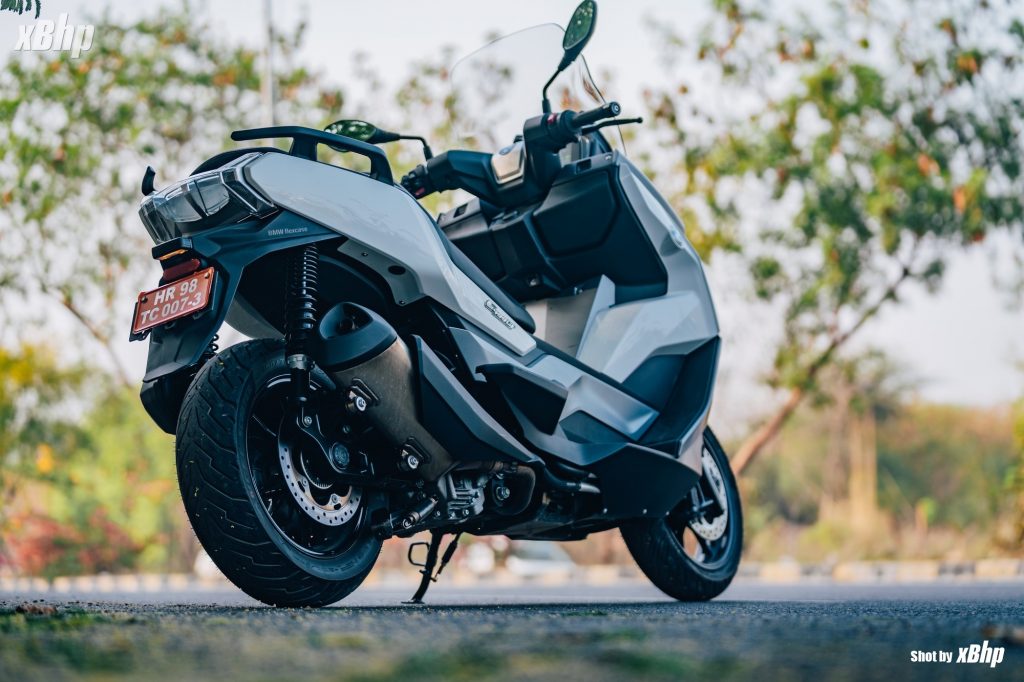
For storage, you have two compartments along with a flexcase which is a fair bit of space. Then there’s the 12V socket. One more thing that I’d like to mention is the centre stand and how easy it is to put the scooter on the main stand because of a clever kinematic system- something one appreciates knowing the C 400 GT weighs 214 kg road-ready and fully fueled.
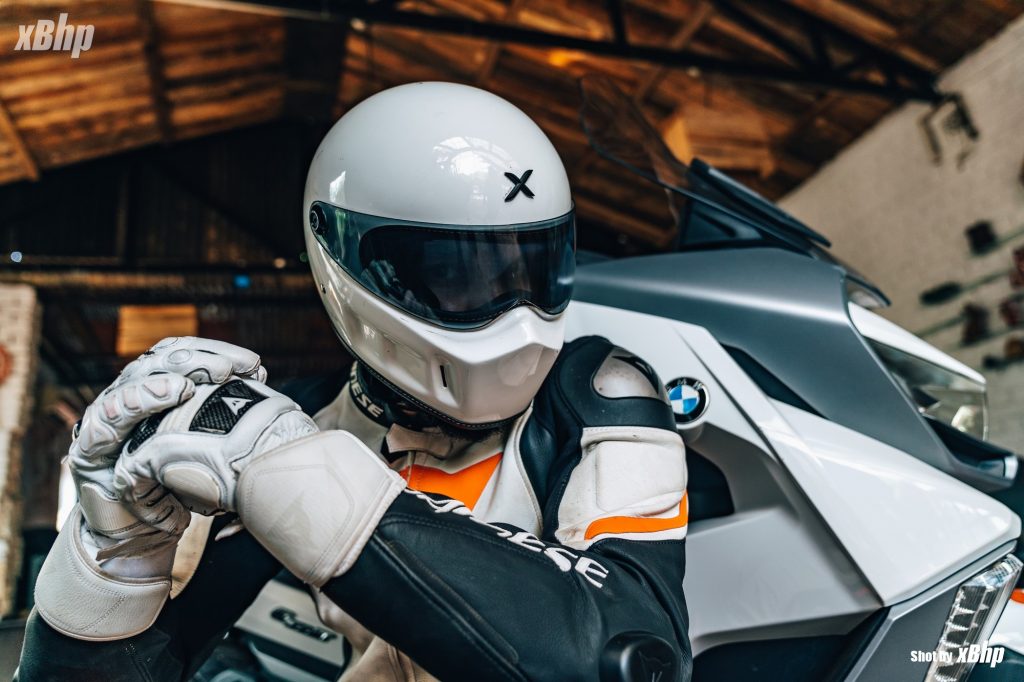
This is the Axor Retro Dominator helmet that combines classic looks, light weight, and pristine safety that earned it a DOT certification.
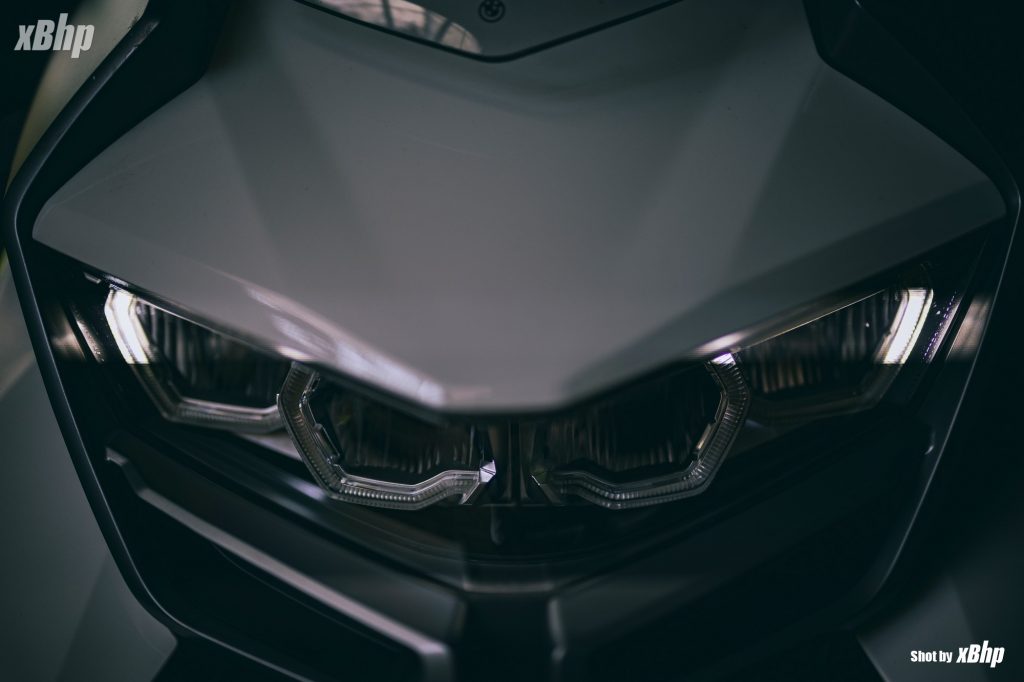
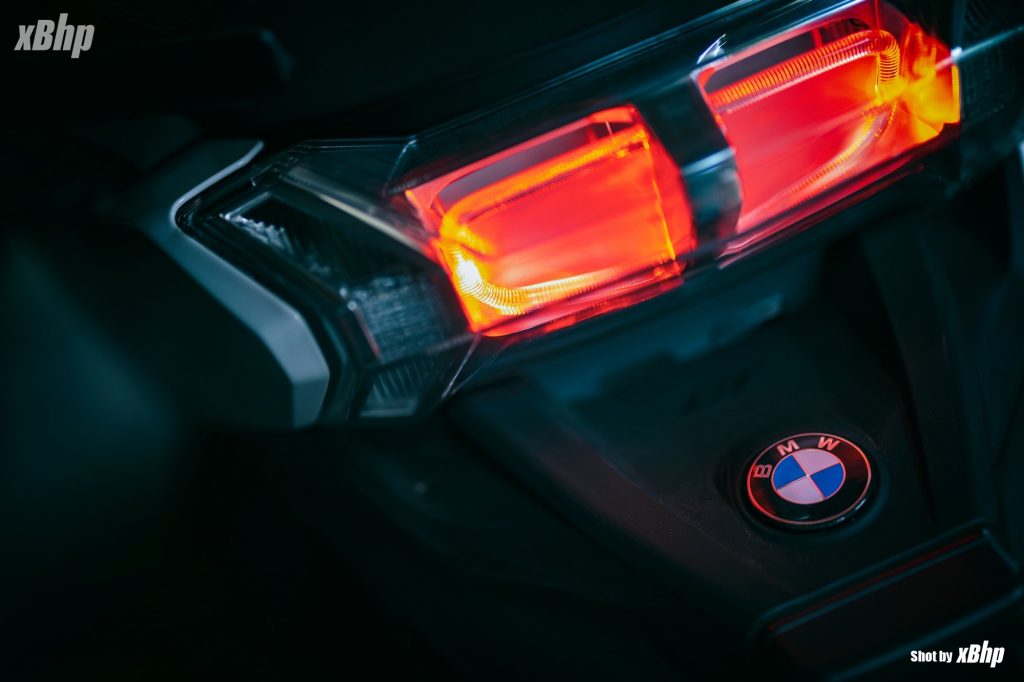
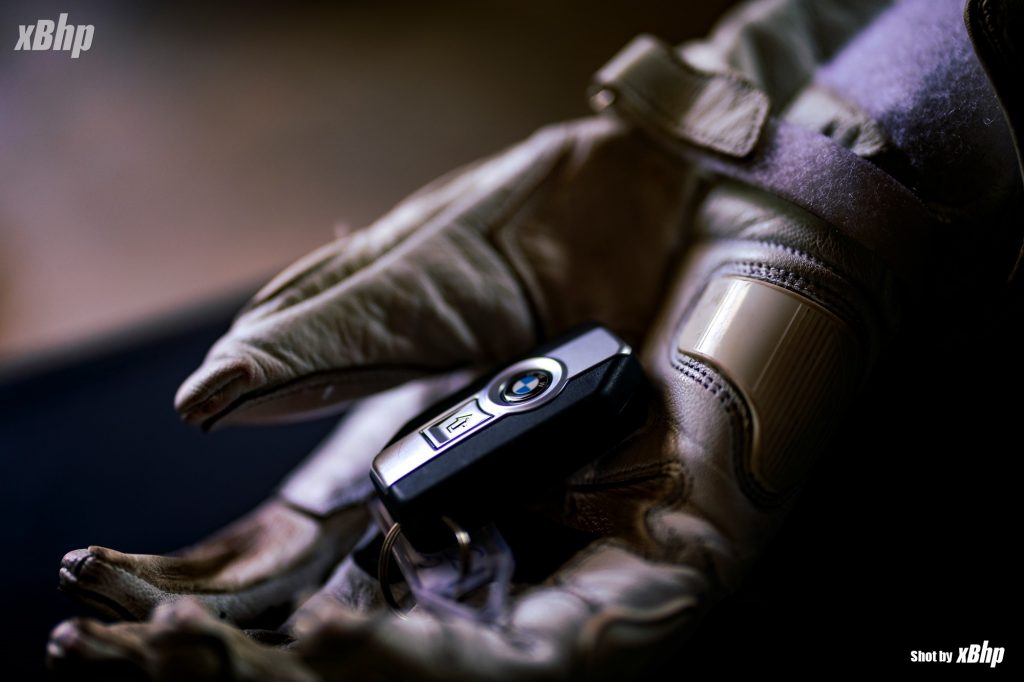
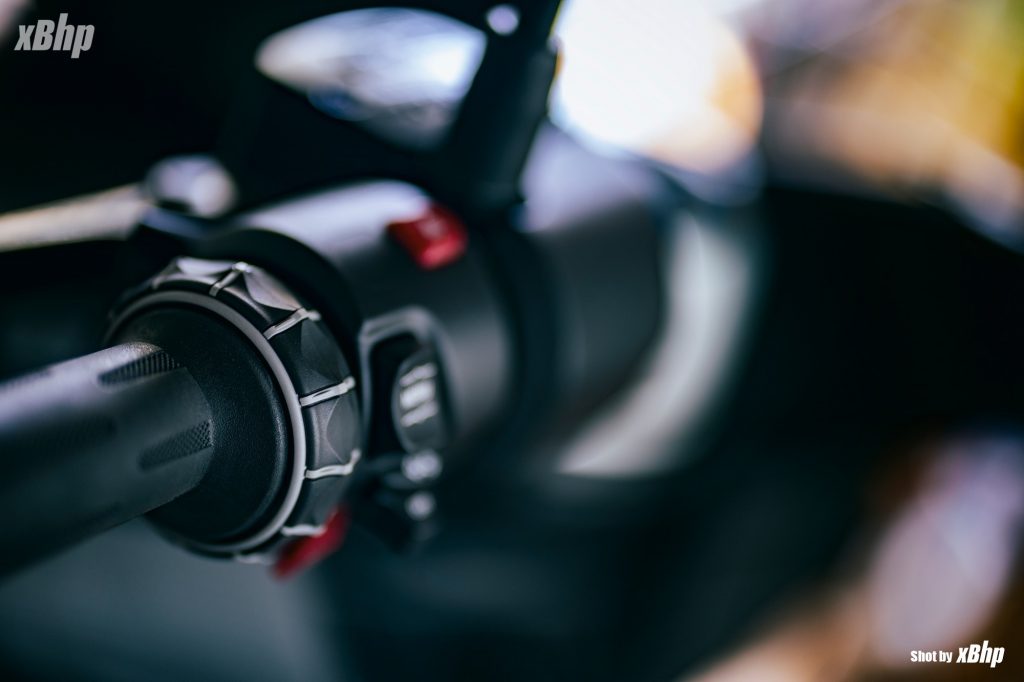
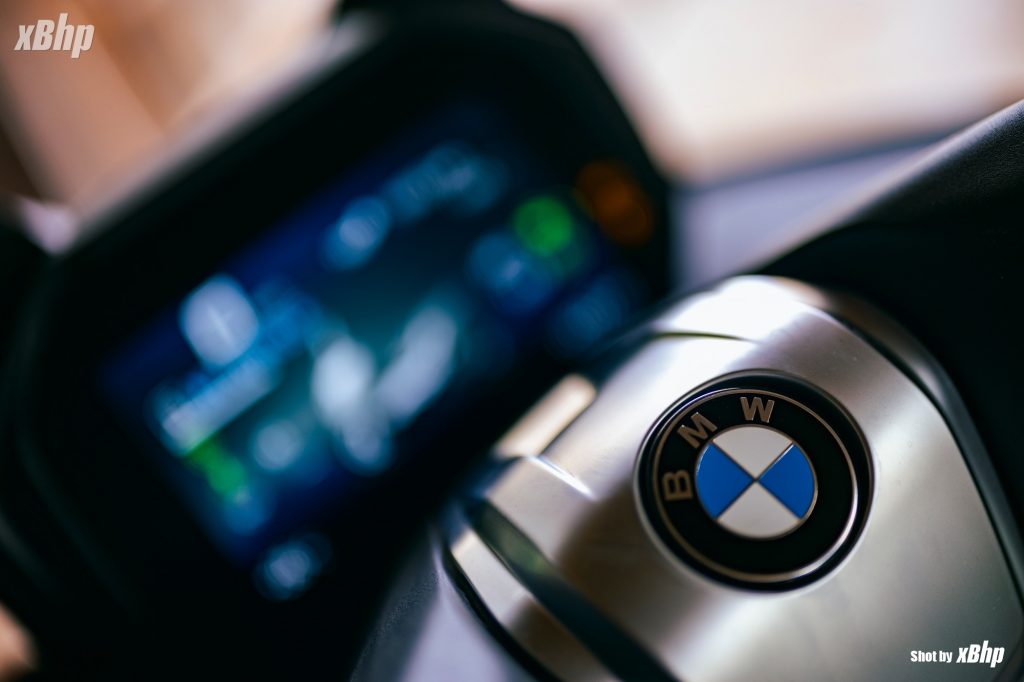
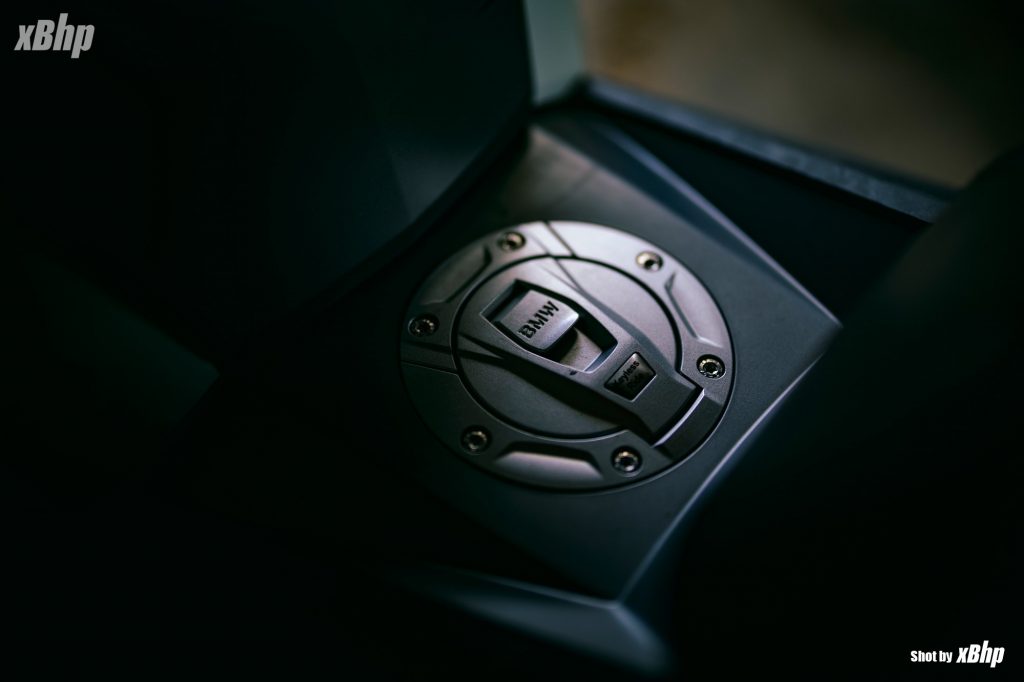
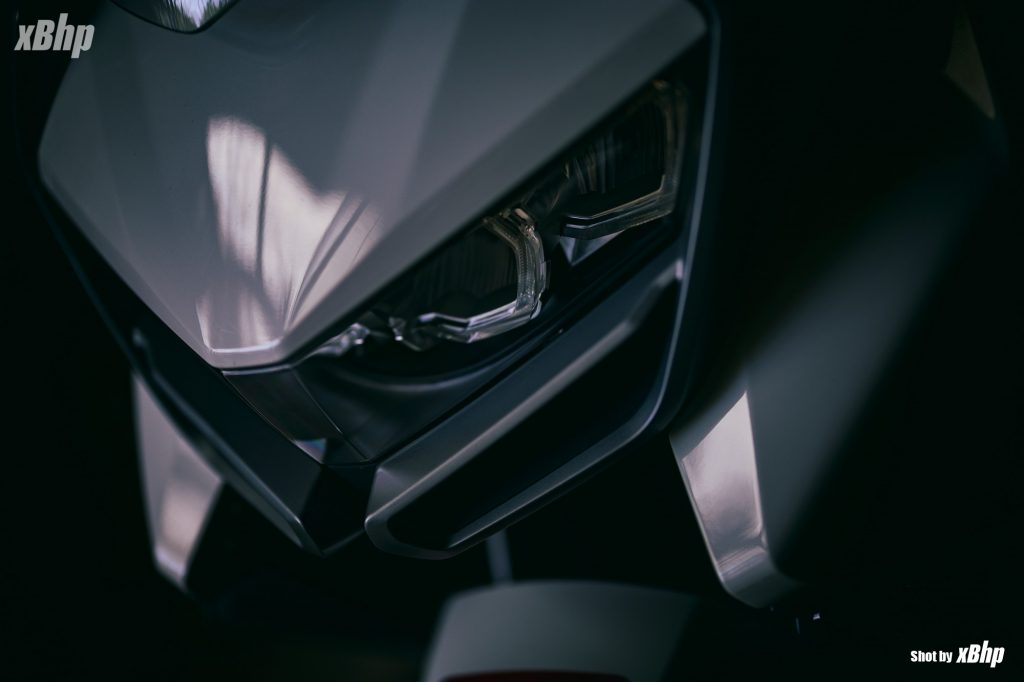
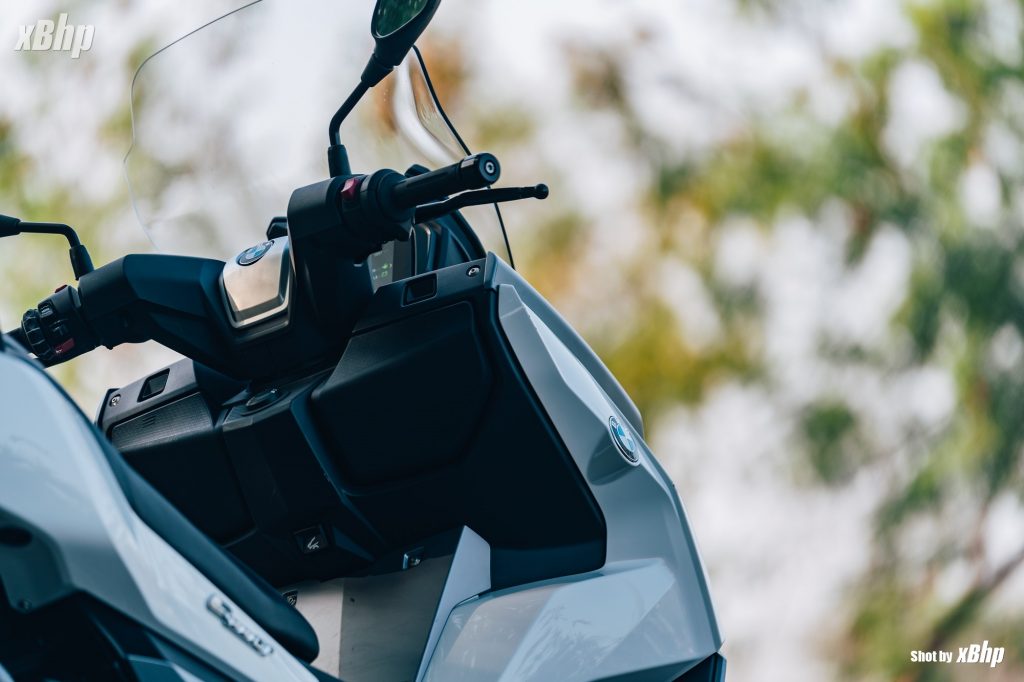
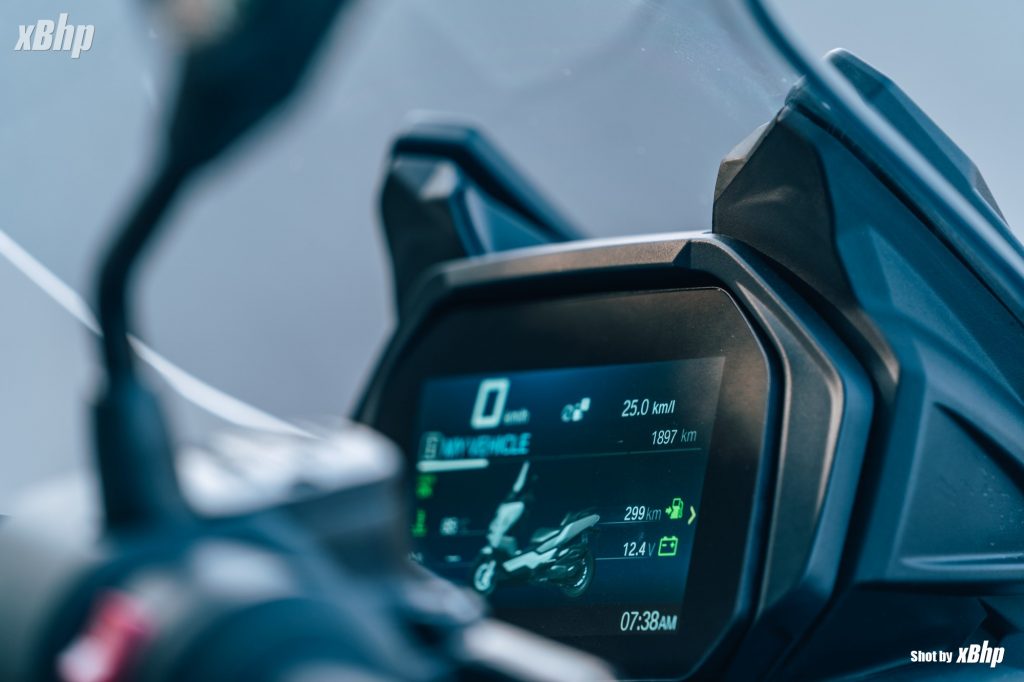
It looks futuristic and to match that, it has a fair few features worth noting. Keyless Ride, LED lighting all around, wonderfully integrated turn signals, and a 6.5” full-colour TFT screen. You can connect your smartphone to it via the BMW Motorrad Connected App post which you get media playback and telephone functions. We generally liked how things are laid out on the console with the only issue being the basic arrow-based navigation.
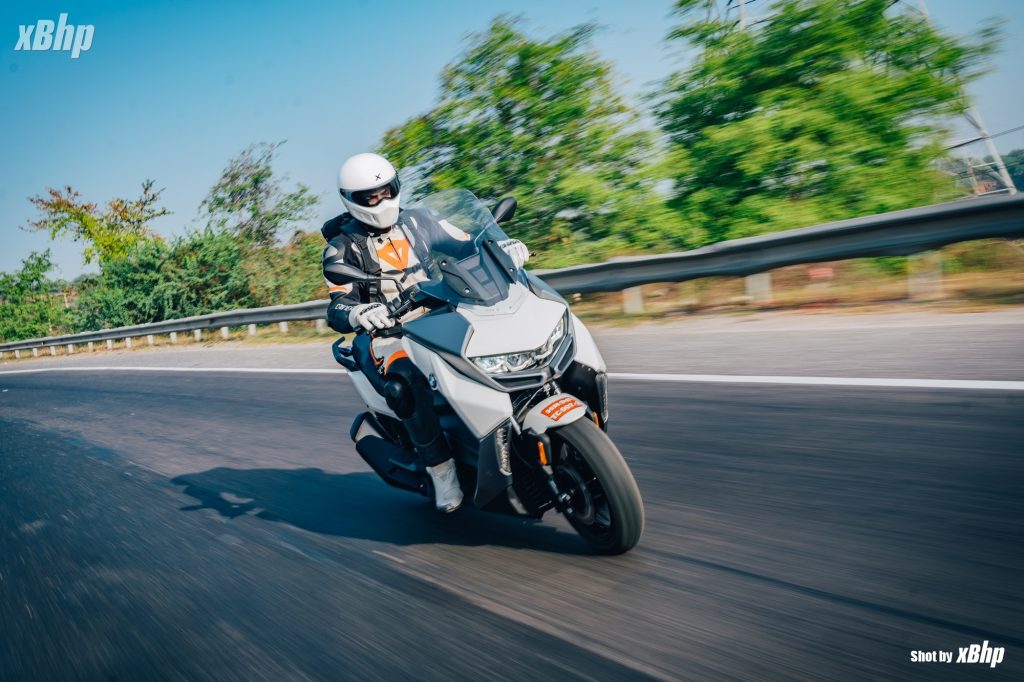
This, though, brings us to some opportunities. The navigation is rather basic. It is done via the means of arrows. Then there’s the weight. The engine is mind-blowing but a little less weight might have made it a tad more sprightly. Lastly, the elephant in the room… literally too… the price.
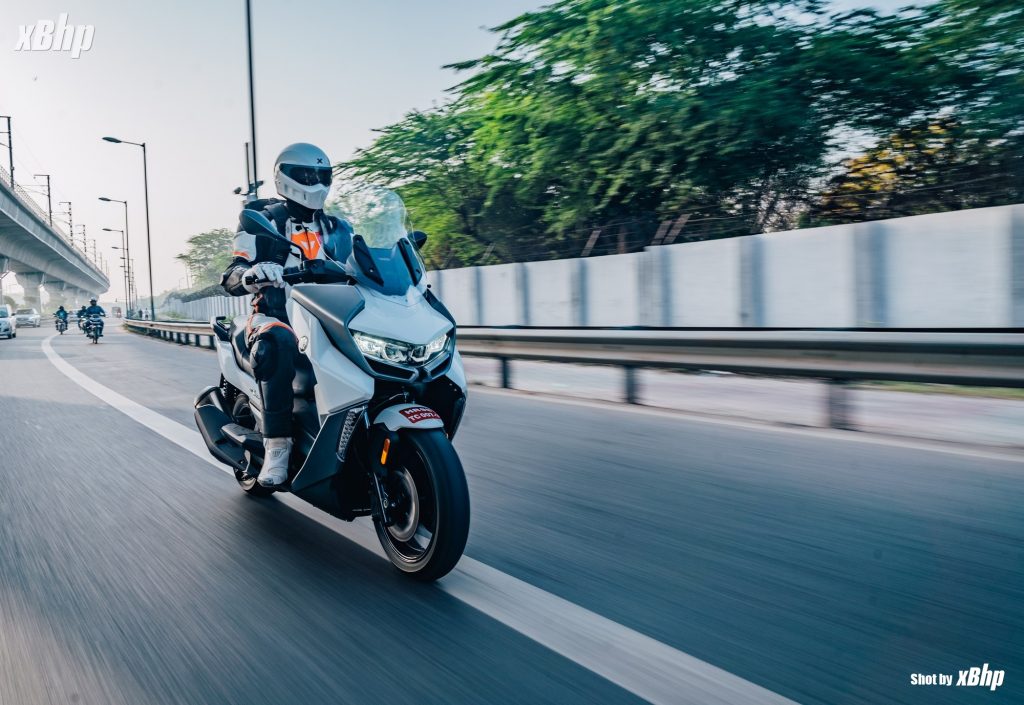
Starting at INR 10.4 lacs ex-showroom, it is nearly ten times more pricey than the price of general scooters in our market. That makes it hard to justify the price for a scooter, but then, as I mentioned earlier, this is no scooter. The BMW C 400 GT is more, much more.
The first Ducati Desmosedici RR in India(?)
 Feb 2022 Sundeep Gajjar
Bikes,Ducati,Motorcycles
Feb 2022 Sundeep Gajjar
Bikes,Ducati,MotorcyclesRome. Colosseum. Wine. Venice. These are the things that probably come to mind when someone utters ‘Italia’. For us, and almost every petrolhead around the world, it is different! Ferrari. Lamborghini. And of course, Ducati. There’s a particular reason behind that. When it comes to vehicles, it is different. Some look to drive volumes, some chase perfection but Italy? No.

For Italians, it is a passion to be pursued. For Italians, it is a deity to be revered. For Italians, it is more art than science. But according to what Da Vinci said, they both go hand in hand. We have ridden our fair share of Italian superbikes and now, xBhp has a Streetfighter V4 too, a perfect example of Borgo Panigale’s zeal! But the one we are going to talk about today is much more special.

This particular specimen has never been ridden. It still had the lamination on the speedo as it is supposed to be on a brand new motorcycle. But guess what, it will never be ridden either. It is meant for a museum. We had goosebumps when the motorcycle was being unloaded, and then, being unwrapped. Too much to take? Let us tell you the name.

Ducati Desmosedici RR. Yes, the Ducati Desmosedici RR. The last time we saw this motorcycle, was in World Ducati Week 2014. It is one of the rarest motorcycles on the planet and perhaps the closest you can get to an actual MotoGP prototype. Even getting to see this motorcycle in flesh, to feel its focus, and to be in its presence; is a feeling that is hard to describe in words.

This motorcycle, as we mentioned, is rare and one that collectors would give an arm for. But what makes it so special? So in 2001, Ducati announced that they were working on something that would spell their comeback to MotoGP. In 2003, the Ducati Desmosedici debuted in MotoGP and its outright speed blew everyone’s minds. Ducati knew that they had a winner on their hands when Loris Capirossi took it to its first victory at the 2003 Catalunya GP.

It was a stellar season considering it was their first one. But in 2004, Ducati made an announcement at the World Ducati Week; and it sent shockwaves through the motorcycling fraternity. Their Desmosedici racer was coming to the road! A street-legal production version called Desmosedici RR. A road-going version of the first Desmosedici to set racetracks on fire- the Desmosedici RR made nearly 200 bhp of power from its 989cc Desmodromic 90° V4.

Imagine that kind of power propelling a motorcycle that weighed 171 kg (dry)! This phenom of a motorcycle was limited to 1,500 units and preference was given to the owners of the Ducati 999R, another homologation special. The specimen we had with us was number 0860 out of 1,500. And it is because of this rarity and that it was meant for a museum, we could not ride it. But we did get to start it up!

The sound it makes… it is heaven, a mechanical symphony like no other; so loud, so brash, so Italian, so… Ducati. Considering it is practically a MotoGP racer with headlights and stuff slapped on to make it road-legal, you might think it is quite advanced. Well, it is. The engine is a masterpiece. This motorcycle made nearly 200 bhp in 2007! But in terms of rider aids, you get a shift light and that is it. Not even traction control.

The Ducati Desmosedici RR or D16RR, as it was called due to its 16-valve system, is a bare motorcycle. It is as raw as it gets and that is why it is quite difficult to ride. At least the fortunate people who have ridden it believe that. But that is what it is all about. You ride it if you are a good rider and that is what we love about it the most.

If you look at the bike, you will see that the exhaust is where the rear seat should have been. No, we are not talking about under-seat exhausts, it is practically sitting on the tail. This is an extremely powerful motorcycle and predictably, the exhaust gets really hot. So the tail section is made of a ceramic-carbon fibre composite to deal with that.

Another peculiar thing about the Desmosedici RR is the 16” rear wheel which takes bespoke Bridgestones! But for the most part, people swapped them out with 17 inchers as the bespoke tyres came at a maddening price! The wheels themselves though are magnesium ones from Marchesini, a first for its time.

The Desmosedici RR was available in two colour options; Rosso GP or the Team Version which had white stripes on its fairing and came with the sponsor decal kit. Being a replica of the Ducati’s MotoGP racer, the GP6, it came with a racing kit that included a race-only exhaust system, a slip-on muffler, a race ECU with tuned fuel and ignition mapping.

It is mind-boggling to get to see a motorcycle like this. Special, rare, and something only Italians would do and yet, compared to the same Italians, it feels so dated. Do not get us wrong, this motorcycle has cemented its place in history but it is from nearly 15 years ago. Our Streetfighter V4 is powered by a similar larger capacity engine. In fact, its Desmosedici Stradale may very well be a successor to the D16RR’s engine.

While the Streetfighter V4 is brimming with technology, the Desmosedici RR is bare and does not even have traction control. In 2007, it took a MotoGP replica to make 200 bhp and the Streetfighter V4, well, simply makes 200 despite being a production motorcycle and a naked one at that! Imagine how much power the MotoGP prototypes of today make. It is all just a reminder of how far we have come. But it is also a reminder of where we started.

Phew! Ducatis are special, that we know for a fact. And this is a special Ducati. It cost forty thousand pounds when it was launched but today, it goes for over eighty thousand! Not that people will be willing to sell it but still, it is good to know that for the most part, it is out of reach in a monetary sense.

But if you just want to witness this very special motorcycle in the flesh though, you can, thanks to Euro Cycles India. It will be a part of a sports activities resort in Lucknow where it will be on display soon. So, you know where to catch one if you want to. In the meantime, we will now try to do our best to get to ride one… or try at least. Anyway, here are some more photos for you to drool at.


Benelli 502c Review: Pesaro’s muscle at full display!
 Feb 2022 Sundeep Gajjar
Benelli,Bikes,Motorcycles
Feb 2022 Sundeep Gajjar
Benelli,Bikes,MotorcyclesOxymorons are fun. Terribly beautiful, woefully well balanced, and yada yada yada. Devilishly Angelic; has a nice ring to it, doesn’t it? Well, this one would go well with our review subject here- the Benelli 502c. And now, that particular oxymoron is not meant to point towards something, in particular, that is prevalent about this motorcycle on the internet. Let us start.

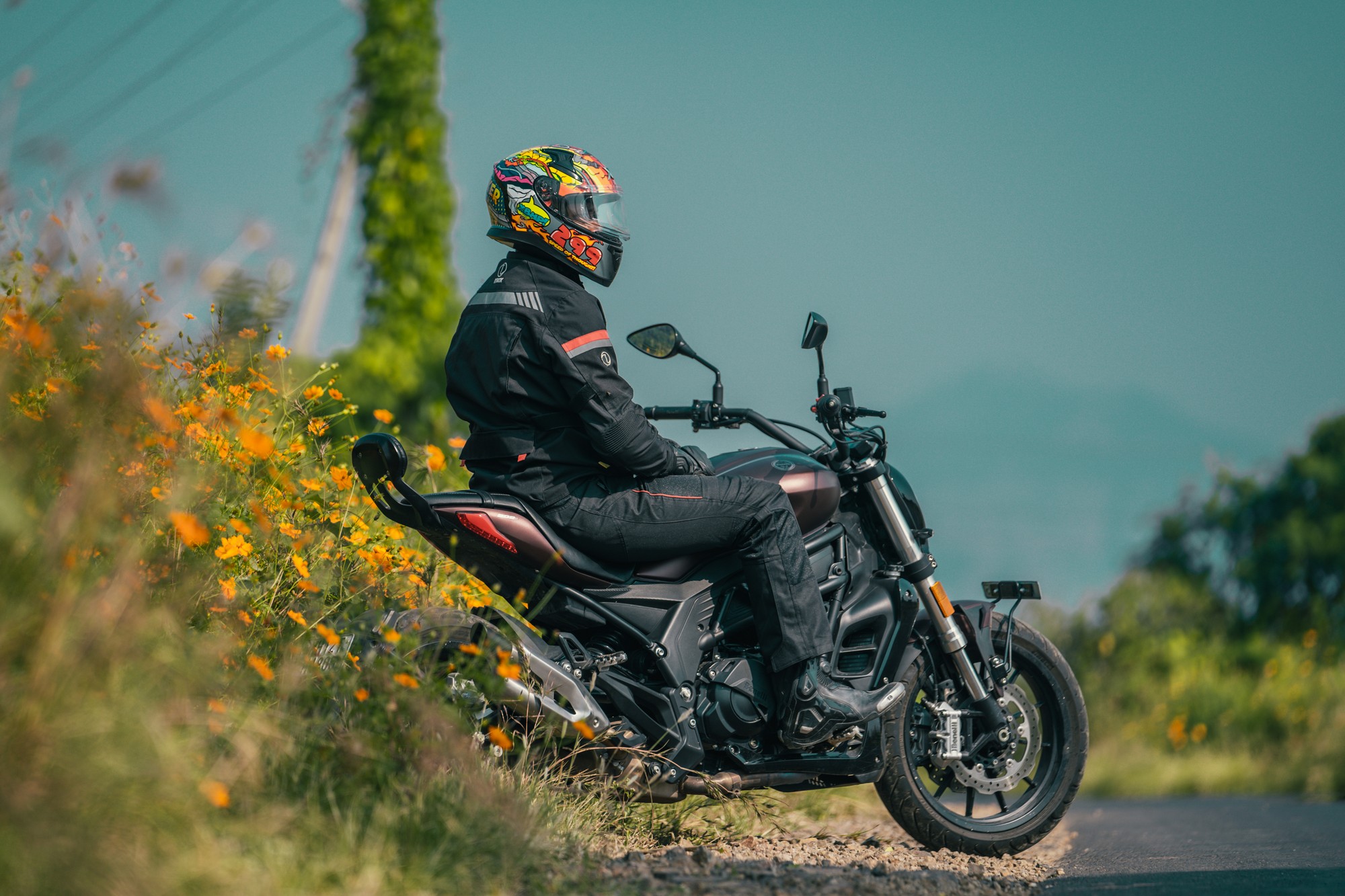
First and foremost and the most obvious; many people have drawn parallels on how it looks like a Diavel. It does in some regard, and it doesn’t in many. All that matters is that it is a Benelli to the core, and fantastically so. Addressing the design first, it is being touted as a cruiser, an Italian cruiser to be more precise and it checks all the boxes in that regard.

It is muscular but not too edgy or boxy. The visual bulk of the motorcycle gels well with its sinuous lines. The exposed trellis frame adds to the brashness that it emanates. And there are just enough sharp edges to make it stand out on the road. And it does that with aplomb. Onlookers have a hard time keeping their eyes off of this one.

There are some things that could have been done better though. The twin-barrel exhaust for instance. It sounds awesome, which is a given considering it is a Benelli. But they lack the visual bulk. It is a twin-barrel, yes, but the barrel itself could have been a bit more fleshy. And that is the general theme for our criticism of this motorcycle’s design.

The rear tyre, again, could have been a bit chunkier. Fatter rubber may have affected the motorcycle’s dynamics but the skinnier rubber has definitely affected the visuals. Next up, the tank, at 21 litres, looks big and brawny like it is supposed to but it also tones down the visual size of the engine area. Finally, the headlight. The DRLs remind you of the killer’s mask in Scream. But more than that, it should have been more proportional to the tank and the chunky USD forks.

The Benelli 502c is not a disproportionate motorcycle at first or even after multiple glances. But when you start to look at it with more intent, that is when all of the things come to the fore. Our criticism is just a smidge more than nitpicking. Overall though, in terms of design and presence, you cannot go wrong with the Benelli 502c.

Now, none of that would matter if the motorcycle does not perform. Thankfully, the Benelli 502c does and, to be honest, pretty darn well. The motorcycle is powered by a 500cc, liquid-cooled, parallel-twin engine. It makes 47.5 PS of power and 46 Nm of torque. The fuel-injected mill transmits the power to the rear wheel via a 6-speed gearbox that comes with a slipper-clutch.

Now the tech is out of the way, let us tell you about the experience. It is a hoot to ride regardless of where you are. In the city, you can easily filter through traffic (mind the wide handlebars and the overall length of the motorcycle). On the highways, you can cruise at fairly decent speeds, and if you find some twisties, man, it is a lot of fun.

Because of the torquey characteristics of the engine, there’s power everywhere in the rev-range. The torque also helps tractability as you can just twist the throttle even if you are in a gear or two higher, and the bike will oblige. In the twisties, you can use engine braking to great effect and so that you don’t mess that up by being overzealous, there’s a slipper clutch. Then, once you have had your share of fun through the corner, just twist the throttle and boom. Onto the next one!

The punchiness of the engine reminds one of the good old 2-strokes. It is not quite that but it is very close. What doesn’t remind you of old machinery is the gearbox which is slick and shifts with reassuring clicks and clunks. Then there’s the sound. Benelli has this department nailed on each of their motorcycles and the 502c is no different. It sounds like a much bigger twin than 500cc and that is one of its strongest draws in terms of the attention it gets on the road.

About the refinement, for the most part, it is decent. There are mild vibrations in the lower rev range and amplified when you are redlining. But this is a motorcycle that does not need to be redlined all the time. Have the engine at around 5,000 to 6000 rpm and it’ll be happy all day long. Also, in the case of the Benelli 502c, we did not mind the minor vibrations. It adds to the character which is something you cannot say about a lot of other motorcycles.

One thing that could have helped the engine, even more, is the weight. 216 kg (kerb) is honestly not too bad for a motorcycle like this. But still, if it was a bit more optimized, it would have been a bit better. 21 litres of fuel capacity is awesome because of the range you get from it. But it also means that a lot of weight sits higher when the tank is full.

That means higher CoG and a little less confidence in the handling. Fuel capacity like this wouldn’t have been a problem if the engine had a bit more heft. But then, it is a middleweight urban cruiser, and demands never cease. Overall, there isn’t much to be desired and the Benelli 502c checks most boxes when it comes to an enjoyable riding experience.
Let us talk about the handling now. We have already mentioned that it feels a tad top-heavy when full of fuel but it is not as big a deterrent as it could have been. That is thanks to the stellar geometry and an overall good setup.

First, the 41mm USD fork is a beauty. A perfect balance between stiffness that aids good and confident turn-ins and plushness to absorb bumps. Job, well done. In terms of suspension, the rear is a tad stiffer than we’d have liked but it is not a deal-breaker by a long shot. The tyres, Pirelli Angel GT, are a godsend and have more than enough grip to support Benelli 502c’s handling mannerisms.
Then there’s braking; pretty good again. Twin 280mm petal discs at the front and a single 240mm petal disc at the rear. The overall bite, progression, and feel are pretty good. And the petal design makes for better heat dissipation.

There’s dual-channel ABS that helps enhance the safety aspect. On the whole, the Benelli 502c is a tight package in terms of handling. Long wheelbase for straight-line stability, well setup suspension for twisties, good braking, and wide handlebars to negate the effects of a longer wheelbase in corners. The handlebar lock though makes U-turns a task and the overall heft and dimensions don’t help matters much either.

In addition to the wider handlebars, the Benelli 502c is well set up ergonomically. The plush seat and the forward set footpegs complement the wide handlebars and make for a very comfortable riding position with enough leverage to muscle the motorcycle around in the twisties. In terms of number, the seat height is 750mm which is nice and low and despite that, the motorcycle has a 170mm ground clearance which means you don’t scrape the speed breakers as often.
Another good thing to point out here is that the footpegs are high enough to avoid getting scraped in the corners; for the lean angles possible on this motorcycle anyway. The pillion seat is a little less comfortable than the rider’s but then again, considering how good the rider’s seat is, the pillion is also better than quite a few motorcycles out there.

Now, features. LED lighting rules the roost all around. The one thing we’d like to point out here is that we love the implementation of lighting on the rear. We mentioned that the DRLs on the front and the overall shape of the headlamp are not… spectacular, to say the least. But on the rear, it’s the opposite. The taillight and the style of the turn signals at the rear look radical and suit the motorcycle well.

There’s a digital console flanked by all the tell-tale lights. We liked the console for its adaptive nature. It has an ambient light sensor based on which it changes colour and makes the console easy to read regardless of the conditions.

It has most of the data you need, including a gear-shift indicator (important to mention this nowadays). It does not overdo things and depending on the kind of person, some may like that, some may not. We like things less complicated and if a motorcycle is fun to ride, who cares about the console!
The Benelli 502c is available in either Wine Red or Dark Black with both schemes having a matte feel to them. INR 5.95 lacs (Wine Red) and INR 6.08 lacs (Dark Black). So, there you go. Everything you need to know including the price.

Our two cents are that the motorcycle justifies its price tag; looks great, has a lot of grunt, handles well, grabs a lot of eyeballs, and is an overall fun affair. The fact that it looks like a certain motorcycle? Depends on if that matters to you or not. In our opinion, it should not because the 502c is a Benelli, and an extremely fun one at that.
2021 Bajaj Dominar 400: The ‘Tour’minator
 Jan 2022 Sundeep Gajjar
Bajaj,Bikes,Motorcycles
Jan 2022 Sundeep Gajjar
Bajaj,Bikes,MotorcyclesThe Bajaj Dominar 400 is a fantastic motorcycle. I know that because I have ridden it extensively. But for me, it is not because of its wonderful engine, natural handling or comfortable ergonomics; not even because of the fact that it carved its own niche and its own classification.

To me, what matters the most is that despite being a stellar motorcycle the first time around, Bajaj went on to improve it. And they have done it again. Acceptance of the fact that there is always room for improvement is important for evolution. And evolution is the key to reaching as close to perfection as possible.

The 2021 Bajaj Dominar is here as a result of evolution. It is so good that I came up with a name for it; Tourminator, because Arnie is one of my idols and just like The Terminator decimates his enemies, the Dominar decimates distances. Again, I can say that with so much confidence because I was one of the few riders who went on one of the six Odysseys, done to test the mettle of the Dominar 400 around the world.

If you want to watch my video of the 2021 Dominar 400, you can do so below. If you’re a good’ol reader, carry on!
The Odyssey that I was a part of was called the xBhp Dominar Great Asian Odyssey. It started from New Delhi in late 2019 and finished after 90 days, 15,000 km, and 11 countries on the 20th of January, 2020. That was just before Coronavirus changed the world as we know it.

Starting from India, we covered Nepal, Bhutan, Myanmar, Thailand, Laos, Vietnam, Cambodia, Malaysia and finally to the tip of Singapore. From there, we went to Sri Lanka and marked the end of this Odyssey is Talaimannar which, by sea, is just 36 km from Dhanushkodi in India.

I have ridden my fair share of big adventure motorcycles around the world. I have even ridden one of those on a racetrack. But for a long time, I wanted to do the ASEAN road; Delhi to Singapore. But more importantly, I wanted to do it on an India-made motorcycle.
To that end, I was looking for something that was peppy, flickable, and something that could endure all kinds of riding. For the most part, any motorcycle can do long distances but I was looking for something that was not too heavy but not devoid of power.

Enter the Bajaj Dominar 400. The 2019 Bajaj Dominar 400 to be precise. The 2019 revision was more powerful and boasted of many improvements over its predecessors making it an even more potent tool. Around 40 bhp of power, 35 Nm of torque, the right aesthetics, the right ergonomics, and the right dynamics.
It was a huge step for me and after a very long time, I shifted to a sub-100 bhp machine. Will it provide the same touring experience? Something inside me replied with an emphatic, “Yes!” And so began the preparations. I had to get it touring-ready. The hunt for aftermarket accessories but in the end, I was happy with how it turned out. It was now ready for the gruelling 15,000 km staring me right in the face. And we all know how that panned out.

Fast forward to today and the 2021 Bajaj Dominar 400 comes with factory-fitted touring accessories. One look at it and all the memories from the xBhp Dominar Great Asian Odyssey came flooding back. At the back of my mind, I was also thinking, “Wow, they took some of the accessories from our Odyssey Dominar and made them stock; Things are getting serious.”

Now, we need to talk about the 2021 Bajaj Dominar 400. Mechanically, the motorcycle remains the same for the most part and that’s a good thing because it is a phenomenal machine and very well set up. You can read our review of the 2019 Bajaj Dominar 400 here. The add-ons are the accessories that I’ll talk about while taking you through some memories from the xBhp Dominar Great Asian Odyssey so that you have a better idea of how the particular accessory comes in handy.

First off, the windscreen. At speed, there’s a massive difference between having the wind bring its full-send on your face and having a wind-protection bubble. That is where the windscreen comes on. Our odyssey Dominar had what one could call a flyscreen at best.


Heading from Mae Sariang to Chiang Mai in Thailand, we had open roads & triple-digit speeds; the windblast can be bothersome and that is where the windscreen comes in.
So a taller windscreen was a no-brainer. It kept us protected from cold, dust, rain and, of course, the windblast. There were many instances where we were cruising at over 100 kays an hour on endless highways for hours; in those instances, we could not thank the windscreen more. It also gives the motorcycle a purposeful look. The one on the new Dominar 400 is thoughtfully designed and looks at home on the motorcycle.

Next up, Handguard. It is more like an extension of the windscreen but for your hands. There are a few things handguards can do for you. First and foremost, it protects from accidental tugs on the brake or the gear lever. A slight brush with any vehicle on the road or a protruding object off the road can press the lever. And I do not need to tell you what an intentional engagement of the brake of the clutch can do.


The photo is from Paro in Bhutan, it was much colder than the already cold picture this photo paints. Handguards can be the difference between numb and relatively comfortable hands.
Slightly less serious but still important on longer journeys, it protects your hands from the direct wind which is a godsend in colder conditions. We received firsthand experience of that functionality while riding in Bhutan in freezing temperatures. Lastly, we all love our riding gear and gloves do not look good with a million dead bugs. We encountered a lot of those in lush areas. Every sunset would have been a nightmare for the gloves without the handguards.

The ones we had were good but the ones on the new Bajaj Dominar 400 look much, much better. That is generally the difference between aftermarket and factory accessories. They are much better executed and look more natural on the motorcycle. The new Dominar 400’s almost look like winglets which I really like.

The next accessory I want to talk about is the engine bash plate. It is paramount if you plan to do any sort of adventure riding. If not, it can also come in handy when the roads are really bad. We had our fair share of those during the xBhp Dominar Great Asian Odyssey. What we had on motorcycles for the Odyssey was a basic aluminium plate under the stock plastic cowl.

Golden Rock, Myanmar to Mae Sot, Thailand, brilliantly bad roads and we probably wouldn’t have made it without an engine bash plate.
Crossing over to Thailand from Myanmar, we encountered perhaps the worst road of the entire 15,000 km. Fine dust on what one calls a road if being conservative and riddled with huge potholes; it was so bad that the suspension of the motorcycle bottomed out a few times.

If not for the bash plate, the stones on the road would have surely damaged the exhaust pipes or the sump. The one on the new Dominar 400 looks much much better than what our Odyssey Dominar had. It is a combination of glass-filled nylon and steel. Looks pretty, looks sturdy, and looks ready for an adventure.
Another important accessory is the USB charging port. Not just because of today’s record-everything-age but also because phones are used for navigation, navigation uses a lot of battery, and wilderness has no electricity. Since I was making vlogs for a change, I was also using the phone for controlling the camera.

It may sound like a simple add-on but the slightest of mess-ups can drain a bike’s battery or even cause issues with the electrical systems. On long journeys, one can’t afford that. But since it was imperative to have one, we got our own system installed. But it was nowhere near as pretty or sophisticated as the 2021 Bajaj Dominar’s stock system.

The leg guard is another important accessory. On rides as long as 15,000 km, one is bound to experience a fall, big or small, at some point. It is not a given but the likelihood is high. One such incident is when my co-rider had a very mild crash.

It was nearly at a standstill but considering the kind of luggage we were carrying, it could have caused some damage. Thanks to the leg guard, it did not. Now the ones on the new Dominar 400 take that a notch further and protect the radiator as well.

Moving on, a navigation stay is one of the most important things that your motorcycle must-have. You need to mount your phone not only for navigation but also to make quick calls to connect with your co-riders. For the Odyssey, we had a ram bar mounting solution. It was not ideal because it blocked the speedo and had wind-buffeting issues as well.

The system on the 2021 Bajaj Dominar is much cleaner. The same ram mount is very well mounted. Its placement ensures that it does not block the speedo and also that it remains well protected from the wind and therefore buffeting.

Then there’s luggage. Our Odyssey Dominar 400 was decked with a top case and side cases over custom mounts. We also had steel tubes around the boxes to protect the box in the case of a fall. Additionally, they further secured the boxes as they could not be taken out. So we kept all our stuff in a plastic bag and kept that in the lockable boxes. Needless to say, it also gave the motorcycles a more purposeful look.

However, it was cumbersome and predictably, heavy as well. Not a lot of you may want to go that way and be happy with soft side panniers. That is where the new Dominar 400’s carrier cum back stopper and the optional saddle bag stay come into play. The rear carrier also has a back stopper which looks neat and might aid the pillion over long distances.

Thinking that a whole lot of time was spent in customizing our Dominars for what you can get right from the factory with the 2021 Dominar 400 is mind-boggling. The Dominar 400 was already a potent motorcycle and now it has become an even more potent touring weapon. And the 2021 Dominar 400 is a testament to Bajaj taking firm steps to ensure that the Dominar 400 becomes an even better touring machine than it already was.

Another good decision on Bajaj’s part, and good news for existing Dominar 400 customers, is that all of these accessories (except the USB port) can be retrofitted on older Dominars as well. These are very valuable add-ons if one plans to use the Dominar 400 for touring and if you do so, I am quite sure you won’t be disappointed. There’s still more that can be done because as I said, evolution is a never-ending process. But these are big steps in the right direction.

2021 Indian Roadmaster Dark Horse Review: Master of all trades!
 Dec 2021 Sundeep Gajjar
Bikes,Indian Motorcycle,Motorcycles
Dec 2021 Sundeep Gajjar
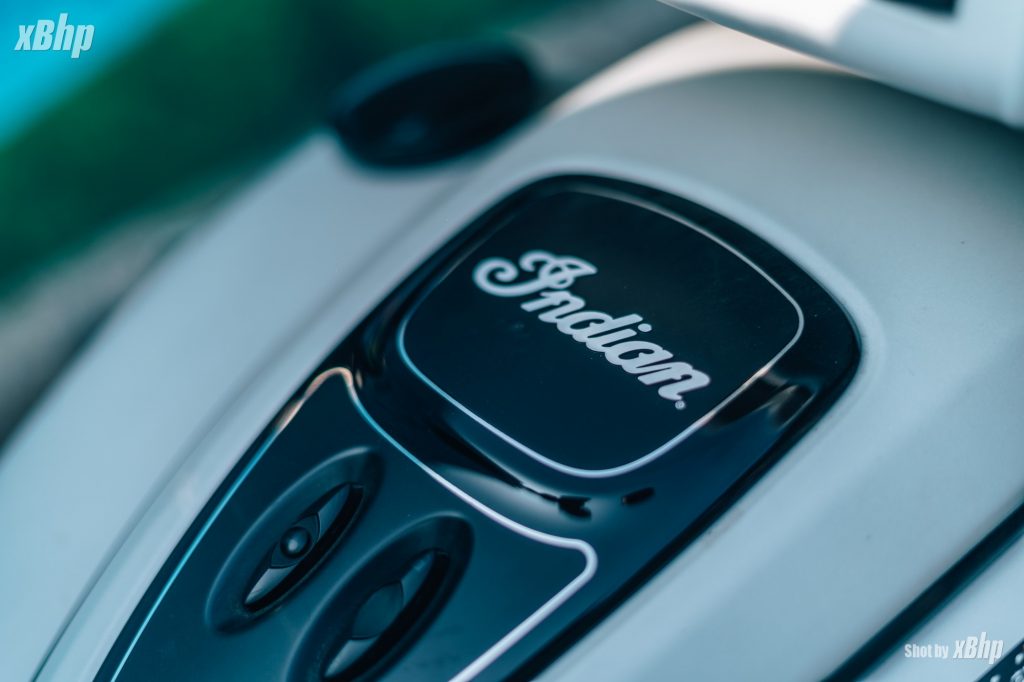
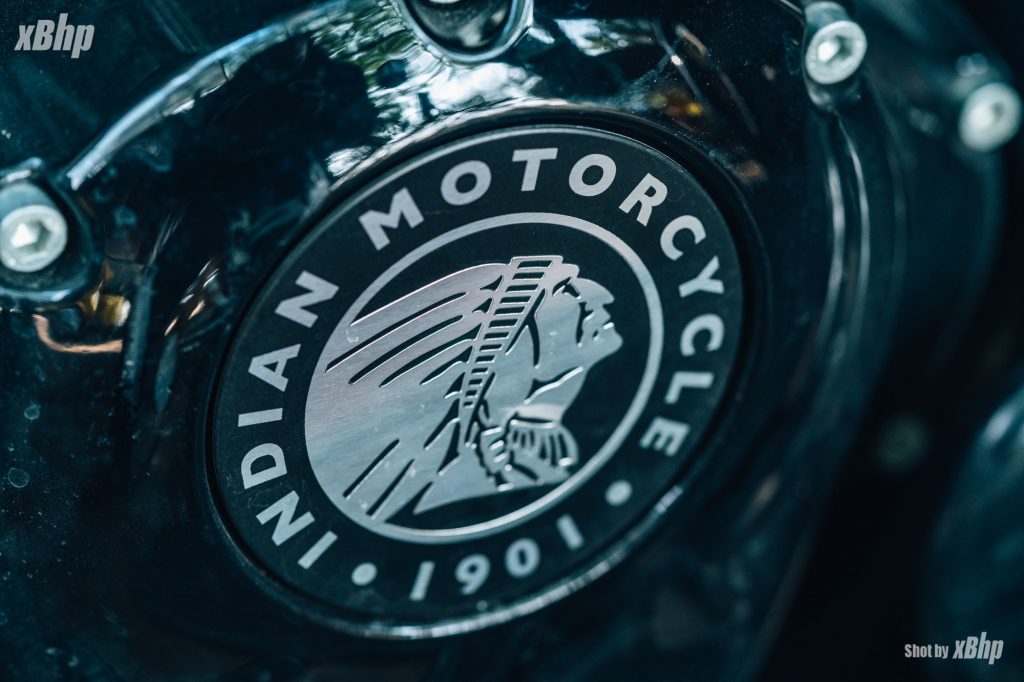
Bikes,Indian Motorcycle,MotorcyclesWhat if someone suffixed or prefixed everything they say to you with ‘Your Majesty’ or ‘Your Highness’? That’d be something. It can happen if you belong to a royal family, dress the part and drive a Rolls-Royce. It might also happen if you’re driving the motorcycle that this review is about. Put your hands together to welcome perhaps the most regal machine on two wheels- the Indian Roadmaster Dark Horse.

Why such a grand introduction? Because the motorcycle is just as grand, maybe even more. I have ridden quite a few steeds from Indian Motorcycle. In fact, the xBhp garage was home to a beautiful Chief Vintage and currently houses an Indian FTR 1200. The latter is completely different but other than that, most models have one thing in common- the feeling of charioteering your own royal chariot.

The Roadmaster though is something else entirely. I rode one in the US and then one in Australia. Both the times I looked at it, I wondered how it could move… at all. Then I rode it, came back, looked at it again, and wondered how it moves as it does. It was sofa-big and living-room-loaded. Yet, it moved like a motorcycle much lighter. I was in awe of it. And just now, I got to ride right here in India. 2021 Indian Roadmaster Dark Horse.

As the test bike arrived in the garage, it was like watching a King make his way into his palace. I am not too big on cruisers. They are amazing machines and a whole slew of people swear by them. Me personally, never really got around to being crazy about them. This one though, had me excited right from the get-go. An Indian Roadmaster Dark Horse… in white? Beat that!

The Dark Horse line from Indian Motorcycle is a darker take on all their motorcycles. Lesser chrome, more black, a meaner stance and sinister looks- that is the best way to define these motorcycles. But Dark Horse is not a colour but a theme. It is more about darker nuances that are free from the colour of the motorcycle.

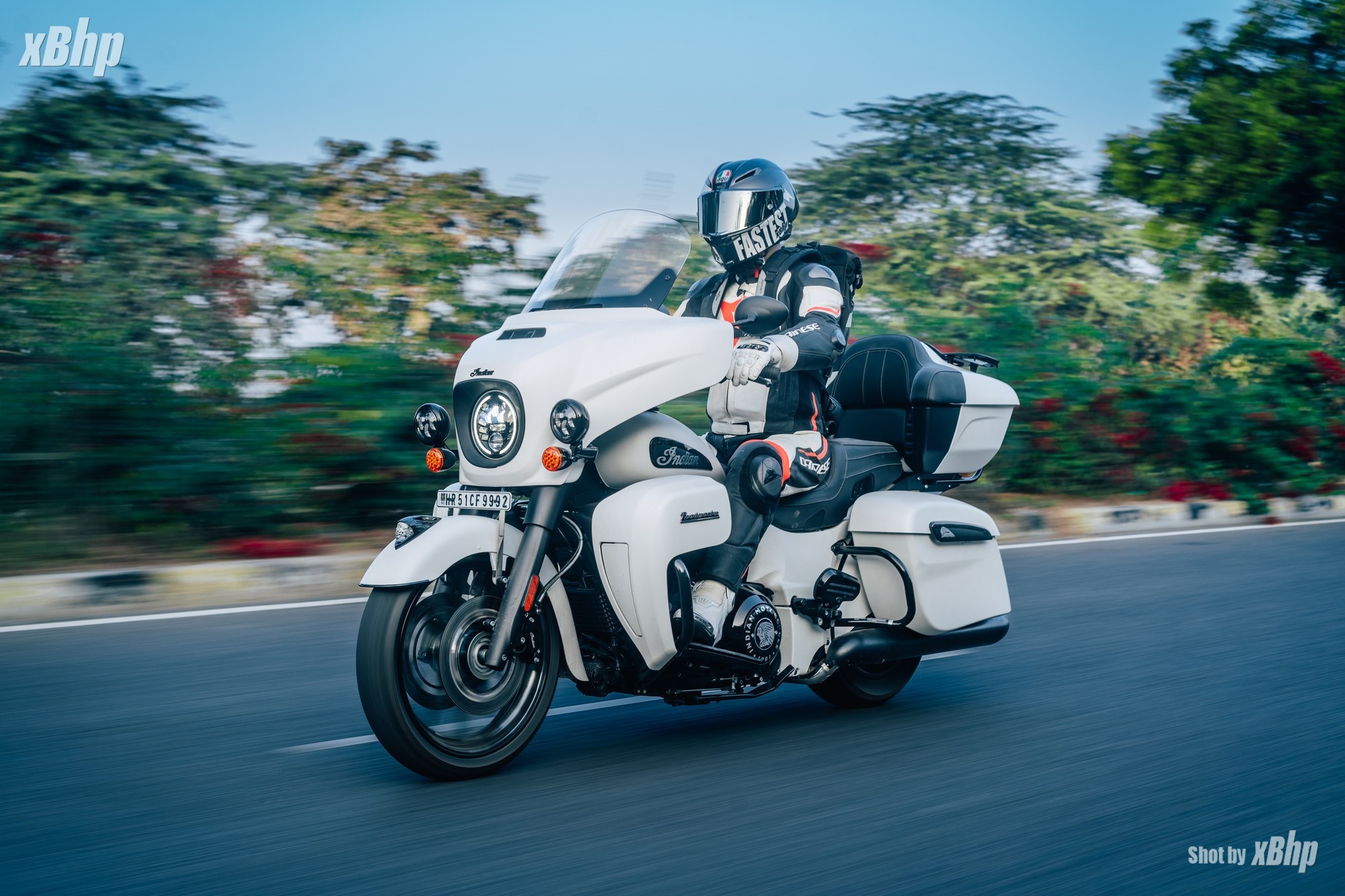
The first thing that I’d like to say here is that the Indian Roadmaster Dark Horse is perhaps the only cruiser that can look this majestic in white. Wherever we went, people were awestruck. Its size and overall design alone could do the trick but the beautiful white paint took it to a whole other level.

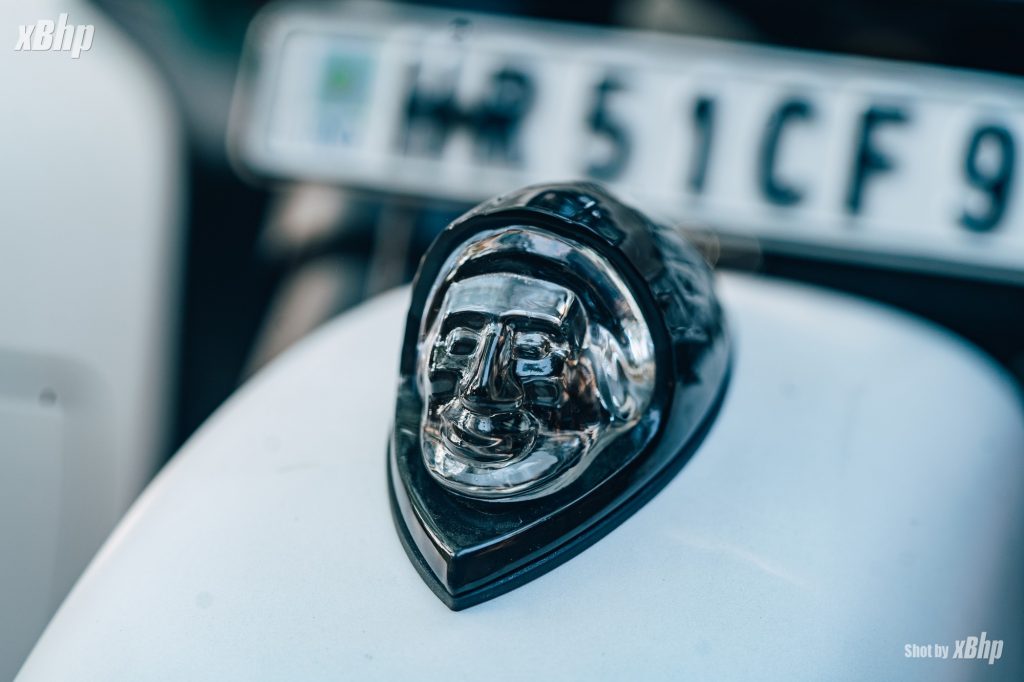
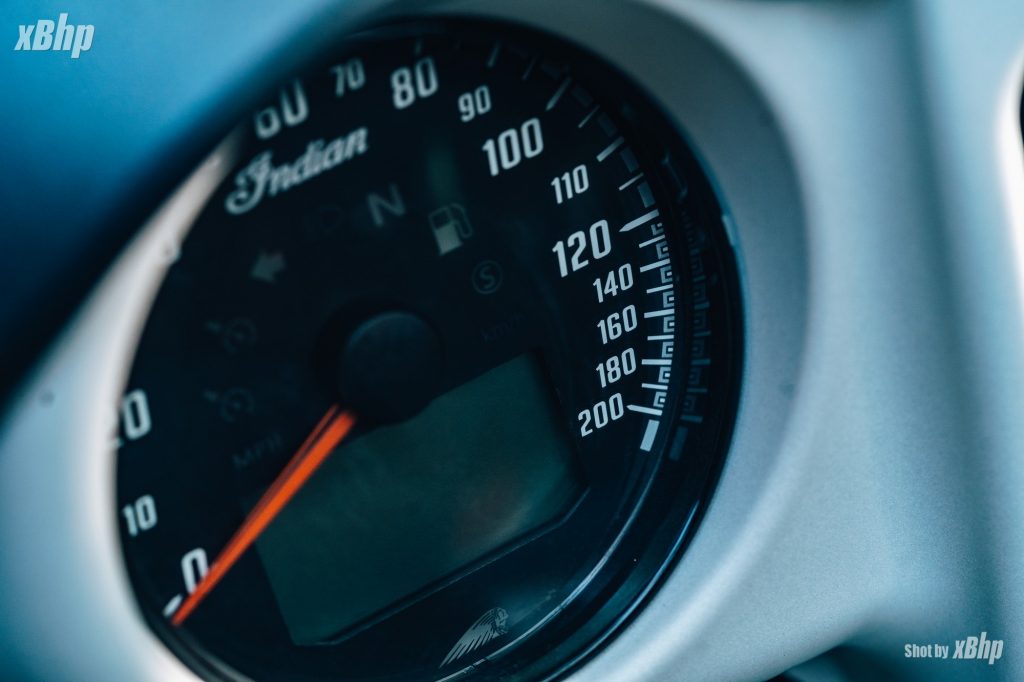
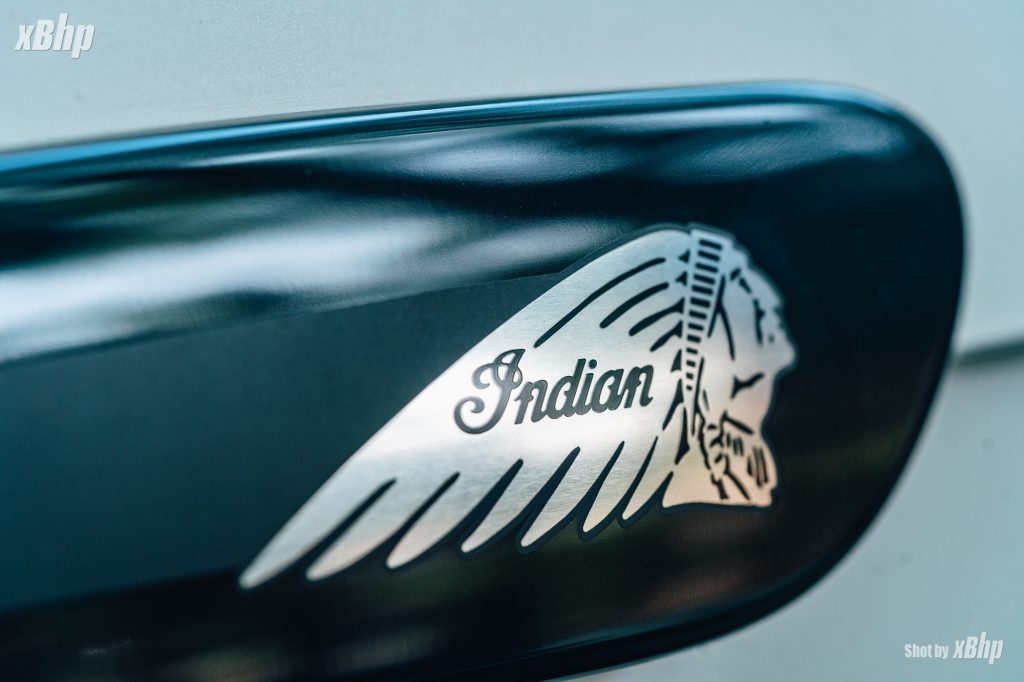
Indian Motorcycle likes to emphasize its classic American roots with all its motorcycles. Old-school dials, long and low profile, round headlamps, flaring bodywork, sweeping fenders and drawn out exhaust pipes. Most of the things harken back to the classic American cruiser design theme. The Roadmaster is no different. But I absolutely love what the Dark Horse model brings to the table.

The only thing that could match the regality of an Indian Roadmaster Dark Horse; our Mahindra Thar and fittingly, in white!

Everything that is chrome on the standard model is blacked out on the Dark Horse. Exhaust, suspension, engine, fender accents, headlight surrounds etc.- everything is black. Then there are the wheels that are made with 10-contrast cut spokes. And you just have to love the fins on the radiator!

But hey, we got a chance to take some really good photos and you can see them all so let us skip to the good part- the gizmo-wizardry and, of course, the performance. The Indian Roadmaster Dark Horse features keyless ignition. So, the fob went in the bag and I was saddled up and ready to go.

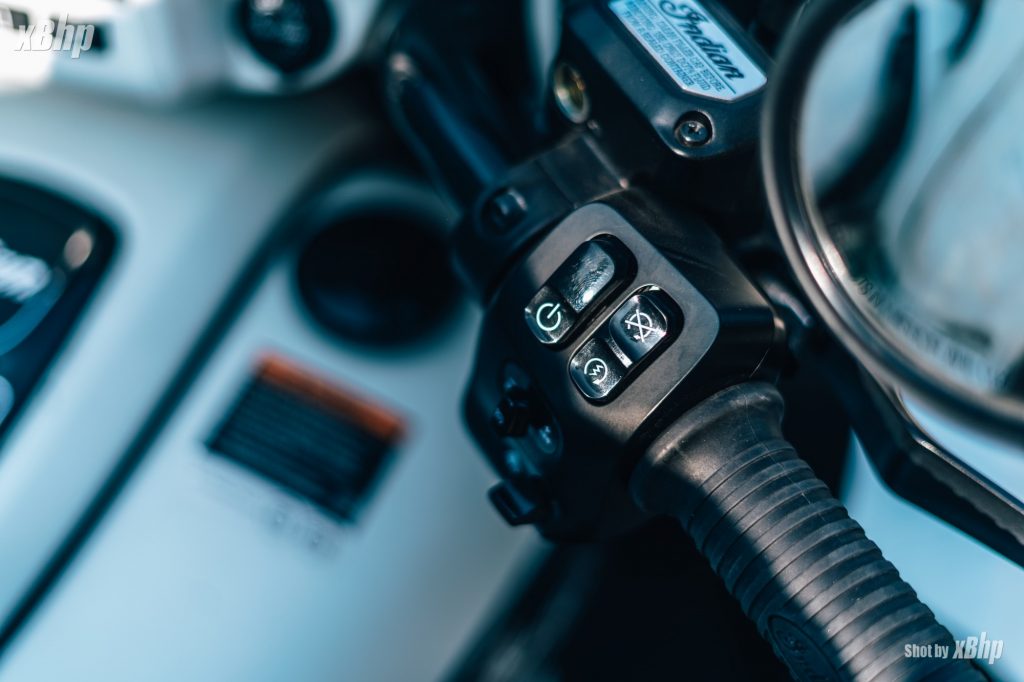
The first thing one realizes aboard a motorcycle like this is how beautifully Indian Motorcycle has integrated the modern touches in the classic style. The round gauges I talked about are separated by a brilliant 7” Ride Command screen. It has navigation, Apple CarPlay integration, and a readout for so much stuff that you leave it alone till you need it.

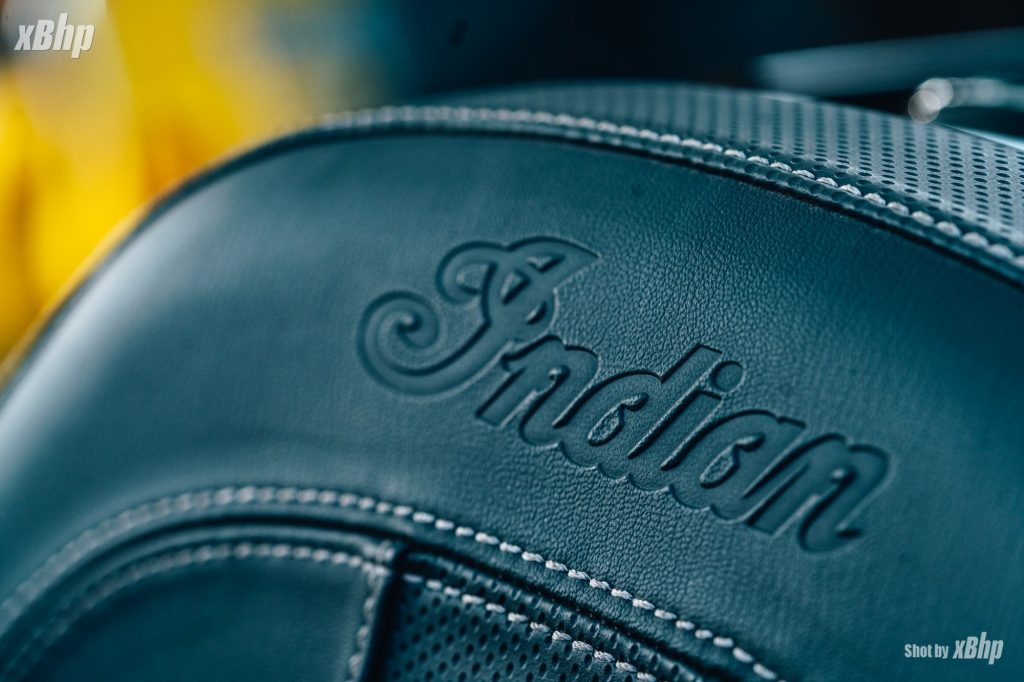
The handlebars are tall and wide and the seat is absolute magic. The seat is a ClimaCommand Rogue variant that offers heating and cooling. Combined with the heated grips, it goes a long way in adding some warmth to this cold world. Both of these functions can be adjusted according to your preference with the Ride Command screen.

As you can see, the Indian Roadmaster Dark Horse is a tourer and it shows with all the luggage and the fairing and the windscreen and the sofa-esque seats. In terms of cargo space, you have 137 litres, with remote-locking hard saddlebags and trunk. There’s also cruise control which I didn’t use much but it is a nifty feature to have for long hauls.

Push the starter button and the massive engine comes to life with a rumble. From the sound it makes at idle, you can tell that you are in for a show. Engaging the first gear comes with a decisive clank and off you go. Among nearly everything that left me impressed with the Roadmaster Dark Horse, its engine is right there at the top. The Thunderstroke 116 is a gem of an engine.

It displaces 1,890cc and makes 171 Nm of peak torque that arrives at 3,000 rpm. But a sizable amount of it comes right from the moment you let go of the clutch. That is what makes the Roadmaster Dark Horse one of the most affable big bikes out there. It is so easy to get going and then keep going.
I do not use a lot of oxymorons but this engine demands one. It is so brutally refined that at a point, you forget that it’s a massive Vee. The gearbox presents a similar story; it is a breeze to go through. Another thing that I loved was the clutch and the rear-cylinder deactivation. The latter deactivates the rear cylinder when the going isn’t swift. This feature along with the soft-action clutch make this motorcycle much, much easier to deal with in stop-and-go traffic.

This motorcycle though is highway bird and as soon as you hit one, it liberates you from all your preconceptions about motorcycles. Big and bulky, lithe and agile, this many horses, that many torques- nothing matters as you glide along the tarmac with rock-solid stability even at high speeds.

While the engine does its job in propelling the motorcycle, the long wheelbase, long rake, and well-placed heft of the motorcycle keep it steady as a rock. The Roadmaster Dark Horse is big but most of its mass sits low. Add to that the seat height which is 673mm, and it means the rider sits pretty low as well contributing to an even steadier ride.
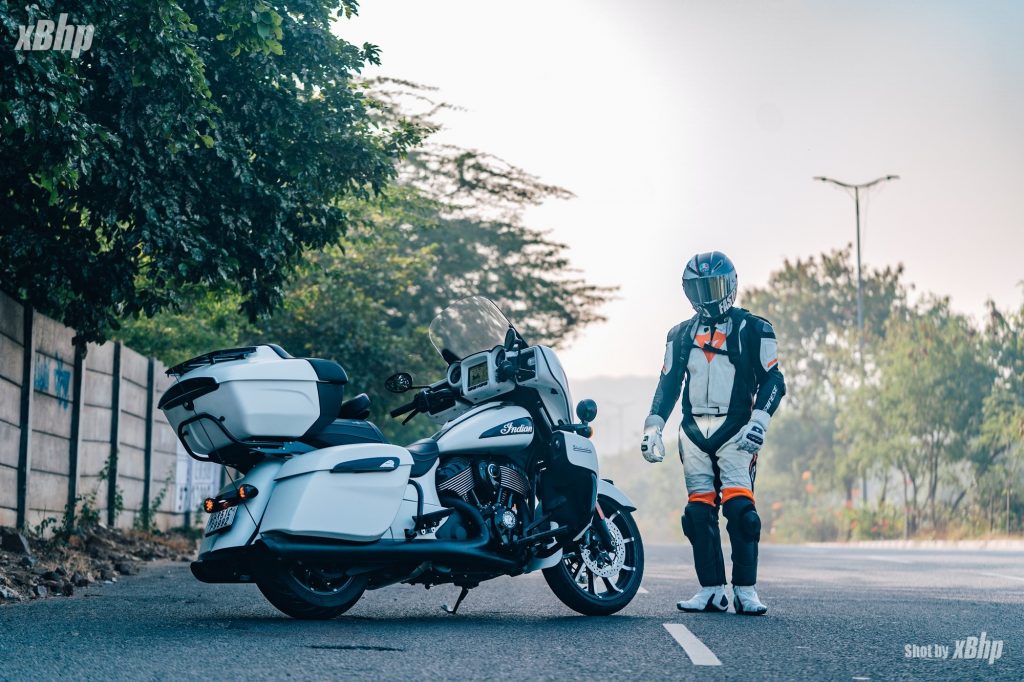
The suspension of the Roadmaster Dark Horse is also a thing of beauty. Along with the plush seat, it makes the Roadmaster Dark Horse one of the most comfortable motorcycles out there. Heck, it might very well be the best. But the motorcycle does not feel overly soggy either. You still have plenty of feel from the road. And yeah, this one can handle itself in the bends like it’s no one’s business.

This is one of the most surprising aspects of the Roadmaster Dark Horse. Despite its length and heft and geometry and soft suspension, it feels firmly planted in the corners. It is no knee-scraper but antics like those are better left for parking lots and slightly lesser motorcycles.

The only limiting factor here is the cornering clearance. As soon as you try to go too hard, something will scrape the tarmac. And to a Roadmaster Dark Horse, that is the absolute last thing you want to do. But then again, when you are astride a royal ride such as this, why’d you want to go hard?

Another thing that I’d like to point out regarding the suspension is that while it is pretty good in dealing with the bendies one-up, it may struggle two-up. I did not test it out myself but I can tell that spirited cornering two up may just push the suspension a bit and half more than what you should be asking of it.
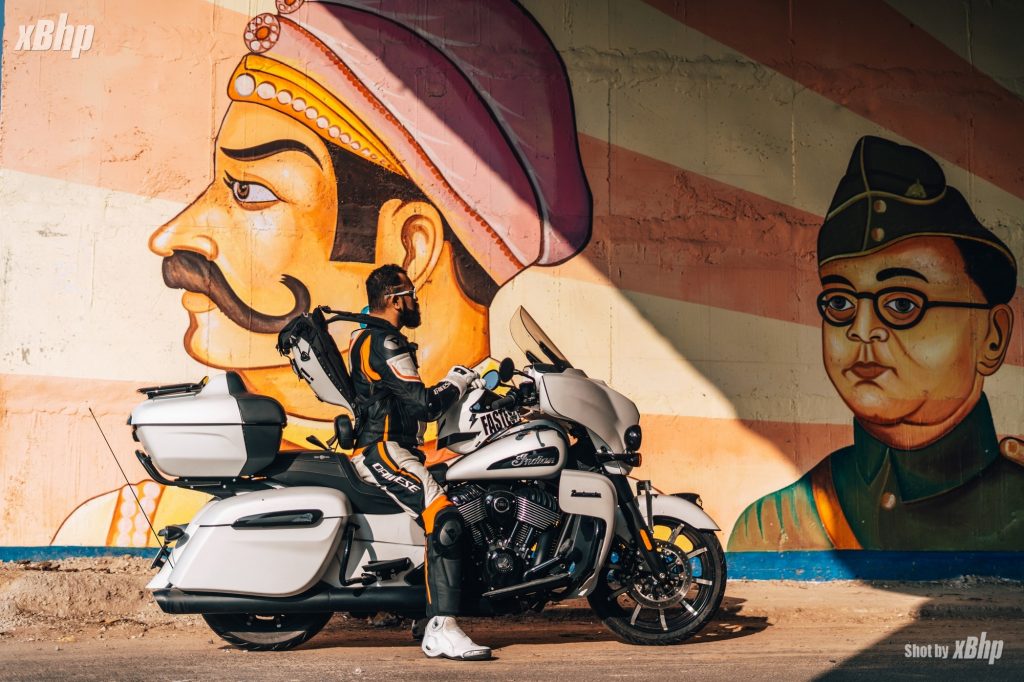
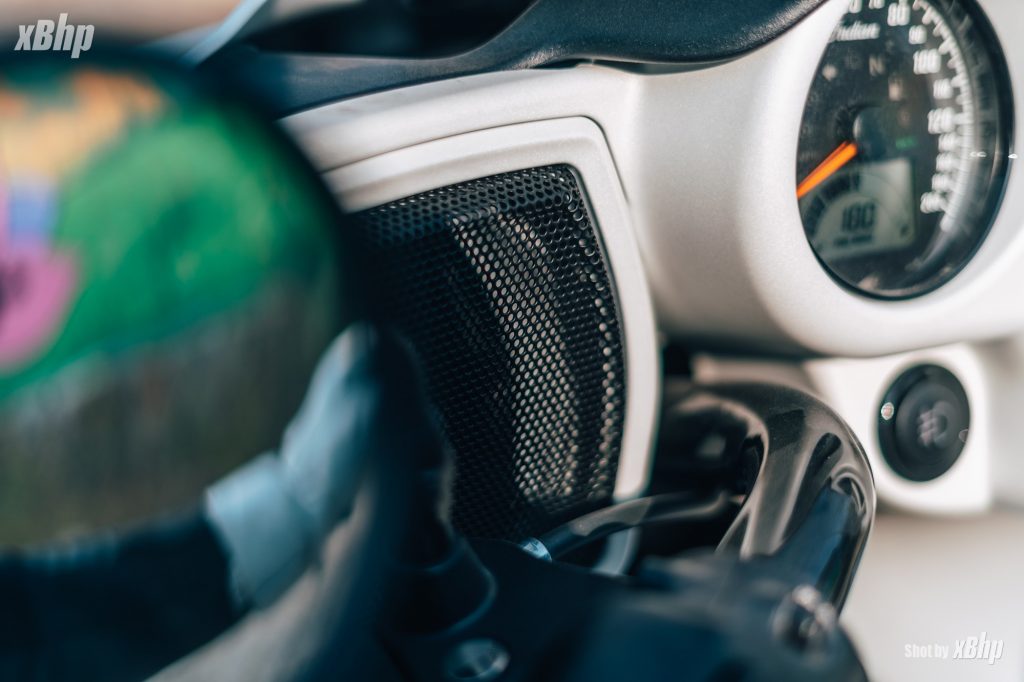
We have talked about nearly everything there is to talk about and yet, the crown jewel of this regal vehicle remains. It comes with a 200-watt audio system! What’s the point of one on a motorcycle? Give it a shot and you’ll know.
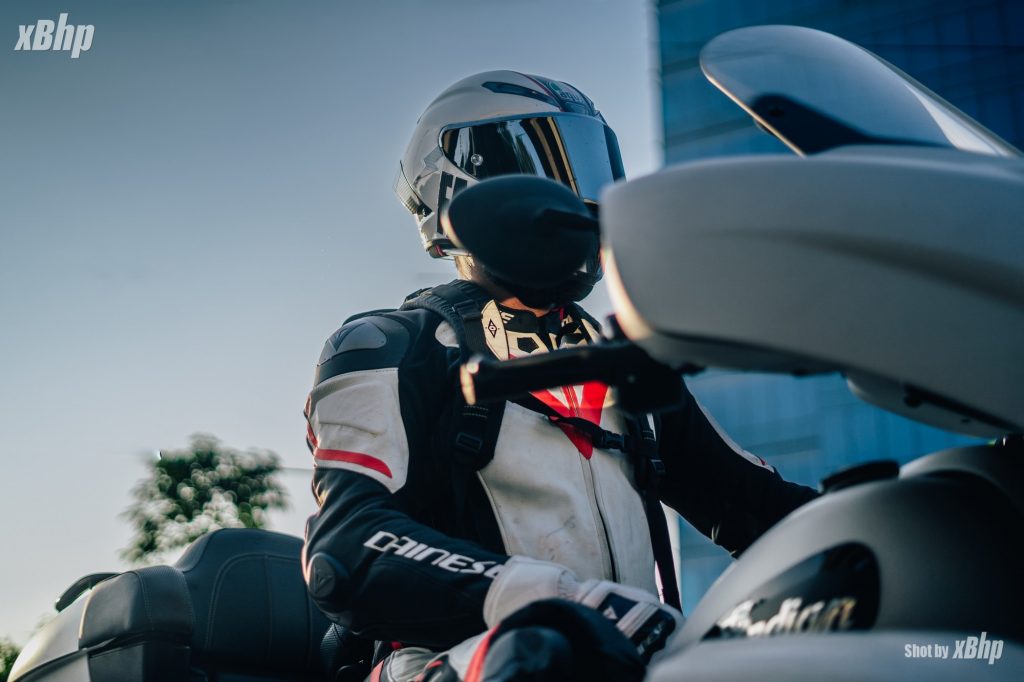
The audio is crystal clear and pretty darn loud, enough to nearly drown out the racket that the engine makes at full song. The windshield comes in handy here. In its highest position, the windblast is much less than what it is supposed to be at any given speed.
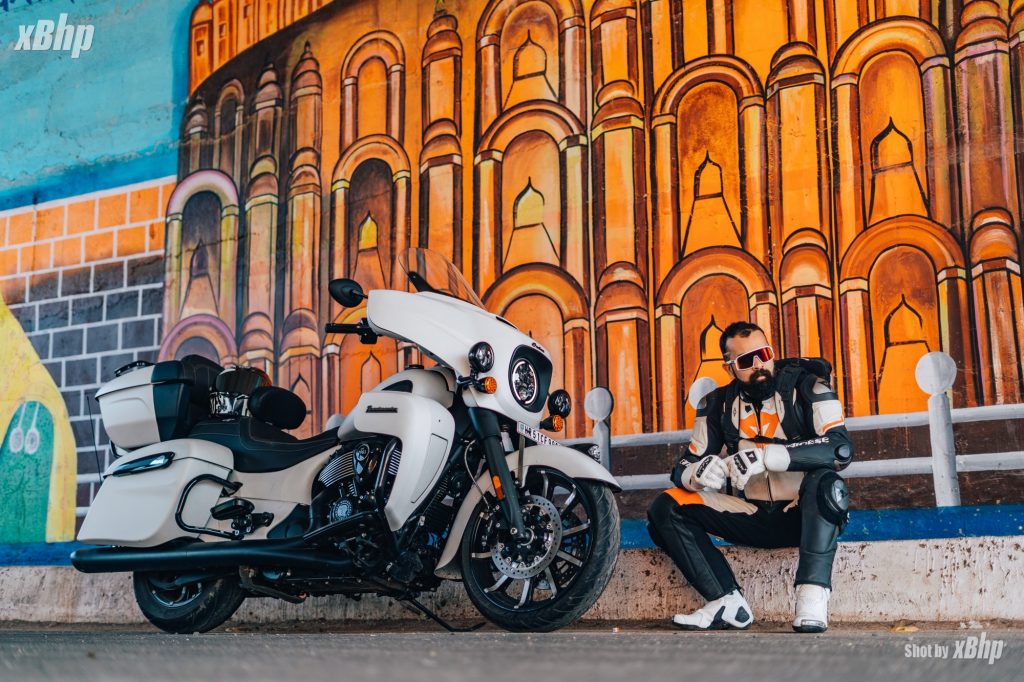
The Indian Roadmaster Dark Horse is one heck of a motorcycle. It is all one could ask from a touring motorcycle and it can give its competition a serious run for their money. It can do that with its engine alone. The other amenities it boasts of just bolster its case even more. Yes, the asking price is a lot of money but then the Roadmaster Dark Horse is a lot of motorcycle too- both literally and figuratively. More than that, you can’t put a price on the chance of having Your Majesty suffixed or prefixed with everything people say to you.

2021 Ducati Monster review: A little lost, a lot gained!
 Oct 2021 Sundeep Gajjar
Bikes,Ducati,Motorcycles
Oct 2021 Sundeep Gajjar
Bikes,Ducati,MotorcyclesTradition is good, especially when it comes to motorcycles. It invokes nostalgia, it creates heritage, points to it as well, and it serves a function too. Well, most of the time it does. Is it okay to break it? You see, sometimes it is necessary to do that; to keep up with the time and age and to pursue continuous evolution.

Text: Sundeep Gajjar/MotoGrapher
Photos: Asif Zubairi and Harsh Singh
Is it a bad thing? Not necessarily. I mean if I had to put it bluntly, you won’t want to buy 10 lacs worth of tradition. For that kind of money, you want a kickass motorcycle. For that kind of money, you want a scintillating Ducati. And if so, the 2021 Ducati Monster is an extremely enticing prospect.

I just rode this fantastic motorcycle on the Buddh International Circuit so why am I talking about all this? Because it needs to be addressed. Ever since the 2021 Ducati Monster was launched, the internet has been abuzz. A lot of people aren’t happy. Most of those people are Ducatisti, or Monsteristi, if you must. The reason is tradition or rather, the sacrilege of breaking it. It is justified for some reasons and unjustified for many more.

The silhouette of the Ducati Monster is one of the most iconic in automotive history. Debuting in 1993, the Monster, or M900 as it was called, single-handedly took Ducati out of some serious financial doldrums. Superbike stuff in a standard road bike? It was a winning formula. To date, more than 3,50,000 units have been sold. That added to Ducati’s rich history, is the reason why the style of the original Monster became a tradition, and in turn, such a hard one to break.

That is one of the reasons why Ducati-loving people are scorning the new Ducati Monster. I know what a Monster is like or more so, what it is supposed to be. I know because I rode one for 8,000 km in Italy during xBhp’s Great Italian Roadtrip. And I loved every bit of it. The visual flare, the presence, the roughness around the edges and the overall drama. So the scorn, well, it is justified.


On the same note, it is unjustified because judging it simply by that is not far from tunnel vision. Tradition alone did not make this motorcycle the success it is. Tradition alone did not make Ducati the force it is today. Tradition alone cannot make a Monster. Even if it can, tradition alone can only keep a Monster alive for so long. In simple terms, what I mean is that the Ducati Monster has always had more than just tradition going for it.

Anyway, let us now come back to the new Ducati Monster.
It does not have the iconic trellis frame. It now features a Panigale-inspired aluminium front frame. It looks more like Brad Pitt than Arnold Schwarzenegger. It is not bulky and big and brut-ish. It looks lithe, athletic, and sharp. Finally, the headlight is not like… round. It’s hard to judge what shape it is but, it is what it is.

And that is it, that is the list of sins that the 2021 Ducati Monster has committed. Agreeably, it has lost a bit of its charm. But trust me, what meagre amount it has lost in terms of its road presence and “tradition”, it has gained manifolds in other areas. Areas that matter when you are willing to spend 10 lacs on a motorcycle. So, let us talk about that.

The most significant effect that these changes have had is on the dimensions. 2021 Ducati Monster is shorter, sharper, more compact, and most importantly… lighter! Less weight is always good because it accentuates the punch of the engine, it makes the handling better and it makes for a motorcycle that is much easier to live with, in general.

In terms of weight, the new Monster has lost 18 kg. That is a significant amount. Quite a bit of it comes from the new aluminium front frame. A bit from the subframe which is made from some sort of very strong fibreglass and plastic. The new engine, the lighter wheels, and the smaller fuel tank have contributed as well. Now, let us talk about the implications of these changes.

Before that though, let us touch on the looks briefly. More so, my own thoughts about it. I like it quite a bit. I like how the tail and how well the taillight goes with it. I absolutely adore the design of the twin-barrel exhaust. I love the forward-biased sporty stance. I love the sculpted and muscular tank.

I do not know how the headlight makes me feel though. It even has a slight forward bulge akin to the circles of the older Monsters. Yet, it feels a little… surprising to put it mildly. With that, I also think that it might grow on me and hopefully, on the lucky ones who’ll own it. And the owners WILL be lucky because… read on.

The performance of the new Monster is simply amazing. The 937cc Testretta 11° is a gem. You get 111 bhp of power and 93 Nm of torque. The numbers are good but the end result is simply breathtaking. The torque is spread out well throughout the rev range and there’s thrust available regardless of where you find yourself in the rev range.

Being a Ducati L-twin or 90-degree Vee, it feels a tad bit erratic below 2,000 rpm but after that, it is just like opening the taps. The engine revs quickly and pulls cleanly. The acceleration is intoxicating and it is willing to hang the front hoop in the air with the twist of the throttle if you so wish.

The fueling is crisp and coupled with the up-down quickshifter, wringing the heck out of the new Monster is a visceral experience. While marginally more power than the 821 has a part to play here, I believe that the weight loss has a more significant part to play when it comes to the mannerisms of the 2021 Ducati Monster.

The new motorcycle hasn’t only gained a new engine and a new chassis but a whole suite of electronics as well. Riding modes, Traction Control, Wheelie Control, Cornering ABS, Launch Control along with the Panigale-inspired TFT screen. I did not test all those features extensively as I simply put it in sport with low-medium traction control.

It has been a while since I have been on a racetrack. It has been a longer while since I have had this much fun on one. You see, motorcycles with a million horsepower are good. But they always have on on the knife’s edge and you rarely get to extract their maximum. But a smaller motorcycle that you can wring the heck out of with a metre-wide grin on your face? Priceless.

Moving on to ergonomics, it is everything you hope for. Wider handlebars that are now closer to the rider grant you a lot of leverage and make for a relaxed riding position. Though on the racetrack, it was a tad bit limiting.

The seat is 820mm by default, can be 800mm with the accessory low seat, and can be 775mm with an accessory low seat and low suspension kit. But the tank is narrow so even with 820mm, most of the riders will be able to have their feet flat on the ground. There is a little hitch though. Carrying the burden of the naked-bike’s-curse, there’s no wind protection. A small price to pay for a more practical big bike.

The footpegs are slightly higher and rear set but it aids cornering clearance despite seeming a bit odd in a setup this relaxed. The ground clearance is decent as well. That reminds me, an engine cowl would have done this Monster’s looks a bit more good.

The best part though is that the new Monster weighs just 188 kg (road-ready) and that along with a more generous steering lock is a boon when it comes to moving it around. In terms of geometry, the wheelbase is shorter and the rake is a tad sharper. Now, onwards to the fun part because a racetrack is not straight!

The Monster has always been a great handler but the new one is a game-changer in terms of handling. It is predictable, sharp, agile, and most importantly, extremely easy. There is no top-heavy feeling in this one as with the engine being an integral part of the ‘Front’ frame, the CoG is now lower. Lighter wheels mean less gyroscopic forces to overcome when tipping it into a corner. Finally, the shorter wheelbase and sharper geometry mean that the new Monster does not need manhandling, a bit of which was needed in the previous models.

The front suspension lacks adjustability and the rear one has only preload adjustment but that’s hardly a deal-breaker because the factory setup felt just right to me. All of that along with the new Pirelli Diablo Rosso III tyres make the 2021 Monster a delight in the corners. It tracks the intended line without a hiccup and can be pushed really hard on a racetrack despite being a motorcycle intended for the streets. The brakes work well too but just. I doubt if the story would have been the same if the Monster hadn’t lost as much weight.

More than anything though, it is the ease and the predictability that gets you. Ducati says that this is a motorcycle for beginners and experienced riders alike and I know why. On BIC (half circuit), I had a lot of fun pushing it to the limits. I had not ridden for a racetrack in two years and yet, found myself right at home on the new Monster. It is a great example of how even a newbie would find the motorcycle to be very approachable and accommodating. It is just that good. Now, I cannot say much about how it’ll go on the public roads but I am sure it’ll do nicely.

Everything that I have talked about comes as standard on the 2021 Ducati Monster and it is priced at INR 10.99 lacs (Ex-Showroom, India). There’s a Monster + which gets a passenger seat cover and a small flyscreen. With the performance, the handling, the comprehensive electronics suite and so on, it is a great value for money. Credit where it’s due, kudos to Ducati for pricing the new Monster the way they did.
Finally, is breaking the ‘tradition’ worth it? If it results in a motorcycle like the new Monster… by all means!

More details and full specs can be found here.
Triumph Speed Triple 1200 RS: Redefining Hooliganism
 Sep 2021 Sundeep Gajjar
Bikes,Motorcycles,Triumph
Sep 2021 Sundeep Gajjar
Bikes,Motorcycles,TriumphIt is really hard to manufacture a per se bad motorcycle nowadays. As electronics encroach further and further in the mechanical land, it is going to become even more difficult to do so. That said and paradoxically so, it is equally difficult to make a per se good motorcycle. That is because motorcycling is something organic, something visceral and binaries have a hard time embodying that. So, with electronics being one of the focal points of the Speed Triple 1200 RS that we just tested, is it a good motorcycle? Let’s find out.
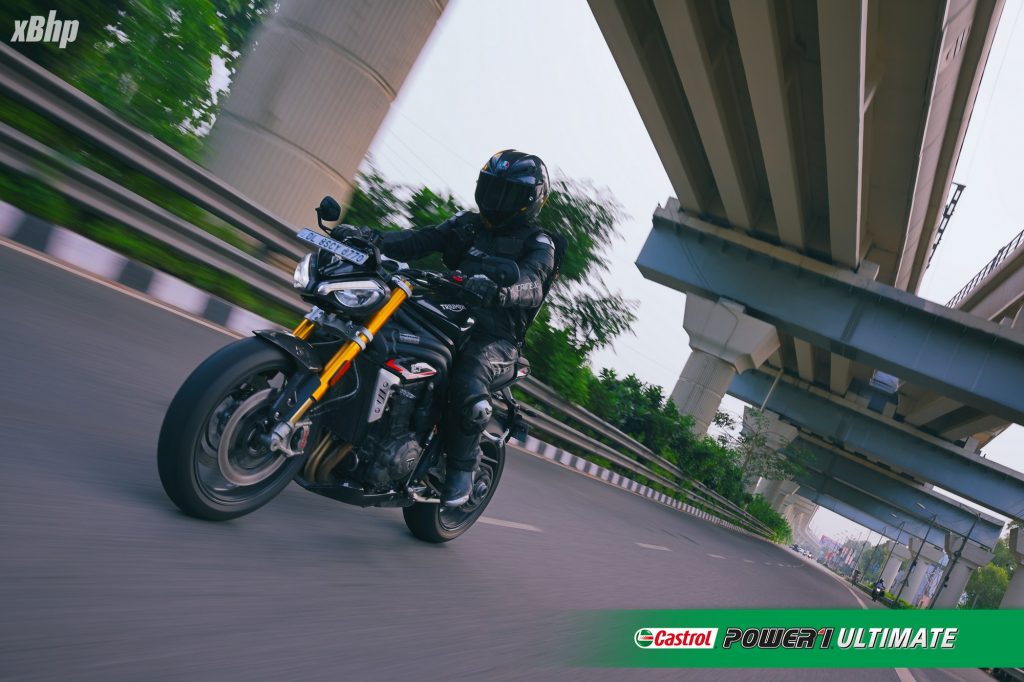
The Speed Triple has been around for a while and Triumph refers to it as the original hooligan- disputable but not wrong. Regardless, it was one of Triumph’s most successful motorcycles and that is why it is still alive and kicking. The latest and greatest in the series- Speed Triple 1200 RS is being touted as the best Speed Triple to date. And it easily is.
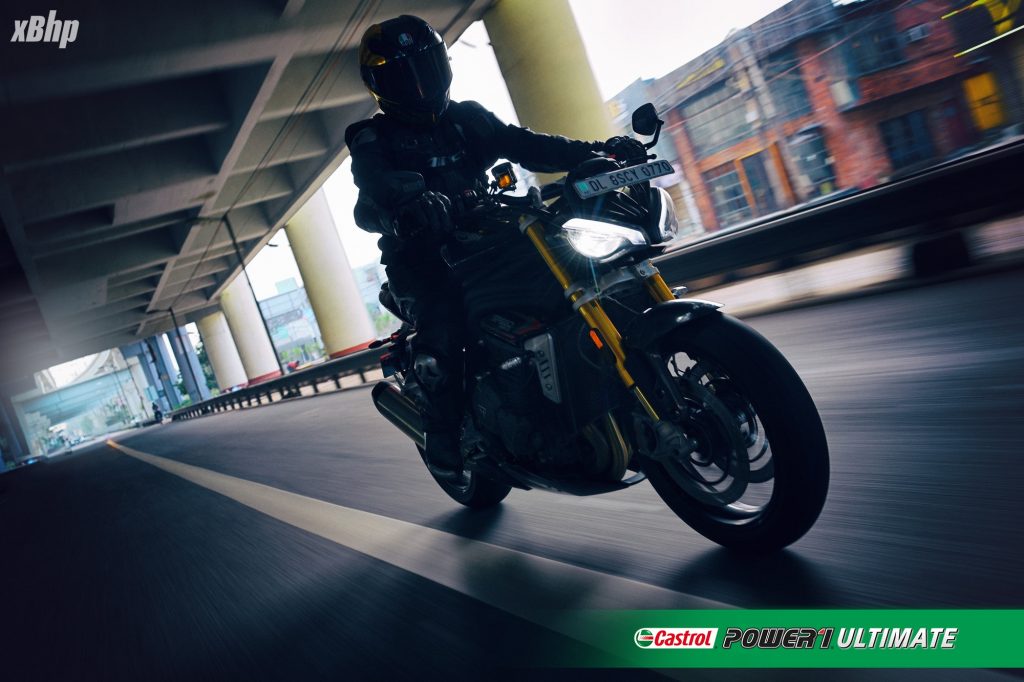
Modern technology, a comprehensive electronic suite, less weight, more displacement, more power, more torque, more refinement, more top-shelf components and so on… it was bound to be that way. They say the Speed Triple 1200 RS has a 26% higher power-to-weight ratio than its predecessor and nearly double that of the original Speed Triple. That is a staggering feat. And this motorcycle is full of those. Anyway, enough of the claims and praises. Let’s get down to business.
As always we start with the looks, despite not wanting to and removing this section altogether. But then again, there is no harm in sharing our personal opinion regardless of the subjective nature of this topic.
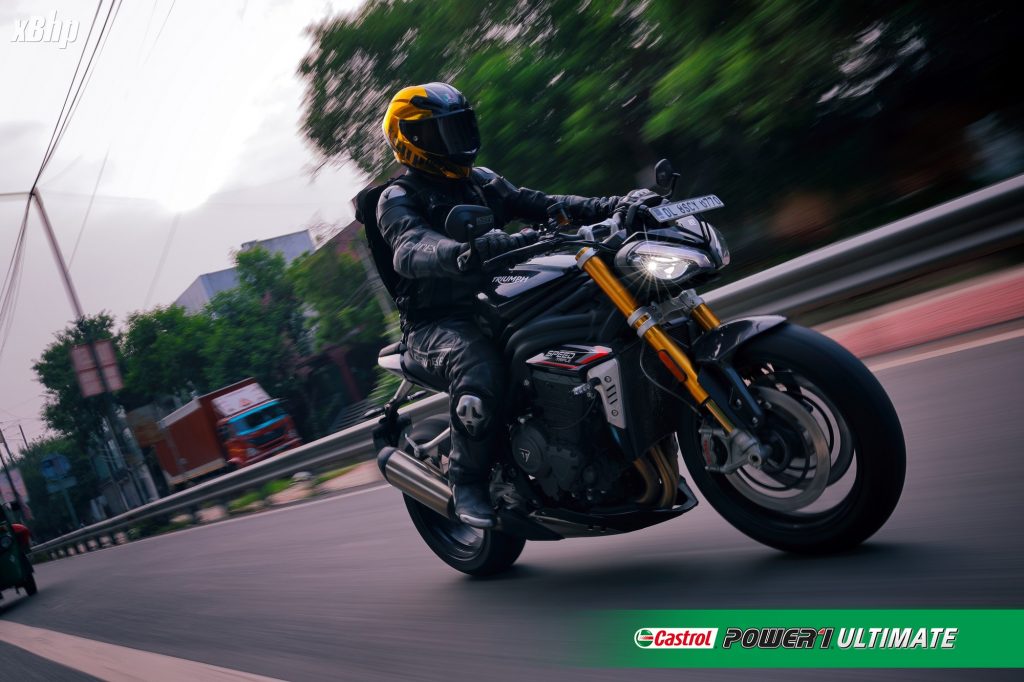
More than the design, we feel that the packing and the stance do the deed for Speed Triple 1200 RS. The design is good, do not get us wrong, but how it carries itself even on a standstill is what got us. The geometry and the ergonomics help the Speed Triple 1200 RS to have a stance that conveys Bring it On! It looks ready to rip its tyres to shreds and blow the rider’s mind. It can… and it does.

Then there’s the short, sharp and athletic physique. It does not look like a bodybuilder despite being propelled by 180 horses. It looks like a sprinter. Sit on it and you notice that it is quite narrow too. So much so that despite the 830mm seat height, it is pretty easy to have your feet flat on the ground.
The stretched bug-eyed headlamps along with the angry-brow DRLs lend the Speed Triple 1200 RS an aggressive front fascia. The muscular tank lined by the beams of the chassis at the bottom looks good too. The exhaust looks decent enough as it is and eliminates the need for an aftermarket one. The exhaust note? Even more so.
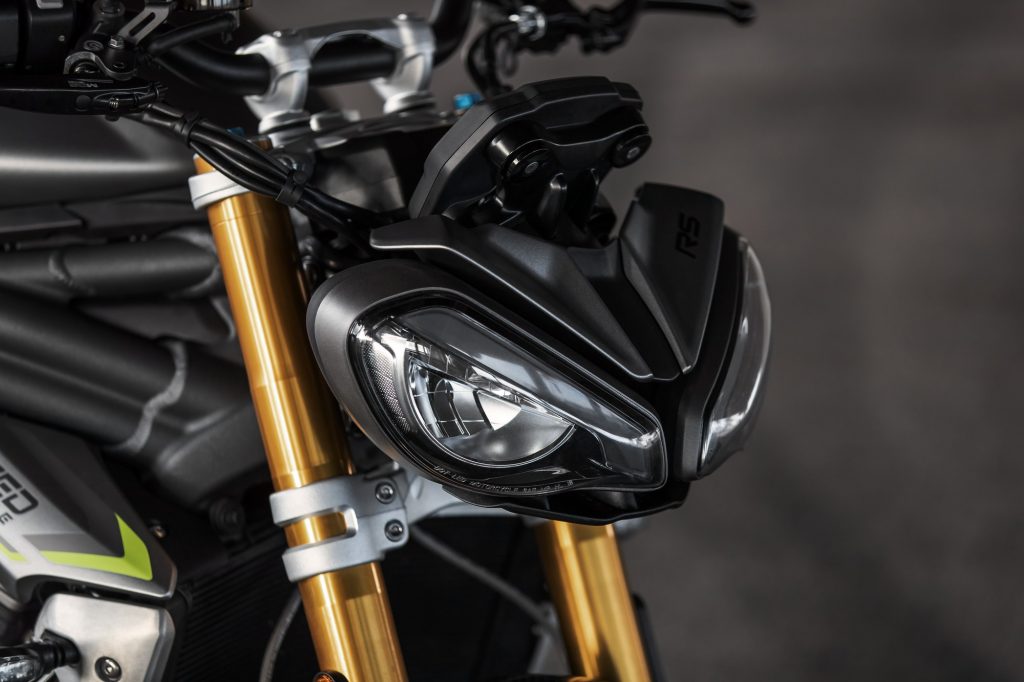
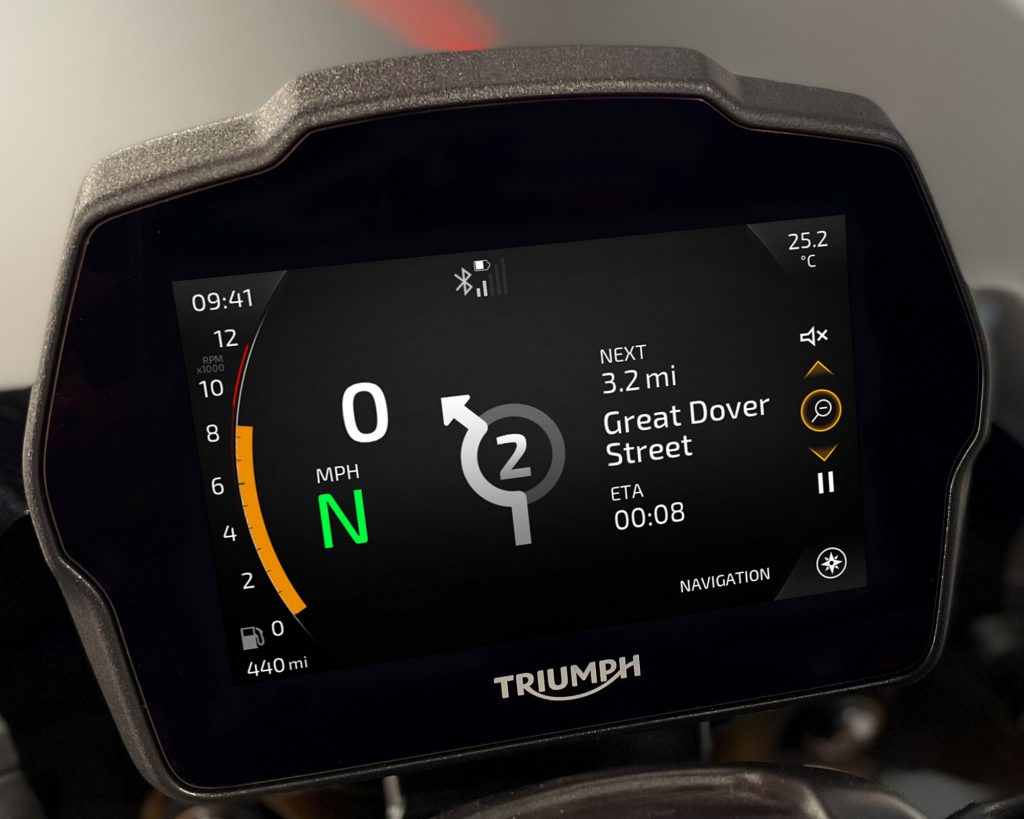
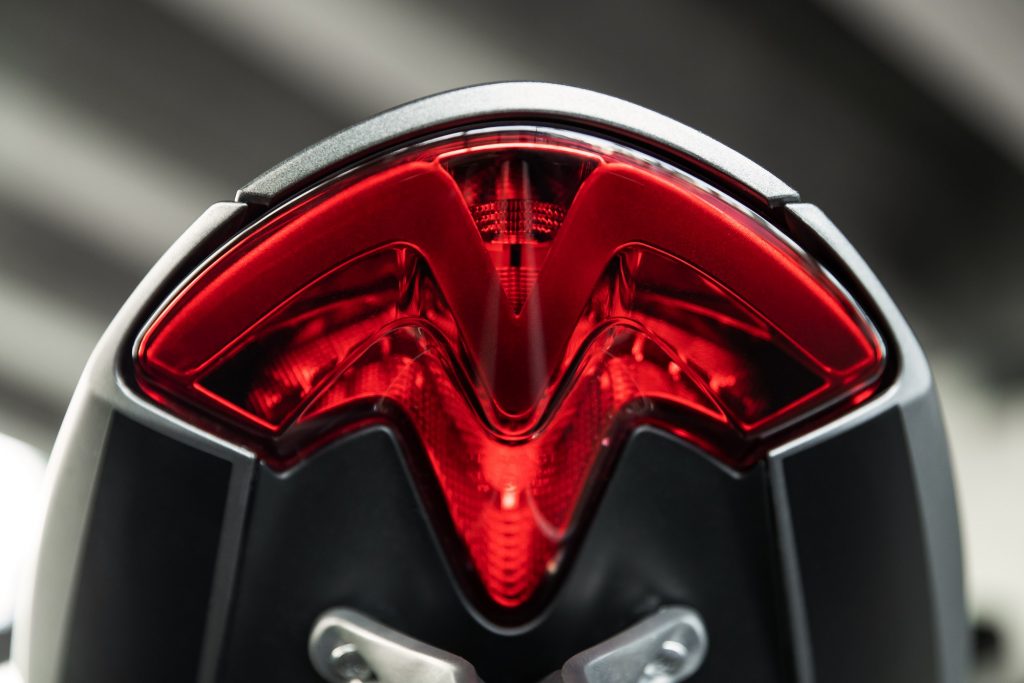
In the end, the tail is narrow and the taillight looks pretty cool too at night. Lighting is all-LED all around. The overall fit and finish are exceptional. The 5” screen is integrated very well despite the lack of bodywork to wrap around it. The only thing that we’d like to see is a windscreen like that of the previous Speed Triple. That would help both visually and ergonomically. More on that in a bit.
Now, to the juicy bits. Especially juicier since a Triumph Triple is in question here- the engine. The new one is a 1,160cc unit compared to the 1,050cc of the previous one. But the bump in displacement is just the tip of the iceberg. Everything about the engine is new; making it lighter and more compact, in addition to making it more powerful and still meeting the latest emission norms. 180 PS of power and 125 Nm of torque- those are the numbers. Now, let us talk about their implications.
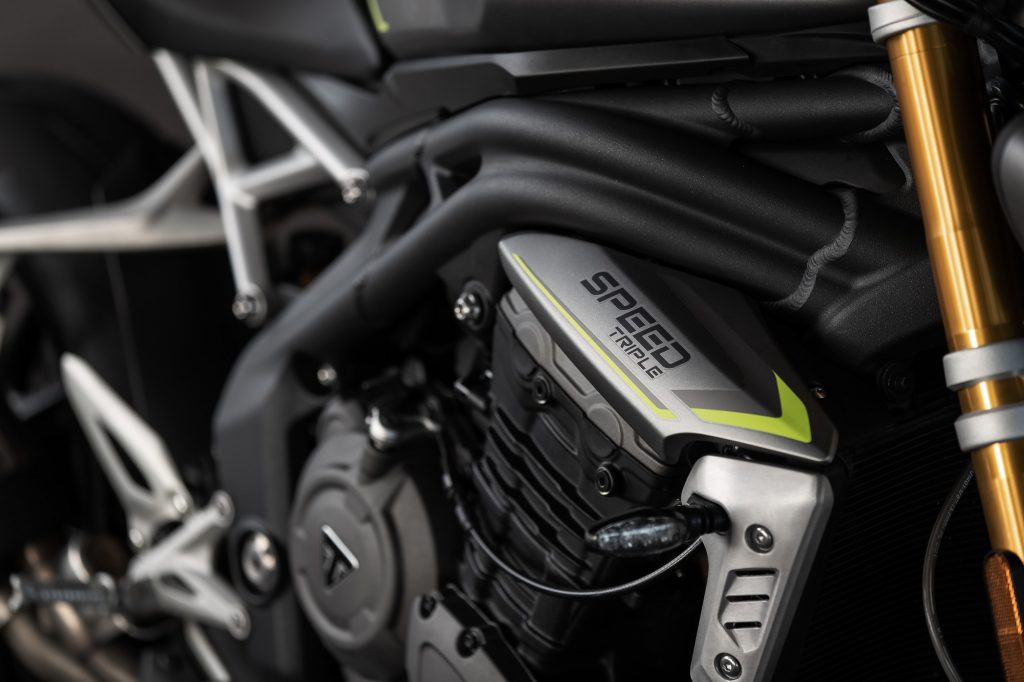
This engine is not only the best Speed Triple 1200 RS engine so far but arguably one of the best Triumph Triples ever. That is a tall claim considering the one that powers the Rocket 3 R. And yet, we said that. Despite it being perhaps the best sounding engine of the lot, there is much more to it that makes it a stellar powerplant.
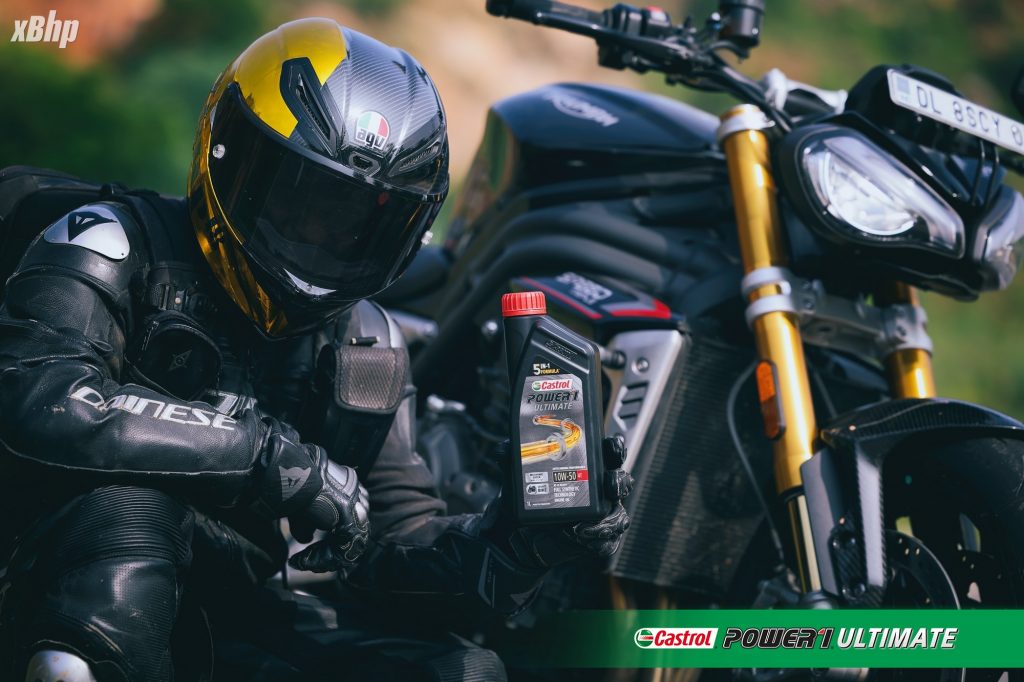
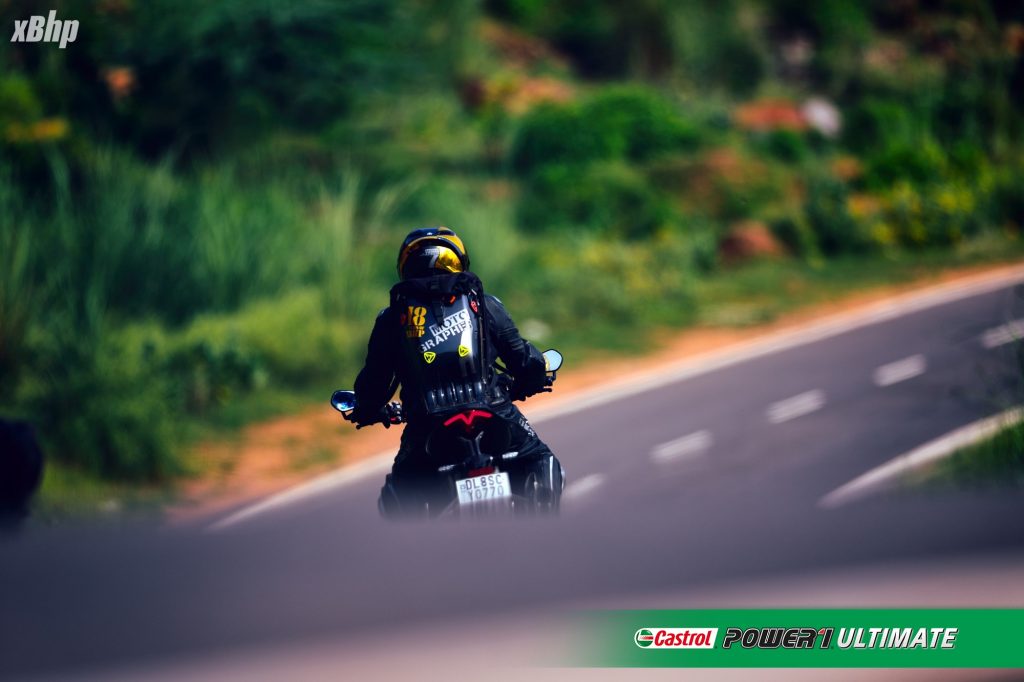
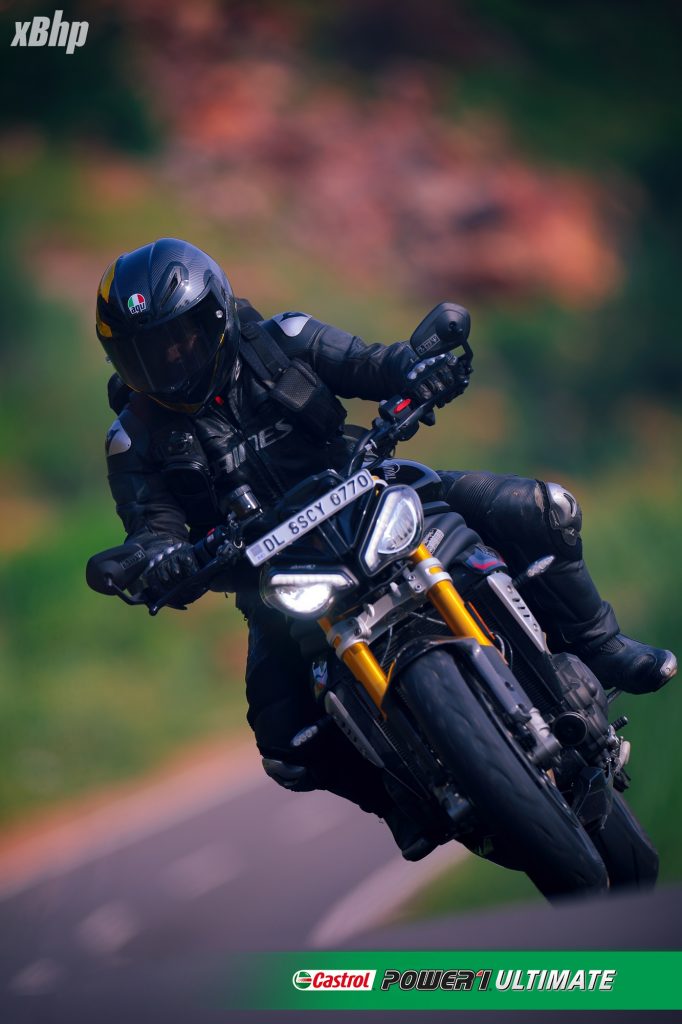
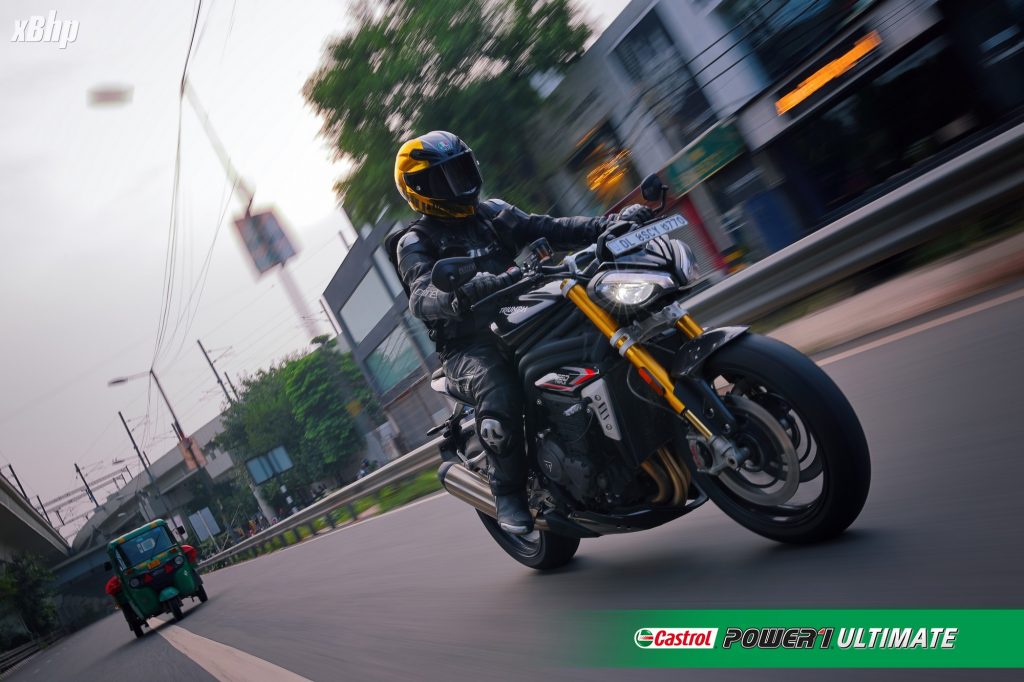
Inline-3 cylinder engines are a quirky lot, to say the least. They are able to bring together the good points of two of the most popular engine configurations and minimize their weak points. In that sense, they are a meeting point between the low and midrange grunt of an inline-twin and the top end ferociousness of an inline-4. That said, this balance is not easy to achieve and yet, Triumph always gets it right. The reason, In addition to their engineering prowess, is their faith in Castrol POWER1 ULTIMATE which is the recommended engine oil for the Speed Triple 1200 RS. The Speed Triple 1200 RS is all about omnipresent power. The 1,160cc engine is rev-happy and willing to provide all the grunt one can ask for at the twist of a wrist. The smooth delivery of that power and consistent performance is ensured by Castrol POWER1 ULTIMATE. With its 5-in-1 Formula and Full Synthetic technology, it ensures that neither the high revs nor the high compression ratio are able to limit the engine’s capabilities. Due to lowered temps, added protection, and smooth operation, the rider is able to enjoy the best of Speed Triple 1200 RS’ thrilling acceleration all day long.
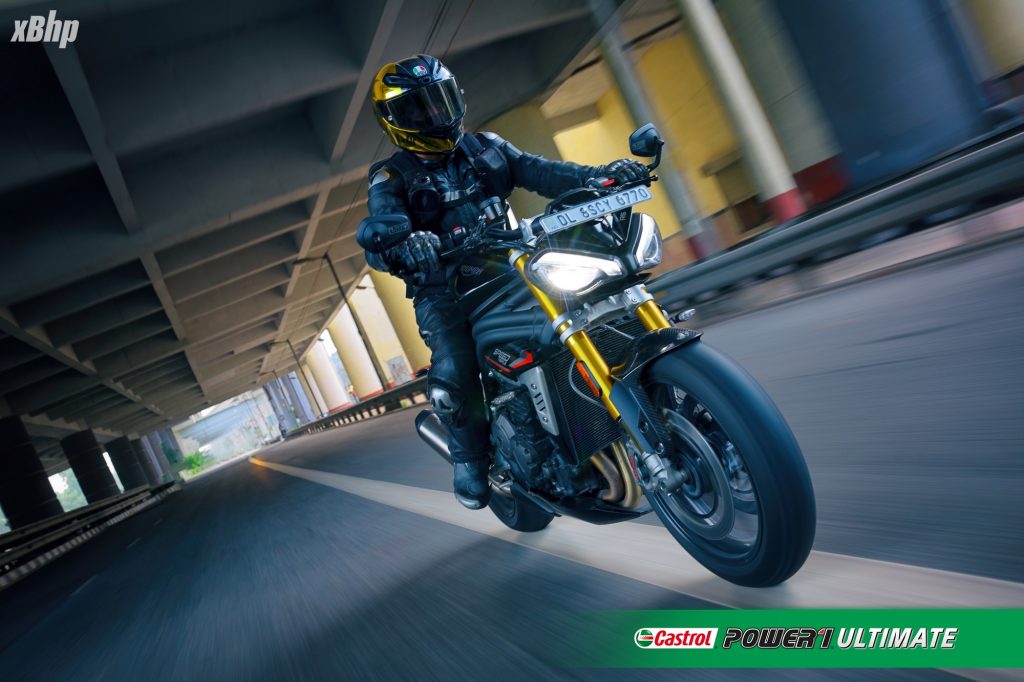
First off, the power and torque. The numbers are up with the top guns of the category but more than that, it is the delivery that blows your mind. The new Speed Triple 1200 RS has a much more ballistic top end compared to the previous version. But that does not come at the expense of midrange and low-end grunt. That is one of the characteristics of a 3-cylinder engine but the new Speed Triple takes it to a whole nother level.

Right from the get-go, it feels strong but as the revs build up it gets even better. The shove is addictive when you crack open the throttle. The acceleration almost feels like it is trying to yank your hands off the handlebar. There is grunt nearly everywhere in the rev range and the Speed Triple 1200 RS simply keeps going and going till aerodynamics finally catch up to it.
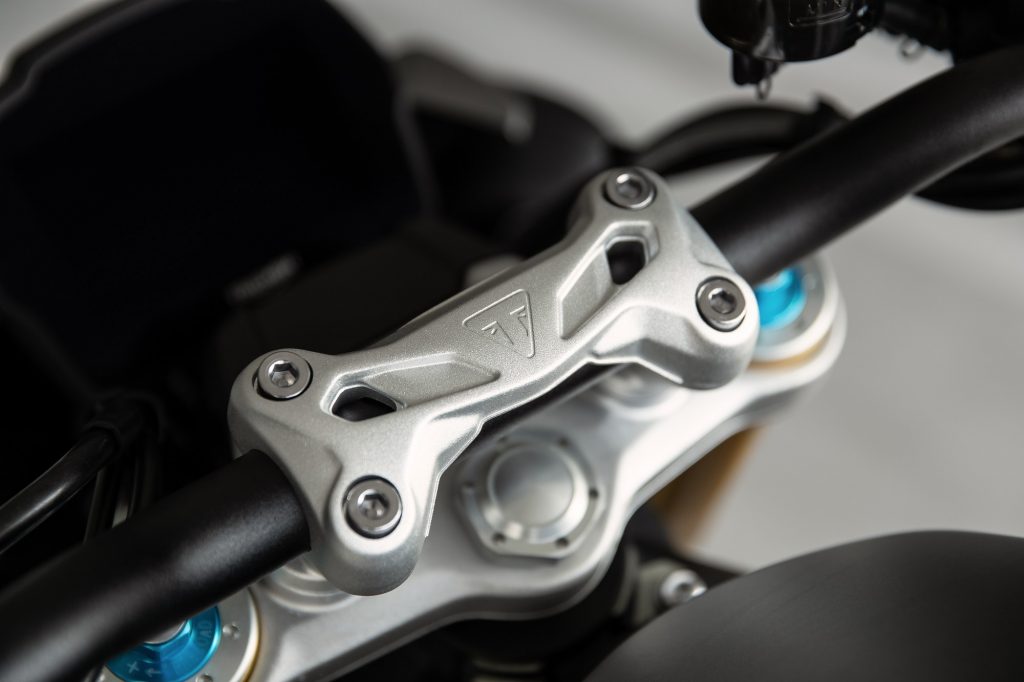
The new Speed Triple 1200 RS also revs more freely and quickly. The gearbox, equipped with an up-down quickshifter, more than keeps up with confident upshifts and downshifts that are accompanied by a glorious soundtrack. All of these combined with the light weight mean that the Speed Triple 1200 RS lives up to its hooligan tag. And then the sound- a muted rumble low in the rev-range, a raspy growl in the mid-range, and an intoxicating howl at the top.
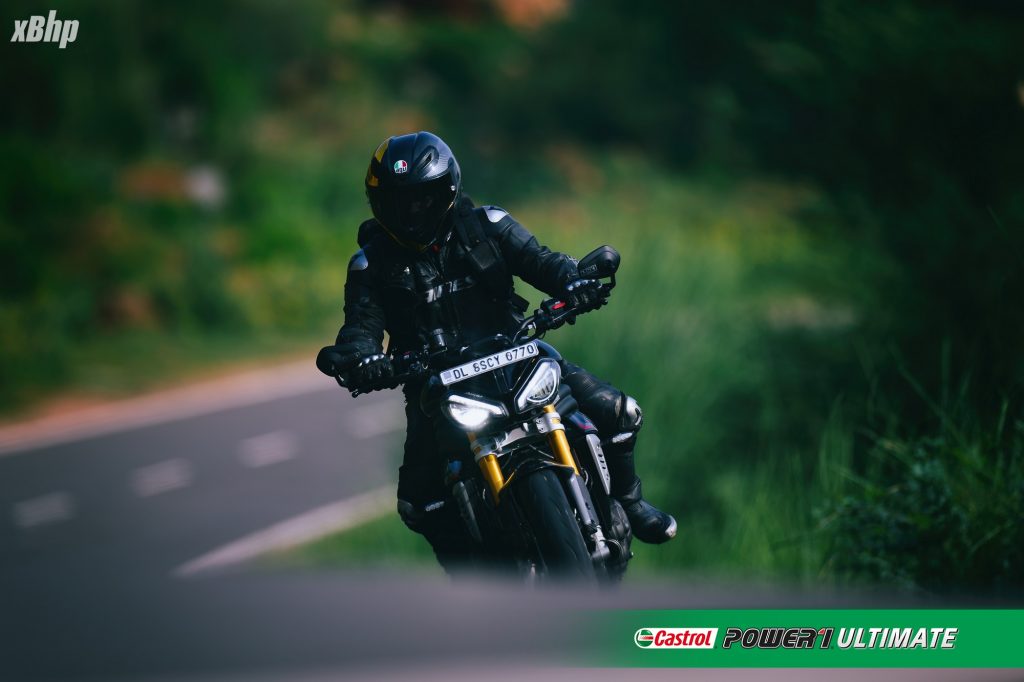
Now, there are a few slight naggings here. First, there’s this little shove-pause-go moment when you get going. Engage the first and release the clutch and you get going as the motorcycle lurches forward but then when you twist the throttle, there’s an ever so slight pause before it starts to go at the same rate it started off. It is not noticeable unless you’re riding in traffic and find an opening to get out of there.
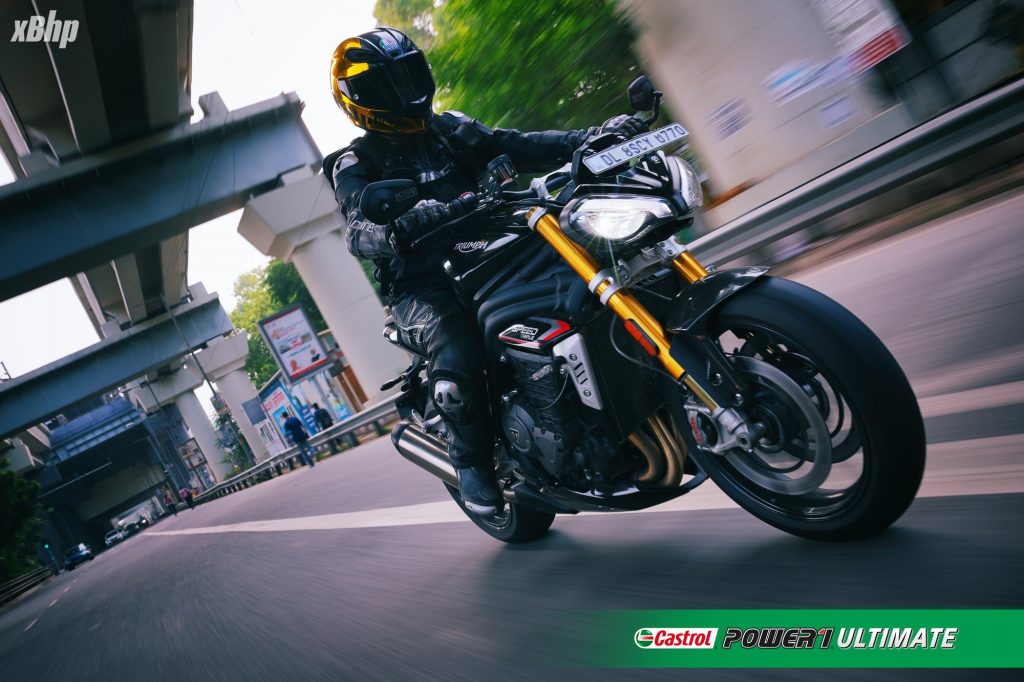
Then, there’s the gearbox. It is precise, sure, and a joy to go through but for some reason, it is pretty difficult to put it in neutral. A bit too eager to… perhaps. Not wanting the wringing to stop… perhaps. Then, the clutch lever which is slightly stiff so a long time in stop-and-go traffic will be felt.
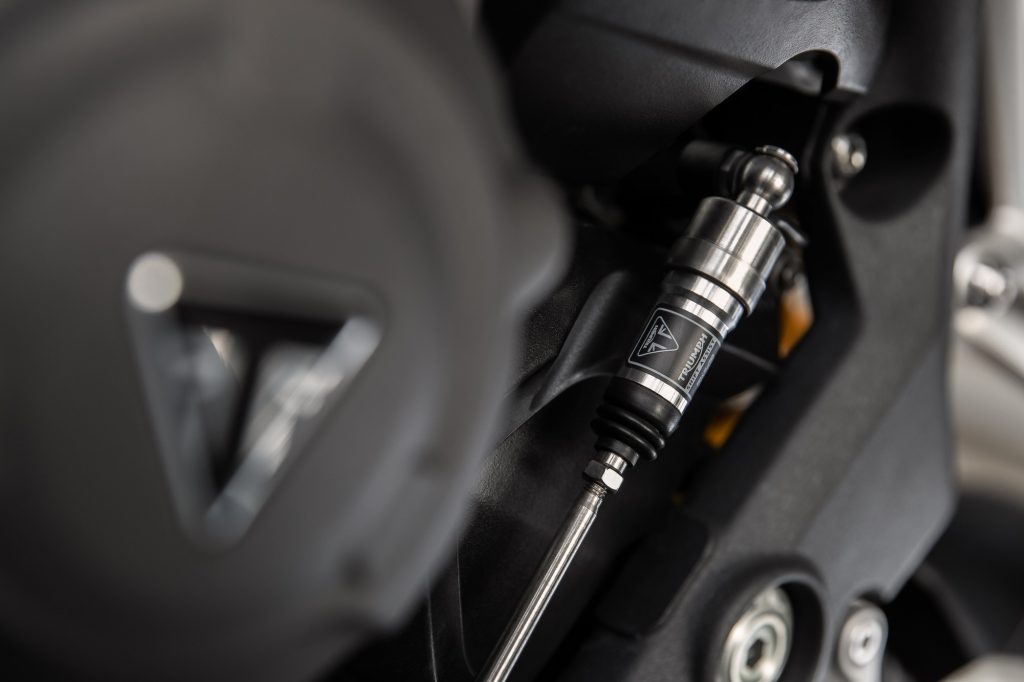
Apart from these small issues which may be about getting used to the bike or about the bike being new, the Speed Triple 1200 RS is an absolute joy. Now, we did ask in the beginning if the Speed Triple 1200 RS is a good motorcycle. It is loaded with electronics so it is not bad but just because of the fine-tuning of those very electronics, it is one of the best motorcycles we have ridden in the recent past.
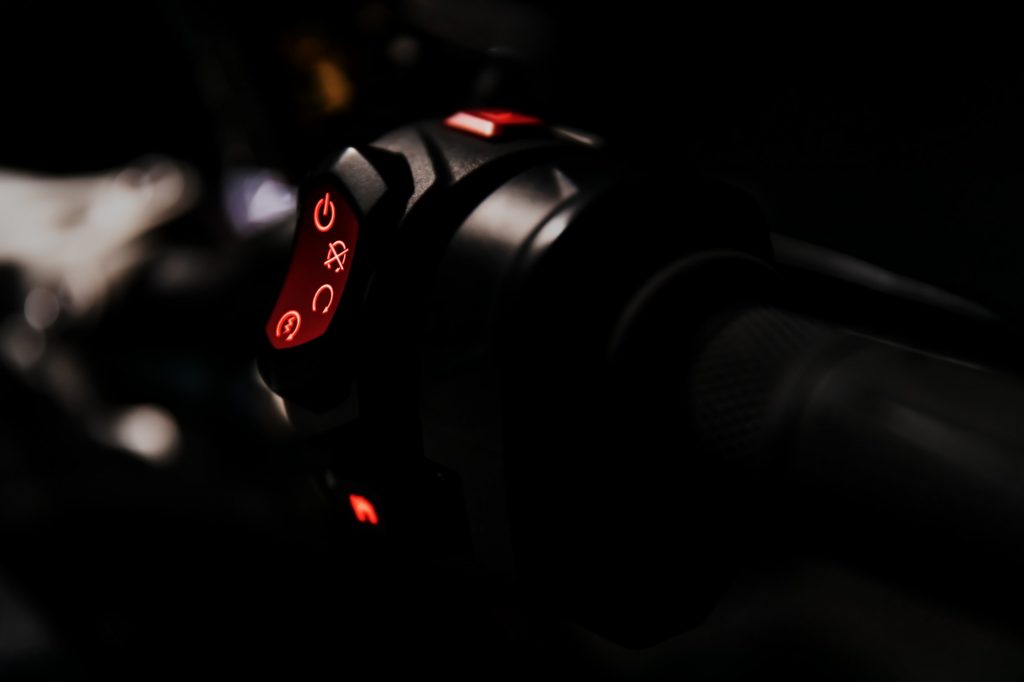
Courtesy of the electronic throttle control and fuel injection, you not only get precise fueling but also, 5 riding modes; Rain, Road, Sport, Track, and Rider, with the last one being user-configurable. All of these modes are very well calibrated in terms of the available power. More than anything though, it is the subtlety with which the Traction Control works. With varying intervention levels in each mode, it never really feels intrusive. And it gets even better in Sport and Track modes.
A great example of the wonderful implementation of electronics is wheelie control. Inevitably, the Speed Triple 1200 RS is one of those motorcycles that are not at all shy of sending the front wheel skywards with a handful of throttle. But it does not and you don’t even feel the power being cut off abruptly or anything of that sort. One quirk though is that if you do want the front hoop in the air, you have to disable the traction control as well since it is tied to wheelie control. Never has a motorcycle compelled a rider to consider the risk to reward ratio more!
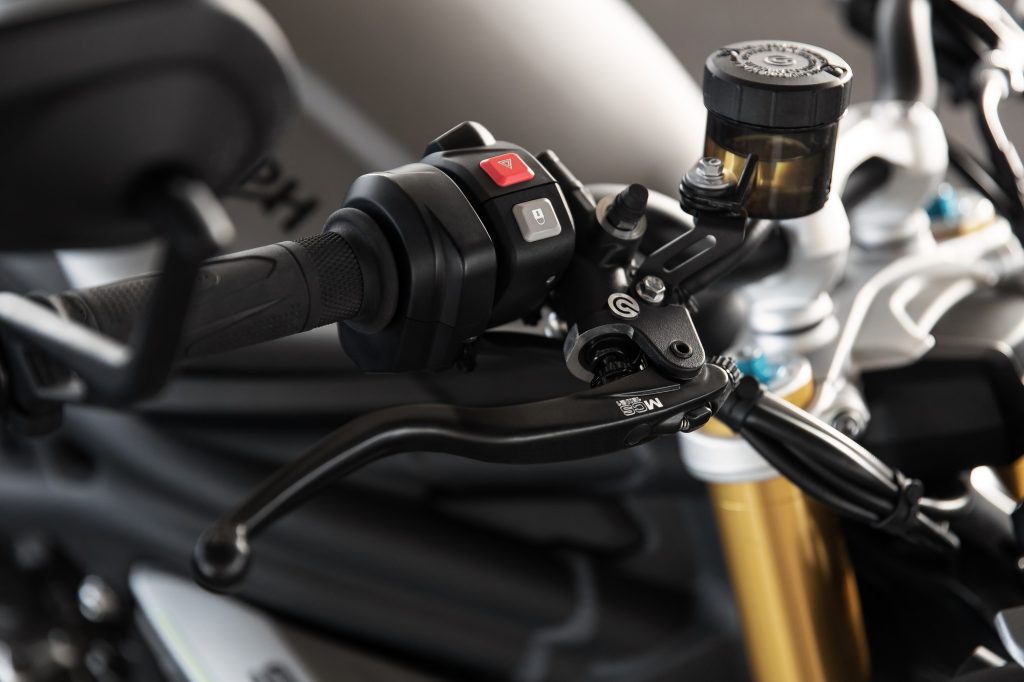
Next up, we have handling and ergonomics to talk about. But let’s talk about the hardware responsible for that first. Aluminium twin-spar frame, a beautiful aluminium single-sided swingarm, and cast aluminium wheels shod with grippy Metzeler Racetec RR tyres.
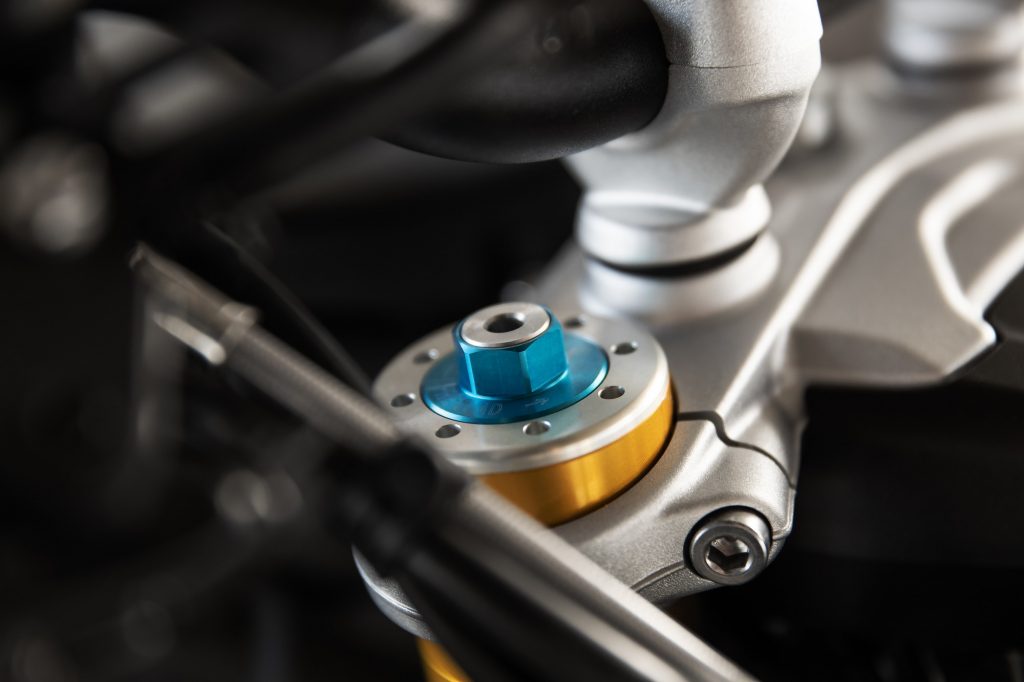
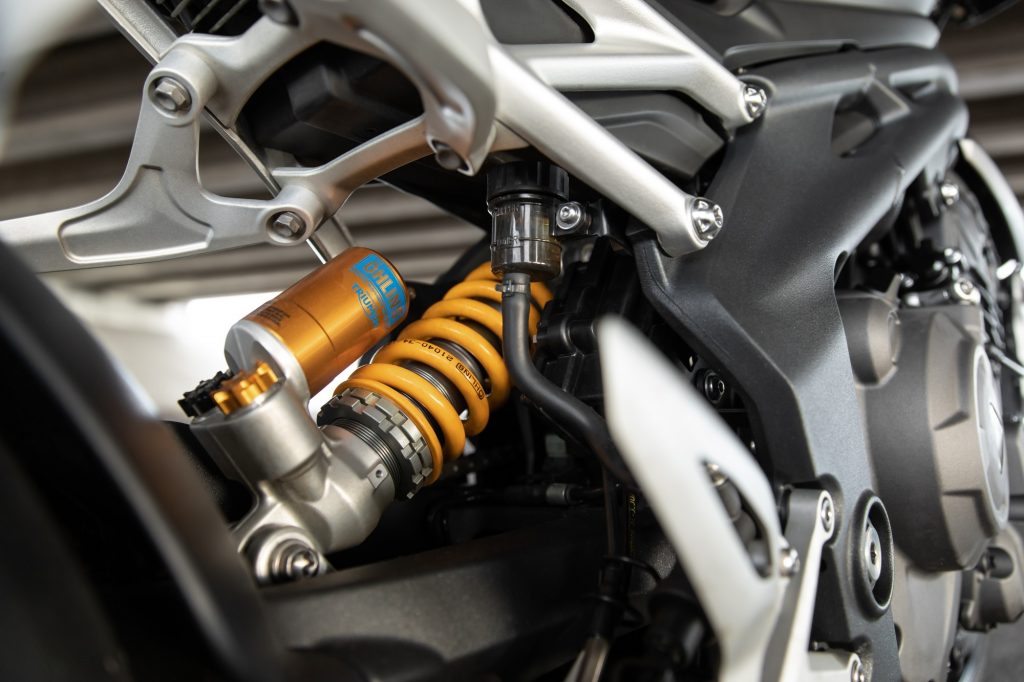
Suspension duties are handled by fully-adjustable Öhlins 43mm NIX30 USD forks at the front and fully-adjustable Öhlins TTX36 monoshock. The braking department is similarly well-endowed with twin 320mm discs up front with Brembo Stylema callipers and a single 220mm disc at the rear with a Brembo twin-piston calliper.
All of that is befitting of an ‘RS’ branded motorcycle from Triumph. Because of the top-shelf components, the Speed Triple 1200 RS is in possession of some serious handling chops. The motorcycle turns on a dime and flicks from one side to the other like a pro. From the corner entry to the exit and throughout the corner, the Speed Triple 1200 RS remains composed.
The stock suspension settings are more biased towards sporty riding and can make do for track days too. Exiting the corners, the rear does not squat too hard and under braking and the front doesn’t dip too much. This inspires a whole lot of confidence and makes the rider want to keep pushing the limits… of themselves. The motorcycle’s limits are too far to fetch for mere mortals.
That said, this does come with a slight caveat. The rear suspension in its stock setting feels a tad stiff for normal roads. The Speed Triple 1200’s is not a jarring ride by a long shot but it is not supremely plush either. But then again, that is what the adjustable suspension is for and if you’re not on the racetrack, the softer setting will work just fine for both riding at a leisurely pace and some spirited riding.
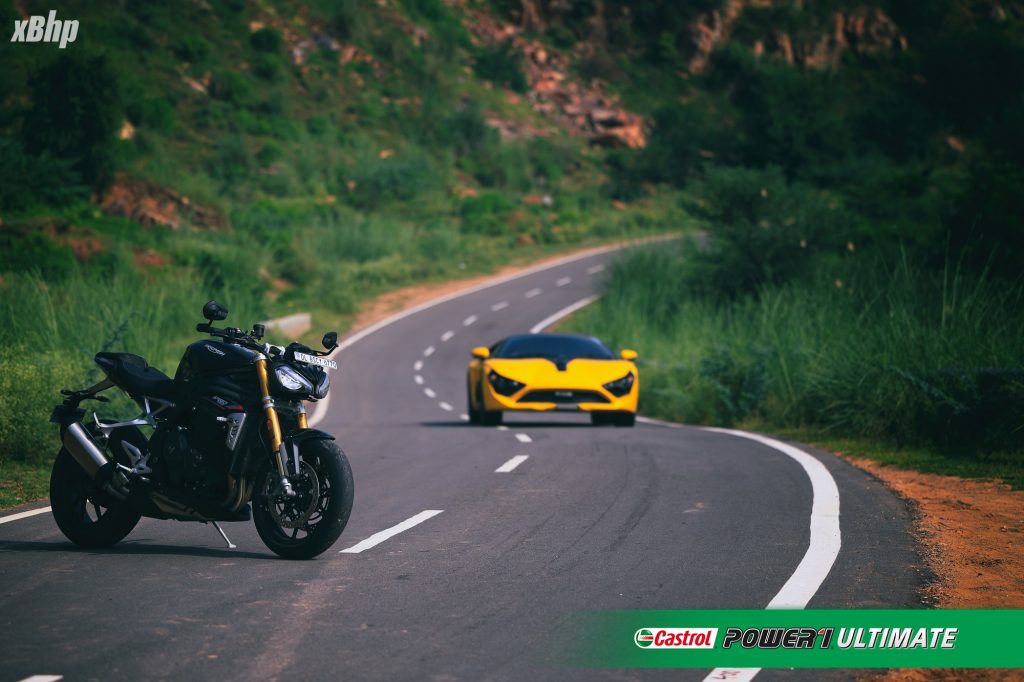
The brakes though are stellar and the Speed Triple 1200 RS sheds speeds as eagerly as it is capable of gaining it. We did not get to test it on a racetrack so it’ll be hard to gauge the fade characteristics but we are quite sure that they can hold their own. In normal riding, they are about the best you can get your hands on.
Ergonomically, the Speed Triple 1200 RS is spot on. The riding position is committed enough for you to get your head down and go for it. But it is comfortable enough for taking in the vistas too. The windblast though is one of the flies in the ointment. That is why we’d have liked a windscreen that would have offered some semblance of wind protection. The second thing is the heat in stop-and-go traffic. But if you whine for more power, you should not be crying about that.
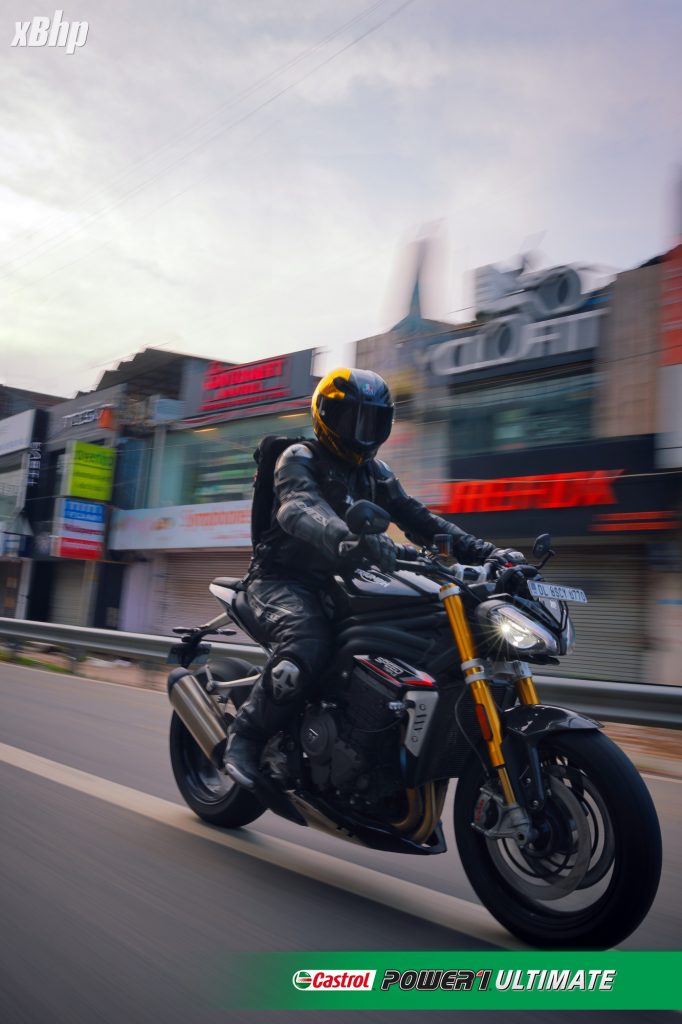
So, it is all out there for you to read and gauge the Speed Triple 1200 RS. Regardless, we are sure that your takeaway is not going to be too different from ours which is; the Speed Triple 1200 RS is a good bike. It is an excellent motorcycle that offers you loads of power, loads of handling goodness, loads of electronics, loads of features and yet, it is pretty easy to live with. More than anything, it is an example of how far Triumph has come in terms of tuning their electronics in just the right way so that they can make not only a per se good motorcycle but a motorcycle that is just as good at being a motorcycle.
BMW 740Li in the desert: Still a Beemer. Still A 7-Series.
 Sep 2021 Sundeep Gajjar
BMW,Cars
Sep 2021 Sundeep Gajjar
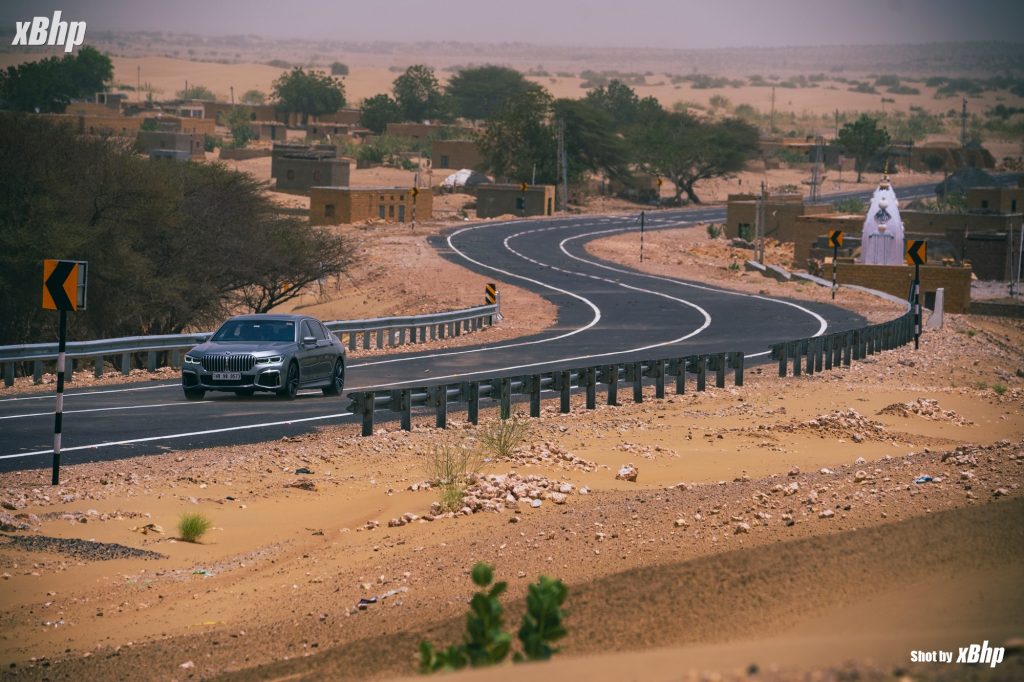
BMW,CarsIn its own way, the desert is one of the most beautiful biomes on planet Earth. The vast nothingness and the endless silence pierced only by the howls of the wind- it sure is enticing. That said, it is also one of the most extreme places you can find yourself in- extremely lonely and extremely desolate. With the right company though, things aren’t as bad. Especially if your company goes by the name of BMW 740Li.
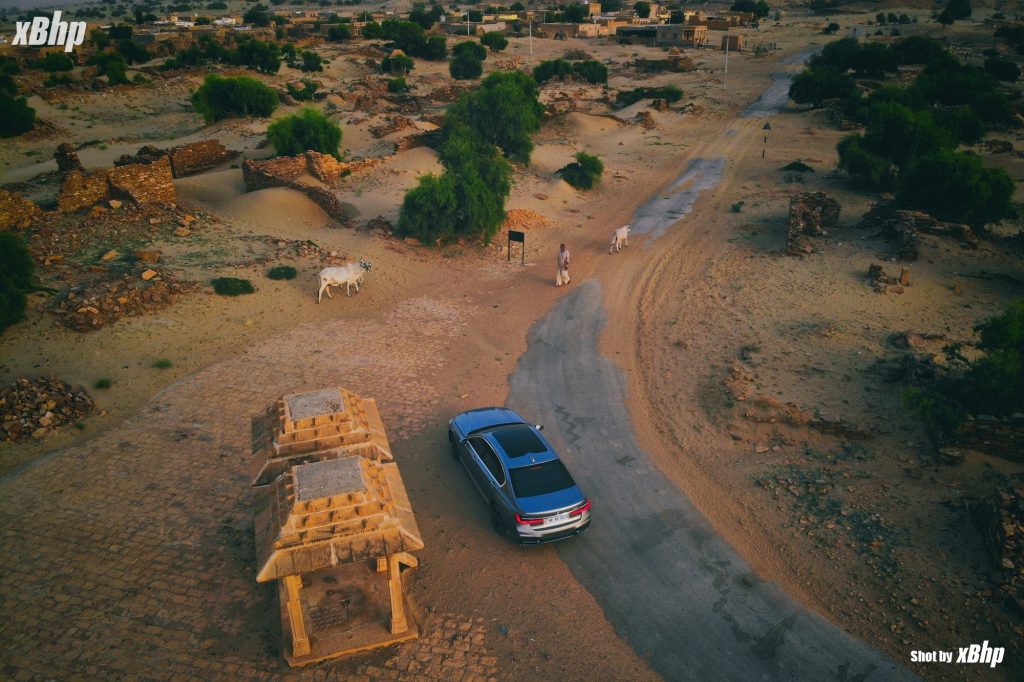
Why do we say that? You see, the desert is a place where you realize the tenacity of man. Their ability to adapt to the harshest of conditions. You also realize that the machines that man makes are just as tenacious. But being able to deal with the conditions is one thing and dominating them is something else entirely. That is exactly what the BMW 740Li is capable of.
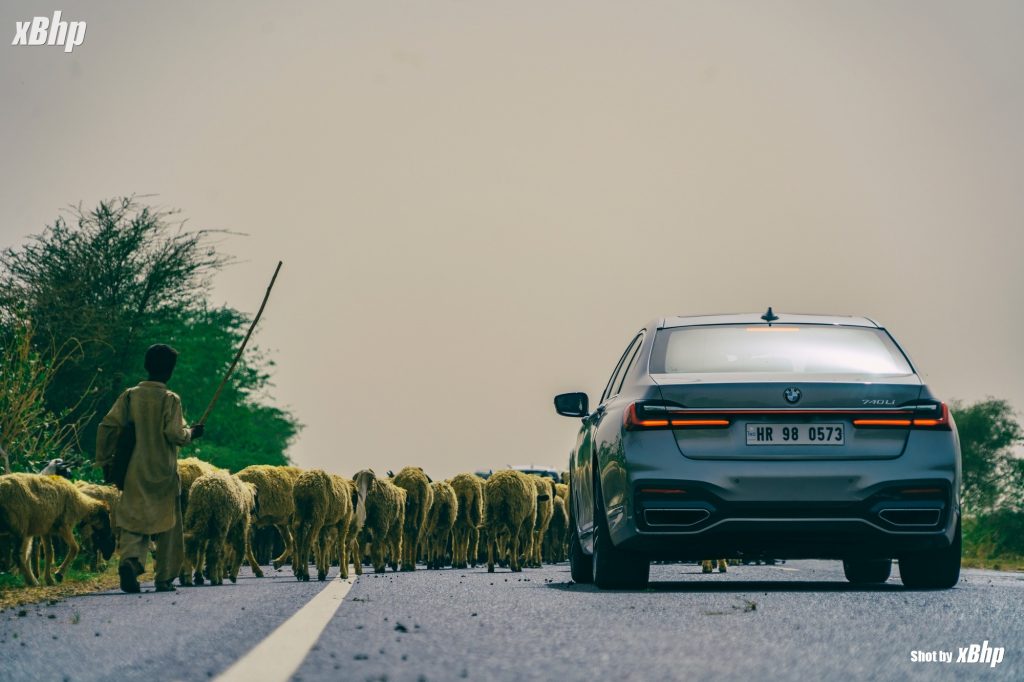
The 7-Series from BMW has always been known to be the pinnacle of luxury and it trades blows with the best of them when it comes to opulence. What that entailed on this particular outing of ours was complete and utter isolation from the elements. Outside, there are dry gusts of winds and heat that seems to vaporise everything in its path and you have no control over that. Inside the BMW 740Li, you have complete control of the ambience.
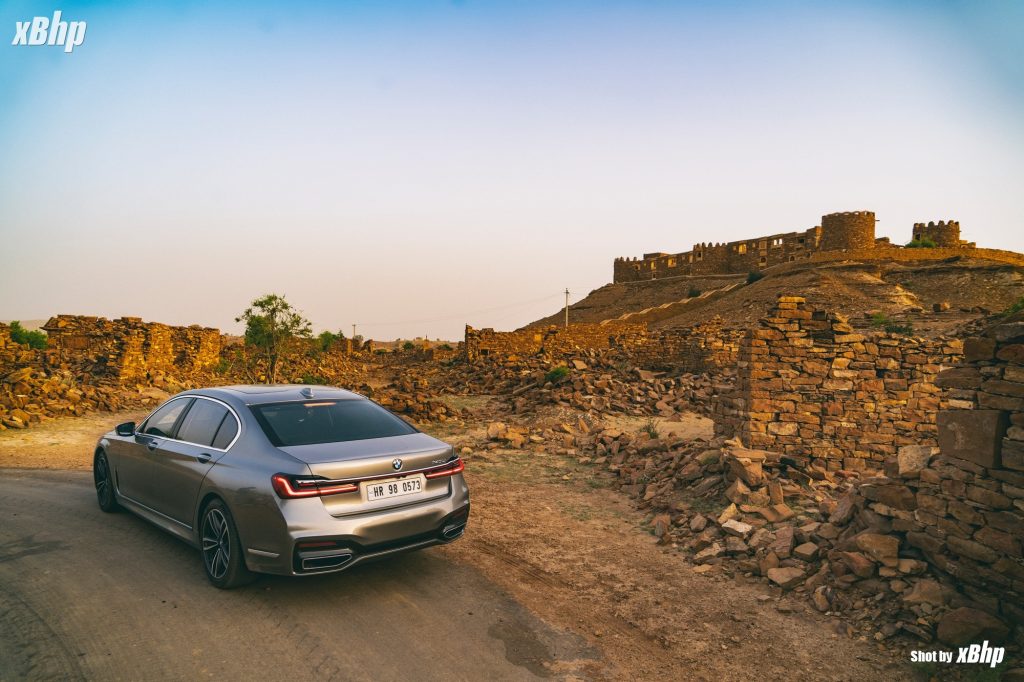
We were already expecting quite a bit from this big Beemer as we had driven it before but here, in these kinds of conditions, it simply blew our minds. On top of that, BMW has always been known to make drivers’ cars and the 740Li is no different. So regardless of whether you are sitting in the back or at the steering wheel, the 740Li aims to be your ideal companion.
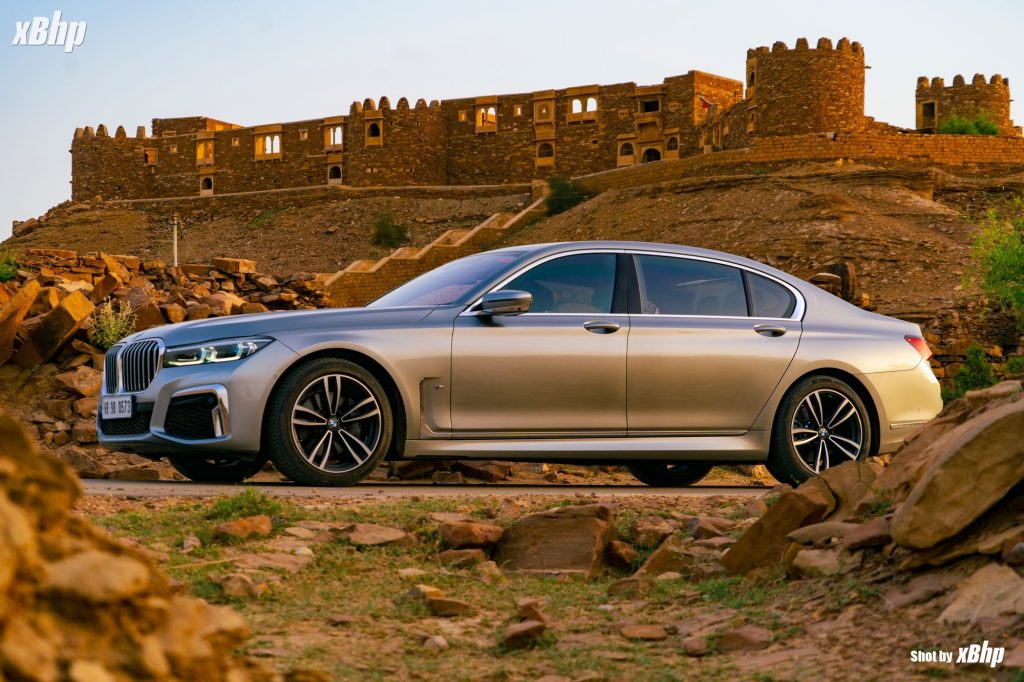
Even during our journey from Delhi to Jaisalmer, we were already in awe of it. It is fast when you want it to but not supercar fast. Then again, it is not supercar brash either. Quite the opposite actually. Even when you are trying to give it the beans, it never relinquishes its mannerisms, grace, and elegance.
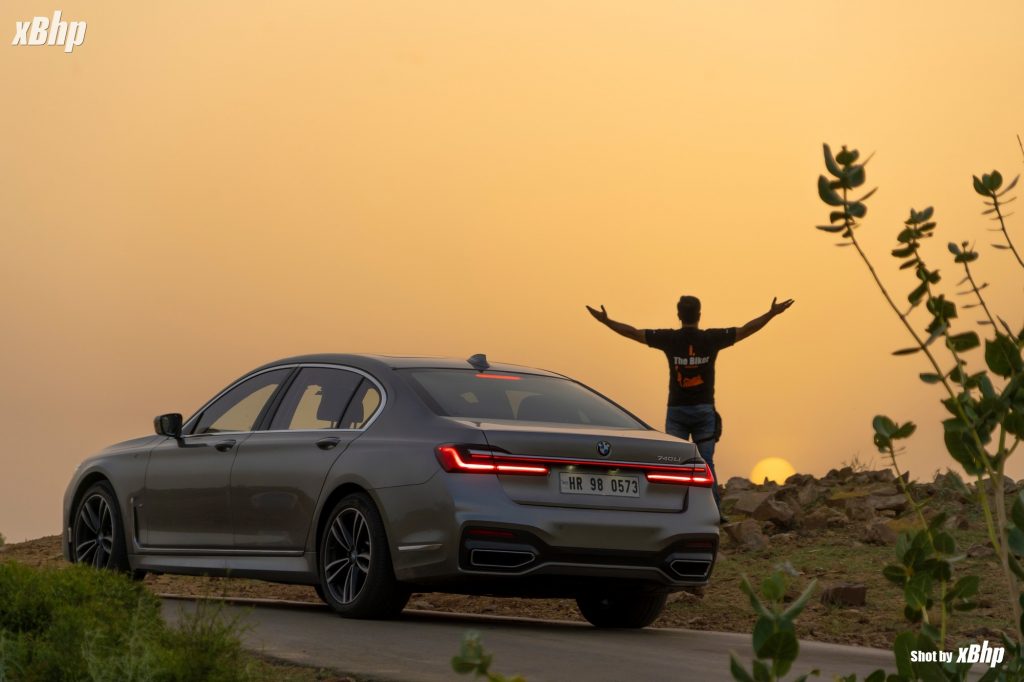
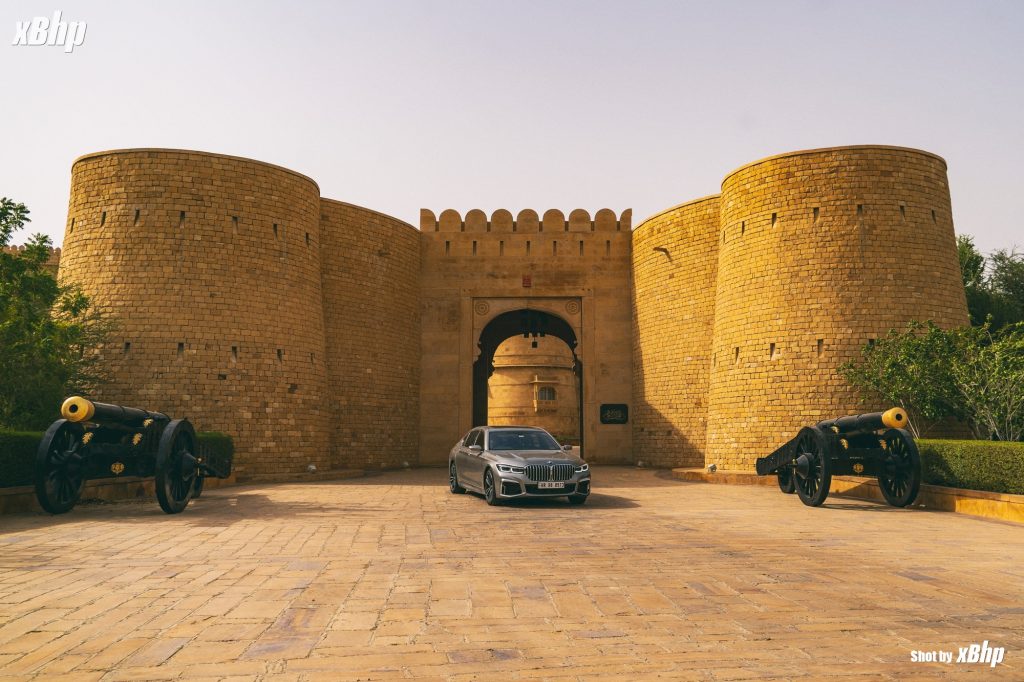
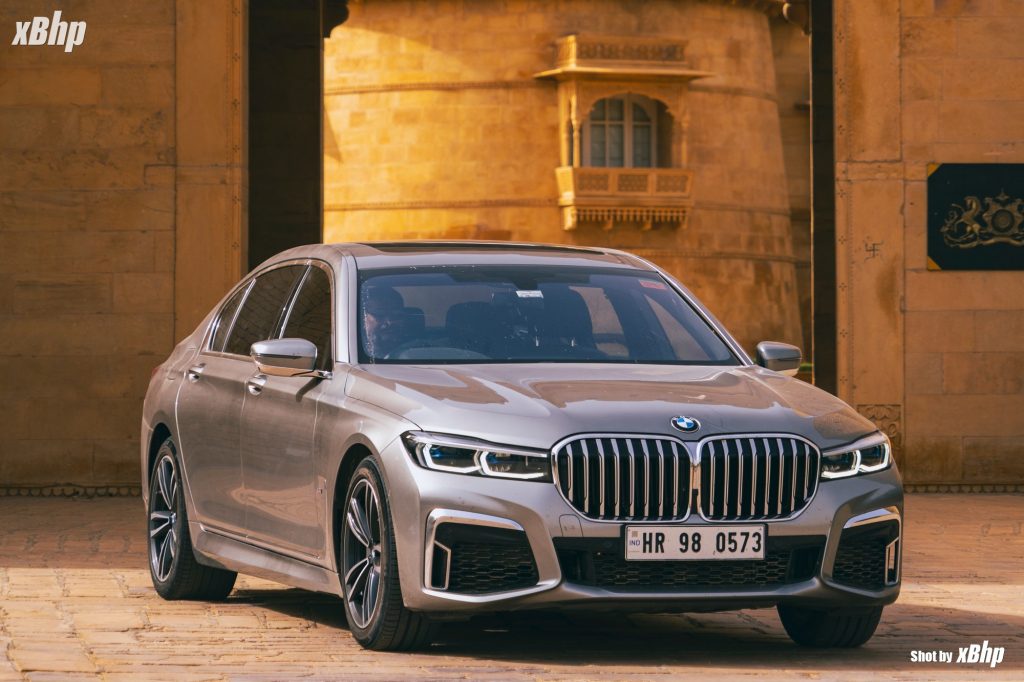
You can tell that by simply looking at the car. The silhouette, the stance, the proportions, the flow- everything is pleasing. The signature kidney grille, not to the taste of many, also grows on you and gels well with the sleek headlamps. BMW 740 Li’s design is not loud and shouty but calm and poised.
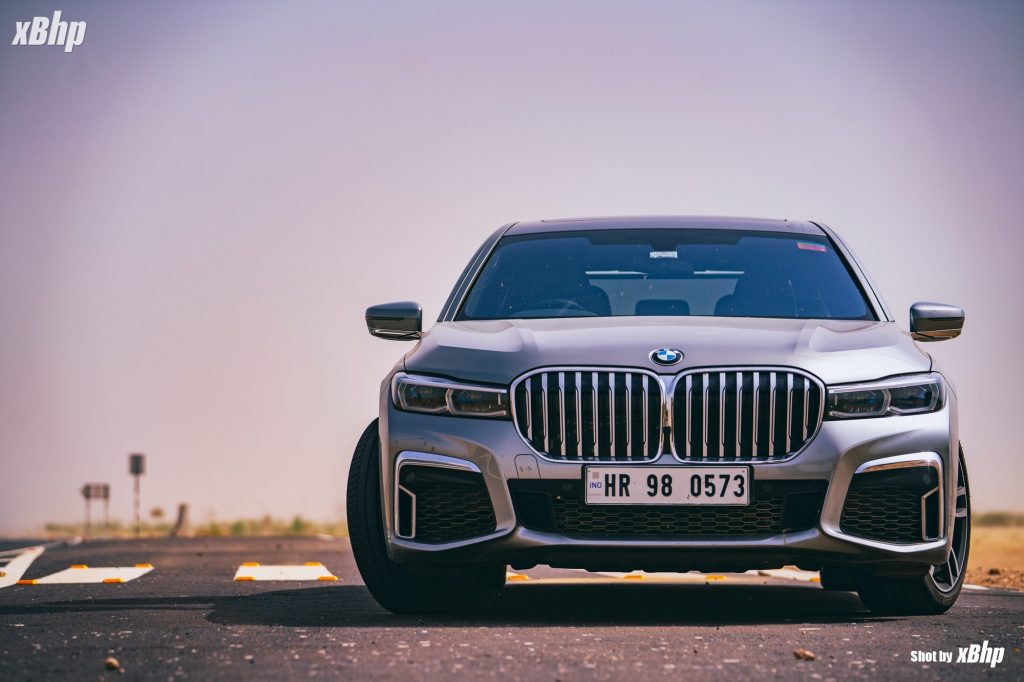
It is the same way on the inside. Just by looking at it from the outside, you can tell that it is a premium luxury car- exactly the sort of car that you expect from BMW. But you can never imagine what all you find on the inside. You want to brag about electronically adjustable seats? Why not brag about heated, ventilated seats with a massage function instead?
It is a big car too. The length of the car sits north of 5 metres and that means that you get a very generous amount of space in the cabin- in the front and in the back. But without taking anything away from the driving experience, this is a car that is best enjoyed sitting in the back. The legroom, the headroom, and the overall surroundings- the poshest of the hotels will struggle to match what the BMW 740Li offers in this regard.

The 7-Series has been there for a while but thankfully it has not been stagnant. It has kept up with the times. Even in this day and age, it is on par with the times if not ahead. The BMW 740Li is laden with electronics and technology. The highlight is, of course, the famed BMW iDrive system. It lets you control every aspect of the car and we mean every in the most encompassing sense we can.
From the dynamics of the car to the ambient lighting and from the drive mode to climate control, everything is accessible and modifiable using nothing but the intuitive iDrive system. And guess what, there’s even a full-sized tablet at the back which serves a similar function in case you are feeling a little too tired (read privileged) to reach the front of the car.
Before we get too lazy, let us switch to the driver’s seat and let us see if the 740Li can uphold BMW’s tradition. After all, when you spend more than a crore on a car, you may find yourself quite curious about what you’re getting in return. We’d say a lot! If a supercar is what you’re looking for, you may contact BMW’s M-division. But let us tell you that this behemoth doesn’t half-pong either!
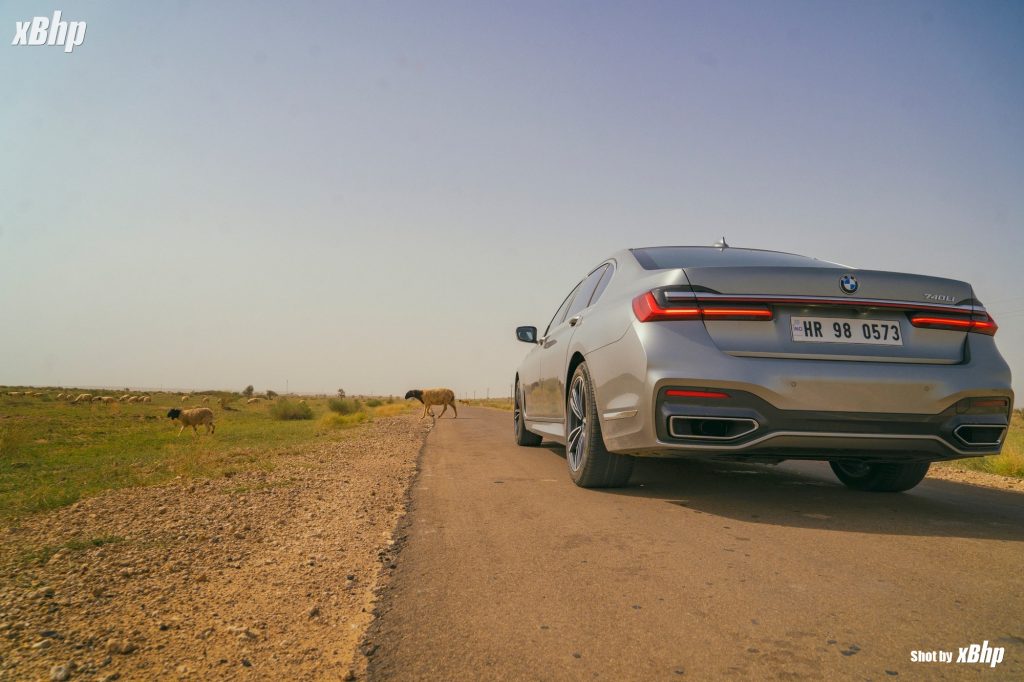
While the actual experience may serve as a better indicator, in this case, as you read our experience, numbers would suffice. It does 0-100 km/h in 5.5 seconds. This is a 5.2m car that is loaded to the brim with tech and features and creature comforts. But it goes to 100 from a standstill in 5.5 seconds. That is quick… really quick!
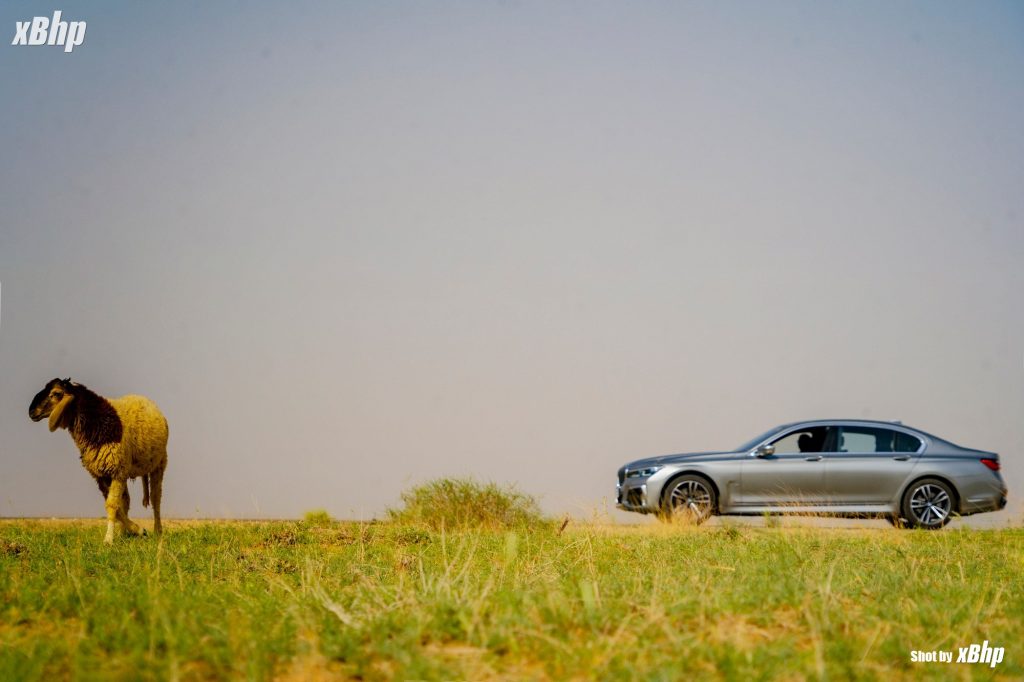
The top speed is limited to 250 km/h, as is the case with most road-legal BMWs. But you do not want that kind of mass travelling at that kind of speed unless you are on a racetrack. And the racetrack is the only place where you may be able to see some limitations of its heft. But hey, we did mention that if a racetrack is where you want to be, talk M.
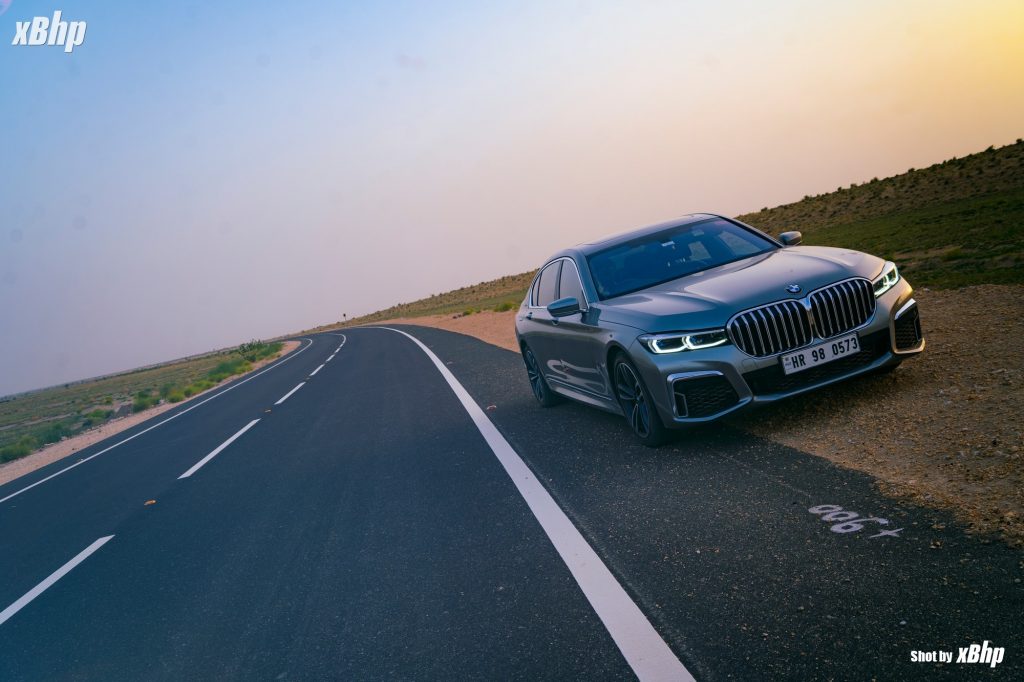
The engine that propels the BMW 740Li is an absolute gem. The 3-litre twin-turbo straight-six is one of the signature dishes served by BMW and it is delicious. You have 340 horses and 450 Nm of torque on tap which is more than enough. But more than anything, the mannerisms of the engine are what you’re going to love the most.
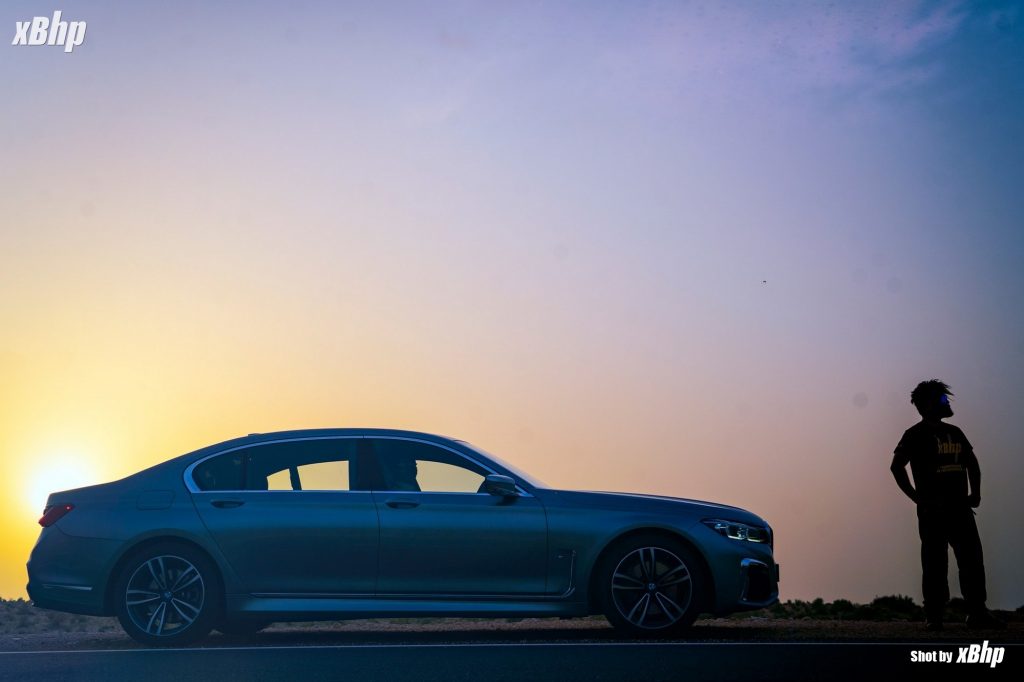
It is smooth like whipped cream and it is never devoid of grunt. Turbo-lag? Unless you belong to the Senna or Schumacher family, you probably wouldn’t be able to tell. We couldn’t… to some extent. The redline is lofty and if you do reach it, you finally realize that the BMW 740Li is powered by a traditional internal combustion engine.
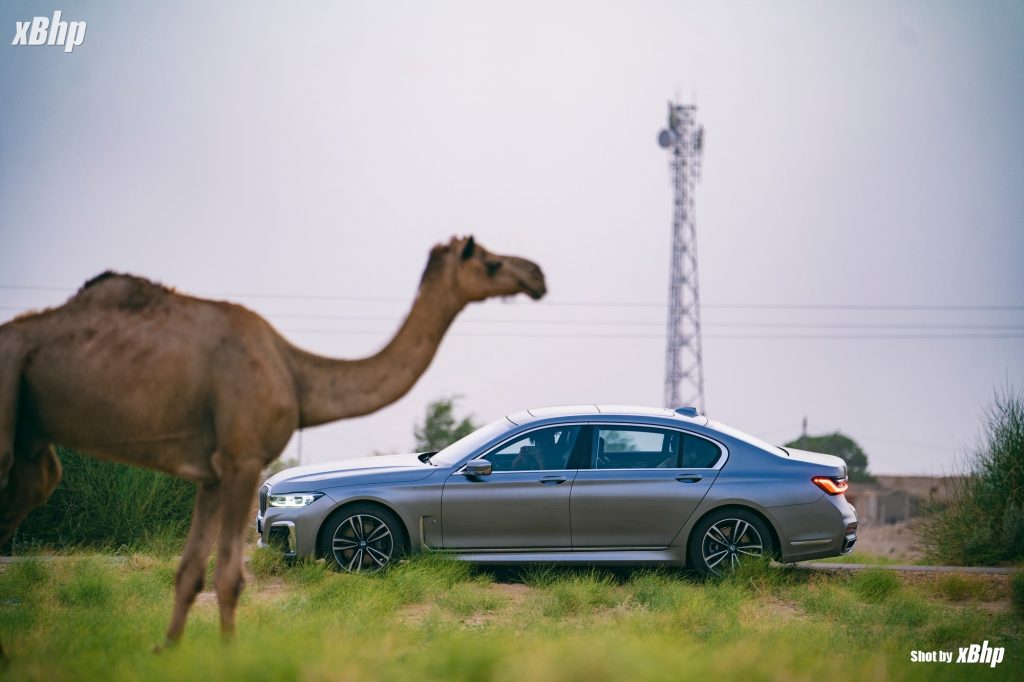
It is refined and quiet almost throughout the rev range but at the top, it does make its presence felt. While the cabin remains nearly whisper-quiet even then, if you want you can put the Harmon-Kardon sound system to some good use and call upon Beethoven to perform for you. Or Freddie Mercury.
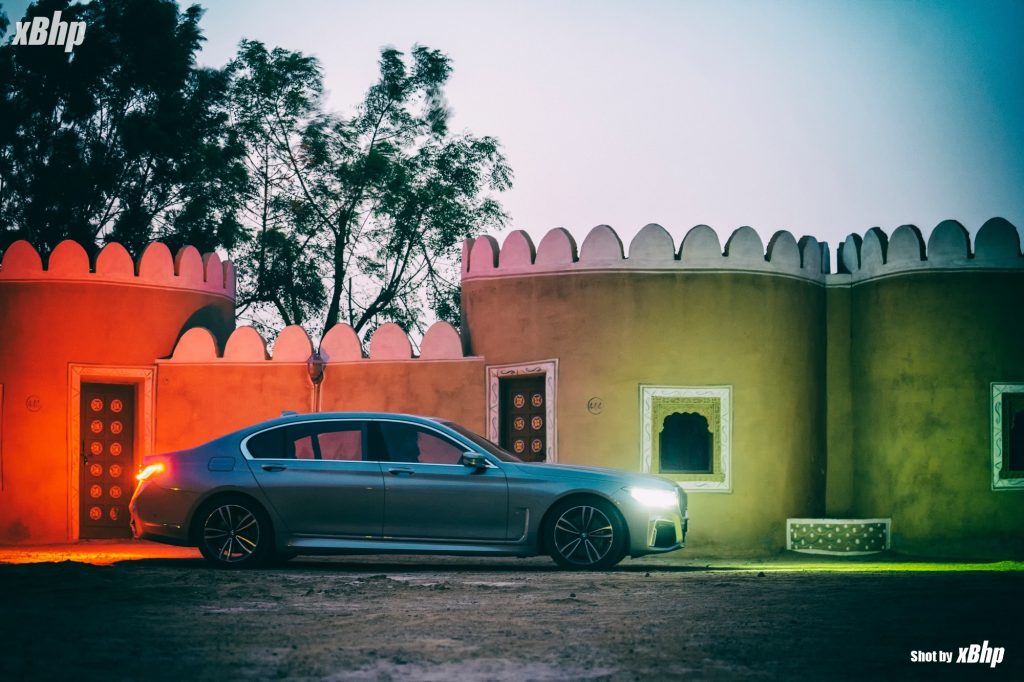
How does it handle? Unlike any 1,800 kg car is expected to. And that is what makes cars from BMW such darlings. Even when you load them with all the comforts on God’s green earth, they still feel intent and willing to push hard. And again, this is a car that gets 515 litres of boot space!
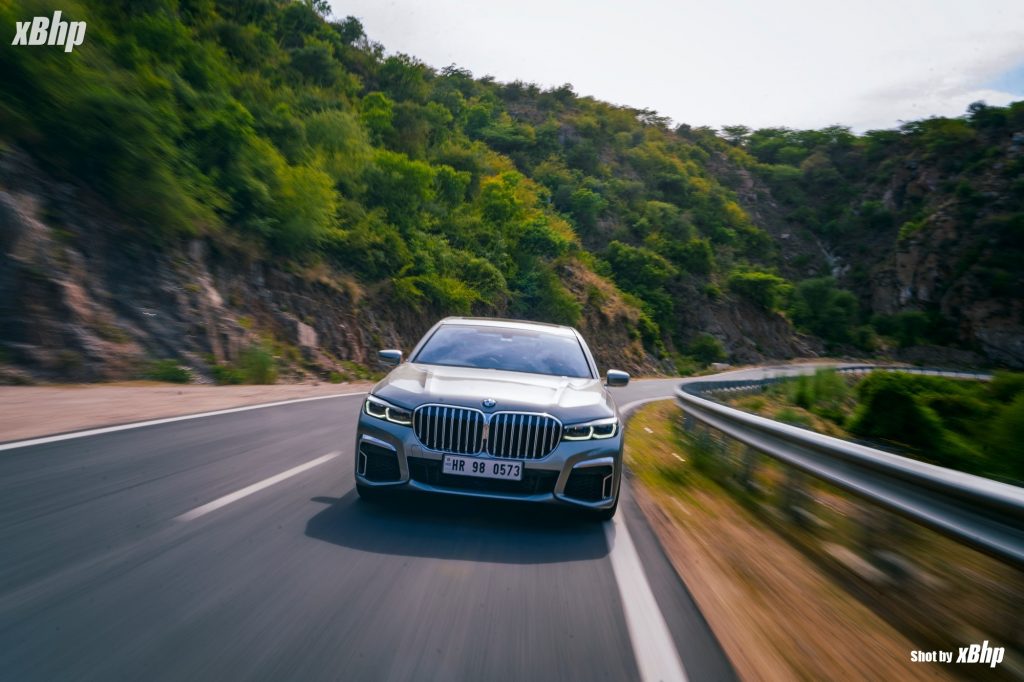
The air-suspension is a major contributor to that. Simply switch to Sport and you’ll know. It is responsive and rarely lets you feel its weight. The steering feels very organic too. And then, when the tarmac does not support any sort of exciting driving, the suspension suddenly turns into something that makes you feel like you’re sitting in the clouds.
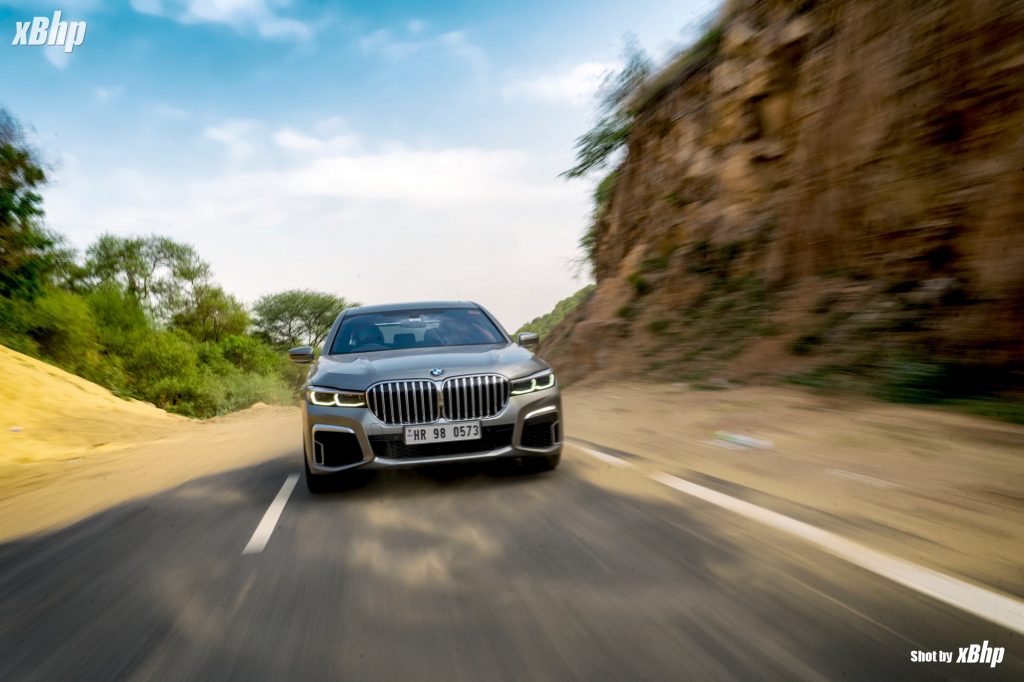
Opportunities that let you experience something like this are rare. Opportunities that let you experience something like this in the vast openness of the desert are rarer. We made the most of the one we got. And what can we say; it has been a sheer pleasure.
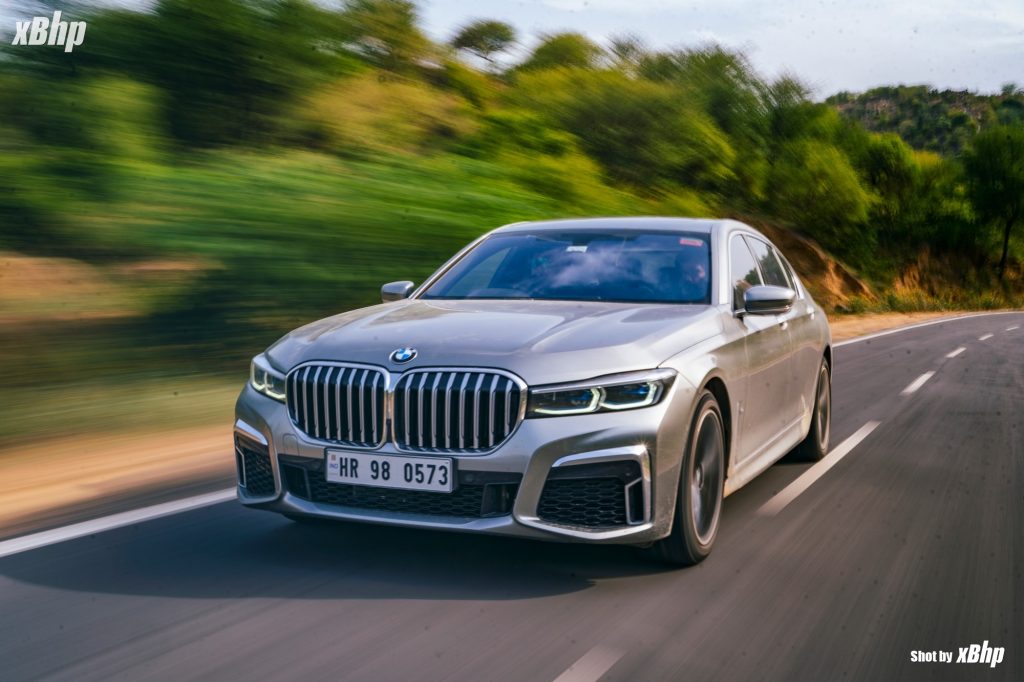
BMW M340i xDrive: Top-end 3-series is a worthy ‘M3’ trailer!
 Apr 2021 Sundeep Gajjar
BMW,Cars
Apr 2021 Sundeep Gajjar
BMW,CarsWhen it comes to the BMW’s shiny new M340i xDrive, the internet was abuzz with many tags. The missing link in the 3-series, the quickest car assembled in India, and so forth. With all that happening, I did what I had to do- shun the internet till I actually drove and experienced the car myself.
The reason was simple. No matter how much you try, these things impact you subliminally and I wanted to drive this car and feel all that it has to offer without any prejudices. After all, it is a BMW and I did not want to corrupt the Sheer Driving Pleasure with preconceptions. Fair enough, right? And just like the Cheetah, this was my shortest drive of a performance car so far. Just 100 kms or so, as the next day I had to leave on the 10,000 kms #roadTripUnited2021! But I couldn’t leave without driving it.
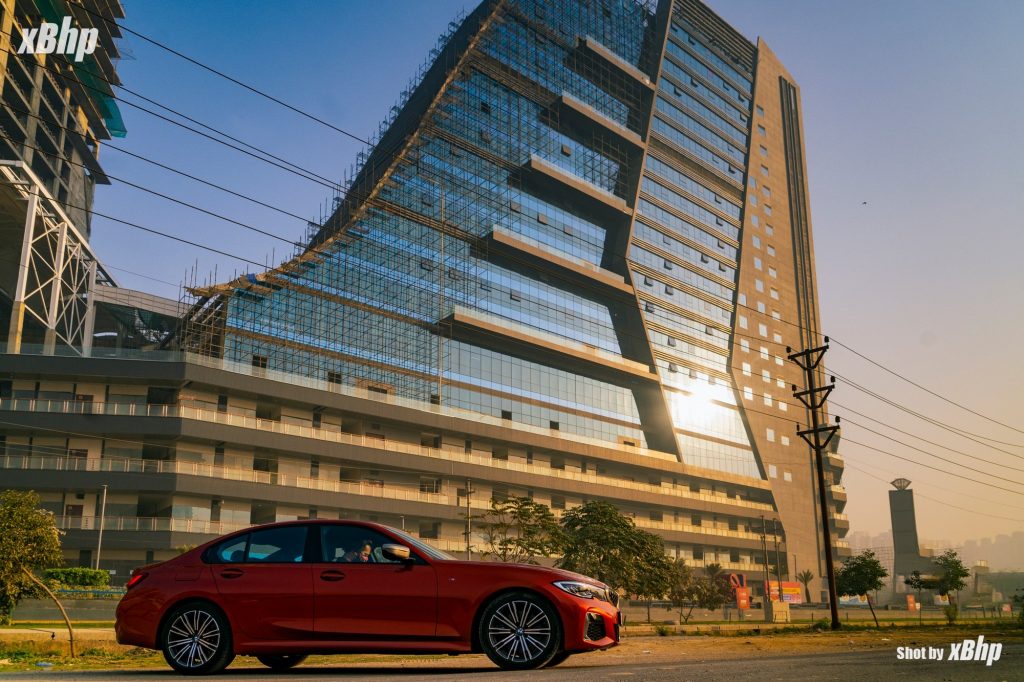
BMW has been making cars for a while now and for the most part, their name is associated with some of the best true drivers’ cars. That is even more true for the 3-series. The BMW M3 (E46) CSL is still one of the best cars ever made in my opinion and my only gripe is that I did not get to experience it.
Then with time, the 3-series became more and more practical and so, the gap between the 3-series sedans and M3 kept growing. This stood true for this generation as well. That is, until the launch of the BMW M340i xDrive.
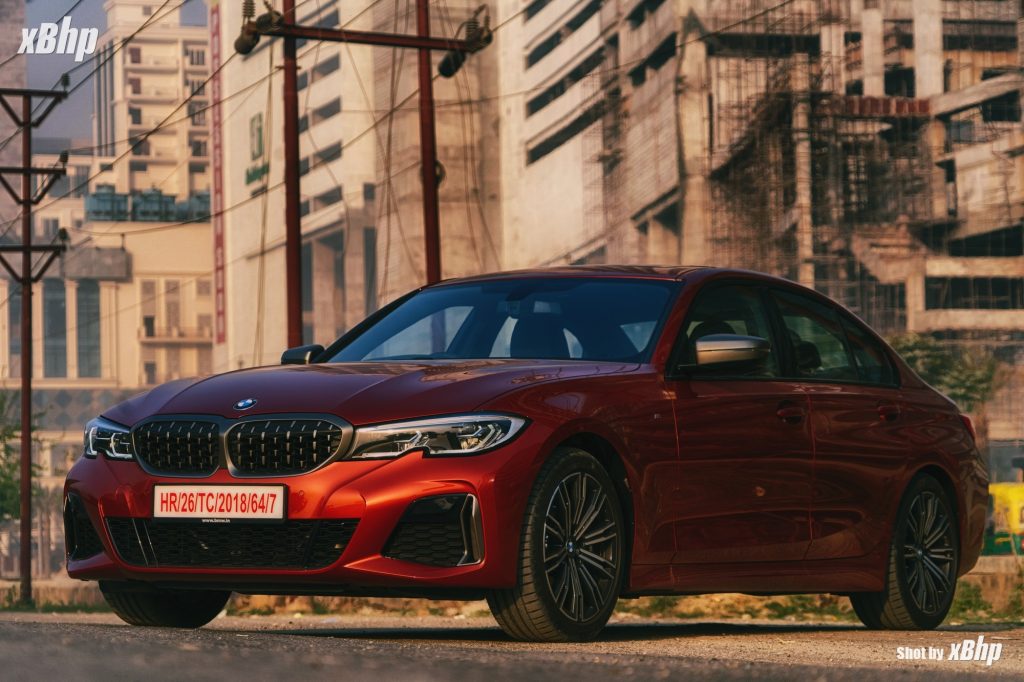
Why so? With 387 bhp and 500 Nm of torque, it is much quicker than the 3-series cars but not quite as extreme as an M3. And starting from INR 6,290,000/-, its price tag is not as eye-watering as the M3 but slightly more than the other 3-series sedans. So that does kind of make it the missing link or a bridge between the 3-series and the M3.
With a 0-100 time of 4.4s, it is pretty much the quickest car assembled in India. So the tags are justified and the numbers give away the verdict too. And it was intentional so that we can get that out of the way and simply talk about driving the car.

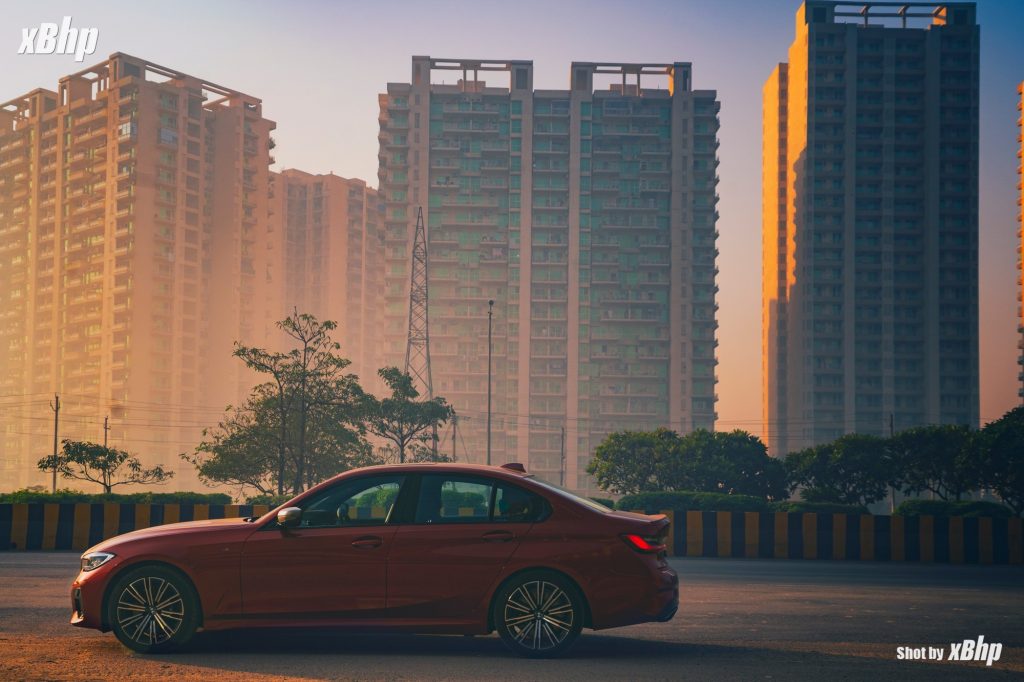
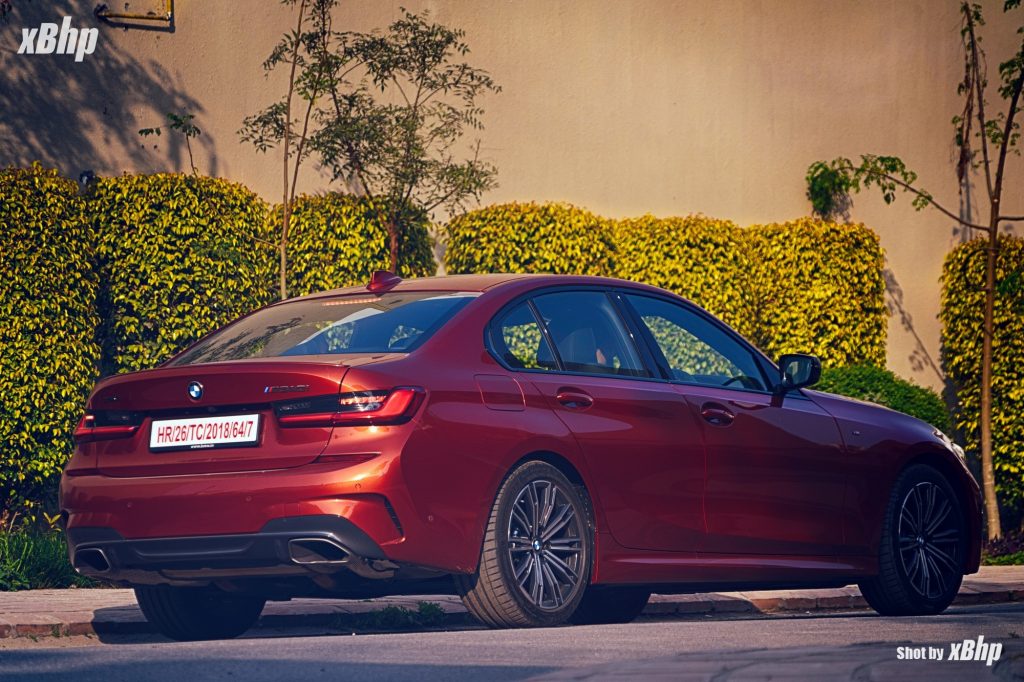
First of all, the looks. I am going to be honest here; I love how the car looks. It started with the very first glance and for the most part, it was the colour. They call it sunset orange and it is without a doubt the best colour you can get this car in. Now, down to the nitty gritties. There is not much differentiating the 4-cylinder 330i and this special 6-cylinder wild-child. But if you are not able to spot the differences, maybe you should leave it alone, no offence.
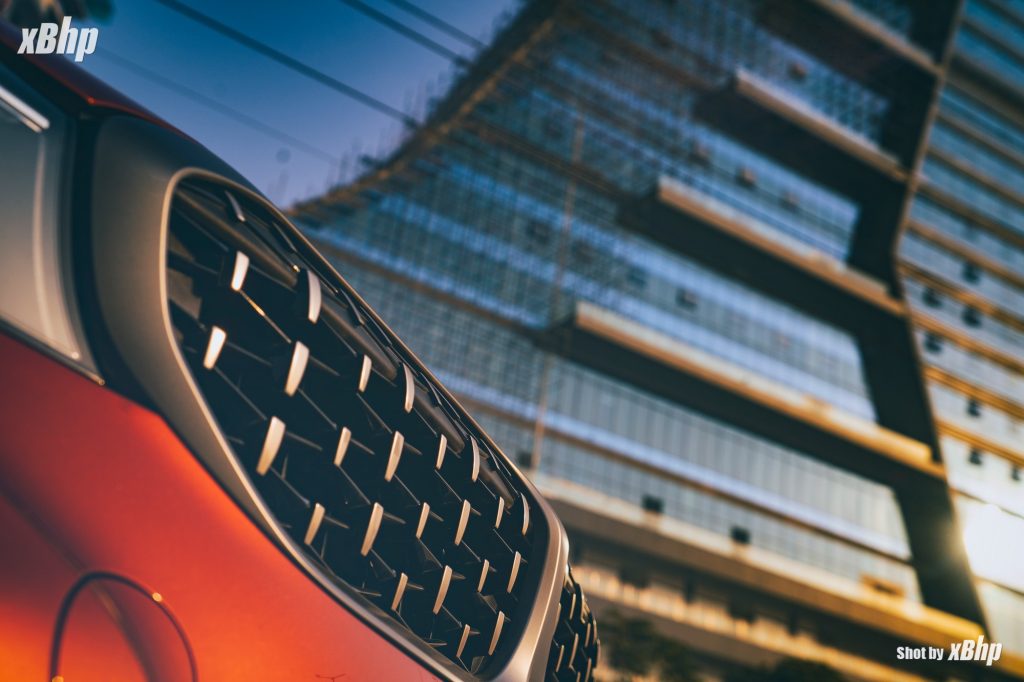
Let us start listing them out. First of all, the front and rear bumpers. They are designed with more sportiness in mind and the added grey accents further accentuate that. The mirrors and the grille-surround also get a similar treatment. The grille itself has a significantly different pattern and it also does its bit to enhance the sportiness being portrayed visually.
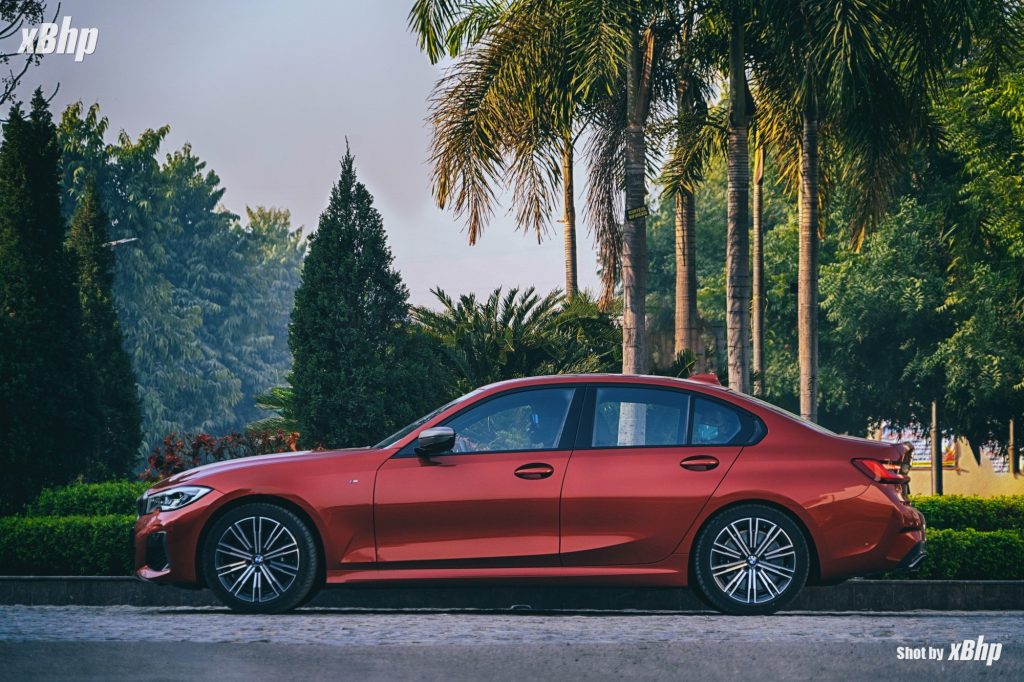
Then there are the headlamps which now have BMW-signature Laserlight and bigger DRLs as well. Finally, the exhaust housing is now trapezoidal. The wheels are the same 18-inchers as the 330i but you have an option of bigger 19” wheels.
Step inside the car and there too, there are subtle differentiators. While the cabin is largely similar to the 330i, the M340i xDrive does get some bits that give away its M-credentials. The doorsill, M leather steering wheel, M seatbelts and so forth. Visually, you can see the M callipers but that’s the braking department which we’ll get to shortly.
The equipment list on the inside is also more or less the same as the 330i M Sport. Ambient lighting, 3-zone climate control, digital instrument cluster, 10.25-inch touchscreen with a fan favourite in the form of gesture control. There’s a heads-up display and also, Android Auto alongside Apple CarPlay. The latter work wirelessly too and there’s wireless charging as well.
All in all, there’s enough distinguishing the best of 3-series from the rest. And the things that remain the same as well should be no cause for complaining as even the 330i is a serious piece of kit when it comes to the gizmos and tech-wizardry. Oh, let us not forget the 16-speaker Harman Kardon audio system on which I duly played Thunderstruck while thrashing this car around!
The reason behind that particular song is that there are not a lot of things that can pump you up more than AC/DC. And you need to be pumped up while driving this car because this has been one of the most engaging cars I have driven in the recent past.
And that’s the reason why I do not like to be prejudiced. xDrive means 4-wheel drive and that makes cars less engaging. It is a sedan and it weighs quite a bit so it can never be that engaging. All of that is BOLSHEVIK! And you know what I am saying despite keeping it PG-13. So, without further ado, let’s get down to it!
Predictably, we will start with the engine. A 3-litre inline-six with M TwinPower Turbo tech. God only knows how happy it makes me seeing the iconic straight-six engine in a 3-series car again. The turbos on the other hand are not the best kind out there being twin-scroll type. So there is a slight turbo-lag but BMW, being BMW, have implemented those cleverly enough to make up for it. So despite there being some of it, the effects of the dreaded turbo-lag are scarcely felt in this car.
387 bhp of power arrives at 5,800 rpm and it makes sure that you get proper entertainment when you put your foot down. Also, the 500 Nm of torque that the engine provides you with between 1,850 rpm and 5,000 rpm has a part to play in the urgent acceleration and the fantastic 0-100 km/h number.

The redline sits at a lofty 7,000 rpm and you just have to hit that in every gear, every time. It is such a visceral, such a BMW feeling to do that and still having the engine running as smooth as silk. Another factor in the brisk acceleration that you witness while driving this car is down to the xDrive system. Since the power is being transmitted to all the wheels, it is put down on the tarmac more effectively.
There are many modes to choose from. Eco Pro makes it a dud for junkies like me but it is a very practical addition since it is still a proper sedan and the presence of these modes makes it a perfect daily driver. But what you wait for are Sundays where you sneak it out of your garage, still in Eco Pro so that the noise is muted, trudge around till you hit the stretch of your liking and… prepare.

Now, take a deep breath, put the M340i xDrive is Sport+, engage the launch control, and GO! In Sport+ the car transforms into almost a purebred sports car. The engine noise is glorious, the shifts are lightning quick and downshifts are rewarded with all the pops and crackles you can ask for. The BMW M340i may not be a full-fledged M3 but it sure is a more than ample trailer of what BMW can do when they wish to make petrolheads like me grin ear-to-ear.
I must also talk about transmission. 8-Speed Steptronic system from ZF makes for lightning-fast shifts in Sport+ mode. But what I liked, even more, was its ability to hold a gear as you hover around the ideal rpm to shift into the next gear. The top speed may be limited to 250 km/h but you just know that this car can do a lot more!

Onwards to handling then. The Magic alphabet would mean nothing if the car that adorns it doesn’t know its way around a bend. The BMW M340i xDrive sure does. Starting with the suspension, the M340i xDrive, despite missing out on adaptive suspension damping, boasts a stellar suspension setup. The work done on the setup by the M-division is very much apparent.
In the corners, the car feels much more solid and the body roll is kept properly in check. The ride height is 10mm lower and the suspension is firmer. That helps in the car maintaining its composure even in the gnarliest of corners and in a straight line at considerable speeds.

With this agility, there was bound to be some compromise on the ride quality. So inevitably, there are some but it is far from being jarring and the M340i xDrive still feels pliant and luxurious enough. So I’d say that BMW and their M-division has worked really well to make even this passive setup very well balanced.
Finally, we have bigger brakes too with M callipers that make for a precise and sporty braking setup that will not lose its sheen even if you were to take it to the racetrack. And you’ll find that this car will feel at home even there. This brings us to our final and most important aspect; does it still feel like a proper BMW despite the all-wheel-drive setup?

The answer is a resounding YES! Firstly, there is a rear bias in terms of the power delivery and you can tell that from the get-go. It may not have the option to switch to rear-wheel-drive completely like the M3 but it still feels quite close to one. The xDrive system aids practicality which still is a priority for a car like this but what we are here for is the magic of the M Sport differential.
With the electronically controlled fully-variable locking rear-differential, the M340i xDrive is able to achieve an elusive balance. While the differential takes care of the torque-understeer in corners by sending more power to the rear wheels while oversteer is also minimal (a happy-sad feeling) so that the drivers who were only looking for some extra power aren’t left unnerved. The special trick that makes this car such a hoot in the corners is something else.
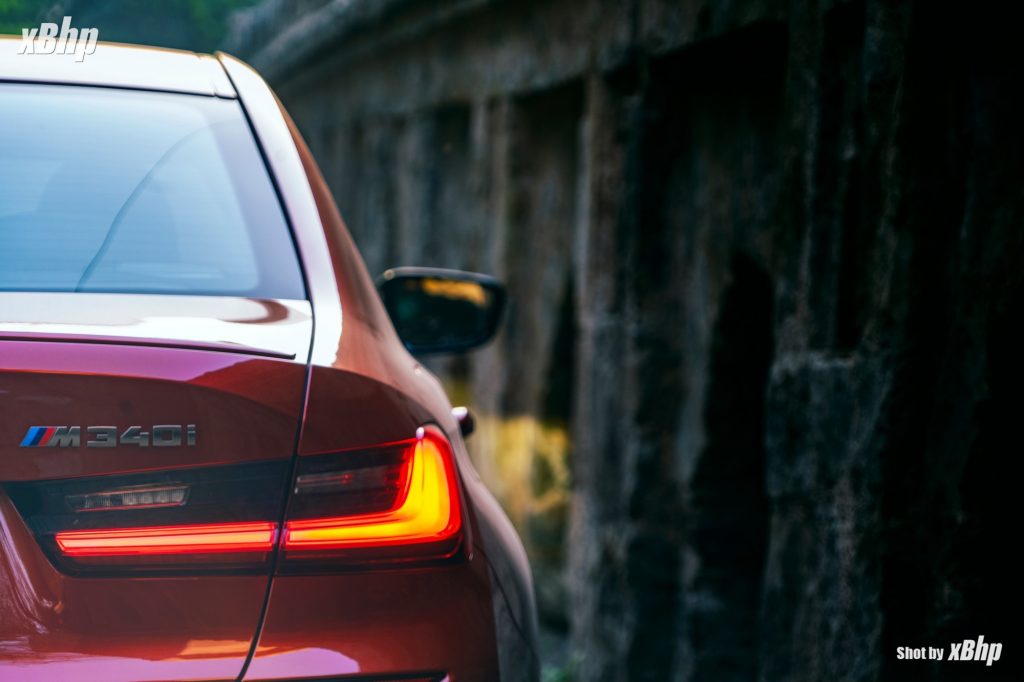
Instead of applying brakes to counter under or oversteer, it uses the engine’s power to neutralize them. The differential allows the power to be sent to the outside wheels instead of applying brakes on the inside ones. What happens in that situation is that the outside wheels, which are loaded, can transmit more power to the road thus enabling quicker corner exits with loads of grip.
That is all the tech talk we need for the day. The bottom line is that the ill-effects of understeer are countered well, and so, the BMW M340i xDrive feels very, very close to a rear-wheel-drive car but is devoid of excessive oversteer. Yet, you can give it the beans big time to let that happen and make the rear step out but you have to be ready to catch it before things get snappy! Now you know what I meant when I called it extremely engaging.
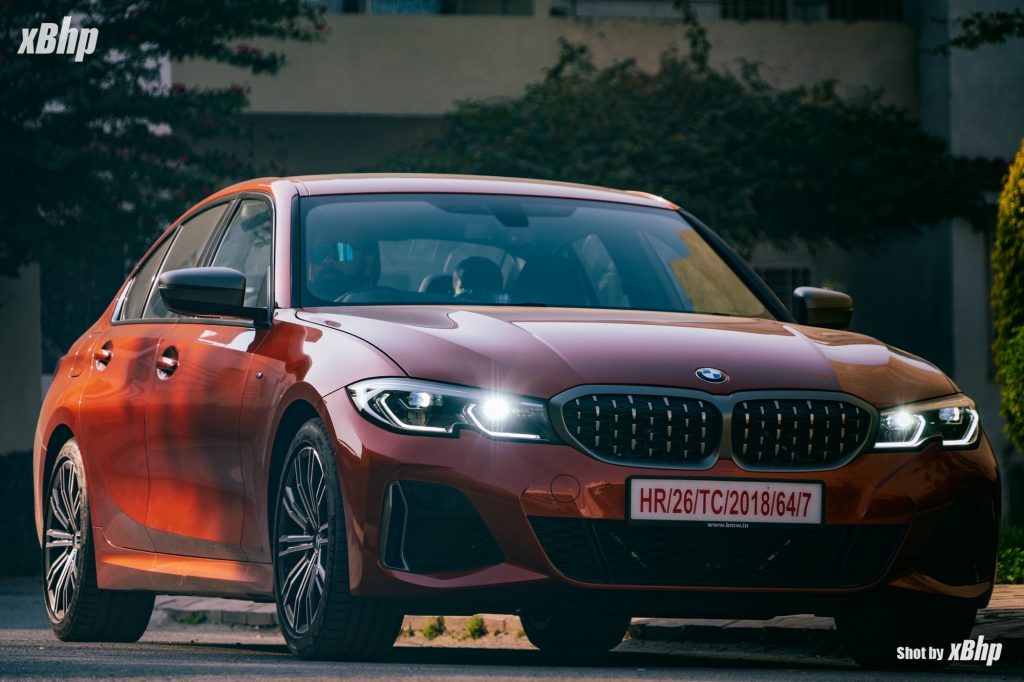
In simple terms, I love this car. At the price tag (well..), it is all that one can ask for and one of the best cars if you like to drive. That said, it is just as good to be driven in and to be used as a daily driver. Those looking for more excitement may want to look at the M2 Competition but you do not want to be living on the edge all the time. That is where the BMW M340i xDrive excels- you can drive it around town on a daily basis in its Logan avatar but call upon the Wolverine too as and when you like.
Long live Modes and Mode Selectors!
P.S: I do feel that if they place it right, this can be the ‘Mustang’ for BMW, at least in India. It would be a killer in BMW M GmbH colours too! And if you ask me, I pray for the day when BMW can sell this car at a price tag in the tune of sub-50 lacs in India. I know. I know. If wishes were horses, so many of us would have dared to have almost 400 of them under four wheels that we drove here.
Triumph Trident 660 Review: ‘TriedAnd’ Tested in the mountains!
 Apr 2021 Sundeep Gajjar
Bikes,Motorcycles,Triumph
Apr 2021 Sundeep Gajjar
Bikes,Motorcycles,TriumphThe Rocket 3 could have been well named the Trident from Hell. Triumph Trident 660 though is much more meek. Probably a Trident suitable for his minions? But then if you know, it is the minions who always are more carefree and have more fun! And I just got off the Rocket 3 R and drove off to Dehradun in a Thar. The perfect representation of the adage, Mountains are calling and I must go. Perhaps the best way to review the Triumph Trident 660…

Writing after riding, riding after writing. That’s the life of a journalist. On some days you love that life and on some days, not so much. After getting off the saddle of the Triumph Trident 660 and ready to type away, I can say that this day makes me love that life, love it to death and back. Triumph knows how to make awesome motorcycles. What they don’t know is when to stop. And it’s not even a complaint.

Spoiler alert: The Triumph Trident 660 is a bloody fantastic motorcycle and in my opinion, the best that one can get their hands on in this segment and, if I may be so bold, it is encroaching some other segments for that title too. But hey, don’t leave just yet. Don’t you know that like all things in life, the journey is as important as the destination? Here too, I have told you about the destination but the journey is what was more fun, for me and hopefully, it would be the same for you. I’ll start by telling you what the Trident 660 reminds me of, in addition to being a slight (and strong) reminder of the original Street Triple 675.

It reminds me of a Kiwi. Not the bird, not the ethnicity, but the fruit. The fruit looks like a stone and is as uninteresting as one too. But cut it open and you know why it’s so expensive. The Triumph Trident 660 reminds me of it not because it’s expensive (it isn’t) but because of the internet generation trying to judge it based on a spec sheet. Blasphemy, I do declare! It is a sin to do so especially when what you have on hand is Triumph branded.

Nowadays, when 200 bhp is the norm, Triumph’s 660cc inline-3 makes 80. Self-thinking and self-adjusting suspension get the spotlight nowadays but here we have Showa’s 41mm USD forks and a Showa monoshock. No IMUs chipping away at 0s and 1s along six-axes, no overload of little joysticks and buttons and whatnot. There are a few but they are very intuitive. More than anything, it is just a motorcycle. And God knows how much I miss that; a motorcycle being just that… a motorcycle. The Triumph Trident is a fantastic ‘motorcycle’.

Talking about buttons, I have to mention that there is an optional Bluetooth package that enables the bike to connect with your smartphone using an app that can be downloaded on Android or iOS. It allows you to read condensed navigation on the console. You can receive calls and connect with your headset. Also, you can even control your GoPro without taking off your hands from the bike. I tested the navigation and it can save your neck unless you do not get into a crowded city where watching a full-blown map is more useful and quick. But it works and is a nifty add-on.

Now talking about the rest of the bike, let us start with the design first. There is no doubt that Triumph knows how to package their motorcycles. It is especially difficult with roadsters. That is because fairings can help you hide some mess but with roadsters, everything is out there. So it is an achievement that all the wiring mess is well-hidden on the Trident 660. Overall too, the motorcycle seems compact and well-built. The tank with that peculiarly branded tank-grip of sorts looks contrasting and pretty cool. The rear is pretty neat too and again reminds you of the original Street Triple sans the grab rails.

Now, the front is what I really like. It was almost inevitable that after contraptions for headlights were the rage, things would go back to the classic round ones. While I like the trend, there are only so many ways in which you can differentiate your light circle from someone else’s. The Trident 660 pulls it off and quite easily too. A shapely band with Triumph branding cutting the circle in half? I can dig that. There is something about round headlights that makes them so attractive.

Overall, I like how the Triumph Trident 600 looks. It looks simple, it looks elegant and it looks purposeful. Purposeful as in something that looks like its description- an urban roadster. Up to this point, I was thinking that I might find something to nitpick about but it was surprisingly hard to actually dislike anything about this bike. But since it’s my job, I’d say the horn wire looks unwieldy. Blame Triumph for making my job tough.

Now that we are past that point, I’d say spec-sheets are a waste of paper and Adobe subscription if it’s a PDF and looks are to each his own. Nothing makes or breaks a motorcycle more than the performance, the how of how it rides. So, let’s get to that because it will take a while and I mean it.

Starting with the best thing about the Trident 660, I absolutely adore this engine. It is everything you want in a bike that does not have you on the ragged edge all the time. Instead, it is very easy to deal with, very easy to live with, and very easy to wring the heck out of it when you are in the mood. While the innards are new and improved, being relatively layman, I will say that it is a slightly shorter stroke variant of the good ol 675.

What that results in is a blindingly quick-revving, quick-shifting, and punchy little number. Peak power arrives at 10,250 rpm. But it does not feel that way. The whole powerband seems like it’s full of the 80 horses and 64 Newtons on offer. It pulls away effortlessly and gathers speed quickly. It literally feels like flying through the gears and before you know it, you are in the top cog.

In a regular motorcycle that may translate to overeagerness where the motorcycle seems like it cannot hold a gear and needs too many downshifts for overtaking manoeuvres on the freeway. The Trident 660’s power delivery is tuned in such a manner that despite those hurried manners, it is surprisingly tractable and possesses terrific roll-on acceleration. Even while cruising in the 6th gear, it seldom requires a downshift for overtakes.

So it is very different from the original Street Triple in the sense that it is an easy-to-ride motorcycle that can be somewhat of a hooligan if you want it to be while the former was a hooligan that just happened to be rather easy to live with and deal with. And so, it is not a perfect track-day weapon but it is a perfect motorcycle for learners and the perfect motorcycle for the experienced ones to have some fun on. After so long I have experienced what it feels like to have the throttle wide open on a motorcycle. Take it from me that it is much more fun to wring the life out of a small motorcycle than live in fear on a big one.

Building on that, let us move on to the transmission. It is slick despite being devoid of a quickshifter. It is crisp and I love the glorious downshift noise. I was never worried about the sound department because Triumph always nails it. Now, despite that, I’d say that this motorcycle needs, no, deserves a quickshifter. Because of it being a bike so light and peppy, I was throwing it around the hills of Doon like no one’s business, and I definitely want to do it more efficiently if I have to negotiate hundreds of hairpin bends in a day and throttle out of them…

Adding to all that finesse is a soft power delivery with precise fueling. As a result, you have on hand a butter-smooth and city-slick, roadster. Also, you have traction control so that you can enjoy the ease of the Trident 660 and you have the option to switch it off if you feel like the front tyre needs some air-time… for cooling purposes, of course. On that note, I did feel that the traction control does feel a tad intrusive and dominant, especially when you go over a speed breaker or a pothole the engine takes time to come back to power. It just didn’t feel right. But maybe it can be fixed with some manual settings.

Moving on, let’s talk about the handling. Before that, let me point out that it weighs 189 kg fully fueled and road-ready. Agreeably, it is not the lightest motorcycle out there but that is still a pretty good number especially when you have 80 horses to haul that mass around. Even at slow speeds, it feels like an incredible light and nimble motorcycle. Easy to slice through the traffic and easy to back up in case you get over-excited and find yourself in a place where you think there was space. Happens to the best of us.

Triumph has a history of making motorcycles that are phenomenal handlers. The Trident 660 is no different in that regard. What is surprising though is that it is devoid of all the electronic trickery. Basic suspension, no interventions, no nothing. This is one motorcycle that tells you that among the people working at Hinckley, we still have some good ol tuners. Despite the setup and hardware being rather basic, it has been tuned to near perfection. Lack of high-end parts doesn’t mean that they have skimped on the fun or handling part. This is still one of the best 600cc nakeds out there and it’s more affordable than many.

When you are riding it slowly, the Trident 660 is easy to move around on. It is compact and agile. Gather some speed and you are assured that it is quite surefooted too. Now, Triumph did us, and themselves, a major favour by taking us to the mountains for the Trident 660 for its first ride. Majorly because that is where you can thoroughly put the motorcycle’s handling prowess to test and minorly, it just looks beautiful in the setting.

The suspension is mostly pliant on bad roads. Only the harshest and sharpest of bumps are felt by the rider. But this minor niggle is an extremely small price to pay for the rewarding experience that riding this motorcycle hard is. The chassis is so sublime and so balanced that it makes you weep with joy. It is responsive but not overly so which makes some motorcycles twitchy. Yet, it is very happy in the corners and tracks the intended line effortlessly.

The best part though is that even if you make a mistake, it is still very much composed and makes you rectify those. A brilliant tool for learning the tricks of the trade. Truth be told, I rode the Trident 660 immediately after completing #roadTripUnited2021 with the Rocket 3 R and the Ninja H2. And trust me anyone would be much faster on the Trident 660 in the mountains than those two behemoths. The fun factor is unparalleled and it also takes into account how carefree can you be with your motorcycle.

The engine plays its part here as well. It makes exiting the corners very exciting with its omnipresent grunt. Along those lines, the Trident 660 is one brave middleweight. I say that because it can take a surprising amount of beating and bashing. Ride it as hard as you possibly can and yet, it doesn’t bat a lash. It just soaks it all up and in return, it plasters a grin on your face as long as you are in the saddle.

I quite liked the Nissin brakes as well. They may not be the top-end kit found on some other motorcycles but hey, the asking price more than justifies it. And me saying that does not mean that the brakes are not up to the mark. They are and you better believe me. They more than serve the purpose for 99% of the riders. But the 1% that have watched too much MotoGP and have some experience to go with that too (fortunately!), may seek a little more bite.

Finally, ergonomics. As you can see in the photos and as the roadster tag entails, it is a very comfy motorcycle. The seat height is decent at 805mm. The handlebars are wide. The footpegs are set slightly rearwards. Ultimately, you have a comfortable rider’s triangle that does not rob you of the ability to get your head down when you want to. The tank pads/scoops I mentioned earlier, well, helps immensely in gripping the motorcycle and to tuck the outside leg in a corner.

In addition to all that I have mentioned, the geometry (rake, trail, wheelbase and such) are also spot on. Tight rake to keep things agile and spirited and moderately long wheelbase to keep things steady at speed without making the going too sluggish. Balance… is important. The Trident 660 possesses loads of it.

Verdict… I don’t think I need to say more. I predict that the Trident 660 can be the bestseller for Triumph Motorcycles for the foreseeable future. Do I say that because it is the most affordable Triumph? No. I say that because it is a Triumph. Because they know how to make a chassis. Because they know how to tune a motorcycle to perfection. And most importantly, because they know their ‘triples’. I say that because Trident 660 deserves all the accolades one can shower upon it.

This is THE perfect upgrade for someone who is currently riding a 400cc or even a 250! It is also good for someone who is making a comeback to motorcycling and doesn’t want to keep taming a mad raging bull that can kill. But this bike is also good for someone who rides a Rocket 3 or a big adventure bike but wants something that is good for urban commutes while still wanting to look stylish and be fast enough when required.

But yeah… it being the most affordable Triumph is a bonus! They have pulled out yet another ace, or should I say, another Trident from their sleeve.
Here are some more photos including some details and a few of the more than 40 accessories that the Triumph Trident 660 can be customized with.


Also, here’s some number crunching for you.




