










All posts by Sundeep Gajjar
BMW X6 xDrive40i: Brawny and Suave!
 Feb 2021
 Sundeep Gajjar
 BMW,Cars
X6. When it comes to luxury vehicle manufacturers, the naming scheme can be a bit confusing. Moreover, it is difficult to recall exactly what a car is all about simply by the name. But with the X6, most people find it easy because of it being such a distinct or even peculiar car. BMW X6. Conjured up the silhouette yet?
“What a car!”, that was our reaction when we went to Munich to pick up the BMW X6 M for our Bosnia-Montenegro trip. “What a damn car!”, was, more or less, enough to sum up our thoughts after driving it around in the Balkans and ripping the tarmac off of the Autobahn.
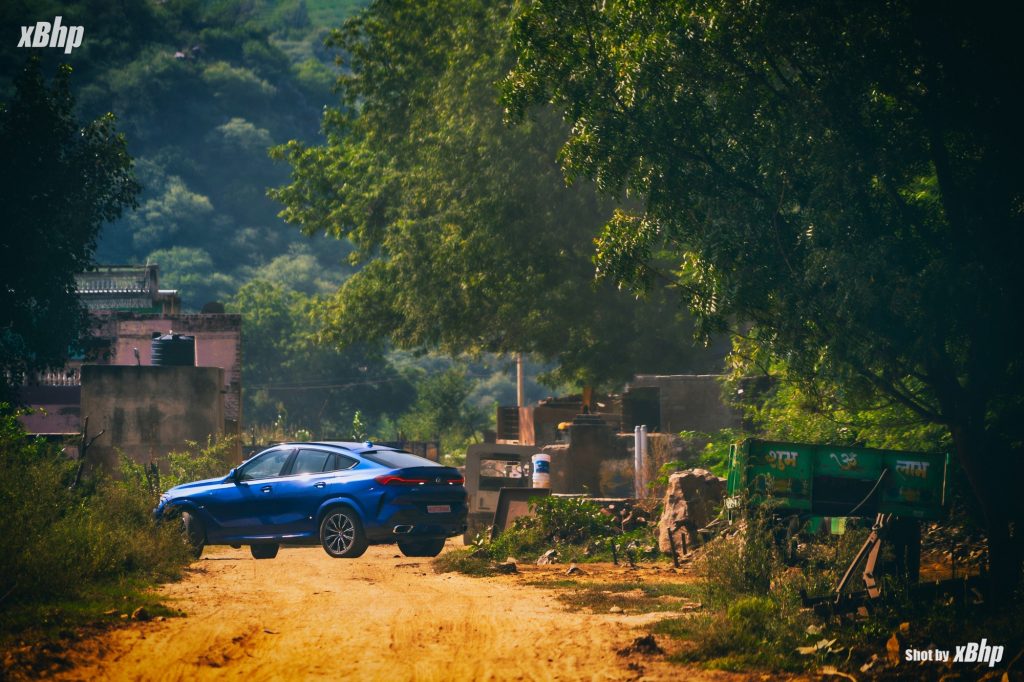
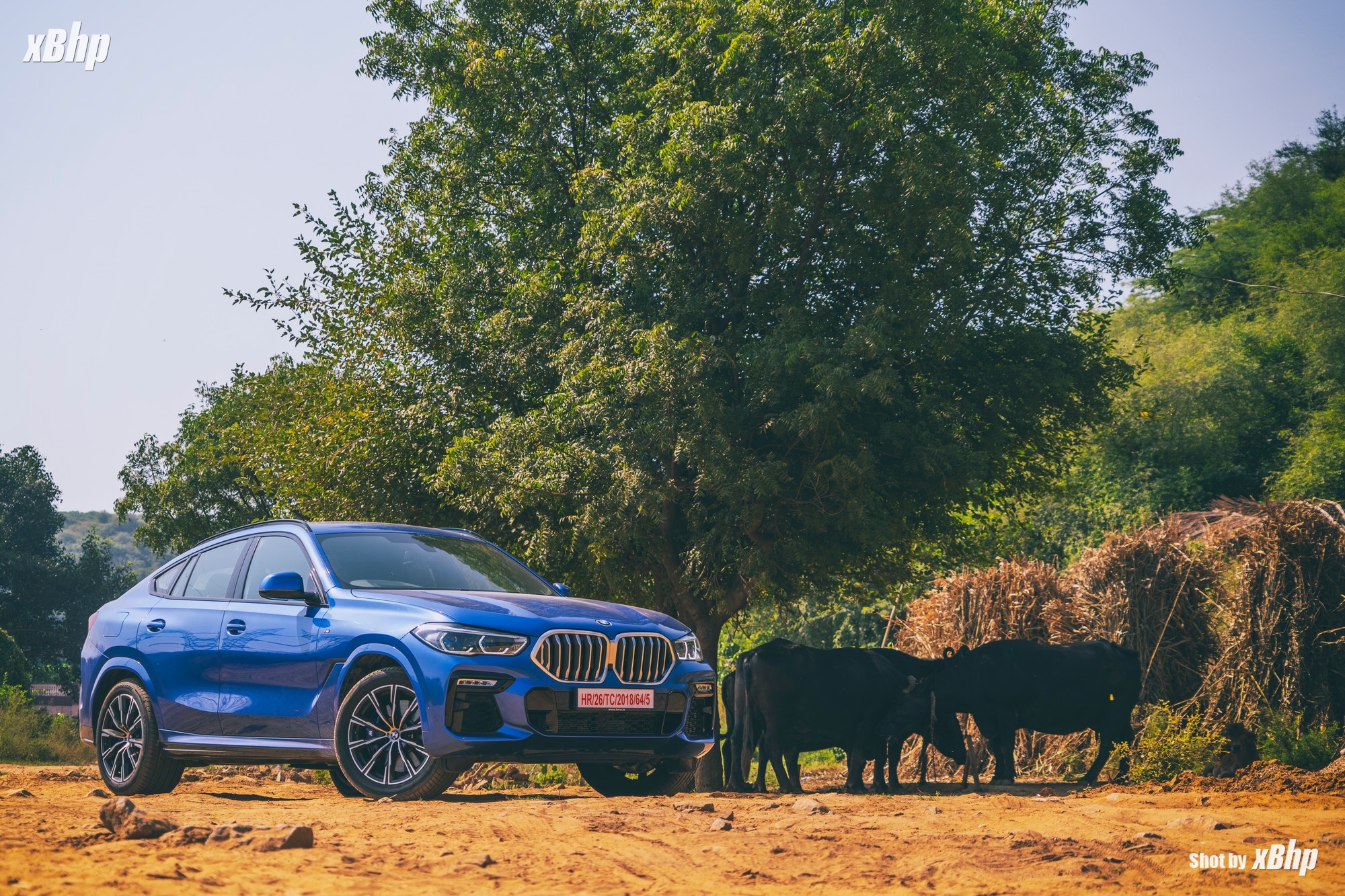
Beauty and Brutality in the same package delivered in typical BMW fashion. There’s not a lot more a petrolhead can ask for. And we got another stab at it right here in India… but there’s a catch. Before we get to that, take a look at the car. It does not look like your conventional SUV. BMW X5 pulls that off beautifully. But the BMW X6, despite being typically referred to as an SUV, looks like a coupe. A coupe on some serious, serious darn steroids.
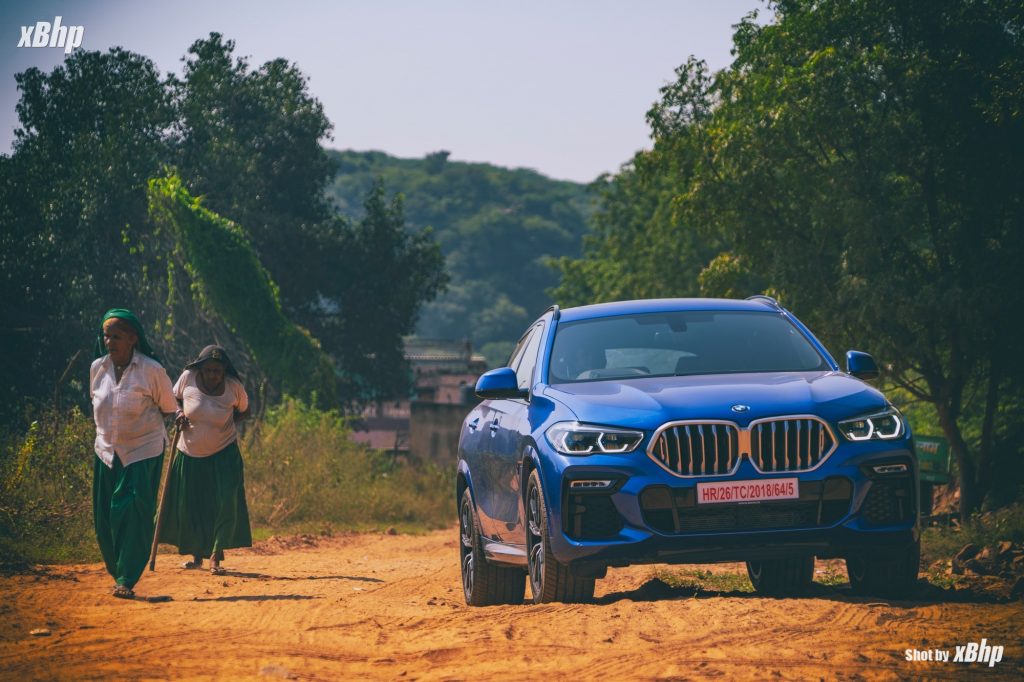
Being pop culture fanatics, it conjures up a very peculiar image- Thanos in a tuxedo. Why? BMW X6’s SUV proportions make it look like Thanos. But it is the coupe styling that adds a tux. In essence, he can still snap but he does not look like he will.
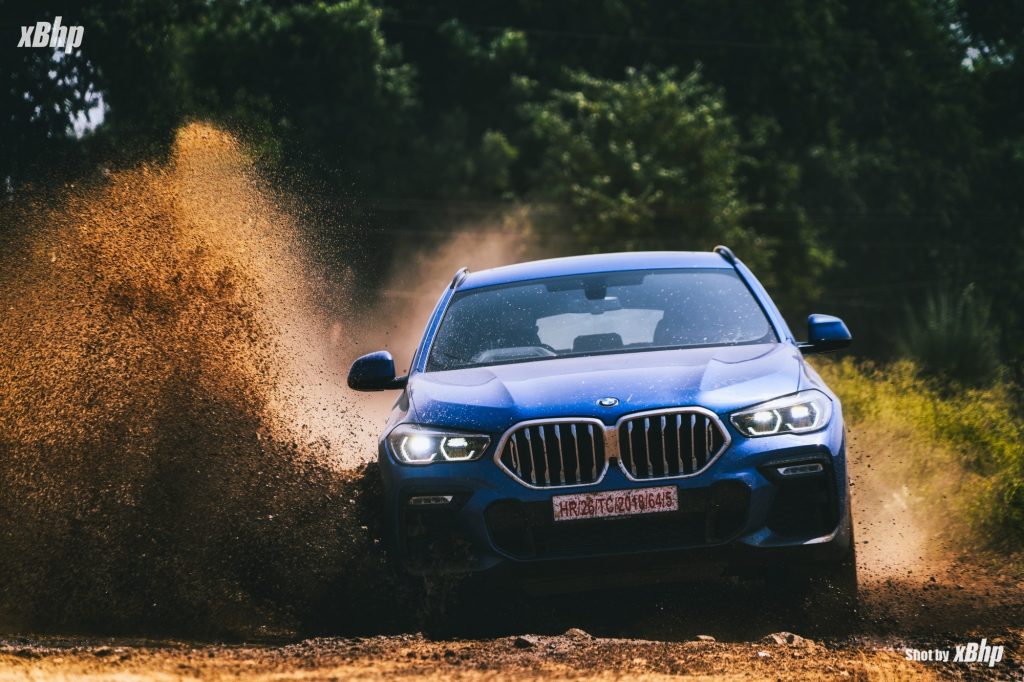
Coupe and SUV is a peculiar combo and we are seeing a lot of it nowadays. But it was BMW that started this tradition. They undertook this styling exercise in 2008 for the first time. The X6 was introduced in 2008 as an SAC or Sports Activity Coupe, widely considered to be one of the very first of its kinds.
In typical fashion and like it is with everything that is done for the first time, it was polarising. Some people liked the heady mix and some did not. The remainder were left just confused. Regardless, the numbers were undebatable. BMW X6 sold very well and continues to do so even after so many years.
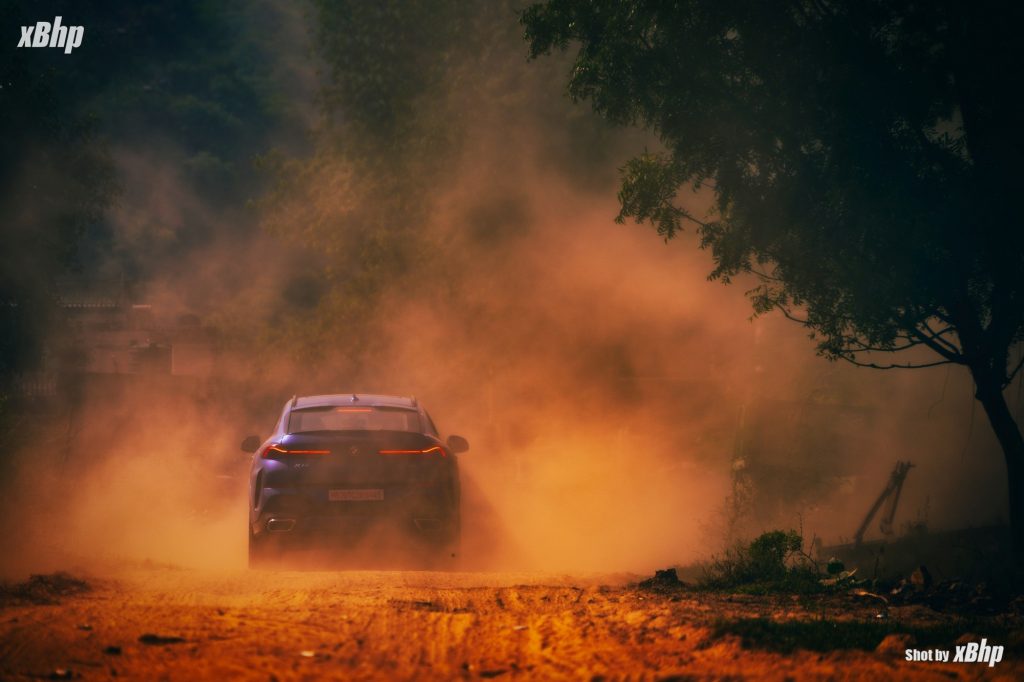
We think that one of the biggest reasons for the success of the BMW X6 was the balance it struck and the way it was executed. BMW’s flawless design and engineering make it stand out and that too with pride. It makes coupes look anaemic and it makes SUVs look like brawn without brain.
As we fawned over the sheer presence of the car, we also realized that we had to be objective too. So, we took a closer look and when we did, we realized that the most striking aspect of this car is also a problem for it. Let us try to explain. It looks beautiful from angles but somewhat confusing on the whole. It is proportionate, yes, but selectively so.
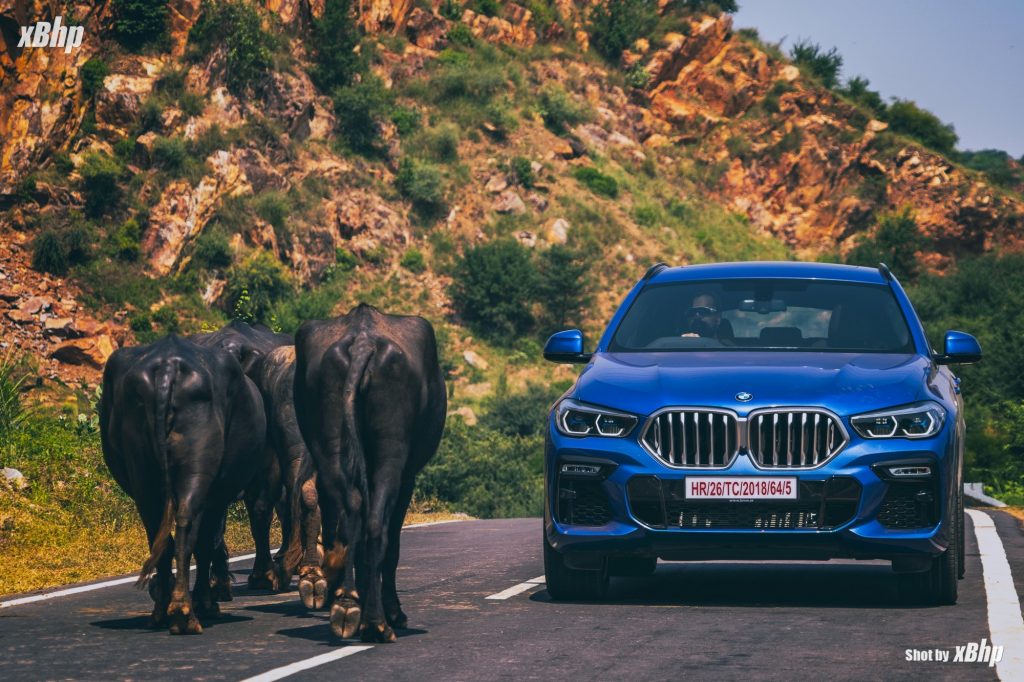
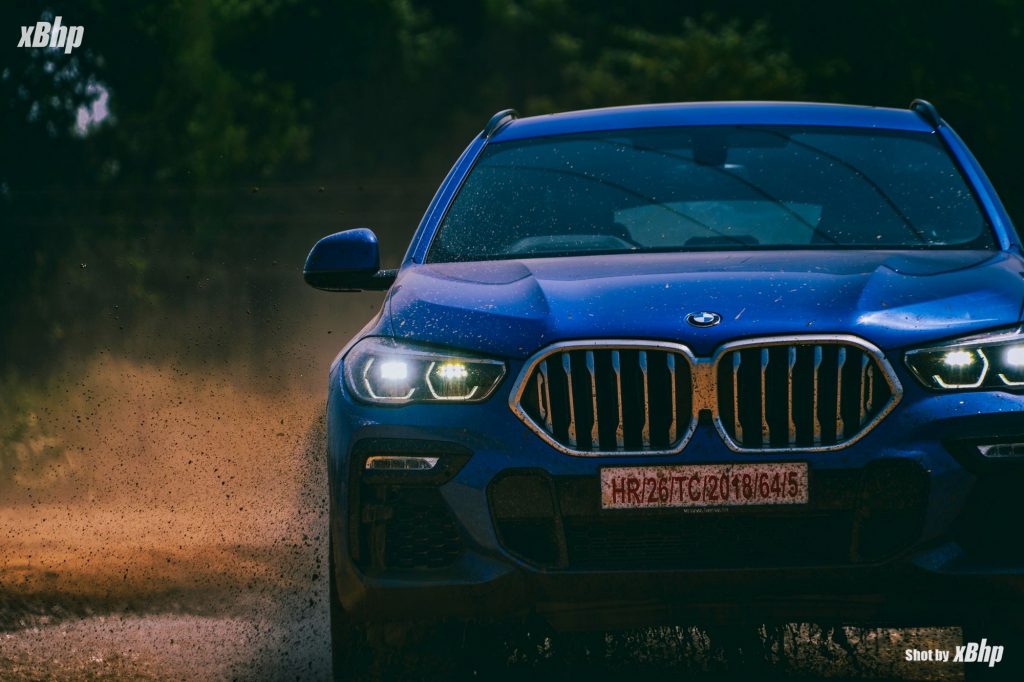
Individually, the front looks amazing. Sleek headlights, signature BMW kidney grille (a tad too big), intakes flanked by parking lights on the chin and the rising hood. It looks pretty darn good. The rear, despite being a mismatch, pulls through with the sleek tail lamps. Why mismatch? The coupe styling makes it look a tad bloated.
Once you look at it from the side, you realize what the real problem is. It is not a bad-looking car… not by a long shot. It just catches you off-guard. And it is bound to since SUVs and coupes are worlds apart. It is like a sleeper in the sense that it takes time to grow on you. This surprise element is like a speed bump. And the thing with speed bumps is that you eventually get up to speed again.
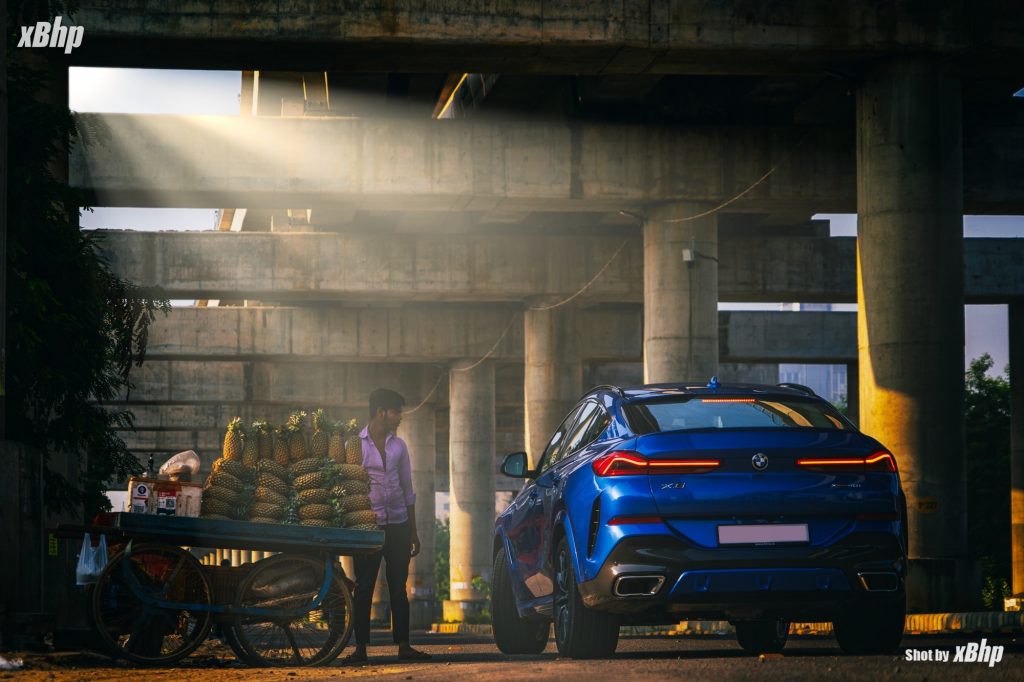
That was about the exterior. How about the interior though? Well, the cabin has been done in typical-BMW fashion and all is forgiven as soon as you step inside the car… even the compromised boot space and rear headroom. Both of these niggles are, again, the result of the coupe roofline and also, the perception of the general populace that considers it a typical SUV.
See you want everything SUV, you get the X5. Tons of boot space, tons of room in the rear, and a comfortable carriage for carrying more than one passenger. The BMW X6 is more about the pizzazz. You may not be able to ferry more than one passenger, but then, you won’t want to. What you want in the X6 is one special passenger and you in the driver’s seat.
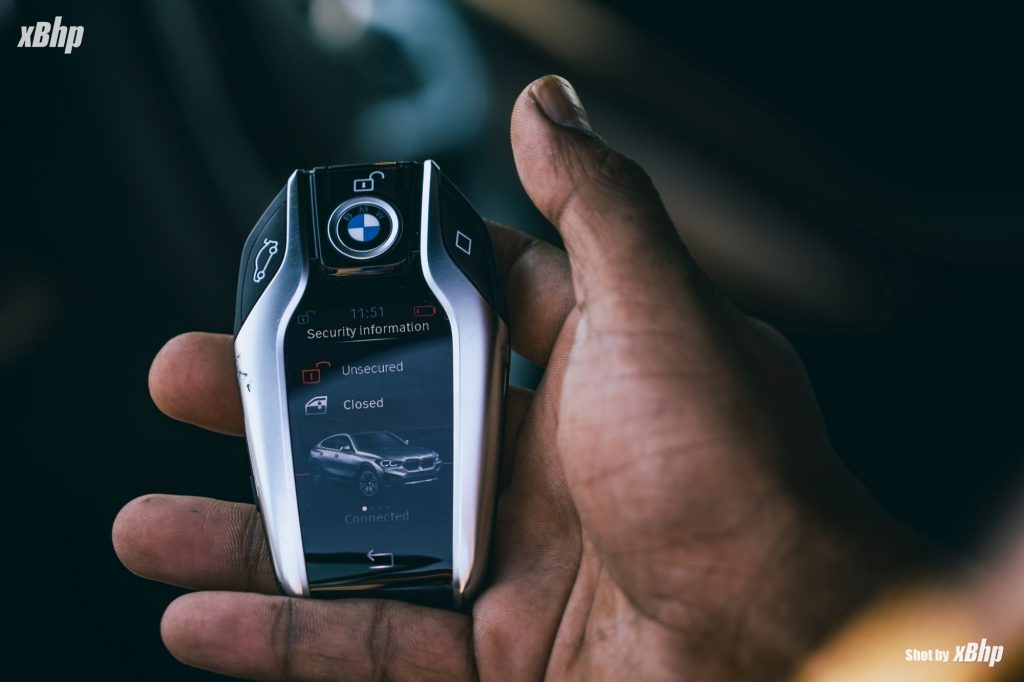
Anyway, special passenger or not, the driver’s seat is from where you enjoy this car the best. It easily lives up to BMW’s age-old tradition of making great drivers’ cars. In terms of seating position, the BMW X6 is one of the best cars that we have driven. It seats you high and in a commanding position which you’d want in a car of this size. Add to that all the gizmos, BMW iDrive, and heads-up display and the experience is enhanced manifolds.
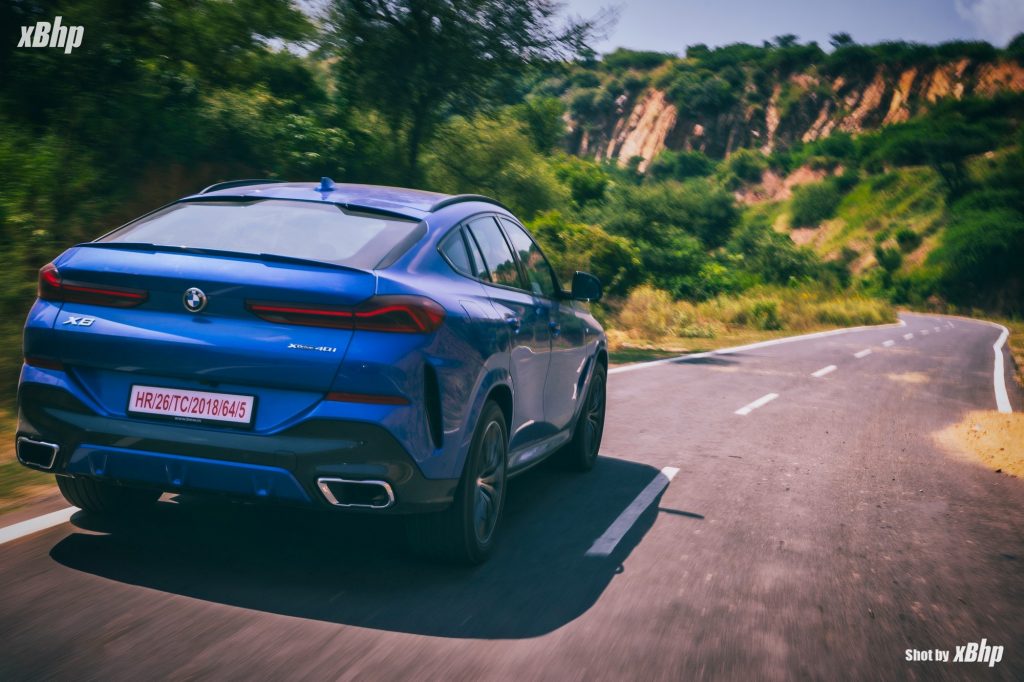
Coming to the driving part, the variant that we drove this time around is the X6 xDrive40i. It is powered by a silky-smooth twin-turbo inline-6 cylinder engine producing 340 bhp of power and 450 Nm of torque. The power is transmitted to the wheels via the slick 8-speed Steptronic transmission and since it is the xDrive, the power is sent to all the wheels. The all-wheel-drive and the grunty engine is one of the major factors that contribute to the surprising acceleration that this behemoth of a car possesses.
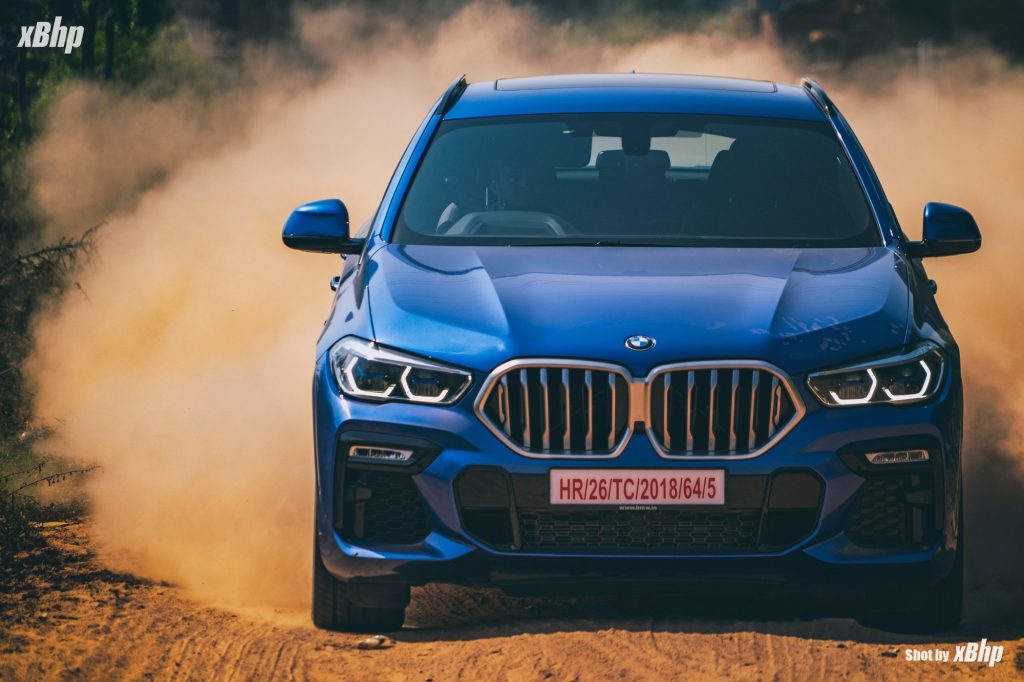
Inside the city, the car feels pretty sedate. You can trudge around town easily without fiddling with anything at all. There is no jerking or shuddering or the kind of revolt that some sportier cars kick up. One thing you have to be careful of is the clearance. Since the car is really wide, you have to pay some attention while manoeuvring it. But then, with the wonderful steering and the seating position, it is pretty easy to do so.
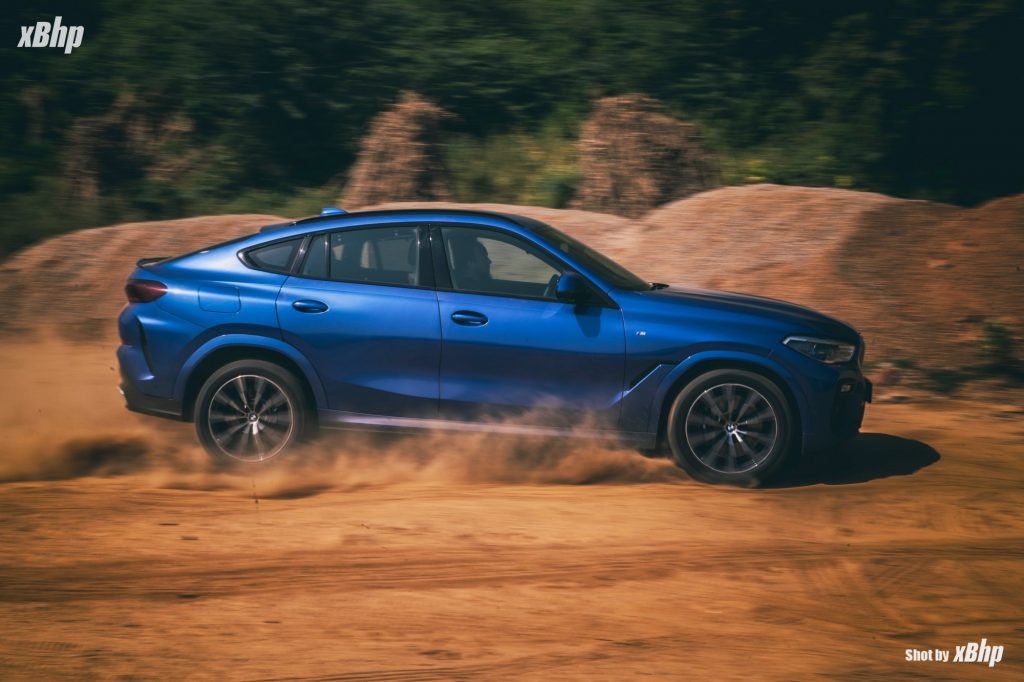
Show it some open roads and this sedate seeming car is quite a bit of fun to drive. Now, we won’t say that it just unleashes its fury upon the one who dares to drive it. The way the power is delivered makes this car very approachable. It is smooth, calculated and cool. It carries similar traits in the corners too. Because of the weight, the ride height and pliant suspension, there is a bit of initial body roll. But it settles down pretty quickly.
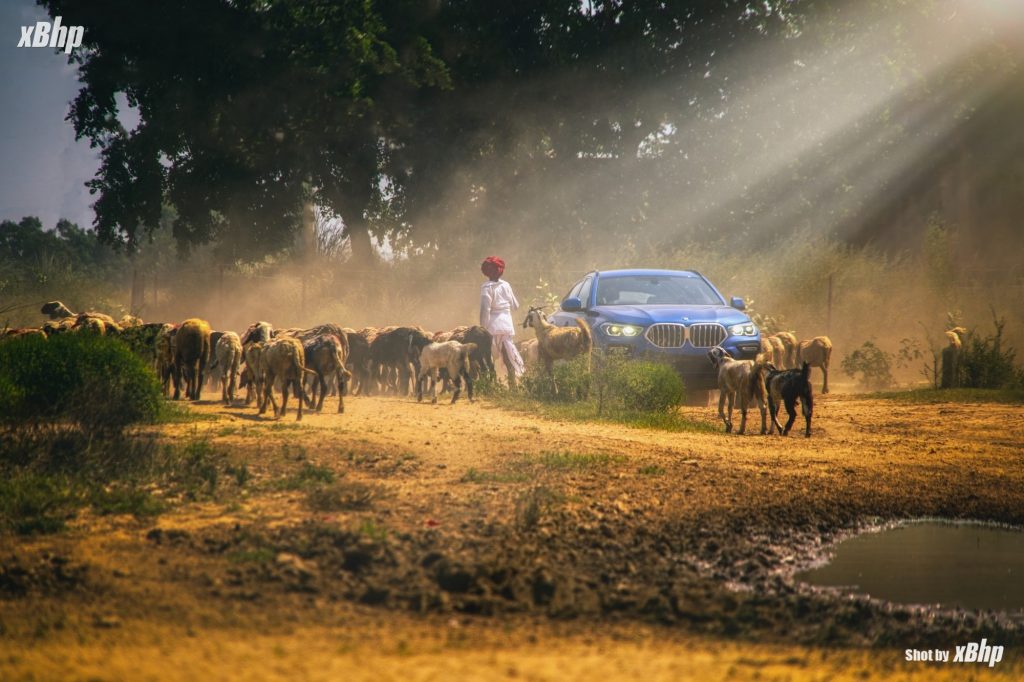
Do we feel the BMW X6 is a car that is somehow lacking? We were inclined to think that way. The reason for that is very simple. It was our prior experience that set the bar and expectations a tad too high. See the X6 M that we drive during our Balkans trip was the X6 M, a 567 bhp and 750 Nm beast! So naturally, the X6 xDrive40i felt a little mild in comparison. But we’d also state that with all that it can do and the signature X6 styling that it sports, it can easily let you (to some extent) and onlookers (to the full extent) have the “real X6 fun”. Just… don’t rev it or pop the hood or else… they’ll know.
BMW X4: BMW’s easier-to-reach SAC driven in Rajasthan!
 Feb 2021 Sundeep Gajjar
BMW,Cars
Feb 2021 Sundeep Gajjar
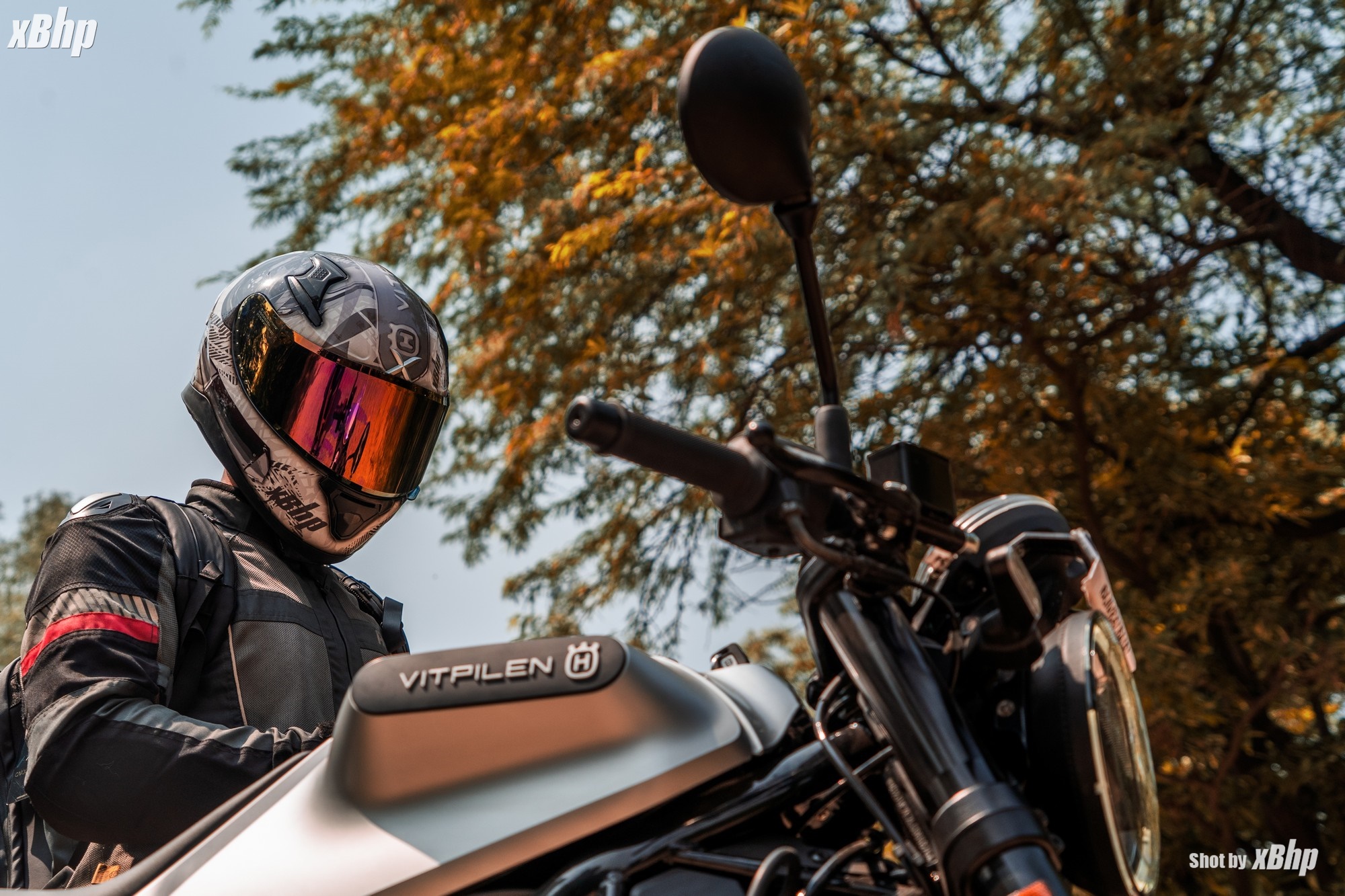
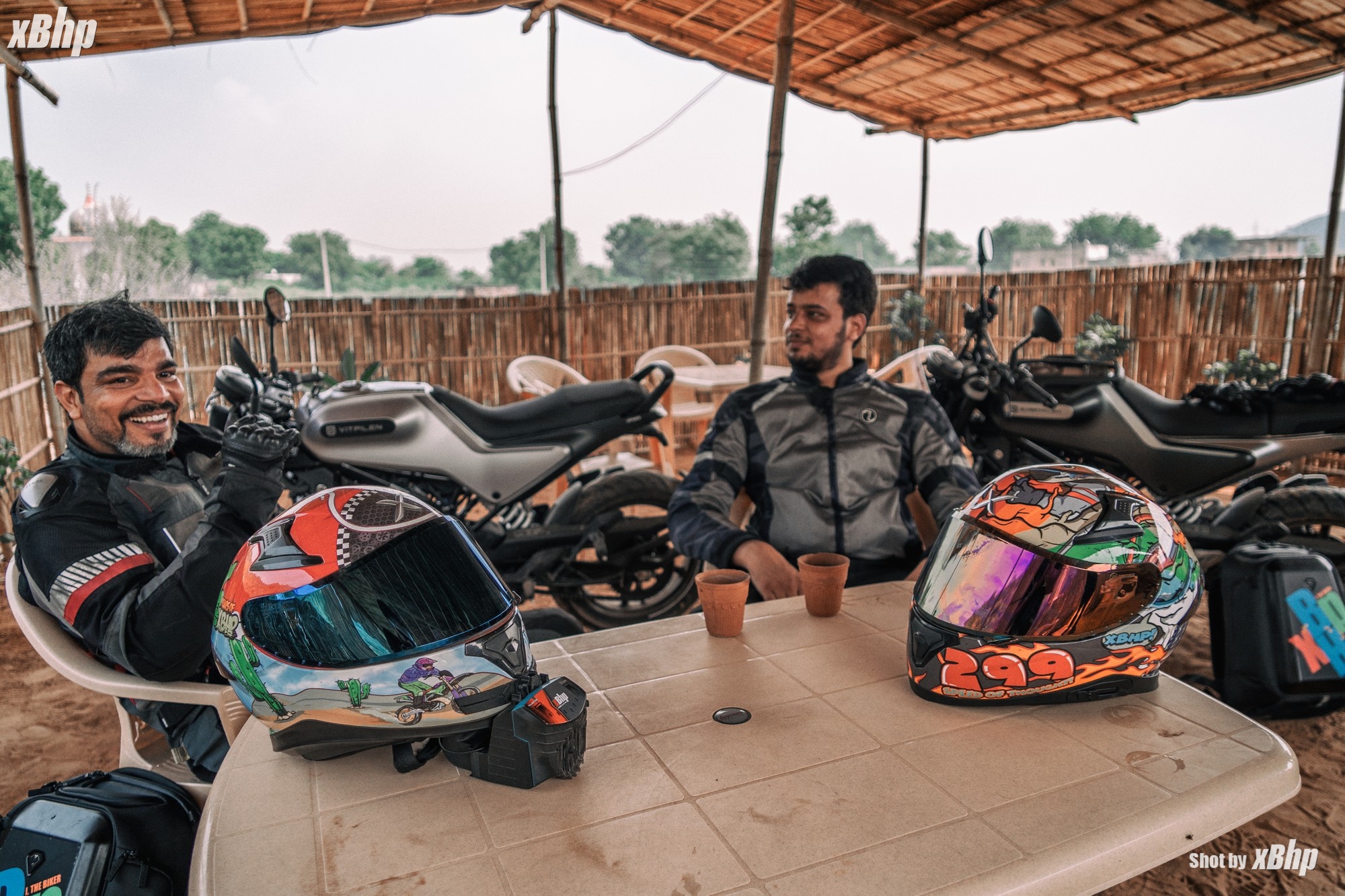
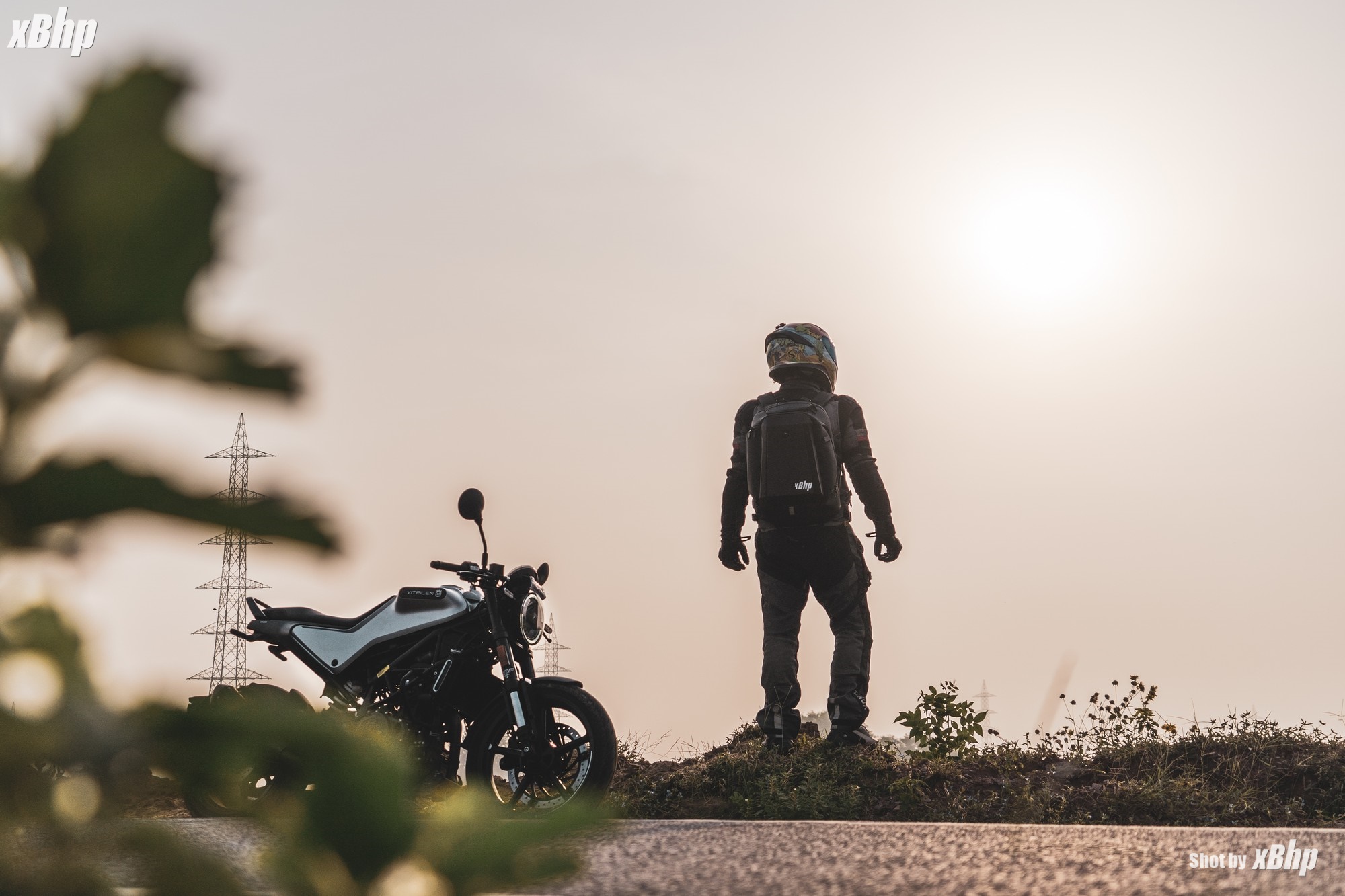
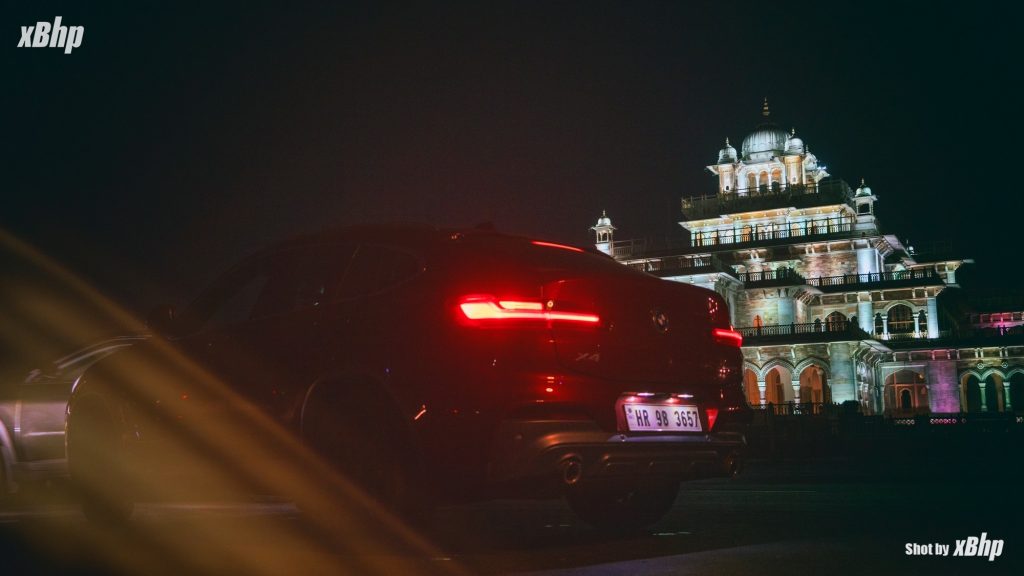
BMW,CarsWe have driven so many BMWs in the past and in the recent past too, that whenever it comes to having a car to accompany us and be the vehicle of choice for a roadtrip, in addition to the motorcycle, of course, we think about BMWs. So when we were looking forward to a roadtrip that encompasses the hustle and bustle of New Delhi and the vast nothingness and minimalistic charm of Rajasthan, we thought of having a car along with our Vitpilen 250. We thought of a BMW. And the kind folks at BMW obliged. This time around, with the X4. The journey was awesome and full of many realizations. What about the BMW X4? Well, it was just as awesome and just as full of realizations.
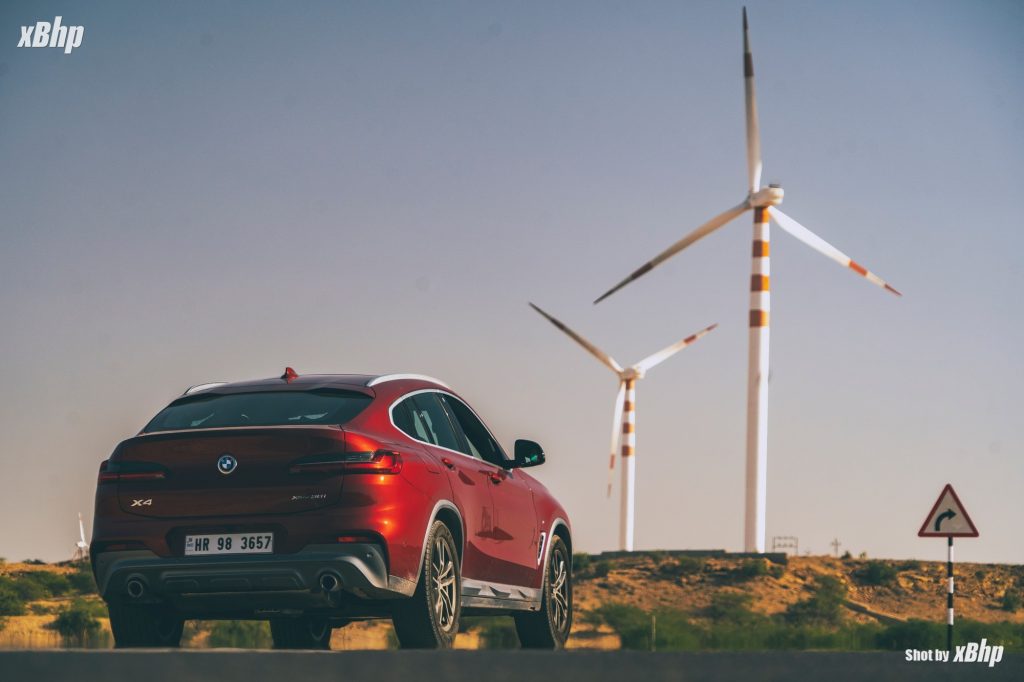
First off, the BMW X4 follows a design language that is quite popular nowadays but it was introduced and made famous by… yes, BMW. The design language is a crossover between an SUV and a coupe. The origin of the design goes back to the BMW X6, first of the kind. And the name given to this design by BMW is SAC or Sports Activity Coupe. And out of respect for coming up with an entirely new and radical concept, we’ll be referring to the X4 with just that… an SAC.

We laid down the basics of this peculiar design language quite a few times. Like when we drove the X6 M in the Balkans or more recently when we drove the X6 right here in India. You can check out those pieces (hyperlinked above) for more details. But for the sake of simplicity and knowledge, we’ll put it out there again, briefly. Combine the dimensions of an SUV, add the roofline of a coupe and let engineers figure out a balance between the dynamics of each of them for one car. There you have it, an SAC.
The BMW X6 is without the doubt the OG SAC but it was its popularity that perhaps gave BMW an inkling of the fact that there was more to be had where those sales came from. Not exactly there but around there somewhere. So while the X6 is the super-premium (and super-sized) SAC, the X4 is aimed at the upper or premium end of the mid-size class. So is it just an X6 with everything toned down? Not really. And that was realization number 1. BMW X4 is its own car. It has its own identity.
Our roadtrip was to involve a lot of kilometres and we were not sure if the X4 was the right car for practical reasons. Reasons like space because we had to carry a lot of stuff and at least 3 people including the driver. Reasons like comfort that you need when you spend most people have to work while sitting in the car. One look at the BMW X4 and all our apprehensions were washed away. It seemed big, it seemed purposeful, it seemed practical (for the most part), but most importantly, it looked ravishing.
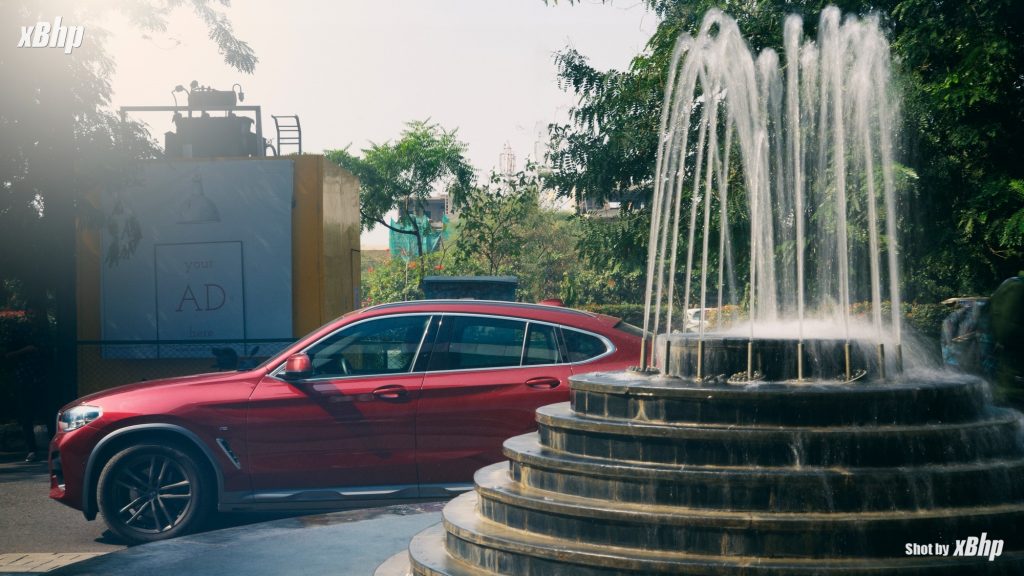
If you really look at it, it is nearly as big as the X6. Nearly. It is 4.7m long. It is nearly 1.5m wide. It is nearly 1.6m high. And it sits well above the ground with those large wheels. The looks of the SAC design have always been polarising but it is about getting used to it and it does not take long. We are. It is a BMW after all. We love the design of the car. The sloping roofline, the steeply raked windscreen (on both ends!) and the bold stance. While the proportions shout Gargantua, the lines scream elegance. It is a heady mix.
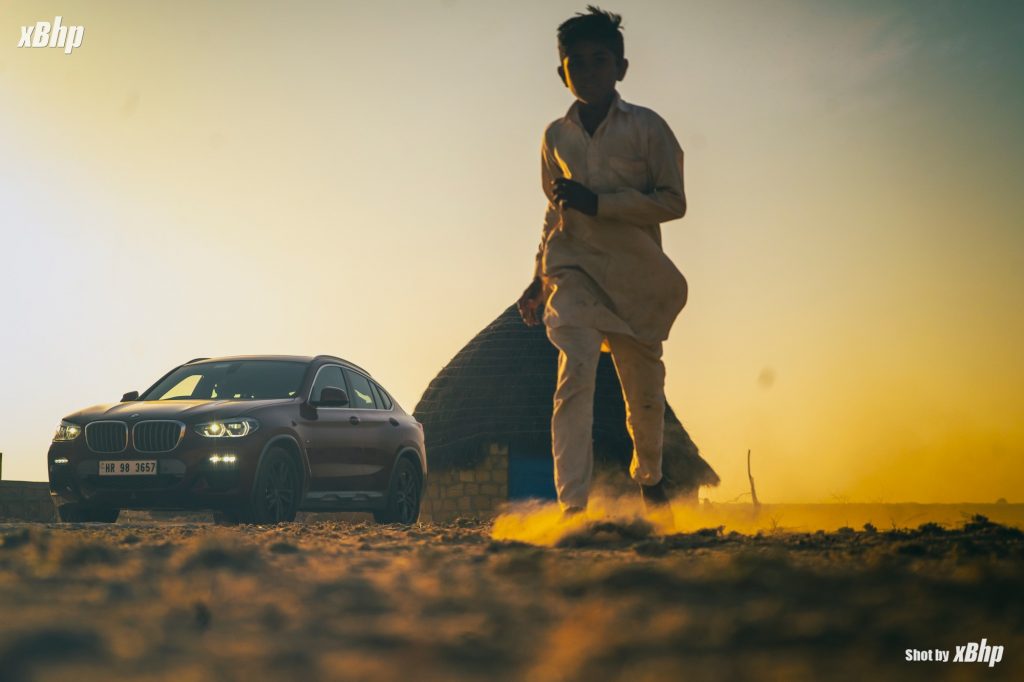
On the front, the large kidney grille takes the centre stage, literally and figuratively. Flanked by all-LED headlamps and supported by a rising hood. Then there are LED fog lamps that flank the intakes. Overall, it looks neat. The finish is typical BMW; flawless. The side profile looks pretty dashing too because it is slightly shorter than the X6 and the taper is also a bit smoother.
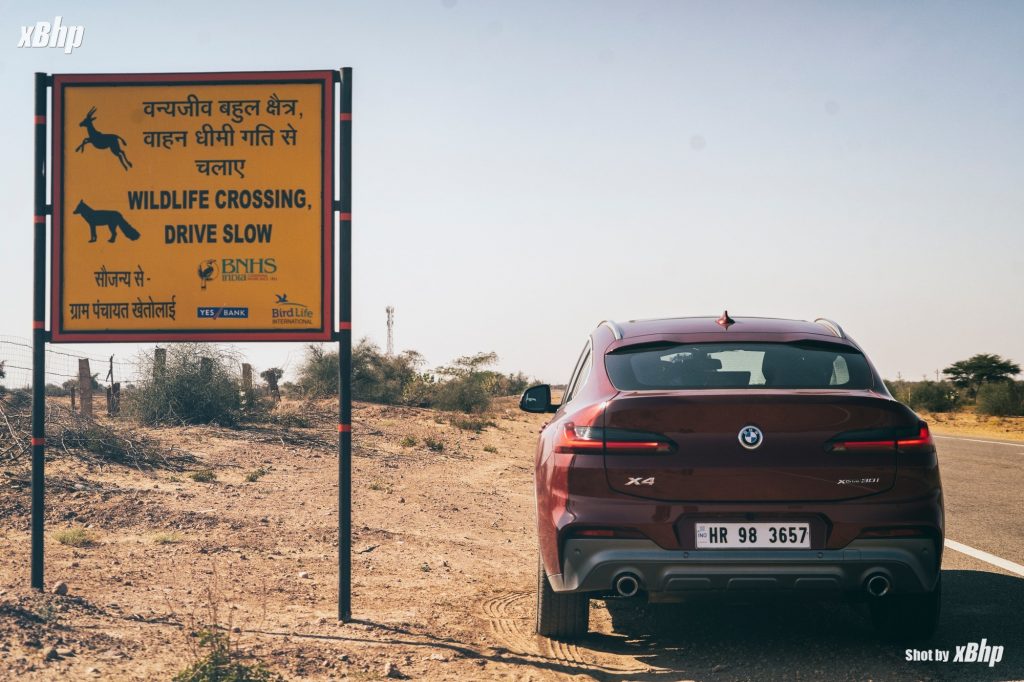
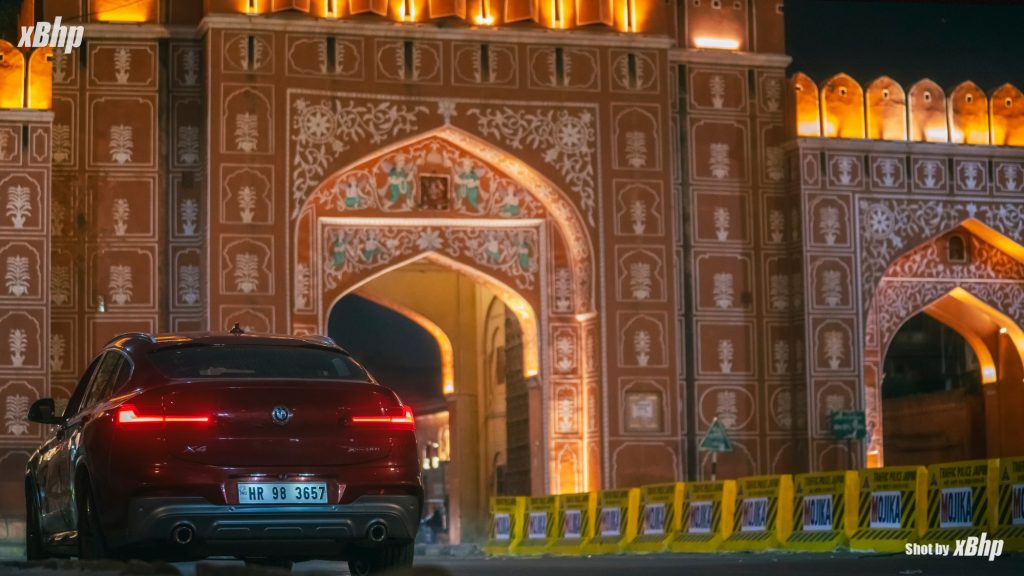
The rear is a bit odd. The end cans on either side is a neat touch. The taillights are sleek and look wonderful but individually. In order to deal with the slightly odd SUV-coupe combo that makes the rear look a tad too bulbous, taillights could have been bigger. That may have helped. Or maybe not. Anyway, let us move on.
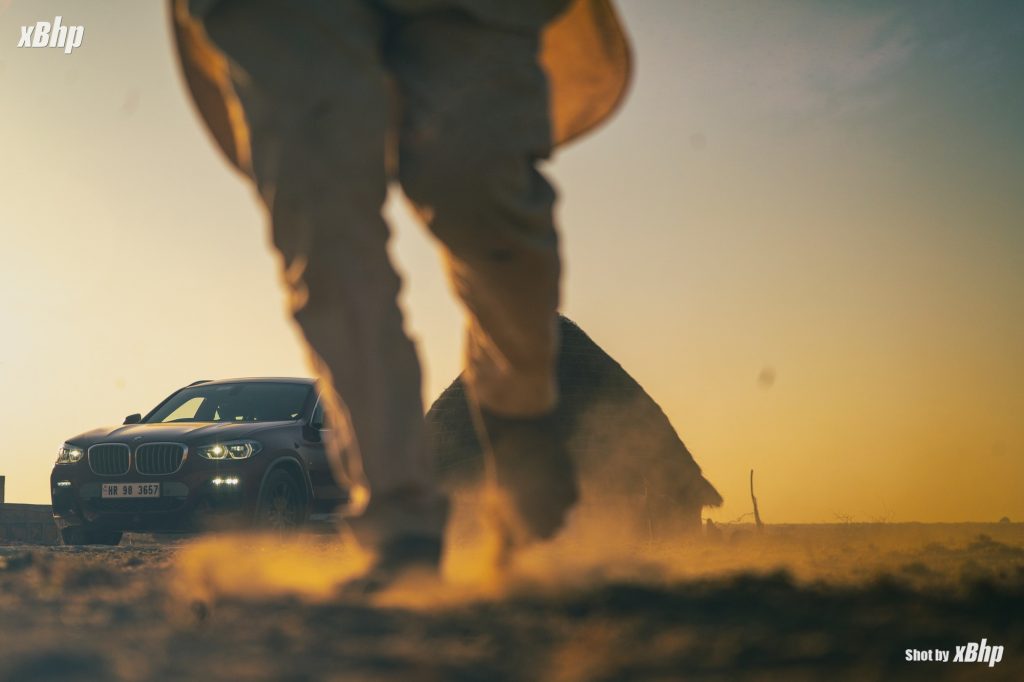
We had our bags packed and we were ready to hit the road. The X4 was too. Since we are talking about luggage, let’s talk boot space and boot space without the rear seats folded since we needed them. There’s 395 litres of it. In that sense, X3 is more practical and X4 more… good-looking? Perhaps. But the major differentiator here is not the number but the execution.
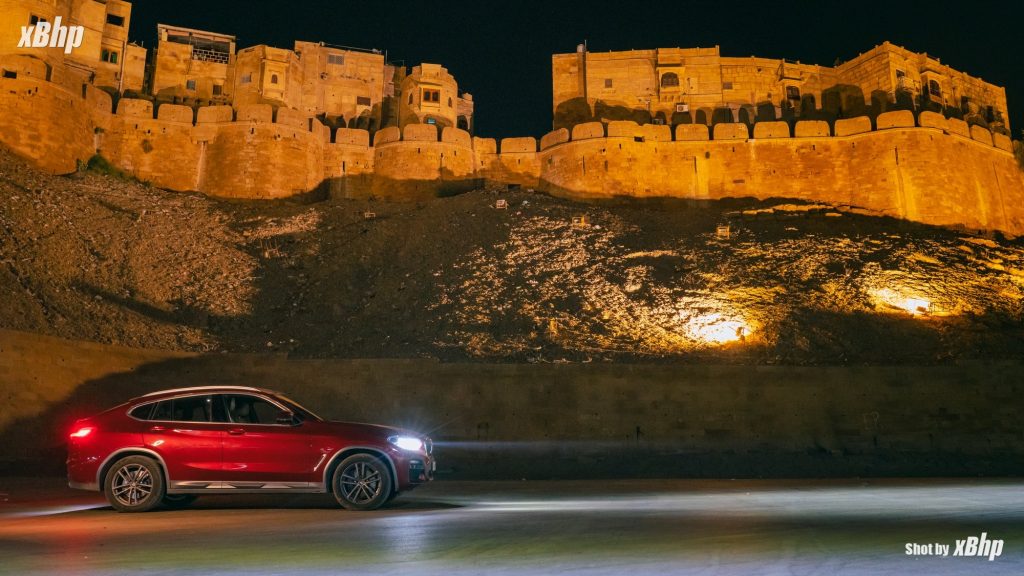
See that coupe line, takes away some clearance so tall bags won’t let the boot close. You have to lay them flat. But then, there are tethers and tie-ons everywhere so that your stuff does not rattle or move around in the back. Cool stuff. Smart stuff. In case you do not need the rear seats, they are in a typical 40:20:40 split, so fold them and you have 1,430 litres but if you prefer to carry stuff over people, you will be labelled materialistic.
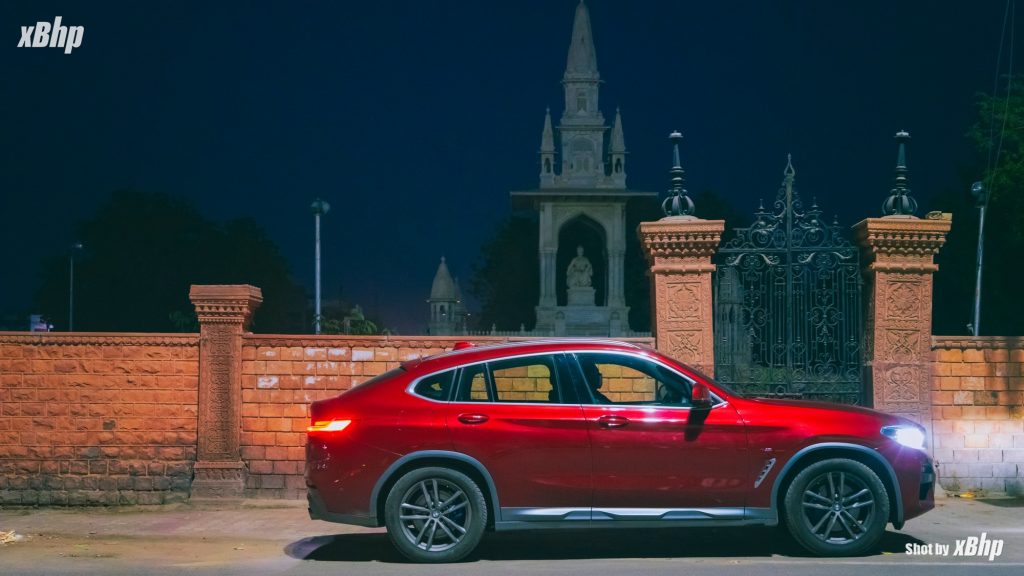
Bad jokes apart, after loading our stuff, it was time to get in the car. Before we discuss the interiors, we’d like to point out that, and it has happened every single time, once you enter a BMW all the shortcomings and all the niggles are forgiven. Considering the X4 already has very few, well, it’s near-perfect for roadtripping… roadtripping in style. We started off as being passengers in the backseat.
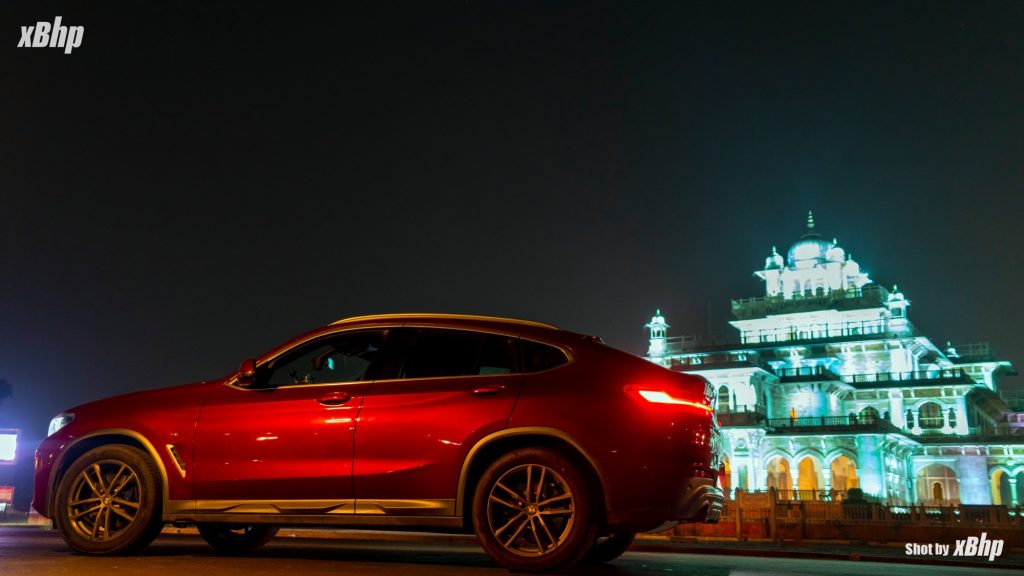
The backseats are roomy in terms of leg-room and the width of the car makes it roomy horizontally as well. Vertically, it’s quite alright but people over 6’ may need to wiggle around a bit. There’s climate control in the back as well so that’s a good touch. Then there’s the usual deal with the cup-holders and such. What we really liked was the size of the door pockets. They can easily accommodate a big water bottle with no difficulty at all.
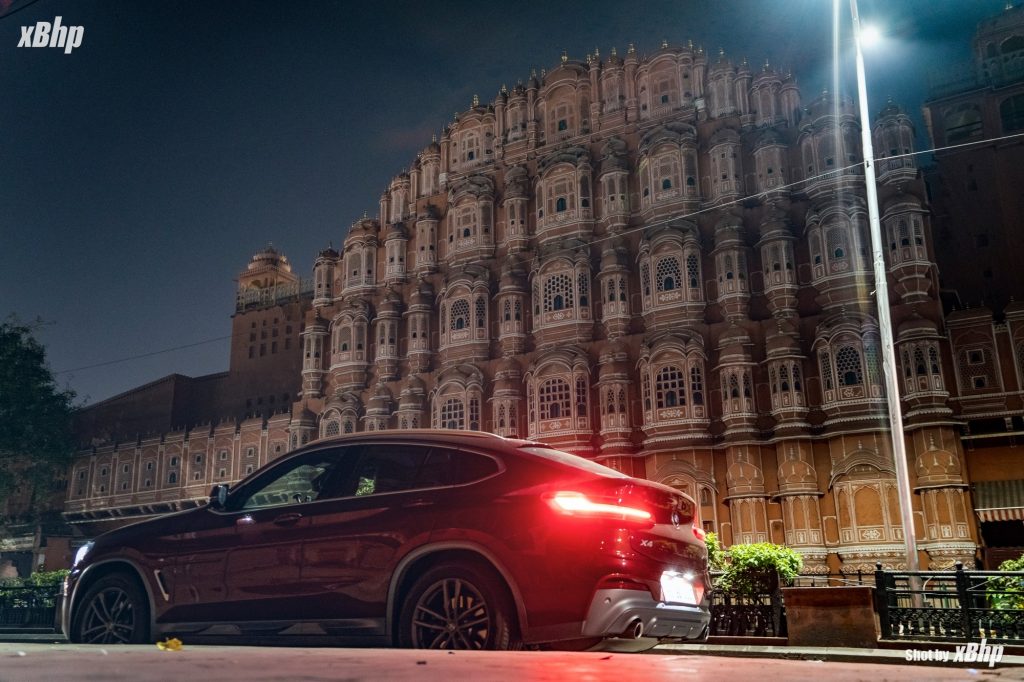
After getting comfortable, we were on our way. The one thing that you’d really like in the BMW is how quiet the cabin is despite the car having to battle traffic and with traffic comes honking. But inside the X4, it is nearly whisper-quiet and that is a major plus. The variant we drove was the xDrive30i. Petrol engine which means refined engine which means quiet engine. So is it all good? For the most part. The only fly in the ointment here is that as soon as we hit the highway, the only noise that bothered us a tad was the tyre noise.
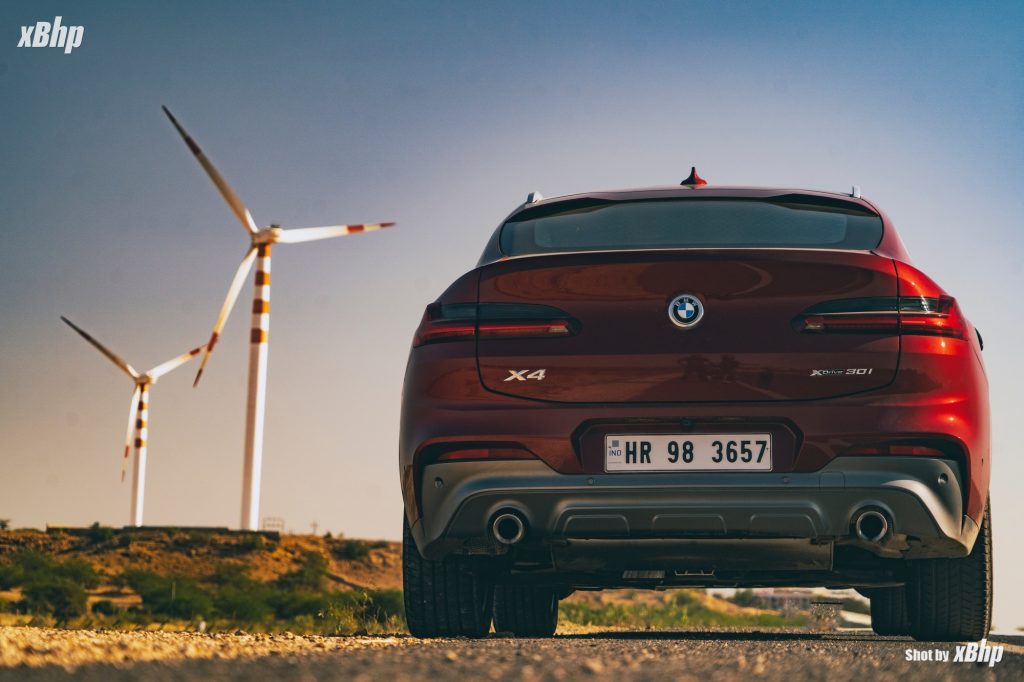
It was not very apparent during our jaunt from Delhi to Jaipur as it is still a decently busy highway. But after crossing Jaipur, we went to Jodhpur, then Jaisalmer, then Bikaner and then back to Delhi. After Jaipur, the traffic was scarcer and the nothingness began to take over. No noise from the traffic or the wind. With a setting like that and a car like this, you can nearly meditate. Only, you have to pretend that the slight tyre noise is the sound of flowing water. If you can…
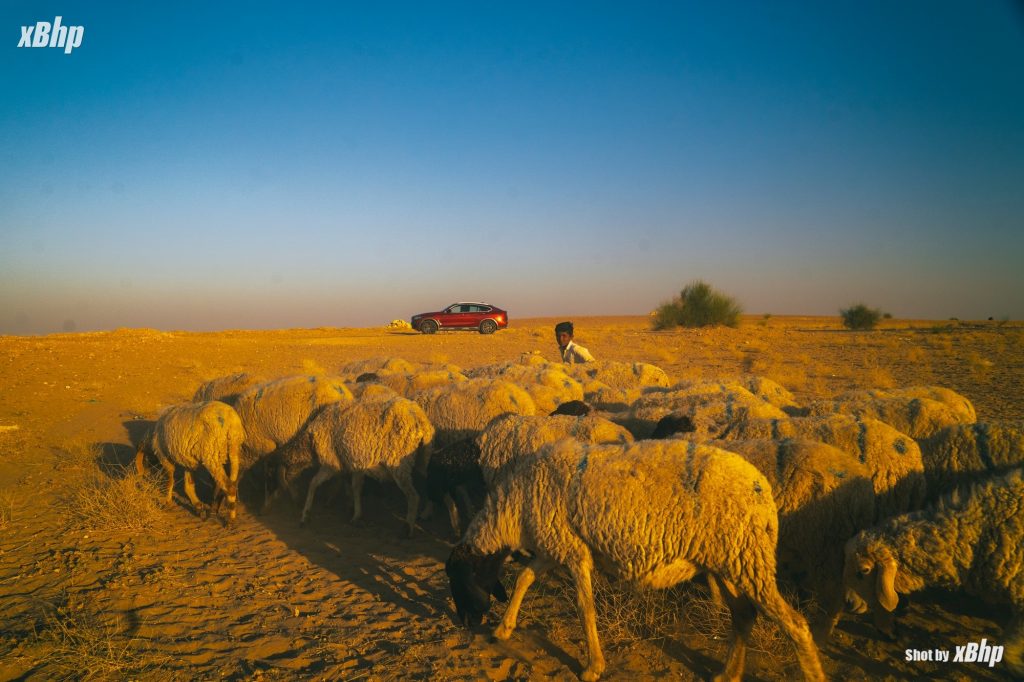
Moving on, the BMW X4 is a car that wants to be driven. If you are a petrolhead, even more so. So it was inevitable that we could not resist the urge to take the proverbial wheel for too long. BMWs are drivers’ cars after all. Moving to the front, it gets even better. Once you have the wheel, you don’t bother about the slight lack of headroom or the slight lack of boot space. It is a proper BMW now and it just wants to be driven.
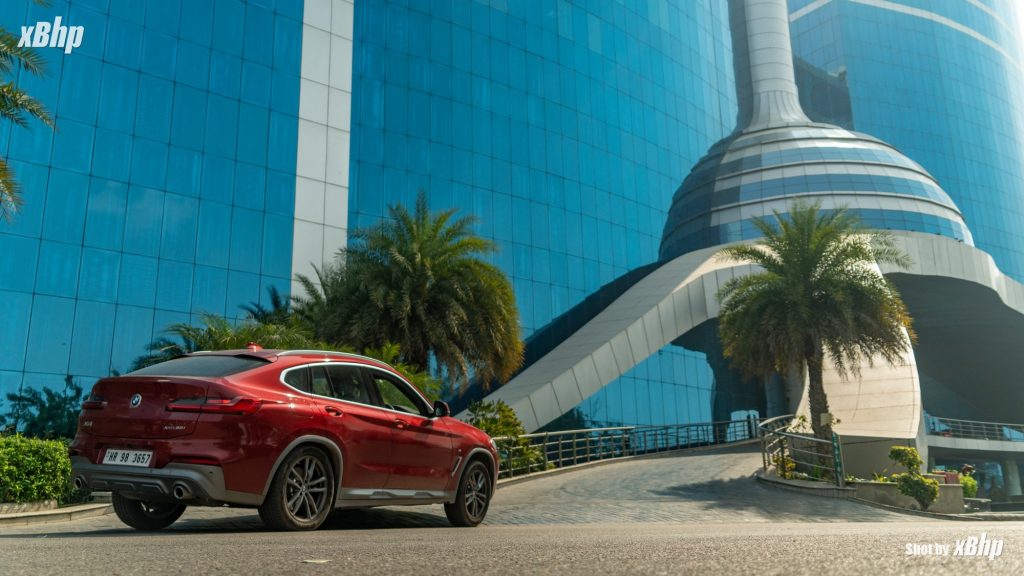
Another thing that we really like about the BMW X4 and it is something that we realized only after driving it, is that the ‘coupe’ thing is not just a gimmick. BMW has spent a lot of time in calibrating the dynamics on this car to make it drive like one too… despite its SUV proportions. It is quick and planted in a straight line and for the most part, it is quick and planted through the corners too. In addition to that, it can also handle some off-roading. Not the hardcore stuff but still, what it can do is quite impressive for a car like this.
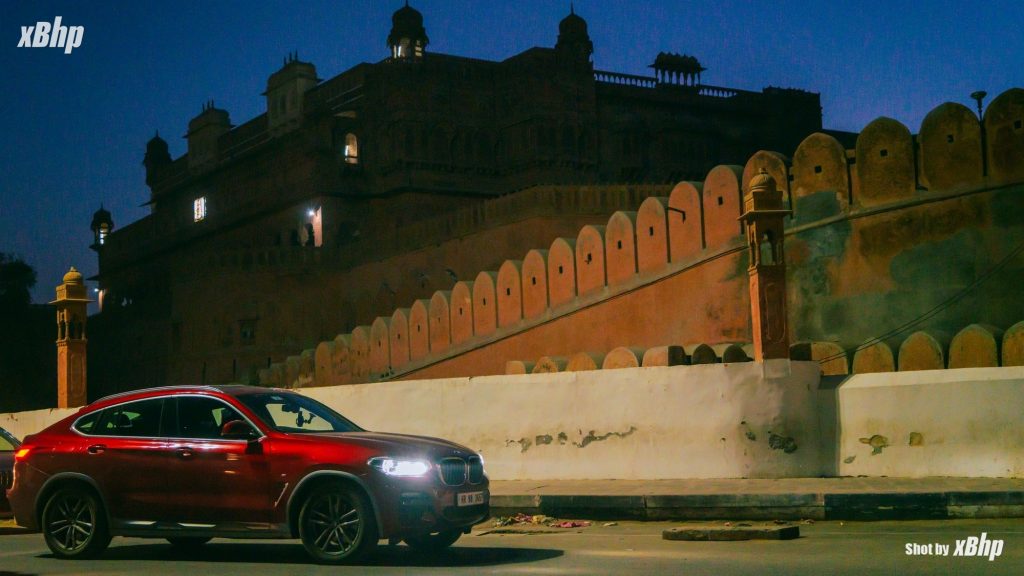
Let us start with the technicalities first. We have a 4-cylinder twin-turbo petrol engine that displaces 1,995cc sitting under the hood. It is rated for 252 bhp of power and 350 Nm of torque. The engine is mated to the famed 8-speed Steptronic transmission sending the power to all the wheels but keeping it biased towards the rear unless needed at the front. This is important but we’ll come back to that later. The X4 also gets adaptive suspension with its weight distribution being 50:50 front and rear.
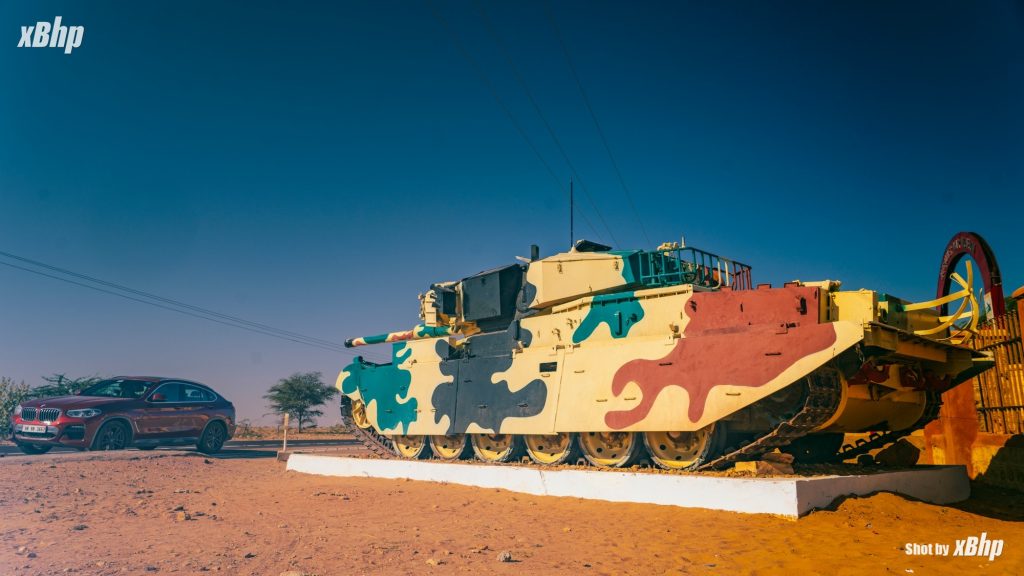
That was a very specific list of specifications that we listed out, right? It is because those are the things that matter the most in making the BMW X4 a really, really fine car to drive. First off, engine. BMW says that the X4 xDrive30i does 0-100 km/h in 6.3 seconds. Fair enough because it feels quicker than that. We love how refined the 4-pot petrol engine is and how freely it revs. The transmission is also pretty quick and that also helps the acceleration.
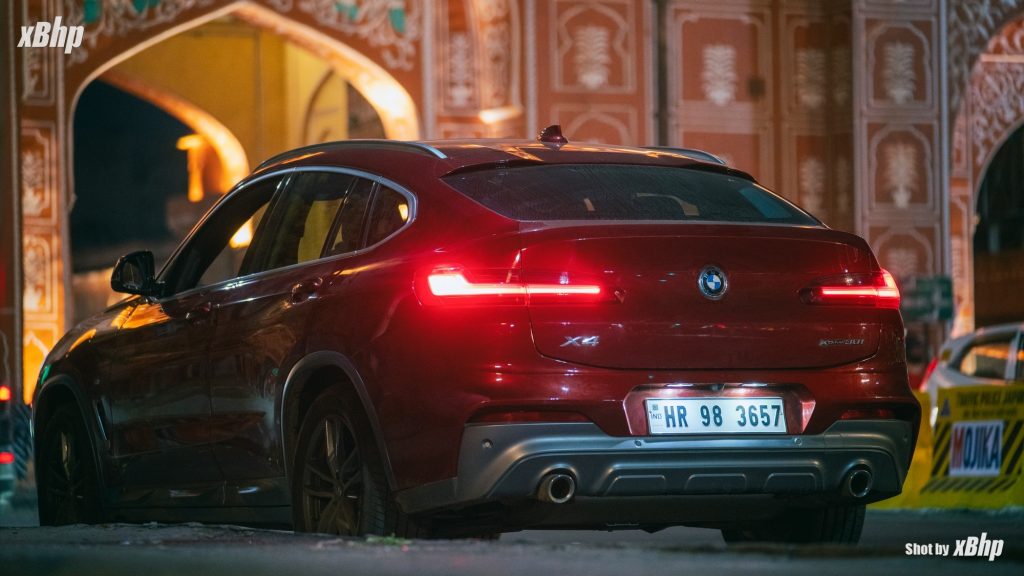
The 4-wheel drive system also helps with the acceleration since the launches are near perfect. With the xDrive system being so evolved and advanced now, one may not feel the need for launch control here if they are a seasoned driver. This also lends the X4 the ability to deal with slight off-roading in which the large wheels help too.
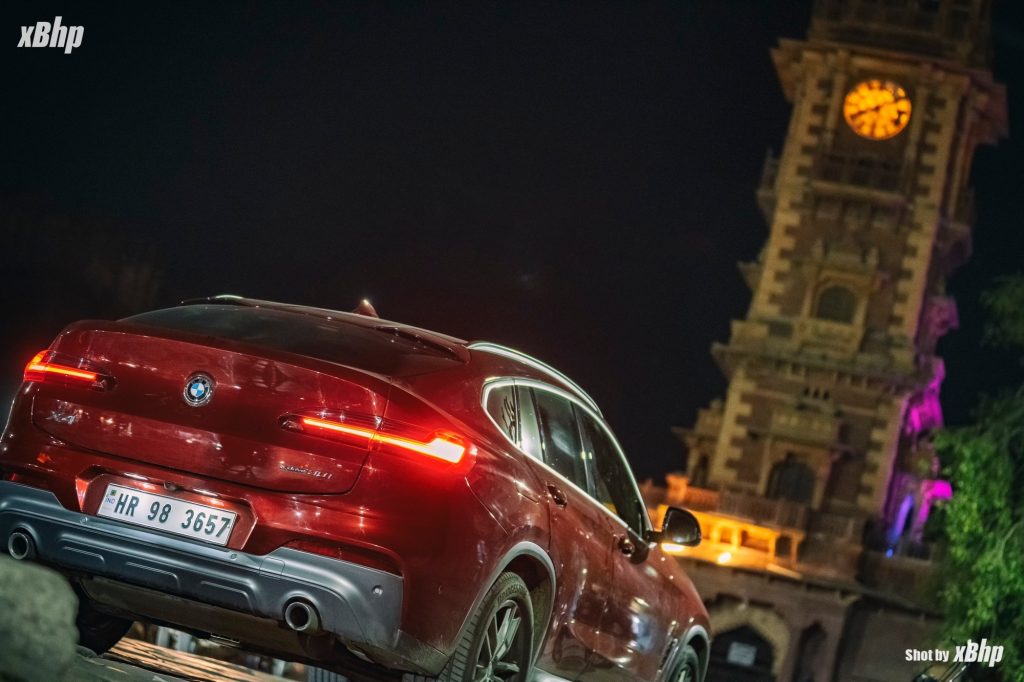
Now, with the power being transmitted to all the 4-wheels and the wheels themselves being large, there has to be some understeer to the X4. But those effects are mitigated well by the variable torque split which keeps it rear-biased and that gives the X4 an edge in the corners. The engine has enough grunt so that when you gas out of the corners, it really feels like you’re doing so in a car much smaller.
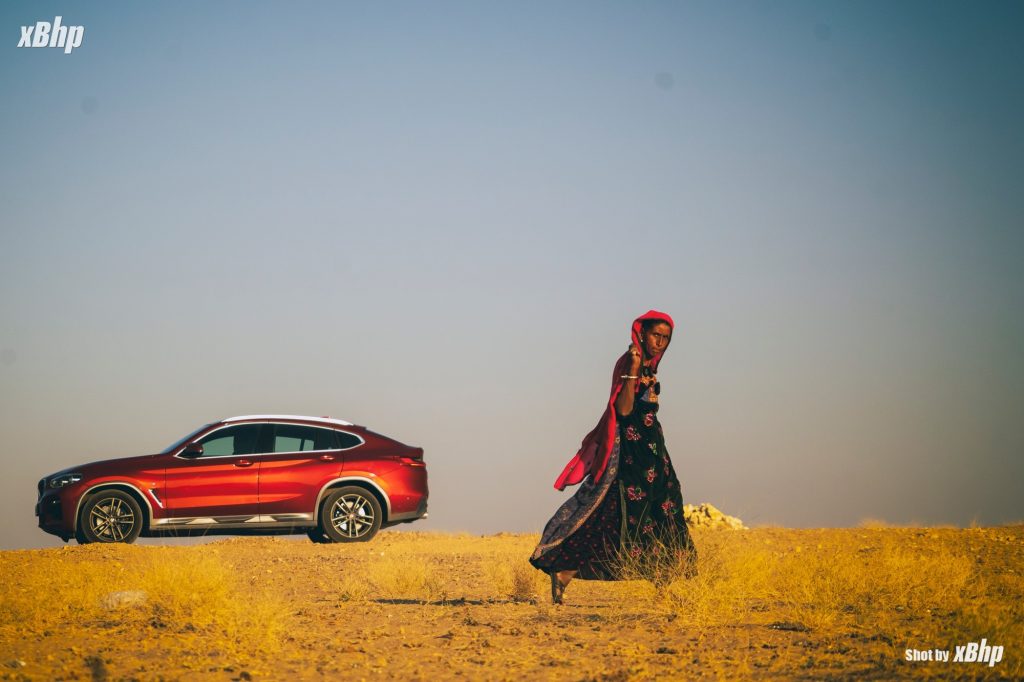
Now, the suspension. The adaptive kit despite being in the comfort mode is a tad stiff. Undulations and rough surfaces are dealt with easily but big potholes and broken roads are still felt. The stiffer setup is not a deal-breaker by a long shot but it does exist. Another thing that exists is the sharp handling that the stiffer setup brings with it. Change the mode to Sport and in addition to the engine and transmission being dialled to 11, the suspension is also much firmer. That means in corners, the car feels planted and never too nervous even in the sharpest of corners. Body roll is also very well contained.
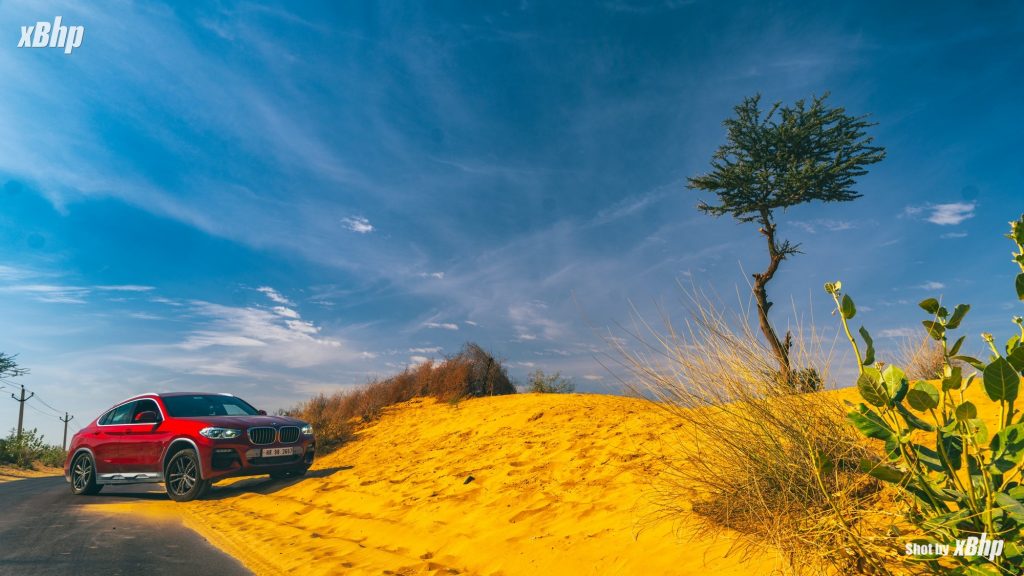
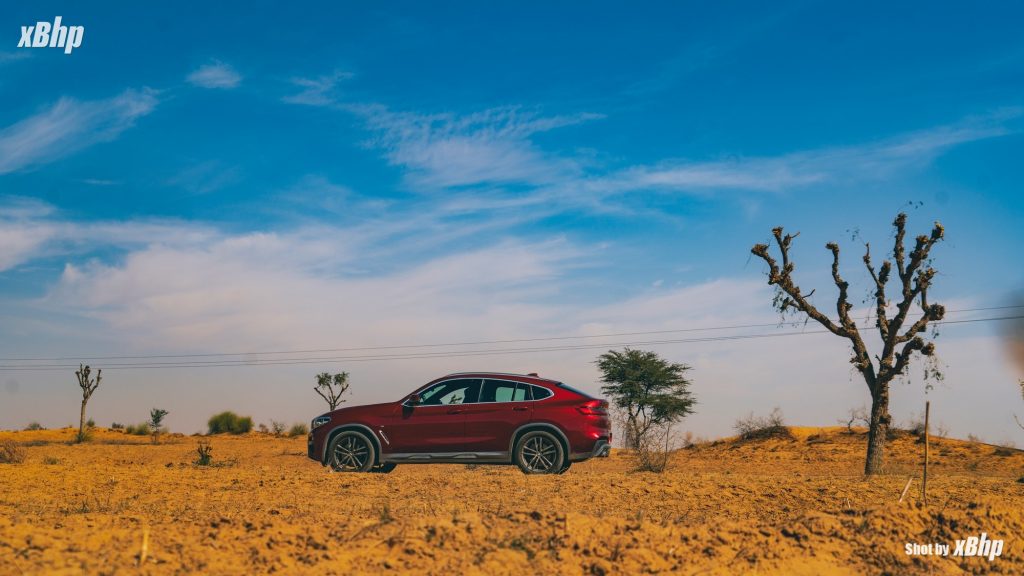
We also visited Sam Sand Dunes, a place not too far from Jaisalmer where we had some fun with the X4. See, it is not an outright off-roader but it is far from being afraid of some action either. The cabin is also sorted with the iDrive system, heads-up display and multiple ways of control including dials and knobs, gesture, touch and voice. It is loaded with nearly all the amenities one could ask for in an SUV… and a coupe.

So the X4 is a car which is quite a bit peculiar, quite a bit practical, quite a bit sporty, quite a bit enjoyable and… every bit a BMW. A BMW meant for soulful trips. A BMW meant to exude panache. A BMW meant to get sh*t done. It is refreshing to see that the X4 does not try to mimic every other car that is out there to be the best. It is content with itself and that character that BMW has inculcated in it… shows. If you want an SAC or a coupe-SUV crossover, X6 may be your best bet. If you cannot afford it, X4 is the next best thing.
The ULTIMATE Ninja H2 – #MindNinja
 Feb 2021 Sundeep Gajjar
Bikes,Kawasaki,Motorcycles
Feb 2021 Sundeep Gajjar
Bikes,Kawasaki,MotorcyclesIt was all but a dream a while ago and it is almost surreal that we are living that dream… nearly every day! We are talking about our Ninja H2 or #MindNinja as we like to call it. Being able to wake up to the realization that there’s a beast of epic proportions sitting right there in your garage, up for a run with the twist of a key. Man…

But you see, it is not about simply owning something that you have wanted for a long time. It needs a lot of effort to maintain that object and sustain that… feeling. So we’ve had the Ninja H2 for a while now. Does it still excite us just as much? Does it still feel like a terrifying animal that needs every ounce of your skill and concentration to tame? Lastly, what is #MindNinja? Those may be your questions that we are here to answer.

See, big motorcycles are big on performance and big on excitement but, in turn, they are big on maintenance and care as well. With motorcycles like the Ninja H2, even more so because the advanced and sophisticated technology on this motorcycle comes with a price, like everything else in this world.

So when we got ourselves the H2, we knew that the stakes were high. And like always, whenever that is the case, we bank upon Castrol POWER1. Now that Castrol POWER1 ULTIMATE is out, we knew that things were about to get feisty and it was that very launch that inspired us to make our H2 the ULTIMATE Ninja H2 or… #MindNinja.

When we got our Ninja H2 here, it was (and was not) a completely novel feeling. See, we had already ridden the H2 before on multiple occasions including a 20,000 km roadtrip in Australia. So we knew what to expect. But the USP of extreme motorcycles like the Ninja H2 lies in their ability to make every ride feel like a first ride… almost. So while we were all giddy and happy and running around on our H2, we realized after a while that it was in need of some TLC.
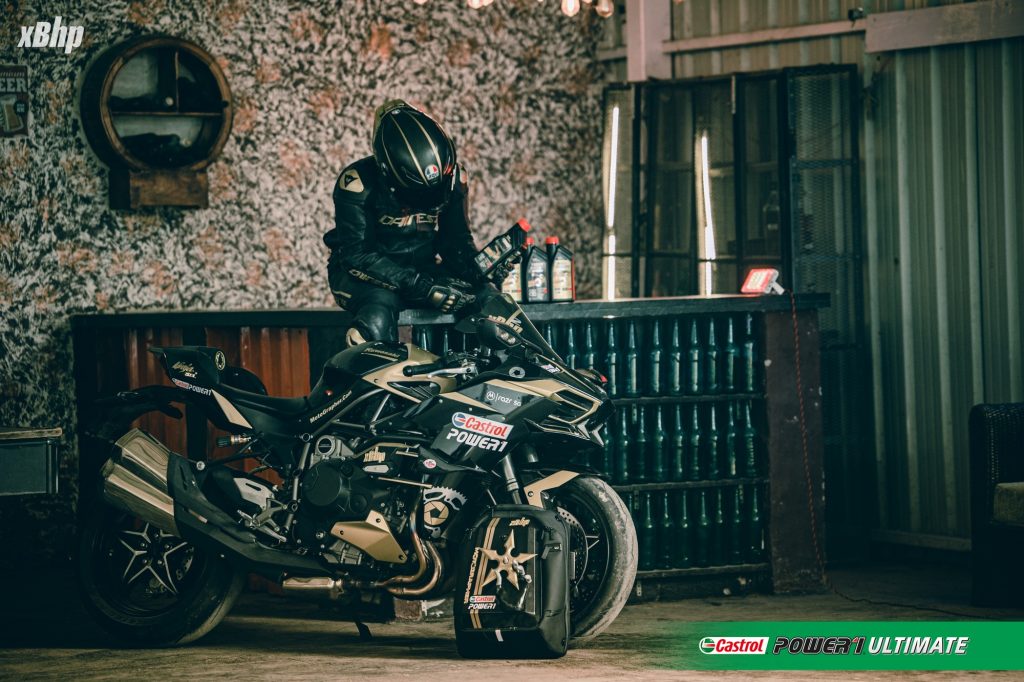
While the performance was blistering already, we knew there was more to be had. Christmas was around the corner and Castrol had sent me a box of some very well-thought-out goodies. But the pièce de résistance was the engine oil. And that too, their new flagship, Castrol POWER1 ULTIMATE. And for the H2, they sent just the right grade, 10W40.
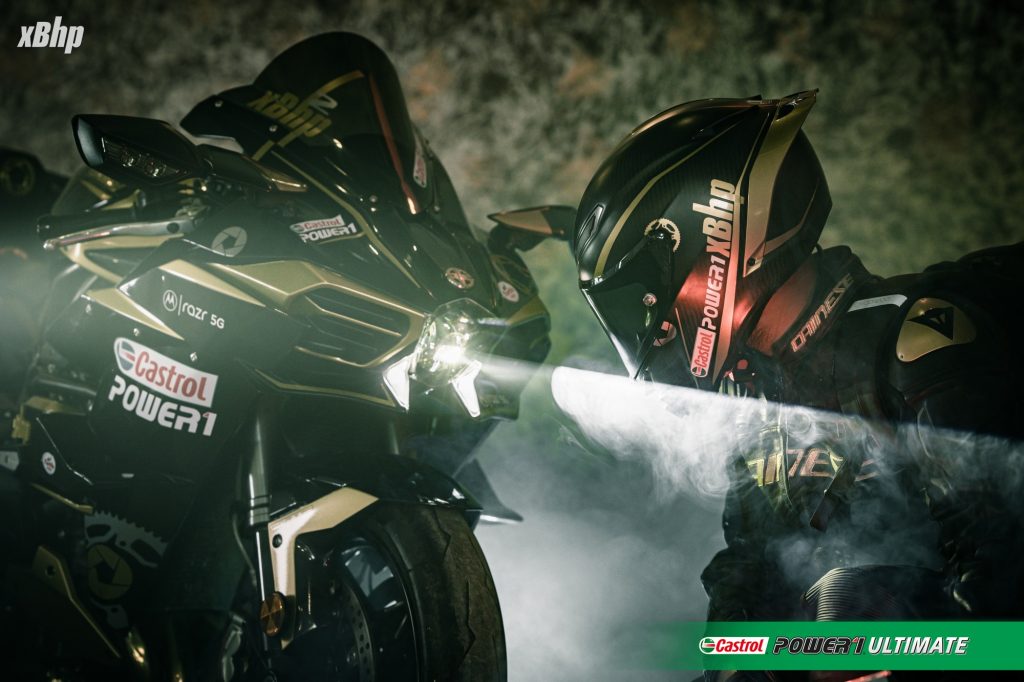
As a fortunate happenstance, Castrol POWER1 ULTIMATE was launched around the same time we got our Ninja. And since the unwavering support from Castrol had a significant part to play, we decided to create the ULTIMATE Ninja H2- the black and gold #MindNinja. So after the new livery and a healthy dose of Castrol POWER1 ULTIMATE 10W40, we were ready to supercharge our rides, both, long journeys and short jaunts.

Now, we’ll try to encompass the ULTIMATE Ninja H2 experience and how it was aided by the Castrol POWER1 ULTIMATE engine oil. Starting off with the engine because that is the centrepiece of the H2, there are two ways to explain it- one is the simple one laden with expletives and the second one is nerdy. We will go with the latter.

Forced induction is one of the handiest tools when it comes to ‘more power, less space’ game in ICE-powered vehicles. Why is it not mainstream on motorcycles then? Well, heat. The impellers that are responsible for shoving more oxygen in the combustion chambers are nasty little things. In the Ninja H2 for example, it easily crosses 1,00,000 rpm! That is a lot of stress and a lot of heat.
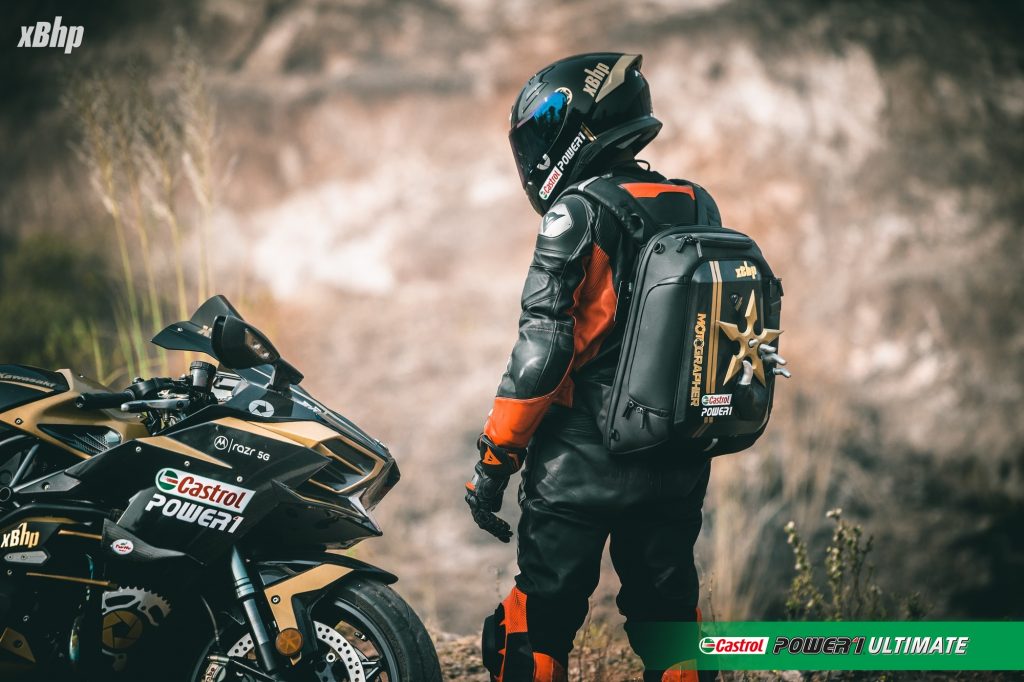
That is why forced induction units (both turbochargers and superchargers) come with an intercooler. But that would add too much bulk in case of a motorcycle and that is why it has been skipped on the H2. Then there’s the 998cc inline-4 engine which itself is no easier to cool and maintain.

You can tell how hard both of those components are working when you ride the H2. Every time you open the throttle to create a rip in the time-space continuum, the powerplant of the H2 is put under immense stress. That is why we were very interested in checking out the much-talked-about 5-in-1 formula of Castrol POWER1 ULTIMATE. Did it make any difference? Yes, and it was palpable which is a big deal because, be it improvement or degradation, when it comes to motorcycles, they are mostly minute.

While the API SN and JASO MA2 certifications make Castrol POWER1 ULTIMATE the flagship engine oil in the brand’s portfolio, it was the engineering that went into manufacturing the formulation that caught our attention. So let us talk about what the oil does. In essence, it improves on the 5 major aspects associated with a motorcycle’s engine and the riding experience. Now, let us elaborate.

The Ninja H2 is the world’s fastest street-legal production motorcycle and so, acceleration is one of the biggest selling points. Acceleration depends on a lot of factors. Transmission, clutch slippage, the resistance faced by the moving parts and so on. If all of those things do not work seamlessly, even the acceleration of a Ninja H2 won’t set your heart racing.

That is the first aspect that Castrol POWER1 ULTIMATE works on. By optimizing the friction between the moving parts, the engine oil ensures that the engine revs freely and quickly and that in turn helps the supercharger spool up quickly and boom! What we felt when we wrung the throttle of the #MindNinja was unlike anything we have ever experienced. On that note, this is not meant to be done on public roads and for 0-100 km/h red light runs. Follow the traffic rules for the safety of yourself and that of the others.

Now, onto the second aspect- protection. We have already given you a brief of how much stress the engine is under. Here too, the optimization in friction achieved by Castrol POWER1 ULTIMATE also equips it with the ability to protect the innards of the engine, especially the moving parts.

Since a lot of the heat transfer is also taken care of by the engine oil as well, the last thing you want is for your engine oil to break down because of the heat. With our extensive experience of the Castrol POWER1 range and now the Castrol POWER1 ULTIMATE, we can tell that it is one of the best, if not the best, that you can get for your motorcycle.

Moving on, we have the third aspect which is smooth riding. Those who know us know that we are less sprinters and more marathon runners. We love to travel and that involves covering a whole lot of distance. So we can tell how important a smoother engine is because a harsher engine and jerky response causes one to get tired really quickly.

Castrol POWER1 ULTIMATE helps in this regard as well. In addition to optimizing the friction, it also facilitates seamless transitions when the clutch is engaged or disengaged. This results in an overall smoother ride whether you are getting on the power or rolling off it and is even more apparent in stop-and-go traffic where a lot of clutch modulation is required.

When it comes to vehicles, heat is one of the biggest enemies. During the design of a motorcycle, a lot of research goes into heat management not only for the comfort of the rider but also for the longevity and lasting performance of the motorcycle itself. Now, cooling solutions such as liquid cooling take care of heat management but there are quite a few components that are deprived of active cooling.

So, as the engine oil flows, it also takes care of the important task of driving the heat away from the components that do not have the luxury of active cooling. If not taken care of, this residual heat can gradually build up and then… well, thermal expansion and more damage. As mentioned earlier, the supercharger on the H2 does not come with an intercooler and yet, we never faced any issues in terms of heat dissipation which is a testament to Castrol POWER1 ULTIMATE’s prowess in justifying the improvement on the fourth front- cooling.

In the beginning, there were quite a few questions that we believe one might have. “Does it still excite us just as much?” Does it still feel like a terrifying animal that needs every ounce of your skill and concentration to tame?” These bring us to the fifth aspect- enduring performance.
A new motorcycle may have the ability to keep you engaged but as time goes on, it deteriorates. With the combination of the factors mentioned above, Castrol POWER1 ULTIMATE is equipped to prevent that from happening. As a result, it helps your motorcycle to keep up the level of performance and provide you with enduring performance over the course of a service interval and in individual rides. Perhaps that is why we were able to enjoy the #MindNinja on our rides as it battled traffic, bad roads, and while roaring along highways.

With all that, we can ascertain that Castrol POWER1 ULTIMATE is a very capable engine oil ready to not only provide you with exciting performance but stellar protection for your motorcycle’s engine as well. Castrol POWER1 ULTIMATE is available in a wide range of grades so if you have an internal-combustion engine plonked between two wheels, there’s one for you and chances are, your motorcycle will thank you for it. You can buy Castrol POWER1 ULTIMATE here.
While we continue to enjoy the #MindNinja to the fullest, we also wanted to further solidify the efficacy of the performance gains on offer with Castrol POWER1 ULTIMATE. And so, we had a couple of more riders, that quite a few of you know, to try it and what follows are their thoughts about it.

Finally, it happened! I have finally ridden the Ninja H2. To say that it is mindblowing is an understatement. I have ridden my fair share of motorcycles and while every motorcycle is a different being, they are all powered by naturally-aspirated engines. So the Ninja H2 is truly a special motorcycle. An already blistering 998cc inline-4 engine dialled to 11 with a supercharger? How could it not be!?
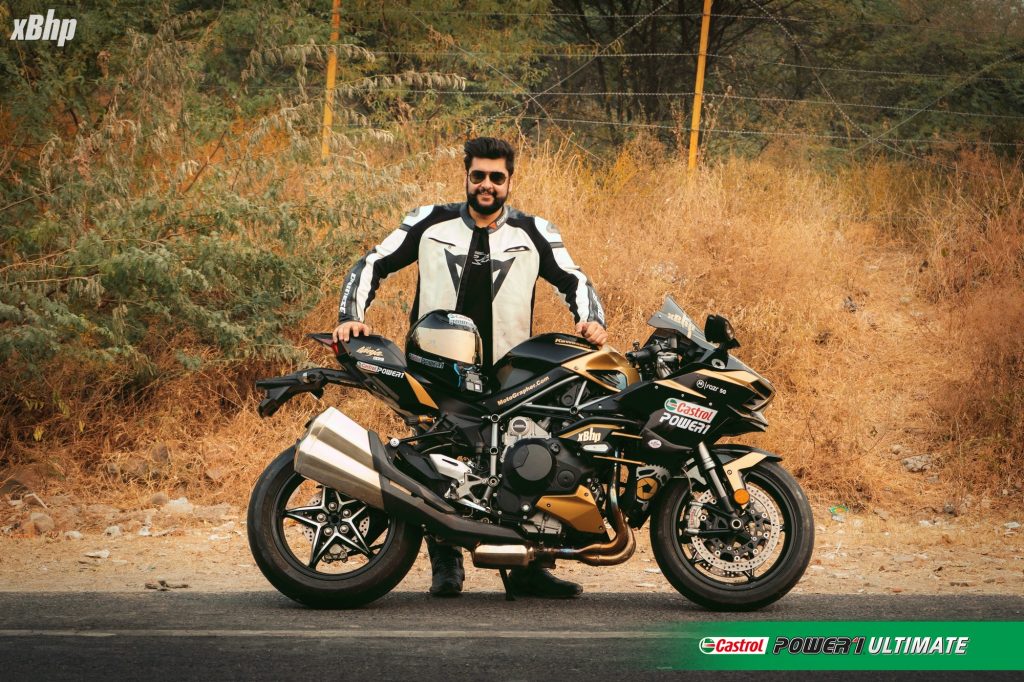
Now talking about the experience of riding the Ninja H2, it is unlike any other motorcycle that you can ride. And add to that the performance gains achieved by Castrol POWER1 ULTIMATE flowing through its veins, and you have on your hands something that redefines hyperbikes.
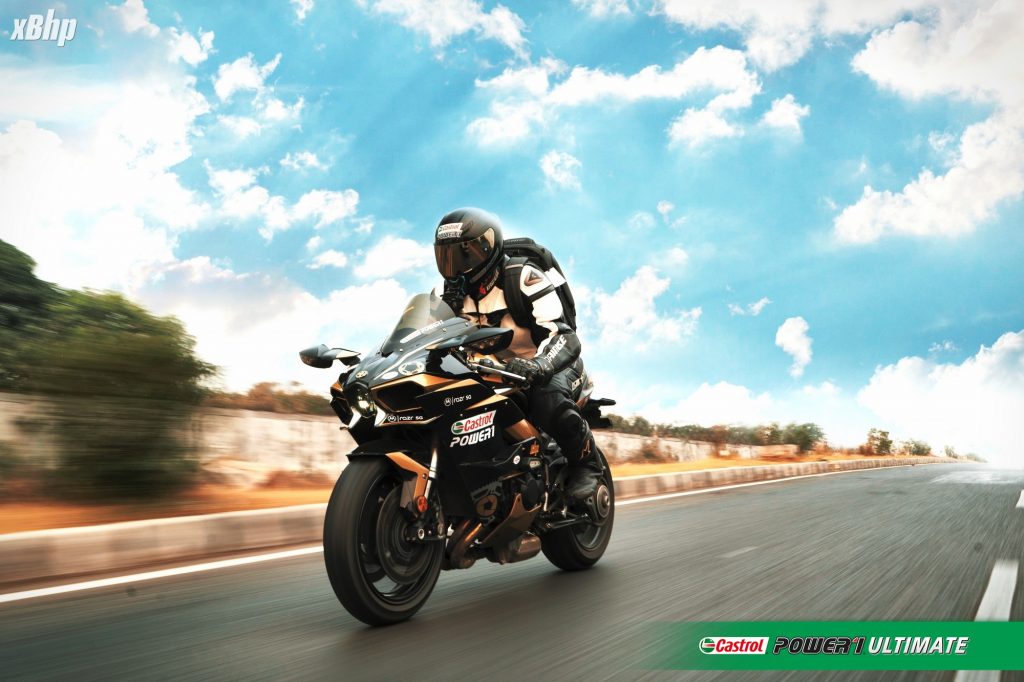
Being an inline-4, the engine has a better inherent balance and therefore, the refinement and smoothness. In the lower revs, it feels like an ordinary superbike but as soon as the boost begins to build up, it just goes… like… really goes! The acceleration is brutal and the thing just keeps going and going and going. It is like sitting on a gold mine of nothing but pure thrust.

Coming to the technical aspect, inline-4s tend to be peaky but the supercharger adds a whole lot of grunt to the midrange. Now as the revs climb up, the inline-4 keeps getting stronger and stronger. But there’s something else going on as well. See as the revs rise, the impeller of the supercharger also goes faster… in multiples of the engine speed. That is what Kawasaki was talking about when they made a big deal out of the Planetary Gear or Planetary drive.

The end result is a fiery top end that can easily chew up and spit out tyres in a matter of minutes. Then there’s the sound. It is pure magic. The howl of the supercharger sucking in momentous amounts of air and shoving in in the combustion chamber combined with the smooth growl of the inline-4, it is simply fantastic. Then there are the chirps. As soon as you let go of the throttle, the excess boost is spat out and that is the reason behind the famed chirp.

Riding the Ninja H2 was like having my eyes opened in the sense that when electric seems like the future, we still have things like these on hand. But the extremity of the Ninja H2’s engine reminds me of the importance of having it run smoothly and efficiently. Something that is greatly supported by the Castrol POWER1 ULTIMATE engine oil that powers this Ninja H2, or #MindNinja as they like to call it over at xBhp.
Since I like tinkering around with motorcycles, I can say that I am somewhat aware of what goes on in the engine of the Ninja H2 and it is not pretty in terms of the stress on the innards of the engine. That is why I am also of the opinion that Castrol POWER1 ULTIMATE with its 5-in-1 formula is a great match for the Ninja H2.

Among the 5 aspects that the Castrol POWER1 ULTIMATE improves upon, acceleration is the first one. Acceleration is also one of the bigger reasons why the Ninja H2 has already become a cult motorcycle. The optimization of friction achieved by Castrol POWER1 ULTIMATE between the moving parts of the engine helps greatly in this regard.
Then there’s protection, our second front, which I believe is paramount in such a high power-high revving engine. The extreme heat can cause subpar engine oils to break down but Castrol POWER1 ULTIMATE is par-excellence. If it can take care of an engine as crazy is this, I am sure that it’ll be more than up to the task of doing so for any motorcycle.

Now, the Ninja H2 is an extremely powerful motorcycle, and the only thing that modulates how much power is put down is the clutch. Smooth engagement and disengagement of the clutch are important and so is the transition between opening and closing the throttle. And with Castrol POWER1 ULTIMATE, you get just that and that is why even an intimidating motorcycle like the H2 is a breeze to ride even in traffic.

Next up we have heat management, our fourth aspect. While liquid-cooling is a pretty nifty tech, it does not take care of all the components of the engine. That is something taken care of by the engine oil and Castrol POWER1 ULTIMATE is more than adept at this as I did not have any trouble with the heat no matter how much the Ninja H2 can throw at it.

Finally, we all like some sort of consistency to be maintained when riding a motorcycle. There is a known deterioration of performance in both, long rides and in between service intervals. Castrol POWER1, with its superior formulation, makes sure that the performance of your motorcycle remains consistent and you can have the best out of your motorcycle always… just like I did out of the Ninja H2.
“Oh, man!” That was my first reaction when I opened the throttle of the Ninja H2. That reaction is natural to a motorcyclist who is riding the mighty Ninja H2 for the first time. But being a motorcycle racer, I did not expect to be intimidated by this beast of a motorcycle. Surprisingly, I would say that the surge of power does take some getting used to. I won’t say I found it intimidating. But it surely commands respect.
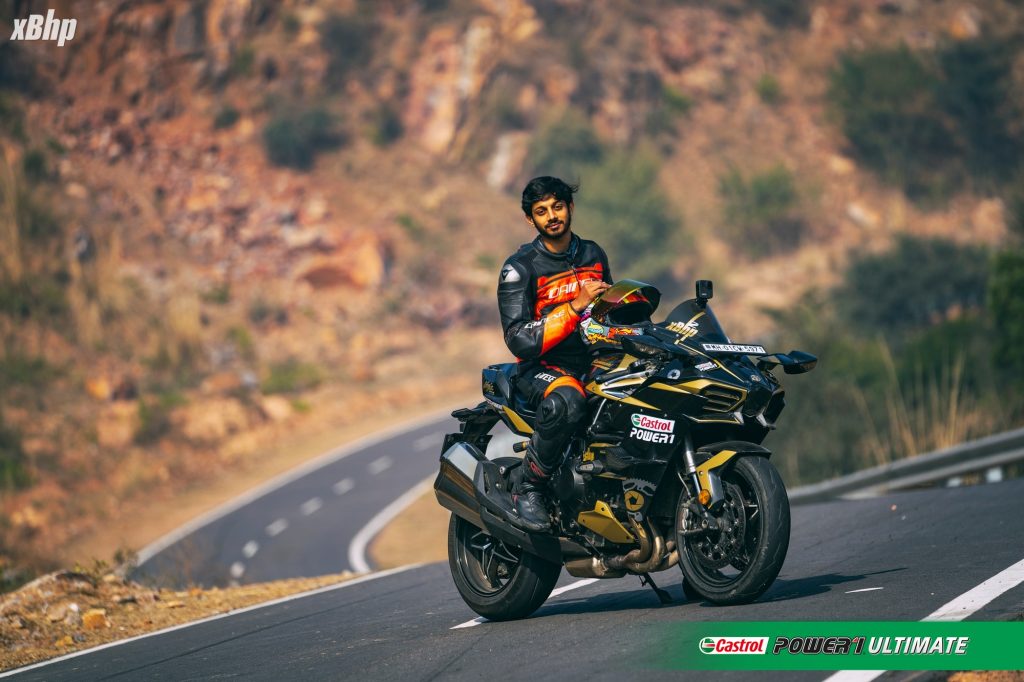
First off, there’s the design. The Ninja H2 is perhaps one of the most radical and aggressive motorcycle designs ever. It effortlessly conveys its power and ability simply with its design. All those angular lines, sharp edges, come together to create an unmistakable silhouette that is so distinct that one can recognize this motorcycle even if one drew a few of its lines on paper. Then there’s the colour. I love the stock one but I equally like the Black-Gold of the #MindNinja as the xBhpians call it.
Next up, there’s dynamics. Kawasaki makes some fantastic handlers. I can tell not only because of their exploits in WSBK but also because I race a ZX-10R myself. But the Ninja H2 is very different and I can tell it would have been mighty difficult to set it up. Fortunately, the end result is surprisingly good.

Despite the heft and the dimensions, the Ninja H2 feels very familiar to a superbike in terms of ergonomics. I’d say they are still a tad relaxed because I am used to my own race-spec ZX-10R but they are very comparable to a stock superbike. Then, the handling. I love the geometry of the H2. It has a good balance of straight-line stability and decently quick turn-ins.
If I am being honest, it is a bit far from track-bred superbikes, and so, it may not set racetracks on fire with its corner speed. But then again it is not supposed to. Moreover, it can more than make it up with the insane amount of power and grunt it has. So yes, it is a very capable handler, but it is not a lithe racetrack machine.

Now, coming to the magnum opus- power and, in turn, engine. Yes, I know that it makes some north of 200 horses which is not a big deal nowadays. But one must not forget that this is the same mill that powers the 300-something bhp Ninja H2R capable of 400 km/h. Its roadgoing counterpart may be a bit sedate on paper but in the real world, it is just as fierce.
I love the way it accelerates and I love the fact that it took care of one of the inherent issues of an inline-4. They are very peaky and one has to stay high up in the rev-range to get the most out of it. Ninja H2 is also powered by an inline-4 but it has a “howling” trick up its sleeve. And that trick is the supercharger.
So with the Ninja H2, you get a decent low-end but a smacking midrange and top-end. The acceleration is almost terrifying as the boost begins to build up and keeps going as you rev higher and higher. Another thing that I found awesome was the sound. Inline-4s sound good but coupled with the howl caused by the supercharger sucking in and shoving massive amounts of air in the combustion chamber is simply mesmerizing. And then there’s the flutter when you let go of the throttle… it is simply amazing.

I have ridden high-capacity twins, V4s and inline-4s. While the former two are very aggressive and sometimes a little rough, the latter is just smoothness all the way. In the H2, you get that aggression because of the boost and the inherent smoothness of an inline-4 in one package and that is something fantastic.
This also brings me to talk about the engine oil. xBhp’s #MindNinja has been treated with Castrol POWER1 ULTIMATE and man is it a fantastic engine oil. Riding superbikes on the road, I am aware of the heat they can generate and it can get downright bothersome. But Castrol POWER1 ULTIMATE does a fantastic job of keeping the engine cool. And that is saying something because the H2’s engine comes with the added heat output from its supercharger.

I also expected the bike to be a fair bit of work when ridden in traffic but it was not. Castrol POWER1 ULTIMATE facilitates a smooth ride by making on/off throttle transitions smooth. This also results in on-demand acceleration throughout the ride and there’s just a new world waiting for you whenever you twist the throttle.
Even after riding for long durations, the engine seemed relatively stress-free and that is more assurance than you need towards the fact that with Castrol POWER1 ULTIMATE, the engine is well protected. I have never experienced something like the Ninja H2 ever in my life with this particular engine oil, the experience is even more mind-blowing!
Aston Martin DB11: Supercar in GT guise!
 Feb 2021 Sundeep Gajjar
Cars
Feb 2021 Sundeep Gajjar
CarsYou see, there are some cars that are good for flings. You have fun and you let go because they’re too crazy to live with. And then, there are cars that you want to get to know because you can wake up to them every day. Spend more time with them because they don’t feel like they’re perpetually on steroids and adrenaline. The one in question today is the latter. Something that you can have a lot of fun in and something that you can drive every day. The Aston Martin DB11.

The idea behind GT cars, especially ones like the Aston Martin DB11 (if there are any) is a curious one. See, the reason why everyone loves supercars is that they are, well, supercars. The reason why not a lot of people go for them (considering they have the moolah) is because they are well, supercars.

Not every day can be a track day and they can be a handful on the roads. That is the reason why GTs exist. But Aston Martin’s way of making GTs is slightly different. They make a car. Make it as sporty as possible. But keep just enough in the bag to make it nearly as easy to drive on regular roads as a regular car. So you get the best of both worlds with cars like the Aston Martin DB11 (again, IF THERE ARE ANY!).

Now, the reason why we loved the DB11 so much is because of what it brings with it. Not only visually, technically or mechanically but philosophically as well. The DB series is one of the longest-running series of cars. Perhaps that is why when one looks at the Aston Martin DB11, it harkens back to how it all started. And it all started with an Atom. Everything does but Atom was the car that set the stage for all Aston Martins that some lucky ones get to see and even fewer immensely fortunate ones get to drive.

Time for a little history lesson. The ownership of Aston Martin had already changed hands quite a few times before the Atom was made. Right around the time when Gordon Sutherland put Aston Martin up for sale, the Atom was produced. Then, a certain David Brown took a test drive and it impressed him so much that he bought Aston Martin.

After the acquisition of the brand by David Brown, the first car produced was called 2-Litre Sports and it was inevitably based on the Atom. But 2-Litre Sports sounds a bit bland, right? That is why it is known as DB1 nowadays. The very first of the DB series and DB, if you haven’t figured it out yet, stands for David Brown.

The DB1 was successful and so were the successors- DB2 and DB3. But what really caught people’s attention and what really made people notice Aston Martin was the DB4. It debuted at the 1958 London Motor Show and people fell in love with it instantly. In our opinion, it is still one of the most beautiful cars ever made but topped sooner than expected and by none other than its own successor.

If you think of Aston Martin today, you don’t think ‘noticeable’. You think ‘desirable’. And if the DB4 took care of the former, how did it come to the latter? Well, if you remember the movie, you remember the man and if so, you remember the car as well. But let’s not rely on that. The movie is Goldfinger (1964). The man is Sean Connery as 007 or James Bond. And the car is DB5, one of THE most beautiful cars ever made. Now that’s desirable.

Those are some great cars and great achievements. But the reason why Robert Bamford and Lionel Martin founded Aston Martin was to make race cars. Even David Brown did not buy Aston Martin only because the Atom was a wonderful car. He was big on racing, he saw potential in Aston Martin and that is why he bought it.

In that sense, racing is something that is embedded in the DNA of Aston Martin and an integral part of why they make cars in the first place. An example of their prowess could be the Aston Martin DBR1 which won the World Sportscar Championship in 1959. Is that aspirational? Absolutely and to the extent that the first one of the five DBR1s made sold for 22.5 Million dollars and it was raced by *drum roll* Carroll Shelby and Stirling Moss. Yep, let that sink in.

We hope the history lesson was not too long and even if it was, we assure you that it fits well in this piece. Anyway, what does all that history and accolades entail? Well, just that every DB car has a lot to live up to. The Aston Martin DB9 sort of did. And the DB11… it does that with ease. It has everything that it needs to proudly wear the DB badge and then some.

Let us start with the design and get one of the most important bits out of the way. Aston Martin emphasizes following the Golden Ratio in designing all of their cars. That is one of the significant factors that lend Aston Martins their distinct looks. You can see that in the DB9 and you can see it in the DB11.

What is the Golden Ratio? In simple terms, it means that you design the car in such a way that every dimension, every panel, even the minor lines and the proportions are in harmony with each other. Invariably, achieving it requires an obsessive attention to detail. Aston Martin designers and engineers are probably hired on the basis of that trait because one look at the sharp and sinuous silhouette of the DB11 and you know that obsessive is the right prefix for attention to detail here.

At xBhp, we have experienced our fair share of supercars. Quite a few of them simply blew our minds but perhaps none of them was as pleasing to the eyes as the Aston Martin DB11 is. As angelic (soft and smooth) as the lines are, the demonic bits (sharpness) add another dimension to the beauty of the DB11.

The signature grille flanked by the beautiful headlamps, the boomerang taillamps accentuated by the active spoiler and that darn roofline. Being visual artists ourselves, the only thing we can compare the DB11 with visually is a beautiful sunrise. And then there are special bits like this- the tyres are manufactured by Bridgestone exclusively for the DB11 and on the sidewall, you can see that Bridgestone used 007 as the official code for these tyres.

With the DB11, it is not just about the looks either. Form marries function in the design theme adopted for the flagship GT of the British marquee. The aerodynamic efficiency that this car achieves is serious. The air is channelled through and around the bodywork and vented out of the rear like a jet stream.

There’s an active spoiler system too which is patented by the name Aeroblade. That can be a fitting name for some special weapon that Bond wields. Coming back to the point, the attention to aerodynamics is also one of the reasons behind the scintillating numbers associated with the Aston Martin DB11.

Since the topic of numbers is at hand, let us tell you that the DB11 variant that we got to drive has a 5.2-litre twin-turbo V12 under the hood. The massive engine is capable of producing 600 bhp of power and 700 Nm of torque. 100 km/h from a standstill takes just 3.7 seconds and if you can find a place to do that, you’ll see a top speed of 335 km/h on the speedo. How does a car that weighs 1,800 kilos do that? It does when it is an Aston Martin DB11. On that note, There’s a V8 variant of the DB11 as well but that is for some other time… if we can be a third-time-lucky.

When it comes to driving the DB11, it is like a Transformer. In one moment, you are driving it in a gear or two higher than usual and being all civil and tame. And in the next, it can brutalize the tarmac and ready to hand you the honour of finally inventing time travel.

This figurative shapeshifting that the DB11 is capable of reminds one of a certain ‘green accident’. Bruce Banner talks about Gamma radiation and speaks Tony Stark English. The Hulk simply tears sh*t up. But they are the same person and the only difference is the temper of this person at any given moment. In the case of the DB11, the mode selector is the anger button. Incidentally, it does come in green too.

In the city, the DB11 behaves like your regular car despite it being a billion miles away from regular. Because of the immense torque and tractable nature of the V12, you can put it in GT mode, select a higher gear, and just let it thrum around town as it is not very noisy (although in the undertone, it does keep you informed of the storm that’s brewing under the hood). There are no fueling inconsistencies and no jerks or lurches. It is simply silken.

One must not forget though that despite the GT mode, the twin-turbo V12 is still just that and if you floor it, the acceleration is mind-blowing and the Gs exerted are tremendous. And yet, it is a whole different beast when you switch the modes. Things are livelier in ‘S’ mode but the ‘S+’ is what ‘revelations’ and ‘epiphanies’ are all about. It is loud and brash and brutal.

But the modes do not only work on sharpening the throttle response, noise and transmission. The difference in the dynamics of the car in different modes is tangible too. See, even if the roads aren’t straight or if you aren’t in a drag race, the S+ mode nearly turns this Grand Tourer into a point-and-shoot sports car… nearly.

The suspension is supple in GT mode and the ride is pliant so the DB11 simply glides over undulations and small potholes. In S+ though, things are dialled to 11. The suspension is taut and the feedback you get is almost overwhelming. But put your head down, listen to the car, and drive properly and it is a hoot. You can place it wherever you want in a corner and it will hold the line.

Despite the engine being in the front, the folks at Aston Martin were able to move it back just enough for this car to have a 50-50 weight distribution. That contributes to the wonderful balance that the car exhibits. Last but not least, it is real-wheel drive so, in addition to the fantastic handling characteristics that it brings with it, the DB11 can oblige you with some sideways action too.

While all that is good to have, this is not the forte of the Aston Martin DB11. At the core, the DB11 is still a GT even though considering all that it can do, we’d like to call it a Super GT. After all, Hulk is good to have on your side when you have to fight aliens. Bruce Banner is the guy you want when you want to talk universe.

That’s what you do inside the car. The cabin is rich and reeks of handmade quality. It is so elegant, so immersive that you nearly forget all that tyre marks you left on the tarmac. Exquisite materials and stellar craftsmanship added to all the tech you need and more.

It is so amazing to think that it has stuff that you perhaps don’t bother about till you need it and when you do, the DB11 serves that to you on a platter. While the digitalization of the cabin is more than acceptable, we do miss the counter-clockwise tacho and speedo of the old DBs. And that, just that, is the only gripe we have with this car. It is nitpicking at its worst but we’re calling it as we see it.

The DB11 is a car that makes you sigh with both- want and relief. Want, for obvious reasons. Relief because you know that there are makers out there who’d still make cars like this… and with pride! We want to thank Aston Martin for making cars like this. We want to appreciate them for being abreast through tough times. We want to congratulate them on their recent success in the market and in racing. And if we ever felt so inclined to do all that in person and head to Gaydon from New Delhi, we know what we’d want to drive.

Riding the past alongside the future: Rocket III vs Rocket 3 R ft. #SoulRocket
 Feb 2021 Sundeep Gajjar
Bikes,Motorcycles,Triumph
Feb 2021 Sundeep Gajjar
Bikes,Motorcycles,TriumphVery rarely in life, one gets a chance where they see the past and the future together. The rarity of this occasion lies in the fact that time is never stagnant. An example could be Valentino Rossi. Those who have known him for as long as he has been racing can still imagine him racing those 2-Stroke 500s alongside the modern-day GP machines. It is a sight like no other.
We recently got an opportunity to do something of that sort. Hard work had a part to play but so did luck… to some extent. So here we bring to you the same motorcycling recipe of big with two different servings: III and 3.
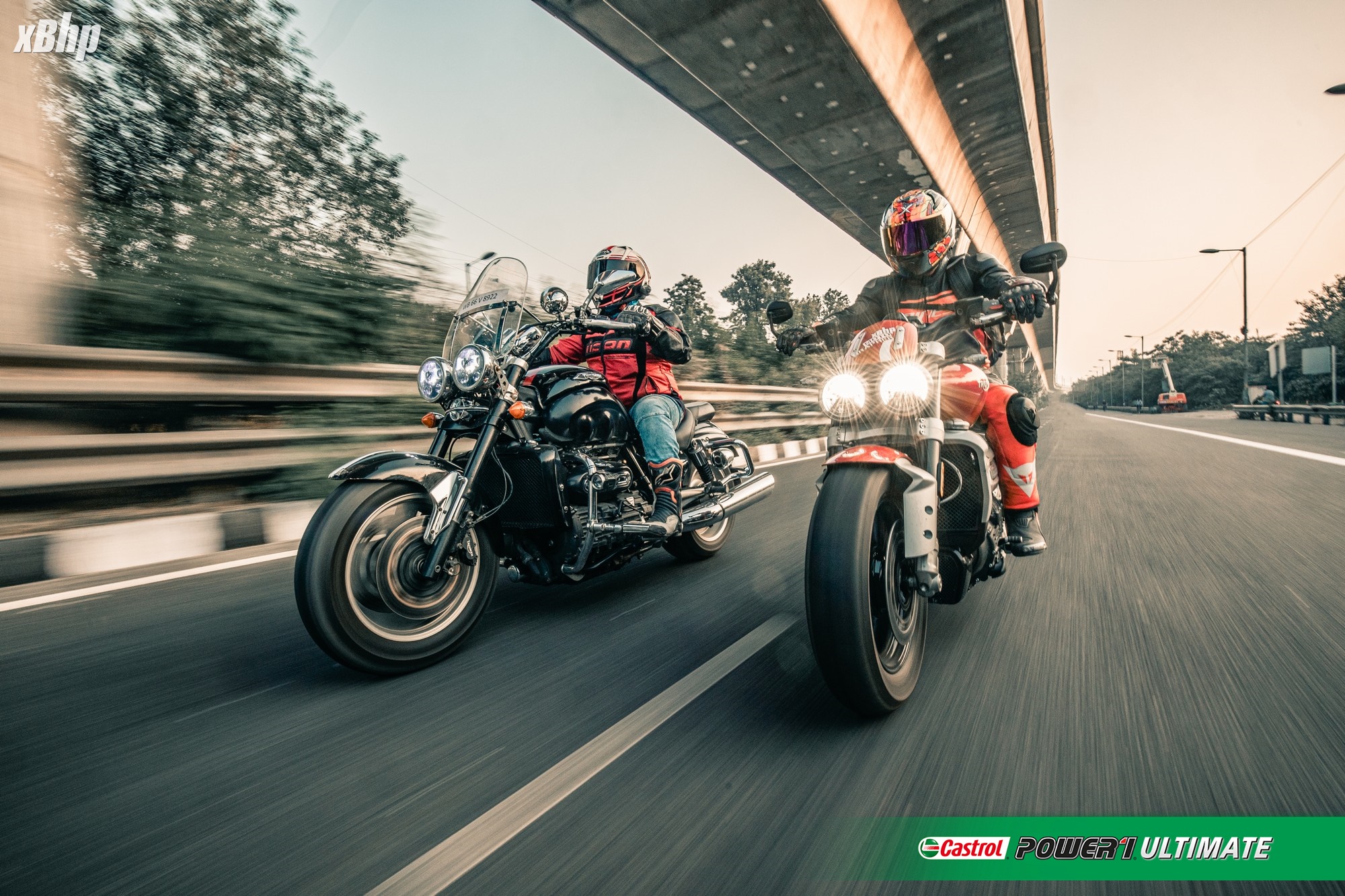
III signifies the illustrious past and 3, the glorious future. If the prevalence of the threes has not given it away yet, let us tell you that we are talking about Triumph Motorcycles. Specifically, the Rocket. We recently added the Rocket 3 R to our garage and in the few hundred kilometres that we have ridden it for, it has only solidified our belief that it is more than deserving of all the superlative titles motorcyclists relate it with.
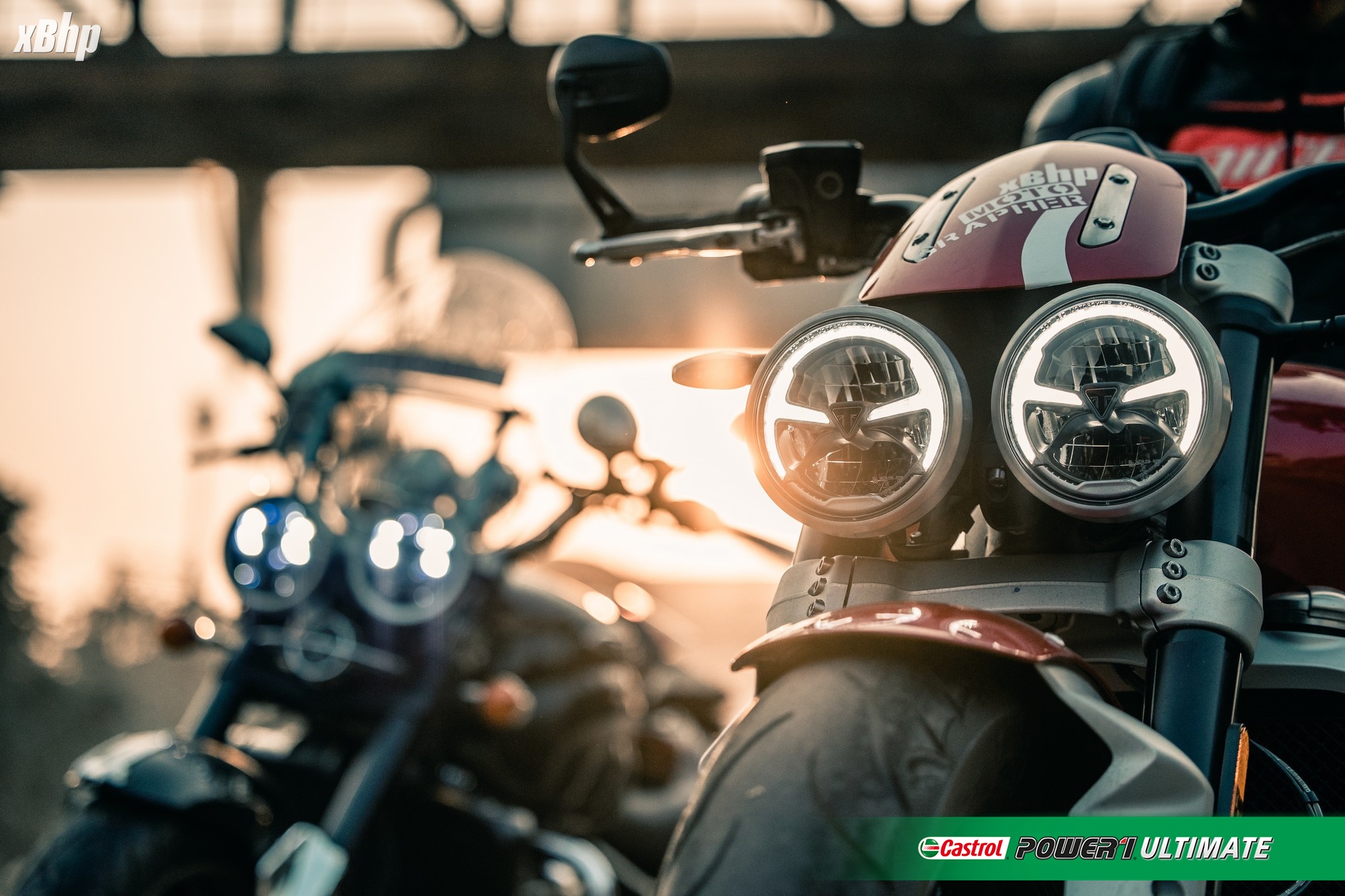
But the Rocket 3 is not an infant. It has grown quite a bit. When it comes to special motorcycles like the Rocket 3, origins are just as important. A fortunate happenstance helped us put together this… show… where we have the Rocket III from the past running alongside our own Rocket 3. We reiterate… it was a sight like no other.
How was the Rocket born? Well, Triumph was looking at the American market and they wanted to make a big cruiser. After a lot of research, they planned to make one with a 1,600cc engine. But then, there were quite a few motorcycles in that displacement category. Then, someone at Hinckley decided that they were going big. 2,294cc big. And that is how the Rocket III was born.
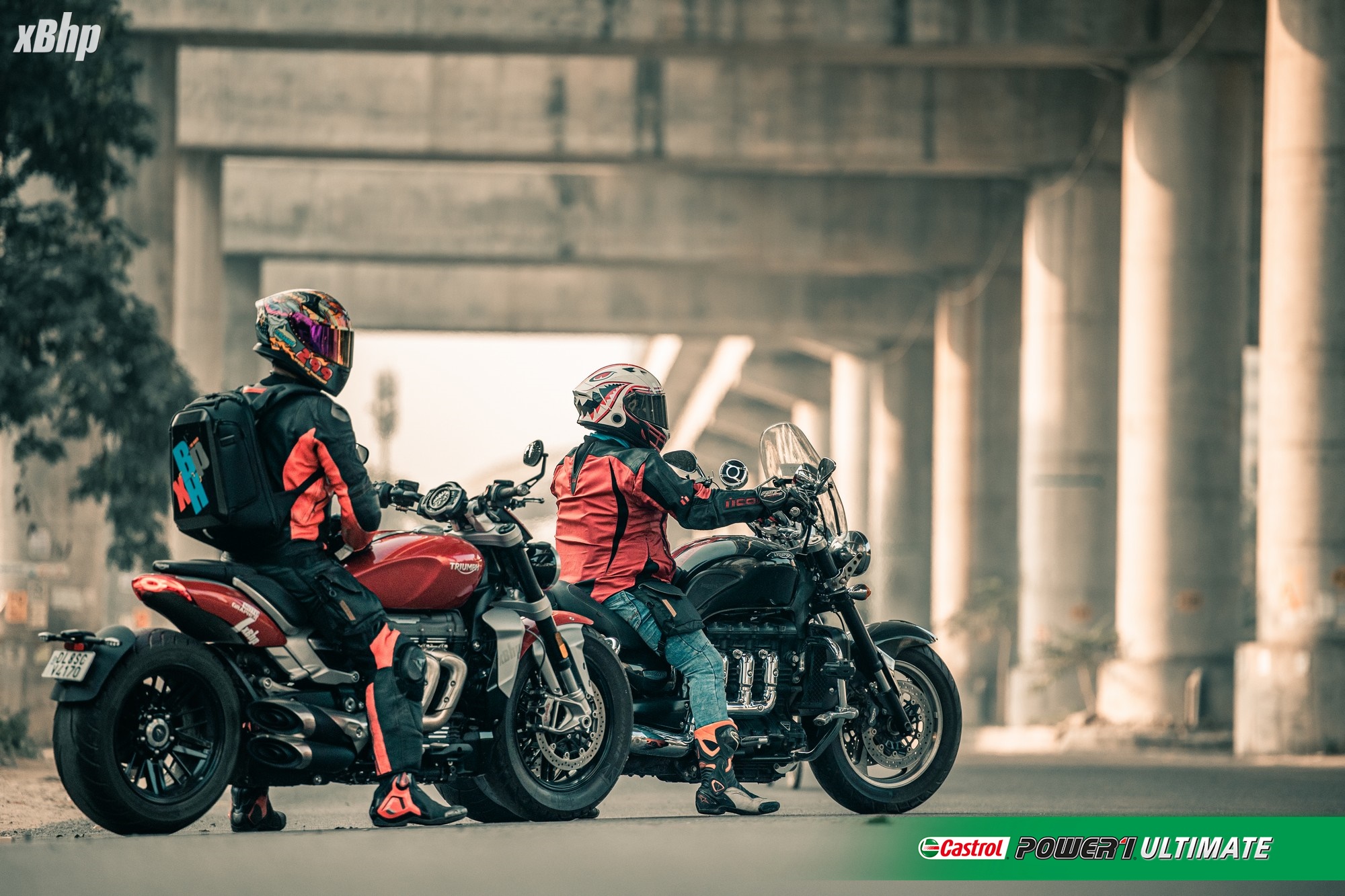
Around 140 bhp of power. More than 200 Nm of torque. 300+ kilograms (dry). The Rocket III was the talk of not only the town but the whole wide world. It was big and comfy and looked great and all. But the torque and the humongous 240-section rear tyre were what stood out the most. Then those who got to ride it expected a usual-cruiser deal. But they were in for a rude awakening as the Rocket III could accelerate from nought to 100 km/h in time that was comparable with superbikes and hyperbikes.
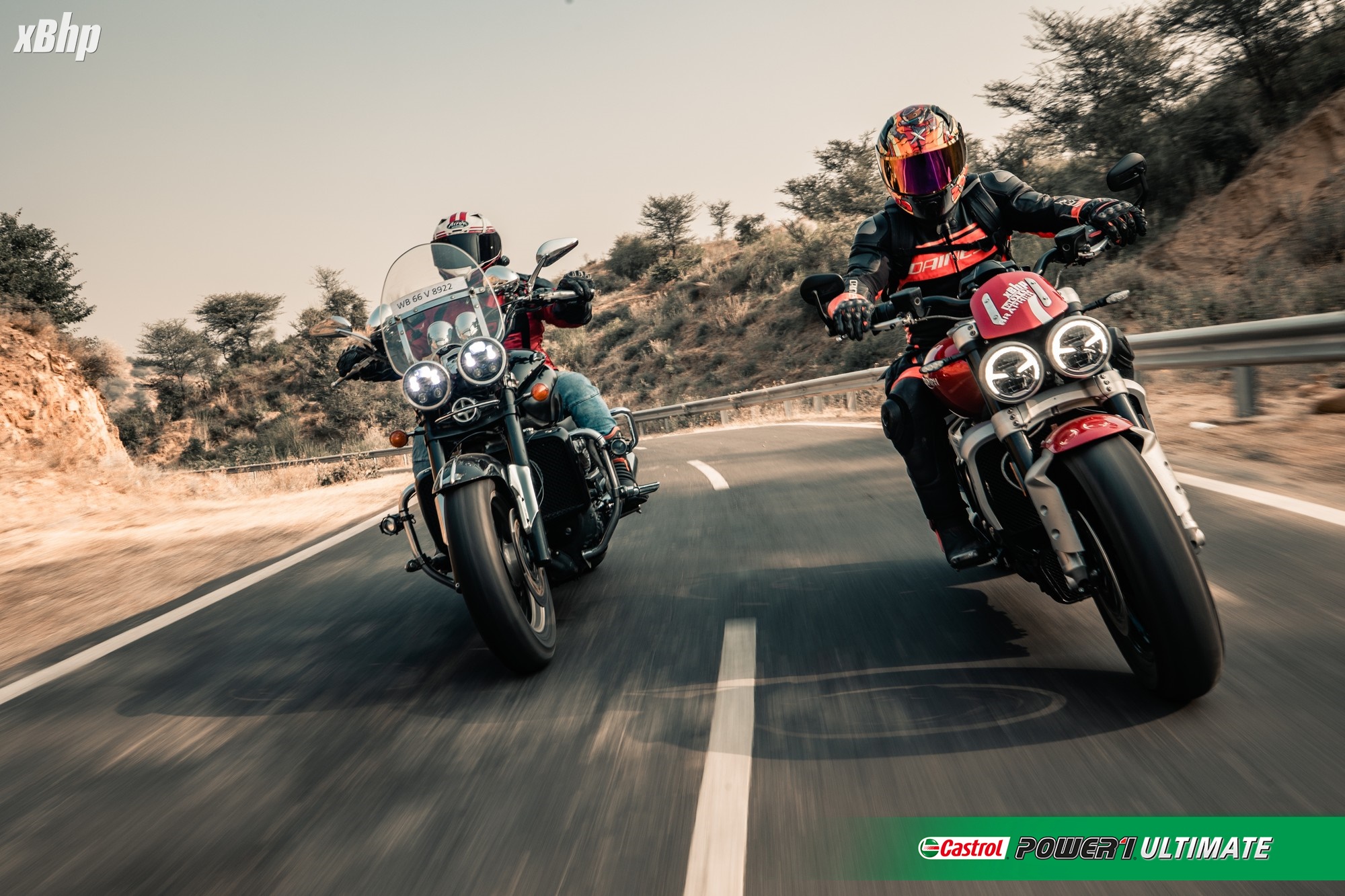
The cylinder config for the Rocket III was, predictably, an inline-3. Something that has become a sort of a trademark of the British marquee. Only, in the Rocket III it was mounted longitudinally. Despite being brutally quick and mind-bogglingly big, the Rocket III had another surprise up its sleeve and this one was really a surprise. It was a breeze to ride. Something not a lot of big motorcycles can boast of.
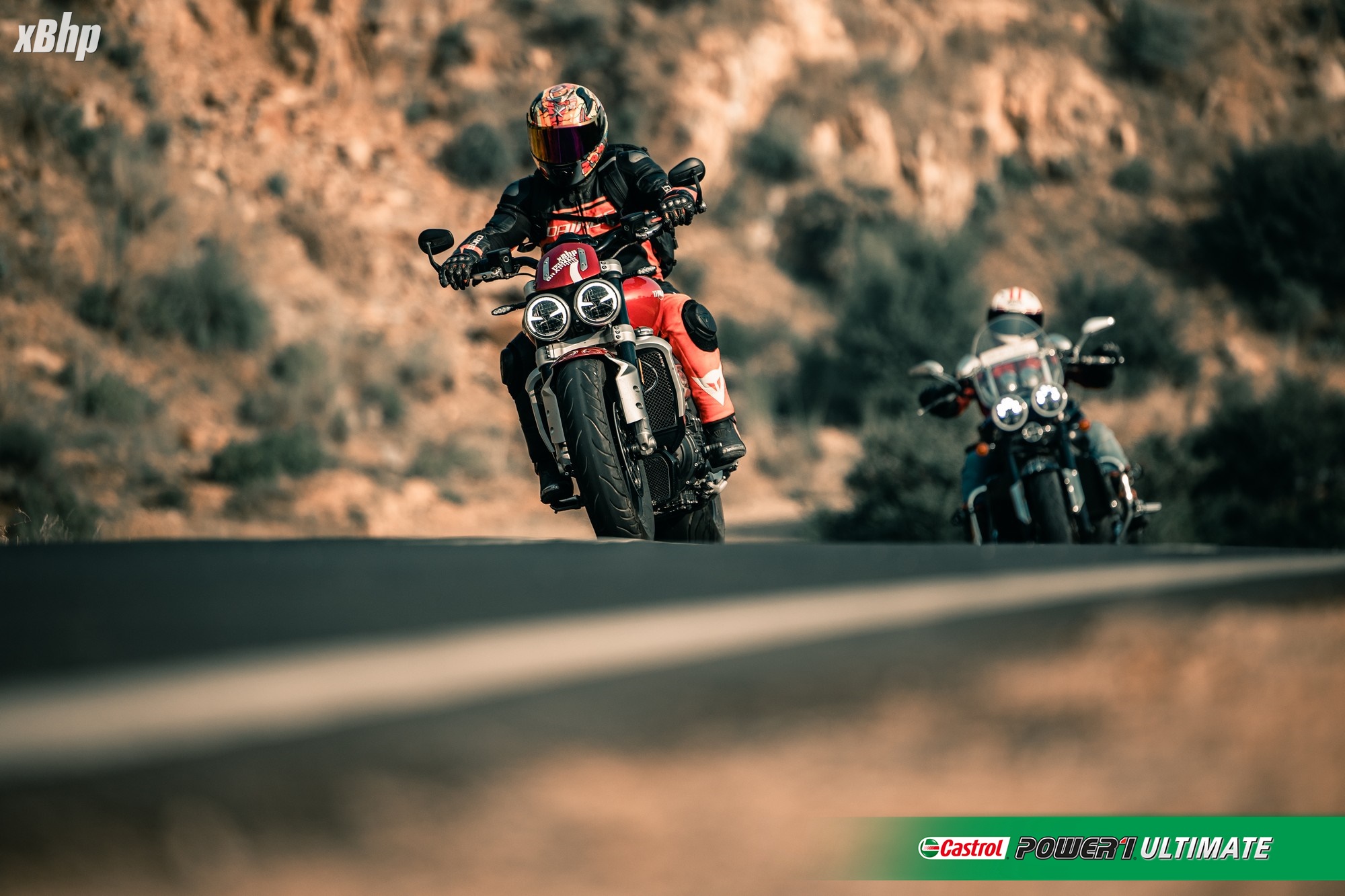
Still, the best part about the Rocket III remained the pride that Triumph took in making a motorcycle like that and making it work too. Perhaps that is why they kept working on it. Improving it and changing it in the way that made the Rocket III something that everyone could relate to. And perhaps that is why the Rocket was able to carve a niche for itself. Let us explain.
See, the Rocket III was conceptualized to be a cruiser and it was. But with time, Triumph realized that it could be much more than simply a slave to a particular category. So they came up with a roadster variant which had mid-mounted controls and steered it in the direction of streetfighters.
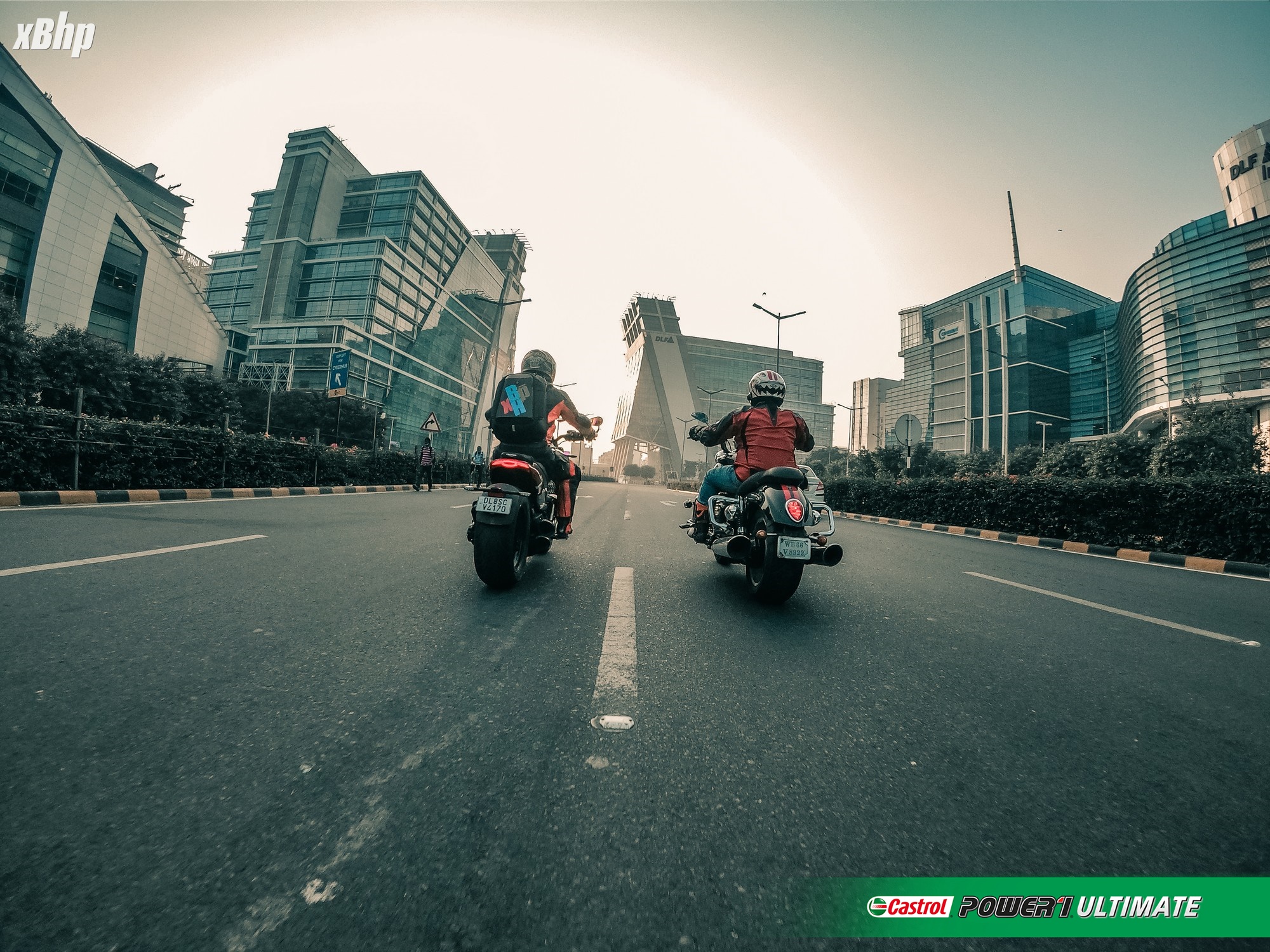
So the cruiser they set out to build invariably became a power-cruiser and the streetfighter direction made the roadster a muscle bike… yes, like the 4-wheeled species, the two-wheeled one has the class too and it’s all thanks to Triumph.
While the Rocket III that we rode (thanks to Hoonigan Motorsports) brought back some memories and allowed us to recall how it all came to be, our own Rocket 3 R was waiting to amplify all those sensations that the older Rocket invoked. Triumph somehow managed to make the Rocket 3 ‘bigger’ and ‘smaller’ at the same time.
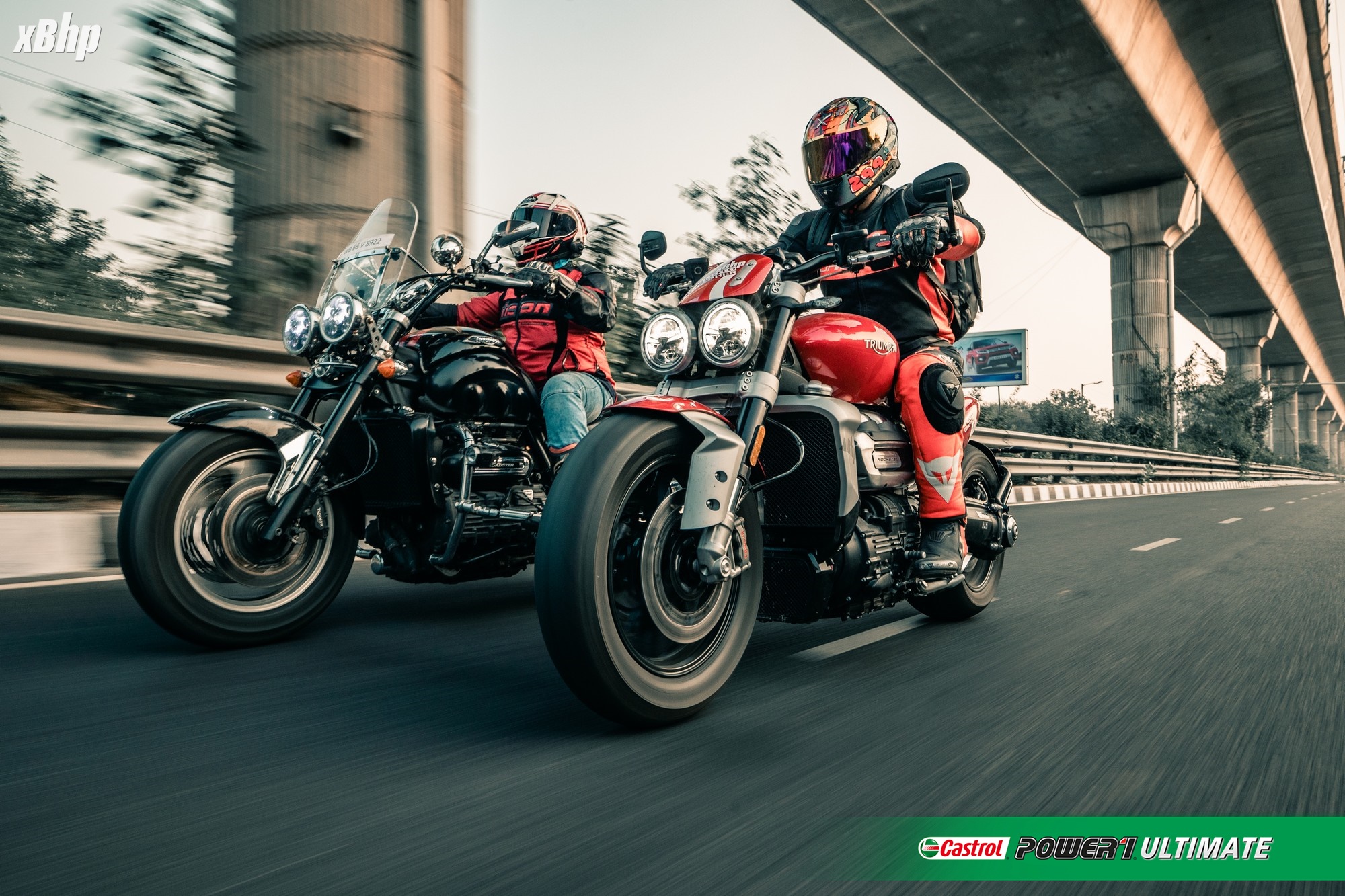
First and foremost, the engine. The longitudinally mounted inline-3 engine now sports a displacement bumped up to 2.5 litres (2,458cc to be precise). What that entails is more power, more torque and more refinement. While ride-by-wire gave rise to a throttle smoother than ever, the 6-speed gearbox with shaft drive accentuates all the distinct traits of the engine with 167 Ps of power and 221 Nm of torque being the most prominent ones of those.
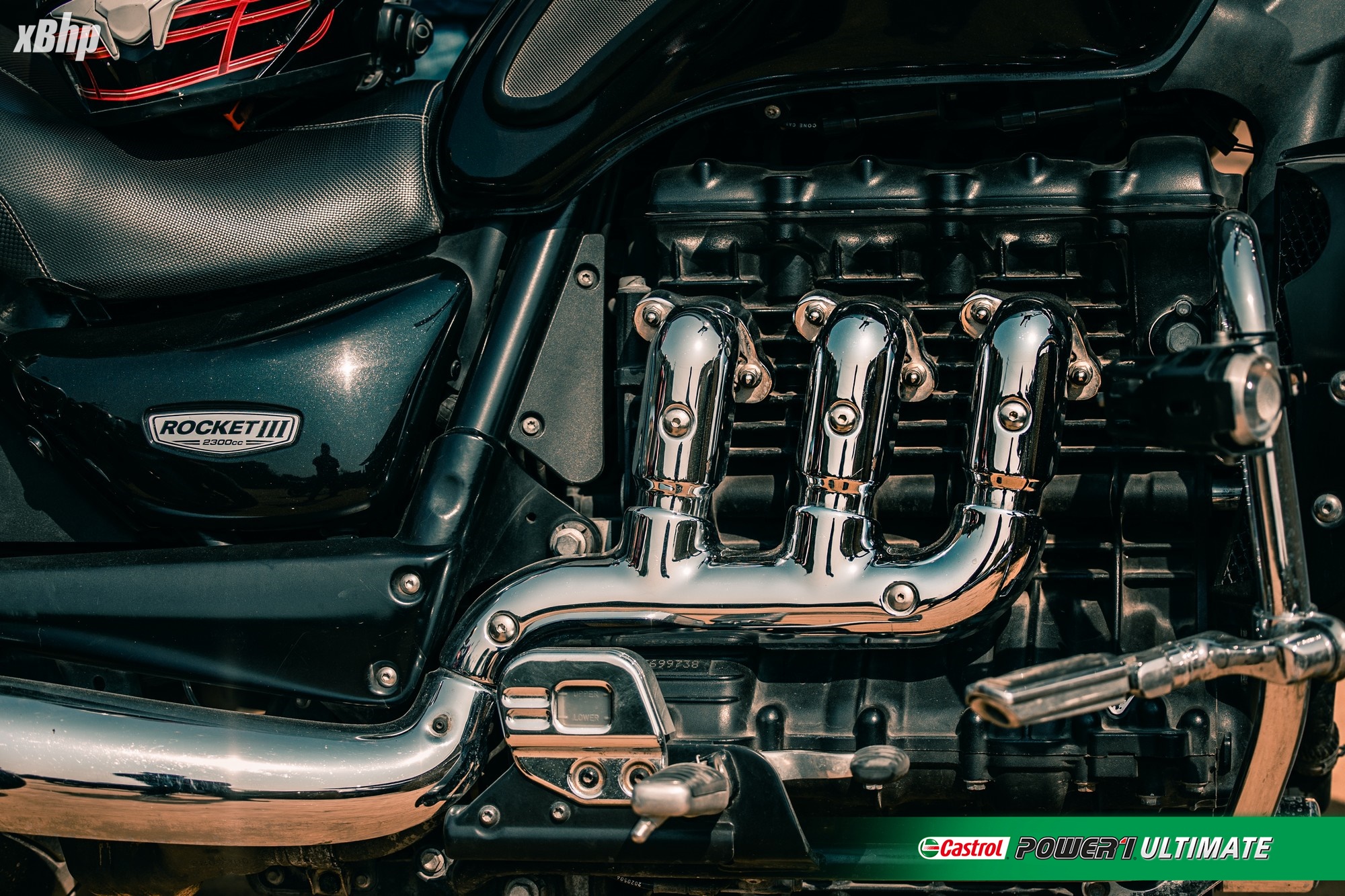
On paper everything is rosy and out in the open, it is even better. The Rocket 3 R is setting records in 0-60 mph runs. 2.73 second… 2.73!! It is a big brawny muscle-cruiser alright but those numbers can shame quite a few superbikes out there. Despite the nerve-racking acceleration, we like the rideability of the Rocket 3 R the most. Tractability was the call of the day and tractable it is.
On the Rocket 3 R, you can be one or two or three gears higher and even then it won’t feel lacking. The in-gear acceleration is nuts. You can easily overtake the fastest on the road without even downshifting. 221 Nm of torque is a lot but still… that’s just phenomenal. It is like all of the rev-range and all of the gears are just dripping with grunt waiting for the right command from your right wrist.
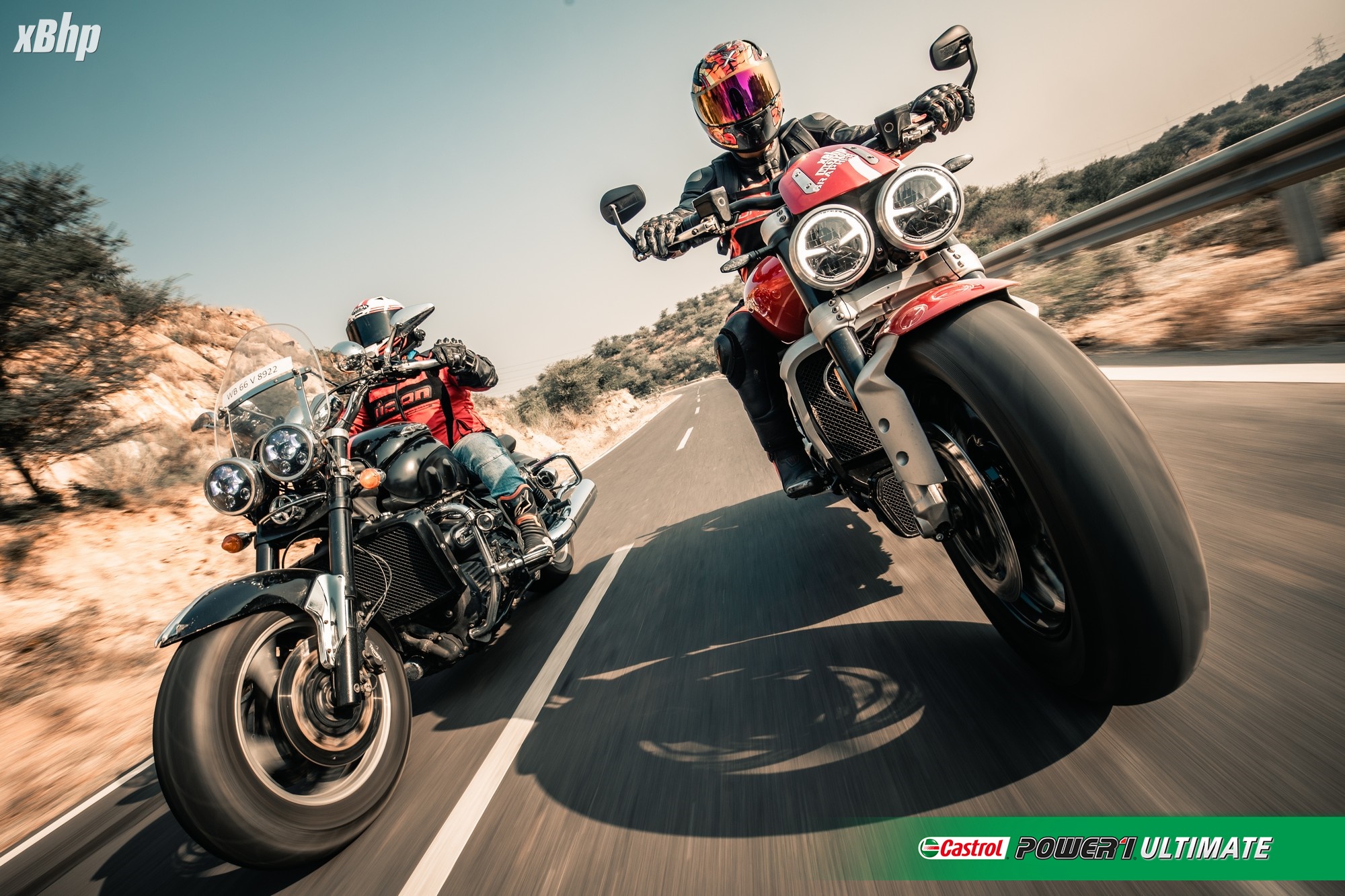
This trait also makes the Rocket 3 a surprisingly easy bike to ride even in traffic. The hydraulic clutch has a light action and the torque assist ensures botched downshifts aren’t met with the fury of the massive reverse-torque. One of the things that the older Rocket lacked was the sound. That has been remedied too.
In addition to looking super cool, the exhausts pipes emanate a soul-stirring note and it gets better and better as you accelerate. Accelerate and let the throttle go, and the pops and crackles make you grin like a little kid. And it does that not only to you but the bystanders and your fellow road-mates too.
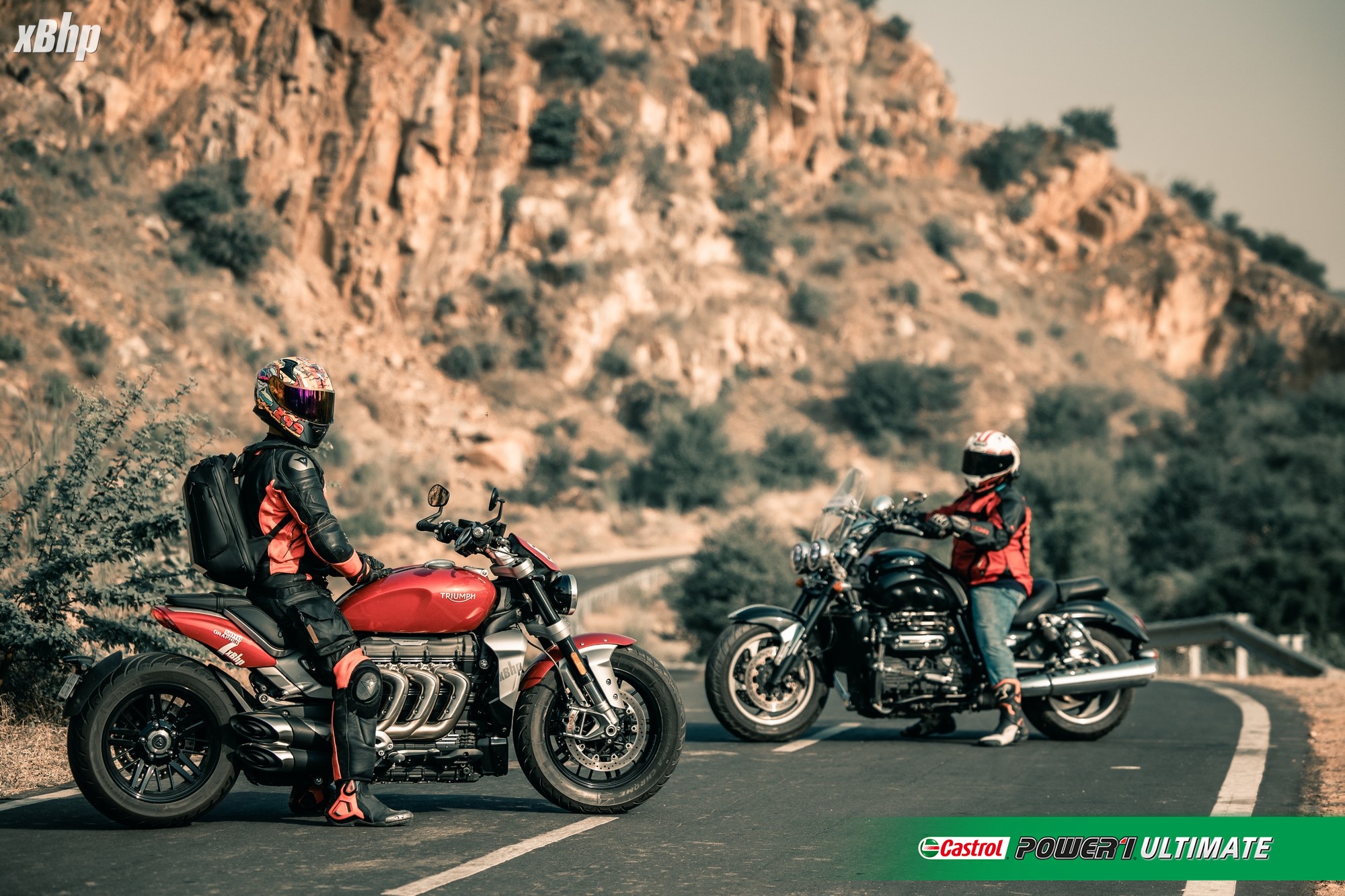
Moving on, another trait that made the Rocket special was the handling. Well, the Rocket 3 R dials all of those feelings to 11. A full-aluminium frame and some more materiales-exotica mean that the Rocket 3 has lost quite a bit of heft. Nearly 40 kilograms if you are a sucker for numbers. The motorcycle now weighs 291 kg (dry). Get what we meant when we said ‘bigger’ and ‘smaller’ at the same time?
The reduction in weight and the wide handlebars (that give you a whole lot of leverage) mean that the Rocket 3 R can be ridden in ways bikes like it aren’t supposed to be ridden in. 47mm Showa USD forks (compression and rebound adjustable) and fully adjustable Showa shock at the rear accentuate those traits. They may feel a little stiff on less-than-ideal roads but once you show it some good tarmac and a few twists, you’ll know why it is that way.

In the case of motorcycles like the Rocket 3 R, one can only imagine the impact of the sheer inertia when it is on the move. Superb acceleration and equally impressive braking (thanks to the dual 320mm discs at the front with Brembo M4.30 Stylema callipers and cornering ABS) mean that the weight transfer is serious and the suspension has to be taut to lend the Rocket 3 R the ability to handle as it does.
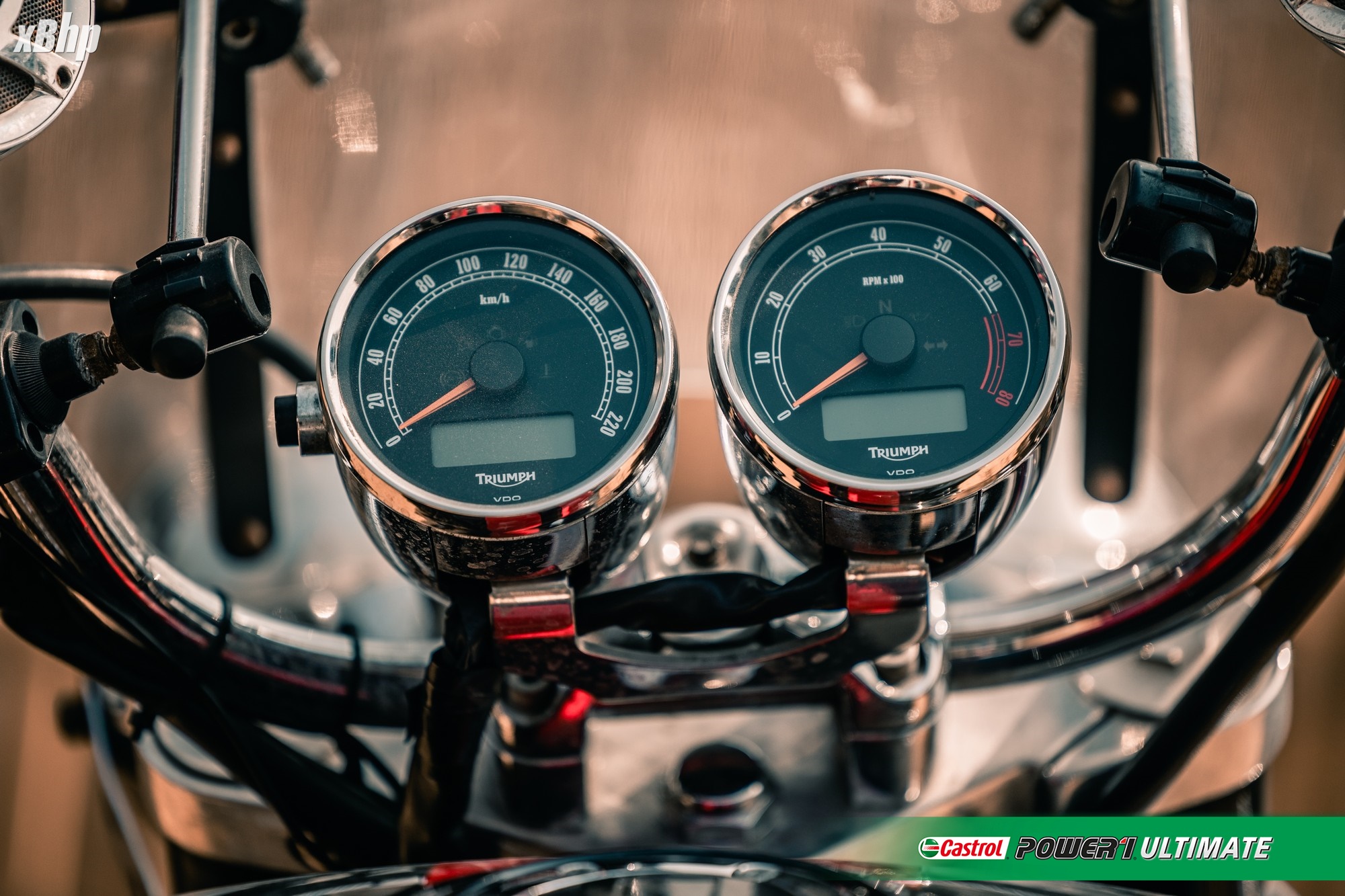
Last but not least, the TFT multi-functional display. This is what truly reminds one of the age that we live in and how much the Rocket has grown. Instruments include digital speedometer, trip computer, digital tachometer, gear position indicator, fuel gauge, service indicator, ambient temperature, clock and rider modes (Rain/Road/Sport/Custom). There’s an option to add the Triumph Connectivity system with the fitment of a Bluetooth module.
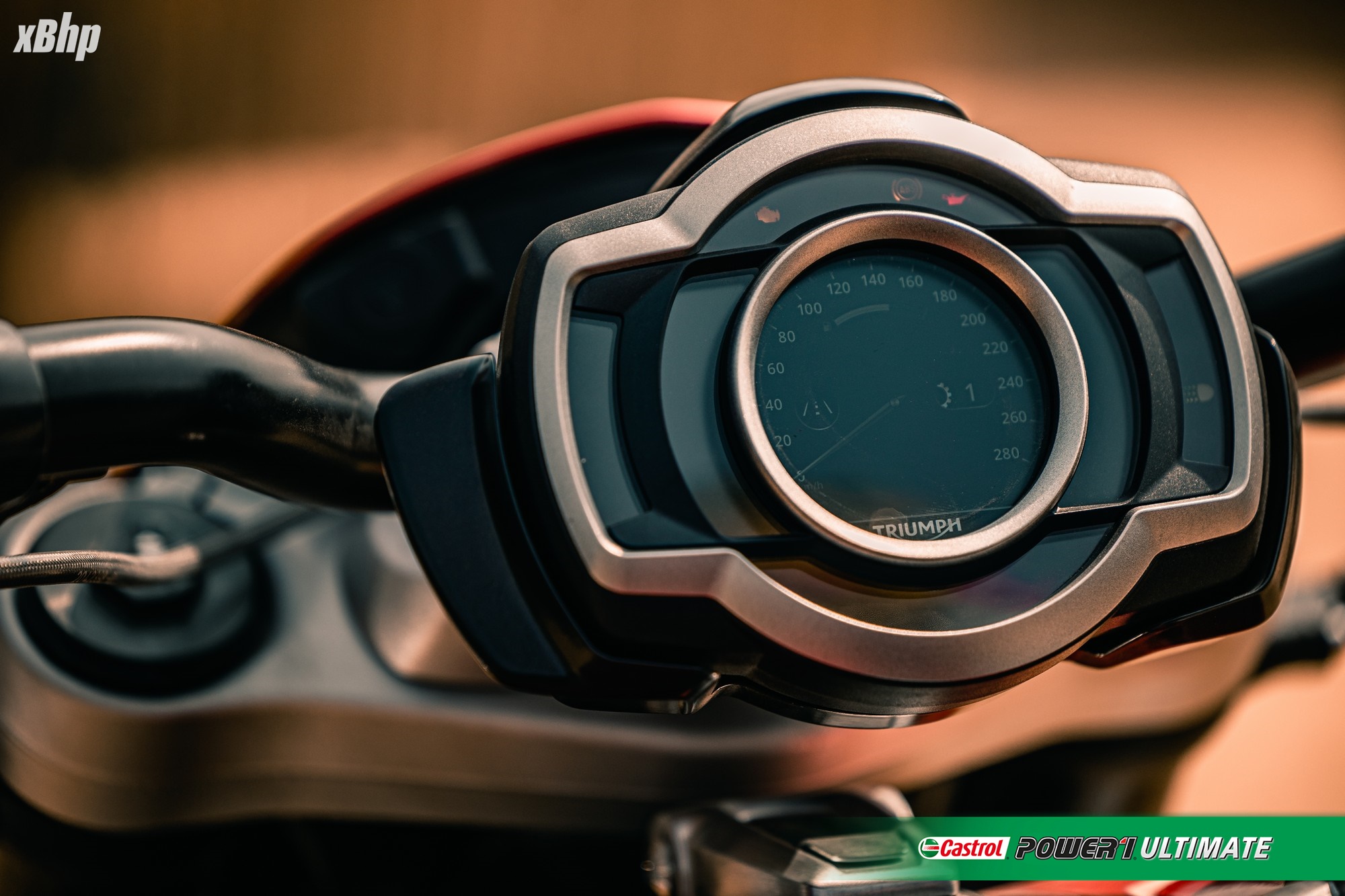
Every time we ride the Rocket 3 R, we can feel everything that the inception of its development in 1998 and its introduction in 2003 entailed. We first saw it in 2006 and we were amazed at how it didn’t just leave tyre depressions on the road with its massive rear tyre and joint-jarring torque.
Finally, after a long time, we have it in our garage and we can tell why it is an iconic bike for Triumph and why they have kept on making it better. Because when it all boils down to bragging rights, we know that simply putting the FOB of the Rocket 3 R on the table wins us that particular battle.
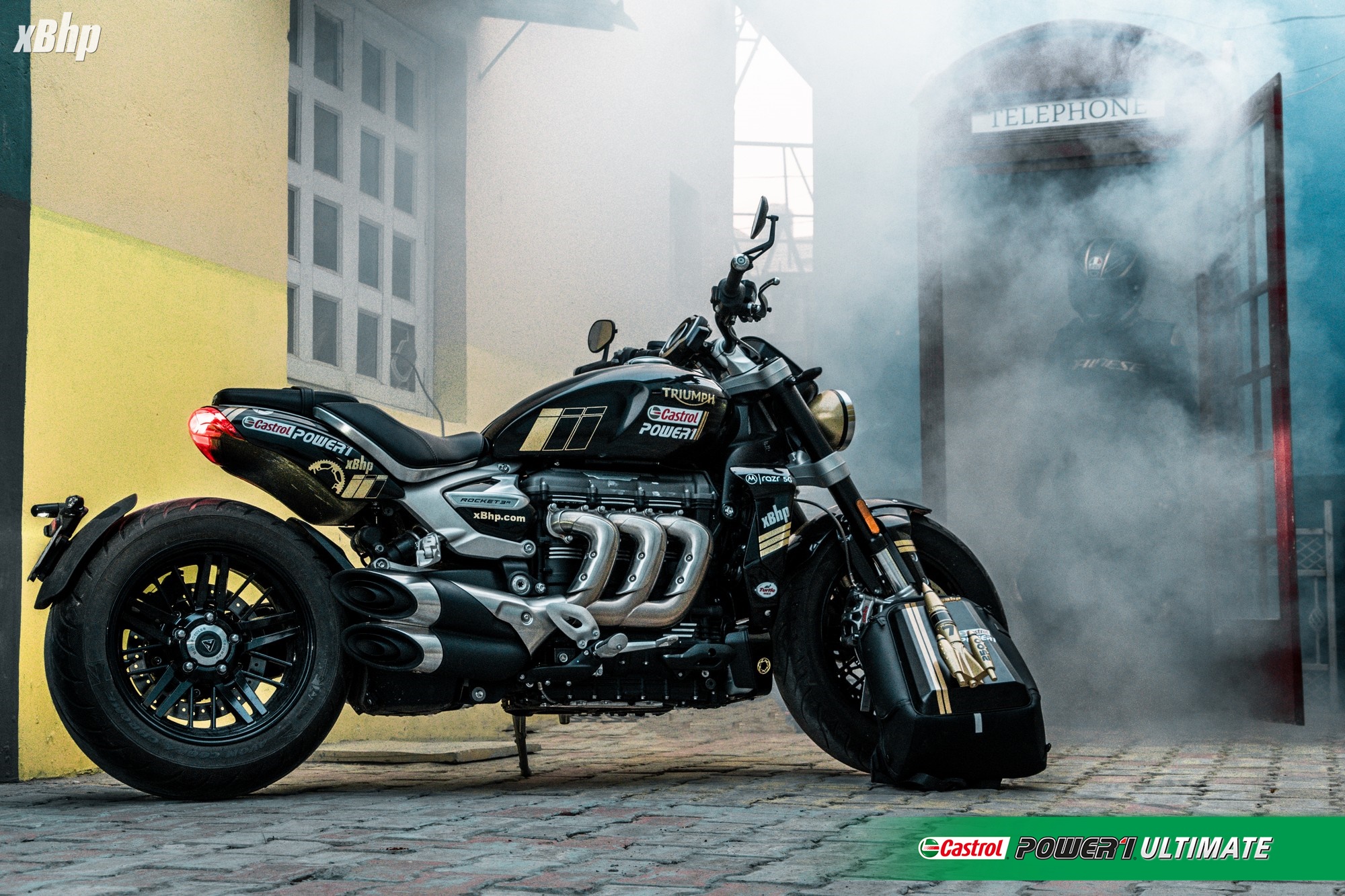
Now, just to let you know, III to 3 is not the only evolution that the Rocket went through. That one happened in Hinckley. There is one that happened right here… in the xBhp Garage. The evolution of Rocket 3 R into the #SoulRocket.
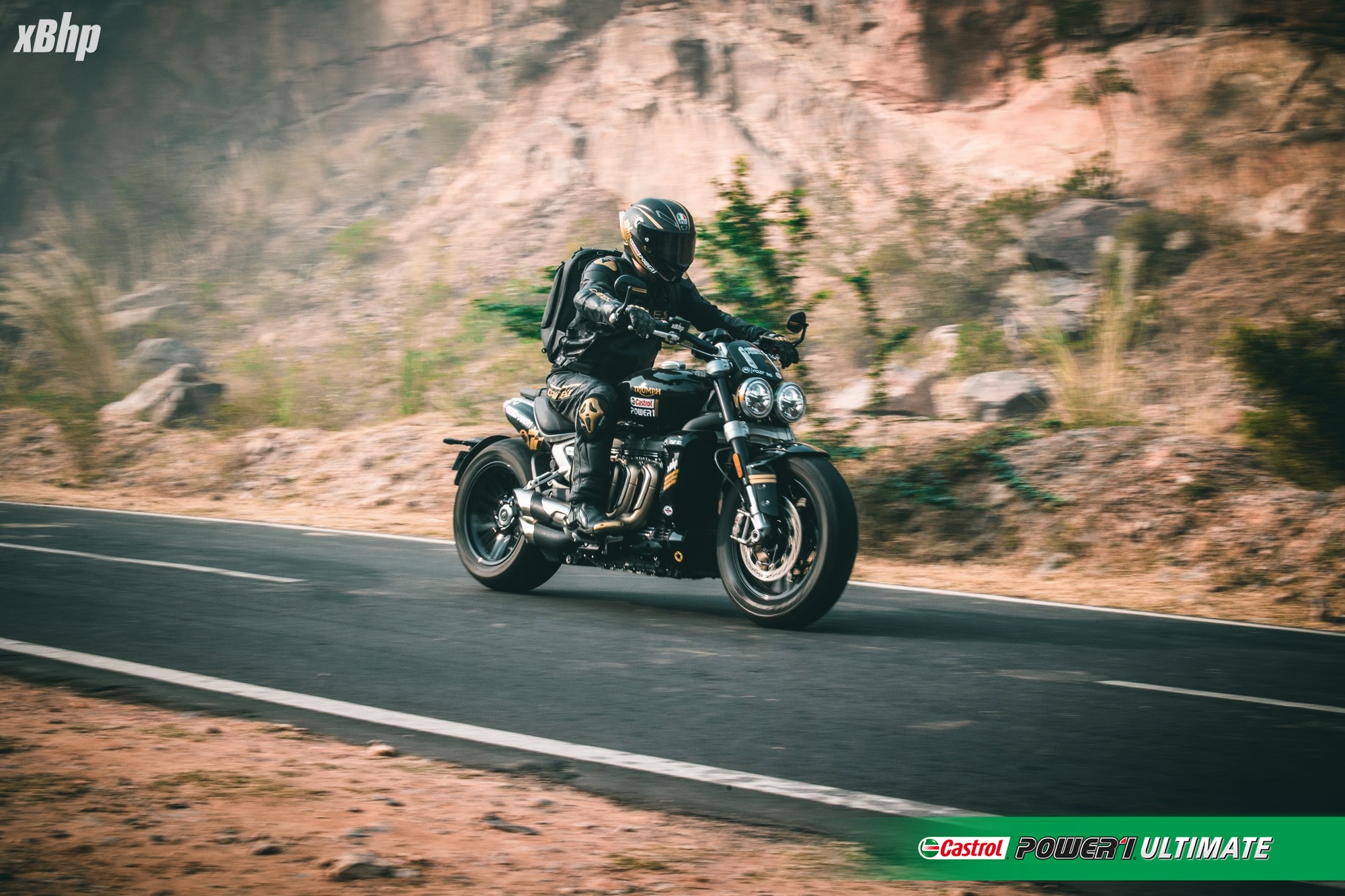
The Rocket 3 R is a beast of a motorcycle and there are no doubts about that. A 3-cylinder engine displacing 2,458cc? 165 Bhp of power and 221 Nm of torque? Those… are a lot. But as always, everything comes at a price. Numbers like those, even more so. Here, the price to be paid is the stress on the engine.
With a Bore x Stroke of 110.2 mm x 85.9 mm, one must think that those strokes fall into the cruiser category and hence the torque, but then, it may not rev a lot either. Except, the Rocket 3 R does. The peak power arrives at 6,000 rpm and it can rev up to 7,000 rpm which is nothing short of exceptional.
The Rocket 3 R has Castrol POWER1 as its recommended engine oil. Why? Because numbers like those and engineering like that works best with the best. And with the arrival of the new Castrol POWER1 ULTIMATE, we now know what the best is. For our Rocket 3 R, we went with Castrol POWER1 ULTIMATE 15W50 which comes with full-synthetic technology and a 5-in-1 formula.
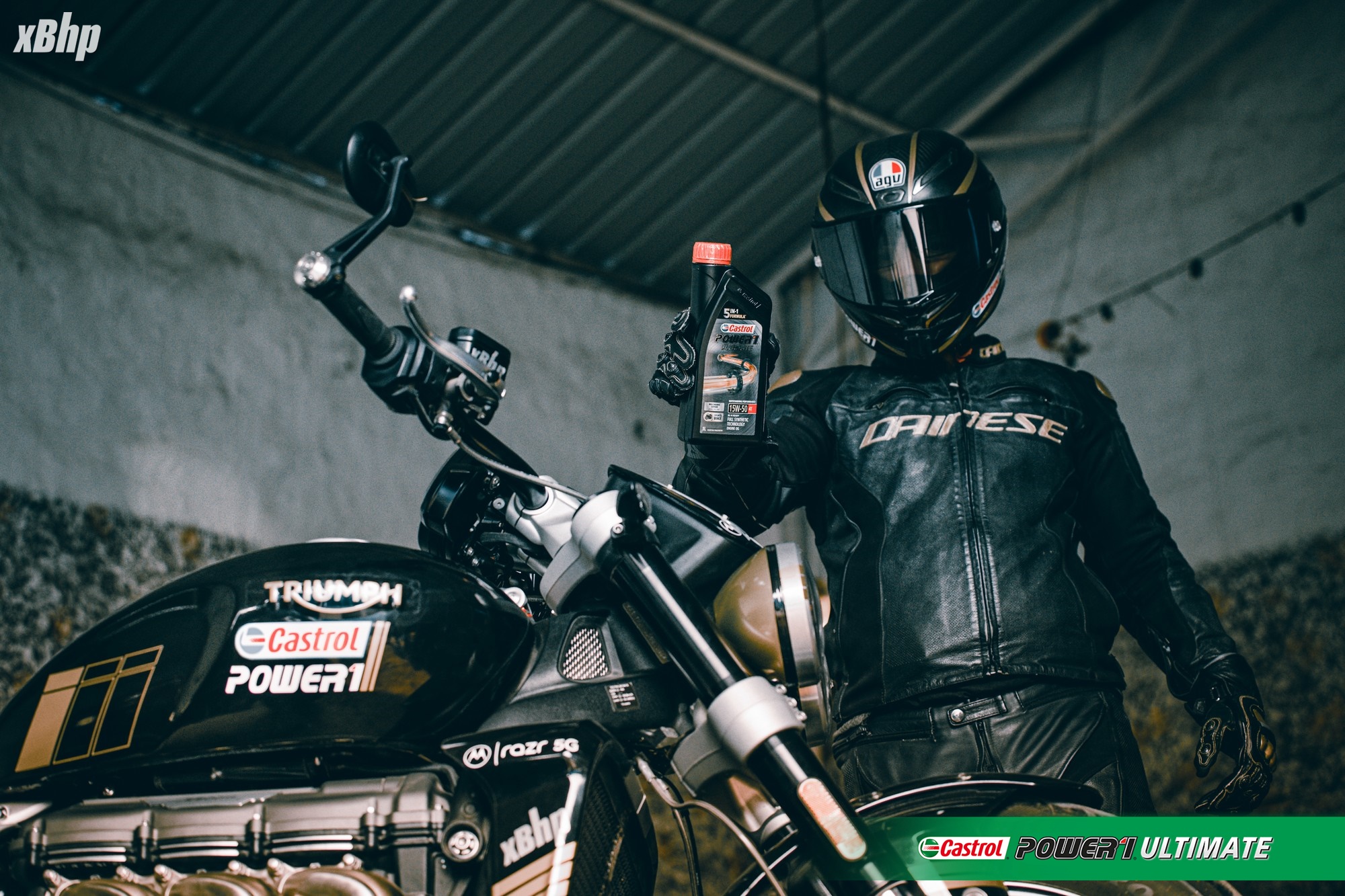
When it comes to high-performance engines, mineral oils cannot hold their own simply because of the supreme demands and tough conditions. Castrol POWER1 ULTIMATE is fully-synthetic engine oil that is engineered to perfection so that it not only suits but thrives in engines like the one on the Rocket 3 R.
The much talked about 5-in-1 formula ensures that the engine oil delivers better performance on the five major fronts that work towards a better ride for both, the rider and the motorcycle. The first one is, of course, acceleration which Castrol POWER1 ULTIMATE maximizes by optimizing the friction between the moving parts.
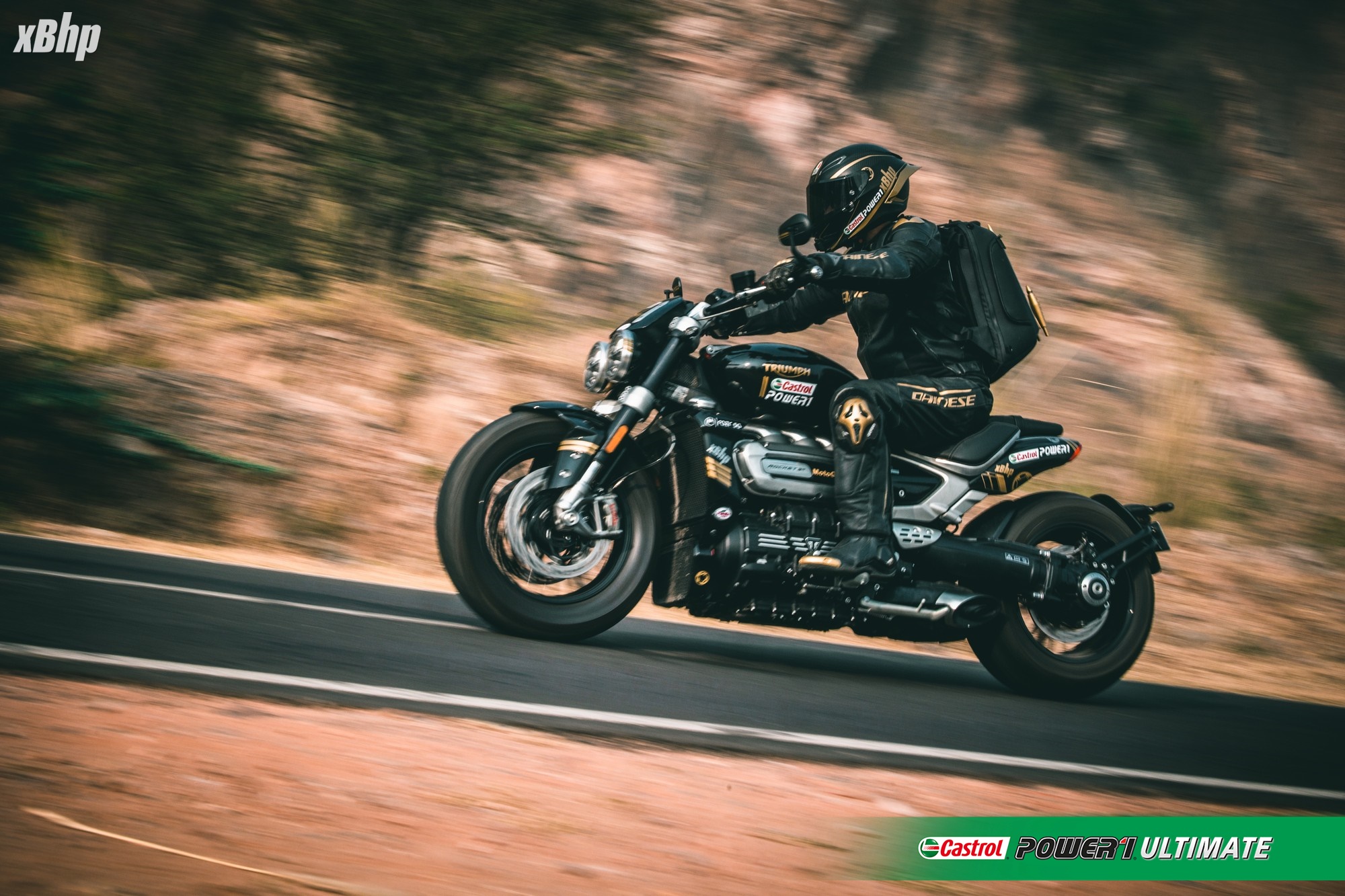
The second one is protection which is a by-product of the friction optimization but is also affected by the grade of the engine oil. Since Castrol POWER1 ULTIMATE is available in a variety of grades, it is suitable to virtually any motorcycle and a diverse range of climates. The third one is a smooth ride and the fourth one is enduring performance which again is a result of the superior engineering that has gone into creating Castrol POWER1 ULTIMATE.
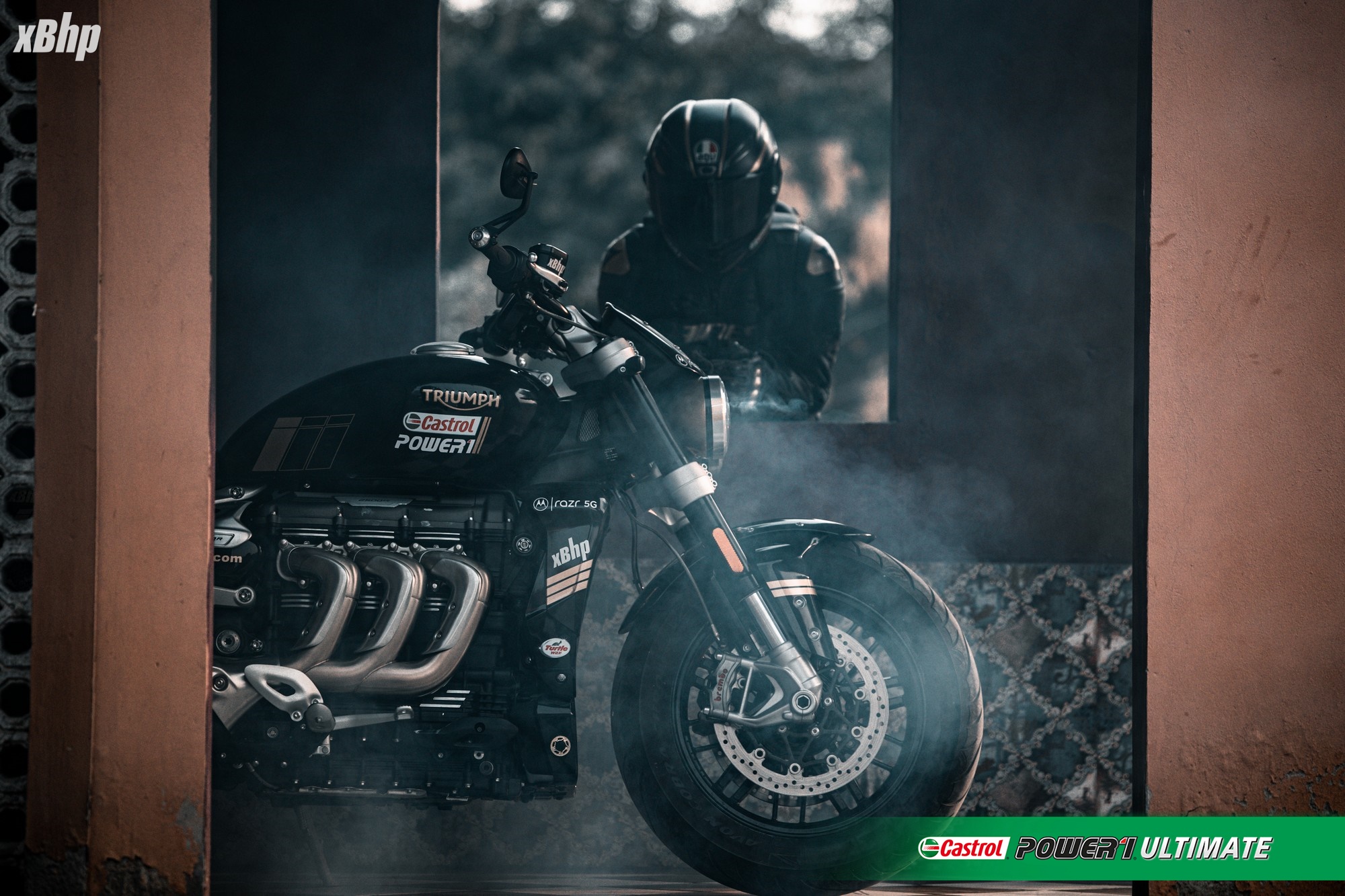
Last but not least, the fifth aspect which is cooling. Massive engines like the one on the Rocket 3 R generate a momentous amount of heat and while the liquid-cooling takes care of it for the most part, there are still some components that do not have the benefit of active cooling. This is where the engine oil comes in and in our experience, we can tell that Castrol POWER1 ULTIMATE is a champion in that department too.
Ultimately, pun intended, the performance of Castrol POWER1 ULTIMATE in our Rocket 3 R and the deep respect that we had for the engineers that have manufactured such a fantastic product, we decided to give an ode to them in a special manner- the concept, and the realization, of the #xBhpUltimatePowerDuo which the #SoulRocket is one half of.
Castrol POWER1 ULTIMATE is available in a wide range of grades so if you have an internal-combustion engine plonked between two wheels, there’s one for you and chances are, your motorcycle will thank you for it. You can buy Castrol POWER1 ULTIMATE here.
Quarter-litres of Adventure please: KTM 250 Adventure Review
 Jan 2021 Sundeep Gajjar
Bikes,KTM
Jan 2021 Sundeep Gajjar
Bikes,KTMThere was a time when the 250cc space in India had only a couple of choices. But times have changed. There was a time when there was no demarcation in terms of motorcycles in India and our daily-drivers did everything for us. But times have changed. The point is, the quarter-litre segment was the proverbial “super” category and adventure motorcycles were non-existent. But, as mentioned earlier, times have changed. These changes have followed their own tracks but they recently came together and resulted in the birth of KTM Adventure 250.
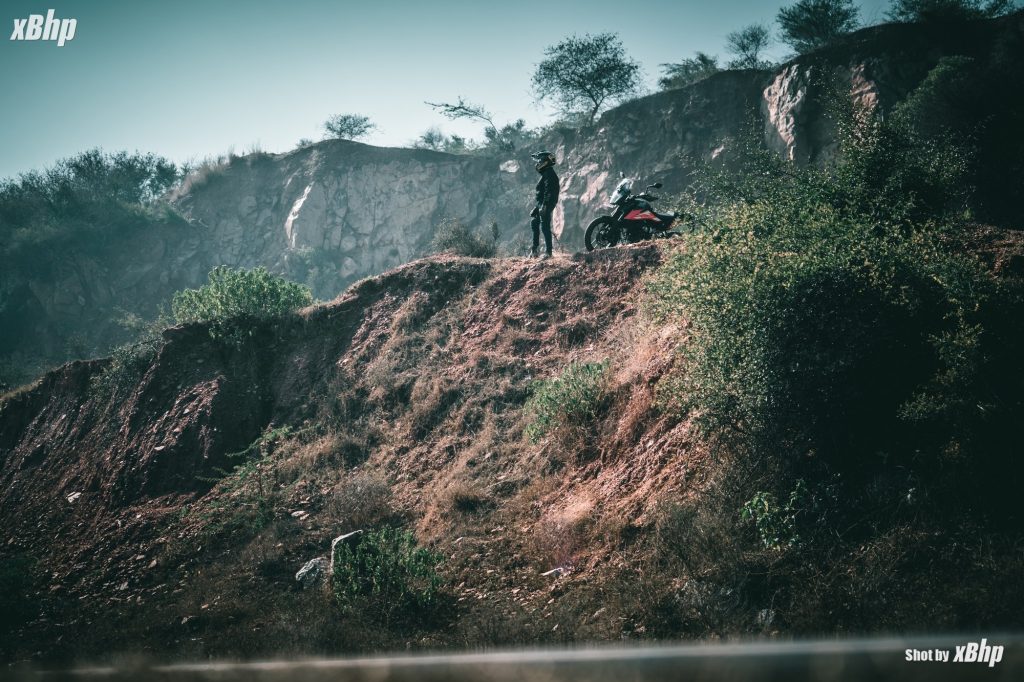
Too dramatic an intro? Let us simplify. Before the arrival of KTM Adventure 390, we did not have a lot to choose from if we were out looking for an entry-level adventure motorcycle. The arrival of KTM 390 Adventure did change that but the brand realized that nearly 400cc of displacement does not lure first-timers. It is a bit of an ask to expect them to jump straight aboard a 390 Adventure. So, a stepping stone was the call of the day and the KTM Adventure 250 serves to be just that.
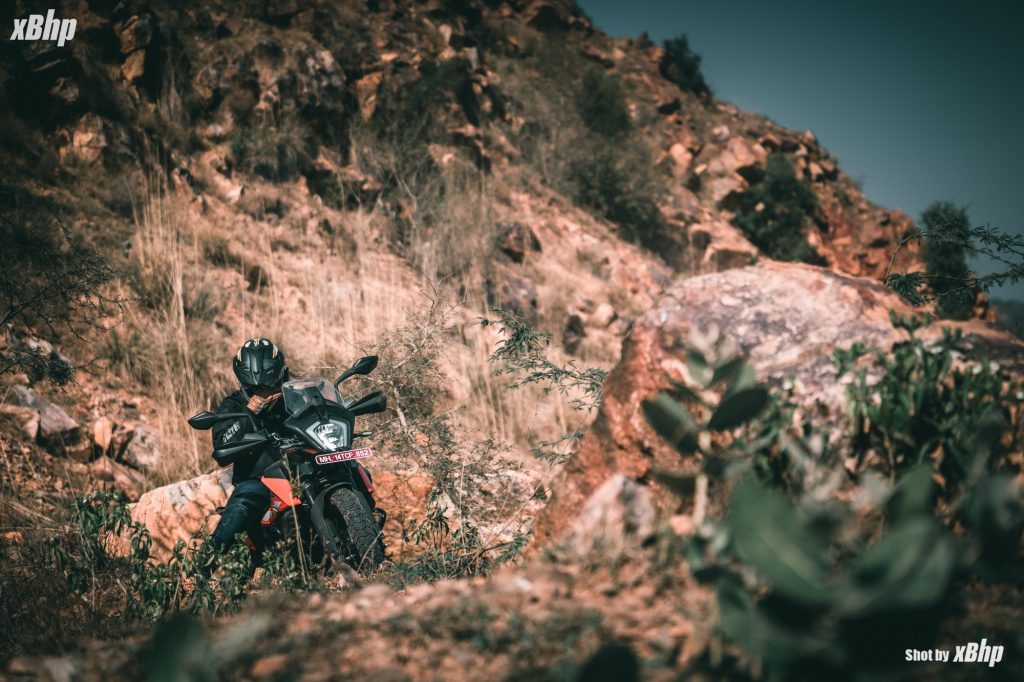
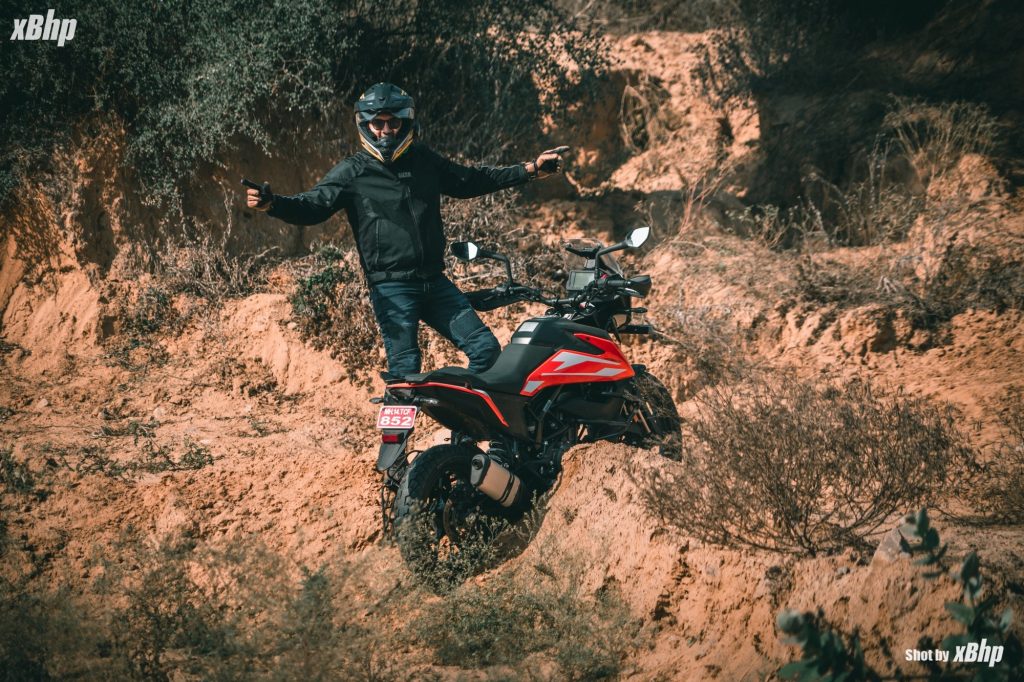
See, it is not that the KTM 390 Adventure does not make sense as a motorcycle. It does make a lot of sense because, well, it is a fantastic adventure-tourer. But a tad intimidating for the riders who are new to the adventure world. The 390 is a wonderful platform that the 250 utilizes to bring more people to experience this exciting world and answer the “call of the wild”.

Talking about the looks of the KTM 250 Adventure, it is nearly identical to the 390 Adventure and only the keenese of eyes will be able to point out the differences. So let’s focus on those. First, the headlight. The 390 Adventure had an all-LED headlamp but the 250 Adventure gets halogen lamps with LED DRLs. Second, colours and decals, of course. Third, the vibrant TFT of the 390 Adventure has been replaced with a much simpler but similarly sized LCD screen sans Bluetooth-connectivity. Fourth, while the 390 Adventure was shod with Metzeler Tourance tyres, the 250 Adventure gets MRF Meteors.
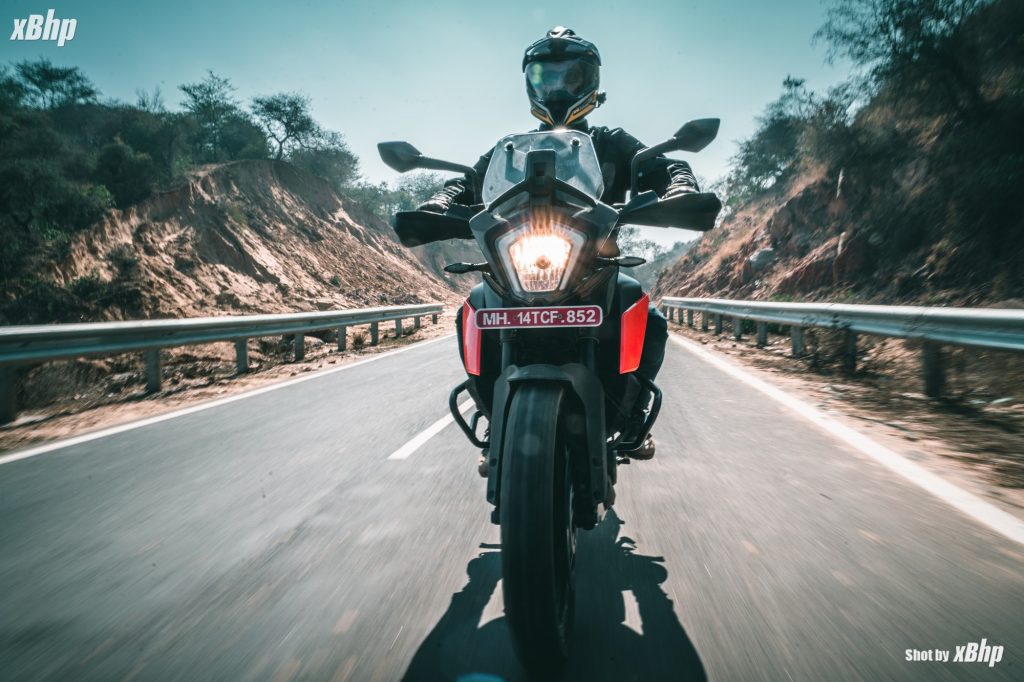

There are some more changes as well, mostly minute, such as the aluminium handlebar of the 390 Adventure replaced with a steel one on the 250 Adventure. The windscreen is not adjustable on the quarter-litre adventure either. Finally, the engine, of course, and the technical changes that entail. So without further ado, let us talk about what we’re all here for- performance.
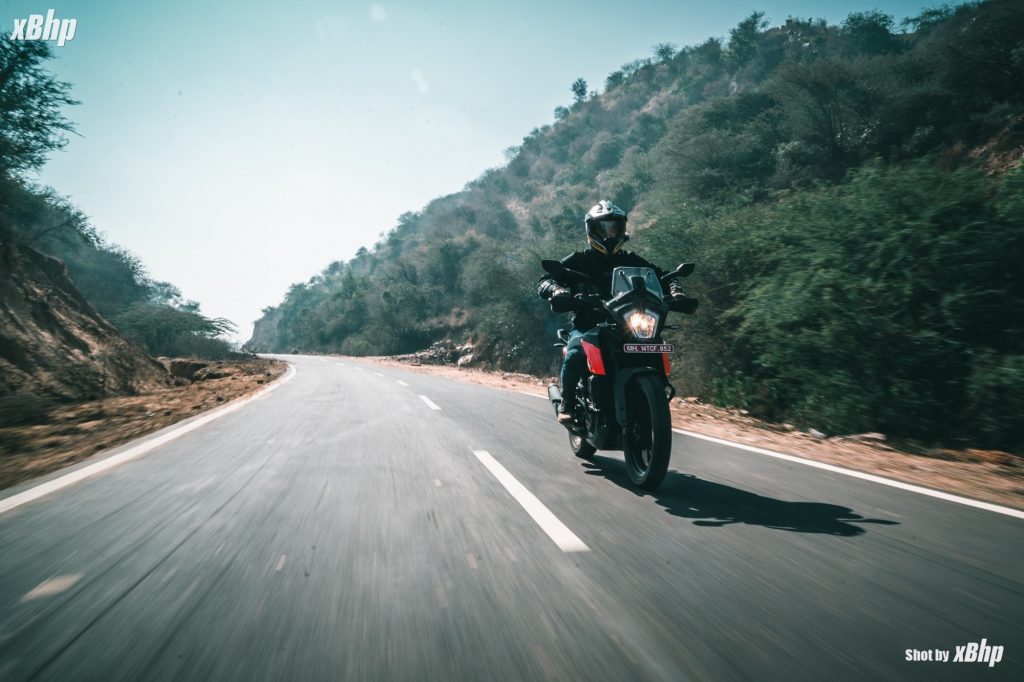
The KTM 250 Adventure is powered by the engine that powers a whole range of motorcycles that have come to be known as 250ccProLeague and include the Dominar 250, KTM 250 Duke, Husqvarna Vitpilen 250, and Husqvarna Svartpilen 250. That means, a liquid-cooled single-cylinder engine with 248.76cc of displacement, 30 Ps of power and 24 Nm of torque. This also invariably means that the behaviour of the engine is also more or less similar.
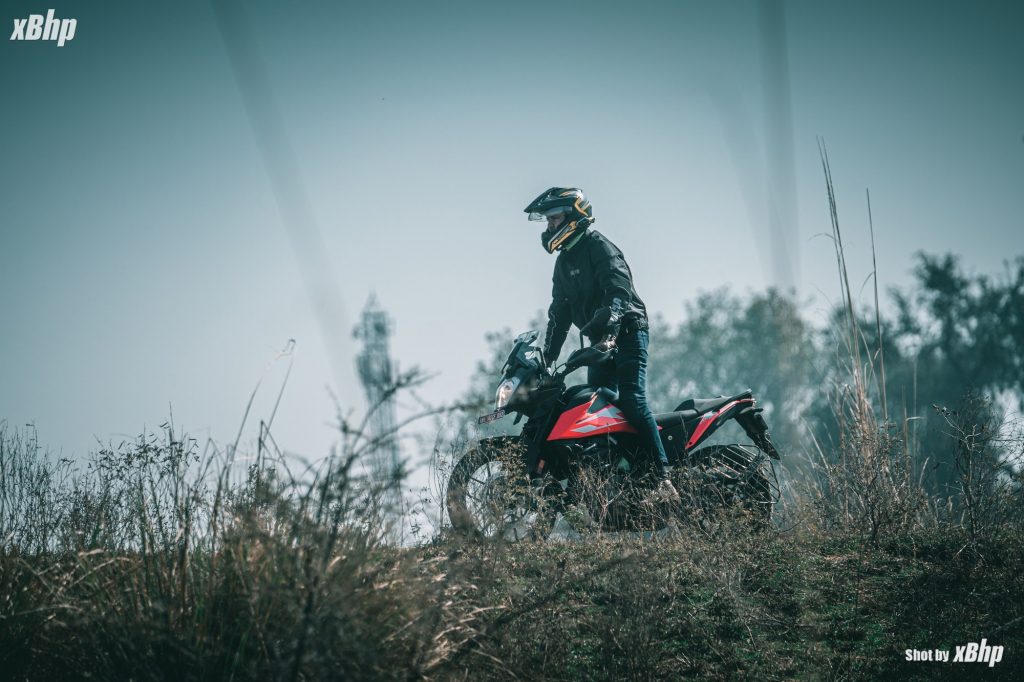
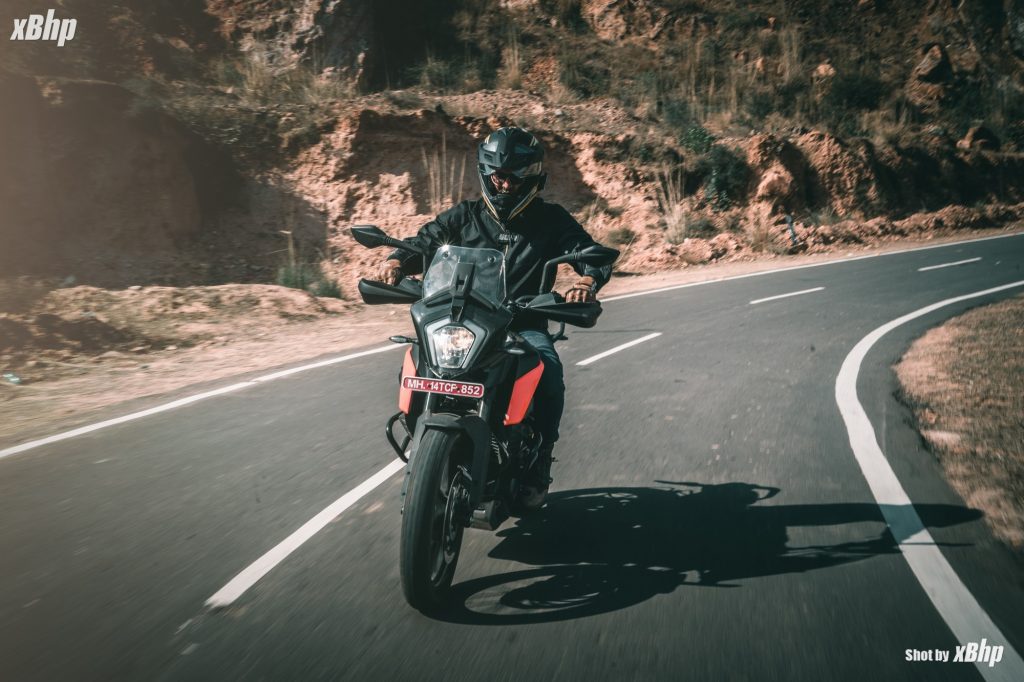
That is just enough grunt for beginners and the engine’s nature is more than enough to keep seasoned riders entertained as well. The power delivery is linear which makes this motorcycle easy to deal with. But invariably, the engine likes to be revved. In the lower rev-range, the KTM 250 Adventure can putter around town with ease but if you want to have fun, it is to be found higher in the rev range.
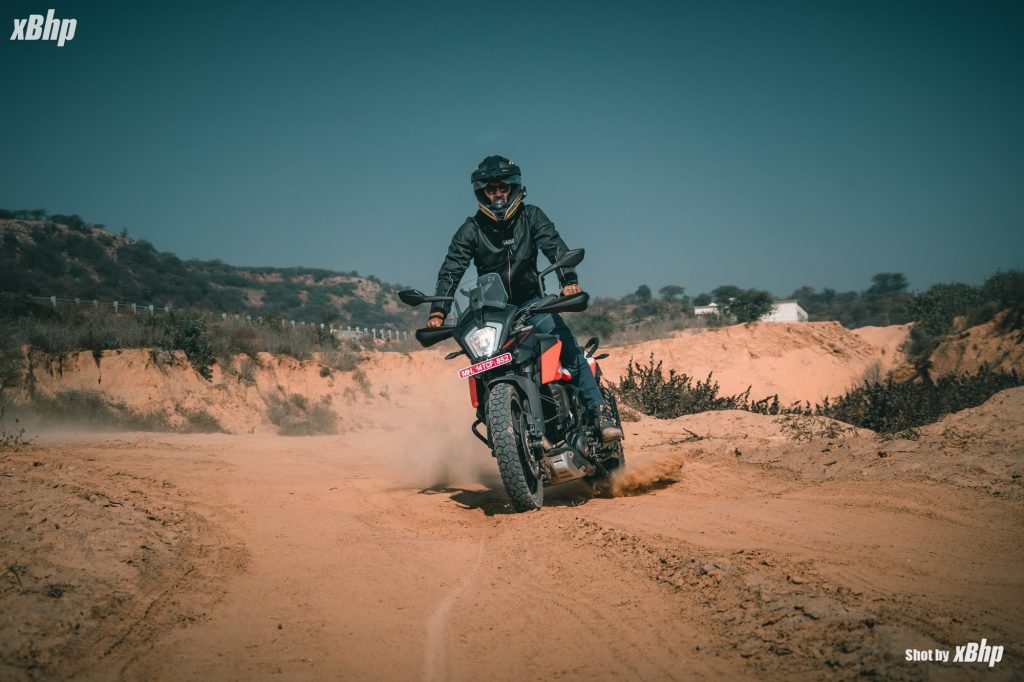
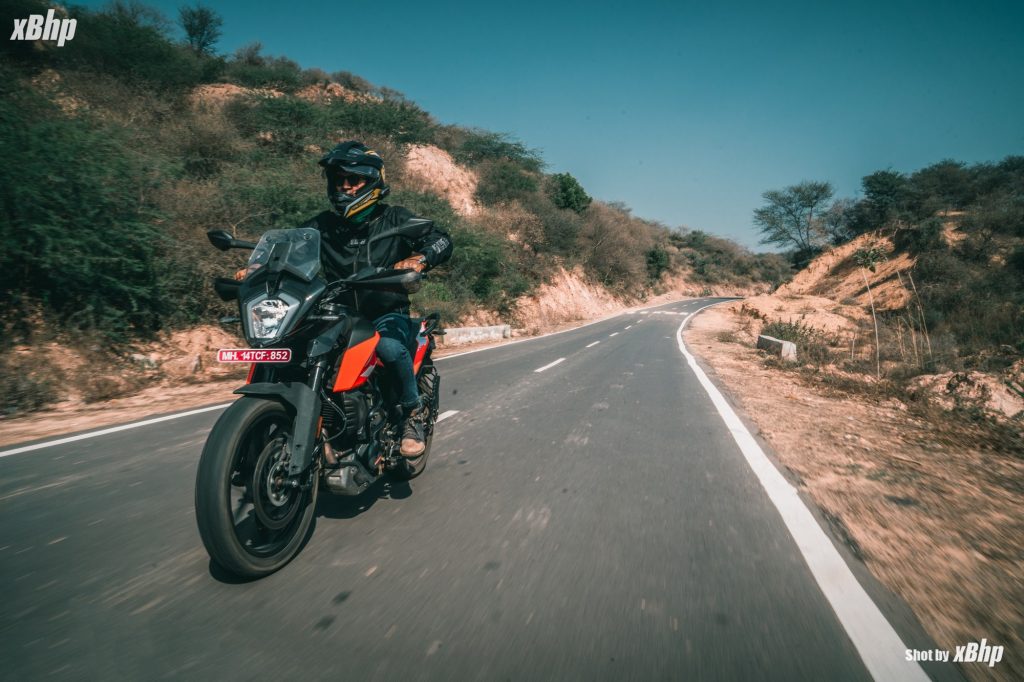
While the KTM 250 Adventure is tractable enough, it is not a big fan of higher-gears + lower speeds. But keep it churning and the meat of the powerband is never too far away because of how quickly the engine revs. One thing that needs to be appreciated is the smoothness with which the engine handles transitions despite lacking the ride-by-wire system that its bigger sibling gets.
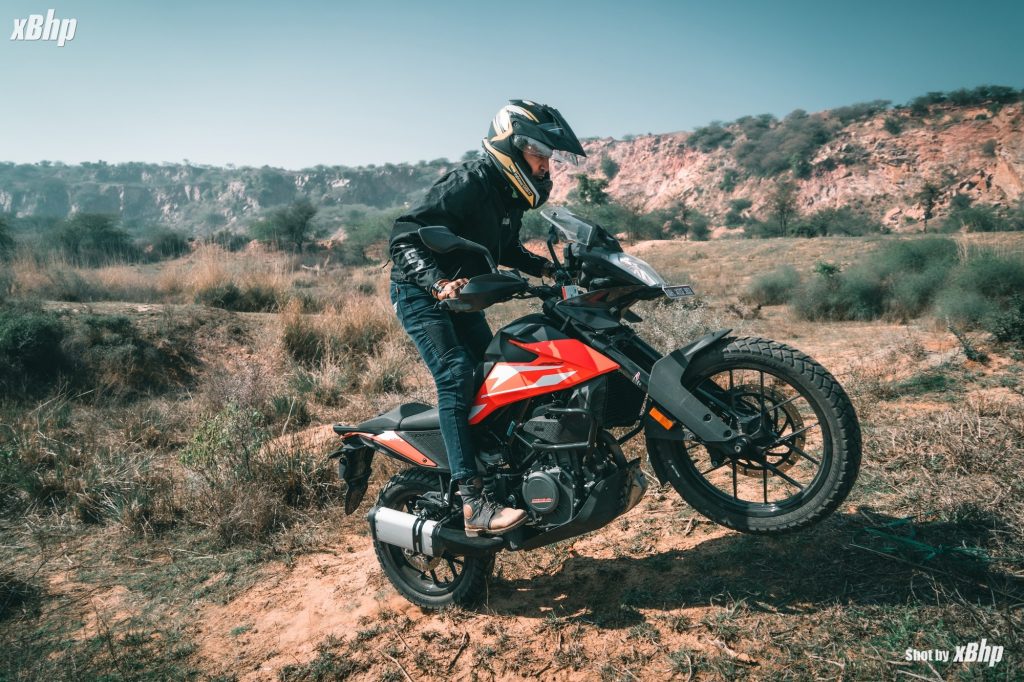
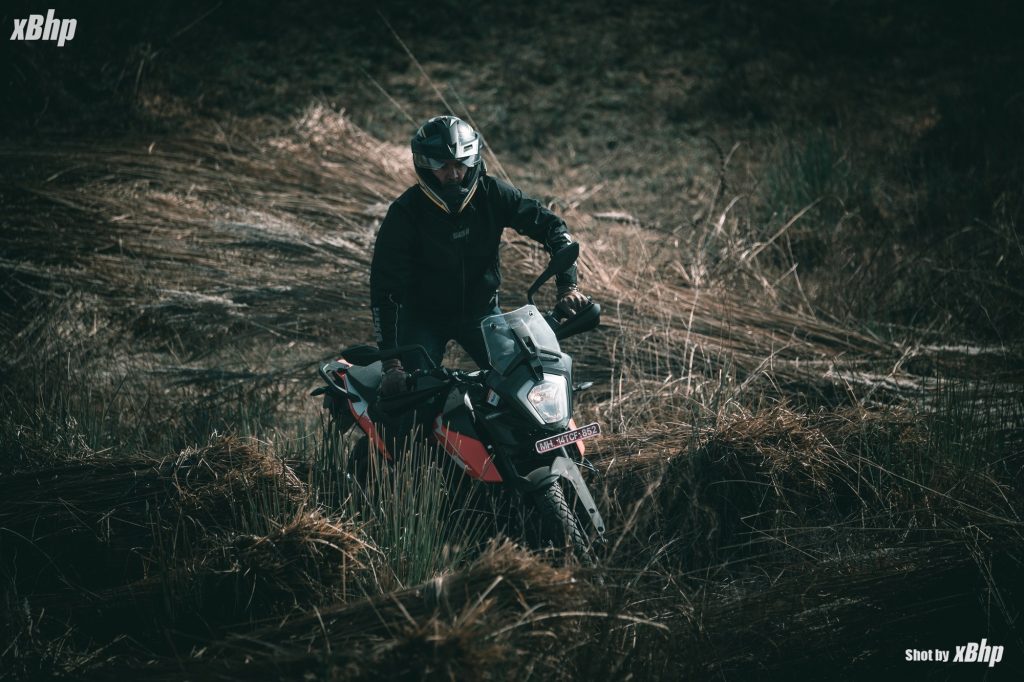
The KTM 390 Adventure comes with its own bells and whistles with cornering ABS, traction control and so on. The KTM 250 Adventure does not get those and for that reason, hardcore riders will appreciate the added organic touch. Moving on, the engine is pretty good on the refinement front as well.
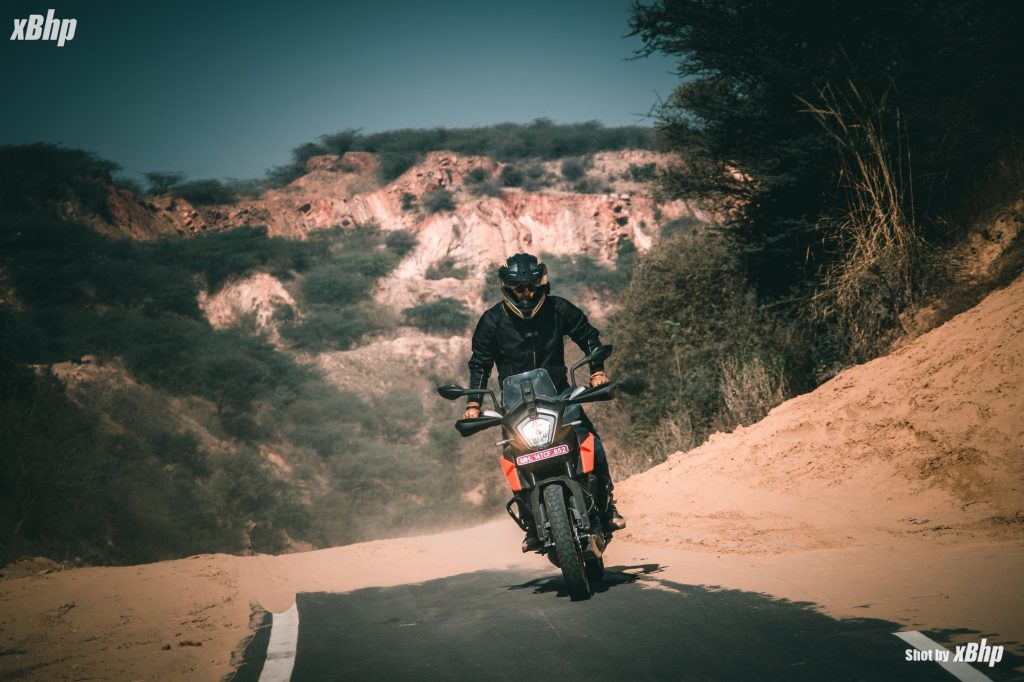
Vibrations are there but they reside higher up in the rev range. Triple-digit-speed cruising is very much possible but push too hard and the strain on the engine begins to show. Even then, vibrations are limited to the footpegs. Handlebars and the seat are still relatively isolated. Another thing that is missing on the KTM 250 Adventure when compared with the 390 is the quickshifter. Even then, the 6-speed gearbox of the 250 Adventure is slick and the slipper clutch works well in addition to making the clutch action easy.
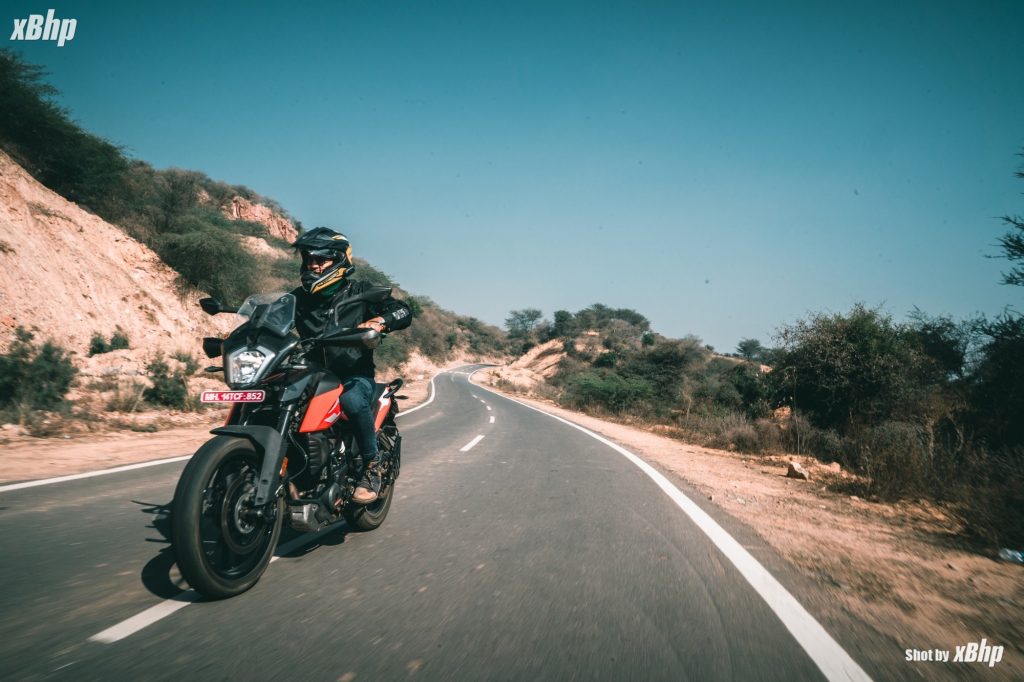
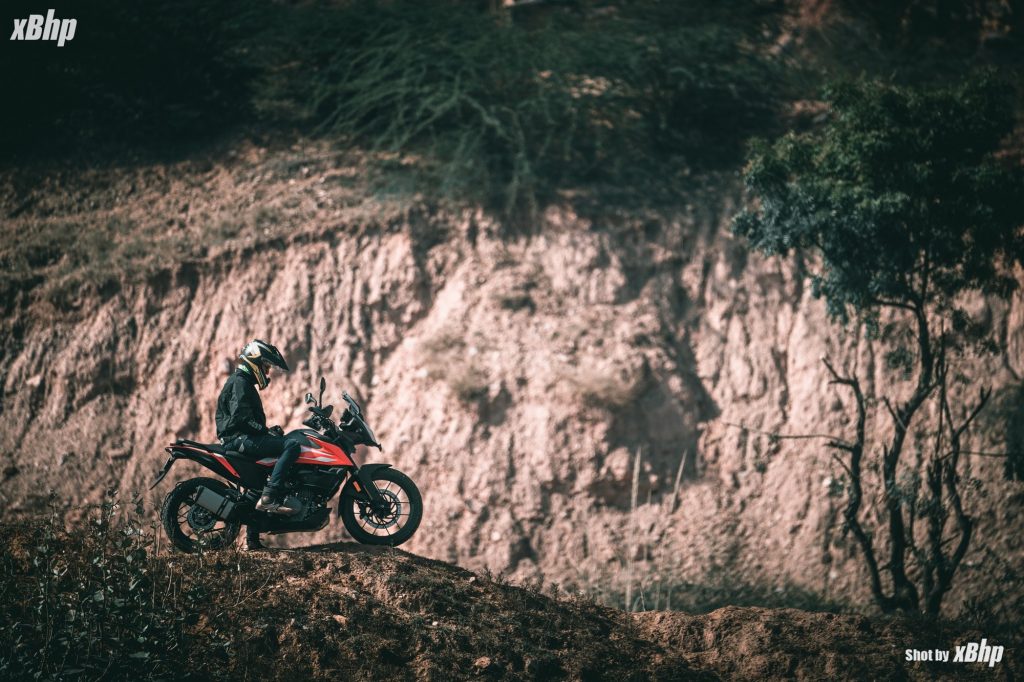
All of that makes the KTM Adventure 250 a good city motorcycle, a good mile-muncher, and surprisingly decent off the tarmac. It is easy to have the rear step out on power alone given that you are high up in the rev-range. That said, things could have been a little better on this front but then again, the Adventure 250 is not an all-out off-roader. More on that later.
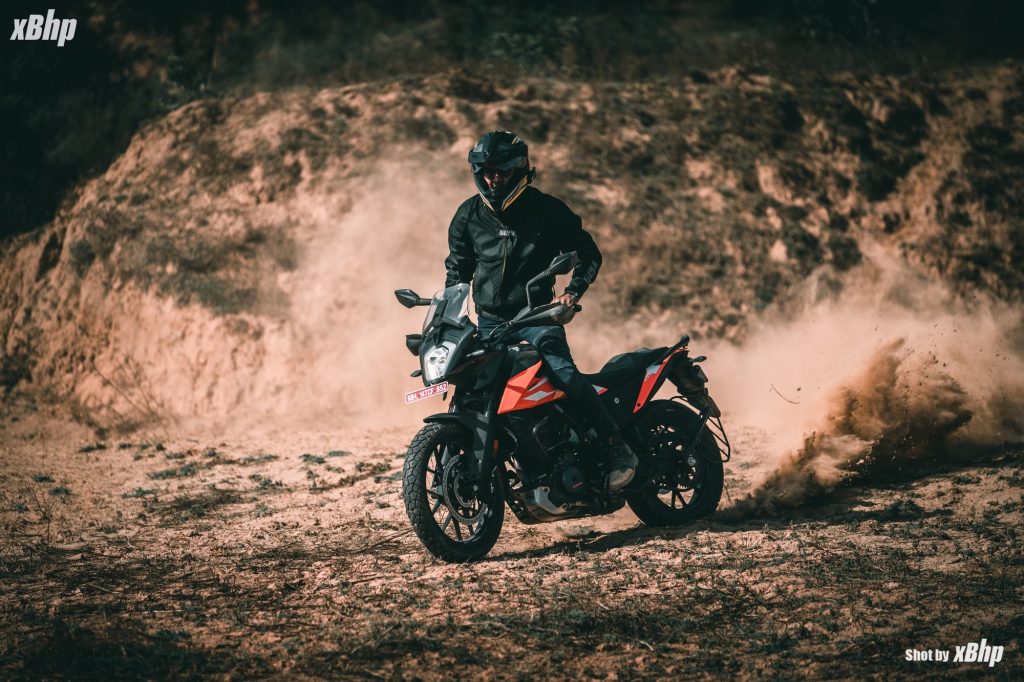
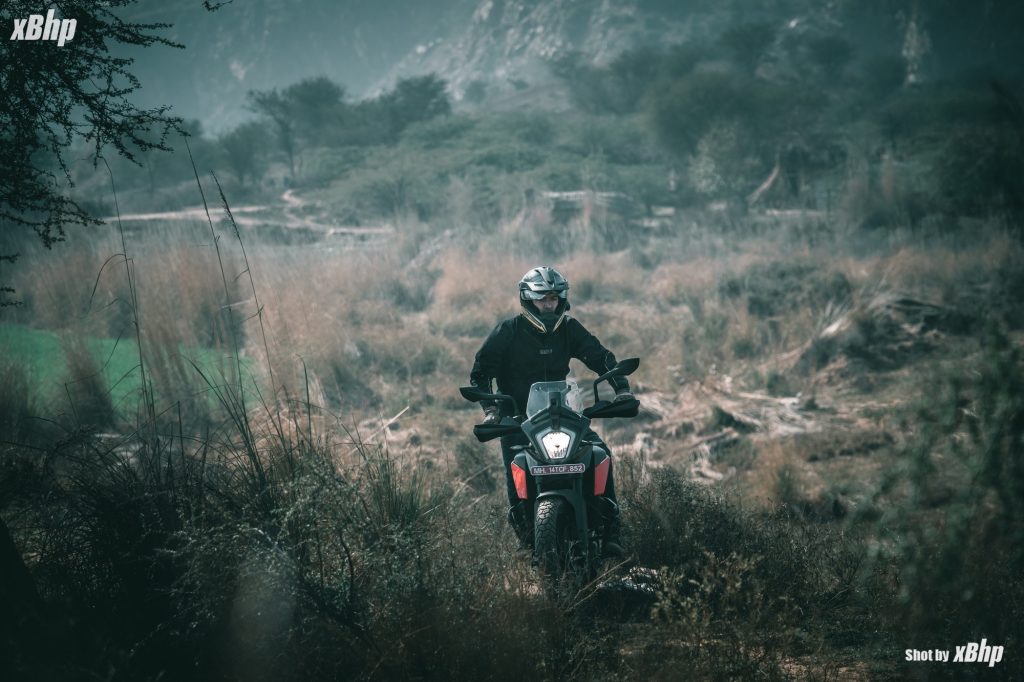
About the ergonomics, the KTM 250 Adventure retains the size of the 390 and so, it is quite roomy. The rider’s triangle is also very comfortable and long hauls will be a breeze. The seat height may be a limiting factor for shorter riders but the motorcycle feels lighter than what the specifications sheet says so that should not be a deal-breaker.
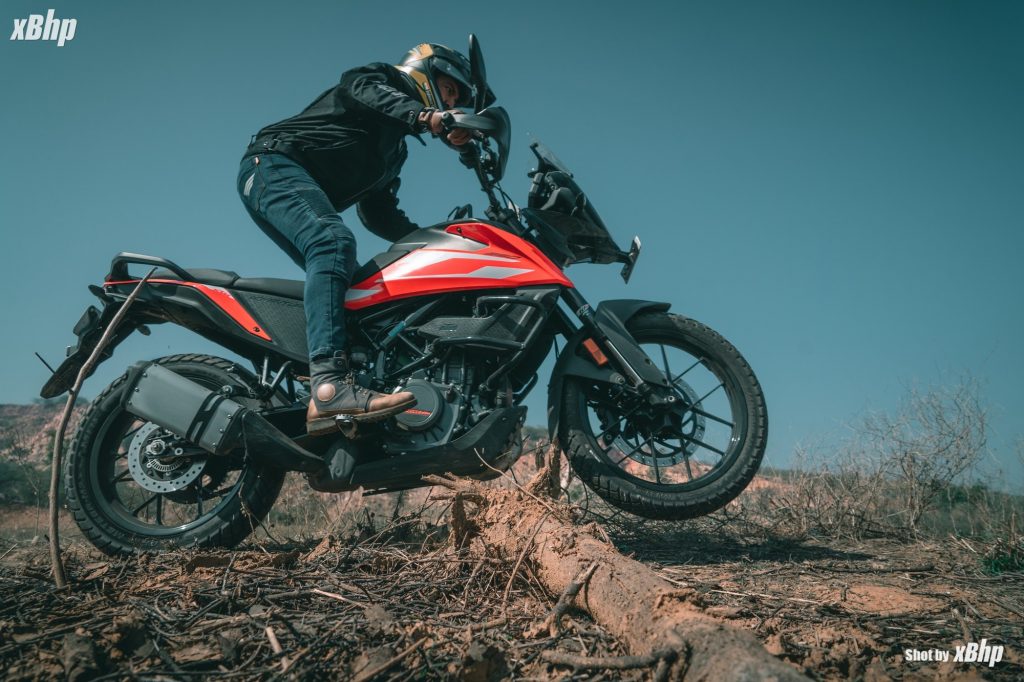
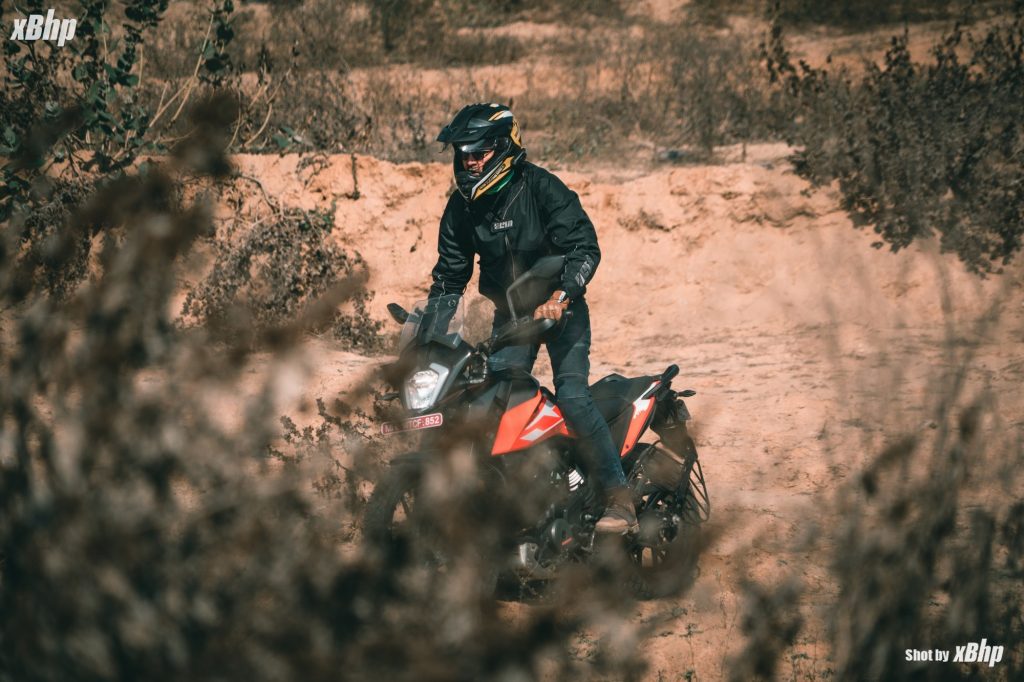
The windshield, while capable enough to keep windblast at bay for most riders, may be inadequate for those who are a bit too gifted vertically. While riding off the road too, the ergonomics are pretty decent but if you plan some serious off-roading, handlebar risers may be needed. Again, that applies to the taller riders and the handlebar is high enough for most riders.
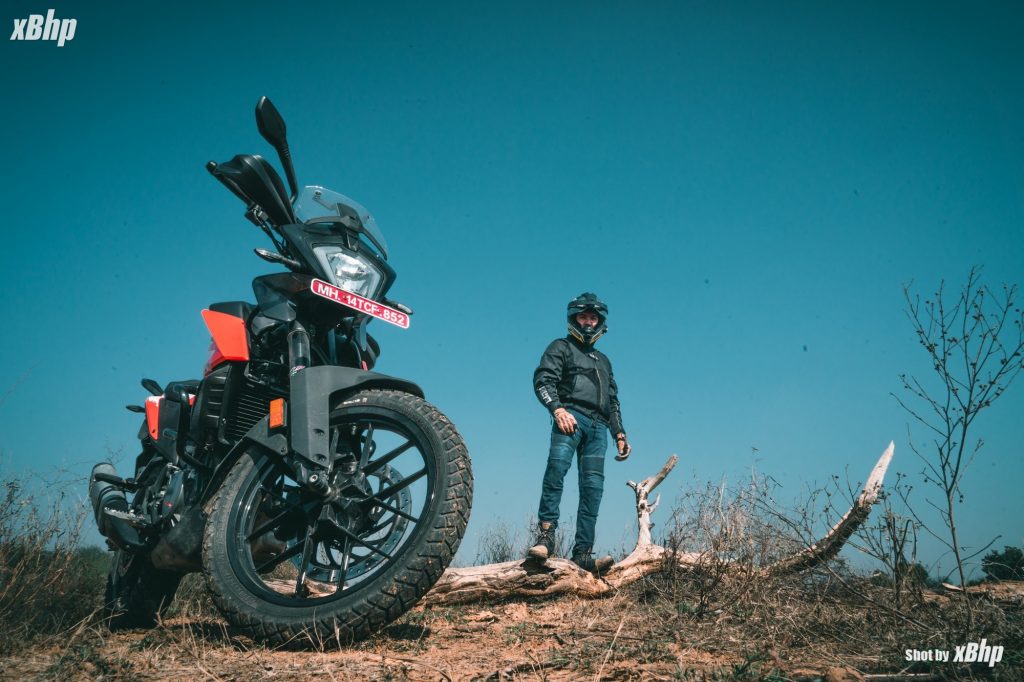
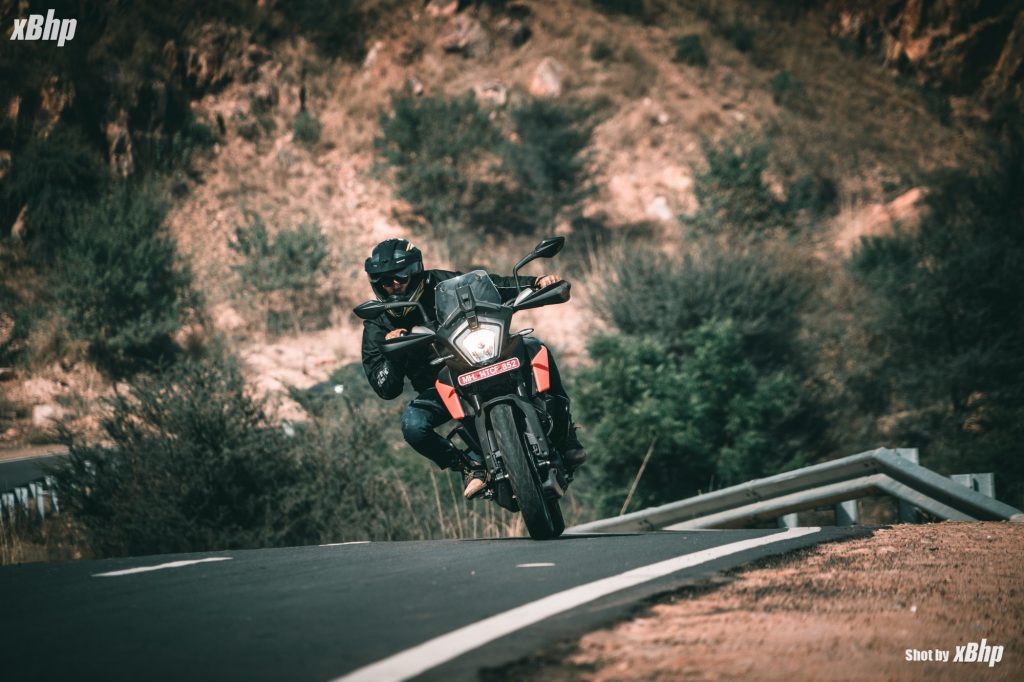
Let us now move on to handling. Right off the bat, the KTM 250 Adventure shows off its DNA in the sense that KTM makes motorcycles that are fantastic handlers. This one too exhibits enormous amounts of confidence in corners and does not feel lethargic despite its geometry. Talking about that, the long wheelbase also lends it the ability to hold its own in a straight line.
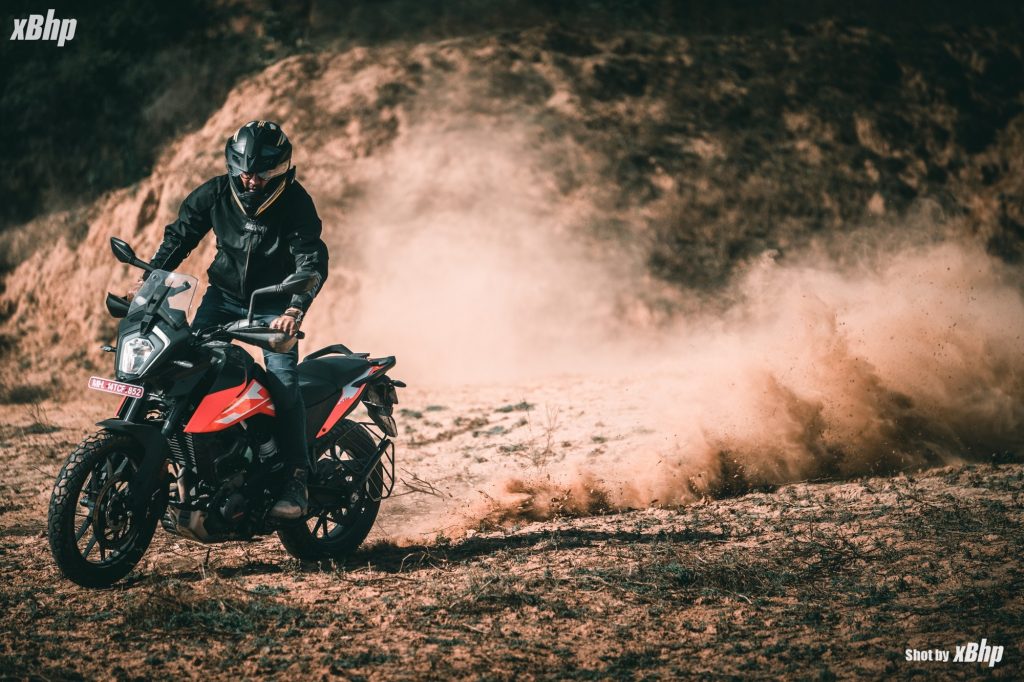
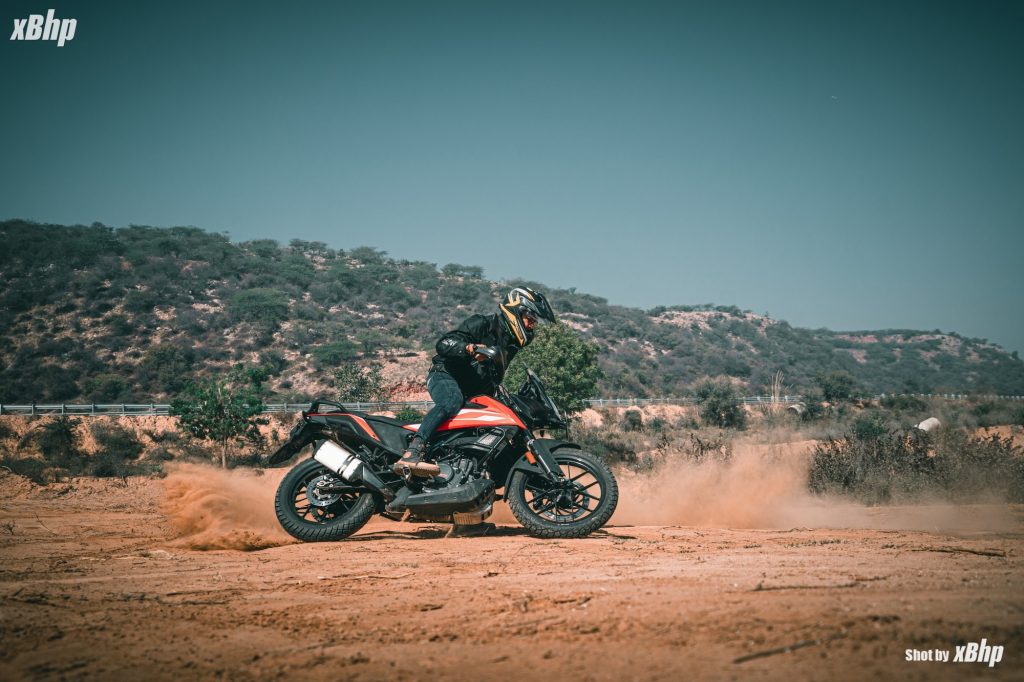
Quite a bit of it is because of the chassis and suspension setup. The chassis ensures adequate feedback and the taut suspension helps the KTM 250 Adventure keep its composure in bends. With the high-revving nature of the engine and its brilliant handling dynamics, the KTM Adventure 250 is a motorcycle that begs spirited riding. The braking department is just as well endowed despite lacking the bigger sibling’s sintered pads.
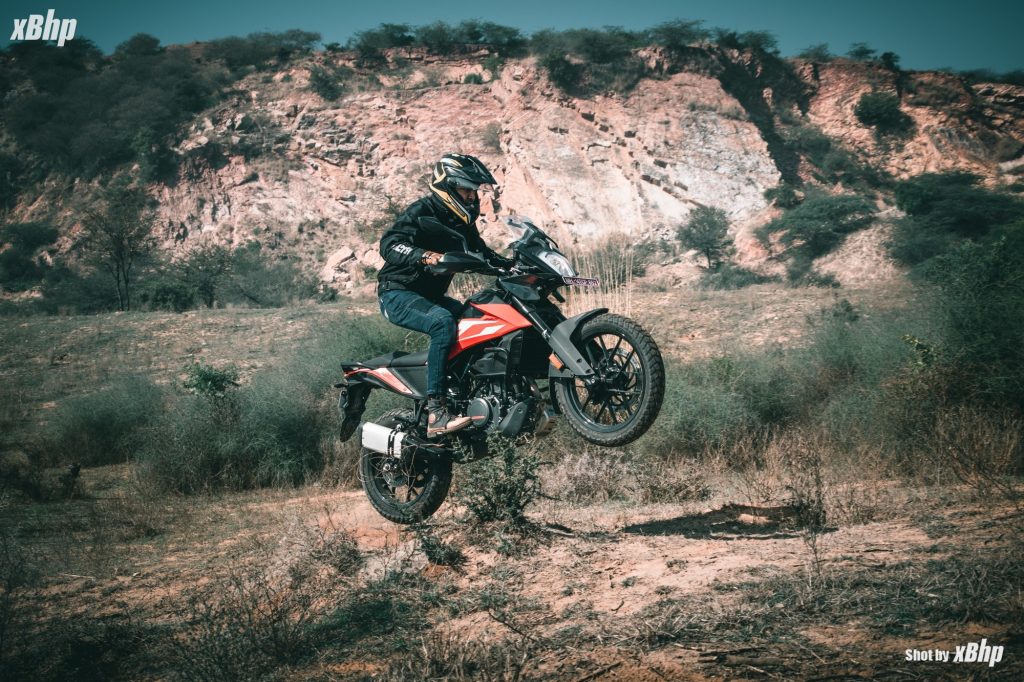
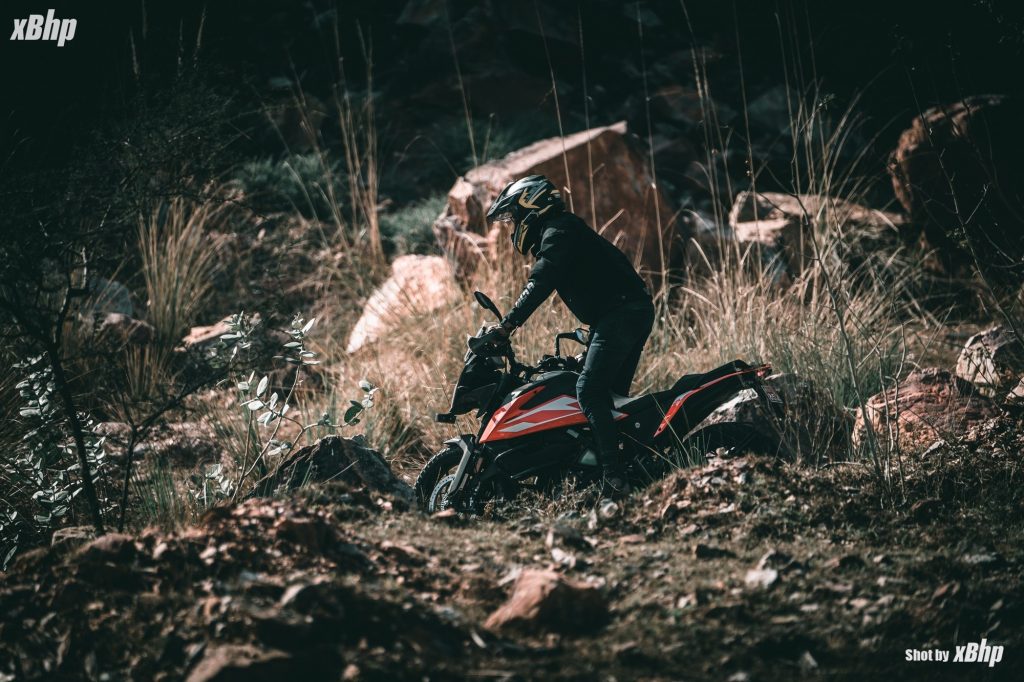
There’s dual-channel ABS working on duty which ensures that emergency situations are dealt with in a better manner. The intrusion is also minimal. Add to that the ability to disengage the ABS on the rear and you’re looking at some really pretty photos or a whole lot of fun when you venture off the tarmac. Another aspect that helps its case is the 19”-front and 17”- rear wheel combo. Then we have the MRF Meteor tyres which are pretty good on the roads and decent enough for mild-off-roading.
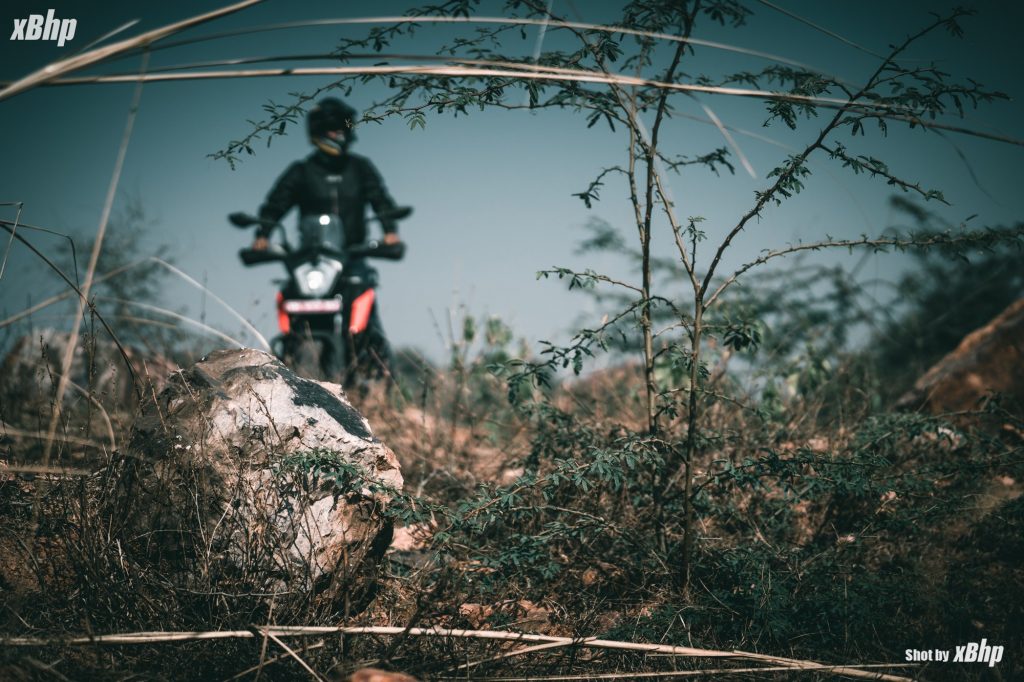
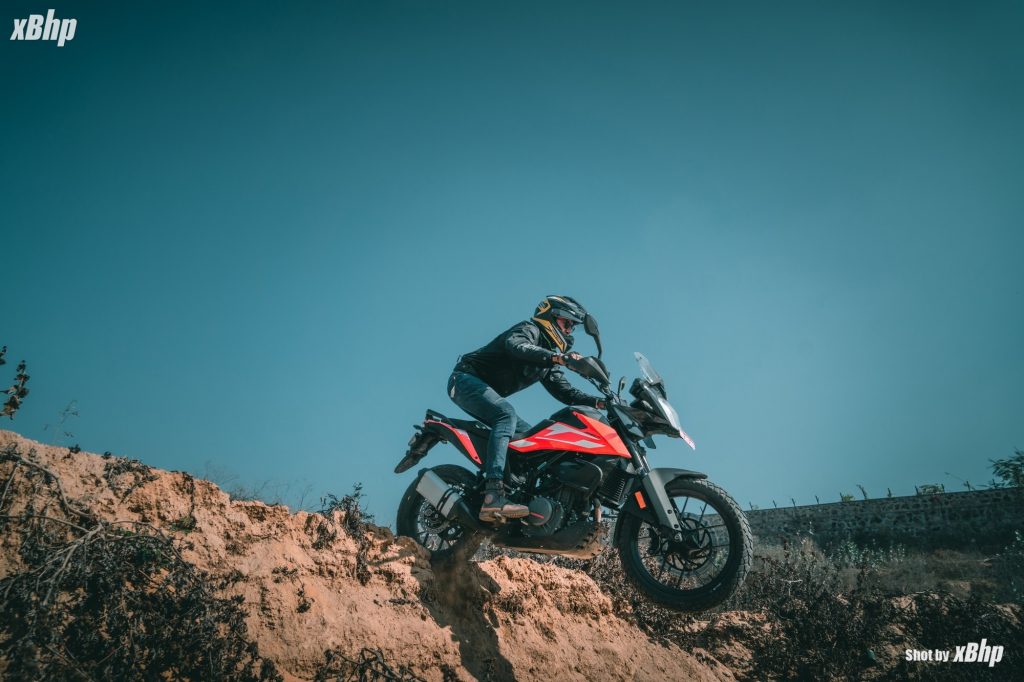
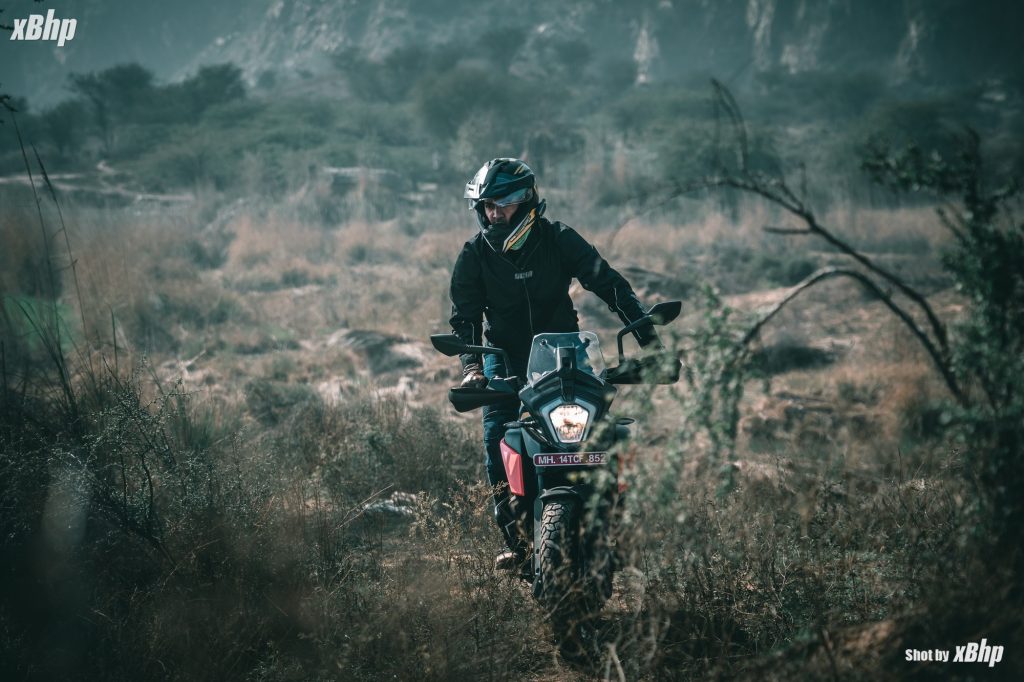
Now, in terms of pure off-roading, the KTM 250 Adventure is a very handy tool for learners. It can tackle quite a bit of the rough stuff and it can take quite a bit of beating. But when handed to the dirt-junkies, the limitations come to the fore. First, the suspension. It is good for cornering and your usual deal with it is a tad stiff for broken roads or rocky terrains. The tyres, as mentioned earlier, aren’t meant to deal with stuff that hardcore either.

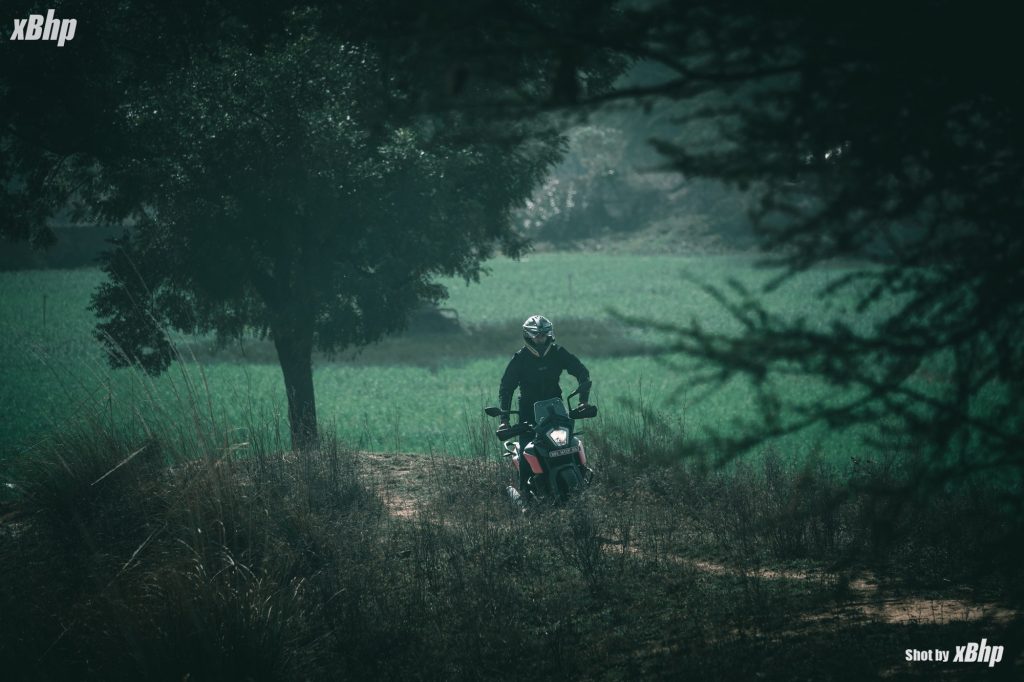
So all in all, if it is to be described in percentages, the KTM 250 Adventure is a 20% off-road and 80% road bike. But there are things more important than that. The KTM 250 Adventure exists to be a base for up and coming riders. And in that sense, it accomplishes more than one could ask for. In addition to being that, it is also a fantastic platform which, with a few tweaks, can be a pretty good off-roader too.
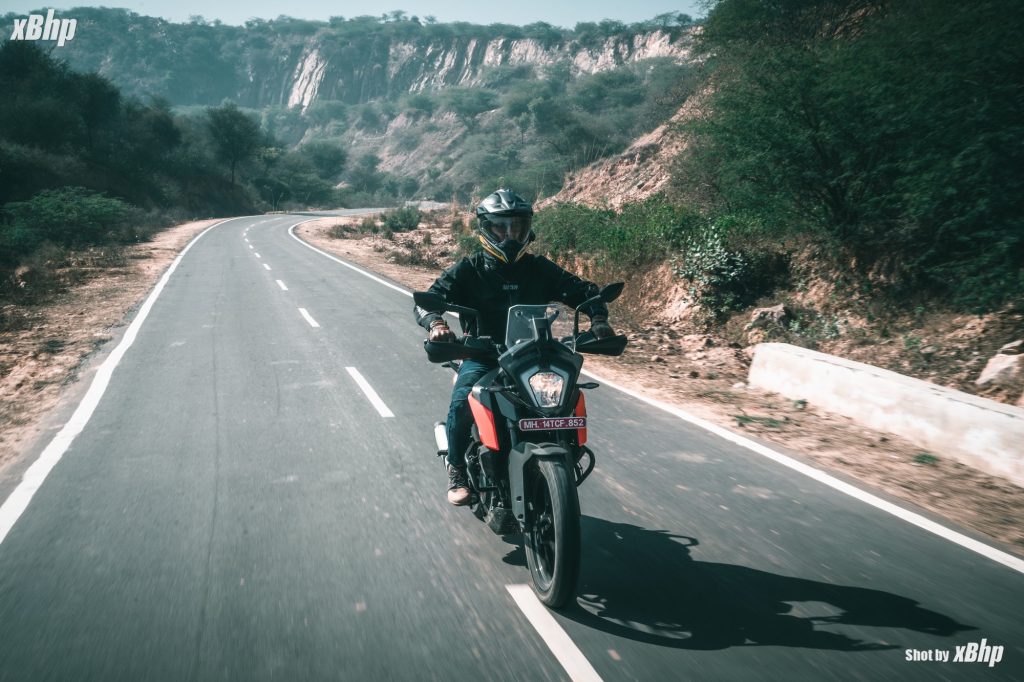

250cc is one of the most popular segments in India nowadays because of reasons stated quite a few times here. Adventure-touring and off-roading are also picking up the pace in our country. So something that combines both of those is bound to be a good motorcycle. The KTM 250 Adventure takes it up a few notches and turns out to be a great motorcycle. Does it justify the price tag then? Well, the photos that you see here point towards a thumping yes, aren’t they?
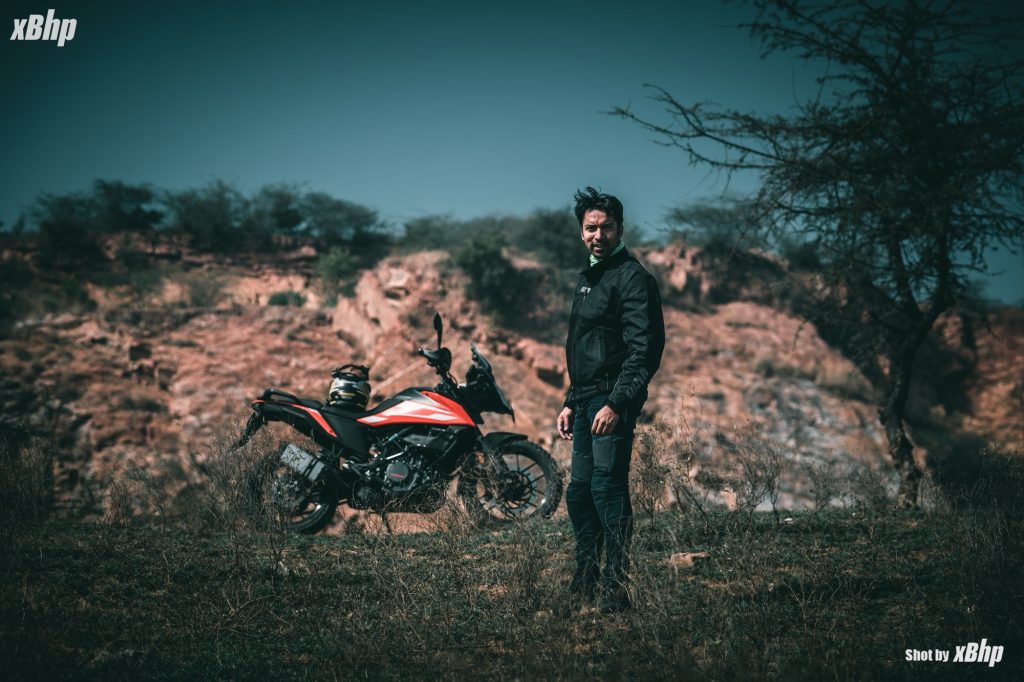
Reviewer: Shahnawaz Karim is a certified adventure riding trainer and a national champion in circuit racing. His years of experience in riding a variety of motorcycles and his off-road riding acumen make him one of the best people to tell you if a motorcycle is worth it’s salt. In addition to being a fantastic rider, he is also the brains behind Ulka gear.
Ulka Gear Hakkit Forever
Hakkit Forever from Ulka Gear is one of the latest motorcycle riding jackets in India. The USP of this recently launched jacket is the multipurpose usage that it offers. It can be worn as a protective jacket when you are on your motorcycle and can be used as a backpack when you are off it.


People who buy proper motorcycle riding gear understand the importance of keeping it safe. And they are at their most vulnerable when you take a break from the ride. That very need of safeguarding your gear is taken care of by the Hakkit Forever jacket which can be easily converted into a backpack for carrying your helmet, gloves, goggles etc which protects them from prying eyes and unwanted falls.
The Jacket is priced at INR 10,999/- and is available for purchase from www.ulkagear.com along with other designs of the Hakkit.


BMW 330Li: 3 Series Gran Limousine driven defines ‘more’!
 Jan 2021 Sundeep Gajjar
BMW,Cars
Jan 2021 Sundeep Gajjar
BMW,CarsWhen you talk about BMW cars in India (and around the world for the most part), the first car or rather series of cars that comes to mind is the 3 Series. It may not be the flagship of BMW’s stellar stable, but it sure is the flagbearer of BMW. Now, the latest 3 Series has left the world impressed, pretty much like the previous iterations, but this time around we have something special in the series. We have with us the BMW 3 Series Gran Limousine and it has given us more than a few reasons to rejoice.
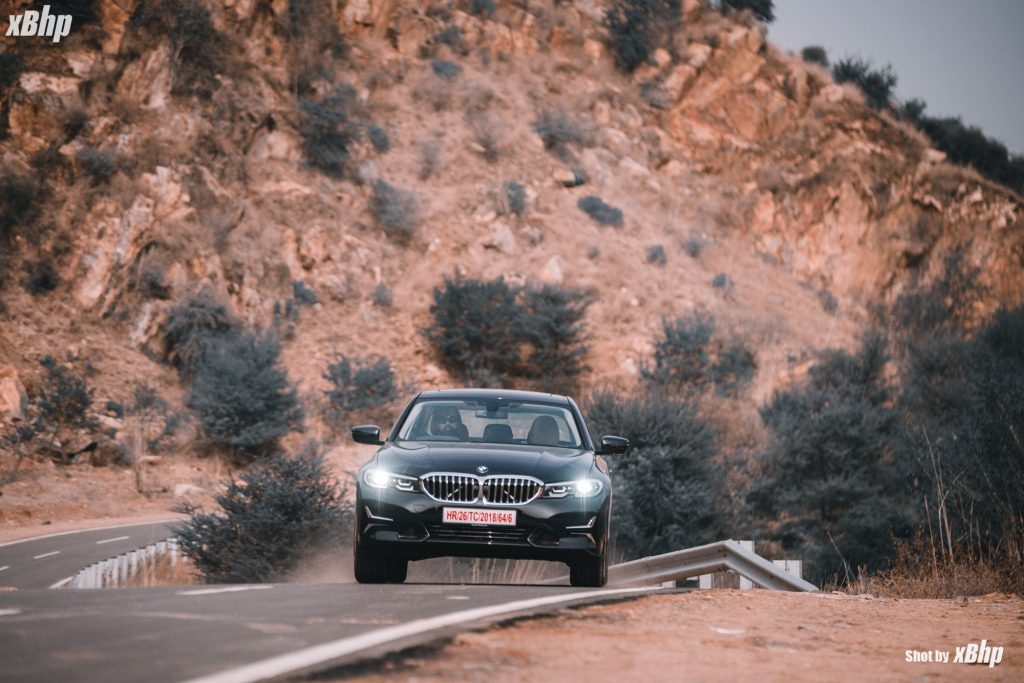
We have driven quite a few BMWs in the past, from manic ones like the M4 to the severely opulent ones like the 7 series. The thing with those cars is that they have that certain something that BMW puts in their cars intensified to a whole ‘nother level. But then, they are out of reach for most people. That is where the 3 Series comes in. It has that certain something and with a halo on top like the legendary M3, how could it not be? But then, it is relatively reachable too.
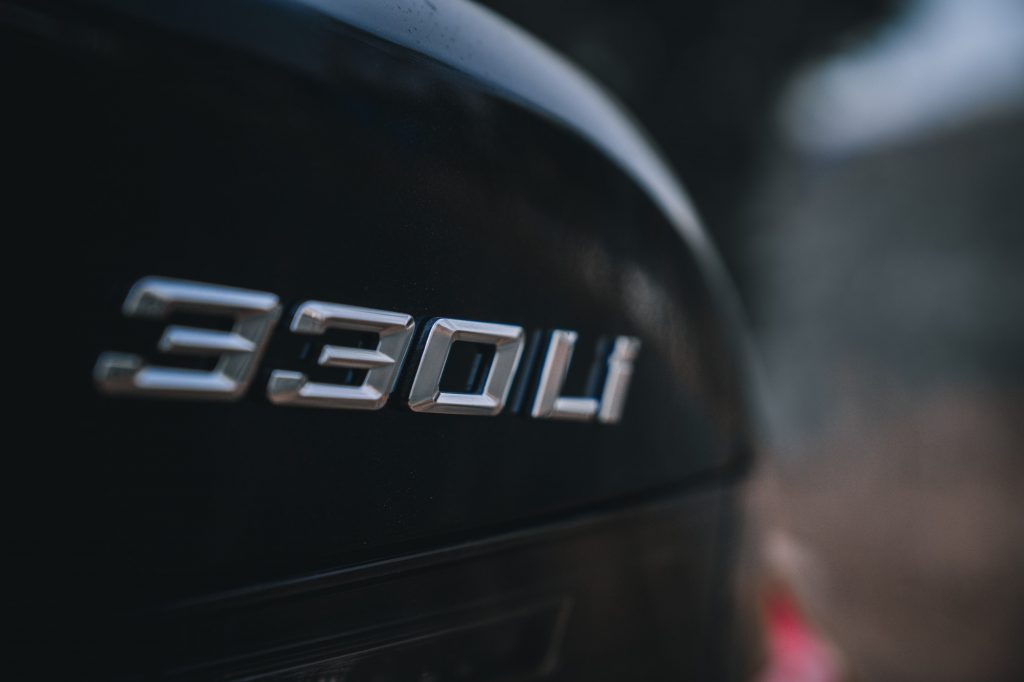
That has also been one of the biggest reasons for the massive success that the 3 Series has enjoyed over the years. It is a near-perfect mix of driving pleasure, travelling pleasure, and well, bank balance pleasure. The BMW 3 Series Gran Limousine adds another dimension to one of those traits. It may not be hard to guess what it is but we’ll still put it out there- travelling luxury.

How does it do that? You can add one million lights in the cabin of a car, install the console of a fighter jet, add 20 infotainment screens and then some, but if there is a lack of space, it all goes south. See, luxury starts with comfort and space is the basis of comfort. Legroom, thigh support, headroom and the usual deal. Now, it is not that that the 3 Series did not have a spacious cabin, the Gran Limousine just takes it up a few notches. So let’s talk about that very thing first, shall we?
So, the overall length of the car goes up from 4,709mm in the standard 3 Series to 4,819mm in the 3 Series Gran Limousine. The wheelbase, similarly, is also up from 2,851 mm to 2,961 mm. Increments of 110mm on both of those fronts. In order to keep the increase in length in synergy with the silhouette, the overall height of the car goes down and with it, the headroom is reduced by 4mm in both the front and rear of the cabin.

Now, 4mm less headroom is not a big deal and it is nearly nullified with the increased room in the rear of the cabin. The rear doors on the 3 Series Gran Limousine are 110mm longer which makes getting in and out of the car easier which is saying something because the Standard Wheelbase 3 Series poses no problems in that regard anyway. This also means that there is more legroom in the rear, 43mm more to be precise which is considerable, if put mildly and best-in-class if put properly.
All those numbers making you feel dizzy? They are doing that to us. But since we have them and the comparisons out of the way, let’s talk about the car objectively because that is what matters in the end. And let us start with the design and the exteriors. What we really liked about BMW’s design of the 3 Series and the 3 Series Gran Limousine is the seamlessness with which it flows.
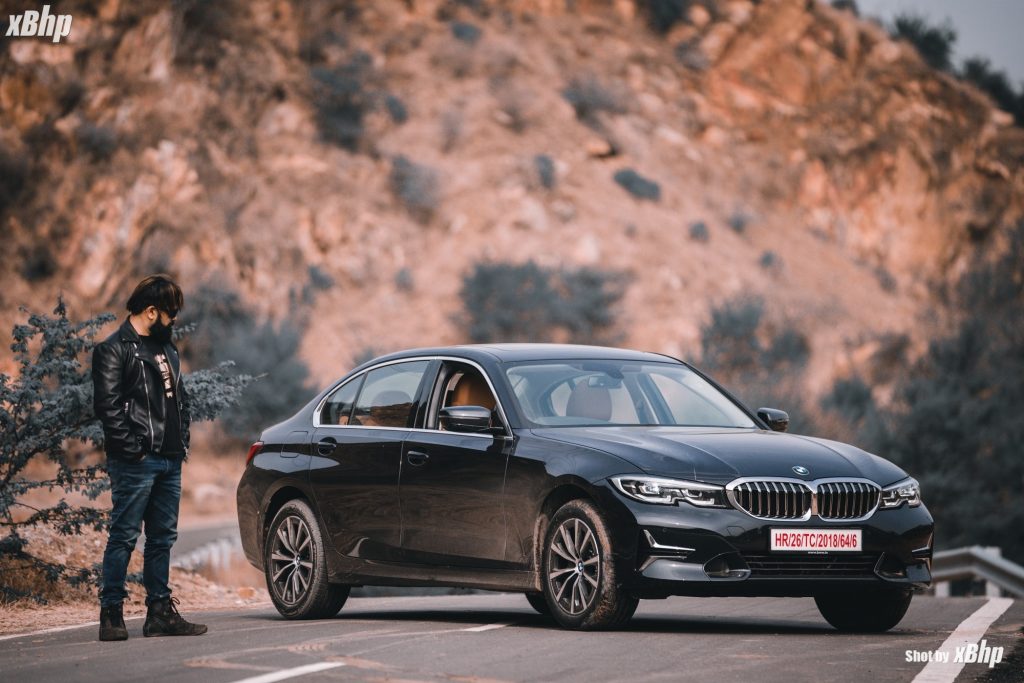
Look at the front for example. The headlights have been getting meaner over the years and in the case of this car, they are the same but elegantly so. We like the little notch along the lower line of the LED headlamps. Another good thing is that they are not too swept back. Complemented by the DRLs, they look fantastic.
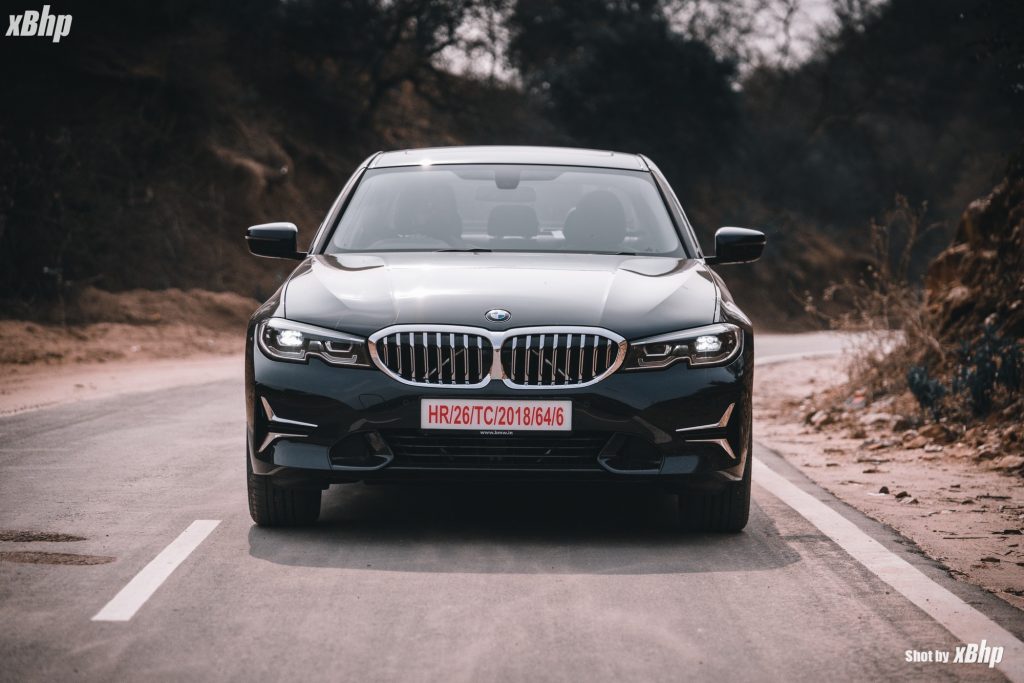
Moving on, the ‘T’ shaped intakes are a neat touch and integrate well with the lines on the bumper. Then there’s the signature grille which has been getting bigger and bigger but on this one, it does not look too out of place. Now, adding to the famed BMW sportiness is how the car looks from the front-three-quarters. Short overhangs and a long bonnet have always been drool-worthy but the extended wheelbase and set-back passenger compartment, it looks even better in our opinion.
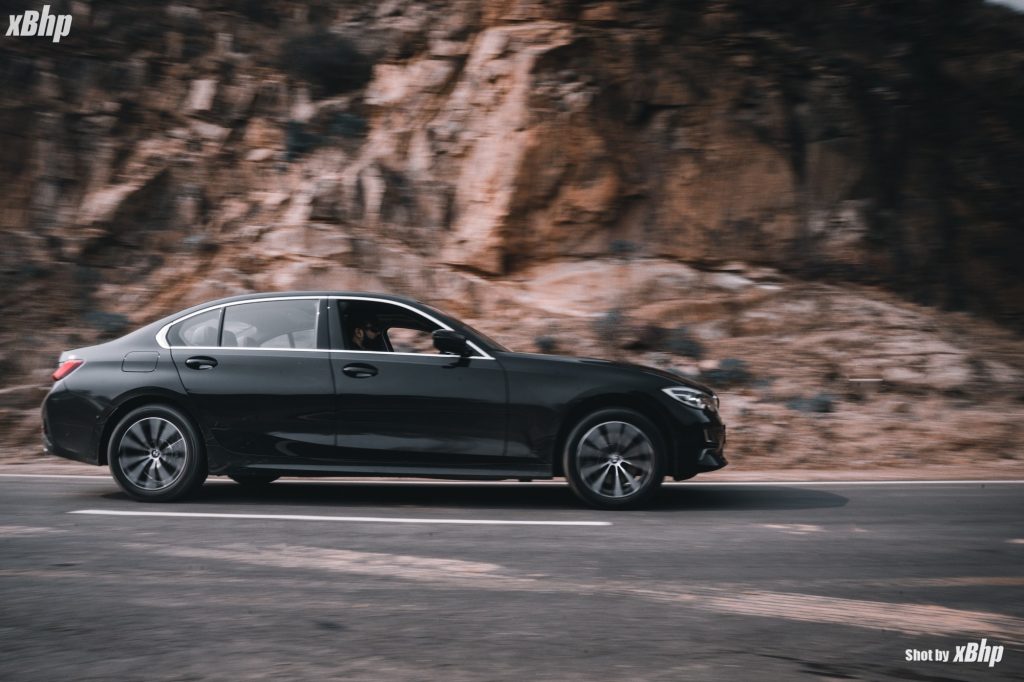
As we mentioned earlier, the increased wheelbase and length have had nearly zero effect on the overall stance and silhouette of the car. The ever-so-slight reduction in the overall height of the car has allowed it to keep the elongated and low stance of the standard 3 Series that we all have. Rounding things up at the rear, the slight lip that distinctively looks like a spoiler rises effortlessly and puts emphasis on the beautiful L-shaped LED taillights. The two tailpipes on either side further establish the sporty intent of the 3 Series Gran Limousine.
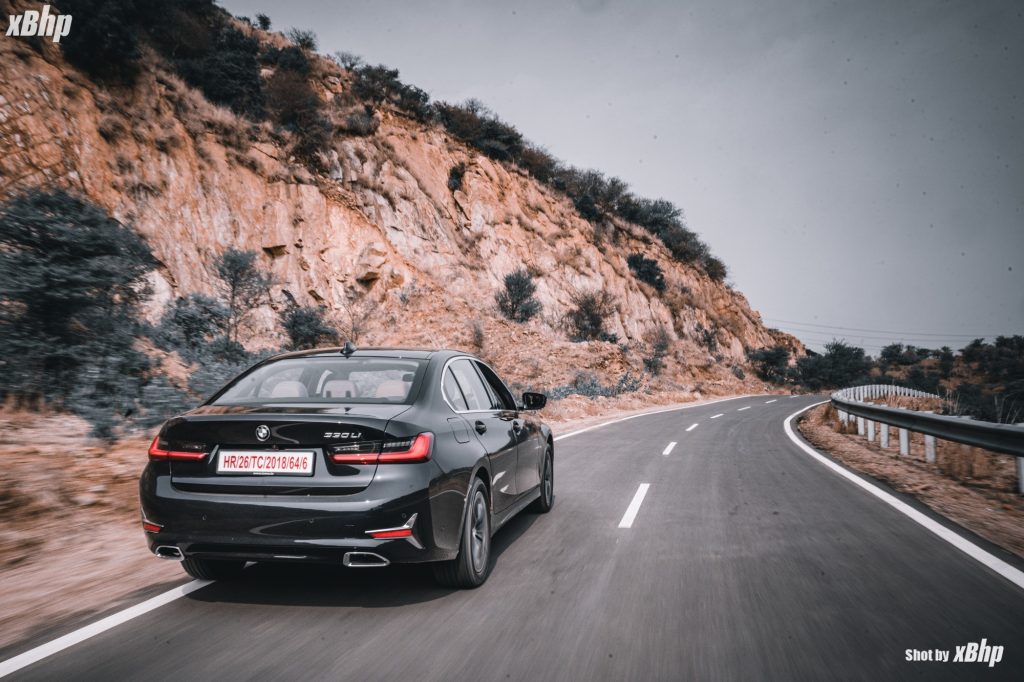
We are petrolheads and we like driving cars and not travelling as passengers. But BMW states that the 3 Series Gran Limousine exists alongside the standard 3 Series cars in India to cater to the customers who prefer long sedans and the practicality associated with them. Fair enough. And that is why we finally decided to step inside the cabin, we went to check out the rear first.
BMW cars have never been lacking in the opulence and it is the same with this particular car as well. But, predictably, the extended length of the car has gone far in enhancing the comfort of the rear seats dramatically. There’s more than enough legroom and headroom even for taller people.
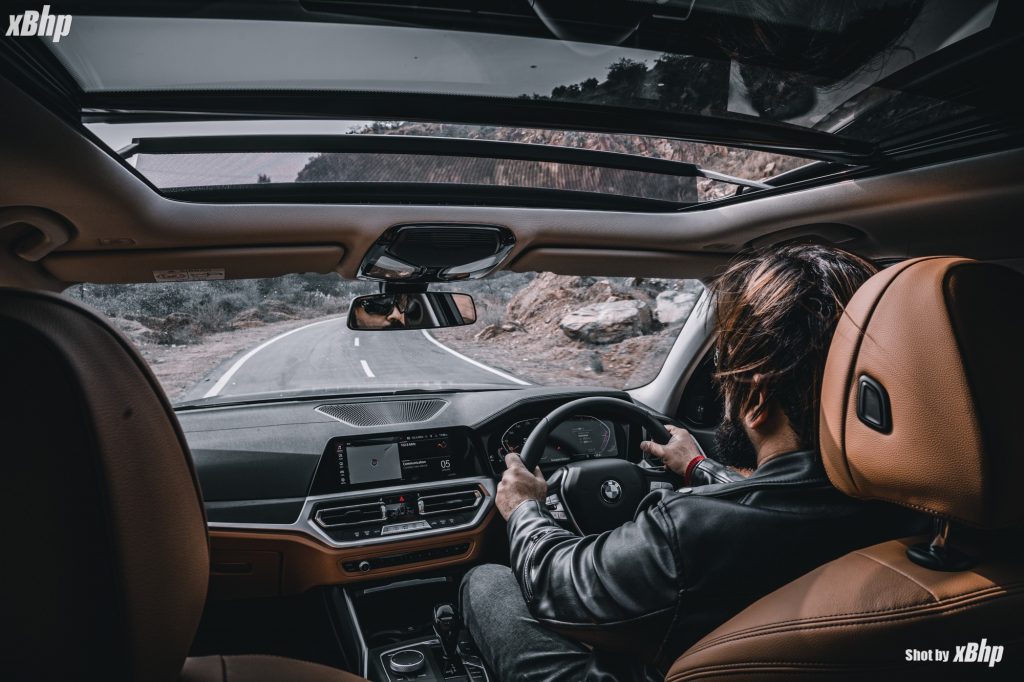
Other than that, there’s bespoke leather upholstery on offer in addition to a luxurious rear-seat. The emphasis on comfort is highlighted by the new headrest and armrest and improved padding all around. Coming to the front, we have comfort seats which are a good addition. Now with the kind of performance that this car is capable of, we’d have liked them to be a little sportier. Perhaps it can use an M-Package to make people like us happy.
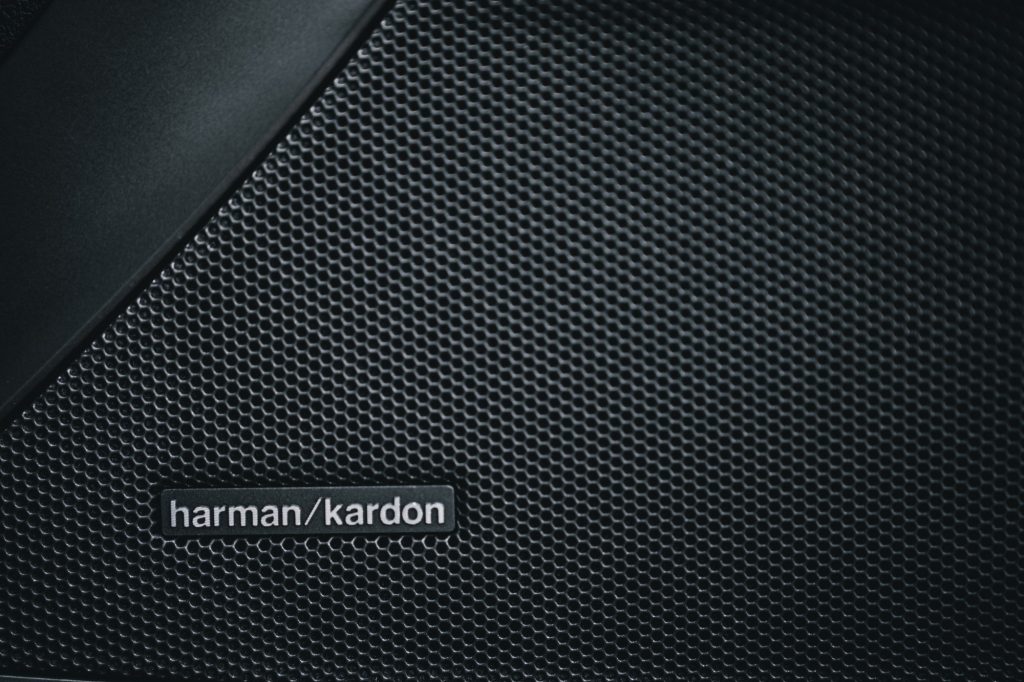
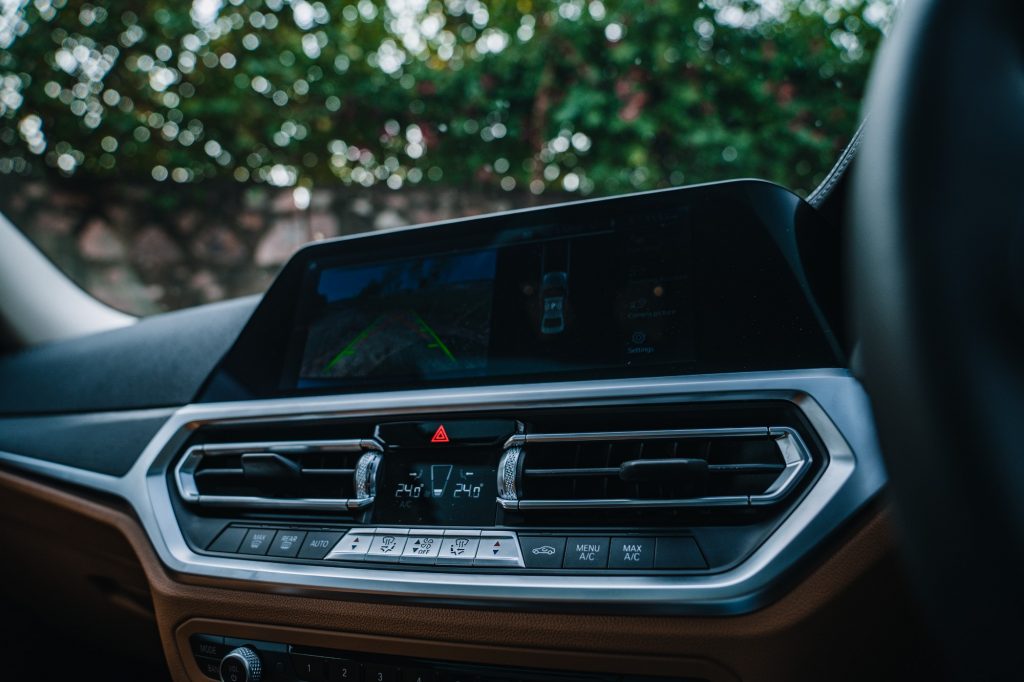
Rest of the innards are rather familiar with the specialities being the panorama glass sunroof and ambient lighting. Then there’s the iDrive, the familiar console, BMW Live Cockpit Professional and very much to our liking, a Harmon Kardon Surround system. Did we forget wireless charging? We just covered it then.
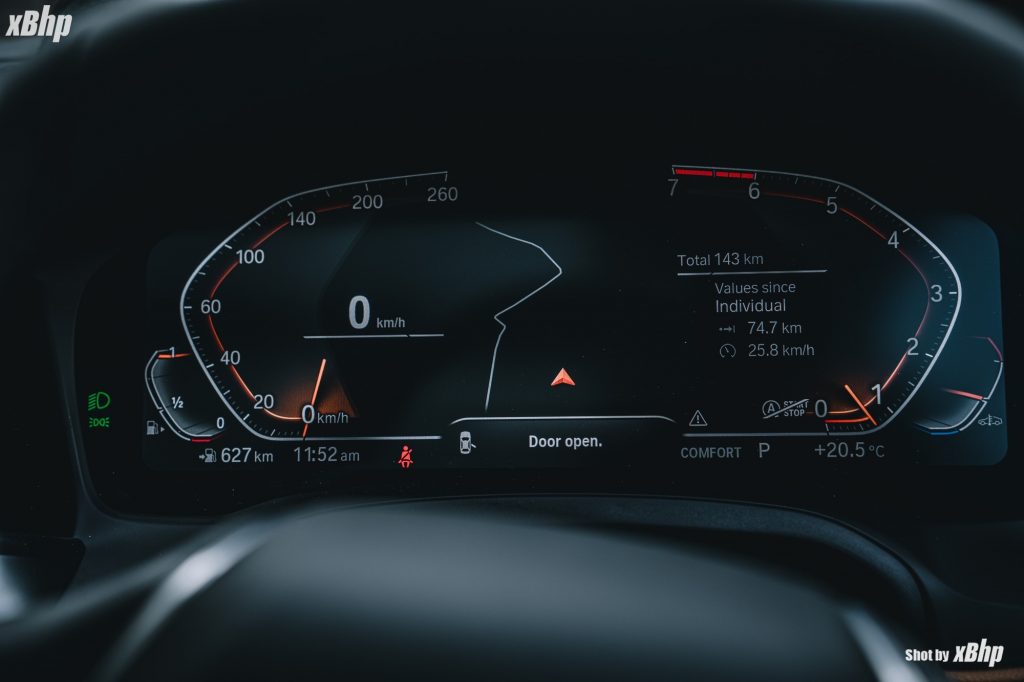
Onwards to the stuff we like more- performance. See, the 3 Series has been there since 1975 and ever since the first one arrived, its emphasis was very clear. It served to provide the customers with sporty performance, top-notch technology, and high levels of comfort. All that at a price that does not form the basis of perhaps an Italian Job. Invariably, we had high expectations from the 3 Series Gran Limousine.

We had at our disposal the 330Li variant which features a twin-turbocharged 2.0-litre, 4-cylinder petrol engine… Let’s call “twin-turbocharged” “BMW TwinPower Turbo”. A lot of work went into that name and we do not want it to not serve its purpose. Anyway, the engine is good for 258 bhp of power and 400 Nm of torque (between 1,550 and 4,400 rpm).
Officially the car can go from 0 to 100 km/h in 6.2 seconds. That is a fantastic number for a near-5-metre car. Like always, BMW never lets go of its performance bias and that is why even their more sedate cars are not so sedate. This one weighs 1,640 kg unladen which is pretty impressive for a car of its class.

But not all of the credit for its performance goes to the weight. The engine is a beauty. It is smooth and there is no perceivable lag and it makes the car pull effortlessly. There are other modes too but we being the kind of people we are, kept it in SPORT. The throttle response is really crisp in this mode but again, despite all that the engine is capable of, it is the refinement that impressed us the most.
Another factor that bolsters the 3 Series Gran Limousine’s credentials as a sports sedan is the 8-speed Steptronic transmission. The power is sent to the rear wheels via this phenomenal unit which shifts deceptively quick in SPORT mode. More than that, it also aids tractability and since the torque is spread in a wide range of RPM, the car is a joy to drive whether you are cruising on highways or crawling in traffic.

Handling is also pretty good. The SPORT mode stiffens the suspension enough and the car has a great balance due to the weight distribution. On top of all that, it is a rear-wheel-drive car so it is a lot of fun to drive as well. It can be placed in a corner and then it just holds its line. Quite a chunk of it comes from the electronics keeping you safe as well but then BMW generally makes pretty stellar cars. It did feel just a tad lethargic but driving the standard 3 Series side by side might reveal the difference, if any.

Overall, we find the BMW 3 Series Gran Limousine to be a very likeable car. The pricing of the car will obviously be a factor but our guess is that it will be in the middle of the 3 Series and the 5 Series. But for what it’s worth it will quite likely justify the hike over the standard 3 Series considering it is kept sensible. And with Luxury Line being the only variant, you are sure to get a lot of top-shelf options checked.
Aston Martin Vantage: Britain’s finest is the world’s envy!
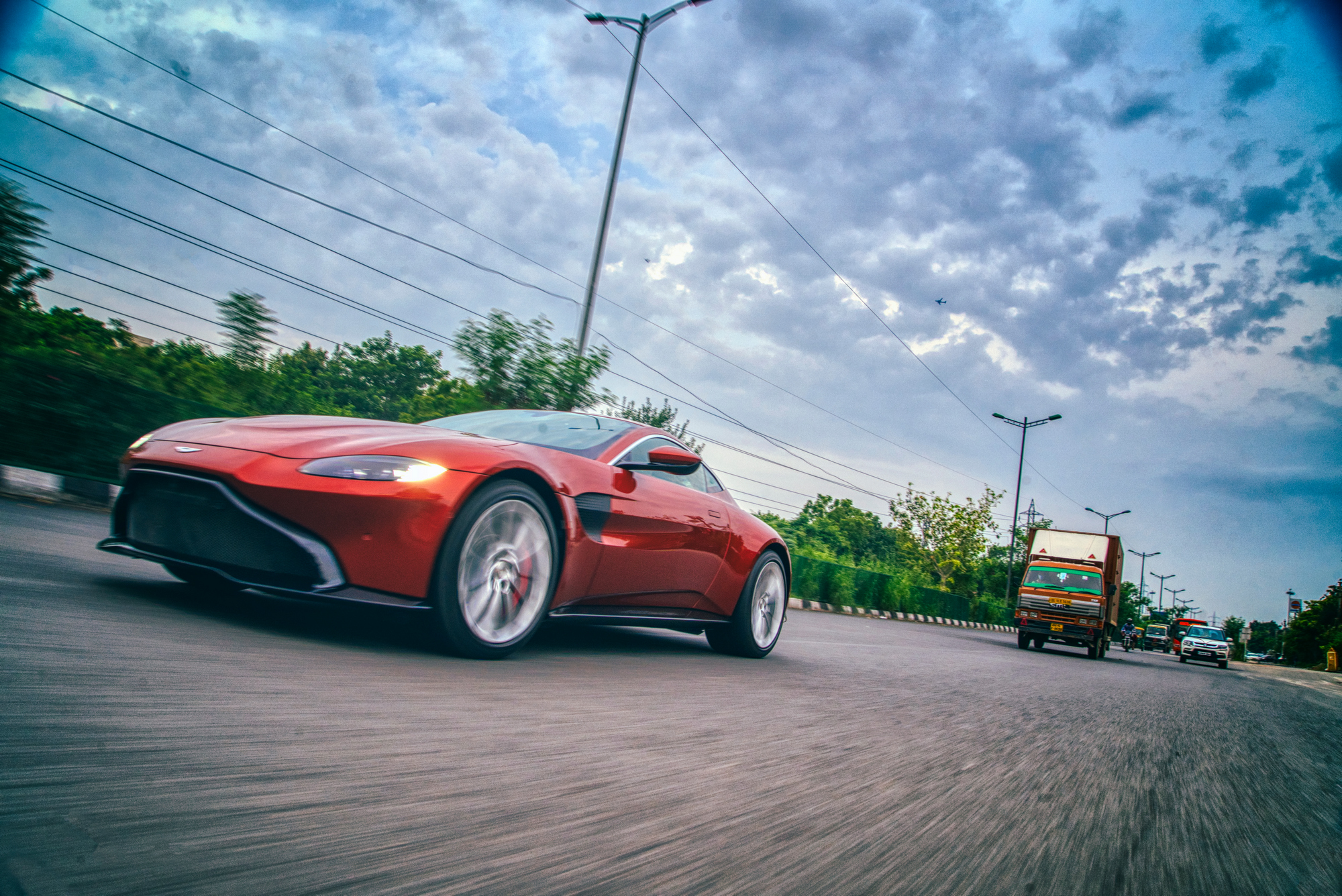 Dec 2020 Sundeep Gajjar
Cars
Dec 2020 Sundeep Gajjar
CarsWhat if someone told you that with a Razorblade and a Green Pea, you can refer to one of the most decorated automotive brands in history? Understandably, it would be really hard to believe. But it is possible. And what if someone told you the car that you see here is from that very brand? That’s even harder to believe. Razorblade. Green Pea. And then this car- the Aston Martin Vantage. Man… this is gonna be a good story.
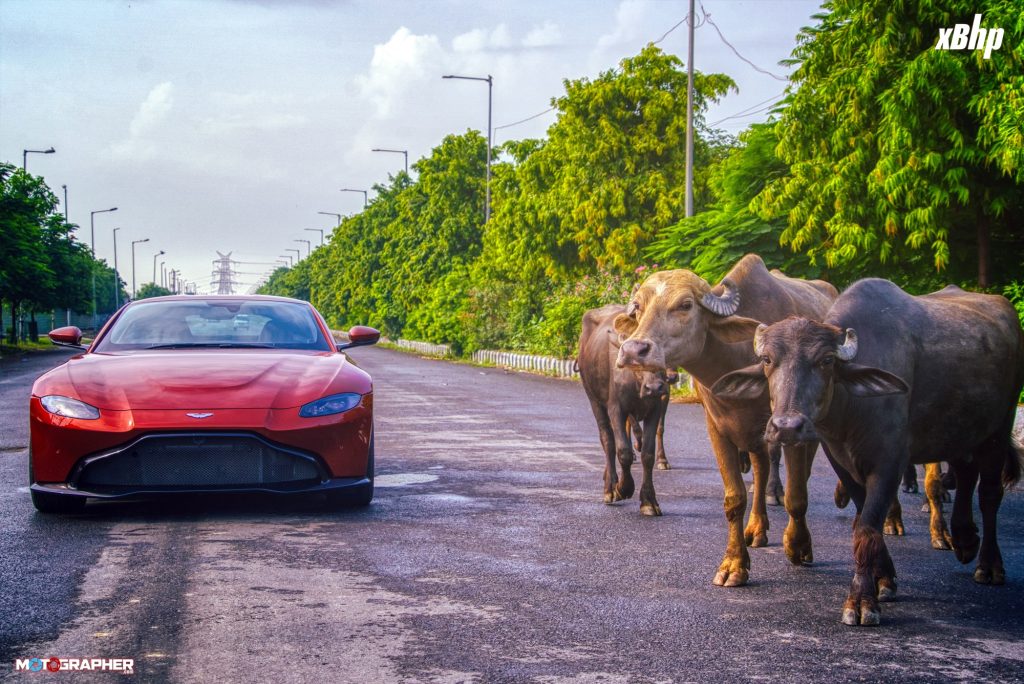
Aston Martin cars are fondly known as Bond cars, and for good reason. There are not a lot of automotive brands that have recognition and presence in cinema as much as Aston Martin. From the gorgeous DB5 in Goldfinger, way back in 1964, to the beautiful DB10 in Spectre, which came out in 2015, Aston Martins have been the signature car of 007… for the most part.
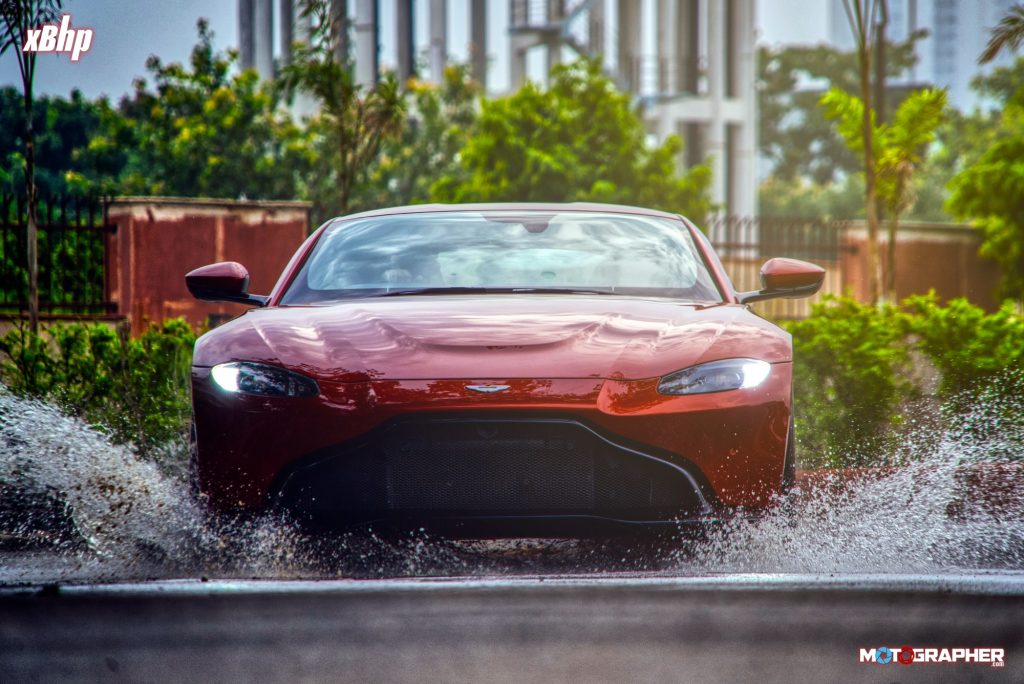
About the explanation behind Razorblade and Green Pea, Aston Martin was originally founded by Lionel Martin and Robert Bamford. And two of their very first race cars were called… yep, you guessed it right; Razorblade and Green Pea. As you can tell by the name of the cars, Aston Martin has had an illustrious (and complicated history). But we’re going to keep the history part of this story reserved for the Vantage only.
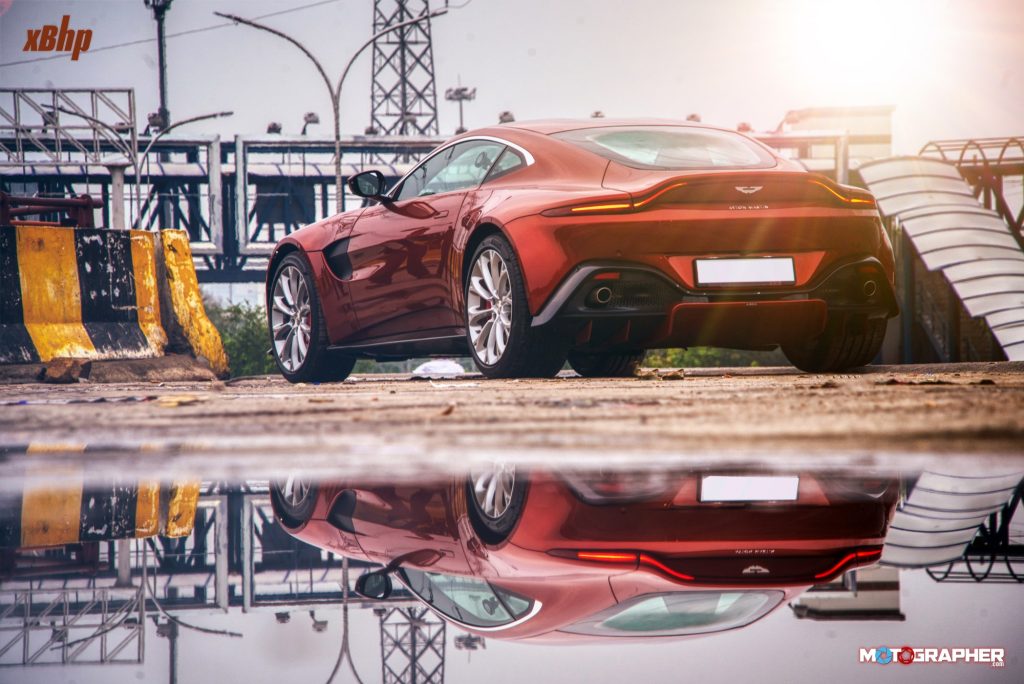
Now, the Vantage was not an actual model in the beginning. It was more like a specification or a variant. A couple of examples are DB2 Vantage or the DB4 Vantage. And for the most part, the Vantage badge has been a confusing one. The first model, named Vantage, can be traced back to 1972 when the DBS got a V8 variant. When that happened, the original straight-six powered DBS became the Vantage.
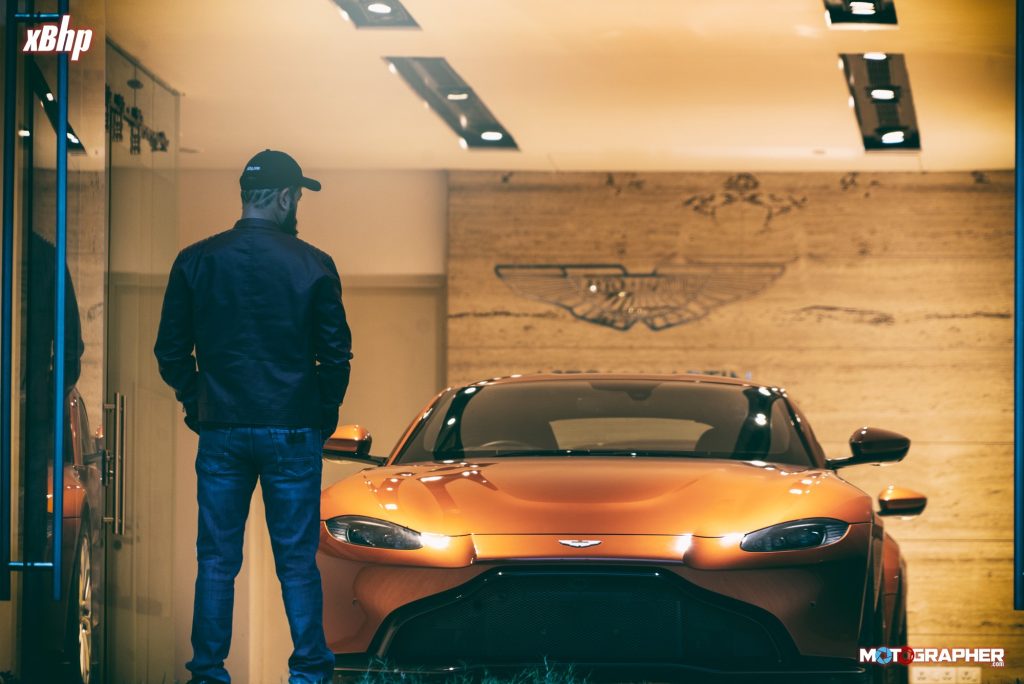
1977 saw the first V8 Vantage, which sported a muscular look and started its life as the fastest production car of its time. The Vantage name also has the distinction of being one of the most powerful Aston Martins. The Vantage Le Mans V600 Coupe made 600 bhp and 600 lb-ft (813 Nm) of torque. It was only bested by the One-77 and now, the new DB11s.
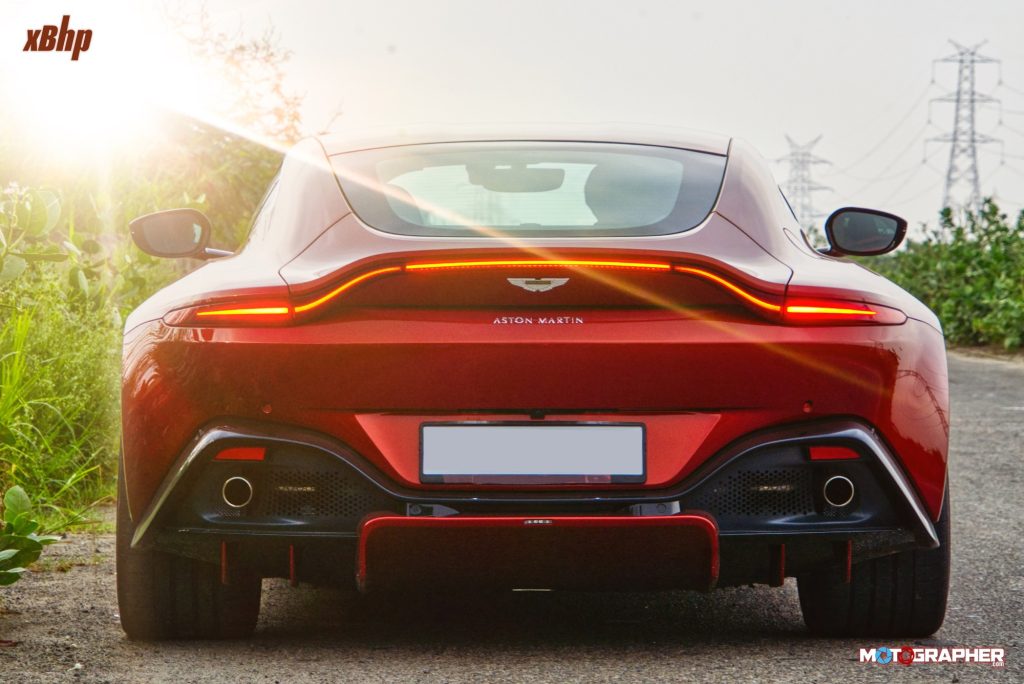
Post that, the Vantage name became a ‘spec’ again when the DB7 Vantage came out, and only became an actual model again in 2005 when the beautiful V8 Vantage came out. In 2009, a V12 Vantage was also introduced. The V8 was on sale till 2017, and the V12 till 2018. While their production ended, what this Vantage did was that it cleared Aston Martin’s intention of having a proper sports car in their lineup in addition to the GTs that they primarily made.
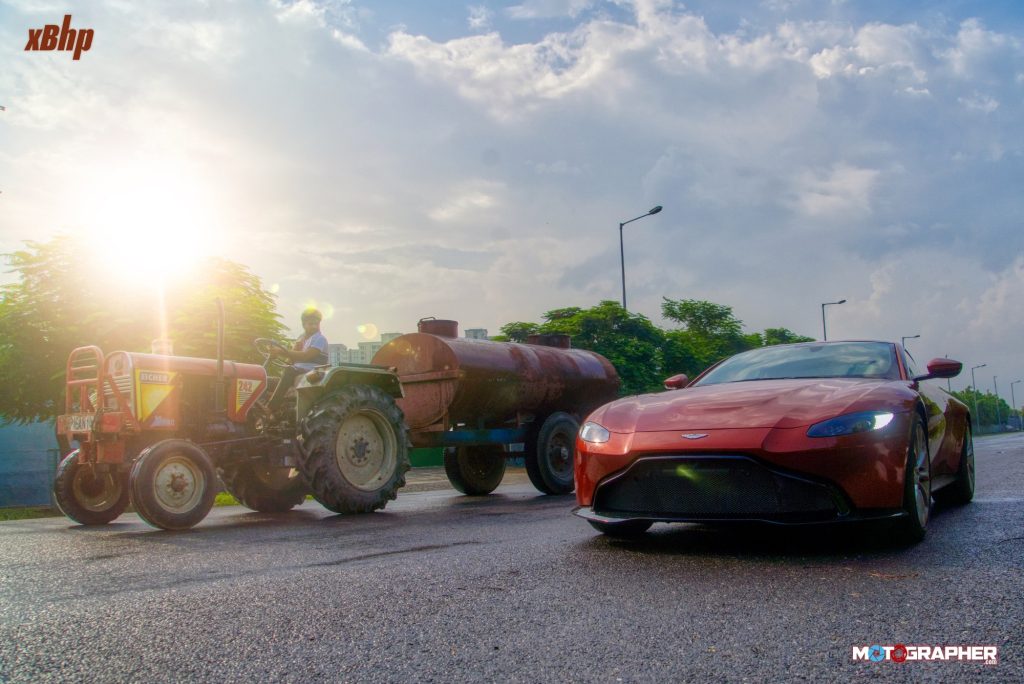
And when the stage is set by a car like the 2005 Vantage, the show has to be spectacular. And for the love of everything holy, it is! The Vantage that came out in 2018 as a replacement for the outgoing model was the sporty intent of Aston Martin personified. It looked the part, and it had the performance to show for it. And to be honest, it is perhaps the most exciting car to ever wear an Aston Martin badge. This may be a controversial statement, but bear with us.
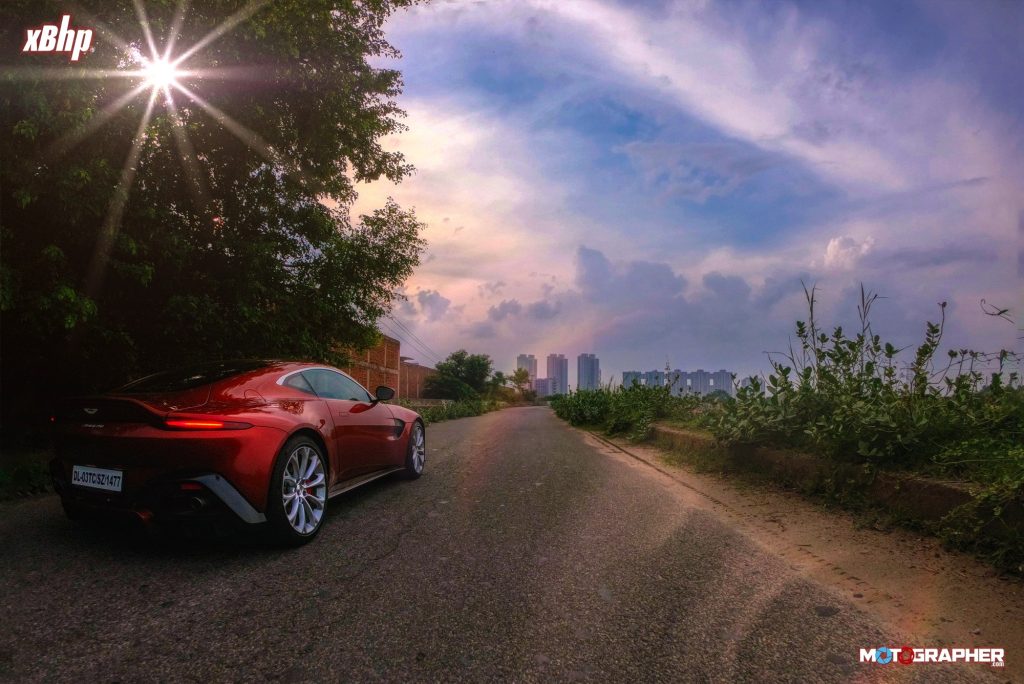
Firstly, if you Google the meaning of Vantage, it says, “A place or position affording a good view of something.” It almost makes one laugh because after driving this car for a while or even looking at it, one might want to replace something with everything. Anyway, let us start talking about the car so that these bold claims can be justified.
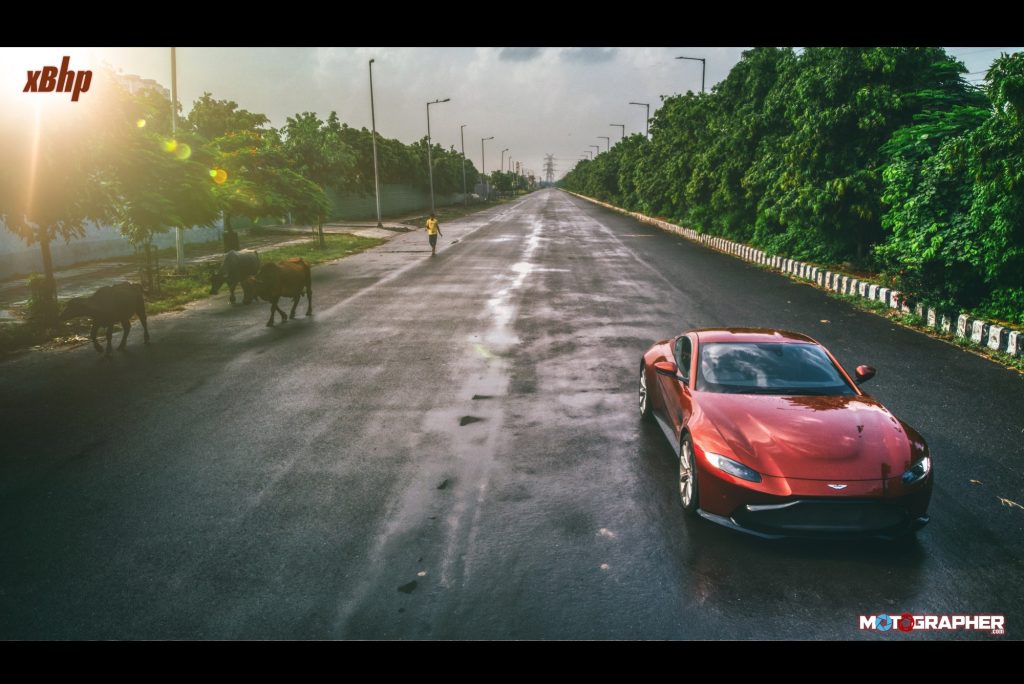
When you set foot inside the car for the first time, you realise that despite whatever Aston Martin has said about their focus on making the Vantage angrier and feistier and sportier, they haven’t missed out on something very important and elemental to Aston Martins. Aston Martin’s long-standing focus on making sure that their cars never miss out on luxury (“creature comforts” sounds too dull for the Vantage) shows here.
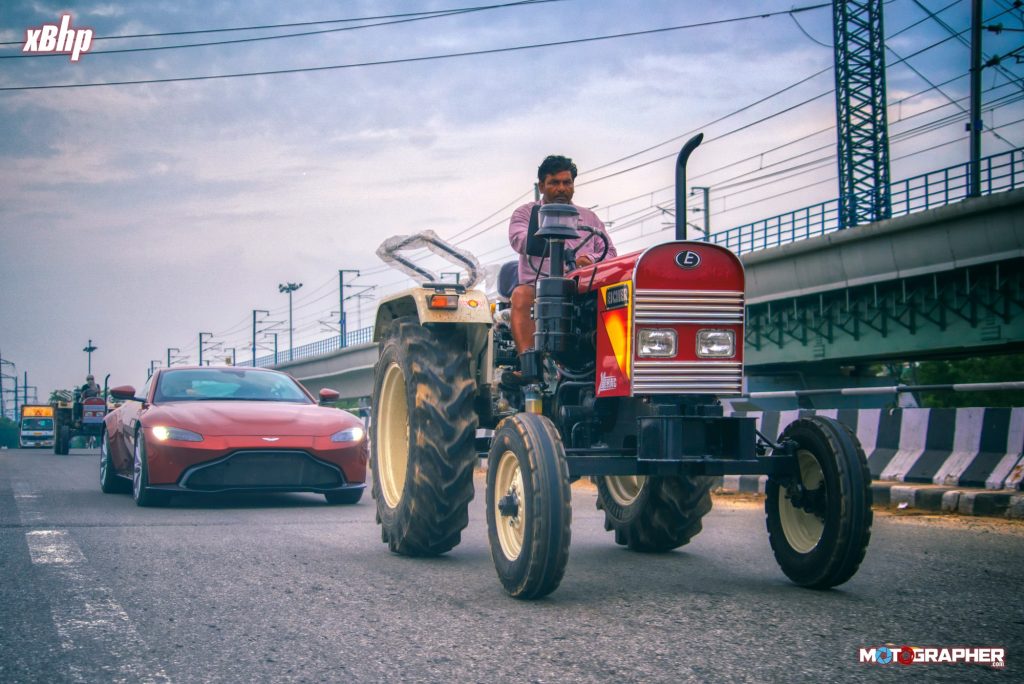
There’s leather and other exotic materials, there’s loads of tech, and then more tech to control the previous tech. So many buttons and gizmos that make sure that you can transform both your life inside the cabin and your driving experience easily. It is a tad too busy and overwhelming at first, but after you get used to it, the only way to describe it is easy magic.
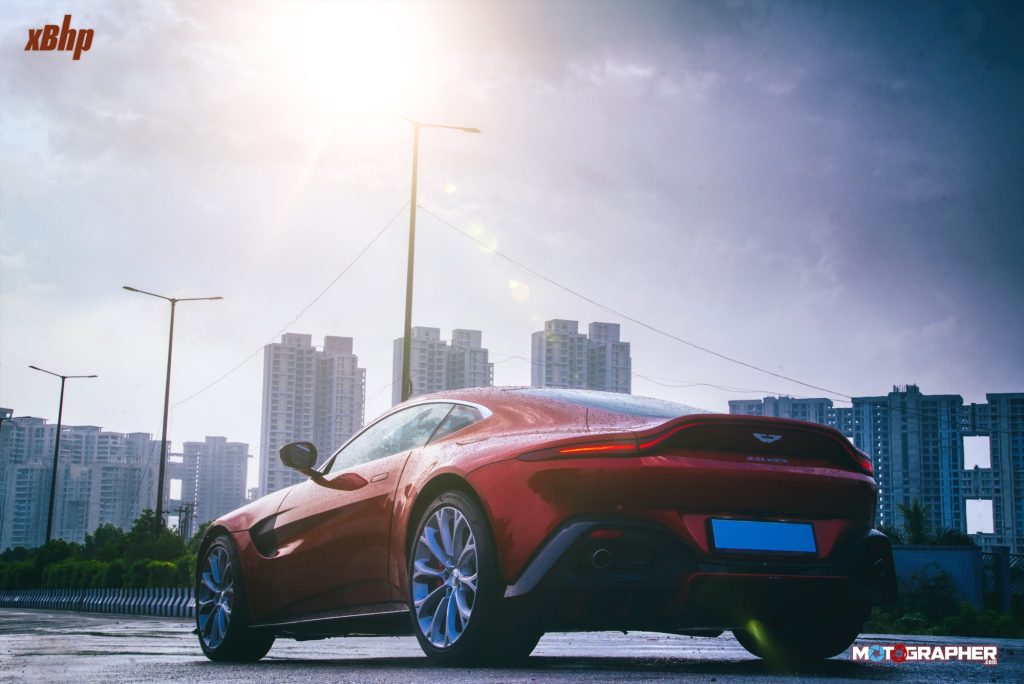
While the steering, the seats, the seating position and the visuals on the display scream sports car, the Vantage ticks boxes (really well) in departments like storage, cabin space and infotainment system are almost deceptive and mask the true purpose and the prowess of this car. Not that one would mind all that, but the information is out there, just so you respect the car and are not caught off guard.
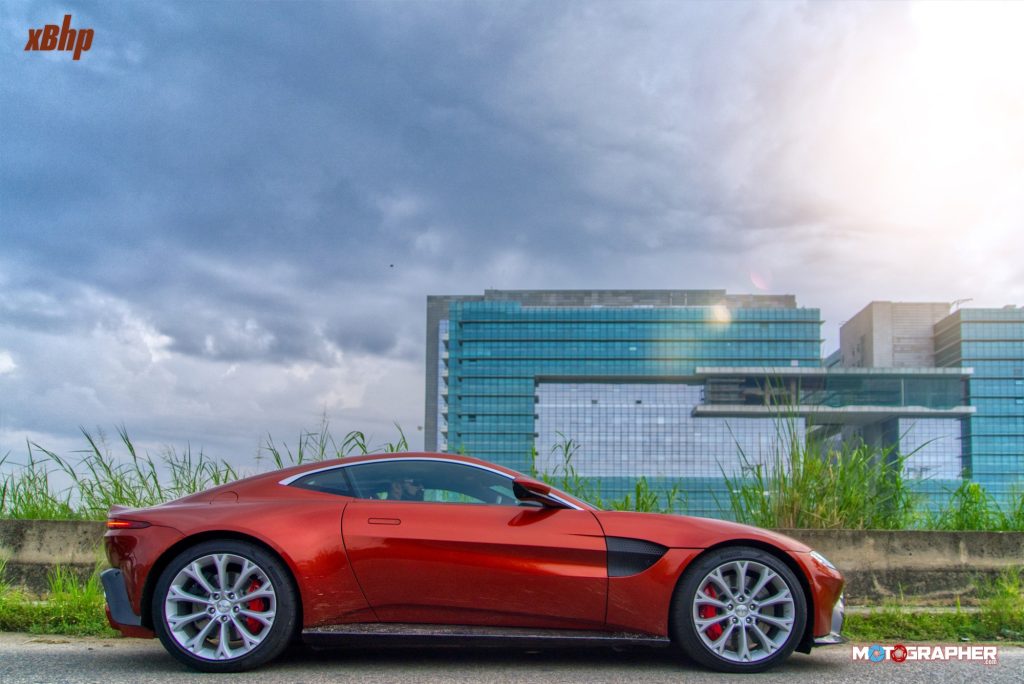
Does that scare you? No? Okay. Under the hood of the Vantage, we have a 4.0 litre Twin-Turbo V8 that transmits 503 bhp of power and 685 Nm of torque to a single set of wheels… at the rear. Still not scared. Well, just try a rev bomb, and that might do the trick. It is a sports car through and through and has the numbers on paper and real-world performance to prove it.
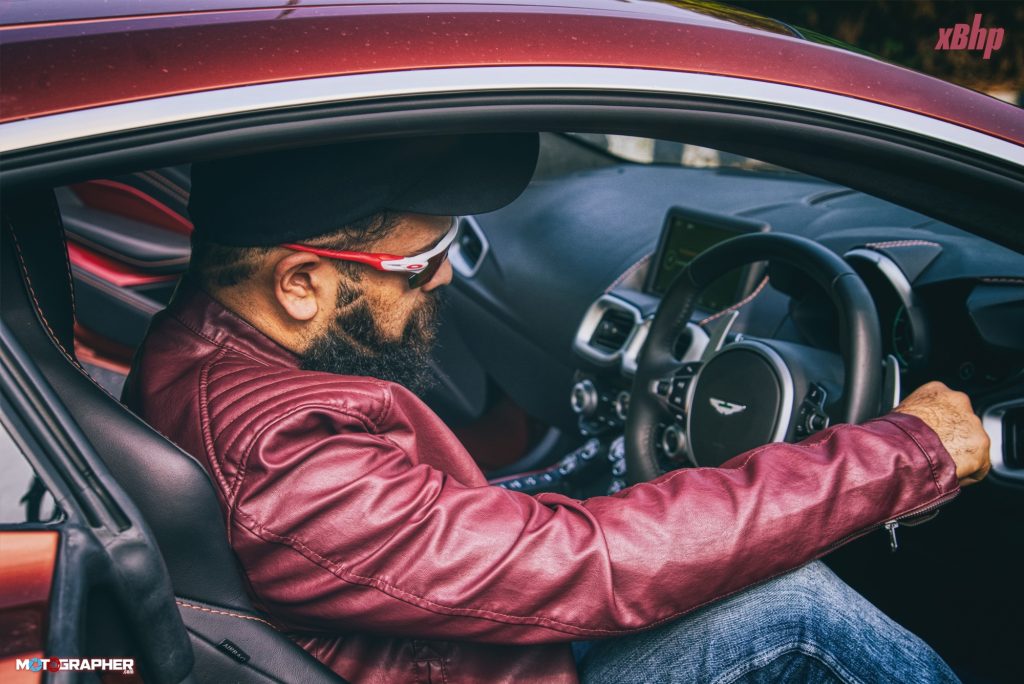
According to Aston Martin, the Vantage can go from 0-100 km/h in 3.6 seconds and boasts a top speed of around 314 km/h. It was just called a sports car, and then it goes on and does that to creep dangerously close to supercar territory. And yeah, it sounds exceptional despite featuring a forced-induction mill. As you start and explore it more and get to know it more, you realise how serious the folks at Aston Martin were when they named it The Archetypal Hunter.
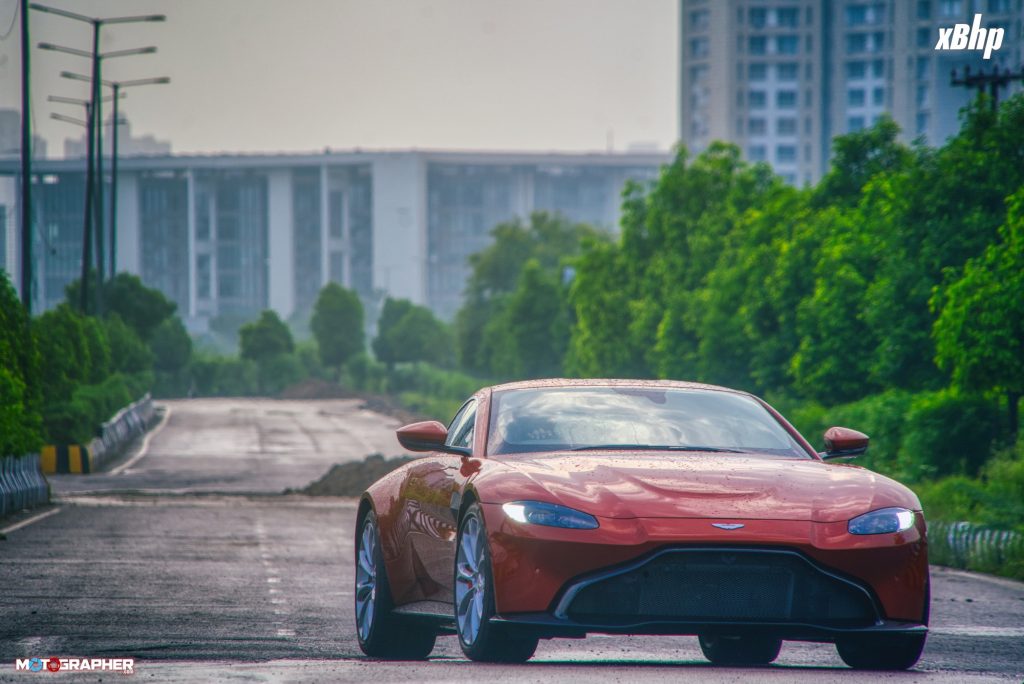
The Twin-Turbo V8 on the Vantage is truly a monster. If you floor it, the car accelerates as few things can in the world, and the roar of that engine is mighty. Keep it floored, and it rips through its 8-speed automatic transmission, and before you know it, motion blur is activated. It is a brutal car that makes the Pirelli P Zero tyres that it is shod with scream and squeal for traction as the engine unloads the massive amount of torque on the tyres.
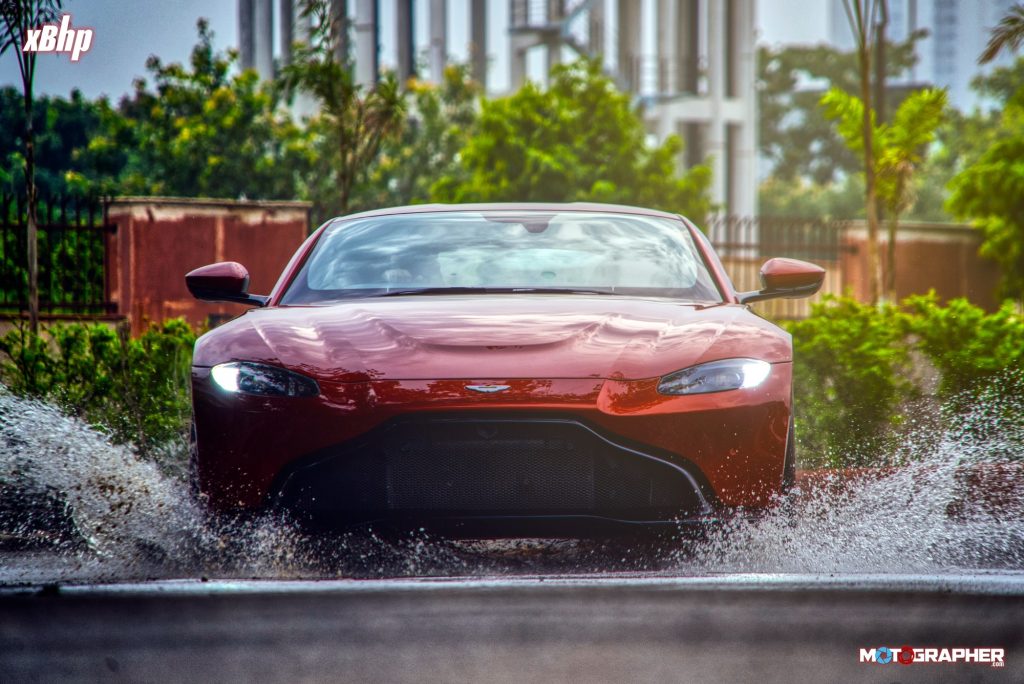
503 bhp is a lot of power. And when coupled with rear-wheel drive and the phenomenal chassis and suspension setup of the Vantage, it makes for a fantastic machine to ride hard. The abundance of torque right from the beginning of the rev range makes sure that you can rocket out of bends, and the lofty redline means you can stay right in the meat of the powerband to make the most out of the exit.
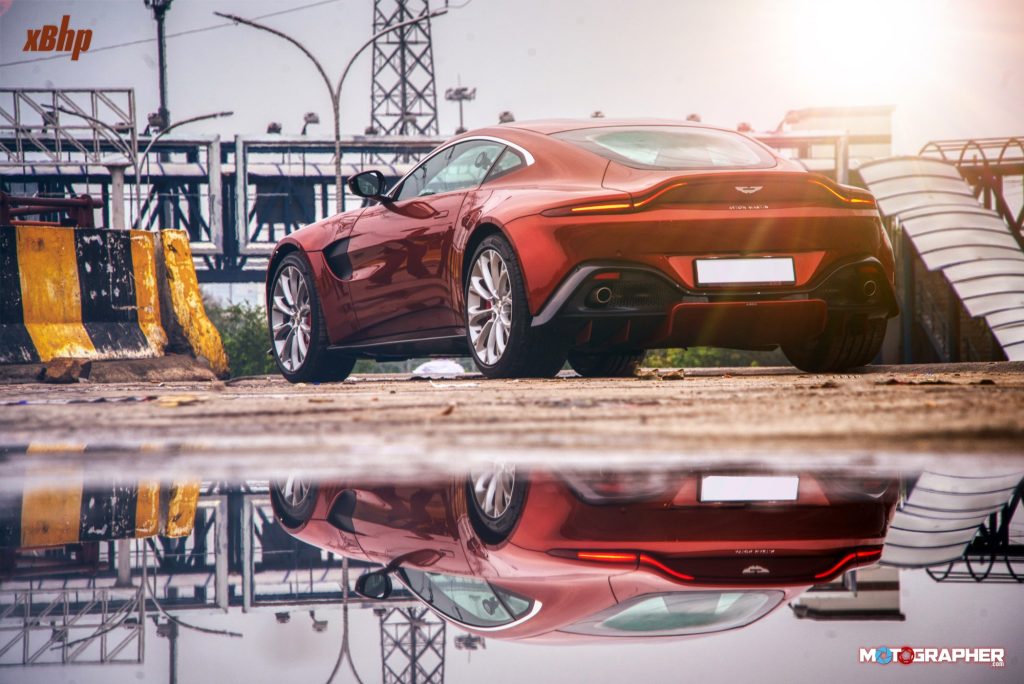
In fact, if you are so inclined, the Vantage is more than ready for some tyre shredding sideways action with lots of smoke. “Theatricality and Deception are powerful tools,” said Ra’s al Ghul. We wonder if Aston Martin secretly let him drive the Vantage even before it was launched, so that he could come up with this, because the insides of the car justify deception here and the things you can do with it, theatricality. And once you drive the Vantage, you can attest to the fact that they are really powerful tools.
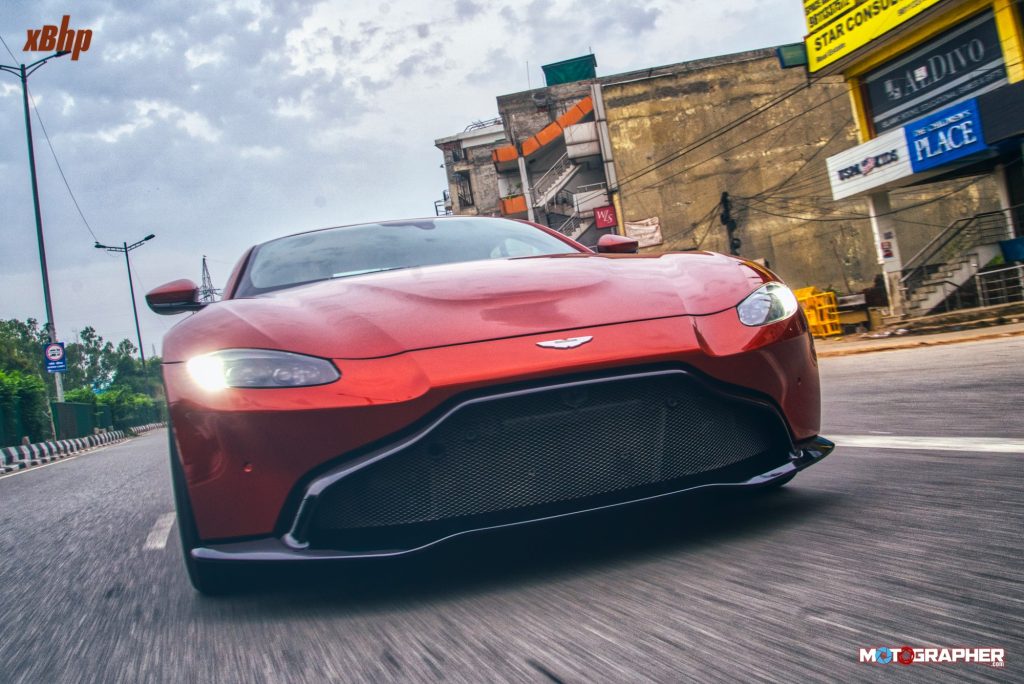
The dynamics of the Vantage have been fine-tuned to make sure that, in true sports car fashion, it holds its line through corners, especially on the racetrack. The brakes are phenomenal, and the steering is full of feedback, and you can easily track the desired line through the bend. There’s adaptive damping and torque vectoring with an E-differential to further accentuate the Vantage’s handling.
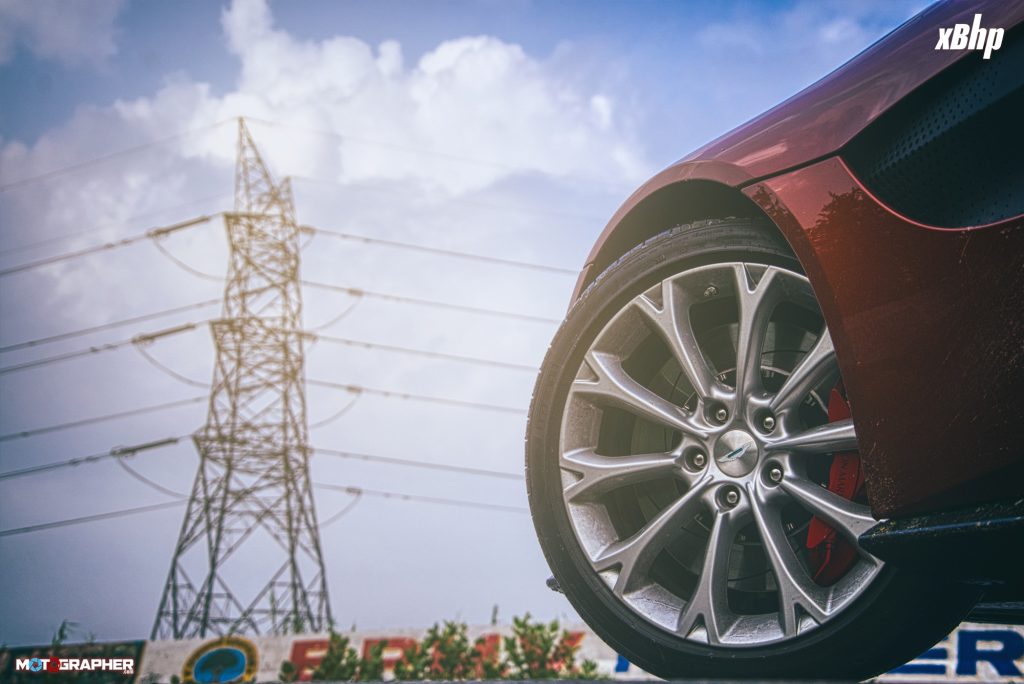
It is a gobsmackingly engaging car to drive and keeps you involved as few things can. Driving the Vantage, and if you are really, really driving, it demands that you’re all in through the thick and thin. And perhaps that is why its close kin won the 2020 24 Hours of Le Mans GTE Pro class.
Now, all of that almost points to the Vantage being a car which is probably too focused. And with the possible suspension settings limited to three modes, namely- Sport, Sport +, and Track, you won’t be wrong in thinking that. But surprisingly enough, with the help of adaptive damping, the Vantage is fairly supple too.
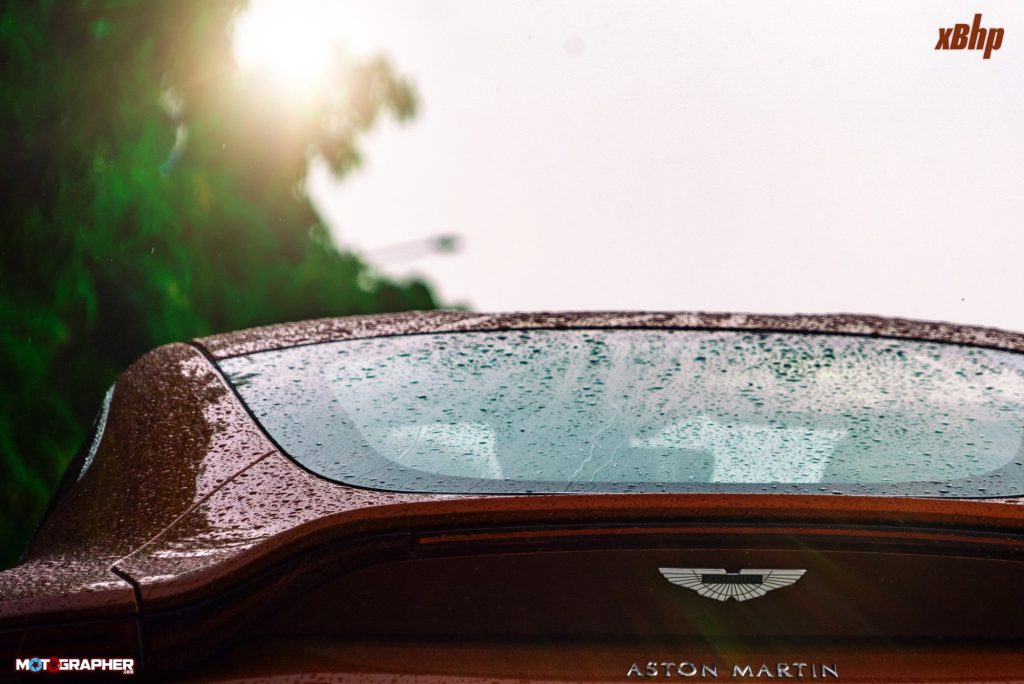
I would go as far as to say that the Vantage can easily be an everyday sports car. As already mentioned, the cabin is supremely comfortable and encompassing, and the ride is moderately supple unless to hit a really bad patch of tarmac. More than that, the same engine that is not meant for the faint of heart can be a darling too. You just let it thrum around and just… take it easy. It can do that too. Not that it’d be happy about it, but it can do it.
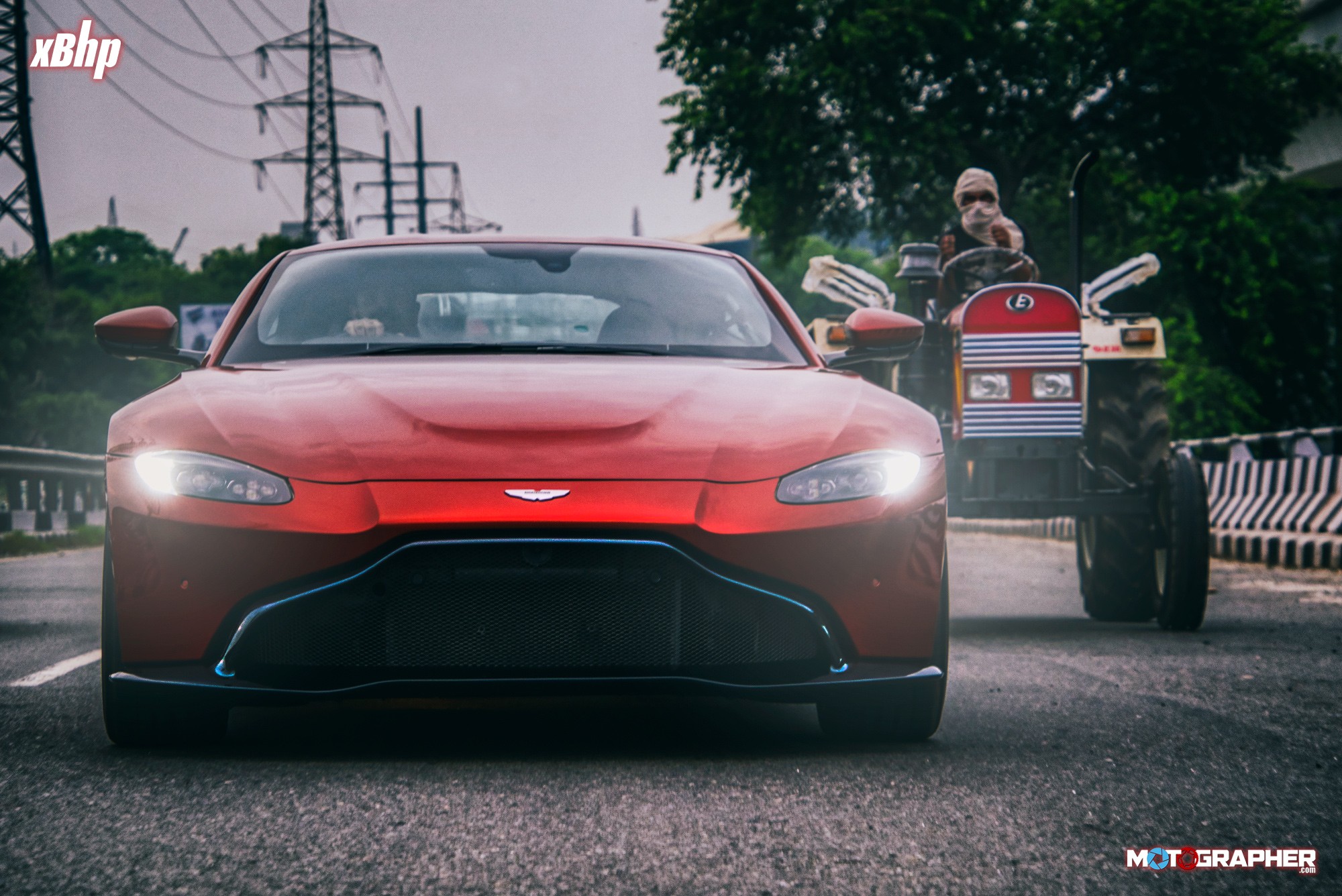
Now, to perhaps the most important point… for most people anyway. What is the point of driving an Aston Martin if it is not the showstopper wherever you go? Well, there’s the driving, but we are humans, and we want attention. Some more than others. And the Vantage gets you plenty. Just look at the thing. How could it not?
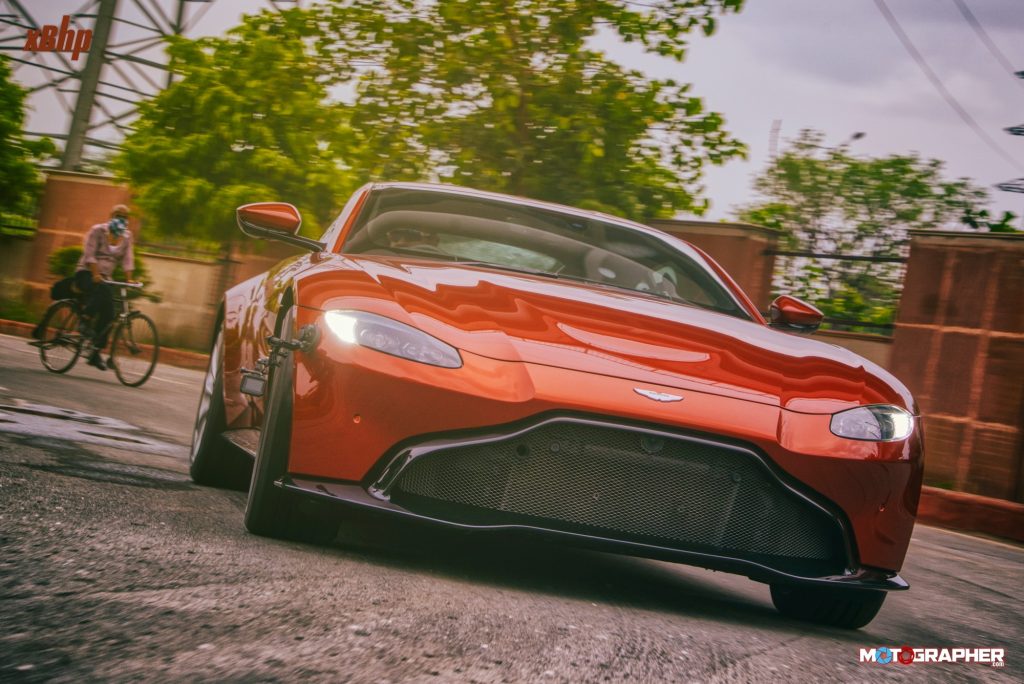
The 2005 Vantage looked really pretty, and the only department where it lacked a little was visual aggression. The current Vantage has that in aplomb. Looking at the overall stance and proportions of the car, it looks lithe, compact, and agile. It has been designed beautifully with execution to match. As they say, the proof is in the pudding, and here, you can see that despite the compactness of the Vantage, it does not look too busy or overdone. It is not trying too hard to pull off an act. Rather, it looks effortlessly sinister.
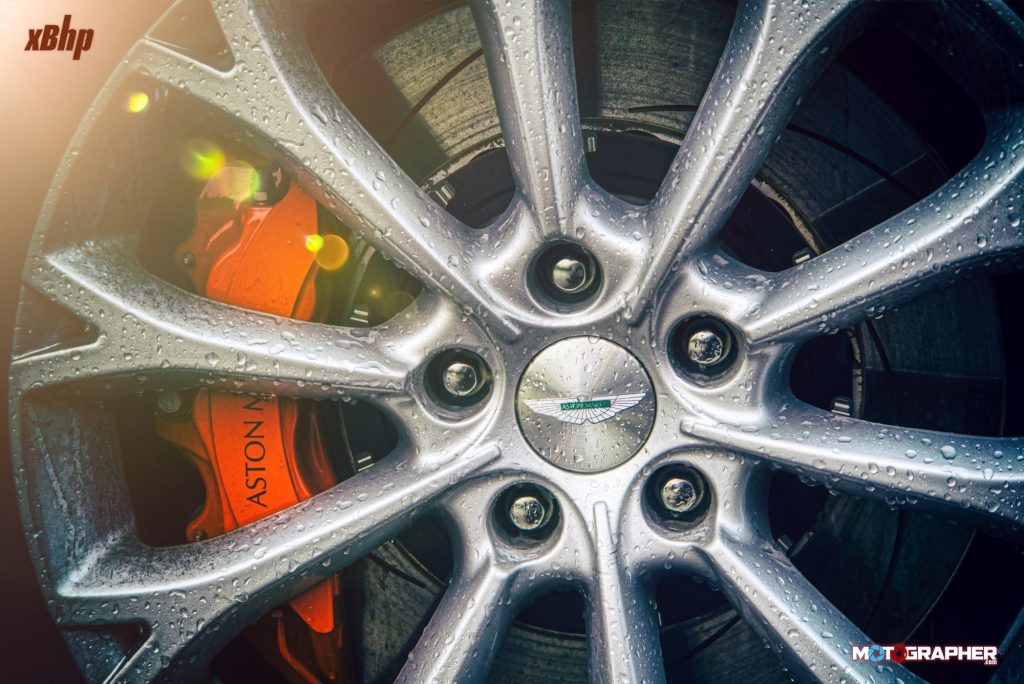
The headlights are slimmer and sharper. With the contoured hood, the front of the car really complements the classic Aston Martin grille, lending the Vantage a subtly aggressive look. The grille is indicative enough of the Vantage being one of the finest Brits if the insignia on the hood is somehow missed.
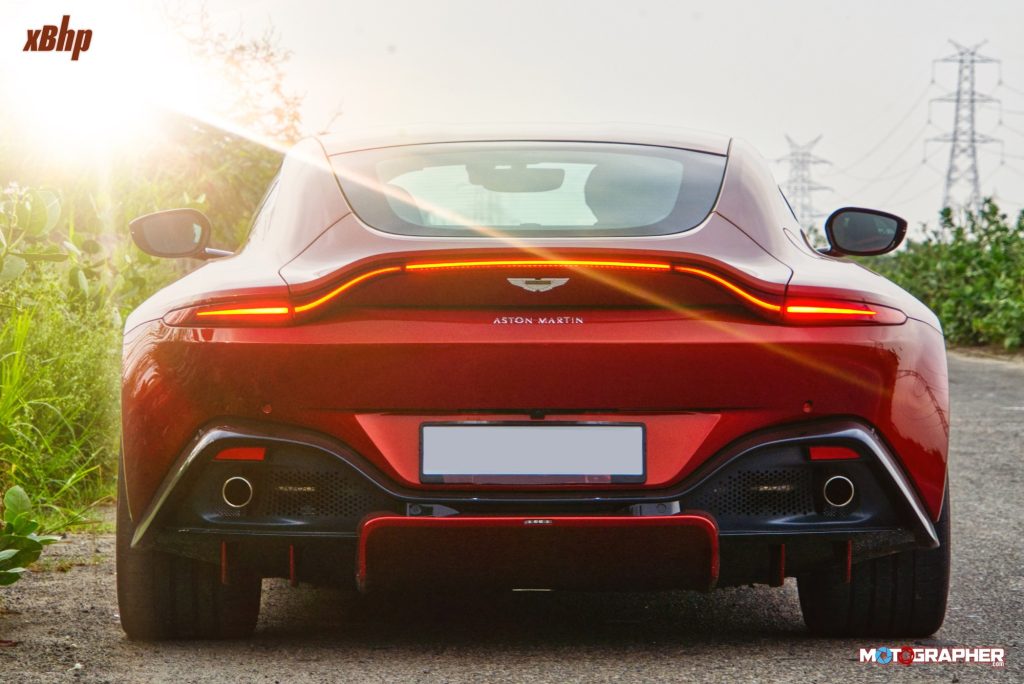
Moving on to the sides, the body panels have been shaped by wind and imagination alike, with the muscular flanks completing a sporty side profile. But the rear three-quarters of the car is where it looks the most special. The slim taillamps and that integrated-spoiler-like snout have graced the Vantage with a distinct look. The exhaust pipes look cool too, and the exhaust note adds another dimension to the visual feast that the new Vantage is.
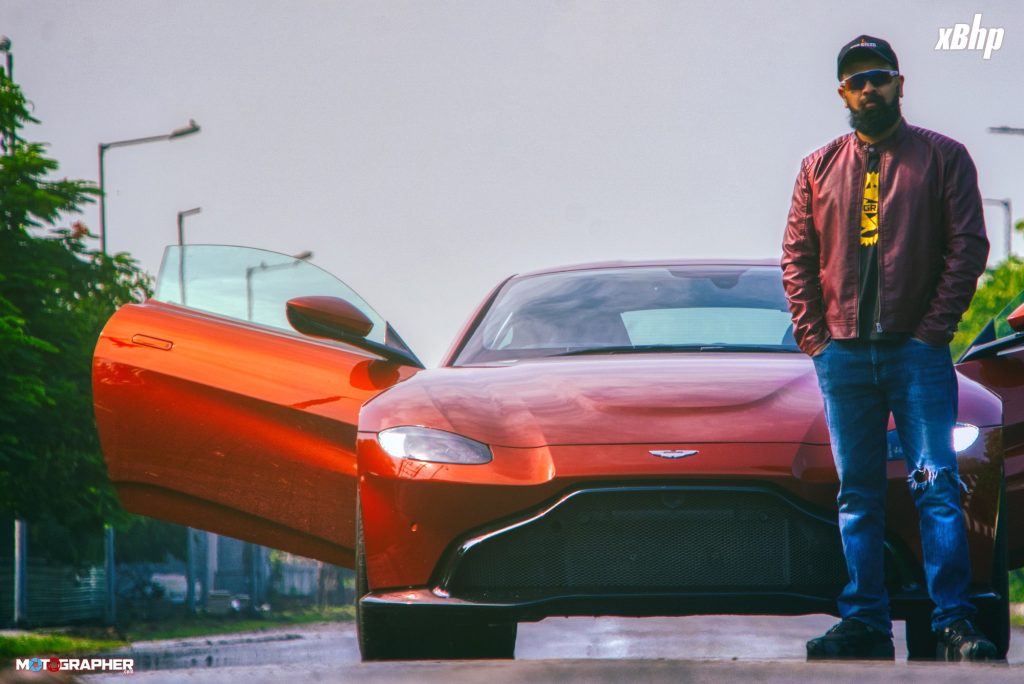
Form follows function or function follows form, but you have to agree that the Vantage’s is some darn form! The Vantage is a car that is very easy to fall in love with because of its scorching looks and fiery performance. But more than anything, it clearly tells you that Mr Martin and Mr Bamford loved one thing more than making cars, and that was… racing.
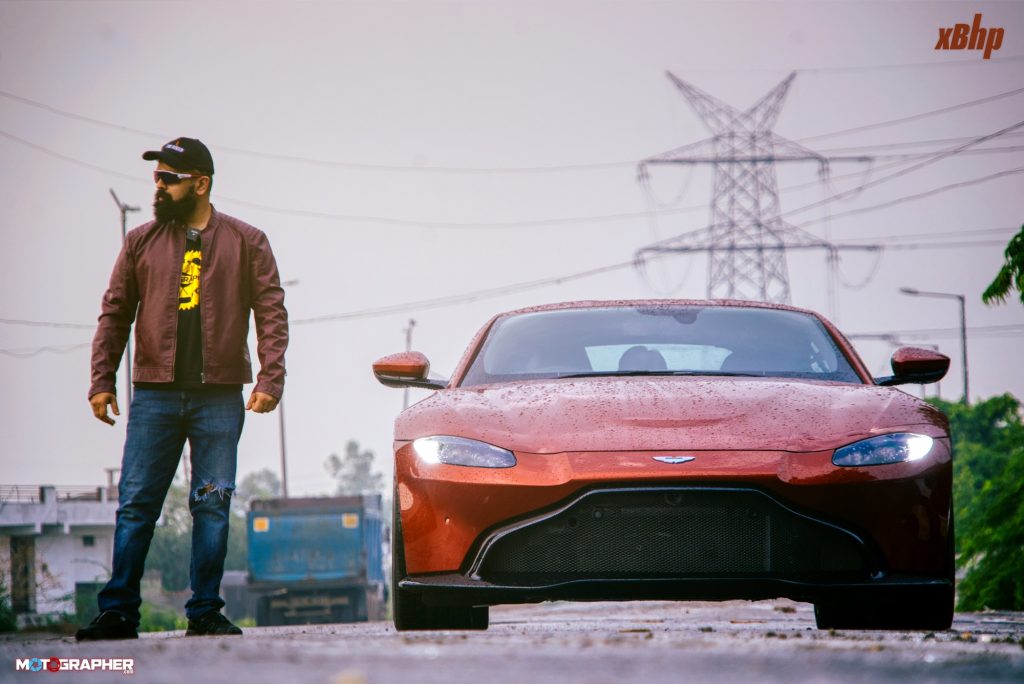
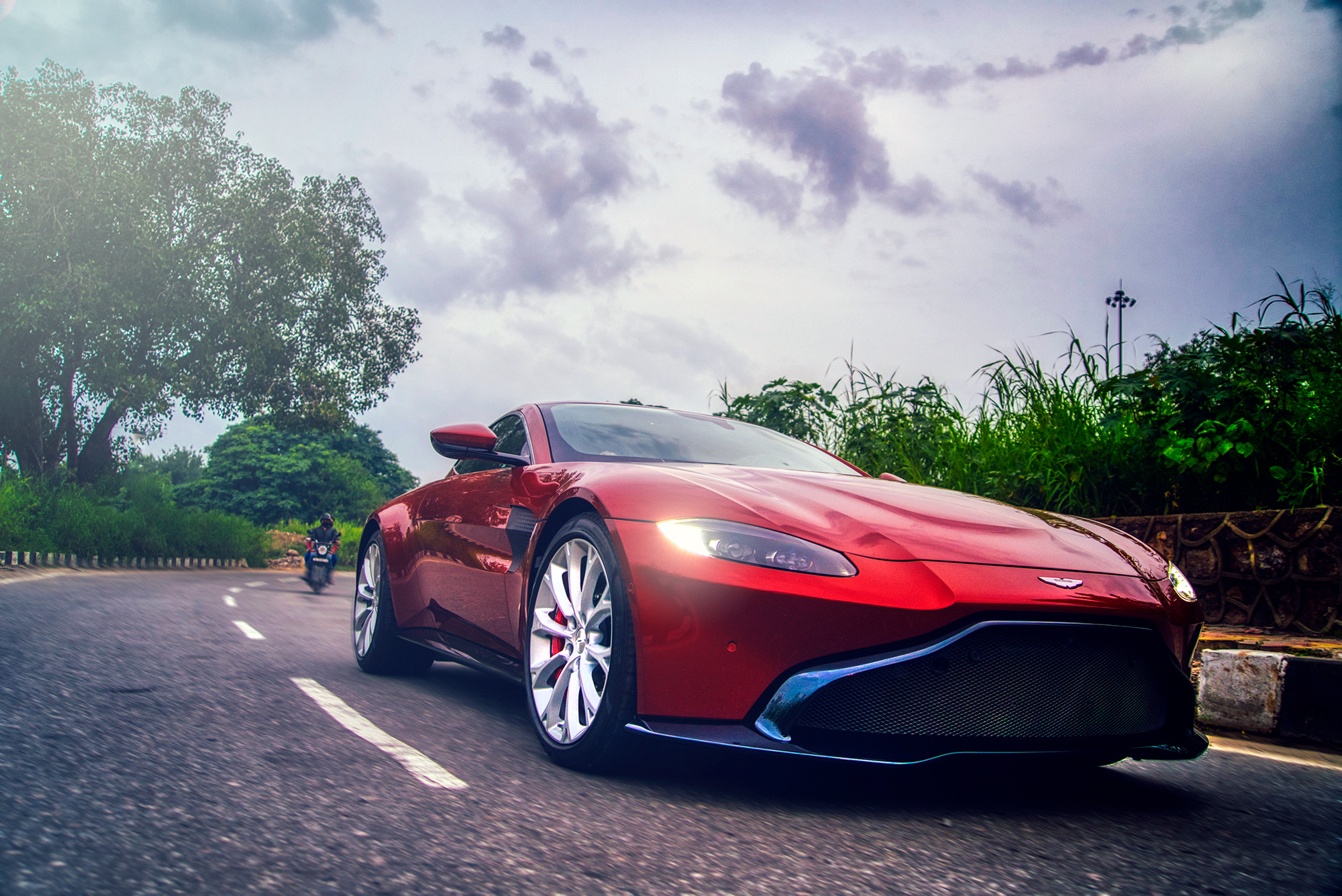
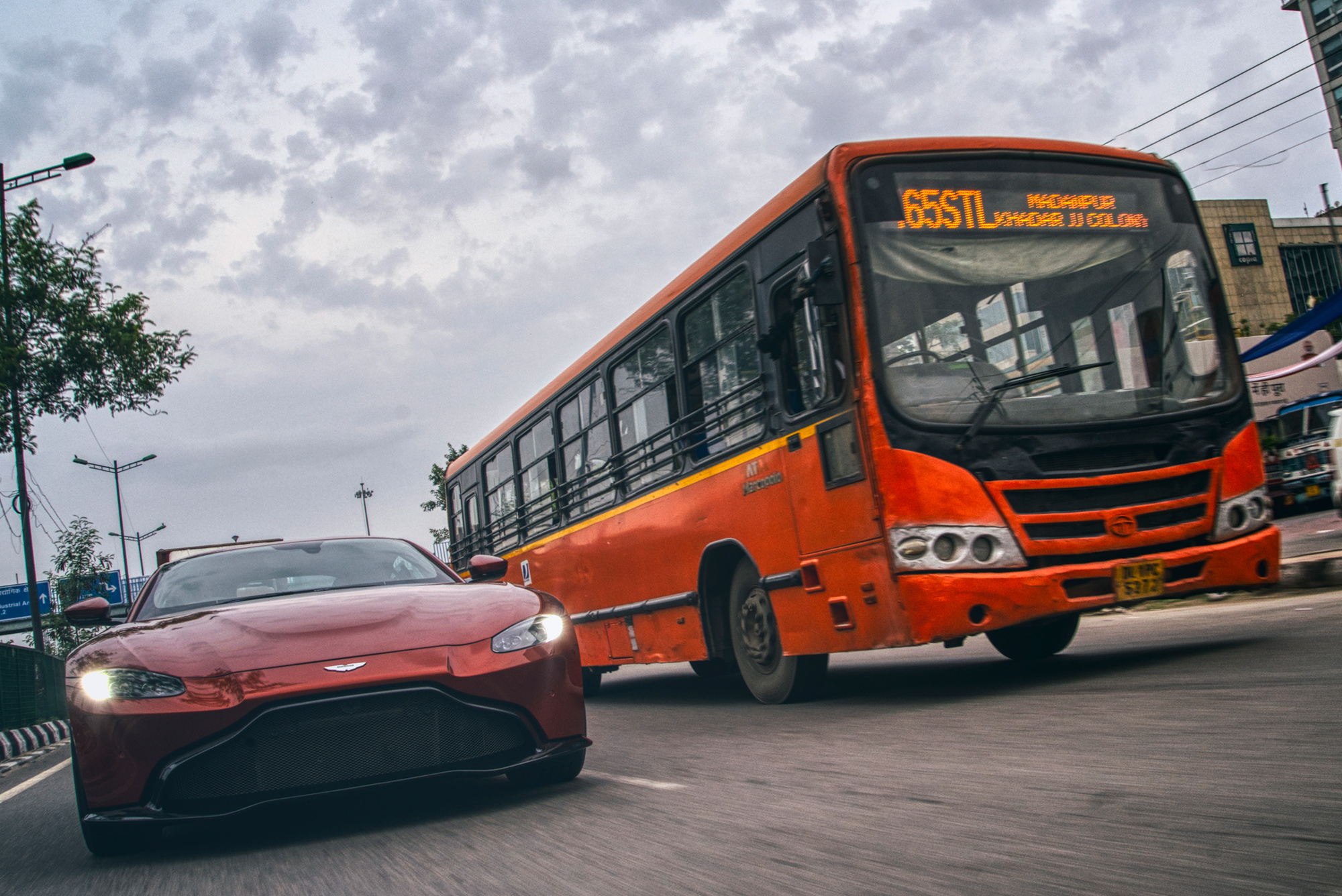
xBhp-InitialD starring Lexus RC F and Kawasaki Ninja ZX-10R
 Nov 2020 Sundeep Gajjar
Cars
Nov 2020 Sundeep Gajjar
CarsAt xBhp, we always strive to do things differently. Yes, we are petrolheads and motorheads but we are artists too. That is why with every article, every experience of a vehicle, we try to bring it to you with a flavour of uniqueness. But sometimes, that pursuit leaves us perplexed. That very thing happened when we got our hands on a Lexus RC F. We looked at it and wondered, “What to do with that?” Then came an idea.

Before the mountain pass racing and drifting culture came to be known by flashy neon lights, skimpy clothes, weirdly catchy music, and, Americans, of course, it was known by something much simpler and way more effective. Initial-D, a name so popular that after its start with a Manga, it spawned an anime series and even a live-action film!
Not all of us are big on anime but InitialD offers more than a few reasons to love it. The most obvious one is its automotive connection. Then there’s the old-school Nintendo-ish music, the technical correctness and authenticity. And last but not the least, the story.

It is a regular underdog story. But the essence is in the fact that a regular kid who drives his regular car every day, relentlessly, is better than pros in their flashy high-end cars. Interesting? Absolutely. Inspirational? We are kinda recreating it, aren’t we?
About the recreation, the original had serpentine roads in the mountains. We have those too. The protagonist’s driving was centred around Tofu. We have paneer. But a car like Toyota AE86 Sprinter Trueno or Hachi-Roku? That’s a tough nut to crack. But the Lexus RC F and all we know and got to know about, sort of makes it fit the occasion. Why?

527 Nm of torque means grunt. Rear-wheel-drive means sideways fun. A spoiler and a carbon-fibre hood mean a lot of Japanese Tuner culture reference. And Lexus? Well, it is much closer to Toyota than we think it is. But xBhp’s first love will always be motorcycles and we never make do without one. So let us tell you about another Japanese Shinshi who’s joining us. ZX-10R Ninja-san. We’d like music at this point but you’ll have to imagine it.
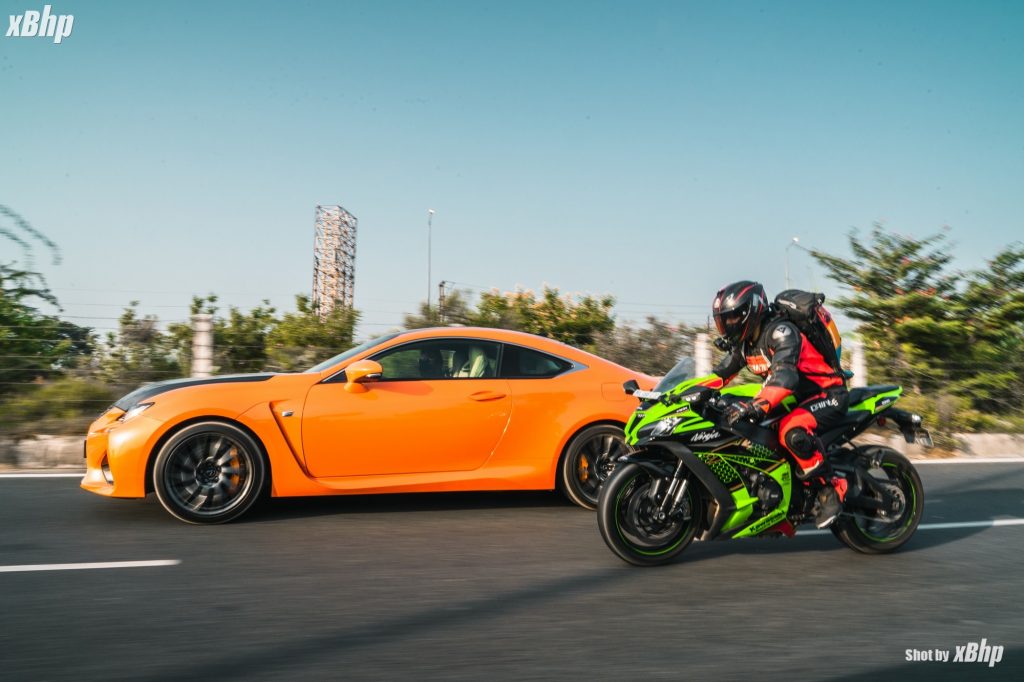
Let’s start with the looks. The Lexus RC F looks a little confusing. On the front, the headlights look beautiful and so do the sharp DRLs. The problem is that they look a little small and as a result, a bit disproportionate. It is further accentuated but the beautifully sculpted signature Lexus grille. It does not feel that way if you look at it dead-on but any other angle, it’s apparent.
We think the fault lies with the bulging hood and the accompanying wheel arches. The carbon fibre hood looks really cool and the same goes for the scoop. This colour also really brings out the sheen of the carbon fibre which is there on the roof too. We just wish the front was a little sleeker to go with the headlights.

Fortunately, that is the only issue and that too, dependent on personal preference. Apart from that, the Lexus RC F is surely a looker. The side profile is beautiful with the design lines complementing the coupe roofline really well. The wheels are a piece of art and they belong in an art gallery. They’re that beautiful.

Towards the rear as well, this car is a sight to behold. The lip on the trunk is a delight to look at from the side and the taillight also follows a sharp and confident design theme. But the mufflers take the cake here. Four pipes, two on either side, stacked on top of each other but slightly offset. The speed activated spoiler is also a thing of beauty but one that you’ll only be able to behold if you can catch up.
Let’s talk a little more about the design and Lexus’ philosophy here. First, there is the F philosophy. It is all about sportiness and making cars that are not reliant on ‘big numbers’ alone. It is more about evoking emotions when the car is being driven… hard! Then, there’s the Takumi craftsmanship which is responsible for every Lexus being, well, Lexus.

There is a reason why Lexus cars feature one the best fit and finish be it the exterior or the interior. There is a reason why Lexus cars have one of the best reliability ratings in the industry. There is a reason why you can perceive all that even in brief glances. Takumi is Japanese for an artisan but it is much more.
While it takes 10,000 hours to become an expert, Lexus states that it takes 60,000 to become a Takumi master. That’s… superhuman. But then, Takumi craftsmanship is the reason why Lexus cars are being held in such high regard. And the F philosophy is what lends the sportiness and the intent to the F series cars such as the Lexus RC F.
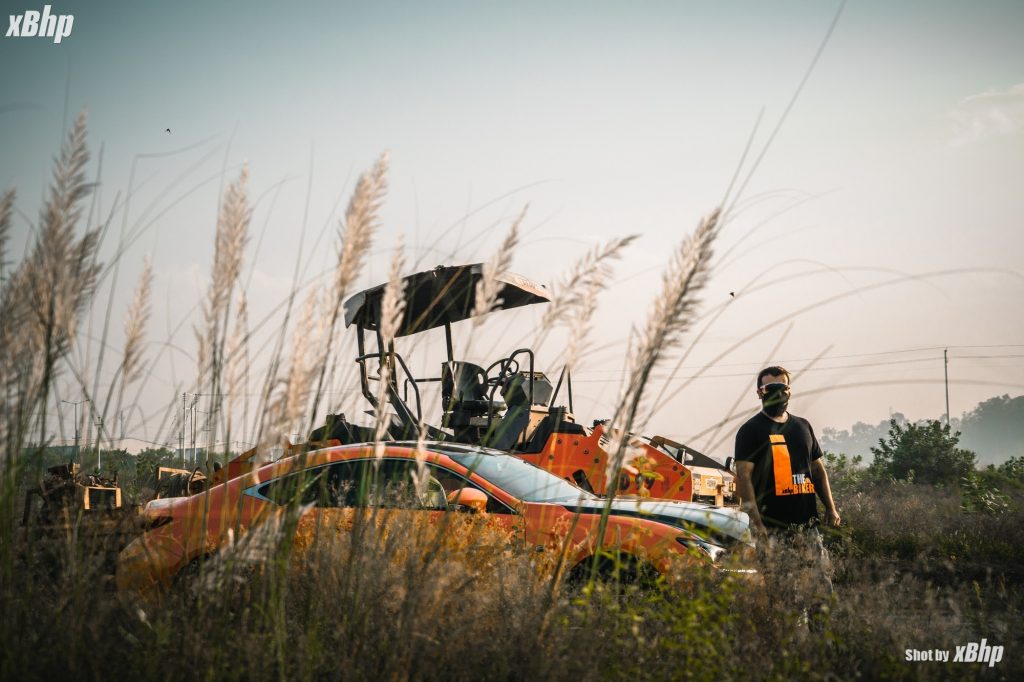
We were beyond impressed with the attention to detail and the finesse with which Lexus makes their cars. Even something as insignificant as the operation of the door handle or closing the doors feels like a rich and premium experience. The Lexus RC F may be a sports car but it is a Lexus too and it shows on the inside.
The Lexus LFA is widely regarded as an almost Legendary supercar. Engine, performance, handling, track cred, it had it all. But despite that, it had an interior one could live with and be happy in. The same goes for the Lexus RC F. Despite its sporty intentions and track-developed focus, it is still a car that can teach you a thing or two about opulence.

The cabin is roomy and lined with Alcantara, premium leather, and carbon fibre. Yes, there are seats at the back but it is not meant for humans. It is a coupe, and that’s a given so better leave it for stuff that you just bought and people you don’t like. The boot is a bit tricky too. But hey, those things aren’t meant to define cars like the Lexus RC F.
Keep your focus on the front and everything feels as premium as it can get. The car is also loaded with tech. A huge infotainment touchscreen, Bluetooth and so on. There’s a power moonroof too and the list just goes on. The point is, this car can easily pass off as a luxury sedan if you drive yourself and have one passenger at the most. There’s even an analogue clock in the centre of the dash. Touché.

While those things and the craftsmanship that is needed to execute them are exemplary, they aren’t the best things about the interior. That honour goes to the driver’s seat. The Lexus RC F has the best seats we have ever sat in… ever. Why?
Not because they are heated, ventilated and extremely comfy. Not because this car has a kickass music system (again, one of the best) and the seat is the perfect place to sit and listen to songs. It is none of that. The seat is just very… natural. Very organic. The seating position, the reach to the steering and the feeling of a racing bucket seat. It just feels like a proper driver’s seat and that… is awesome.

Push the starter and you realize that Lexus also makes silky-smooth engines. Silky smooth and high-revving. The internet is full of Lexus LFA’s engine which is also known to produce perhaps the best automotive sound. The Lexus RC F has a 5.0-litre naturally-aspirated V8 that can rev up to 7,300 rpm.
Blip it and you realize that while it is not in the league of the LFA (we think nothing can be), it still sounds really, really good. It has a sort of duality to it. In the lower-revs, there’s a murmur. A little bit of a foreword. Rev it up to the redline and it is a proper raspy growler. Refined, smooth, and not too loud. But a growler.

467 bhp of power and 527 Nm of torque are no joke. 0-100 km/h in 4.4 seconds and a top speed 270 km/h isn’t one either. This is a serious car and if you put your foot down, it shows. The acceleration is a revelation because all the time you spend admiring the interior and the sound of the engine made you forget that this is a serious car!
The 8-speed Sport Direct Shift Sequential Transmission with Manual Mode and Paddle Shifters is a joy to go through. Considerably more than going through that name. The gear changes are quick in Auto but the Manual is a little more fun because it is a little more organic. And also because you can hold the revs to listen to the glorious V8 sing away.

The engine oozes of grunt and God knows that we all love rear-wheel-drive. There are not a lot of things more fun than the rear kicking out a little when you are being adventurous. Being on the edge of control with the tyres squealing is the closest to God you can get. Literally too! And the RC F can do that.
It can go around corners fairly well and handle even the rowdiest of drivers. There’s no supercharger or turbo grunt but the RC F makes up for that with a precise throttle and you can keep it pinned through a corner because the power delivery is linear. It won’t present a sudden peak to unsettle the chassis… or the driver.

It is aerodynamically efficient and there’s a speed activated spoiler to further enhance downforce at speed so it can handle those numbers too. There’s also an optional Torque Vectoring Differential to further boost the Lexus RC F’s track credentials and prowess. But that’s about it… you know… this is where the organic-ness of this car as a sportscar kinda fades.
So what’s wrong? Well… Soul. You see the RC F looks like a sportscar and goes like one too… but it’s a Lexus. And in the form of an RC F, it is confused whether to be rowdy like a sports car or composed like a… well, Lexus. It leans towards the latter.
It is a little on the heavier side and the weight distribution is not ideal either as it is a little front biased. That introduces a little understeer and that is why it just does not feel as engaging as, say, an M4. The RC F is heavier, a little less quick, and… a tad less engaging.

It is not that Lexus does not know how to make sports cars. If you think so, it’s blasphemy. Those who know the LFA and even more so, those who have driven it, know that it was a proper, supercar! That was Lexus’ passion showing its mad and obsessed side. The RC F though is a tad too much of a goody-two-shoes to be… extreme.
So is it a bad car? Hell no. No Lexus ever is. It is a very civil and very comfortable car. It glides over bad roads and the interior is heavenly. Drive an M4 Competition around town or on bad roads and it gets on your nerves after a while. But then, the M4 is not meant for that.

And that’s the problem. The RC F does not know what it is meant for. The sportier modes do add a little more oomph, more noise, more action… but probably not enough. It is a jack of all trades but it is troubled in the sense that it does not know where to go…
Well, the tofu… err… Paneer run is nearly over. And in trying to figure out what the Lexus RC F is all about, Ninja-san has accumulated quite a bit of lead. It needs to be caught and there are some paneer sandwiches to be made. We’ll just let the Lexus RC F figure out who it wants to be…

(Phone rings)
Lexus: It already has.
xBhp: What do you mean?
Lexus: For 2021, there is going to be a Track Edition for the RC F. Psst… it has a fixed rear wing and it weighs much less.
xBhp: … Eurobeat?
Lexus: Yes.
P.s. This was not a race but just a fun take on the RC F and IntialD. So take our advice and do not race on the roads because you don’t want to be too close to God.

Kawasaki Ninja ZX-10R
Now we did mention that Ninja-san built up a considerable lead, right? That’s because the new ZX-10R is a phenomenal motorcycle. The thing that Kawasaki has been able to achieve with the new ZX-10R is that it is a great base. In the stock trim, it is a really fast motorcycle that is pretty easy to live with. Riding often happens often due to the easygoing nature of the engine and the setup.
On the road, the 998cc inline-4 delivers the power in a linear manner. That translates to usable performance in the city albeit it needs the gearbox to be worked a little. Show it some open roads and it can accelerate with the ferocity that one expects from a superbike. Nothing with the ZX-10R is extreme. Nothing about it is intimidating even for relatively newer riders. And for that reason, the ZX-10R can be a great learning tool if someone is inclined towards motorsports.

But as we said, the ZX-10R is a fantastic base. 200 bhp (210 with RAM air) and 114.9 Nm of torque ferrying 206 kg of kerb weight mean the motorcycle has got more than enough juice for track days. A few add-ons, a couple of tweaks is all you need to turn it into a proper track weapon. There is a reason why Jonathan Rea and Kawasaki dominate the WSBK and riding the ZX-10R once is all you need to get to know that reason.
But most importantly, the graphics, the signature green, and a design that has stood the test of time lend it a beautiful look!

Husqvarna’s quarter-litre quiver: Vitpilen 250 and Svartpilen 250
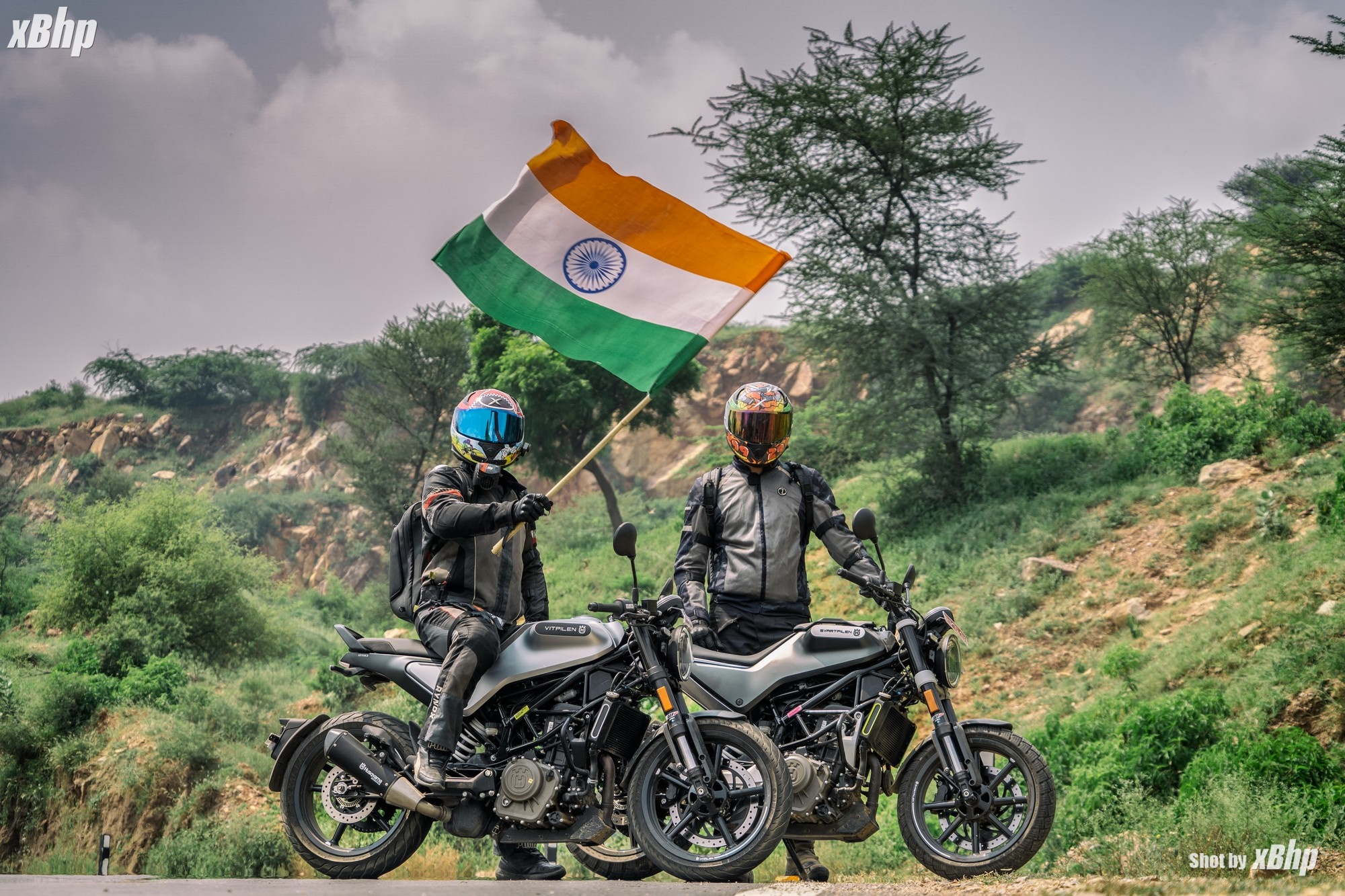 Nov 2020 Sundeep Gajjar
Bikes
Nov 2020 Sundeep Gajjar
BikesThere was a time where 250cc was considered to be the performance segment in India. We had the venerable Ninja 250R as the lone wolf in the category with only significant competition from CBR 250R. There were a few more but nothing that could so much ‘define the category. Fast forward to today when 250cc is still kind of a premium segment but the contenders for the category are quite a few. Peculiarly, most of them originate from Pune and 2 of those are our test subjects here. The ‘Huskies’ are here and to celebrate, we went out on a little date with the Husqvarna Vitpilen 250 and the Svartpilen 250.
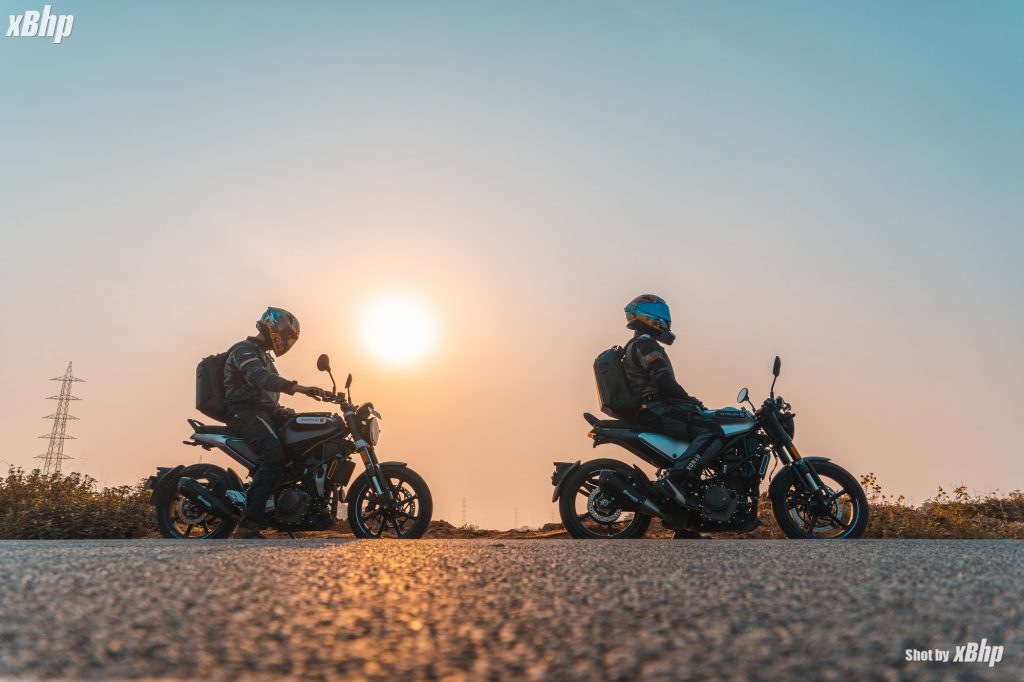
A little background first. Husqvarna is a Swedish brand which may not be a very well recognized brand in India but is immensely respected around the world. Since they started manufacturing motorcycles in 1903, Husqvarna was considerably successful in road racing and resoundingly so in off-road racing. They continue to produce some very popular enduro and off-road models to date.
If you want a little more history lesson, we’ve got some below. If you simply want to know about what the quarter-litre Huskies are like and be on your way to the showroom to pick one up, you can skip to the review.
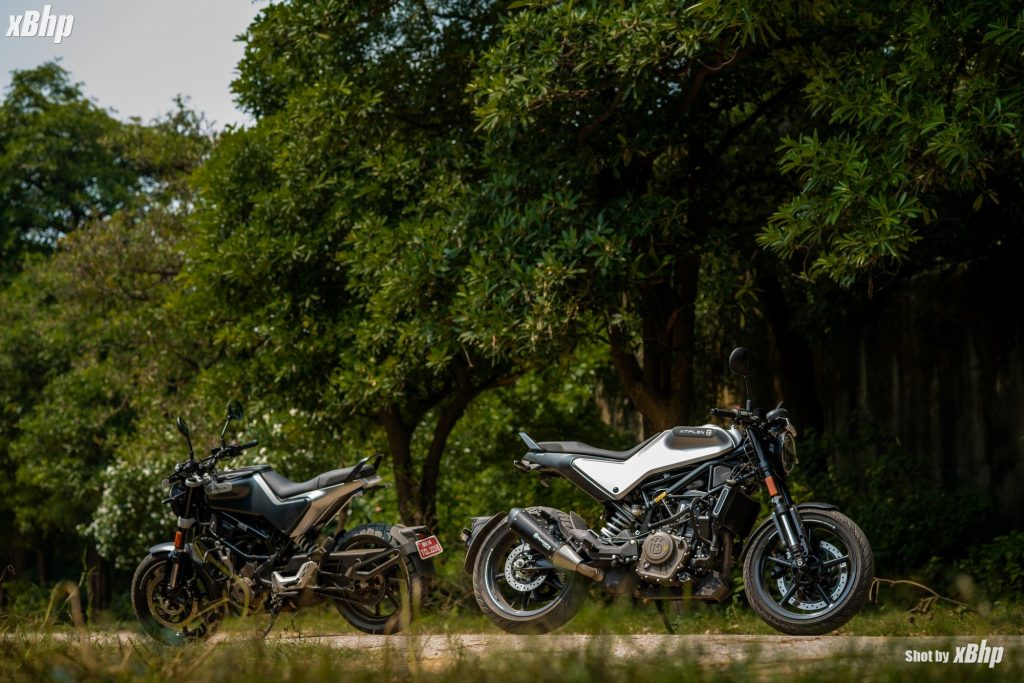
Husqvarna – Brand History
Husqvarna started manufacturing motorcycles in 1903 but the brand itself is older. Before motorcycles, they manufactured firearms and therefore, the logo which is actually the sight of a gun. Husqvarna made a name for themselves in motorsports. In the 1930s, they were a dominant force in road racing and they have been more than that when it comes to off-road racing.
Around 14 Motocross world championships across various classes and 24 enduro world championships are a testament. In fact, off-road motorcycles are the reason why Husqvarna is a renowned brand all around the world. The Silverpilen, a spiritual predecessor of the Vitpilen and Svartpilen is one of the best motorcycles ever made.
Throughout their history, the ownership of the brand has changed hands a few times. It was first acquired by Cagiva. Post that, BMW group acquired Husqvarna. That was the time when Husqvarna manufactured the Nuda. An immensely capable yet underrated motorcycle, the Nuda was a crossover between a streetfighter and a supermoto.
After BMW, the brand was acquired by KTM and it remains that way to date. After the acquisition by KTM, Husqvarna introduced the prototypes of Vitpilen 401 and the Svartpilen 401 in 2014. The 701s were revealed in 2015. Currently, these 4 along with the 250 Huskies form the White Arrow and Black Arrow range.
Important note: Hooskvarna is how you pronounce it.
Looks
Now, talking from a personal standpoint, we were already fans when the Huskies were shown off at IBW not too long ago. Though a little off-put as we expected the 401s and we got the 250s. But we were still fans because it was never about the engine now was it? It was the presence, the design, the purpose, the intent… the very character of the Vitpilen 250 and the Svartpilen 250 that got us. It seemed like they almost possessed a soul.

If we are being honest, we like the Vitpilen 250 better than the Svartpilen 250 but that is down to personal preference. Just like our admiration for the Vitpilen 250 and Svartpilen 250 is. But we’d stick our necks out and say that they possess an almost universal appeal. After all, we have experienced it firsthand. Countless people on the roads asked us about the bikes.

As we mentioned earlier, not a lot of them knew the brand, but the bikes… those they really wanted to know more about. We think the magic we see here is down to minimalism and to some extent, nostalgia. The design of the Vitpilen 250 and the Svartpilen 250, the former more so than the latter, reminds one of the days when motorcycling was purer (Being smart. Using relative degrees. Not triggering people).

Cafe racer, retro, or neo-retro. There are many words that can be thrown around to explain the design of these bikes and they work too. But for us, it is about evoking emotions. Emotions stemming that stem from the memories of the days when motorcycles were stripped down to bare essentials and were only meant to go faster. Of course, from one cafe to the other. We weren’t there but we know bragging rights were on stake and there are few things more important than that.
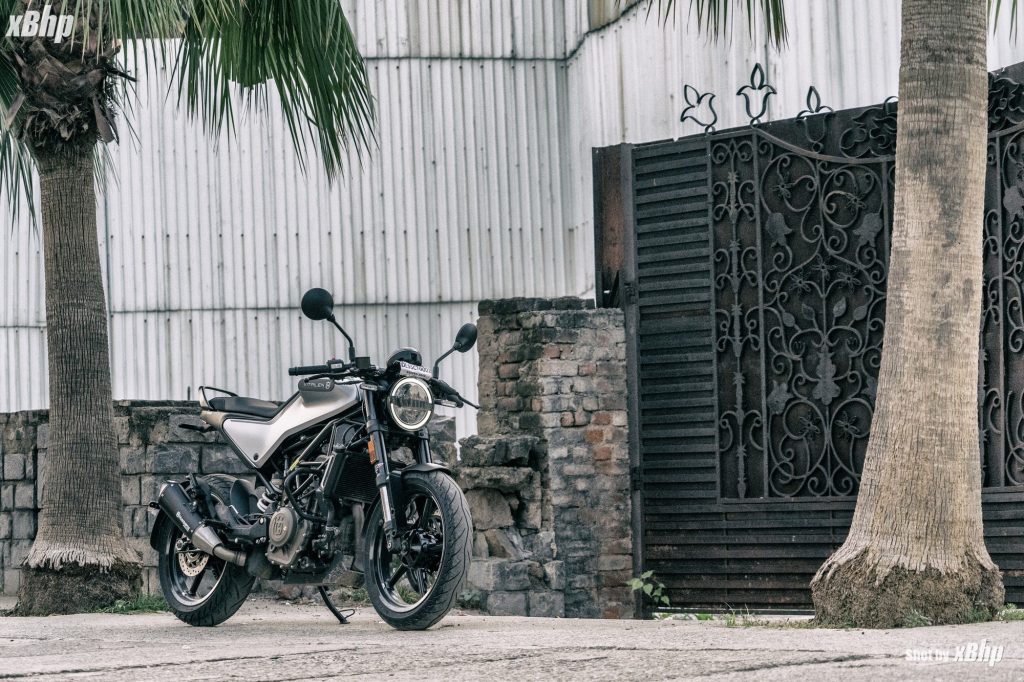
Anyhoo, hopping off the nostalgia train at the reality-check station, let’s talk about the motorcycles at hand. The Vitpilen 250, it sports a cafe-racer approach with its design and the Svartpilen 250 tries to pull off the Scrambler act. We know about cafe-racers, and we know about Hare Scrambles too. Google and you’ll know.

Despite the different approaches, both the motorcycles look quite similar with only a few differentiating factors. The obvious (and not so much) one is the colour. Vitpilen means White Arrow so it sports a silver colour and the Svartpilen means Black arrow so it sports a dark grey shade. Don’t ask.
Continuing with the similarities on the motorcycles, the body is wrapped around a KTM-special trellis frame. Less is more is the theme and that is why one panel covers the tank and extends from there to form the side panel and another one from there to the tail… and that is it. Kiska design has done a fantastic job in designing these motorcycles and also, in differentiating them from the very loud KTMs.
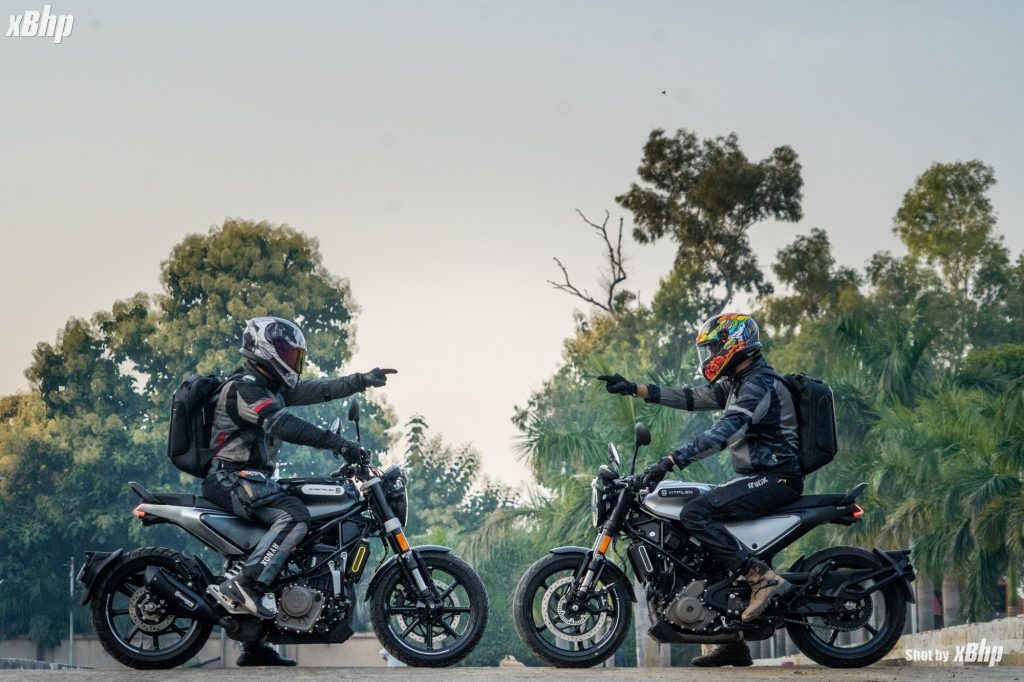
The front of the bikes is dominated by the round headlamps but they are all LED units with beautiful DRLs that represent a seamless mix of modern and retro. The same goes for the round LCD cluster that shows you a whole lot of information which is rarely hard to read. We say rarely because the numbers of the rev-counter are not a part of the display and they are not illuminated either.
So while the front looks mesmerizing, the side profile is a little polarizing. The problem is that minimalism was somehow not capable enough to hide the mess of cables and hoses as they protrude in all their glory. It is not so bad but it feels bad that a near faultless design is dragged down by something like this.
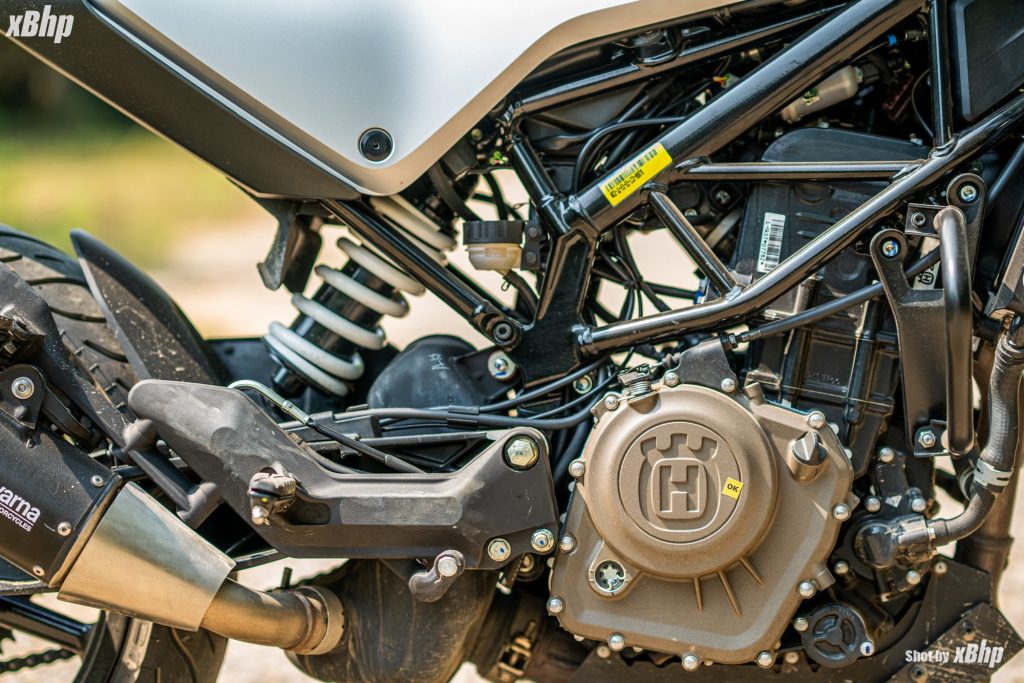
Things get better at the back as the all-LED tail lights and blinkers are executed to emanate a tail-tidy vibe. The number plate holder resides at the tyre hugger which surprisingly, does not look out of place. It is perfectly fine if left there. The same cannot be said about that grab rail though. It is just plain ugly and needs instant removal.
Coming to the differences between the Vitpilen 250 and Svartpilen 250, some are subtle and some are pronounced. Vitpilen 250 sports clip-ons and the Svartpilen 250 gets a single-piece handlebar and is more upright. Pronounced. On the sides of the radiator, the Vitpilen 250 has a white highlight and the Svartpilen has neon-green. Subtle.
The tyres on the Vitpilen 250 are the road-oriented MRF Revz FC, and on the Svartpilen 250, Revz FD, with a somewhat dual-purpose design. Pronounced. The alloy wheels of the Vitpilen 250 are 5-spokes and on the Svartpilen 250, 8-spoke. Subtle. The Vitpilen 250’s tank is bare and that of the Svartpilen 250 sports a luggage rack. Pronounced. The seat on the Svartpilen is split (barely) and the Vitpilen 250 gets a single-piece. Subtle.
Those are the major differences between the two but overall, we believe that the quarter-litre Huskies are very good looking motorcycles. In fact, the style alone would compel one to get one of these over the Duke 250 or the Dominar 250 despite all 4 sharing similar underpinnings.
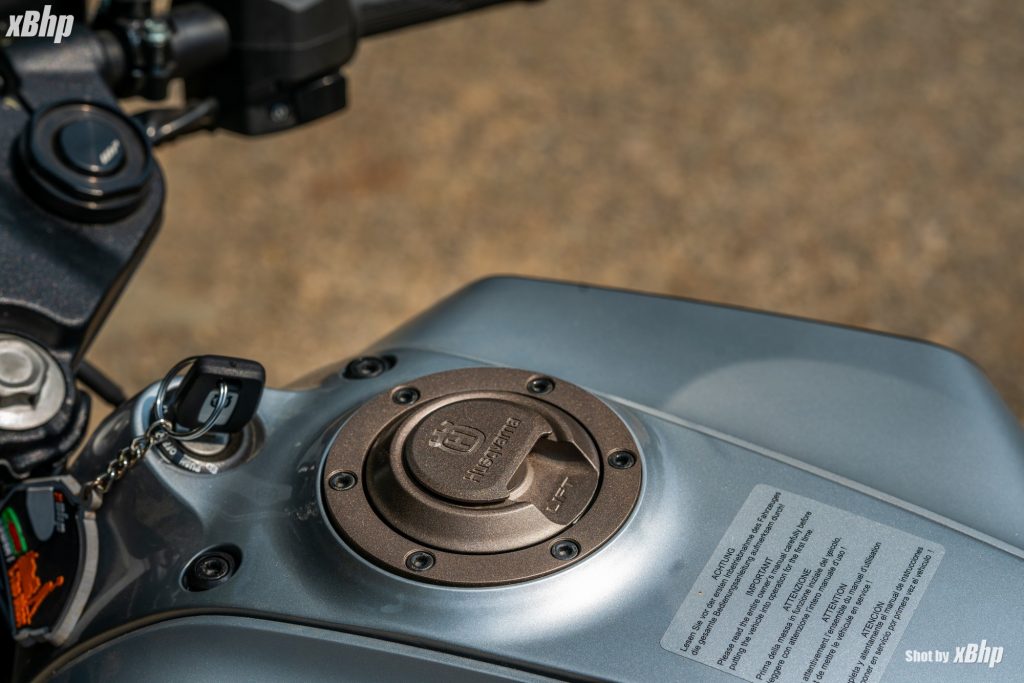
The fit and finish are quite good except those cables but the attention to detail is commendable. There are some cool bits like the bronze-y fuel cap with an embossed Husqvarna logo. In fact, the logo finds itself in quite a few places but the most peculiar was the embossed one of the wheels. And one has to love the pinstripe on the wheels.
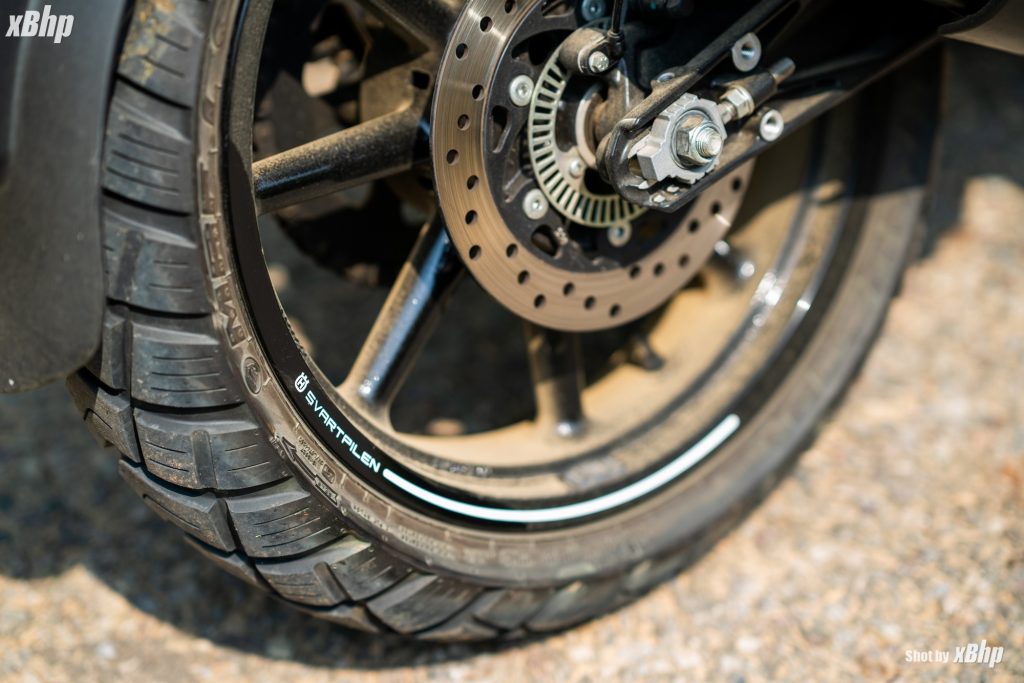
Overall, the Vitpilen 250 and the Svartpilen 250 go on to show everyone that it is not necessary to go overboard with panels and stickers and colours. Thoughtful and tasteful execution of a simple and minimalistic design with flowing lines can get the job done easily. Made up your mind about getting one yet? Because that was the best part. We do not say that in a negative sense but in one that what’s coming now is close to what you already know.
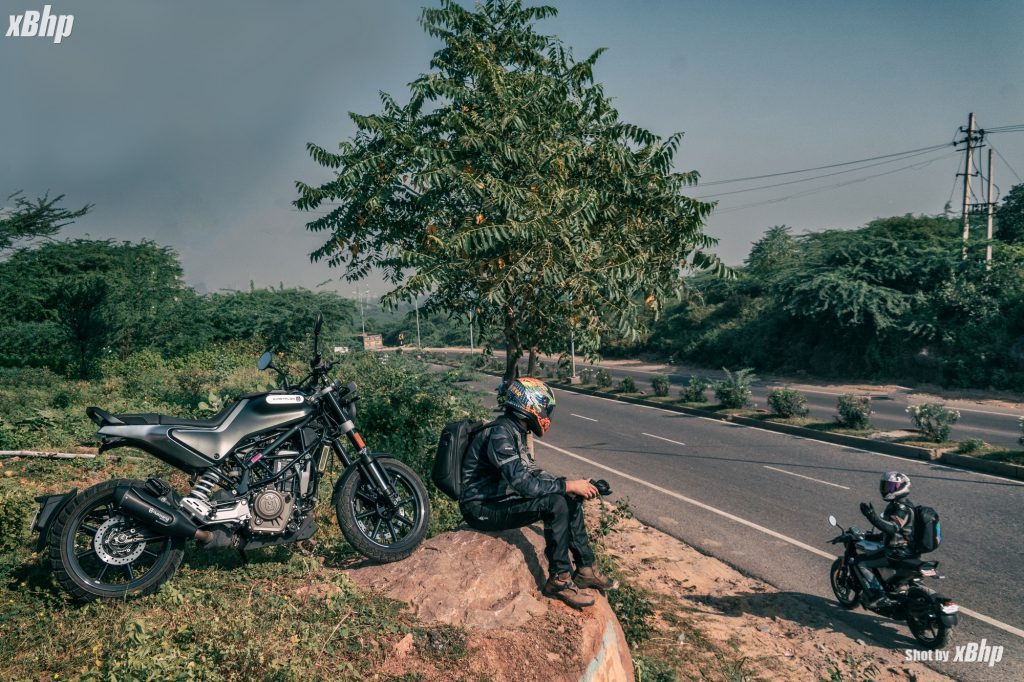
Performance
Remember what we said about most of the quarter-litre contenders coming from Pune? Well, that is because the KTM 250 Duke, the Bajaj Dominar 250, the Husqvarna Vitpilen 250, and the Husqvarna Svartpilen 250, are all powered by the same engine. And the similarities don’t end there but let’s focus on the engine first.

‘Same engine’ may put some off but it isn’t really a bad thing. The KTM 250 Duke’s engine is a loved one and for good reason. The eager and lively 248.8cc liquid-cooled mill is a good match for the Vitpilen 250. The drivetrain similarities go down as deep as the gearing. Anyway, the Vitpilen 250 makes for a fun motorcycle to ride.

There is 31 bhp of power and 24 Nm of torque on tap. Combined with the light weight of the bikes [153 kg (dry) for the Vitpilen 250 and 154 kg (dry) for the Svartpilen 250], the performance feels punchy. But the engine is somewhat peaky so these Huskies like to be revved. The juicy chunk of the performance is available in the mid and top end.
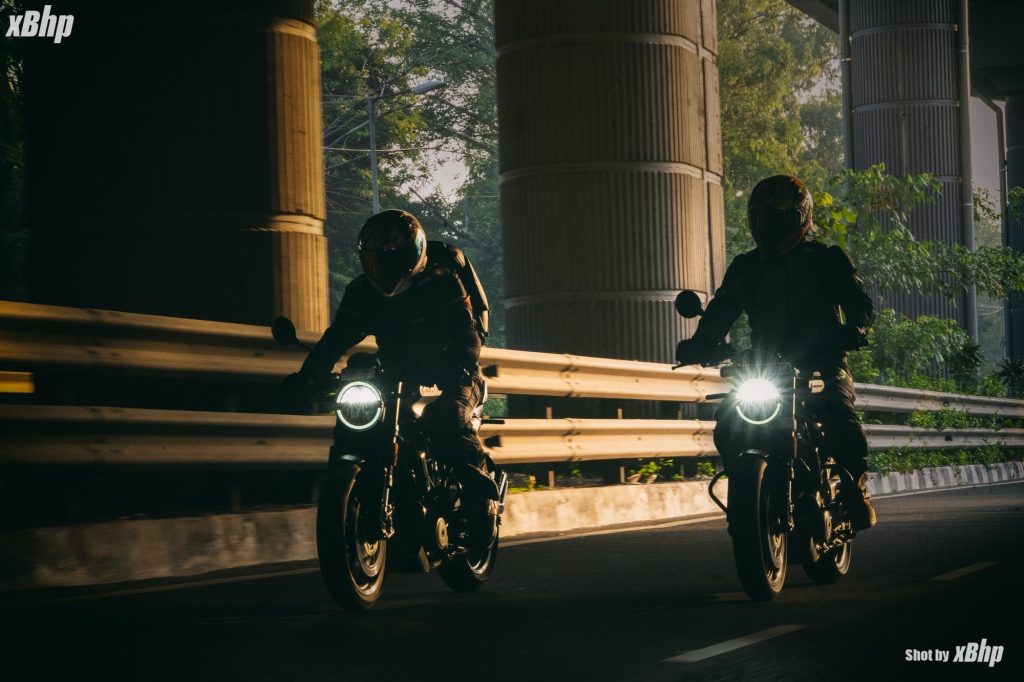
Below the 4,000 rpm mark, they feel ordinary. Post 4,000 rpm they feel like there’s something cooking. Around 7,000 and all the way up to the redline, there is a lot of fun to be had. While some like their power to be available right from the get-go, we feel that motorcycles with a quick-revving engine, and one that makes you work, is more engaging.
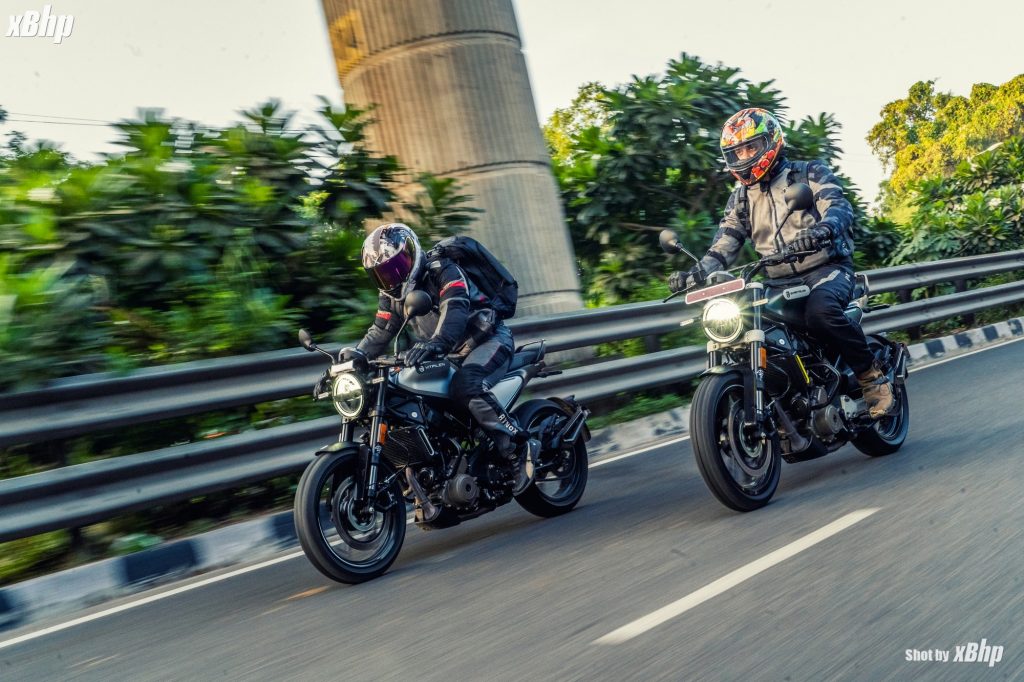
With that, we have to talk about the gearbox. It is a delight to go through and shifts are crisp and confident. That mostly alleviates the issues one may have with the powerband and if not, the anti-hopping clutch takes care of the rest. Since the clutch action is very light, frequent upshifts and downshifts and stop and go traffic are not as bad as one may expect.
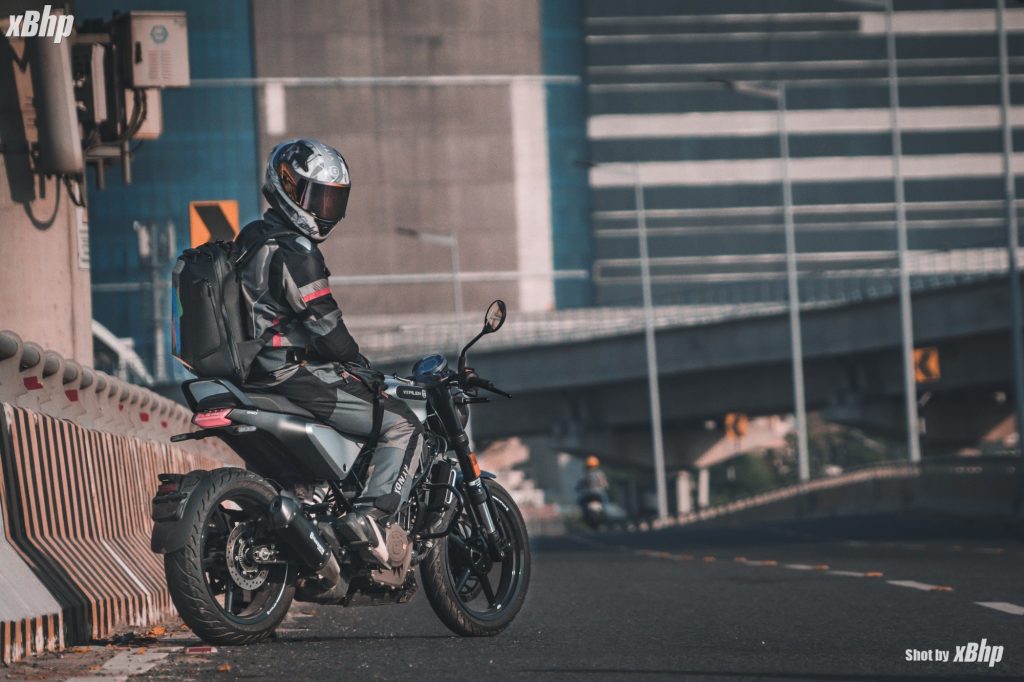
Now, since the Vitpilen 250 and Svartpilen 250 are aimed differently but sport the same engine, one’s boon is one’s bane could apply to this case. But it is not as severe as that. The thing is that while this engine and gearing suit the Vitpilen 250 very well, on the Svartpilen it is a tad lacking. It is mostly down to the urge to go off-road that it evokes. Off the road, the low-end feels a little blank.
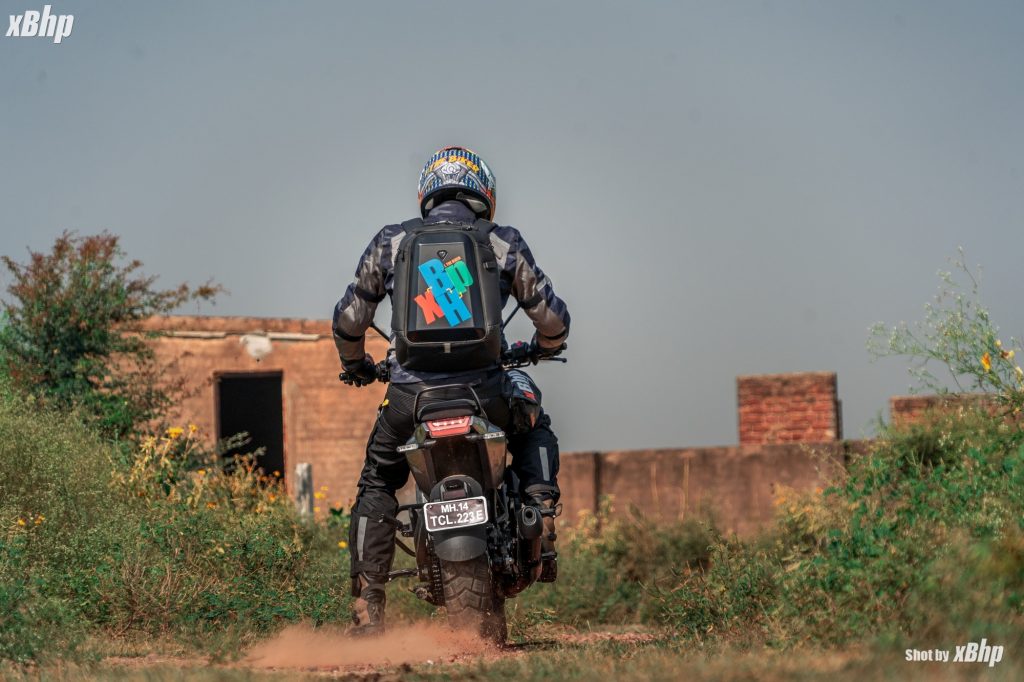
Another chink in the armour of these Huskies is the refinement. Vibrations begin to creep in through the pegs, handlebars, and the seat around the mid-range and intensify as the revs climb. It is more palpable on the Vitpilen 250 because of the focussed riding position and clip ons. The Vitpilen 250 may leave your palms with a tingling sensation if ridden for a while but then again if you’re into long hauls, Svartpilen 250 makes more sense.
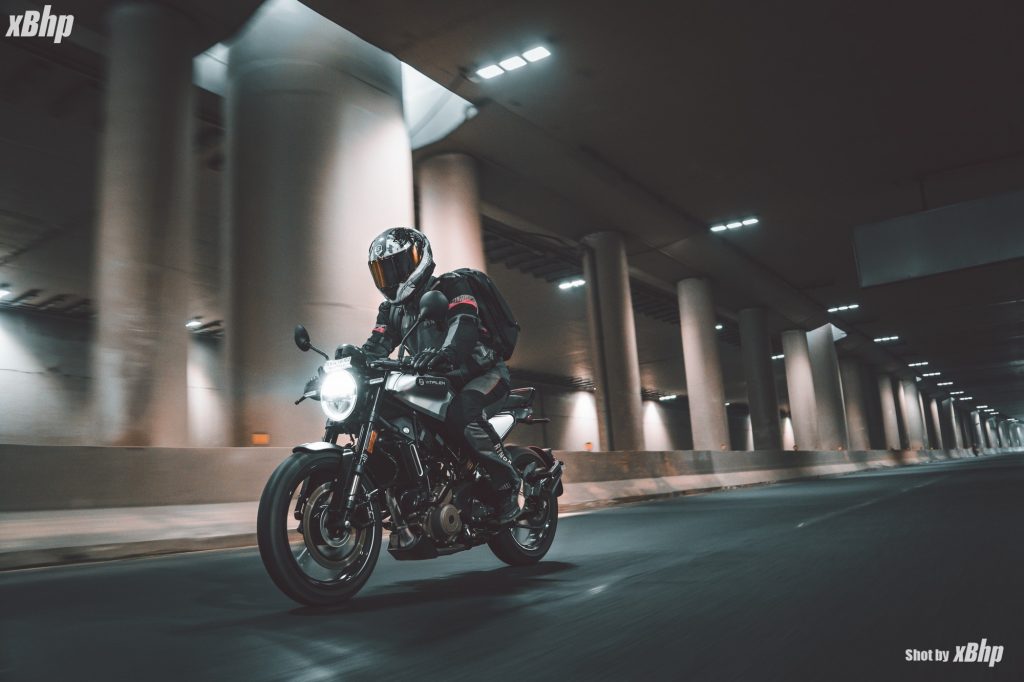
So nearly everything is rosy in the performance department and the issues with the vibration can be considered more a characteristic than a flaw. More than that, the Huskies have an ace up their sleeve that more than makes up for this mild flaw. To know what it is, read on.
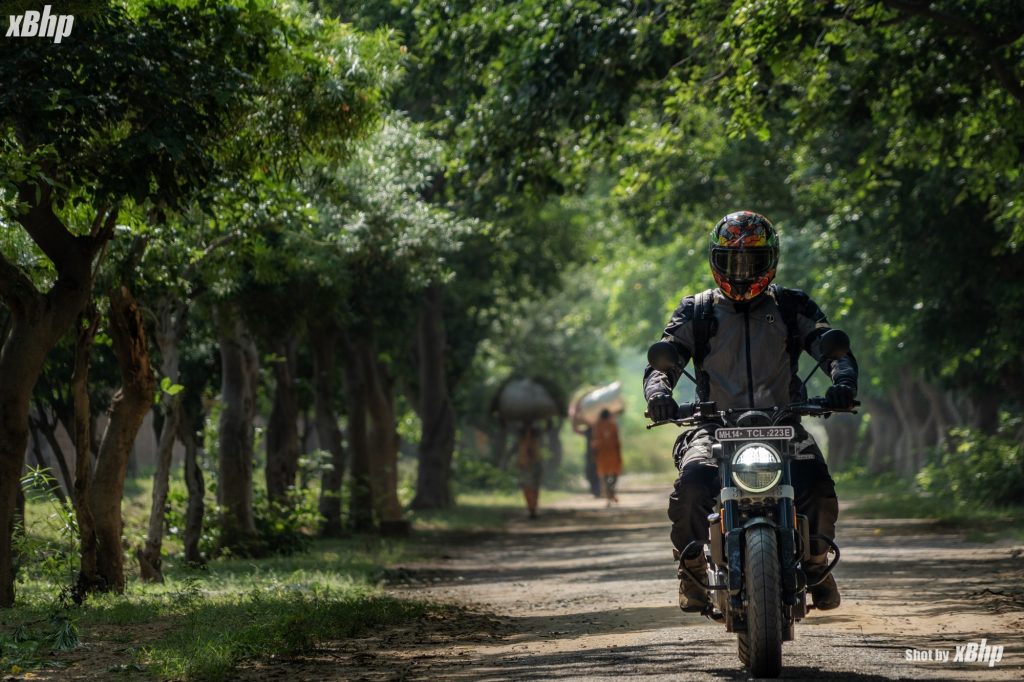
Handling and Ergonomics
Despite the stellar looks and capable performance, the handling is what takes the cake when it comes to these Huskies. Both of these bikes share the main frame which in turn is the same one as the 250 Duke. Only the subframe is different as these Huskies have a lower tail section.

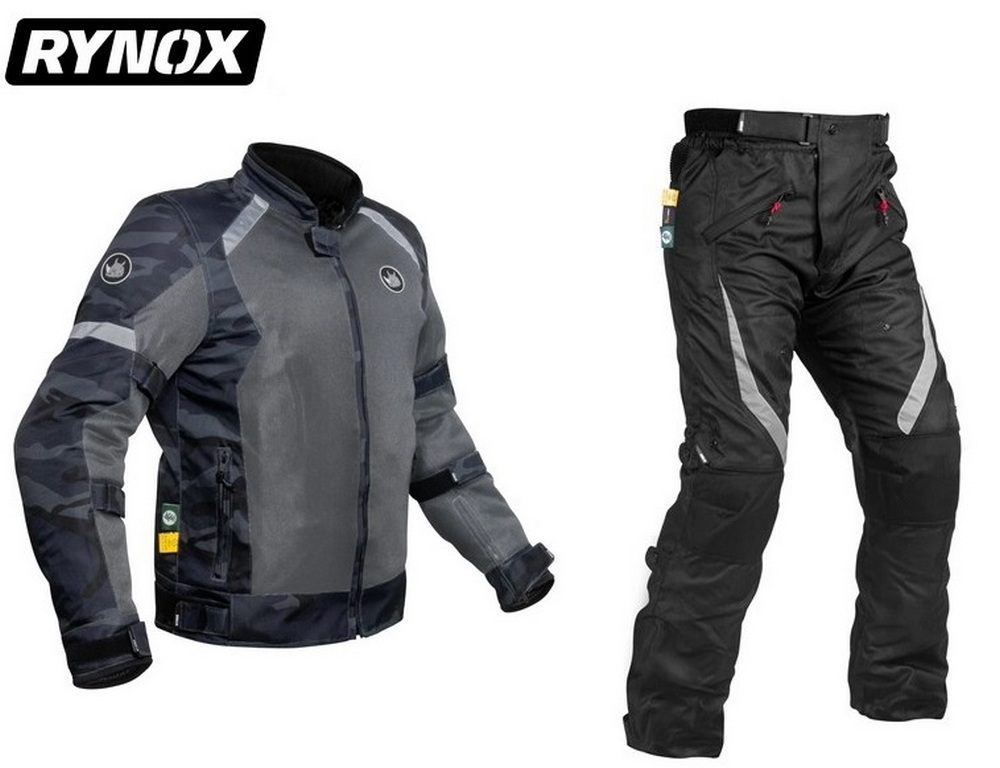
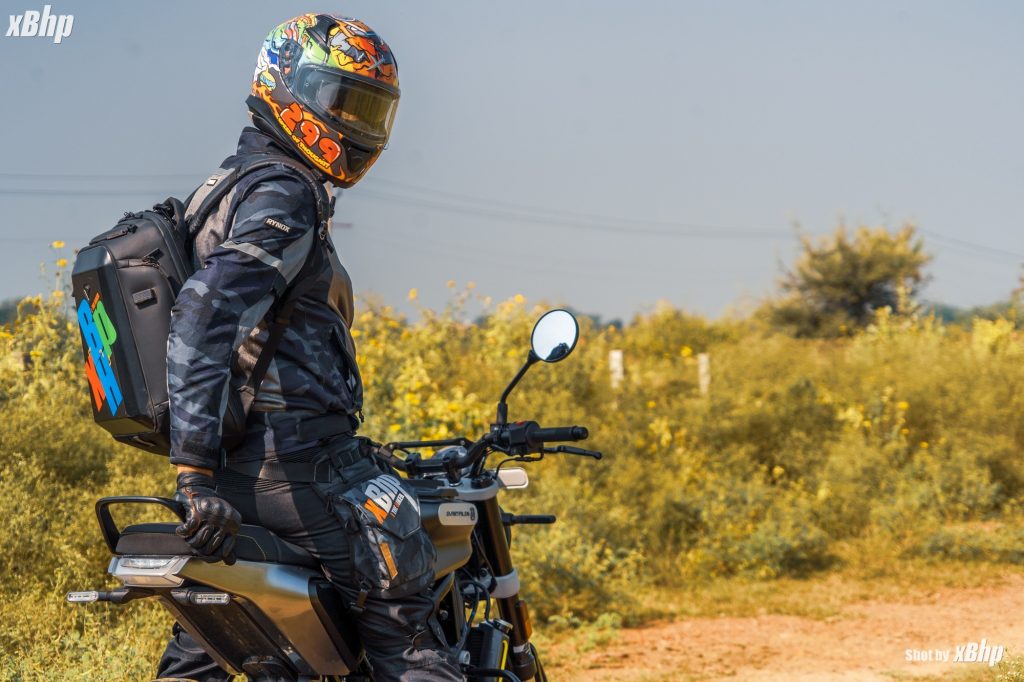

With the same main frame as the Duke, it is predictable that these Huskies handle really well. The Huskies also sport WP Apex suspension which is slightly different from the 250 Duke. They are also slightly stiffer and that is why the handling is even more communicative.
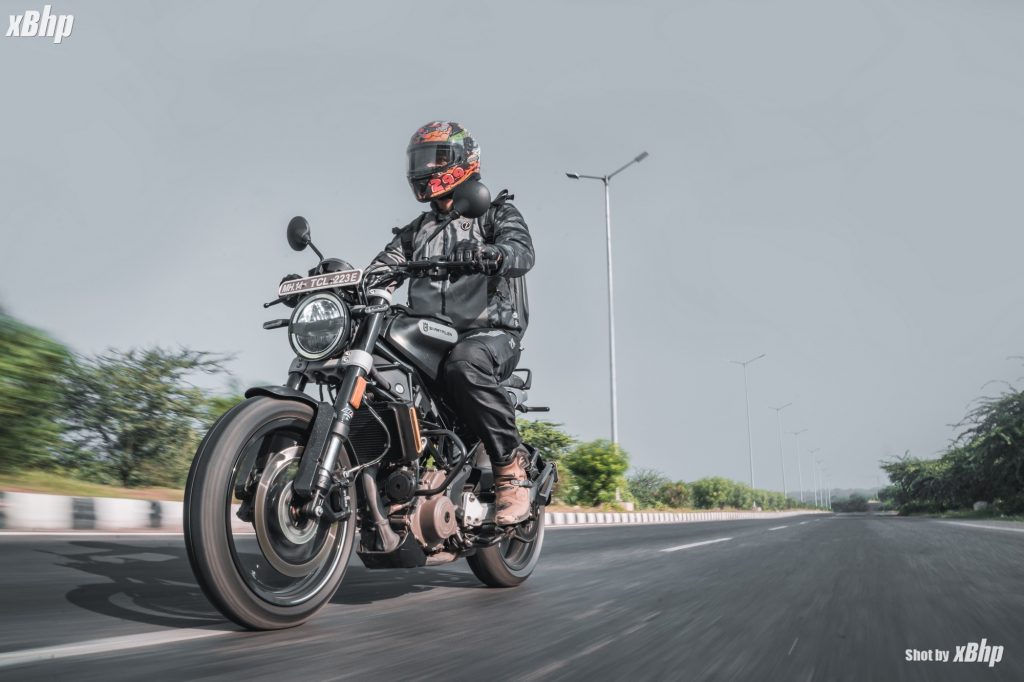
Starting with the Vitpilen 250, the committed riding position goes a long way as soon as you encounter some curves. If the tarmac is good, the Vitpilen 250 can go toe to toe with the best handlers of the class and then some.
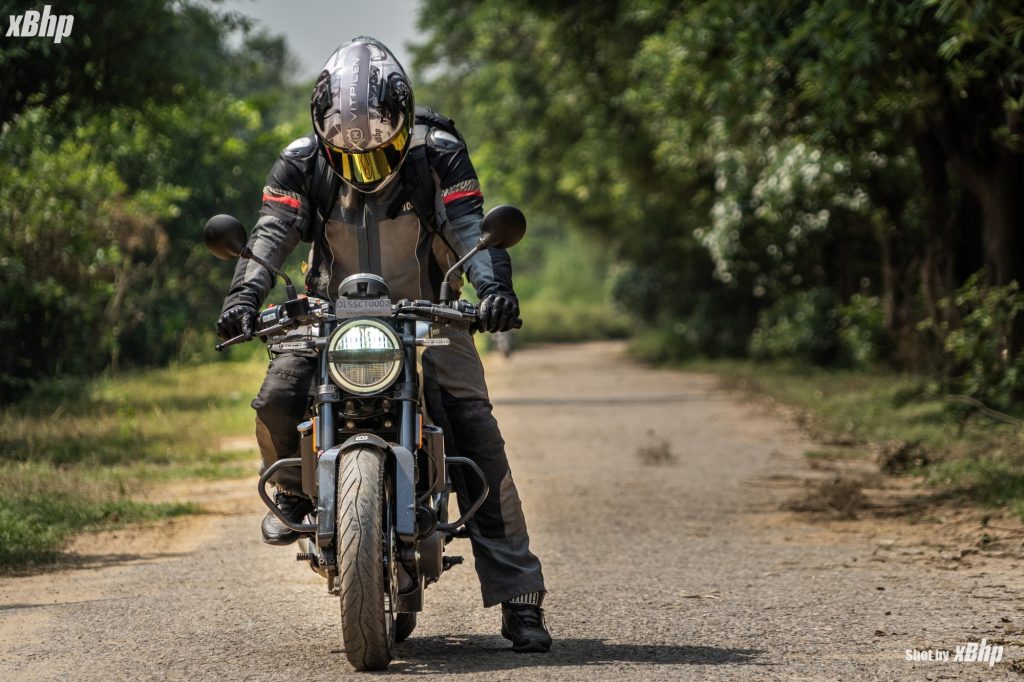
The light weight also plays a part. All that the Vitpilen 250 asks for is one cue about the intended line, and it tracks it with terrifying precision. The MRF Revz FC tyres, once up to temperature, complement the chassis and suspension really well and all that stops you from scraping your knees on every corner is your own inhibition.
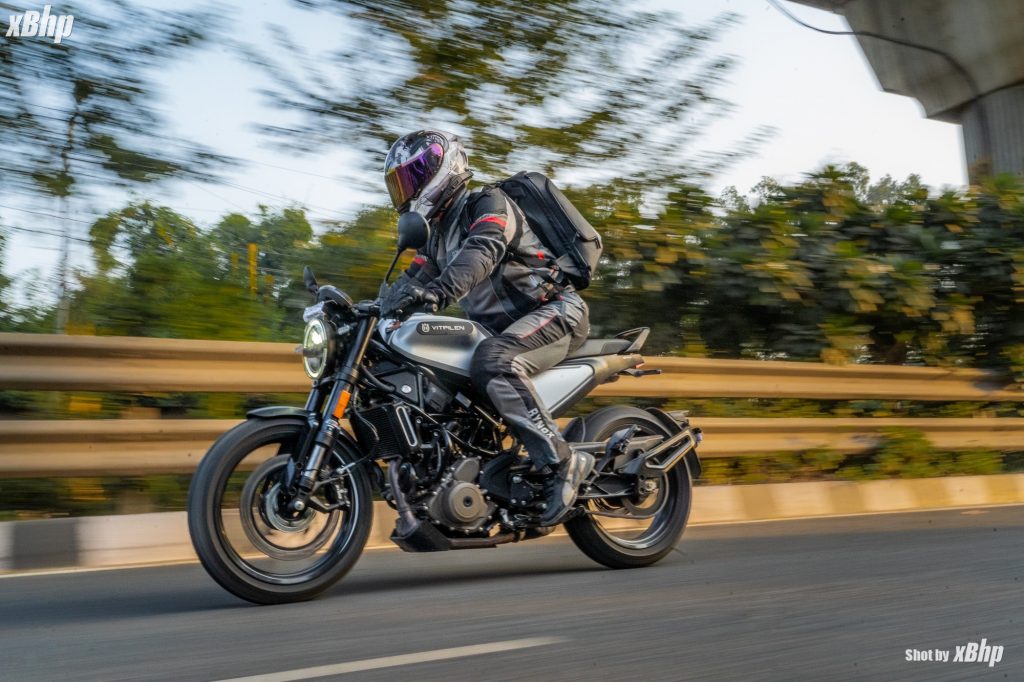
The same can be said about Svartpilen 250. Having a more upright riding stance may make it seem like it is a little less engaging. Theoretically, it is true but then, with a wider handlebar and more leverage that it comes along with it, make the Svartpilen 250 almost as good as the Vitpilen 250 around the bends. The same can be said about the block-pattern Revz D rubber on the Black Arrow but even they are pretty much up to the task.
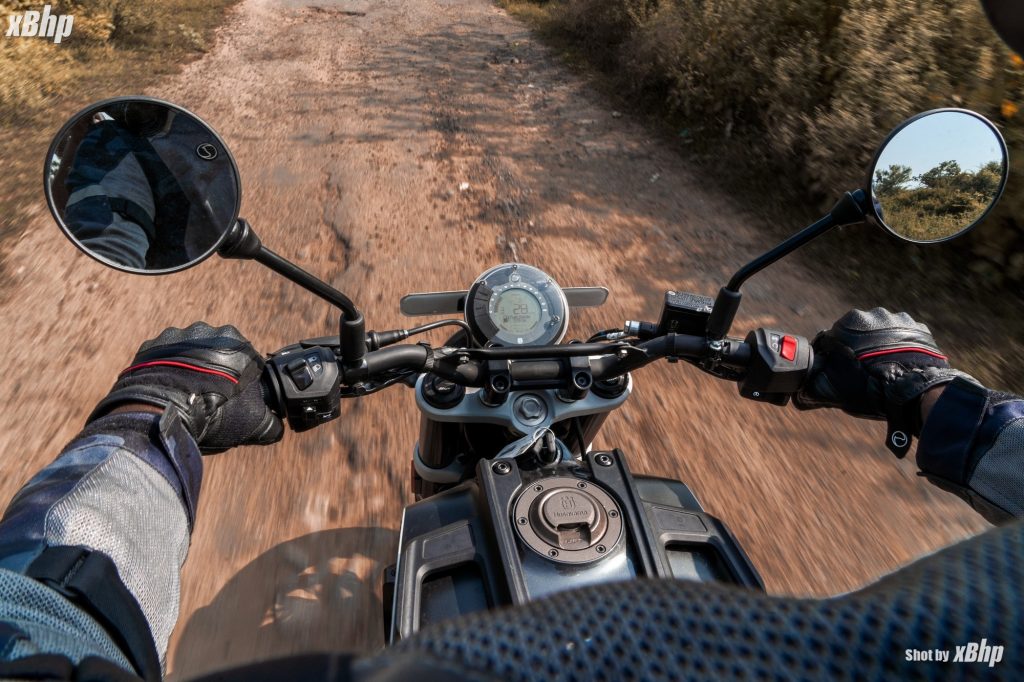
The brakes are pretty good too on both the Huskies. More than decent bite and feedback and the safety net of ABS make for a great setup when the time comes to drop the anchors. Both the motorcycles feel steady under braking too. For some more chops, you can arrange for sintered pads that are there on the 390 KTMs but most of us won’t need that. The ABS is disengageable at the rear. SuperMoto mode for the win!

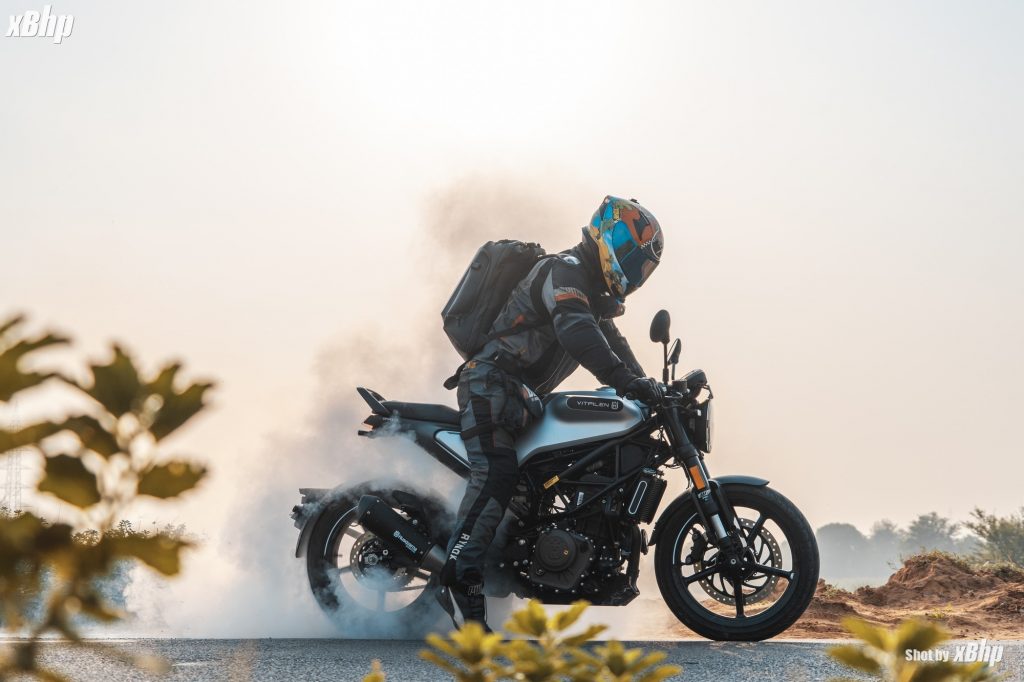
Now, the Svartpilen 250 is masquerading as a scrambler too, we decided to test that out too. The upright riding position and front-set footpegs make it easier to stand up on the motorcycle and have some fun off the tarmac. While it may be able to deal with some light trails, it is very palpable that the ‘Scrambler’ bits are more of a design exercise than some serious off-road cred. The 145mm ground clearance is also a hindrance.
Another surprising bit is that one might think, considering the ground clearance, is the seat height. One may think that these bikes are low but 835mm is quite a bit off the mark. The narrow section of the motorcycle tries to alleviate that but not with a lot of success.
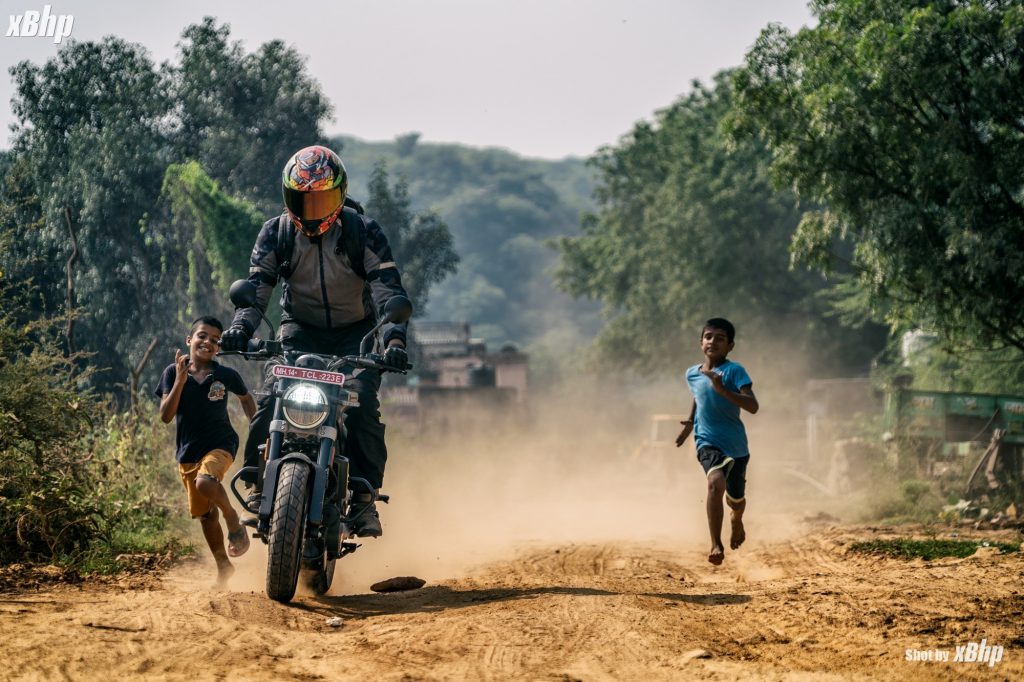
Now, there is another surprising bit. The tank. The protrusions on the tank that look beautiful, seem like they may hinder the process of gripping the tank, especially for taller riders. But it does not. Not at all. Instead, one can easily put them to good use as a brace under braking.
A little problem that comes along with the brilliant handling of these Huskies is that the suspension is a bit stiff. The ride quality is not jarring but undulations, potholes and bumps can be felt. They do not unsettle the bikes but a little more balanced approach would have helped enhance comfort. Something that you may need with the rather stiff seat.
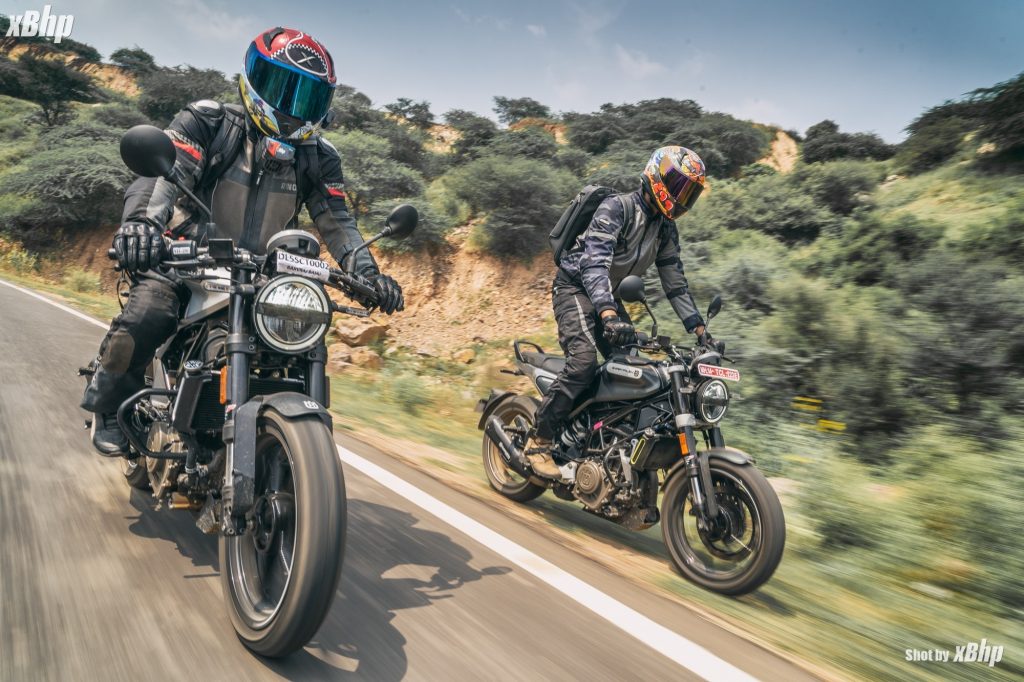
All in all, we believe that both the Huskies are phenomenal handlers and this serves as one of the USPs of the motorcycle in addition to their striking design. They do not leave a lot to be desired and we only wish that the Svartpilen 250 was just a little more Scrambler-ish. While some may have a few gripes with the very committed riding position of the Vitpilen 250, it is also a prominent factor in its appeal.
Tidbits
Fuel efficiency: For both the Vitpilen 250 and the Svartpilen 250, the average fuel efficiency sits at around 30 km/l in mixed riding conditions. With the 9.5 L tank, around 280 km can be covered on a full tank. If you are a little modest with your right wrist, they’ll do around 300 km. Good but not great.
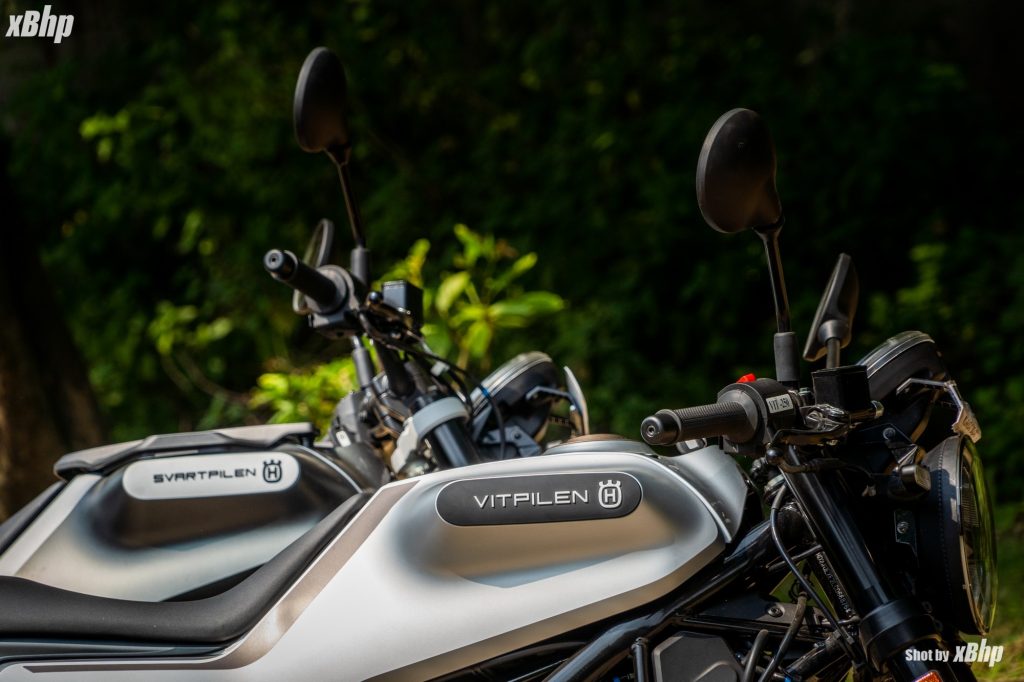
Rear-view mirrors: Aesthetically, bar-end mirrors would have suited these bikes more. Nevertheless, the ones from the factory are decent too.

Headlight: The throw, the spread, and the intensity of the headlight on both the bikes is pretty good. More than what we expected but less than the class benchmark which is the Dominar 250.
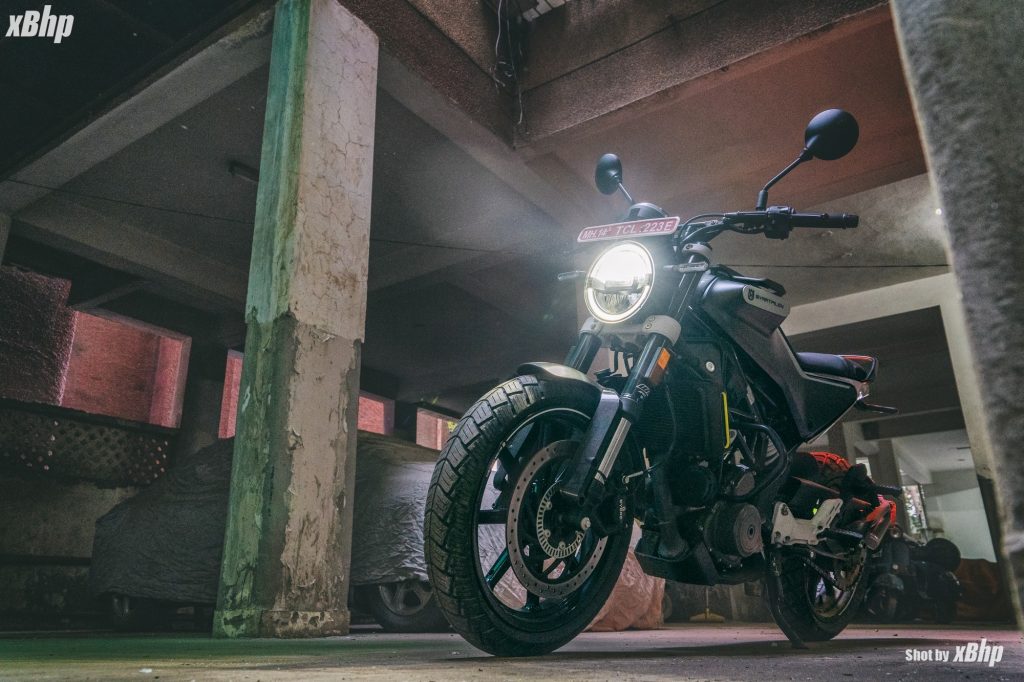
Exhaust: The end cans of the Huskies deserve special mention. They look really cool. The Svartpilen 250’s gets a heat shield as well while the Vitpilen 250 does not. The exhaust note is also decent but nothing to write home about. The Dominar 250 sounds better.

Instrument Cluster: The single pod cluster looks good but is a bit hard to read on some occasions. While the switchgear is decent, the Mode and Set buttons need a heavy hand for them to function as they’re stiff.
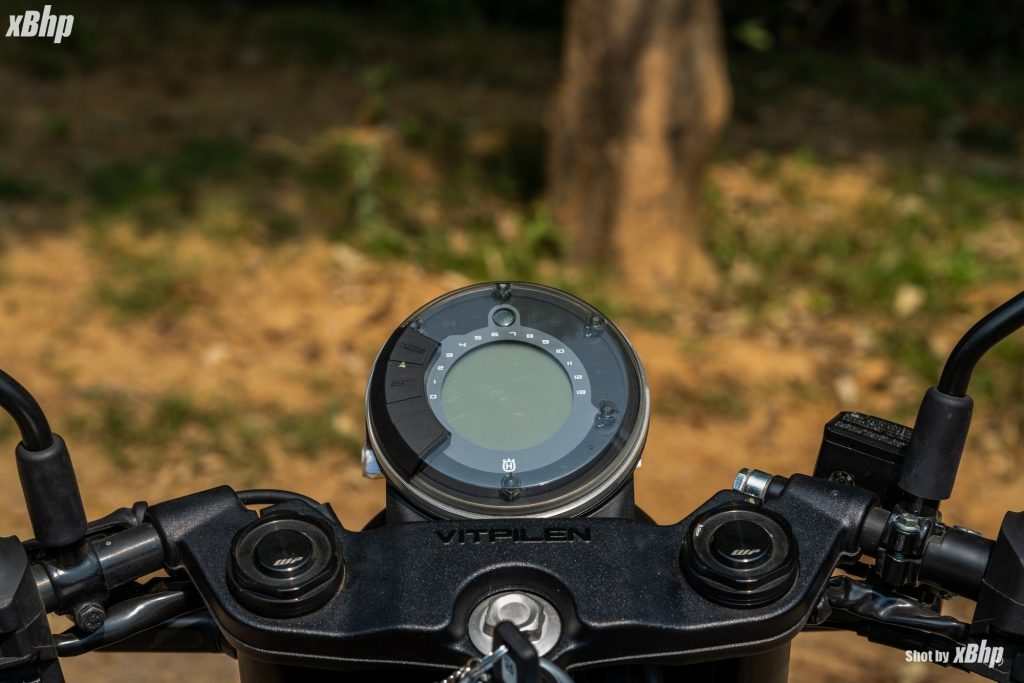
Verdict
The verdict, surprisingly, is easy. Despite the choices that one has in the segment, despite the 250 Duke and the Dominar 250, one who wants the Huskies will get the Huskies. Dominar 250 may be more refined and better suited for long hauls, it has its own demons. The same goes for 250 Duke which is a very acclaimed motorcycle that has some niggles too. But the real problem with those two is that they are not Huskies.
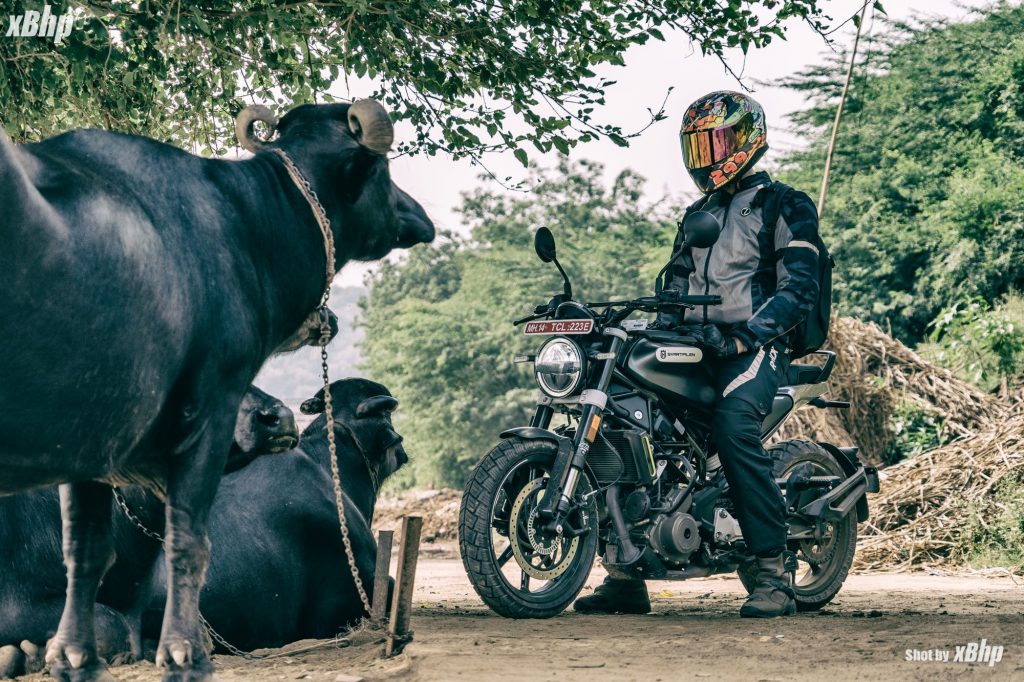
The Vitpilen 250 and the Svartpilen 250 possess a charm that is unmatched. They evoke emotions as no other motorcycle does. They seem and somewhat feel more engaging than most competitors. And crucially, they seem to undercut the 250 Duke by a decent sum. Bajaj’s decision to bring in the 250s before the 401s was a masterstroke. Acclimatise the masses with the brand, bring out the more affordable and accessible one first and voila.
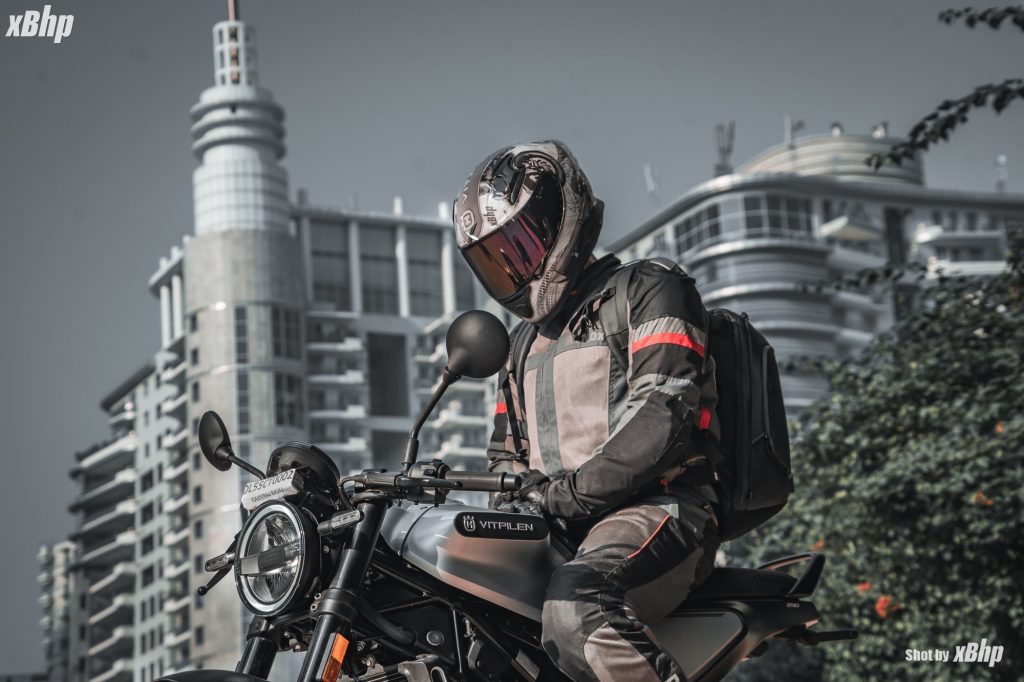

And here’s the video:
So yes, if you want to go out and get yourself one of these Huskies, do it and there won’t be much to complain. The only thing that will be tough to deal with is attention. More so in case of the White Arrow than the Black Arrow. Leather jackets and matching boots are mandatory…
And here are some more photos of the Huskies…