









All posts by Sundeep Gajjar
Ninja H2 and Rocket 3R: The endless quest of superlatives!

 Oct 2020
 Sundeep Gajjar
 Bikes,Brands,draft,Kawasaki,Triumph
Ever since the dawn of mankind, one of the key things that have led us to where we are today is the sense of competition. Competition with others and competition with oneself. The latter gives rise to the pursuit of perfection which inevitably paves way for betterment. And while perfection may be elusive, betterment often leads one to perhaps the most desired thing in the world- supremacy or superlatives. This story is about two superlatives from our world, the world of motorcycling. The Kawasaki Ninja H2, the world’s fastest street-legal production motorcycle and the Triumph Rocket 3, sporting the world’s largest engine on a street-legal production motorcycle.
And before you read the rest of the article, have a look at this music video that we made, featuring these machines. #CapturedOnCanon


Building a little more on that quest for supremacy, it led mankind from cave drawings to exotic paintings, from an imperfect wheel to space shuttles, and so on. While it also led us from spears and swords to guns and nuclear bombs, we’d like to keep pessimism at bay here. Instead, we’ll focus on machines, invented for convenience and more often than not, pitched against each other in pursuit of adding the prefix -est to the adjectives used to describe them.


For petrolheads like us, the only machines that matter are from the world of automotive and there too, motorcycles… for the most part. It was imminent that the sense of competition was going to engulf this space as well and here, there were two ways to go about it. Racing is one as one can tell looking at the nearly 300 bhp monsters tearing up the asphalt in MotoGP. And the second, an integral part of the first one too, engineering.


From bicycles to motorized bicycles, and then motorcycles, we have come a long way. A plethora of manufacturers produce motorcycles that are meant to serve their purpose as a means of transportation. But they also produce motorcycles to let their competition know where they stand. As a result, motorcycles have gotten faster. But this battle of science and engineering gave us some breathing space which bred variety and, in turn, less weight and more power is not the ‘only constraint’. Which is why we’d duly like to mention that motorcycles have also gotten ‘bigger’.


Starting with the Kawasaki Ninja H2, it is a motorcycle, despite still being in production, that has already made its way to museums. And it did so for good reason. Before the Ninja H2, the direction of the battle between litre-class motorcycles was seemingly heading nowhere. It simply burst onto the scenes and added a whole new dimension to the power game. Even that is an understatement but sadly, sometimes language simply fails you.


Forced induction, a technology that had been away from the two-wheeler space (at least production ones), was adopted and adapted by Kawasaki. A whole lot of engineering and the need for the ‘River Mark’ insignia gave rise to the 300 bhp-plus and 400 km/h-plus Ninja H2R, a machine so ballistic that it was not road legal. The street-legal H2 may not seem that extreme on paper but if it was not for ‘The Gentlemen’s Agreement’, more often than not, it would show one its own brand of extremity.


While there may not exist a simple way to describe the Ninja H2 and the experience of riding it, one can always try. According to us, the one way that’d make it to the list of everyone will be the acceleration. A litre-class inline-4 is no slouch but the jolt of acceleration from the supercharger’s boost is something surreal. And then there’s the top speed. So the Ninja H2 has most definitely earned its way into the distinguished list of ‘superlatives’.

Next up, we have the Triumph Rocket 3. It’s interesting to know that the Rocket was actually conceptualized to compete in the cruiser market. Also, it was initially supposed to have a triple of around 1,600cc capacity. Thank god that none of that happened. Instead, the Rocket III (yes III and 3 are different things in Triumph speak) carved its own niche as a ‘muscle bike’. And muscle it had in spades. The Rocket III debuted with a 2,294cc straight-three engine mounted longitudinally.


The Rocket III was disruptive and we know that because the first time we rode it was just that, the first time. Now we have at hand the Rocket 3. With ‘largest’ not being enough, the new one features a 2,458cc triple and you have around 165 bhp of power and 221 Nm of torque at your disposal.


The thing one realizes when riding the Rocket 3 is the friendliness. It is a beast, undoubtedly, but it is like the Giant from BFG. Don’t get us wrong, it will still decapitate you with sheer pull if your right wrist is disrespectful and if figured out correctly, it can probably pull SUVs and at some pace too. So the Rocket 3 is not cocky, not emphasizing its size every waking minute but it will show its teeth when prompted. It is most definitely a marvel of engineering fitting an engine of that much size and magnitude between two wheels. And so, it Triumph-antly earns its superlative tag.

Having these two motorcycles in the xBhp garage made us realize that these motorcycles are the ‘heavyweights’ of the motorcycling world borne by the ‘competitive’ drive of some very ‘passionate’ people. So when it comes to being able to provide a deserving setting for these two, except open highways, we could only think of a few. And out of those few, we went with something that has been an indispensable part of of our history and mythology. Known by various styles and names such as kushti, pehalwani, and mallayuddha; we are talking about wrestling.


When we reached the akhada with the Ninja H2 and the Rocket 3, it was easy to realize why these motorcycles fit the place. Looking at the wrestlers going at it be it the warm-up, exercise, preparation or practice bouts, it all made sense. Looking at them trying to do that one extra squat (baithak) and that one extra pushup (dand), trying to one-up their opponent and looking for opportunities for that one move that gives them the upper hand… it was such a rush.


Though it is sad to see that the sport which was once a staple of entertainment and competition in India has been dragged down to a level where it is rarely highlighted… unless a movie comes out that is. The land of The Great Gama and Dara Singh has abandoned both the sport and the sportsmen who were once national icons and decorated sportspersons.

We are thankful to Guru Shyam Lal Pahalwan Akhara for familiarising us with the sport and letting us gain more perspective on how the Rocket 3, Ninja H2, and wrestling are prime examples of mankind’s pursuit of betterment… the one that has led us here.

About Canon EOS R6

My first serious camera was a Canon 30D back in 2005. It improved dramatically on the quality of the photos I was taking and there was no looking back. I have travelled to more than 50 countries just with Canon cameras! In 2020 I got my hands on the Canon EOS R6 to shoot these two special machines which I added in my garage.


It offers the best of both worlds, with in-body 5-Axis Image Stabilization, I can now take handheld trail shots at night, which wasn’t really possible earlier! The EOS R6 features a 35mm full-frame CMOS sensor with approximately 20.1-megapixel which means it has got bigger pixels which allow more data, especially while taking low light videos!
The no crop 4K 60 frames per second will also allow me to not only slow down the cinematics but also reframe on the edit table. The 120 FPS full HD will be even cooler.

To capture some of the world’s fastest cars and bikes the 12 fps mechanical or the 20 fps electronic shutter will be very helpful.
The new DIGIC X imaging processor will help reduce the rolling shutter and also makes insane autofocus possibilities on the camera.
Additional stuff like the swivel screen, the super-responsive touch screen, dual SD cards and the great tactile feel of the camera when I hold it in my hands also matter a lot.
The best part is that the simple adapter also allows me to use the older Canon lenses with no compromise on the quality of video or autofocus at all.
I am quite happy with the results of the shoot. There is also a music video that I shot with the Canon EOS R6 and these two bikes that will be released soon on xBhp YouTube!

BMW 220d: 2-Series Gran Coupe breaks tradition instead of the bank
 Oct 2020 Sundeep Gajjar
BMW,Cars
Oct 2020 Sundeep Gajjar
BMW,CarsThe internet is a good thing. (?) This perfectly sums up if it is. The sentence itself means it is and the question mark is like that asterisk on special offer advertisements. The question mark also helps justify a recent phenomenon regarding a new car. BMW 220d or the 2-series Gran Coupe was just introduced and the all too easy verdict is already there. It goes something like this: ‘A front-wheel-drive BMW is no BMW’. Drive it once and you’ll disagree… with force!
First, BMW is all about premium products be it cars or motorcycles and they have a plethora of those. From the ultra-luxurious 8-series to the crazy M4 and from the K1600GTL to the new M1000RR.

But times are changing and reaching more people matters too. The combined purchasing power of the upper-middle-class matters just as much as the ultra-rich, if not more. That’s why we witnessed the G310 twins are there and that’s why the 220d is there.
BMW is also being very humble about the 2-series Gran Coupe. They refer to it as kind of an entry-level BMW. An easy gateway to the world of ‘Efficient Dynamics’ and ‘Sheer Driving Pleasure’. A means to introduce people to the brand that has been known for legends like the BMW 507 Roadster and then legend killers like the BMW M3 E46 CSL.
All the hue-and-cry in regards to the 2-Series Gran Coupe mostly boils down to a few key changes. Changes that veer away from tradition and the problem with tradition is that if you stick to it too hard and don’t adapt, it’s a prison.

Anyway, in case of the BMW 220d, it is all about the engine. Tradition says longitudinal engine with rear-wheel drive, 220d goes with a transverse engine with front-wheel-drive. Voila… you have a ‘coup’ on your hands… a Gran ‘Coup’.
What BMW has done with the 220d is not only good for the beautiful wordplay just demonstrated. It is very practical too. It saves weight. It saves space. And it stirs emotions, albeit mixed. And all of that shows when you look at the 2-series Gran Coupe.
The BMW 220d is a compact and nifty little number. Visuals have been polarizing too and it is agreeable that it may not be the prettiest BMW out there. But it is more than decent. The Misano Blue colour also helps the matters quite a bit. The quirky part here is that the car itself is polarized… about its identity.

The front of the car is busy. A tad too much probably. The grille is reasonably sized and looks good but the headlight is a bit too swept back. The chin has a lot going on too and the fog-lamps flanking the intakes on the bumper accentuate the car’s sporty intent.
It just looks a bit puffed up and the headlights do not help. But as a standalone feature, the BMW LED unit looks quite good. Move on to the side and perhaps the first thing you’ll spot is the M insignia. Good stuff. The roofline too justifies the Coupe part of the 2-series and 4 doors do justice to Gran.

Things almost get too linear in the side profile but that’s until the gates are opened. BMW 220d features frameless doors and you realize that this is something that you didn’t need until this car arrived. They look really cool and so does the BMW hologram projected under the doors and the M insignia on the door sill.
From the rear too, it is kind of a mixed bag. The taillights are cool and so are the dual exhausts but it just seems to be missing something. Something that’s hard to put your finger on.

Overall, the BMW 220d does not look bad but it could have been more proportionate and more thoughtful if it only knew what it really wanted to be. Regardless of our one’s opinion about the looks, the quality is typical BMW and it shows how they haven’t cheaped out on their cheapest, quote-unquote, Gran Coupe.
That statement had already gained some credence with the frameless doors and the BMW hologram projected on the floor when you open the car. But it gets a real shot in the arm as soon as you step inside the car. Oh, this is a BMW and a proper one at that. Almost immediately, all your apprehensions are taken care of and you are ready to start from scratch and really get to know the 2-Series Gran Coupe.
There is a reason why it feels like BMW is being too humble about this car. The interior of the car and the overall finish simply does not make it feel like an entry-level BMW. The price has been stripped but not the features. From a panoramic sunroof to the famed BMW Live Cockpit with iDrive, from wireless charging to the BMW Virtual assistant, the 2-Series Gran Coupe comes with almost all the bells and whistles.
*The photos of the interior that follow are from BMW Global and features the Left-hand-side driving setup.

Starting with the seats (front), comfy with a tinge of sportiness and electronic memory function coupled with just the right seating position easily make them one of the best in class. They even have manually extendable thigh support for even more comfort. In the rear though, the headroom is a slight issue which is predictable because of the sloping roofline. The contours in the roof try to help but only to a certain extent.
The rear seats get a 40/20/40 split and can be folded to further extend the 430 litres of boot space. The only issue here is that the opening of the boot is a tad narrow vertically… if that makes sense. The BMW 220d is compact and it feels so but the panoramic sunroof helps the matters psychologically.

The whole dash and surrounds are finished beautifully with a tasteful choice of materials and that is why the fact that this car does not seem lacking was emphasized. Adding more value to that statement is the illuminated trim which does not make its presence felt until it’s dark out but when it is… it looks beautiful.
The centre stage of the interior though is still occupied by BMW ConnectedDrive technologies. Extremely intuitive and very useful, the BMW Live Cockpit features a 12.3” digital instrument display and a 10.25” control display. The instrument display follows the newer BMWs and fortunately, we have now gotten used to the reverse tacho.

The part trick is the fact that control is not limited to the crisp touchscreen. Gesture control is also available in addition to the ‘Hey BMW’ thing aka Voice Command. The interior is also very practical with wireless charging, wireless Apple CarPlay, some well-placed USB (both Type-A and Type-C) and a very well placed 12V port in the boot. And with all that, you also have parking assistance with a rear-view camera and also, reversing assistance.
Overall, the insides of the car are really impressive and the driver’s seat (and the seating position) is something to be a fan of. That statement, when viewed in contrast with someone’s recent experience of driving a 740Li and an X6 M, bears even more weight.

Onwards to the part which inspired the sullen opening to this piece, performance. Before that, German engineering is world-renowned and something we have a lot of faith in. Add to that BMW’s sincerity in striving to back up their claim of Sheer Driving Pleasure and there were not a lot of doubts despite the drivetrain. If there was something, it was curiosity on how BMW was going to pull this one off.
The spoiler (not on the car but of this story) is that they did… for the most part. The engine is a 2.0-litre Twin-Turbo 4-cylinder diesel and 190 horses plus 400 Nm of torque is what it has on offer. It is the same mill that powers the diesel variant of the RWD 3-series. Theoretically, the FWD drivetrain is the downside and less weight is the upside. Practically… let’s see.

Men of culture when it comes to automobiles will know of a quote from a premier automotive personality. It highlights the importance of weight reduction more than outright power. And more often than not, it’s true. So with that and the peak torque arriving between 1,750 and 2,500 rpm, the 220d is a very punchy car.
The 2-series, after a healthy dose of wheelspin, offers brisk acceleration and it keeps going. The rush of it tapers down only around the top of the rev range but then, north of 5,000 rpm is a pretty lofty ceiling. Another commendable aspect of the engine is the refinement which it portrays all throughout the rev range. The only place where you can sense the diesel-ness of the engine prominently is at idle.
The impressive engine is very well supported by the 8-speed automatic which is a joy to go through but you can shift to manual and have some fun too with the pedals. All of this emphasizes that the 220d is not merely an entry-level exercise but a real BMW and with numbers like 0-100 km/h in 7.5s and a top speed of 233 km/h (claimed) it does not have to work too hard to prove that either.

If one is being honest and they know their FWD and RWD cars, they’ll know that the BMW 2-Series Gran Coupe does take a hit in terms of overall handling. But again, if those things are true, one also appreciates the lengths BMW has gone to almost nullify the effects of the drivetrain.
In the city, the 2-Series Gran Coupe is a joy to drive. Even on bad roads, the ride is comfy and the suspension pliant. That is a bit surprising considering the sporty outlook of the car but it is what it is. Even some mildly spirited driving is welcomed by the 220d and it does what you want it to do with much ease.

It is when you really start to push it that you realize that the ‘wrong’ set of wheels is being powered. But even then, the effect is much less pronounced than most of the other FWD cars. This magic is accomplished by something BMW calls the ARB system (actuator contiguous wheel slip limitation) which works in conjunction with the Dynamic Stability Control (DSC) to mitigate the understeer and to some extent, the torque steer which is native to FWD drivetrains.
Moving on, the BMW 220d may not be as engaging to drive on winding roads as some of the other BMWs but it is not too far off the mark. So the claimed fatal flaw of the BMW 2-Series Gran Coupe is nearly masked and the leftover is dealt with by the responsive and communicative steering which keeps you in the know of the limits of the 220d. That is… unexpected and most definitely… impressive.

Finally, coming back to the point of this piece. It is very easy to pass a verdict by looking at the brochure and those who do may sign off this car. And so will those who frequent racetracks, or those who drive like there’s no tomorrow or those who live under the false impression that street racing will make a comeback or that it’ll be cool.
But if you want a stellar car, with a stellar engine and stellar mannerisms regardless of where you take it… you want the 220d. If you want a BMW and save “some” bucks too… you want the 220d. Quote-unquote on some simply meant that it would have been nicer if we could save some more.

More details here.
2020 Street Triple RS Review: Triumph’ant as ever!
 Oct 2020 Sundeep Gajjar
Bikes,Motorcycles,Triumph
Oct 2020 Sundeep Gajjar
Bikes,Motorcycles,TriumphThere are a few names in the motorcycling world that can make the heart of a motorcyclist skip a beat. Triumph Daytona is one of the names. It was followed by the Triumph Street Triple. And now, we have our hands on the 2020 Triumph Street Triple RS. Is it still the formidable machine that it always was? Time to find out.
Let’s start with the things that made the Daytona special because after all, it was the first one that got it right and is the spiritual predecessor of the Street Triple. Daytona, powered by Triumph’s famous 675cc triple, had its hands full with the competition from Japan. But the Daytona was touted to have a brilliant engine and more than that, a fantastic chassis which when combined with the compact and lithe dimensions and lesser weight, often gave it the upper hand against the competition.

In the motorcycling world, it is usually the case that something like the Daytona, which nailed the engine and chassis, becomes a platform. A platform for something more. More accessibility. More approachability. More fun. In simple terms, Street Triple. Motorcyclists the world over were smitten and in love with the Street Triple, a streetfighter with track cred to match Daytona but it was more street focussed than the track-missile Daytona. It was a proper racket.

After the 2006 introduction of Daytona, the Street Triple burst onto the scene in 2007. It was a very refined package but in the end, it was also a streetfighter that was not afraid of getting the gloves off in a jiffy and fight! The end of production for the Daytona 675 was quite a scare in terms of what the future held for the Street Triple but the arrival of the Street Triple 765 came with relief. This one was a rioter too but 90 cubic centimetres more intense!
Just like the Daytona took the inline-4s from Japan by surprise, their 765cc triple also took the old 600cc inline-4 in Moto2 by surprise. Moto2 now features the 765cc triple which led to further enhancements and refinements in the Street Triple package.
Outside the world of Moto2, Triumph had two variants of the Street Triple- the R and the RS. The R, more street-friendly and the RS, more track focussed. As it turned out, the RS was a tad too focussed. The 2020 Triumph Street Triple RS has seemingly remedied that along with some more changes all around.

Starting with the looks, the bug eyes have always been the signature of the Street Triple. On the 2020 Street Triple RS, the bug seems to be a little pissed off. The LED DRLs or the brows are furrowed. It reminds one of anime characters, especially the goofy leads who undergo a transformation.

The head of the 2020 Street Triple RS still looks like it is jutting out of the motorcycle but over the years, it has grown on us. Overall, the whole motorcycle seems sharper and more focussed regardless of the angle that you look at it. The new infotainment and switchgear are more comprehensive and a welcome change. The saree guard though, is not so your 13 and 14 size spanners should go to work as soon as you get yours.

Note how we say how the 2020 Street Triple RS looks more focussed. That somewhat counteracts the claims of the new RS being a tad less uptight than its predecessor. So what’s really going on. Well, you can rest easy as the more focussed part applies only to the visuals. Let’s expand a little on that.
The 2020 Street Triple RS continues to be powered by the 765cc 3-cylinder engine good for 121 bhp of power and 79 Nm of torque. The peak power arrives at 11,750 rpm and the peak torque at 9,350 rpm. It still seems peaky but there has been a massive improvement in the low and mid-range grunt.


The too-peaky nature of the previous-gen RS made it a weapon on the racetrack where disintegrating those knee sliders is all that matters. But on the streets, it was a little cumbersome to get up to Speed. The 2020 Street Triple RS has remedied that almost fully.
It is no single or V-twin mind you in the sense that it does not unload a ton of torque right away. But it has more than before and its advantage lies in reaching those peaks quicker where it is still a blast. It is easier to stroll and zip around the city and teleport as soon as you are on an empty stretch. And the changes are not too subtle to miss either. They’re significant.
A significant change is a big deal in the case of the 2020 Street Triple RS. The previous-gen had nothing wrong per se and one always has their reservations in changing a winning combination too much. After all, magic rarely happens twice but apparently, Hinckley has made a habit out of it.
Another aspect of the stellar engine performance of the 2020 Street Triple RS is the fueling and the quickshifter- both up and down. While the former makes sure the response is crisp, the latter is what makes this bike a real hoot. Clutchless upshifts, clutchless downshifts, a soft-action slipper clutch and all that you need for some real badassery.

The gear shifts are slick and while the motorcycle itself does not need too much fiddling with the gears because of the tractability, you’ll still do that. Simply because it is too much fun. We are all aware that the 2020 Street Triple RS sounds ungodly and the angry rasp that you get on the downshifts is one of the things that motorcyclists live for.
Now while the engine is a gem and the acceleration is brisk, the one thing that betters the engine, and that is a big effing deal, are the dynamics of the motorcycle. A dry weight of 166 kg makes for a stellar power to weight ratio but it works its magic even more in the handling department.
The chassis is tried and tested and better-ed. The suspension on the RS is top-notch with 41mm Showa Big piston forks (adjustable compression damping, rebound damping and preload adjustment) and Ohlins STX40 fully-adjustable rear shock. If you can find a good winding stretch of the road as we did, you’ll come to know what a fantastic motorcycle it is.

The 2020 Street Triple RS is intuitive and very natural. It is a good’ol point-and-shoot motorcycle where it traces the intended line with surgical precision. Perhaps that is why so many people do not think twice before taking the RS to the track. Now that does take a smidge away from the ride quality. It still deals with bad roads fairly well but big potholes and bumps are transmitted to the rider.
Brakes are top-notch. Twin 310mm floating discs gripped by the fantastic Brembo M50s and 220mm single rear disc with a Brembo single-piston calliper. The performance, as mentioned before, is brilliant and everything from the bite to the feedback is spectacular. ABS is switchable on the rear end if your rowdy side takes some inspiration from the Street Triple… and it will!


The ergonomics are also a good balance between sporty and comfortable. The footpegs are set slightly towards the rear and are situated at just the right height. The tank recesses are very ergonomic and it is a breeze to grab the motorcycle with the tank which you’ll need to once you really get going.


The handlebar is wide enough for lots of leverage and the reach is just right. The windblast is awesome too but then, that is expected with a streetfighter. On the flip side, the seat is comfy and padded well enough which when coupled with the nearly vibe-free ride throughout the rev range makes for a strong case of long hauls.
The 825mm seat height is a tad high but the 2020 Street Triple RS is also a very narrow motorcycle which makes it a little easier to have your feet firmly on the ground. The bar-end mirrors are also very functional but, needless to say, a little caution needs to be exercised when filtering through traffic.
In terms of instrumentation and switchgear, the 2020 Street Triple RS gets a beautiful full-colour, 5″ TFT screen. It also gets 4 styles with high low contrast options. It is intuitive, easy to read and works well in conjunction with the switchgear which needless to say feels ergonomic and premium.

The 2020 Street Triple RS ticks all the boxes when it comes to being a very, very capable streetfighter that can double as a very potent tool for occasional track days. But what impresses one the most is the consistency Triumph has been able to maintain.

Generation on generation, the Street Triple has gotten better and the years of refinement alone is enough for the price tag. So while the INR 8.84 lakh (Ex-showroom) R seems like a better option, if you want the most of the Street Triple name, the extra kit (and the extra kick) of the RS is a lot for the INR 11.33 lakh (Ex-Showroom) price tag.
More details and full specs here.
Rolls-Royce Cullinan Black Badge: Eleanor’s dark side
 Oct 2020 Sundeep Gajjar
Cars
Oct 2020 Sundeep Gajjar
CarsI started out as a motorcyclist and I always will be one. For the most part, I have seen motorcyclists frowning upon cars and while it wasn’t the most logical thing ever, it used to make some sense at least. But in the recent past, I have been getting opportunities to pilot some of the finest specimens of 4-wheeled automotive and I dare say that I have been impressed… moved even. A few of the highlights of these experiences came from Goodwood, England. Rolls-Royce. And in this particular story, our protagonist is a Rolls-Royce Cullinan Black Badge.
There is a word in the English language… Sacrilege. A word mostly used in a negative sense. I have always believed that it is about perception. I’ll explain with an example. A majority of the motorcycling enthusiasts refer to cars as cages in an almost sacred manner. I am one too… always will be and yet, I do not believe in that particular sentiment. More firmly now than ever. And there it is sacrilege.

Onwards to perception now. Let me start out by saying that a motorcycling enthusiast should never drive a good car… most definitely not a RollsRoyce… and a Black Badge from Goodwood must be avoided at all costs. It will bewitch you and shake your immovable faith in the adage (if there isn’t one in existence, now it is) that an engine is more suited to two wheels than four.
Sacrilege… but here it is used in perhaps the most positive sense that one can use this word in. Rolls-Royce Cullinan Black Badge… what a damned phenomenon! I was right to refer to Black Badge cars as Goodwood’s Dark Art. The sheer allure is ‘Unstoppable Force’ incarnate… only, I am nowhere near being the ‘Immovable Object’.
In order to discuss the Rolls-Royce Cullinan Black Badge, we need to talk about two separate topics… briefly of course. We won’t keep you waiting for that long… our cruelty does know bounds.

Firstly, the Rolls-Royce Cullinan that we got to drive in Dubai last year and it introduced us to the magic that unfolds when you drive a Rolls-Royce. Every little aspect of one is meant to be an experience… something that’d blow away even the best of connoisseurs. We talked about everything; how it looked, how it drove, and the mark that it infallibly leaves on your soul. The Rolls-Royce of SUVs, as it is aptly referred to as, is simply magical.
The second topic is the Black Badge moniker. Now this moniker to a Rolls-Royce car is what Batman is to Bruce Wayne, what Green Arrow is to Oliver Queen, and a bit on the sinister side, Deathstroke is to Slade Wilson. Sinister… another word, usually associated with negativity but used very tastefully by Rolls-Royce to describe the Black Badge.

In fact, we have a statement from Mr Torsten Müller-Ötvös, Chief Executive Officer, Rolls-Royce Motor Cars, pulled from a RollsRoyce Press Club article and it goes like this: “Black Badge reflects the desires of a distinct group of Rolls-Royce clients: men and women who take risks, break rules and build success on their own terms. Indeed, before we launched Black Badge in 2016 the idea of creating a product that would satisfy this subversive cohort – that is highly dynamic and wilfully rebellious in aesthetic – caused a great deal of internal debate. However, once the marque’s designers, engineers and craftspeople began pursuing this dramatic alter ego, it became clear that these motor cars could not only exist comfortably beneath this revered and historic brand but they would define a new space within the super-luxury market. In this spirit, the time has come for Rolls-Royce’s boldest and darkest expression of Black Badge yet. The King of the Night, Black Badge Cullinan.”
Aptly put… so what the Black Badge entails is more adventure, more sportiness, more… eagerness, more hunger and so forth. But most importantly, it means that while the choice of either driving or being driven in a Silver Badge Rolls Royce is more or less unbiased, when it comes to the Black Badge, the inclination is surely towards the former. We had the pleasure of driving the Wraith Black Badge and the Dawn Black Badge at the Yas Marina Circuit last year and we got a firsthand experience of the occurrence of the above-mentioned phenomenon.

Now, without further ado, let’s talk about the Rolls-Royce Cullinan Black Badge. At first glance, it does not seem very different from the Silver Badge. But with keen eyes, one is able to jot down the details that make the Black Badge distinctive. It is all that the Silver Badge Cullinan was but more vigorous. And the darkness descends upon you starting with the mascot. The Spirit of Ecstasy is now finished in high gloss black chrome which, for the first time, extends to its mounting plate.
The ‘Double R’ badging is now silver-on-black, opposite of what it used to be, and it continues the overall darker theme of the car. The chrome accents on the exterior like the front grille surround, side frame finishers, boot handle, boot trim, lower air inlet finisher and exhaust pipes have also been tastefully darkened.
Now, the finish of the bars of the iconic ‘Parthenon Grille’ is a nifty trick. They appear black but are in fact are polished. They appear black as they reflect the blackened surroundings. That’s just magnificent attention to detail and we have massive respect for the severe hard work that goes into the design (and the execution of the design) that goes into making a Rolls-Royce.

Another distinguishing factor between the Silver Badge and the Black Badge Cullinan is the wheels. The latter gets unique 22” alloy wheels, the design of which is reserved exclusively for the Black Badge Cullinan. Their darkened finish also facilitates another brand-first for Rolls-Royce. Painted brake callipers… The ones on the Cullinan Black Badge are finished in high gloss red and the paint has been developed to withstand the high-temperature environment in which the callipers have to operate.
Now, one can get their Cullinan Black Badge in any of the 44,000 paint options offered by the brand or select an individual hue entirely. Yes, there are 44,000 options already on offer! The option of an entirely bespoke hue is just outrageous. While us mere mortals think of cars as something ‘made by a brand’, the vehicles from the stable of Rolls-Royce take the meaning of bespoke to a whole ‘nother level.
The customization options are carried to the interior of the Black badge Cullinan as well. And again, the options are near endless. Every little detail is configurable and in order to add to the high contrast options, the designers have even created a new leather colour called Forge Yellow.

Another familiar yet neat touch is the Infinity motif embroidered into the rear armrest. It is also there in illuminated treadplates and on the steel clock case. The significance of it is also an ode to the heritage and deep roots of the Goodwood marquee.
The motif was a part of Sir Malcolm Campbell’s record-breaking Rolls-Royce-powered BlueBird K3 hydroplane. It denoted that the hydroplane belonged to an insurance class reserved for boats with unlimited and therefore infinite engine power!
And while we have talked about the stately interiors of Rolls-Royce Cullinan previously, the Black Badge is even more special in more than one way. Firstly, the Technical Carbon veneer. It is a naked-weave carbon-fibre finish that has been meticulously crafted to create repeating geometrical shapes that produce a three-dimensional effect.

Rolls-Royce states, “Each leaf of Technical Carbon is finished with six coats of lacquer before being left to cure for 72 hours then hand-polished to Rolls-Royce’s hallmark mirror finish. This process takes 21 days and is only deemed complete once every piece is inspected by a craftsperson to ensure complete reflective uniformity across each of the 23 pieces within the car.”
And while that may seem like a bold claim and even a step too far, you can only know if you’ve been inside the Black Badge Cullinan. All the 23 pieces are indistinguishable in terms of feel, texture, finish and one really appreciates the execution of the tedious process which leads to the creation of every piece.
The next thing has become something of a hallmark of Rolls-Royce quite like Eleanor herself. The Starlight Headliner. Black leather, handwoven with 1,344 fibre optic lights to represent the night sky. The best part is that 8 of them randomly dart over the front occupants.

Just when one thinks that they are close to grasping the expanse of the luxury of a Rolls-Royce, they realize that owning a car like that gives you access to your own shooting stars too! We got to experience it in our tryst with the Black Badge Wraith and Dawn but personally, the real estate inside the Black Badge Cullinan takes the Starlight Headliner experience that much further.
Let’s talk about the driving experience now. The Black Badge Cullinan is powered by the same 6.75L twin-turbo V12 as its Silver Badge variant. But Rolls-Royce did well to put the flexibility of the massive engine to good use.
In the Black Badge avatar, the behemoth now makes 600 PS of power and 900 Nm of torque. That’s an increment of 29 PS in power and 50 Nm of torque.

The more grunt under the hood adds more dynamism to the already scintillating package that the Silver Badge car was. Taking things even further is the sort of a Sport mode activated by pressing the ‘Low’ button on the gear stalk. Right after, the car’s mannerisms are changed in the sense that the throttle seems crisper and the acceleration more eager.
The transmission also undergoes a change upon the activation of ‘Low’ mode. It seems more aggressive and the new exhausts system accentuates the feeling that the Black badge Cullinan means business. The exhaust note, despite still being relatively muted, is a big step forward from utter silence to this playful burble.

Another good thing is that this transformation into a sportier car has been encompassing. It is not just about the engine. The air suspension is a tad bit stiffer by default now. And this little tweak has made a lot of difference in the handling department. The steering was always effortless, but due to the changes in the suspension settings, the car feels much more composed in corners.
What gets up to speed quickly must also sport the prowess of shedding that speed quickly. The Black Badge Cullinan has been endowed with larger discs. When coupled with the reduced brake pedal travel, which translates to quicker bite and response, it makes bringing this 2,753 kg luxury penthouse on wheels to halt easy… kind of disrespectful towards the concept of inertia, isn’t it?
While the performance of the Black Badge Cullinan certainly impresses, it’s the way in which it is made accessible that truly blows one away. It is quicker, yet calmer. It is louder, yet quieter (in a way). It is strikingly similar to the Silver Badge Cullinan, and yet, worlds apart.
Words fall short when one tries to describe the sorcery by the means of which this darker iteration of the Cullinan is somehow sportier without losing a step when it comes to being as graceful as any Rolls-Royce car to ever come out of Goodwood.

I have tried my best to describe this gem (appreciate the wordplay please) of a car. But then, if you know your cars, if you have the money, and most importantly, if you have what it takes to be an owner of a Rolls-Royce, you probably do not need my get-go to go and get one. In case you do, do remember to call me for a joyride.


Every individual, every team, every organization has some ethos that they stick to… some values and philosophy around which their work revolves. When we talk about Rare Rabbit, it is the Men’s Division The House of Rare. This prominent brand of India has one ideology; individuality and that every individual… is Rare.
It is evident from their designs, their stores and right down to their manufacturing facility in Bengaluru. With a workforce of more than 1,000 and 90% of them being women, they make sure that every member of the team is an ‘individual’ and feels Rare.
This philosophy of theirs is what struck us and drove us towards Rare Rabbit. At xBhp, we have treated every biker as a ‘biker’ and so our philosophy, ‘Any Bike. Anyone.’ resonates with the philosophy of The House of Rare our in our case, Rare Rabbit. Their designs, looks, and outfits exude that very belief that they stand by and that is why we don them with pride be it with a Ferrari… or a Rolls-Royce Cullinan Black Badge as seen here.
BMW R18: Berlin’s pride is a cruiser of ‘Future Past’
 Oct 2020 Sundeep Gajjar
Bikes,BMW,Motorcycles
Oct 2020 Sundeep Gajjar
Bikes,BMW,MotorcyclesRemember when the pictures of the BMW R18 first surfaced online? It had the motorcyclists all over the world swooning over it. And we aren’t talking about cruiser fans only. Nearly every motorcyclist around the world took notice of what BMW made in the form of the R18. We got a closer look at it recently and now, here we are with the first-ride impressions of it. Time for a story? You bet!

In order to be able to tell this story with all the emotions intact, we have to start with some examples. Imagine Ryan Reynolds, the Deadpool, in a sob-fest rom-com. Does it work? No, because we don’t see Reynolds that way. Imagine Jason Statham from The Transporter series in Dear John… or Al Pacino in Letters to Juliet. Doesn’t work, right?

The reason is pre-conceived notions or the process of being ‘typecast’. You see someone doing something very different than they generally do, Bam… it feels out of place. Not that it is not possible, but it just seems unlikely. Another typical example of this is the Germans being serious people. Brilliant engineers, but serious people. And again, shattering this motion, for real, is a German which is laid-back, relaxed, believes in enjoying the little things in life and last but not the least, is a fan of Rock’n’Roll! The BMW R18.

First and foremost, This is not the first cruiser from BMW. That accolade, if you want to call it that, goes to BMW R1200C and its 850cc follow-up. Those… were less than stellar. The R18, their next attempt at making a cruiser though, is an absolute home run! It looks amazing, it has a huge engine (visually too), it seems laid back and well, it has Rock and Roll as riding modes!
One of the things that really works in the favour of the BMW R18 is that it takes its cues from the BMW R5 from 1935. That motorcycle in mine, and the opinion of many others, is one of the most beautiful motorcycles ever made. That alone was enough to deem the R18 a winner but it has a lot more than just heritage going for it.

Let’s talk about styling first. It has vintage cues, of course. But it is the way the modern bits have been blended that make it look absolutely smashing. Take the headlight for example. Rounded, chromed and it harkens back to the R5 but the LED setup reminds you that the Germans are aware that it is 2020.
Then there’s the single-pod instrument cluster but with more than enough tell-tale lamps cleverly hidden away. It is also beautifully illuminated and sports the Berlin-Built badge which not only tells that the R18 is built in the Berlin-Spandau factory of BMW but also shows the amount of pride BMW Motorrad has garnished the R18 with.

Then there’s the white pinstripe of the tank (exclusive to the First Edition). Just look at it and admire the beauty that can be found in the simplest of things. The massive boxer engine is proudly displayed and is, more or less, the centrepiece of the motorcycle.
Like any other modern engine, it has 4 valve heads but they are still operated via pushrods activated by the dual camshafts. And the camshafts, in turn, are driven by the crankshaft via a chain. BMW says all this and the use of shorter pushrods provides better control of the valve timing. We believe it is just their way of showing off their famed engineering prowess and maintaining that modern-classic amalgamation.

Moving on, we have the concealed rear suspension, the 19″ front and 16″ rear spoked wheels, the shaft-drive system with the driveshaft exposed and the dual-fishtail exhausts. Every visual cue that the motorcycle gives away is impressive and the build-quality is predictably flawless. All in all, the execution of the styling of the BMW R18 is seamless and to be honest, matchless. Probably that’s why the propeller insignia finds itself on quite a few quirky places on the motorcycle in addition to the First Edition badge for the, well, First Edition.
But hey, we have talked a lot about looks as you can see in the video above. This is about a different kind of magic. Riding the R18. So we request you to kindly dust off your denims, get those leather bombers ready (to match with the accessories you get with the R18), put that helmet on and join us for this enchantingly fulfilling ride.

Does it seem like we went a little overboard with enchanting and fulfilling? Stay with us and you’ll know. So at first, saddling up on the 345 Kg (kerb) R18 is a little intimidating. The same goes for when you fire up the engine for the first time and you feel it slightly bobbing left and right. Those who haven’t ridden a boxer yet, this is just a characteristic of this configuration of engines.
Despite all that, you’ll feel almost compelled to ride it because of the faith that the world has in German Engineering. And it is not misplaced. As soon as you are on the move, you forget all you know about cruisers and the very definition of it is rewritten. It isn’t crude and shouty. It is refined. But that does not mean it is devoid of character. Oh no-no-no. It has plenty. Just listen to that boxer sing away…

First, let us list out the things that you feel when you ride the R18, and then we’ll tell you how it actually feels. So in terms of numbers, we have 91 Bhp and 158 Nm of torque. Those figures are useless when viewed on a piece of paper but in the real world, they are the real deal. The transmission is 6-speed. The clutch is dry but it is of the anti-hopping variety.

First of all, we love the soft and confident burble of the 1,802cc air-cooled, two-cylinder boxer engine. Add to that the slight rattle of the dry clutch and you know that the clock has turned backwards. The same feeling is exuded by the clank you hear when you engage the first gear. It is so old-school, so familiar, and so endearing. As you find yourself on the move, you realize how beautifully BMW has put together this gem of an engine, their biggest Boxer to date.

The peak torque arrives at 3,000 rpm. And that is why, even at very slow speeds, you almost never feel like the R18 weighs over 300 kilos! You can sift through the gears smoothly and without any hiccups but it is always accompanied by that thud and clank. The R18 is deceiving in its looks and you almost certainly won’t feel that the R18 has a Ride-by-Wire system. The feeling on the throttle is just so direct and so organic.

The throttle response is also very crisp and the engine itself is very refined. Again, it is a trait of the Boxer engine as the forces are nearly balanced. Because of the massive amounts of torque available from the get-go, the roll-on acceleration is fantastic too and you almost instinctively do not downshift just to listen to that Boxer sing for a little longer between upshifts. Throughout the rev-range, it feels relaxed and willing to haul major a**. And with a claimed top speed of 180 km/h, it can do that too. But if you are looking to contest that claim, you’re probably missing the point.

Anyway, the R18 isn’t all about being big and nostalgic. It is quite modern too and the anti-hopping clutch is just one of the examples. 158 Newton-metres is a lot of torque which invariably means a lot of reverse of back-torque too. So botched downshifts won’t add more chrome to your ride. The same goes for the modes. Rock, Roll, and Rain. Rock is the best and that’s where you want to be if you want the R18 to be more engaging. Roll is for those lazy cruises and Rain for when the Gods weep in envy of your ride.
Now, handling. First, the massive wheelbase (1,731 mm) of the R18 in addition to the smoothness of the boxer makes for a steady and planted ride. Regardless of the speed, the R18 never waivers. The geometry plays a part too, of course.

Also, the 49mm forks up front boast of a 120 mm travel and the concealed shocks at the back, 90 mm. So you have a lot of ‘travel room’ and the pliant setup makes for a very comfortable ride. Only the biggest of the potholes are felt by the rider but even those don’t unsettle the mighty R18’s stride.
The overall responsiveness in the handling department is fair enough and to be honest, with a motorcycle this big, you shouldn’t try to scrape your knees. If you are riding the R18 like that, you will be missing the point… in addition to perhaps a cylinder-bank. The cornering clearance is not a lot and limits your shenanigans to what you can safely execute on a motorcycle like this.

Rest, the added steadiness because of the 19” front wheel is welcome. The brakes feel thoroughly ample for the R18 and they need to be because the inertia of a 400 kg+ (bike and the rider) moving at over 100 km/h is… considerable. Thankfully, the brakes inspire enough confidence to be able to do that.
The ergonomics are spot on and the seat is nice and low and comfortable. The reach to the handlebars is natural and doesn’t put unnecessary stress on… well, anywhere. The mid-mounted controls are also welcome because riding that way feels a little more commanding. Foot-forward controls are more comfortable but firstly, the cylinder banks would be a problem and second, they are a tad too relaxed sometimes in our opinion.

The BMW R18 is a commendable motorcycle and for more reasons than one. It is also almost flawless but the reason why a lot of people are going to love it is the customization options. In a very BMW fashion, the R18 can be personalized vastly so that you can truly make it your own and just to let you know the expanse of the options, you can even get ape-hangers!
Finally, we’ll admit that we aren’t big fans of cruisers. But this one… this one does it for us. It more than does it for us. You know when a motorcycle takes you back to the day when you first rode one and knew that motorcycling was going to be your life, that’s when you know that the makers have got it right.

The R18… well, it feels like it has led us to it. It is like a motorcycling spirit guide. You see, good motorcycles remind you that the emotion is what matters, the feeling is what matters, the experience is what matters, and most importantly, Soul is all that matters.

P.s. We almost forgot; for the Base Soul, the price you have to pay is INR 18,90,000 (Ex-Showroom) and for the First Edition Soul, it goes up to INR 21,90,000/- (Ex-Showroom).
For the full specs, click here.
BMW Z4 M40i: Z to the core and roadster to the brim
 Sep 2020 Sundeep Gajjar
BMW,Cars
Sep 2020 Sundeep Gajjar
BMW,CarsRoadsters… ah… what cars. Driving a roadster is perhaps the closest you can come to feel like riding a motorcycle but with four wheels and a steering wheel. The wind in your hair, the organic oneness with nature, and the gasps on the road are part and parcel of the roadster experience. And while there are many cars that try to pull off this ‘sacred’ act, not many come close to the OG- Z. BMW Z. In this particular case, the new BMW Z4 M40i that we recently got to drive.
That is a tall claim but the stature and the legacy of the BMW Z4 is more than enough to stake that claim. How many times have you seen 007 go topless (in perhaps the only way it matters to us petrolheads)? Not many. And the few times it has happened, Bond found himself at the helm of a BMW Z. The Z3 in Golden Eye (1995) and the Z8 in The World is Not Enough (1999).

Heck, even our desi Greek God found himself driving one in probably one of the most iconic songs of the 2000s. In the blockbuster film that we shall not name, the better Hrithik Roshan drove a BMW Z3. I think just these 2 examples are enough to ascertain the popularity that the BMW Z series has been enjoying for a while. Now before we start to talk about the latest iteration, let’s talk a little bit about what the Z is all about.
Starting with the name itself, Z in the name stands for Zukunft which is German for the future. Pretty self-explanatory. If it isn’t, Google BMW Z1 and you’ll know. That is a car from 1989, mind you. It was then followed by the aforementioned Z3 which we believe has been the most popular Z. Of course, there was the Z8 which is arguably the best looking Z, but it was a limited run. In fact, it was touted to be just a styling exercise but the foundation laid by the Z3 and the fresh design of the Z8 meant that the demand was high and the propeller Marquee had to oblige.

And finally, the BMW Z4 came out in 2002 and since then, there have been 3 generations of the car with the 3rd being the latest and the one that we got to drive. We have driven the Z4 quite a few times before both, in India and abroad. We’ve always been fond of the German seriousness mixed with the roadster playfulness and the overall approach of the car. Not a lot of things in this world can evoke that guttural feeling of happiness. Not a lot of people even know that feeling but take the Z4 for a drive on some scenic routes and you’ll know exactly what we are on about.
The new Z4 was a long time coming and it sure took its own time. It seems like a lot if you consider the fact that it has been in development (jointly with Toyota) since 2013! But then, the kind of brand that BMW is and the level at which they play, it is justifiable that they spent a good amount of time on a car that is supposed to carry forward the Z legacy.

Coming to the visuals, the usual identifiers of the Z4s of the past have been the long snout, a short tail, sharp-ish headlamps, slightly rounded lines and, of course, the kidney grille. The latest Z4, especially the Z4 M40i, is perhaps the most significant overhaul of the design across all the prior generations. The Z4 of the today is more angular, more aggressive in both stance and design elements, and quite a bit more purposeful looking.
The easiest change to spot is the kidney grille which instead of vertical bars from the past, uses a mesh design. There are sharp style lines everywhere, from the hood to the sides and all the way to the back. It is a much busier looking design which, since executed tastefully, works in expressing the aggression that the new Z4 supposedly flaunts.

The highbrow headlight with beautiful DRLs complement the sporty front bumper very well and with the top down, the Z4 M40i looks the most like a supercar among its predecessors. The roof this time around is a retractable soft-top instead of a hardtop. And since it is black, it gels with the ‘Frozen Orange’ M40i that we got to drive.
Having a retractable hardtop may have its own advantages, but none trumps a lower centre of gravity and less weight. Form and function come together and the only place where form seemed to have jumped off a cliff is at the rear. Yes, it retains the iconic Z silhouette but it could have been done a little differently.
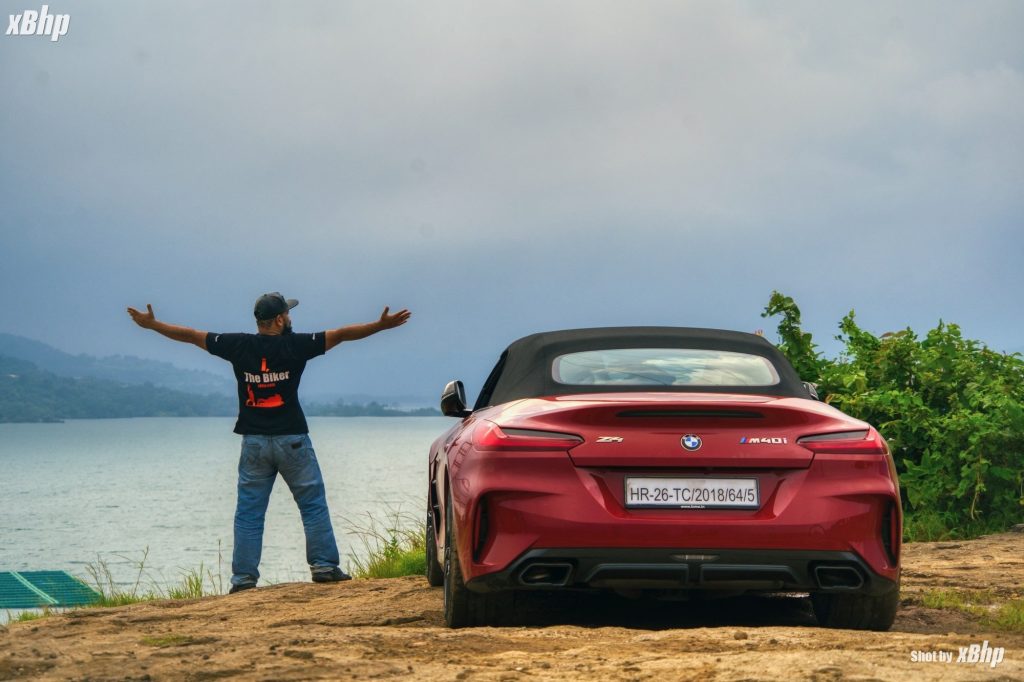
Personally, we really like how the design flows and more importantly, it has a lot of potential. In the past, BMW has used the Z4 as a base to make GT competition cars and a big-a** spoiler on the rear and a wide-body kit is the potential we’re talking about. It’ll probably be the sickest-looking Z competition car ever made!
Moving on to the performance, because if cars only had to look good, they would probably stay in the concept stage and we’d see a new one every day. They have to go like that too. In the case of the Z4, we have the ‘basic’ sDrive variants and their ‘basicness’ shows as well. What we drove, the M40i is the cream in both looks and, of course, performance.

Before we even start this bit we’ll have you know that the sDrive variants are roadsters, lookers, and have decent performance so if you want your roadster for flaunting, that’s the direction you head towards and save some money in the process. If you’re serious about driving… serious driving the M40i is what you want. The ‘M’ explains a lot but we’ll try our best as well.
Let’s talk engine first. The BMW Z4 M40i is powered by a 3.0L twin-turbo inline 6. It is good for 500 Nm of torque which is very well spread between 1,600 rpm and 4,500 rpm where the peak is. The peak power, 340 bhp of it, arrives between 5,000-6,500 rpm. That is lofty for a car but anyway, the car can rev up to 7,000 rpm, a spot you’d like to visit very often because of the aural kick. And because you’re in a roadster, it is even better.

The power and torque figure are ample for a car of this class and it shows in the real world. The Z4 M40i is capable of a lot of fun if you want it that way. BMW claims 0-100 km/h in 4.5s for this car. We neither contested that claim nor tested it. We just had fun. It accelerates briskly and the 8-Speed Steptronic Sport transmission is more than enough to keep the fun going.
The way this engine has been tuned, it seems BMW tried to give you the best of both worlds where you get actual drivability because of the torque available from just 1,600 rpm and then some rev-bombing fun as high in the rev-range is where you find the proverbial ‘Sheer Driving Pleasure’.

Rear-wheel drive means that there’s a lot of power being transmitted to just one set of wheels so you may have to hold those horses back a hair so as to avoid seeing the tail of the car. It can be done voluntarily but we are not sure if we have the roads for that. At any rate, the engine is more than capable of delivering some tail-out fun in addition to actual, civil, leisurely driving.
We’ve come across quite a few people who were not big fans of the multi-faceted engine and took the comparison straight to an M2. So, a somewhat similar engine (with generational differences probably) powers the M2 so you know that the engine is capable of producing power north of 400 horses.

The M40i makes less but honestly, we’ve driven an M4 so we can tell you how focussed those cars are. The Z4 M40i is not a full-fledged M but is garnished with some M performance bits to just enhance the experience a little more. It is not a racetrack demon and it is not supposed to be. What you expect a vehicle to do and what it is meant to do may never coincide unless you try to understand and adapt. Once you do, the Z4 is nearly flawless.
Onwards to handling then. We consider ourselves lucky in the sense that we got to drive the Z4 of the prior generation in the Alps and this one in the ghats of Maharashtra. Both are places where you can experience the engineering that goes into making these cars so much fun to drive. And the new Z4 is undoubtedly the better one. Simply put, it is down to the lighter weight and lower CoG because of the soft top and the M-Performance parts as well, of course!

We found the steering of the Z4 to be pretty well sorted. It is quick and it is easy to point the front of the car wherever you want to go and the Z4 tracks the line of your choice effortlessly… well, almost. It is not all nervous and darty, it is simply responsive.
We just wish it was a little more communicative but we are of the opinion that the electrification (not the powertrain) will keep chipping off at the organic driving experience. Personally, we’d take more safety over that any day but still, a car that looks this good and with an engine that good, one would want it to talk a little more.

The suspension system is where you fall in love with it. It firms up and eases down depending on the modes and the driving style and it works surprisingly well both ways. In flowing corners, it is taut and devoid of that shaky feeling and on bad roads, it is so supple that it is perplexing. Those who compared this car to the M2, show it some bad roads and you’ll know what you want. Brakes come from the M-performance bin and therefore, there is nothing more you could ask for. You ask and it stops.
So the Z4 M40i is much better in terms of engine and dynamics when compared to the older Zs but even in general, this is a very enjoyable and a very approachable sports car. Accelerates well, sounds awesome, is composed during spirited rides and keeps you composed on less-than-ideal surfaces. There’s not a lot more you could ask for but BMW will give it to you regardless.

What we mean by that is the loaded interior. Let’s start with the most obvious bit, the roof. With the top down, the wind management inside the cabin is surprisingly good and despite being ‘open’ to nature, you are fairly well cocooned. The innards are spacious as well. We feel that the Z4 M40i will be fairly accommodating for people up to 6-feet tall beyond which things may get a little stuffy.
Predictably, with the roof down, things are even better inside the cabin and luxury car connoisseurs will not find a lot to complain about. We aren’t that and we prefer to keep the top down. Another good bit is that since it isn’t a hardtop, it does not eat into the boot space which is already pretty generous. The fabric roof folds into its own compartment and you have all of the 281 litres of the boot space to yourself. That private compartment for the roof is perhaps the reason for the slightly odd rear.

Moving on, the rest of the cabin, from the dash to the seats are also typical BMW. What we particularly liked is that the whole cabin feels bespoke to the Z. It isn’t your typical parts bin salvage job. We are hard workers and we like hard work. And there’s a lot that has gone on in here.
And finally, we have the iDrive system which is exactly the electrification we referred to earlier. A system with two screens (one for the instrument and one touchscreen for car controls) is what occupies the dash and it is beautiful to look at and intuitive to deal with. It may take a while though because the plethora of features it boasts of are not for impatient ones. Though a regular speedo and tacho with actual needles would have been more… full of feeling. We miss analogue stuff sometimes.

And hey, let’s not forget the 12-speaker Harman Kardon speaker setup. If you aren’t driving it like a sports car and there’s no engine noise to giggle to, the sound system is enough for the best possible (with an open-top) experience of your favourite songs. We recommend Kurt Cobain singing the Nirvana song- The Man Who Sold The World… I searched for form and land… For years and years, I roamed…
Anyway, so there you have it, folks. The lowdown of the Z4 M40i. But you know what, there’s something that we’d like to put out there. Many people have compared the Z4 to the M2 because of similar engines and whatnot without understanding the purpose of each car. The Z4 may not beat the M2 on the racetrack but take them both out for a leisurely drive in mixed conditions and let us know which one you enjoyed more.

Another ‘very popular’ comparison is with the new Supra and why not, the platform is the same after all. Let us tell you this, the Supra was one of the spearheads of the Tuner culture or the Japanese sports car culture. And invariably, the new one also follows the same ethos and despite the shared platform, these are monumentally different cars in terms of the experience. Supra is a car that is more akin to its own culture ie Japan’s tuner culture and the Z4 more akin to its own European roots. You catch our drift… or should we say Tokyo Drift? In conclusion, a lot of people say that the Z4 is no Supra and we agree. But the Supra is no Z4 either and if even if you don’t concur, take a test ride you’ll know what we’re on about.

Mahindra Thar: Is this the one that can stir a biker’s heart?
 Sep 2020 Sundeep Gajjar
Cars
Sep 2020 Sundeep Gajjar
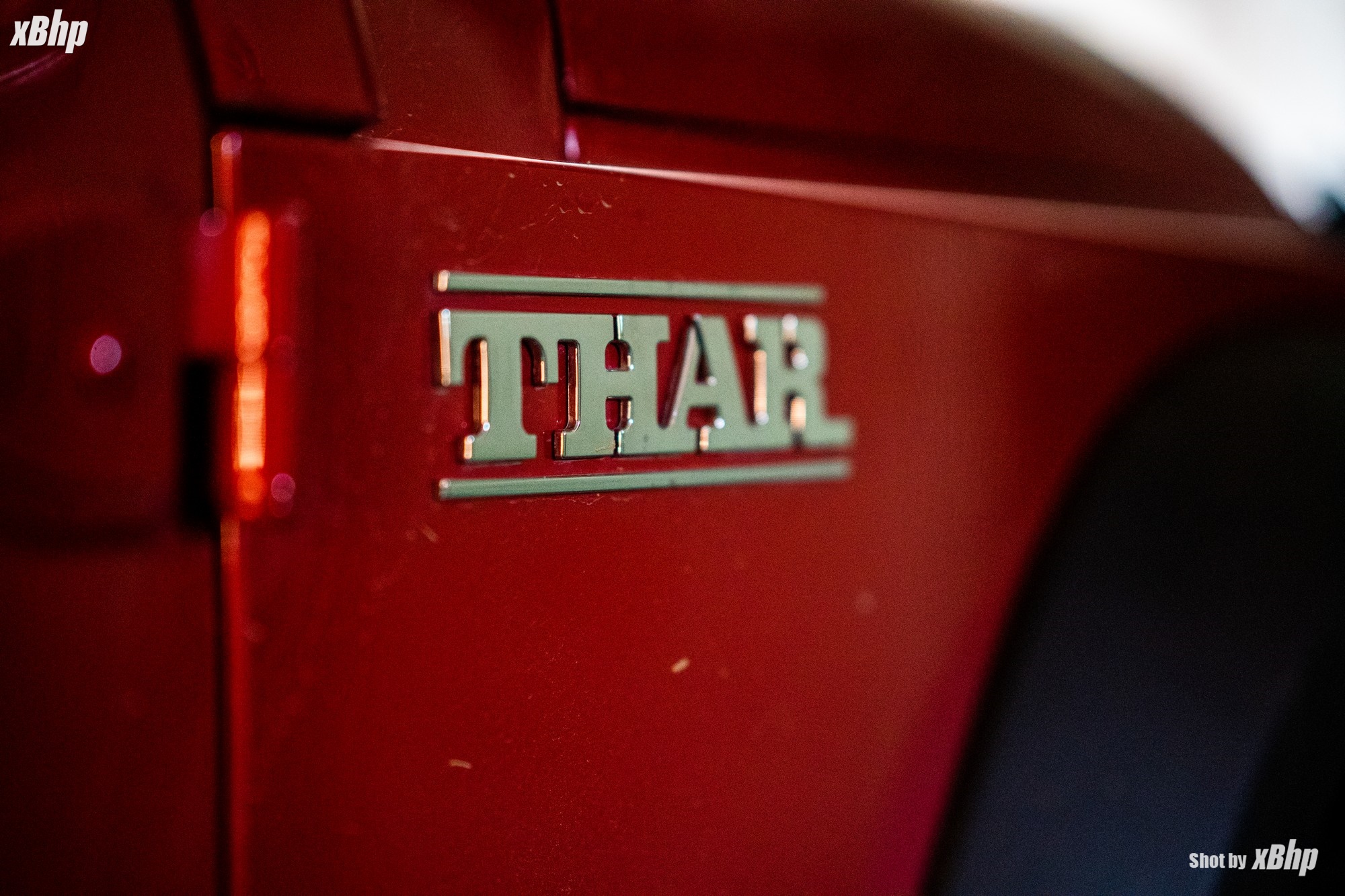
CarsBeing motorcyclists, we rarely veer towards cars. And the ones that we feel a certain way about are also supercars. But Mahindra Thar is a name that almost every petrolhead worth his salt has heard about. Naturally, that includes us as well. While we have been ‘aware’ of it, we did not pay much heed to it for the most part. That was until now… We recently got to drive the new 2020 Mahindra Thar and while it may be very difficult, we’ll try to sum up our feelings.
Before diving into the first drive experience, here’s a video of the Mahindra Thar with heartfelt words from a biker…


Sometimes it happens that a certain object brings about a halt in your journey, the destination of which you are so eager to reach. An object with a presence so utterly magnetic that you are willing to share with it a chunk of your time, every bit of which you hold so dear. In our case, it has happened both literally and figuratively. Literally in the thousands of kilometres that we have travelled, and figuratively as in the journey of xBhp? Well… right now.


xBhp is all about motorcycles but supercars have always caught our fancy and we have never missed a chance to experience one. But only supercars. The one we have with us is not a supercar in terms of the astronomical power figures and even higher bank balance figures they need. It is a supercar in spirit and that is simply because of the grandeur that it possesses. And the grandeur starts right from the name- Thar!

Rarely has an indigenous vehicle carved a niche of its own and boasted of following which can be referred to as cult. Ruling the landscapes from treacherous terrains to urban jungles, it has left a mark on the market and the aftermarket as well. It has been a lifestyle icon for quite a while now and the modularity of the platform ensured that the buyers could project some of their own personality through the might of the Mahindra Thar.

The Thar that we know and adore so much only came out in 2010 but it is much more deep-rooted than that. The spiritual predecessor of the Thar, the very first one, can be traced back to 1949. Mahindra’s first off-roader as they began producing the Willys CJ3A Jeep. And since then, Mahindra has never looked back as they became the premier SUV and off-roading car manufacturer in India with a presence globally pronounced.

But during their rise to the top, Mahindra never forgot where they started from and kept building on the original Willys Jeep. All the iterations that came afterwards, were synonymous with strength and the ability to deal with tougher terrains than tarmac. There is a reason why it was a perennial law enforcement vehicle. The car itself was enough to enforce the law. Such was its mettle, that armoured versions of it are still in use in the Indian Army.

But the very first commercial success for this line of cars from Mahindra came with the 1996 Classic. Right after the launch, it became an icon. A true macho car and a staple of Indian pop culture with pronounced and frequent appearances in music videos and in movies. Building on that very success, Mahindra introduced the Thar in 2010 amidst much fanfare. It did all that the Classic did for Mahindra… and then some.

But time and tide wait for none and no one is immune to the adverse effects of ageing be it man or machine. The Thar was the most popular off-roader in the Indian market for a while but newer, hungrier contestants were already on the prowl. Fortunately, Mahindra did not wait too long to give it the much needed shot in the arm. And so, the prodigal son returns in the form of the 2020 Thar.

Mahindra has done an amazing job with the new Thar by retaining the silhouette of the original but adding a modern touch to it. The car is wider, looks more poised, the edges have been softened just a little and the wheels… Those 18” wheels with exquisite design and all-terrain tyres scream the intent of the car out loud.


Mahindra has built this car from the ground up, the design, the chassis, the grill, the engines, the gearboxes, the cabin, the instrumentation… everything is new. And kudos to Mahindra for still being able to salvage almost all of the things that made the previous Thar iconic.


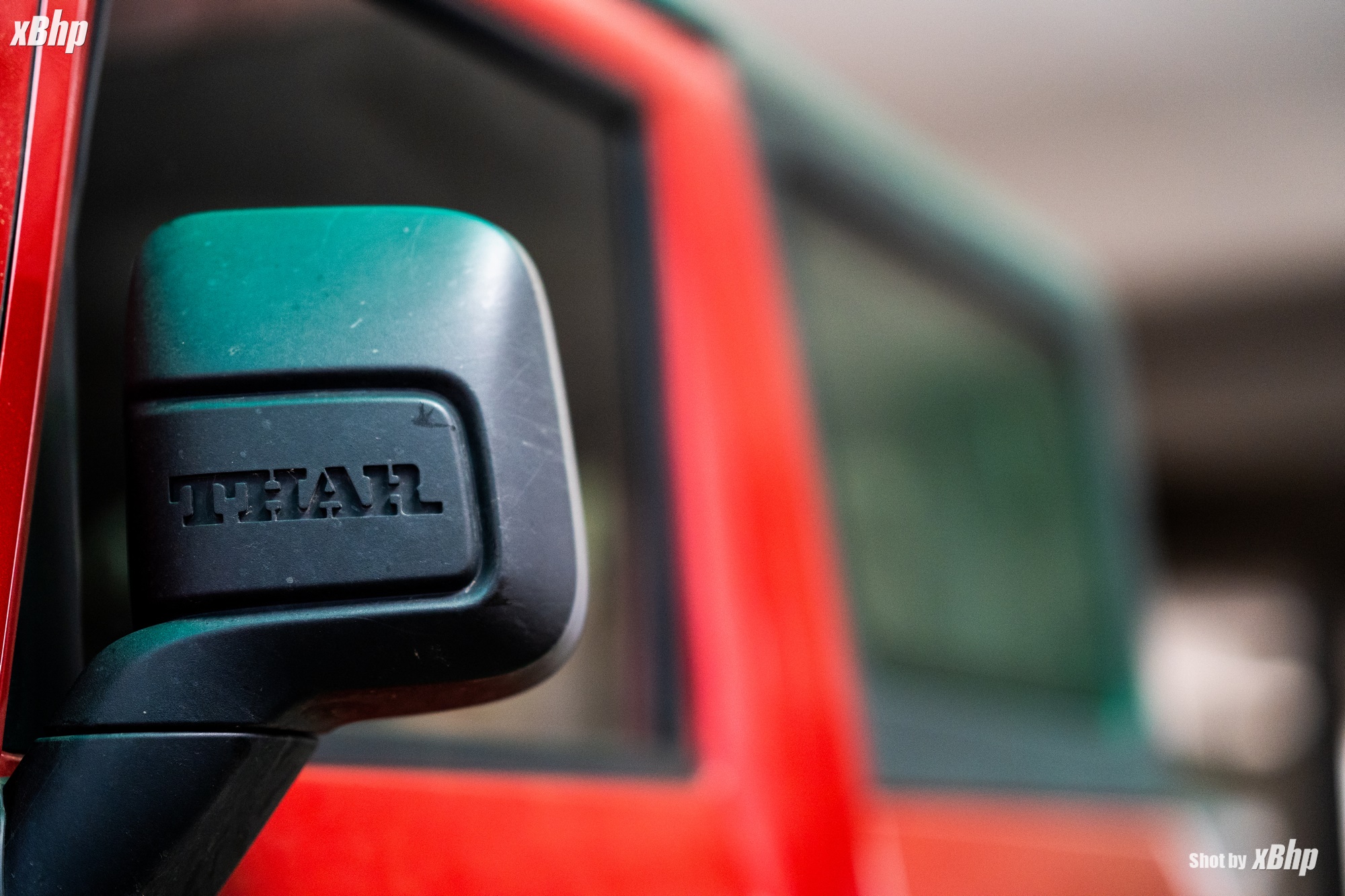
About the colour that we have here, we have only this to say; A car does not choose ‘Red’, ‘Red’ chooses the car. While some may feel that the modern-ness has diluted some of the classic touches, we believe that the car still looks purposeful and deserving of that fabled off-roading capability!

Step inside the car and it is not a Thar anymore and we mean that as a compliment. In the old Thar, the cabin possessed only bare-essentials and that too… barely. It was very salvation army but the new one… oh no no no. This is a proper car now. But some of it is also variant dependent. There are two, AX and LX. AX is more biased towards off-roading while the LX tries to give you the best of both worlds.


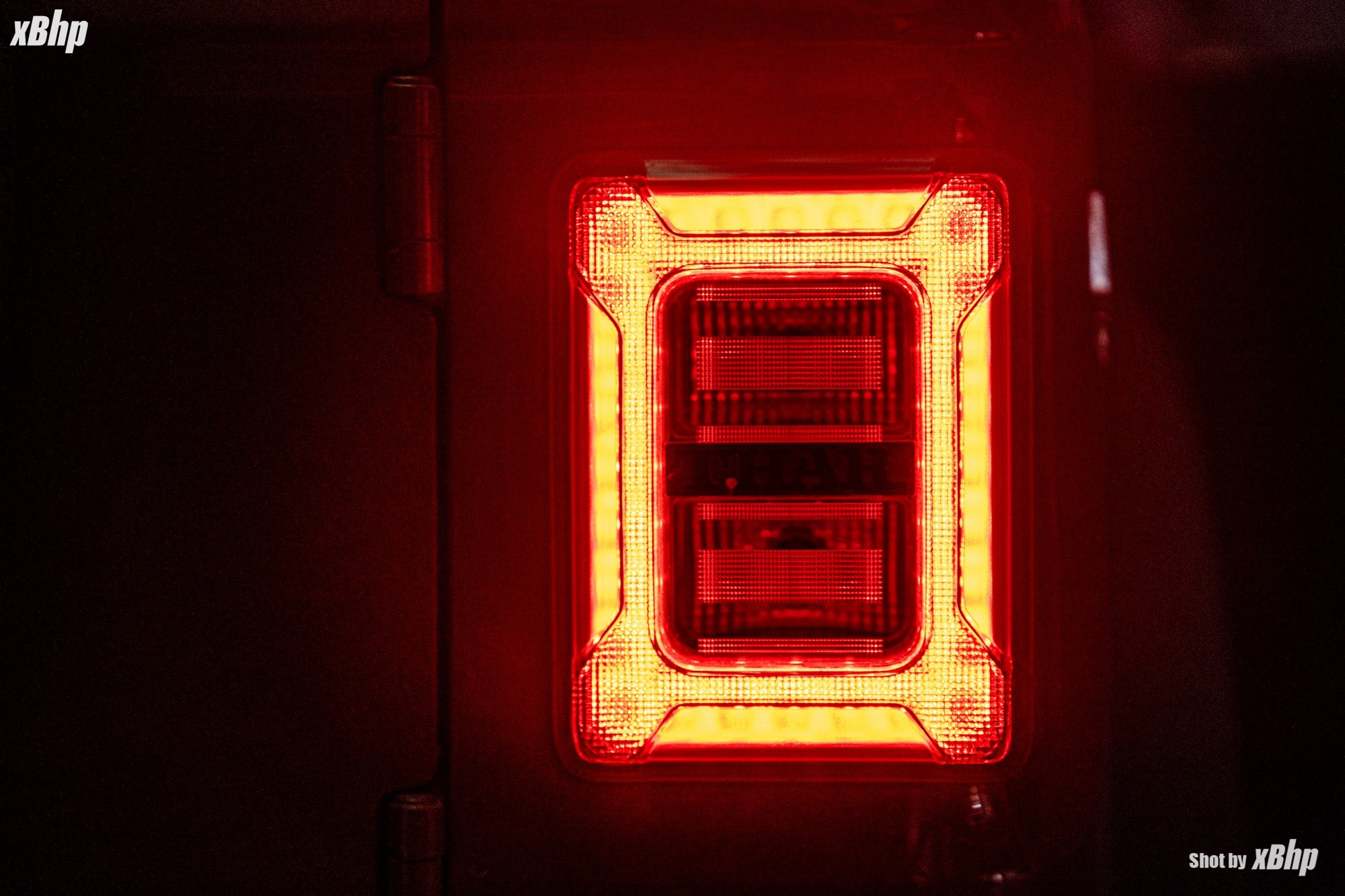
The LX gets stuff like an 8-way adjustable driver’s seat, a 7.0-inch touchscreen infotainment system, LED DRLs, dual-tone bumpers, ESP… and even a tyre pressure monitoring system. In the LX, you have the choice of either a Petrol (Automatic), Diesel (Automatic), and Diesel (Manual) with options for either a soft-top or a hardtop. We have here, the more… Human… Thar. LX with a hardtop and a Diesel Manual.

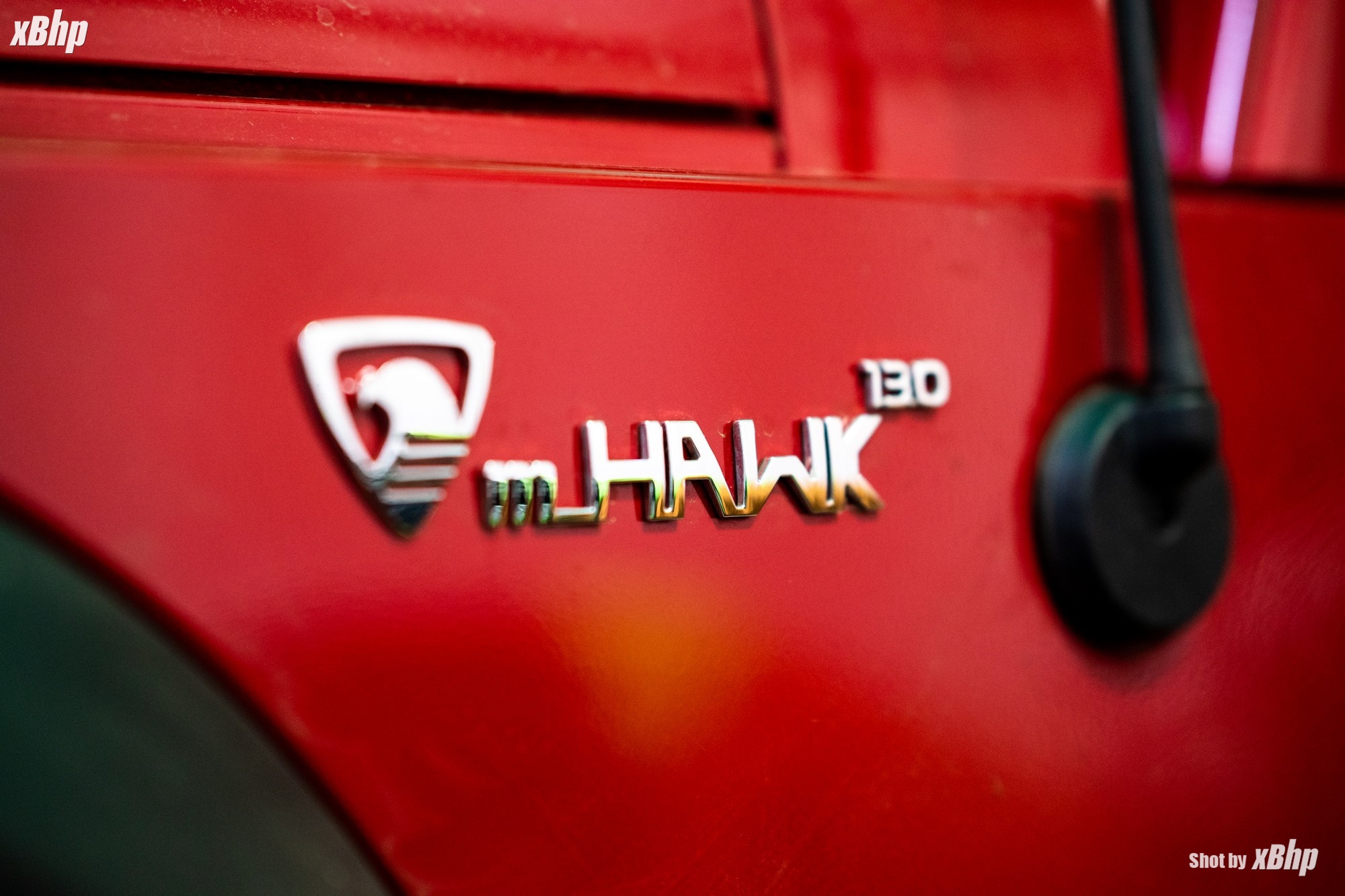
The driving fun that we have had in the new Thar is courtesy of the new all-aluminium block 2.2 mHawk engine. 132 bhp and 300 Nm are the official numbers but a brochure can never define a vehicle. The way the new Mahindra Thar drives is exceptional. The spread of torque is even throughout the rev range and the Thar pulls cleanly.

There are no spikes or drops, just clean linear-pull which does not fade till you hit the lofty rev-limit of 4,700 rpm. And it is uncharacteristically refined too for a diesel! Sorcery. The gearbox is not the quickest out there but that much torque tuned for fantastic delivery, you don’t need that.

And now, about the forte, there’s a 4×4 low-ratio transfer gearbox and you know what that is meant for. Serious mud-slinging and we cannot wait to try that. The tarmac is not its natural habitat and yet, it drinks its pride, and the disdain it has towards you for treating it this way and behaves. A truly civil-on-the-road Thar… it is a new day indeed.


We are loving what we have been able to do with the car so far and we’ll continue having some more fun with it and bring to you more of the 2020 Mahindra Thar. And weirdly enough, even if we have a plethora of cars, and even supercars surrounding us, we may still look to the Thar for the pure, visceral, guttural fun and the dauntless character that it so proudly displays.


After all, the Thar had a following because it had an attitude and that too in spades. The new one is overflowing with it! Probably that is why it comes with a removable drain plug for the cabin and a drizzle-resistant touchscreen… or maybe, it is for something more rugged and sinister.


A biker’s car?- Sundeep Gajjar/MotoGrapher
I am a biker and you know, bikers are a little different. We’re a little eccentric and crazy.

“Biking makes you one with the elements”- we have used this extensively to make fun of those who like cars. But it’s all good, they’re also our brethren, just with two extra wheels. So is there any car which can make me happy?

Not supercars, I can’t burn a hole through my pocket.I don’t have the capacity to spend crores, and even if I did, I couldn’t possibly take them through mud, dirt and all kinds of terrains. But I don’t like commuter cars either.


I have the world’s fastest bike and I am on the lookout for a car that suits my personality. Something that can go wherever I want, something that can ‘wander at will’. Frankly, I’ve never liked any of the cars made till date, especially Indian made and neither had any car stirred me emotionally.

There is nothing wrong with them, they’re technically perfect but they’ve all lacked a certain attitude, a character I wanted but could never find- dominating, majestic, tough and badass! A car which wouldn’t look out of place as I step out on the porch of a five-star hotel. A car which I can take out for a ride in the rain. It should look muscular, it should have that attitude. Do you understand what I’m getting at?

I knew about Thar. I mean it’s next to impossible to be a petrolhead in India and to not know or to not have seen a Thar in real life. It had become a cult, a lifestyle. A lot of my friends, with big cars and big money, also had it. People say that the 4×4 off-roading world is entirely different. I am very far removed from that universe; my world has supercars, superbikes, and gadgets.

However, Thar is the kind of car that inspires the same admiration from a BMW or Audi owner as from people in the rural areas of India. It is perhaps the only car which bridges the gap between the rich-urban, the middle class and the rural villages and this is a very incredible thing. It isn’t something which can be planned, it’s something that happens on its own and can often take years.

15th August 2020. I was lost in my own world of fast bikes and supercars. Then, Mahindra dropped a bomb. Thar had only been in my peripheral vision and suddenly, the new Thar became this incredible object of desire. I tell you, it just blew my mind! I’ve never felt a desire to own a car like this except the Lamborghini Aventador or the BMW X6 M.

But this is within my reach, without breaking the bank, and this car will elevate and complement my personality. Slow clap for Mahindra- you took a cult classic and made it even more beautiful and desirable for the urban millennials.

150 bhp, insane torque, automatic air-conditioning, a big touch screen- it has all the creature comforts. And what can I say about the looks! In the 3 days, half the population on the road went crazy just looking at the car- something that doesn’t happen even with an expensive luxury car.

Perhaps, it’s because this car is approachable and the person inside, who is driving the car, is deemed to have a certain pleasing, no-nonsense personality that embraces the free independent spirit of the Thar itself.

It has a tremendous presence on the urban roads, especially the hardtop, and when you take it to the villages, it seems like everyone is your friend. Even the cows and buffaloes feel close to it. In villages across India, people have been enjoying the Thar experience for years.

So, if you want a technical review, you can find many others. I can only show you its beauty through pictures and tell you how I feel about it as a biker. It goes fast and the ride can feel bumpy but most importantly, it appeals to the biker in me. I swear, there’s no car like this in India.

If you have 30 lakhs to spare, buy one superbike and then, Thar… The world will be at your feet.


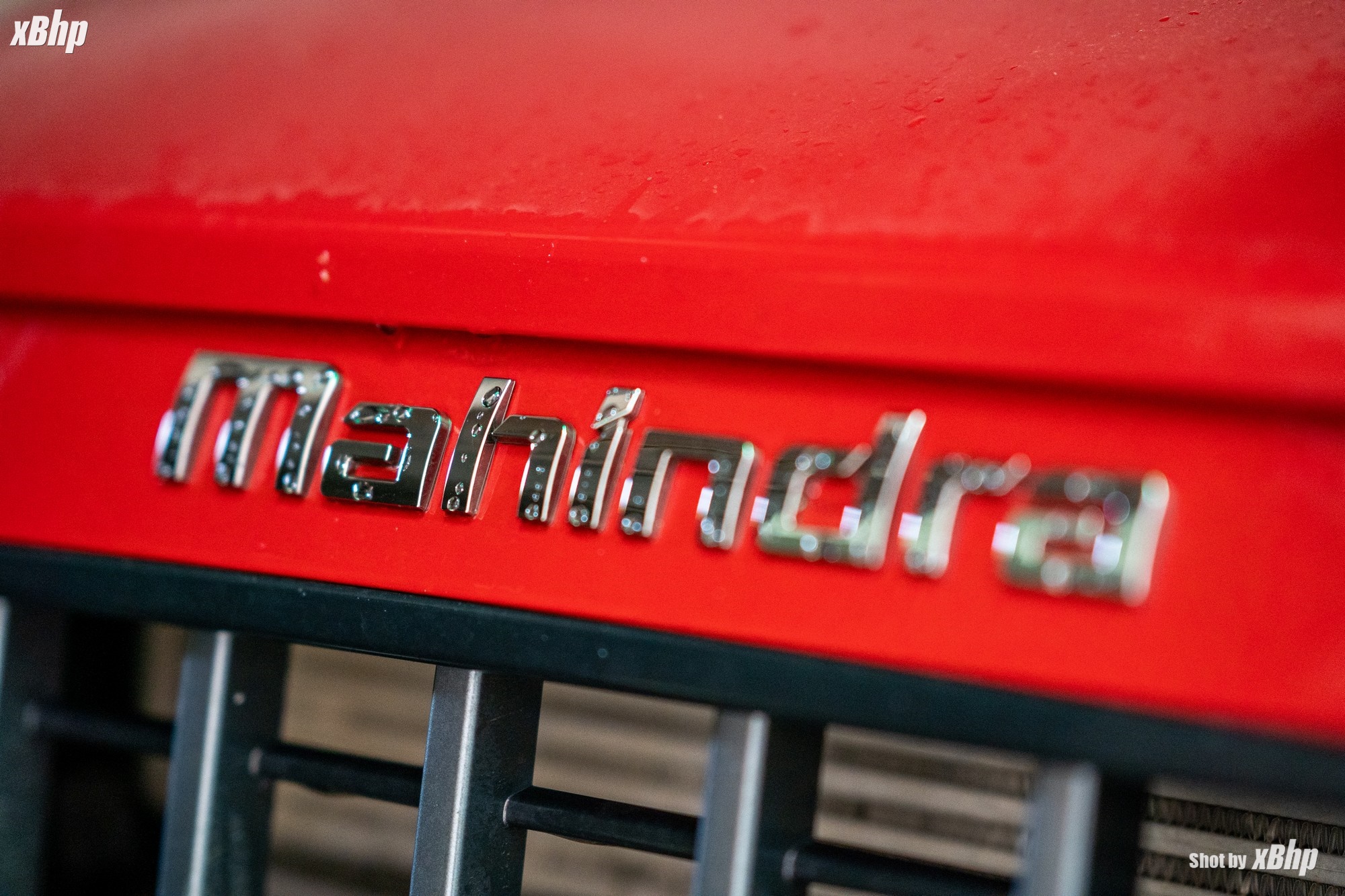
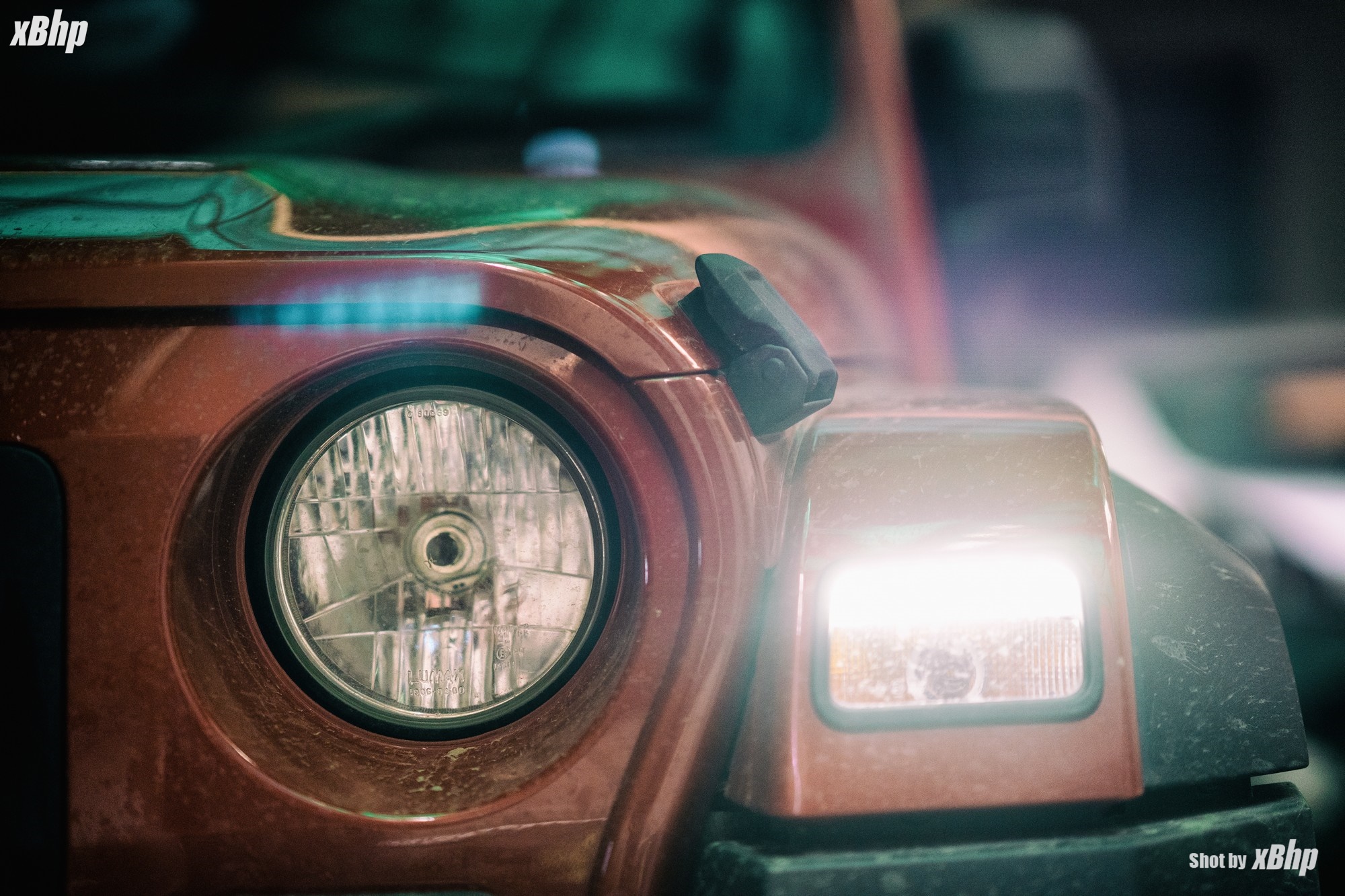
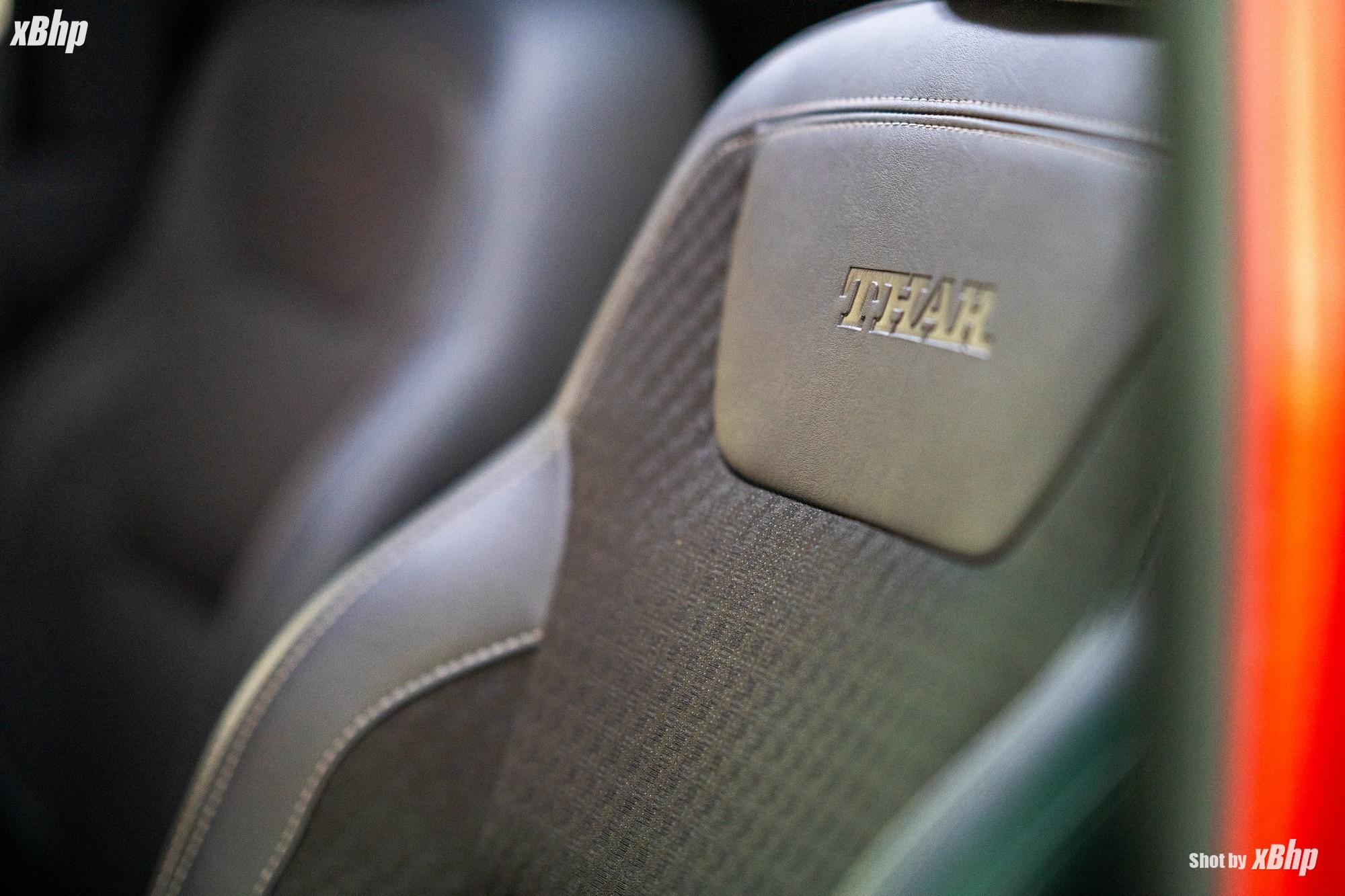
2020 TVS Apache RTR 200 4V: Earning the badge of ‘Class’ Prefect
 Aug 2020 Sundeep Gajjar
Bikes,Motorcycles,TVS
Aug 2020 Sundeep Gajjar
Bikes,Motorcycles,TVSThere’s a secret to why I like my job and my workplace a lot. It is the chase of betterment in whatever it is that we do here. Sometimes it makes me hate it too but then, it does not take long for me to wake up. Why am I telling you this? Because that same reason is why I like the Apache series so much. I own an RTR 180 and I love it to death. And the only one that makes me want to cheat on her is another Apache- 2020 TVS Apache RTR 200 4V.

Text: Karan Singh Bansatta
Photos: Sunil Gupta
The name’s a mouthful but it is something that can be forgiven. I got to ride one at TVS’ test track in Hosur and I loved it. But then I thought that the time I spent with it was nowhere near enough to get to know it thoroughly. Recently, we got one here at xBhp for a few days and here’s what I feel about the new RTR 200 4V after spending a lot of time with it and also, why I want to cheat on my own little Menace.

Firstly, the looks. There are not a lot of motorcycles out there in this segment that convey their intent so eagerly. In the case of 200 4V, it is racing. From the aggressive front fascia, to the graphics, from the split seats to the faux intakes on the rear panels… even the colour scheme screams that TVS has been associated with racing for a while now and they are serious people.

I won’t talk about looks for too long as everyone has a certain point of view with which they look at a motorcycle. That said, I think we can all agree that the new RTR 200 4V is in the good books of most when it comes to design and execution. About execution, the fit and finish is top notch and there are no unruly wires or bolts that mess with the clean and sharp aesthetics of the bike.

There are a few gripes that I have though. I don’t like rear mud flaps but if you don’t have them on, the people behind may not like you on rainy days. So it is something that you live with or get rid of depending on how considerate you are as a person. Second is, and it is very personal, I do not like the end can on the RTR 200 4V. But many do and it sounds okay so it works. Lastly, the pilot lamps or positioning lamps or eyes, they feel flimsy when the lights are off because of the plastic. It is a different story when they are on though.

Moving on, it is the performance that counts and that is what TVS is always most keen to deliver on. And they do… always! I am not too finicky about the performance of a motorcycle, there are a few that I like more than others. And the Apache RTR 200 4V, I like a lot. The reason for that is that the performance is plentiful, the handling is a dream, and it has a dual character, laid back and exciting depending on how you want it.

Let’s start with the engine. Perhaps the best thing to happen to the Apache series was the arrival of the 4V motorcycles as they dealt with the biggest issue that plagued the OG RTRs- vibrations. I say that because my 180 is quite buzzy… and I say that despite my love for her. So the 4Vs brought with them more refinement, lasting performance, and the same fun-factor that is akin to the Apaches.

As soon as you saddle up on the 200 4V, it is instantly comfortable. The seat is spacious and comfy, the tank recesses are near perfect and the reach to the clip-ons is very natural. Turn the key and the screen comes alive with an important message- Gear up. You should always do that. Press the starter and the engine comes alive instantaneously. If you have done that, congratulations as you have experienced the Feather Touch Start of the new RTR 200 4V.

On a serious note, it is nifty. If the motorcycle is cold, the revs stay at around the 2,000-2,500 rpm mark for a bit before settling down. It starts without any hiccups and warms itself up as well. That’s a good way to start a good day’s ride. Anyway, you can test the smoothness of the engine by blipping the throttle before you get a move on. It is really… really smooth.

Pull in the clutch, engage the clutch and you are on the move without any drama. No grabby clutches or temper tantrums, pure and simple ease. The clutch action is very light and it is a boon in traffic. I used it for my daily commute as well and traffic in some areas of Delhi can really get on your nerves. It is just a little less pronounced on the RTR 200 4V.

In addition to the light clutch action, it is also because of GTT or Glide Through Technology that the RTR is such a treat in metro cities. What it entails is that you just engage the motorcycle in gear from a standstill, release the clutch slowly and it starts to move with zero throttle input. I tested it extensively and it never stalled… not even once.

That’s a nifty trick and one that you really appreciate if you deal with a lot of traffic on a daily basis. For those who are numerically inclined, it does 7 km/h in 1st gear, 12 km/h in second, and 17 km/h in 3rd, according to TVS. I did not feel inclined to test that and stuck with GTT’s real-world application- convenience.

As soon as the traffic fades and there is some space for the RTR 200 4V to stretch its legs, that’s when you realize that it is not a one-trick-pony. The acceleration is smooth, linear, and well, quick. It is a slick darn motorcycle for commutes sprinkled with some fun. Now, throughout the rev range and throughout the 5 gears of the motorcycle, I never felt the motorcycle holding anything back. No choppy throttle and no lag at all. Responsive all around.

While the engine is a gem, it is the fueling that makes the RTR 200 4V such a smooth operator. I don’t know if the Fi is Race-Tuned or not, but it is very well tuned. The on-off throttle transitions bear adequate response but without making the motorcycle feel jerky. And I have to mention this explicitly- it sounds awesome. You’ll find yourself revving the bike just to listen to the soundtrack. It is a tad quieter than my RTR 180, but even then, it is the best-in-class. Period.

About the gearbox, it is slick. Both upshifts and downshifts are positive and they are engaged with a responsive click. If you find an open road, sometimes you move up through the gearbox (because of spirited acceleration) and no matter how you test the RTR 200 4V’s gearbox, it’ll never fall short on your expectations. But there are two things that I’d like to have here, both my personal opinions.

First and the most important is a 6th gear. TVS… please do it. It is such a capable motorcycle and during my runs if I ever found myself wishing for something on the highways, it was a 6th gear. Don’t get me wrong. It cruises well in the 5th at around 70-80 km/h, but the engine is so eager and I found myself trying to engage the 6th countless times but guess what, it isn’t there.

The second thing is a boon for safety and a slight bane in terms of feeling. I use a lot of engine braking with the front brakes. I find it reassuring. On my RTR 180 the retardation is strong but with the 200 4V, it is a little sedate for my taste. But then, rapid downshifts can also lead to some close calls and the Slipper Clutch takes care of that. It’s a trade-off in which I feel inclined to more ‘feeling’ but I think compromising on safety because of that is not for the greater good.

Since I mentioned highway riding, let’s talk about that. Smoothness and refinement is something you look for when you want to cruise at highway speed. And to TVS’ credit, it is there and that too, all across the rev-range. What sorcery led to this in a single-cylinder engine meant to be revved, I do not know. I am just glad that the motorcycle is virtually vibe free unless you want to blatantly disrespect the shift light (at stock settings. It can be programmed as well).

All said and done, the RTR 200 4V has been blessed with a gem of an engine and with TVS’ track record, we feel like they’ll keep working to make it better. I mean the bike has already gotten multiple revisions and every time, it is better than the previous one. Onwards to handling then…

RTRs have always been known for their agility and handling prowess (all credits to TVS Racing). In the case of the 200 4V, the split-cradle chassis, KYB suspension, stellar brakes, and the new Eurogrip radial tyres ensure responsive and bankable handling (just some wordplay). Directional changes are quick as always, but what has improved is the straight line stability at speed. The ultra-short wheelbase of the older RTRs ensured very responsive handling but the stability at higher speeds left something to be desired.

It has all been remedied though and the RTR 200 4V is a complete package. This not only makes the 200 4V a great motorcycle for highways, but a pretty agile one for some tight maneuvering. Once you experience the motorcycle through turns and corners, the highways seem almost boring.

The suspension is a tad stiff (predictably) but is compliant enough to deal with most undulations. Bigger bumps do transmit some shock to the rider but they also transmit a lot of fun in the corners, don’t they… Then again, TVS’ racing inclination always leads to them being a little biased towards handling against comfort.

What goes quickly must stop quickly too and the braking system of the RTR 200 4V is more than equipped to do that. The bite is sharp and available on-demand. I cannot tell you how much confidence good brakes can inspire and the 200 4V’s are just what the doctor ordered. Dual-channel ABS with RLP (Rear Wheel Lift-off Protection) inspires even more confidence so all good here.

Tyres are pretty good as well this time around. There is adequate grip in the dry. I did get to test them in the wet too because it rained on the day I went to return the bike with a long face. And to be honest, wet roads do take a chunk away from the confidence the tyres inspire in the dry. Also, there is a patch of concrete road on my way to the office and that also kind of upsets the tyres just a smidge.

I will also point out that TVS has worked hard to strike a balance between steadiness and agility with the geometry. The adverse effects of a sharp-ish rake are almost neutered by the wheelbase and vice-versa. Ergonomics are spot on and again, the RTR 200 4V is a balance of a comfortable yet commanding riding stance. Taller riders may need to move around a little to find that perfect balance though. Streetfighters and open highways do not gel well together so there’s that.

We are approaching the end of this review but we still have to talk about the little things. RVMs need a little tinkering to get that elbow-less view of the rear but they are almost always buzz-free. TVS says the all-LED headlamp is warm white to simulate daylight conditions. I won’t say anything about that but the intensity and the resulting illumination is good but on streetlight-less patches, I could have used a slightly better spread.

The switchgear is nice and the buttons tactile so no qualms there. They are placed ergonomically as well so the reach is natural. Illumination would have just been a bonus. Fuel efficiency is also quite decent for the performance on offer. You can expect around 38-39 km/l in your average commuting with a mix of city and freeway riding. If you ride it hard, expect around 35-36 km/l. Good stuff.

Now the instrument cluster is very comprehensive and most importantly, very legible even in harsh, direct sunlight. The white backlight is pleasing to the eye. The gear position indication is a bit smallish though. I love the fact that it records your best 0-60 km/h and top speed numbers and is a subtle nod to the racing inclination of TVS.

The SmartXonnect system is instant love. Turn-by-turn navigation, Call/SMS alert, low-fuel warning and navigation to the nearest fuel station, crash alerts and even race telemetry, it is all there. You need to pair your smartphone (with the app) with the Bluetooth-enabled SmartXonnect system and have fun with all the features.
Watch the video of the SmartXonnect Technology in action here.

Doing that, you also gain access to maximum Gs experienced and maximum lean angle achieved, in addition to top speed and 0-60 numbers. Nifty little thing if you don’t mind the outrageous numbers the lean angle indicator shows sometimes. That happens because it uses the phone’s sensor to collect that data. Not always reliable, but a good thing to have nonetheless for some boasting sessions and general fun.

Is it a reliable motorcycle? Absolutely. Is it a fun motorcycle? Absolutely. Is it everything you need to quench your motorcycle thirst on a daily basis? 99%. Is it priced right? Yes, objectively speaking. Does it offer good value for your money? Maybe even more. Does it make me want to cheat on my RTR 180? Kind of. Will I? Probably not because I cannot afford to at the moment. Those who can? Cheat away!

Check out the full specs here.
BMW R1250GS Adventure Review: Endless explorer
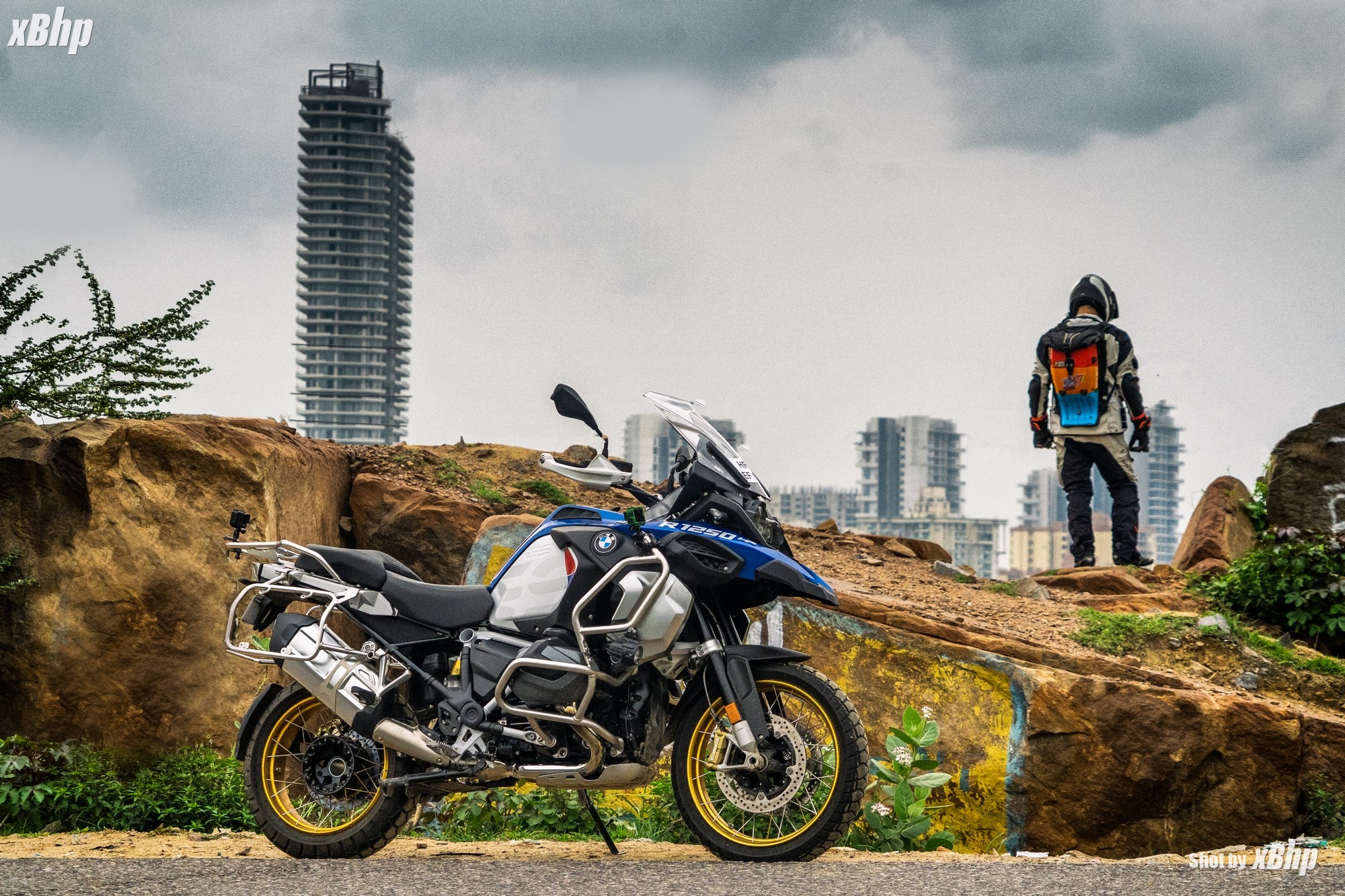 Aug 2020 Sundeep Gajjar
Bikes,BMW,Motorcycles
Aug 2020 Sundeep Gajjar
Bikes,BMW,MotorcyclesIf the adventure motorcycling world is the beautiful jungle from Avatar, the BMW R1250GS Adventure is the goddess Eywa for most people. It is that proverbial spirit of the wild that guides you through the wilderness, acquainting you with it and keeping you safe from it too. We recently got a chance to take one out for a ride and the Bavarian Adventure-Boxer seems like it is the real deal.

Text: Karan Singh Bansatta
Photos: Sunil Gupta
One look at the R1250GS Adventure invokes two thoughts; it is purposeful and it is massive. It is 2,270mm of length massive and it is 268 kg (wet) of weight massive. It is also 980mm wide massive and 217 kg of payload massive! And yet, the execution of the design is flawless and the motorcycle looks dynamic even with dimensions like that. Even more so in the HP colour scheme.

BMW has always been known for its radical and quirky motorcycle designs and this one is no exception. Starting with the front, the LED headlight has been designed in the same radical (and very technical) manner. The beak and the high windshield (super sturdy too) continue the I like’em big, I like’em chunky theme.

The massive shrouded fuel follows the same end with the sturdy engine and frame protectors adding to the visual bulk. GS insignia on the tank, BMW insignia on the tank shroud and the R1250 marking on the beak are there to help you guess the name of the motorcycle… and HP written in addition to the R1250 tells you that it is even more ‘besondere’ than the base model.

The dynamic lines continue towards the rear but the size tapers off a tad bit. Despite that, the chunky exhaust, saddlebag mounts and a beefy carrier ensure that the bike does not look disproportionate from any angle. And if all that was not enough, the spoked wheels and single-side swingarm complete what we refer to as a typical BMW-sexy package.

Saddle up and… the difficulties kinda start. The motorcycle is tall even on the lowest setting of the adjustable seat height. The suspension is electronically adjustable and you can set the preload to minimum to help the matters.

Even then, taking it off the stand and backing it out of your parking is a test of your worthiness of this machine. But then, that is typical of most adventure bikes and this is the only time you’ll feel the kerb weight of the R1250GS Adventure. We say that because once on a roll, you’ll witness pure German magic. More on that later.

The ignition is keyless and welcome to 2020. One push of the button brings on the radiant 6.5” TFT screen. This is not a smartphone review but that screen is so vibrant and the colours are so punchy. With the next sentence, it may seem like a smartphone review yet again but it is a BMW so we cannot help it. The home screen is crowded with a bar-graph style tacho, a digital speedo, and gear selection indicator.

But that was just the home screen and the dash provides a multi-page menu with a plethora of options and genius intuitivity. The latter is a made-up word. With the fun-to-use jog dial, you can navigate through the various options ranging from trip computer to rider aids including suspension adjustment. The pièce de résistance is Bluetooth connectivity with support for smartphones and headsets using the BMW Motorrad Connected App, one of the best in business.

Since we are on the topic, the R1250GS Adventure, like many other BMW motorcycles, is almost indefinitely customizable. An example is the BMW Premium Package that equips your R1250GS Adventure with IMU-based rider aids such as cornering ABS, lean-sensitive Dynamic Traction Control, incline-sensing Hill Start Control, electronically adjustable suspension, quickshifter, cruise control, heated grips, tyre pressure monitor, and of course, keyless ride. Phew… the motorcycle is big and the catalogue, bigger.

The one gripe that we have with such loaded motorcycles is that the part where you actually talk about the ride is delayed. But just like Thanos, it is inevitable. We would like to start off by saying that flat engines or Boxers are perhaps the sweetest engines out there. Smooth as silk, forever distinguishable from the crowd and with a very likeable soundtrack.
The one on duty on the R1250GS Adventure is a 1,254cc flat-twin that makes 134 bhp of power and 143 Nm of power. It comes to life with a silken rumble and settles into a steady thrum. The numbers are just as good in the real world as they are on paper. Slot into the first gear and get going, no drama at all.
The anti-hopping clutch feels great as it is hydraulically operated and so, it is pretty concise too. The action is soft and your hands are spared the pain even on congested roads. As soon as you find an empty stretch, the acceleration and the progression through the gears is very smooth and natural.

The quality of Boxers where they are almost perfectly balanced makes itself apparent when you reach triple-digit speeds in no time at all. Keep going and it can propel this beastly motorcycle to over 200 km/h. Riding the 1250GS Adventure on open roads is a vibration-free and joyous experience and perhaps that is why the big GS garners praises from long-distance travellers from all over the world.

We did mention that the heft of the motorcycle is not palpable on the move and that is because of the fantastic tuning, ample torque, and most importantly, BMW ShiftCam. Bavarian speak for variable valve timing, it ensures that you are never out of grunt whether you are cruising along in the lower revs or bruising along in the higher revs. Overtaking other vehicles at a considerable speed is effortless.

We had no qualms with the gearbox either with only slight abruptness noticed while shifting up from 1st gear without using the clutch. The rider modes work as advertised with Dynamic being the most fun and Rain watching your back in slicker conditions. It is probably down to the immaculate tuning of the throttle response, peak power, traction control and so on. Too much to keep up with…

Did we say Dynamic was the most fun mode? If we did, it was perhaps because we forgot about the Enduro Mode! While we did not get enough time to utilize it fully, nothing could stop us from getting a taste at least. This mode lets the rear slide safely for those controlled (and pro-like) drifts and with the ABS disengageable on the rear, it is not very hard to show off on the R1250GS Adventure.

There is also an Enduro Pro mode which allows even more slip of the rear tyre and even lets you lock up the rear fully. But it is meant for off-road tyres and the Michelin Anakee III (120/70-R19 and 170/60-R17) sparsely belong to that category. They work great on the road and just fine on light trails though. We said it before and we’d like to say it again, the engine is what makes the R1250GS Adventure such a fantastic tourer and a thoroughly capable off-roader.

The handling department of the R1250GS Adventure both, on the road and off it, is a surprising combination of a technological marvel and an organic experience. The way it rides in varying conditions and terrains reminds of a certain… Cullinan. The suspension of the GS is capable of soaking up even the worst of bumps and surface anomalies on the road and yet, it will go through corners almost like a more purpose-built motorcycle.
Even more surprising is the Dynamic Damping of the ESA. It gauges the conditions and adjusts the suspension according to the need. It almost ensures that you enjoy every bit of the ride the way it is meant to be whether it is a bad patch or smooth and curvy mountain roads.

Even off the road, it keeps working in the background so provide you with the best possible feedback so that you can ride it to the fullest. It is perhaps one of the most accommodating motorcycles that you can ride standing up in terms of both, the purpose and dimensions.
With the IMU doing so much in the background, the R1250GS Adventure almost actively tries to keep you safe, protected, and upright. An example could be the cornering ABS which takes care of any nasty surprises that may encounter during the course of negotiating a corner. The well-calibrated ABS just adds to the already stellar braking performance of the GS.

Dynamic Brake Control is another nifty feature added to the already robust safety net of this Beemer. Basically, it closes the throttle regardless of the grip position in case of panic braking, a situation where sometimes riders open the throttle instead of closing it. An honest mistake for the most part taken care of by a nifty trick on BMW’s part.

For the R1250GS Adventure, I don’t think we need to talk ergonomics. After all, it is a very well thought out motorcycle and a mistake in that department is almost impossible. But still, just for the sake of it let us point out that the motorcycle is exceedingly comfortable. The seat is roomy and comfy, the rider’s triangle is suited for long hauls and the windshield also does its job commendably. And this motorcycle takes long hauls very seriously with a 30L fuel tank.

A closing statement? There may not be any and even if there is, it may not be a convincing one. Why? Because when you talk about a motorcycle this thorough and this engulfing, you are bound to miss out on something. Did we cover all you need to know? Yes. Is there a chance that something minor was missed out on? Again, yes. If you were to ride a BMW R1250GS Adventure tomorrow will you remember what we missed out on? We don’t think so. And that’s all a good motorcycle is all about. The only thing that you’ll remember and hear long after you have returned the motorcycle is the Call of the wild… which sounds very similar to the peaceful thrum of that Boxer.

Harley-Davidson Low Rider S Review: Milwaukee’s king of cool!
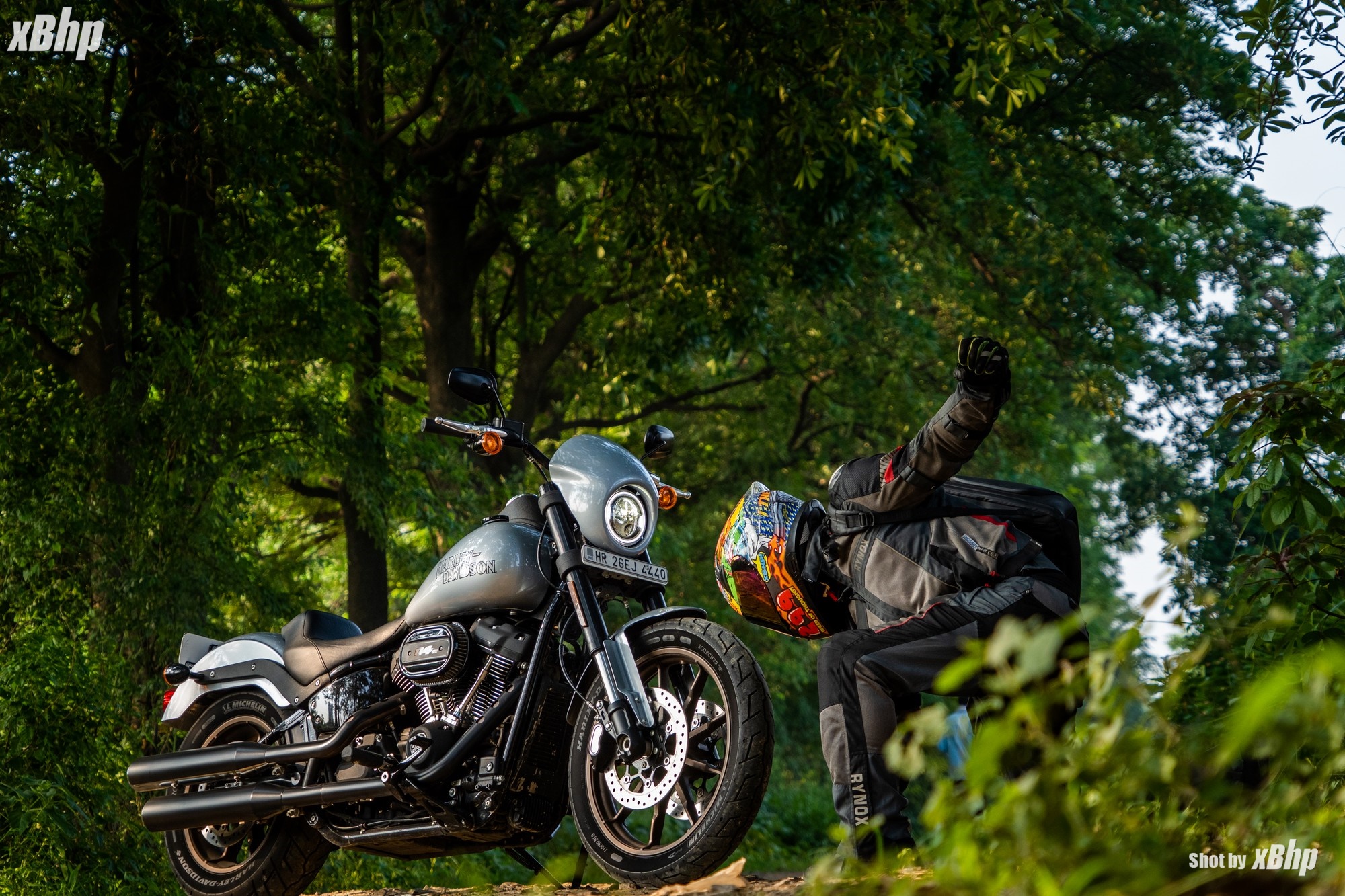 Aug 2020 Sundeep Gajjar
Bikes,Harley Davidson,Motorcycles
Aug 2020 Sundeep Gajjar
Bikes,Harley Davidson,MotorcyclesIconic. Aspirational. Instantly recognisable. Pop Culture King. And unapologetically cool. It is not hard to guess that the one motorcycle manufacturer that can be referred to as any and all of the above is Harley-Davidson. We recently got our hands on a Low Rider S and it really makes us want to talk about it.
Text: Karan Bansatta
Photos: Sunil Gupta

The Milwaukee marquee has been making motorcycles for around 117 years now and to this day and their motorcycles have been what a lot of motorcycles have aspired to be. While a history lesson on Harley-Davidson is not needed for the most part (we all know that), a little history on the Low Rider S will do one good.

So, the Low Rider S is the spiritual successor of the Dyna Low Rider, perhaps the most loved Harley-Davidsons of all time. So it was natural for people to cause an uproar when it was axed. Why? We don’t know. But we guess it was to make way for the Low Rider S, the new kid on the Softail block that aims to not only better its predecessor, but to add more riders to the bandwagon. Will it succeed? God only knows. Should it? To that, we give you a ‘H*ll yeah!’


One look at the Low Rider S and you can tell what Harley-Davidson was up to. Tall handlebar, mid-mounted pegs, a mini fairing complete with colour matching, and 19”-16” wheel combination. It is meant to make you look like you don’t give two sh*ts about the world when you are out on the Low Rider S. The only thing you care about is the sports-cruiser pedigree of the motorcycle and lyrically accurate recital of Hardwired by Metallica. We aren’t kidding.

We generally avoid expletives but not on a Harley… Moving on, there are two colour options- Vivid Black and Barracuda Silver. We had the latter. The design has been executed tastefully. ‘S’, in Harley-Davidson speak, is Special. And that means more black and a tad less chrome. Most of the motorcycle is blacked out and there’s chrome garnishing on muffler tips and engine fins.


The low rear fender with a single seat setup and masked rear suspension are subtle nods to the Softail theme and the offset twin-shotgun mufflers add to the appeal of the Low Rider S. Overall, the design of the Low Rider S sits well with the purists and new riders alike with classic references and modern touches.


We loved the recessed LED headlight inside the mini fairing, the twin dial instrument cluster and the relatively aggressive general stance of the motorcycle. Though we did expect better-looking RVMs. Also, we believe that most people will get rid of the long-ish rear fender to make the motorcycle even softer on the tail.


Sitting on the saddle of the Harley-Davidson is a sacred feeling. You almost instantly recognize that what you are sitting on is a Milwaukee beast. In the case of the Low Rider S though, you have to reach out a little for that recognition. The motocross-style handlebar sits on 4” risers and requires some reach. The seat is low and the footpegs are mid-mounted. Because of the former, shorter riders have to stretch too hard and because of the latter, taller riders may feel cramped.

But all of that happens after you have spent a few hours in the saddle and those will be one of the best hours of your life. The 308 kilos of the Low Rider S is felt as soon as you remove the side stand and disappear as soon as you get going. And then, it is all chasing butterflies in the meadows till you run out of all the fuel in the 19L fuel tank. Though we feel like chasing eagles is more appropriate here…


One of the biggest reasons for that unexplained disappearance of 300+ kilos is the engine- Milwaukee-Eight 114. 1,868 cubic centimetres of displacement shared between two cylinders arranged in a V filling the 2 into 2 shotgun mufflers of the Low Rider S with a familiar Harley-Davidson thump and roar. Blip it once and you exclaim, “This is the Harley life!”


The engine is good for 155 Nm of peak torque, all of which is delivered around 3,000 rpm. What that means is that despite the smoothness of the throttle, the Low Rider S is ready to pounce so you have to keep some of that brash coolness in your back pocket till you get used to it.

The motorcycle accelerates feistily and it sounds better and better as the revs climb. It will take you north of the 100 km/h mark swiftly and doesn’t even lose steam long after that. The gearbox is smooth but you don’t engage much because of the abundance of torque almost everywhere in the rev range.


And now to the fun part, where you unleash all the badassery of the Low Rider S- handling. On the technical front, the rake is steeper, there are USD forks up front, the wheels are light, and the chassis is both stiff and light. In the real world, the Low Rider S is a heck of a handler. Despite the gyroscopic resistance from the large-dia front wheel, it tips into corners relatively effortlessly and even holds its line through corners.


As you string together corners on a winding mountain road, the song changes to Brighton Rock by Queen and boy, it is fun. The only limitation here is the lean angle. 30-degrees on either side is too less compared to what the motorcycle can do and the culprits here are the footpegs. But you can’t have it all in one motorcycle now, can you…

On the straights, the 1,615 mm ensures rock-solid stability and the suspension lets only the gnarliest of bumps to the rider. The brakes are more than decent with ample bite and feel on the lever though we wish the friction zone arrived a little earlier, especially on the rear brake lever. There isn’t much use of it but we’re just sayin’. ABS on both the ends looks out for you under panic braking and keeps the ‘black’ of the motorcycle from unsolicited chroming.


On the electric front, the Low Rider S is bare. Indicators include high beam, turn signals, neutral, low oil pressure, engine diagnostics, auxiliary lighting, ABS, low battery voltage and of course, low fuel. The information is imparted to the rider via an instrument cluster that consists of a 4” analog speedometer with a digital readout for the selected gear, odometer, fuel level, clock, trip meter, and range with another twin dial serving as the analog tachometer. Pretty basic. Quite functional.


Now, the Low Rider S starts from INR. 14,69,000/- (Ex-Showroom, Delhi). That is a lot of money which the Low Rider S is most definitely worthy of. Firstly, the Milwaukee-Eight 114 is a beauty and the Low Rider S is the cheapest Harley-Davidson with that mill. It is smooth, vibe-free for the most part, a torque monster, and simply, pure joy to ride hard. And the Low Rider S can be ridden hard with ease.

Apart from a few visual gripes, the only trouble could be the riding position which can take a toll over long distances. Despite that, our closing statement remains firmly in favour of the motorcycle and it goes like this: The Low Rider S is iconic, aspirational, instantly recognizable as a Harley-Davidson, and unapologetically cool. And with the right playlist, it can easily be your pop culture king too!



