











All posts by Sundeep Gajjar
BMW F900R Review: Heady cocktail of complexity and ease

 Aug 2020
 Sundeep Gajjar
 Bikes,BMW,Motorcycles
You are out on the road on your motorcycle, in your zone and someone overtakes you aggressively… and you’re okay with it. Someone turns without signalling and you narrowly avoid an accident… and you just deal with it. You are just riding to ride, not riding to reach. That’s you taking it easy. BMW F900R is the right motorcycle to take it easy on. But there’s a lot more going on than just that so let’s dive in.
Text: Karan Singh Bansatta
Photos: Sundeep Gajjar/MotoGrapher

I started with taking it easy because of a lot of reasons. The persistent horsepower battle, the reliance on spec-sheets, the general mindset of newer riders, and for the most part BMW Motorrad’s own history. Even their design language spoke volumes about their ethos. An example could be the goofy-looking F800R which we got to see most often on one wheel with Chris Pfeiffer onboard. It was a very busy motorcycle which kept the rider busy as well.

The BMW F900R changes all that. With the state-of-the-art electronics (for a mid range motorcycle), the F900R is still a busy motorcycle but it does not keep the rider too busy. Busy and engaged are different things in motorcycling, mind you. Out of the roadster class of Beemers, the F900R looks like a bulked up (quite a bit) G 310 R.

The F900 R is like that perpetually shirtless model muscles here, muscles there and all out there for a good show. The high and muscular tank (which is plastic welded, a world’s first), the busy front fascia, and minimalistic tail paint a picture of a well proportioned motorcycle. It is not over-the-top like a few out there but it holds its own.

The problem is that it is a BMW. It is not something special, or quirky or distinct. It is a good looking motorcycle, no doubt about that but it is because of the badge and what it calls for, that it falls a little short. Despite that, if viewed simply as a motorcycle and not a BMW, the F900R is a very handsome and muscular streetfighter.
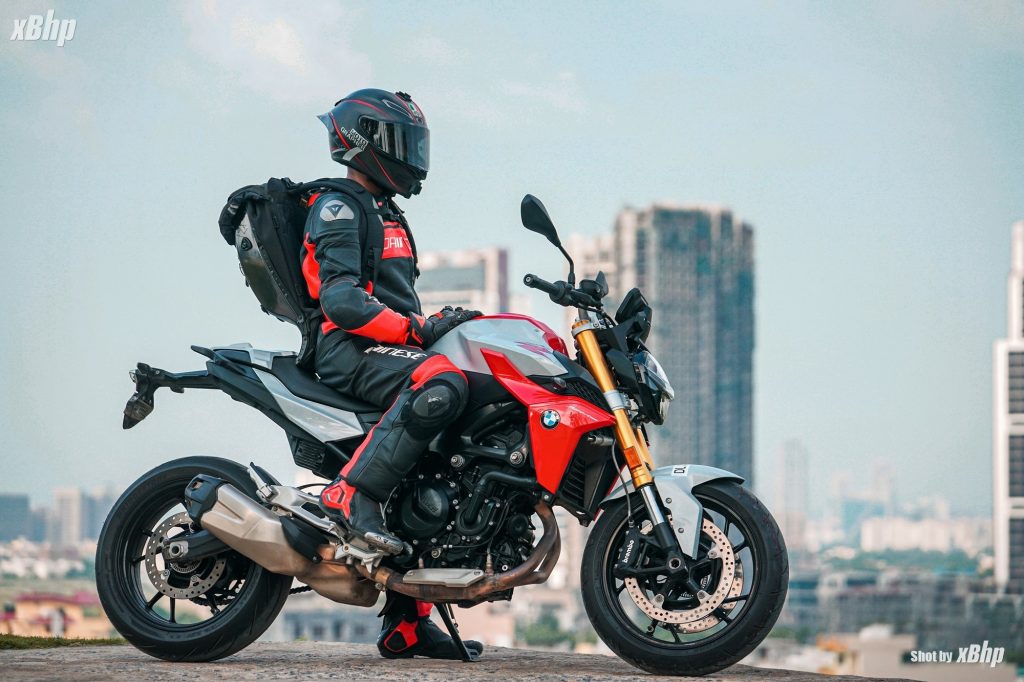
There are quite a few talking points when it comes to the BMW F900R but the engine is not on the top of that list. But it is rather important when motorcycles are being discussed so… An 895cc, water-cooled inline-twin powers the F900R and is rated for 105 bhp of power and 92 Nm of torque. There’s a version with around 93 bhp as well which can be further limited to 46.9 bhp for A2 license holders. In India, we scoff at such rules. Got cash? This 200 hp motorcycle is yours.

Anyway, as the numbers say, the motorcycle is no rocket ship with warp drive, but it can be satisfactorily fast. ‘Can be’ because in lower revs, it does not even feel like it has a 100 horses under the hood. But with the throttle open wide, it suddenly goes from ‘meh’ to ‘whoa… this is fun’. This is both, a good thing and a ‘not-so-good’ thing because the throttle feels jerky. But then, BMW intentionally made it that way to make it less intimidating for newer riders. Fair enough.

All in all, there is usable power all across the rev range and the motorcycle is capable of keeping the enthusiasts entertained as well. What’s even more entertaining is the exhaust note. The reason for that is the 270/450-degree firing order which helps the inline-twin mimic V-twin. A nice bark on startup, mild rumble at idle and spirited-snarling with blips. So full marks for the exhaust note.
Now, the riding modes, well, rain is a bit disappointing really. The throttle feels almost bland in this one. Road is decent but the real fun lies in the Dynamic and Dynamic Pro mode. Throttle is much more crisp and that jerkiness is more or less gone. You may want to appreciate the rain mode in, well, rains but the choppy response makes it more a liability than help.


The gearbox is a tad clunky in the lower revs but it supports spirited riding thoroughly with crisp gear changes when you are really wringing it. So overall, the BMW F900R is a motorcycle that wants to be ridden hard to be enjoyed but for the most part, it remains in the zone where it doesn’t take life too seriously.


Handling is the department where the F900R surprised me the most. With the 211 kg of weight (wet) and the 1,518 mm of wheelbase, we were assured of the highway surefootedness, but the F900R can handle corners too. A big shout out to BMW for being able to incorporate sharp handling with the kind of geometry the motorcycle sports.
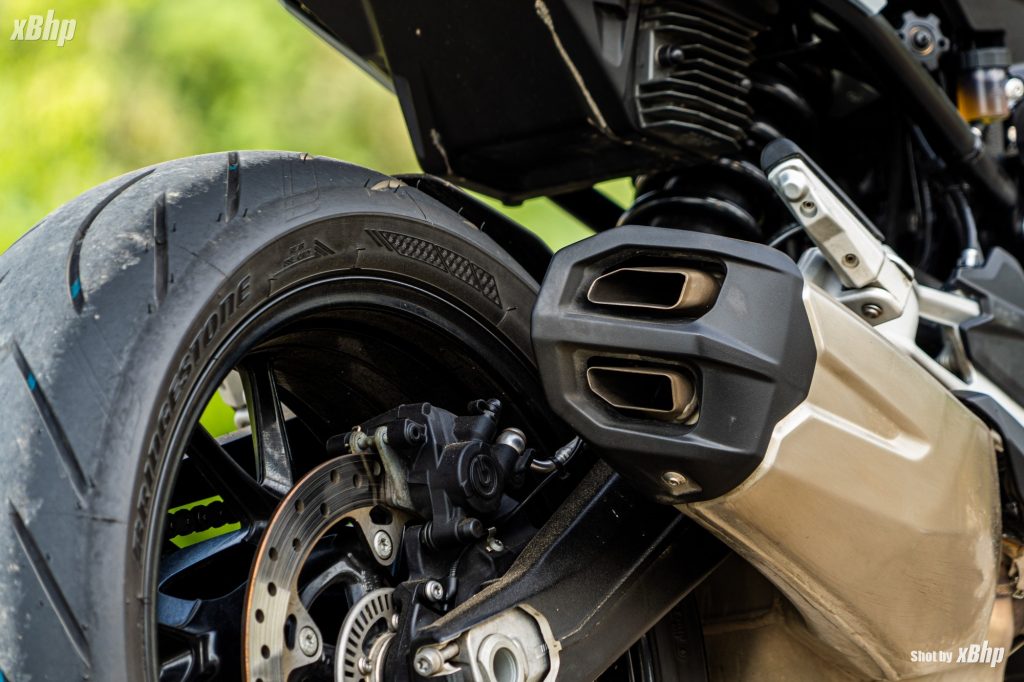
The chassis and suspension work in tandem to make the motorcycle feel steady through a corner and the Bridgestone Battlax S21 tyres offer more than adequate grip. They feel almost overkill for the F900R but we’re not complaining. The turn-in and the quick direction changes is where this Beemer requires some effort. Not too much though.

The brakes are from Brembo and therefore, really good. Steel braided brake lines are a novelty at this price point. But it is the consistency of BMW that is to be commended here. Even the brakes aren’t immediately sharp which may catch someone off-guard. The bite comes a hair later than usual and even then, it is gradual. ABS is almost completely unobtrusive except for the worst of panic braking situations… which kinda happened. Even then, it just pulsated gently without spooking me too much.
The suspension setup is well balanced for bad roads and good handling but it is tad biased towards the latter. The Dynamic ESA (electronic suspension adjustment) works well for the most part but it is not a big fan of less than ideal roads. Add to that a rather stiff saddle and things can get difficult but as always, you can work on your own padding to alleviate this issue.

The overall setup of the motorcycle with the kind of performance and handling on offer, make for a very strong case of a capable tourer. The 220 kg of payload capacity is an added bonus because there is no such thing as too much luggage. The 13-litre fuel tank may be a limiting factor though because the warning light will come on after around 170 kms on a full tank.

Touring (or almost any discipline of motorcycling) is incomplete without talking about the ergonomics. We had ridden the F800R before and it was a tad too relaxed for a roadster. The F900R remedies that with a slightly forward handlebar and slightly higher foot pegs that make for a fairly aggressive stance that is worthy of a roadster. That said, it is not too uncomfortable for long distances and also has loads of room even for taller riders. Seat height is no trouble either with options for both higher and lower seat options available from the factory.


The biggest talking point of the BMW F900R are the add-ons. BMW’s have always been famous for that. The list is rather… comprehensive. Adaptive cornering headlights, Cruise control, Cornering ABS, Quickshifter, Semi-active rear suspension, dynamic modes, and so on. The best part though is the 6.5” colour TFT screen which with the familiar Jog Dial, helps one control all the aspects of the motorcycle.

Despite all the stellar add-ons to a really good motorcycle, it is the BMW Motorrad Connected app that takes the cake. In our opinion, it is the best app that is available today. It is intuitive, criminally detailed, and a whole lot of fun too. Fun because there is nothing like competing for the max lean angle achieved or maybe max braking gs experienced. And these are just the tip of the iceberg when it comes to the app and the features it has.
In conclusion, I think I have proved my point that the BMW F900R is a very busy motorcycle but it does not keep the rider too busy. It is a motorcycle that takes it easy and in turn, makes it easier for beginners to learn to explore the 100 horses that the motorcycle has on offer. And veterans can also have quite a bit of fun if they really ride it hard. Despite the minor shortcomings, the BMW F900R is a surprisingly ‘do anything’ motorcycle. City rides, long rides, just rides, and even the occasional not-so-serious trackdays… it can do it all.

So for the asking price, you get a lot of motorcycle in the F900R and that too, with the illustrious BMW badge.
Triumph Tiger 800 XRx: Predator on the prowl
 Aug 2020 Sundeep Gajjar
Bikes,Motorcycles,Triumph
Aug 2020 Sundeep Gajjar
Bikes,Motorcycles,TriumphTiger has been a name associated with Triumph Motorcycles for a long time now. In fact, the first one can be traced back to the 30s! So a name that has been around for 80+ years brandishes a lot of pedigree and heritage. And the one in discussion here is a worthy candidate for that name- the Triumph Tiger 800 XRx.
Text: Shahnawaz Karim
Photos: Sunil Gupta
Know more about the Tiger of the 30s: Triumph Tiger 70


Without diving too much into the history of the Tiger (which is a lot!), we’ll just like to mention that the initial Tiger models were ‘standard motorcycles’ and the first one that set the stage for the modern day Tiger was perhaps the Tiger Trail that came out in 1981. That was perhaps the model that introduced the Tiger as a dual-sport model.
It was followed by Tiger 900 and Tiger 1050 that further solidified the Adv-Touring image of the range. The 900 and 1050 were succeeded by the 800 range and the Explorer or 1200 range. And for 2020, Triumph has introduced the new Tiger 900 which is set to replace the 800. But before we bid adieu to the 800, we took one out for a… farewell ride of sorts.


Despite being a middleweight which can be intimidating for newer riders, the Triumph Tiger 800 XRx is the proverbial good kid. A sweet engine, comfortable ergonomics, road bias with a hint of off-roading rowdiness, and the rugged looks- it is a machine you fall in love with instantly. The dual characteristics really grow on you and evoke that ‘Explorer’ in you.
Talking about the engine first, it is an 800cc, liquid-cooled, triple-cylinder engine good for 95 bhp and 79 Nm of torque. Talking about what that feels like out on the road, it is buttery smooth, torquey from the get-go and sounds like a symphony.


When you are on the road, it pulls effortlessly and the power seems adequate for a leisurely pace and to some extent, some spirited riding. Take it off the road and the engine feels just as good there. Just a tad more grunt at the bottom could have made it stellar, but it is still just as good. Just look for some loose surface and let those power slides guide you.
The handling department is also very well sorted. The 19” front and 17” rear combination along with the long wheelbase assure you of a steady and planted ride even at triple digit speeds. Off the road, the size of the wheels and the kinda dual-purpose tyres ensure that tackling the trails is a joy. But since it is a road-biased model, do not expect to go MX-ing on it.


The brakes are stellar both on and off the road but you have to take it easy when riding it like a sportsbike on the road. And that’s saying something because despite the obvious difference, it can still be ridden like one. While the lack of stiffness in the suspension comes into play only when you attack corners like you are not supposed to on this kind of a machine, it also makes for a very comfortable ride… and it’s all day comfort even on bad roads.


All the praises that we can shower on the Tiger 800 XRx fade in comparison to the facts. After all, there is a reason why it is one of the bestselling Adv-Tourers in India. There are a few reasons for that, in addition to the ones we have already pointed out.
The first and the most prominent one is that it is not as intimidating as the Tiger 1200 and yet, it has enough to ensure that you do not outgrow it in a year or two i.e. it is very approachable. The second one is the balance it strikes between its on-road and off-road characteristics. It is one of those motorcycles that will take you almost anywhere you’d hope to go and that too, with a lot of comfort and relatively less demands.


The Tiger 800 XRx is also a very modular motorcycle, thanks to the multitude of optional add-ons available from Triumph. Get the stock motorcycle and you are ready to not only tour, but have fun like a sportsbike. Get some add-ons and you will be more than ready for some light off-roading and chasing some trails. And then we have the generous seat-height which is one of the most prominent dissuading factors when it comes to Adv motorcycles in India. And let us not forget the ~19L fuel capacity.


The Tiger 800 XRx is not technologically challenged either. With the multifunctional TFT which has: with digital speedometer, trip computer, digital tachometer, gear position indicator, fuel gage, service indicator, ambient temperature, clock, and the 4 riding modes- Road, Offroad, Sport, and Track, you have all that you could ask for in a modern Tiger. It goes as far as to let you go deeper and tinker around with the settings if the preset modes don’t do it for you.


The new Tiger 900 is already out and it seems like a heck of a motorcycle and it was bound to be since a manufacturer like Triumph Motorcycles with so much of history associated with it will always work to make good things better.


The 900 may be better, but the 800 XRx is a fantastic motorcycle in its own right. And then there’s the nostalgia. And we are sure that it will have a lot of respect in the pre-owned market because its glory will forever live vicariously through the rider who appreciated its beauty along with its versatility and power.


Ulka Gear Hakkit Forever
Hakkit Forever from Ulka Gear is one of the latest motorcycle riding jackets in India. The USP of this recently launched jacket is the multipurpose usage that it offers. It can be worn as a protective jacket when you are on your motorcycle and can be used as a backpack when you are off it.


People who buy proper motorcycle riding gear understand the importance of keeping it safe. And they are at their most vulnerable when you take a break from the ride. That very need of safeguarding your gear is taken care of by the Hakkit Forever jacket which can be easily converted into a backpack for carrying your helmet, gloves, goggles etc which protects them from prying eyes and unwanted falls.
The Jacket is priced at INR 10,999/- and is available for purchase from www.ulkagear.com along with other designs of the Hakkit.


Ulka Gear was conceptualized by Shahnawaz Karim who is a certified adventure riding trainer and a national champion in circuit racing. The company has been granted many patents to safeguard its conversion process across the globe.
Honda CB1000R
 Apr 2020 Sundeep Gajjar
Bikes,Brands,Categories,Honda,Motorcycles
Apr 2020 Sundeep Gajjar
Bikes,Brands,Categories,Honda,MotorcyclesDog lovers and motorcyclists are kinda similar. Dog lovers love all dogs. Motorcyclists love all motorcycles. A dog lover may have a certain liking towards a particular breed(s). Motorcyclists may have a certain liking towards a certain motorcycle (s). Some may like the uptight and aggressive German Shepherds and some, playful yet powerful Labradors. This review is about a Labrador? of motorcycles> a Japanese Labrador. That particular sub-species may not exist in the dog realm but in the realm of motorcycles, it is called Honda CB1000R.

We have had a lot of fun with the Honda CB1000R? the one of the old. We took it for a rather long ?spin? and what we can say about it is that it was a Honda. Understatedly powerful, built to last, friendly, and so easy that you almost want to smooch the thing. In addition to all that, it looked menacing too! Here are some photos of it


But recently, we got to test the latest iteration with the neo-retro-cafe avatar. How is it? Short Answer: Heck yeah! Long answer: Read on?
Looks
The new Honda CB1000R looks great? it really does but it is disorientingly compact for a litre-class streetfighter. The CB1000R is as understated as they come when it comes to the looks? just like the performance which we?ll talk about later.
As we stated, Honda has gone with the neo-retro-cafe treatment for the CB1000R. Classic cafe racer elements are studded with modern touches? or it could be the other way around. But overall, the package is neat and clean and we love the fact that excessive use of plastic and stuff is avoided.


Overall, we personally liked the previous CB1000R better. But for now, the neo-retro cafe theme is here to stay and it has even trickled down to the smaller siblings; the CB600R and the CB300R. Here are some photos of the CB1000R with the youngest member of the neo-retro-cafe family, the CB300R.


For the current CB1000R, we?ll say that it is minimal, it has a round-headlamp, it is a streetfighter, and the exhaust looks awesome (sounds that way too). There isn?t much to jump-off-a-cliff for but there isn?t anything to complain about either. Short, sweet, and purposeful and a Japanese Labrador.
Engine and Transmission
A 998cc, liquid-cooled, DOHC inline-4 is responsible for powering the Honda CB1000R. It is also responsible for making us ecstatic. It is motorcycling incarnate. Courtesy the mill, the CB1000R can be insanely fun, stupid fast and ridiculously easy.
Thumb the starter and a calm growl greet you. It is silky smooth and vibrations are absent throughout the rev range. It is one of those bikes on which even the first time on the saddle feels like you are familiar with the bike. Very accomodating (figuratively? yet).
Slot into the first gear and you quickly realize that like most Hondas, this motorcycle also gets HST? Honda Slick Transmission? No? Anyway, the 6-speed gearbox is very smooth, confident and positive. Whether you are shifting up or shifting down, it is as buttery and as easy as they come. Of course, the Quickshifter helps with the shifts, and the slipper-clutch with autoblipper is there for a lighter clutch action? but still, we?d like to say that all the goodness comes from HST.


Once on the roll, the CB1000R is easy to ride hard. 143 bhp of power and 104 Nm of torque are more than enough to propel the 212 kg (kerb) to salivating speeds (invest in a full-face helmet).
Around the city or in regular traffic, the motorcycle finds its way with ease and the engine?s tractability is to be commended. Inline-4s are usually attributed to being sloths in the lower rev-range. The CB1000R does not feel that way. At least not around the city. What we mean by that is that when you are trying to stitch corners, the lack of outright grunt in the lower and lower-mid range is apparent. Not enough to dissuade one, but it is there.
There?s ride-by-wire with 4 rider modes ((Rain, Standard, Sport and User) but, and this is for the greater good of humanity, they are not intrusive at all. The riding experience is not hampered at all and this is one of the reasons why the Honda CB1000R is so much fun. It is just? organic!


Overall, it is a refreshing experience. It was fun to be on an inline-4 streetfighter rather than a v-twin or something of that sort. And the Honda CB1000R takes the inline-4 fun even further and that is why it may very well be the USP of the Honda CB1000R. It is just too much fun? just like a Japanese labrador.
Handling
Time to discuss the compactness of the Honda CB1000R and its implications. The motorcycle?s dimensions are 2,120mm x 789mm 1,090mm (L x W x H) with a wheelbase of 1,455mm. To give you an idea, the Kawasaki Z650 is 2,055mm x 775mm x 1,080mm (L x W x H) with a wheelbase of 1,410mm and kerb weight of 190 kg. The CB1000R in comparison weighs 212 kg (kerb).
So, the motorcycle is middleweight-light and compact in addition to being litre-class powerful. And it is evident in the handling. The Honda CB1000R is perhaps the easiest turning motorcycle we have ever ridden. It just flicks from one side to another like it was nothing. The Steel mono backbone chassis and Showa Separate Function Big Piston Forks come together to create a heady concoction and the hangover will stay for a while.


The front suspension is preload, compression and rebound adjustable while the rear is preload and rebound adjustable. That is something we believe is a good add on because the stock settings are a tad too soft. Anyway, once you tinker around enough and find the perfect settings for yourself, you?ll find that the Honda CB1000R is enough to shred the edges of the tyres rather quickly.
Braking is provided by Tokico and handled by 310mm twin discs up front and 256mm single disc at the rear. ABS is standard on both the ends and the performance? it?s not earth-shattering but it is adequate and gets the job done. The feel on the lever is on point but a little more bite upfront will go long in infusing the rider with more confidence.


All in all, the Honda CB1000R is a fantastic handler and it is willing to cooperate with the rider whether they?d like to sail through the canyons or carve corners on a racetrack. Versatile? just like a Labrador.
Ergonomics
It is sad that we won?t be able to deem the CB1000R as a Japanese Labrador in this section because you should not try to ride a Labrador? not just because of PETA but because it is not cool. Anyway, at 830mm the saddle height may be a bit high for some people. Once astride though, you encounter a paradox. The motorcycle is very small to look at and rather spacious once you start riding.
The tank recesses help the rider get a lot of leverage via their knees. Talking about leverage, the wide handlebar also favours it. The rider?s triangle is well-balanced and the riding stance isn?t overly sharp or completely bland.


The footpeg feelers though are a bit too long and are scraped easily. But it may be good for some as it is a matter of pride? The 135 mm ground clearance though is certainly not. In the overall scheme of things, the Honda CB100R is comfortable to ride and easy to live with?
JUST LIKE A LABRADOR? yes.
Other Stuff
Mileage and Range: We have heard that you can expect about 20 km/l and that multiplied with the fuel tank capacity (16.2 L) gives you a range of a smidge over 320 km. Not too bad for a litre-class streetfighter.
Rearview mirrors: This is where a lot of manufacturers can learn from Honda. The mirrors are fantastic and offer a good, vibe-free view of what you?re leaving behind? once you put them in the right position. Now that is a task? a tall one. Bad dog!
Build Quality: HONDA! And therefore, the fit and finish are top-notch. A special mention for the design of the exhaust which, by the way, sounds like a million bucks at full song.
Instrument Cluster: Understated? a bit too much. The inverse LCD was seemingly a good idea but it is a bit difficult to read in direct, bright sunlight. Navigating through the menus and changing settings takes a bit of work. But it can be deemed as something you can get used to? probably.
Final Words

Okay, so many of you may feel like this was more a review of a fantastical being known as Japanese Labrador than the Honda CB1000R. But there?s a solid reason for that. In a world where even streetfighters are gunning for 200+ bhp and a whole darn Siri on board to control the various parameters, the Honda CB1000R is old school literally and figuratively? visually and mechanically (performance).
And there?s a certain allure associated with old-school. Digital meters may be all the rage nowadays but when one looks at an analogue tacho and that needle rushing towards the redline, it is a different kind of high. Riding the Honda CB1000R invokes similar emotions. Organic and Pure? and guess what? we have found a top 5 contender for our favourite breed of dogs.

Rider vs Driver: Size does matter when it’s Hayabusa vs Hummer!
 Mar 2020 Sundeep Gajjar
Bikes,Cars,Hummer,Motorcycles,Suzuki
Mar 2020 Sundeep Gajjar
Bikes,Cars,Hummer,Motorcycles,SuzukiHercules vs Poseidon. Zeus vs Ares. Batman vs Superman. Even Mike Tyson vs Muhammad Ali. What’s common between them is that they are all battles of the heavyweights. Unfortunately, another similarity is that they are all fantastical. Even then the thirst for the ‘Clash of Titans’ is never-ending and the rosters are getting thinner by the day. Therefore, this edition of Driver vs Rider is here to serve only one purpose: deliver a battle of titanic proportions.
So without further ado, we introduce the competitors. Fighting from the white corner, an SUV that looks like it just swallowed another SUV, the Hummer H2 and fighting from the black corner, a motorcycle with a displacement that equals two bottles of beers i.e. 1300cc, the icon, Suzuki GSX1300R aka the Hayabusa.


The Humvee or High Mobility Multipurpose Wheeled Vehicle (HMMWV) is a four-wheel-drive military light truck produced by AM General. The vehicle is as sturdy as they come and are still in use by the United States Military. AM General began marketing a civilian version of the M998 Humvee in 1992. That’s how the ‘Hummer’ brand was born. It was a brand of trucks and SUVs under the AM General group. In 1998, the brand name was purchased by General Motors (GM). In the same year they started marketing three vehicles under the Hummer brand; the original H1 (based on the military Humvee) and the new H2 and H3 models that were based on smaller GM platforms.


The vehicle in question here is the H2 which we just said was based on the smaller GM platforms but small is something that the H2 is definitely not. The H2 was marketed by Hummer and produced by AM General between 2002 and 2009. The H2’s front was based on a GM 2500-Series utility frame and the rear uses a modified GM 1500-Series frame. The mid-section was designed from scratch. This resulted in an SUV that weighs around 3900 kg. It was also nominated for the North American Truck of the Year award in 2003.
The engines on the Hummer have been changed and refreshed many times. From 2003 to 2005 the majority of the lot had a 6-litre V8 that produced 316 bhp of power at 5200 rpm. The next iteration saw the same engine’s power increased from 316 to 325 bhp. In 2008 the capacity of the engine was increased to 6.2 litres in the same V8 and power was bumped up to 393 bhp. Those are astronomical figures and testament to the power of the engine is that the 3900 kg vehicle goes from 0-60 mph in close to 9 seconds.


Sadly, in 2009 GM announced that they will be dismantling the Hummer brand completely after GM was not able to reach a closure to the deal of selling the Hummer brand. Although GM did get new offers, by the April of 2010 Hummer dealerships were shutting down and the inventory was depleted so the sale became unlikely. The last Hummer, which was an H3, rolled off the line on the 24th of May 2010.


The Hayabusa on the side of the H2 is monstercycle being produced by Suzuki since 1999. The name Hayabusa has some interesting origins. Hayabusa, in Japanese, is the Peregrine Falcon which is renowned for its speed, reaching over 300 km/h during a hunting dive. The above-stated fact should be enough to assert the aptness of the name but interestingly enough, Peregrine Falcons prey on ‘Blackbirds’. Is that a hint here? Maybe. But the Hayabusa did take the title of the world’s fastest motorcycle from the Honda CBR1100XX Super Blackbird. Coincidence? We think not.


The first generation Hayabusa (1999-2007) was powered by a 1299cc, liquid-cooled, inline 4 engine which produced more than 150 bhp. Hayabusa achieved the feat of being the world’s fastest production bikes in its launch year itself, reaching a top speed of over 300 km/h. Although, it was later limited to 299 km/h.
The second generation Hayabusa (2008-till date) received slight revisions in 2008 and that’s been the norm after 2008 as well. The major change was the increase of 41 cc in displacement making it 1340cc since then. The model in question here is a 2014 Suzuki Hayabusa or GSX 1300R. It features a 1340cc, DOHC, inline 4 engine with 16 valves (4 valves per cylinder). It produces a claimed 197 bhp at 10100 rpm and 138.7 Nm of torque at 7600 rpm.


The power is transmitted to the rear wheel via a 6-speed gearbox which also comprises of a slipper clutch. The Hayabusa tips the scale at 250 kg (dry). It is based on a twin-spar aluminium frame with USD forks on the front and monoshock at the rear. Braking duties are handled by twin discs with radially-mounted callipers on the front and a single hydraulic disc at the rear. The front tyre is a 120/70 section ZR-17 and the rear is a 190/50 ZR-17.
One of the best things about the Hayabusa is that despite its mammoth weight and size, it does not lose out on aspects other than power like handling, comfort, reliability etc. And probably that is what gives the Hayabusa the pedestal of an icon, a legend.


Both of these vehicles are massive and wonderful in their own right. They are both meant for the ones who want to dominate and that too in a ‘big way’. The only difference is that a few do it on two wheels and the other on four.


Indian Scout Sixty: Quick, nimble, and a ‘thumping’ expression of joy!
 Mar 2020 Sundeep Gajjar
Bikes,Indian Motorcycle,Motorcycles
Mar 2020 Sundeep Gajjar
Bikes,Indian Motorcycle,MotorcyclesWhen we think of Indian Motorcycles, we think of something humungous, stately and a palace on two wheels. A typical American motorcycle! But the Indian Scout Sixty does not fit that bill; it is compact, unassuming and extremely nimble. Once on the move, you will forget that you are on a 1,000cc thumper.

The Scout Sixty is the entry-level motorcycle of the Indian line-up that is to say it is the smallest and the cheapest available. It gives Indian Motorcycle a foot in the door for a prospective buyer who wants to buy into the Indian heritage without having to break the bank. The Scout Sixty is named as such because of its engine capacity in cubic inches, a blue-blooded American even in the name!
First up, as for any cruiser are its looks. A cruiser really needs to look the part to play the part. The Sixty doesn’t disappoint in this regard. It looks much like its bigger sibling the Scout, and with the price difference between the two, it makes the Sixty a very tempting proposition for the prospective buyer. With the bike similar to the Scout, the list of differences between the two is smaller than the list of similarities!


The most visible differences are the reduction in chrome and the addition of a splattering of black. The engine casing is now black instead of chrome and the bits and bobs under the tank along with the engine casing are much more muted thanks to the black. As a result, it looks a tad more compact even though that isn’t the case. The seat on the Sixty is of vinyl something that you might not notice at first but does remind you that you are on the smaller sibling. You can of course upgrade to leather as an accessory if you so wish and it might actually be a good idea because most of the accessories for big brother work for the small fella as well.
On the move you will keep kicking up the gear lever if you are used to the Scout because the Sixty has one gearless, 134cc less and a little bit more weight. Instead of 6 gears, the Sixty has five. The ratios between both the bikes are the same, except that the 5th gear has been removed for the Sixty. But enough of the comparisons with big brother, let’s get back on the saddle of this nimble Indian.


Someone buying a cruiser in this segment wants good looks, decent performance, comfort and fantastic value for money. On the looks front, as we noted above, the Sixty checks the right boxes. Performance isn’t going to shoot you to the moon, but it will take you around the country or to your favourite café without a hitch. 77 bhp and 88 Nm don’t immediately impress on paper, but on the road they do.
What makes this motorcycle remarkable and stand head and shoulders above the competition and help it punch above its weight is the handling. This could easily become your favourite cruiser to use as your daily commute; it is that easy to ride. It is light, the power in your right wrist is just right and it can be flicked on a dime. It doesn’t even heat up in peak hour first gear traffic!
I put it to the ultimate urban commuting test by trying to keep up with a Splendor and Activa in rush hour traffic. Lo and behold I was ahead of them as I bumped along off the asphalt on the strip of rutted mud track. I was throwing the bike around in a manner that I wouldn’t possibly dream of with a big bad cruiser. I could grab the Sixty by the scruff of its neck and shake it up like a rag doll and like a happy puppy, it kept wagging its tail! At no point does it intimidate the rider, instead always pumping up the rider with confidence.


Of course, that is not how you are supposed to cruise on a cruiser, however tempting it might be! And the bike changes colour like a chameleon the moment you go easy on the throttle. You can admire that large windscreen as you hit triple-digit speeds. At 5’ 11” I was safely hidden away from the wind. A boon if you want to munch up countless miles on the highways.
The Sixty also continues with the good genes of the Indian Motorcycle family. The bikes handle far better than what you would expect from a traditional cruiser. It holds the line through the corner as if on rails at no point letting you feel that you have bitten off more than you chew. It is, after all, a cruiser, so it is a wise decision to not try biting off too much!


The suspension is decent for a cruiser and is soft and plush without allowing me to experience an instance of bottoming out. The one negative I noticed was a bit of buzz in the bars at higher revs, not enough to spoil the ride quality, but is present nonetheless.
The Indian Scout Sixty does well in the style, performance and general oomph departments. It makes a strong case for a prospective buyer to give it some serious thought. So much so, that the larger Scout might get a bit antsy!


Ferrari 812 Superfast… 12 cylinders, 790 horses, and countless grins!
 Dec 2019 Sundeep Gajjar
Cars,Ferrari
Dec 2019 Sundeep Gajjar
Cars,FerrariWhat is the first thing that comes to one’s mind when they think about the word Flagship? Googlers will know that it’s the ship of a fleet which carries the commanding admiral. It also depicts the best product owned or produced by a particular organization. OnePlus 7 Pro is the flagship of OnePlus. Panigale is the flagship superbike of Ducati. And uhh… xBhp is the flagship lifestyle motorcycling magazine of India… Moving on to the more pressing matters, how about the flagship of a revered brand like Ferrari? The answer to that, had us engulfed in Dubai and showed us how it feels when a 1600+ kg supercar accelerates like a superbike. The answer is, Ferrari 812 Superfast.
Why 8, 1, and 2, and why Superfast? So, the 8, comes from the peak power which is 800cv (cheval vapeur) or roughly 790 bhp. The 12, is the number of cylinders in the engine. And lastly, Superfast because, well… 0-100 km/h in 2.9s, 0-200 in 7.9s, and a top speed of over 340 km/h. No complexities in the name there, just plain-old pride in the engineering marvel that the car is, and well deserved too. The reason is that Ferrari has had flagship V12s for a long time now and every new one is an improvement over the previous but isn’t there a limit to how much you can extract out of a naturally-aspirated V12? Not for Ferrari apparently.

The predecessor, Ferrari F12 Berlinetta (the whole model run including the TdF) was a heck of a car hailed by car enthusiasts the world over and it felt like that was it… Don’t you think 730 bhp, or 769 bhp in case of the F12 TdF, should be it? No, not for the folks at Maranello. Maybe it is because of the racing background (with Scuderia Ferrari) or just deep-rooted mercilessness towards the tyres and the tarmac. Whatever it is, they just do not seem to stop. In 2017, the 812 Superfast debuted as a successor to the F12 and they were still able to extract more power out of the V12, 20 more when compared to the F12 TdF! That’s outrageous!
You must be wondering, “Why such a hoopla around the V12?” and stuff along those lines. The first reason is related to sentiments. V12, which has powered so many iconic cars in the past and continues to do so even today, is a dying breed. Most of the manufacturers that swore by the possibilities to explore with the V12 have moved to turbos and superchargers with smaller engines like V8s. Without taking anything away from those cars, you cannot get what you get from a V12 from anything else.

When you are in Dubai and piloting the flagship Ferrari, you feel like you have arrived. Keep your Ferrari Panache going even when you are away from the car with this laid-back printed shirt from Rare Rabbit. After all, you cannot take your Ferrari inside the club now, can you?
Remember the best racing games that you have played and the best cars you have driven in them. We are sure that the Ferrari F50 made the cut. We are sure that the Ferrari 599 made the cut. We are sure that the Ferrari Enzo made the cut. And LaFerrari… What’s common in all of them? They are all V12s and they all rev to the moon. Why did they make the cut? Because of the clenched jaw and the sheer grin that is induced when you floor the pedal and give it full gas like there’s no tomorrow!
Now imagine how the people who actually drive these cars feel… You just cannot beat that kind of a rush. Ah… how we are going to miss this mill when it is phased out. We really wanted to shed some tears thinking of this while driving the 812 Superfast but uhh… we gave it gas and they dried right up! So yeah, we are one of the lucky ones who got to thrash around a V12 Ferrari. Thanks to the Ferrari folks in Dubai who handed us the keys to the 812 right after we returned the Portofino. We did ask if we could keep this one for good… Sad that they said no… politely.

The ThinkPad P1 from Lenovo boasts of a 15.6” FHD (1920 x 1080) IPS anti-glare display which is complemented by the raw processing power of the laptop. Edit photos, create and render videos, or just gaze at your handiwork, the display is not going to disappoint.
When the 812 was being brought out for us to drive, the first glance imbued a rather subdued, “Holy sh*t! This is gonna be a sh*tload of fun!” The exact terminologies used has been changed for quality assurance purposes. The long snout shouts Berlinetta-style grand-tourer. The lines, so many of them make it seem like it is cutting through the air even at a standstill. And that short tail… It almost borders to the point of being called a Sportback, or even a shooting-brake! But gladly, it is not. It is just excruciatingly beautiful and painfully out of reach… *soft sobs*
The design of this car is complex and most of it is because of the aerodynamic efficiency that the engineers wanted to achieve. Gone are the days when aerodynamics was meant for people who could not build engines. With almost the best being extracted out of the engines, how do you make cars faster? By reducing the retarding forces. In other words, reducing the drag caused by air.
There are so many lines and so many vents routing the air around the car making it more efficient in slipping through the air than ever. While the 812 Superfast is 0.2s faster in 0-100 km/h than the F12 Berlinetta, it shaves a cool 0.6s off of the 0-200 timing which would not have been possible with increment in power alone. With great speed comes the need for great stability and not just in a straight line. The 812 Superfast is equipped with active-aero. The front flaps, the rear diffuser and the spoiler (rear wing) move about thanks to the onboard computers calculating the need for downforce with respect to the speed among other complex factors.
Achieving that much aero-efficiency, without larger-than-life (literally) rear-wings and sawing off almost every part of the car which slows it down, is a commendable feat. The complexity of the design does not hamper the looks of the car and all the lines, routed properly, make for a beautiful flowing design.

Ferrari’s traditional 4-lamp taillight has made a comeback and gosh did we miss that… 430 Scuderia and Enzo lovers, this one is for you. 3 little LED couplets on the front and rings on the back serve as turn signals. Little things that make the kid inside you perform somersaults. Clean your hands properly and run them along those lines and contours of the Ferrari is an experience unforgettable. One can almost visualise the passionate engineers in Maranello working hard to bring joy to the owners of this beautiful car… and a lucky few like us.
While the instinct to jump in the car and gun it was overwhelming, we took out time to walk around the car and just… admire it and of course, to take a look at the engine. Pop the hood and there it is, sitting there in all its glory, the 6.5 L V12! Even when the engine is off, it isn’t hard to believe that this massive gem of an engine revs to, 8,900 rpm, runs a 13.6:1 compression ratio, puts out 789 bhp of at 8,500 rpm and 718 Nm of torque at 7,000 rpm, 85% of which is available from 3,500 rpm! Amazing what marvels are achievable when one puts their heart and soul into it!

Walk towards the rear and it has a real usable trunk… Grand-Tourer title justified! Opening the trunk reveals another leather cover of sorts which lets one in on a little secret. The trunk is very spacious and is decorated with the traditional Ferrari leather straps to tie your luggage in and a plaque that lists all the options and extras that are fitted in the particular example. And now, it’s time to get in. There’s something special with even the smallest things in these high-end cars. Even the door openers on the gates have a certain… tactile feel to them. Open the gates, get in the car, sit with your hands on the steering wheel, take a deep breath and inhale the sporty intent of the 812 Superfast. This is where the performance aspect gets ahead of the grand-touring aspect. Not that the car is lacking in creature comforts, but everything is just lean and stripped down. The interiors are plush, yet sporty. The bucket seats engulf you and have your back for what is about to ensue. But they are not electronically adjustable.
The control to all the action is right there on the steering wheel so that the driver is never distracted with mundane tasks like selecting a mode or changing the song. The best part though is a sort-of rev counter on the steering which works via the means of small-led lights that light up as you progress through the rev-range. On the left of the steering wheel, there’s a small display, controlled by a wheel below it, that shows you the vitals of the car such as the tyre-pressure, temperature, speed, selected gear, rpm, and even the g-forces. On the right, there’s another screen which shows you stuff like music, calls, navigation etc and is controlled by a wheel beside it.

Look further right and there’s a carbon-fibre bridge of sorts between the driver’s and the passenger’s seat. It has the reverse button, the Auto button and a button that says PS (Power Start, Ferrari speak for Launch Control). How do you put it in Drive? How do you put it in Park? Well, Ferrari has pedal-shifters (perhaps the best thing about a sportscar). To put it in Drive, you just pull on the upshift pedal once and voila! You are ready to go. To put it in Park, you pull on both the pedals simultaneously, switch the engine off and voila! The parking brake comes on and the car is now in park mode. Nifty eh?
Move further right and you realize that the passenger can also be a part of the action via the means of a little power button. Pressing that button brings up a touch-enabled screen on the passenger side which replicates all the information from the two screens on the driver’s side. It shows the selected mode, selected gear, speed, rpm and all sorts of stuff, in addition to the music!
All of that is well and good but the best part is yet to come… Driving the 812 Superfast. There are 3 modes; Wet, Sport, and Race. Engage Race mode from the steering wheel. Electronic Stability Control and Traction control are on by default and DO NOT switch those off unless you have breakfast at a racetrack. Push the starter and the mighty V12 settles into a mild but emphatic rumble. Blip the throttle and the peaky V12’s screams stir your soul and the little crackers that go off while letting your foot off the pedal, take you to heaven.

Once done with having static fun, put it in Drive, engage launch control, rev and let go and scream with the V12!! Let the needle kiss the redline, shift up, and repeat!! Even while we write this we have tears in our eyes from the freight-train-load of fun the experience was. The car makes you do all the above stuff with a clenched jaw and an impish grin… just like it was in the video games. Only this is more feral, more visceral, more furious, more fun, and more… real.
Man… the Ferrari 812 Superfast can really move, and it is not just in a straight line. The car handles like a dream which is no less than sorcery because a car with that much mass and engine at the front should not move like that. But then again, it is a Ferrari, isn’t it? While its performance is the best thing about it when you have a playing field, even in the humdrum city traffic, it does not feel out of place at all.

The engine isn’t jerky, the transmission is just as good in the boring city rides as it is in spirited runs and the suspension, well… it is stiff. But hey, what’s that button that has a doodle showing suspension? Press it and the suspension softens up… it even shows an 812 on bumpy roads on the screen! And just like that, a car which nearly pushed us through the seat and our eyes rolled backwards with our tongues out like a dog with its head out of a window of a moving car, blends in with the city traffic like its nothing. Someday, we’ll visit Maranello, and bow our heads in respect for the people who build stuff like this… un-effing-real.
It is an amazing car. It is an artistic example of automobile experience that remains fabled in the lives of most people. We do not know where the world is heading… Up, down, or sideways. We do not know how long V12s are going to survive. We do not know if the future has cars as insanely engaging and fun as this. But we do know one thing, at present, Ferrari is making cars like these and all the speculations about saturation and ‘What next for Ferrari’ can be thrown out of the window. With all our heart, we say, “In Ferrari, we trust.”

While the stock images captured on the OnePlus 6T turn our pretty good, if you are not a big fan of the post-processing done by the phone, you can click RAW images and edit them to your liking.
Lamborghini Urus | Raging Bull at large!
 Dec 2019 Sundeep Gajjar
Cars
Dec 2019 Sundeep Gajjar
CarsWhen it comes to automobiles, clutches are important. Be it bikes or cars, or something else, clutches are important. A good one makes the vehicle better. A bad one leads to a lot of frustration. But can it lead to a good thing too? Logic says no, but history says yes. Because the car that we are talking about here belongs to a brand born because of that. The car is Urus and the brand is well… the perennial poster car maker- LAMBORGHINI!
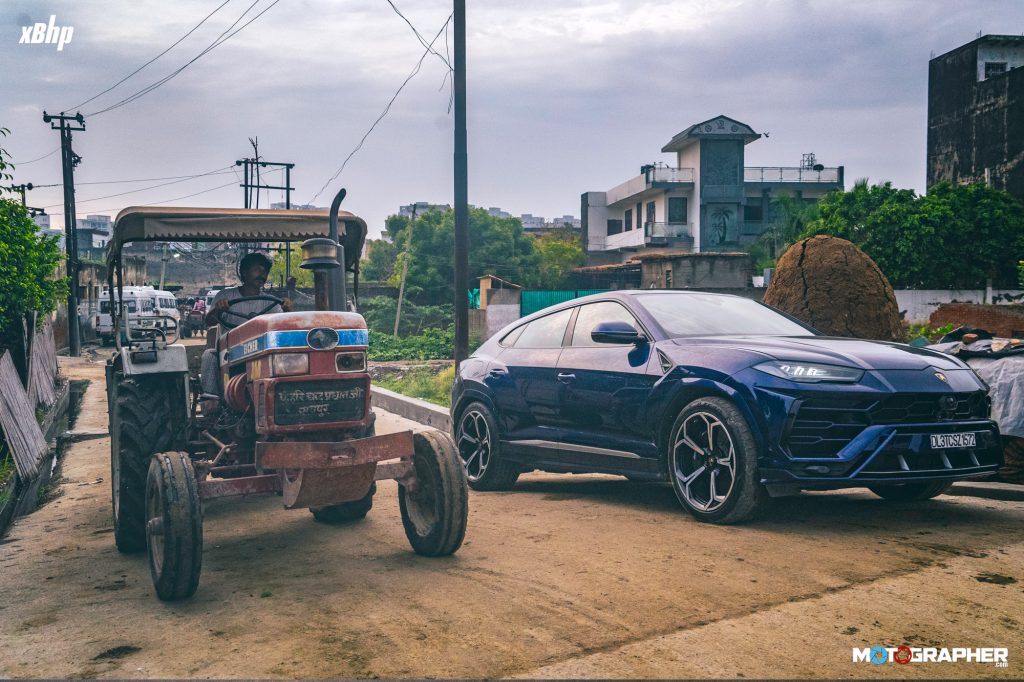
Yep, that’s perhaps the first time we have used shouty capitals and why not? After all, from video games to scale models, the cars of Sant’Agata Bolognese are one of the most sought-after pieces of automotive art/engineering. And the Urus marks a new chapter in the history of the brand. So when we got to drive one right here in New Delhi, emotions ran high, and heads rolled!
The thing about the Urus is that it is not a landmark car for Lamborghini just because it is an SUV. It is also because it departs from the engines that Lamborghini usually puts in their crazy cars. It does not have a V12. It does not have a V10. It is not even naturally aspirated anymore. What powers the Urus is a twin-turbo V8, and while it may seem like a departure gone too far, it still retains the ethos of Lamborghini. More on that later, because first, a brief history lesson to embolden the importance of Urus.
The journey of Lamborghini started in 1963. The first car they made was called the 350GT, which came out in 1964. It was powered by a V12 designed by famed engineer Giotto Bizzerini. Such was the talent of Signore Bizzerini that the original V12 designed by him was in use till 2011!
What is the significance of that engine? It powered the Miura, a mid-engined rocket ship, the fastest car in the world of its time, perhaps the spiritual predecessor of all modern mid-engined cars, and one of the most beautiful cars ever made. Then, the Countach. The scissor-door supercar, one of the most radical in the history of cars, powerful and expressive of the emotion and the passion that the brand backs all of their cars with. Then, the Diablo, another fastest in the world title, still one of the craziest cars ever made, and exceptionally beautiful. And finally, the Murcielago, the legend, the fighter jet for roads with automatic air ducts, and again, terrifying power.
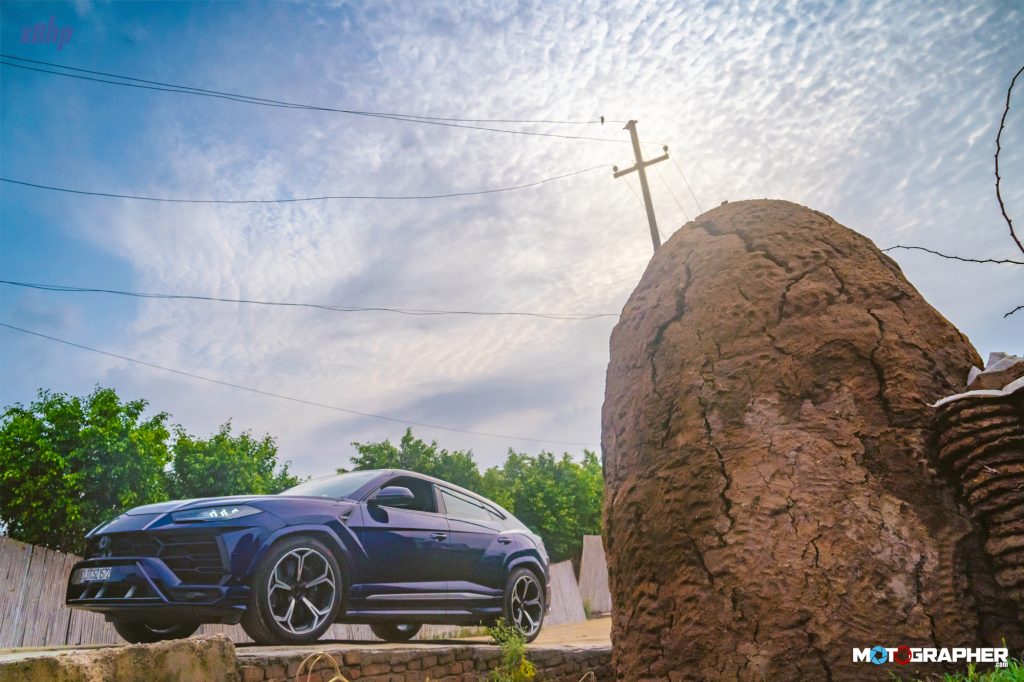
Bizzerini’s original V12 was retired for a new, built-from-scratch V12 that found its home in the hypercar of dreams… the Aventador. Apart from the V12, the only other engine configuration used by Lamborghini was the naturally-aspirated V10 that powered the Gallardo, the bestselling Lamborghini ever and its successor- the mighty Huracan.
Only two configurations in a history of almost 60 years… the reason? Lamborghini wanted their supercars to have nothing but the best. And in our opinion, the best… they are! Everything associated with Lamborghini incites animated gestures, breathlessness, and screams. Once you catch your breath, that is. If you ever get a chance to see a Sant’Agata Bolognese bull in flesh, hear it, and if you are lucky, see it in action, you’ll know what we are talking about.
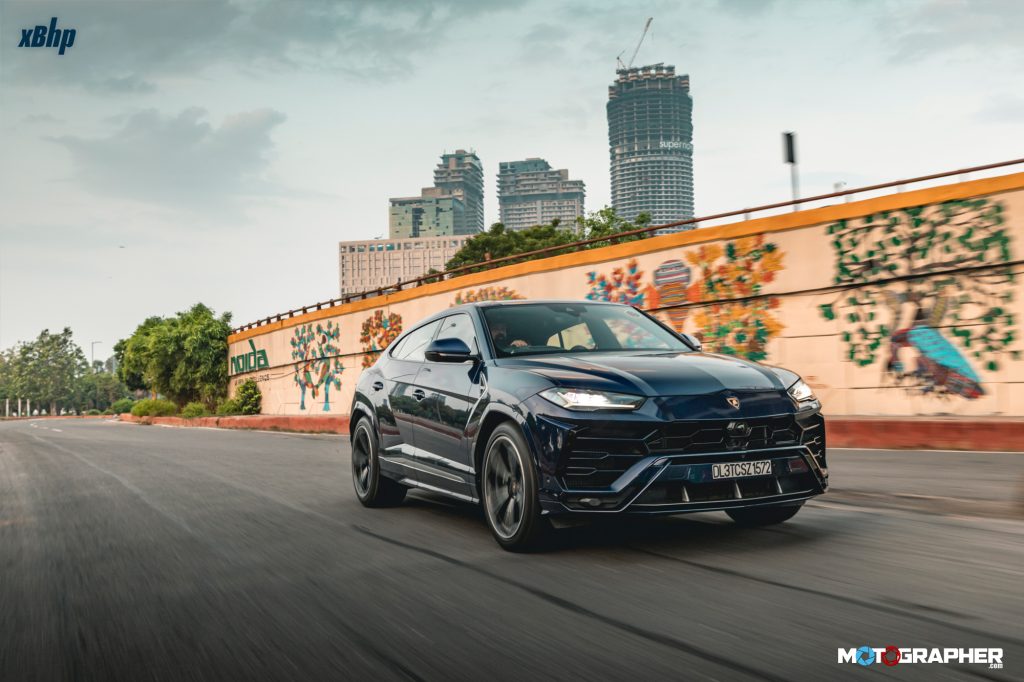
Back to the point now, the Urus. Now we know how special this car is, even as an idea. And it was a million times more special for Lamborghini because they had to make it. It had to stand out. A mere SUV with off-road cred wouldn’t cut it. SUV aside, it still had to be a Lamborghini. So how do you make a front-engined, twin-turbo V8-powered SUV and call it a Lambo? You get it made by Lambo. That’s all there is to it.
Did you know that this is not the first SUV from Lamborghini? That honour goes to LM002. Never heard of it? We thought so. Like all Lamborghinis, that car was out of this world, and unfortunately, that is where it stayed. So we are sure that the countless hours spent by the honest workers of Lamborghini were even tougher with the inevitable question looming all over them- “Is the world ready for an SUV from Lamborghini?”
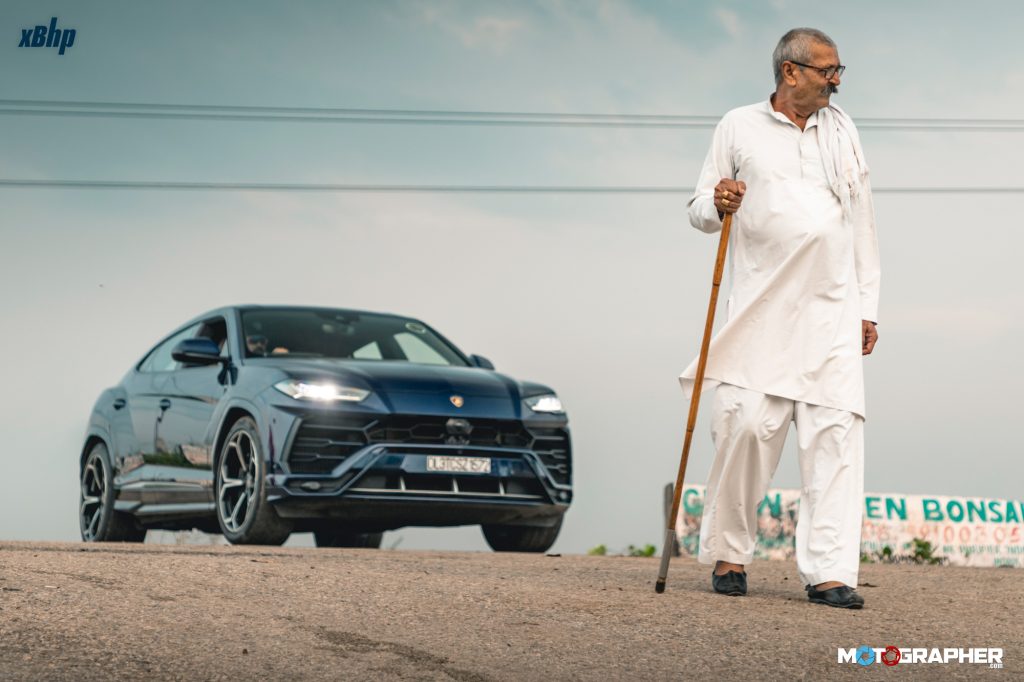
Honestly, no. But this time around, in a good way. The Lamborghini Urus is unlike anything else ever seen donning the utility avatar. One look at it and you know what you are in for… the only problem is that you don’t. Being humans, we have preconceived notions and beliefs, and every once in a while, there comes something that shatters all of them and carves a place in the now rebuilt belief system. Urus is that very thing!
First, let’s talk about the name- Urus. We know that Lamborghinis are named after bulls. And not just random bulls, legendary ones like the Murcielago, claimed to be standing still even after 24 sword stabs or the Reventon, known for having killed a famous bullfighter. And those are supercars. Here we are talking about a big-guns-blazing SUV. So the Urus, also known as Aurochs, was large (and ferocious, of course), wild, and known to be the ancestor of domestic cattle. Sadly (or maybe fortunately), it went extinct in 1627, but it is back and this time, in car form. It is still pretty wild though!
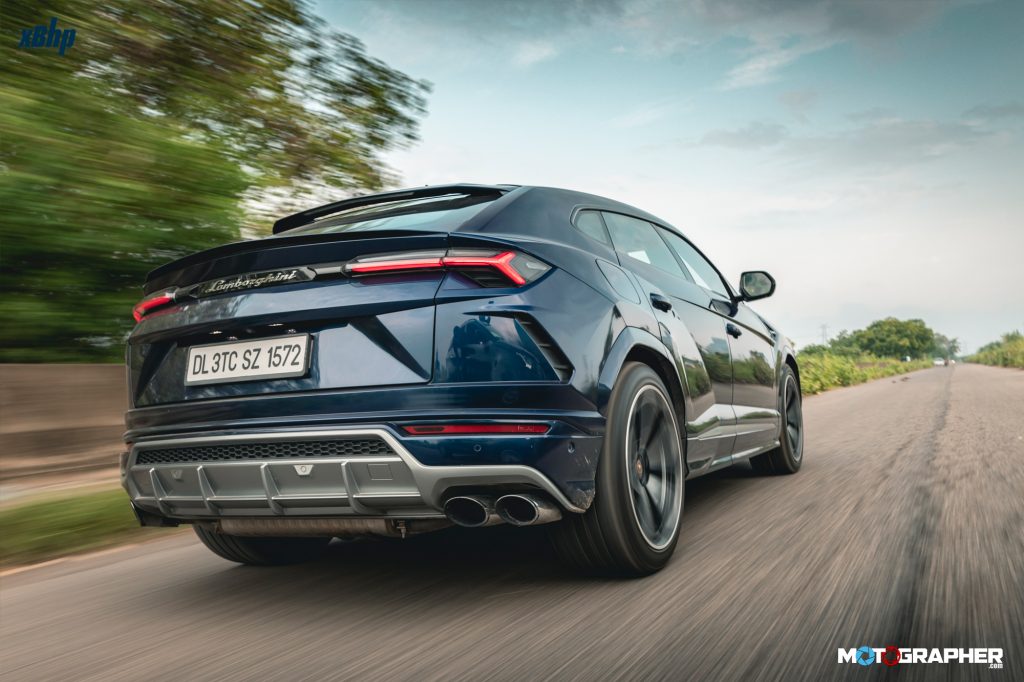
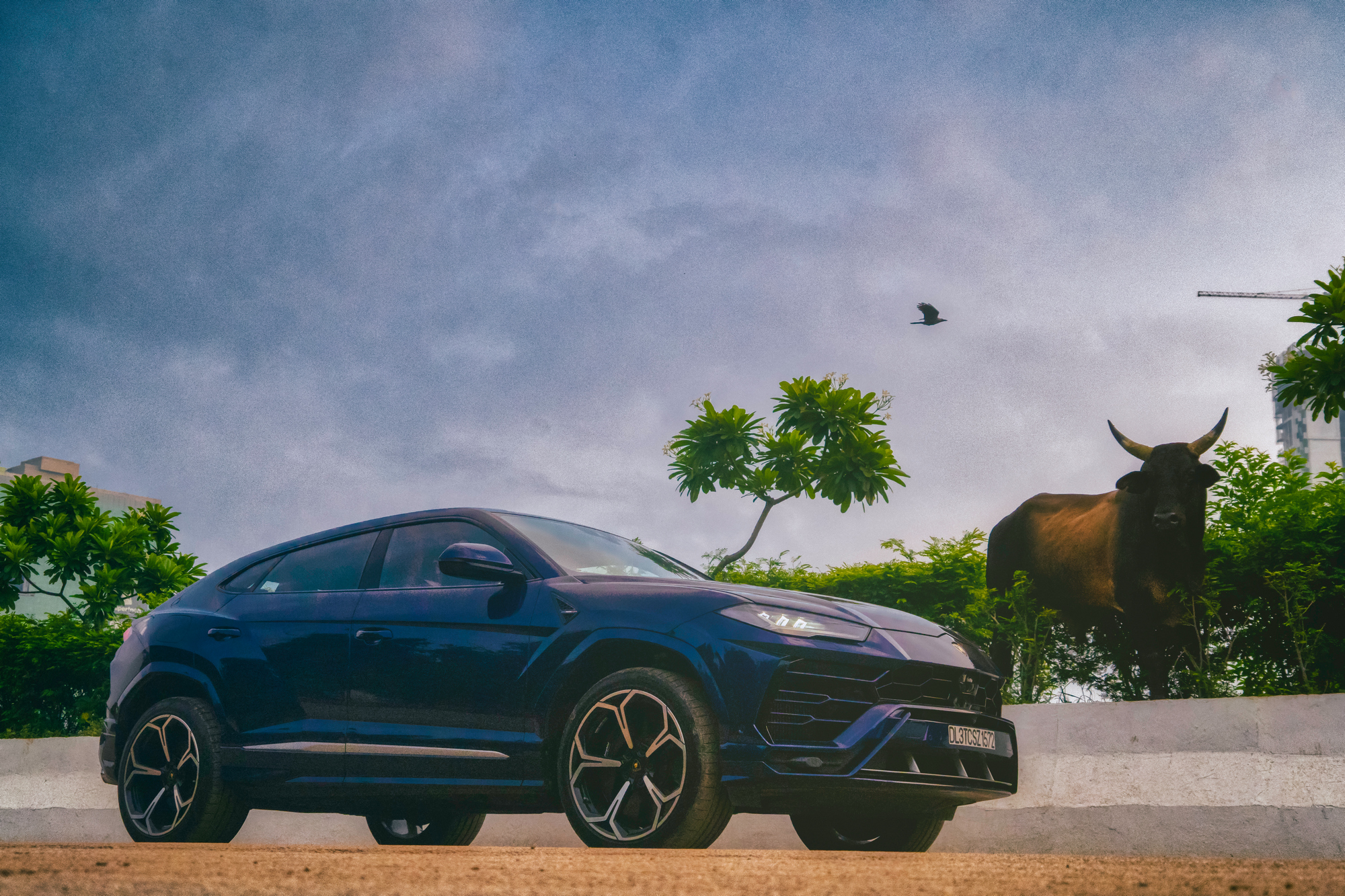
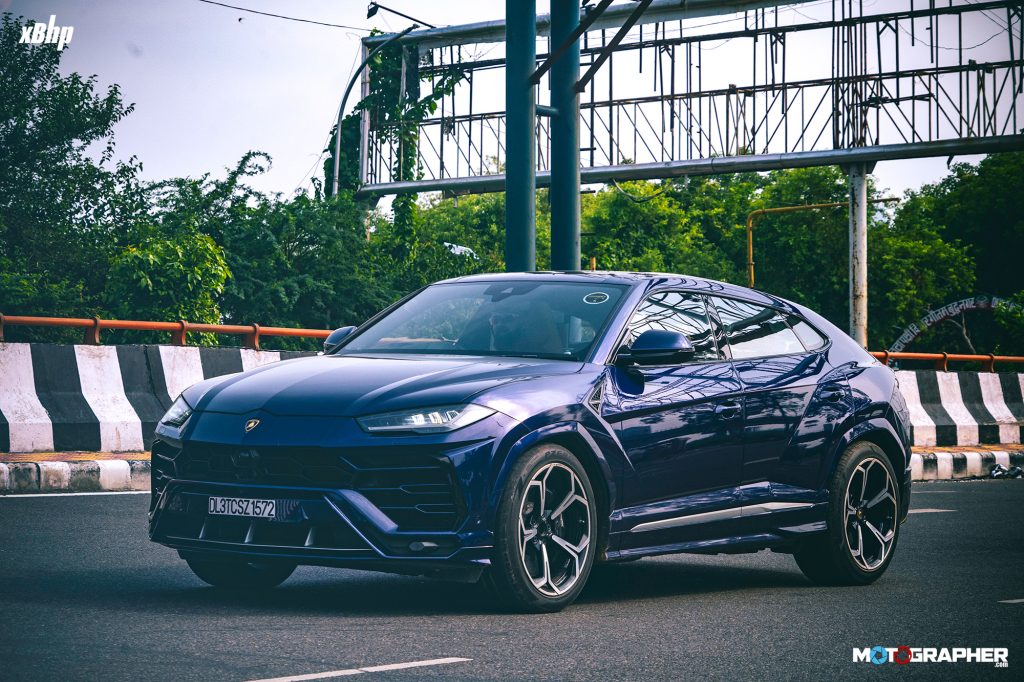
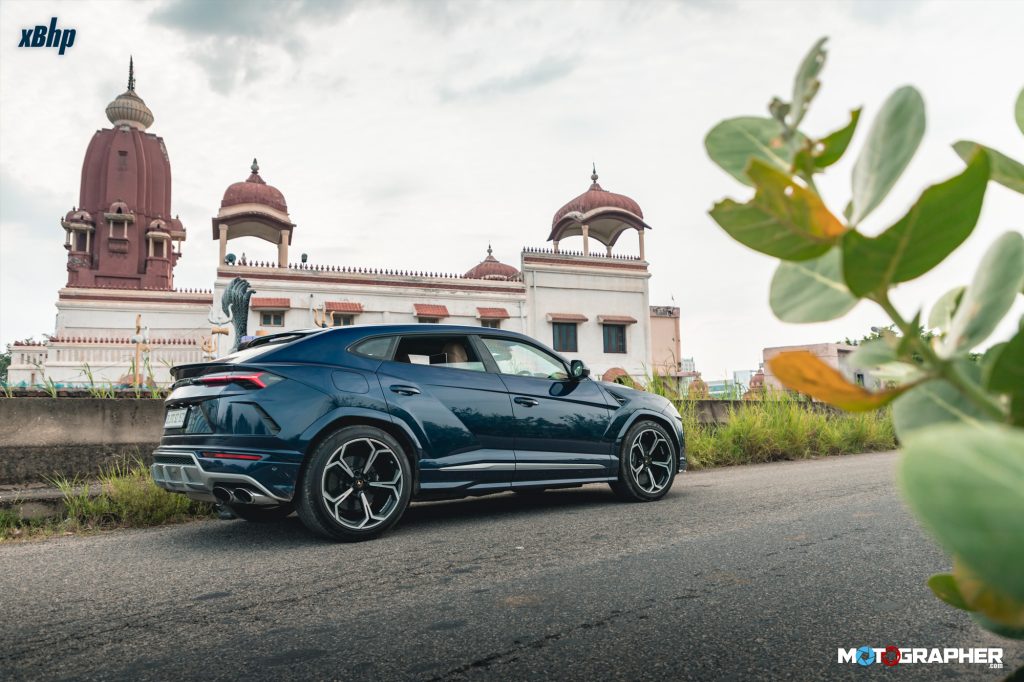
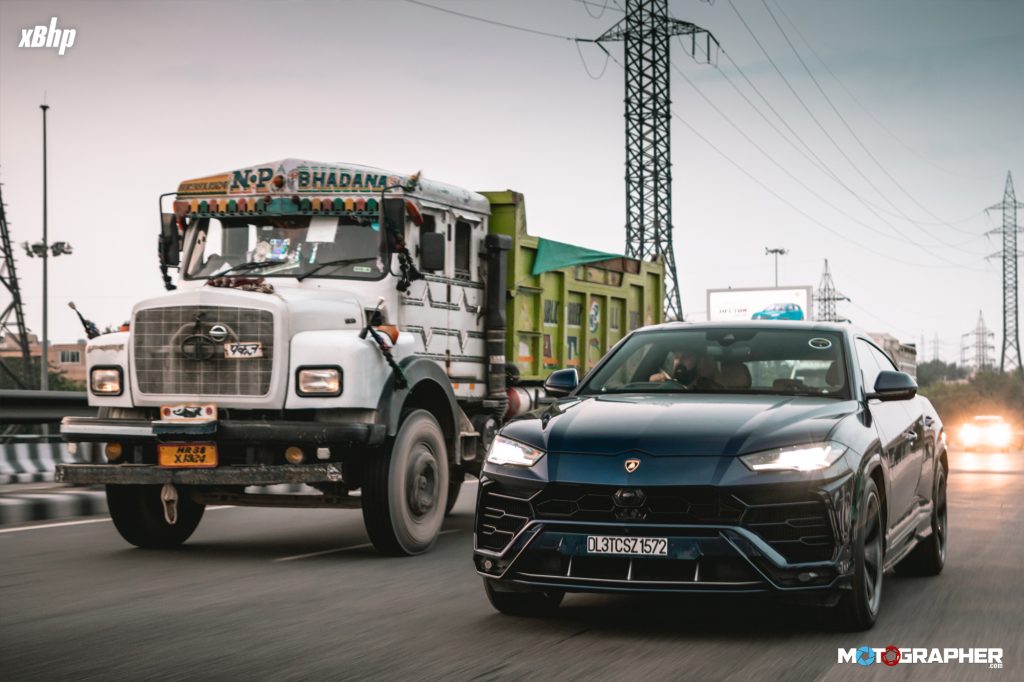
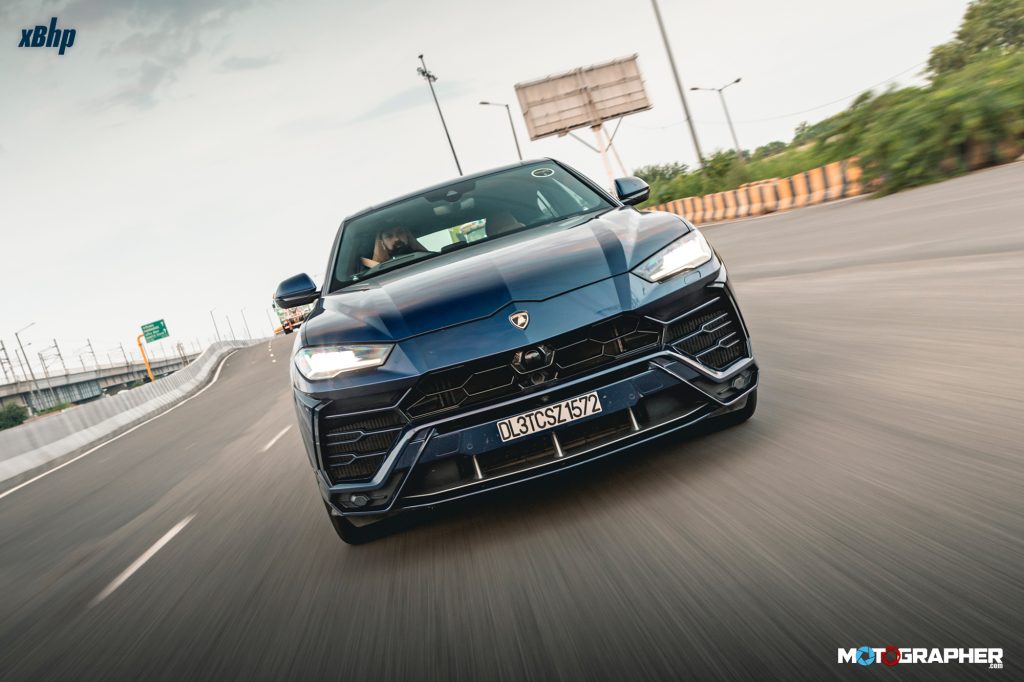
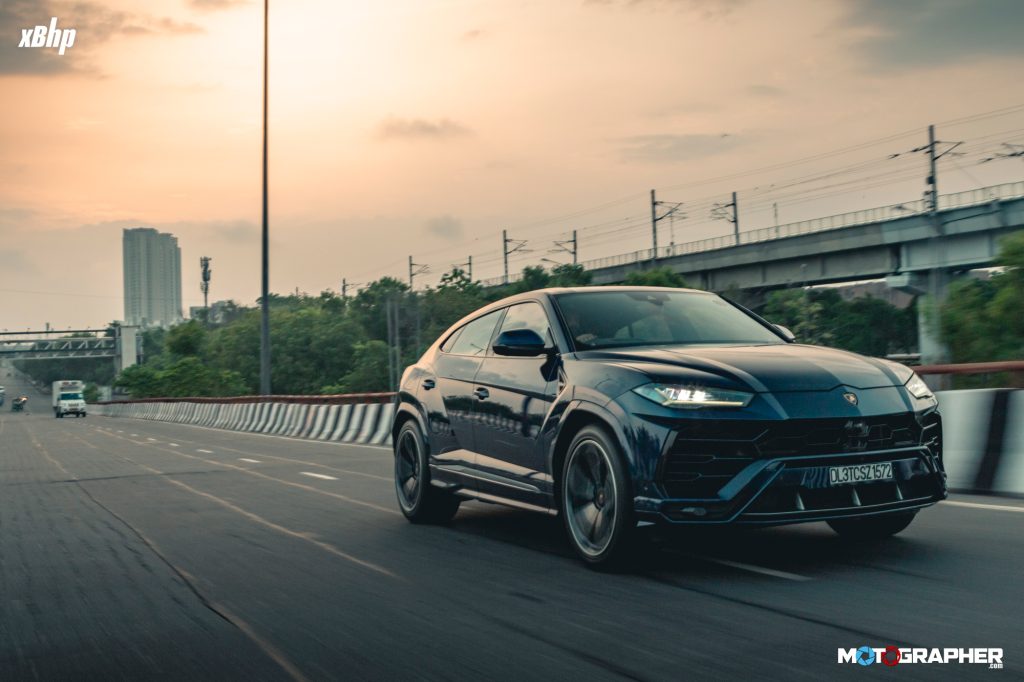
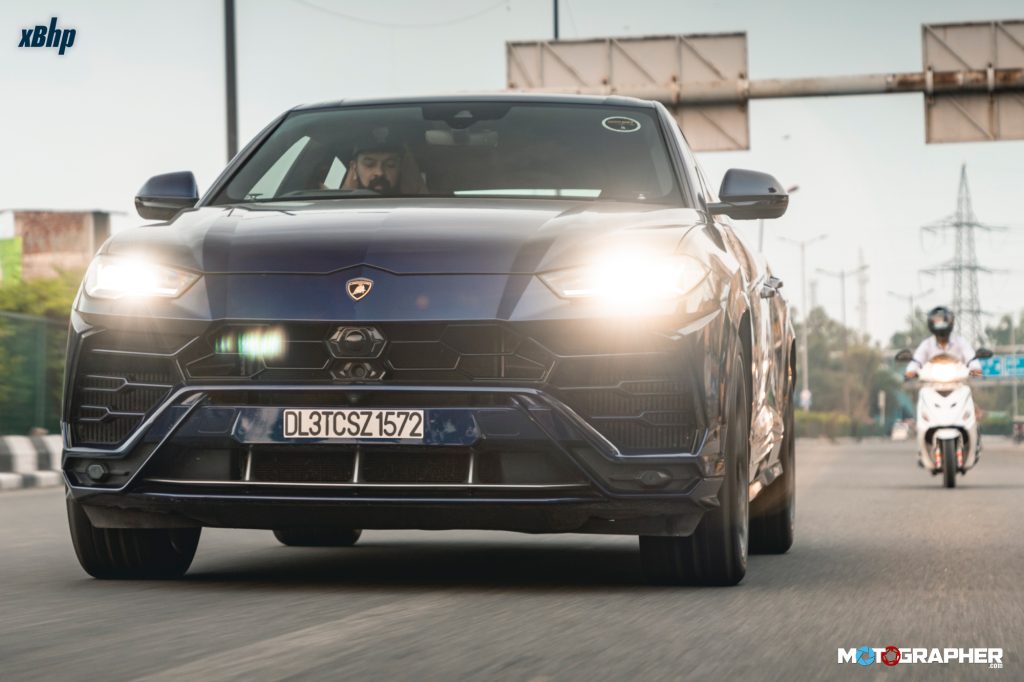
Making a car look like an SUV is not that hard. The Urus looks every bit like an SUV. Making it look like a Lamborghini is the hard part. And Centro Stile (Lamborghini’s design centre) pulled it off, and it almost looks effortless. Even if camouflaged, one could easily tell that the Urus is a Lamborghini. The hints start at the front. Sleek, sporty and sharp headlights with the familiar Y are an unmistakable signature of the brand.
Continuing with the front, the mount on the hood, the supercar-style fenders with large air intakes and the low and aggressive stance further protrude the Lamborghini-ness of this SUV. Then come the massive wheels (21” standard with options of 22” and even 23”!) that also sport a striking design. In our opinion, the Reventon had the best wheels ever and not just among Lamborghinis but among every car ever made. The ones of the Urus do come really close though.
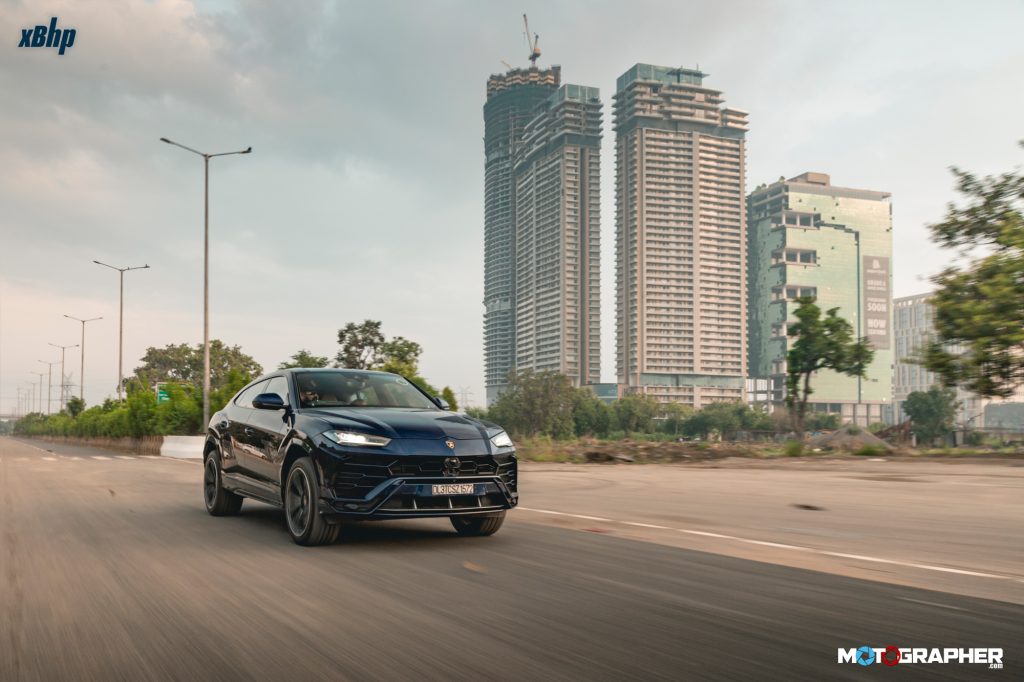
Through the wheels, you also find the biggest brake rotors ever seen on a production car. 17.5” carbon-ceramic rotors perform phenomenally, but in addition to that, they also put out there the intent of the car. The frameless doors, a sloping roof line, sharp edges and design along the length of the car further strengthen the relation this car has to Sant’Agata Bolognese.
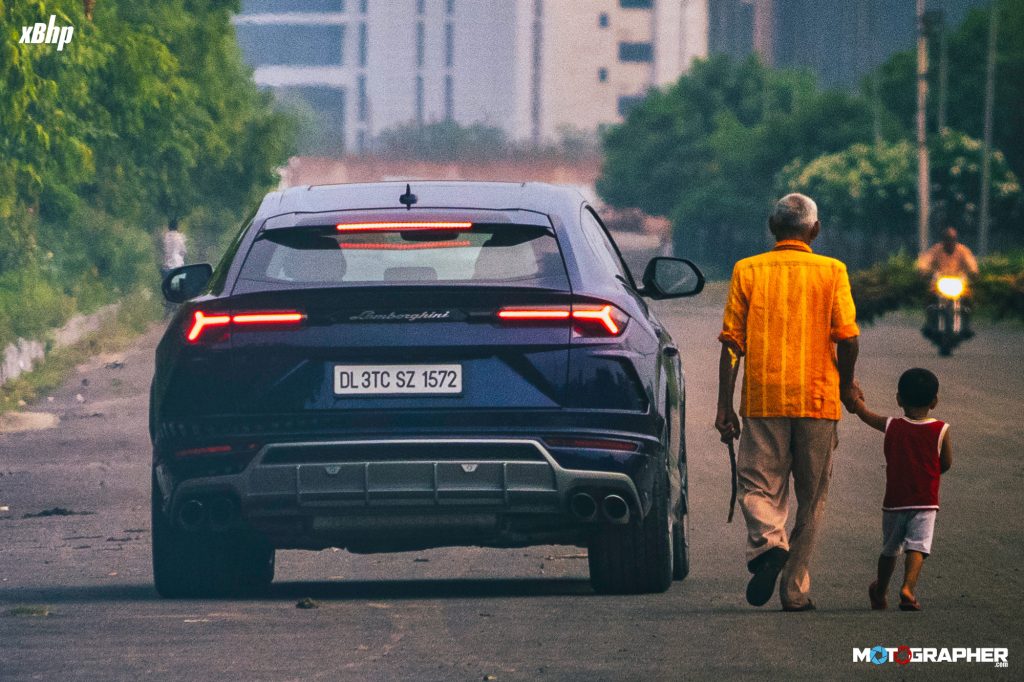
The rear completes the traditional Lambo look and stance with a low-slung rear diffuser and integrated tailpipes. The integrated tail lamp also embodies the familiar Lamborghini Y design theme. Also present are the hexagonal elements in the front, the Raging Bull badge in the centre of the front and the Lamborghini logo in the rear.
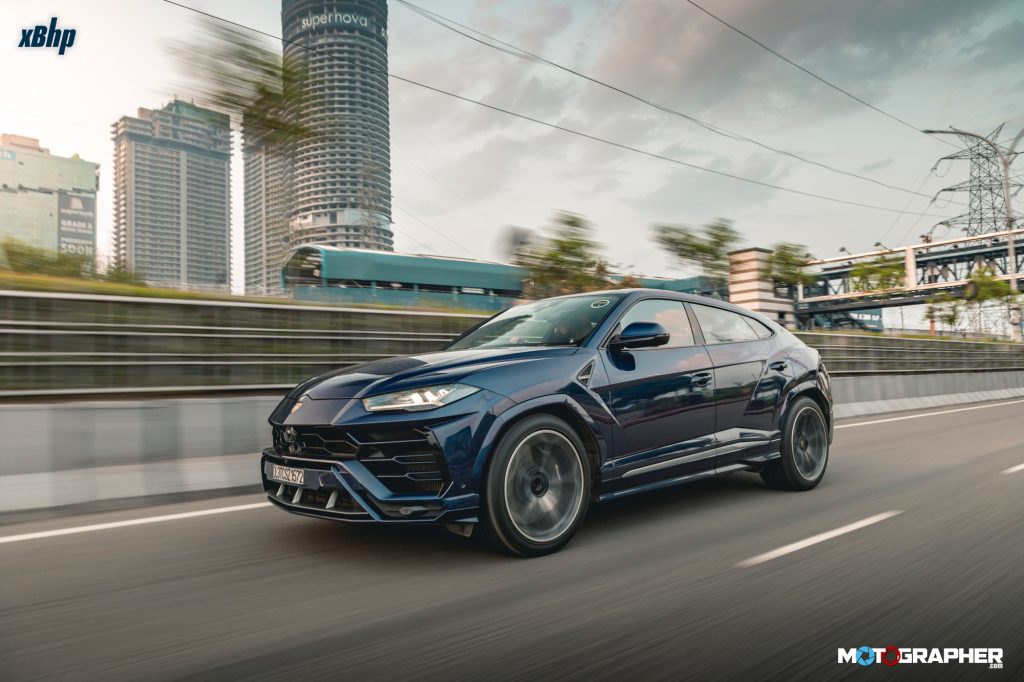
Form is often rendered useless when it does not serve a function. Thankfully, that is not the case with the Urus. Every crease and crevice on the exterior, from the integrated rear spoiler to the bold front intakes, serves one purpose- aerodynamic efficiency.
After all, a 2,200 kg car won’t go from 0-100 km/h in 3.6s with brute force alone. Another minor detail… the flow of the air from the front is directed in a way that it assists brake cooling as well. And we believe those huge binders do need a lot of that. Especially with what the Urus is capable of.
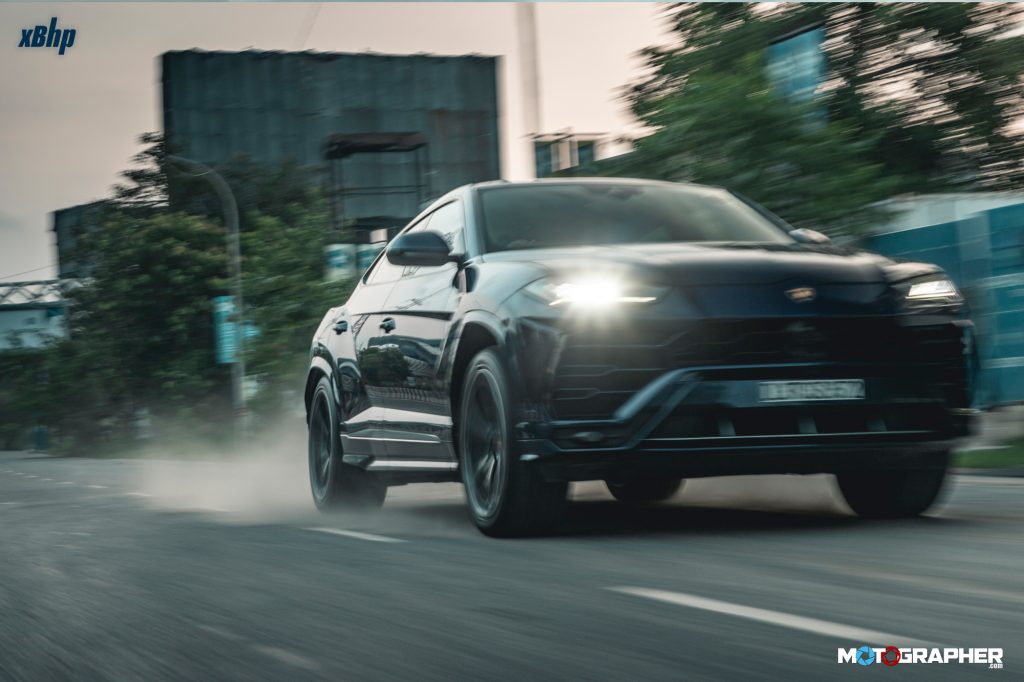
Regardless of the angle from which you are looking at it, Urus looks purposeful, tasteful, proportionate and utterly menacing. People may have had their apprehensions when they first got to know about an SUV coming from Lamborghini, but all of those fears were rendered unfounded when the car debuted.
The inside of the car is a heady amalgamation. Creature comforts in spades, in addition to the emotive Lamborghini touch, is a mix that could have gone horribly wrong. But the right proportion that the manufacturer has achieved makes it one of the best cabins seen on four wheels. There are more luxurious options available, as well as sportier ones. But none blends these two as seamlessly and as tastefully as the Urus does.
Sit inside the car, and once again, the hexagonal elements are in abundance, and the whole dash sports a slim Y profile. The sport seats are low and comfortable for both the driver (correction: PILOT!) and the passengers. All the controls are within comfortable reach. The dash consists of not one, not two, but three different screens.
The first one, right in front of the vibration-dampening steering wheel, is the most familiar with a Lambo-style rev counter and speedo. The other two are in the centre of the whole console, with one working towards the infotainment functions and the other carrying out the duty of controlling the comfort functions, also featuring haptic feedback for the added personal touch.
The lower screen is also handwriting compatible, in addition to the functions being natural-dialogue-controlled functions. With the Lamborghini, you are on top of the world, and they say it gets lonely there. So, you can simply talk to your Urus, and it’ll probably make for a better conversation than you can have with most people.
Continuing the modern touch, there’s a phone compartment with wireless charging, USB, Bluetooth, DVD and a kickass sound system. We are talking Bang & Olufsen 1,700-watt kick-ass sound system! But the soundtrack of that twin-turbo V8 still pips even that good of a system. Finally, Android Auto, Apple CarPlay, and smartphone interface and smart display for the rear seat as well, are also available as add-ons.
Now, two of the coolest things in the cockpit of the Urus are the starter button and the Anima Selector. While the aircraft-like starter button reminds one that the car is a Lamborghini (because the luxurious touches can easily lead one astray to think otherwise), the Anima Selector, which controls the dynamics of the car, has a quirky way of telling you that it is an SUV.
The Anima Selector is like a mode selector, but much fancier and functional. The modes are: Strada (Street), Sport and Corsa (Track)… the usual deal. Except it isn’t. The additional modes called Neve (Snow), Terra (Dirt), and Sabbia (Sand) are a quirky way of just putting out the minor fact that this Lamborghini can get the job done off the tarmac as well. The job? Relentless domination.
These modes are not just fancy names either. There is a reason why Lamborghini states that these change the soul of the car. The modes change aspects such as torque distribution, intervention levels, suspension settings, and even the height of the car. Makes it seem like that all-in-one sofa bed from those infuriating commercials. Only the Urus is a 305 km/h capable one, and that makes it just the opposite of infuriating.
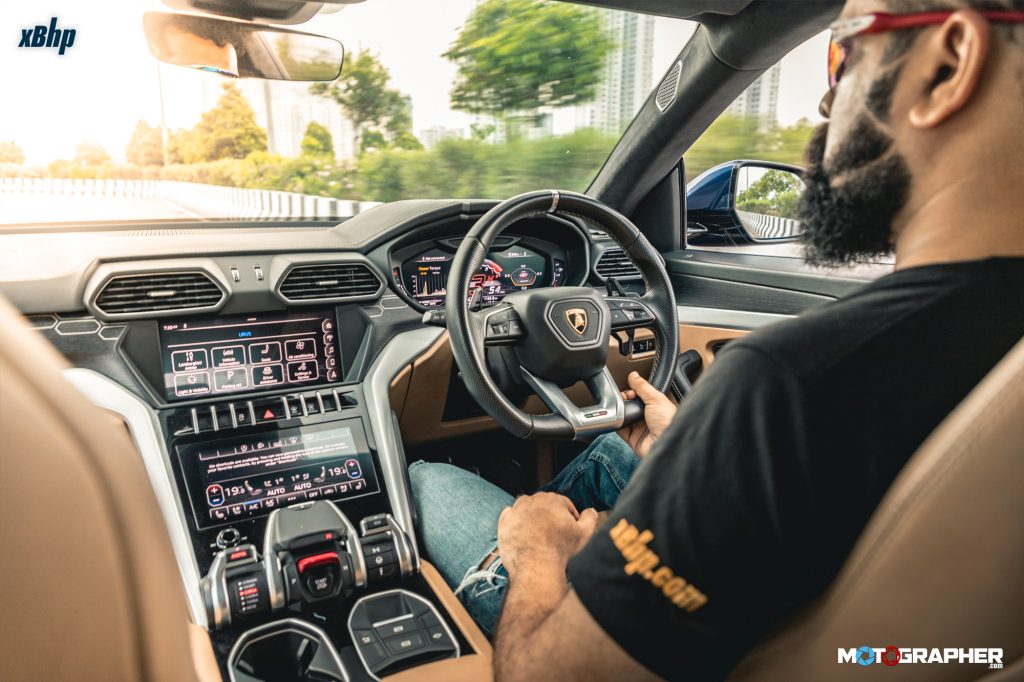
Another very Lamborghini move is the addition of EGO mode. In this one, you can set up the car the way you like, down to the minutest of details and settings. Complexities are in abundance here, so unless you spend your days on racetracks, stick with one of the preset modes. No hard feelings, but it is just that they have made the car, they have tested it extensively, so they kinda know better.
The seats, despite their sporty appearance, are fully electric, 12-way adjustable, and heated. Options include 18-way adjustable ones, and even with functions like ventilation and massage. And it is still a Lamborghini that we are talking about. On the rear as well, there are options of either two seats or a bench layout, the latter of which makes the Urus a comfortable 5-seater Lamborghini.
And then there’s boot space as well. 616 litres with the rear seats in their default position and 1,596 litres with them folded. A truly utilitarian Lamborghini. We are not sure how Signore Lamborghini felt about SUVs, but regardless of that, he will be proud because in the end, he also wanted Lamborghini to be making road cars… brilliant ones at that.
The interior is a cocktail of exotic materials such as Alcantara, aluminium, carbon fibre, wood, and the finest hand-stitched leathers. The permutations and combinations of the choice of material and customisation are almost infinite. So if only getting your hands on a Urus is not enough, you can truly make it your own by specifying your requirements.
And now to the aspect of a supercar that is the most fun, even more so in the case of Lamborghini and double even more so in the case of the Urus. Are we exaggerating? Not really. The Urus is perhaps unlike anything you may have ever driven. And the first sign of the things to come your way comes right after you push the starter button.
The exhaust note, the sheer racket, is bloody brilliant! It throws you off balance as it suddenly starts to feel like a super sports car till the commanding piloting position reminds you that you are in an SUV. The pops, the crackles, the turbo scream and the growl, it sounds ungodly. You can just keep blipping away all day, and we assure you wholesome entertainment even without engaging the car into drive.
Hey, it is an SUV. It is supposed to be quiet inside a cabin. How can one call that V8 quiet? And yada and yada and yada. This is in Sport and Corsa mode. In Strada, it sounds much more sedate, and it is almost whisper-quiet inside the cabin… almost.
Now, what is it like to drive? Well, let us start by saying that the engine, while not a conventional Lambo V10 or V12, the powerplant of the Urus is a very capable substitute. Plus, they say it was more practical too. We wonder what they meant by that… Engage it into drive and off you go. Even in Strada, the Urus does not feel like an SUV, going by the way it moves. The acceleration is absolutely brutal, and we trust Lamborghini, so we did not try to test the top speed.
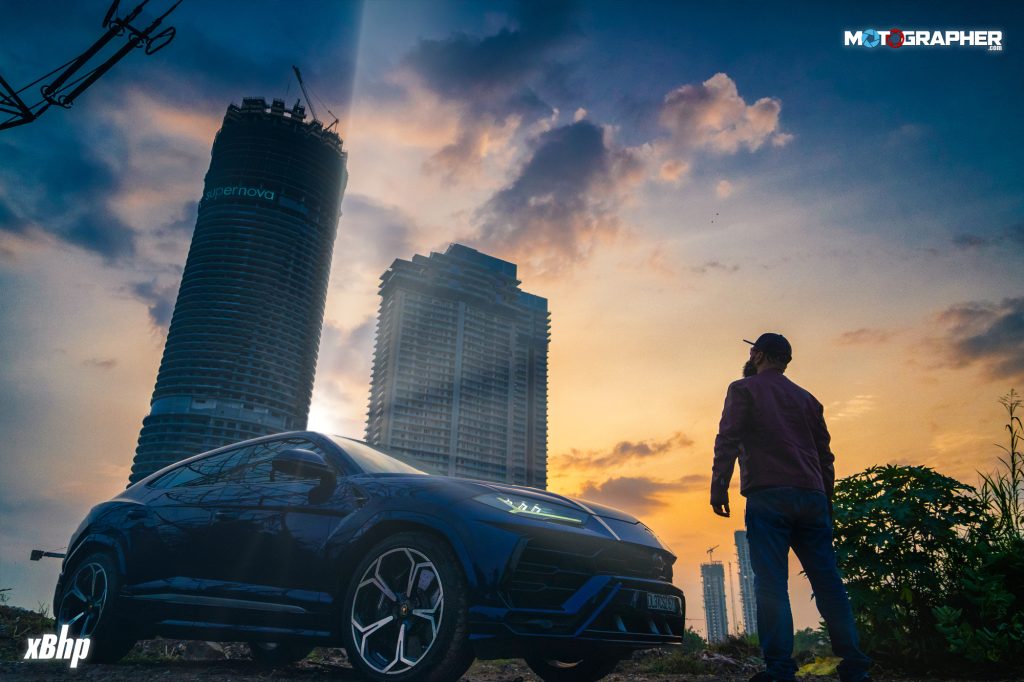
While we did not time it on a stopwatch, in Corsa mode, Urus flashed from double to triple digits in a blaze of glory. So the 0-100 km/h in 3.6s is not just a number on paper. But more than that, the best part about the car is the 8-speed gearbox. 850 Nm of torque is no joke, and that is why, even if you find yourself in a gear or two higher, a firm push of the pedal is rewarded with joyful thrust.
We also put Lamborghini’s soul-swapping claim, and with small changes in almost every dynamic aspect of the car, every mode makes the Urus feel like a different car. In Strada, it is quiet, sedate and can go around town like a regular car. But it never seems too much on the back foot. Almost always ready to go ballistic at the drop of a hat.
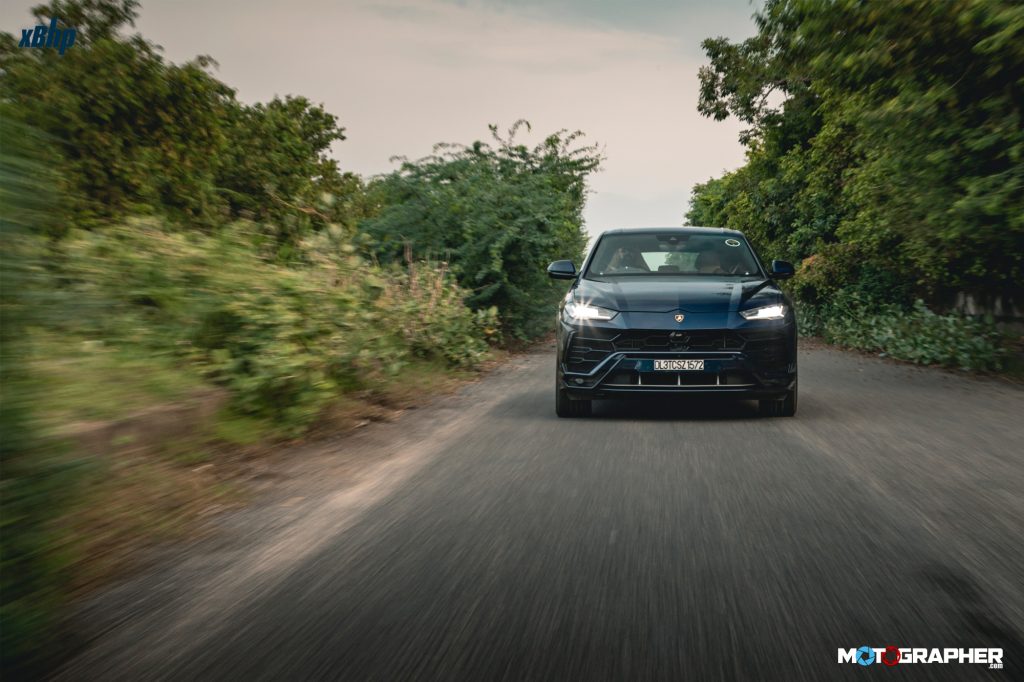
Put it in sport and immediately the throttle response is crisper and the car feels more agile. Quick changes in direction or rolling getaways and overtakes, it all seems effortless. Put it in Corsa and prepare to put to shame some of the lighter sports cars. We have driven our fair share of supercars, and the Urus feels no less. We have already filed a report for the disappearance of the claimed 2,200 kg kerb weight of this monster.
Now, Lamborghini is one of our favourite brands, and we have driven a Gallardo and a Huracan. We loved both of them. And driving the Urus in some heavenly way feels so much like those and, in essence, like a Lamborghini. It is an SUV, and those were supercars, and yet, passion for certain things always makes its way into your work, no matter how diversified the field is. Again, we do not know if it is the sound, the character, or simply admiration for the brand, but some sacred feeling or emotion binds every Lamborghini ever made.
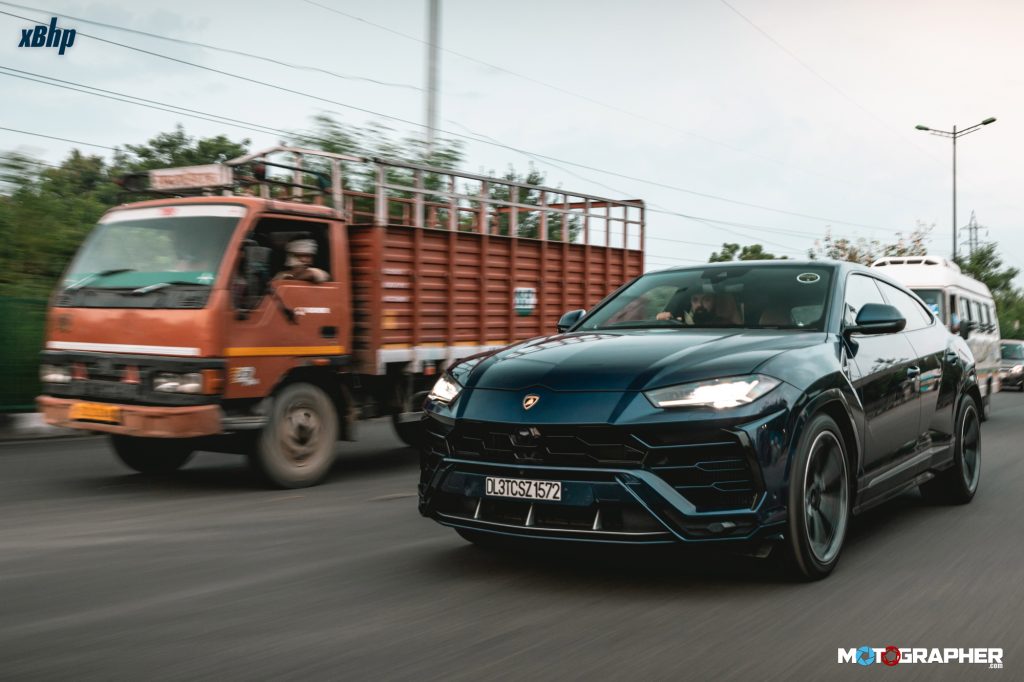
Anyway, sentimental downpour aside, Urus has another nifty trick up its sleeve, much like its supercar and hypercar brethren, and that is 4-wheel steering. While the system has helped the likes of Huracan Performante and Aventador SVJ (Super Veloce Jota… how cool is that!) rip racetrack records to shreds, it has helped the Urus be a true multi-faceted car.
The Lamborghini 4-wheel drive system enables the Urus to dispatch low-speed or tight manoeuvres with ease, handle high-speed turns, in some ungodly way, like a supercar, and makes it a very capable off-roader too. While we did not test out the last one, the other two we experienced aplenty. With the way Urus dealt with tight spaces, we kinda understood what Lamborghini meant when they said that they wanted this car to be a very practical Lamborghini.
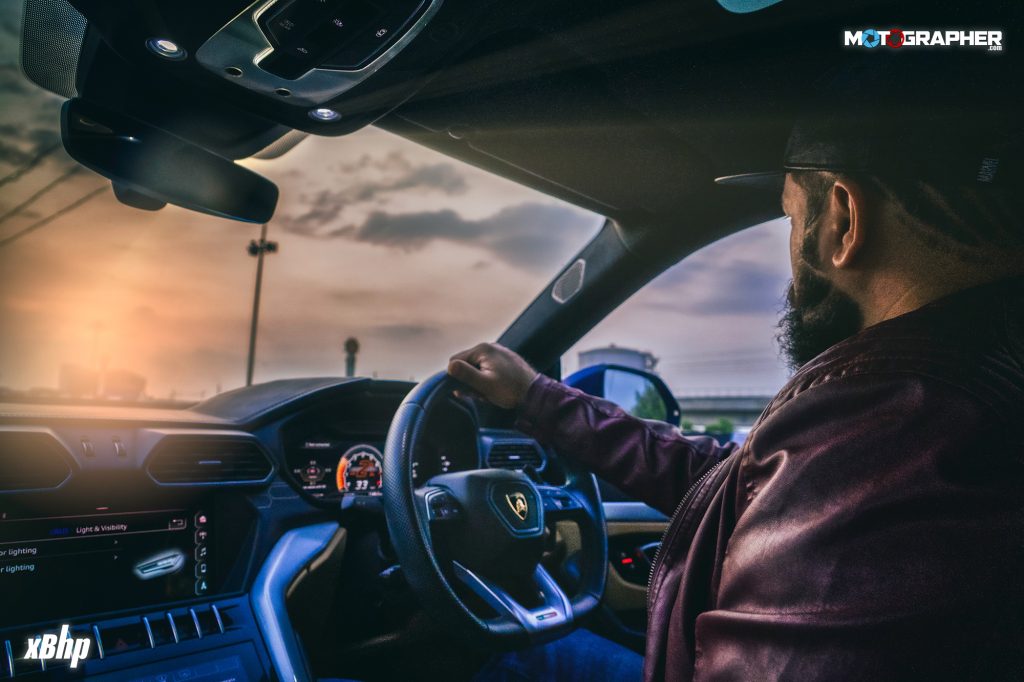
Now, suspension also has a big part to play in the kind of poise and confidence the Urus displays. Adaptive air suspension with Active Roll Stability Control ensures that the computer onboard is getting every bit of information from the surface, and the computer makes sure that the countermeasures are ready for every kind of curveball you can throw at it.
An example could be a low-radius corner that you happen to take at rather high speeds. Do that and the car tracks straight and true and never wavers from its line. The reason? As soon as a situation like that is sensed, the outside suspension is stiffened, and you almost feel like that corner was a figment of your imagination. Witchcraft? Yes. But all the electronics never rob you of feeling because in Sant’Agata Bolognese, they believe that the feel of driving a Lamborghini is a thing not to be tampered with… or maybe it was us who believed that and still do!
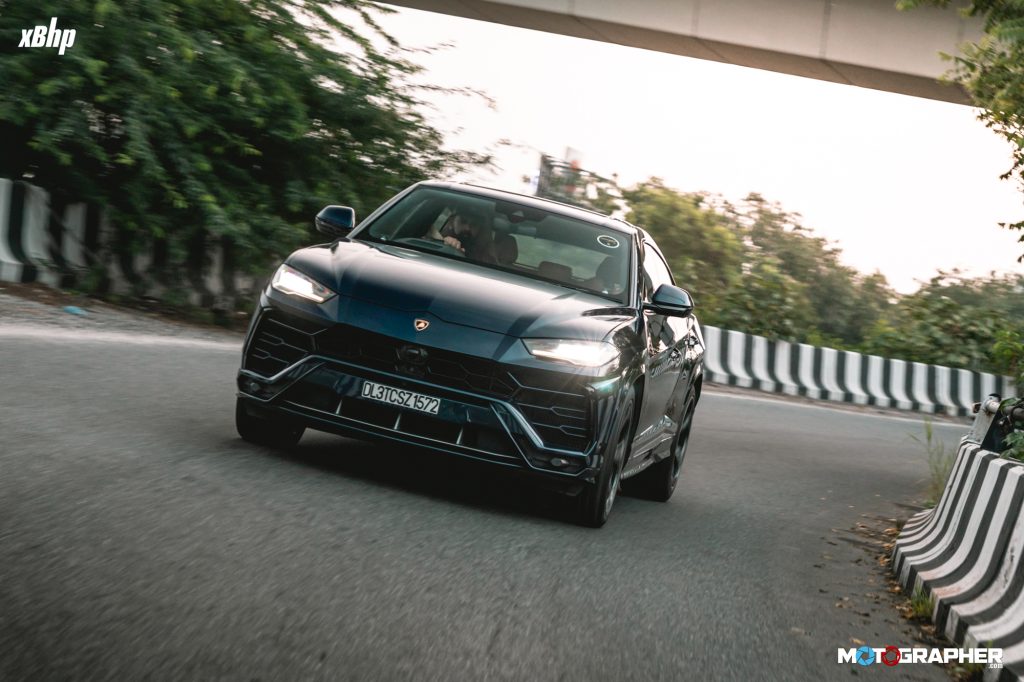
And then there were tyres. Pirelli makes 6 different kinds of tyres for the Urus, and Pirelli P Zeros are standard (GOLD STANDARD!). If you fancy taking the Urus to an epic battle with the wilderness, Scorpions are available too. But we would advise that if you plan to do that, invest in the off-roading package as well, which will equip the Urus with specific metal-reinforced bumpers and additional underfloor protection for off-roading.
The final pillar of the ultra-awesome handling package of the Urus is the braking system. We have already mentioned that the carbon-ceramic anchors on the Urus are the biggest ever on a production car. Frankly, they had to be. More than 2 tonnes moving at unfathomable speeds, you need brakes… and balls. One small gripe here is that despite all the stopping power, the brake pedal did feel just a smidge spongy.
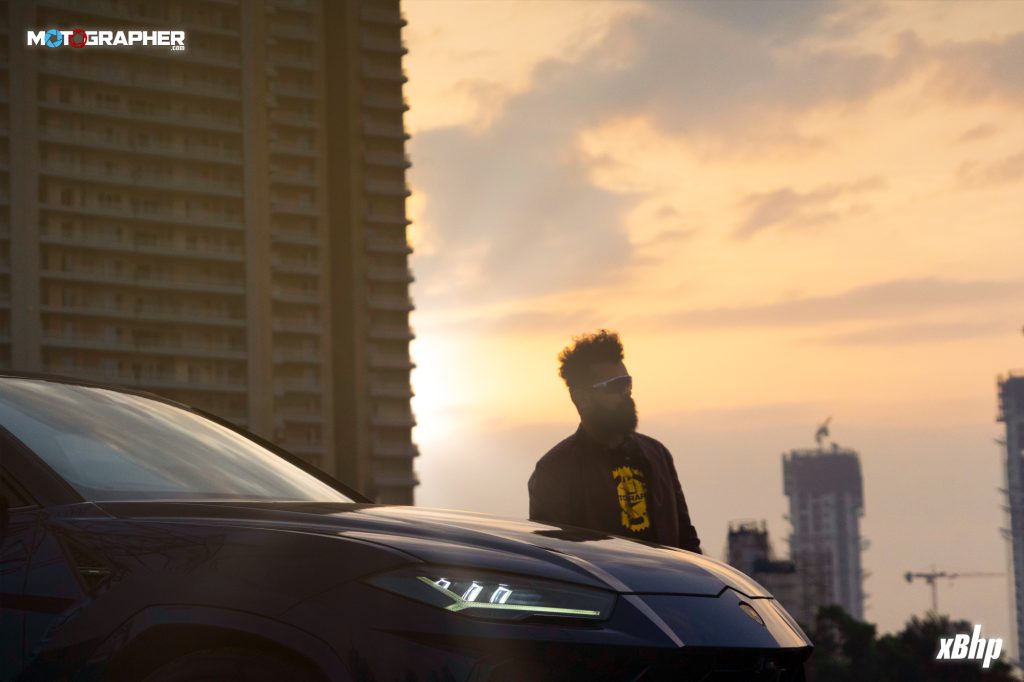
Now, two more things that we’d have liked a little better. First, in Corsa Mode, the gearbox of the Urus feels a tad… grabby, if you know what we mean. It is not as slick as the one on the Huracán. And second, the exhaust note. Don’t take it the wrong way, the Urus sounds amazing with a growl in the beginning and the roar around the top end. The only problem is that, in line with the precedent set by Lambo, it falls a little short. It is not our fault that other Lamborghinis sound just fantastic, so they spoiled us in the first place.
Now, just to make it official, we will paste the spec sheet around the end or so but to be honest, this was not a review. A car like this… cannot be reviewed. It may sound outrageous, but just think about it. Hundreds of people have worked on the smallest of details that the Urus is in possession of. Quite a few, very seasoned ones at that, may have tested it tirelessly to make sure that the Urus did not falter and walked the path paved by Automobili Lamborghini with pride.
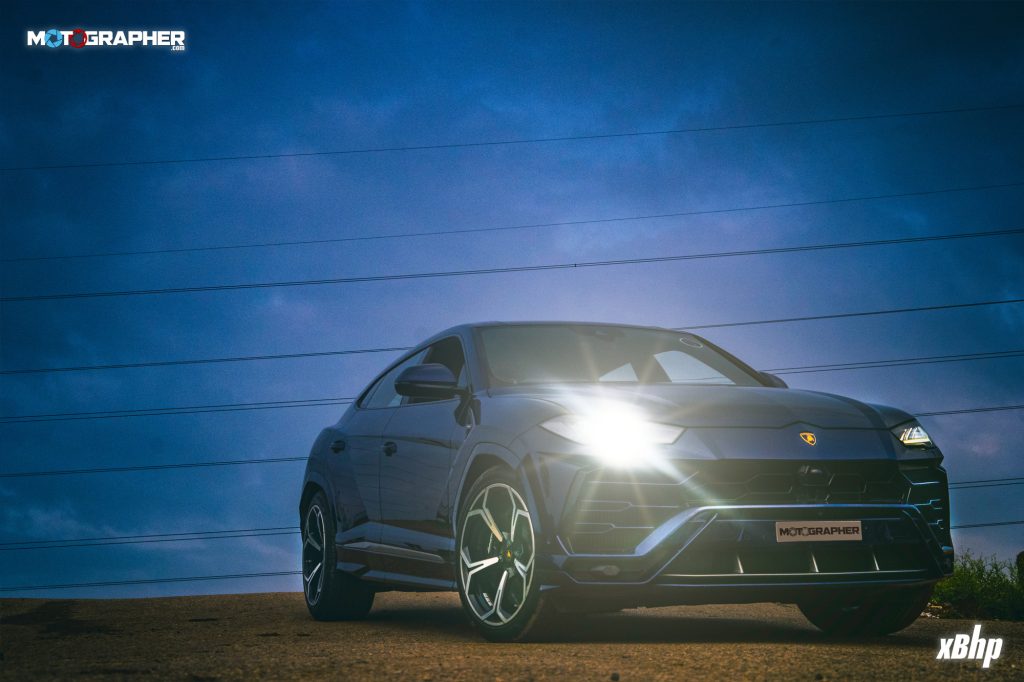
So how can a couple of people judge it bit-by-bit for what it is in a span of a few hours and 30-odd kilometres? We can’t. Probably no one can. And if someone thinks they can, to each his own, and we won’t even contest that. One thing that stands undisputed though… is that Lamborghinis are f**king amazing and the Urus is every bit the Bull it was meant to be. Thank god that some people did not understand clutches very well and were too engrossed to admit it…
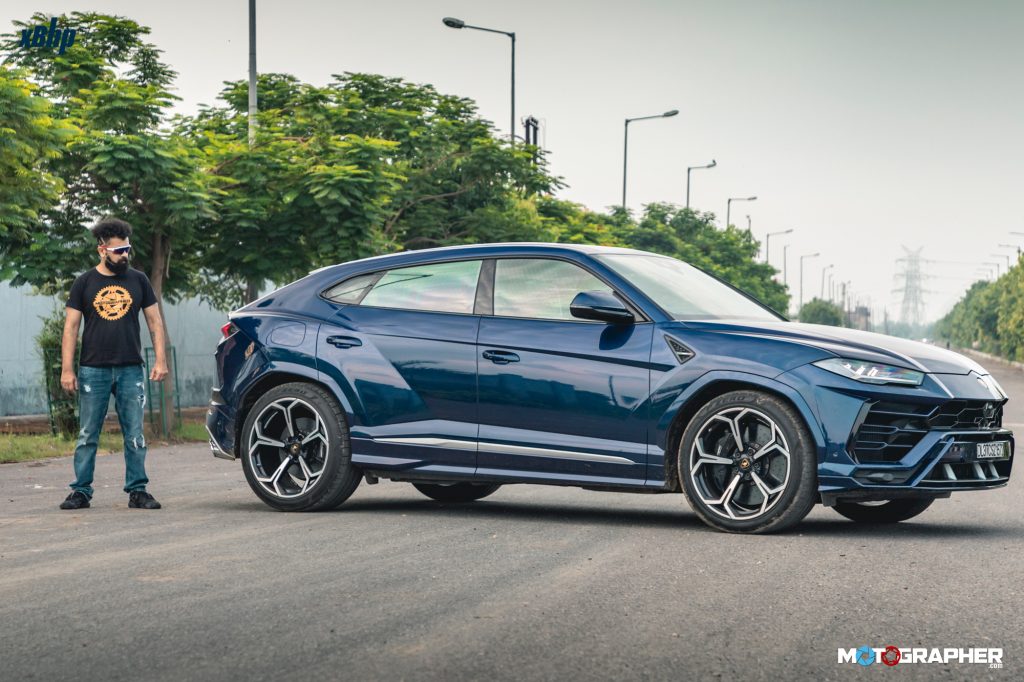
Yamaha Niken | Ridden in Australia
 Dec 2019 Sundeep Gajjar
Trikes,Yamaha
Dec 2019 Sundeep Gajjar
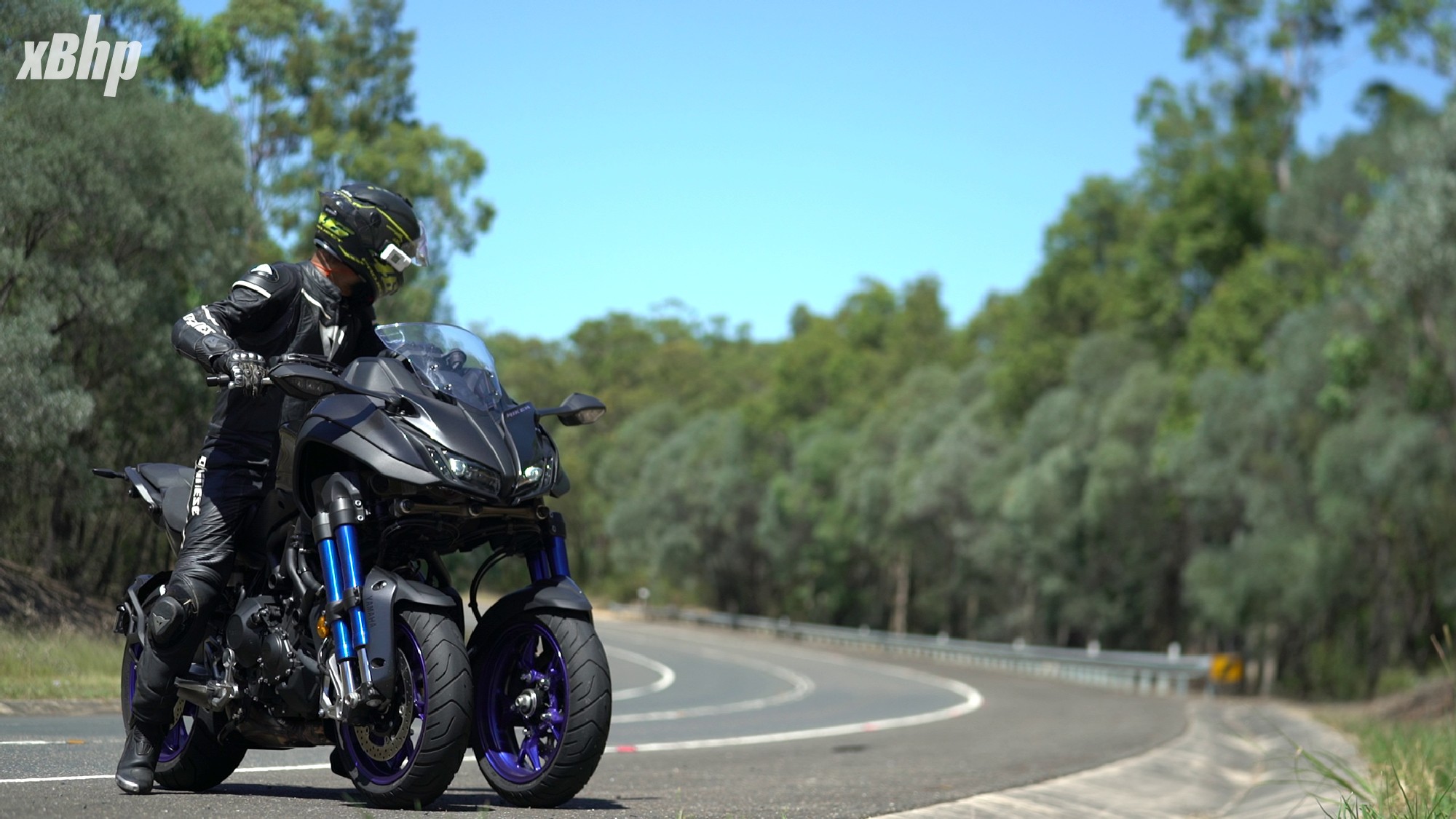
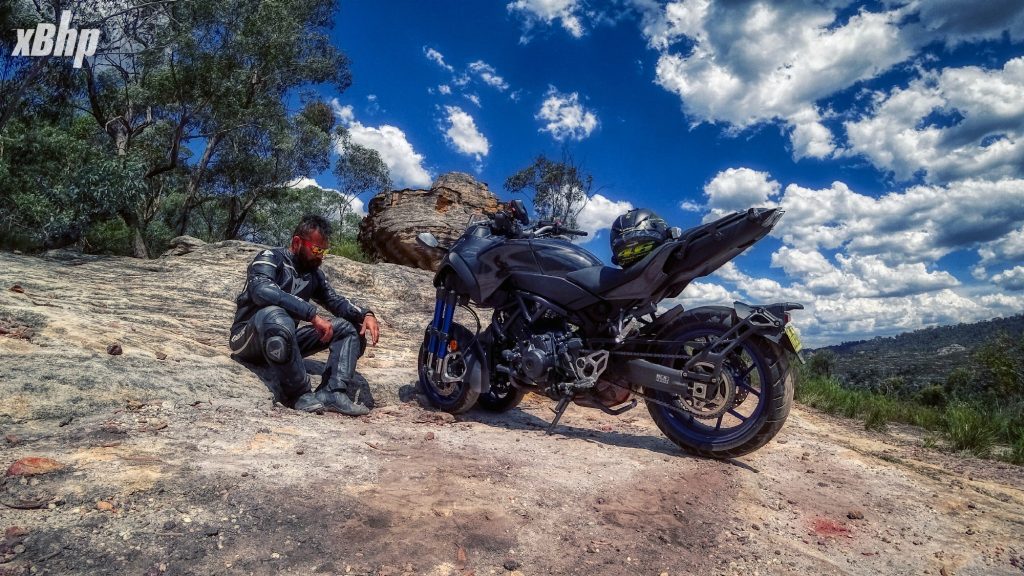
Trikes,YamahaWhile one gets to see a lot of weird or outrageous motorcycles in their lifetime, most of them are just concepts which never see the light of day. The subject matter for this article though, is not one of those concepts. It is a full-fledged production motorcycle, and it’s from Japan. We got to test ride the Yamaha Niken, the ‘subject matter’, in Australia, and it won us over despite many of our reservations regarding the unconventional motorcycle… or a trike.
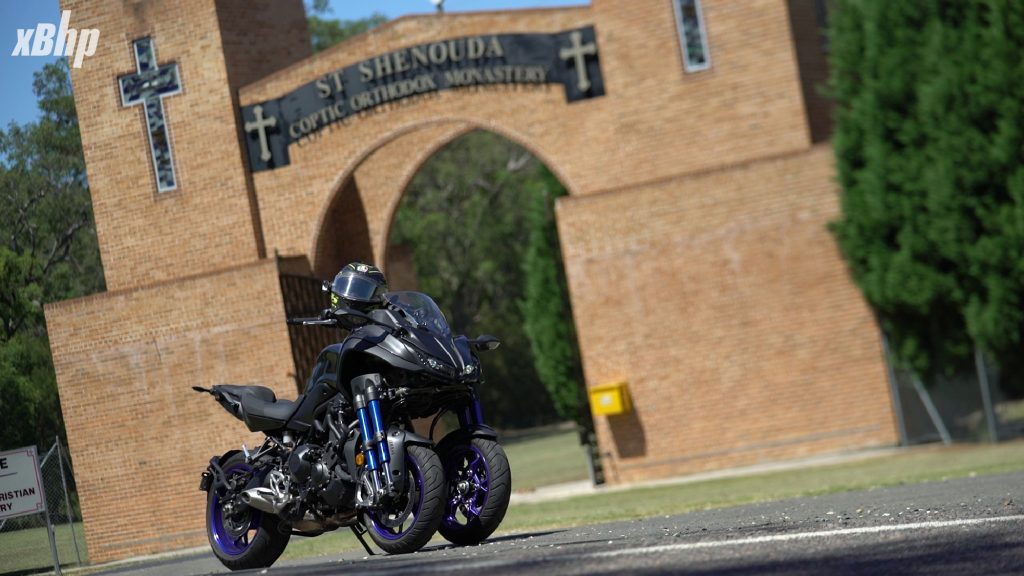
Now, the Niken is a trike… it has 3 wheels, and it is also one of our favourites because this is probably the only trike that is almost fully… ridden. In order to knock some more sense into that sentence, let’s say that it is a Leaning Multi-Wheel Vehicle… That did not make a lot of sense either. So, let’s just put it this way… it is a motorcycle with two wheels on the front, instead of two. How does it work? Let’s find out.
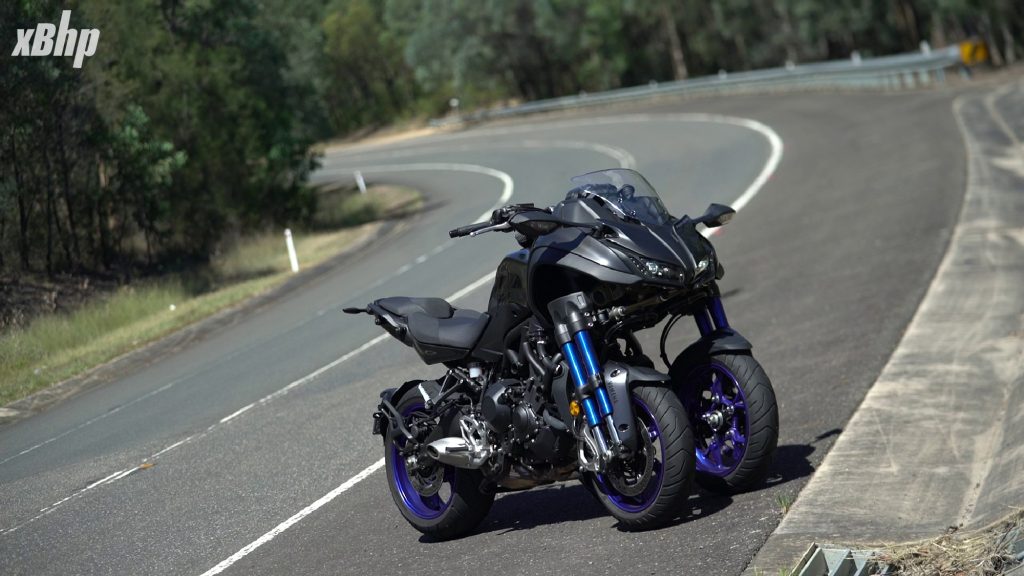
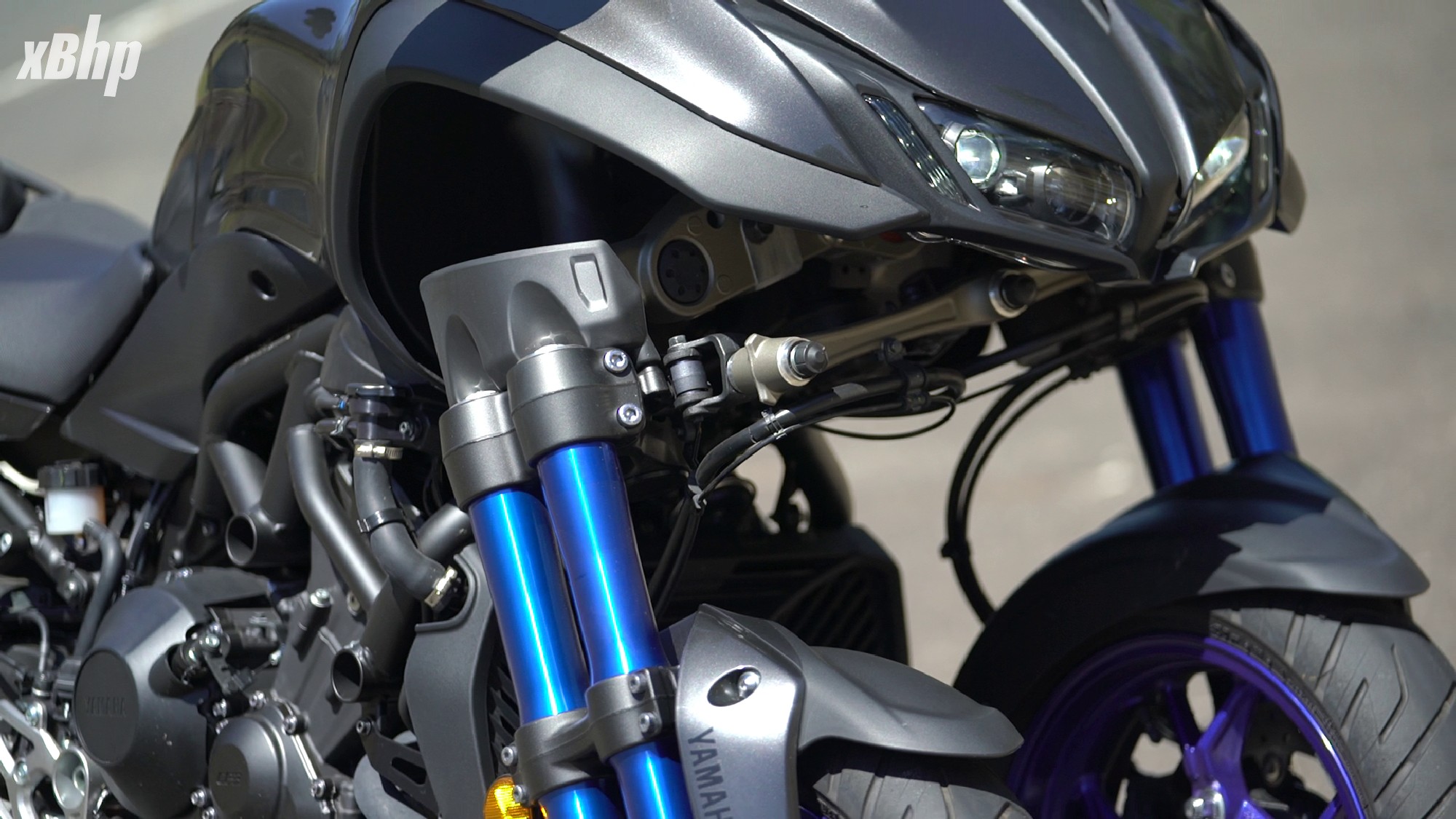
On the front of the Niken, we have Parallel quadrilateral arms that support its cantilevered suspension and allow it to ‘lean’. The Niken can achieve up to 45 degrees of lean angle before the footpeg feelers start to scream. The cantilevered suspension comprises two USD fork legs on each side; a 43mm rear leg with fully adjustable preload and damping, and a 41mm front leg that holds the wheel/brake assembly in alignment.
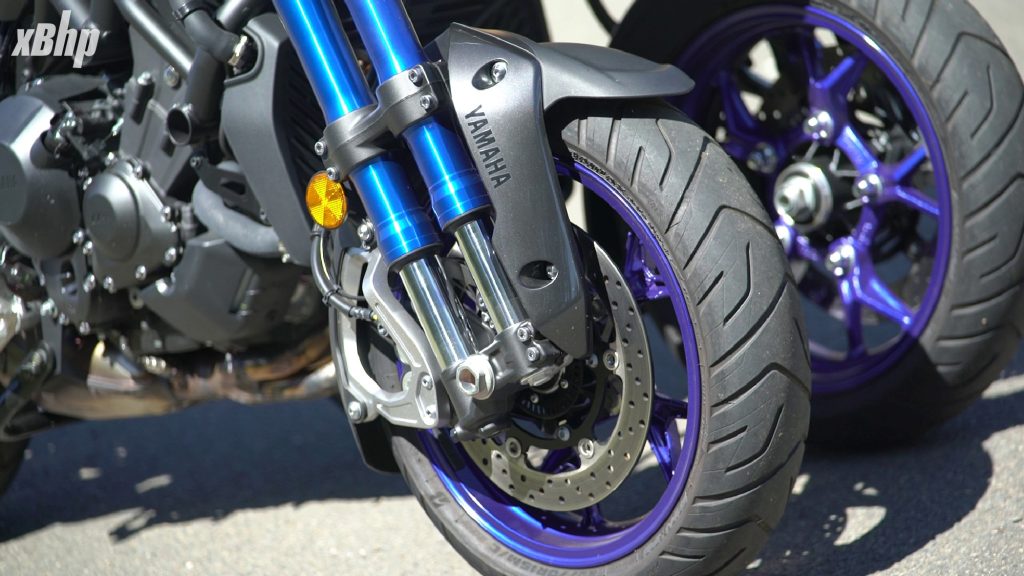
Coming to the more pressing matters… if the Niken has two wheels on the front and it can lean, both the wheels have to follow a different radius in the same corner. Yamaha has dealt with that using a group of tie-rods and linkages that include offset steering knuckles (Ackermann steering geometry, as used on most cars) so that the inside wheel turns progressively more than the outside. Neat…
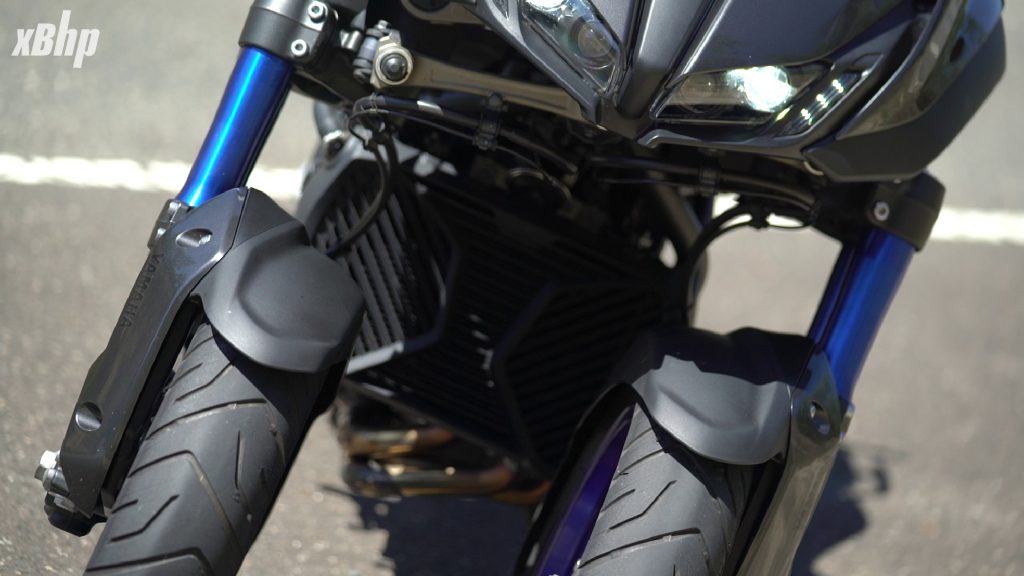
We mentioned that the Niken has a maximum lean angle of ‘just’ 45 degrees. But you see, its mission is not to beat supersport motorcycles on the racetrack. What it means to do is to make cornering safer by increasing stability and grip. It dramatically reduces the risk of losing the front and even more so in adverse weather conditions.
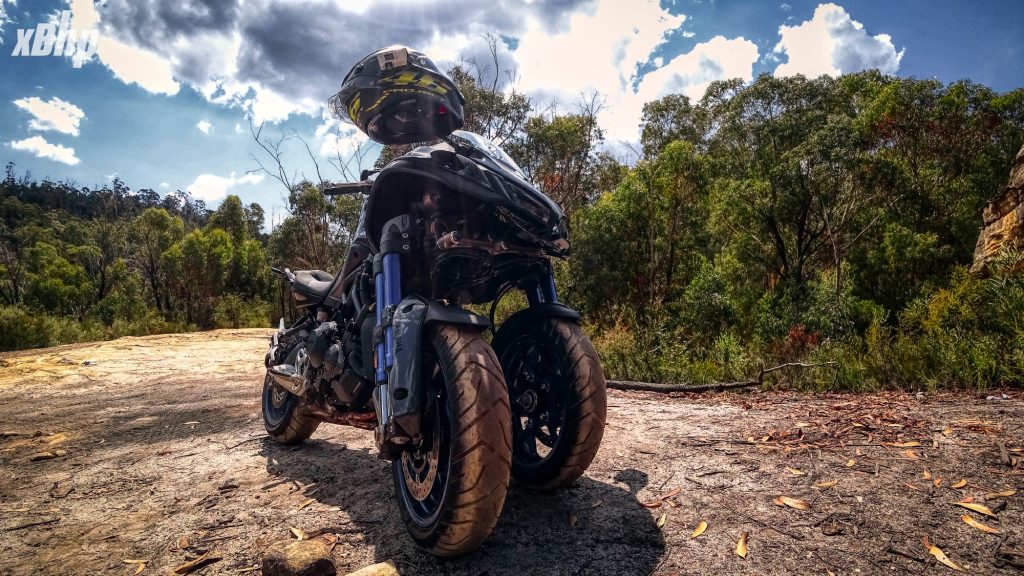
On normal dry roads, one may not want to limit their lean angles, but in cold weather or wet roads, the added safety is surely a plus. Because hey, loss of traction equals eating dirt (most probably). And that is what the Niken does. Double the contact patch and increase traction. It’s not that a Niken won’t fall… it’s just that it takes a lot to make it do that.
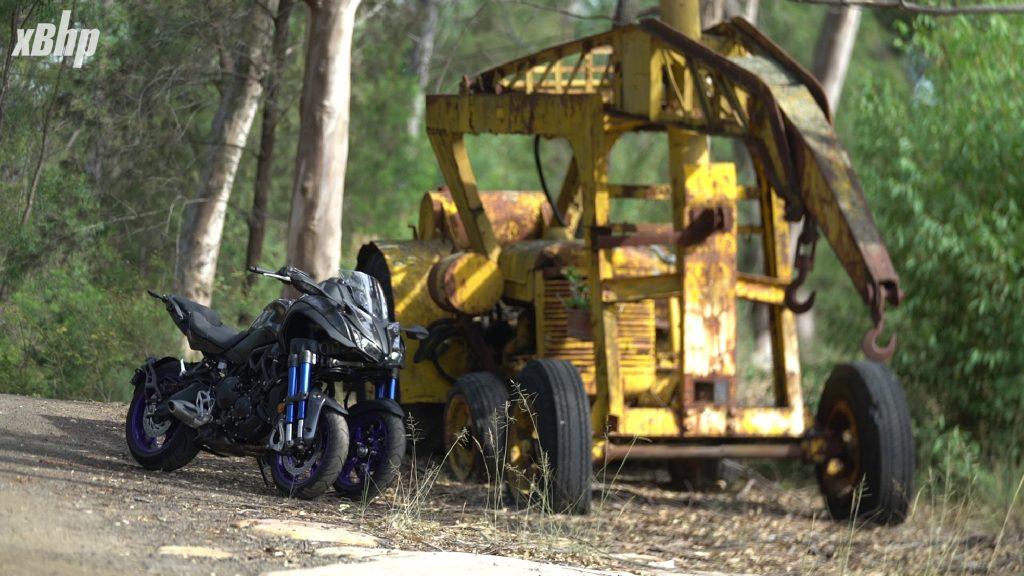
While we were a bit apprehensive for the first few km, the Niken is an easy-to-trust motorcycle (for obvious reasons), and after a while, you start to enjoy the remarkably safer cornering. And while the heft on the front end makes it feel like it’d be a pig to turn, surprisingly, it isn’t. The front-wheel track is wide enough to provide more stability than a single wheel and is narrow enough to help the motorcycle remain very manoeuvrable. The Bridgestone Battalax Adventure A41 tyres help in establishing the Niken as a very good handler.
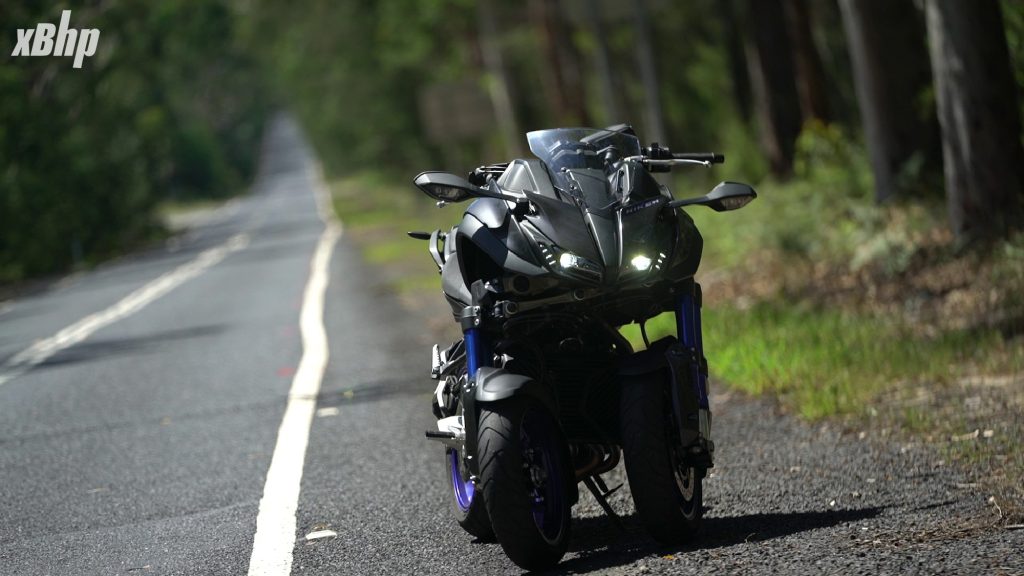
It is so good that it almost reaches the point of being a revelation. You see a corner, you just do what you do on a regular motorcycle, and it leans… and turns. But the confidence it inspires is just endless, and one can really, really push the Niken more easily than any other motorcycle. Braking has the same story… there’s just so much grip everywhere that you almost feel invincible. Oh… yeah… braking… it has 2 discs up front, one on each wheel, and one on the rear. The brakes are nice and have a lot of stopping power, but then again, their prowess is outshone by the brilliantly engineered front end.
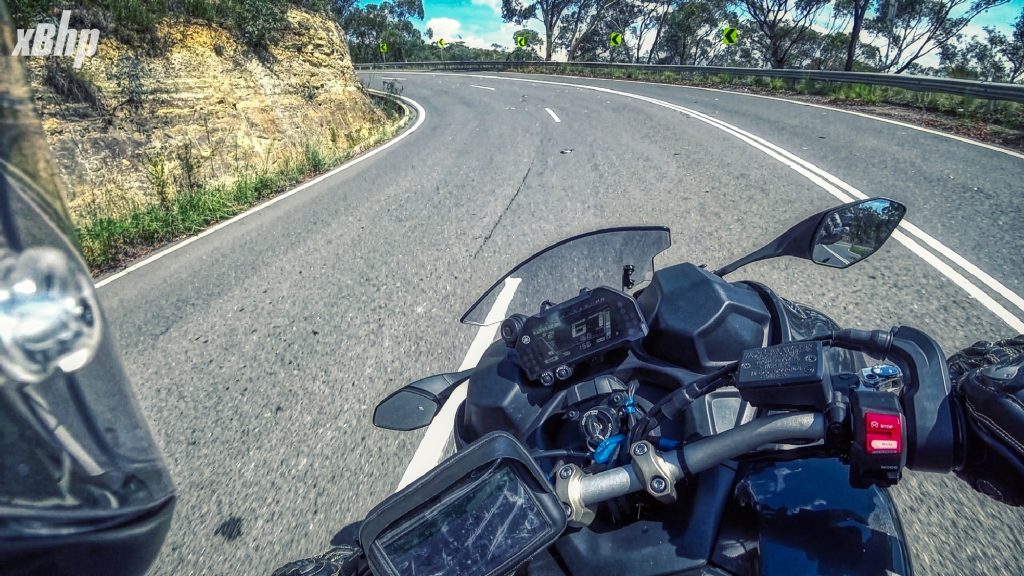
The Niken sits on a hybrid frame. The headstock is made of cast steel and is attached to a tubular steel mainframe and a cast aluminium swingarm. It has a long-ish wheelbase, which does make it just a tad bit ‘sluggy’ in quick directional changes, but the stability in a straight line on ‘respectable speeds’ more than makes up for it.
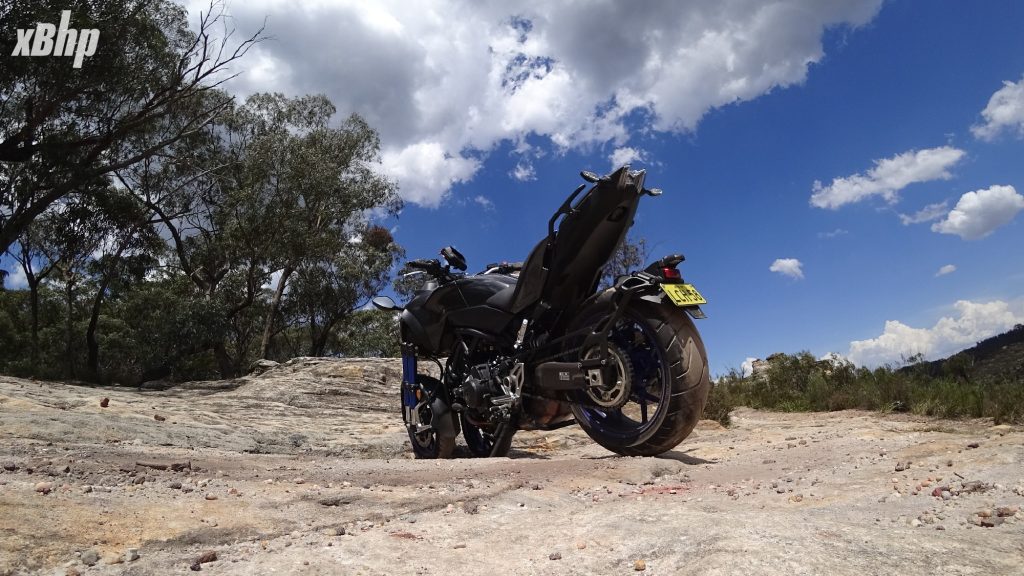
Talking about the motor, Niken gets the liquid-cooled, transverse 847cc, DOHC in-line triple that powers the MT-09 and the Tracer 900, on which the Niken is roughly based on. While no official figures are available, we believe that it makes somewhere around 115 bhp of power and around 90 Nm of torque from what we can guess basis the revisions to the engine and the pre-revision numbers from the other models.
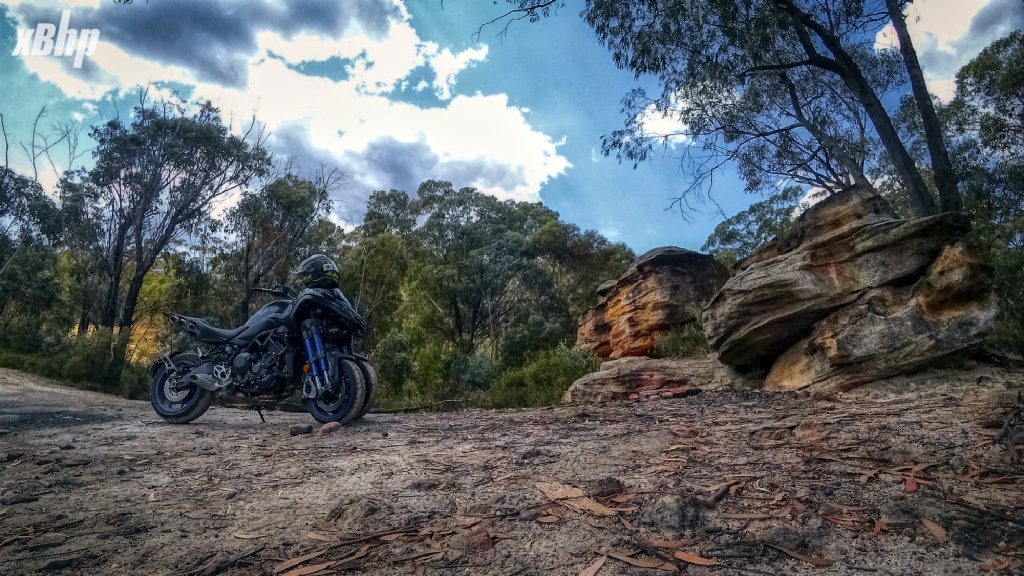
The amount of power that it makes is satisfactory, and riding around highways and winding curvy roads offers an ample amount of fun. What really makes it a lot of fun is the sound of the crossplane triple. The engine also possesses inherent Yamaha smoothness and refinement, and goes a long way in establishing the Niken as a fun and comfortable sports tourer. The ride-by-wire system, traction control, riding modes, cruise control and the quickshifter, coupled with the relaxed ergonomics, Niken is a motorcycle that one would love to munch miles on.
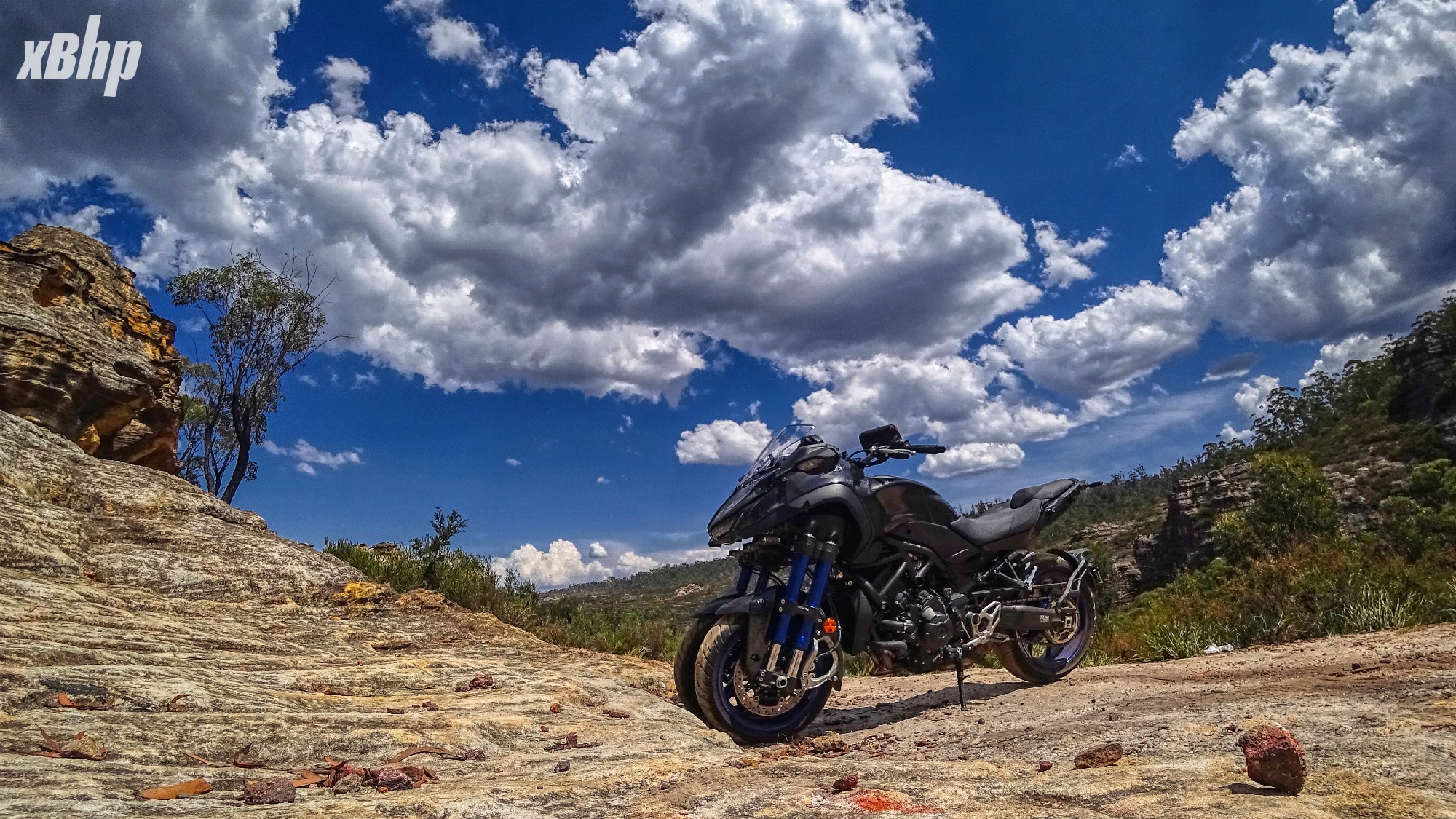
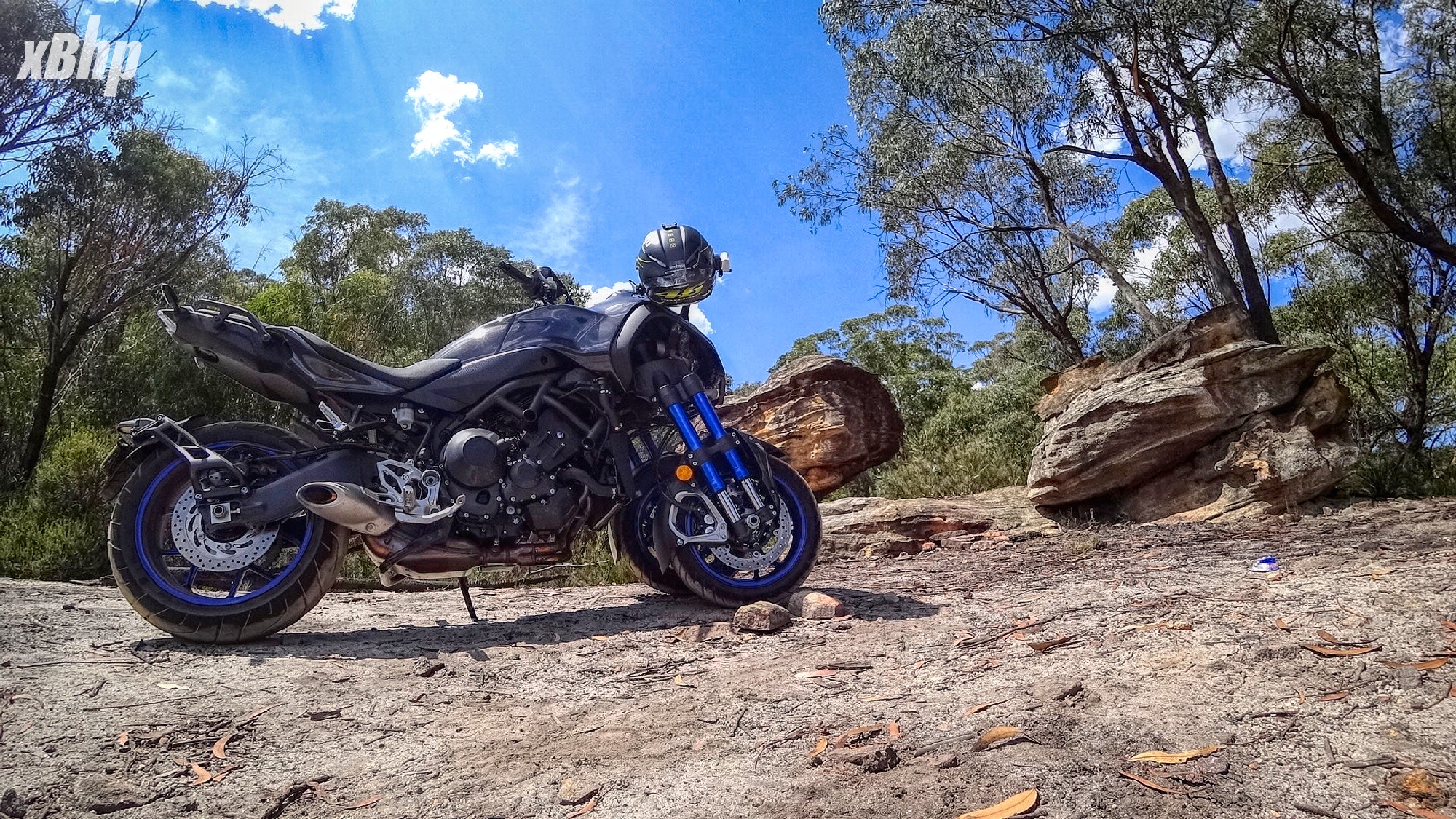
All in all, a beginner would love the Niken for being the safe and forgiving motorcycle that it is, and even seasoned riders would appreciate how much they can push the Niken without risking a lot. When it comes to trikes, the Niken is surely one of the best that there is… and even in the world of single-track motorcycles, it is surely a formidable one.
Can-Am Spyder F3 in the USA
 Dec 2019 Sundeep Gajjar
Trikes
Dec 2019 Sundeep Gajjar
TrikesThe featured image seen above is from Route 66. Also known as the Mother Road or Main Street of America, it was one of the original highways in the U.S. Highway System. Popularised by songs and movies, Route 66 featured in The Grapes of Wrath, John Steinbeck’s classic American novel. Mostly divided and renamed, some portions of the road have been communally designated a National Scenic Byway by the name “Historic Route 66”, returning the name to some maps.
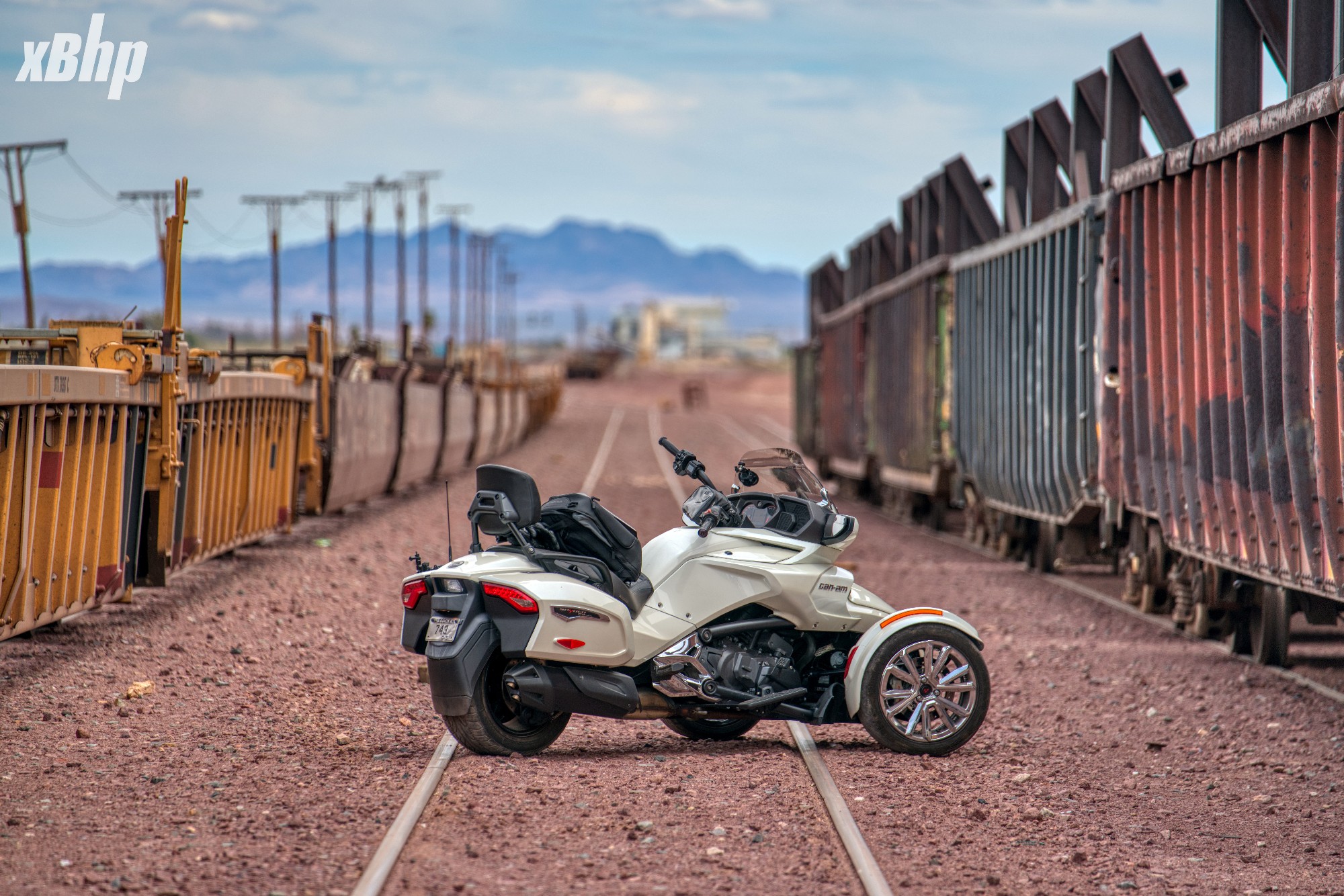
We have ridden more motorcycles than we can keep count of (but we do). We have driven quite a few supercars as well, and we intend to drive more when the opportunities present themselves. We are motorcyclists, yes, but more than anything, we are motorheads. We’d ride/drive anything we can get our hands on till the time we can. It’s like Pokémon. So many out there, and we gotta catch ‘em all. And that is why sometimes, you get your hands on a rare one. This one is about our encounter with a rare one called Can-Am Spyder F3, which is er… a trike. While we are still figuring out if we rode the thing or drove it, we bring to you how it actually felt to be aboard one.
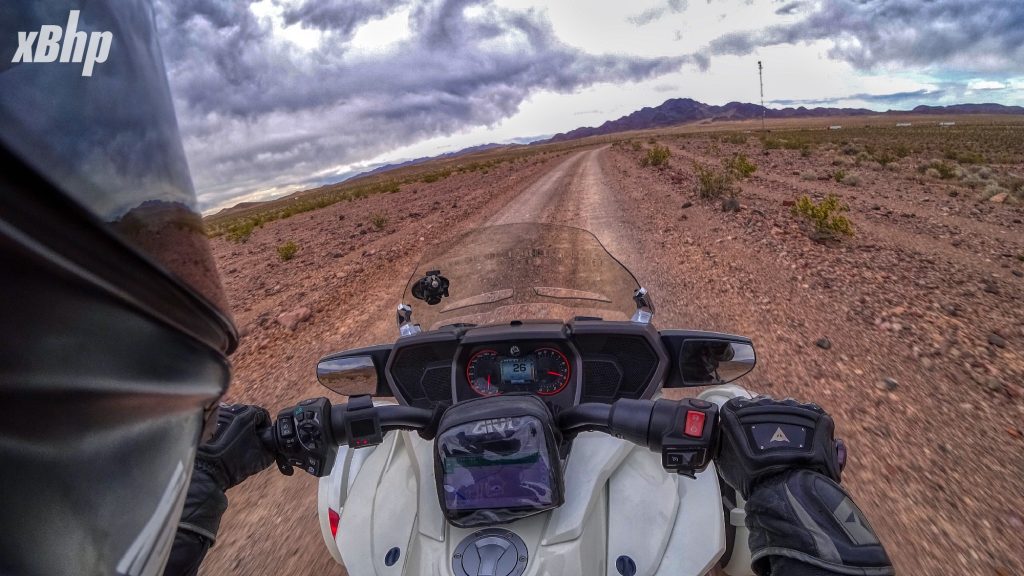
But first, what is Can-Am, and what is the Spyder? Can-Am is a motorcycle production division of a Canadian corporation known as BRP or Bombardier Recreational Products. Can-Am was born in 1971 under the direction of American Gary Robison, working with a team of Canadian and Californian development technicians. They started by building motocross and enduro motorcycles powered by engines from Rotax, an Austrian brand associated with a range of internal-combustion engines. Rotax is also owned by BRP.
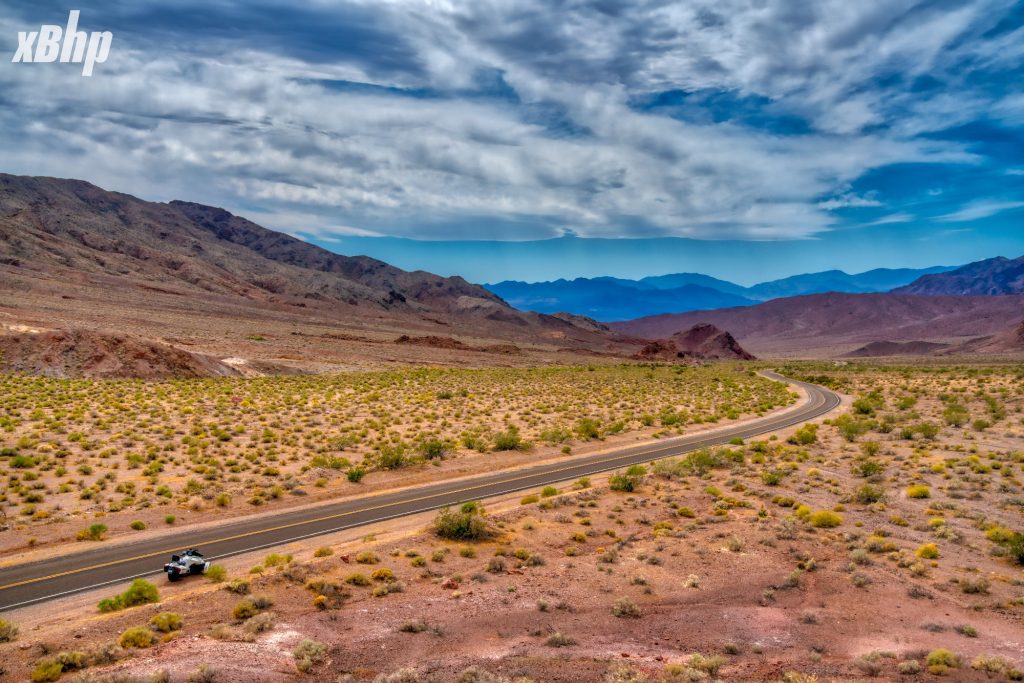
The motorcycles manufactured by Can-Am were immensely successful as they won Gold, Silver, and Bronze medals at the International Six Days Trial, an off-road motorcycle competition. Then, in 1974, Can-Am became the first brand to sweep the American Motorcyclist Association (AMA) 250cc motocross national championship. Among other things, the immense success of the motorcycles was attributed to the Rotax engines, which had a reputation for having high power outputs. An example could be the Can-Am MX3, which had a power output of 36 bhp while the closest competitor sat at 30 bhp!
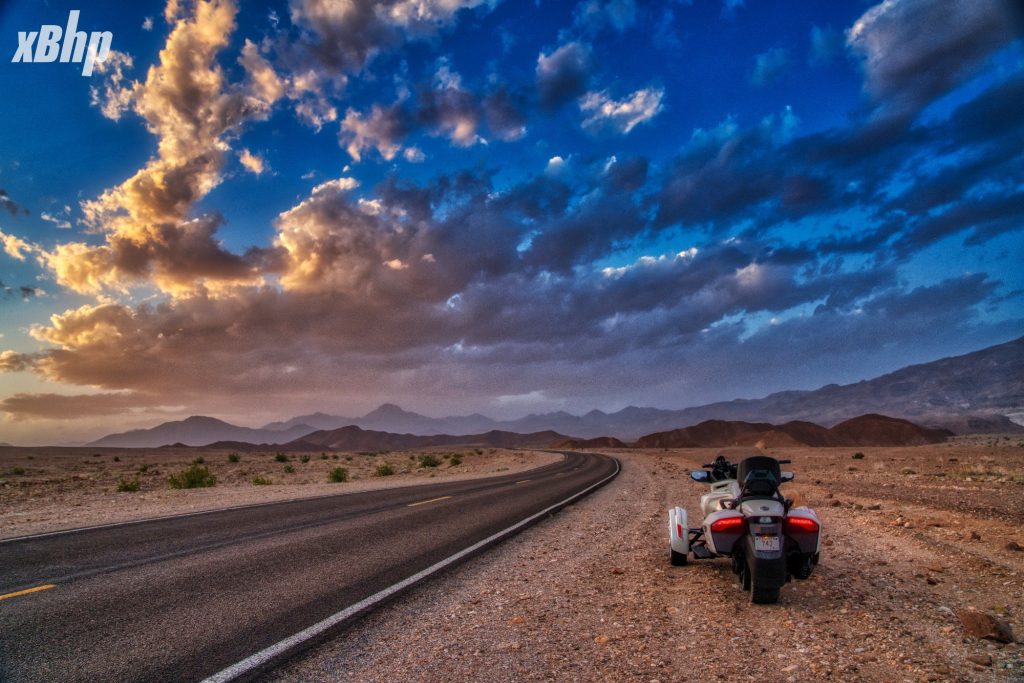
The engines from Rotax, both four-stroke and two-stroke, are used in a variety of small land, sea, and airborne vehicles, and BRP found use for them in their own range of vehicles. A testament to the widespread popularity and use of these engines is that in 1998, Rotax outsold all other aero-engine manufacturers combined! And to put engines from a brand like that in motorcycles? It was bound to be a hit.
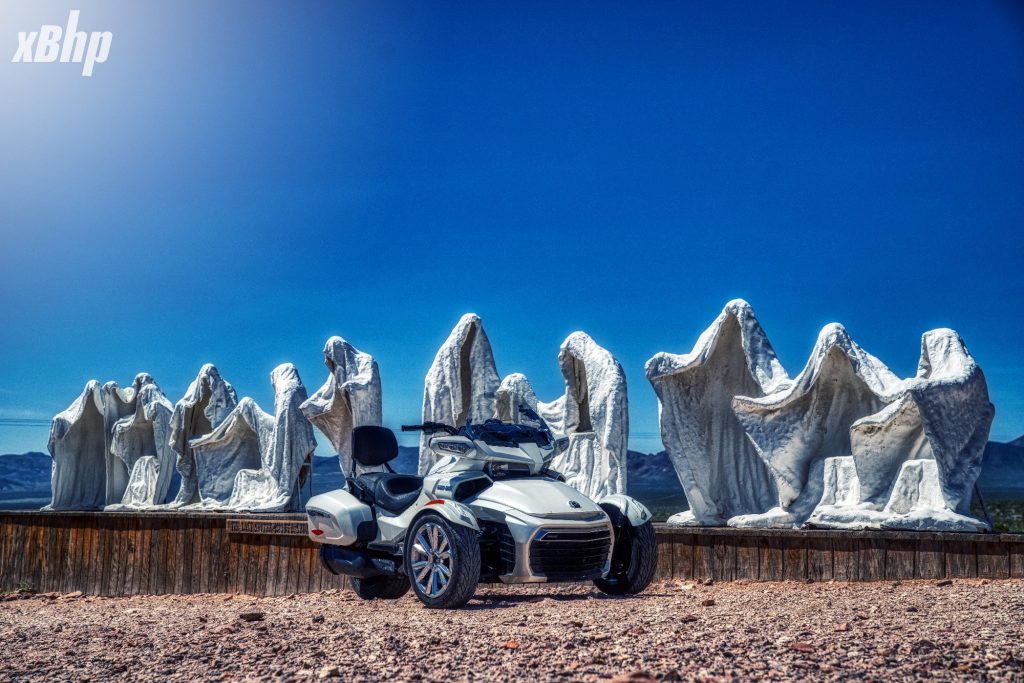
This photo was taken at the Goldwell Open Air Museum, which is described as a selection of sculptures and other works created by a group of Belgian artists. This open-air museum is not too far from another interesting place, the ‘Ghost Town’ of Rhyolite. A booming town in the olden days, it is deserted now and really makes you wonder about the uncertain future of all things.
But then, people change, priorities change. In this case, we do not know about the people, but BRP’s priorities shifted from recreational products towards the transit equipment industry. And post that, into aircraft manufacturing. And just like that, despite the fantastic run of Can-Am, the investments in the motorcycle division were reduced substantially. Before being lost in oblivion post-1988, the development and production of Can-Am motorcycles stayed with Armstrong-CCM Motorcycles of Lancashire, England.
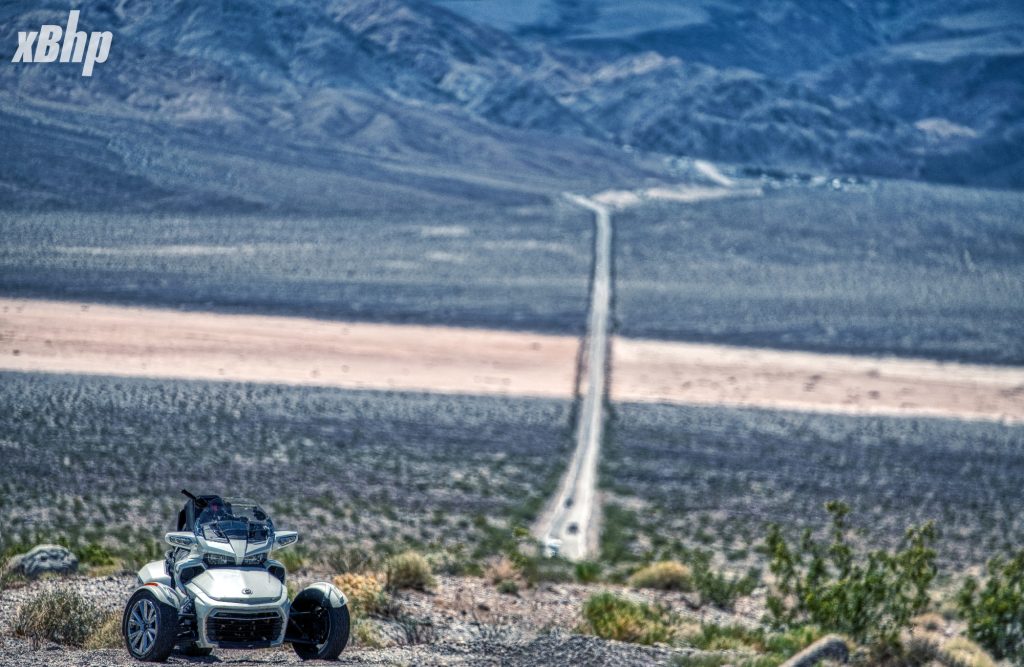
Death Valley, a desert valley located in Eastern California, is one of the world’s hottest places. Furnace Creek in Death Valley is reported to have clocked 56.7 °C, the highest ambient air temperature ever
recorded at the surface of the Earth! In addition to that, at 86m below sea level, Death Valley’s Badwater Basin is the point of the lowest elevation in North America. Does not sound like a perfect place for a motorcyclist, but it does make for some stunning pictures. The alien-planet vibes are rarely found anywhere else on Earth. Probably the reason why it has been a movie-maker’s delight for so many years!
After a hiatus of around 18 years, BRP brought back Can-Am. The motorcycle division was reintroduced in 2006 with BRP’s all-terrain vehicles (ATVs). The following year, 2007, Can-Am brought out the Spyder, a 3-wheeled roadster meant for a whole lot of fun… as we recently found out. During our trip to the United States of America in the xBhp PowerTour 2019, we got to try out the Spyder F3. Rotax engine, a lot of power, beautiful power and torque curve, quirky (for the lack of a better word) characteristics and 3 wheels… let loose in and around Las Vegas, Nevada!
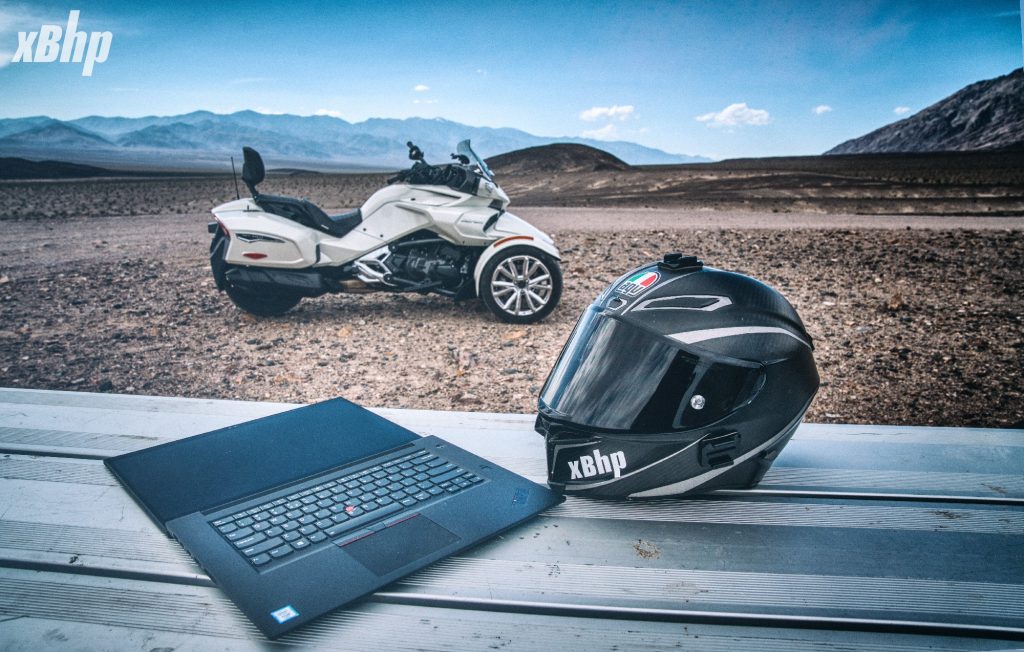
The life of a motorcyclist is a rough one. We are not encompassed in protective cages and sometimes we just have to fight the elements. With that comes the need for sturdy gadgets that can handle the rough stuff. Lenovo ThinkPad P1 undergoes stringent product testing and is a perfect blend of power and durability. The P1 is touted to have endured 12 military-grade requirements and more than 200 quality checks to ensure it runs in extreme conditions.
First things first, it is unique. Two wheels on the front, one on the rear and a handlebar. A quad-bike, but not quite there. A trike like the Niken, but not quite there. There are not a lot of vehicles quite like it. Mount the Can-Am, and you forget that it is a trike. Upright handlebars, forward-feet and a really comfy seat. It is like a really big cruiser but with 2 wheels on the front end. At first, one is very sceptical and very careful with it… we were. But as we spent more and more time with the Spyder F3, we learnt that it is a beautiful piece of machinery. Friendly, stable, and most importantly, powerful.
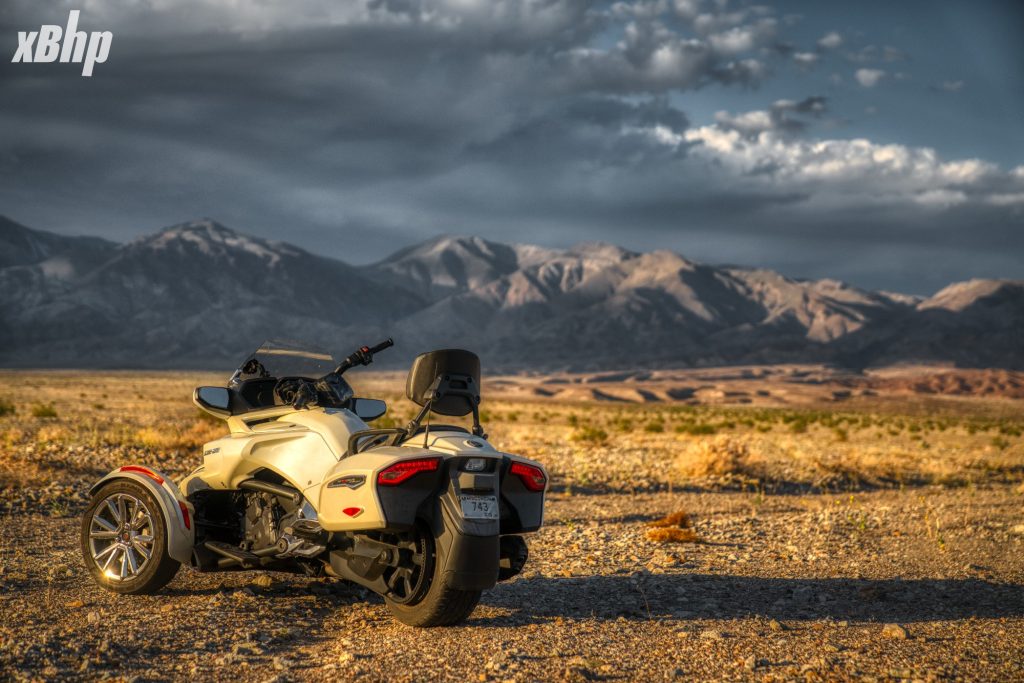
When one sits on the Spyder F3, it feels really spacious. It is more like you are sitting in it. It has anchors for bungee hooks, a lot of space for the passenger and some for cargo too. The seat height is low, but then, you won’t have your feet on the ground, both literally and figuratively. And if you have any doubts about not being able to fit and therefore sit properly, leave it to the UFit system by Can-Am. This system allows you to control the size and shape of the rider’s triangle with adjustable footpegs and a selection of handlebar sizes. The point being, the Spyder F3 can be moulded to fit a wide range of body types and riding postures. And there’s a trunk too… nothing to be proud of, but enough for some groceries!
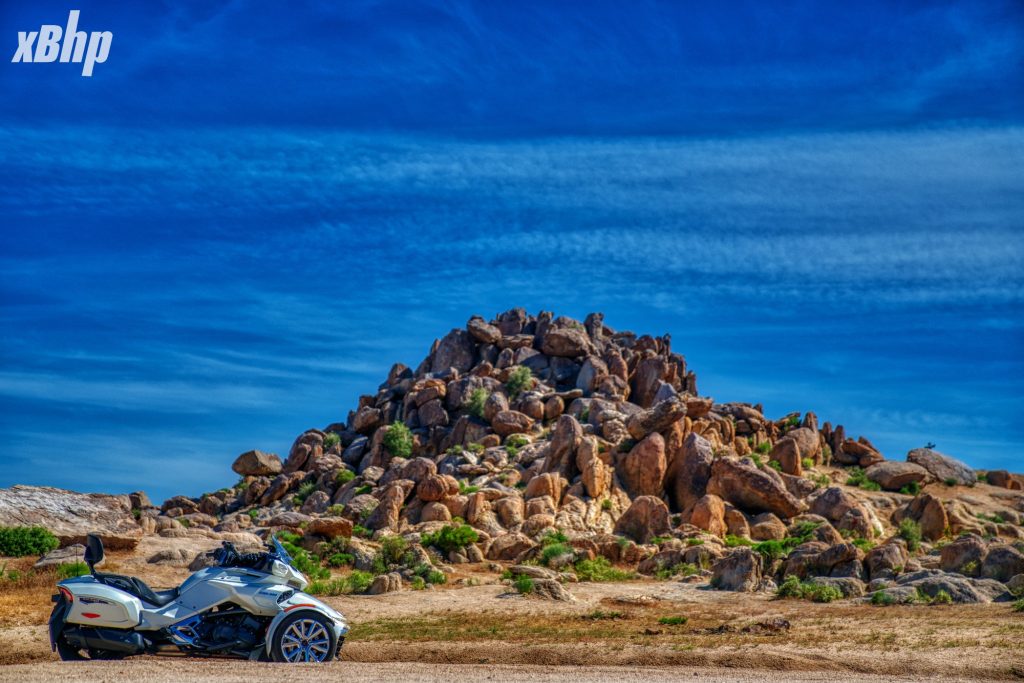
The front has fairings of sorts, and it is there to deflect the wind from the rider, but the model without the windscreen will have some major implications on a windy day or a spirited ride. Ours, fortunately, was equipped with one. The Spyder F3 gets an all-digital instrument cluster with odometer and tach, as well as trip and hour meters, gear position indicator, temperature, fuel level, clock, and engine lights.
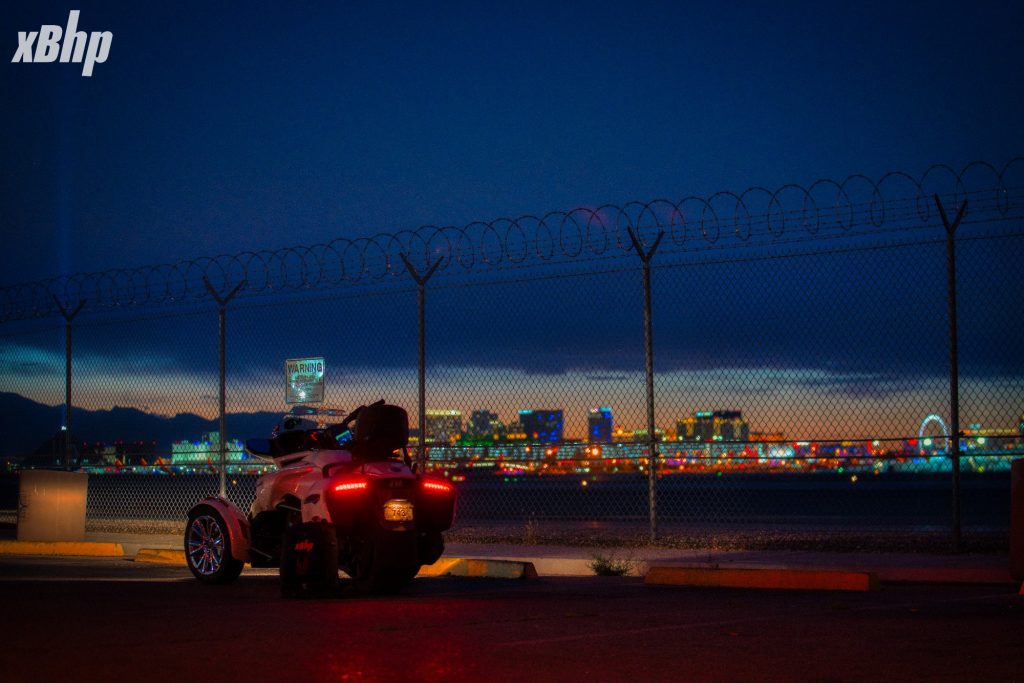
The chassis of the Spyder F3 is dubbed a surrounding-spar frame with a swingarm that resembles motorcycles, connected to the rear wheel and a car-style A-arm with anti-roll bars for the front wheels. The wheel size is 15”, and the two fronts are shod with 165/55 size tyres, and the rear is a massive 225/50 tyre. Suspension on both ends is courtesy of Sachs and offers ample travel to take care of neglected roads. Braking is handled by Brembo, 270mm discs on both the front wheels and a disc on the back. Both the brakes are unified with the foot-operated brake lever, and there’s ABS to keep you safe in hairy situations.
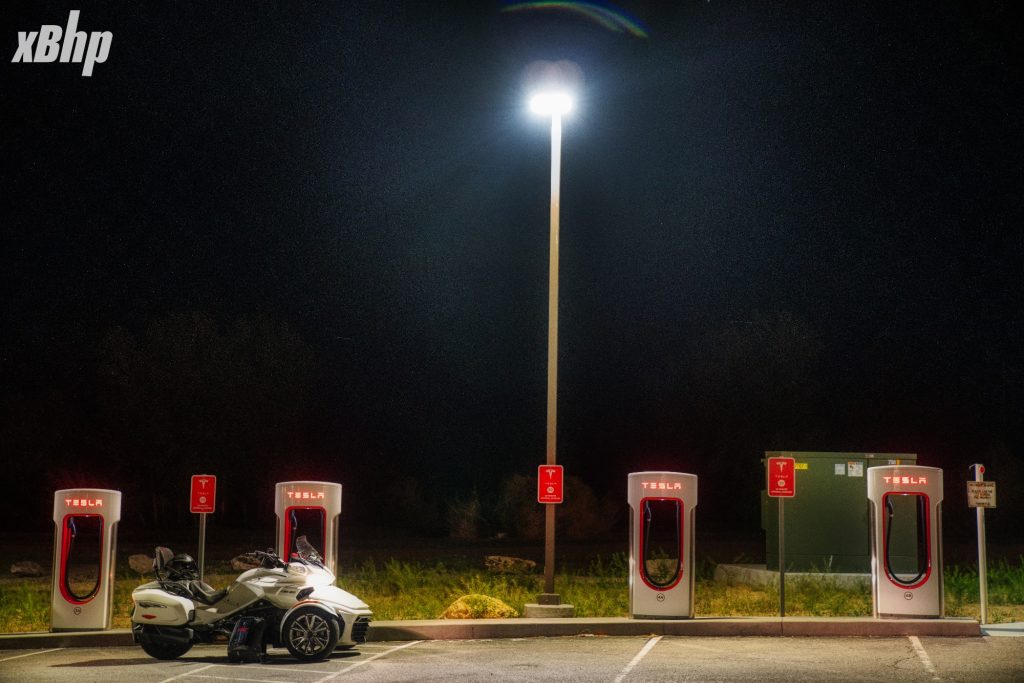
Coming to the engine, the Spyder F3 is powered by a Rotax 1330 ACE in-line 3 cylinder engine, which is liquid-cooled and possesses electronic fuel injection and electronic throttle control. It makes 105 Bhp of power and 130 Nm of torque, enough to keep you entertained should the opportunity present itself. But the power is kept in check with a Stability Control System and Traction Control System. Dynamic Power Steering is also present to make steering the Spyder F3 easier (we’ll tell you why it is such a valuable addition).
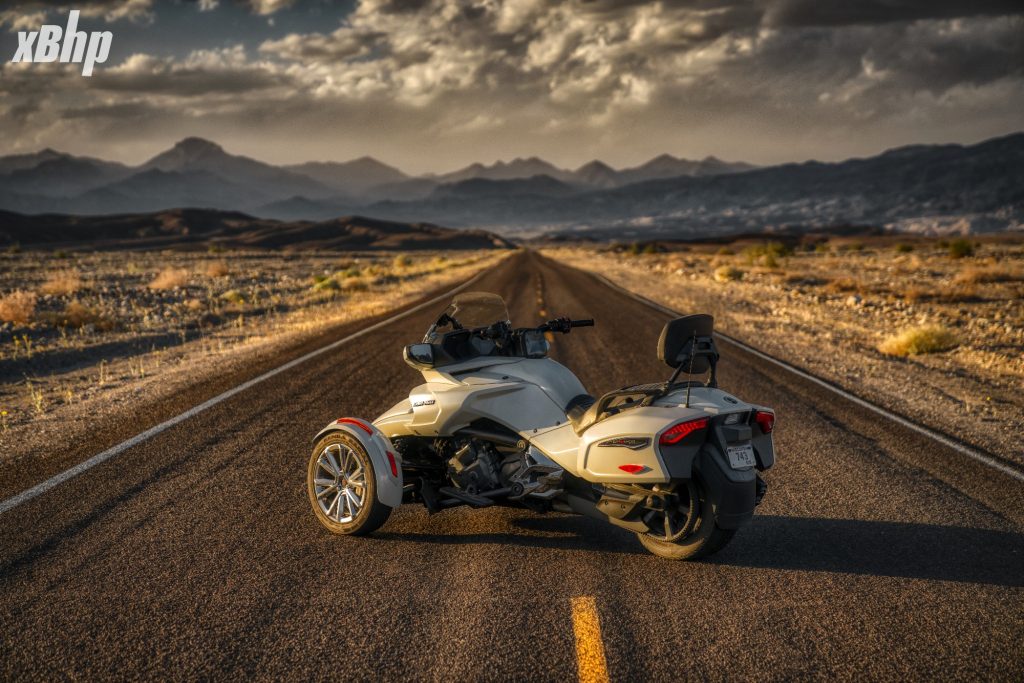
Fire the engine up, and the burble is almost ominous. We really liked the exhaust note on this thing. Slot in into… wait… it has no clutch and no gear lever! That is because the Spyder F3 has a 6-Speed Automatic transmission with reverse gear! So, you just twist the throttle and go. And it really goes when you want it to. The acceleration is brisk, and there’s a lot of torque and power available all across the rev range. It pulls effortlessly and keeps doing so till the time you simmer down. And you will because 105 bhp is no joke, and this is not your average motorcycle. We got a chance to have some fun with it, and it does not really disappoint. But then, after riding a 280 bhp monster, there aren’t a lot of things in this world that excite you as much!
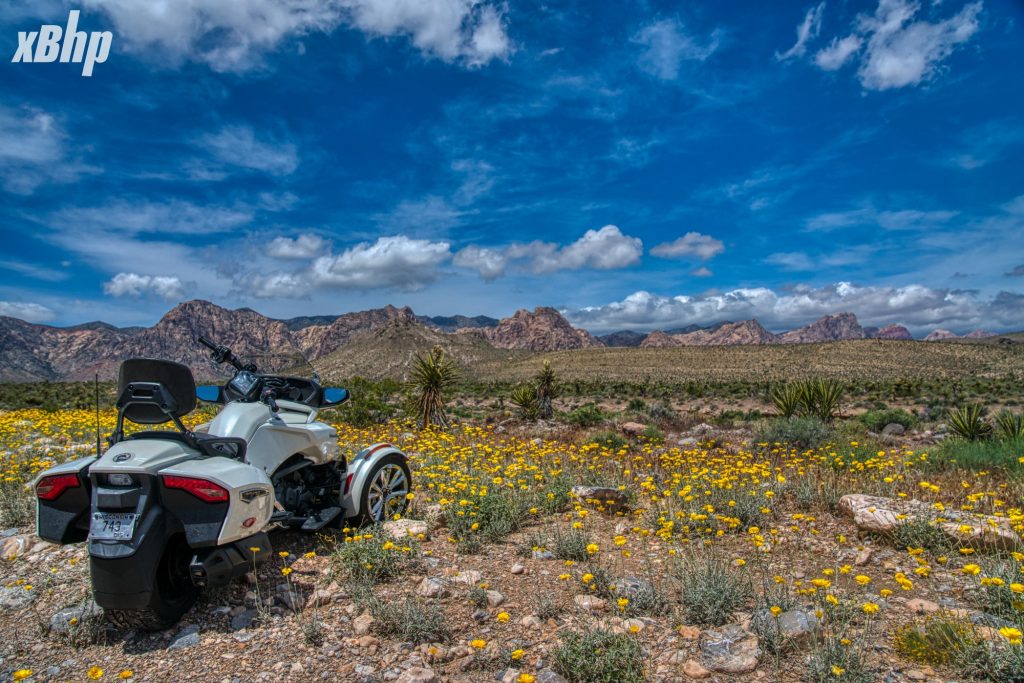
The real fun and the underlying quirk are in the handling. It takes quite some time to get used to it. The lack of a clutch and a front brake lever makes it different from a motorcycle. The handlebar makes it different from a car. No counter-steering, no leaning and only a foot-operated brake pedal make it different from anything we usually ride or drive. Steering this thing takes effort, and that is where the Dynamic Power Steering comes in. It varies the strength of the steering correction based on input and vehicle speed, and since there’s no counter-steering to help you, one has to wrestle the bars around to turn it.
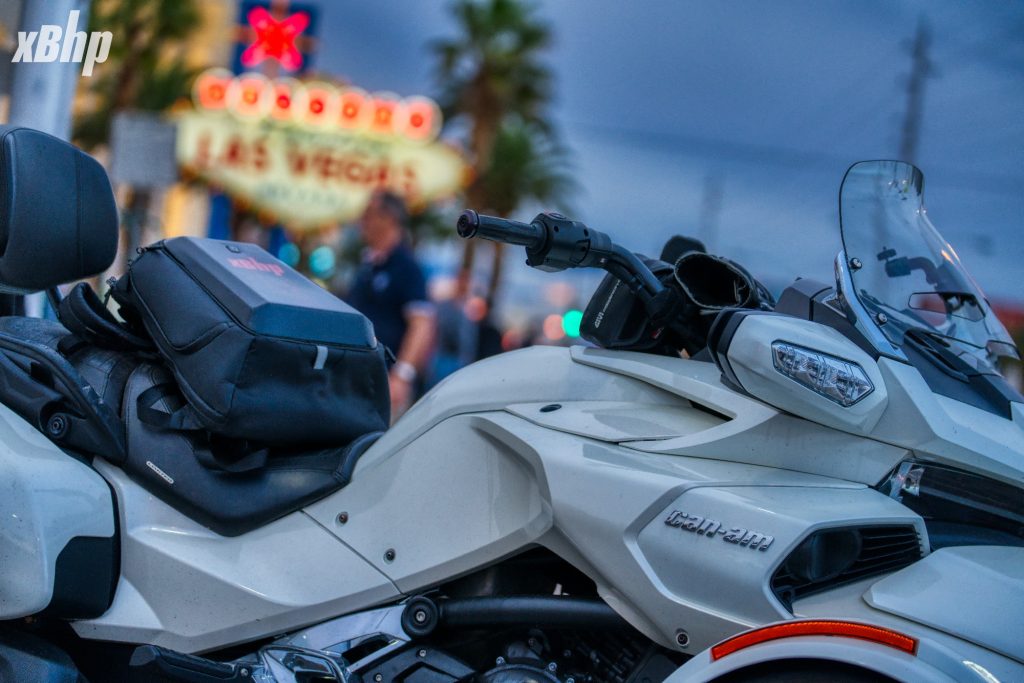
All this seems a bit glum, but once you get the hang of it, the Spyder F3 has a boatload of fun for you in-store. Take it up to the mountains or canyons or wherever you can find a few twisties to tackle, and boy, what a vehicle it is. It is quick, and the stability that comes standard with the delta-trike design is something you can rely on when the child inside takes over. Brakes are fantastic, and getting this thing to come to a halt is really, really easy. Even more so because of the two wheels at the front and the safety net of ABS. While leaning into curves and chaining corners together is something that is a part of every motorcyclist’s life, this is like a breath of fresh air.
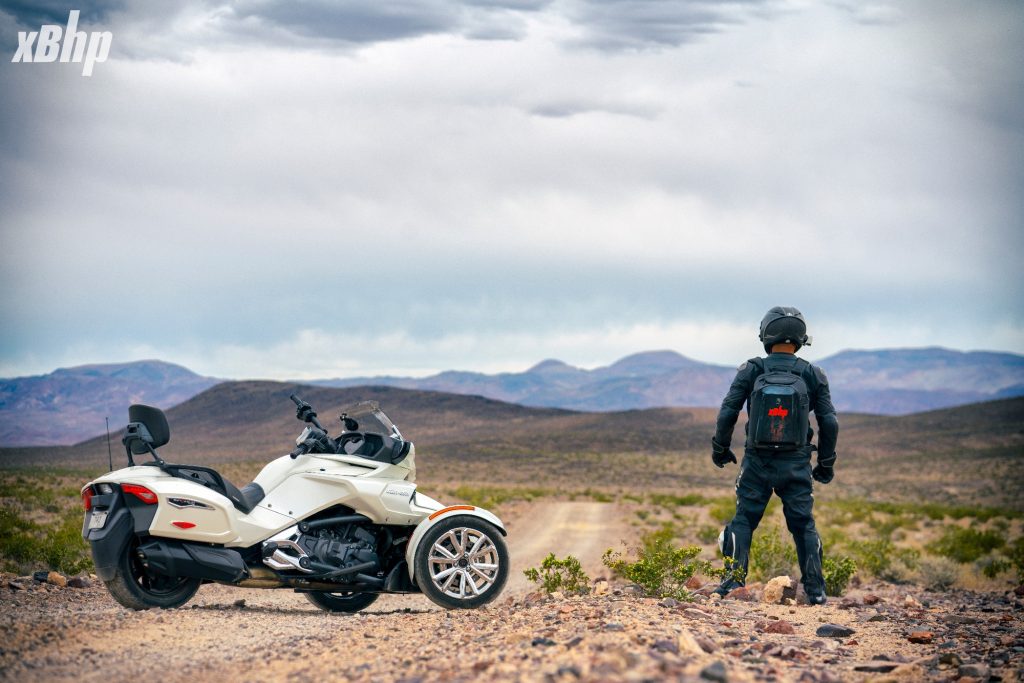
So, what is a Spyder F3? It is fast, it is stable, it is safe, it gets a lot of attention, and it’s a whole lot of fun. Something different from your usual run-of-the-mill automobiles. It is something that you can really enjoy if you can let go of your cynical side for a bit. And more than anything, like Can-Am says, “It is different from a motorcycle, and it is different from a car. It is just… different.” And we wholeheartedly agree.
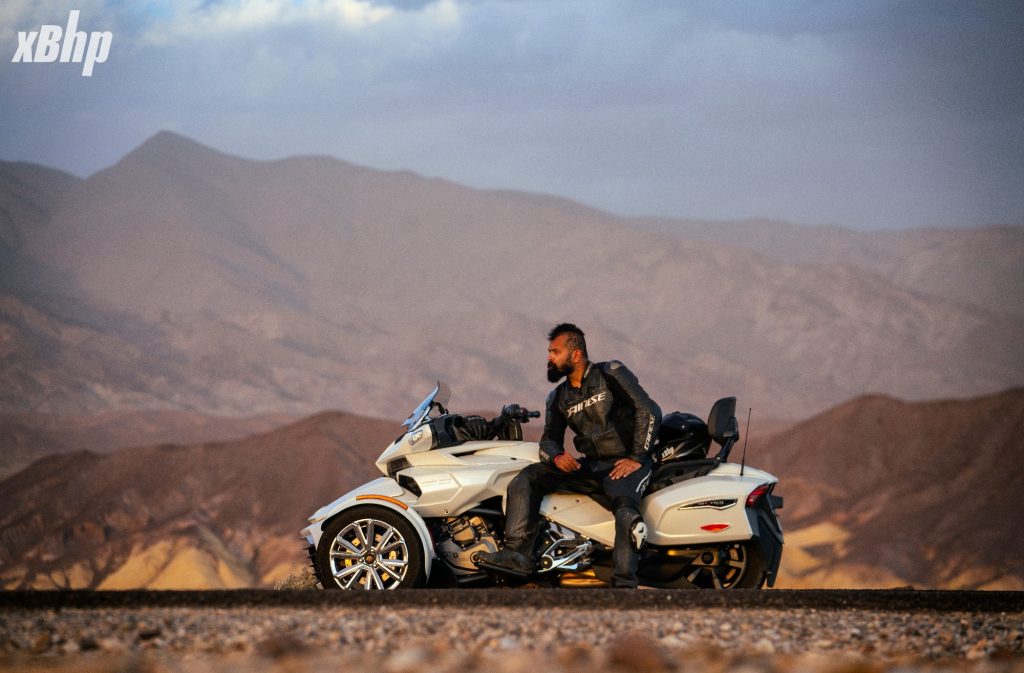
BMW M4 and S 1000 RR in Dubai
 Dec 2019 Sundeep Gajjar
Bikes,BMW,Cars
Dec 2019 Sundeep Gajjar
Bikes,BMW,CarsI an automotive enthusiast is asked to think of one alphabet that denotes performance like no other, we are sure that most of them (who can answer) will say M. Why? Because… BMW M. BMW has had a quiet yet illustrious history in motorsport. And it did not take long for that prowess to trickle down to their road-going cars. BMW M3 and especially the E46 generation is something that no one can forget. And the E46 M3 CSL (Coupe Sport Leichtbau or Coupe Sport Lightweight) was a car that blew everyone away. Even the radio and air-conditioning were optional in that car! And that is why it once held the record for one of the fastest lap times on the legendary Nürburgring!
After generations of evolution (dilution for some), the M3 is now only available as a Sedan. So what about the coupé? That’s what we are here for. The coupé and the convertible body styles are now under the M4 badging. The distinctions have changed, the titles have changed, but what about the intent and the purpose? Gladly, that part is still unchanged! On the xBhp PowerTour 2019, in Dubai, we encountered a successor to the legendary M3 line of cars and courtesy of BMW AGMC: the BMW M4 Coupé. Stripped down, aero-ed up, and ready to kick some…
BMW AGMC takes pride in being the sole importer of everything BMW in the Northern Emirates for over 40 years. Their clientele and the sales numbers are a testament to the stellar service that AGMC strives to provide it to their customers.
Remember what we said about the intent and the purpose? Well, the looks alone are enough to impart the information regarding that. The athletic lines and the slightly sloping roof line of the coupé body come together to give the car that unmistakable M shape. The front diffuser with those massive intakes complements the kidney-grille, which, by the way, is home to an M4 insignia… maybe for the ones who are slow to catch up. The long-ish hood houses more design lines, an aerodynamic scoop and the oh so familiar propeller, the BMW Insignia. The wheel arches flow with the design lines on the side of the body that gel with the sloping roofline. The rear diffuser has air outlets, but the most striking thing at the back is the quad-pipe exhaust. You can almost hear the angry raspy growl of the engine when you decide to give it the beans! And finally, the carbon-fibre roof, reminiscent of the E46…
Inside the car, things are not as extreme as the CSL and surprisingly enough, the M4 is rather opulent and loaded with modern amenities. The use of leather with bold stitches on the dash makes it feel like it is a luxury car (which it is, but err… not primarily). There are splatters of the sixth element on the dash around the infotainment screen and the exquisite analogue dash (speedo, rev counter, fuel gauge and temperature gauge are all analogue!). It is rather amazing to witness the presence of something old-school and elemental to performance on a car which boasts a heads-up display!
BMW M4s come with BMW’s proprietary iDrive infotainment system in addition to a Harman/Kardon audio system. Driver assists include automated emergency braking with pedestrian detection, automatic high-beam headlamps, and a 360-degree exterior camera system. With all this, if it wasn’t for the BMW Motorsport (the famed M) insignia, a poor unsuspecting lad might just floor the pedal and kick their soul out of a certain crevice in their body.
Talking about pushing souls out of crevices, as soon as we entered the car, we could not wait to fire up the engine. A sweet 3L M TwinPower Turbo inline-6 that pumps out 450 bhp and 550 Nm of torque (with the Competition package)! Those are thunderous numbers for a car that weighs 1,670 kg in a ready-to-go state. Fire up the engine and let the sweet rumble of the M4 cloud the opulence served up by the car’s interiors. Exhaust notes make a vehicle endearing to the driver/rider, and it is a relationship sacrosanct. We do not know if we’ll be able to continue this relationship a few years down the line when the EVs rule the roost, but with BMWs, we are sure that we’ll at least be reminded of the relationship because of the artificial sound in the i8, which is as close to the real thing as it can get.
Fortunately, the M4 has the real thing, and it gets even better as the sound is amplified in the cabin, and yet, the outside noise is brilliantly damped. Just blip the throttle, and you’ll know that you are in for a ride. The sporty seats and the seating posture ask you to put your game face on, strap in and get ready and… deal with city traffic. It just sucks to have to drive a car like this in a place where it cannot stretch its legs. And god forbid if you find less than perfect asphalt… But then, this car is meant to push the envelope of performance and not give you a comfy ride on roads left to the mercy of God.
If you ever find yourself in the same predicament, get out of the confines of the concrete jungle and find yourself a good open stretch of road. Come to a gentle halt, ready your mind and body for the ridiculous acceleration and let the pedal meet the metal. This car accelerates mind-bogglingly quickly, and you are left wondering if it is the same car that has a gigantic infotainment system and Harman/Kardon audio. 0-100 km/h is dispatched in 4.1s if you have the Competition package. And even if you don’t, it’ll still finish the deed in 4.3s! Top speed is well over 250 km/h, which is almost preposterous because this car has usable rear seats and generous boot space for crying out loud!
Thrashing it around is such a thrill aurally, visually and in every other sense that gives you a perception of speed. It is addictive. The dart-like steering helps you place the car wherever you want… Okay, the assists, a plethora of them, help too. And despite the gizmos, despite the gadgets, and despite the elec-trickery, it is such an involving and engaging car to drive. It makes you long for an outing on a racetrack more than anything else. And then when someone tells you that this car has brake-energy regeneration, it makes you dizzy!
The aggressive graphics of the Apex Sharkco make it a perfect fit for the BMW S1000RR. About Safety? Well, that comes standard with Axor as the helmet complies with ECE & DOT standards.
The Storm Evo Jacket from Rynox that we used during the xBhp PowerTour 2019 is one of the best sport-touring jackets we have used to date. Protection from the elements and armed to teeth to protect the rider in the event of a mishap, it all comes standard with the Storm Evo.
While many people say that they miss the rawness of the M3s of the old, the M4 is what we got to drive, and it is the only way we have lived the legend that was known as the M3. And on paper at least, this one tops the E46 M3 as it has an option of a 6-speed manual gearbox! The sheer possibilities that can be explored with that and a rear-wheel drive… But we shall refrain from doing that, but maybe someday…
Another extension to this story was a BMW, too, but sans two wheels. The folks at BMW AGMC were aware of our motorcycling background, and they threw in a BMW S1000RR with the BMW M4, and we cannot thank them enough for that. What can we say about the BMW S1000RR that has not been said before? The motorcycle blew through the doors of the competition when it arrived and set a benchmark for other manufacturers at a time when the litre-class segment looked like it had peaked and could not grow further.
The first-gen S1000RR made almost 190 bhp of power, more than any other manufacturer at that time and boy, what a motorcycle it was. Introduction of sophisticated electronics ushered the superbike world into a new era. It was a stalwart. And since then, it has received a couple of revisions. While other manufacturers were able to somewhat catch up to the Bavarian mad-ass, it remains one of the best litre-class motorcycles that one can get their hands on.
The 999cc, water-cooled inline-4 that propels the S1000RR makes 199 bhp of power and 113 Nm of torque. Serious power for a motorcycle that weighs 208 kg (wet).
When one is out with a car like the BMW M4 and there’s a BMW S1000RR at your side, confidence is the key should things get, say, heated up… And nothing inspires confidence like this chic outfit from the House of Rare, Rare Rabbit.
If you decide to test its mettle and really wring it, it will take you from 0-100 km/h in less than 3s and 200 km/h in less than 7s! That is ridiculously fast. And if you have the fortitude despite the blurring scenery, keep going, and it will take you over 300 km/h! Sadly, the gentleman’s agreement will only let you see 299 km/h on the speedo. One shy of the magic mark! The braking and handling departments are also pretty sorted, so all you need to do is tape the lights and blinkers, slap on some slicks and let it show you what Bavaria had in mind when this motorcycle was designed.
Both of these vehicles are mighty fine examples of automotive tech and engineering in their respective domains. While the M4 is the subtly ferocious track tool moulded into a road-legal car, the S1000RR’s asymmetric headlights are stark reminders of its track prowess. We are very thankful to BMW AGMC for letting us have our way with these mean machines!


