








All posts by Sundeep Gajjar
Indian Chieftain Dark Horse :: Two ‘INDIANS’ in America
 Nov 2023
 Sundeep Gajjar
 Bikes,Indian Motorcycle,Motorcycles
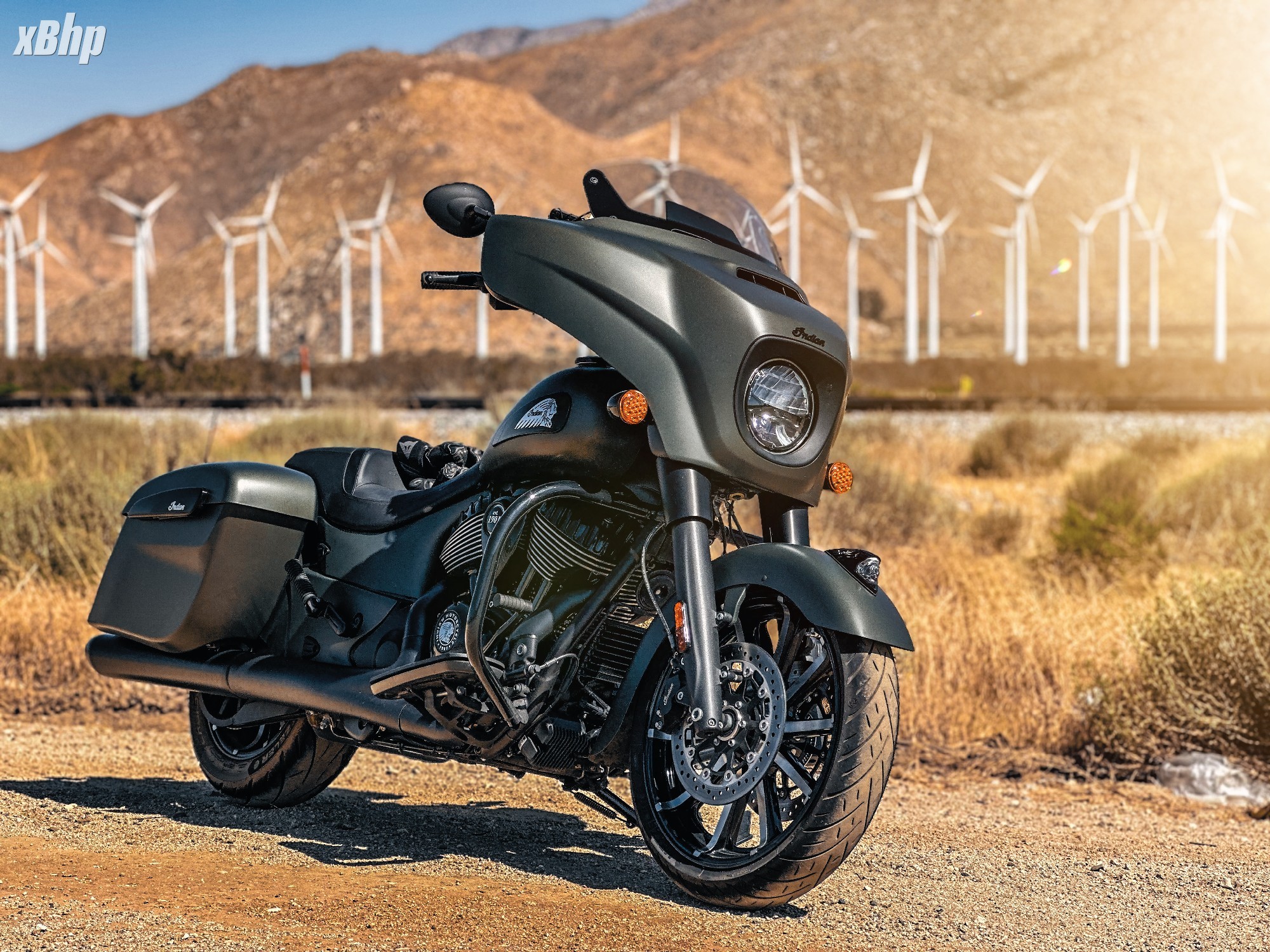
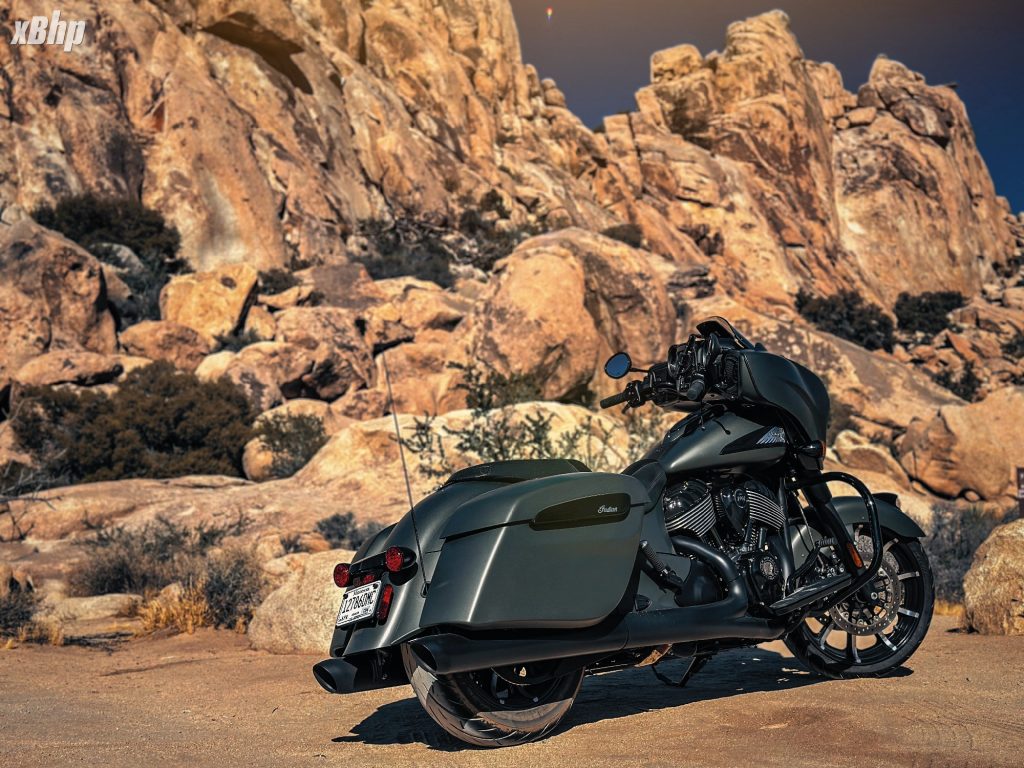
Apart from Hollywood, what’s more synonymous with the US than anything? The endless highways snaking through a barren landscape? Yes. And on those highways, a big burly v-twin just roaring away. Paints a nice little picture, right? Let me make it even clearer. Imagine yourself exploring Los Angeles and its outskirts on an Indian Chieftain Dark Horse, like the one you see here. Let me tell you, it does not get much better than that.
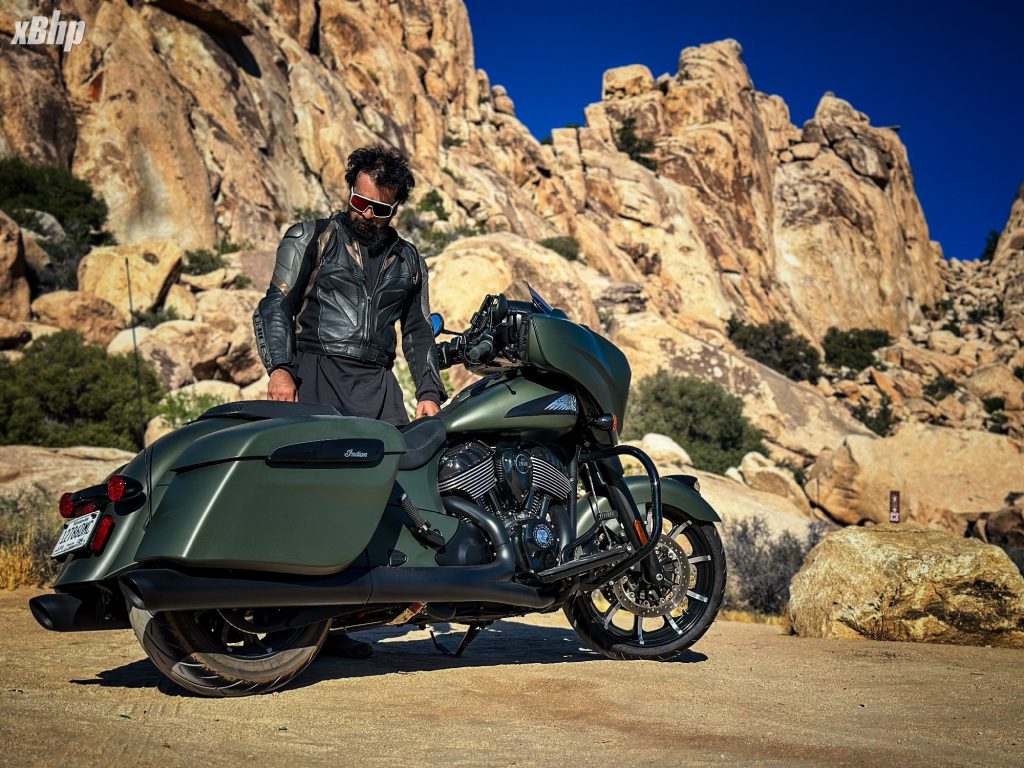
Right after I drove the Slingshot around with the odo indicating north of 3,000 kilometres, I wanted to get back in my groove- motorcycles. I have ridden a fair few from the stable of Indian Motorcycle. I had a Chief Vintage and an FTR 1200 in my garage. Other than that, Scouts and Roadmasters in different parts of the world. I have ridden a Chieftain as well. But this one is different. Very different. It is the 2023 model with a Dark Horse suffix. So it isn’t just different, but a very special motorcycle as well.
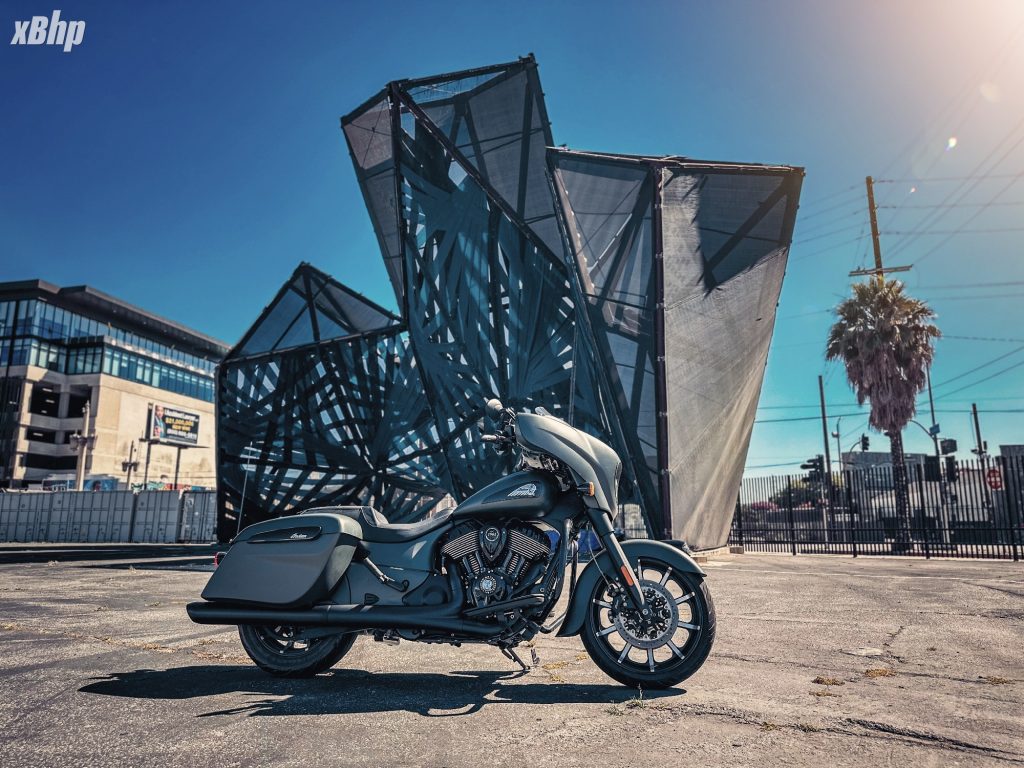
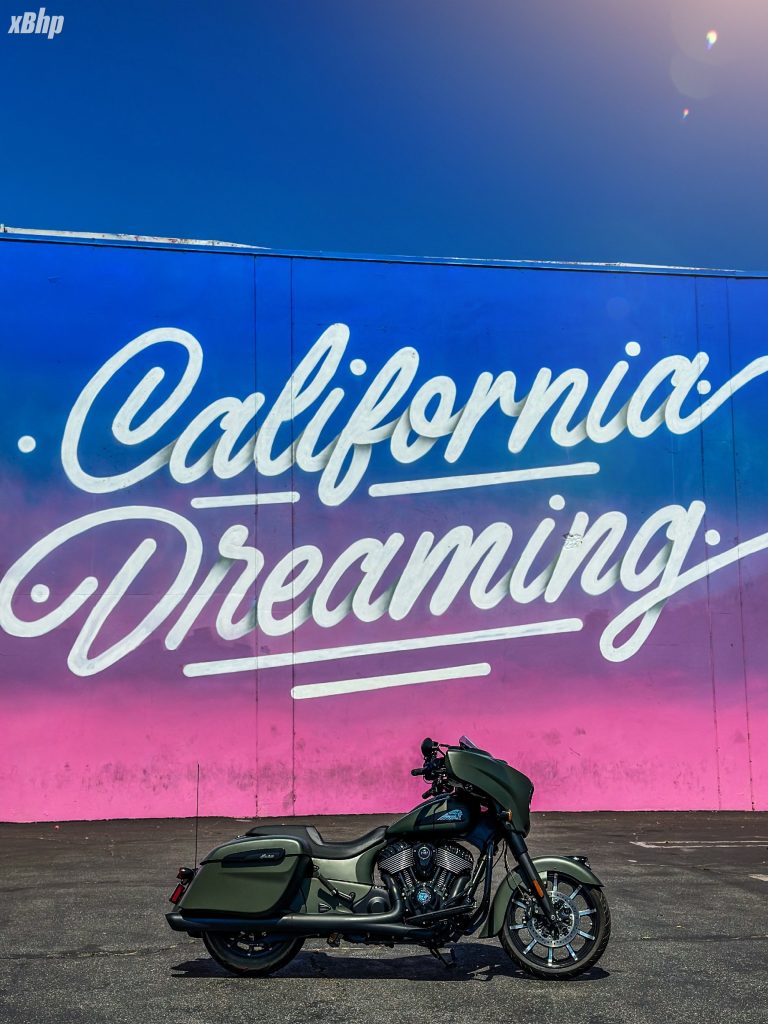
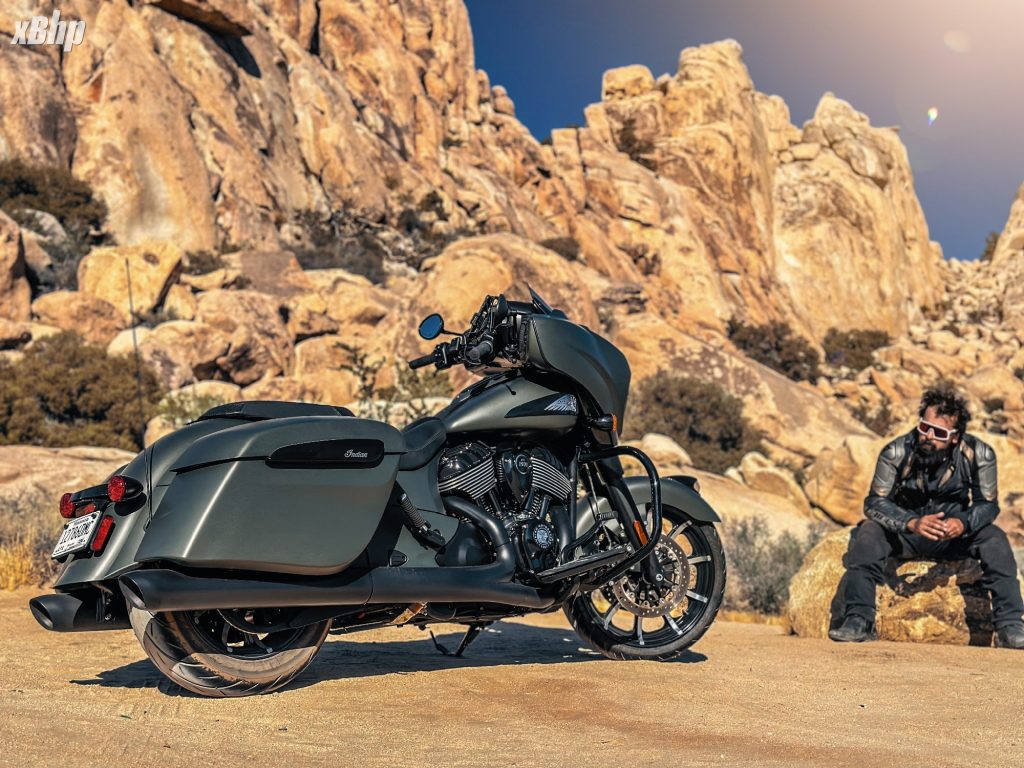
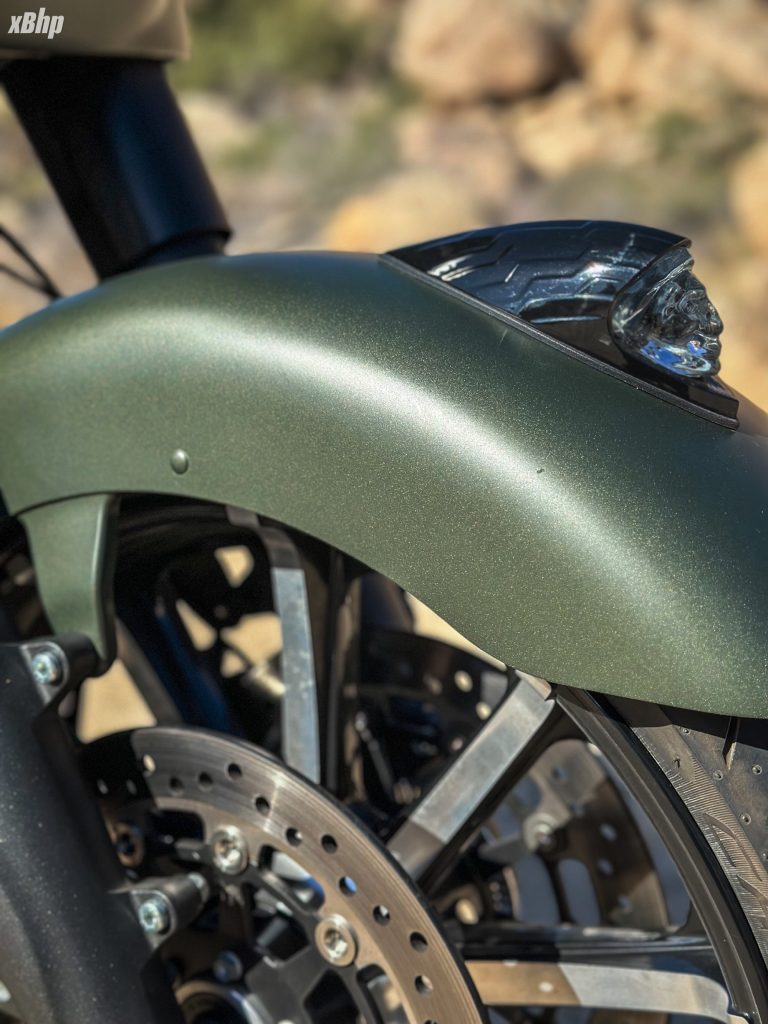
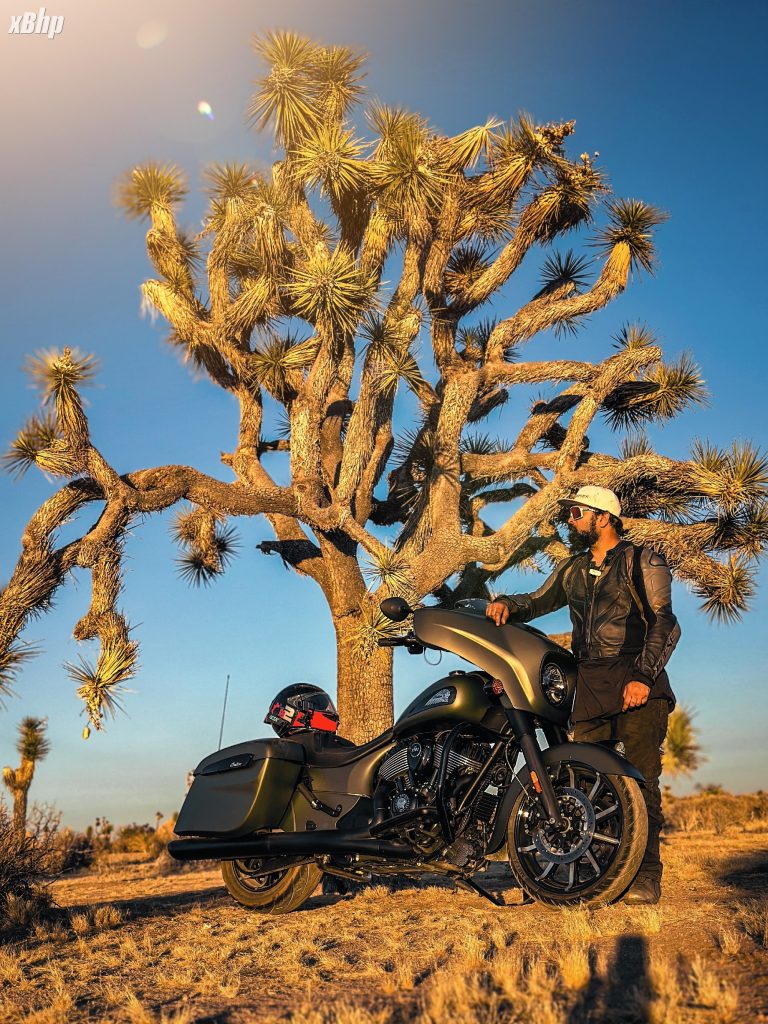
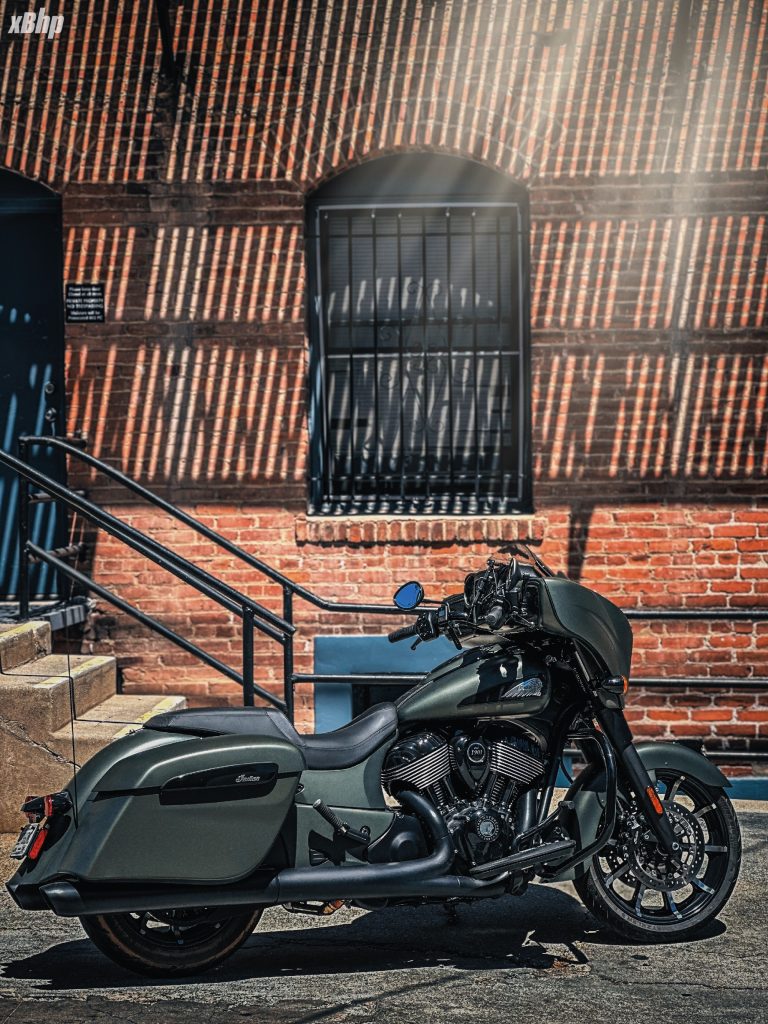
I have been out of touch with cruisers and the likes for a while. But jumping in the saddle of the Indian Chieftain Dark Horse was a familiar feeling. More than my muscle memory, it was because of how welcoming and accommodating it was. Not to mention, the particular example I rode looked rather stunning as well. Sagebrush Smoke was the name of the colourway and I have never seen this colour in person. It looked majestic.

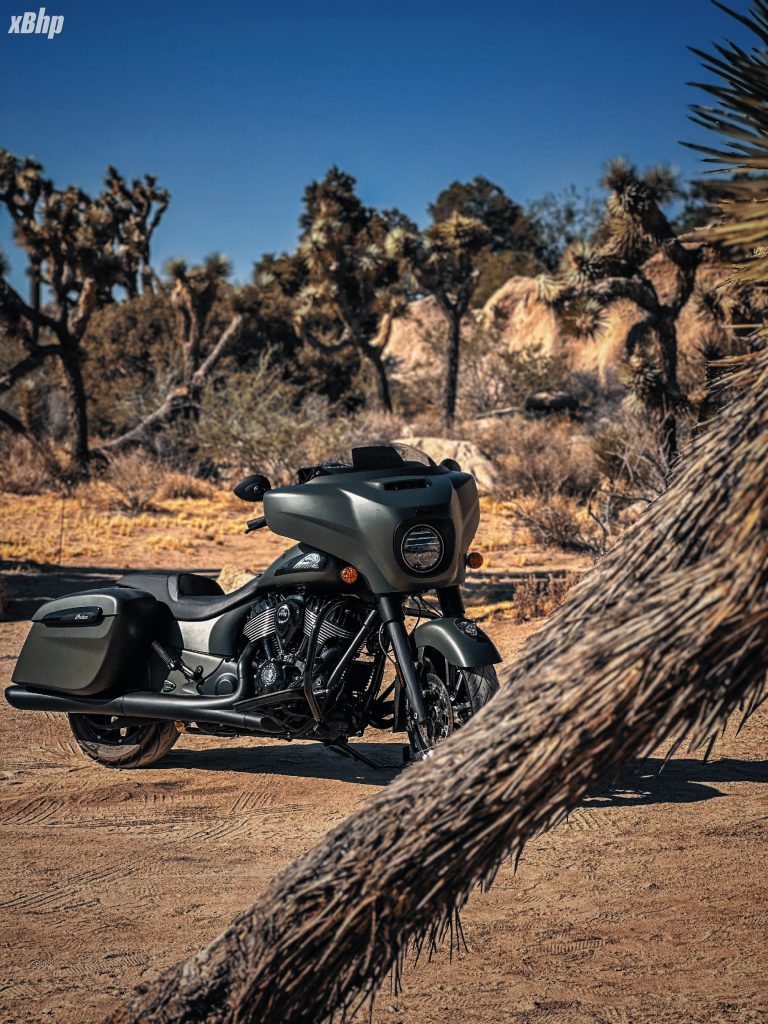
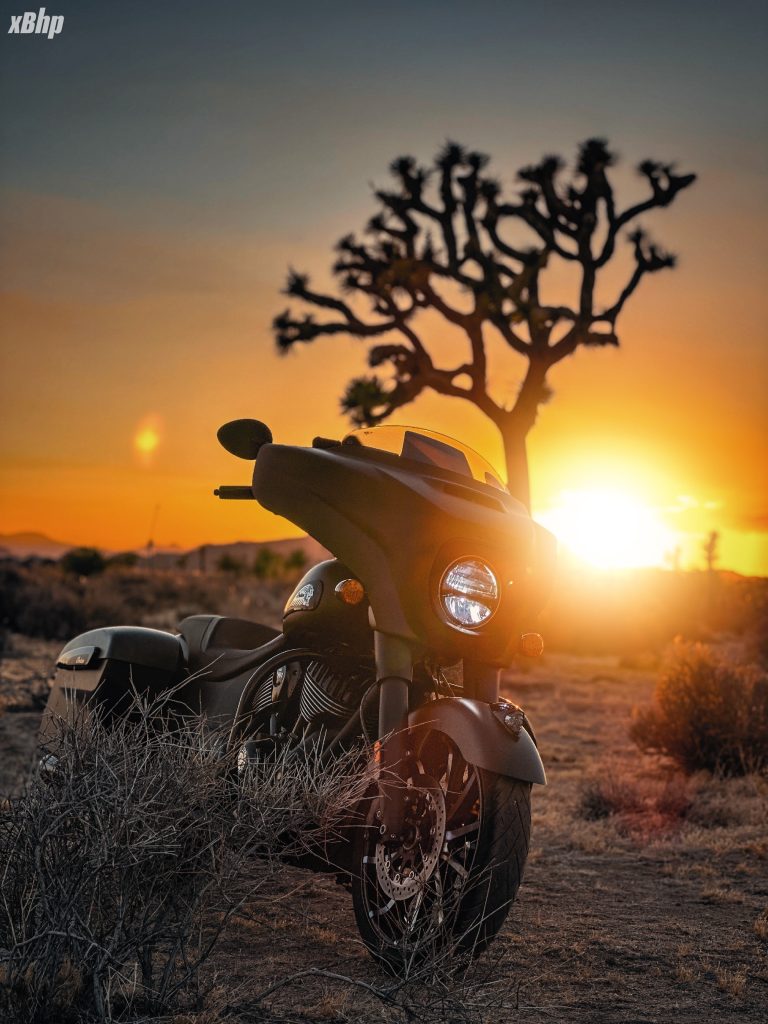
I spent just a day with the Indian Chieftain Dark Horse. I just explored Los Angeles, from where I picked it up. I rode it up to Joshua Tree National Park and came back. In that one day though, I fell in love with it. Harleys hog all the limelight when it comes to cruisers and it’s mostly because of the cult following it made for itself. But trust me when I say this, the cruisers from Indian Motorcycle are just more poised, more elite, and have their own niche.
Also, since I did not have to go around 3,000 km, I had time on hand. So I went to visit a little museum called the Petersen Automotive Museum. If you couldn’t guess, the ‘little’ there was sarcastic. It is one of the world’s largest automotive museums and if you’re a motorhead, you better carry some tissues… for drooling, of course. I’ll give you more details on that in a separate box somewhere in this piece. Now, back to the Chieftain Dark Horse.
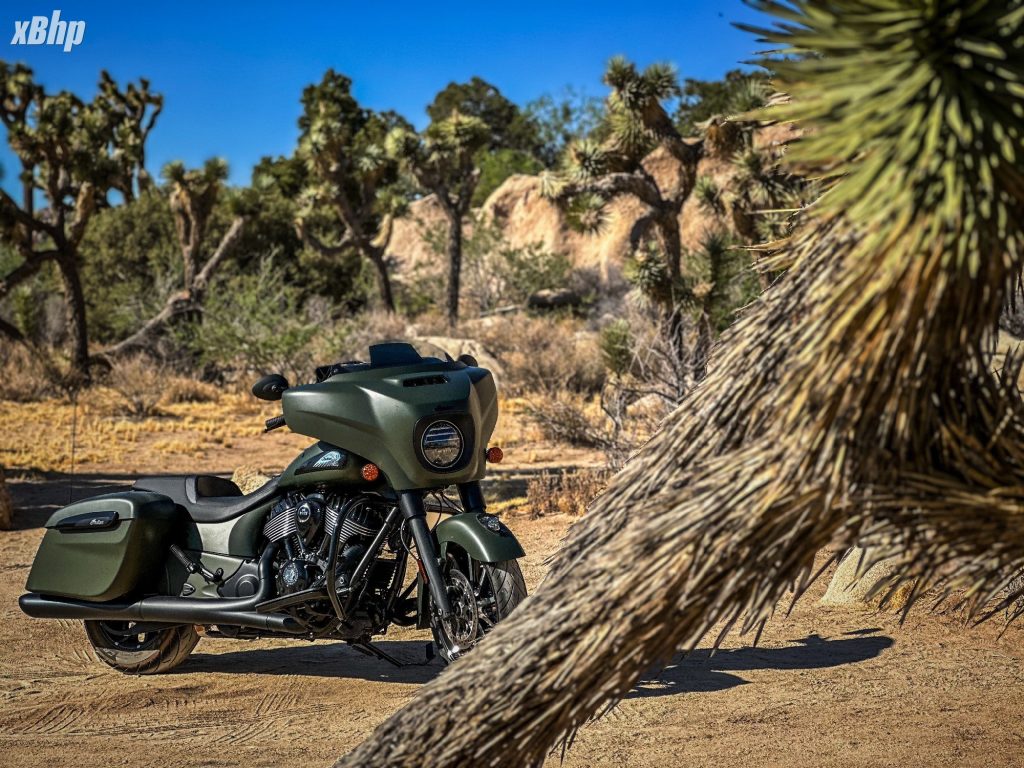
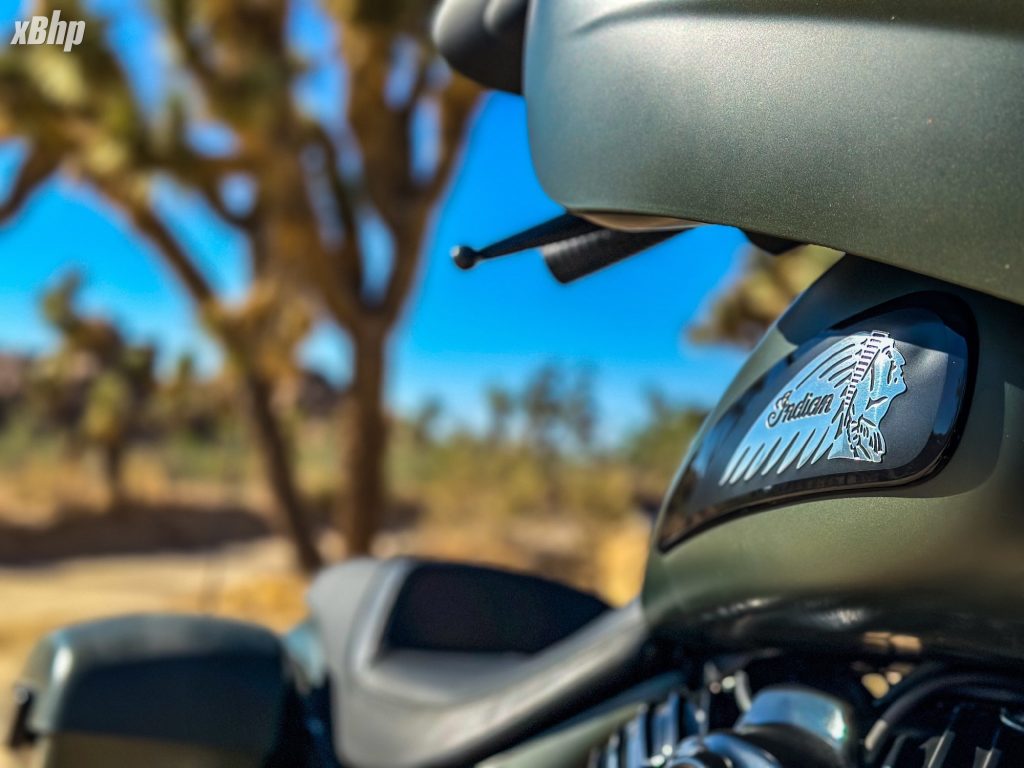
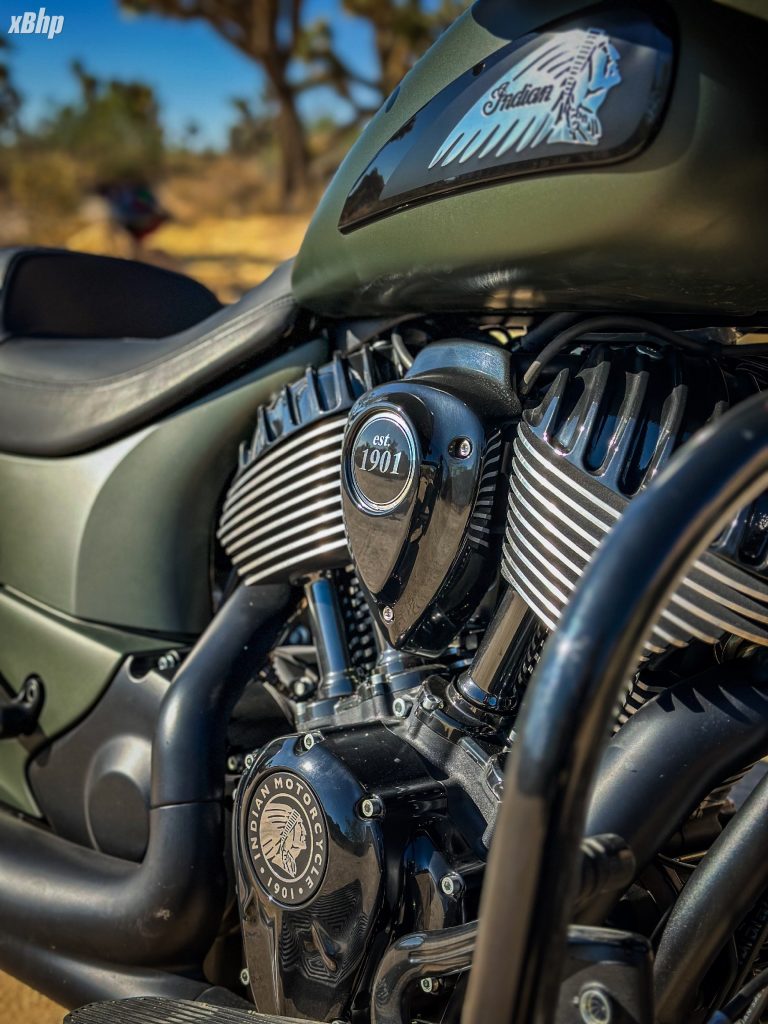
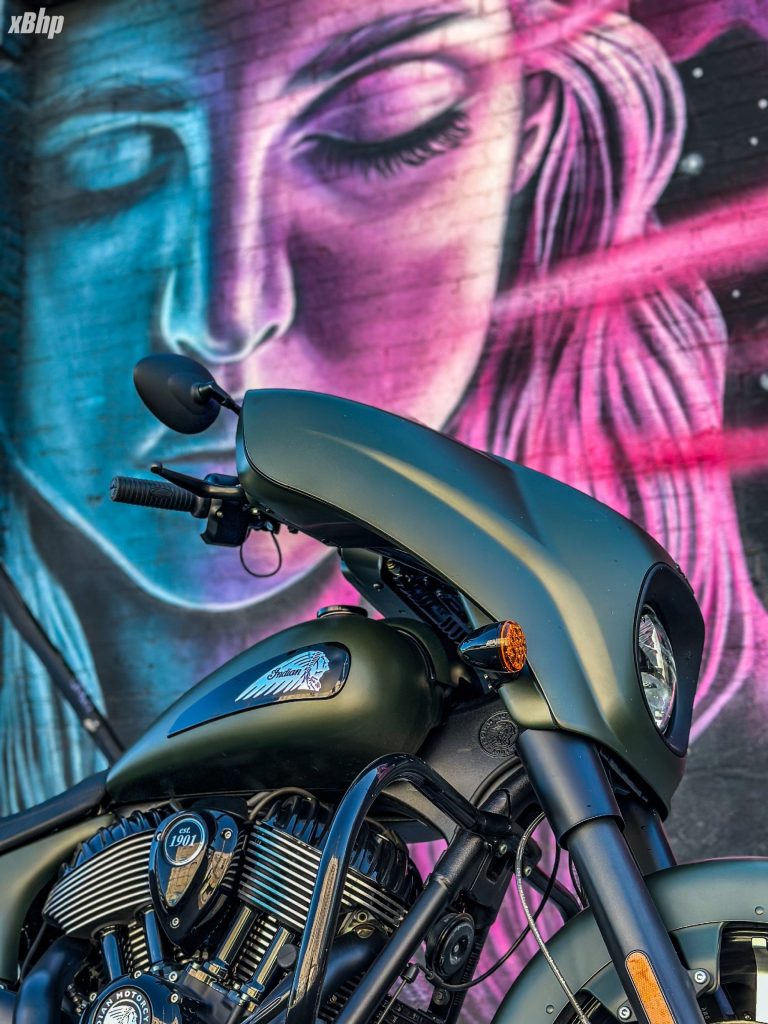
I have seen a fair few baggers in all my years of riding. But I have rarely seen a bagger look like this. Many might differ and they may be right, but the Chieftain Dark Horse looks just… different. The elegant sweeping lines look just right. With the Dark Horse edition, chrome is minimal and has been used very tastefully. It is filled to the brim with modern technology but it stays true to its lineage and heritage. Overall, the Chieftain Dark Horse is just a very handsome motorcycle, made even better by this unique colourway that stands out in the crowd.
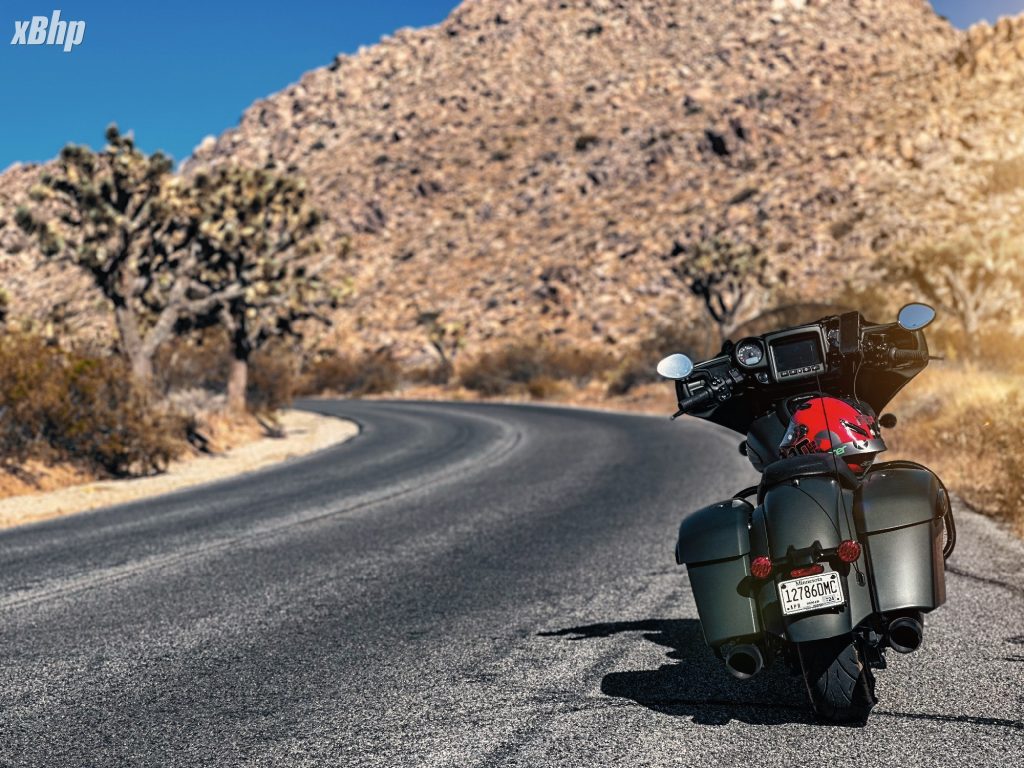
It is a heavy motorcycle, as it should be with all that it has got. But it does not feel that way. Swing a leg over it and you know that all the weight is well-placed, as low as possible. Because of that, it does not feel heavy or wobbly even on a standstill. The seat is nice and low and you get a lot of support from your well-planted feet. Since it gets a fob, there’s no need for a key. You just keep it on your person and ride away. There’s a storage box to keep it as well but if you leave it there, someone else might ride away to enjoy all that this beautiful bagger has to offer.
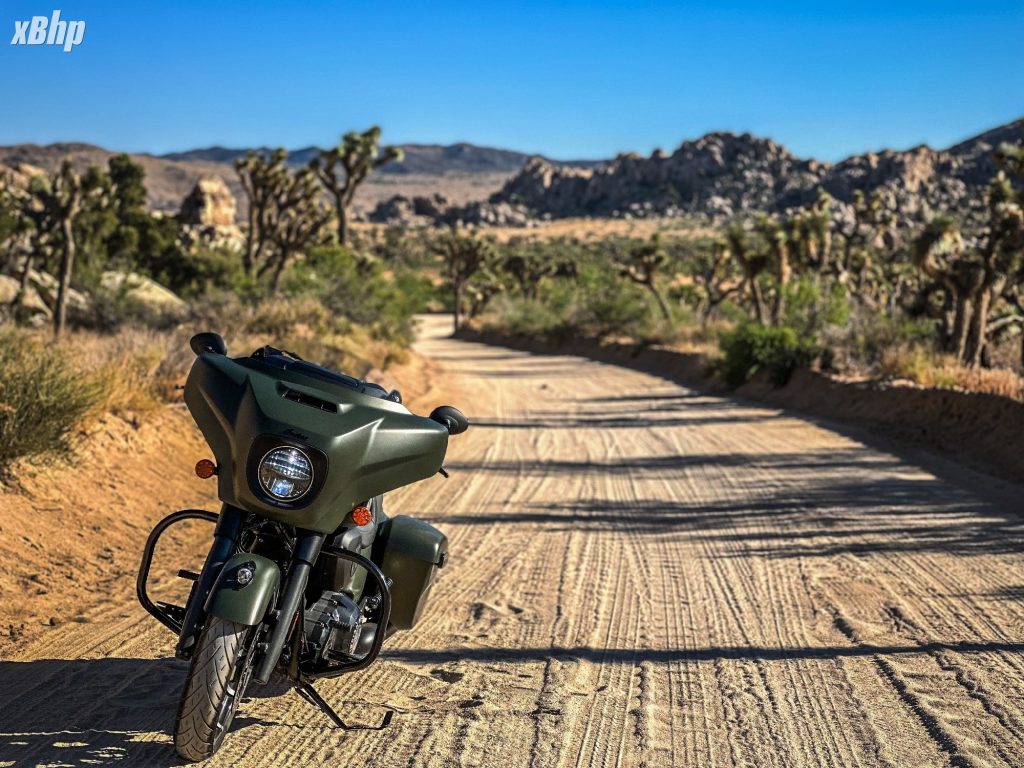
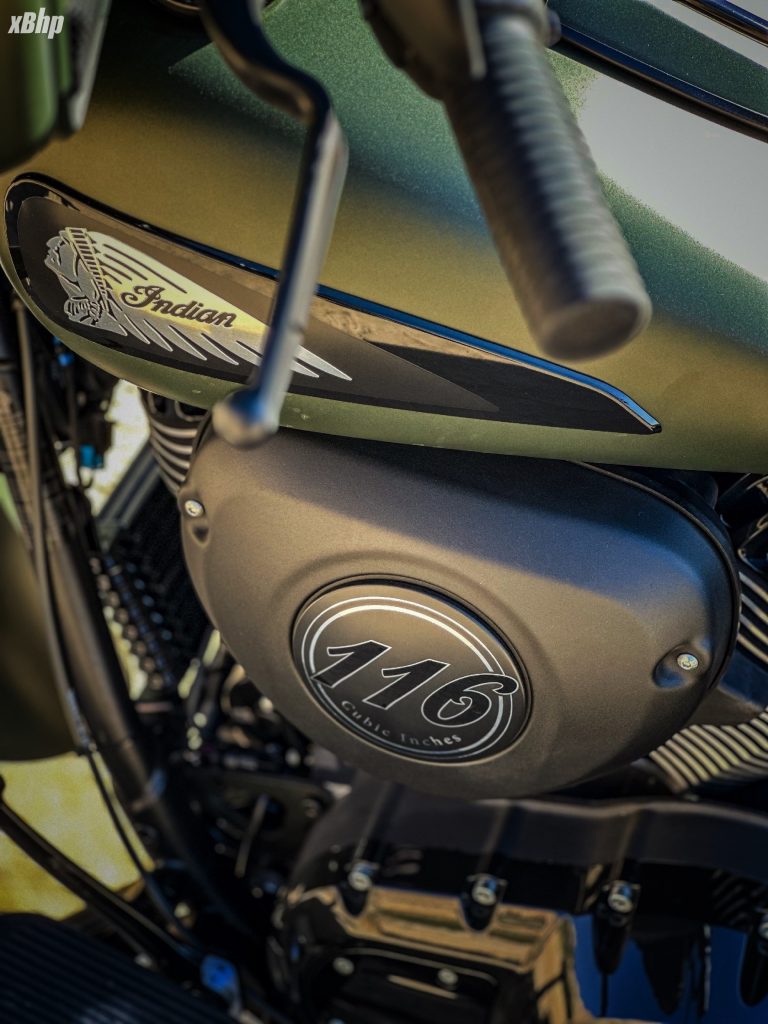
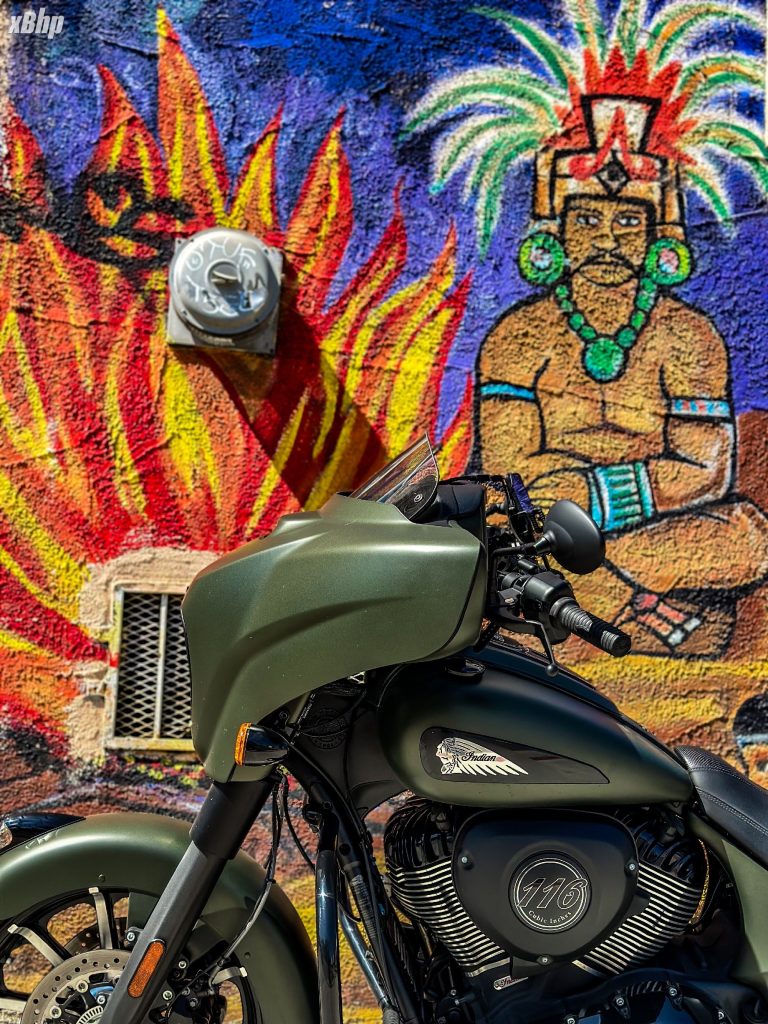
The riding position is as you’d expect it to be on a bagger; commanding, yet relaxed. If you have been riding sportbikes for long, the front controls can take some getting used to. As soon as you hit the starter, you notice something unfamiliar. The Thunderstroke 116 engine displaces 1,890cc and yet, it feels so much more refined than most things in its class. It makes its presence felt but using only your aural receptors.
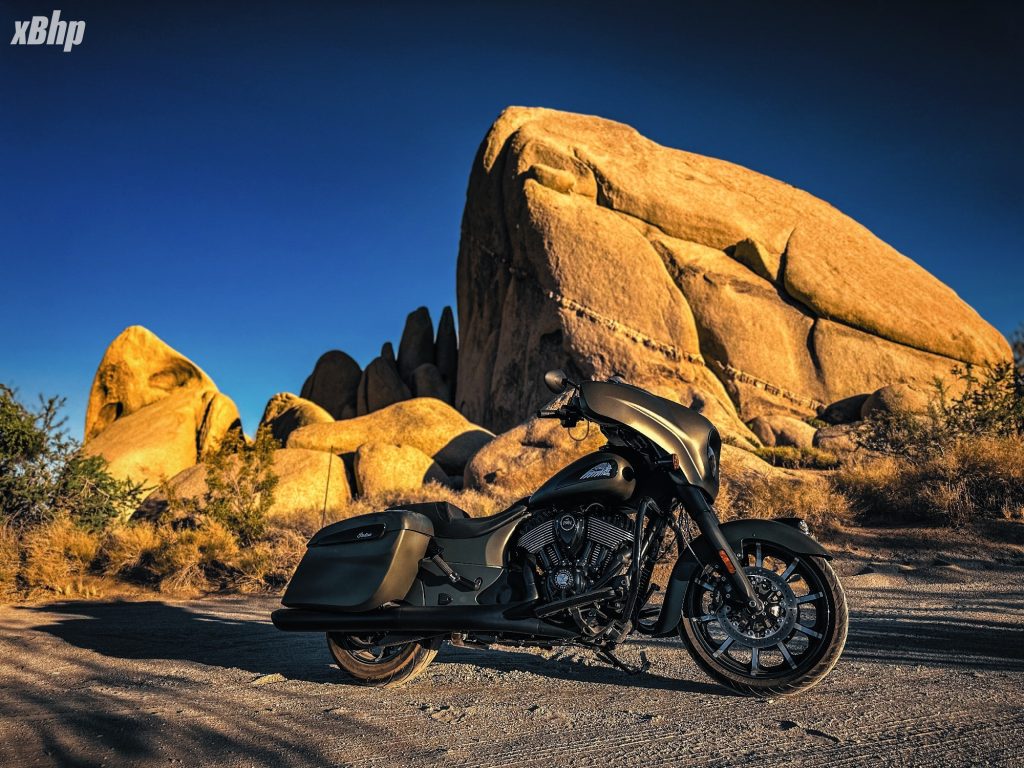
On that note, the exhaust note is simply intoxicating. It is loud and bassy but not in a crass manner. Moreover, as soon as you engage the first gear, there’s that classic clunk. It gets moving without a fuss thanks to the massive torque that the engine delivers to the rear wheel through the 6-speed transmission. We are talking about a smidge over 170 Nm and the peak torque arrives at just 3,000 rpm. So yeah, you get going even without the throttle.
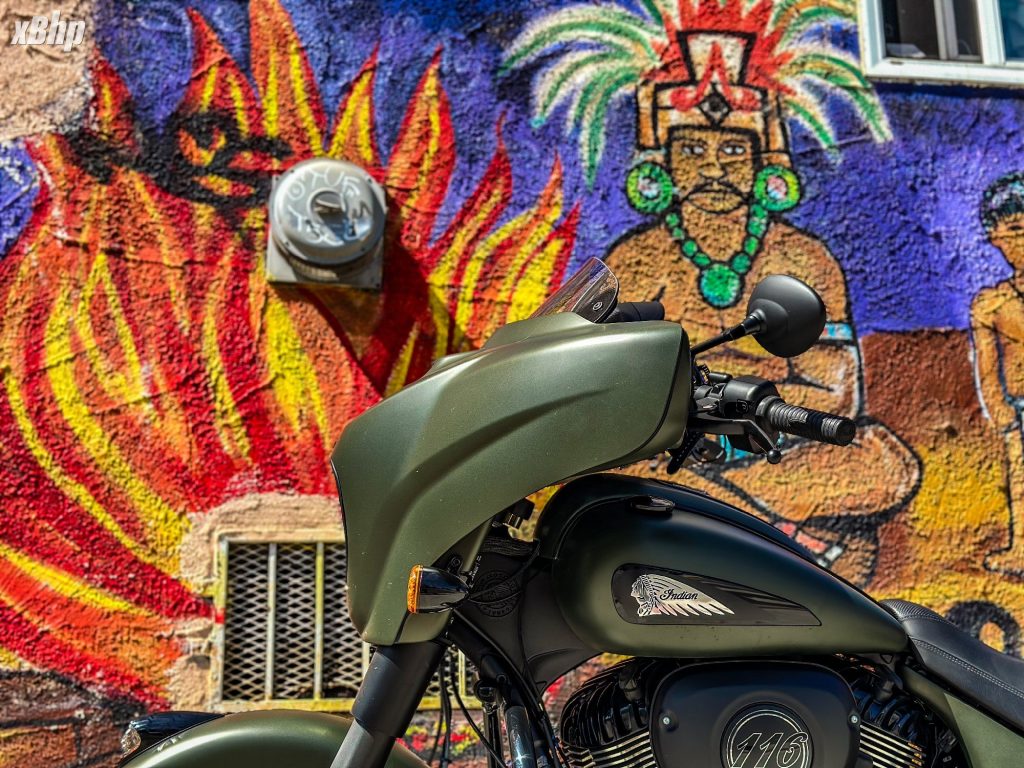
This new Thunderstroke 116 unit was a revelation throughout the ride. It is so elegantly powerful that you sometimes forget that the two cylinders arranged in a V under you are displacing around 945cc… each! To make a motor this large this refined is a feat of engineering. The clutch was fairly light as well and the gearbox too is quite good. But with the amount of torque you have and the revs it needs to get there, you do not need to use either the clutch or the transmission that much.
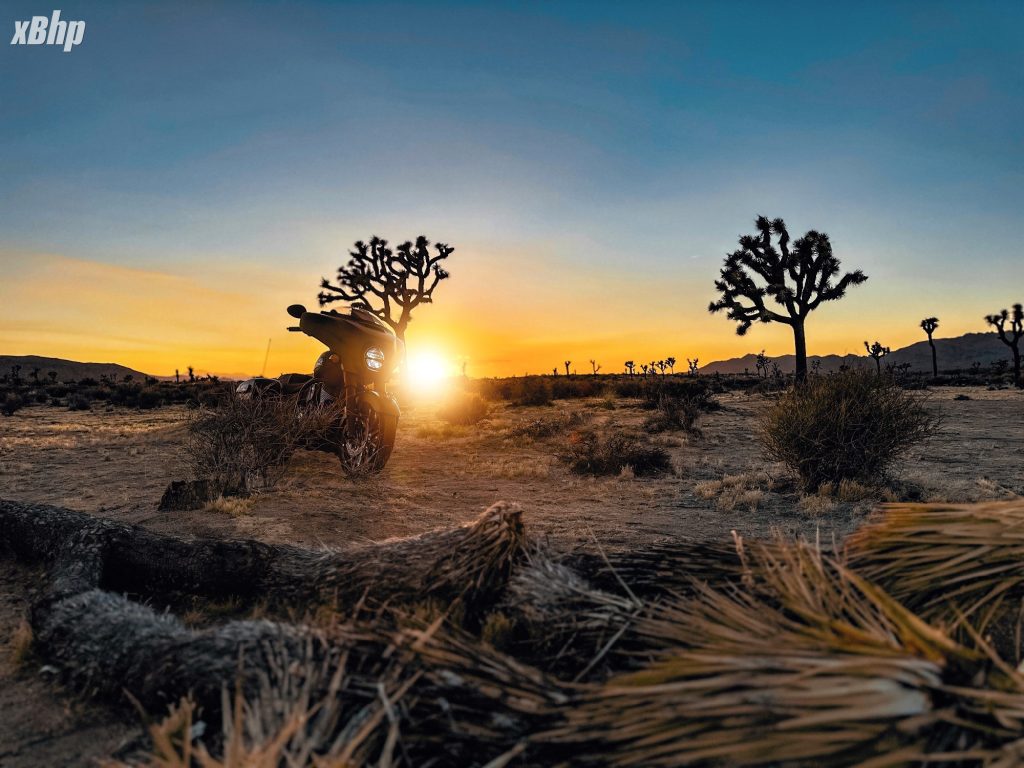
Just twist the throttle and it goes. No knocking at all anywhere unless you are trying to induce some intentionally. Also, the fueling is spot on and it is a wonderful motorcycle to ride even in the city. All 370 kg of its kerb weight is moved around deftly by the engine. But when you do not have the support of the engine, like when you have to reverse, it takes a fair bit of effort. Not something that’ll make you soil your expensive riding gear, but still, expect to sweat a little even if it’s cold. If you have to do it over an incline and in searing heat, just ask for help.
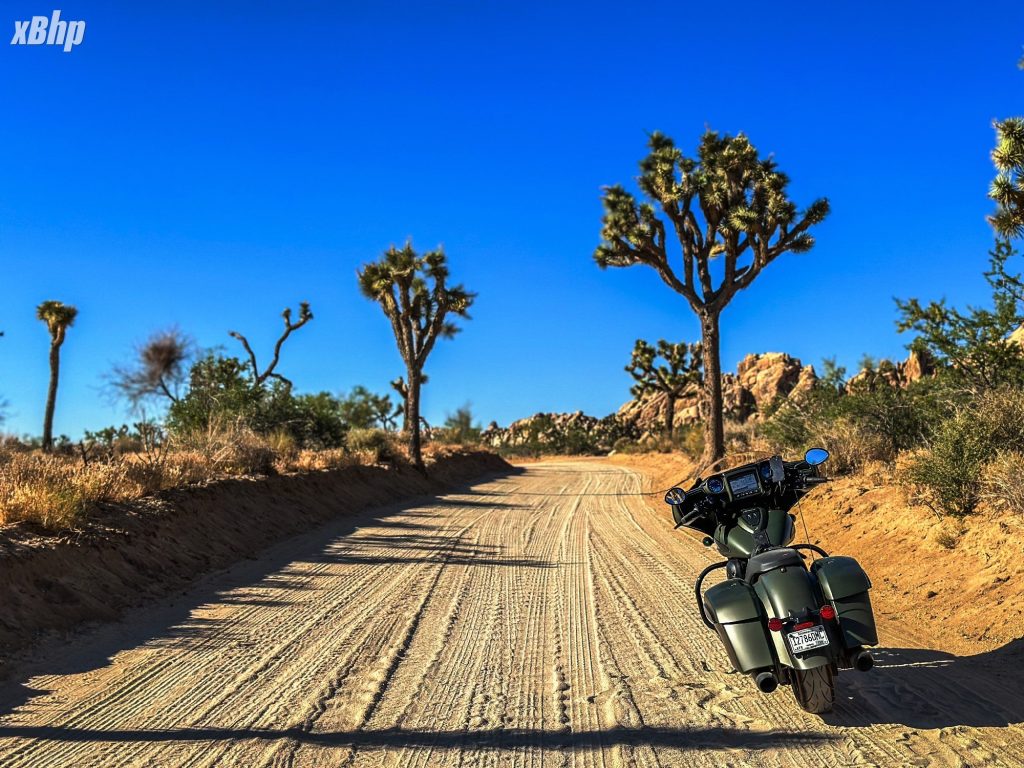
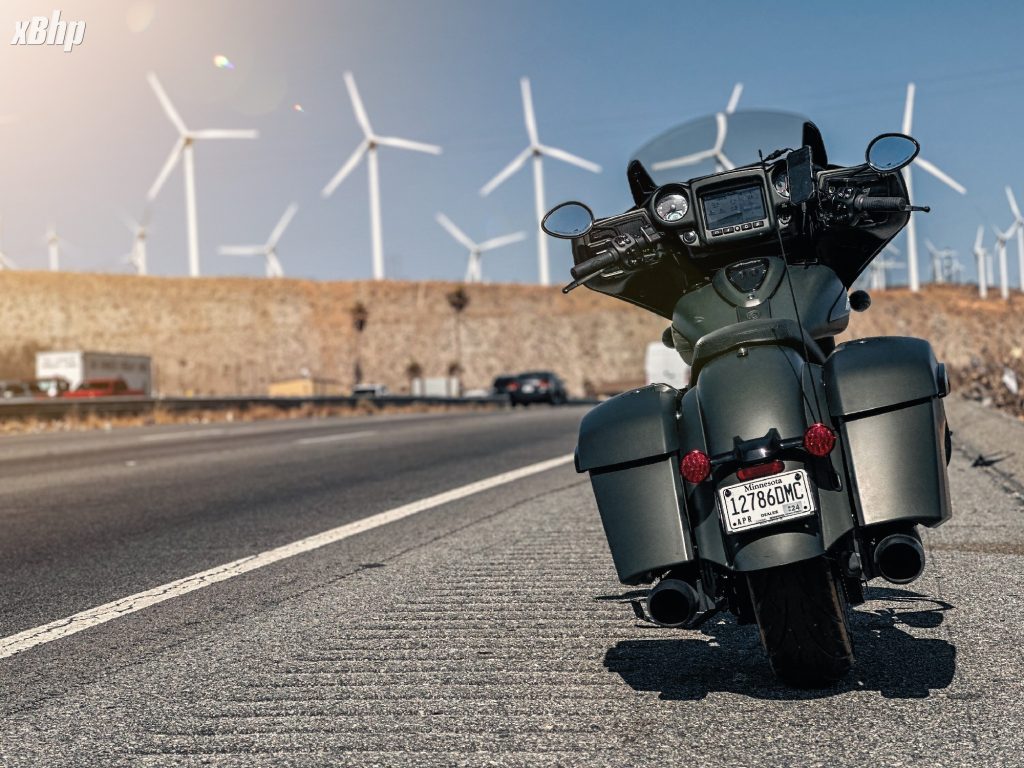
On the highways, the Indian Chieftain Dark Horse is a joy. The windshield can be adjusted with the push of a button and in its highest position, it offers very good wind protection. Even at triple-digit speeds, which the engine has you doing without breaking a sweat, the windblast is mitigated almost 100%. In terms of ride quality, the Chieftain Dark Horse scores majorly. Even on not-so-good pieces of tarmac, it remains extremely composed and you do not feel a thing. That is how pliant the suspension is. We used to call these motorcycles rolling sofas back home and I am glad that they remain that way.
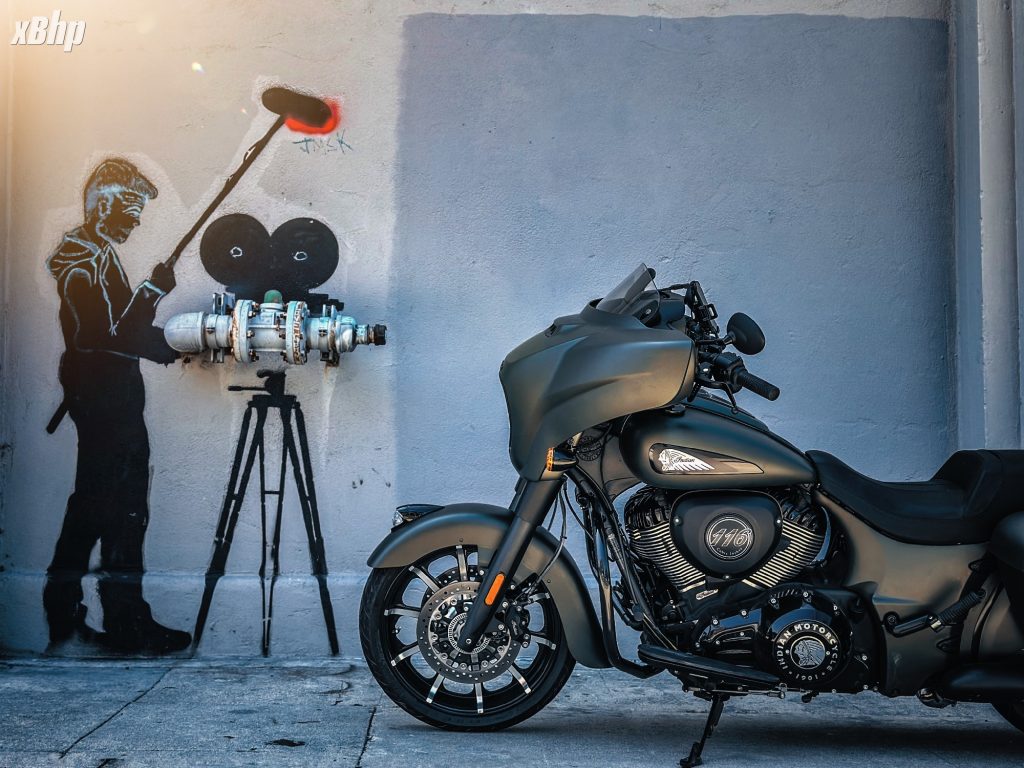
If you are a motorhead and a connoisseur of anything automotive, the Petersen Automotive Museum deserves a visit. It was founded in 1994 and it is one of the world’s largest automotive museums. It was overhauled in 2015 and now, it is a work of art even from the outside. Inside, you get to feast your eyes on some of the finest examples of automobiles ever made along with some of the most iconic vehicles seen on the big screen. Let me give you a few examples; Elvis Presley’s De Tomaso Pantera, the DeLorean from Back to the Future, the Batmobile from Batman Returns, Steve McQueen’s Jaguar XKSS, and more. And yeah, a Ford GT40 MkIII. As I said earlier, if you’re around and if you like this stuff, JUST GO.
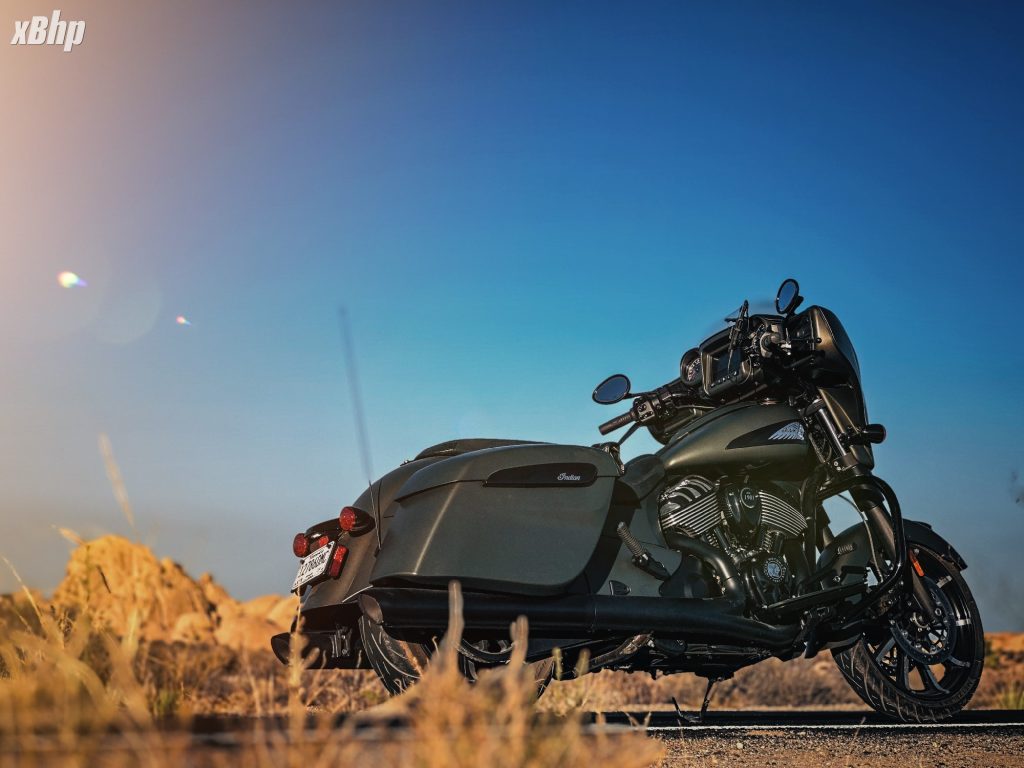
That said, the suspension is also up for some spirited jaunts. Find yourself some winding roads and the Chieftain Dark Horse feels surprisingly agile and nimble. Do not ride it like a sportbike because physics might have a say in that. Regardless, before you hit the dynamic limits of the motorcycle, you’ll find that you have messed with the beautiful paint job. Scratched floorboards and exhausts are frowned upon rather gravely, especially when you don’t own the motorcycle.
Regardless of the low ground clearance and cornering clearance, the Chieftain Dark Horse is a lot of fun on winding roads. While some of it is down to the suspension, a fair bit is done by the steering geometry. It feels more precise than it should for a motorcycle of its size and heft. It is very predictable and can easily hold the line at decent speeds. The Metzeler Cruisetec tyres also help the matters and so do the twin 300mm discs at the front. It may seem like a horrifying prospect but you CAN use the brakes to tighten the line if you overcook a corner while enjoying the Chieftain Dark Horse a little too much. In simpler terms, it does a great job of instilling a lot of confidence in the rider.
The Indian Chieftain Dark Horse is not meant to be raced. But with its persona, it does not back down from one either. You just have to have the necessary skill, tons of confidence, lots of faith in the motorcycle, and some money too in case you scrape the nice and low bits of the motorcycle. I have ridden a fair few ‘big bikes’ but very few have made me feel that good about mass, speed, and inertia. Combined with the road presence that it has and the respect it commands, being an alpha on the roads is a fairly easy task.
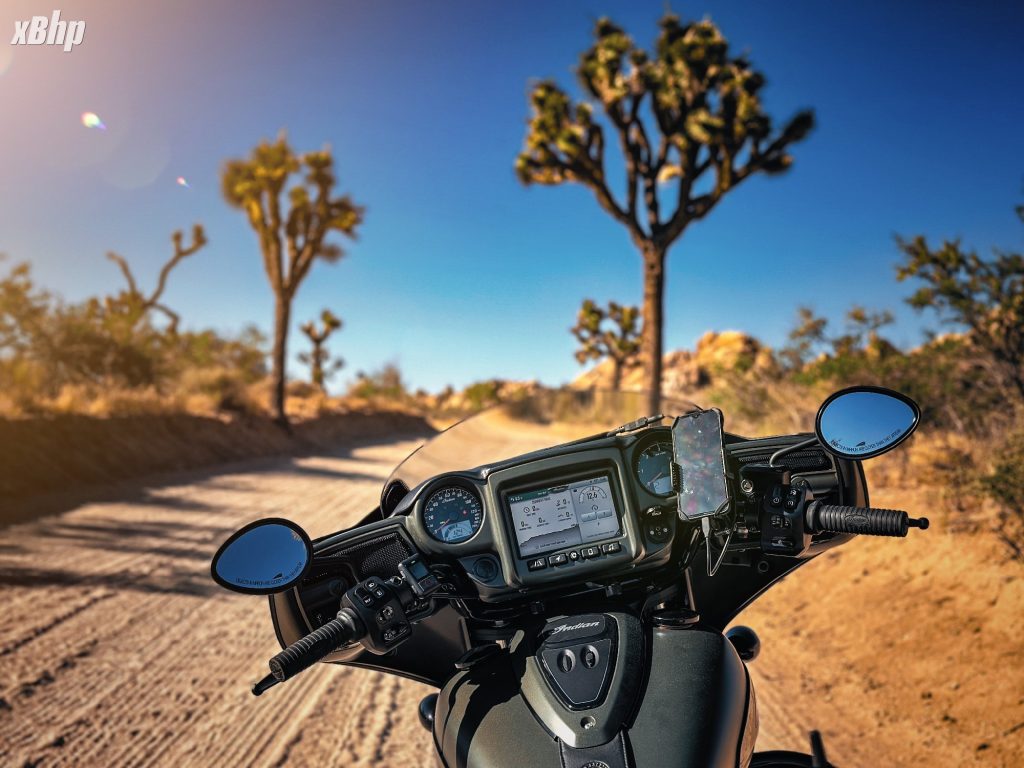
Now, I am old-school and all I want in a motorcycle is that it should just go, talk, and listen. But technology is inescapable and there are a fair few things in that department that I did not know I needed. Electronic or analogue rant aside, the Indian Chieftain Dark Horse is a loaded motorcycle.
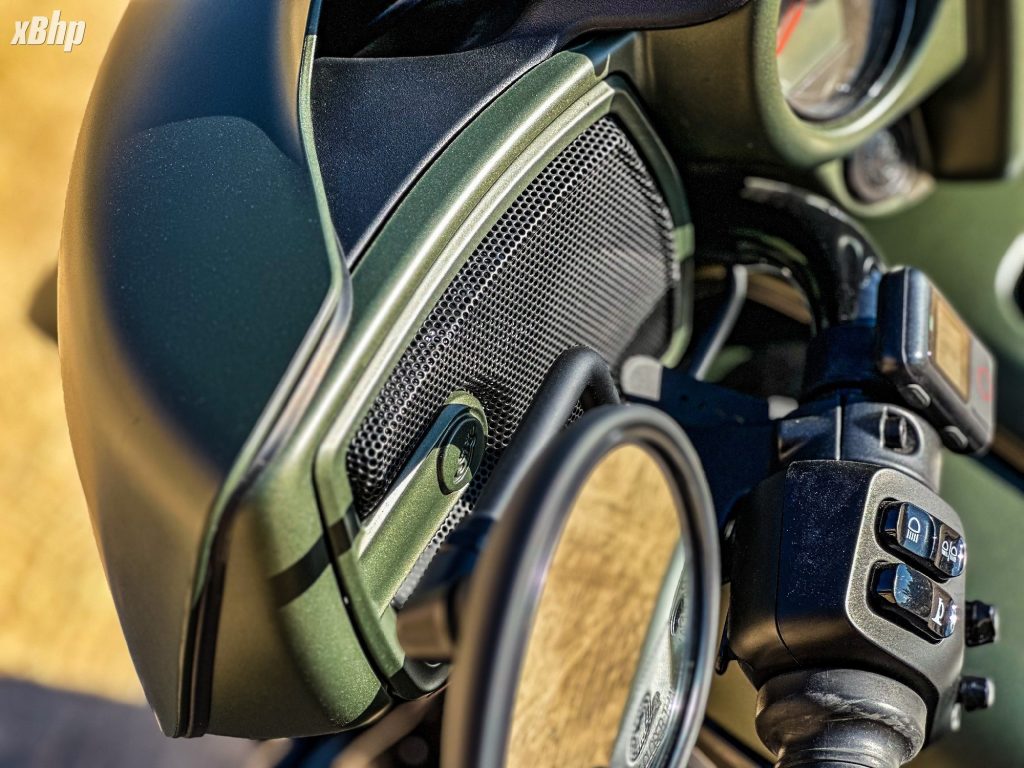
It has LED lighting all around. It has a 7” touchscreen powered by the proprietary RIDE COMMAND tech. It can be operated with gloves on and I love it. There’s Apple CarPlay integration, tyre-pressure monitoring system, remote locking hard saddlebags, multiple ride modes, rear-cylinder deactivation, ABS, Cruise Control, Bluetooth, USB, Smartphone compatible input, a 12V charging port and a 100 Watt audio system with AM/FM.
Phew. Breathe in; it also gets a real-time clock, ambient air temperature readout, Bluetooth status for phone and headset, voltage readout, engine hours, oil change, speed, fuel range, RPM, gear position, distance, moving time, stop time, altitude, altitude change, trip meters, screen brightness adjustment, and vehicle trouble code readout.
Hopefully, that is all you need to know and you could have checked out the spec sheet on Indian Motorcycle’s website but I thought I’d just list those things out anyway. Regardless, the rear-cylinder deactivation is a cool feature. It not only helps the engine remain cooler when you’re cruising at not-so-high speeds, but it also quiets things down when you need some peace.
I did not think much about all the readouts but they are good to have as they keep one apprised about the motorcycle and its surroundings. Another thing you can use to drown the noise out is the music system. With virtually non-existent windblast, the thing sounds amazing. Being able to blast your favourite music on endless highways is a godsend. There are multiple ways of attaining Zen and this definitely makes the list for people like me.
I had it just for a day and if I had it for longer and on a longer ride, I am sure that all the tech it comes loaded with would have come in handy. It was already a winner in my books from the moment I laid eyes on it but it surpassed that when I was finally handing it back. A gem of a motorcycle and I would love to have a bit more of it. I want to say that it could have had more power, it could have been lighter, it could have this, and it could have that. But trust me, the Indian Chieftain Dark Horse transcends all of that stuff once it is on the move. I adore motorcycles that go, talk, and listen. But motorcycles that really move me… I love them to death and back.
2024 KTM 390 Duke :: Hooligan Absolute
 Sep 2023 Sundeep Gajjar
Bikes,KTM,Motorcycles
Sep 2023 Sundeep Gajjar
Bikes,KTM,MotorcyclesSunny, Sunny.
Yes, Officer.
Scraping Your Knee?
No Officer.
Show me your knee.
Ha, Ha, Ha.
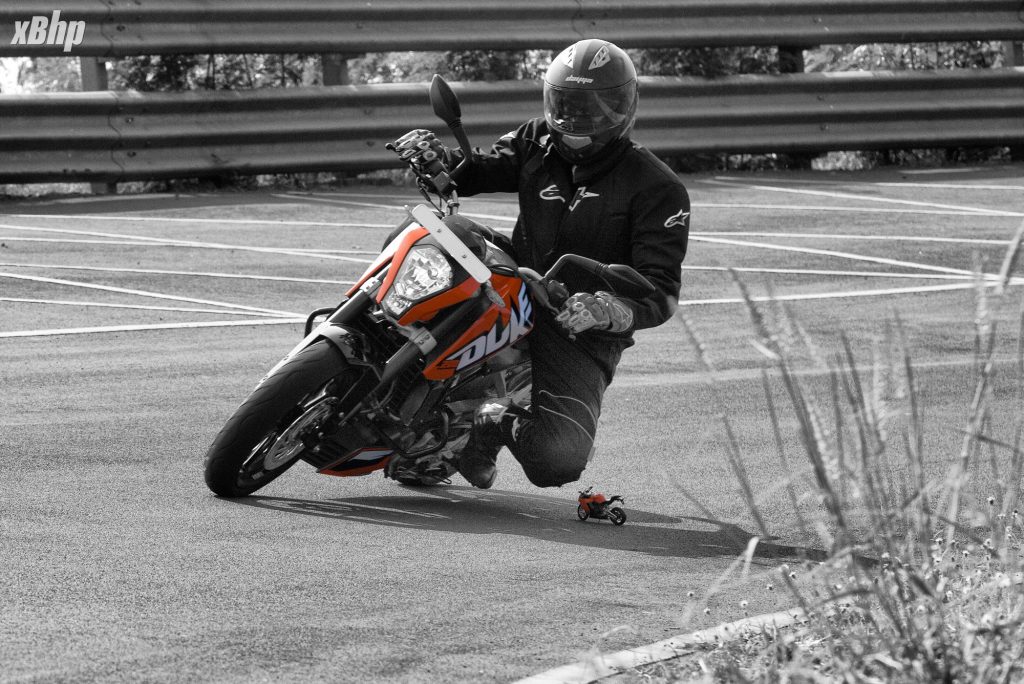
How’s that as a start of a review? Well, that was 2011. I was 12 years younger than I am right now so doing edgy stuff is justified. But more than that, it was the bike I was reviewing that made me do that. KTM had just entered the Indian market with the 200 Duke, the very first in India. It was a racket, to say the least. It was like nothing anyone had ever seen before. Radical, edgy, and an absolute cracker to ride. Precision on a racetrack is what KTM considers to be their forte and that photo of me squashing that orange with my knee was a testament to that.
The 200 Duke was followed by the even mental 390 Duke. With a kerb weight of motorcycles much less powerful, it came in with a smidge over 42 horses. As expected, it was sensational. So with their very first couple of motorcycles, KTM established themselves as one of the most sought-after performance motorcycle manufacturers in India. Moreover, they have not run out of steam since then and the number of KTMs seen on the road today speaks volumes of KTM’s success in India.
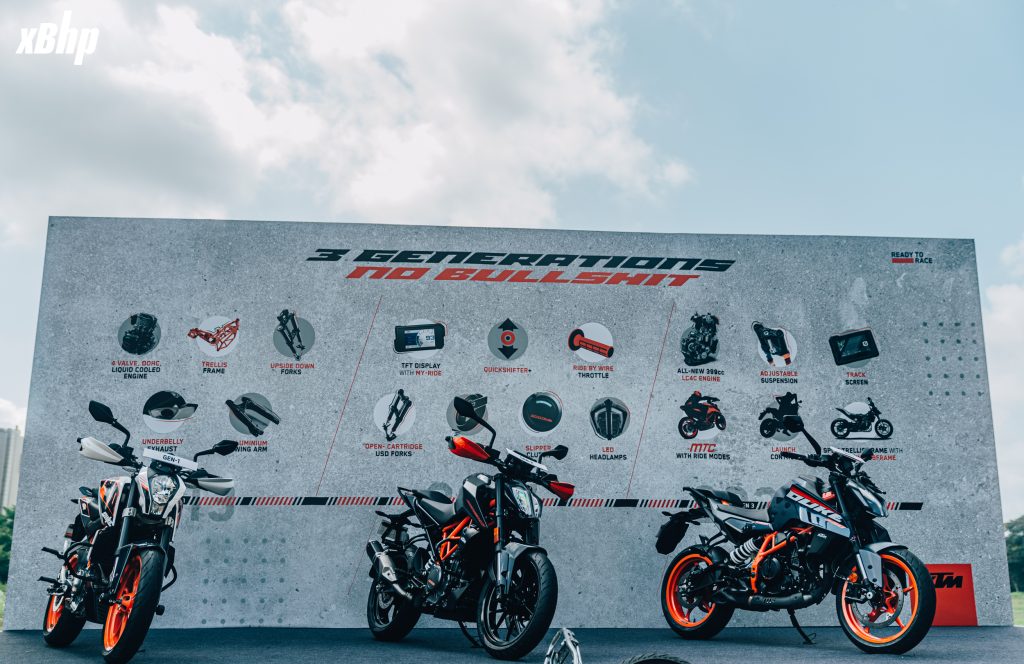
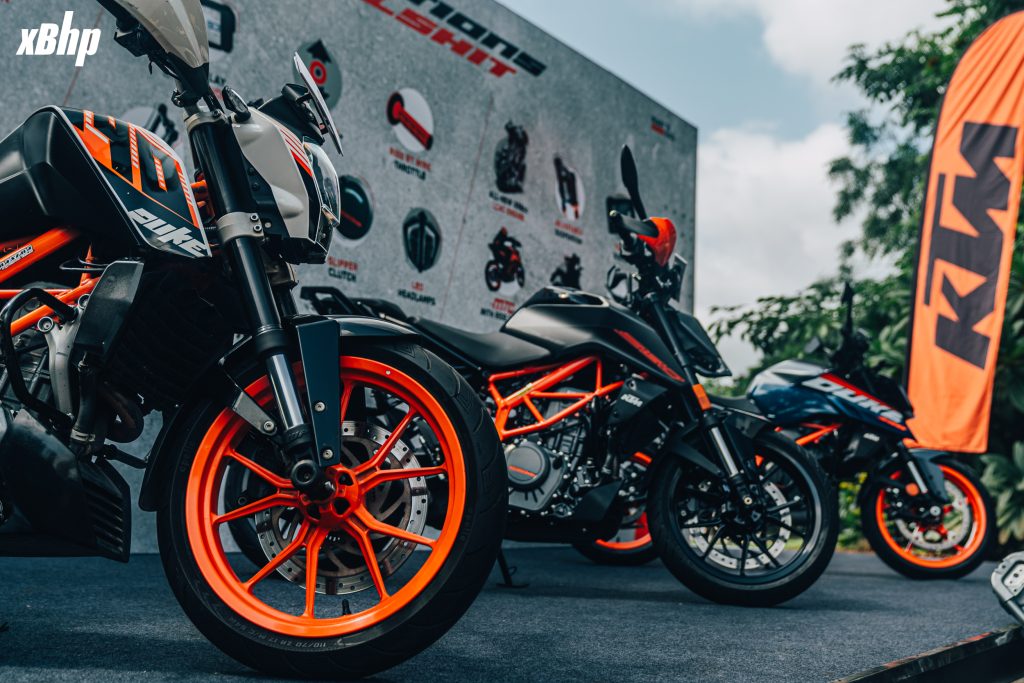
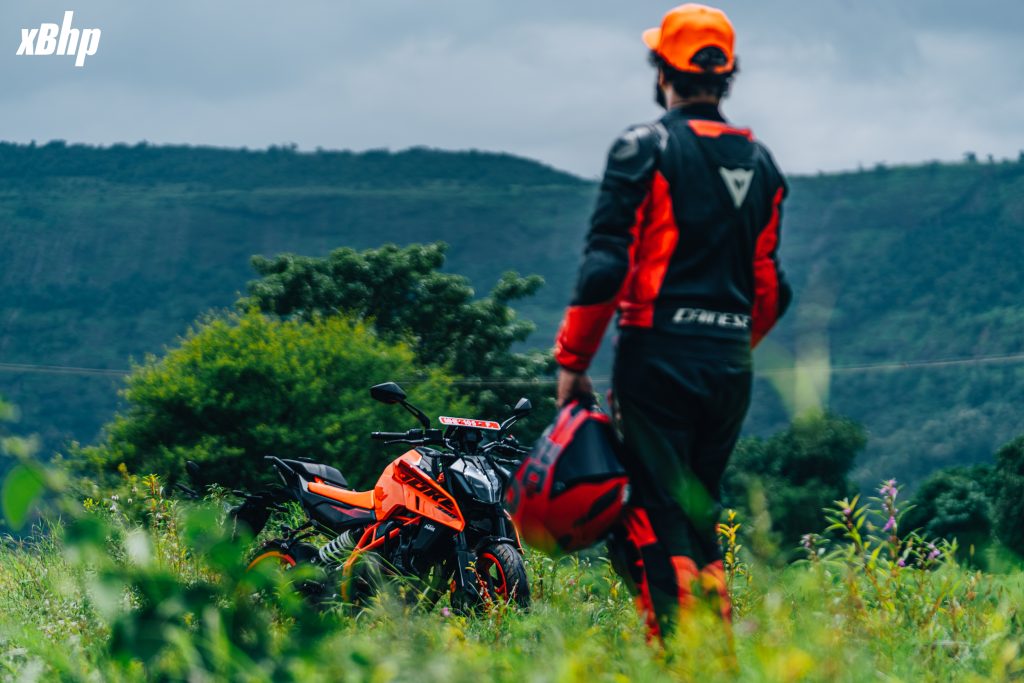
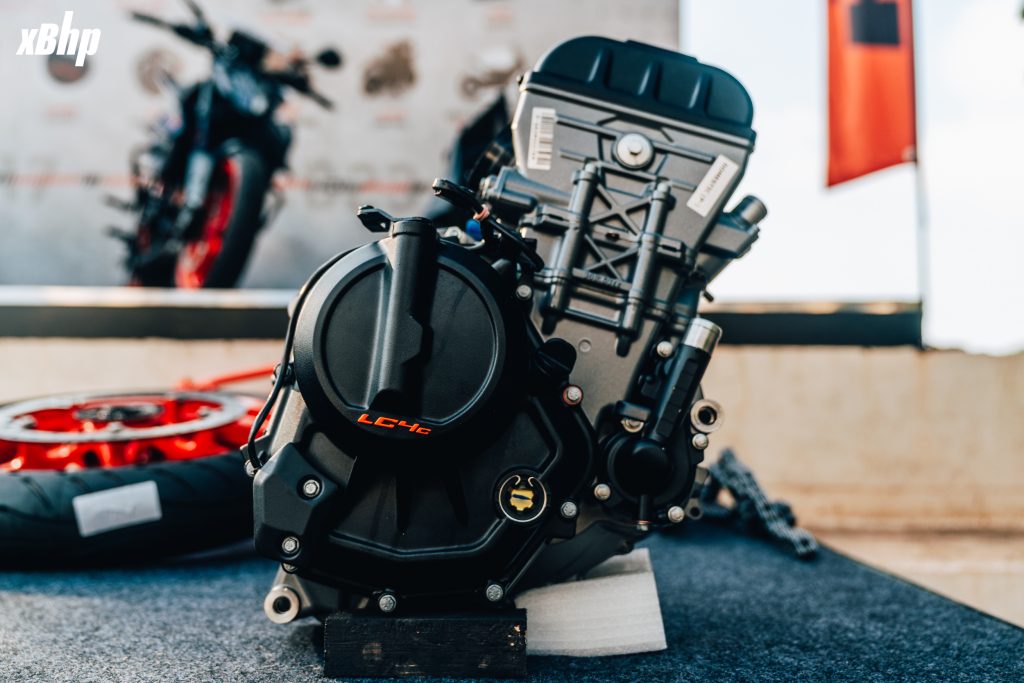
Then came the second generation of the 390 Duke. Inspired by the Super Duke, the styling got even sharper and edgier. It gained a lot of tech as well with stuff like a TFT screen, Supermoto ABS, ride-by-wire and so on. The power-to-weight ratio remained just as good and as a result, KTM had another winner on their hands. I rode the 390 Duke for over 3,000 km in Iceland and I can attest to the fact that it is a wonderful motorcycle. It can tour as well as it can race, albeit with a windscreen. On the streets, it is already a proven hooligan.

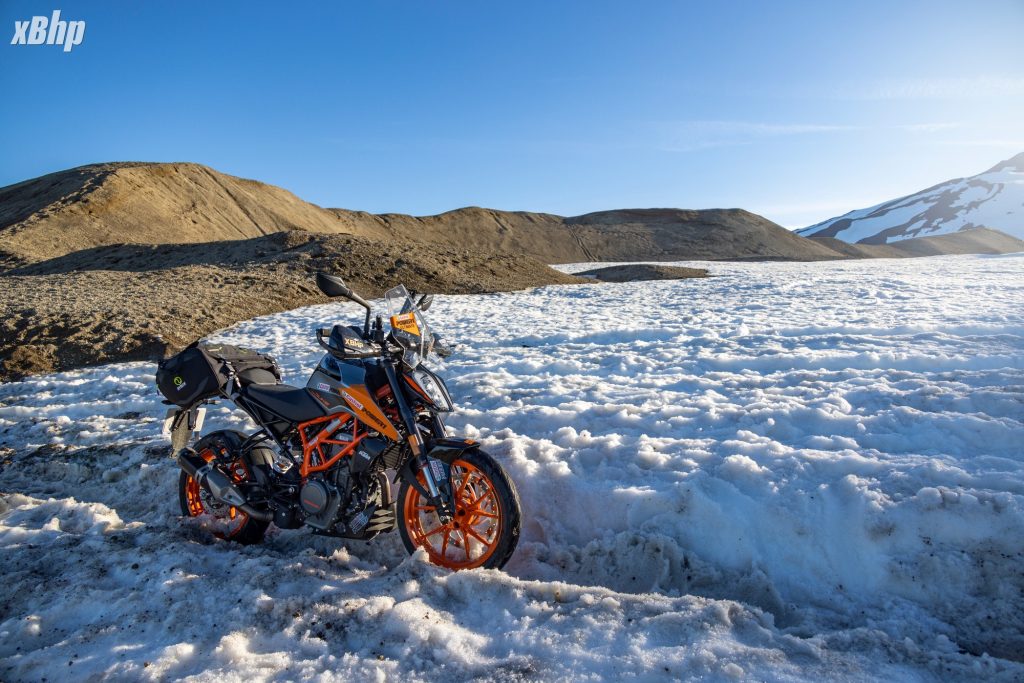
So the second generation of the KTM 390 Duke seemed like a near-perfect motorcycle. Not a manufacturer to sit on their laurels, KTM took their sweet time to refine the 390 Duke formula even more. And now, we have the 3rd generation on hand. If you thought it could not get any more radical, think again. If you thought it could not get any quicker, think again. If you thought it could not recreate the magic all over again. THINK AGAIN! Welcome, everyone, to the 2024 KTM 390 Duke!
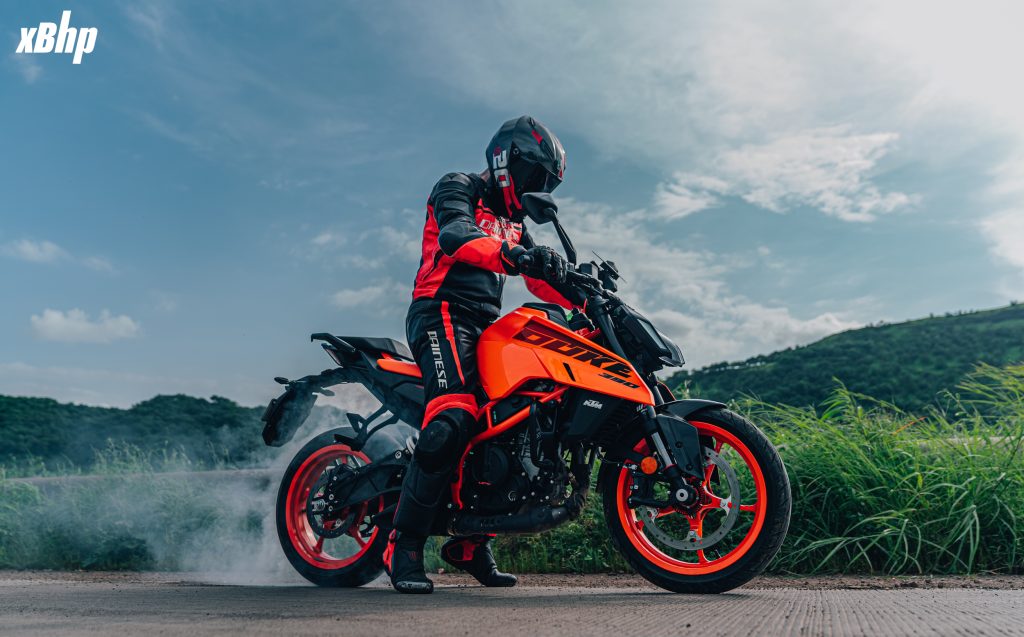
Bajaj invited xBhp to check the new 390 Duke out and I could not miss it for the world. So, I did just that, rode my heart out; on the track, on the road, and some backroads. As always, I like to ride motorcycles but not review them in a manner that people have come to expect of everyone else. I like to ride motorcycles, I like to talk about them, and I like to explore what went into the birth of the idea that became the motorcycle. So, let us get to it.
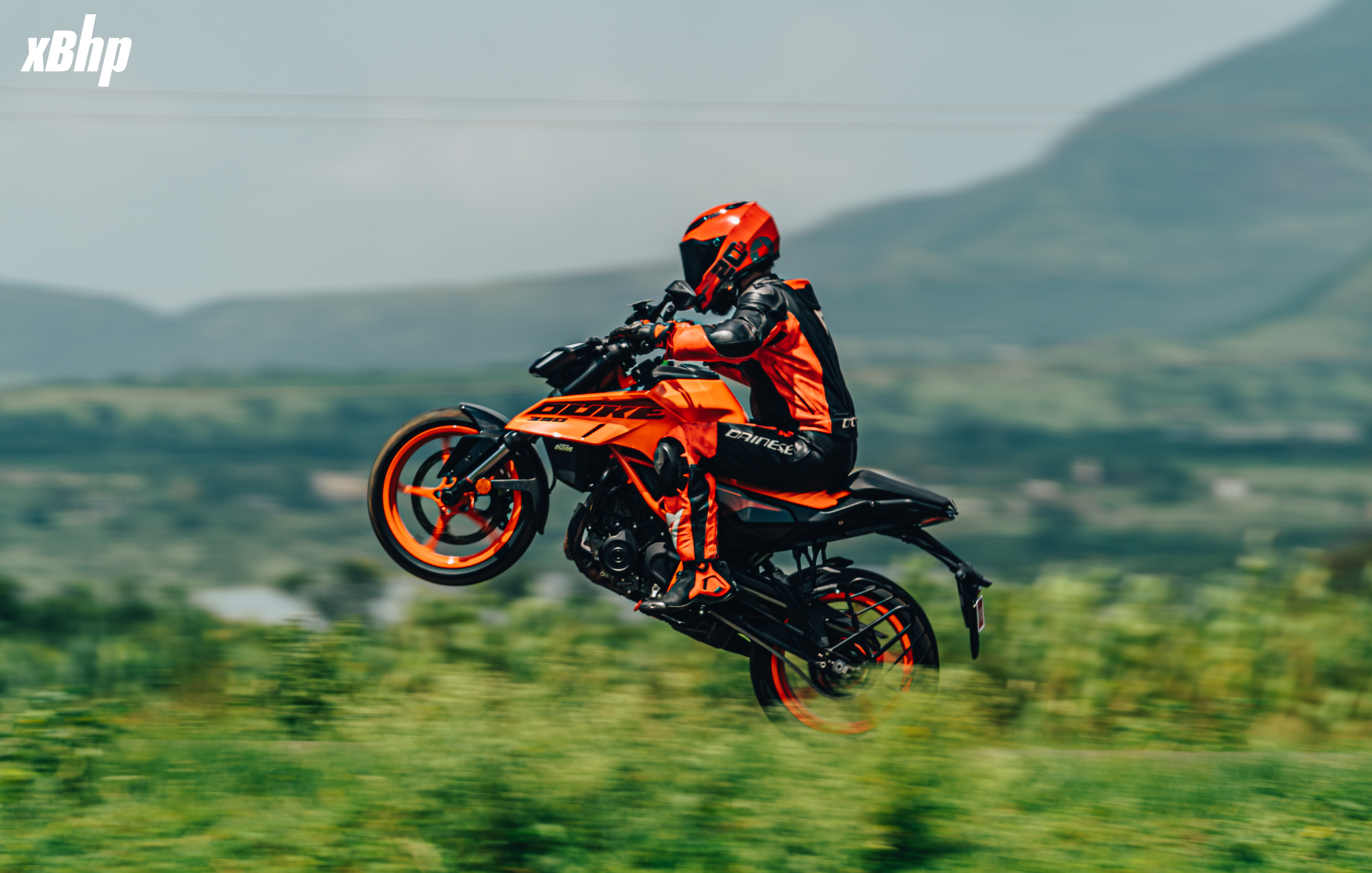
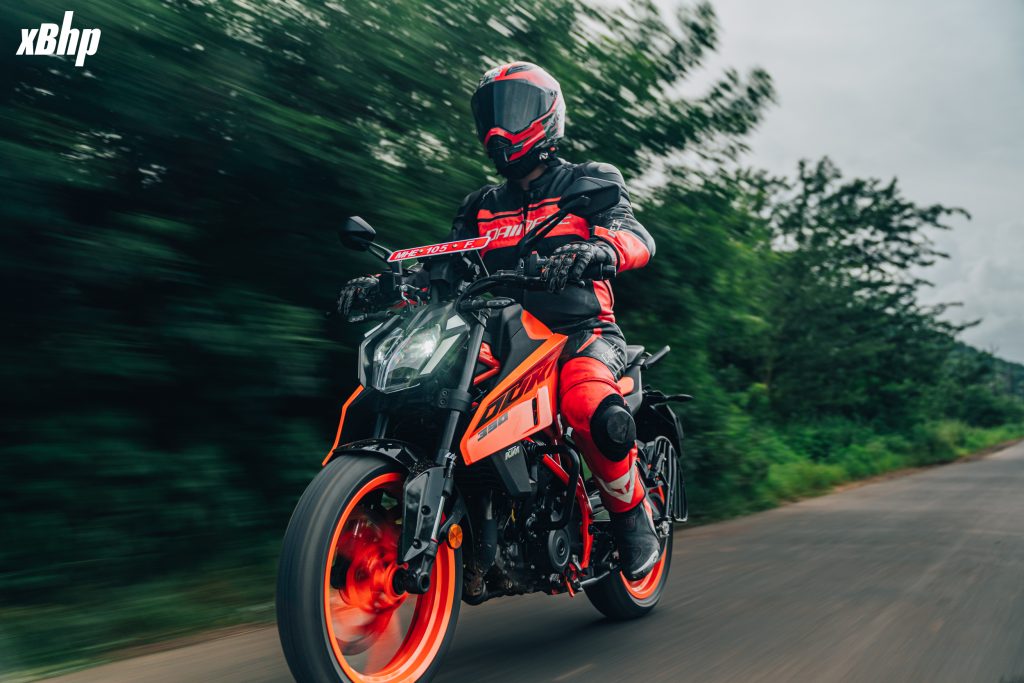
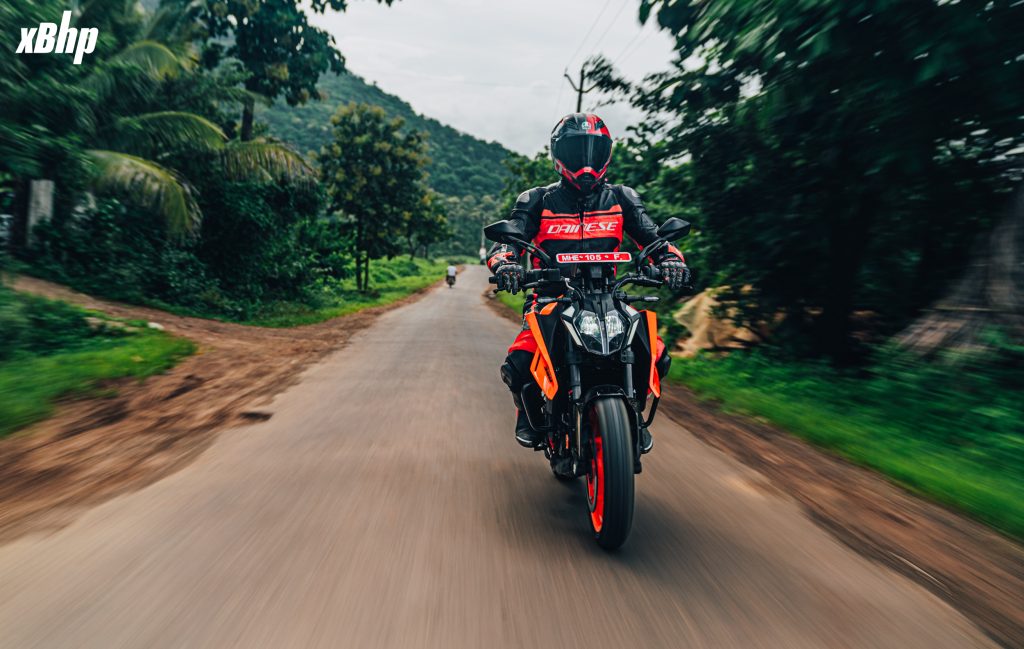
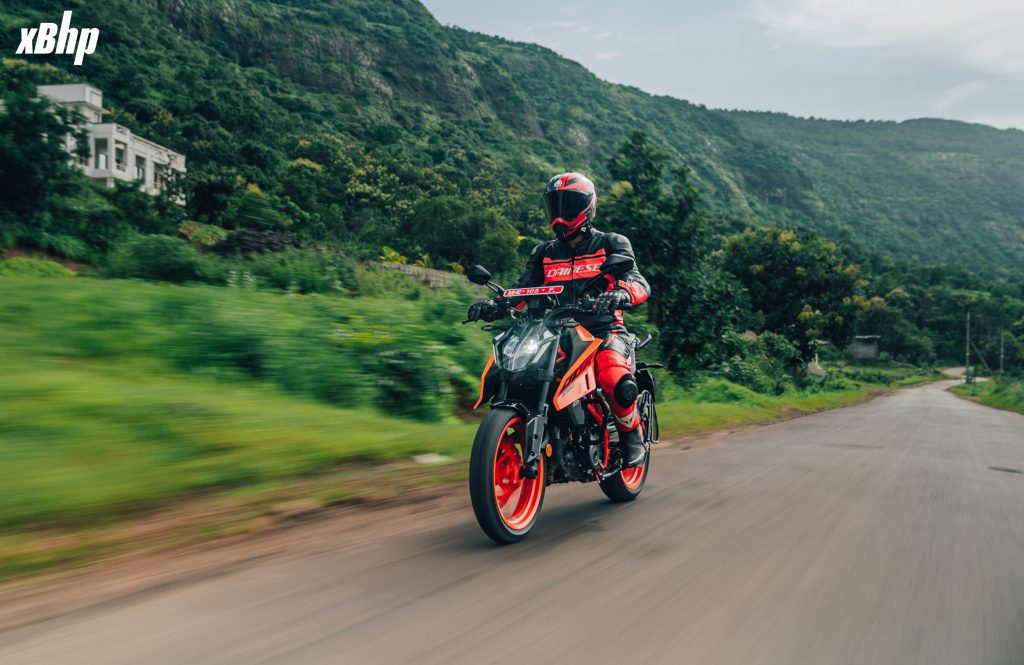
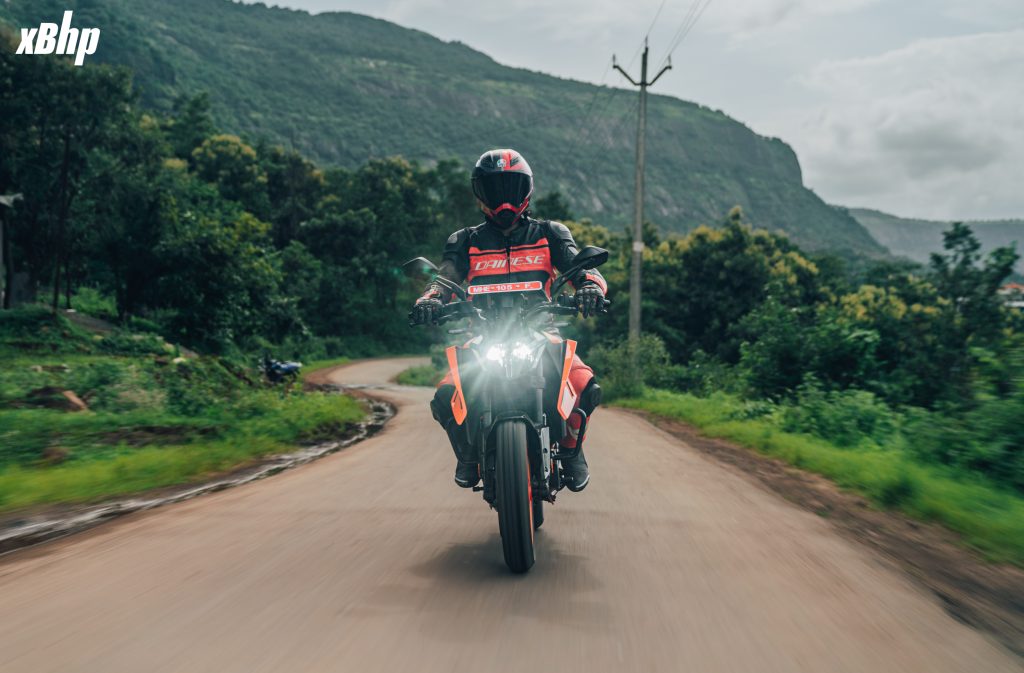
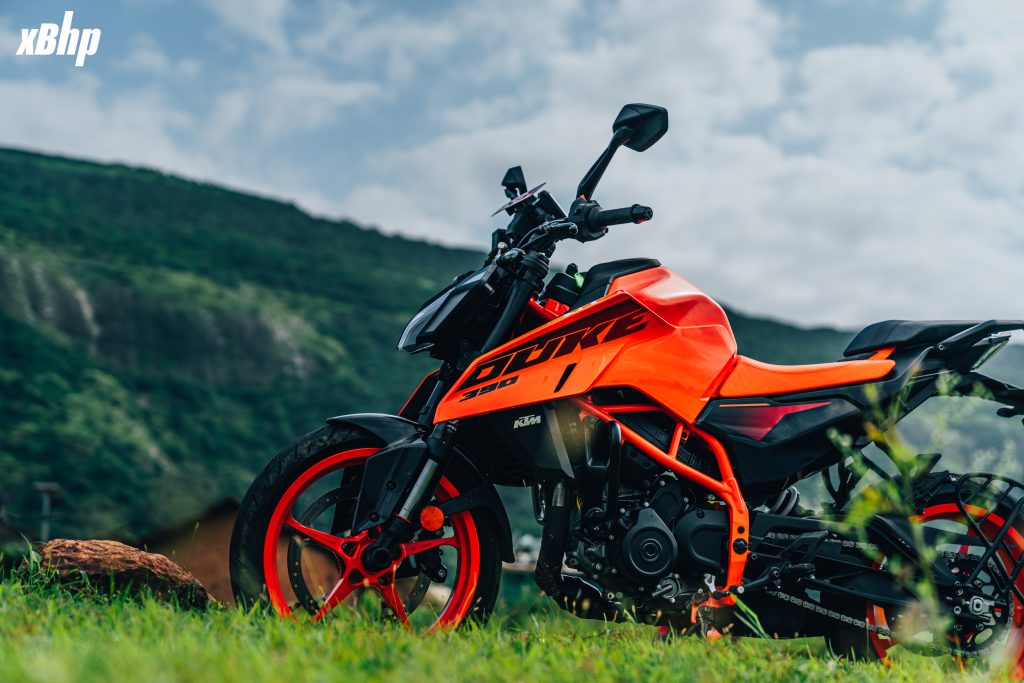
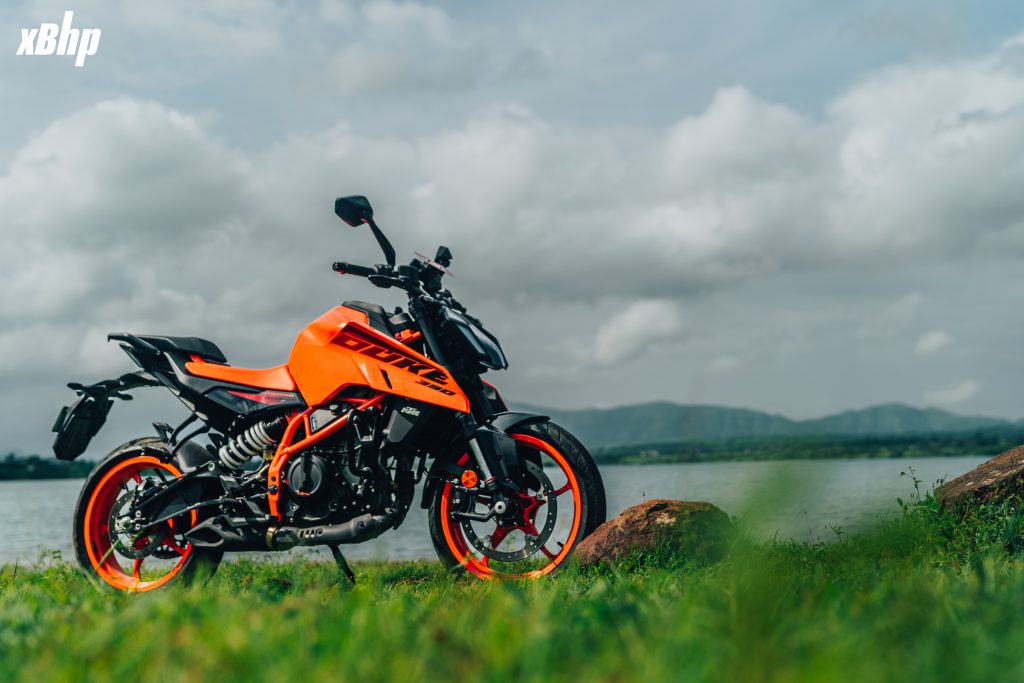
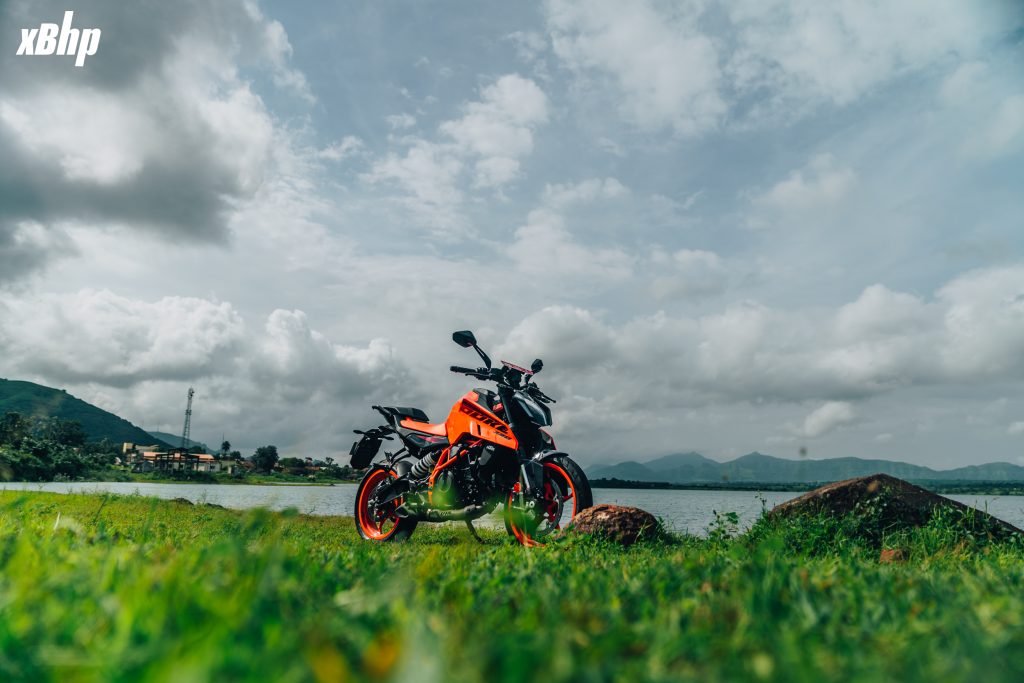
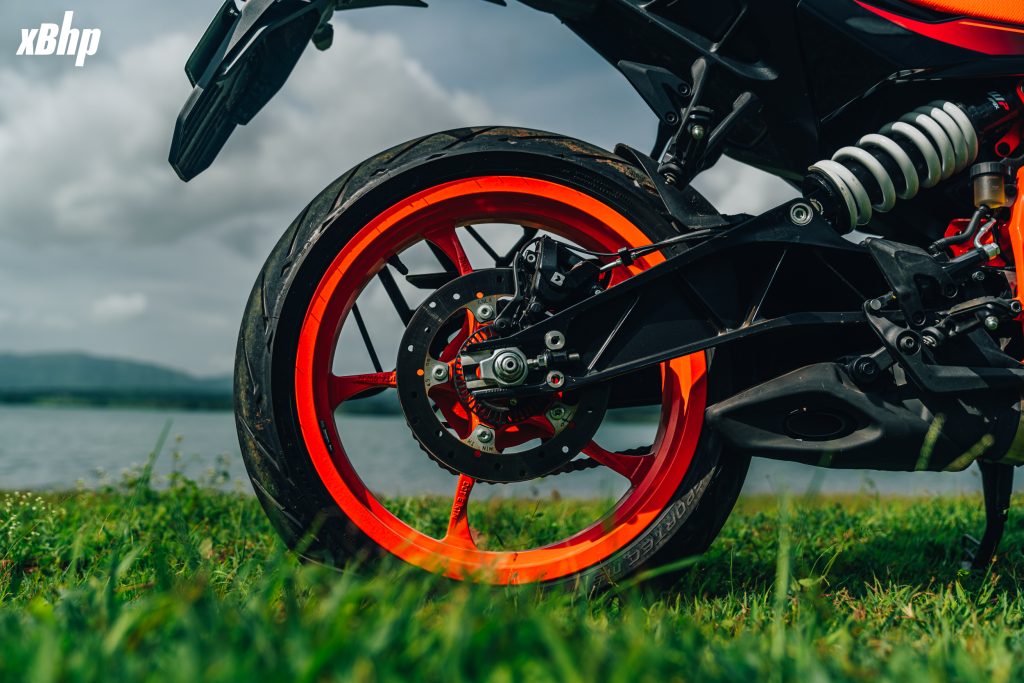
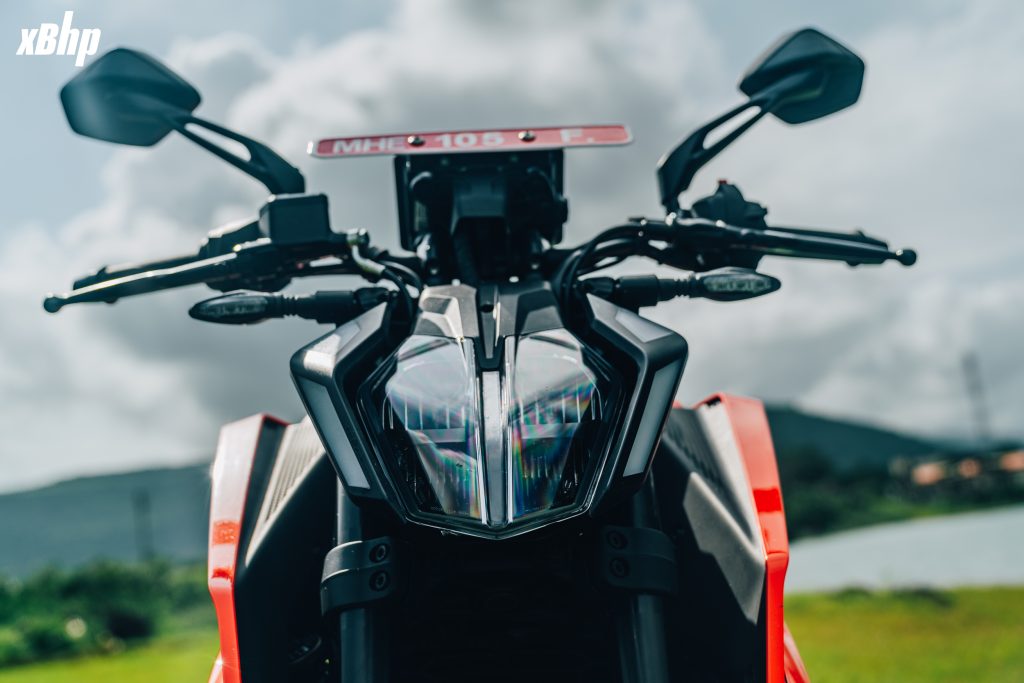
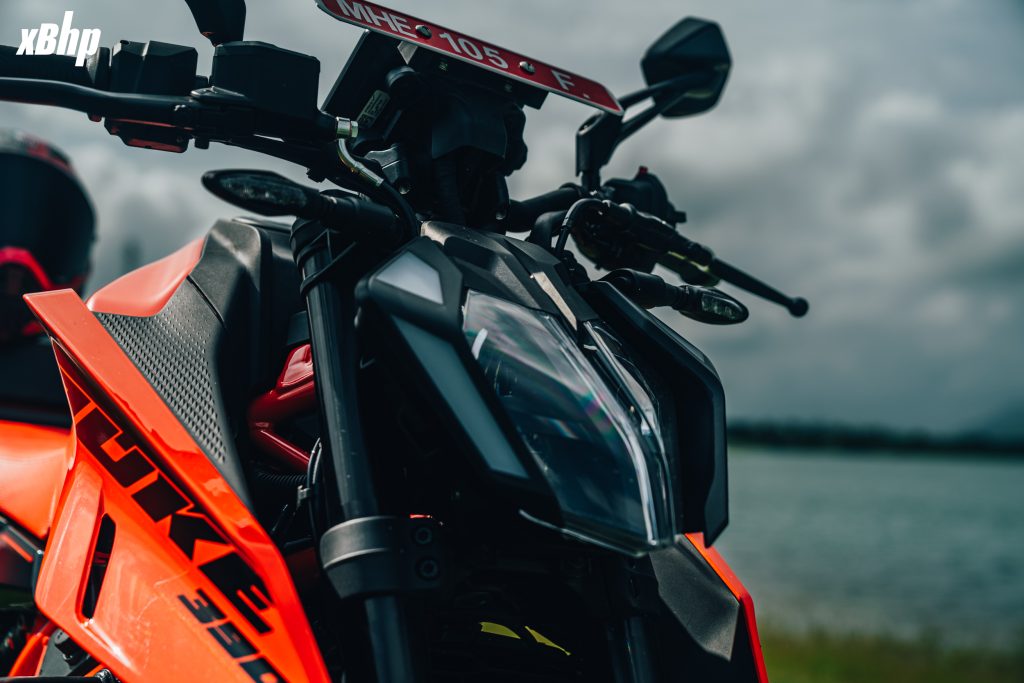
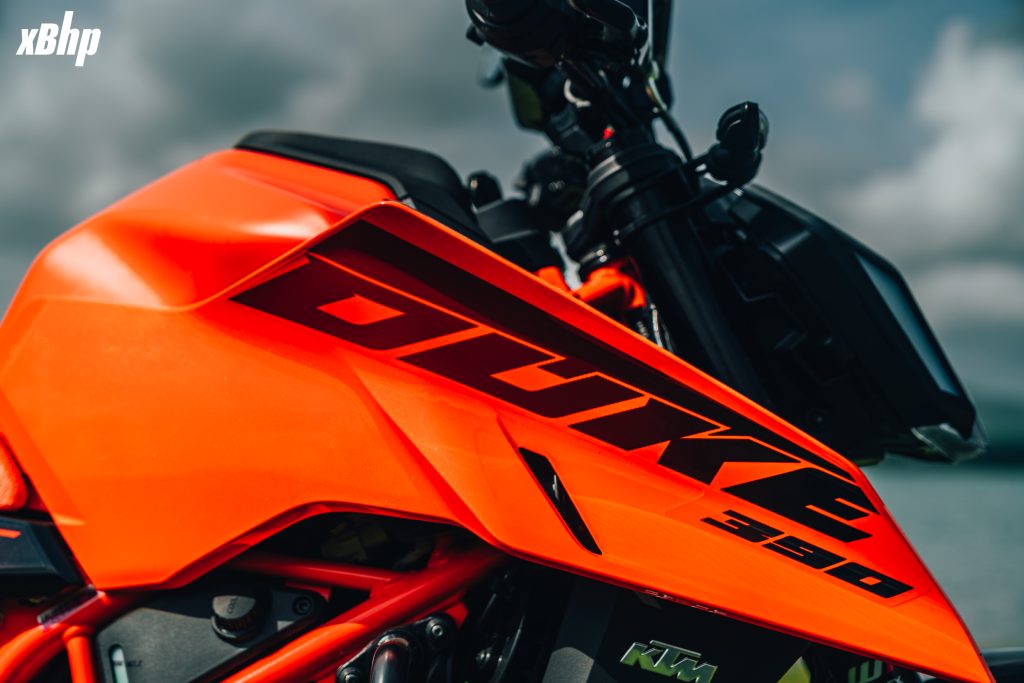
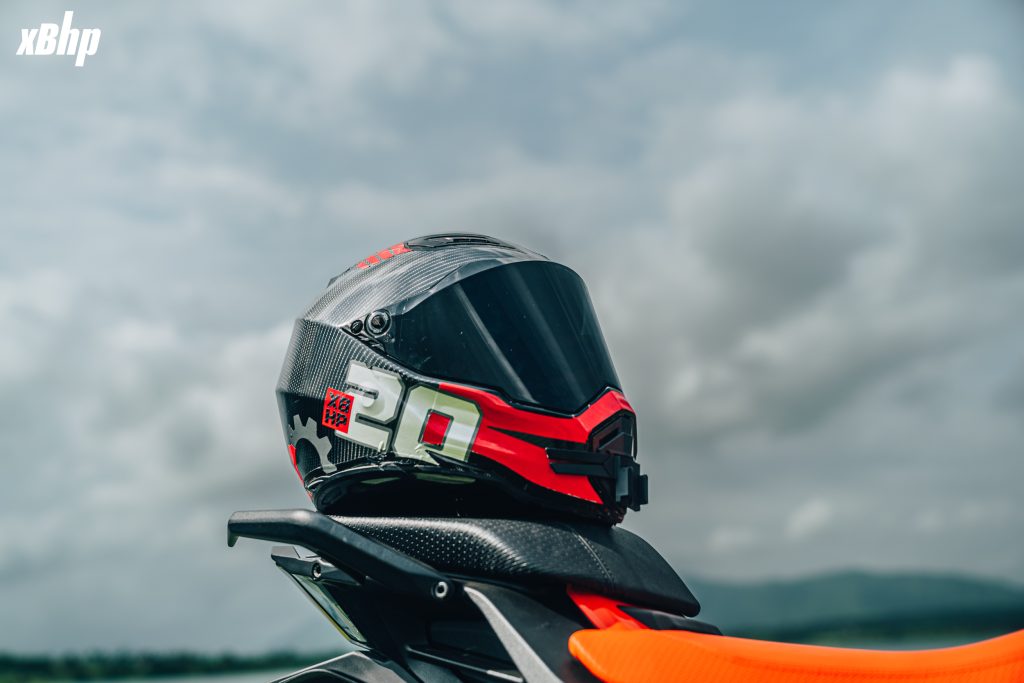
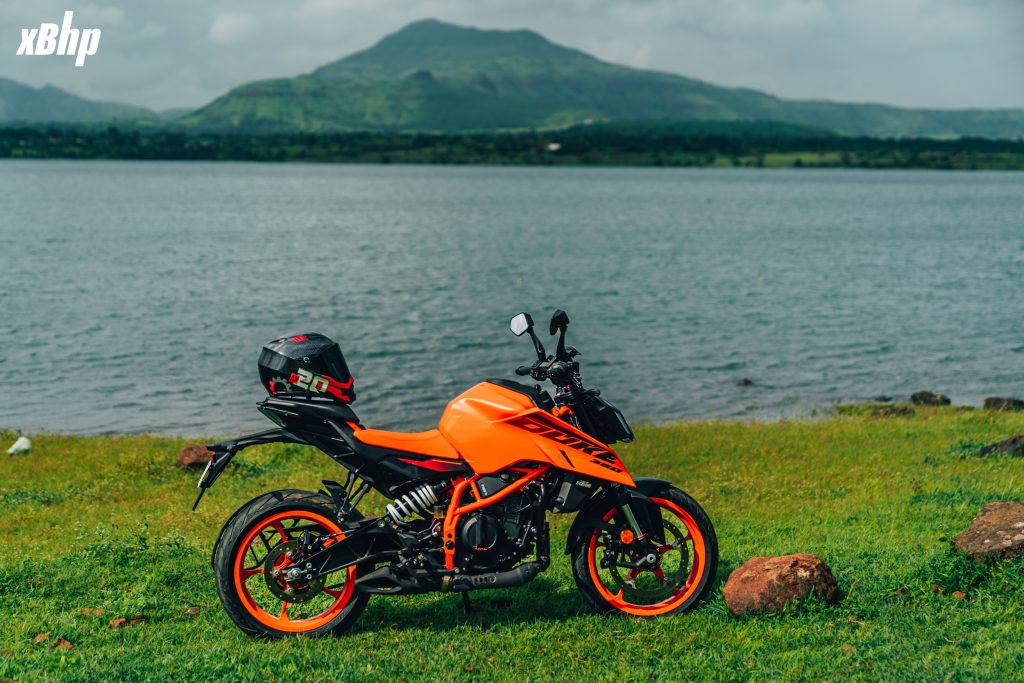
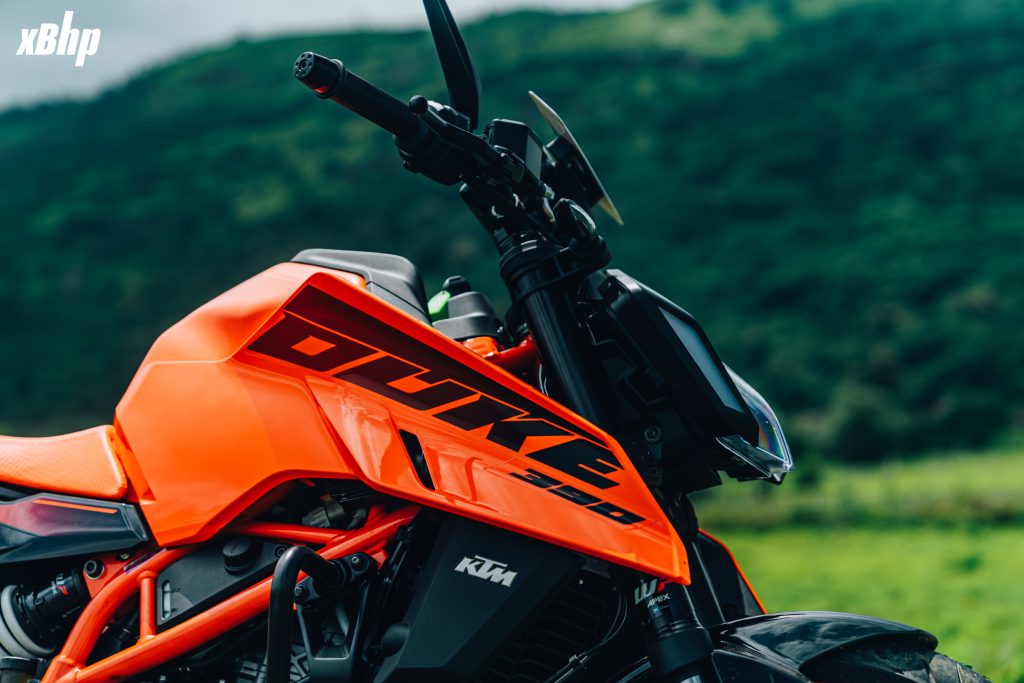
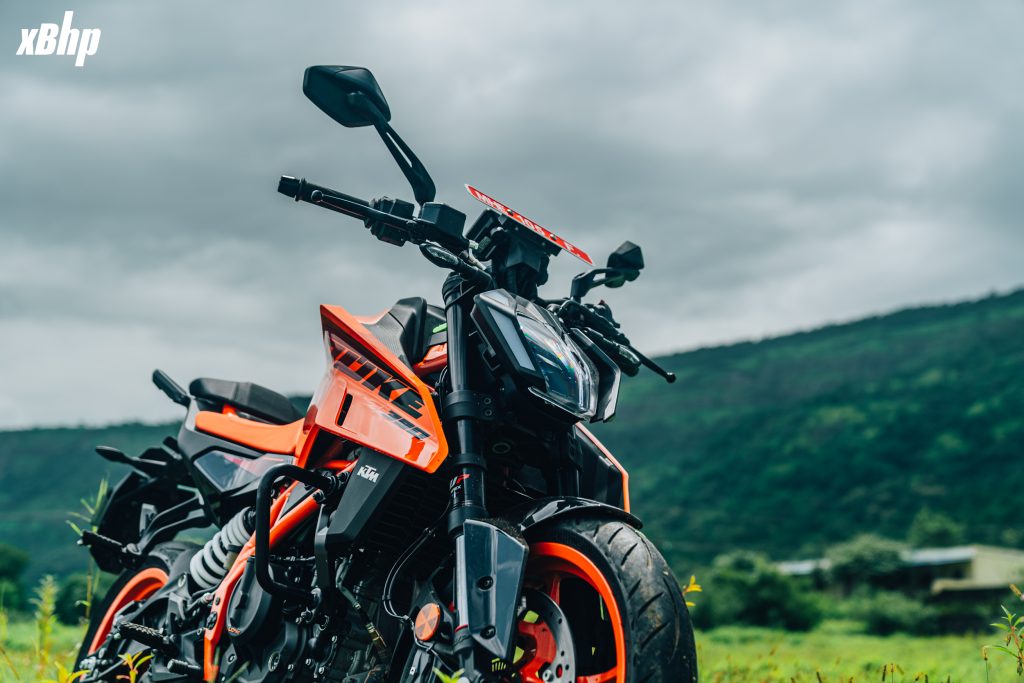
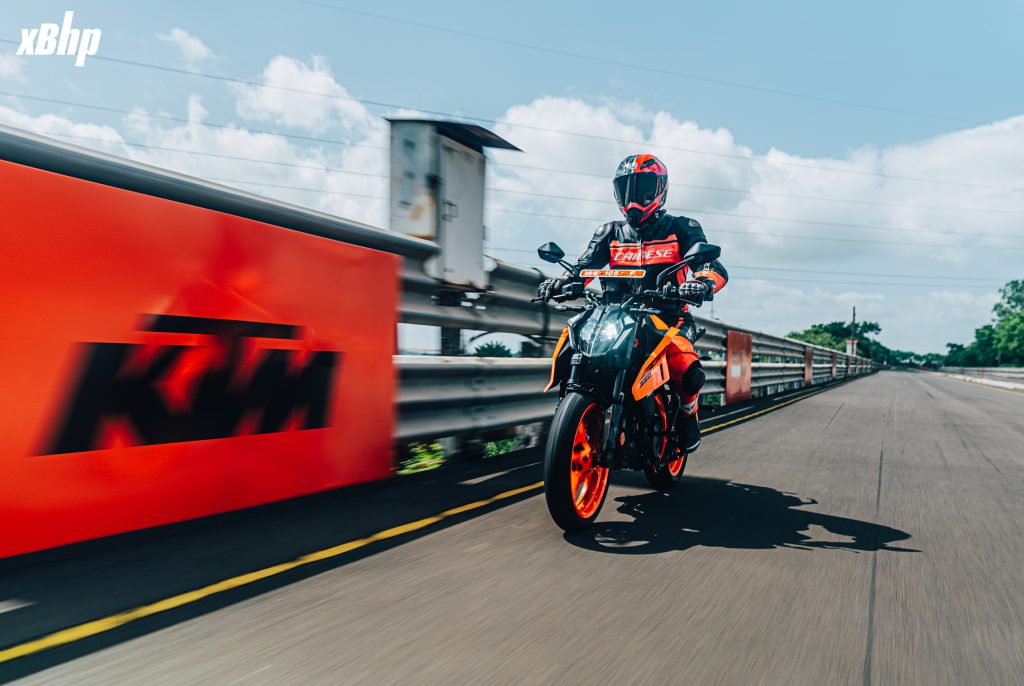
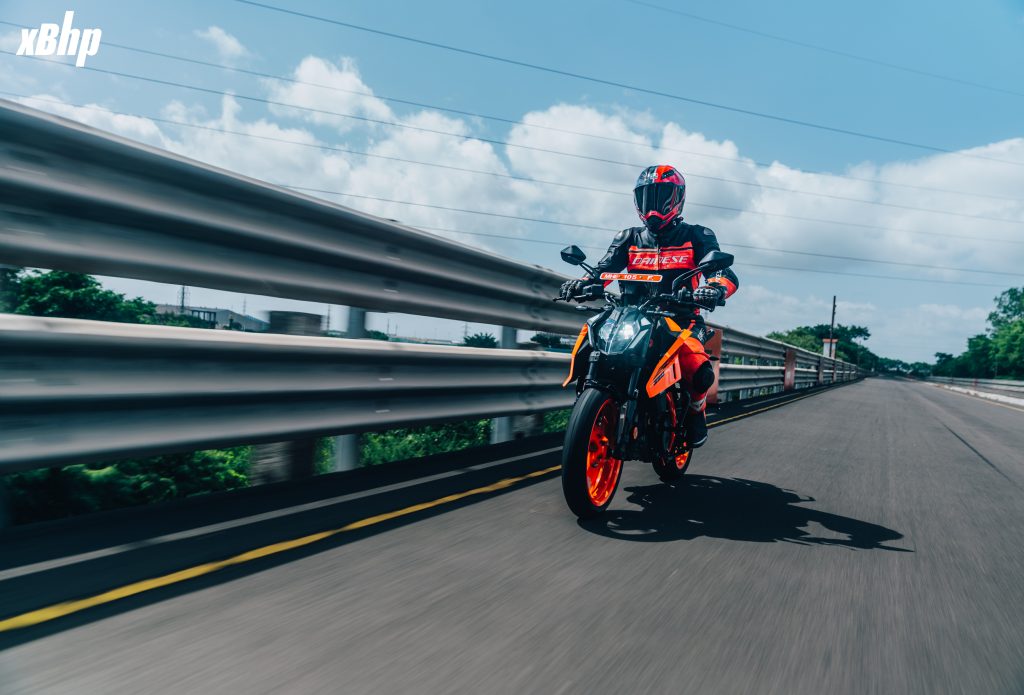
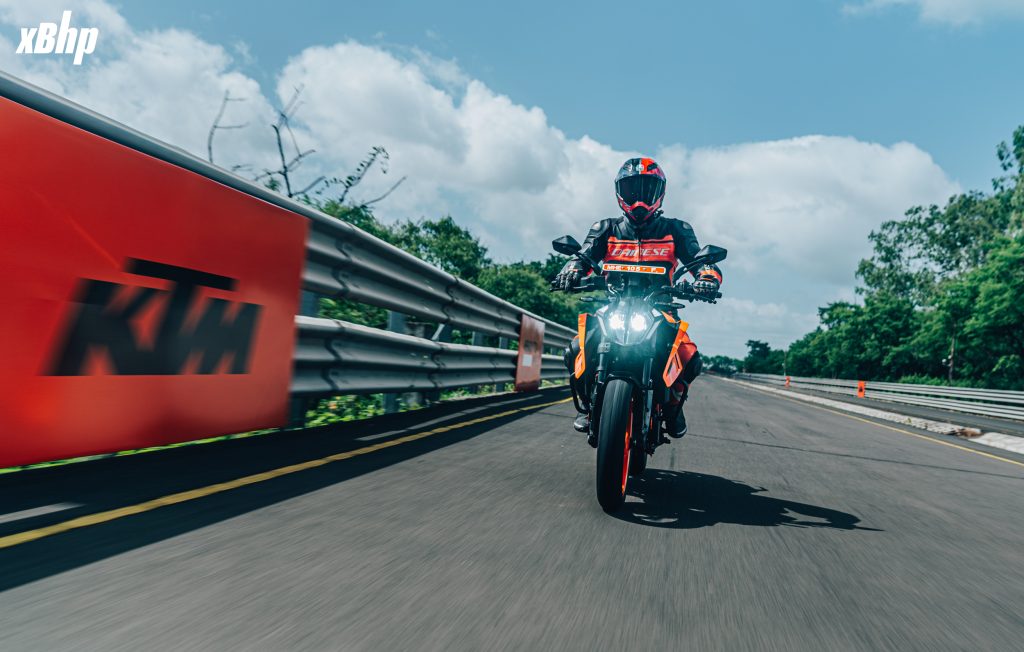
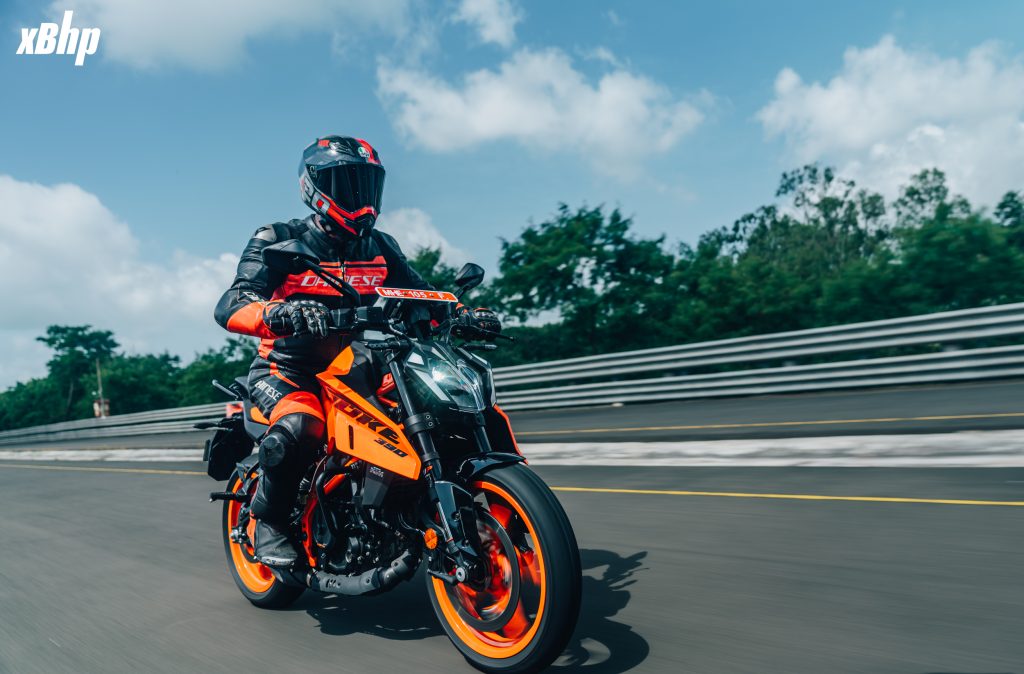
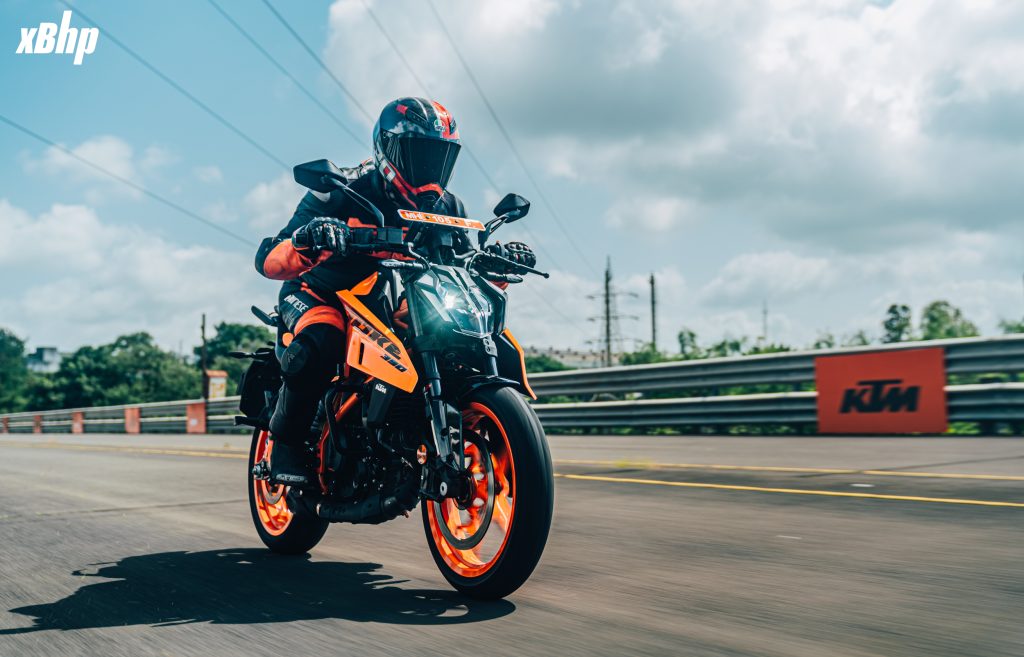
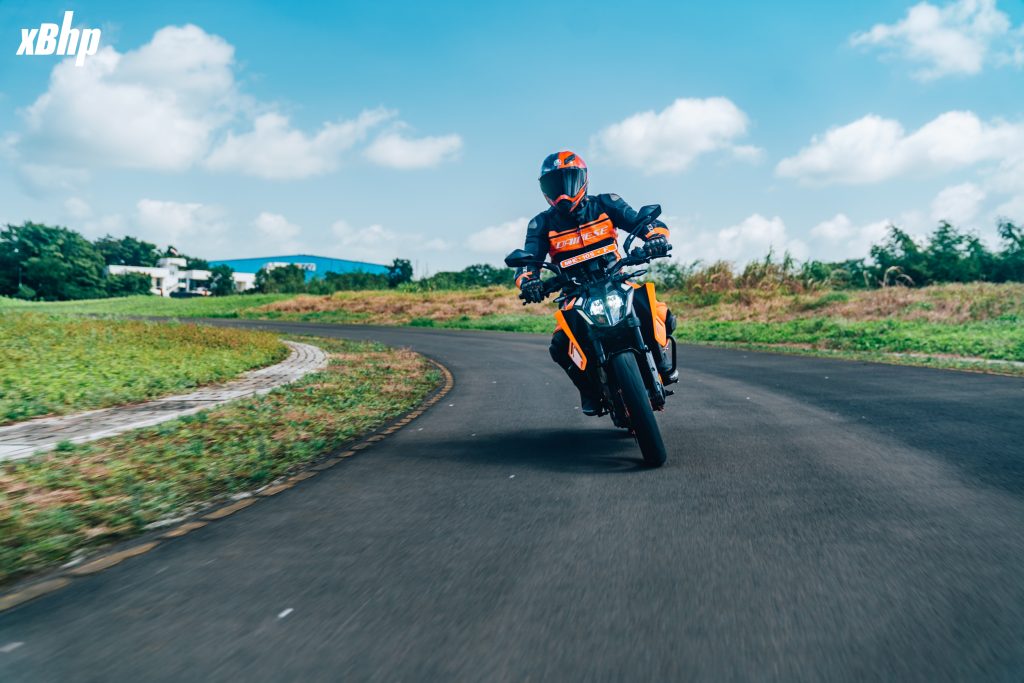
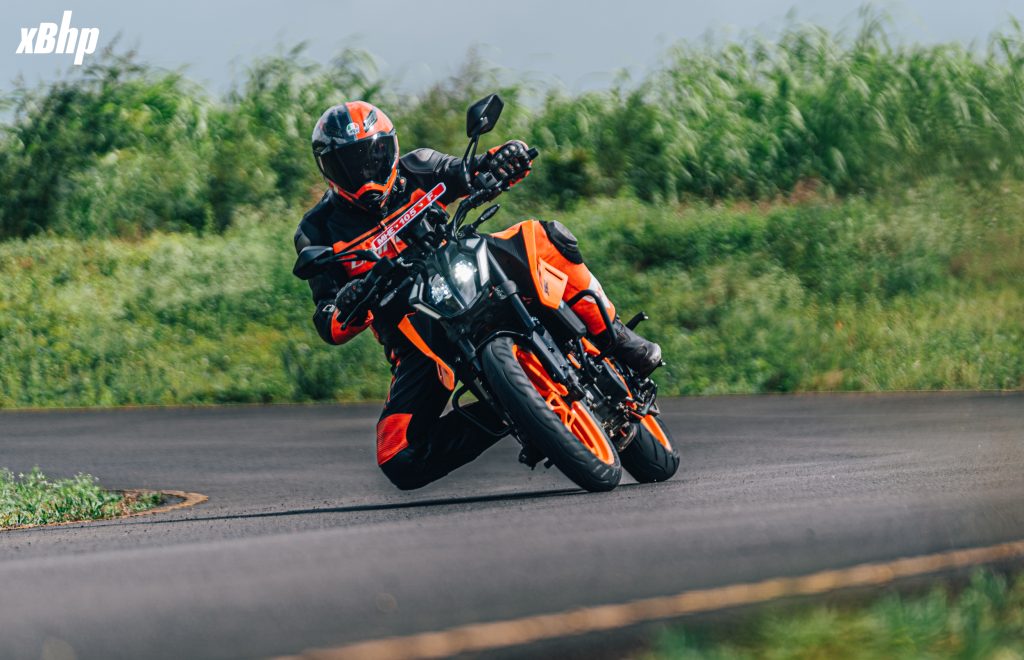
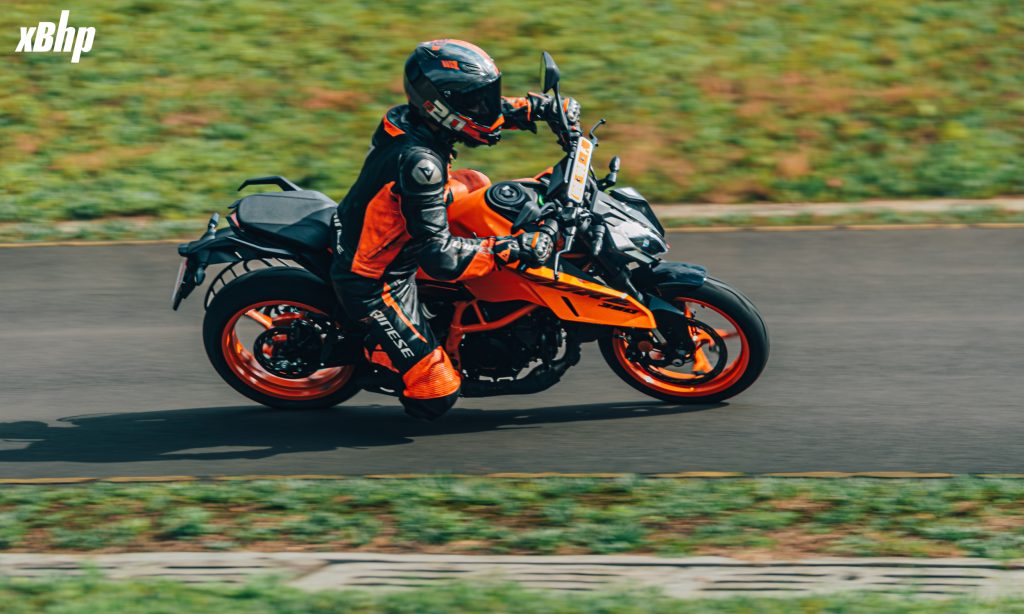
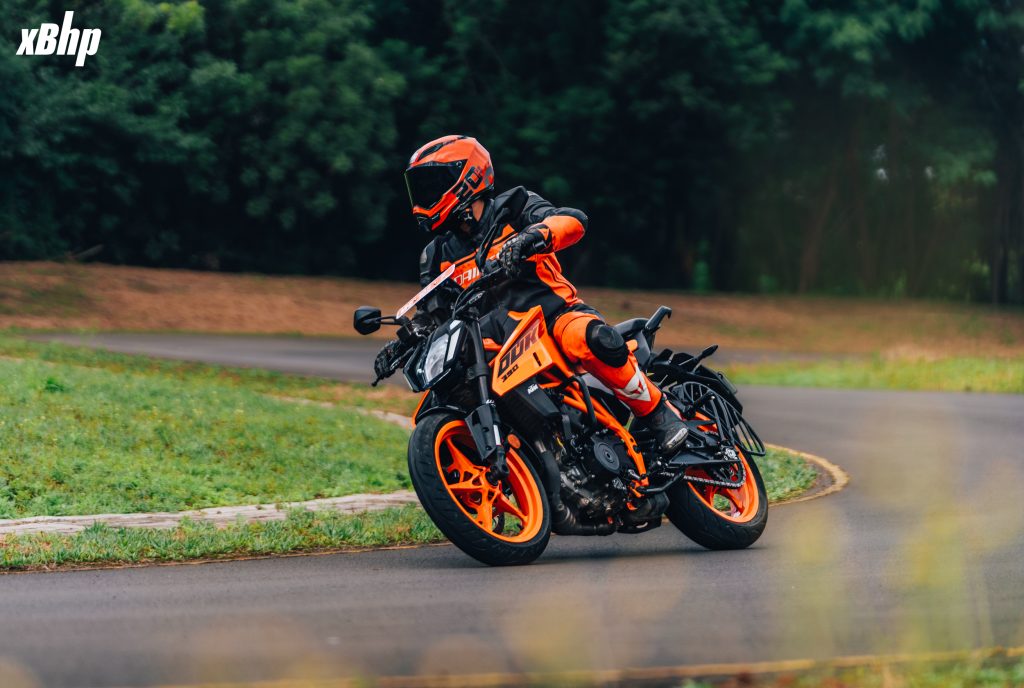
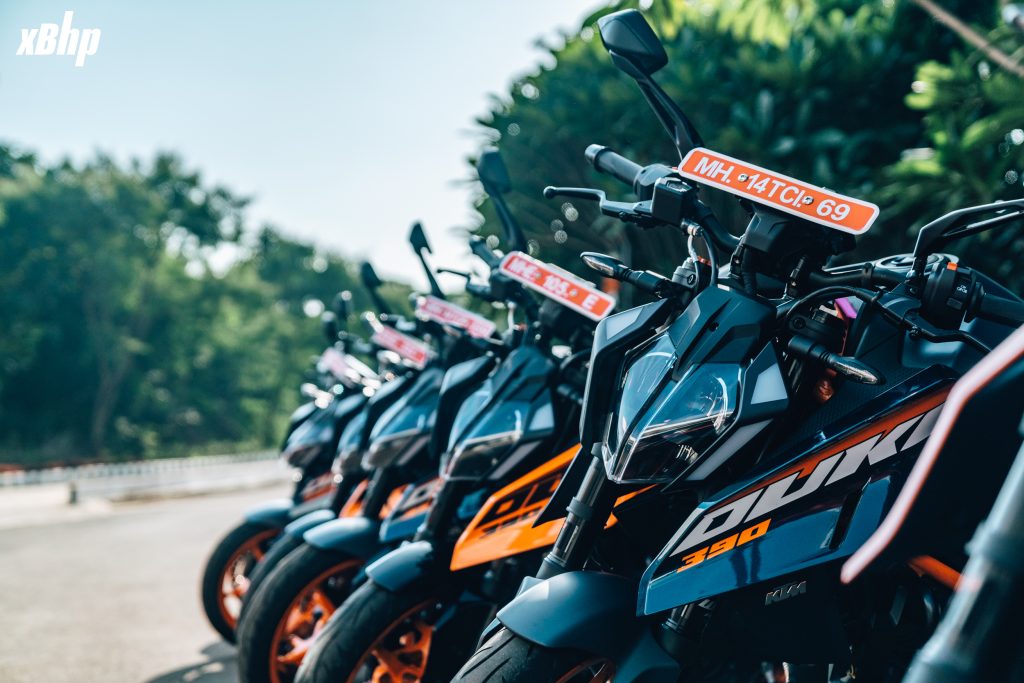
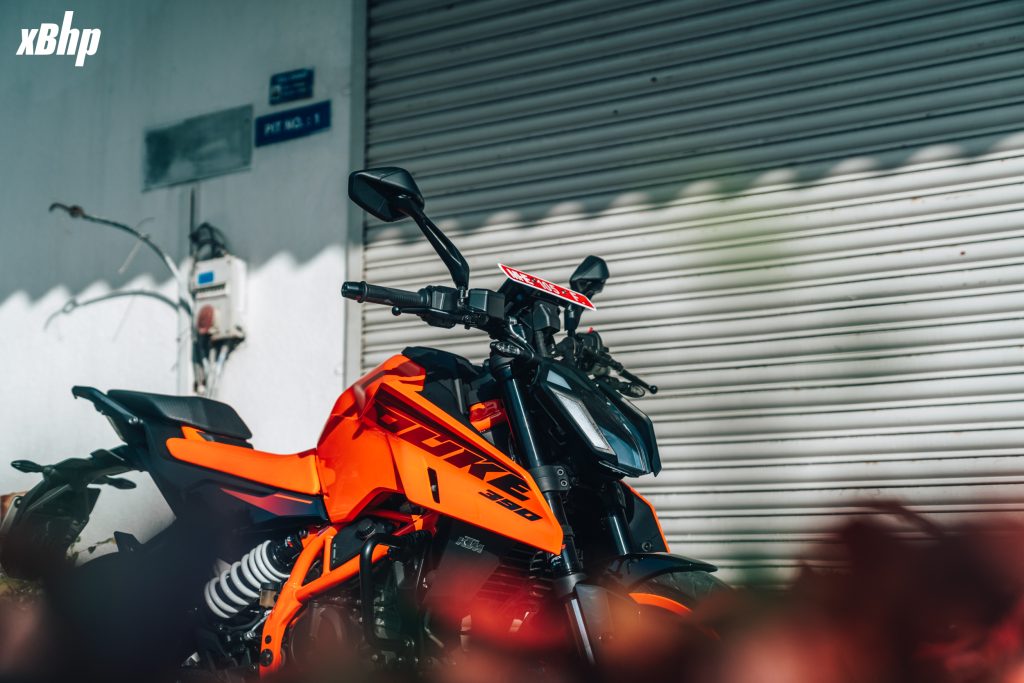
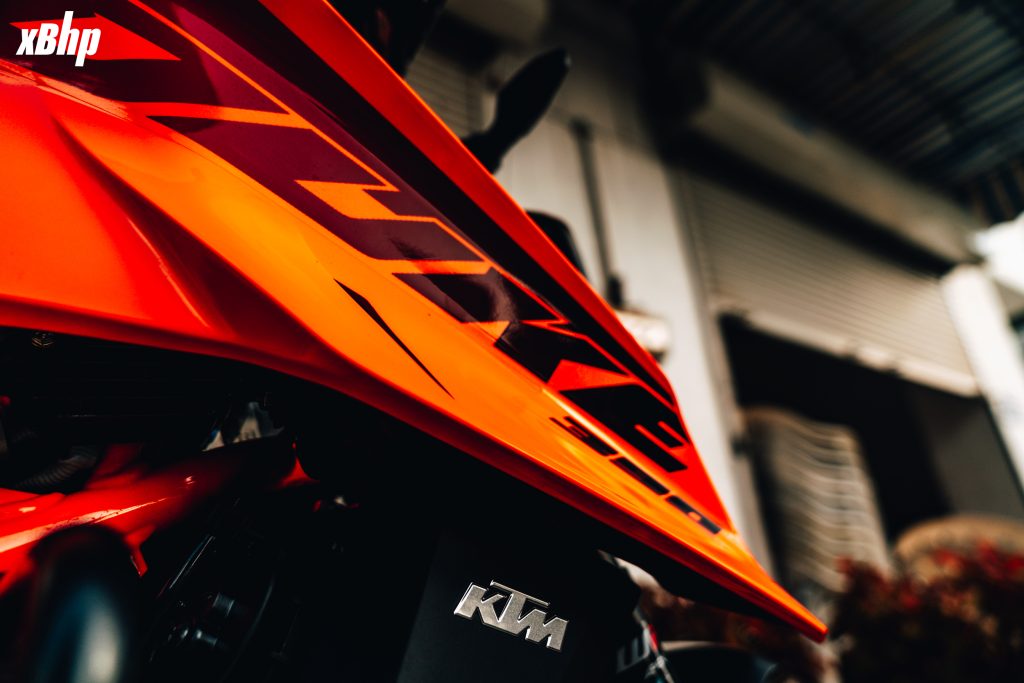
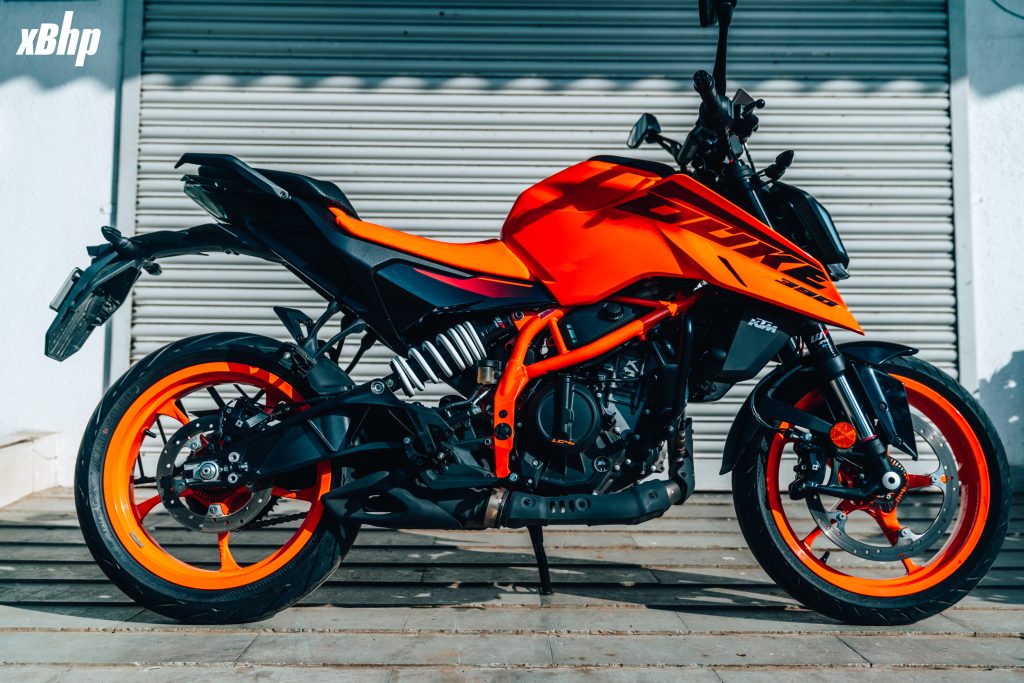
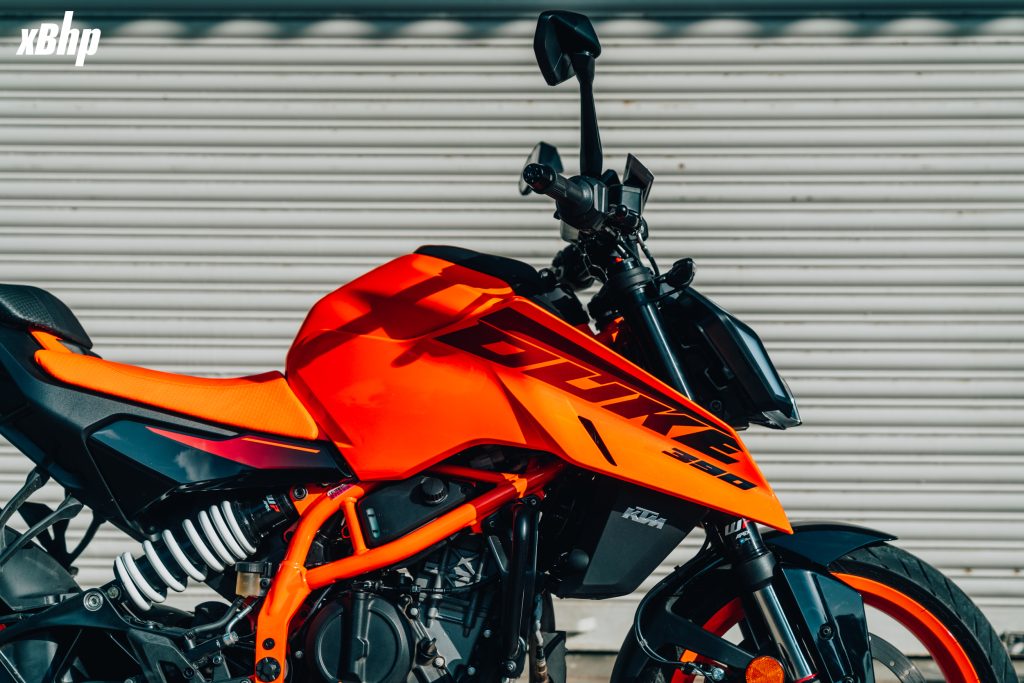
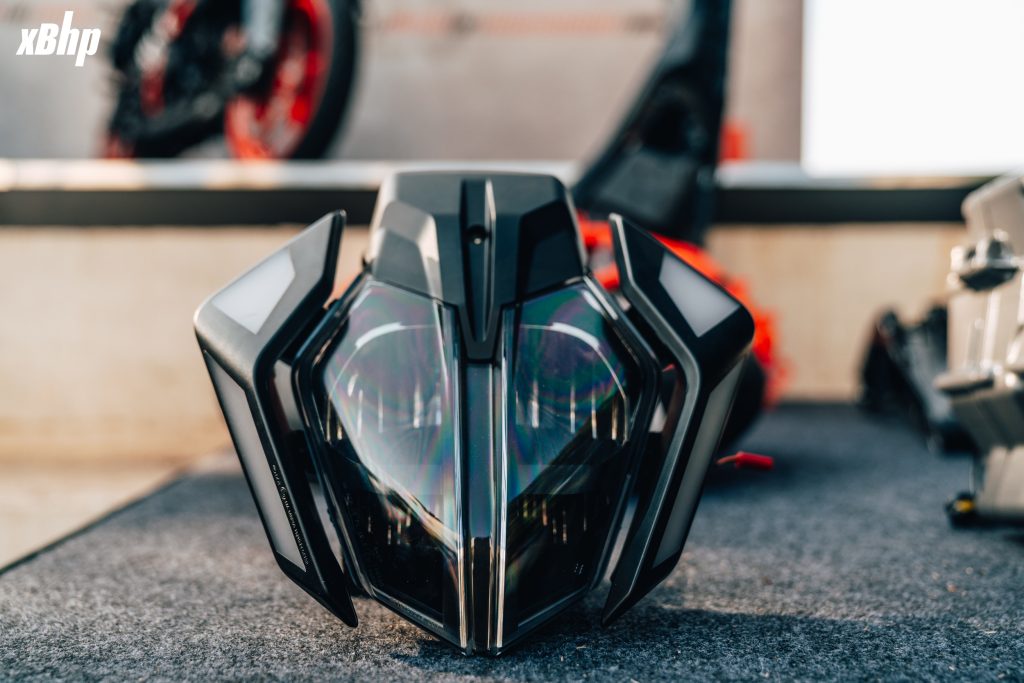
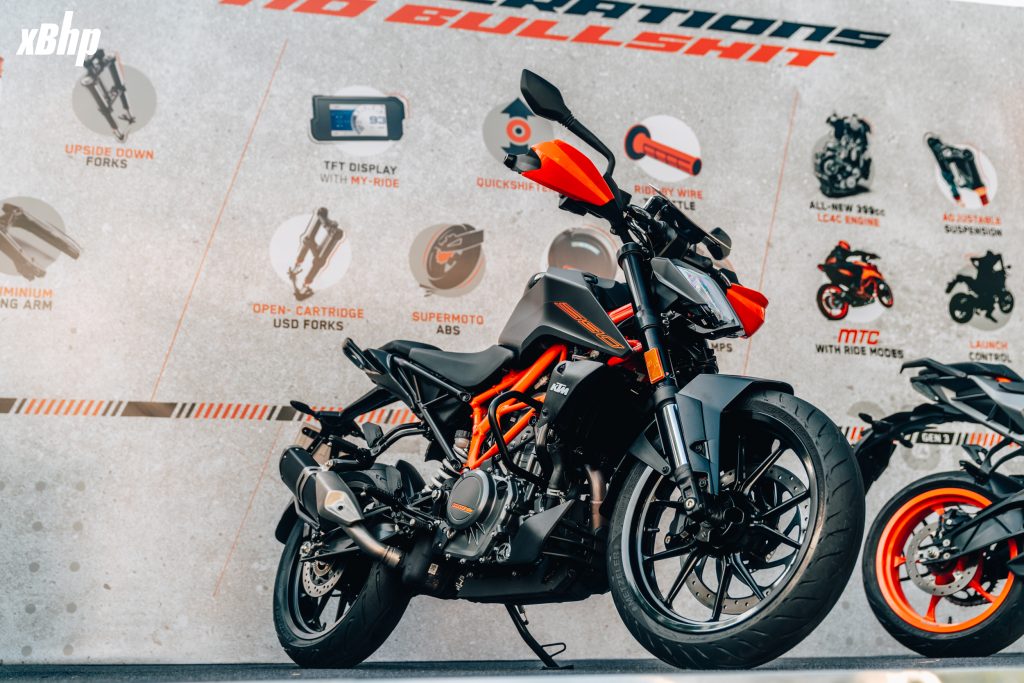
Starting with the looks, I feel like bigger motorcycles are getting smaller and smaller motorcycles are getting bigger. This is certainly the case with the 2024 KTM 390 Duke. It has an even larger visual footprint now. The extended fairing and the broader fascia make it seem like a Super Duke. The raw and edgy feel has not been watered down though. It looks even more menacing than before with the headlamp and those DRLs on the floating panels.
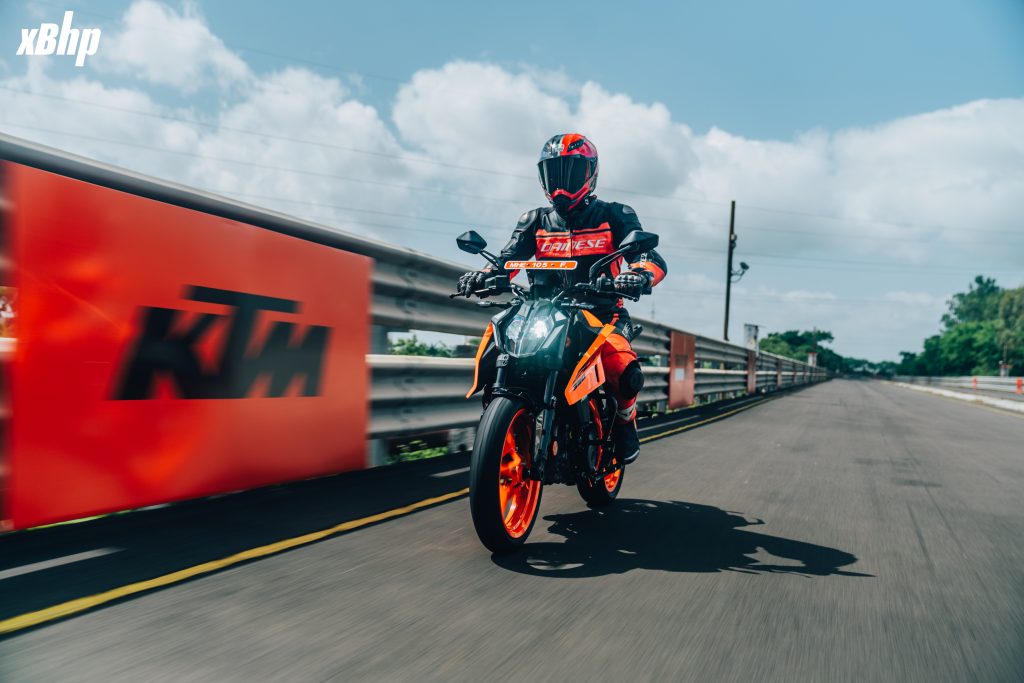
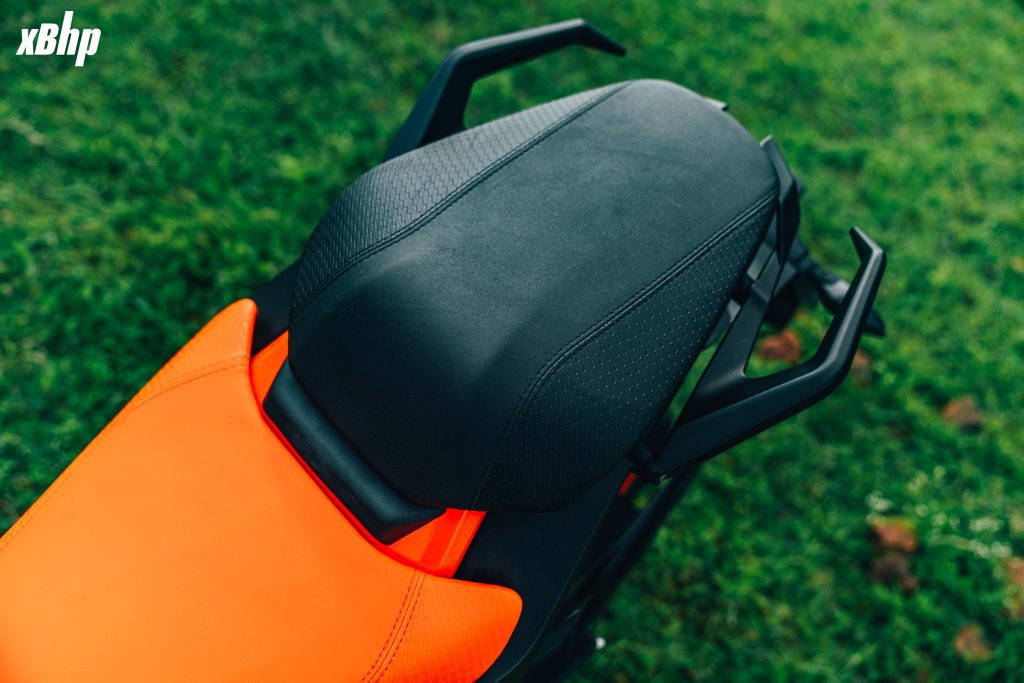
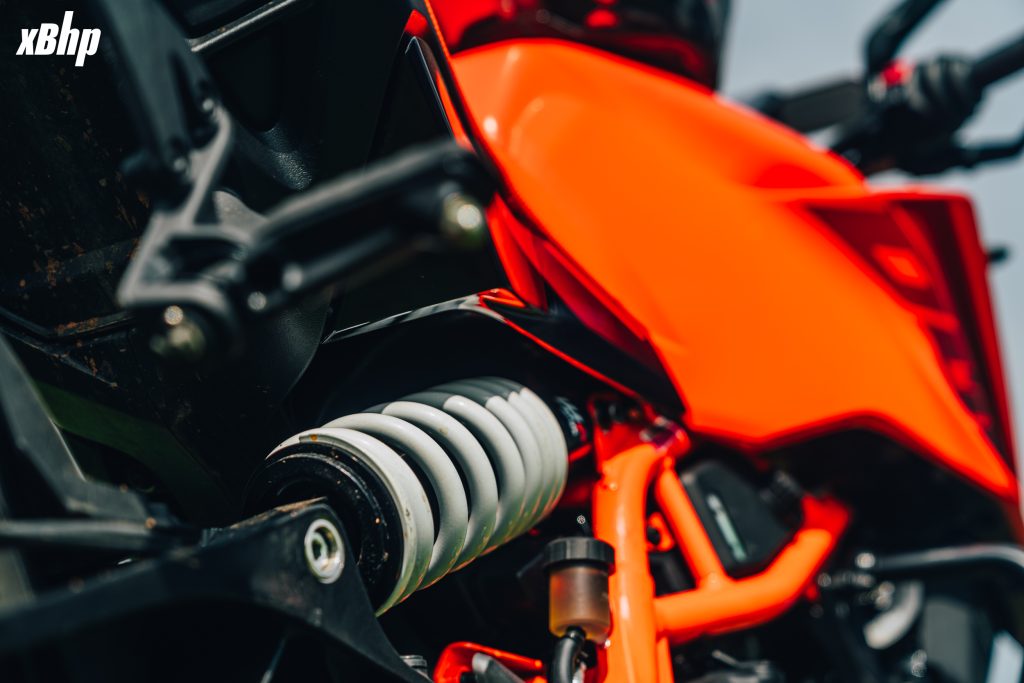
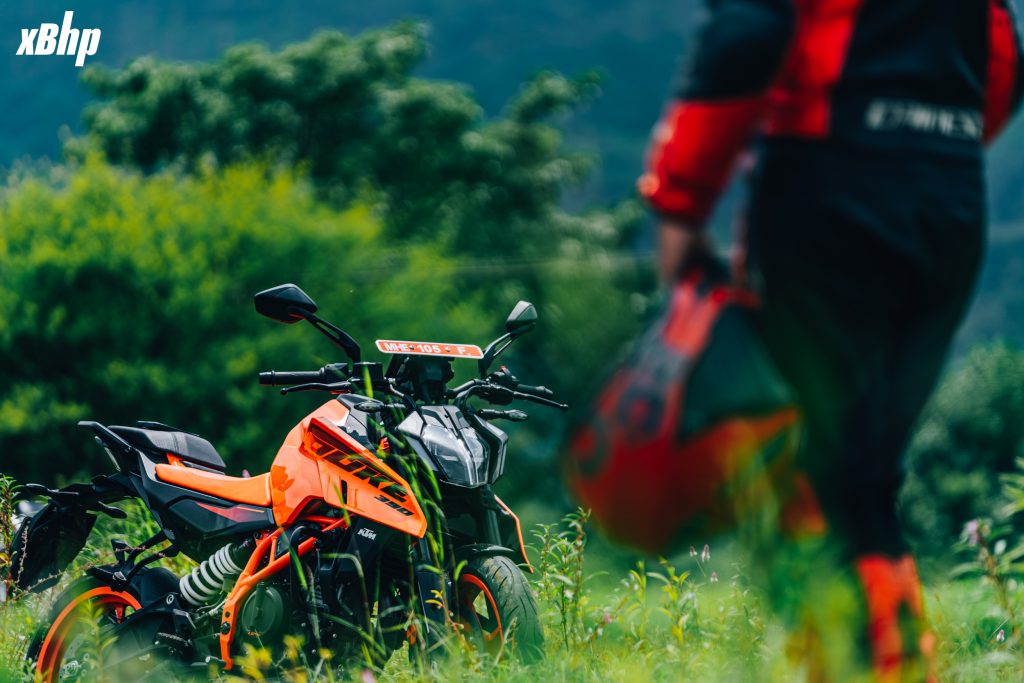
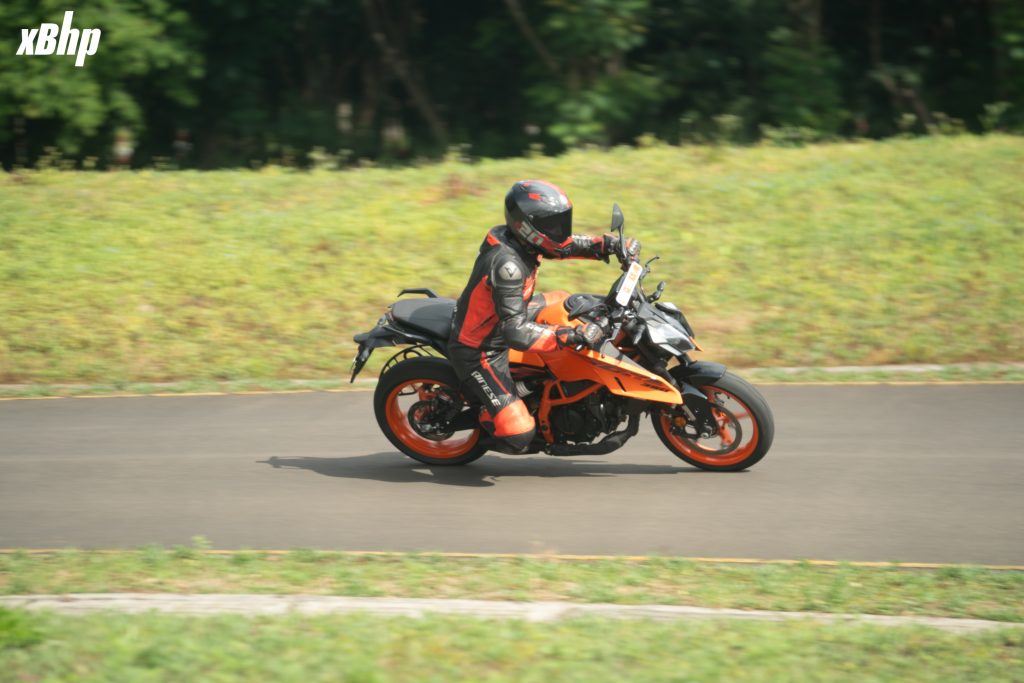
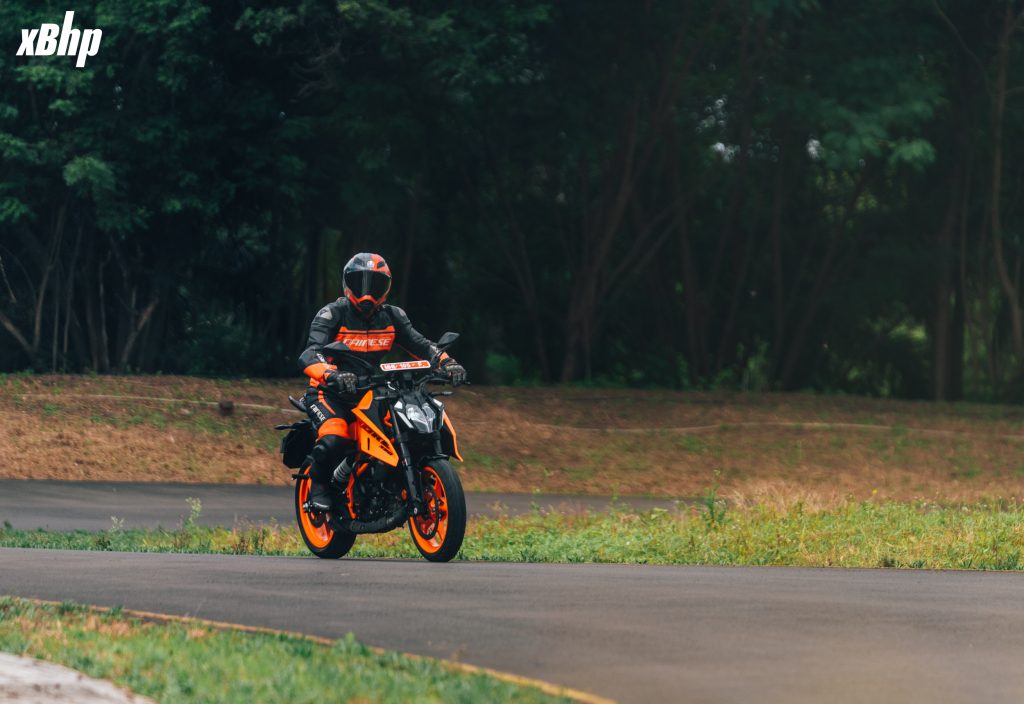
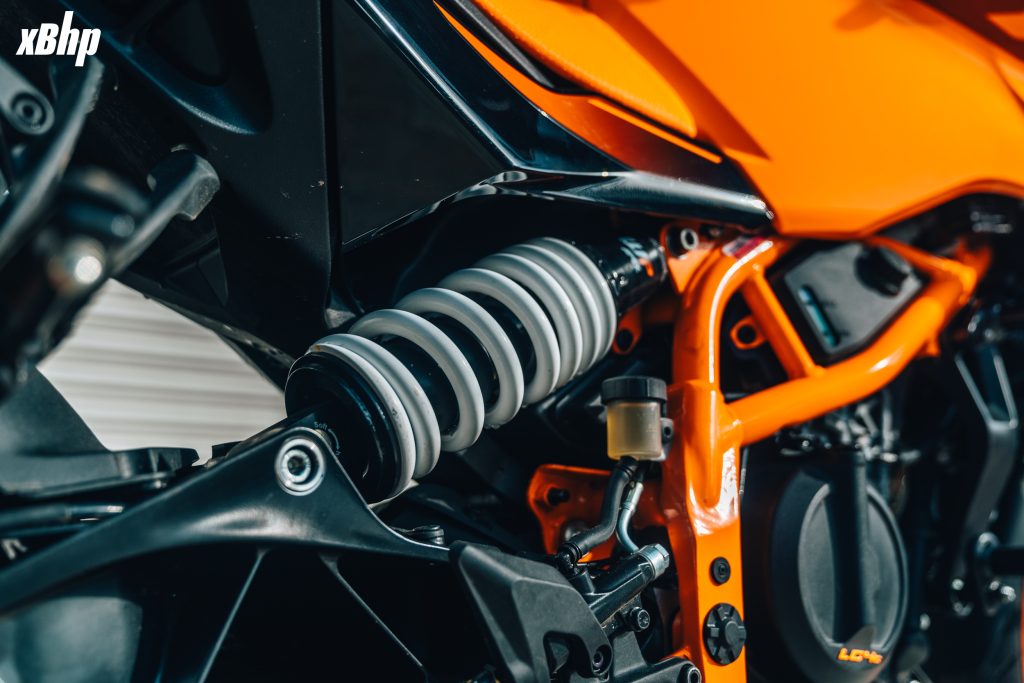
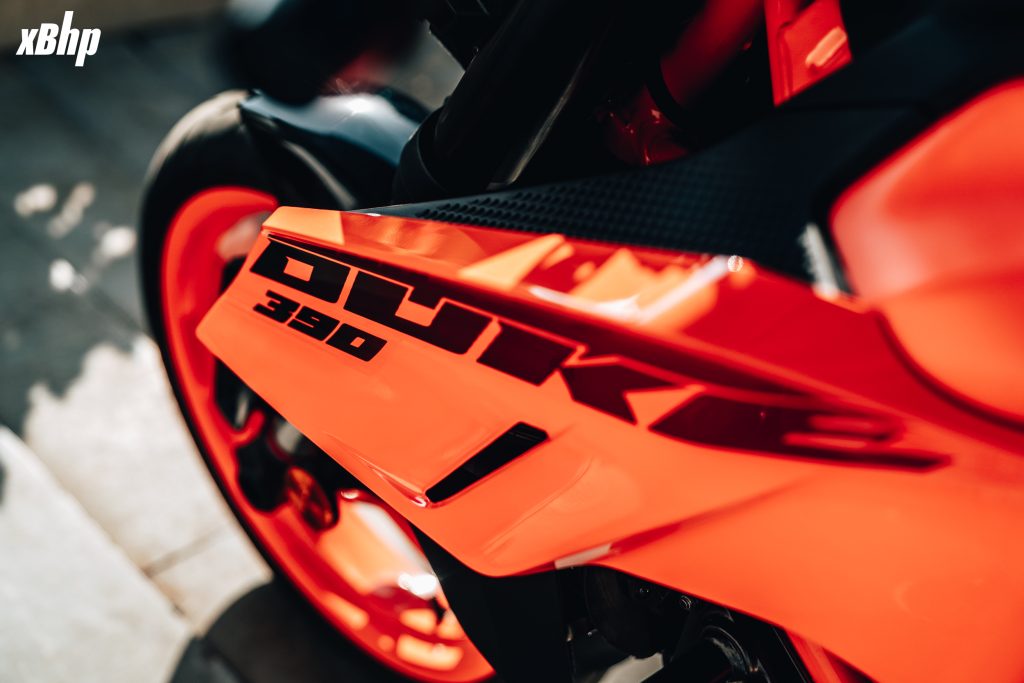
It has a lot of visual bulk but it is all well-placed. That is why, despite the extended fairing, it looks very proportional in person. The offset rear shock is also a good addition. In terms of function, it has allowed for a larger airbox but more than anything, it just looks pretty good. If we could have had a single-sided swingarm with it… well, that’s another coin in the wishing well. You can get the 2024 KTM 390 Duke in two colourways; Orange Metallic and Atlantic Blue. While the orange gives all the KTM feels, I believe the blue will have more eyeballs on the road.
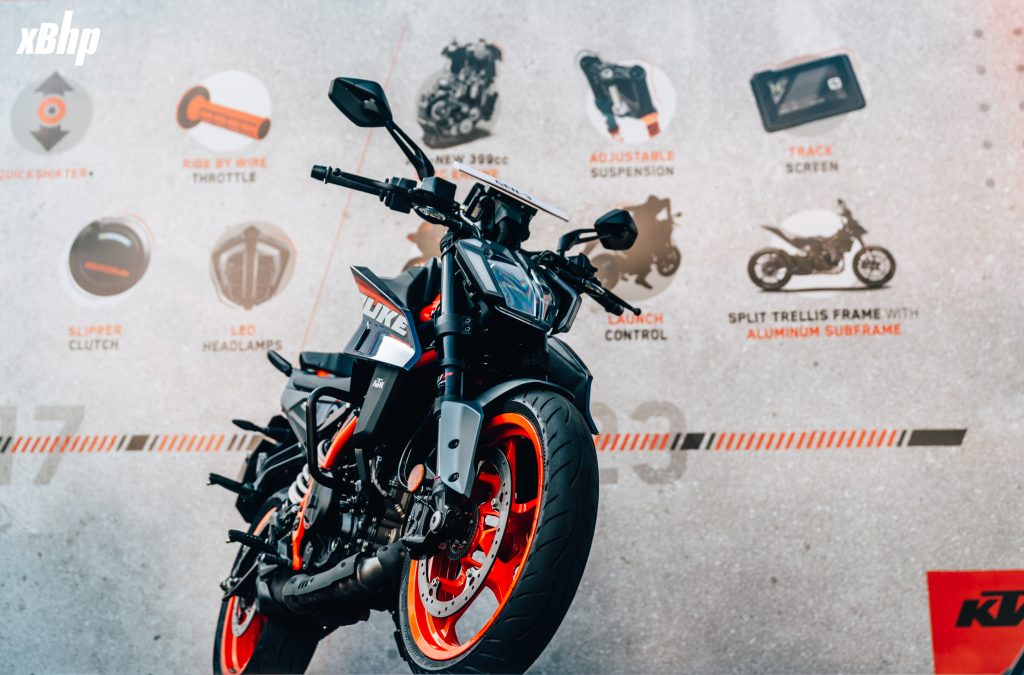
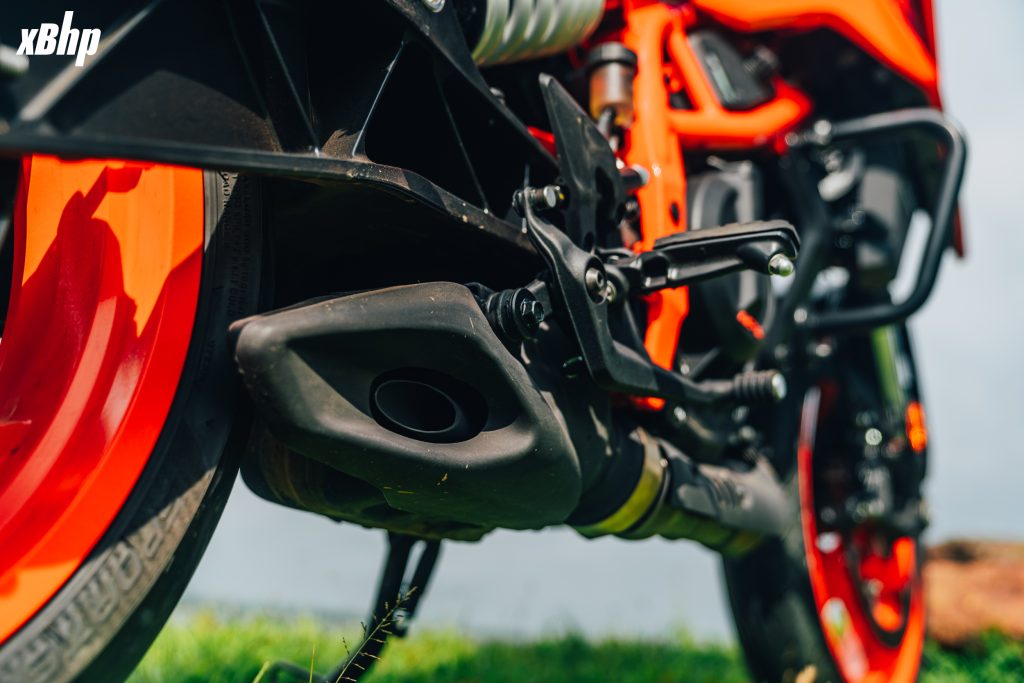
Another thing that has made a welcome comeback is the underbelly exhaust. Exhausts are a necessity but sometimes, they mess with the lines of the motorcycle. With an underbelly exhaust, the 2024 KTM 390 Dukes looks clean and has all of its Duke-ness on full display. It is an impressive feat that KTM has managed to fit everything needed to adhere to all the norms and keep it so compact.
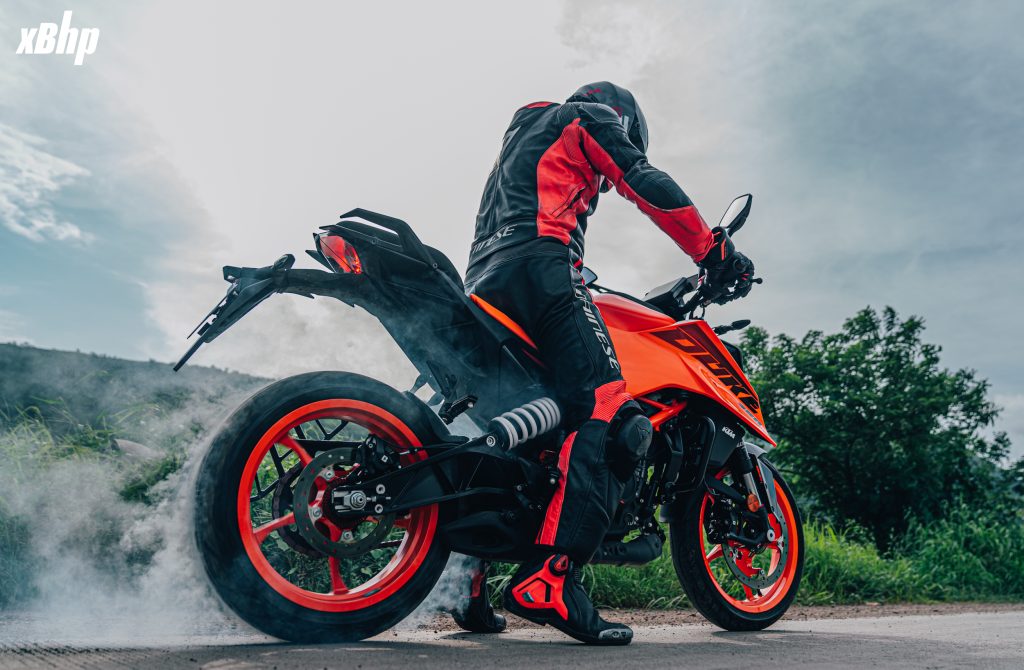
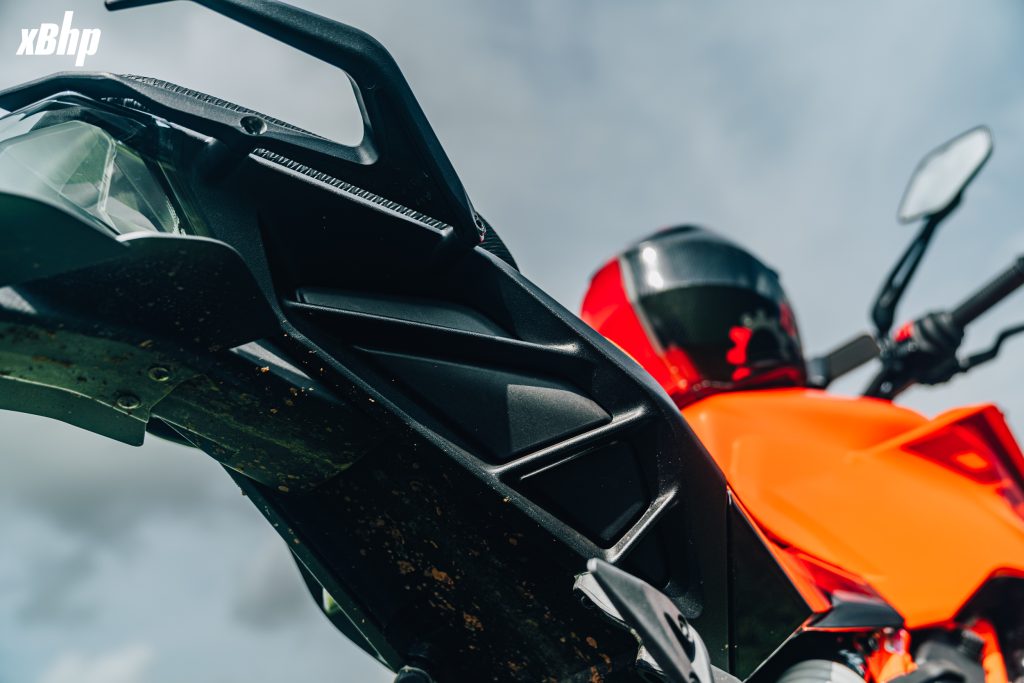
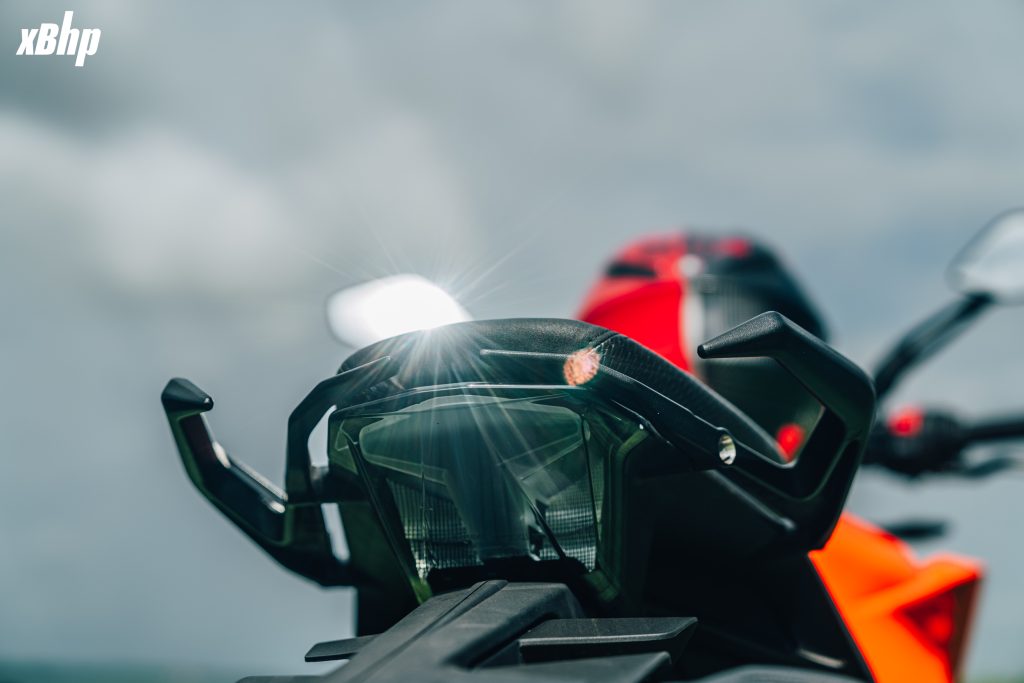
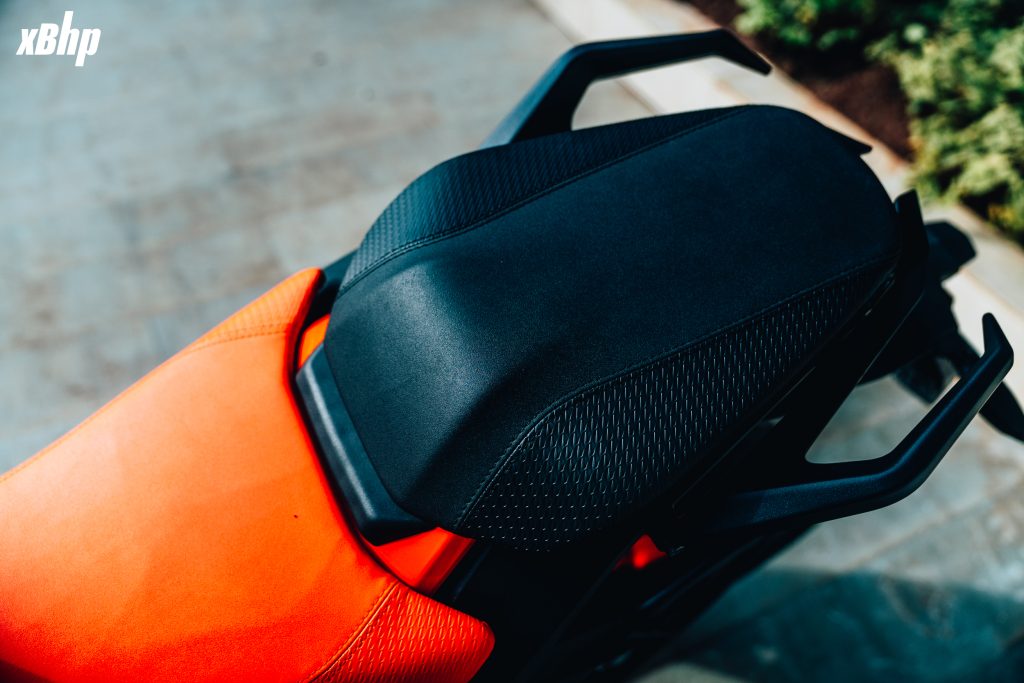
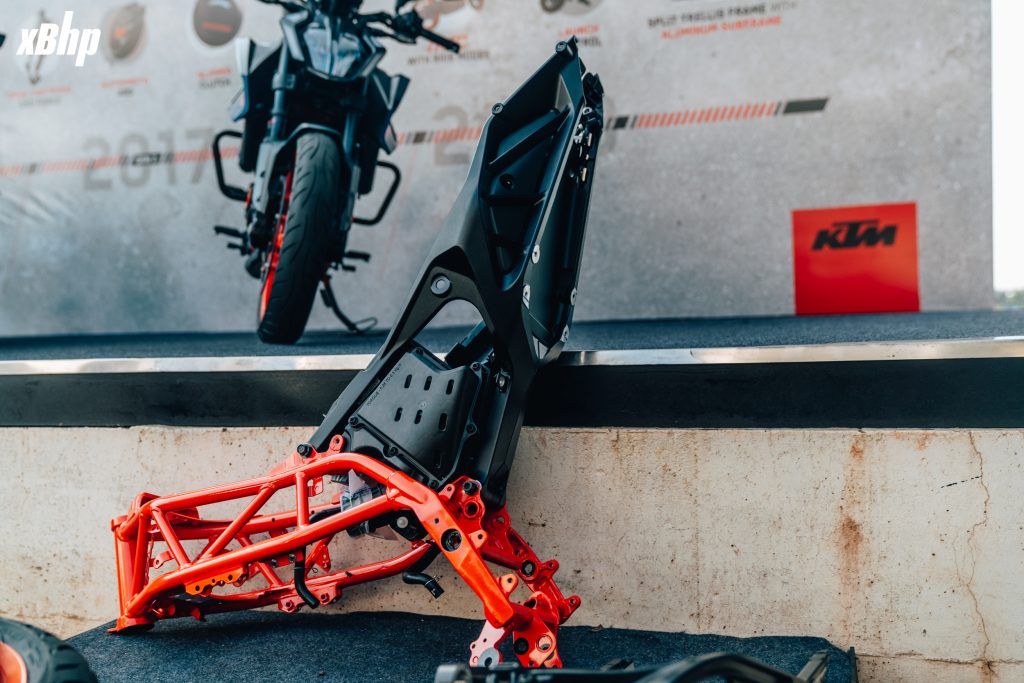
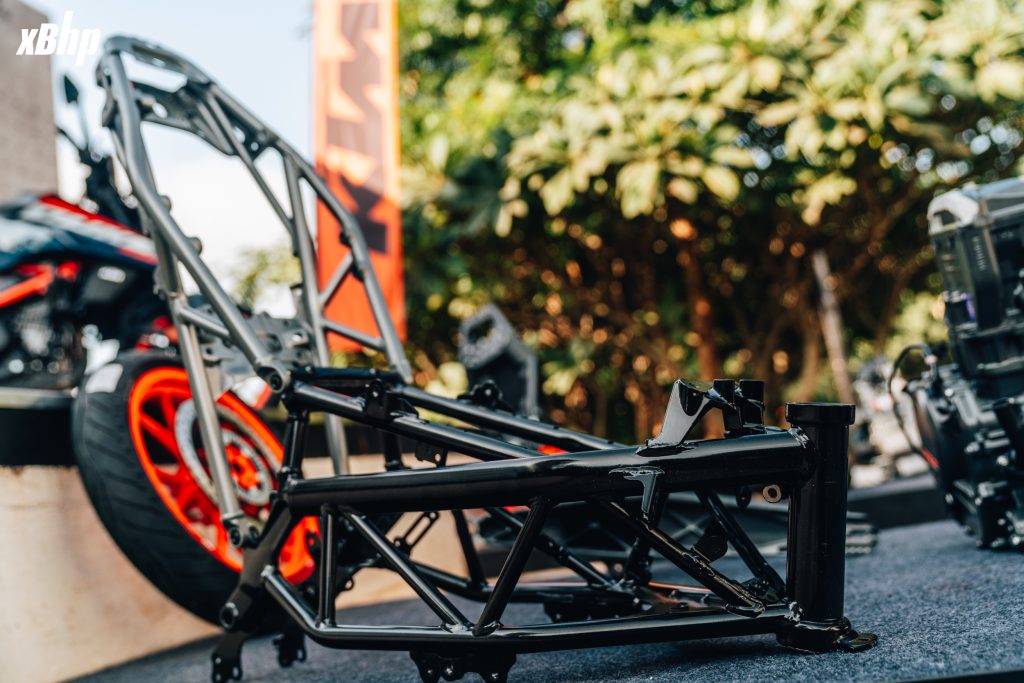
Sitting on the motorcycle emphasizes the sheer visual mass even more. The rear of the motorcycle though left me a bit wanting. With the new subframe, it does not look as sharp and sleek as before. In terms of the bar that KTM set themselves, the rear falls just a tad bit short. It is not bad or anything, it just could have been a bit better. The rear tyre hugger is gone and KTM is just making do with an extended tail of sorts. It is not ideal but still better than the huggers.
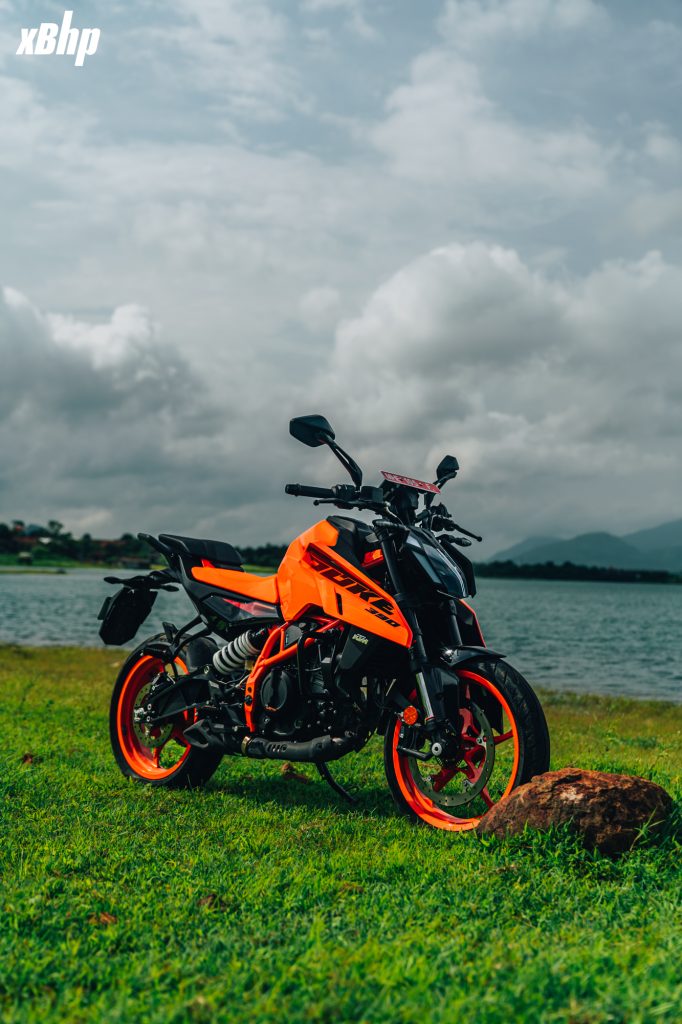
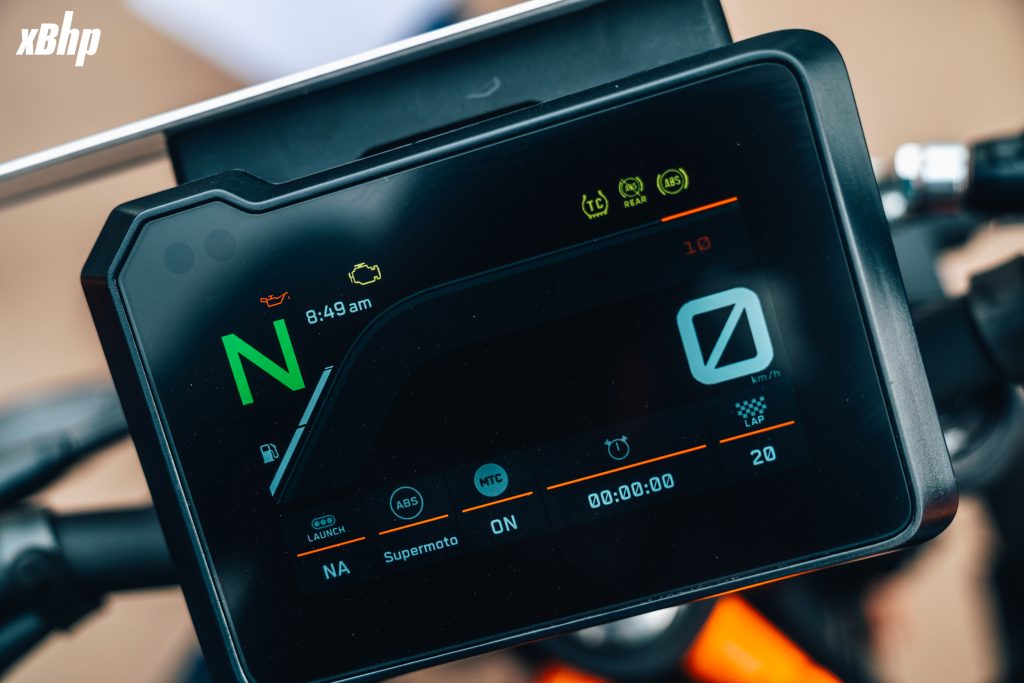
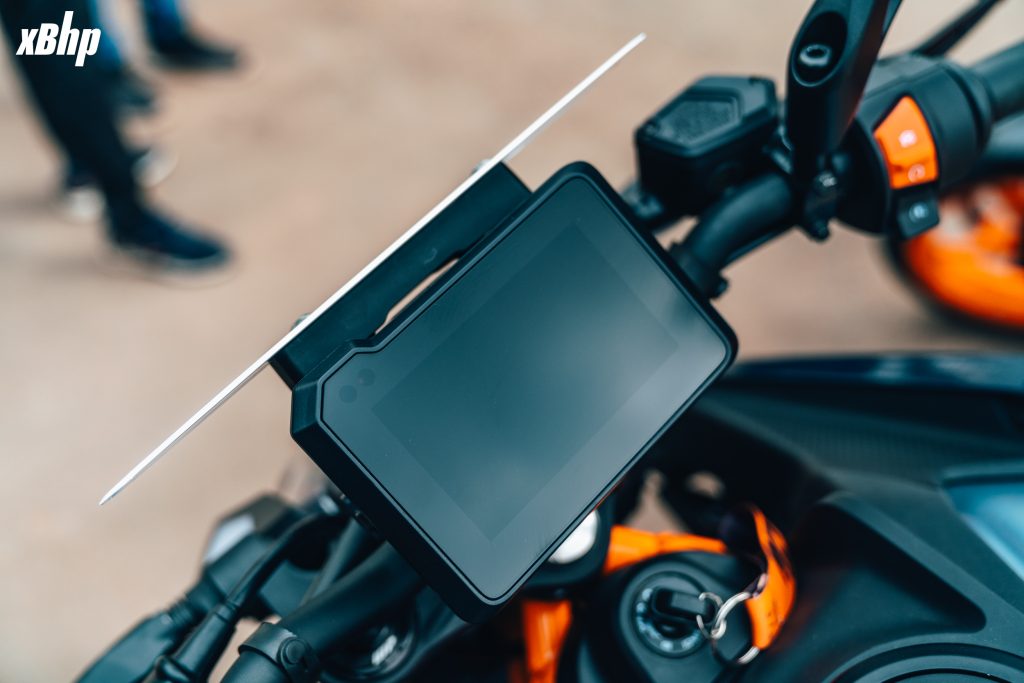
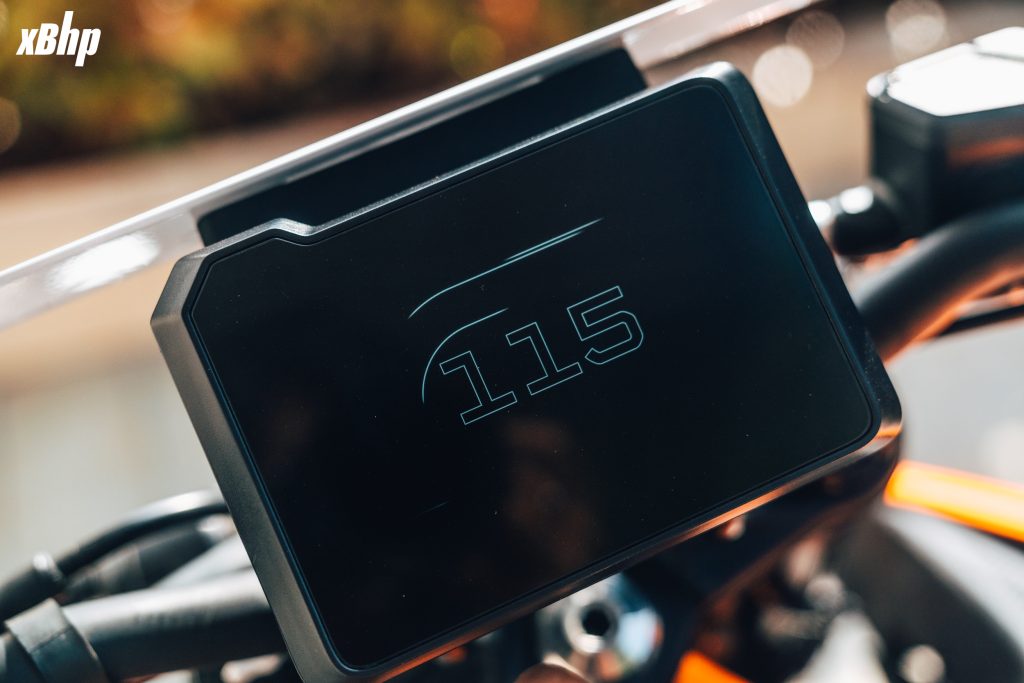
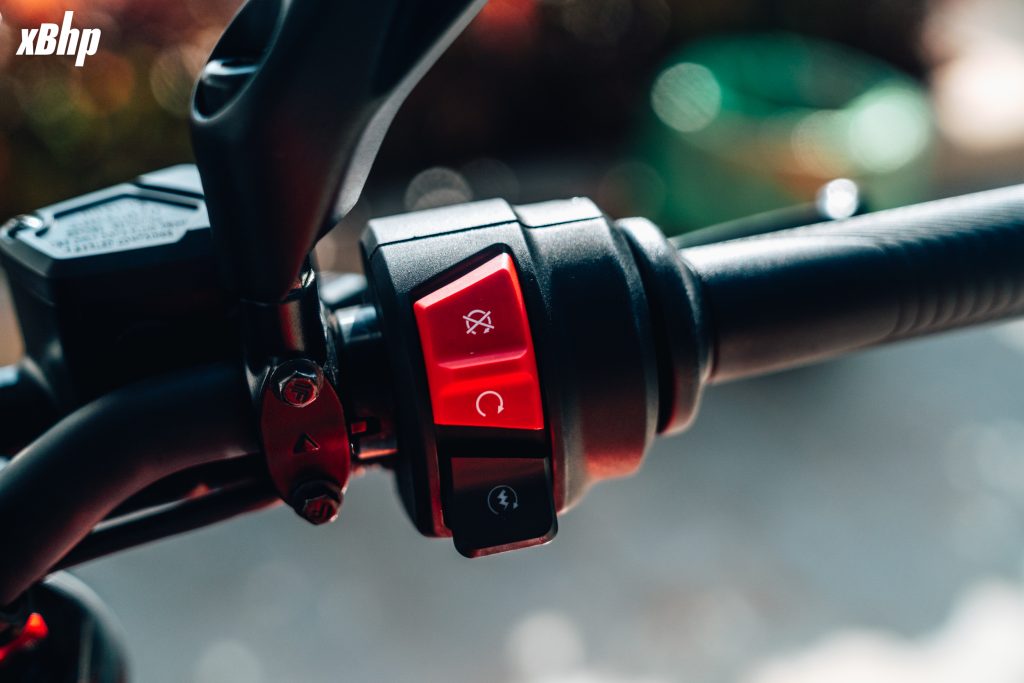
Before I talk about performance, I would like to talk about features. Nowadays, a lot of manufacturers are pushing the envelope in terms of how much tech they can cram in a motorcycle. A class-leading example could be the recently launched TVS Apache RTR 310. In that department, the 2024 KTM 390 Duke isn’t quite there but not too far behind either. It gets all LED lighting, new switchgear, and a new TFT display. In terms of electronics too, the new 390 Duke gets a fair bit.
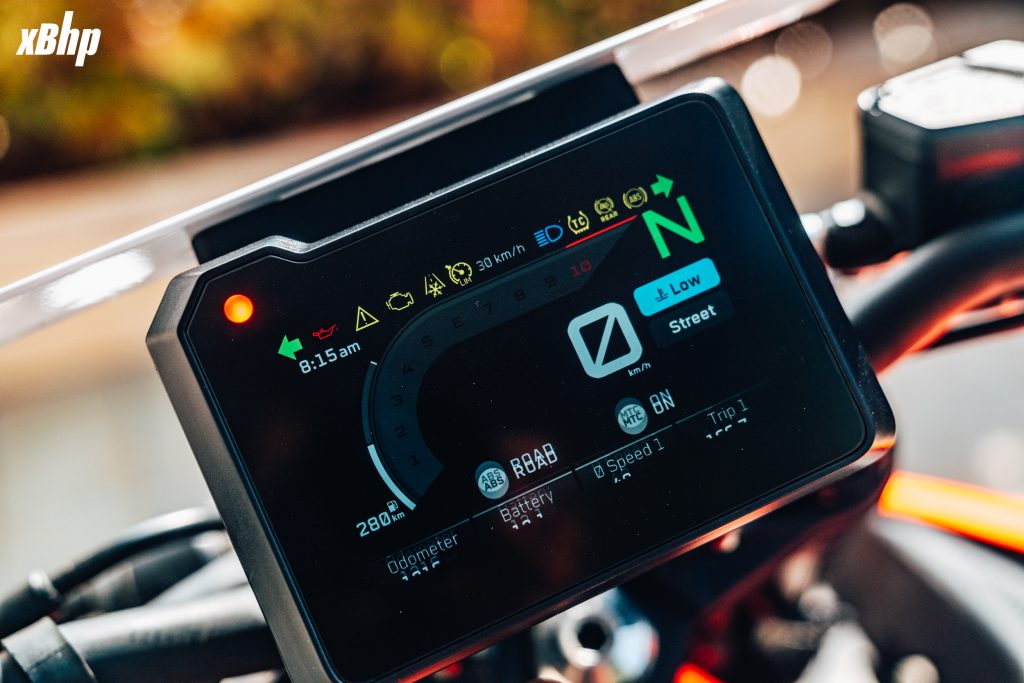
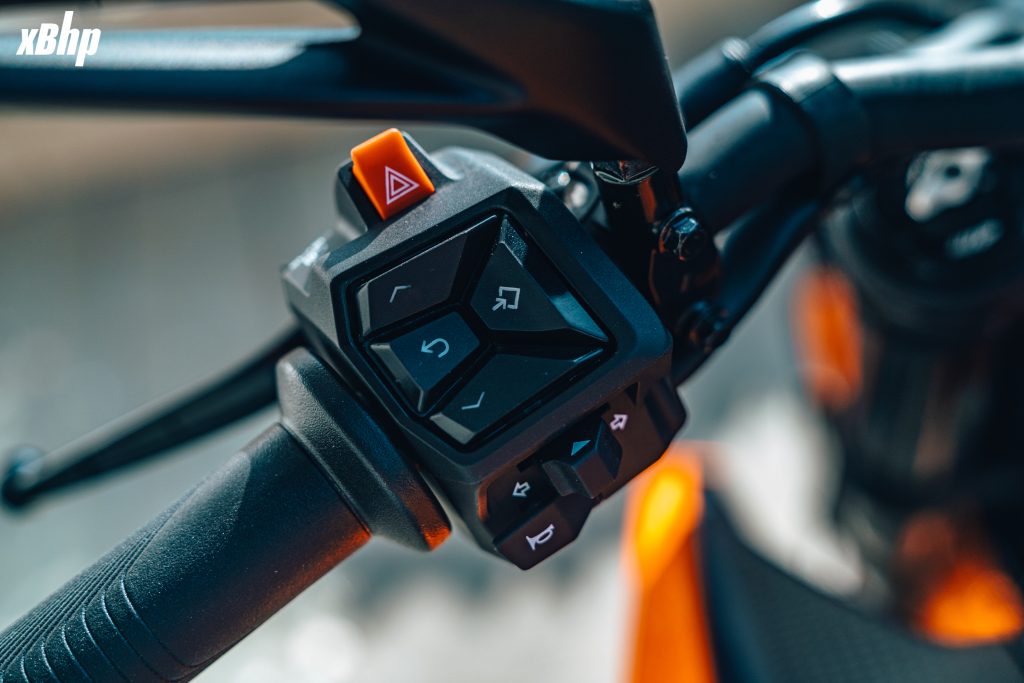
Thanks to ride-by-wire, the new KTM 390 Duke now has riding modes along with a Supermoto mode that disables the ABS on the rear wheel. It also gets traction control along with Launch Control in track mode. I am not sure how usable it is but might as well have it than not. It also gets Bluetooth connectivity to enable features like Call/SMS notifications, turn-by-turn navigation and so on. The quickshifter is standard and it works quite well. The highlight here though is the fact that both the front and rear suspension are adjustable!
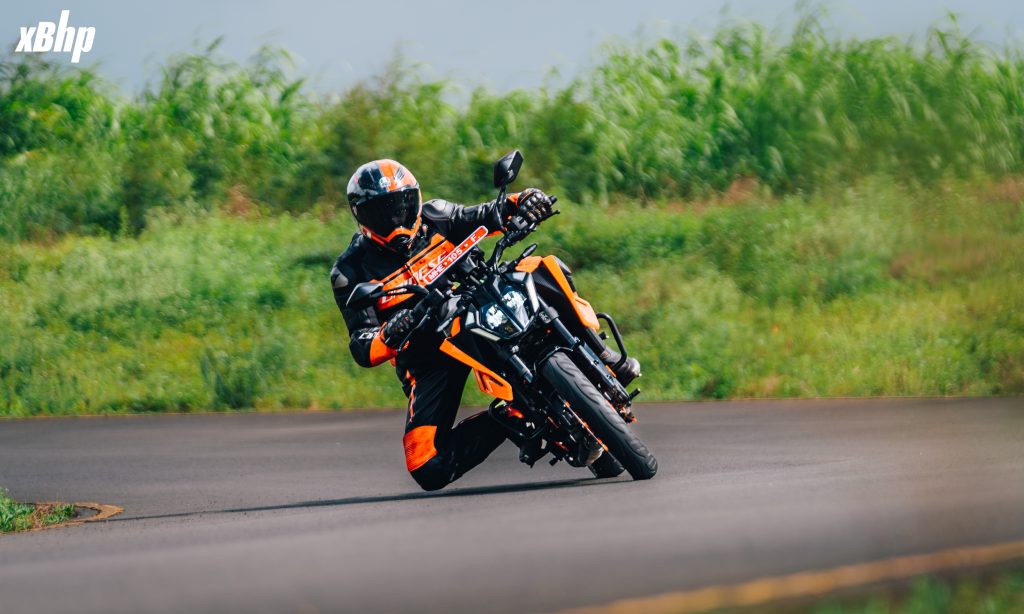
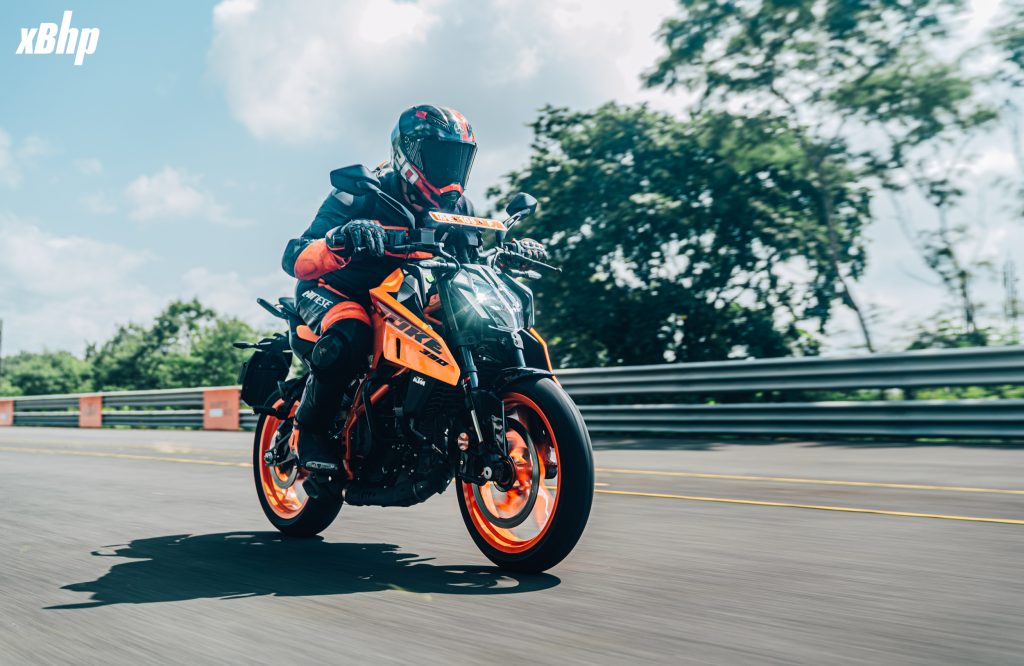
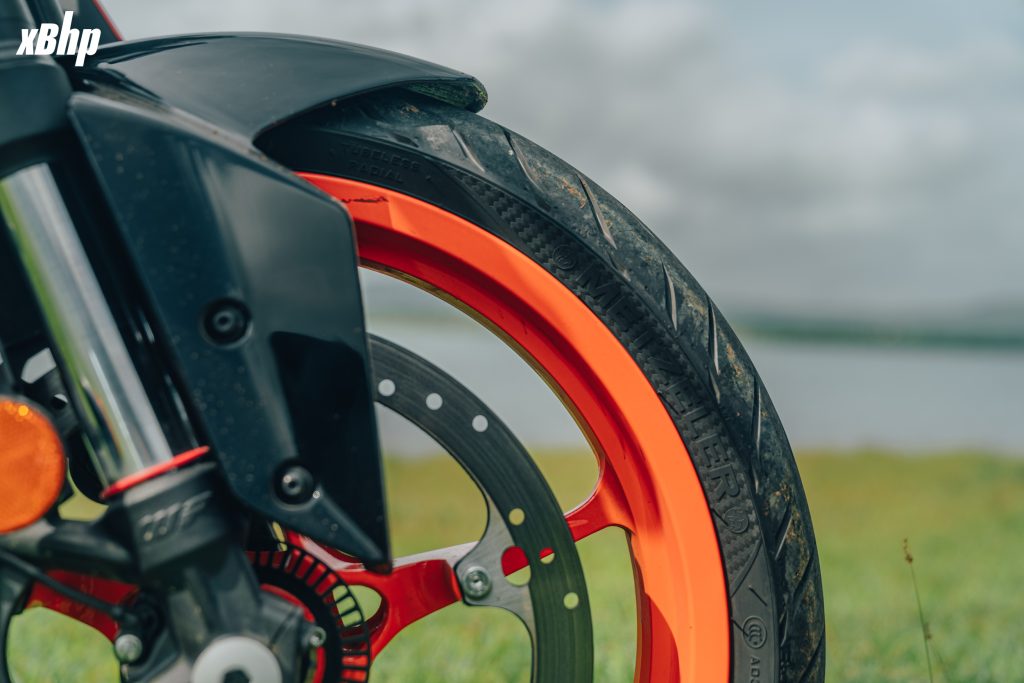
The new KTM 390 Duke has also undergone some weight reduction in the best way possible. Lighter wheels, discs, and the hollow hub have allowed KTM to reduce a decent bit of unsprung mass which results in a motorcycle that can turn on a dime. But the highlight of the 2024 KTM 390 Duke is the power-to-weight ratio. It has not only lost weight but gained some power as well thanks to the increased displacement of 399cc.
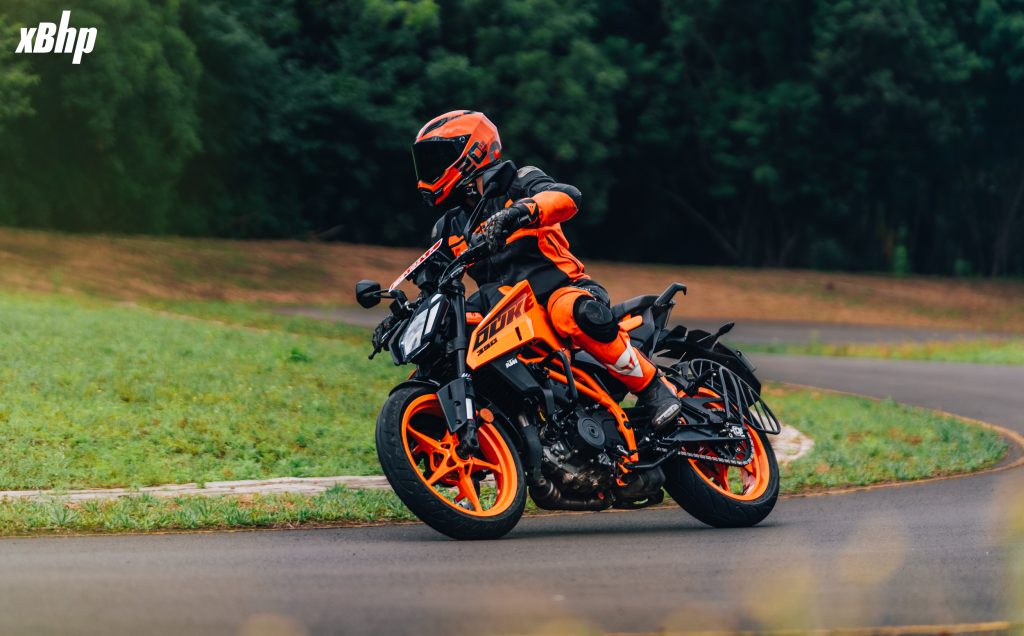
With that, the 2024 KTM 390 Duke gets 46 PS of power and 39 Nm of torque. The numbers may not seem substantially better than before, but I can assure you that it has made a real difference. The engine has been tuned in a way that makes the 2024 KTM 390 Duke more rideable on the road. It no longer feels as anaemic in the lower range. It feels much more eager and much peppier now.
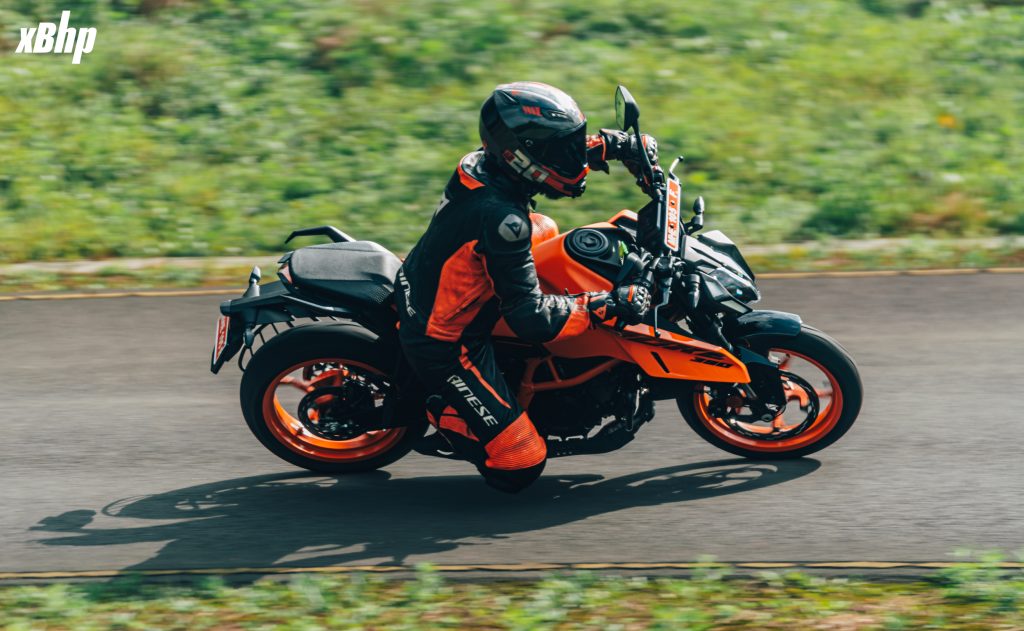
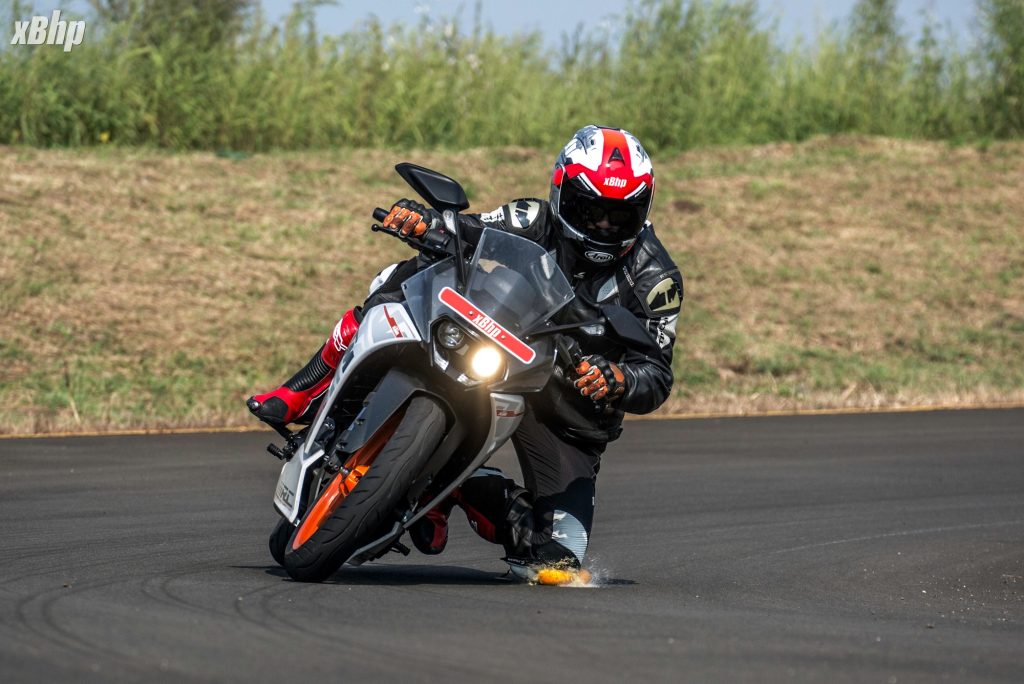
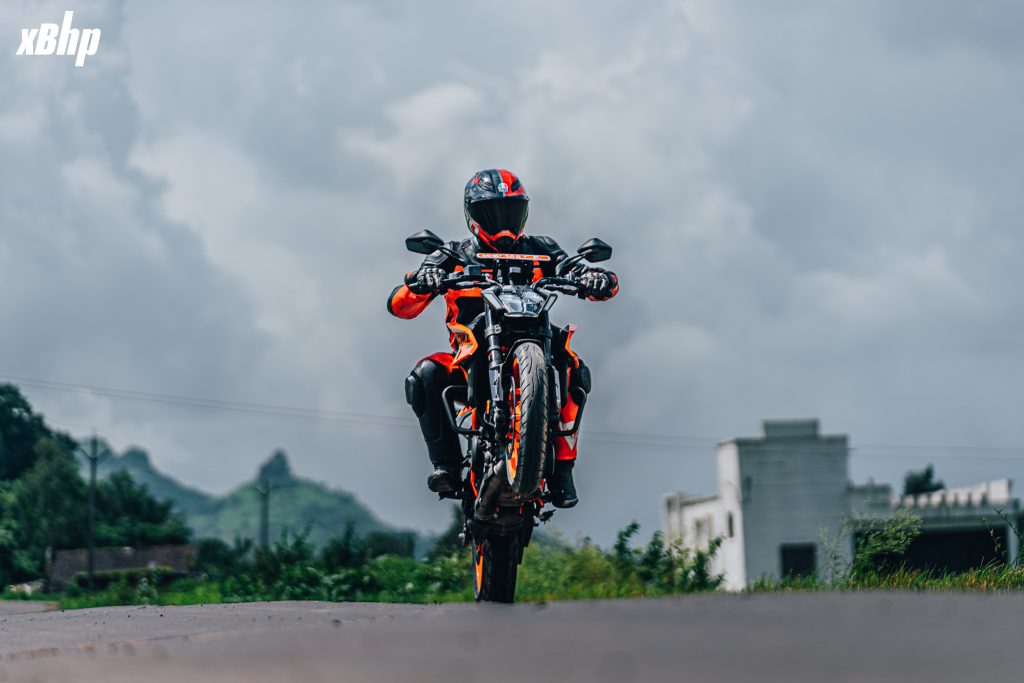
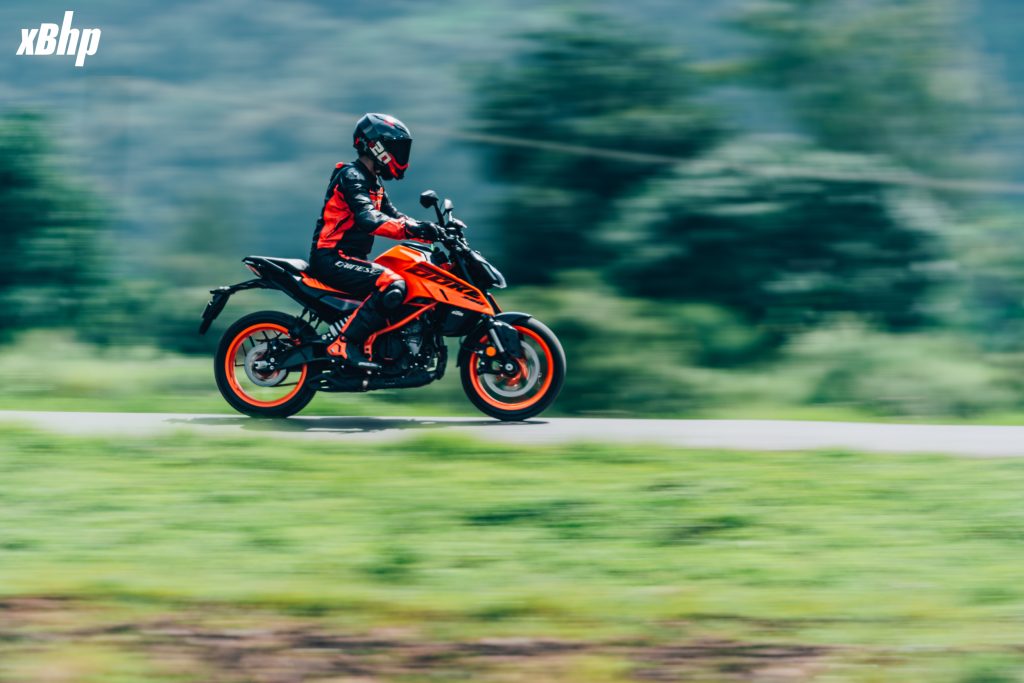
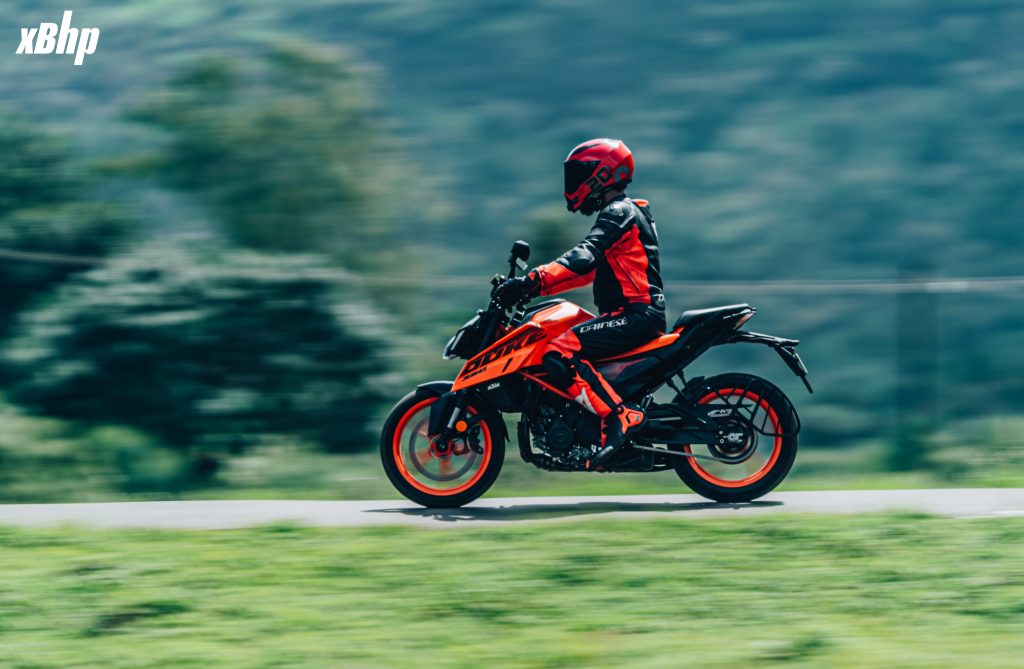
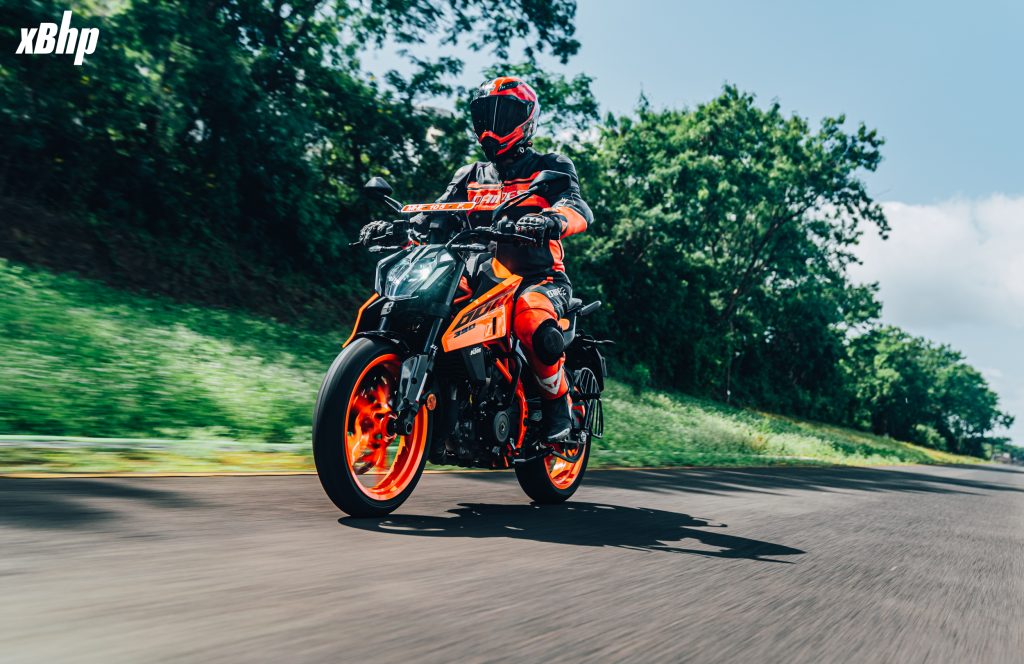
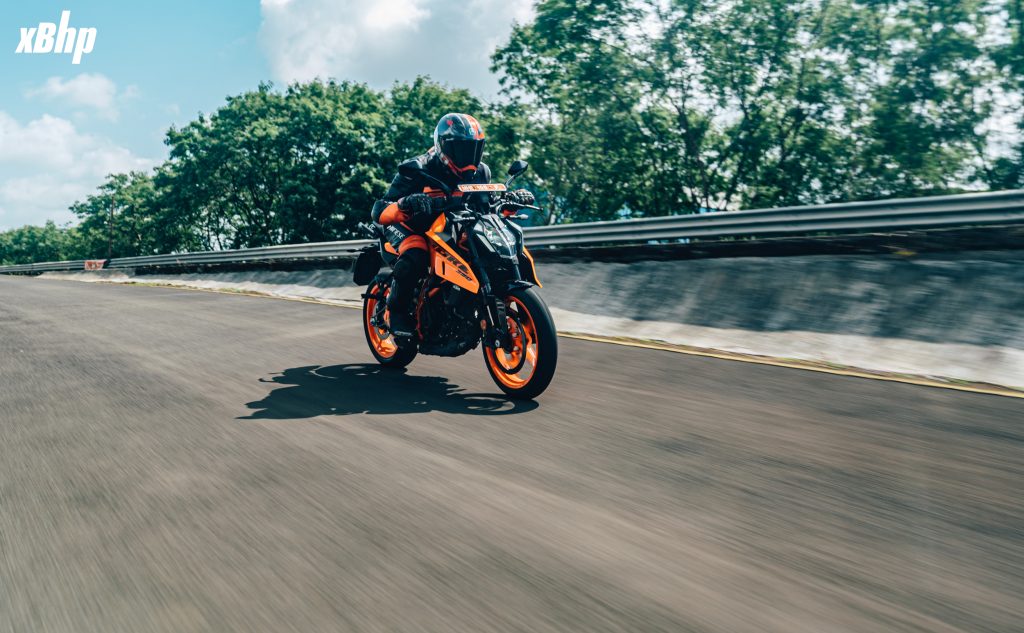
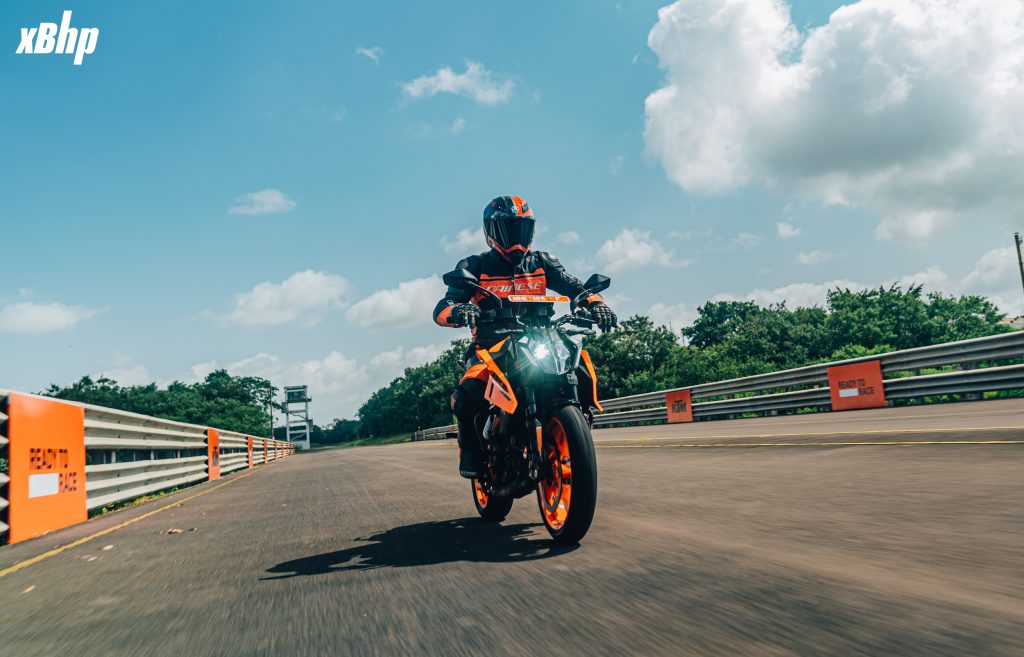
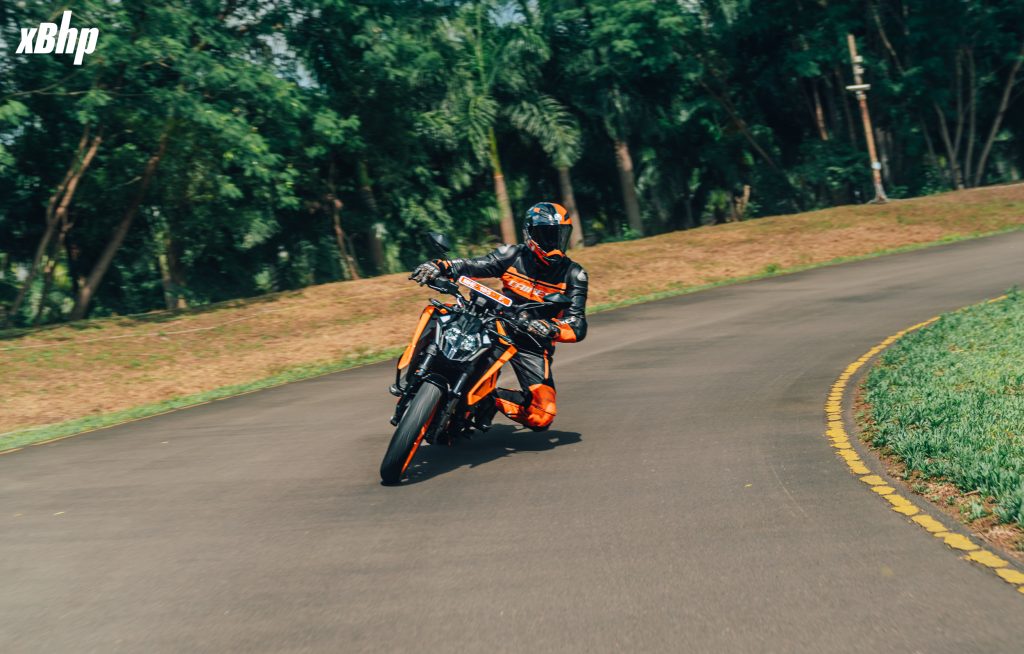
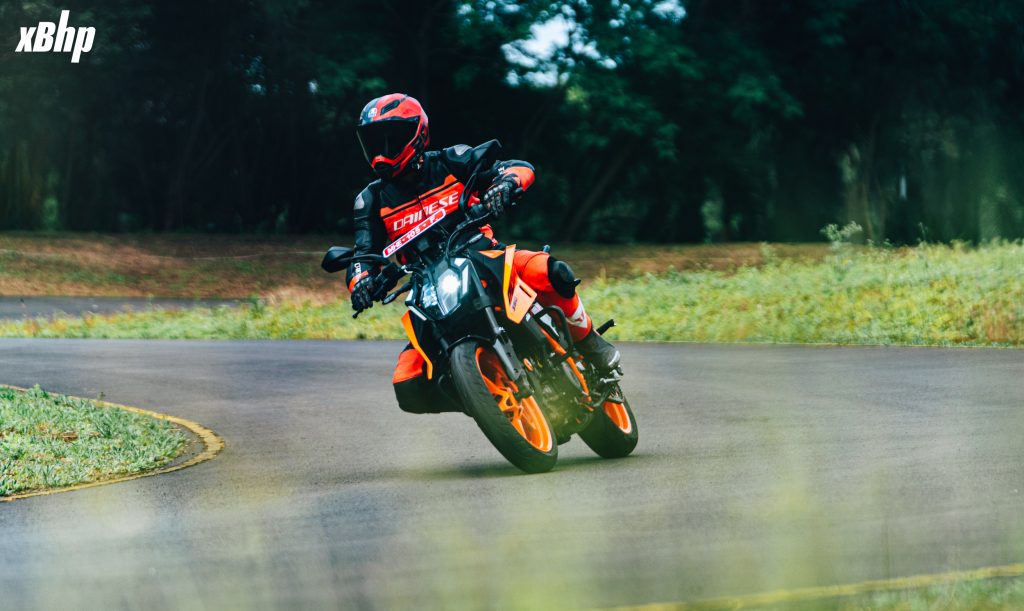
In terms of riding, I rode the 2024 390 Duke on the racetrack, in some traffic, on some highways, and then on some backroads. One of the biggest advantages that works in the favour of the new 390 Duke is the weight. On the racetrack, it would fire out of corners like bats out of hell. Also, I am happy to report that it is even more precise than ever. I may smash another orange to prove that but since I have, take my word for it.
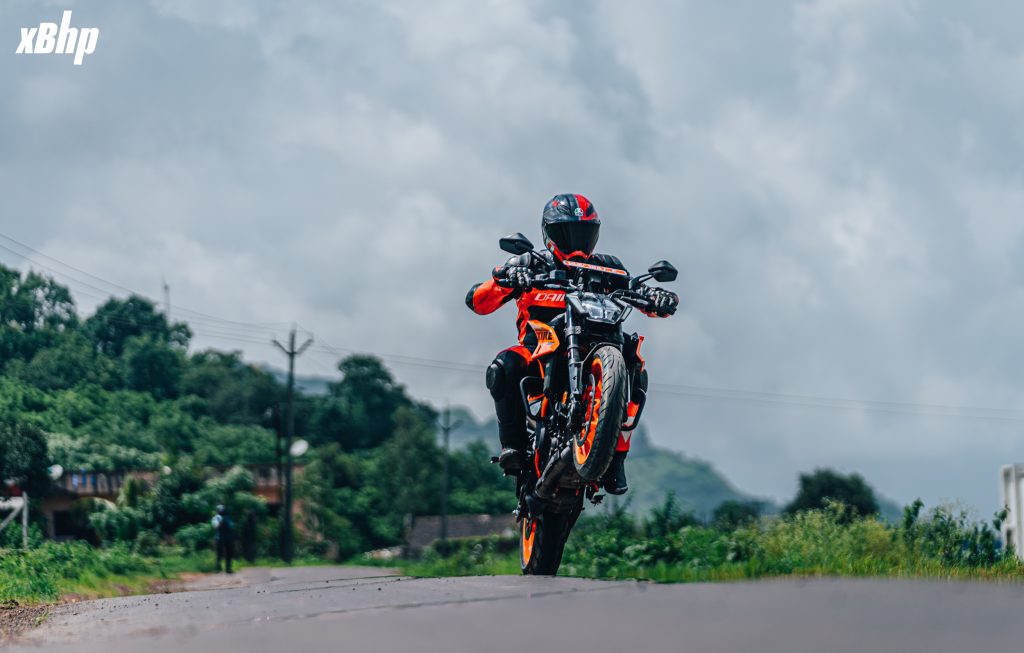
The revs build up nicely and quickly, the acceleration is intoxicating and the pull is just relentless. I absolutely love the new engine and its characteristics. On the road as well, the new KTM 390 Duke left me impressed. It is much easier to manage it in the traffic and it does not lurch and jerk like the previous interaction. The tractability has become much better as well and overall, the new KTM 390 Duke is much less of a pain when ridden slowly.
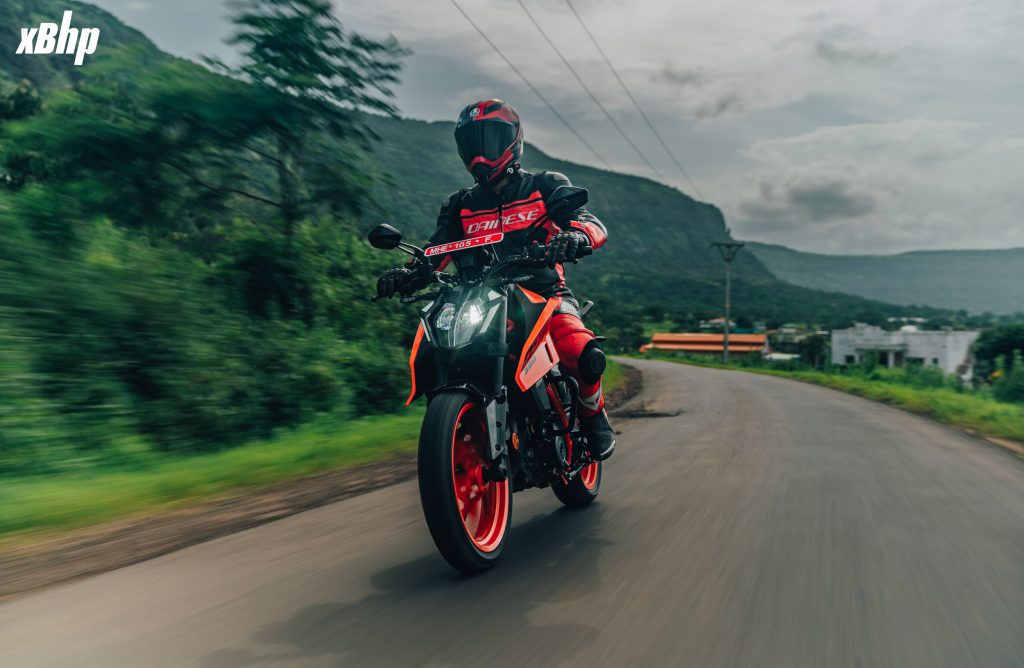
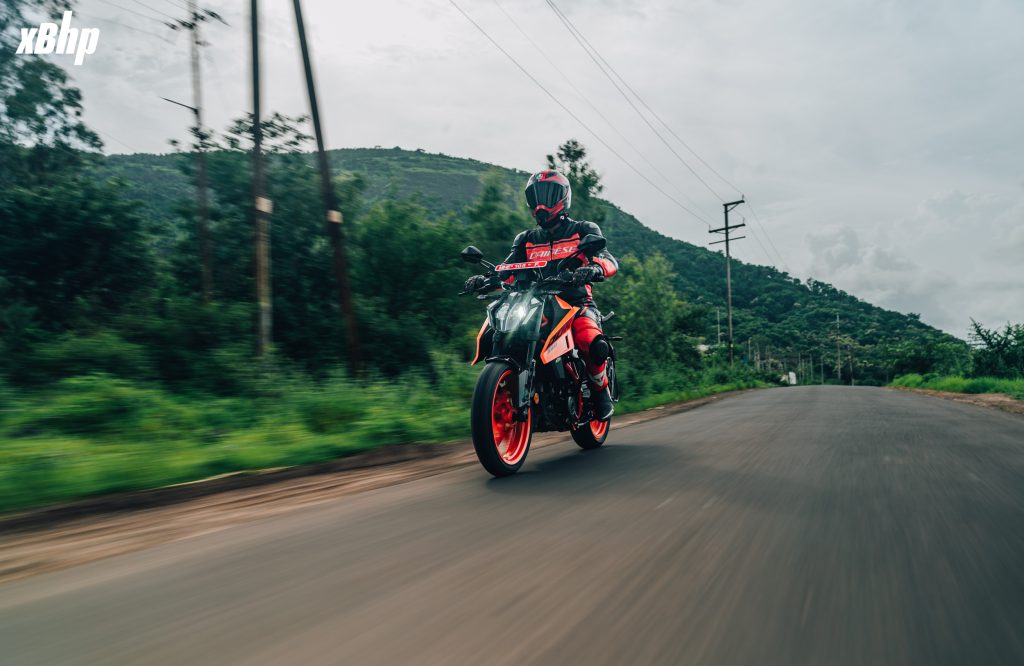
In terms of highways or touring, the KTM 390 Duke shines again. As mentioned earlier, with some add-ons, there is no reason why one cannot tour on this motorcycle. It has the power you need to keep yourself entertained on the boring highways and it has the composure that you need when dealing with bad roads and slow progress. In terms of ergonomics, it is balanced and neither too aggressive nor too sporty.
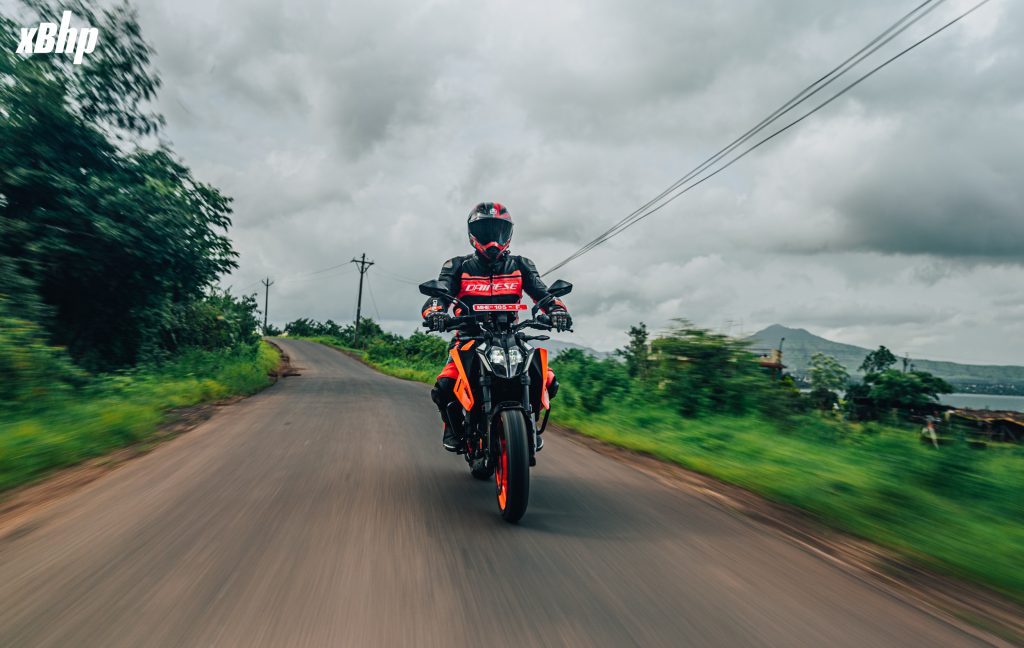
Overall, the 2024 KTM 390 Duke is even more fun than before. That was something I thought was not possible but apparently, KTM knew exactly what to do and they went for it hard. Now, there is one more thing that I need to address on that note. Because of how much fun KTMs are, a tag has risen to prominence- “chhapri” and unfortunately, it has been associated with KTMs or more so with the kind of riding it enables one to do.
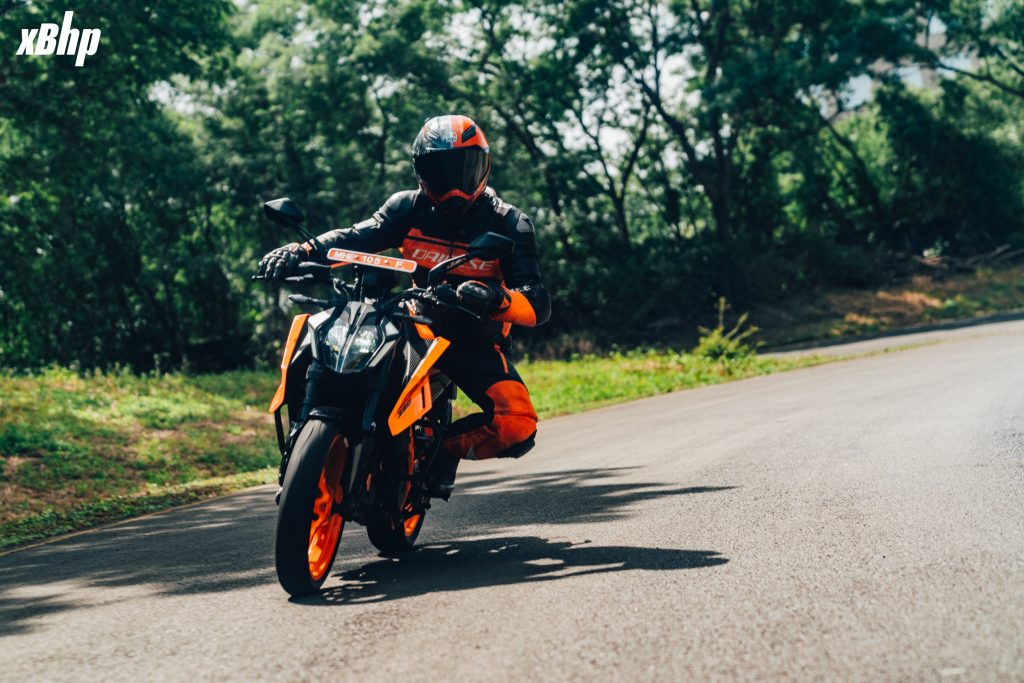
Simply put, the meaning of the tag is loud and cringe behaviour. KTMs are inherently fun and that is why people riding them indulge in all kinds of riding. Not all of them, but a fair few of them. Those are just the kind of motorcycles KTM makes, it makes our inner hooligan surface. That said, before we label people, we must stop and think about what we are implying. If we do, we’ll realize that we have all conformed to that particular label more than once.
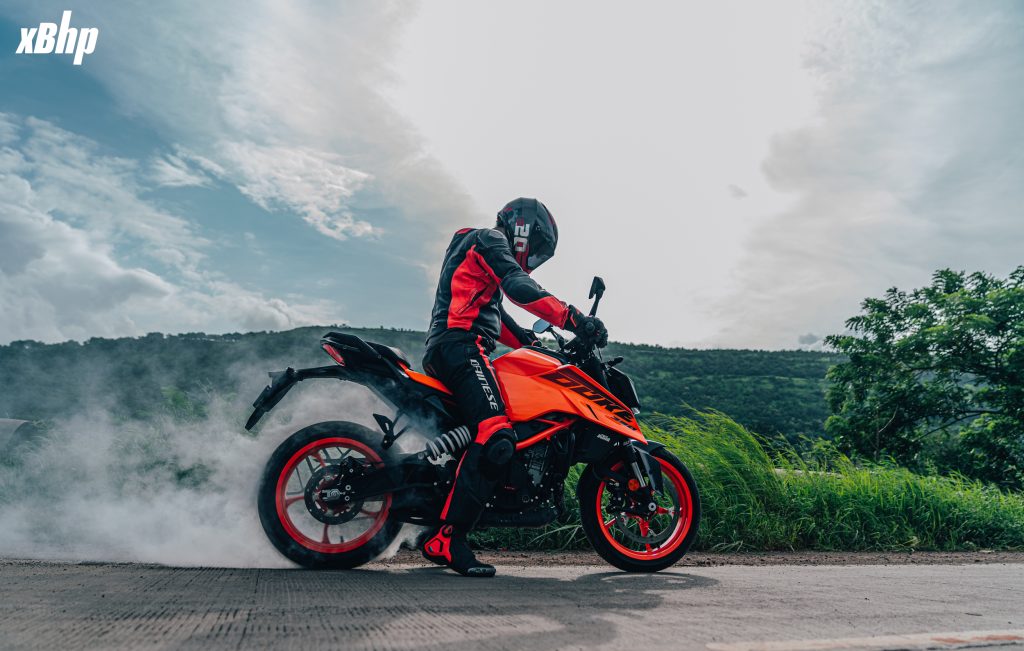
With all of that, I am not trying to defend people who ride rashly, ride in their slippers, or ride without helmets or proper gear. What I am trying to say here is that instead of labelling people, we should focus our energies on trying to educate people. Teach them about the importance of proper riding gear and following the traffic rules and regulations. Putting labels on people or motorcycles simply inhibits the growth of motorcycling in general. Avoiding that might also help us educate people and make them realize their own potential and that of their motorcycle in a safe environment.
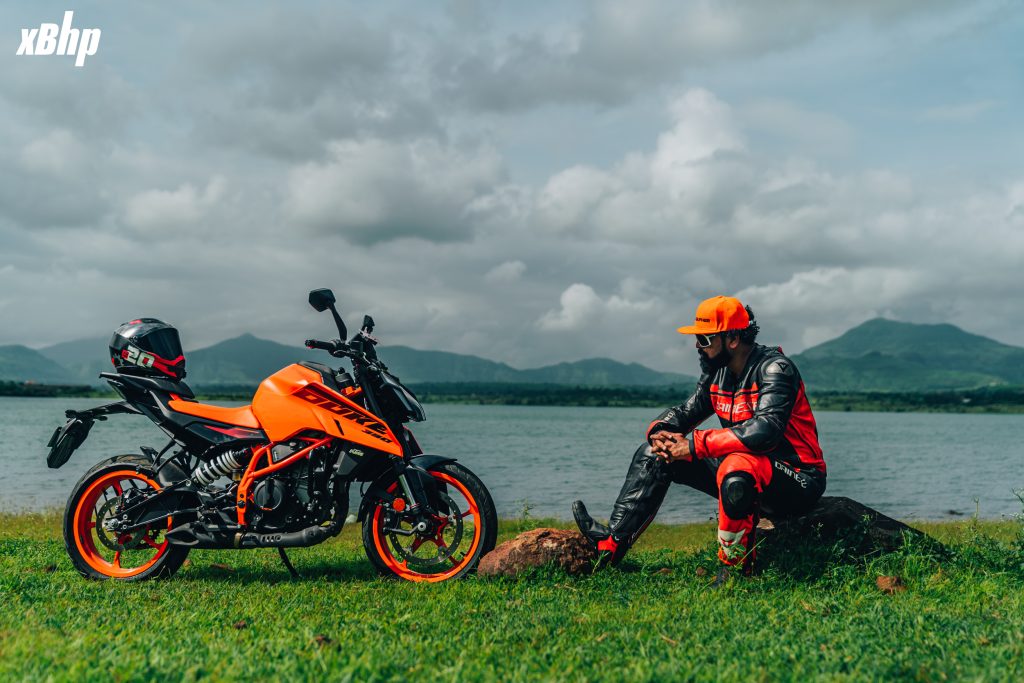
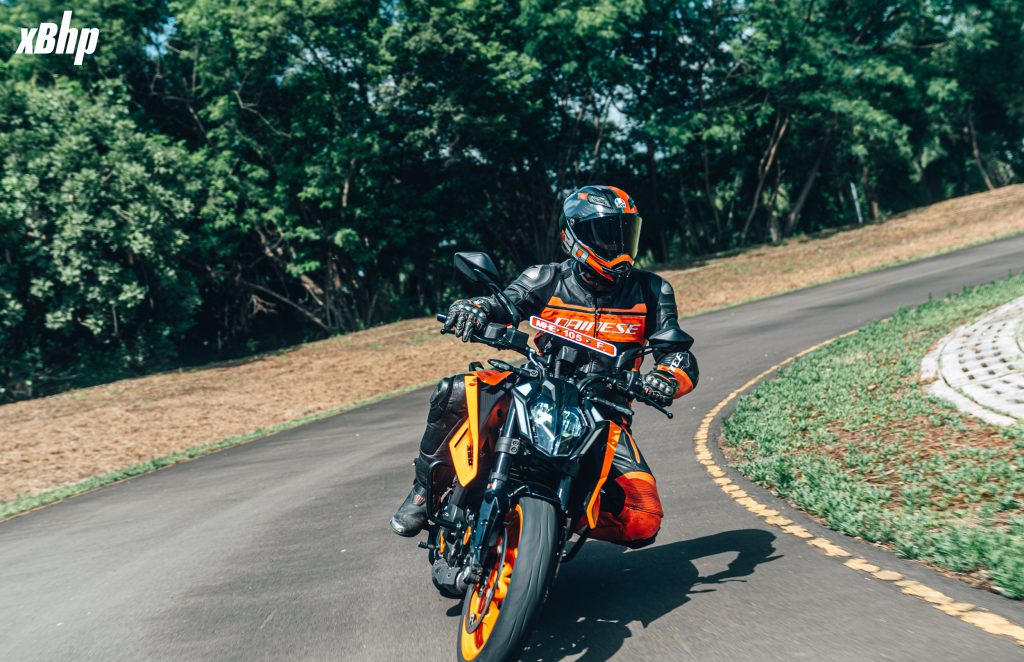
Regardless, we have talked about the 2024 KTM 390 Duke in a fair bit of detail. Now, the price. It starts at INR 3.10 lacs (Ex-Showroom) and I believe that at the price, it is a steal. Some motorcycles undercut it in terms of price but they are all far behind in terms of power and some, in terms of features on offer as well. The price may feel steep but if you look closely, the new 390 Duke is a value-for-money product. And with a comprehensive service network around the country and readily available spares and parts, the new 390 Duke seems like an even better deal.
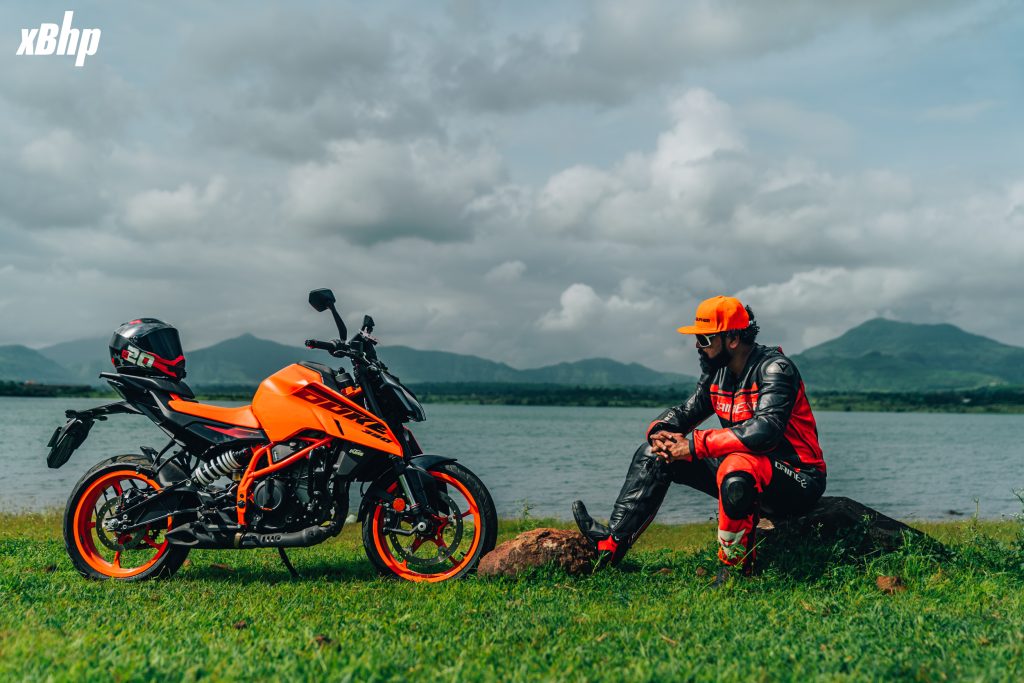


All in all, KTM has hit the nail bang on its head once again and it just makes me want to do stuff again… stuff like…
Sunny, Sunny.
Yes, Officer.
Scraping Your Knee?
No Officer.
Show me your knee.
Ha, Ha, Ha.

TVS Apache RTR 310 Review :: Leading from the front!
 Sep 2023 Sundeep Gajjar
Bikes,TVS
Sep 2023 Sundeep Gajjar
Bikes,TVSThe Idea
Some things are inevitable. They are bound to happen. The launch of the TVS Apache RTR 310 is one of those things. And so was the process of Apache becoming a brand in and of itself. From the Beetle to the MINI, from the Scrambler to the GS, there are many instances where products have a brand recall so strong that it supersedes that of the brand itself. They end up becoming not only the main breadwinner but also the face of the company.

Apache is just that for TVS. Things like these are a conundrum. They cannot be planned and yet, can only be achieved by careful planning, years of work and actions mixed with some happenstance. Apache has been a part of the Indian two-wheeler landscape since 2005. It is astonishing that between 2002 and 2005, three such iconic sub-brands were born; the Pulsar, the Karizma, and the Apache.

Back to the present, I am just back from Thailand after riding the new TVS Apache RTR 310 on the road and on a circuit. Yes, Thailand. A few years ago, TVS launching a motorcycle abroad seemed difficult to envisage. But it has happened. This is not only a testimony of the values, ethos, engineering and quality of the product from the TVS stable, but also an emphatic show of strength and confidence on the international stage that the company has in its products.

TVS Motor Company is ready to take on the world in the fastest-growing segment in the motorcycling world- street nakeds targeted at riders in their early twenties and beyond. A special mention must also be made about Ronin and NTORQ, both of which are already very strong brands unto themselves and loved by many in and out of India. And not to forget, TVS X. All these are amazing products in their segment.

So, the हम किसी से कम नहीं mindset is clearly displayed and it is being manifested by the galloping horse proudly portrayed in various places along with the tricolour. That is why, this is more than just a review of the new Apache RTR 310. It is a homage to TVS for making us Indian motorcyclists proud on the world stage.

Also, as a backstory, I went to Thailand right after riding the TVS Apache RR 310 for around 2,500 km in Georgia and Armenia. In addition to various terrains, I covered almost 100 km on some of the most treacherous roads you can imagine. The RR 310 did not miss a beat even with all the luggage I had. Even with the additional weight, it was still super fun in the corners and terrific in a straight line. It almost made me forget that it was a 310.

Now take that performance and reliability, add a lot more electronics, shave 8 kg, and you have the Apache RTR 310- a motorcycle that is even peppier and even more fun to ride. To that end, TVS went to great lengths to create a street scene at the launch event, subliminally sowing the seeds of the #Freestyler life that the new RTR 310 represents.


Skateboarding, graffiti artists and more represented the spirit of the new RTR. I appreciate the minds behind the setup and the thought process leading up to the global launch where the bike was finally unveiled by Vimal Sumbly and others. It seemed more like a closely knit family than a corporate and that’s part of the appeal.
Here are some more photos from the launch:


The First Look
I strongly believe that the looks of a machine make it or break it when it’s launched, especially when you consider the target audience. I am especially inclined towards radical designs and philosophies myself. Therefore, for me, the Apache RTR 310 was already a winner when I first saw it roll on the stage. There is always room for improvement but more on that later.

The bike looks best in Yellow-Gray and the Sepang Blue TVS Racing colours. The black colourway tends to hide a few of the beautiful lines that the motorcycle possesses. I can already feel the excitement of customizing this in my style and placing it at the MotoVilla, because this is worthy of being inside your living room too.

The design is original and builds upon the Apache RTR 200. From the dual-LED headlights and the unmistakable DRLs to the step-up seat and the white trellis frame with the first-in-class aluminium subframe; they all reek of the intended style and have been implemented well with quality being the focal point. Even the front and rear alloys are different colours, adding to the freestyler charm and spirit.


My three main changes to further elevate the Apache RTR 310’s design and presence would be changing the exhaust to a shorter one (easy via the aftermarket route), the taillights can be a bit longer and sharper, and slightly upsized tyres. Asking for a single-sided swingarm would be a bit much… if only wishes were horses, literally in this case with one on the tank.


The floating high-quality 5” TFT further accentuates the modern street naked look. Overall, the Apache RTR 310 has a lot of the big-bike feel.

Now, after the launch party frenzy, it was time to ride the TVS Apache RTR 310 on the road in Bangkok and to the track 60 km away.
The Feel, Ergonomics, and More
A motorcycle that looks good but is extremely uncomfortable to ride becomes a bane rather quickly. The Apache RTR 310 is not one of those. It is just about perfect. A riding stance that looks sporty without the aches and pains of a sports bike. Thanks to the step-up pillion seat and the well-sculpted tank, you sit in the bike rather than perch on top of it which gives you that extra ‘in the cockpit’ feel. Though I wish the fuel tank was a little bigger in terms of capacity.

The crisp 5” TFT console is placed well and at the right angle for unhindered visibility. It is also bright enough to be legible on the brightest of days. Ride modes and other functions are easily accessible and you also get a dedicated button for cruise control, a boon on long boring highways. The hand levers are also adjustable in four levels. Also, another factor that makes the motorcycle look fuller is the lack of empty spaces when you look down while riding.

The Electronics
TVS was the first to introduce ABS in the segment and that very good habit of introducing class-redefining features continues here as well. The electronic wizardry on motorcycles is a show of both, the strength of manufacturers and the demand of new-generation riders. It also provides a solid base for further research to develop systems to make motorcycling better. There is a plethora of electronics and features on the Apache RTR 310 that are missing on even some litre-class nakeds! Here’s a list:
- Race Tuned Dynamic Stability Control with 6D IMU
- Cornering ABS
- Cornering Traction Control
- Cornering Cruise Control: The cruise control feature allows you to downshift and upshift up to 2 gears to achieve optimum cruise RPM and use cruise for a longer period. It is also purported to decrease speed in a corner based on the lean angle to maintain the line.
- Wheelie Control
- Slope Dependent Control
- Rear Lift-off Control
- 5 Riding Modes: Urban, Rain, Sports, Track and the all-new Supermoto mode that disengages the rear ABS while maximizing power
- Bidirectional Quickshifter
- Race Tuned Linear Stability Control
- Tire Pressure Monitoring System

The Apache RTR 310 also features first-in-segment smart lighting features- The motorcycle features first in segment smart lighting features – Class D Dynamic LED Headlamp with 3 levels of light intensity that changes based on the speed, thus providing optimum lighting and the Dynamic Brake Lamp which triggers rapid flashing of the brake lamp during hard braking.

Then there’s the SmartXonnect Bluetooth connectivity that links the TVS Apache RTR 310 with your smartphone offering a series of features including telephony, music control, GoPro control, smart helmet connectivity, voice assist, race telemetry, precise turn-by-turn navigation with what3words, DigiDocs and crash alert.

The Engine and Performance
Now the looks and the electronics can be raved about but they are nothing without the right heart and the right dynamics. In terms of engine, the Apache RTR 310 gets the tried and tested, 312cc mill with a few improvements. The engine is reverse-inclined for better mass centralisation and reducing the wheelbase without shortening the swingarm, something the RR 310 uses to great effect.

On the Apache RTR 310 though, the engine gets forged-aluminium pistons purported to be 5% lighter. The peak power now sits at 35.6 PS and the peak torque at 28.7 Nm compared to the RR 310’s 34 PS and 27.3 Nm. The engine has also been tuned for better street performance, something that is corroborated by a claimed 0-60 km/h time of 2.81s.

The motorcycle also gets ‘Engine Coolant Jacket Optimization’ with 23 rows of radiator tubes and is designed to have best-in-class heat management by reducing the engine temperature, allowing for superior performance and higher revving. This came in handy when I rode the RTR 310 in Bangkok traffic and should prove to be a plus in the hotter climates of southeast Asia.

If you have ridden the RR 310 the engine will feel very familiar. For me, it was almost like being transported from Georgia to Thailand because of the similar engine and sound characteristics. With how mega the RR 310 feels, it is a good thing. The ride-by-wire throttle is smooth and precise. The more you rev the engine, the more you enjoy it.


I started off in almost peak Bangkok traffic and had to negotiate around 20 km of urban roads with a lot of stop-and-go. The GTT (Glide-Through Technology) is built into the Apache RTR 310 for such situations. It adjusts the fuel and ignition timing to prevent stalling at lower speeds and moves the bike forward when you release the clutch a little bit without using the throttle.

Getting on the highway and out of the city gave me a chance to open the taps and go flat out. Having a police motorcycle as lead meant that I knew that I had to just try and match its speed without risking a fine. I managed to take it to 160 km/h on the speedo and that is with a backpack and without a full tuck. Taking into account the speedo error, I think that the Apache RTR 310 can easily hit 150 km/h true speed and maybe a little more as well.

I was in two-piece leathers so I couldn’t really feel the cooling effect of the climate-controlled seats on the highway, but reports from other riders who were in much thinner clothing were positive. However, I am not sure how good it is to just have a part of your body subjected to a different temperature than the rest. But I guess it shouldn’t be too much of a problem considering the upper body also has cooling from the wind blast, something the lower doesn’t.

The highway ride gave way to the Thailand Circuit Motorsport Complex which is a 2.5 km long circuit that was not in the best of its shape. With extremely wavy tarmac on some turns and a lot of bumps meant that it simulated a lot of real-life riding conditions. Not that one should ride like a racetrack in the mountains.

I am pretty sure the cornering ABS and traction control were working overtime to keep the bike stable over the bumpy corners because here I was actually pushing, unlike on the public roads. In hindsight, I should have switched off the TC to enjoy the bike more on the track since it was being too intrusive thanks to the bumps, but then, it only proved that the system worked. The bi-directional quickshifter worked without a hitch and I had a lot of fun on the track without worrying about the clutch.

The dual-compound Michelin Road 5 tyres also played their part in keeping the motorcycle upright. In the dry, the grip was fantastic and if the tread pattern is anything to go by, the tyres should hold their own in wet conditions as well. The bike felt well-planted under hard braking with downshifts a breeze, thanks again to the quikcshifter. Propelling out of the corners was just as fun thanks to the tyres and the confidence inspired by the traction control.

The motorcycle that I was riding had adjustable suspension on both ends. Though I did not tune it, it is surely a plus as one can fine-tune the setup based on the payload and the kind of terrain one plans to negotiate.

My Thoughts
I see the TVS Apache RTR 310 as a capable tourer once it sheds a few more pounds with an aftermarket exhaust and after one adds a windscreen to it. The exhaust will also accentuate the looks of the motorcycle. I can easily give a 10 on 10 for the looks and in terms of features and electronics, it can even put my Ducati Streetfghter V4S in an existential crisis.


In terms of rivals, the Apache RTR 310 has a few; BMW G 310 R, KTM 390 Duke, and maybe even the Bajaj Dominar 400. But at the asking price of the Apache RTR 310 and the feature package that it comes with, it is very hard to beat. In terms of looks, only the KTM is more radical but that too is not to everyone’s taste.


The RTR 310 gives an unbeatable value package with world-class electronics and components. Truth be told, TVS has really upped the ante with this one and it is going to be a tough one to beat for any other manufacturer. I am looking forward to having it in my garage and riding it along with my Ducati Streetfighter. And yes, that’s a compliment!


BMW CE-04 – A Sign of Things to Come
 Jun 2023 Sundeep Gajjar
Bikes,BMW
Jun 2023 Sundeep Gajjar
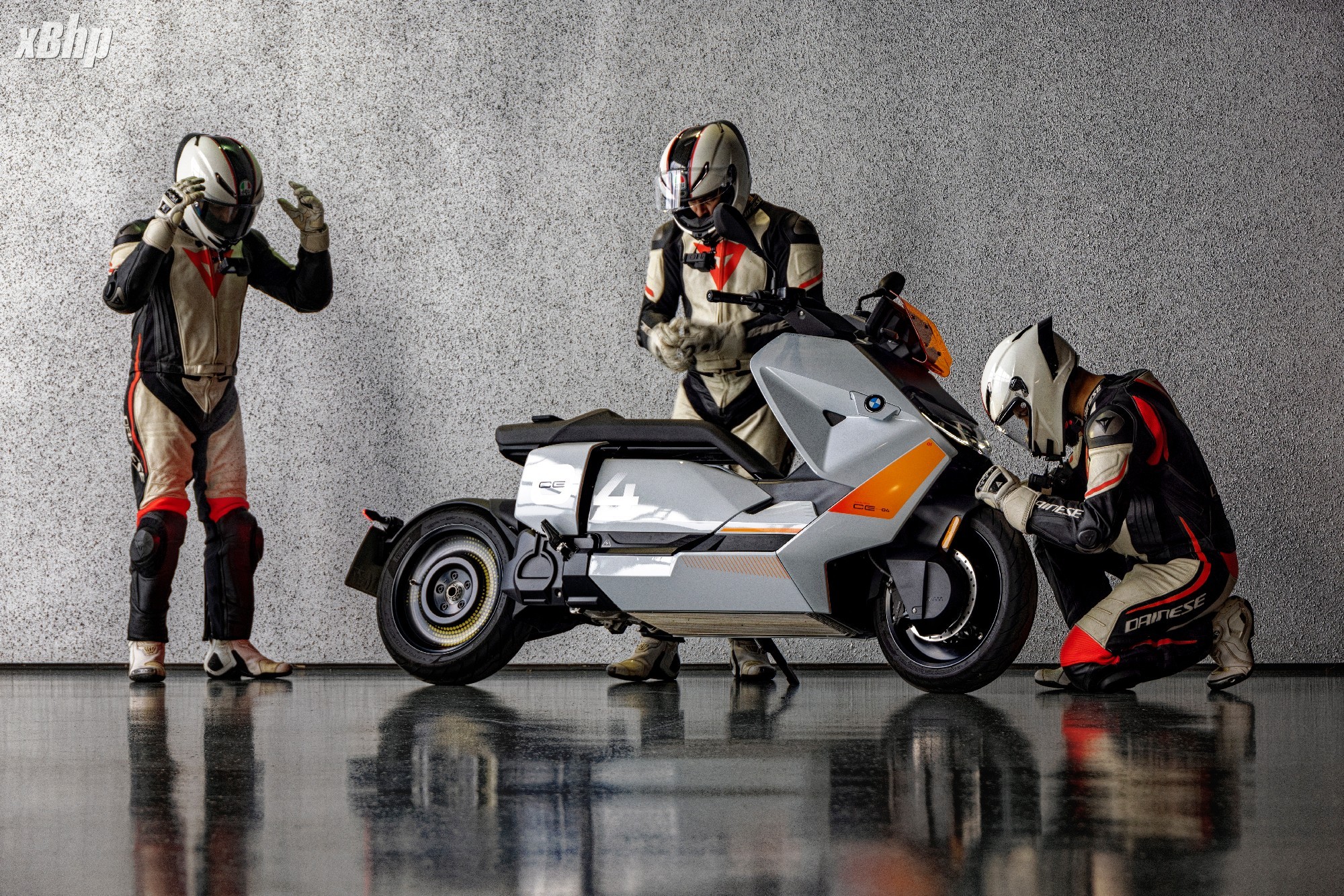
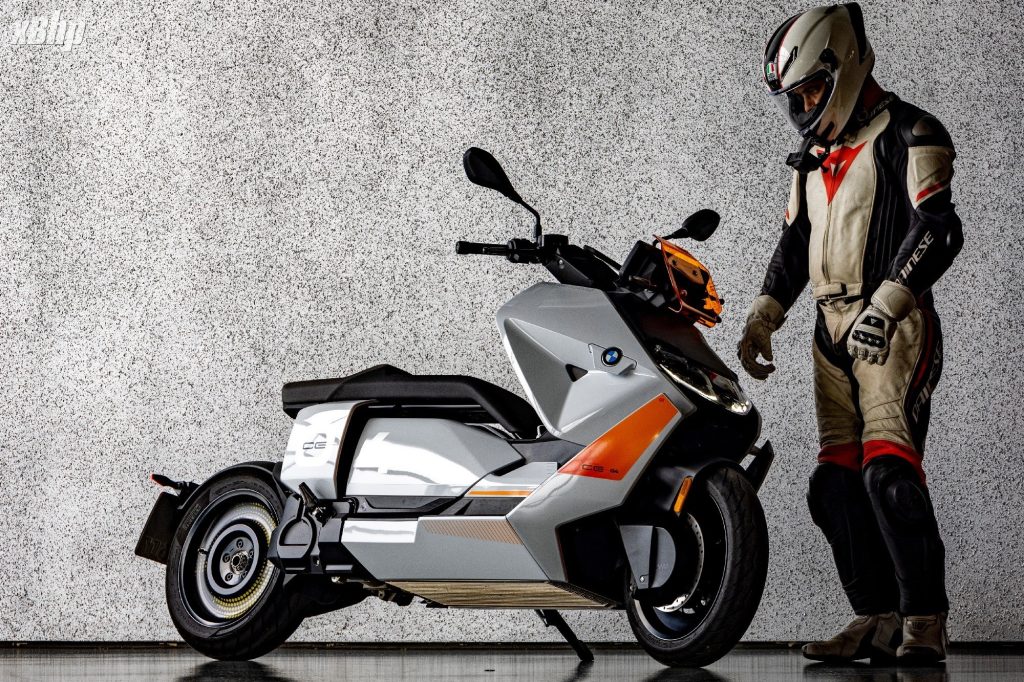
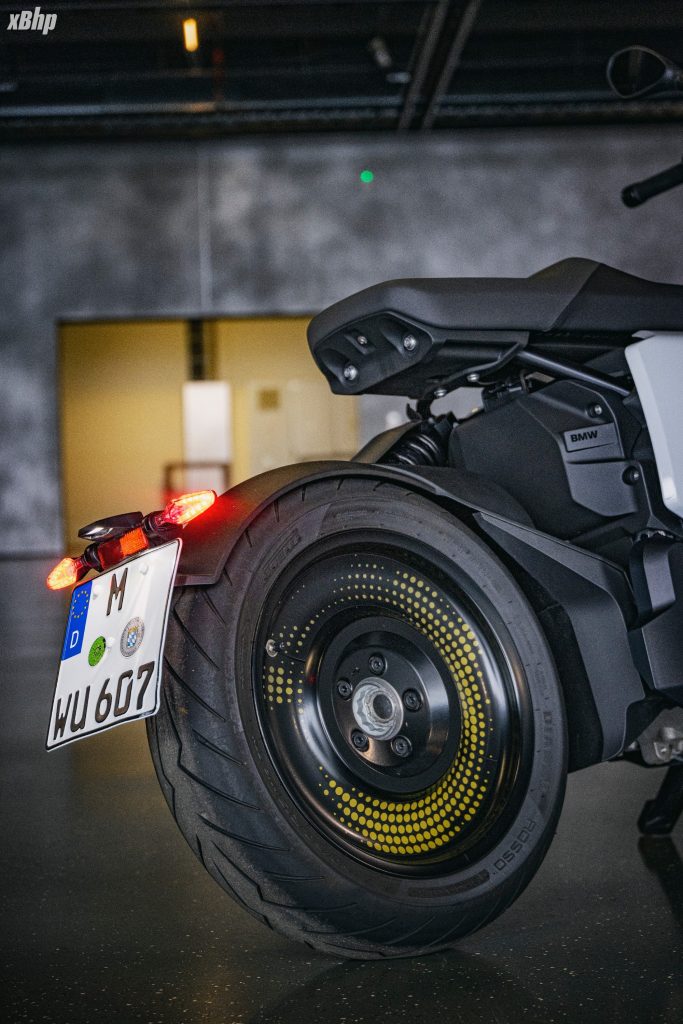
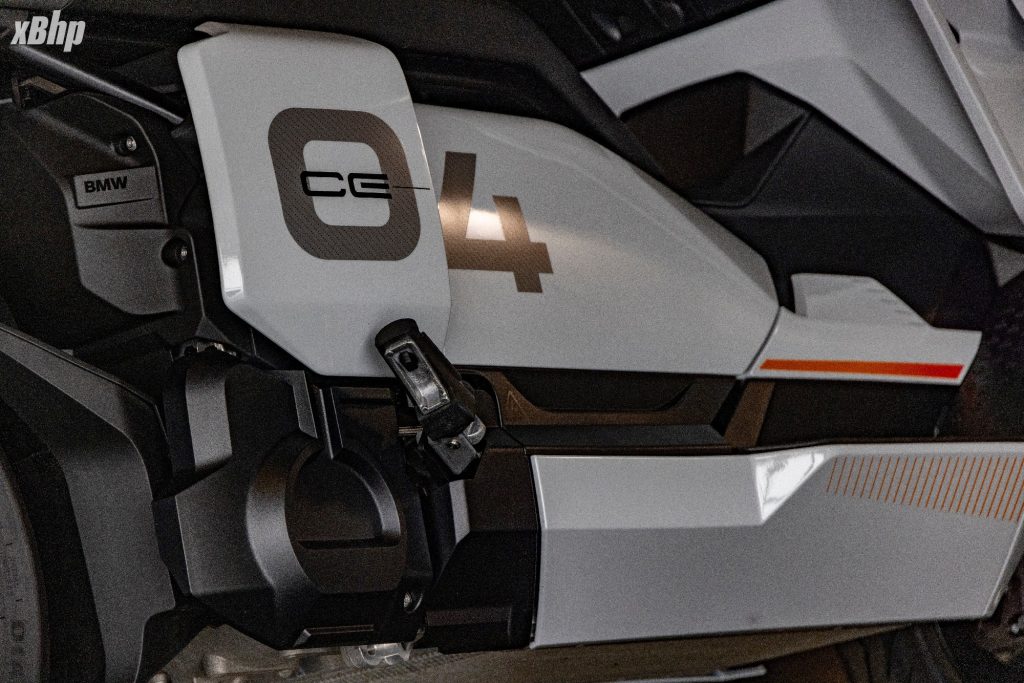
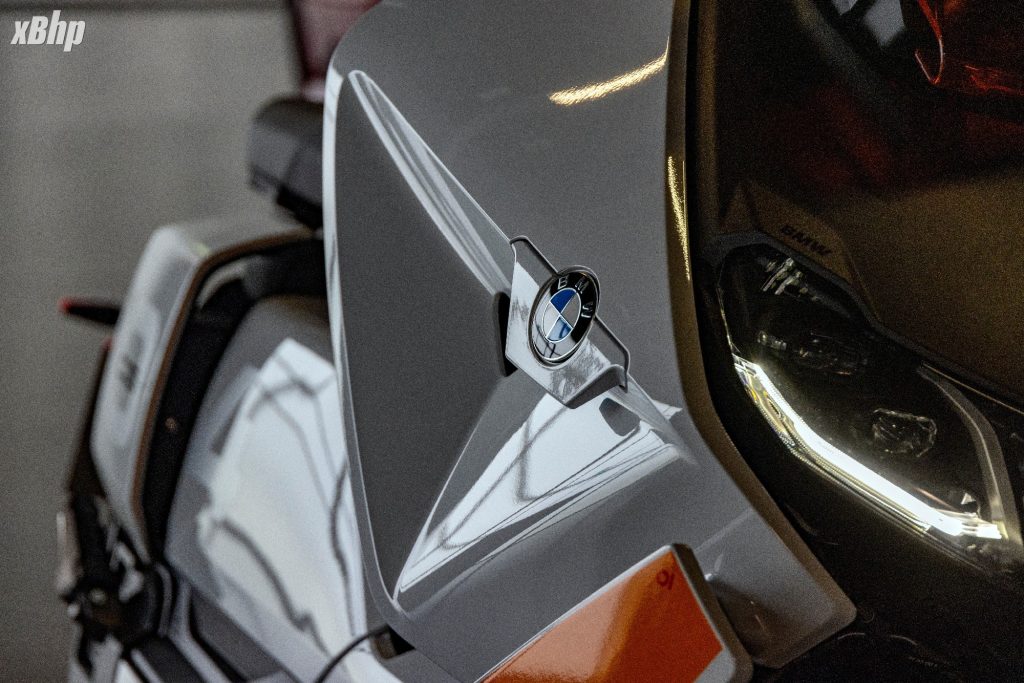
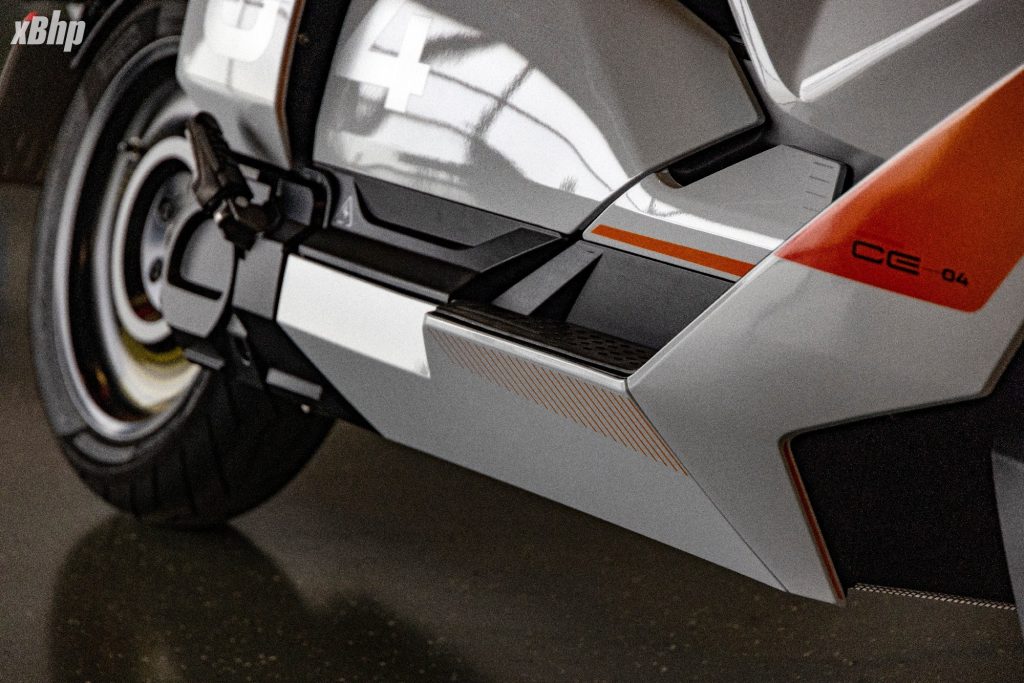
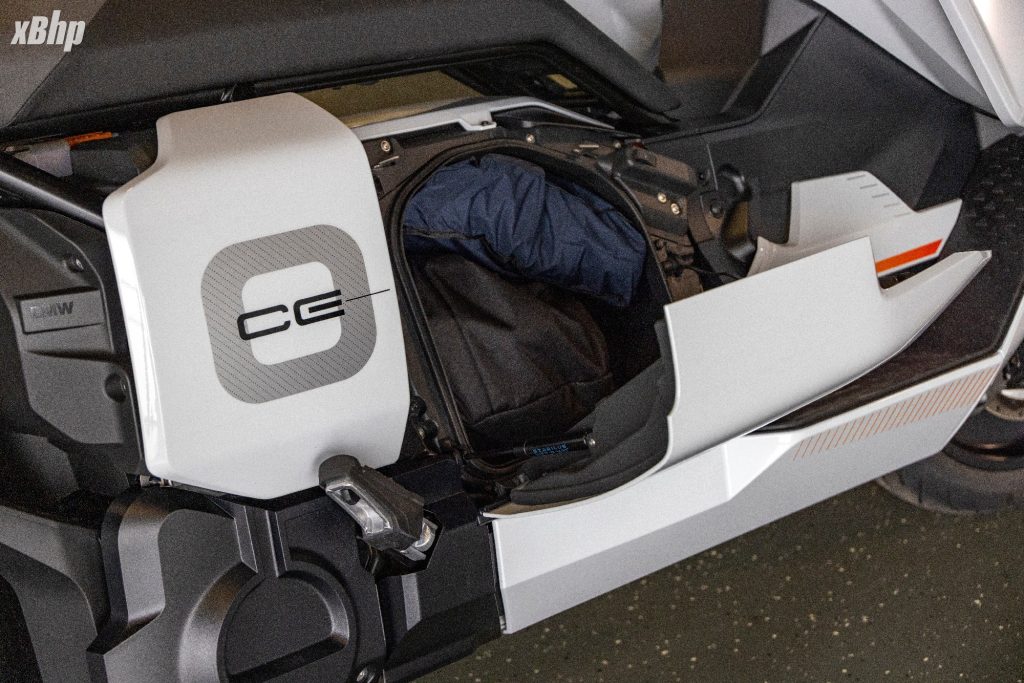
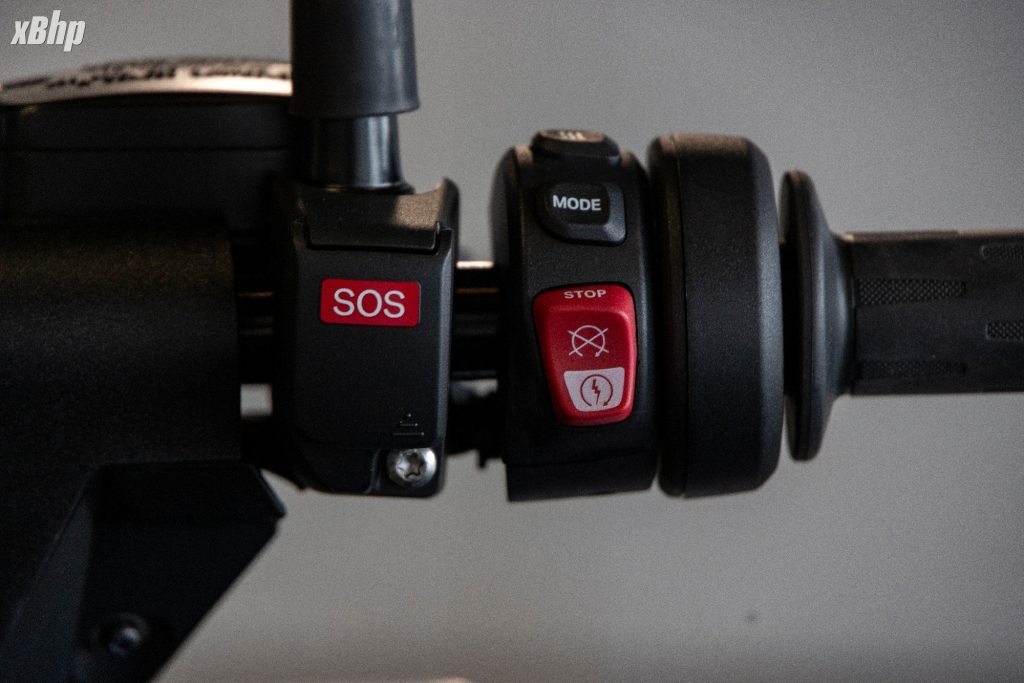
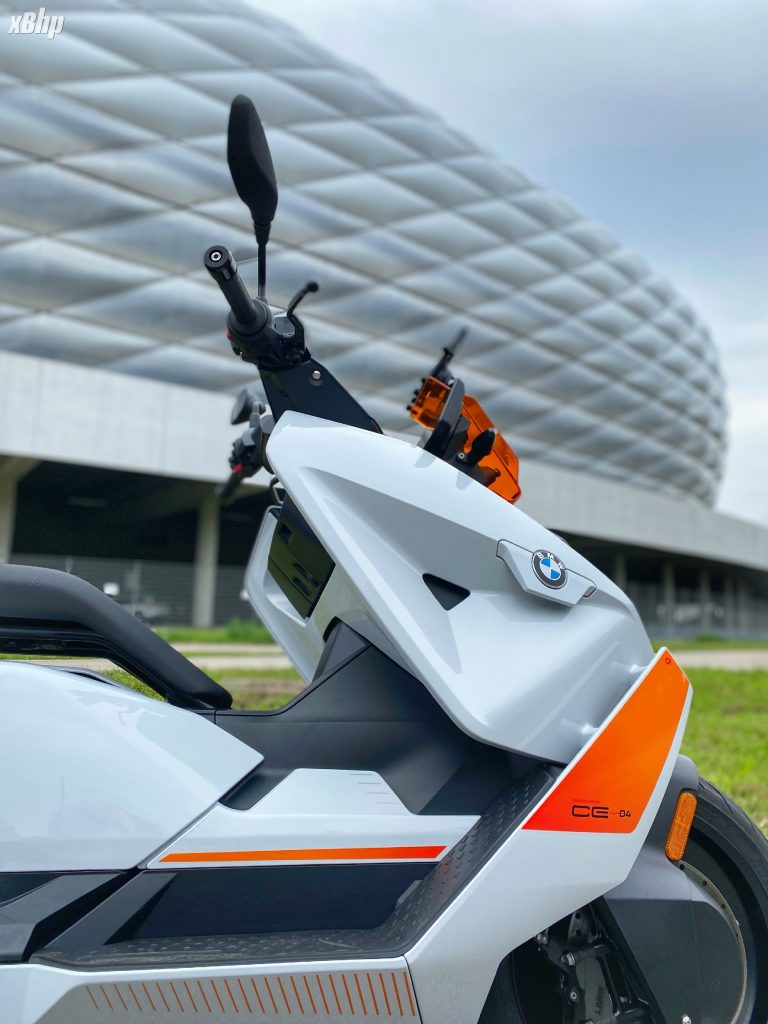
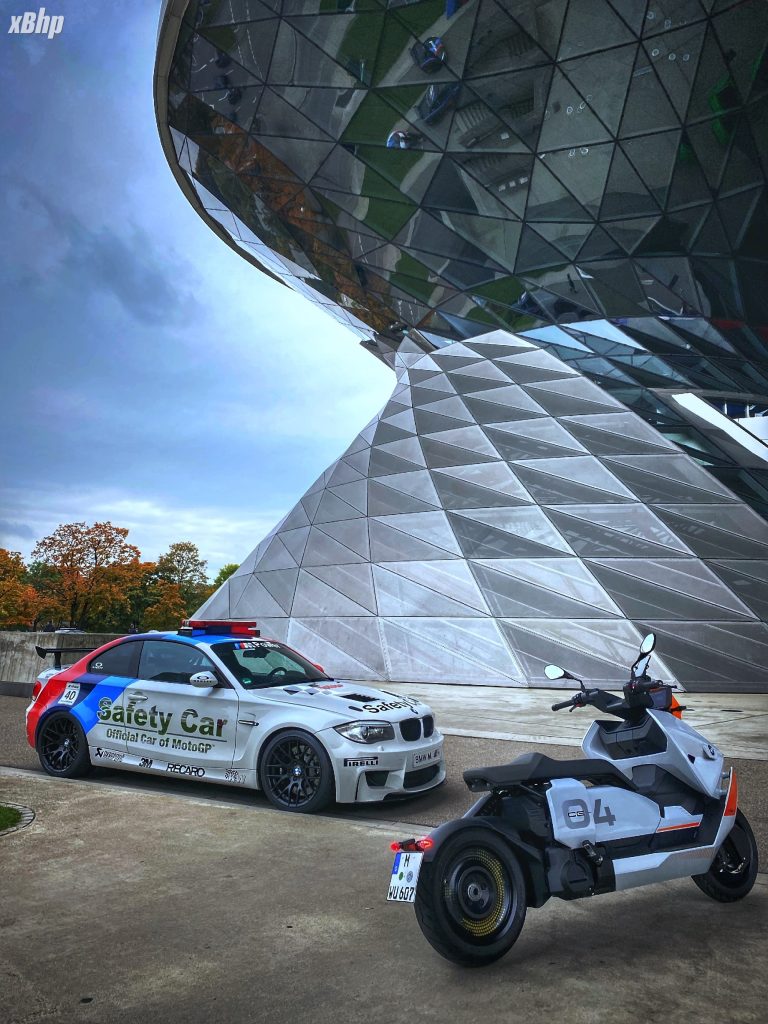
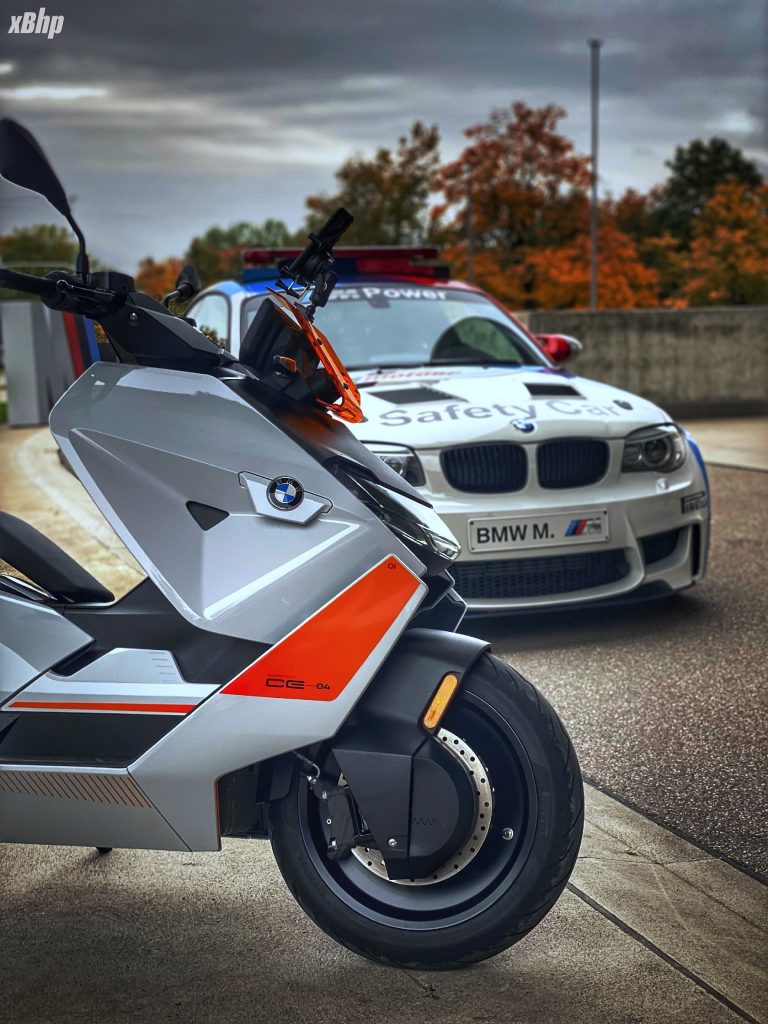
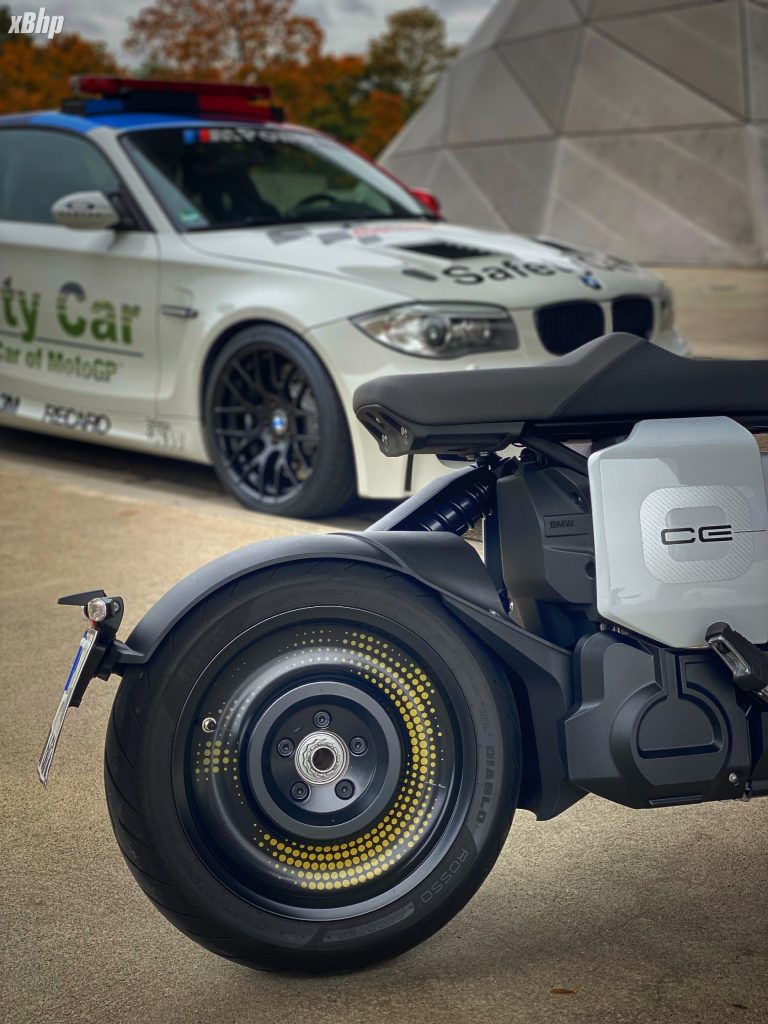
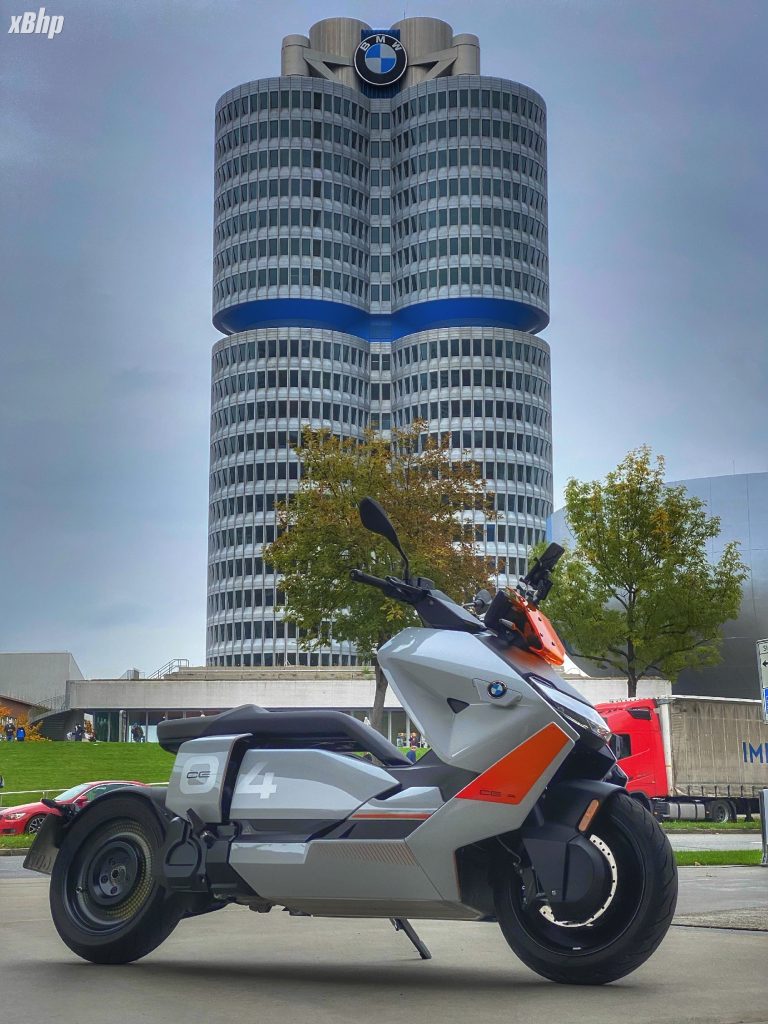
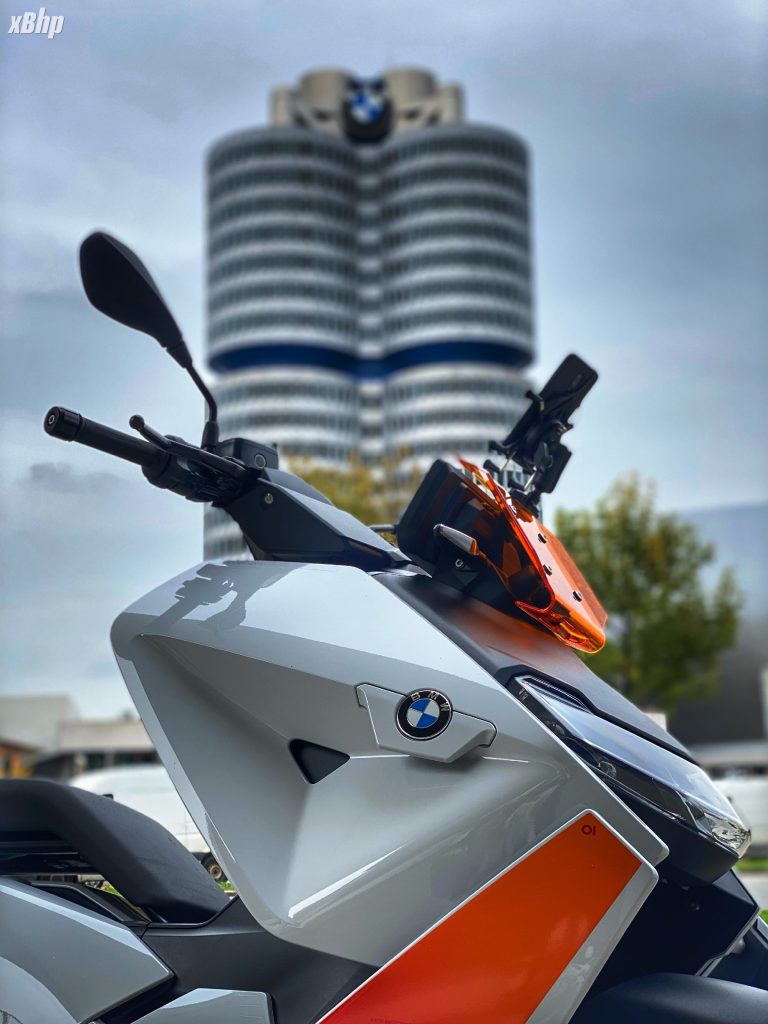
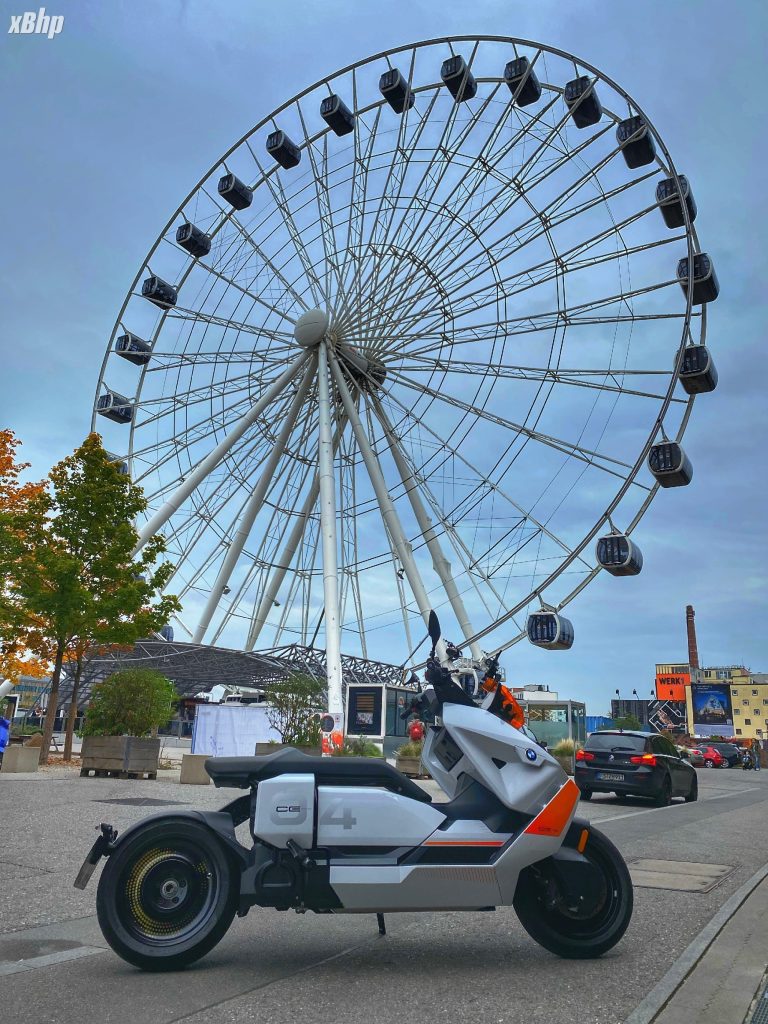
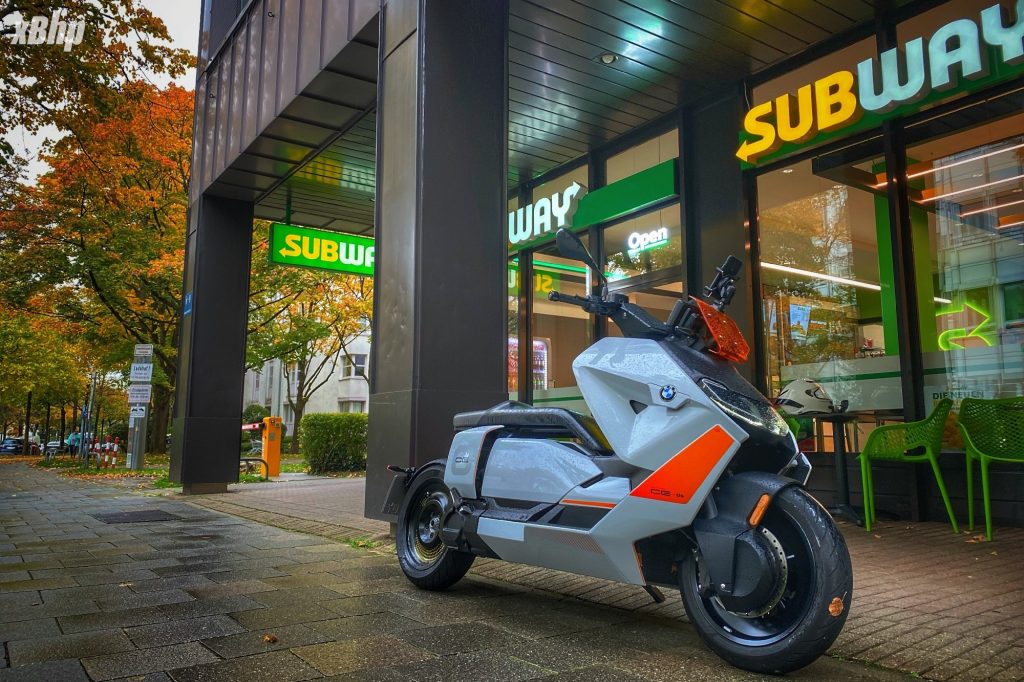
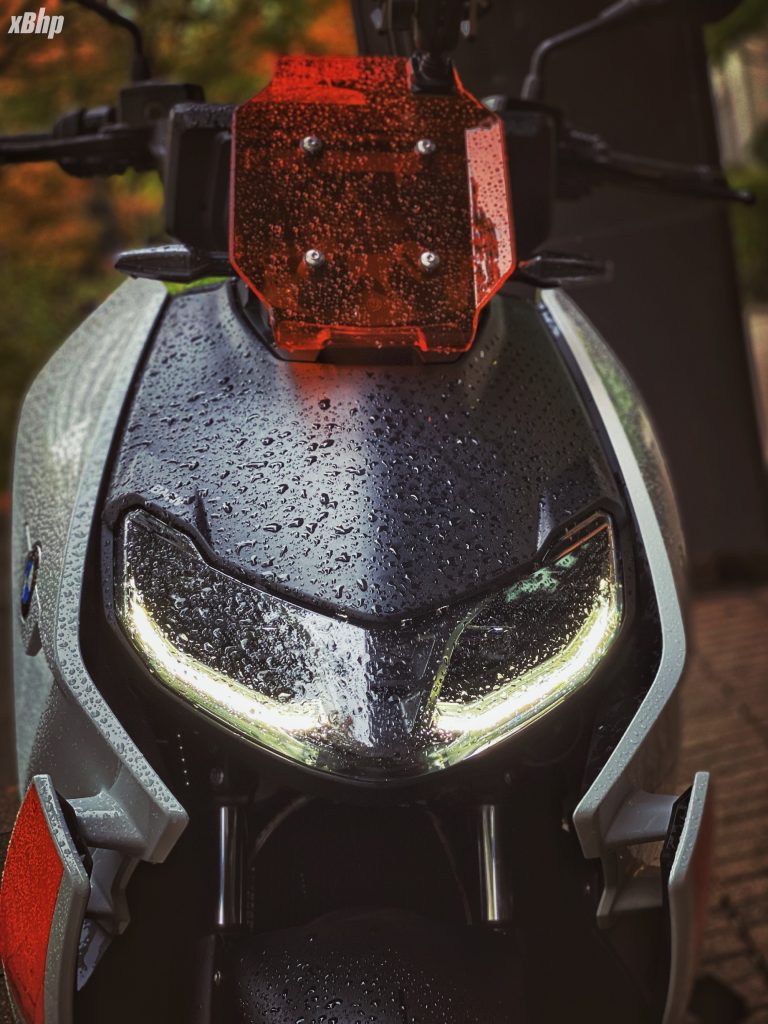
Bikes,BMWCan you imagine what the future looks like? We all have our own renditions of it but most of it is in our minds. What if I were to tell you that there’s one out there that you can actually experience? Predictably, it’s German and since we are all for life on two wheels, it is a two-wheeler. I won’t keep you waiting or guessing for too long, so, it is called the BMW CE-04 and it is the Bavarian marquee’s take on what an all-electric maxi scooter should be like.
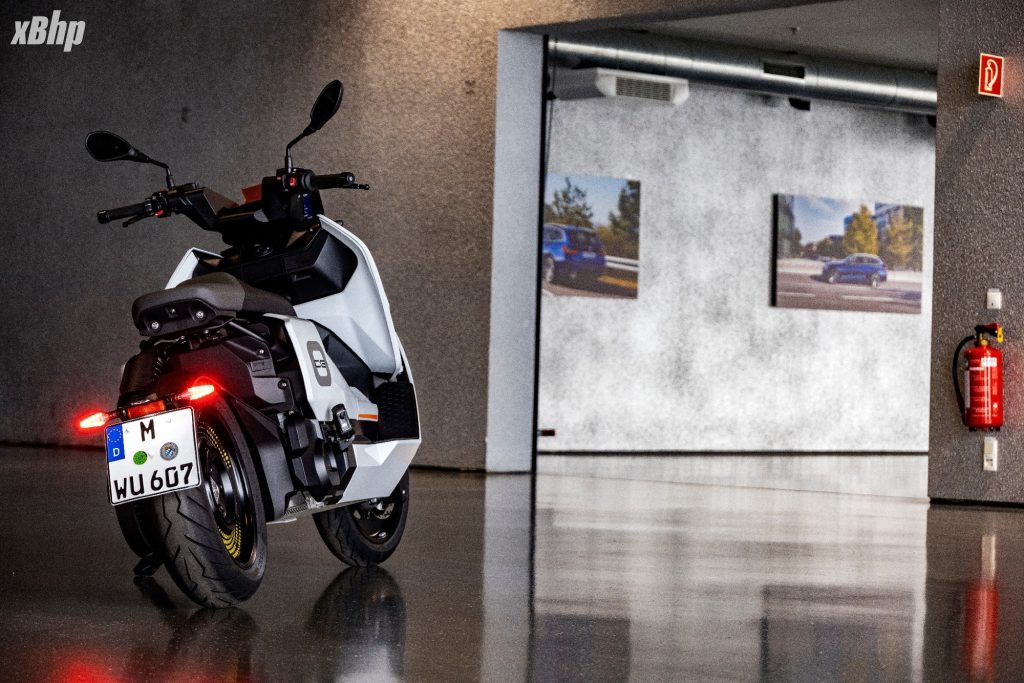
On my latest trip to Europe, I got to take the CE-04 for a spin around Munich. And just Munich because range anxiety is still a pretty real thing. Not as real as it was a while ago because the infrastructure for EVs has come a long way, but it is still far from what we are used to with the ICEs. Though I did not get much time with it due to a tight schedule, there was enough for a brief discussion on what the BMW CE-04 is all about.
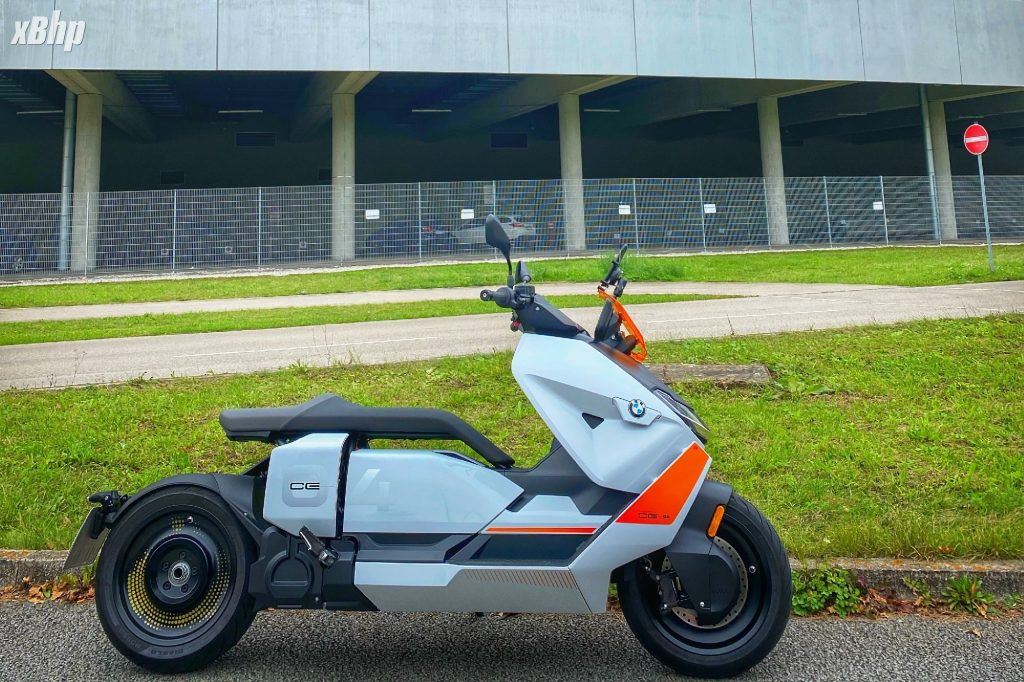
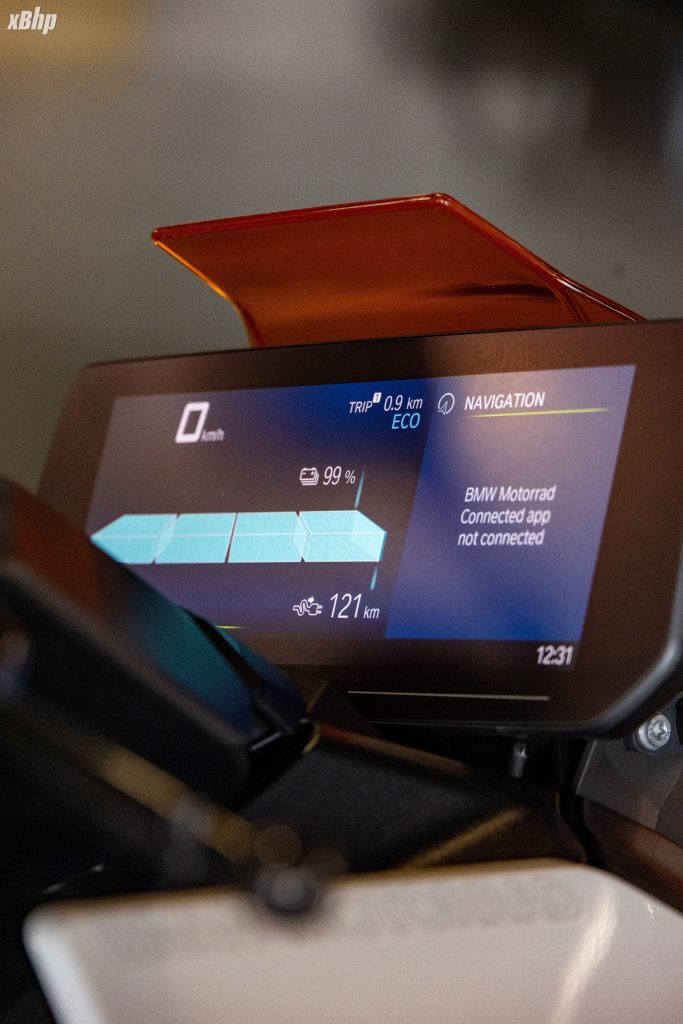
In terms of specifications, we get a liquid-cooled motor with a 6.2 kWh motor with an option for power reduction that helps with the range. The maximum power sits at a healthy 42 bhp and the torque at a pretty impressive 62 Nm. With the standard charger it gets to 100% in 3.5 hours and with the optional quick charger, you can get to full charge in around an hour and 40 mins. The range is touted to be around 130 km, but expect that to be lesser in the dynamic mode with a topping of some spirited jaunts.
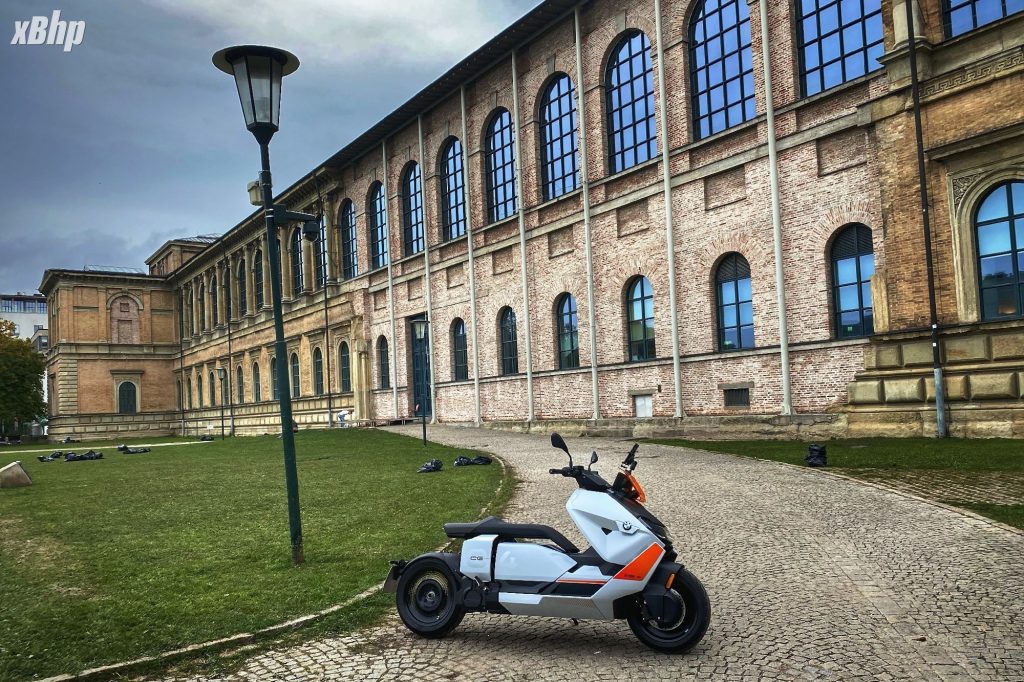
First up, the ride. It is quite awesome and a bit more than what you expect from an EV. Instant acceleration is expected but the kind of throttle response BMW has been able to dial in is commendable. It is instant and yet, predictable. Unlike quite a few EVs, it is not jerky or spotty. Acceleration is acceleration but deceleration is even better. Not only is it meant for regenerative purposes, but it can also be used as an effective tool to let the brakes rest most of the time. It is almost like engine braking but a whole lot better than most ICEs.
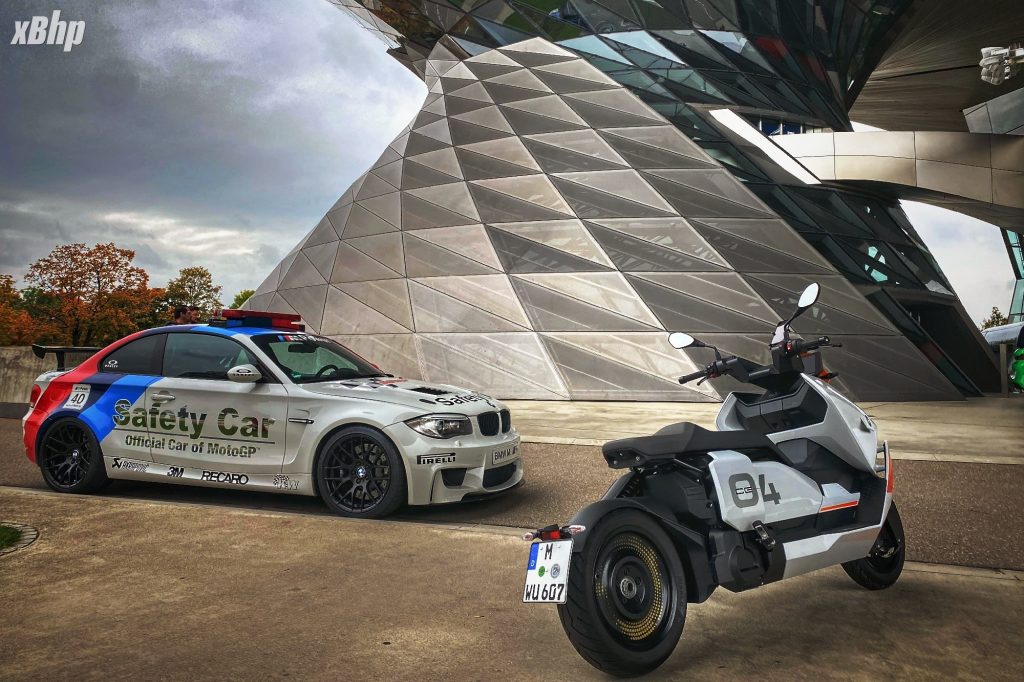
In terms of dynamics too, I really liked the BMW CE-04. The battery pack resides beneath the floorboard and that means a low CoG which translates to steady and good handling. Moreover, the long wheelbase of the CE-04 ensures great straight-line and mid-corner stability. The minor drawback of that wheelbase is a little sluggishness when trying to transition from one side to another.
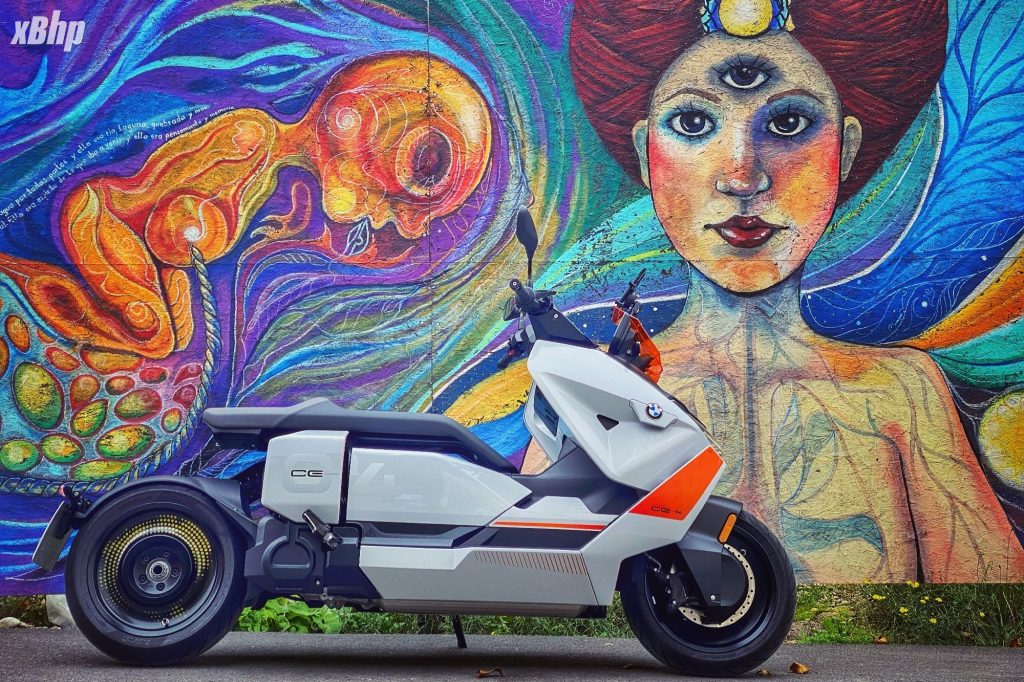
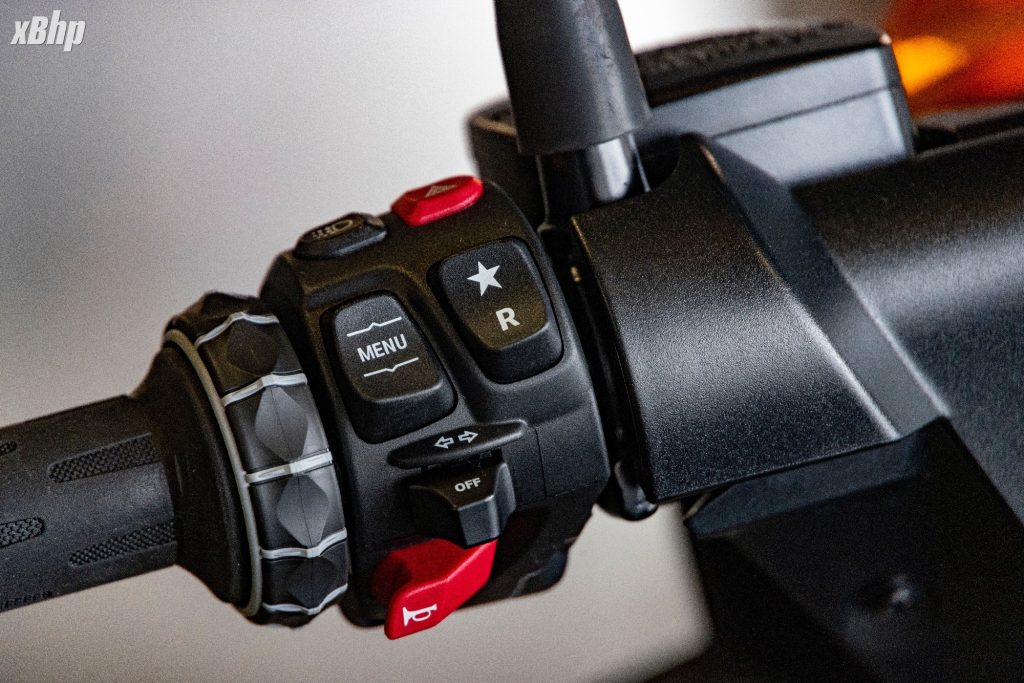
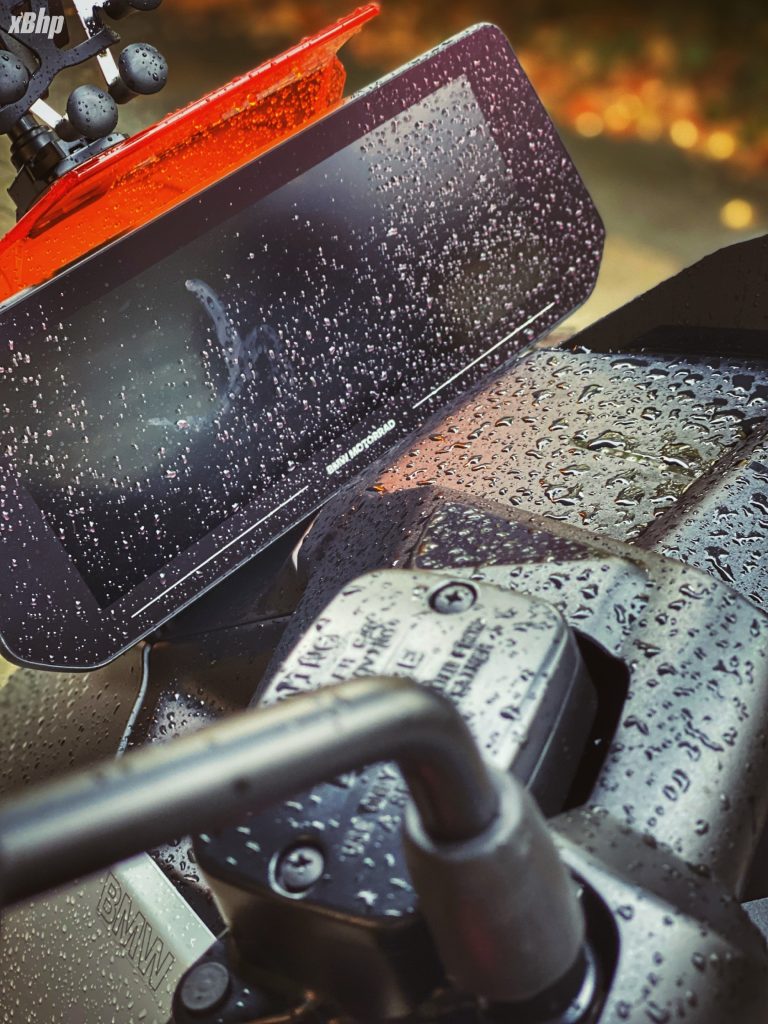
The best bit about the scooter is the tech and at the centre of it is the humungous display. Crisp and bright, navigation or whatever else you can think of doing on the screen is intuitive and fun. Overall, I feel like the BMW CE-04 is quite a tool in the city for regular commutes with occasional dashes of a fair bit of fun. Not quite there yet but if this is a sign of things to come in the future, sign me in.
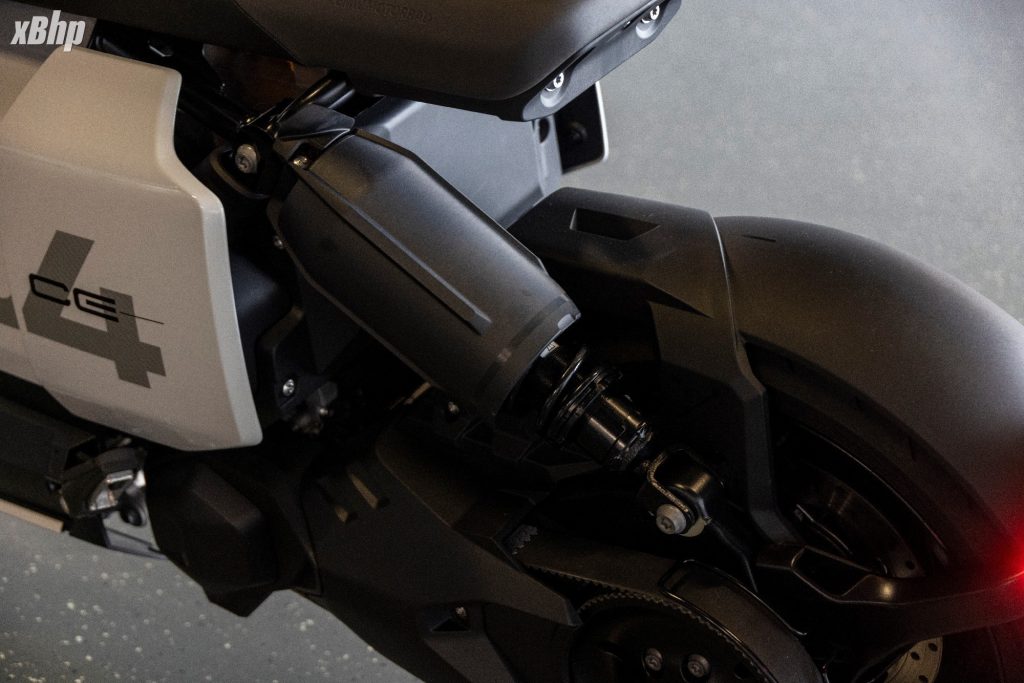
BMW K 1600 B – Just Bag It!
 Jun 2023 Sundeep Gajjar
Bikes,BMW
Jun 2023 Sundeep Gajjar
Bikes,BMWThe BMW K 1600 B is an amazing machine. The first time I rode one of the motorcycles from BMW’s inline-6 platform was the full-fledged BMW K 1600 GTL. I rode it from Los Angeles to New York in 2011. The engine of the current-gen remains more or less the same apart from some tweaks to the powerband. And that is not a bad thing. Why fix something that ain’t broken? And BMW’s inline-6 is a marvel of engineering. Simply put, it is a stupendous engine.
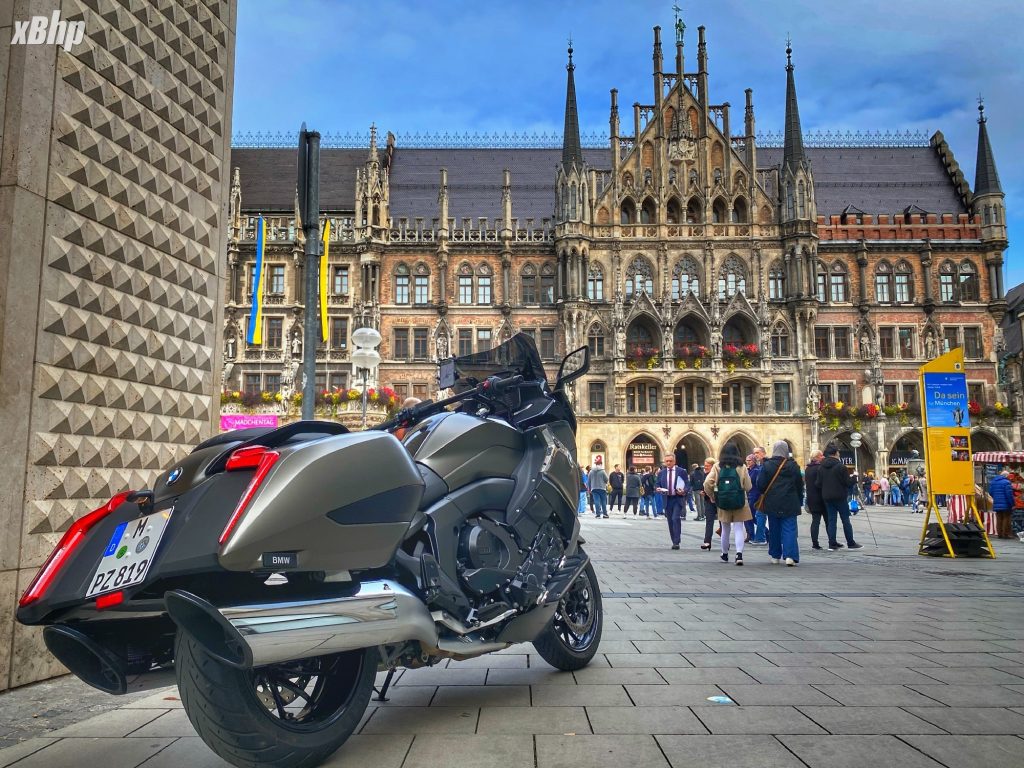
So this particular platform from BMW is timeless. If you have not ridden an inline-6 before, it is difficult to fathom how smooth and vibration-free this engine is. Despite its smooth manners, it is quite powerful too and as a result, the motorcycles on this platform can really shift. In that sense, it personifies the adage- smooth as a hot knife through butter. And this might seem like an exaggeration but if not for the smooth rumble that emanates from the exhausts, it’d feel like an electric motorcycle.
Talking about Europe, I have ridden one here too; a K 1600 GTL Exclusive Edition in 2017. But this time, I picked up the K 1600 B where the B stands for Bagger. Personally, speaking, this is the best-looking model in the lineup. I have always had a thing for futuristic machines such as the Rocket 3 R and the Ninja H2. The K 1600 B fits that bill too.
I had a choice between the K 1600 B and the M 1000 RR for my Iron Butt (Saddlesore 1600 covered elsewhere in this issue). I ended up going with the latter. While the K 1600 B is a mile-muncher, it is limited to 200 km/h, probably due to reasons alluding to aero. Some say that they have intentionally limited the speed because most people who ride this motorcycle come from Harley-Davidson who has not seen speeds like that for a while, who knows, the jury is still out. But for the Autobahn, 200 km/h is slow and so, I went with the M 1000 RR.
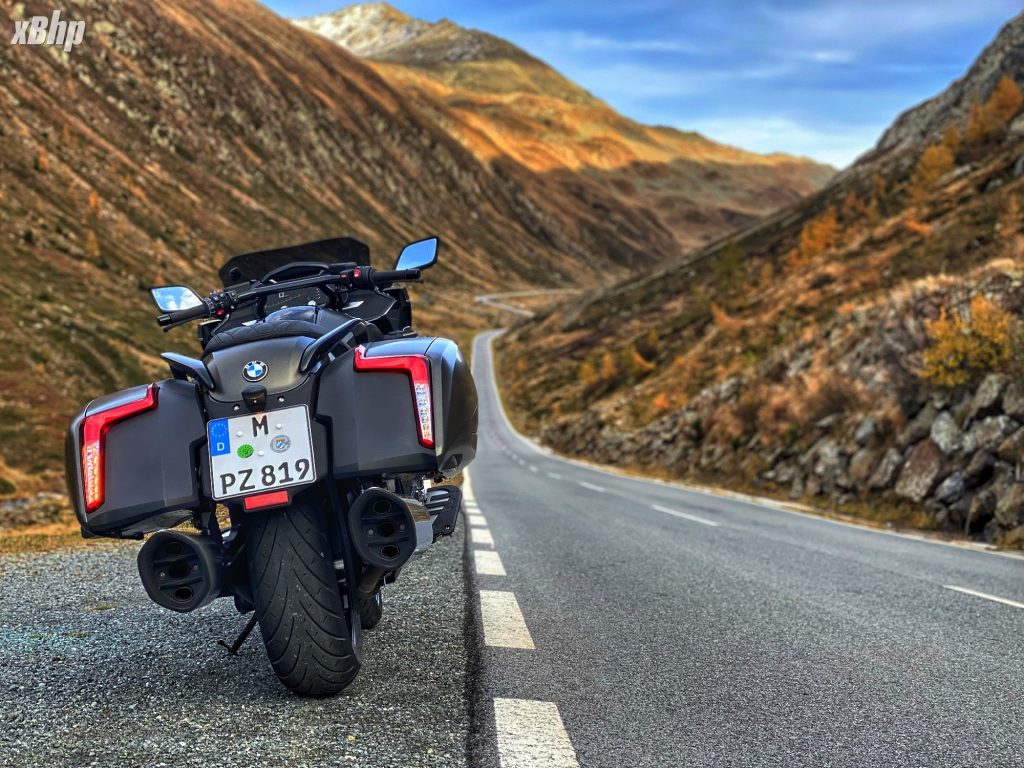
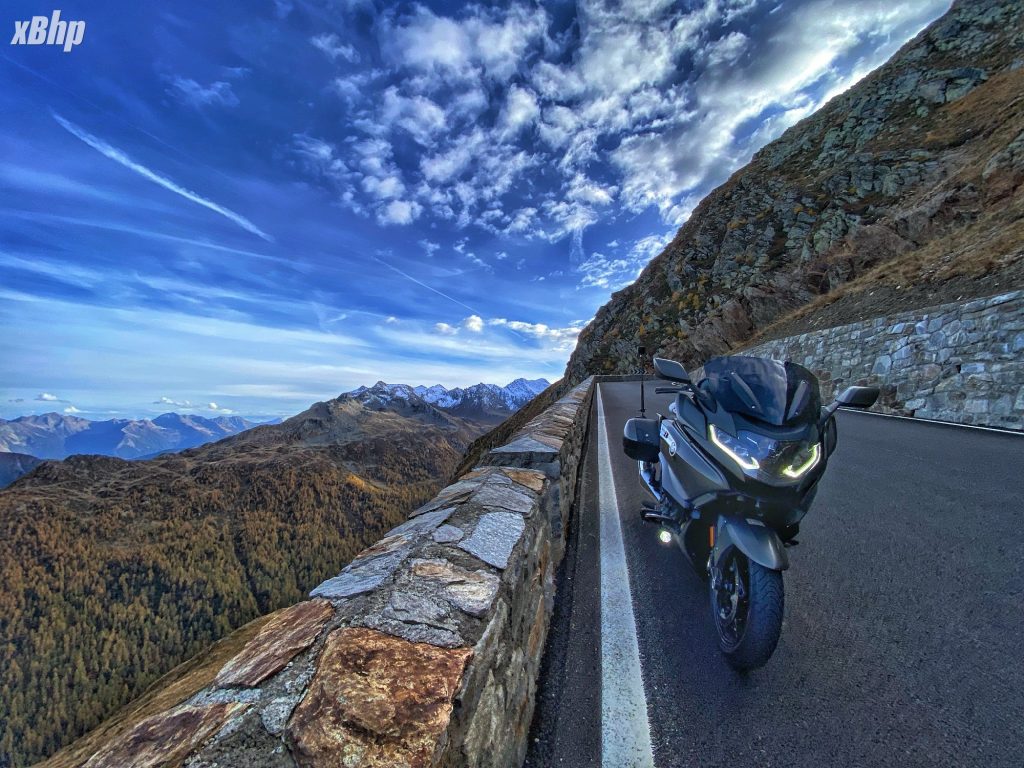
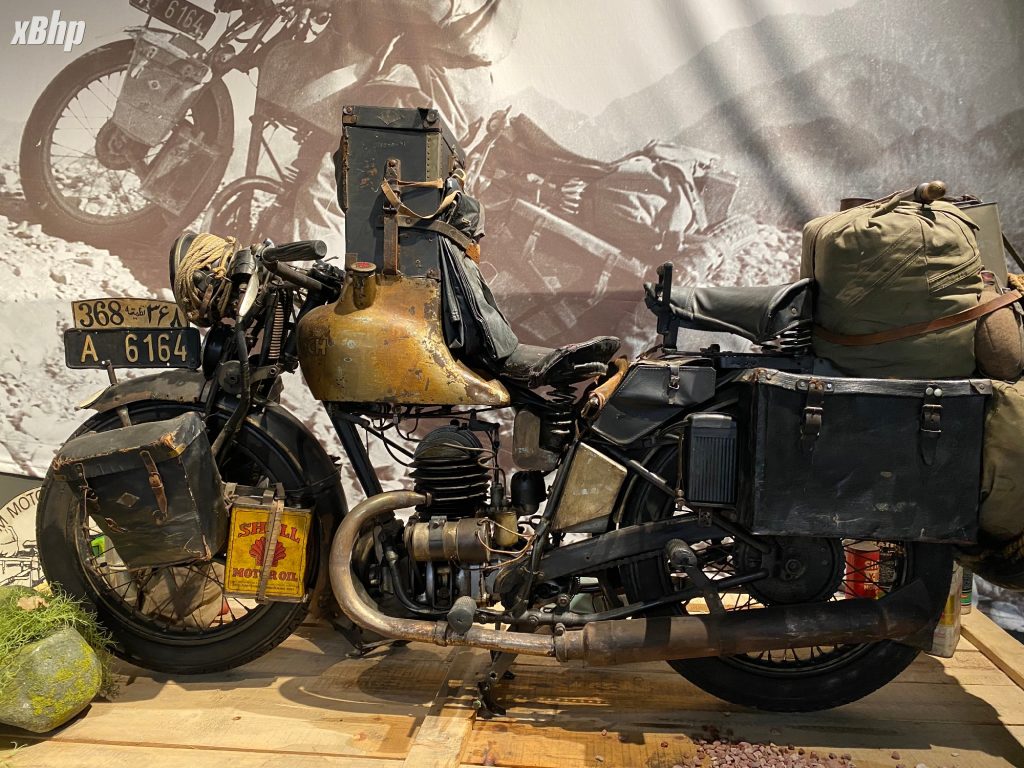
But this was the perfect bike to explore a couple of bends in the European Alps. And I chose to head out from Munich to the beautiful Austrian town of Innsbruck by crossing over the Timmelsjoch mountain pass (8,117 feet), bordering Austria and Italy. Aside from the beautiful scenery, the pass itself has a motorcycle museum which is the highest-located motorcycle museum in Europe’.
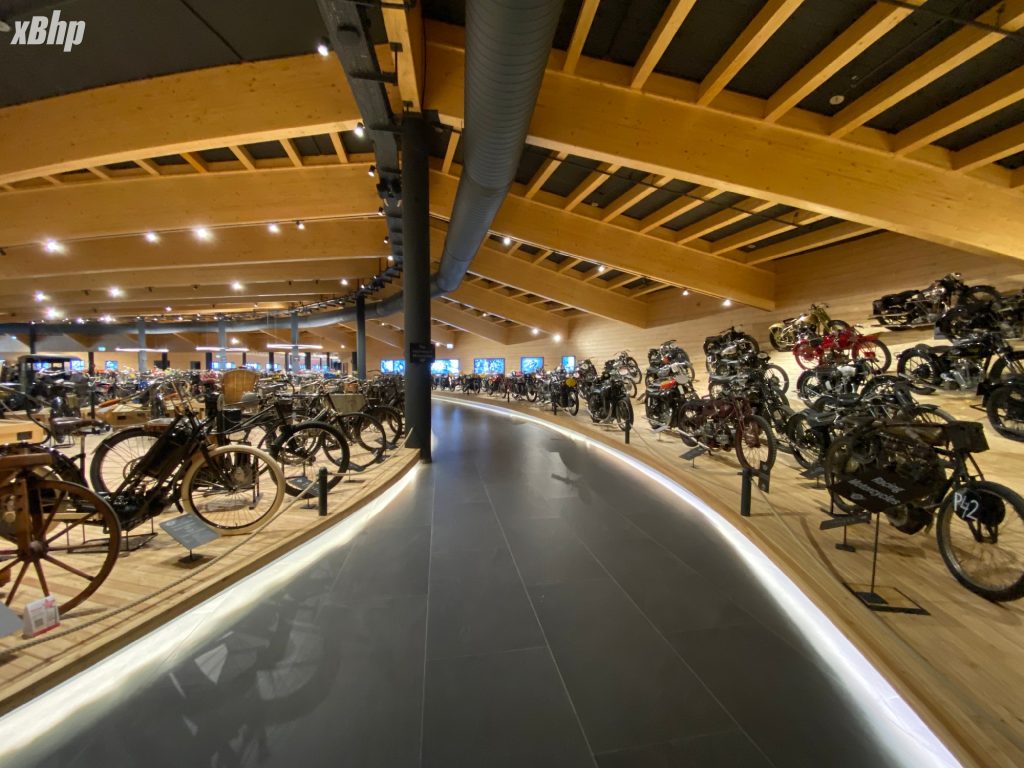
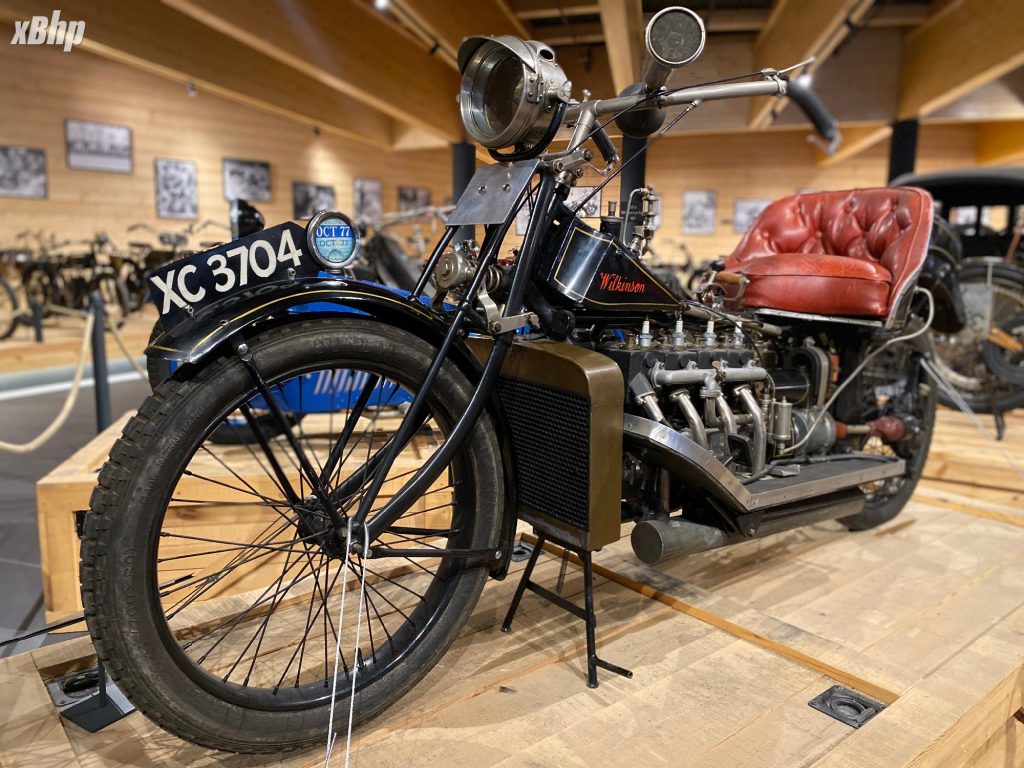
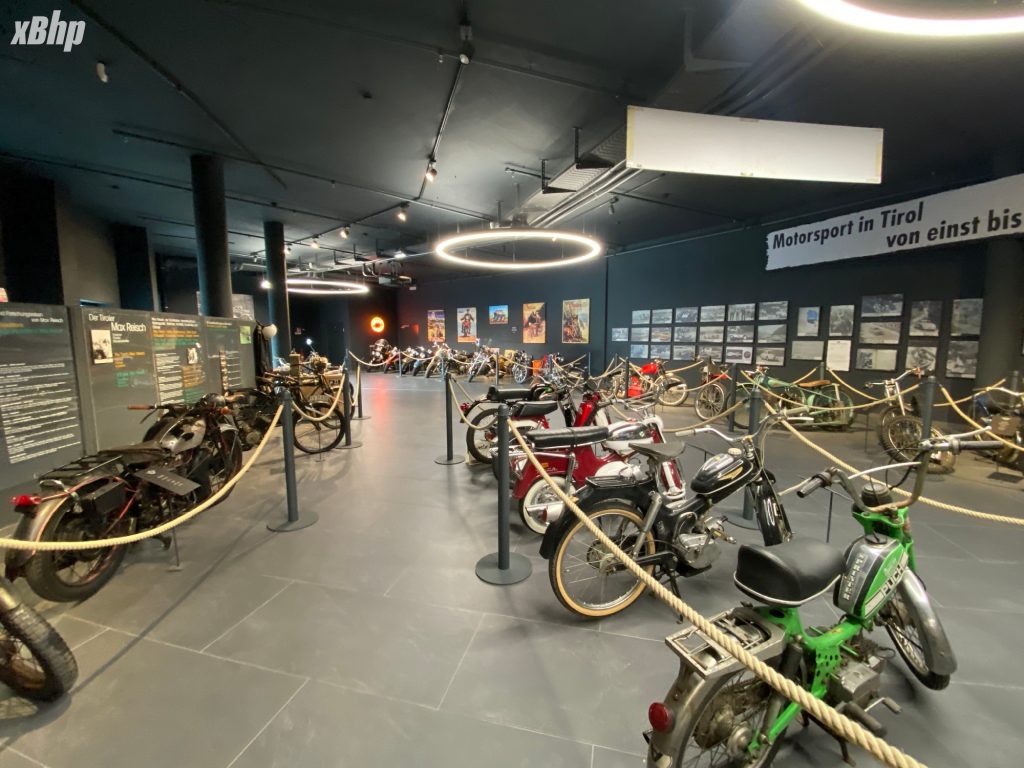
I was blown away by the 200-plus motorcycles from over 100 manufacturers displayed in absolutely beautiful fashion over 3000 square meters. There were many motorcycles I had only seen scale models of and some I didn’t even know about. But it was a shock as to why a museum like this was not situated in a more accessible place such as Munich or Innsbruck. Regardless, riding to this museum was an experience too.
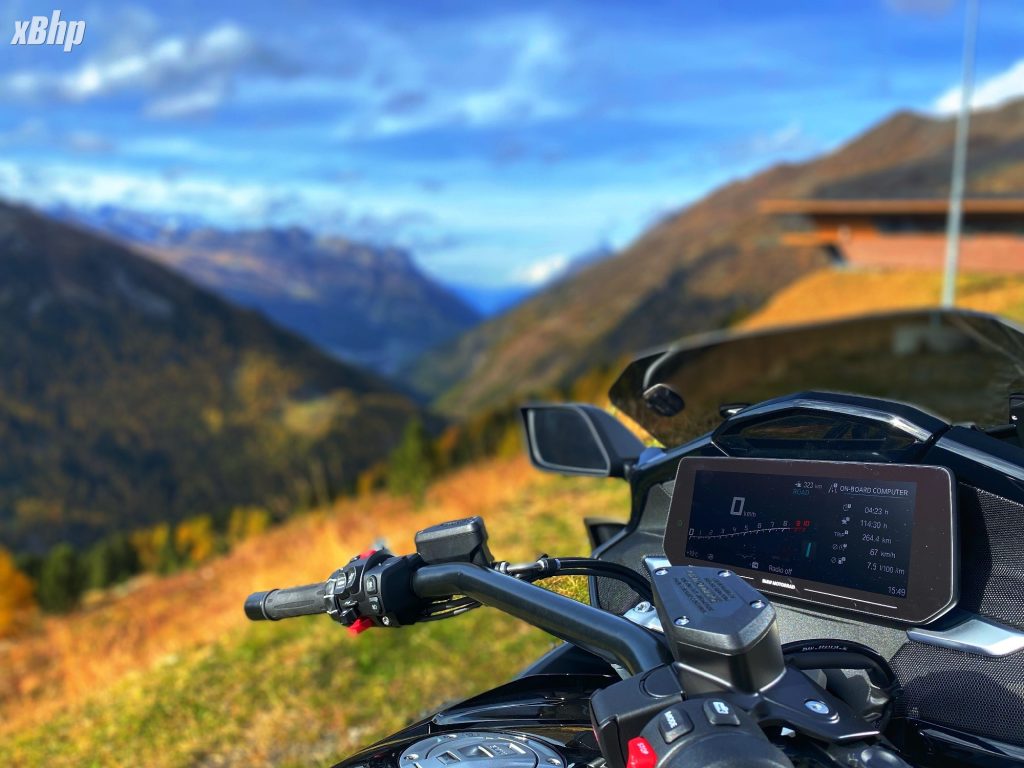
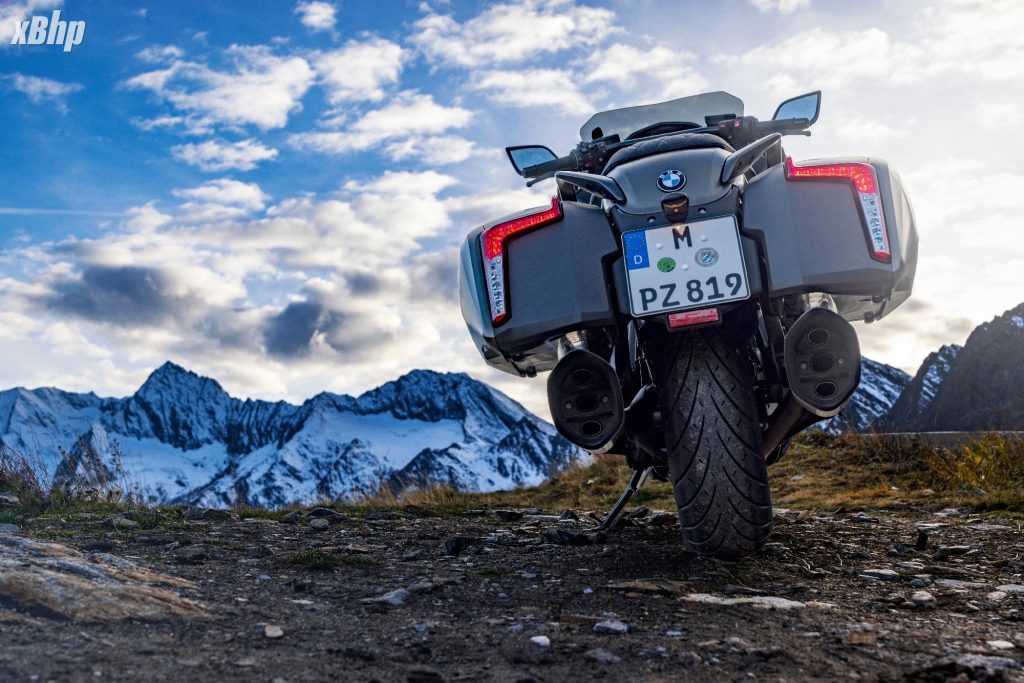
Coming back to the bike, the highlight is the engine and the tech. The 1,649cc inline-6 generates 160 bhp of power and 180 Nm of torque. More than enough for most things, except the Autobahn that is. In terms of tech, this motorcycle is loaded, really loaded. A brilliant music system, adaptive LED headlights, an integrated smartphone charging and storage compartment, configurable favourite buttons, ample rider aids, and a brilliant new 10.25-inch full-colour TFT console complete the spaceship look. Ideally, the BMW K 1600 B has everything you need for long distances, including boatloads of storage and floorboards. The latter albeit limits the top speed to around 180 km/h.
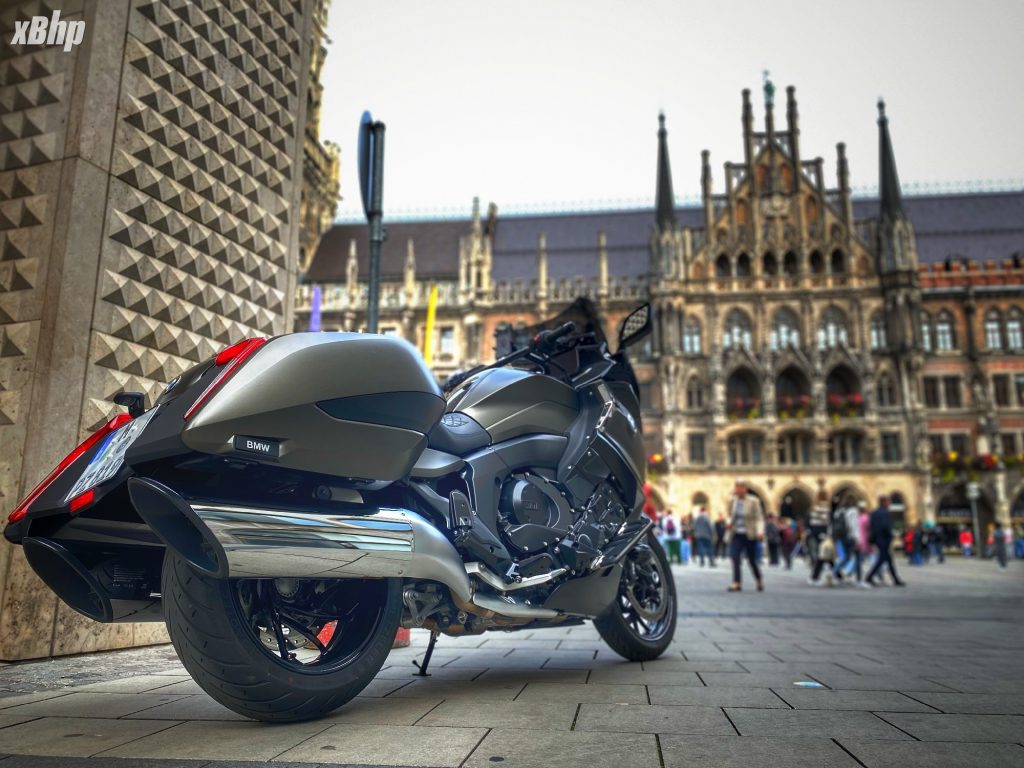
Dynamically, I quite liked the BMW K 1600 B. Despite the massive kerb weight (344 kg), it was easy to manoeuvre. When things get bendy, the K 1600 B still retains its composure but side-to-side transitions are predictably hefty. The long wheelbase and the weight make it greatly stable at highway speeds on the Autobahn it felt a little fluttery. Close to its advertised top speed of over 200 kays an hour, it felt like it was a little airy. Regardless, you are not going to find a road like that in a lot of places and for all else, it is more than enough.
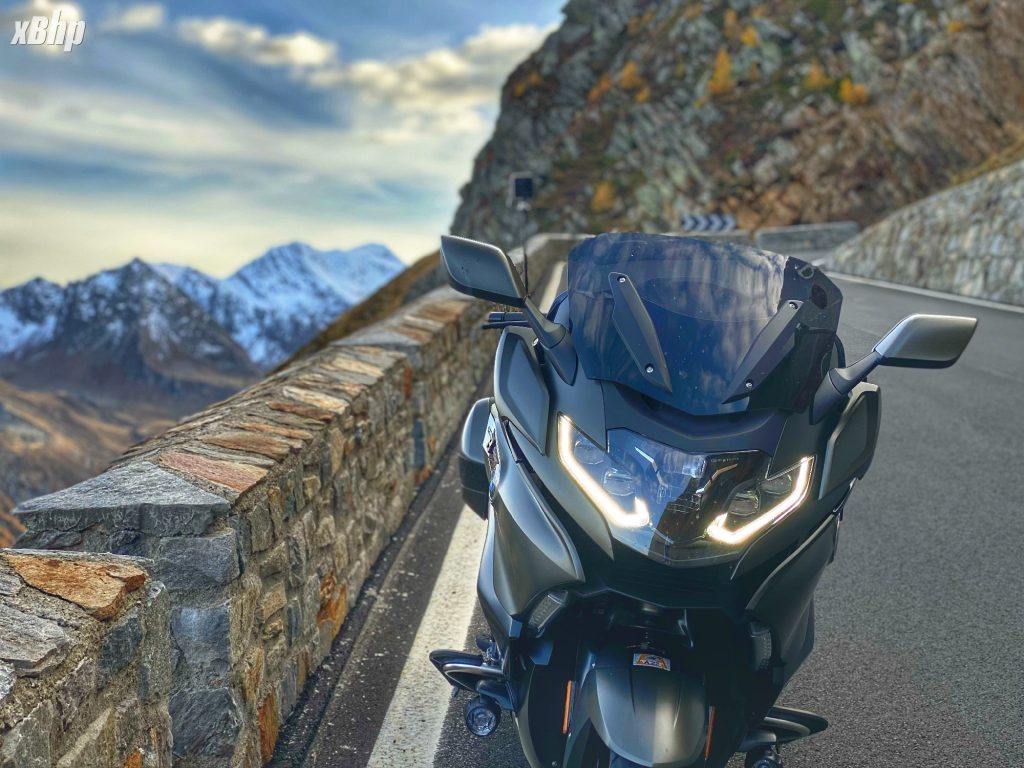
In the end, how is the BMW K 1600 B? Brilliant. Would I buy it? Yes and no. Yes, for all that it is and no for the fact that despite being the fastest bagger on the planet, it cannot keep up with the Autobahn. To me, that is German engineering vs German engineering. Thinking about all that, now I need some Italian coffee. Time to ride elsewhere.
MINI Cooper S | Modern Take. Classic Roots.
 Jun 2023 Sundeep Gajjar
Cars
Jun 2023 Sundeep Gajjar
CarsWe all remember The Italian Job, right? One of the things that made the movie great was the heist and the ensuing chase sequence. And the thing that made those scenes great was MINI. A quick and diminutive hatchback blazed through the city, the traffic, the subway, and whatever else was in its way; the movie did a lot to popularise MINI and bring its charm to the fore in pop culture. But even before that, MINI was already a popular hot hatch that had already made its name on the world stage.
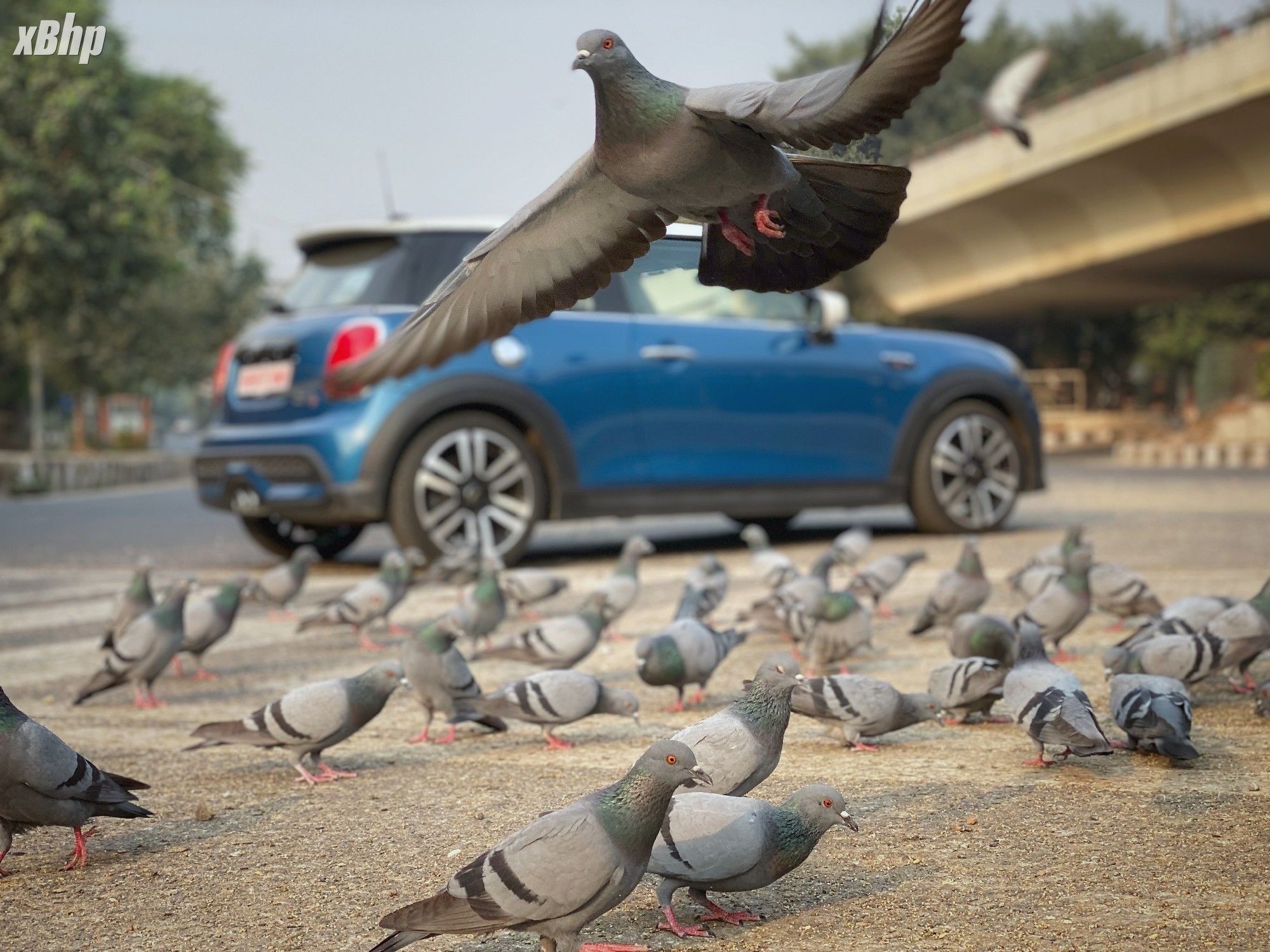
We thought that and read all that up while being out and about in the MINI Cooper S that we had for a few days. As we were preparing for the #roadTripUnited2022, we needed something to move around in the city, and sometimes, rather quickly. Our Mahindra Thar may work well as an all-terrain cruiser, but in the tight city traffic, there aren’t a lot of cars that can beat a MINI Cooper S. And the folks at MINI India were kind enough to lend us one for a few days.
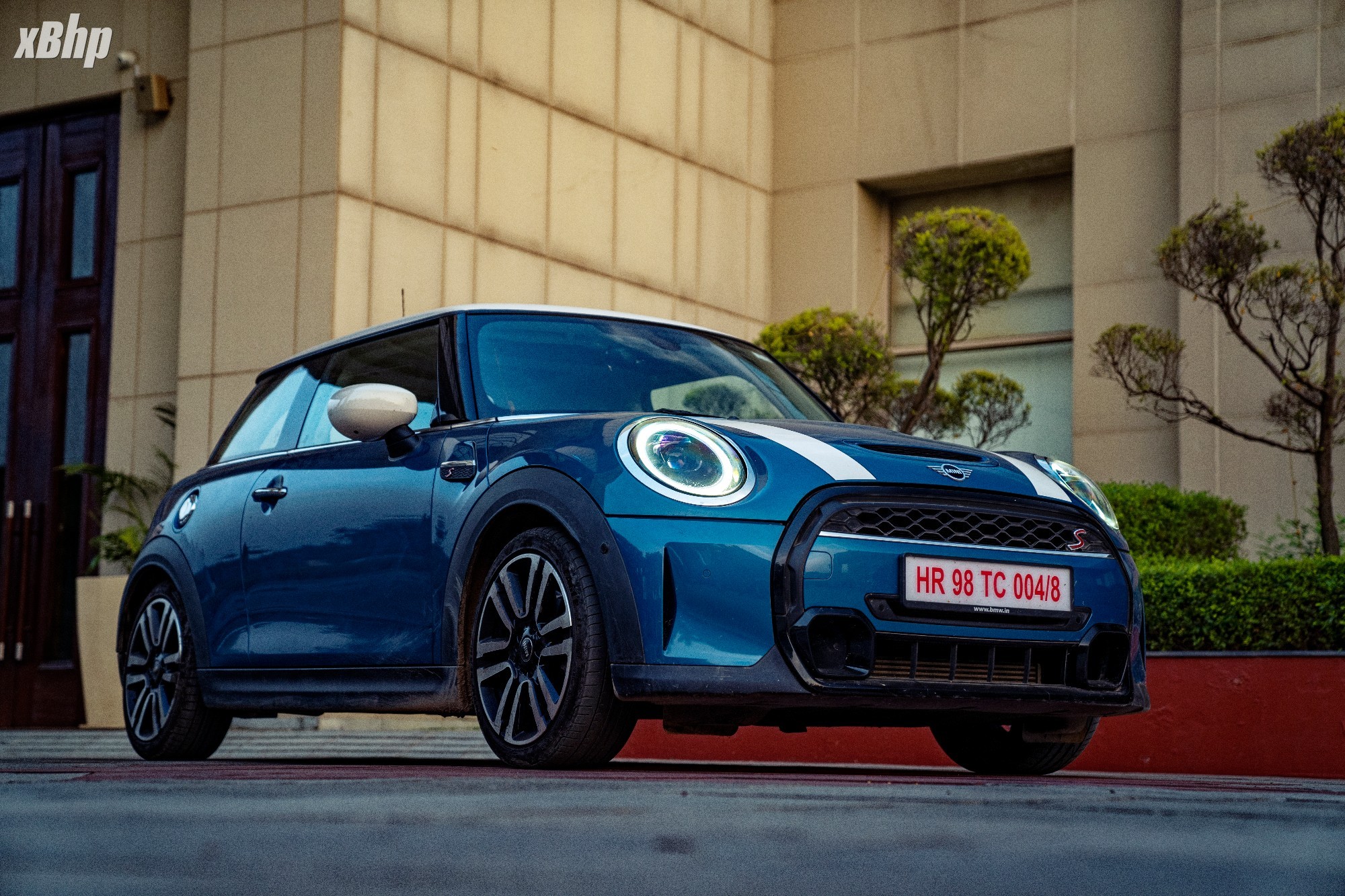
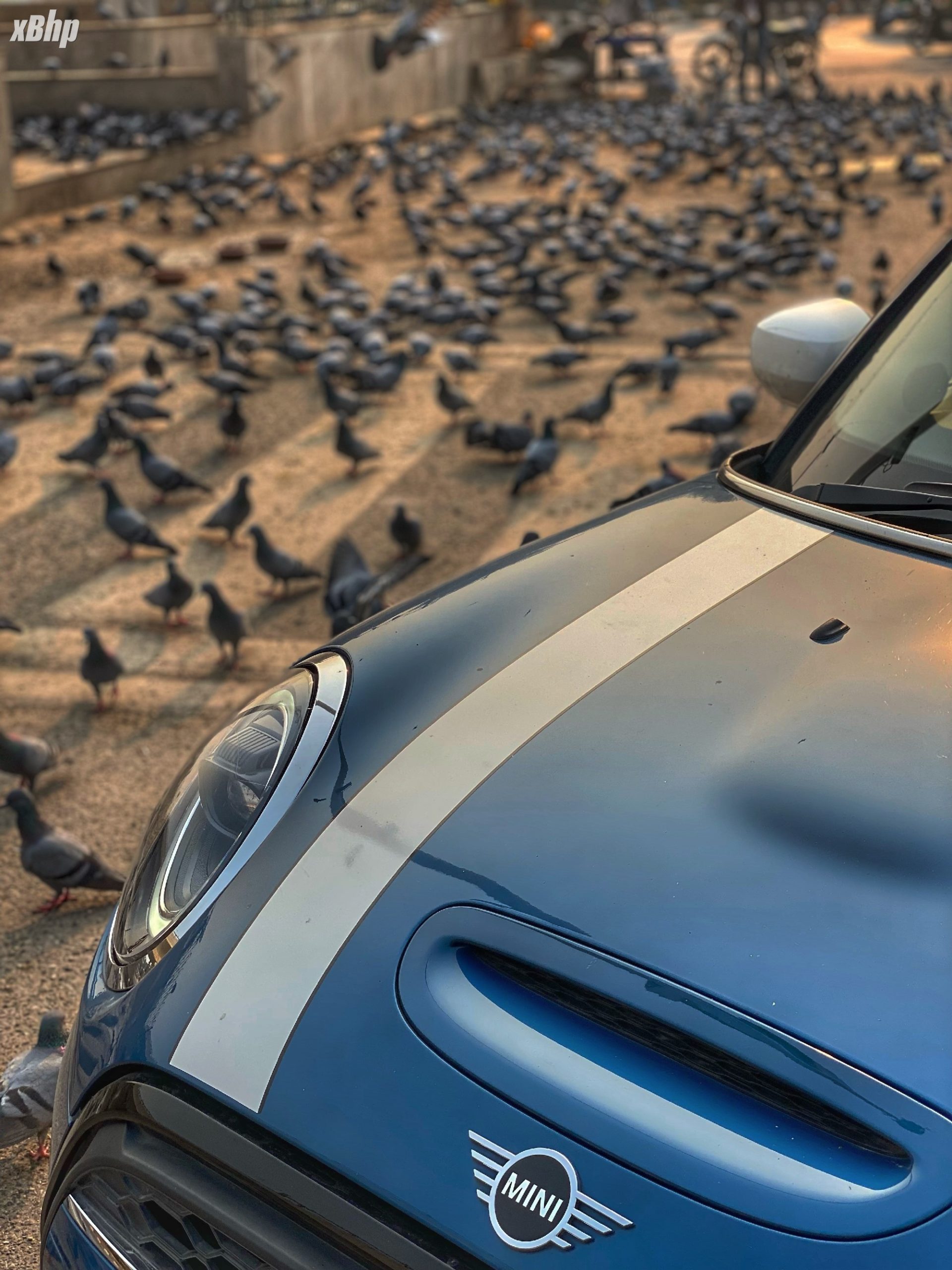
The new MINI Cooper S has stayed true to the classic MINI design but it has also changed its ways with time. The latest one is a seamless mix of classic lines and modern design elements. The classic round headlamps have an LED-DRL surround that looks beautiful. The front bumper is sportier while the taillamps still proudly wear the Union Jack. Engulfed within the modern-classic bodywork is an interior that you fall in love with with the centrepiece being the multi-functional display.
All that aside, what makes a MINI a MINI is its performance, that go-kart feeling. As always, the MINI Cooper S still has that punch that makes it such a delightful car to drive. The 4-cylinder twin power pot gives it nearly 180 horsepower to play with and enough torque to give it the zing it needs to be a slick city car. Another bit that we loved was the 7-Speed Steptronic Sport transmission. It makes the car really tractable and easy to drive in the city but at the same time, it also lets you exploit the 6,000 rpm redline of the engine when the situation calls for some action.

In terms of dimensions, the MINI has grown some but regardless of that, it remains a compact and quick car. The low-slung hot-hatch has a small turning radius and quick steering that makes it enjoyable even when you are not able to make the most of the 180 horses under the hood. Moreover, despite being a car with an FWD setup, most of the negatives are negated by the geometry highlighted by a short wheelbase. And yeah, the adaptive cornering headlights do keep up with the quick turning that this car has!

Overall, we had a lot of fun with the MINI Cooper S and we do every time we get our hands on one. It sure is great fun to see an icon grow with time. Next time though, we hope to get our mitts on the new electric MINI and see how that goes. Regardless, the Cooper S is something we’ll continue to love.
Jeans. Jacket. Bonneville.
 Jun 2023 Sundeep Gajjar
Bikes,Motorcycles,Triumph
Jun 2023 Sundeep Gajjar
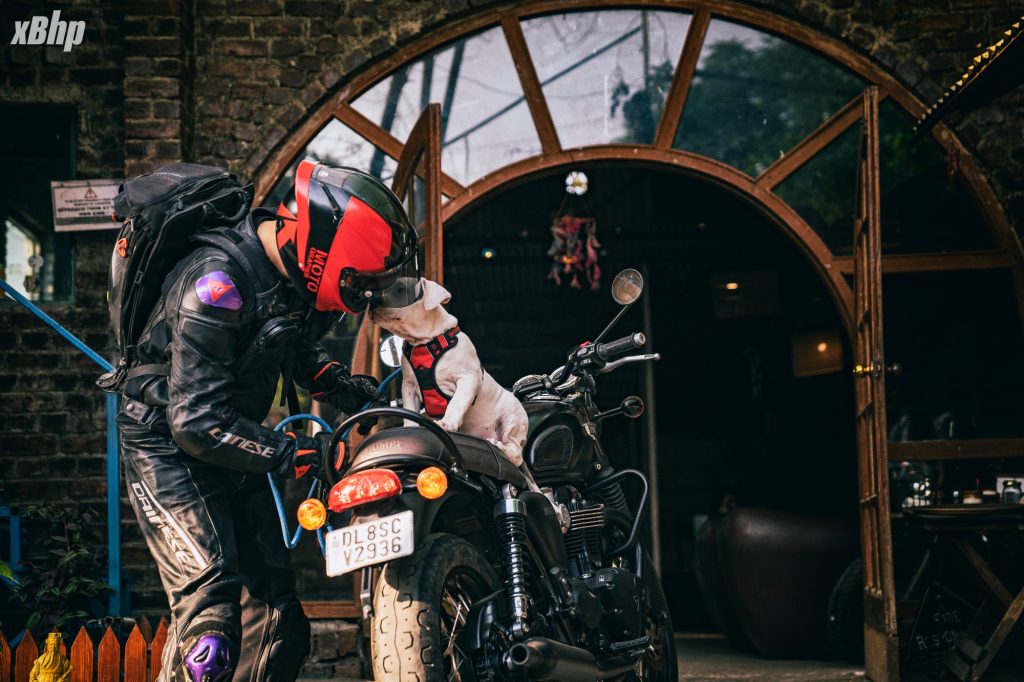
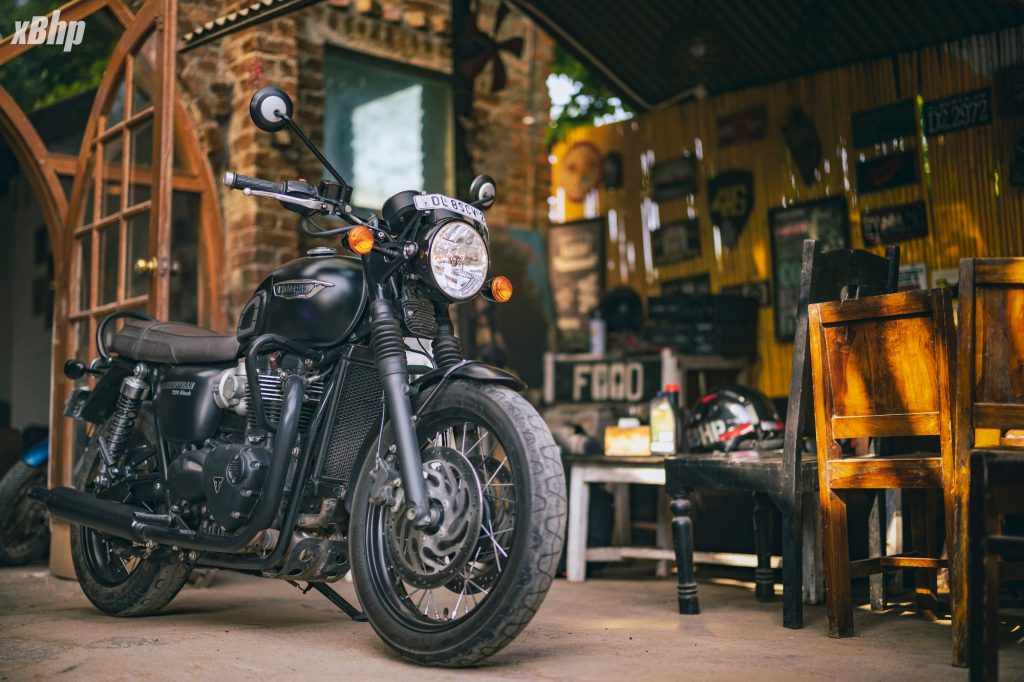
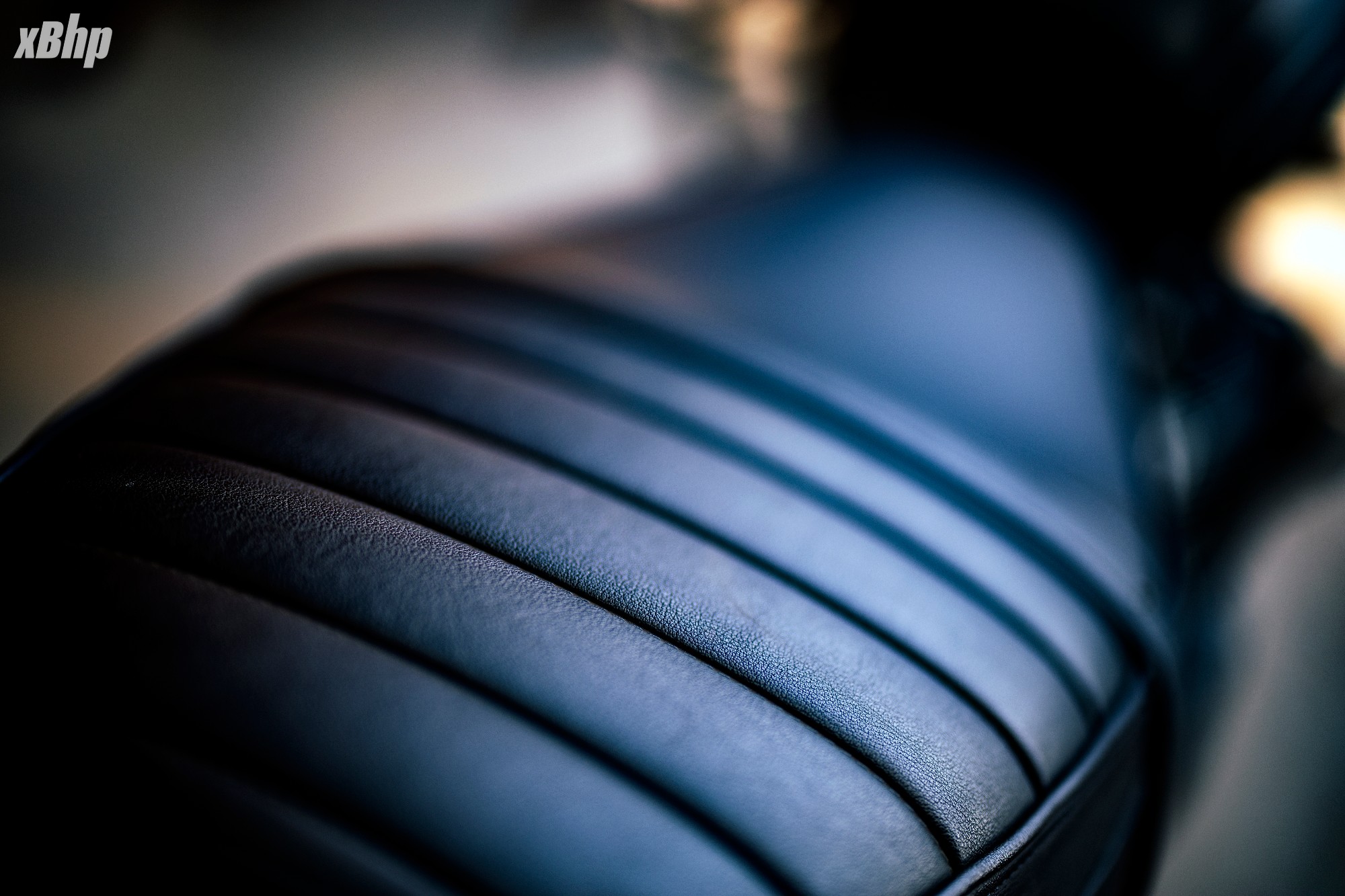
Bikes,Motorcycles,TriumphThere are different kinds of motorcycles out there and they serve different purposes. The classes or categories are defined based on various parameters such as displacement, power, style etc. But there is one classification that stands out and that is ‘feel’. If one were to classify the Triumph Bonneville T120 Black based on ‘feel’, it’d be called the perfect jeans-and-jacket bike.
You can ride the fastest of motorcycles, laden with riding gears of the highest quality. But now and then, one just wants to relax. Bonneville T120 Black is a motorcycle that lets you relax and that is why… jeans-and-jacket-bike. You do not race a clock on it, you aren’t after the highest of lean angles, and you are not out for outright speed. On the T120 Black, you’re out to just ride.
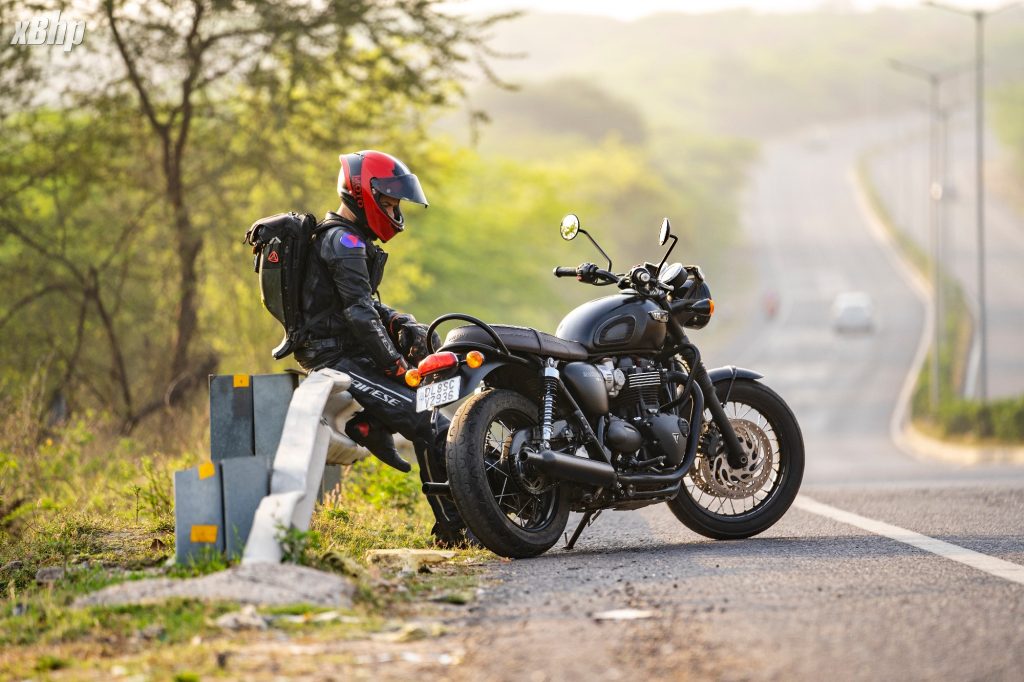
The Bonneville T120 has always been a great motorcycle. Classic British looks, relaxed ergonomics, easy handling, and overall usability. The T120 Black is a blacked-out take on the Bonnie but in the new avatar, there’s quite a bit more going on. Let us take you through our experience of riding this Bonnie.
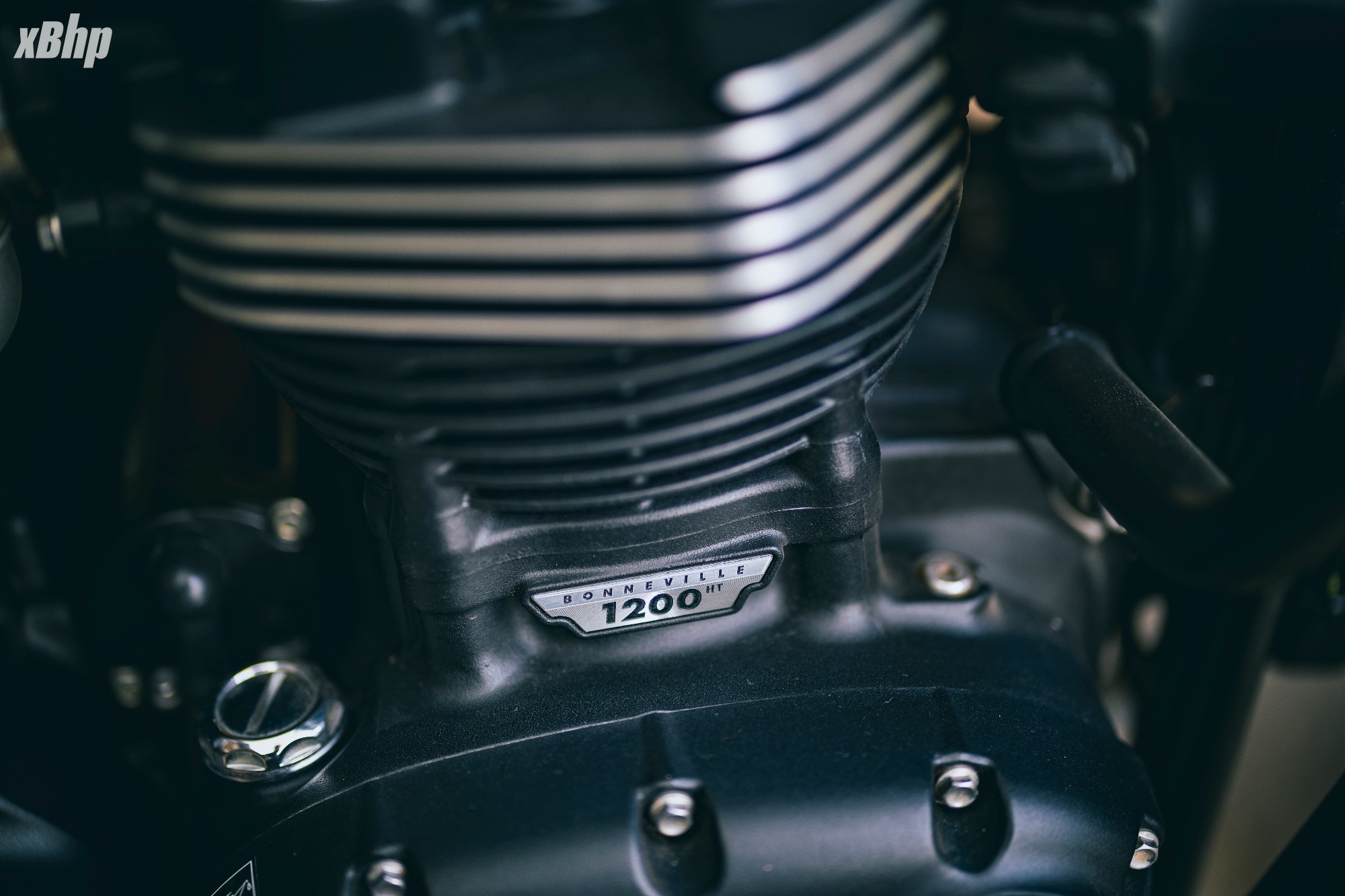
First of all, the engine. The 1200cc parallel twin of the T120 Black makes 78.9 bhp of power and 105 Nm of torque. On paper, these numbers aren’t something to be blown away by, but the Bonneville T120 Black is not that kind of a motorcycle either.
But it can still move, mind you. For 2021, the engine gets a lighter crankshaft. The balance shaft and the clutch have been improved as well. As a result, the engine revs quicker which makes it more responsive. And this, ladies and gentlemen, is where the fun lies!
One can easily be deceived by the laidback retro vibes of the T120 Black but that mill packs a punch. There is an urgency to the way it revs, add to that the grunt available from even low down in the rev range and the T120 can fly if you’d want it to. So before you decide to be too laid back, know that there’s a serious motor spinning away under the T120’s skin.
While the T120 is not a motorcycle you should be doing this on, if you flick off the traction control, you can easily have the front wheel in the air. It is a Modern Classic and not meant for this stuff but hey, it is good to know you can do that whenever you want. So yeah, this Bonnie is definitely a hoot to ride.
The Bonneville T120 Black gets a 6-speed gearbox which is a perfect fit. You can easily sit around 100 kays an hour in sixth with the engine barely working at 3,000 rpm. The exhaust note is bassy but it could have been a little more pronounced. It is just not telling enough of its displacement. But overall, the engine department of the T120 Black leaves barely anything to be desired.

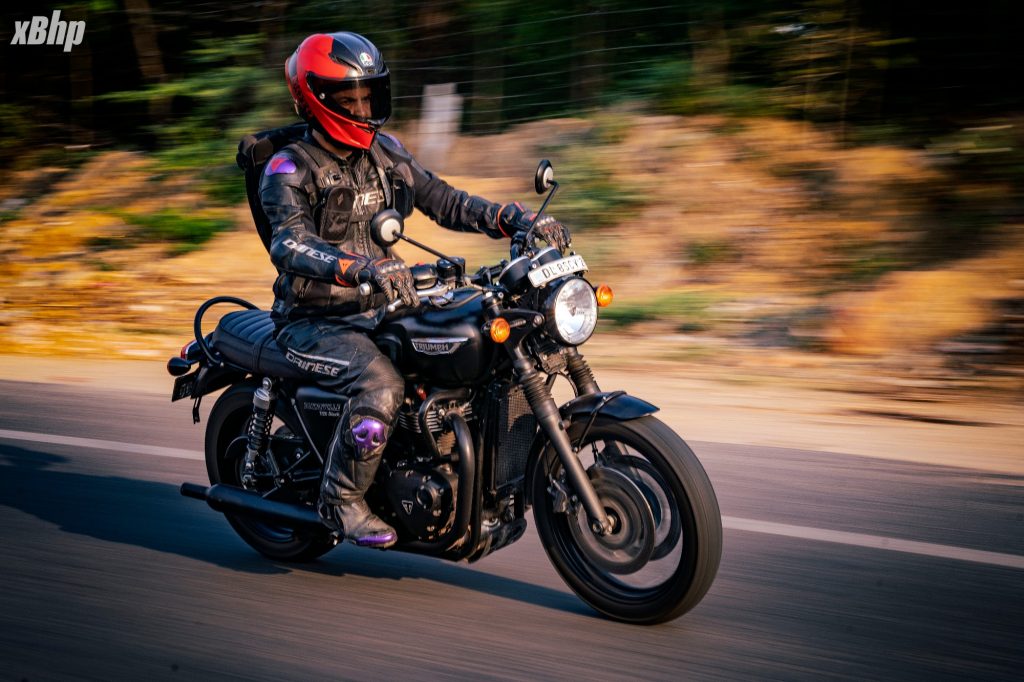
Next up, handling. So, Triumph believes that this is the best handling Bonneville ever. And it is hard to fault their belief. It really does handle like a dream. It is down to weight-saving, yes, but more importantly, weight-saving in the right place. In total, the new Bonnie has lost around 7 kg but the magic trick was reducing 1 kilo from each of the wheels.
Unsprung mass is one of the biggest enemies of agility and that is why a reduction in that mass can bring about significant changes to how a motorcycle feels. The Bonneville T120 feels quick on its feet, be it tipping it into the corners or side-to-side transitions. It is fluid and sublime which makes it a heck of a motorcycle to ride on winding roads.

There is a catch here though. The cornering clearance is rather limited. Pegs start scraping at fairly modest lean angles and if you are not careful, you may end up adding a dash of chrome to its beautifully sculpted exhausts. The motorcycle is not limited by its geometry or tyres but clearance and that alone.
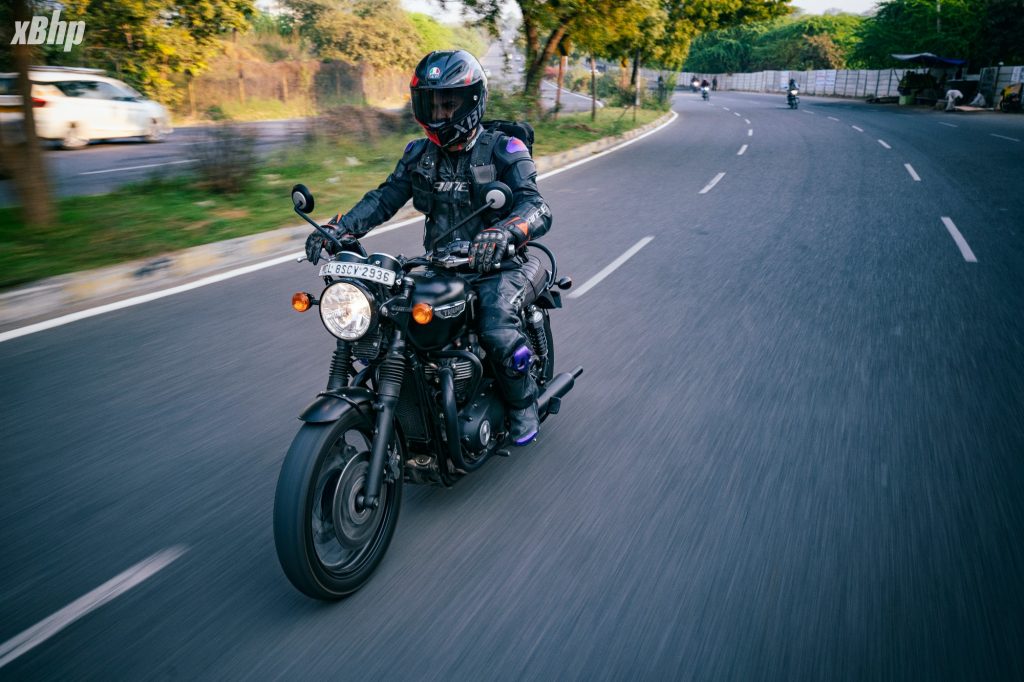
At slower speeds, one does feel a bit of the heft that this Bonnie is laden with. But it is not a deal-breaker mostly because of the amount of torque you have right from the word go. Ergonomically, it is quite predictable. Relaxed and laid back with windblast being the only slight niggle on highways. Both brake and clutch levers are adjustable too so one can tune it to their liking.
The suspension is plush but not soggy. It takes everything in its stride and yet, it doesn’t shy away from some good ol hard riding. On a lot of motorcycles, the rear suspension seems a little stiff. Thankfully, that is not the case here and this Bonnie ain’t no backbreaker. The brakes are from Brembo (Brembo front, Nissin rear) and the twin discs are proficient at what they do. A little more bite would have been welcome but considerable heft and a reasonable amount of power results in inertia that dulls down the braking a bit.
Now, let us talk about the extras. The Bonneville T120 Black gets cruiser control, which is now standard and easier to operate too. There’s just one button to be pressed to set the speed. But, you cannot accelerate or decelerate once cruise control is on. You also cannot adjust the cruising speed on the fly. Not a big deal as having the feature is still a plus.
There are two riding modes; rain and road. These modes do not alter the power but do work on traction control and ABS intervention. On that note, ABS is standard on both ends but it is not lean-sensitive. That must also clear up that there is no IMU so electronics are a bit on the down low, and that is how it should be.
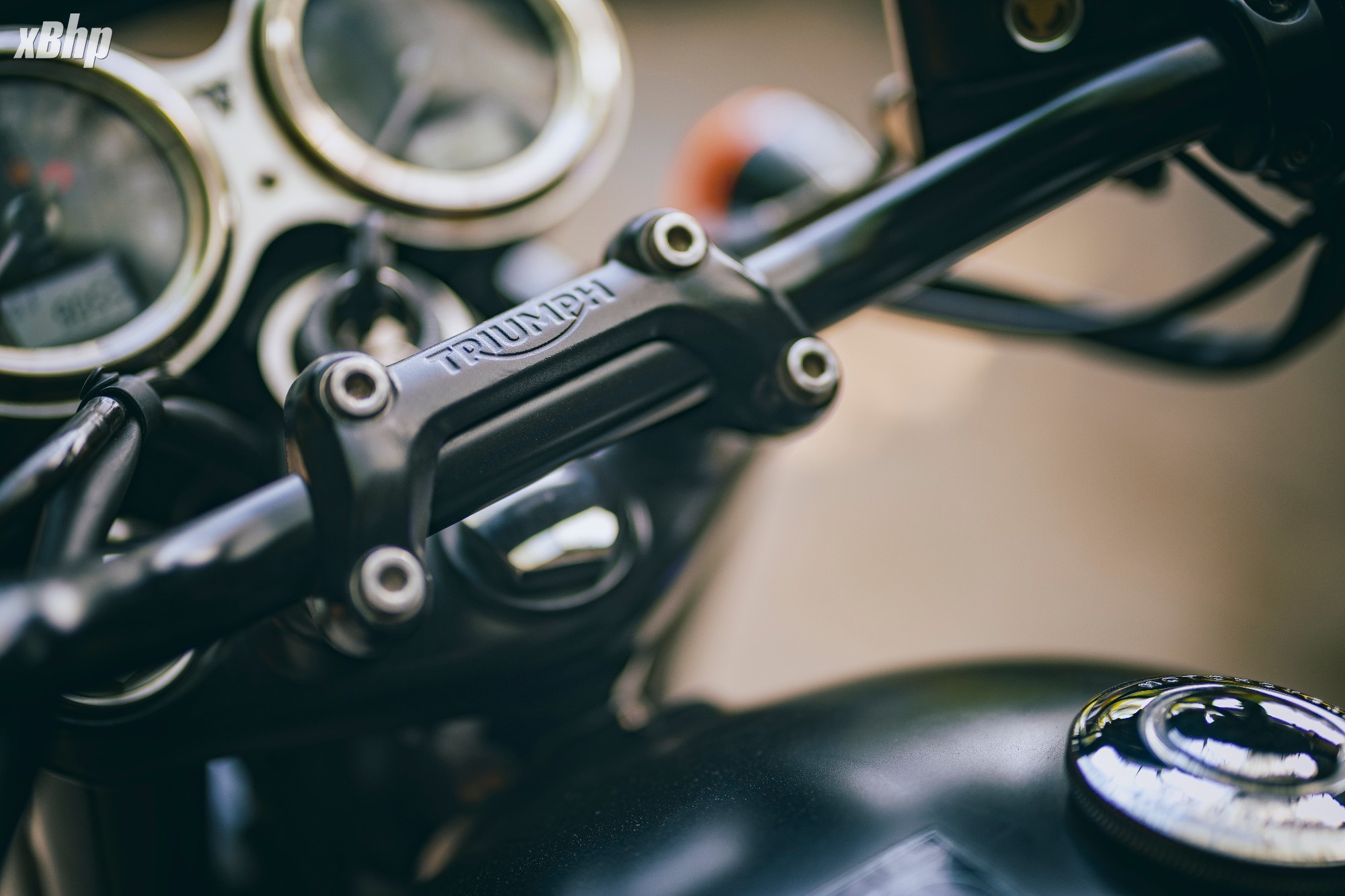
The switchgear too is simple, the dash offers all the info you need, and there is a USB charging port under the seat. Finally, in true Triumph fashion, there’s a load of official accessories. 116, on offer from Triumph, to truly make the Bonneville T120 Black your own.

Now, a proper jeans-and-jacket-bike is something that not everyone will appreciate. But the Triumph Bonneville T120 Black is not limited to that only. It has serious power, handles really well, and is pretty easy to ride for long distances, barring the windblast. So it is a lot of motorcycle you get that justifies the price tag to an extent. This perfect jeans-and-jacket bike can be yours for INR 10,99,000/- (Ex-Showroom). Should you get it? Absolutely, letting go of the leathers ain’t such a bad thing.
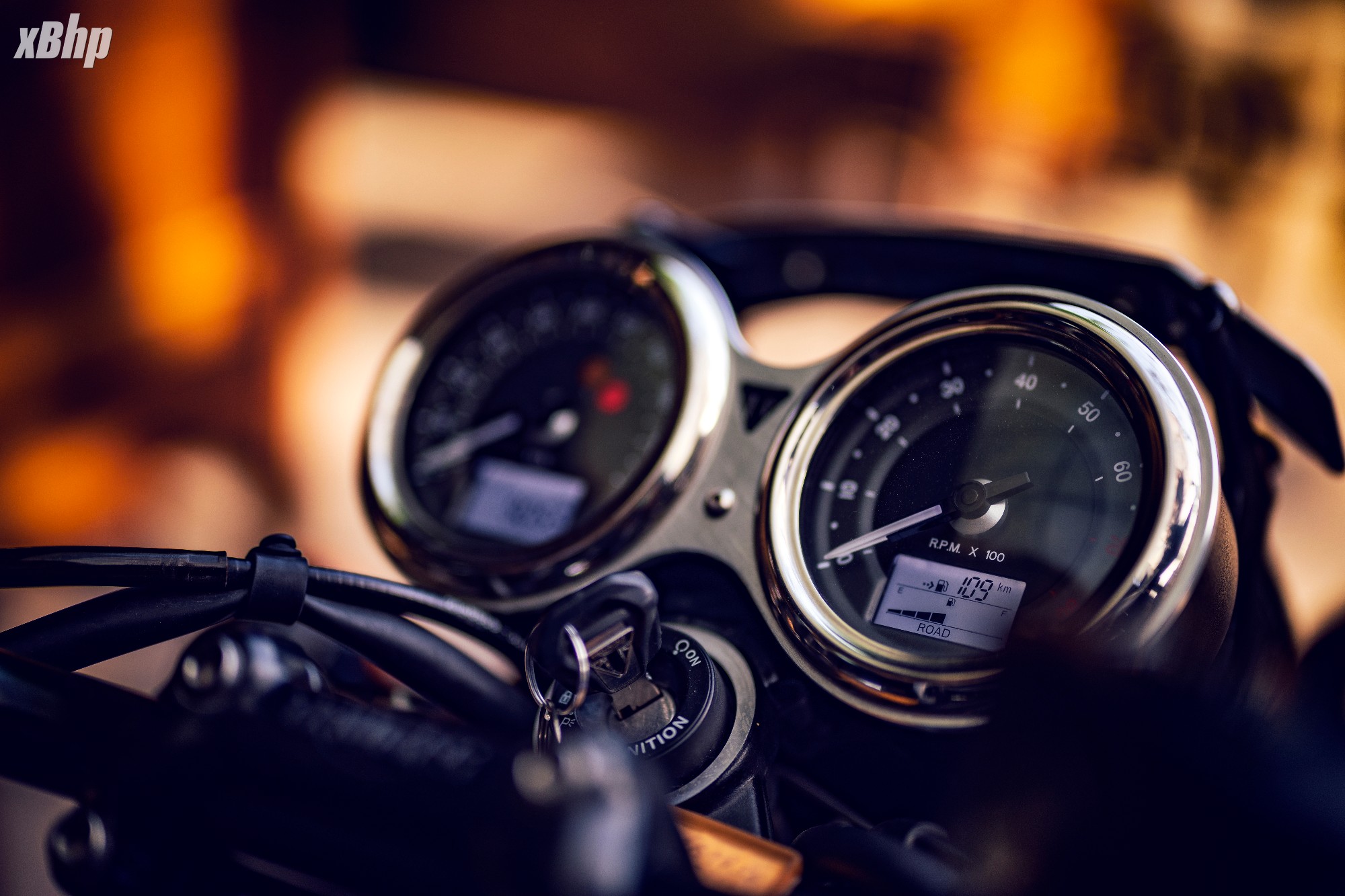
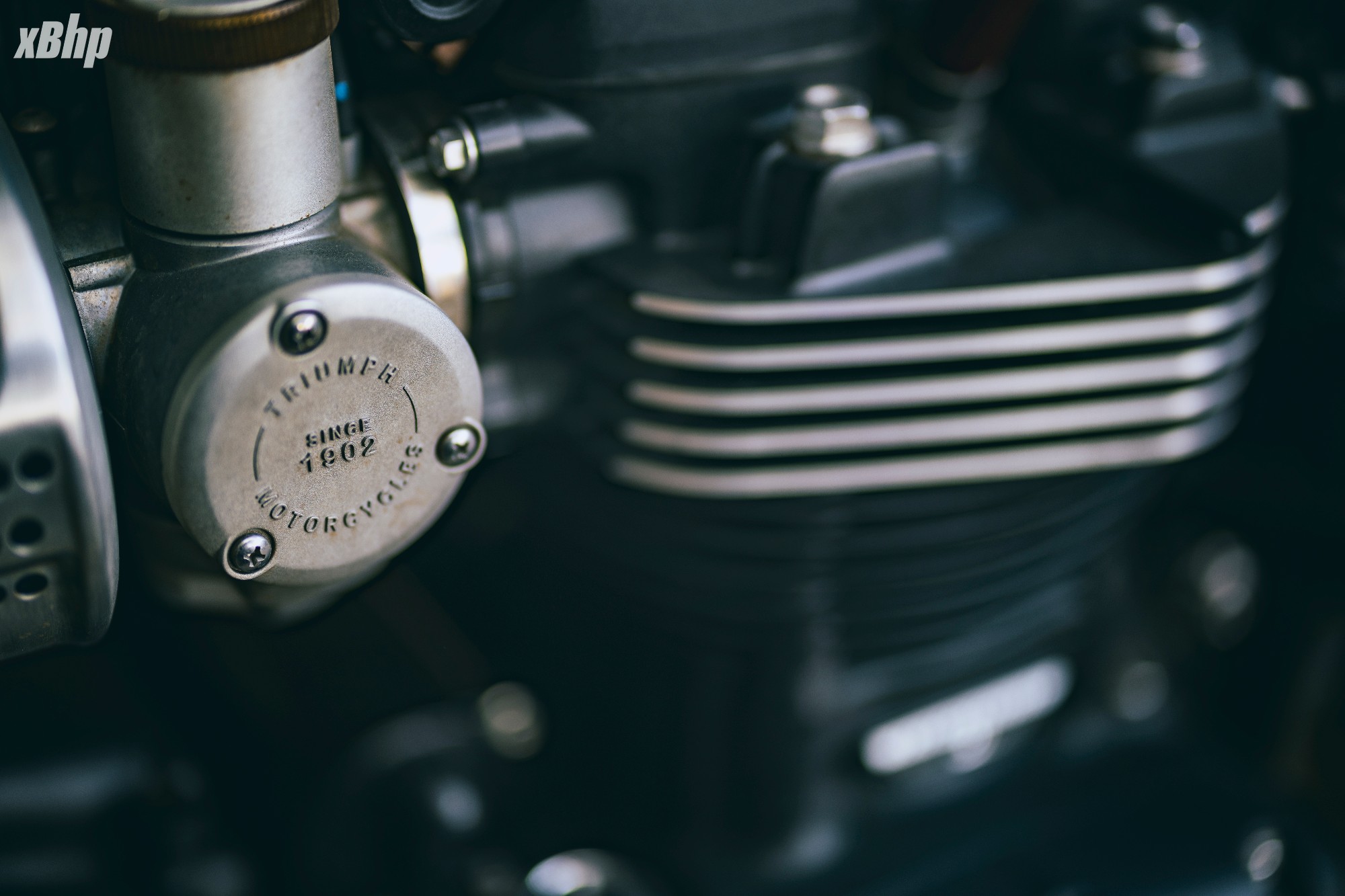
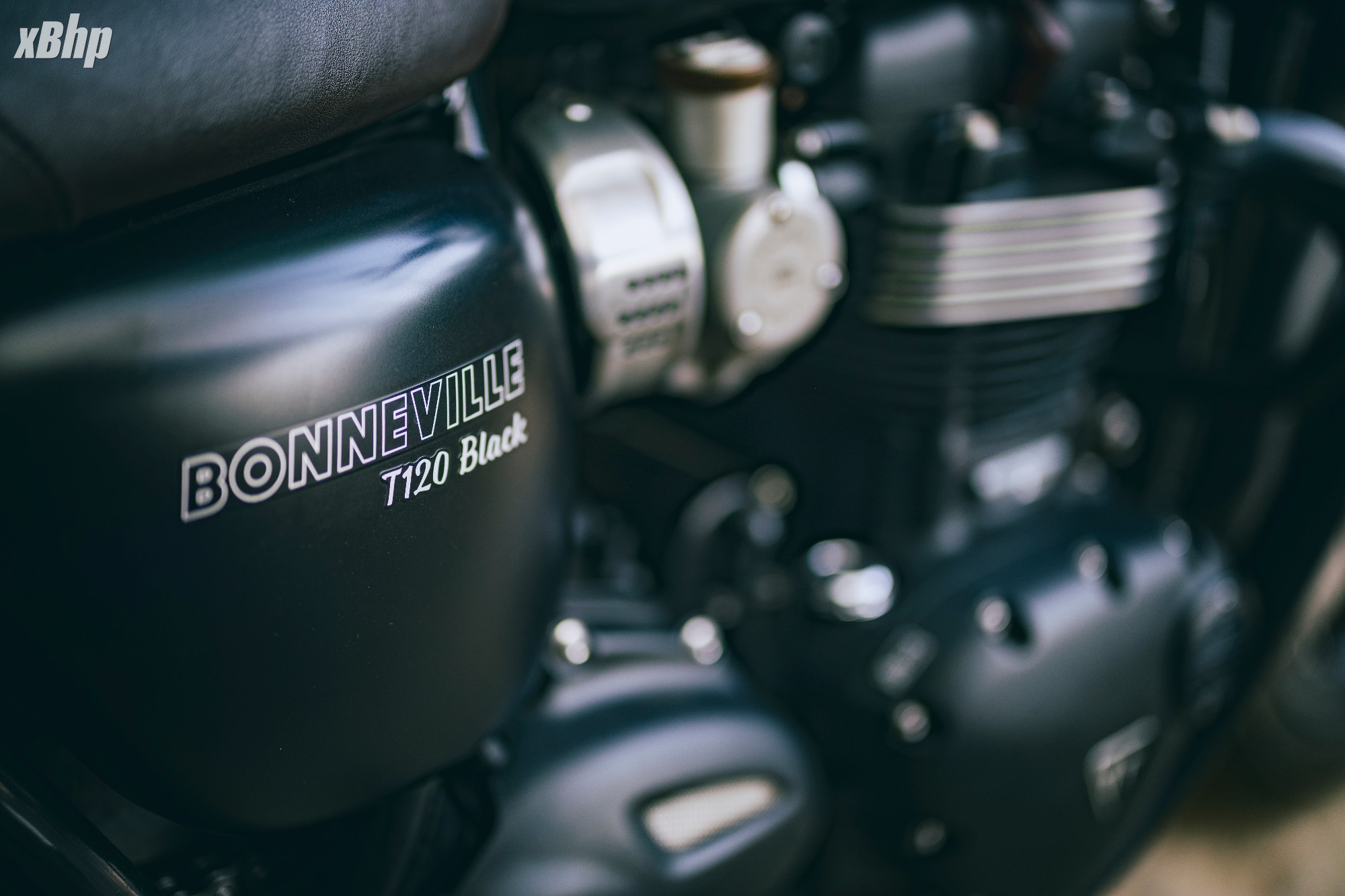
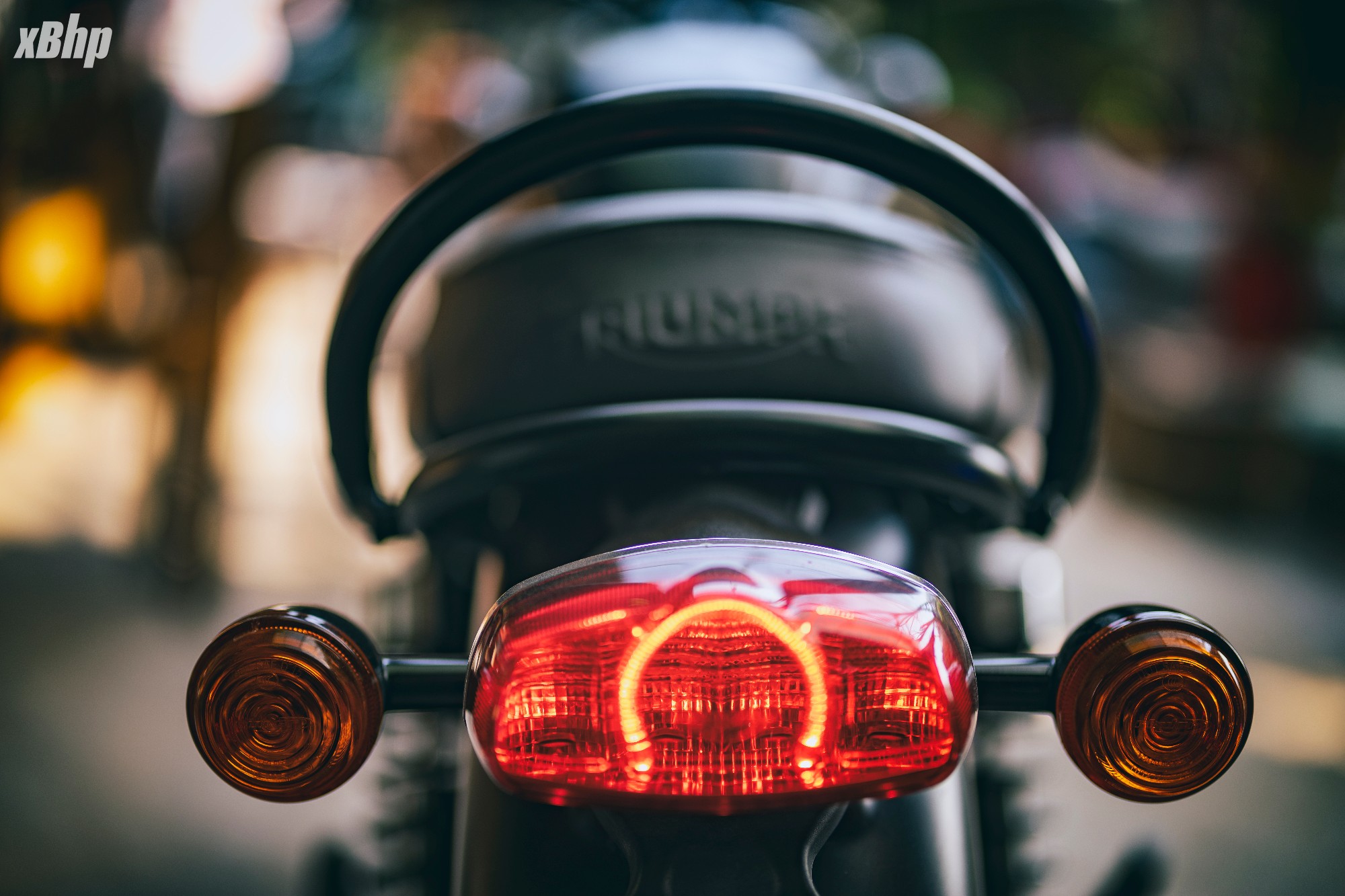
Super Duke on Steroids: Brabus 1300 R
 May 2023 Sundeep Gajjar
Bikes,Brabus,Motorcycles
May 2023 Sundeep Gajjar
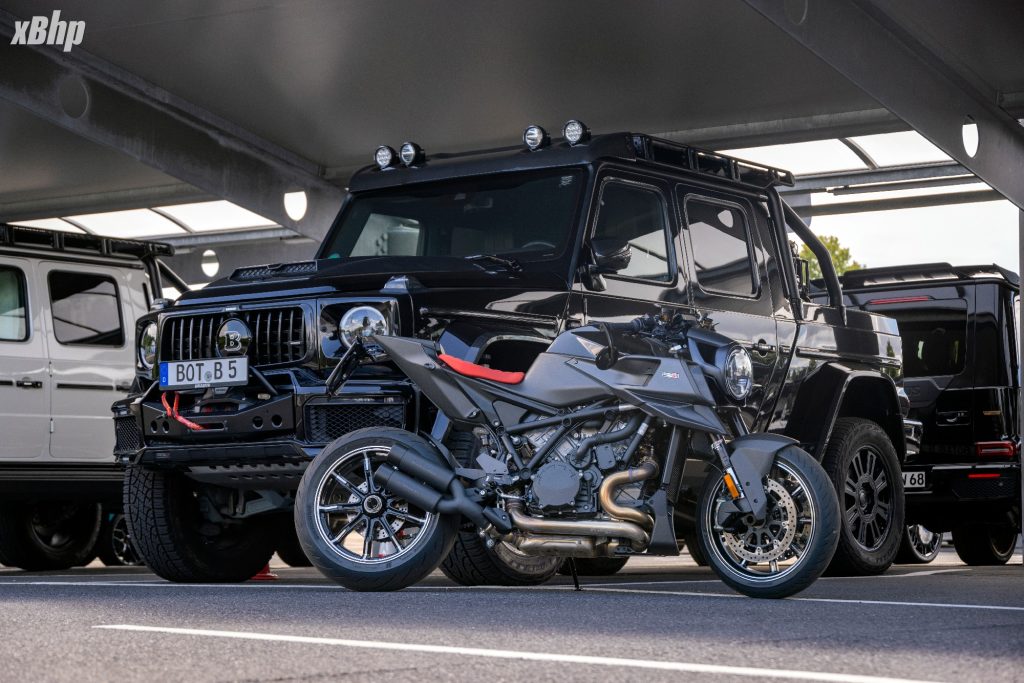
Bikes,Brabus,MotorcyclesMercedes makes some really good cars. Their good cars become even better when the letters AMG are attached to the model name. But the most diabolical of Mercedes cars do not belong to the name AMG. For that, there is a different name- Brabus. It is a name revered in car circles around the world. Perhaps one of the most famous aftermarket tuners in the world, Brabus is responsible for some of the gnarliest Mercedes cars that snarl and spit fire. To be honest, that is not an exaggeration either. Ask Mr Clarkson.
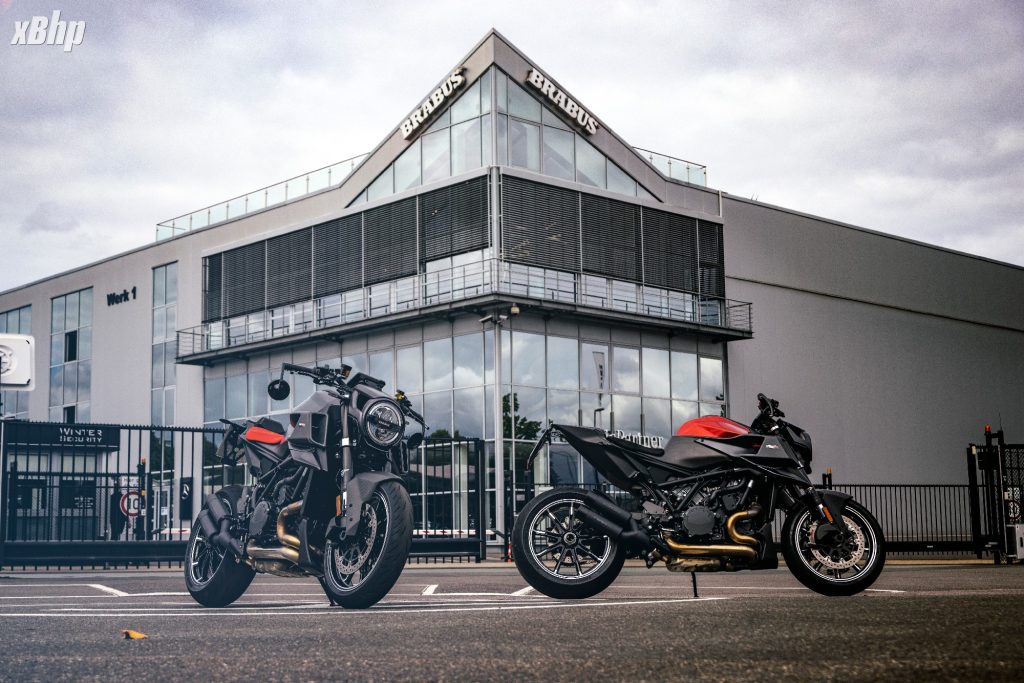
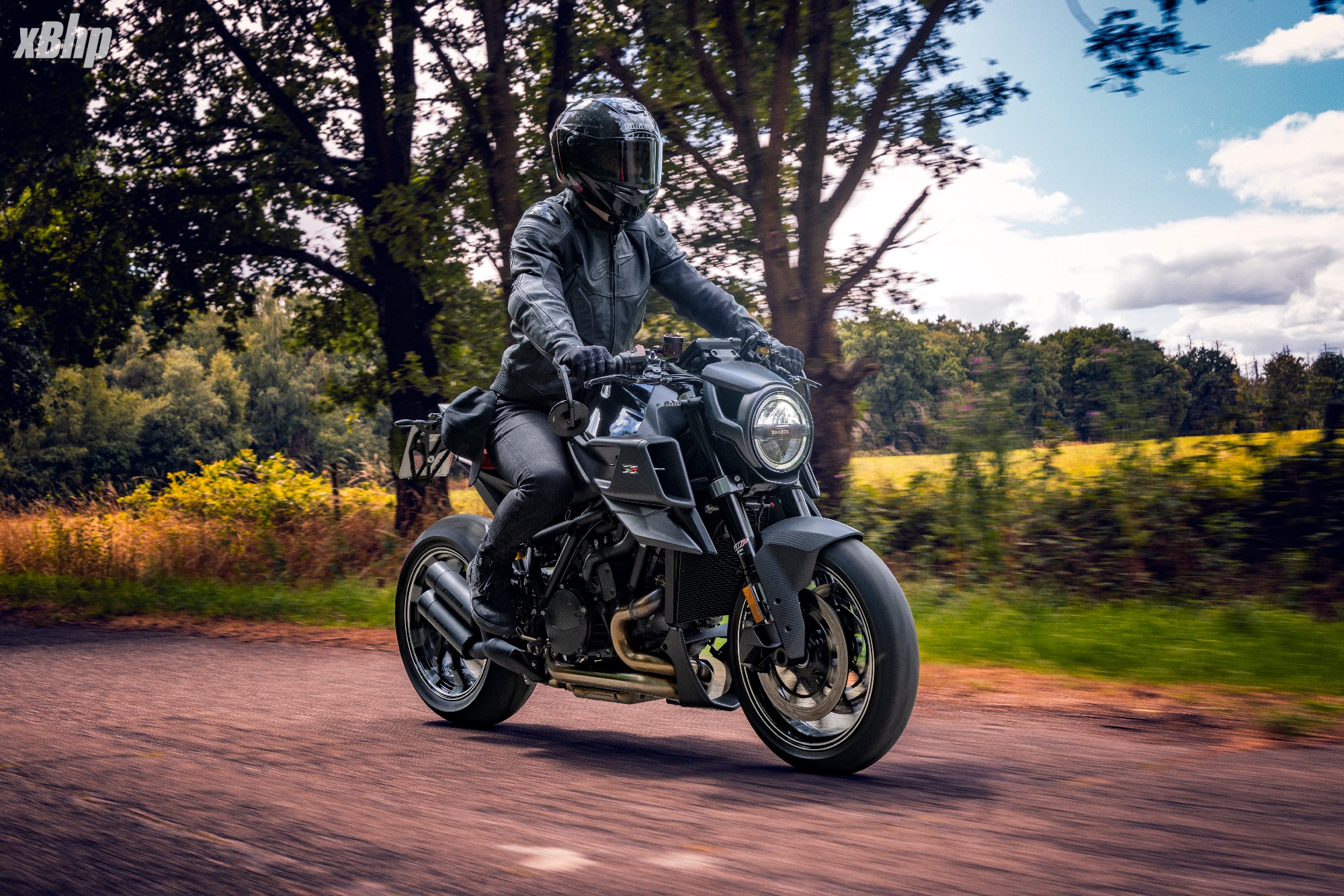
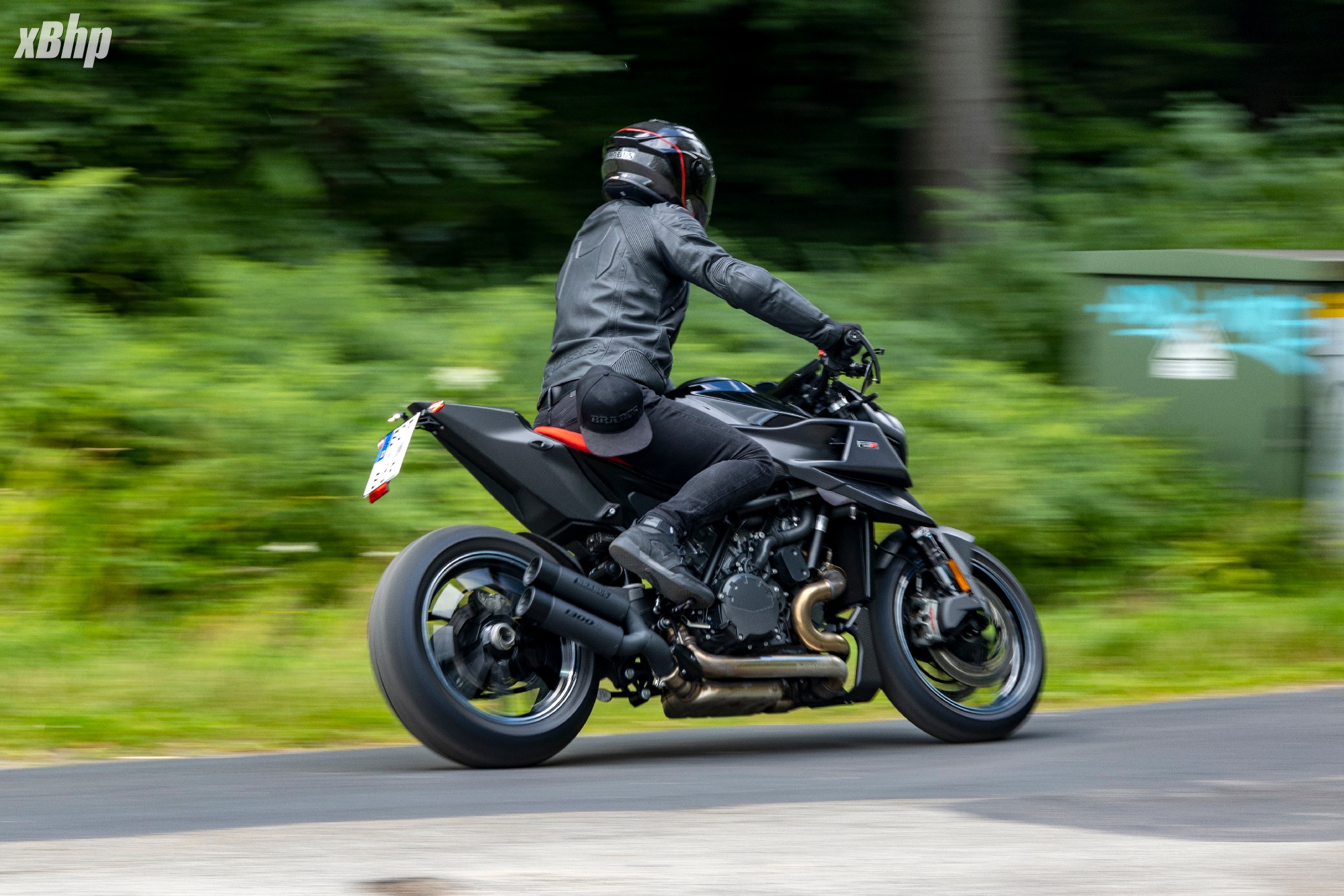
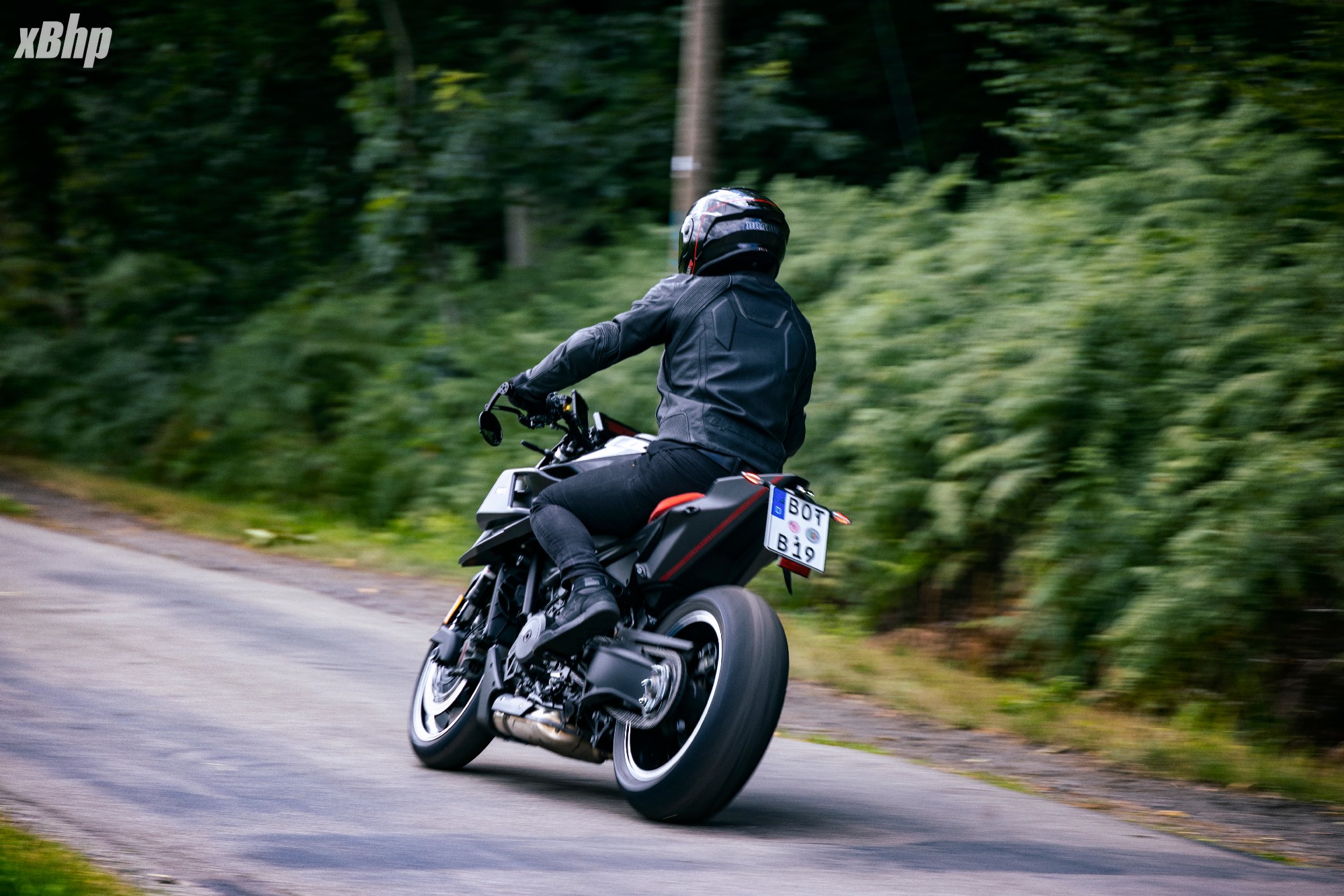
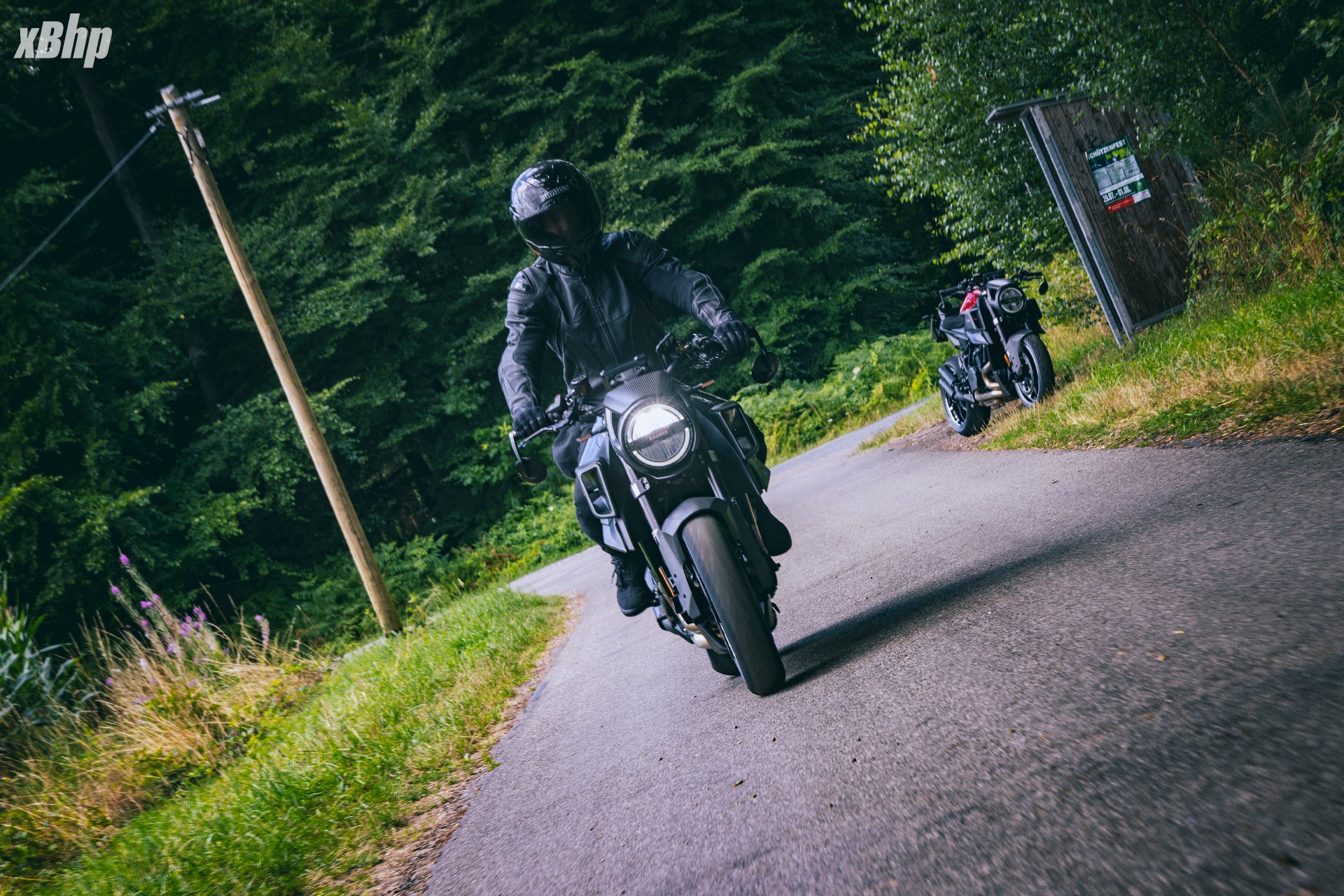
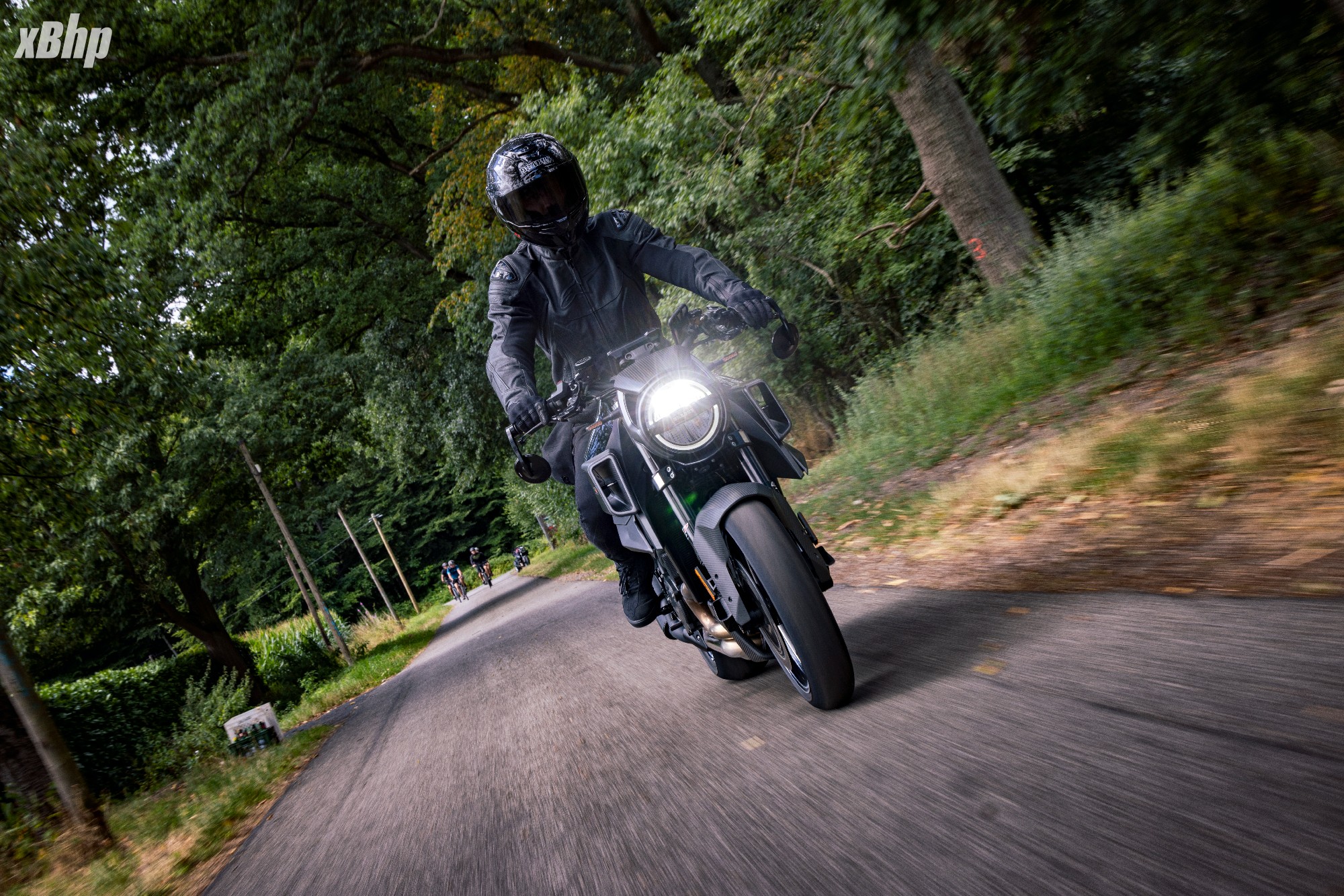
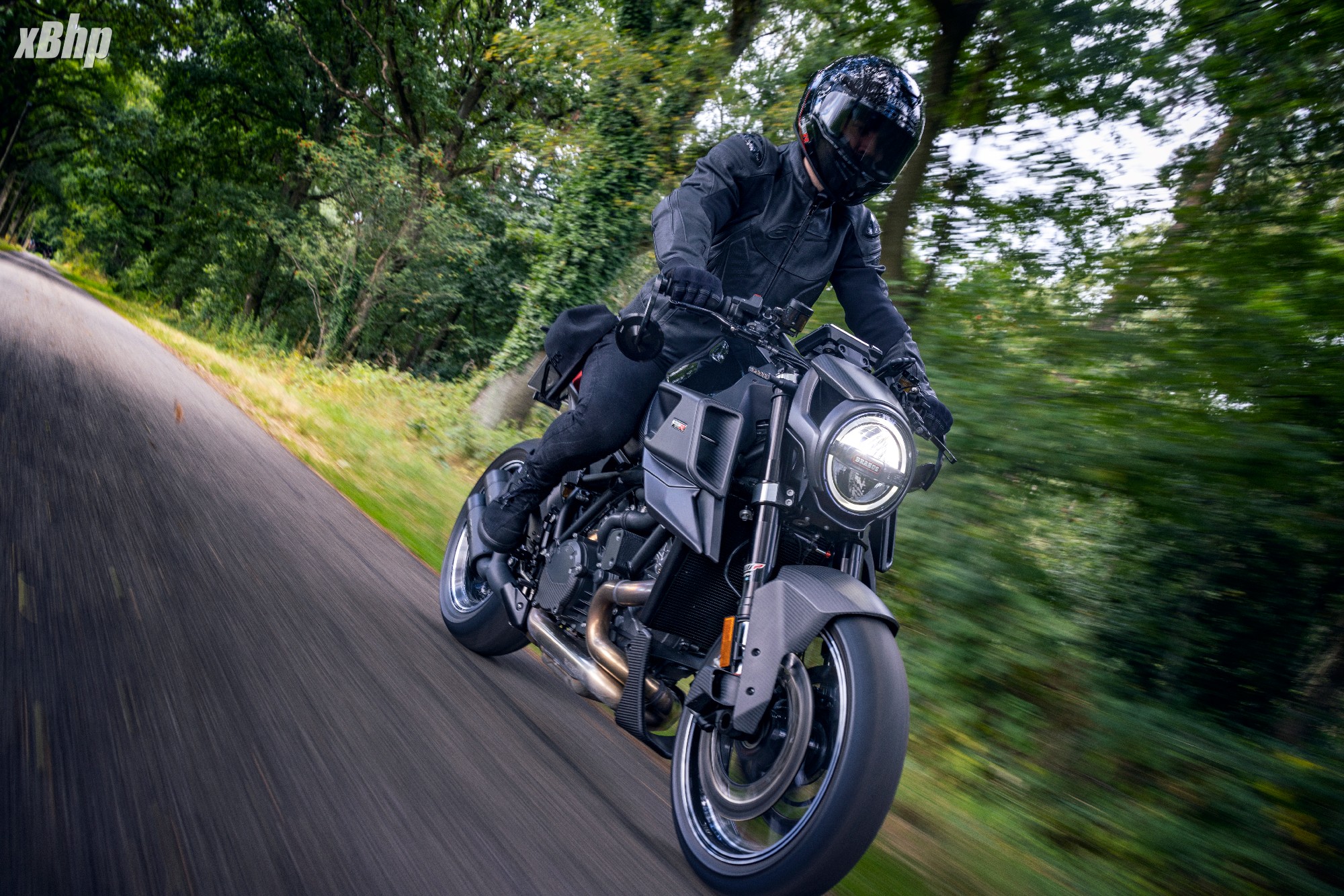
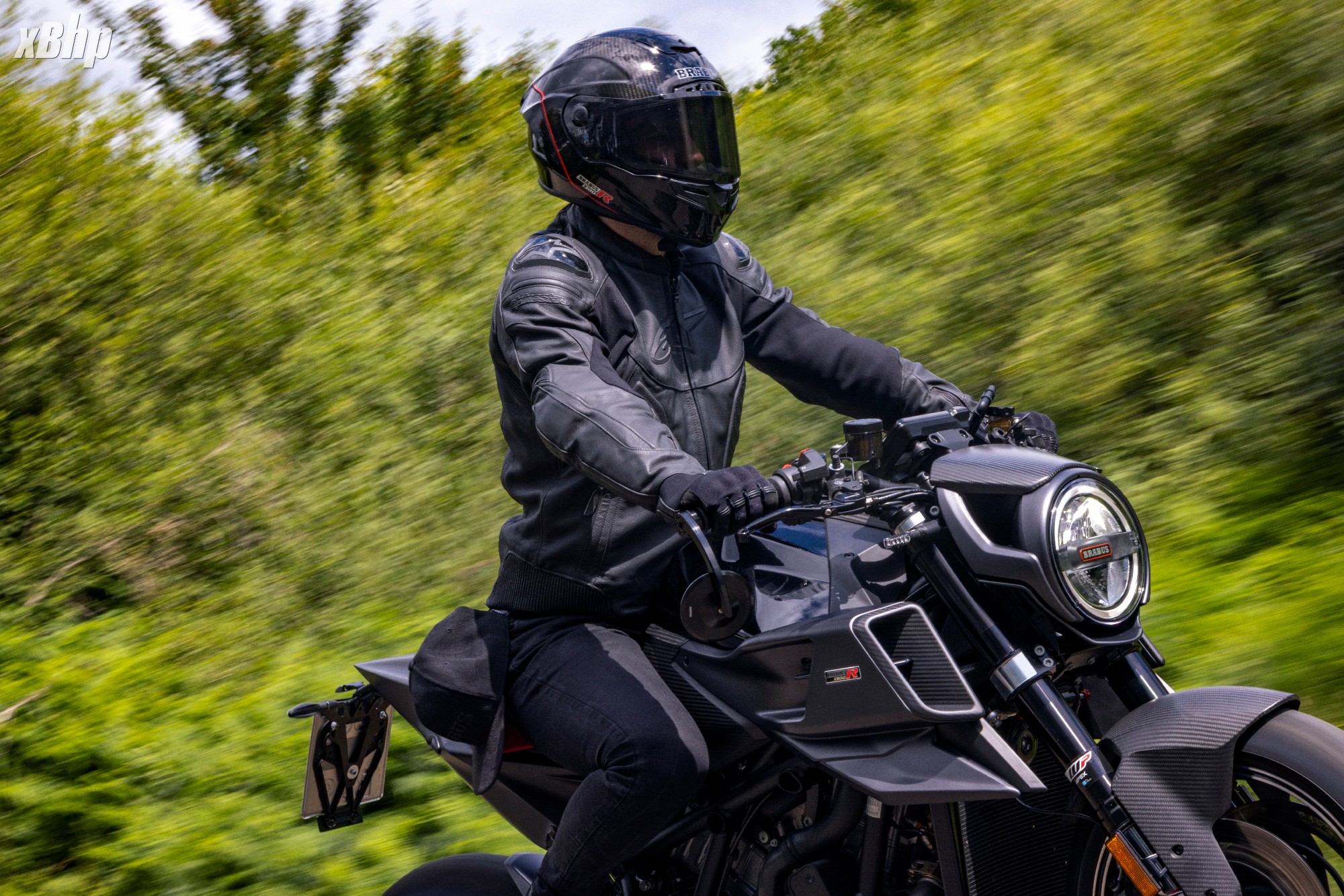
With all that pedigree, I was truly intrigued when I got to know that they have announced a motorcycle. Looking at the pictures online, my interest was piqued and I kept poking them till they let me ride one. Soon enough, I found myself in Bottrop, Germany. And finally, I got to feast my eyes on one… and got my hands on one- the Brabus 1300 R.
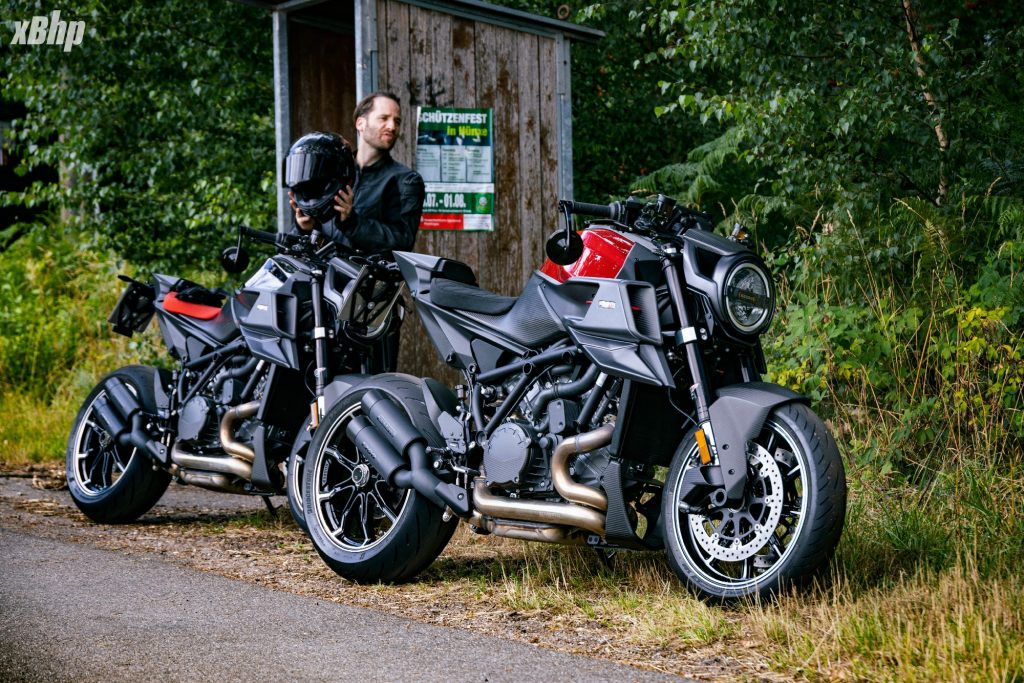
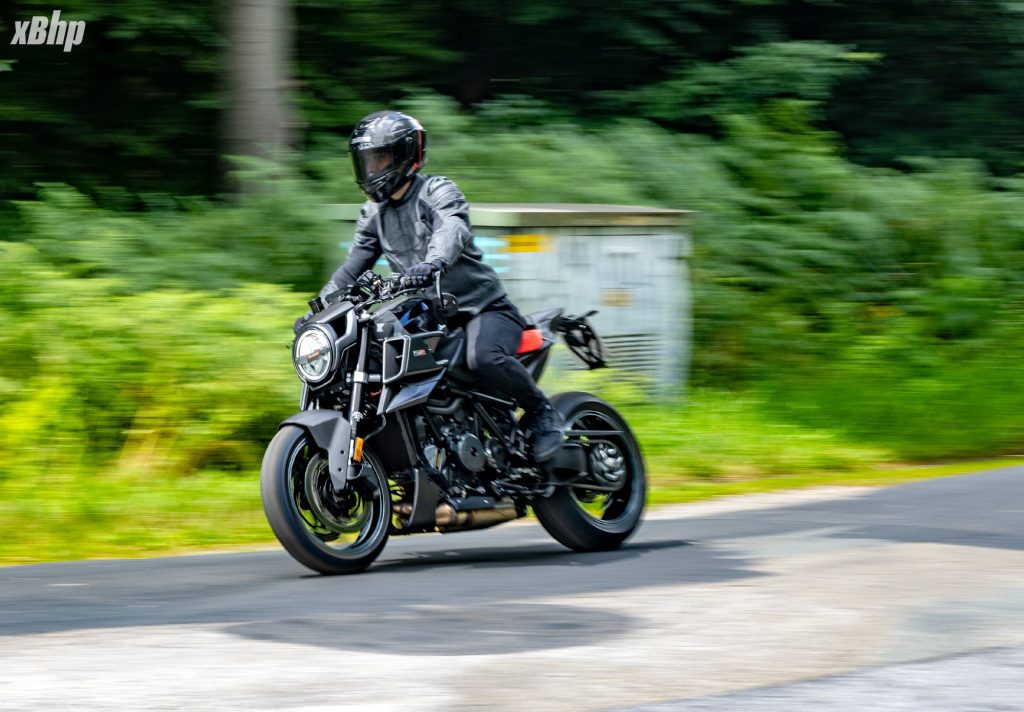
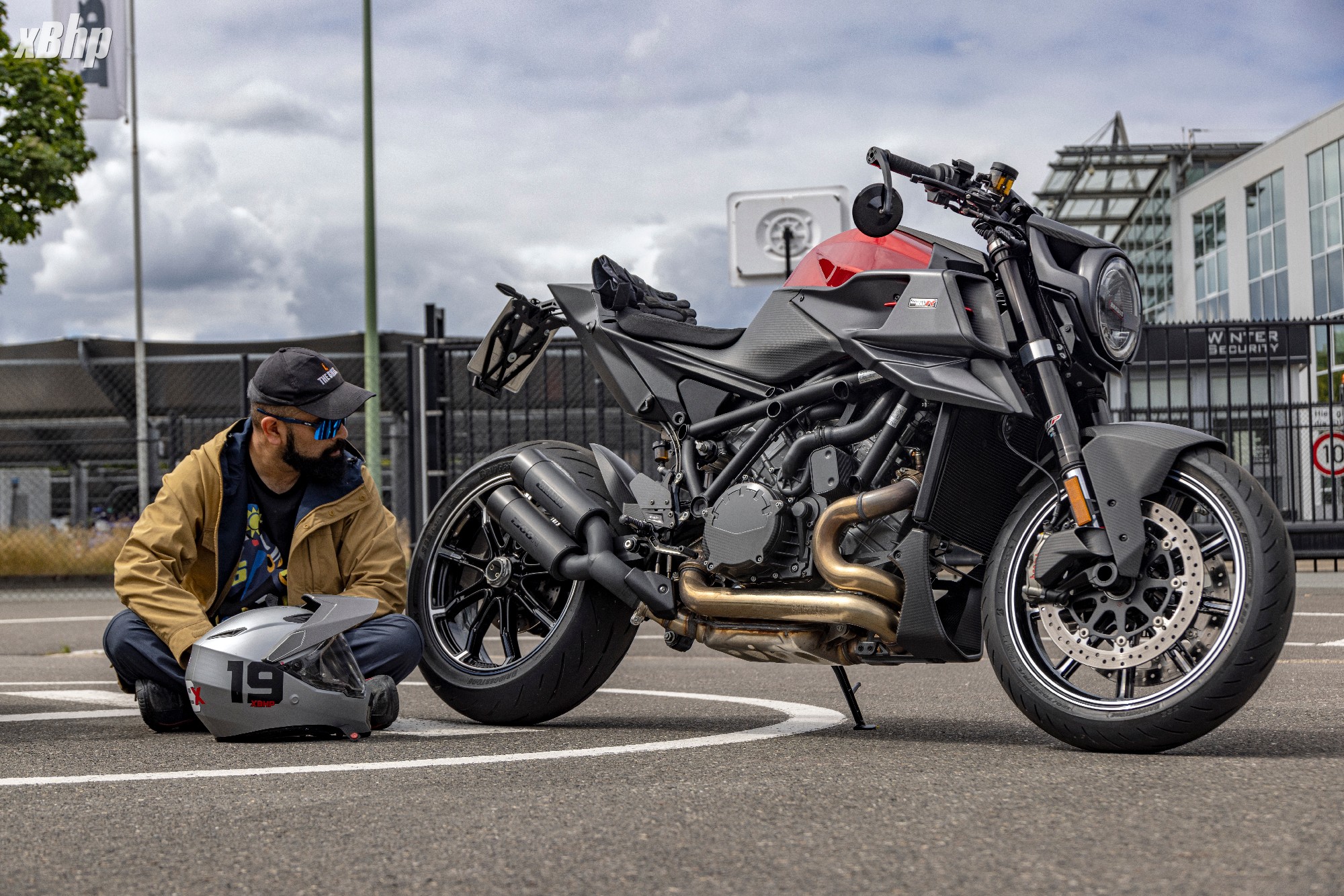
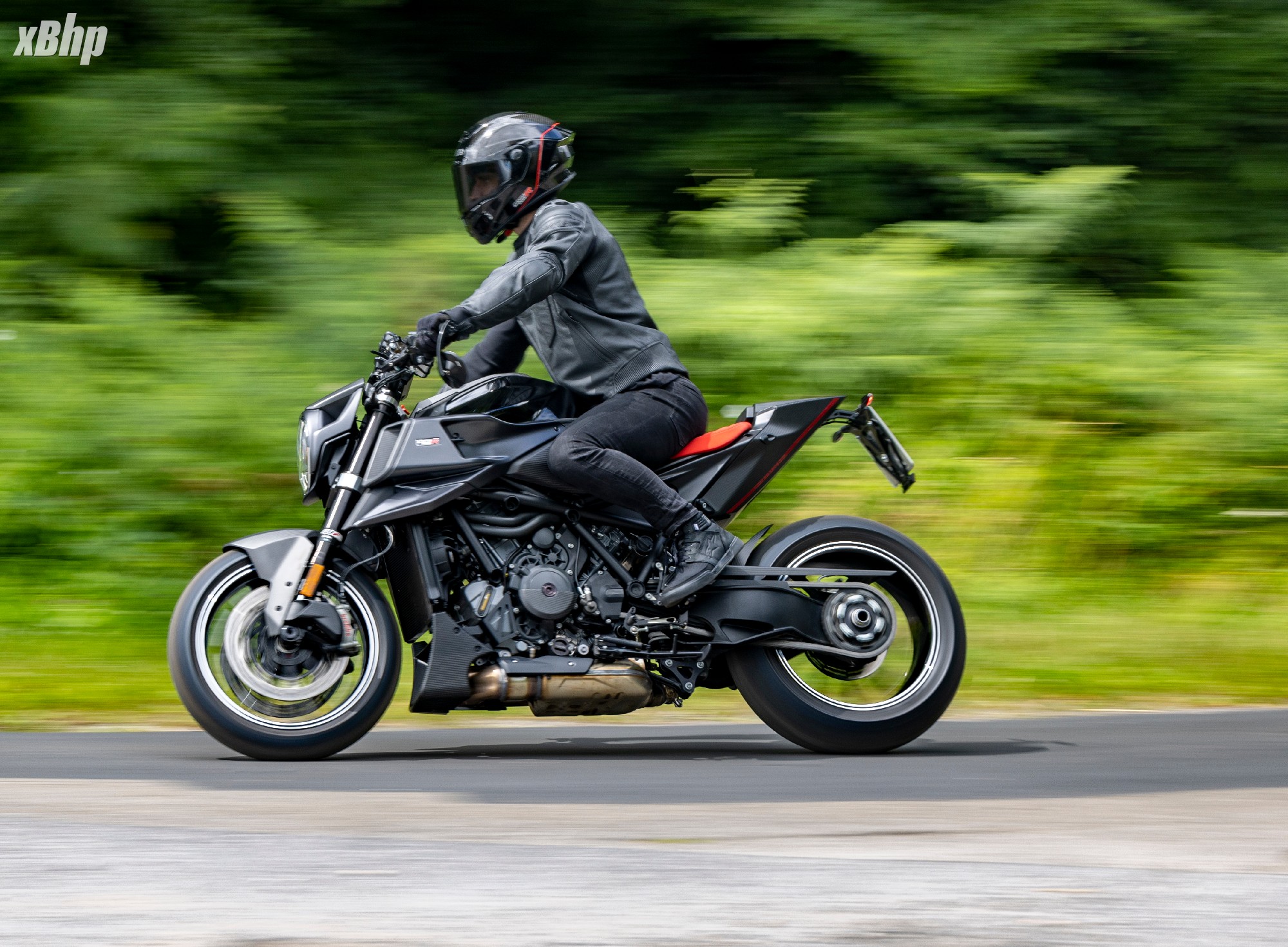
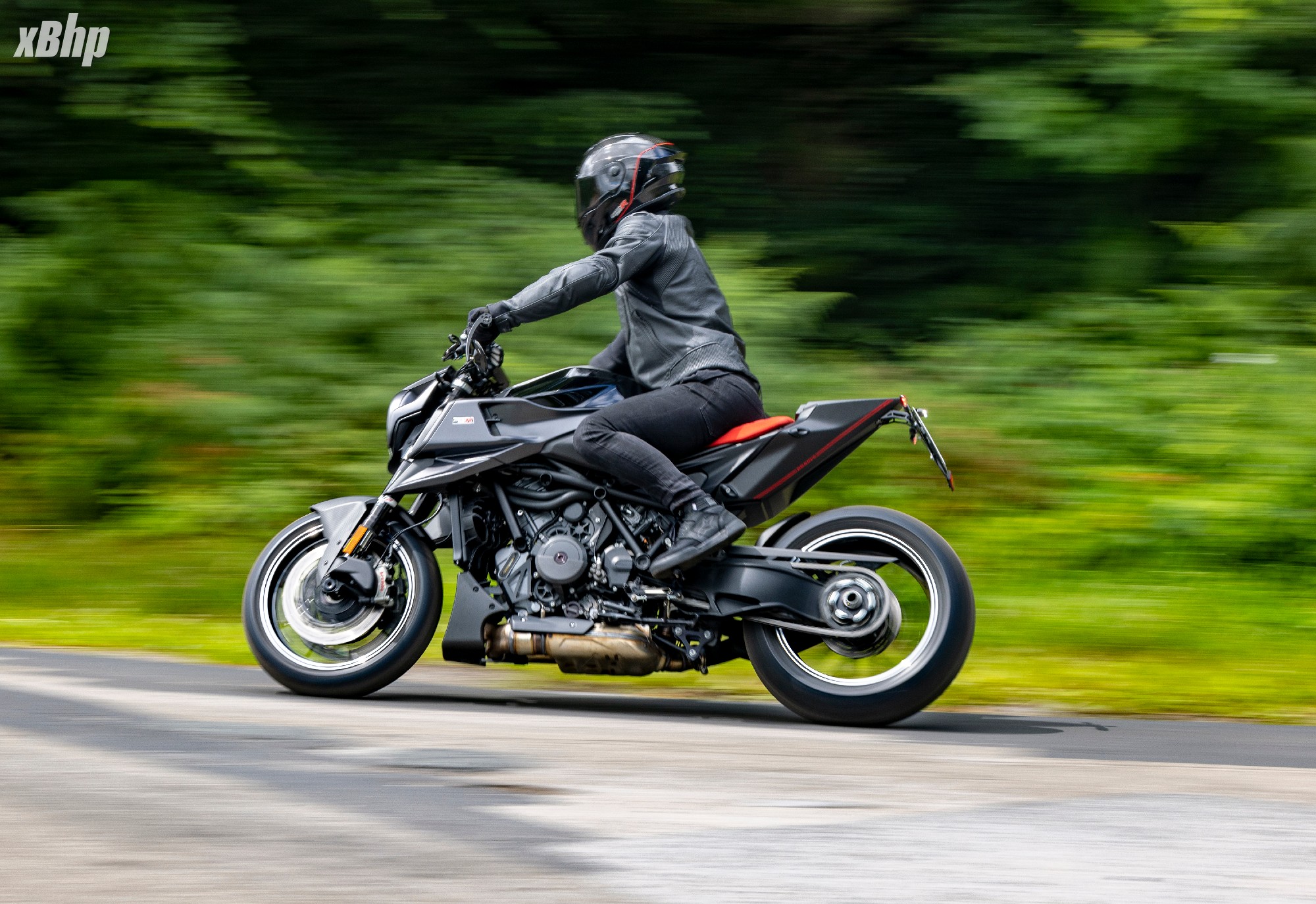
Based on a KTM 1290 Super Duke R, the Brabus 1300 R is a very special and rare motorcycle and to have gotten my hands on one was a special feeling. And to be able to do that where it all started, the Brabus HQ, just made my day even better. In the process, I also met Mr Tobias Grindel who handles project management and business development at Brabus. He is also the product manager of the Brabus 1300 R, so he is the man to talk to if you want to talk about Brabus’ first motorcycle.
You can watch the video of Brabus 1300 R and the full conversation with Mr Tobias Grindel below.
We had a long chat with him in which we talked about what the brand is all about and how exclusivity and power are the pillars of Brabus’ product philosophy along with design and comfort. From cars to motorcycles, it was a long journey for Brabus because they needed the right bike. When their imagination met what the folks at KTM had to offer, they came together quite quickly. The same went for the project timeline as they started in 2020 and the Brabus 1300 R was launched in February 2022.
The name Brabus is derived from the last names of the two founders; Klaus Brackmann and Bodo Buschmann. The first three letters from each of their last names came together for the name Brabus. When the motorcycle was launched, there were 145 units up for sale, 77 each for the two variants; Magma Red and Signature Black. Deservedly so, they were sold out in under two minutes.
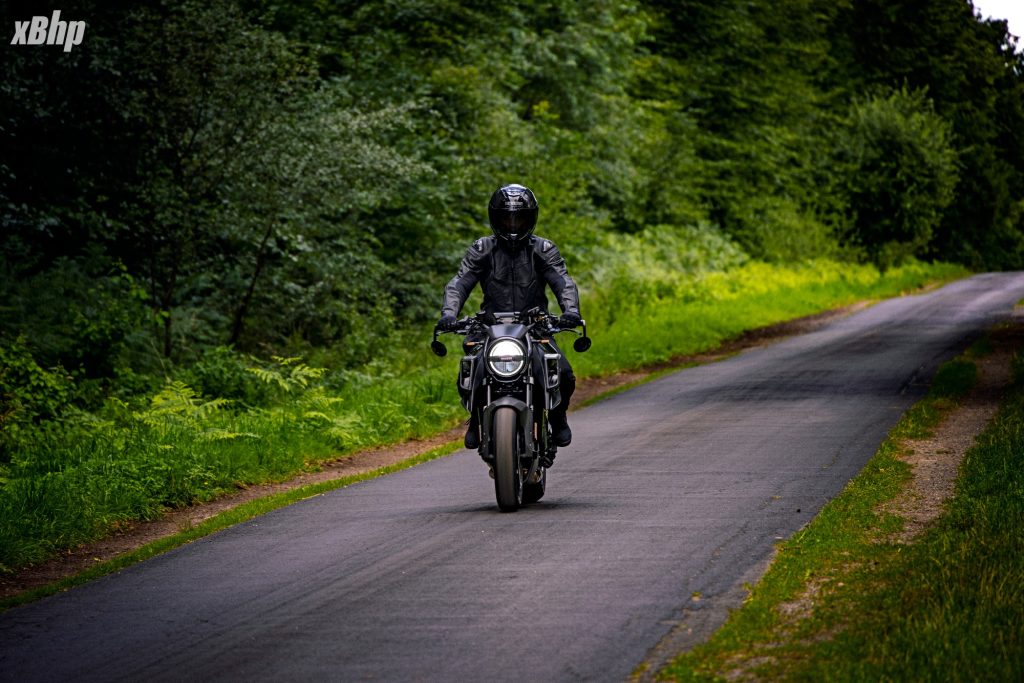
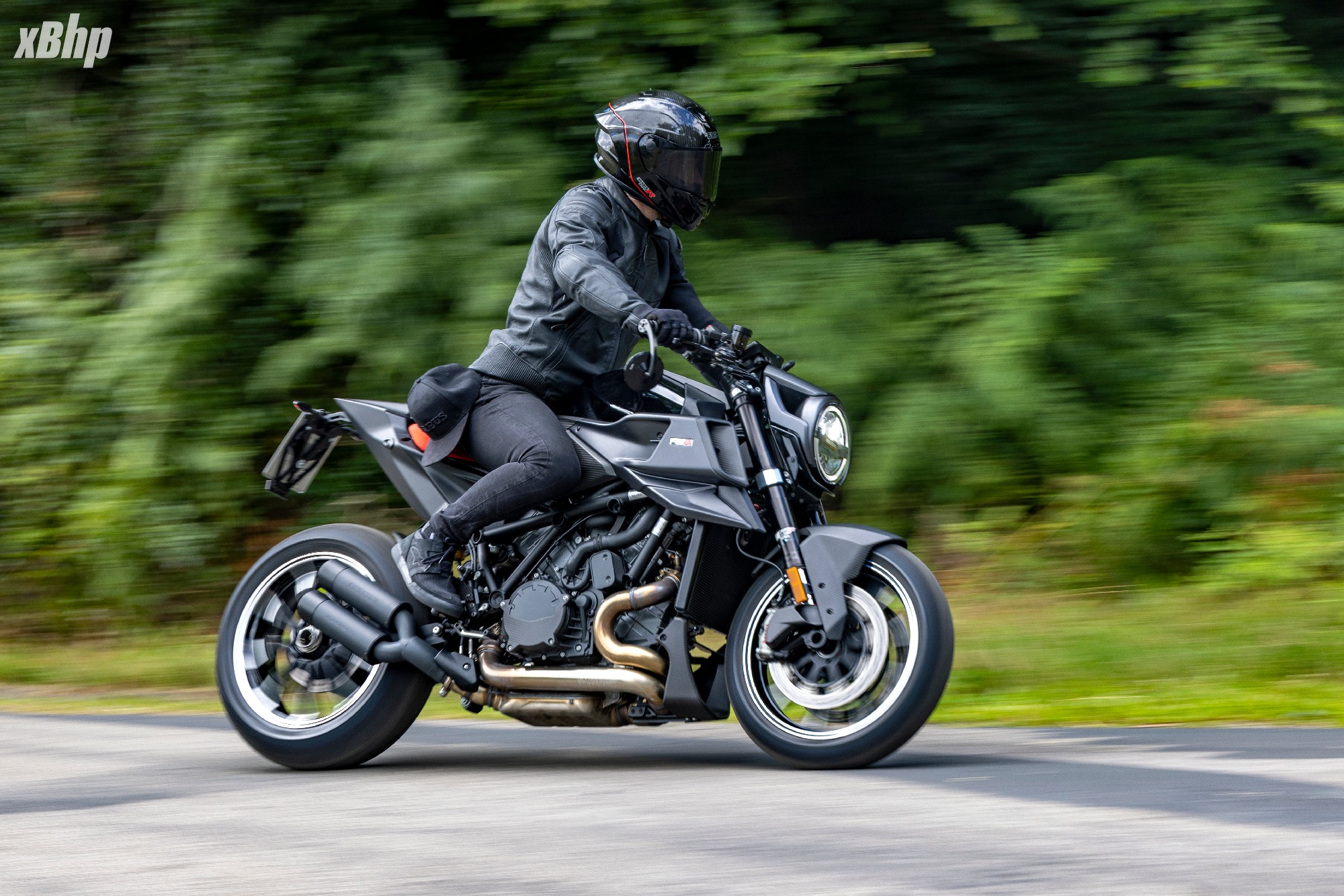
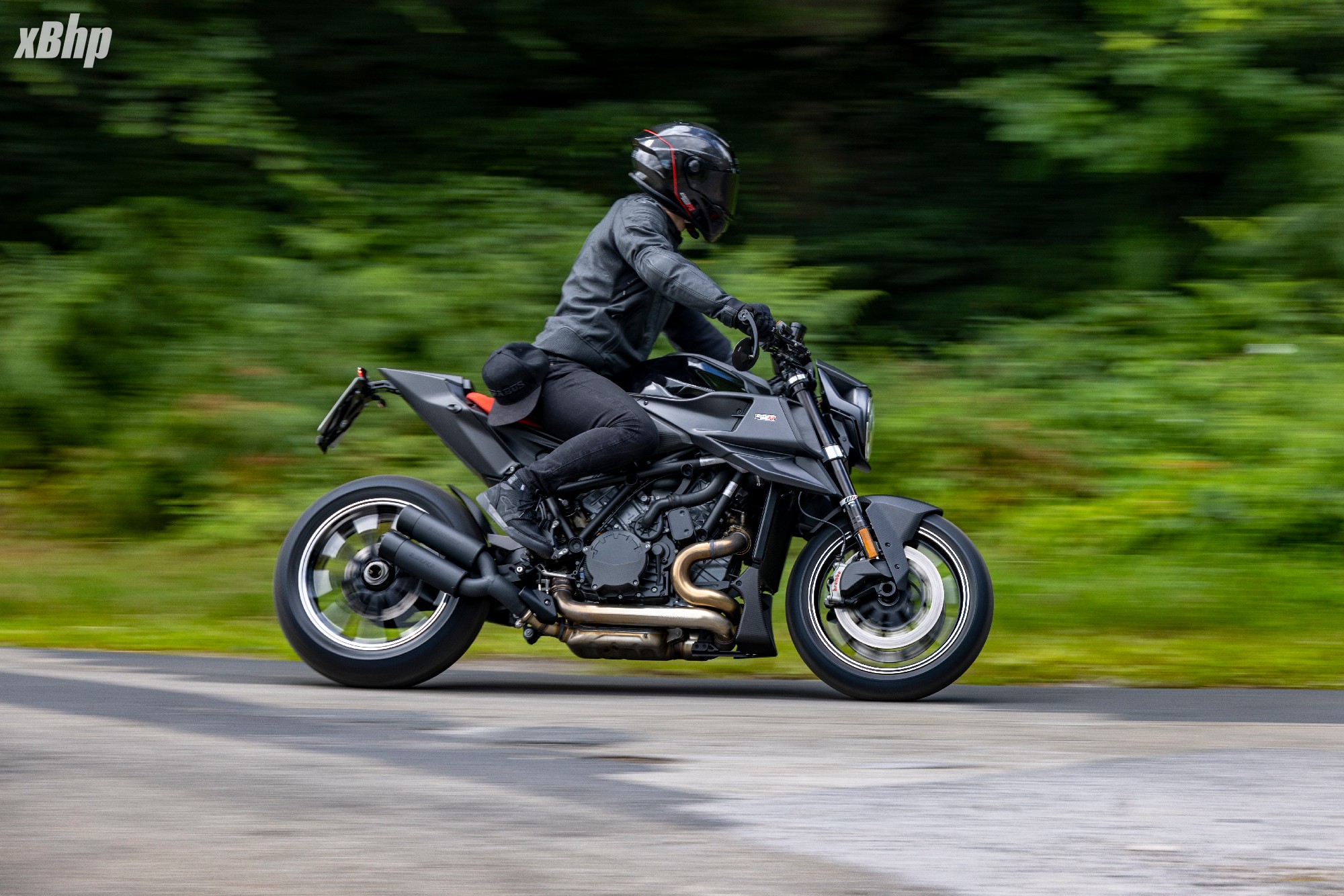
Now it is time to talk about the bike a bit. Before all that, I did not get a lot of kilometres on it. Despite that, getting to ride it where it is made was special. In terms of the ride, it is difficult to put it into words. It rides quite like the KTM 1290 Super Duke R but it is different too. When you sit on it, you see the Brabus logo and then the number plaque tells you that you are riding one of the 77 examples ever to be made.
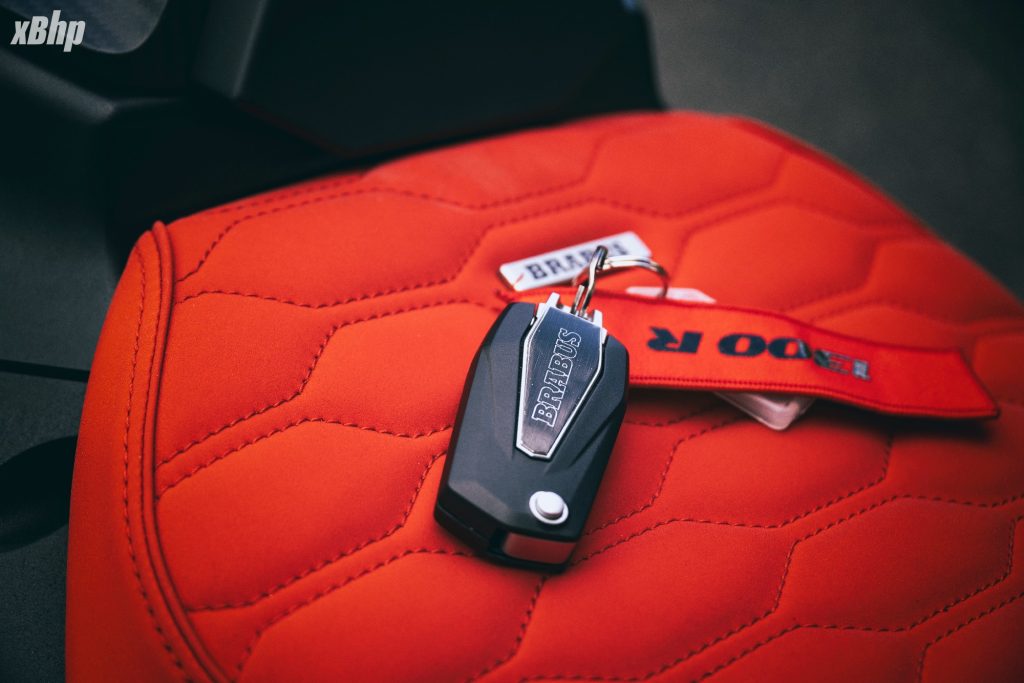
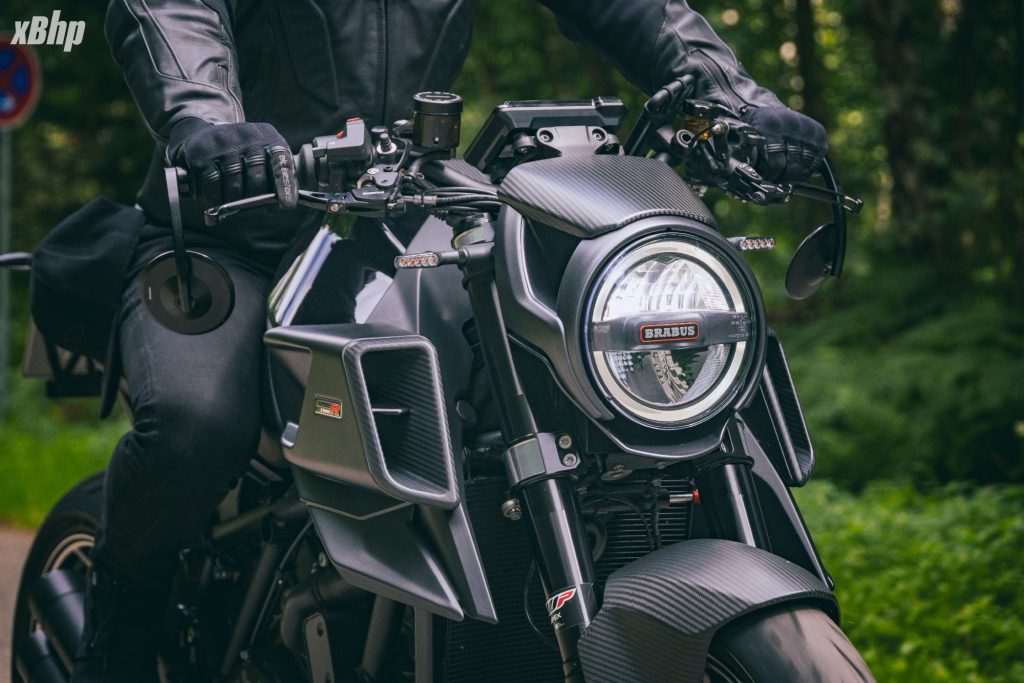
Then there are the aesthetic changes. With a slew of carbon fibre parts, redesigned front fascia, the intakes on the tank, and the beautiful seat; premium is something that the Brabus reeks of. More than a wonderful motorcycle to ride, the Brabus 1300 R feels like a collector’s item, a collector with very good taste.
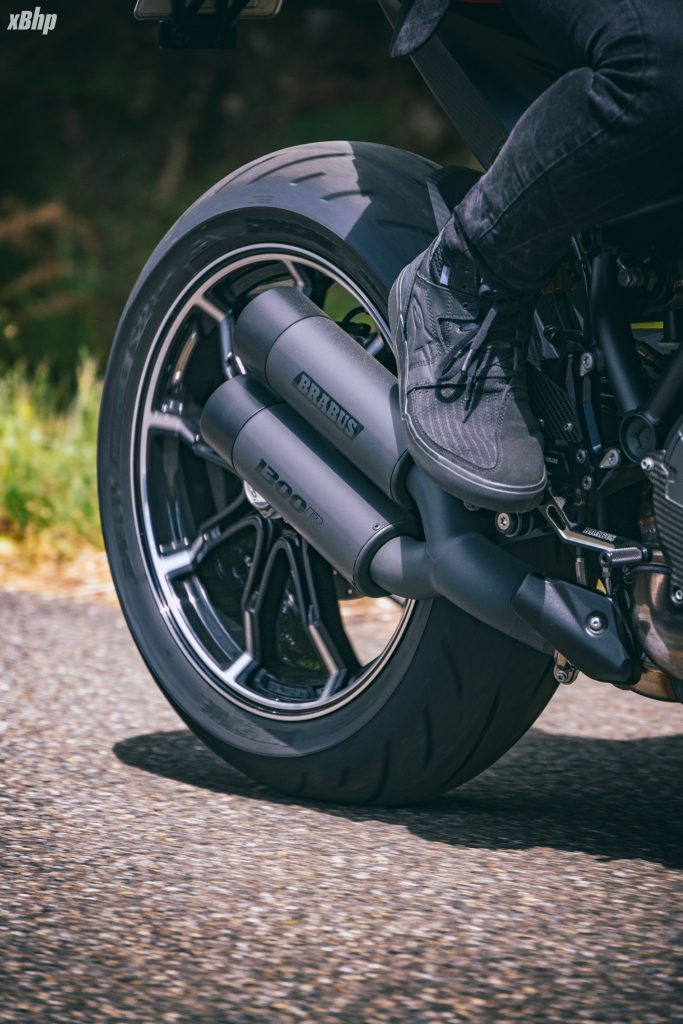
My personal opinion is that Brabus has taken its legacy of extreme tuning and its 40-year-old history and poured it into the Brabus 1300 R. They have had a good customer base and people who are buying an 8,00,000 Euro car can afford a 39,000 Euro motorcycle as well. People who buy cars from Brabus, also buy into Brabus’ philosophy. And that very philosophy is embodied by the Brabus 1300 R as well.
Whether one wants to ride the Brabus 1300 R or they want it as something they’d have in their bedroom, the 1300 R makes sense for someone interested in exquisite examples of engineering and craftsmanship. And the fact that this motorcycle is such an example is evident from the fact that despite specializing in cars, Brabus decided to take up such a project. It hints at the fact that the folks at Brabus are truly passionate about motorcycles as well. If not, something like this would not have been possible. And the same can be said about at least some of the customers of Brabus who might seem like they are only into cars.
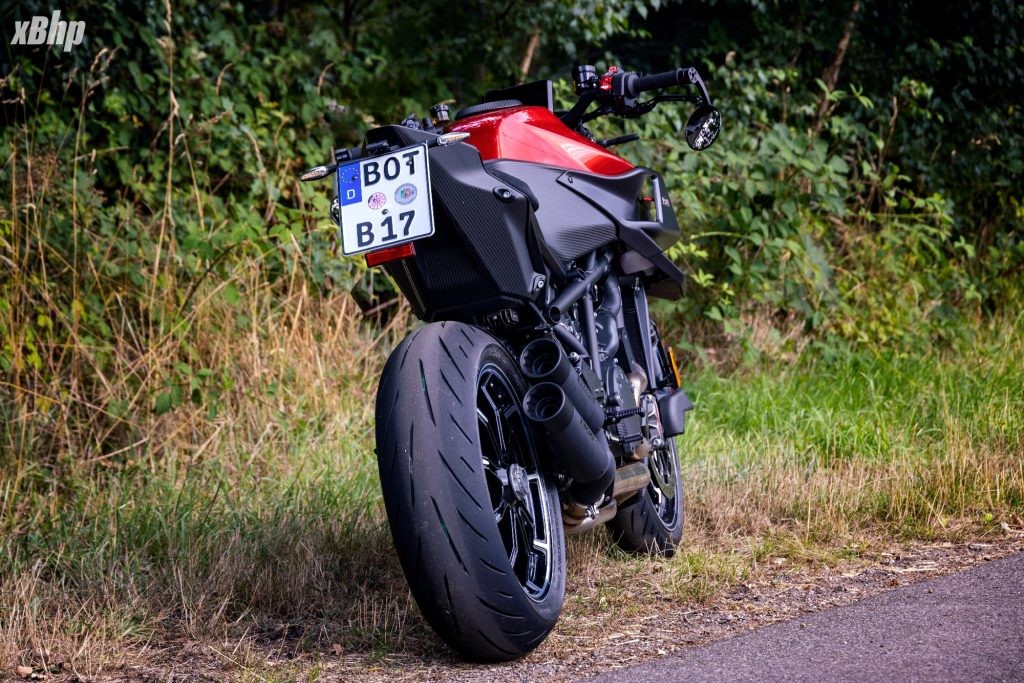
It was an honour to have visited the Brabus HQ and to have ridden the Brabus 1300 R around the place where it is made. And the motorcycle itself is top-notch. If I were to buy one, I would keep it at MotoVilla. And despite wanting to ride it, I would have only taken it out on the racetrack. And I am pretty sure that Brabus 1300 R would do well there. It is not only because I got to ride it a bit but also because the motorcycle it is based on is already a fantastic motorcycle. And if you shave around 6 kg off of a 180 bhp KTM Super Duke R, you can expect some serious fireworks.
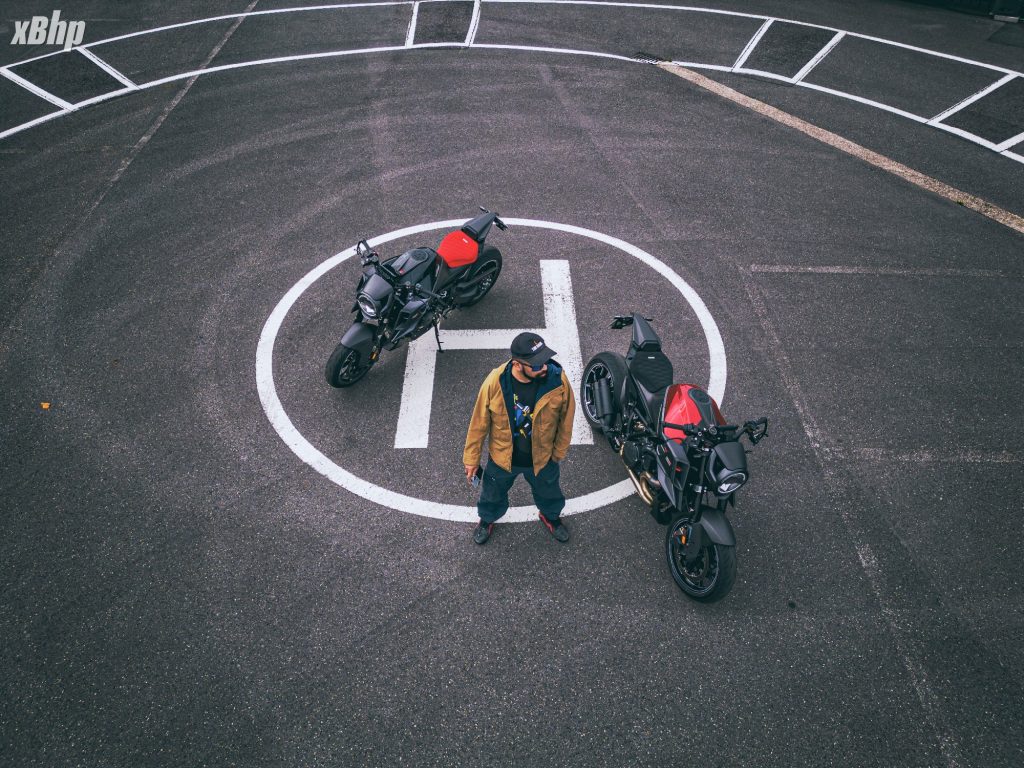
Anyway, it was definitely a very special day for me. I just hope that it is not the only motorcycle that Brabus ever makes. Moreover, with quite a few car manufacturers making bikes, I hope that this trend continues and we get to see the motorcycle world grow bigger and bigger. Ride Safe.
Another Day, Another Beemer: BMW M5 Competition
 May 2023 Sundeep Gajjar
BMW,Cars
May 2023 Sundeep Gajjar
BMW,CarsThe previous issue of the xBhp Magazine carried our driving experience of the BMW M4 Competition xDrive Convertible. After that, we went to Europe once again and among other things, got to experience quite a few ‘Beemers’ and here we are going to talk about the most powerful of them all.
Four wheels, four doors, 625 horses, and 0-100 km/h in less than 3.5 seconds; a scabbard that can engulf the sharpest of drivers in a comfy cocoon and a sword that can slice through the sharpest of bends. You don’t even have to make a noise for this one as it does that better too. BMW likes to call it the M5 Competition but we simply chose to call it a menace.
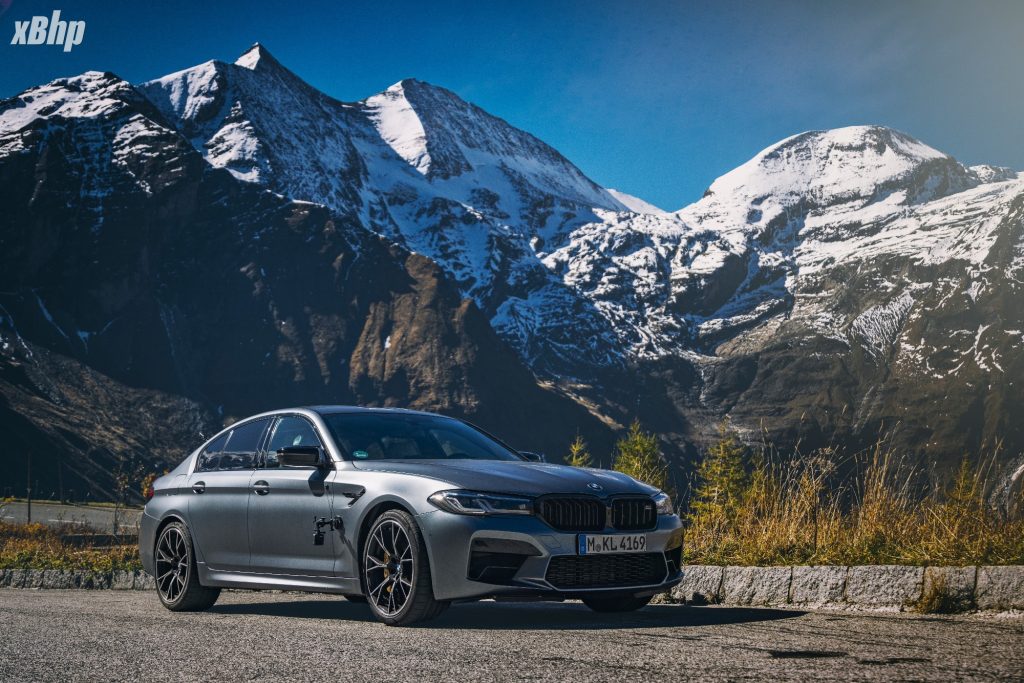
After landing in Munich and carrying out some other ‘work’ that you’ll get to read elsewhere in this issue, we asked BMW to help us top the driving experience of the BMW M4 Competition xDrive Convertible. With a grin, they told us that they had just the thing. One look at the BMW M5 Competition and its duality was right there for us to see.
There are big cars and then there are sporty cars. The BMW M5 Competition is one of the best at being both. It has four doors, the insides are spacious and luxurious, and it is loaded with the latest tech and all the creature comforts one can ask for. Then you look at the blacked-out kidney grille, the side gills, that tiny spoiler and the quad tailpipes at the rear and you know that the thing is meant for more than luxury cruising.

Fortunately for us, we had just the right idea about putting it to the test. From Munich to Stelvio to Innsbruck, we had all kinds of driving conditions to see what kind of a car the BMW M5 Competition really is. City driving in Munich, sporty feels towards Stelvio and backroads fun in Innsbruck. With all that set, it was go-time.
Push the starter button and the mighty engine comes to life. It was a bit too muted for our liking but that is what the new norms dictate. Even then, Sport and Sport+ modes enhance the sound a bit more but even then, it is hard to tell that there’s a twin-turbo V8 burbling under the hood. But find an empty stretch of road and send it… that should not leave any room for doubt that there is, in fact, a 4.4-litre twin-turbo V8 under the hood.

In addition to the mind-boggling 625 horses and 750 Nm of torque, the blistering acceleration is a result of the xDrive system and the 8-Speed M Steptronic transmission that changes gears in a flash. Among the many benefits of four-wheel drive systems such as making a powerful car idiot-proof and providing neck-bending grip, the launch and acceleration tower over all of them. A few launches are enough for one to be slack-jawed in disbelief wondering how a Saloon (Sedan) can move like that.
The fun aside, once you let the child within you have a fill of the brutish performance, you can dial things back and the BMW M5 Competition turns into a comfortable city car that you can drive every day. The ride is plush, the engine response is sedate, the soundtrack is muffled, and the steering is smooth; driving it around in Munich, it felt like a car that wants to chauffeur you wherever you want to go in supreme luxury. The clever transmission can make it impressively fuel-efficient too.

Continuing with the interiors, we loved the sporty seats. Despite their intent, they offer a lot of support and other functions such as ventilation and even massage. You get a heated steering wheel, heated seats, customizable ambient lighting, power-adjusted steering, four-zone climate control and so on. In terms of storage, you get nearly 400 litres in the trunk and a fair few cubbies in the cabin.
In terms of tech, the BMW M5 Competition gets a 12.3” touchscreen powered by the latest iDrive infotainment system. There’s Apple CarPlay, there’s Android Auto, and a truly sonorous 16-speaker 600-watt Harman/Kardon audio system. Furthermore, in addition to the various driver aids adjustable via preset and custom modes, the M5 Competition also gets automatic high-beam, blindspot monitoring, forward collision warning system with automated emergency braking, lane departure warning with lane-keeping assist and adaptive cruise control. Phew. Put simply, everything one can ask from a luxury sedan.
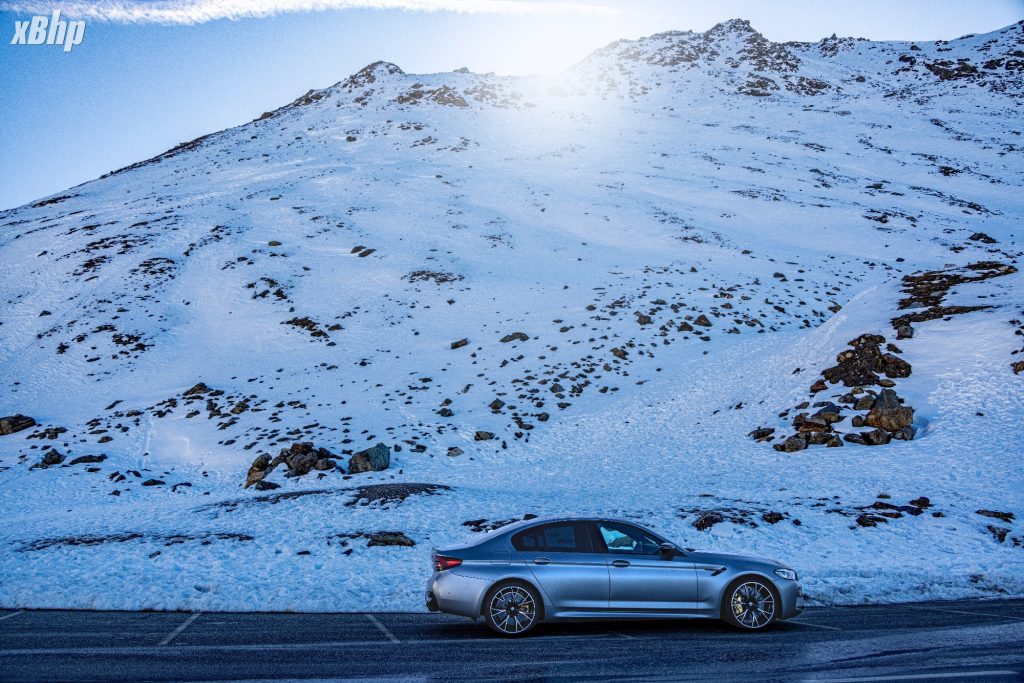
That though, is stuff for number nerds and people who are more drawn to being passengers in the rear. What we wanted to do was to head to Stelvio and see this Beemer’s other, more sinister side. And it does not take much to bring that side out. Put everything in Sport and you have on hand a completely different car. Stiff, responsive, sharp and tantalizingly quick. The transformation is terrifying and terrific; the quiet and comfortable luxury sedan transforms into a taut sportscar.
A few purists might complain about the lack of a manual gearbox and all-wheel drive. To be honest though, the automatic felt wonderful and about the all-wheel drive, well, you can send all the grunt to the rear wheels. That should be enough to keep the purists satiated as, in this mode, the BMW M5 Competition is seriously playful. Be too generous with the throttle and it is happy to kick things sideways. That though is for people who have honed this particular craft called drifting.
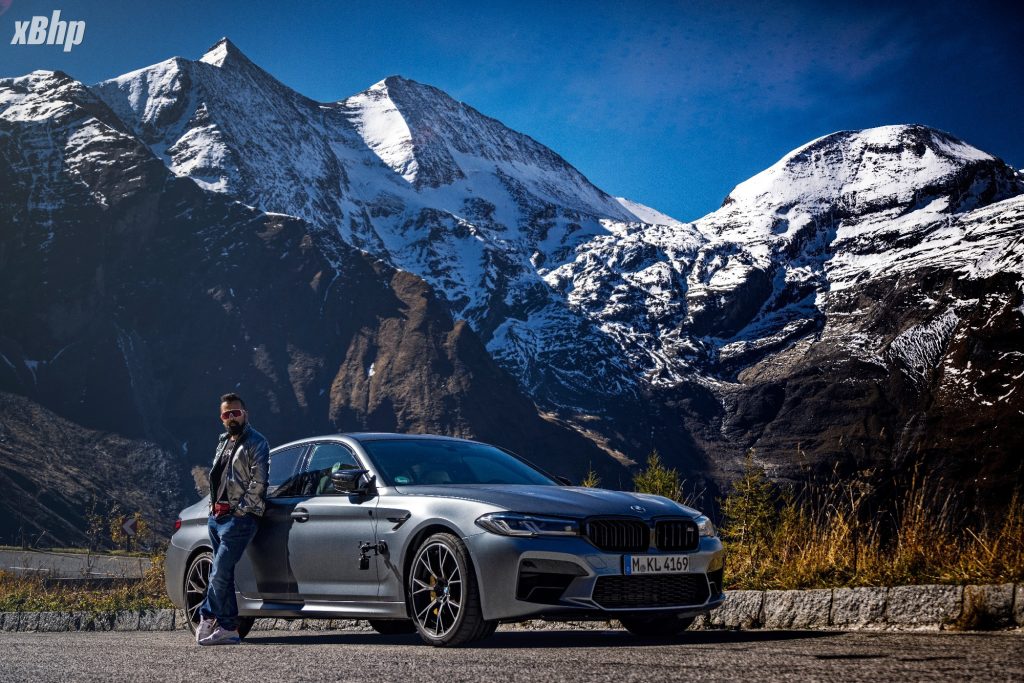
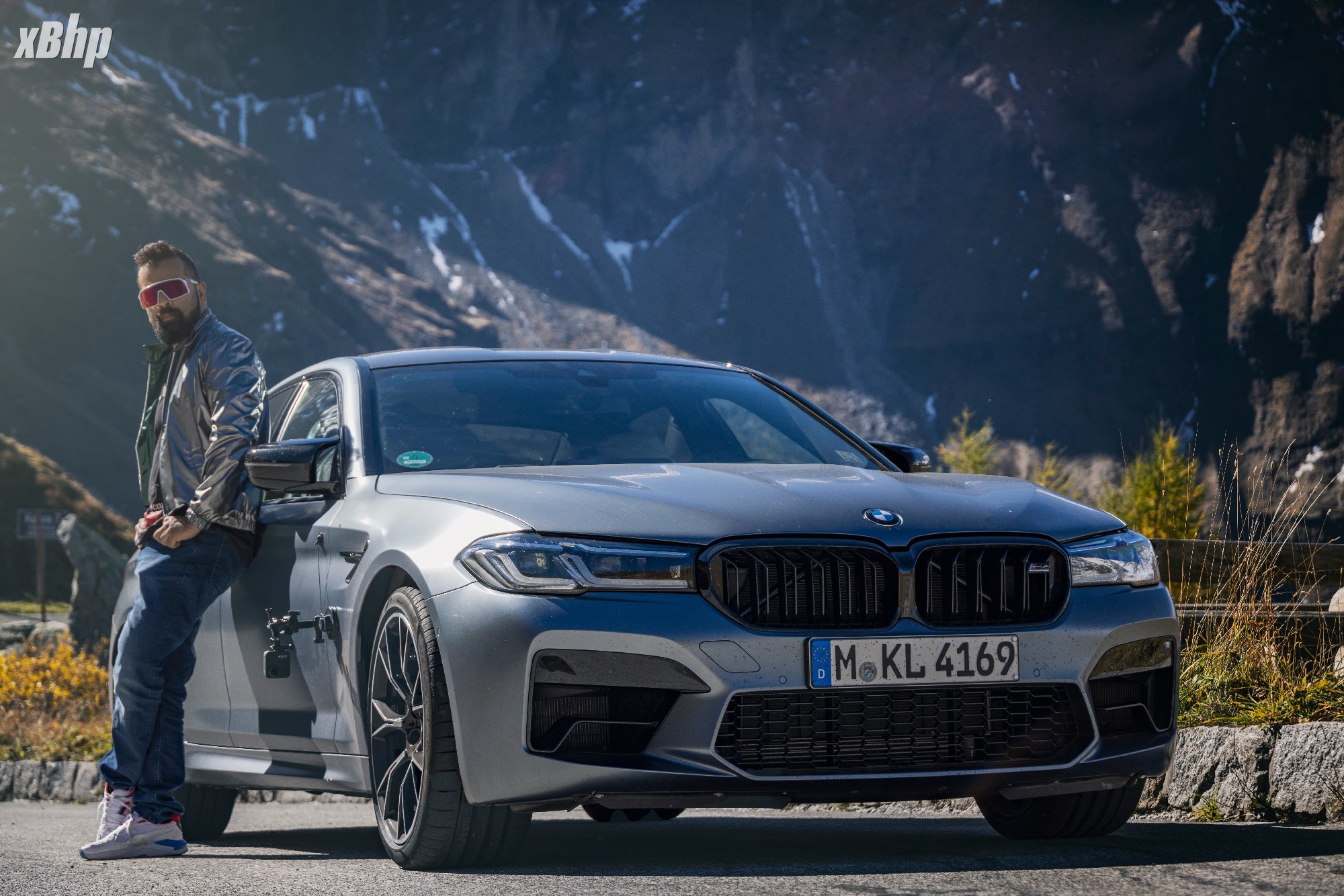
In the sportier modes, all-wheel drive mode works just fine, minimizing understeer and providing absolute grip in all kinds of conditions. Despite the large body and almost 1,800 kg of heft, the BMW M5 Competition can turn on a dime and feel confident even in the scariest of corners. Historically, steering feel has been a forte of BMW M cars and the M5 Competition is no different. It is not quite analogue but still meaty, direct and responsive. Finally, the M5 Competition gets carbon-ceramic brakes… need we say more?
Overall, the BMW M5 Competition is a wonderful car and quite a cocktail of luxury and performance. We feel that the looks and the exhaust note are a little too understated and muffled but regardless, the duality of this Beemer is formidable. If your weekdays are spent being driven to the office and your weekends on the racetrack; now you know what you need to get. We mean money… a fair bit of it.

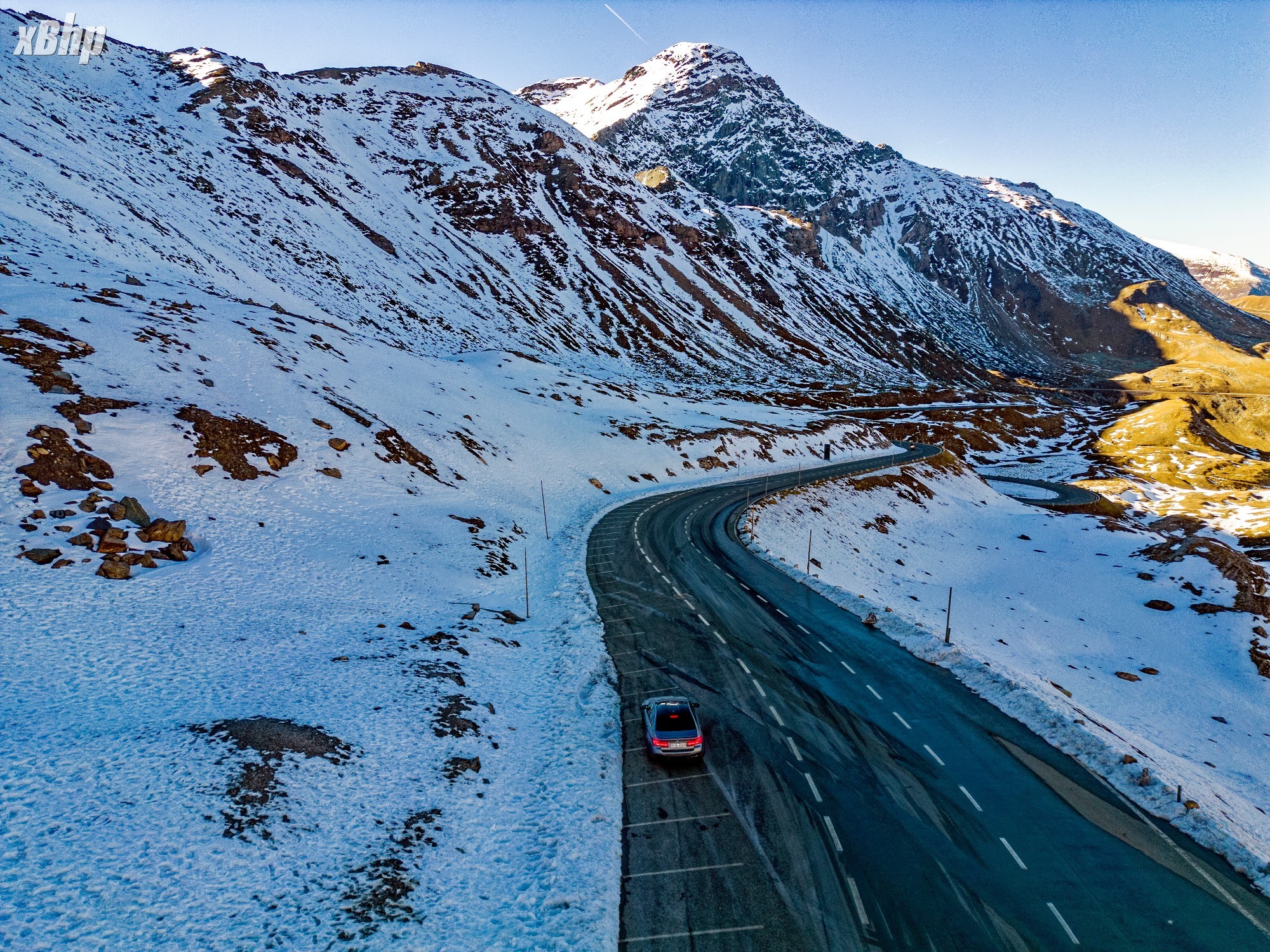
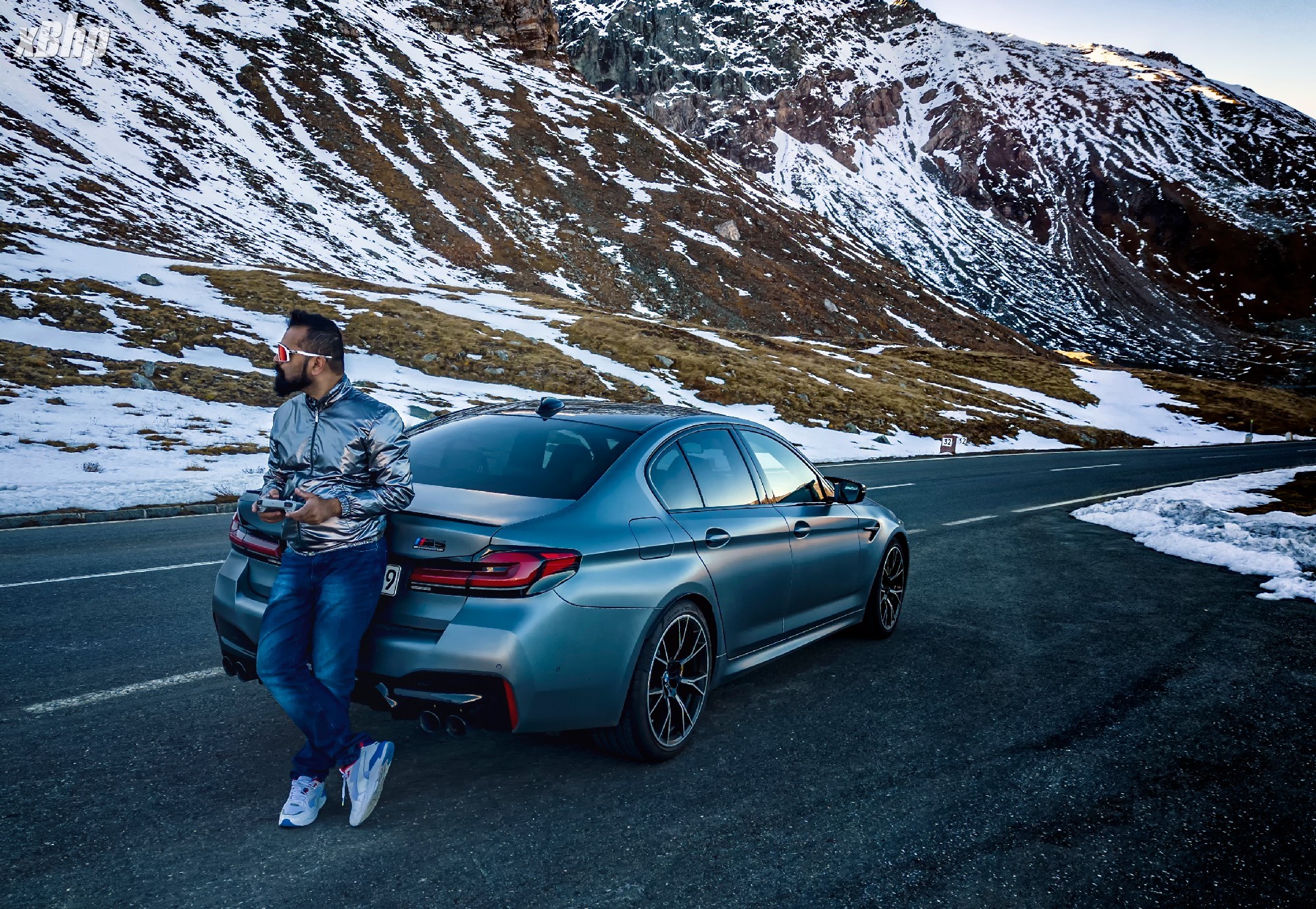
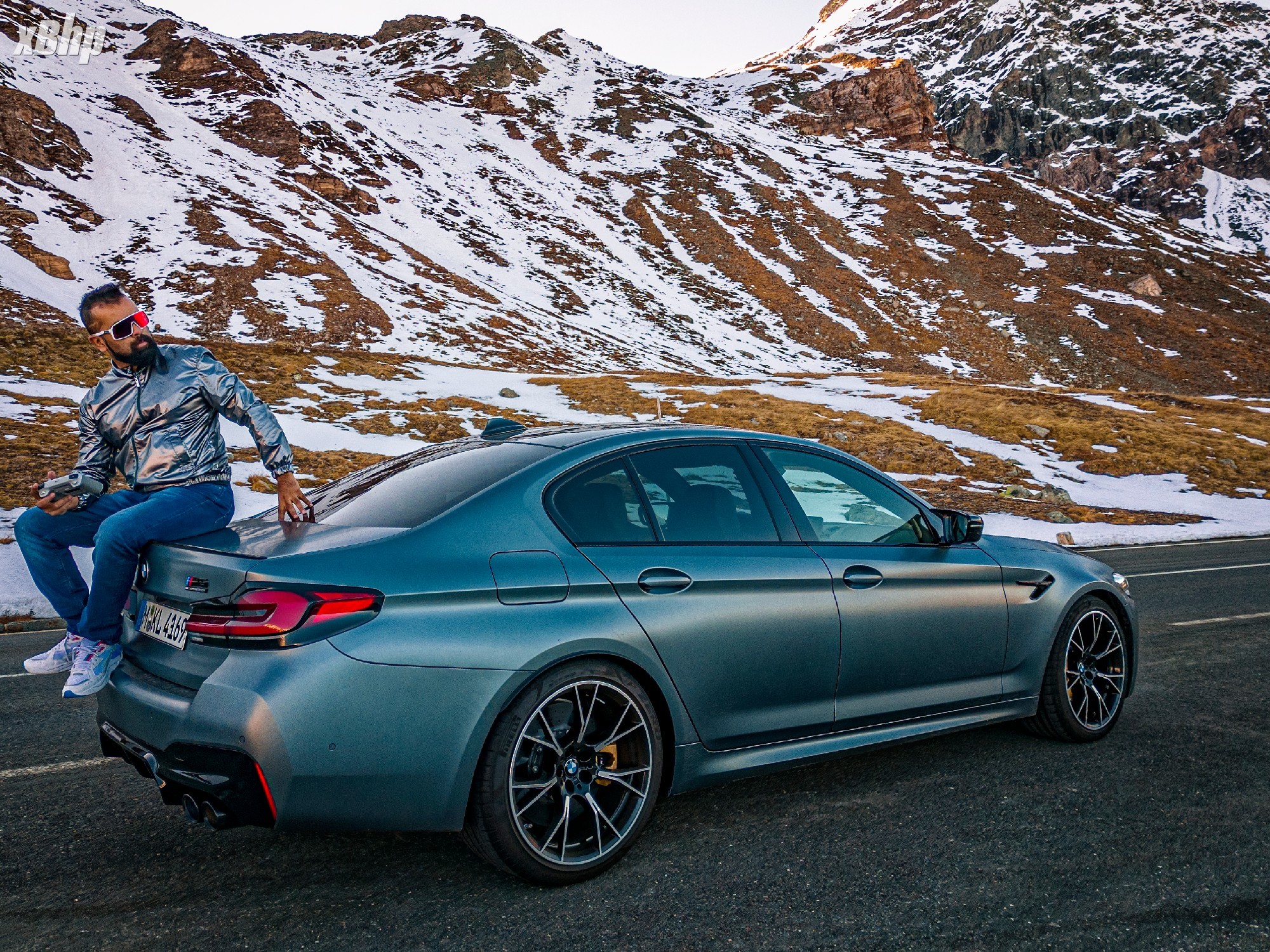
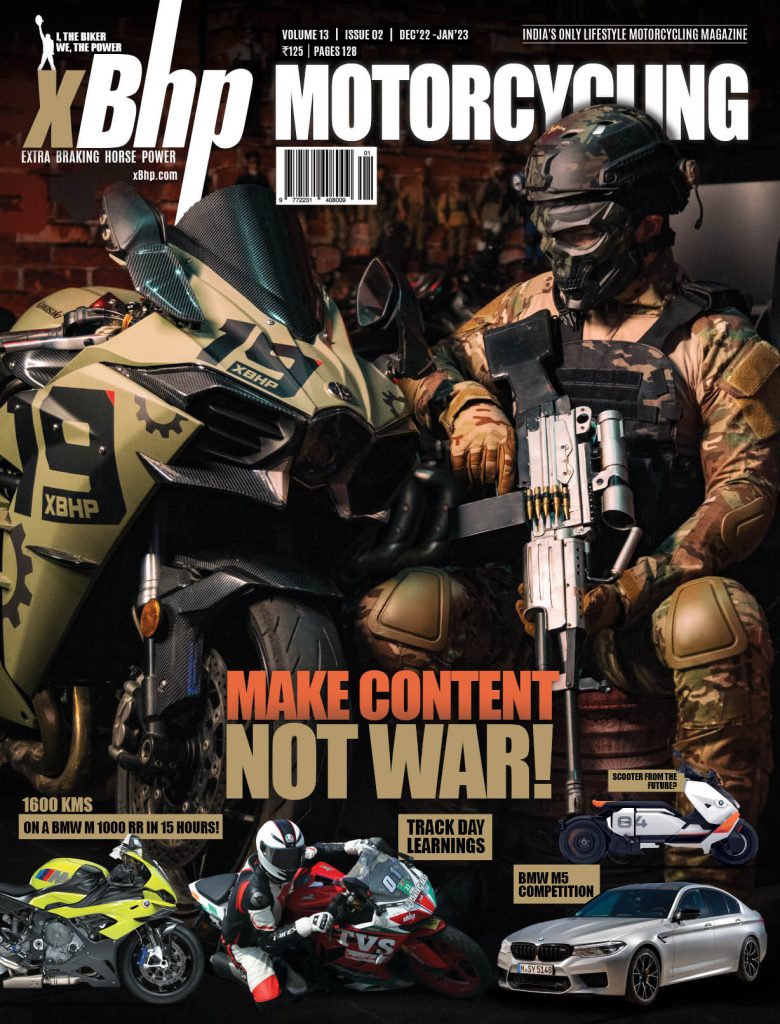
Unleashing the fight formula on the racetrack!
 Apr 2022 Sundeep Gajjar
Bikes,Ducati,Motorcycles
Apr 2022 Sundeep Gajjar
Bikes,Ducati,MotorcyclesThere are not a lot of things more thrilling than riding a motorcycle after a hiatus. And there probably isn’t anything better than riding on a racetrack after a hiatus. My last stint on a racetrack was when I rode my Suzuki Hayabusa, Ninja H2, and Triumph Rocket 3 R on the Buddh International Circuit. Post that enthralling experience, I found myself at home nursing an injury and trying to recuperate. Now that I am better, though still far from 100% fitness, I just could not wait to hit the racetrack again and even more so, because, for this stint, I had a much more focused weapon.

I suffered an ACL injury not too long after my previous run at the racetrack. It was rather serious. So much so that I had to undergo surgery. More than anything though, it was the recovery period that had me in dire straits. I have spent my life riding motorcycles and not being able to even sit on one for weeks had me in a place of bother. But then again, I have xBhp to take care of and I am a workaholic. So I had myself drowned in work and this break also gave me some time to think and act upon the idea of adding another machine to my dream garage. Elsewhere in this issue, you will find the story of how and why I got that particular motorcycle. For this one though, I’ll just tell you the name- Ducati Streetfighter V4 S.

I have always been an admirer of naked motorcycles for the practicality they bring with almost superbike-like power and specs, almost being the keyword. The Ducati Streetfighter V4 S removes that ‘almost’. It is a superbike! It is a Panigale V4 sans the fairing. More than 200 horses and less than 200 kg weight… Ducati has something called Fight Formula that they use to describe the concept of this motorcycle. I disagree. There is no fight. There’s just absolute and brutal domination. The Streetfighter V4 S is unlike any street naked I have ever ridden.

But I did not get it simply because it is a naked motorcycle. I did it because it comes with nearly everything that the Panigale V4 has and so, I fully intended to use it on a racetrack as well. That was a decision I had made even before the motorcycle made it to the xBhp Garage. Yes, it does have some limitations still, but it is still far better on the racetrack than most naked motorcycles out there.

This outing on the racetrack was more of a test run. It was to see how the motorcycle would fare on the racetrack in its stock form. This was to gauge what sort of upgrades and changes I should make to it. But this outing also served as a test for my own fitness and abilities. After my time on the track, I can say that it went rather well. When it comes to myself, I’d say I am at about 70% fitness for riding at a racetrack. There’s some weakness and some ring rust, so to speak, but it’ll be back to normal quite soon. How did the bike fare? Well, that will take more than two lines to explain. So, let us begin.

The very first thing that comes to most people’s minds is the aero. And it is a genuine concern/question considering it is a naked motorcycle. Yes, aero is a factor on the racetrack. I felt that on both the front and back straights of BIC. Without the fairing and a windscreen to hide behind, the windblast is considerable. But the Streetfighter V4 S fares better than most nakeds in this regard anyway. More importantly, the winglets are a boon. If you have ridden hypernakeds, you may be well aware of their tendency of not being able to keep the front wheel on the ground. It may look cool but on the racetrack, it costs you crucial drive coming out of the corners.

In simple terms, if a wheelie occurs, power is wasted in the rear wheel trying to rotate the motorcycle and not pushing it forward. Especially when you have a grippy 200-section rear tyre and more than 200 bhp on tap. With numbers like that, full throttle coming out of the slower corners on BIC would result in the front wheel staying airborne for a considerable amount of time. In addition to the winglets, another factor that helps the Streetfighter keep its front wheel on the ground is the longer wheelbase. The Streetfighter is longer than the already long Panigale V4. V4 powered motorcycles tend to be because of the engine layout. But the Streetfighter V4’s even longer wheelbase is to mitigate wheelies.

That comes with another problem though. The Long wheelbase tends to make the motorcycle more stable in a straight line but a little sluggish in directional changes. I was rock-steady on the straights even with the throttle pinned but guess what, the Streetfighter V4 S felt quite agile in the corners too. The credit for that goes to the wide handlebars that provided ample leverage. The best thing about the Streetfighter V4 S though is the engine. And in a motorcycle this good, it is a big deal if something stands out and yet, the engine does. Desmosedici Stradale V4 is a thing of beauty. Almighty powerful but smooth, the engine revs like a bat out of hell. The Streetfighter V4 S is mighty grunty in the mid-range but it is a different beast at the top of the rev range.

The Streetfighter V4 also features a shorter final drive to give it a bit more grunt. And it shows. The Streetfighter V4 S, bone stock, can keep up with superbikes up to around 100 to 150 kays an hour before the aerodynamics start to play a bigger role than sheer grunt. Even then, I can confidently say that this motorcycle has earned its right to be called the most powerful and the fastest street naked available today.

Regardless of all that though, I still think that there’s much more that this motorcycle can offer. The Streetfighter V4 S is loaded with electronics. This time around, I just put it in Sport and went around the track. I am sure that dialling down the electronics a bit more will lift the restraints further. Moreover, there’s more to be had in other places too. The first thing that I plan to do is to add a flyscreen to have at least some sort of protection against the windblast. A full-system racing exhaust is another thing that can be done for more power and even lesser weight.

Then there are the tyres; they were grippy, but they were still road tyres. With proper slicks, I may be able to extract a bit more performance out of the Streetfighter V4. Finally, suspension tuning. Being able to set up the suspension to your body and your liking can make worlds of difference on the racetrack. So that is also something that I need to work on. Around 2.21 on the Buddh International Circuit with a stock bike and ‘less than stock’ rider is not too bad, I reckon. As I said earlier, this was more of a test run to see how the bike goes and what can be done to make that better. Now that I know, I am going to get back to making it better. The next time I hit the track, you’re surely going to see some seconds shaved off. Till then, ride hard and ride safe.



