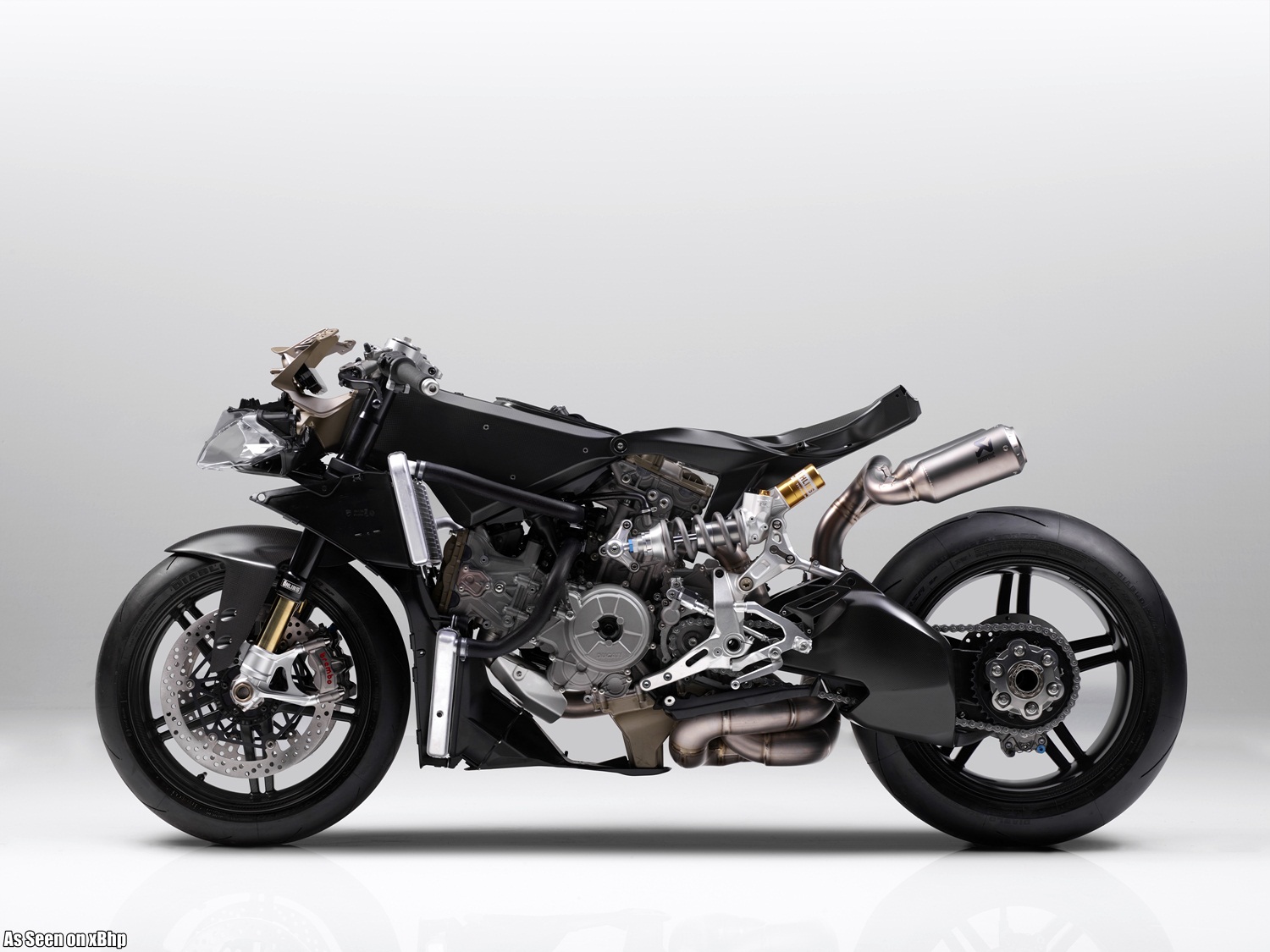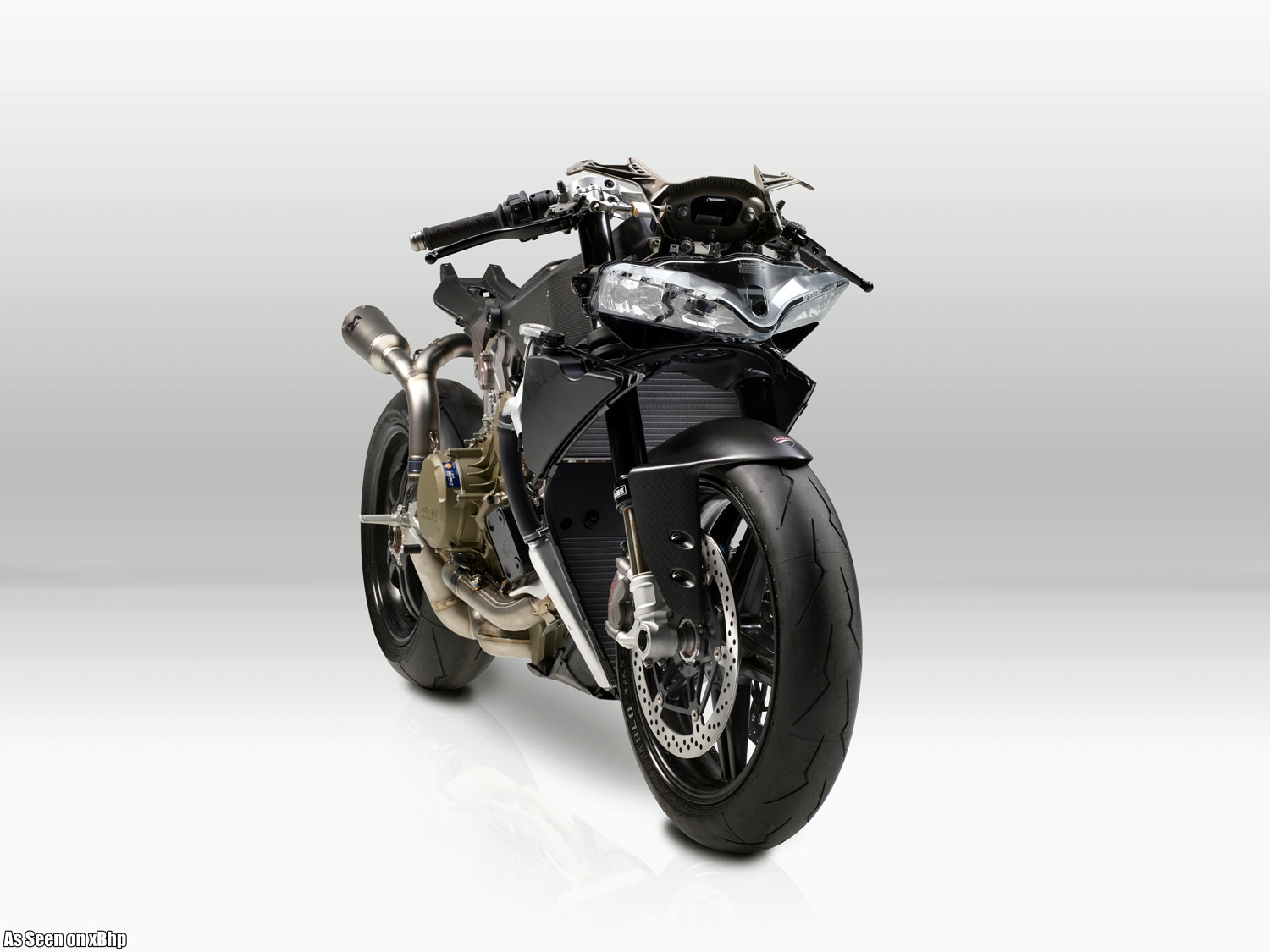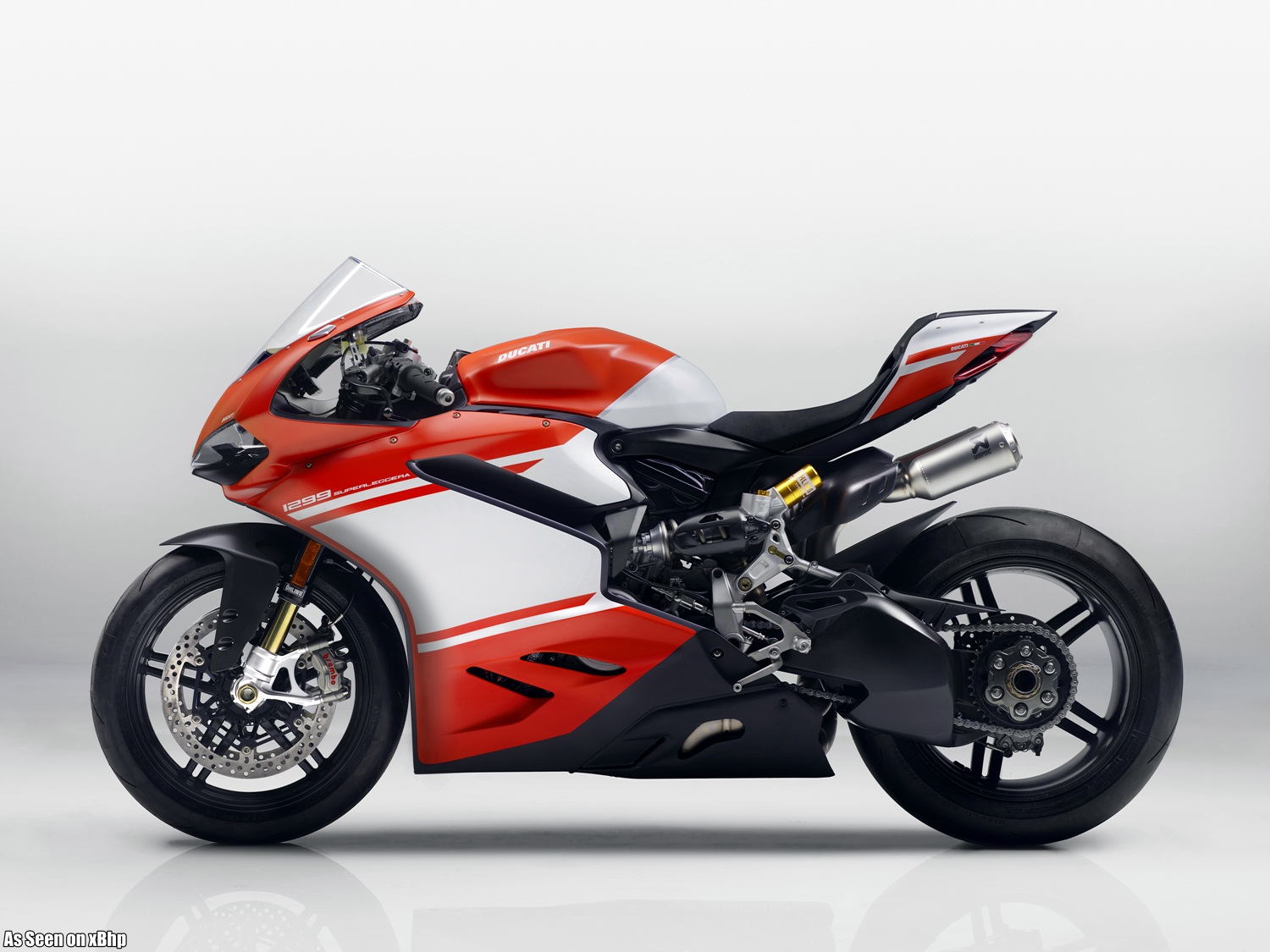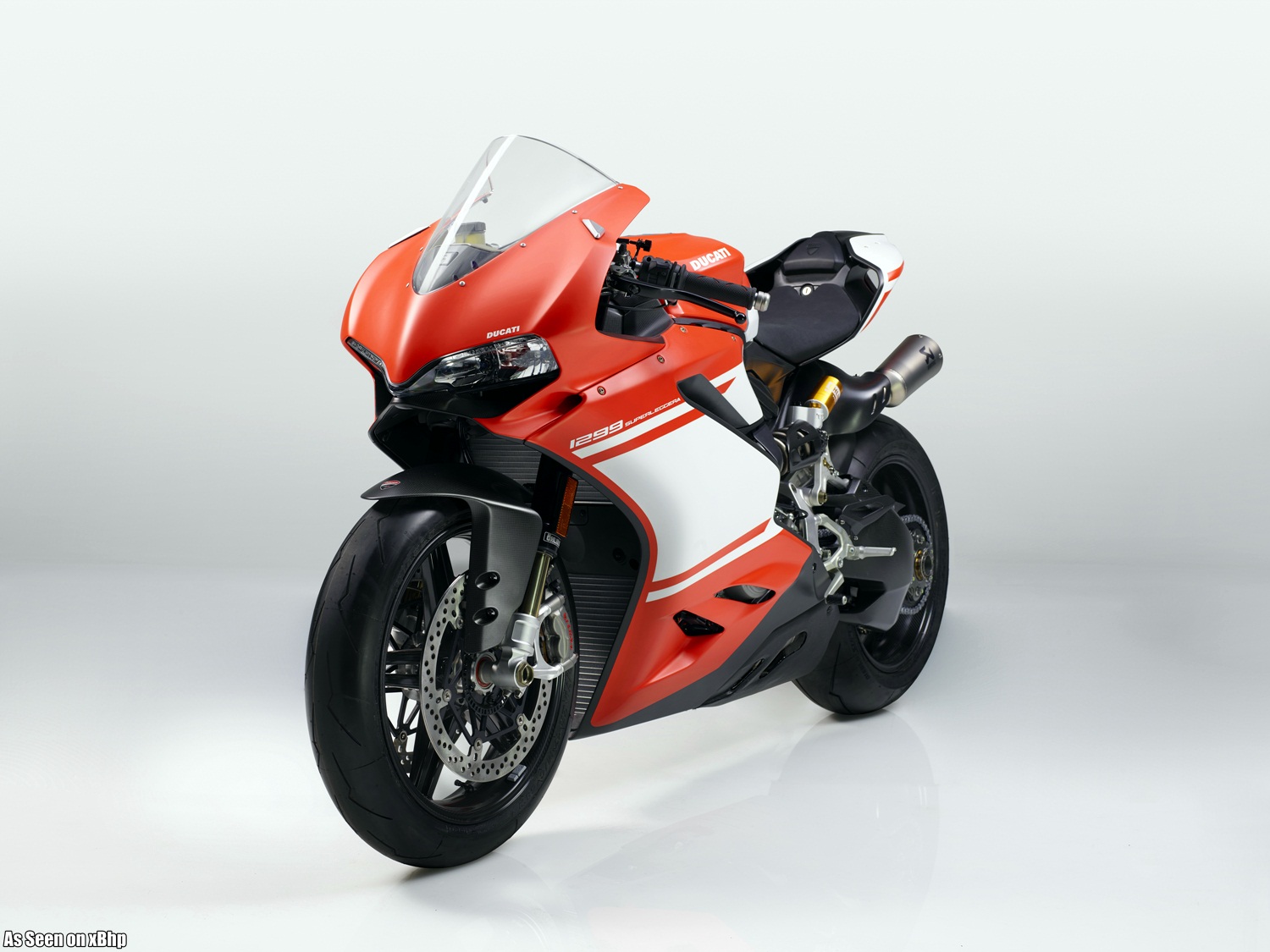






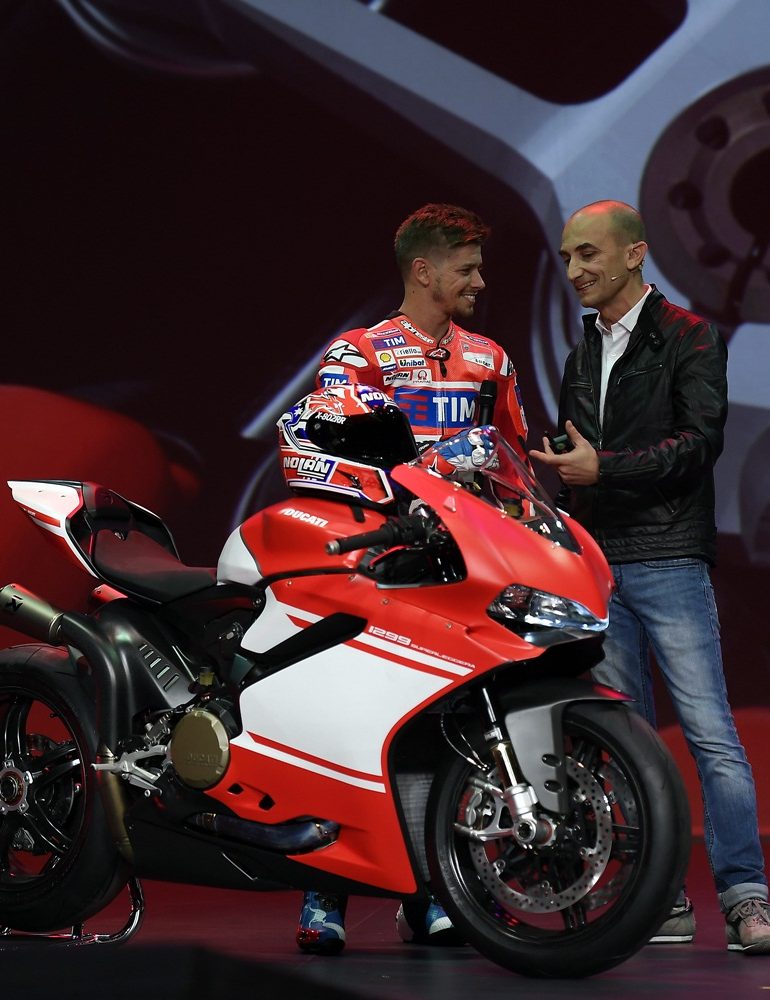

Ducati unveiled 6 new motorcycles at EICMA 2016. One of them being the Ducati 1299 Superleggera, which was ridden on stage by Ducati’s Brand Ambassador and MotoGP test rider, Casey Stoner. The bike boasts a mill which puts out a whopping 215bhp!
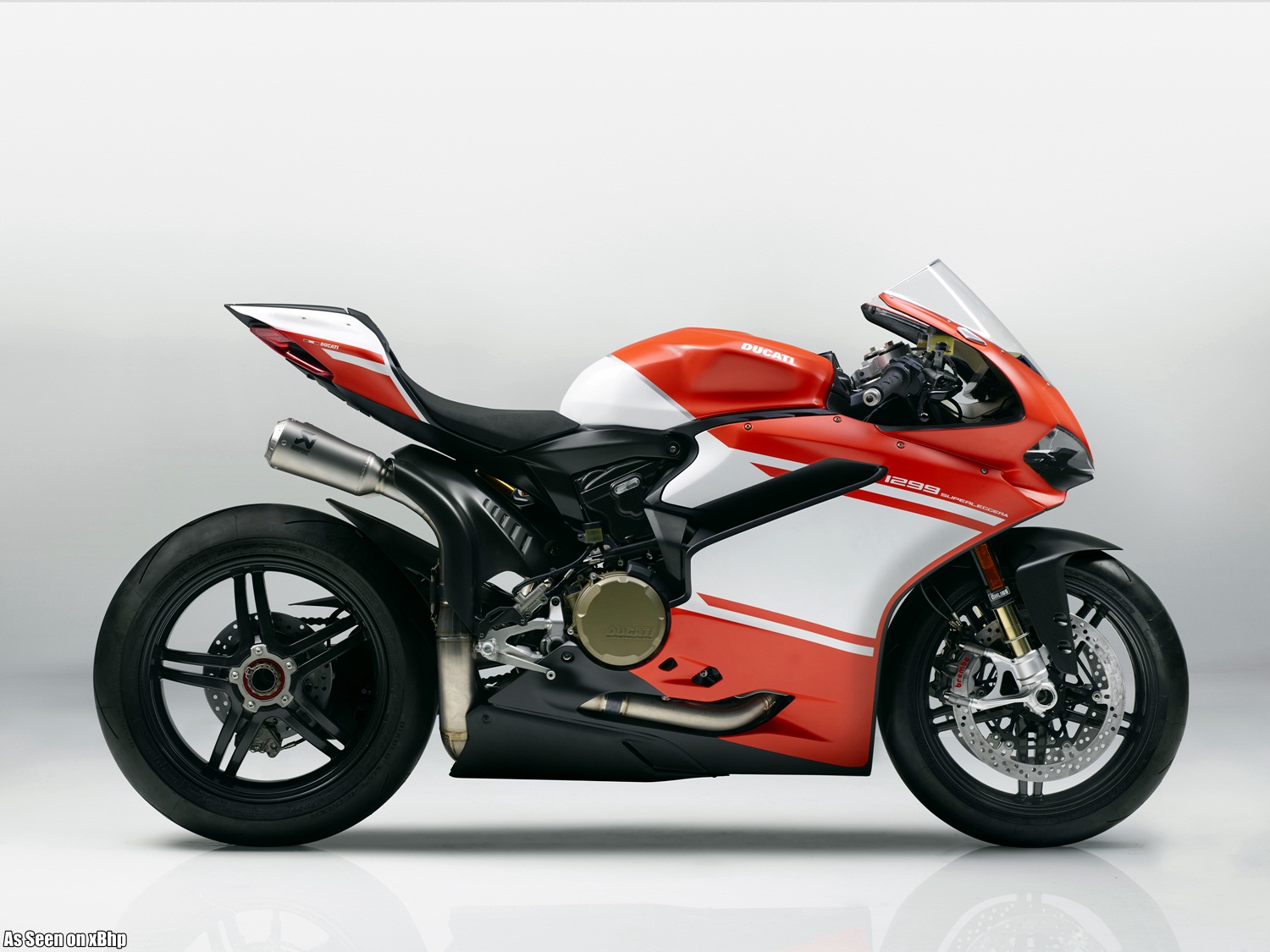
The Superleggera is the first ever factory bike to be equipped with a carbon fibre frame, swingarm, subframe and wheels. Frame and swingarm, made entirely of carbon fibre just like the high-spec wheels, are unique to the 1299 Superleggera. The fairing – also made of carbon fibre – is another key element. And underneath that carbon fibre skin lies the highest-performing version of the Superquadro. Thanks to its 215 hp, the desmodromic engine on the 1299 Superleggera is the most powerful factory twin-cylinder ever built; it incorporates the ultimate levels of Ducati technology.
What makes the 1299 Superleggera even more exclusive is the new electronics package which uses a 6-axis Inertial Measurement Unit (6D IMU) to manage the incomparable array of electronic controls. This system has allowed us to improve the Ducati Traction Control EVO (DTC EVO) presented on the 1299 Panigale S Anniversario thanks to the introduction of Ducati Slide Control (DSC), which ensures even higher out-of-the-corner performance. The 1299 Superleggera is also the first ever Ducati Superbike to be equipped with Ducati Power Launch (DPL) and also features the Engine Brake Control (EBC) seen on previous versions. Keeping the explosive performance of the 1299 Superleggera under control is also a newly calibrated Bosch Cornering ABS system that ensures matchless braking in complete safety. The 1299 Superleggera has the word ‘exclusive’ written all over it, even when it comes to the number being made: only 500 such bikes are to be built.
Together with the motorcycle, purchasers get a track kit which includes a complete Akrapovič titanium racing exhaust, a racing screen, plate holder removal kit, kickstand removal kit, machined-from-solid mirror replacement plugs, front and rear paddock stands and a bike cover.
Ducati 1299 Superleggera: unique features
Frame
Carbon fibre monocoque
Carbon fibre single-sided swingarm
Carbon fibre wheels with aluminium hubs
Carbon fibre rear subframe
Aluminium tank
Carbon fibre fairing
Multi-adjustable Öhlins FL936 upside down 43 mm fork
Multi-adjustable Öhlins TTX36 shock absorber with titanium spring
Brembo MCS 19.21 radial front pump
Brembo TT29OP1 brake pads with increased friction coefficient
ID number on top yoke: 1/500
Engine
Superquadro engine with 215 hp at 11,000 rpm and 14.9 kgm at 9,000 rpm
2-segment pistons with a diameter of 116 mm to boost the compression ratio and aluminium cylinder liners to reduce weight Lighter crankshaft with tungsten balancing pads
Titanium con rods
Sand-cast crankcase
Increased-diameter titanium intake and exhaust valves
Cylinder head with specially developed intake and exhaust ducts
Camshafts with increased lift
Complete all-titanium Akrapovič exhaust with high-mount dual silencer
Electronics
6D Inertial Measurement Unit (IMU) by Bosch
Ducati Traction Control EVO (DTC EVO)
Ducati Slide Control (DSC)
Ducati Wheelie Control EVO (DWC EVO)
Engine Brake Control (EBC)
Bosch Cornering ABS
Ducati Power Launch (DPL)
Ducati Quick Shift (DQS) up/down
Dedicated switchgear controls to adjust DTC, DSC, DWC and EBC during on-track use and DPL activation
Ducati Data Analyser + (DDA+)
Lithium-ion battery
Race Kit
Complete titanium Akrapovič racing exhaust with high dual silencer
Bike cover
Front and rear paddock stand
Plate holder removal kit
Racing screen
Kickstand removal kit
Machined-from solid mirror replacement plugs
During development, components underwent stringent final tests to ensure integrity under all possible conditions and each item underwent a quality control process similar to that used in MotoGP. The monocoque frame, made of high-strength carbon fibre and a resin system resistant to high temperatures, also has 7075 aluminium alloy inserts that are co-laminated into the composite structure. This construction technology has resulted in weight savings of 40% (-1.7 kg) compared to the monocoque frame on the 1299 Panigale. The single-sided swingarm – again made of high-strength carbon fibre and a resin system resistant to high temperatures with 7075 aluminium alloy inserts co-laminated into the composite structure – provides an 18% weight saving (-0.9 kg ) compared to its aluminium counterpart on the 1299 Panigale. Moreover, the 1299 Superleggera features a carbon fibre rear subframe, similar to the one used on the 1199 Superleggera, plus carbon fibre fairing, front mudguard, rear mudguard and exhaust heat guard. The cutting-edge wheels of the 1299 Superleggera are also made of high-strength carbon fibre, with aluminium hubs screwed into the composite structure. Compared to their forged aluminium counterparts, these wheels lighten the bike by a total of 1.4 kg and offer 26% less rolling resistance at the front and 44% less at the rear, resulting in nimbler handling. The 1299 Superleggera wheels mount Pirelli Diablo Supercorsa SP tyres.
Superbike suspension and brakes
The refined chassis set-up of the 1299 Superleggera is completed by Öhlins suspension and true Superbike-calibre Brembo brakes. The multi-adjustable 43 mm Öhlins FL936 upside-down fork on the 1299 Superleggera weighs 1.35 kg less than the Öhlins fork on the Panigale R. At the rear, instead, the multi-adjustable Öhlins TTX36 shock absorber has a titanium spring that shaves off another 0.5 kg with respect to the steel unit fitted on the Panigale R. A look at the braking system reveals two 330 mm Brembo discs up front, gripped by Brembo M50 monobloc calipers, with new TT29OP1 brake pads, controlled by a Brembo MCS 19.21 radial pump. At the back, instead, is a single 245 mm disc.
The most powerful Superquadro ever
A whopping 215 hp at 11,000 rpm and 14.9 kgm at 9,000 rpm. To achieve such performance Ducati engineers have made profound changes to some of the main engine components, starting with the lightened crankshaft which has a larger crank pin and tungsten balancing pads. The con-rods, in titanium, are new, as are the 116 mm diameter pistons – now with just two segments as on Superbike engines – with machined crowns that raise the compression ratio to 13:1. Another important new development concerns the cylinder liners, in aluminium as opposed to steel as seen on the 1299 Panigale. With the addition of a lighter flywheel, the “engine core” (crankshaft, conrods, pistons, cylinder liner, flywheel) is about 2.4 kg lighter than its counterpart assembly on the 1299 Panigale (-21.5%). The cylinder heads have also been given an overhaul. The diameters of the valves, both in titanium, have been increased; they are now even wider than those used on Superbike competition bikes. The intake valves have a diameter of 48 mm as opposed to the 46.8 mm on the 1299 Panigale; the exhaust valves have a diameter of 39.5 mm (against 38.2 mm on the 1299 Panigale). Consequently, intake and exhaust ducts have also undergone development, improving fluid dynamics thanks also to new camshafts that offer both improved profiles and increased valve lift. This model has been the focus of intense performance and weight reduction research, and the cylinder heads are no exception: their weight has been cut by about 0.4 kg. The 1299 Superleggera features a clutch with new slipper and self-servo system, giving heightened ‘feel’ and ride stability thanks also to the use of a new forged aluminium clutch basket.
Overall, in terms of weight, the Superquadro, is 2.1 kg lighter than the engine on the 1299 Panigale. The intake system on the 1299 Superleggera has also been revised. It mounts a high-permeability, larger-surface P08 Sprint Filter of SBK derivation. The throttle body features new aerodynamic throttle openings with a profile designed to improve airflow while intake horn heights have been optimised for each cylinder head, unlike the 1299 Panigale which has horns of the same length. Lastly, the 1299 Superleggera has a complete all-titanium Akrapovič exhaust with a high dual silencer, just like the one on the official Panigale that competes in the World Superbike championship. The Superquadro that powers the 1299 Superleggera is not just the most powerful twin-cylinder road engine built by Ducati in its entire history: it’s also perfectly EURO 4 compliant and delivers 10 hp (+ 4.9%) and 0.2 kgm (+ 1.5%) more than the engine on the 1299 Panigale. Moreover, the ultra-light lithium battery on the 1299 Superleggera saves 1.7 kg compared to the unit on the 1299 Panigale.
Ducati 1299 Superleggera Tech Specs
Engine Superquadro: L-twin cylinder, 4 valve per cylinder, Desmodromic, liquid cooled Displacement 1,285 cc
Bore X stroke 116 x 60.8 mm
Compression ratio 13.0:1
Power 215 hp @ 11,000 rpm
Torque 146.5 Nm @ 9,000 rpm
Fuel injection Mitsubishi electronic fuel injection system. Twin injectors per cylinder. Full Ride-by-Wire elliptical throttle bodies with aerodynamic valve and optimized trumpets
Exhaust 2-1-2 system, primary tubes in titanium. Twin titanium mufflers. 2 lambda probes and 2 catalytic converters
Gearbox 6 speed with Ducati Quick Shift (DQS) up/down
Primary drive Straight cut gears; Ratio 1.77:1
Ratio 1=37/15 2=30/16 3=27/18 4=25/20 5=24/22 6=23/24
Final drive Chain; Front sprocket 15; Rear sprocket 39
Clutch Hydraulically controlled slipper/self-servo wet multiplate clutch
Frame Monocoque in carbon fiber
Front suspension Fully adjustable 43mm USD Öhlins FL 936 fork with TiN treatment, billet fork bottoms and lightweight stress-optimized outer tubes, lightweight springs
Front wheel 10-spoke carbon fiber 3.50″ x 17″
Front tyre Pirelli Diablo Supercorsa SP 120/70 ZR17
Rear Suspension Fully adjustable single Öhlins TTX36 shock with titanium spring, adjustable linkage between progressive/flat. Carbon fiber single-sided swingarm
Rear Wheel 10 spokes carbon fiber 6.00” x 17”
Rear tyre Pirelli Diablo Supercorsa SP 200/55 ZR17
Wheel travel (front/rear) 120 mm – 130 mm
Front brake 2 x 330 mm semi-floating discs, radially mounted Brembo Monobloc Evo M50 4-piston callipers with Cornering ABS, Brembo MCS 19-21 adjustable-ratio front brake master cylinder, remote lever adjuster
Rear brake 245 mm disc, 2-piston calliper with Cornering ABS
Instrumentation Colour TFT display
Dry weight 156 kg
Kerb weight 167 kg
Seat height 830 mm
Wheelbase 1.456 mm
Rake 24°
Front wheel trail 98 mm
Fuel tank capacity 17 l
Number of seats Single seat