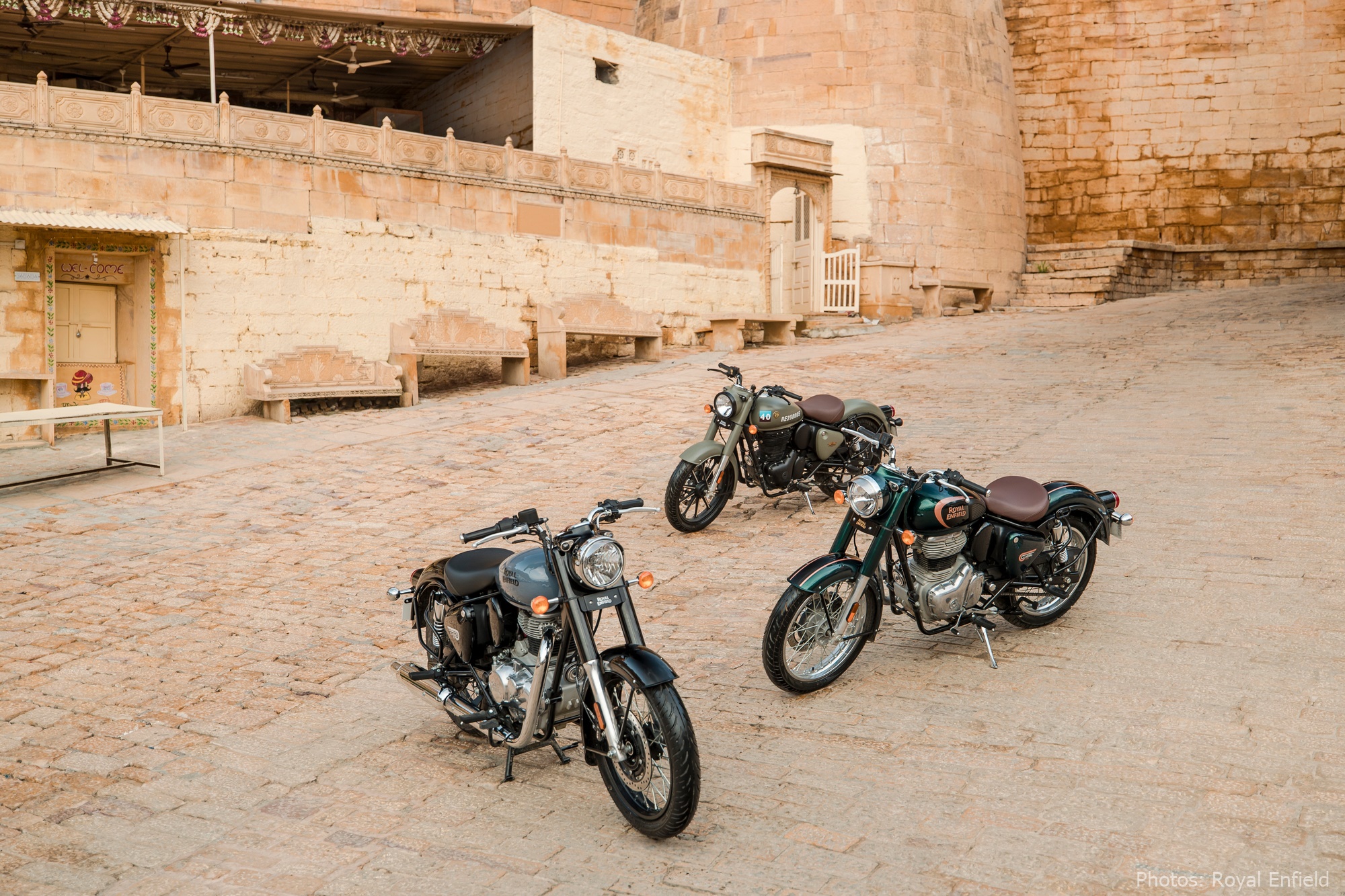








Do you know why some of the world’s most exquisite watches are often bare-mechanical pieces of machinery? Do you know why some of the world’s most expensive watches are often devoid of stuff like a calorie counter? It is because of their timelessness, excuse the pun. It is because they are a celebration of the roots. It is because they are a celebration of Classic. Quite a time for wordplay this, eh? Well, the new Royal Enfield Classic 350 is out and the occasion does ask for revisiting its timelessness and to see what makes the Classic tick… or shall we say thump?
In order to figure out what made the Classic what it was and what it is now, we must first figure out what the thought process behind it was. With the Classic, Royal Enfield envisioned a motorcycle that would seamlessly amalgamate modern technology with the authentic British post-war design. Not an easy feat by a long shot and even more so when they wanted the character of the motorcycle to remain unchanged.
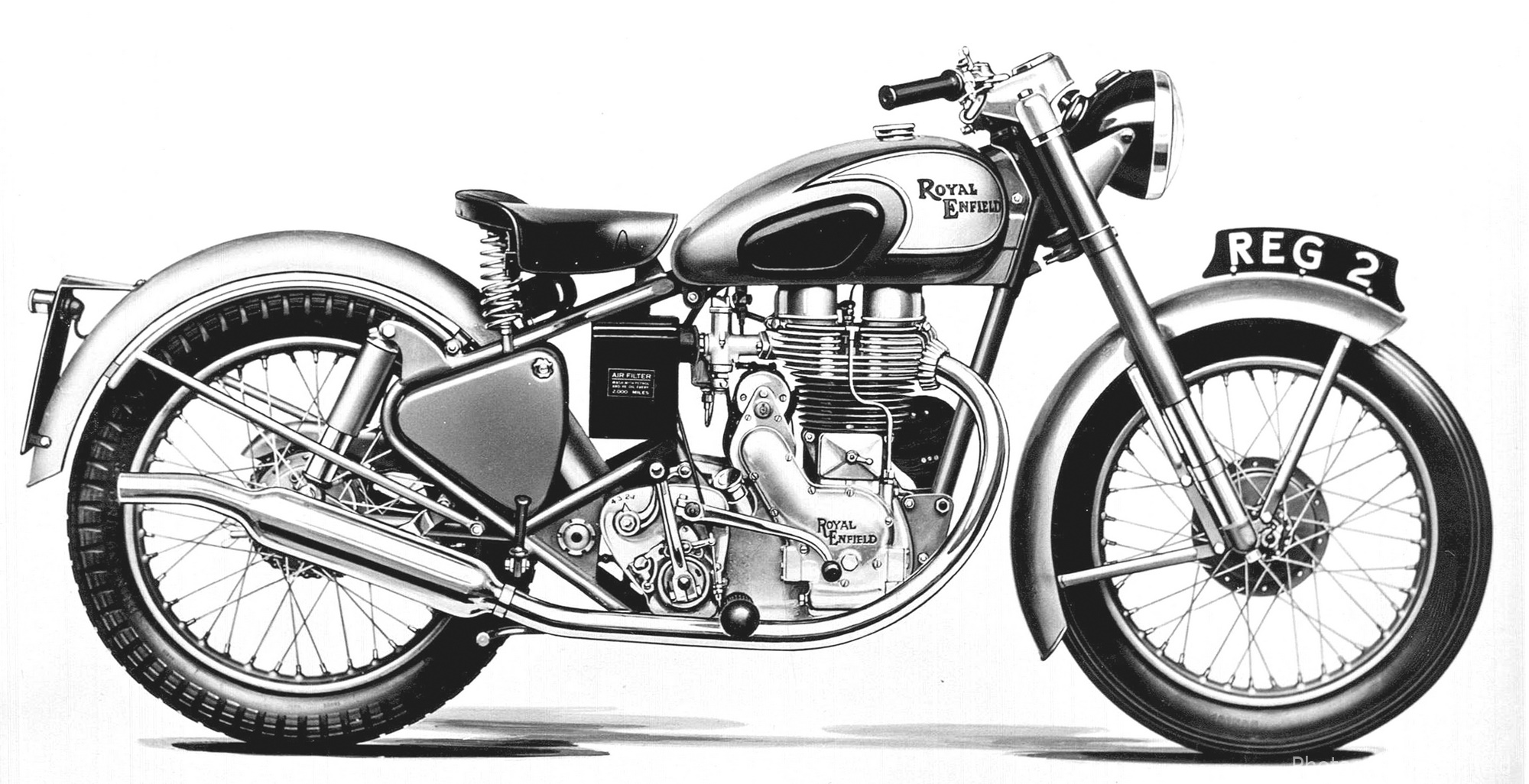
Let us talk about that character first then. After the end of the Second World War, the focus of motorcycle design was simplicity and usability. Motorcycles needed to be practical so that they could inevitably become the more economical and practical form of transportation. In a bid to create a motorcycle just like that, Royal Enfield began the production of its civilian models. As a result, the single-cylinder OHV 250cc Model G and the 500cc Model J became the perfect commuting motorcycles because of their simple design.
With time, these models evolved. In 1948 came the biggest change- the addition of rear suspension. This was to aid comfort and make these motorcycles even more enticing to the public. Fun fact; the rubber Thigh Pads on the fuel tank that became a sort of a signature for the Classic, were introduced in these models along with the teardrop fuel tank. This should give you a hint of what we meant when we said that Royal Enfield wanted to retain the true character of these retro motorcycles in the Classic 350.

Despite all that, the most significant contribution to the design philosophy of the Classic was that of the 1951-55 model G2 350 Bullet. This was the model that caught Royal Enfield design team’s eye during their research. The retro lines of the motorcycle along with the upswept exhaust was considered the base on which the team decided to build the Classic. Some more visual cues such as the long flowing fenders, the trademark casquette, and the single spring seat were also used to draw inspiration from.
These when combined with the oval toolbox, the teardrop fuel tank, and the engine fins, created a silhouette that was ready to take its place as one of the most unmistakable and iconic motorcycle designs ever created. This is the philosophy and the inspiration that led to the conceptualization and execution of the Classic as we know it from yesterday, and today. But this was just the ideation phase. The execution, as we mentioned earlier, was much more difficult.
The folks at Royal Enfield had to walk a fine line while creating the Classic. They had to make it modern enough to be relevant to the times and yet, not tamper with its retro design and character. But they saw through this challenge following a two-part approach. In the first, all the electronic and modern components were placed in a way that they were the least exposed bits. Wherever this was not possible, it was done in a way that they seamlessly blended with the lines of the motorcycle.
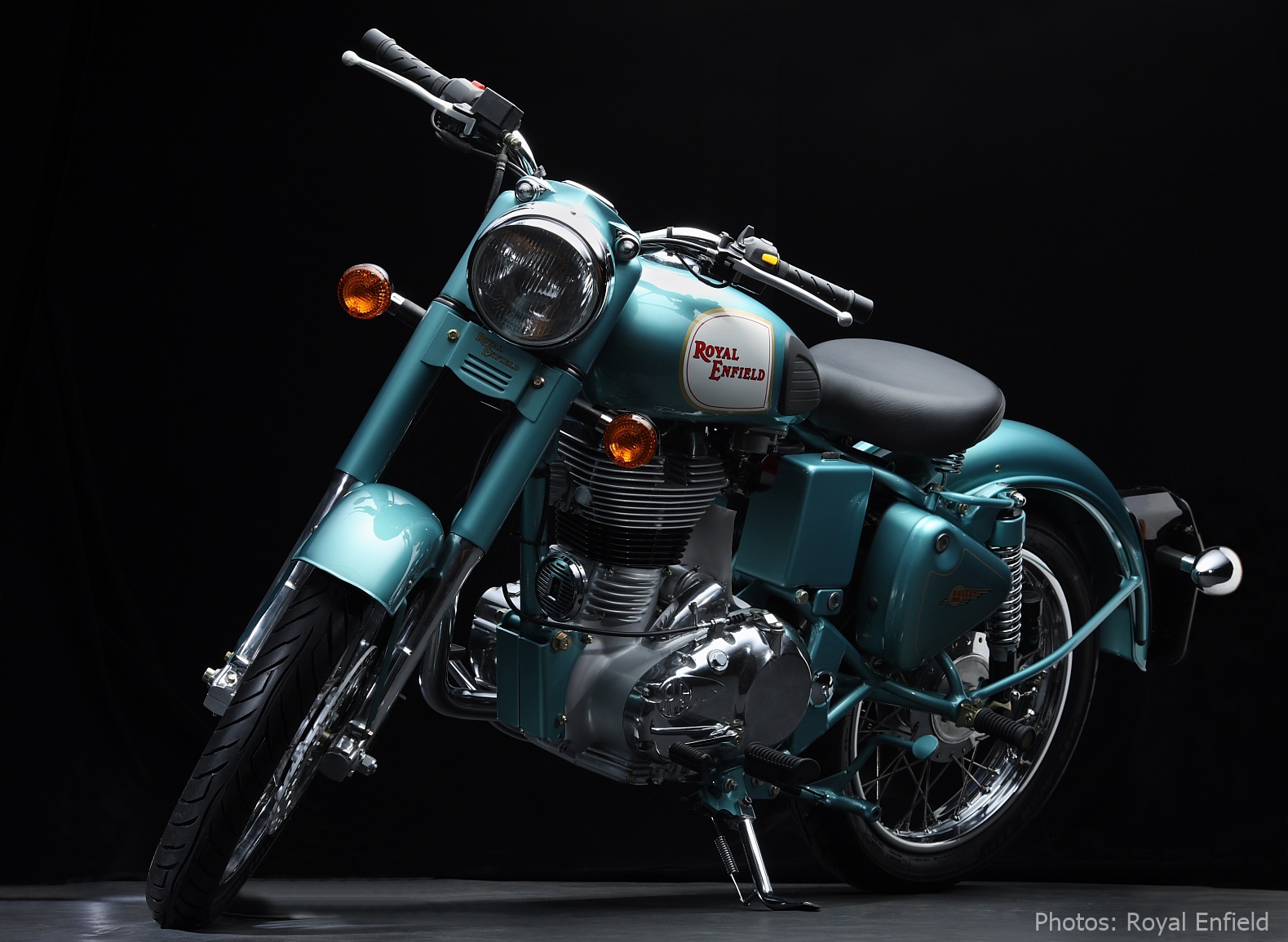
The second part was all about the nuances and the attention to detail. But stuff like that needs research and study… a lot of it. So the Royal Enfield team carried out an extensive study about the form, characteristics, and manufacturing process of post-war motorcycles. This study resulted in ideas like using the same colour for the frame and the bodywork. In essence, every bit of the Classic is meant to harken back to the post-war era motorcycles.
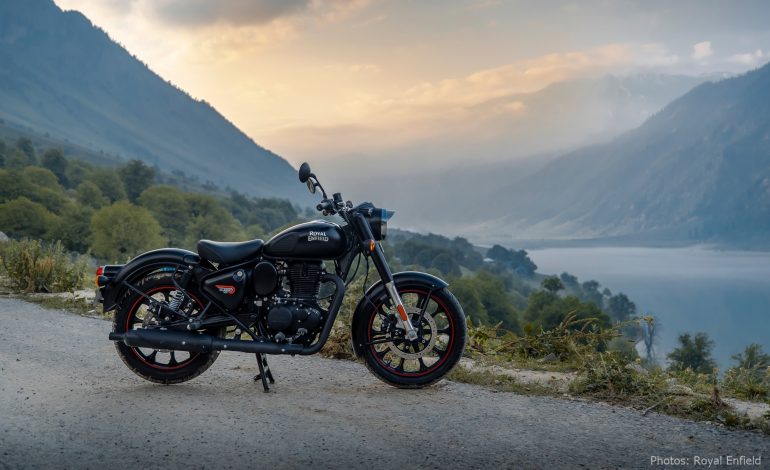
So finally, after lots of research and lots of tedious work, the Classic was finally ready. The right parts, the right components, the right fit and finish, and complete visual harmony- the Classic was ready for the world. The very first Classic motorcycles that rolled off the production line were draped in three beautiful colours; Classic Teal Green, Royal Maroon, and Black.
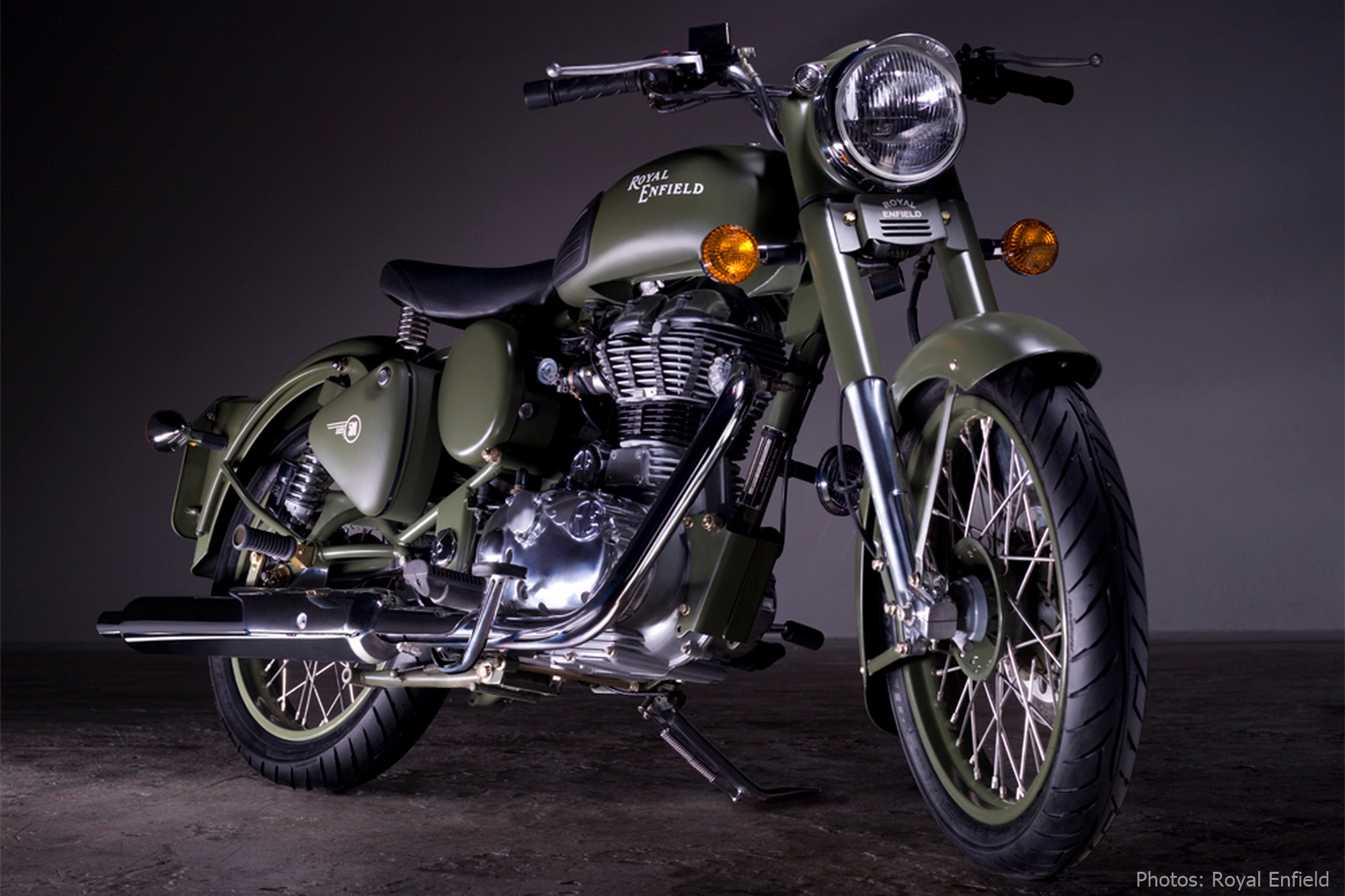
Post that came Intermot 2008, where the very first Classic, in its 500cc avatar, was displayed. The motorcycles then went for sale in Europe in variants distinguished by the 3 colours mentioned earlier. But India was yet to get a taste of the motorcycle that became synonymous with motorcycling not long after its launch and remains as a staple for motorcyclists to date.
After its 2008 introduction worldwide, the Classic came to India in a 350cc avatar in November 2009 and the rest, as they say, is history. For the Indian market, it even got an exclusive Silver colour alongside Maroon and Black. So in total, these five were the very first Classics, the pioneers, the flag bearers of a revolution that was not limited to either the enthusiasts or the commuters. It captured the imagination of a much wider audience and became an object of aspiration.
The numbers alone, as staggering as they may be, do not do justice to the legacy of the Classic. The Classic was much more than a motorcycle and its legacy is much more than just numbers. While its roots lay there in the late 40s and 50s in motorcycles that were probably aimed at being economical transportation, the Classic became synonymous with the very spirit of motorcycling. For so many motorcyclists, it became a medium for the expression of ultimate freedom.
Moving closer to the present, in 2011, Royal Enfield added another feather to the Classic’s already illustrious cap. They introduced two new 500cc variants christened as Classic Chrome. Gorgeous looks with a displacement bump providing it with performance to match- these new Classics were a work of art. A generous amount of chrome with contrasting colours accentuating its beauty further and the artistic paintwork on the tank- the Classic Chrome was surely one of the most beautiful and one of the most appreciated Classics to date.
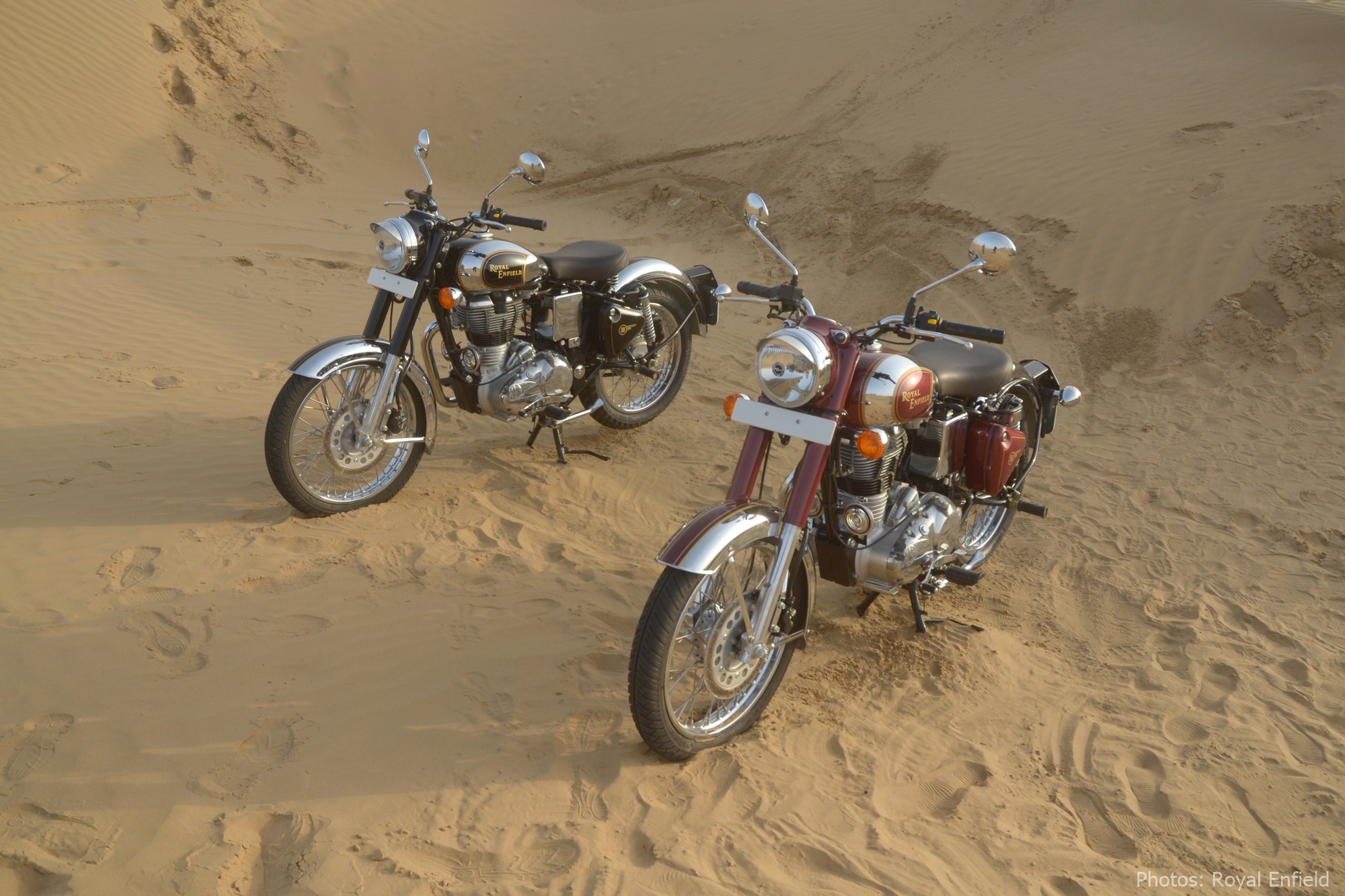
Finally, there was the Classic Desert Storm that went even further in brandishing its classic roots. Its matte finish paint in a bold sand colour scheme instantly struck a chord with its riders. The prominent monogram on the tank flanked by the thigh pads added another dimension to its rugged and raw appeal. Furthermore, the Desert Storm was unveiled in a unique launch among the sand dunes of Jaisalmer, adding more to its alluring aura.
The Classic had a strong run in the Indian market and while a substantial chunk of it is down to the philosophy behind it and the resulting design, it was not a one-trick pony. Royal Enfield Classic boasted of performance that matched the motorcycle’s visual appeal. As a trusted partner of so many riders in their expedition to the most gruelling of places, it had established itself as a machine that was not only old-school charming but also old-school strong.
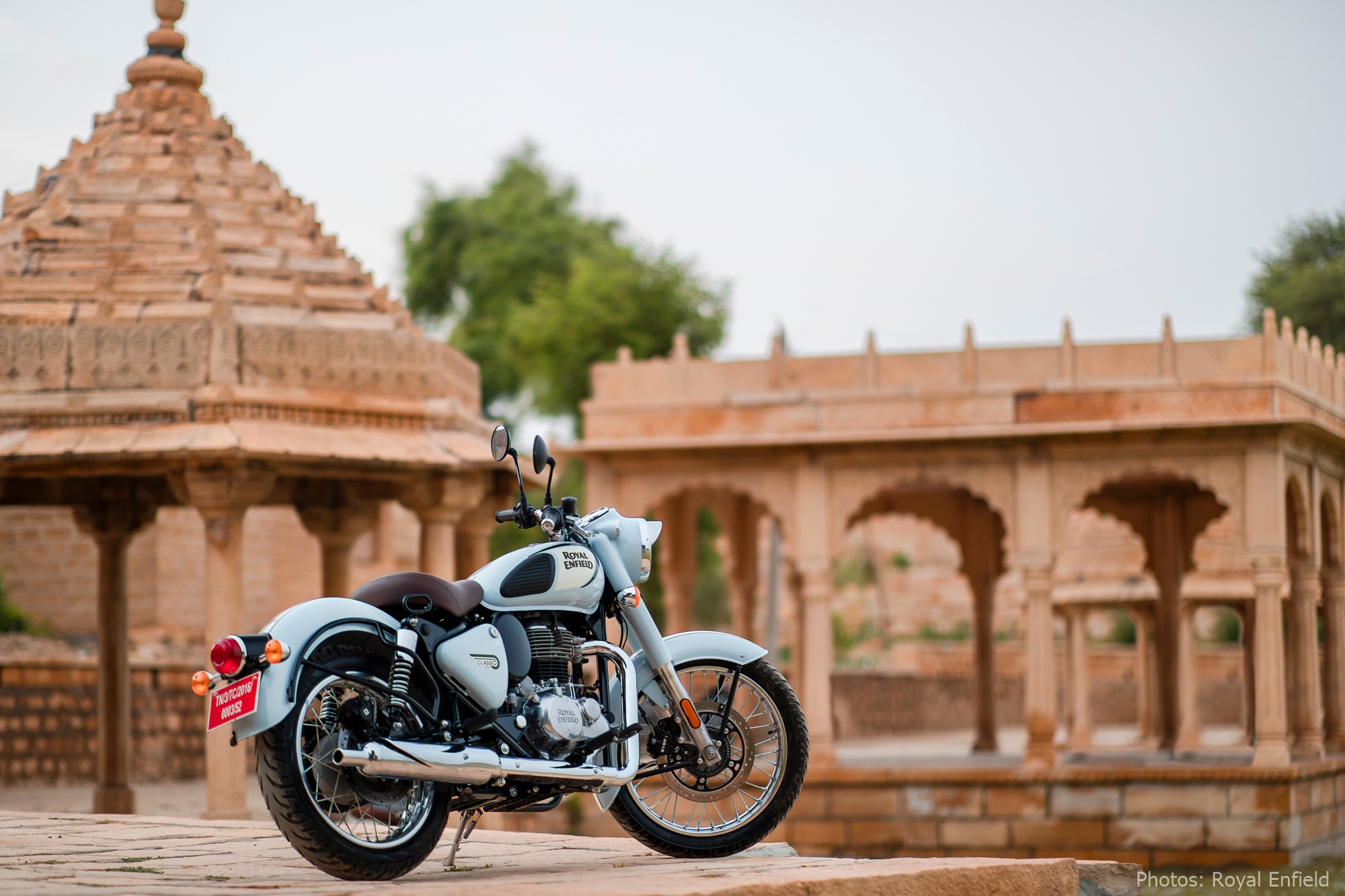
Regardless of that though, time is a cruel entity and everything must give in to it. While the Classic did not give in to it, it had been around for more than a decade. An update or an overhaul was long overdue and even more so because as a machine that celebrates the mechanical, it must celebrate evolution too. The wait did seem a tad long considering the iconic stature of the Classic, but the patience of its fans bore fruit.
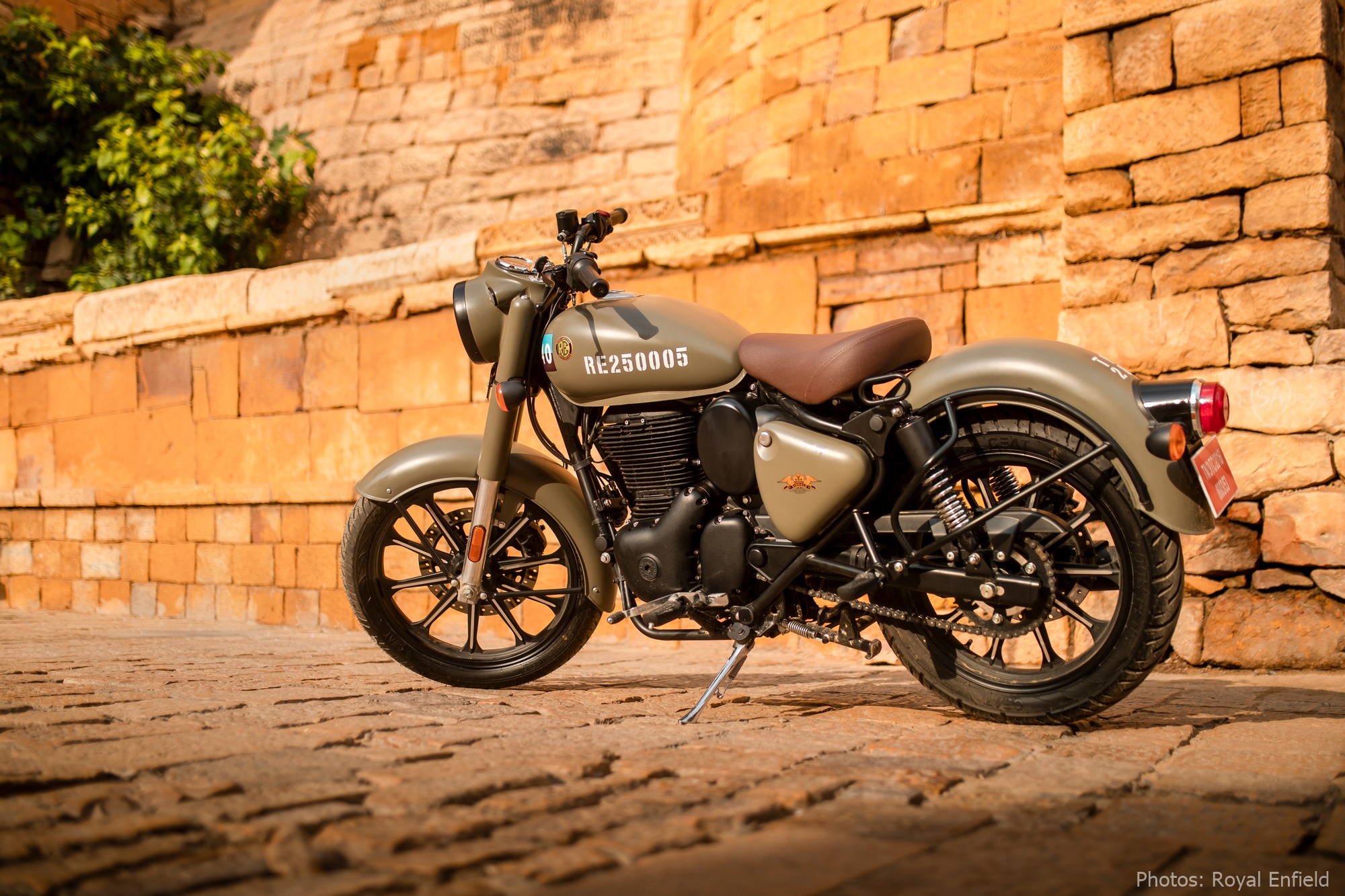
The Classic, justifiably a legend, was reborn- rebuilt from the ground up for 2021 and yet, in possession of the same striking presence that made it a legend in the first place. Powered by a modern 349cc engine with air-oil-cooling, and a primary balancer shaft for refinement, the new Classic 350 still possesses the thump that has imitated the elevated heartbeat of enthusiasts for a long time. There are changes to the chassis and dynamics as well in order to improve the overall stability and handling characteristics.
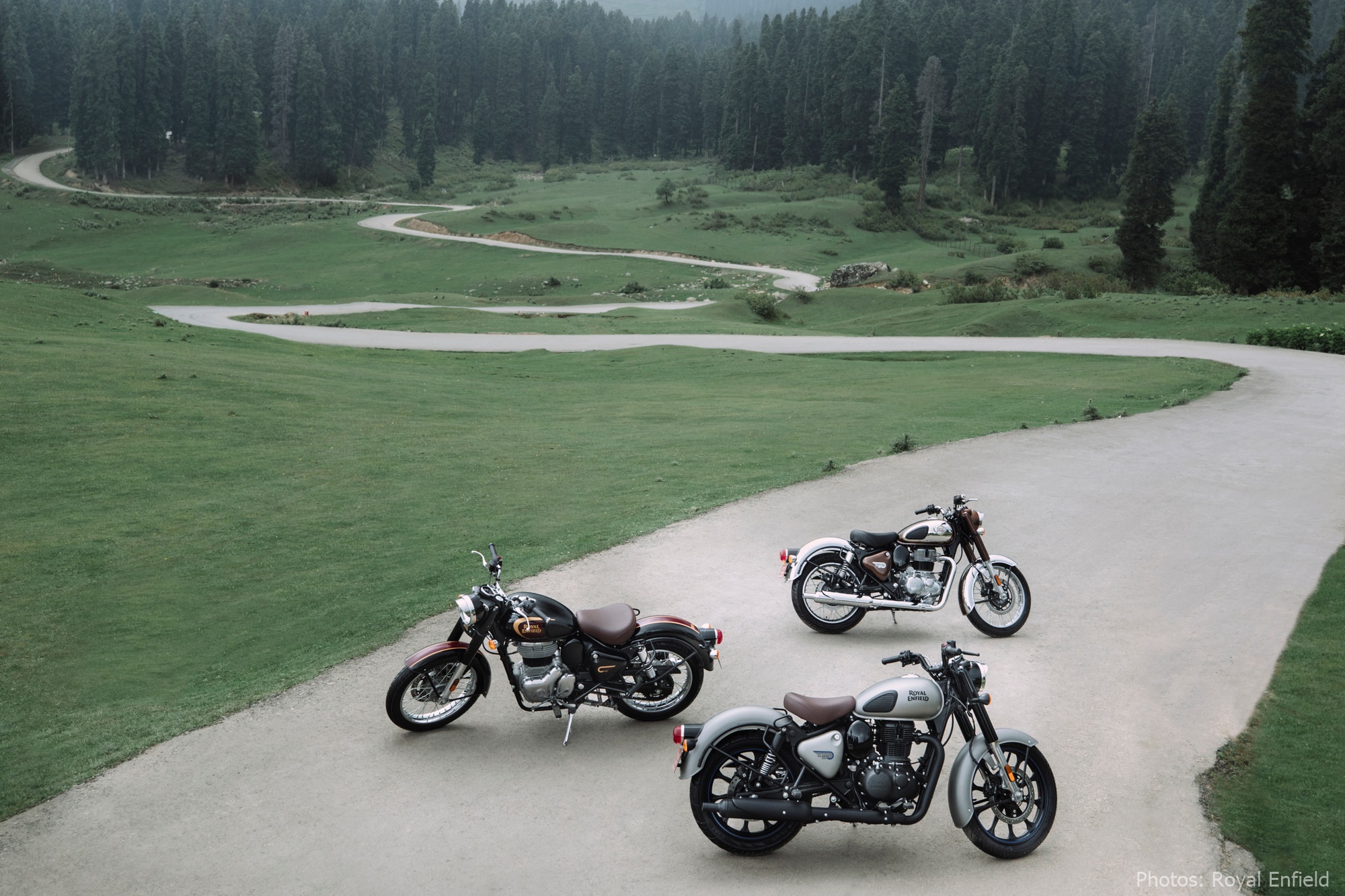
We appreciate all the work that went into rebuilding the Classic, we appreciate all the changes that are touted to make it a better motorcycle, and we may be able to appreciate it even more once we get to swing a leg over it. But to be honest, what we appreciate the most is that silhouette, those lines, and that thump… What we appreciate the most is its timelessness.