









There are some things in this world that do not make a lot of sense. Like the two motorcycles that we have here today. One is powered by a car’s engine and one is the world’s largest-capacity series production motorcycle. But why do these vehicles exist? What purpose do they serve in the grand scheme of things? I am not too sure about all that but what I know is that it is all about the chase for the quickest and the fastest and quite simply… the best. And to me, that is what keeps us all going.
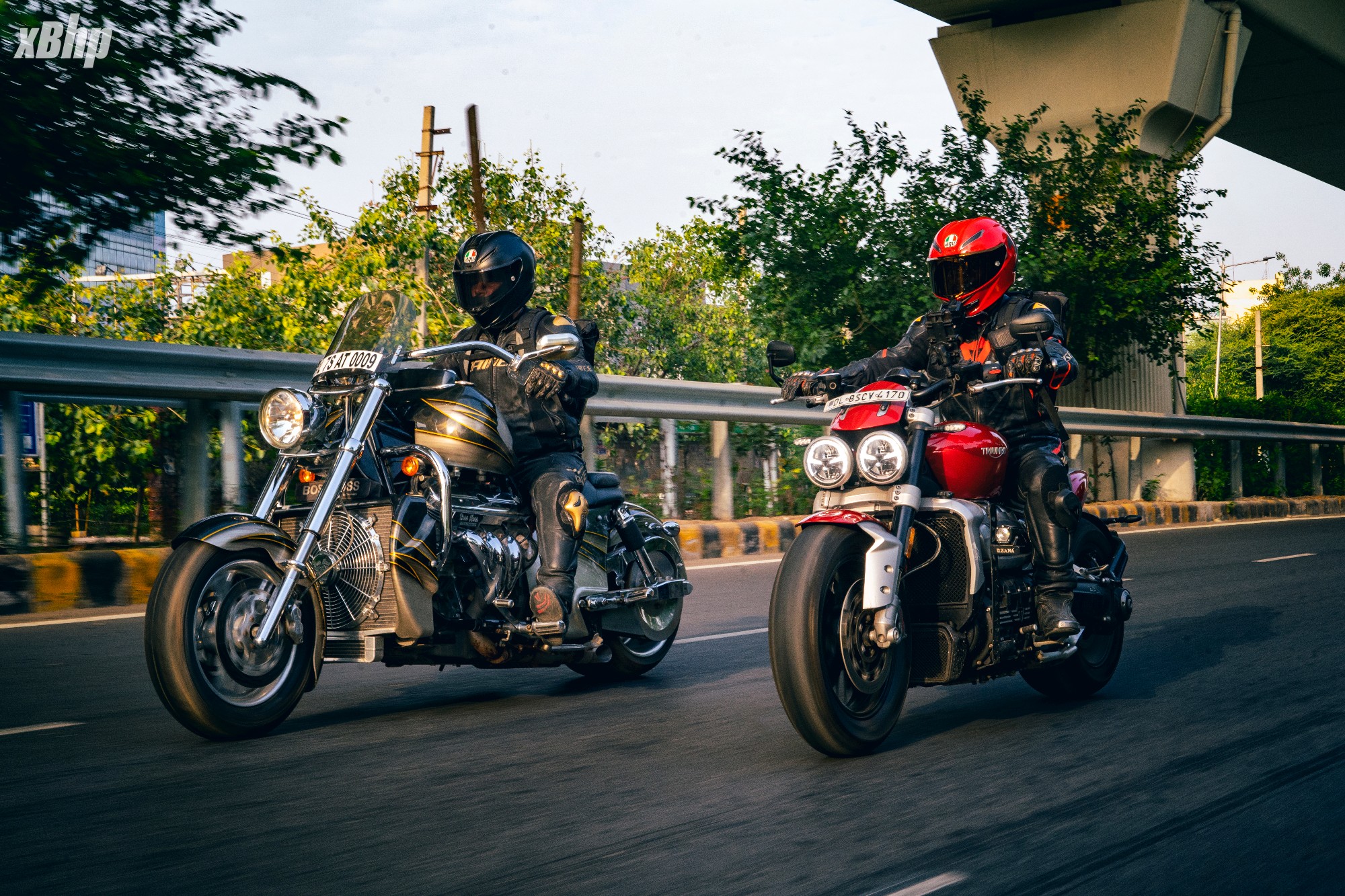
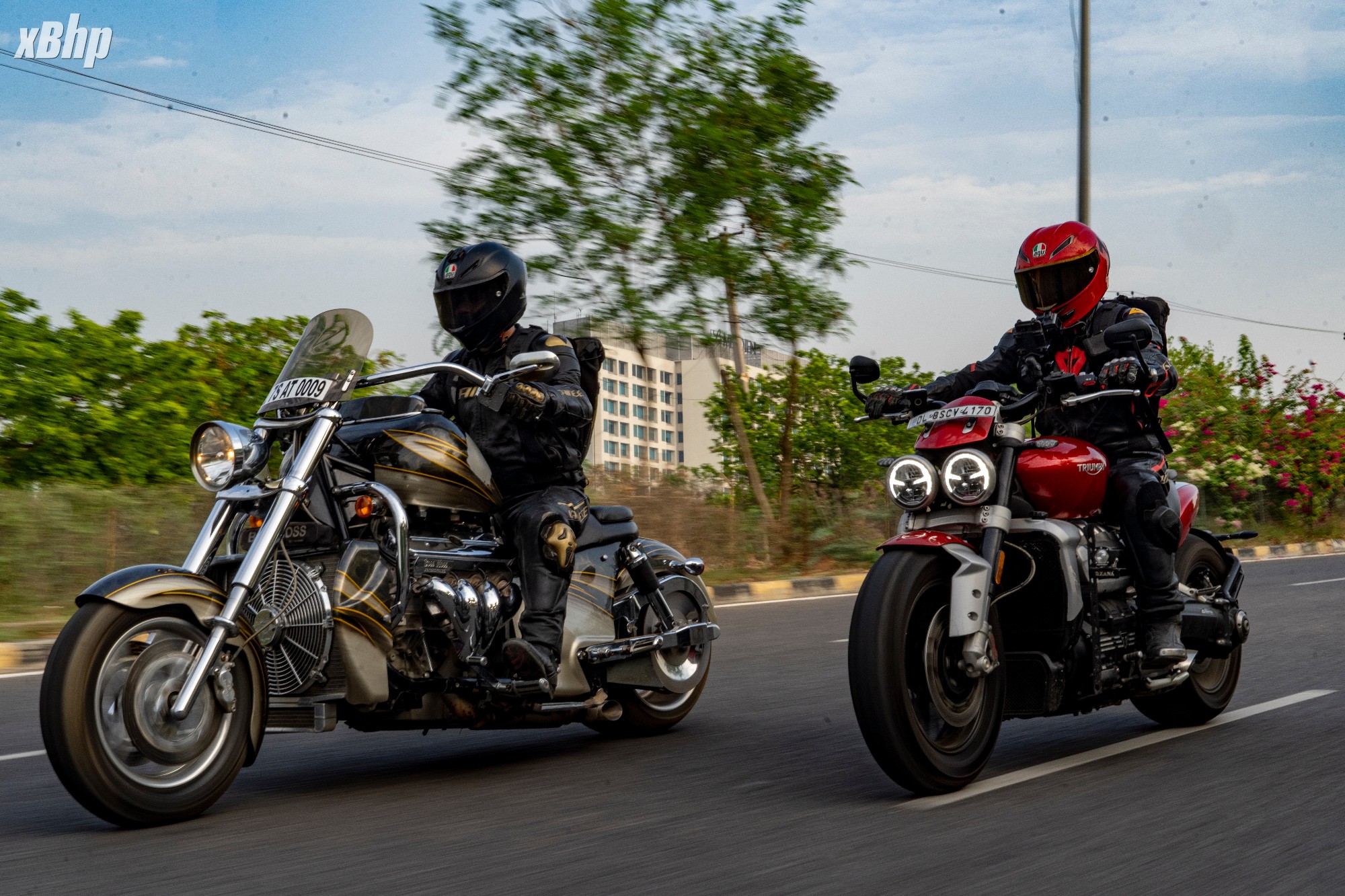
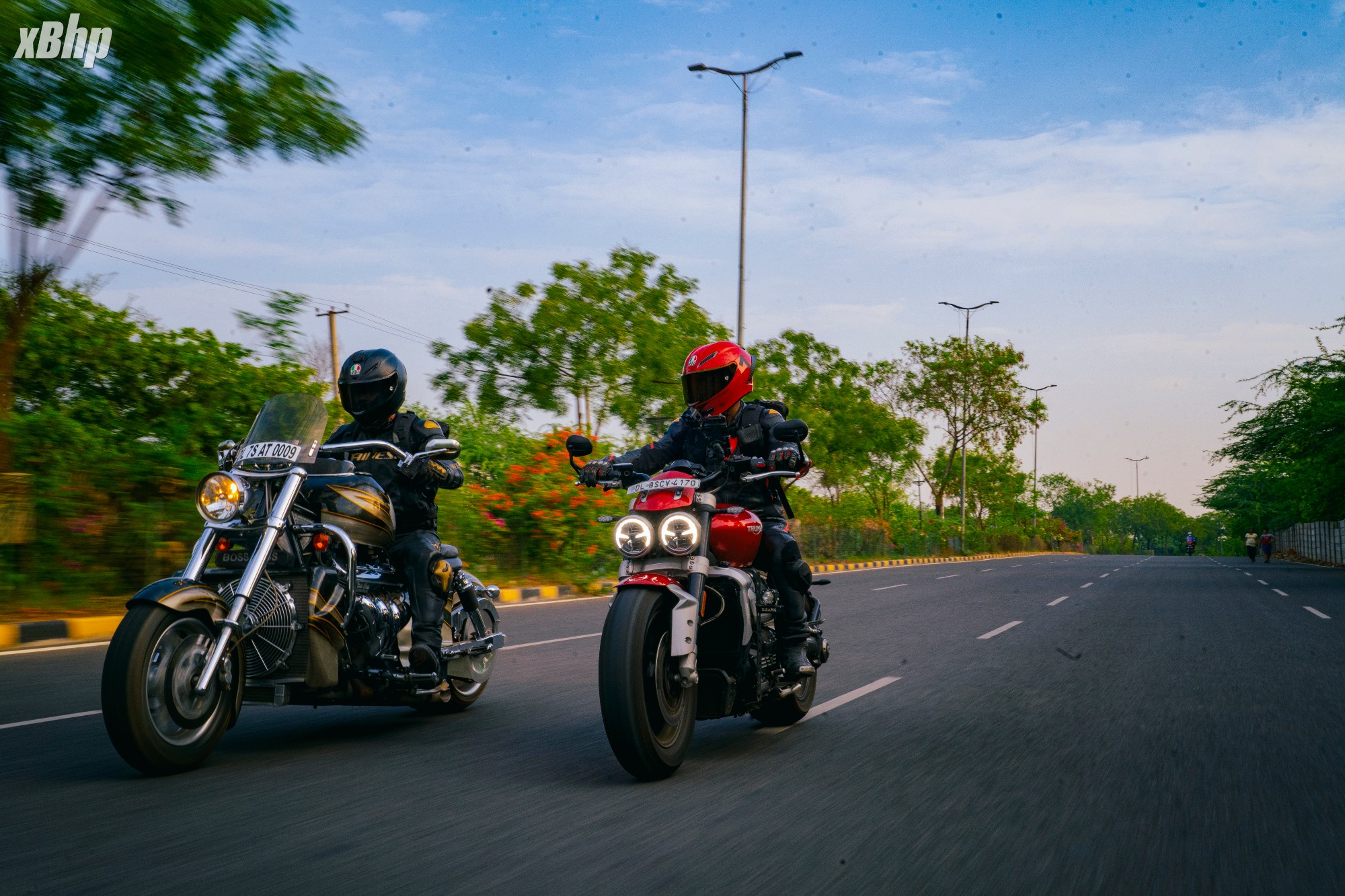
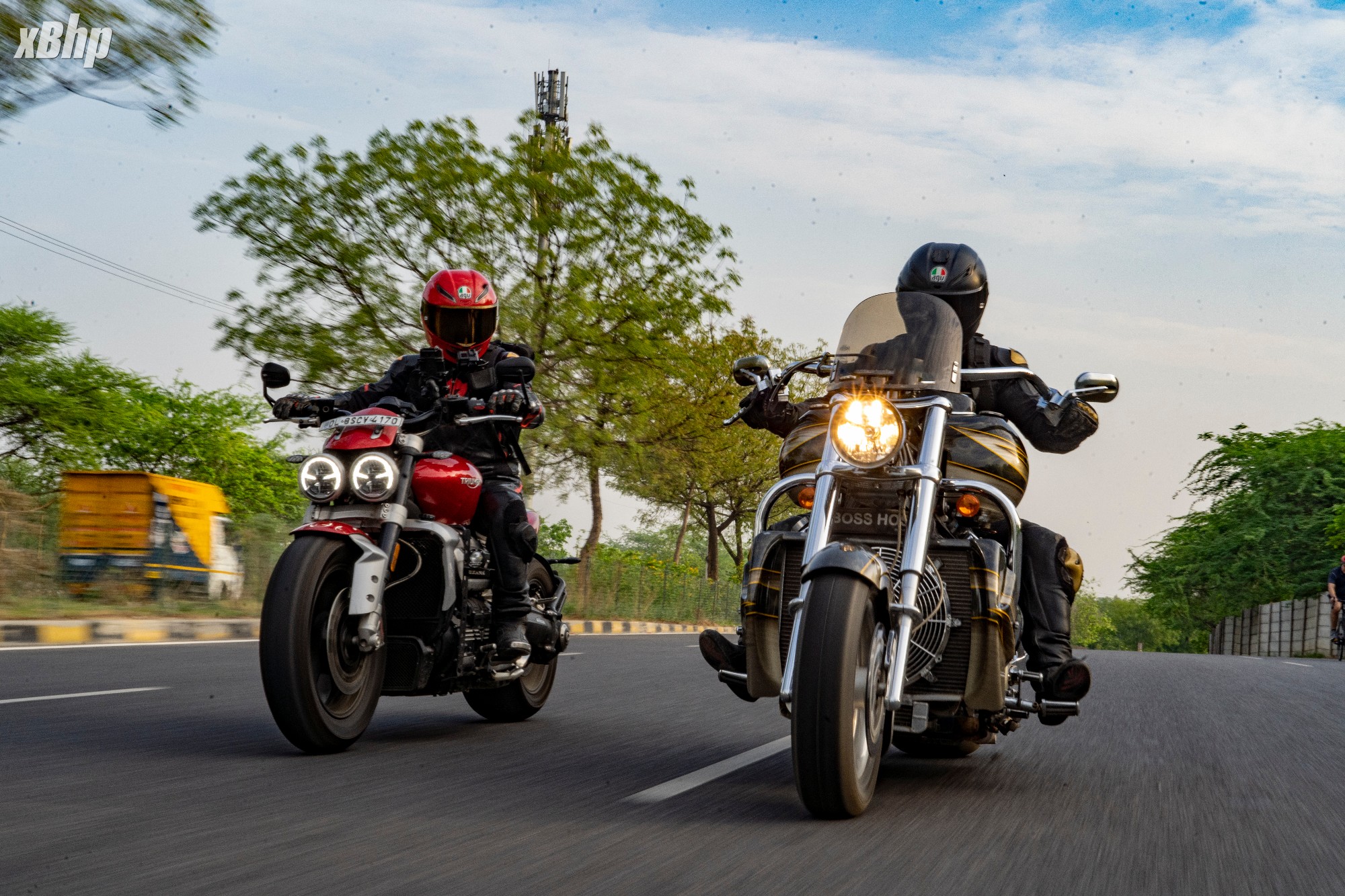
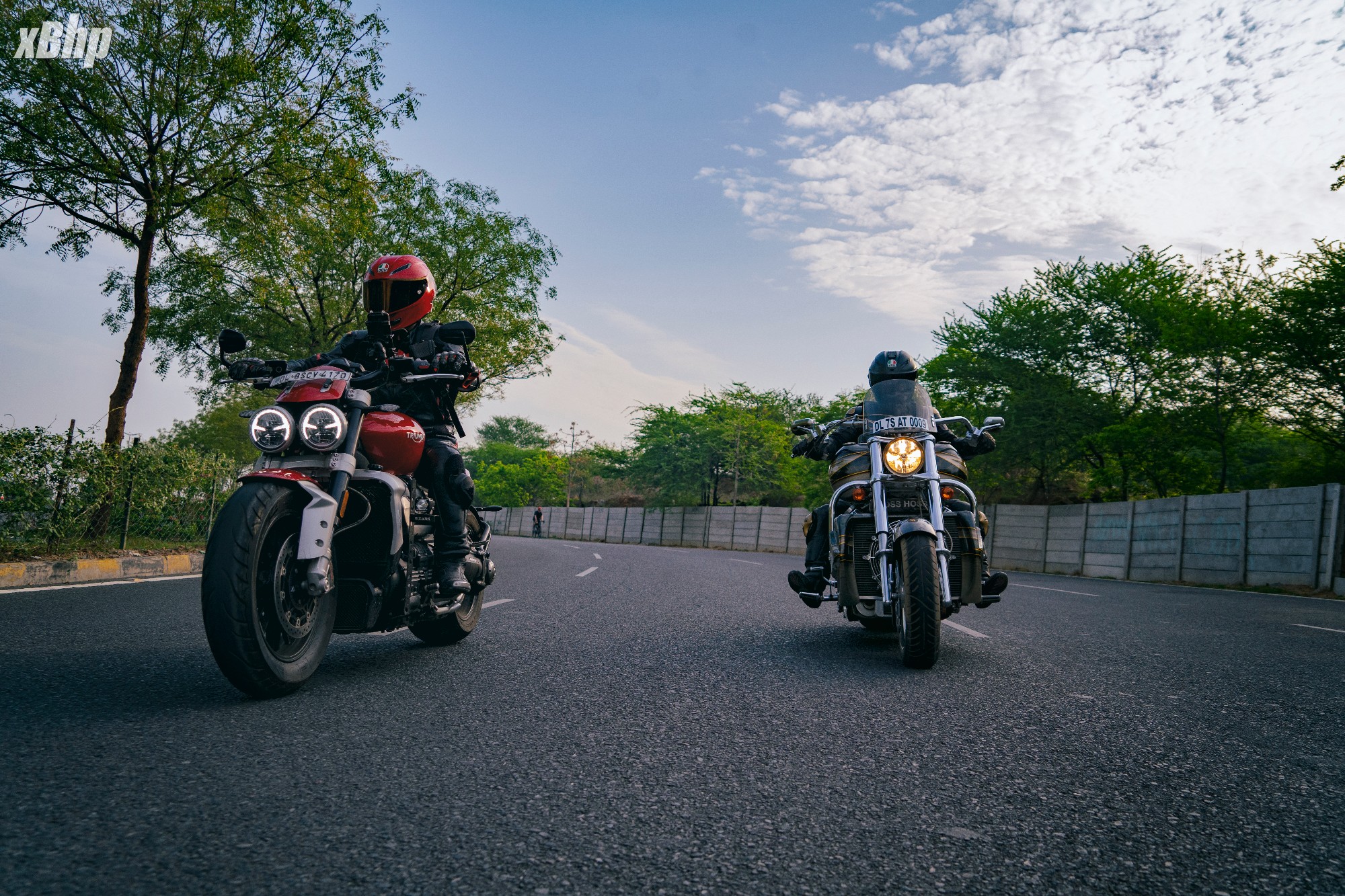
Ever since I took delivery of the Rocket 3 R in 2020, I wanted to do this: pair it with the only motorcycle that trumps it in its chase to be the biggest- the Boss Hoss. I have discounted the fact that the BossHoss is not exactly what you call a series production but still, to put this spectacle together, it serves the purpose just fine.

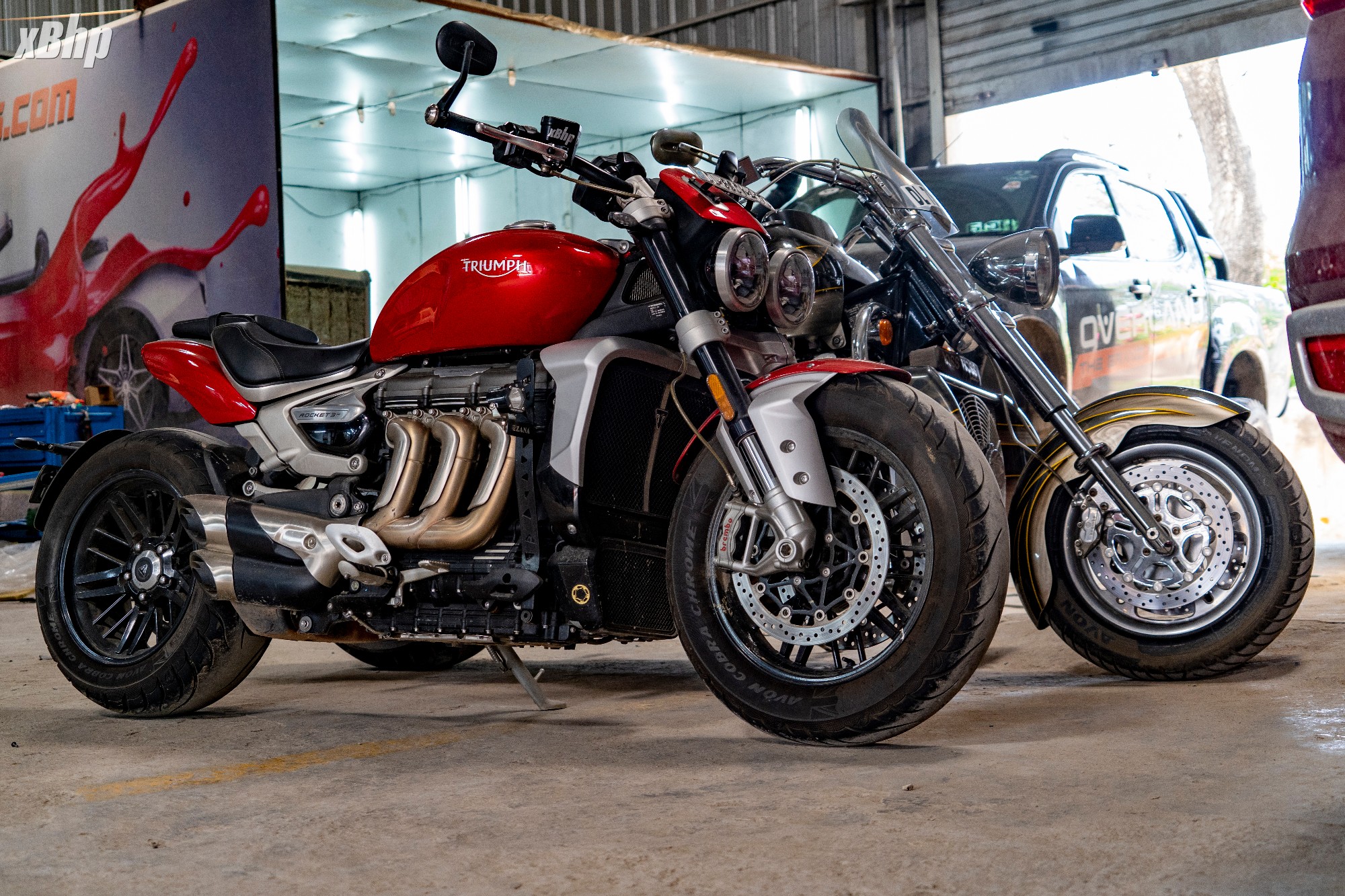
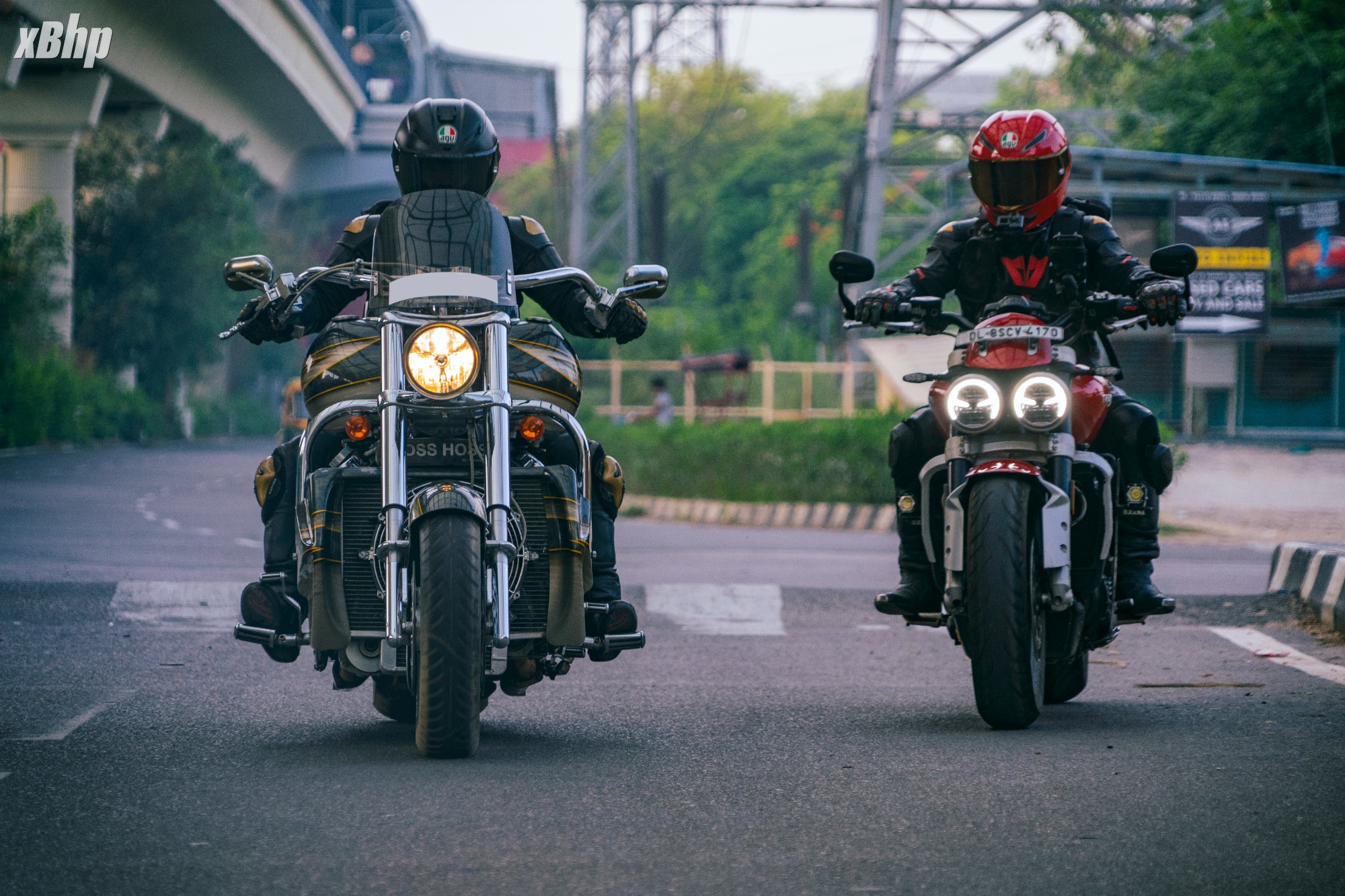
So, Triumph Rocket 3 R, as I mentioned, boasts of the world’s largest capacity series production engine in a motorcycle. 2,458cc or nearly 2.5 litres of displacement, should that not be enough? It is not, at least for some people. If it was, the BossHoss would not exist. Powered by a Chevrolet V8, the Boss Hoss is perhaps the only motorcycle that can dwarf the Rocket 3 R as it does in terms of sheer size, proportion, and grunt.
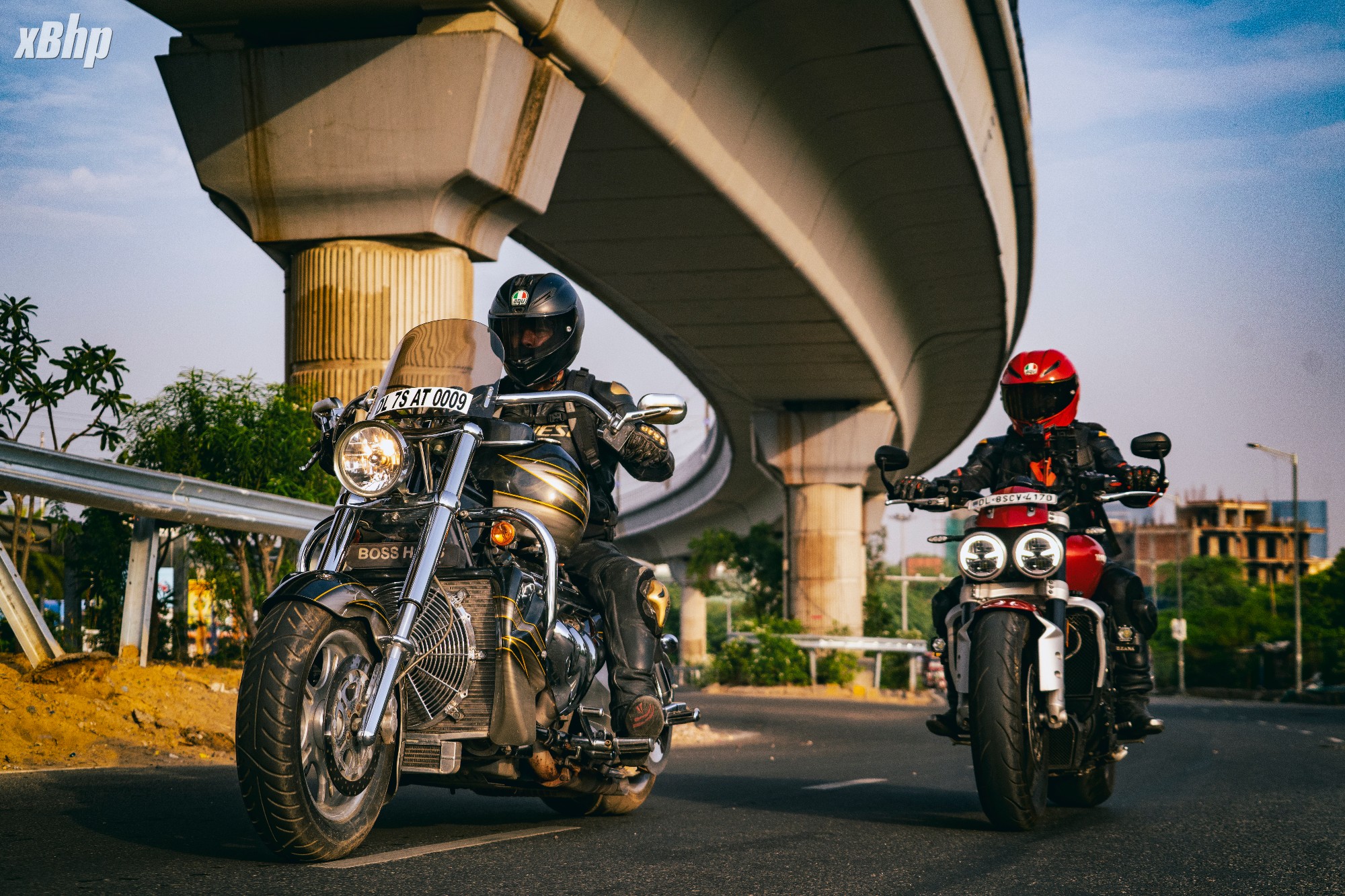
Despite their shared quest to be the biggest, these motorcycles could not be more different. The Rocket 3 R is Triumph’s biggest, well, triumph. It is very well-engineered and put together. The engine may be a beast but it is wrapped in the body of an English gentleman. The Boss Hoss on the other hand is all-American in terms of character; a big, bad, brash narcissist. No replacement for displacement, as they say.

Coming back to what I was saying; what is the point of these motorcycles? To most, they may seem illogical. Honestly, you can have a good day’s ride on a 100cc motorcycle as well. But then, the difference between these two things is like wine and water… or a bicycle and a motorcycle. Both of these motorcycles may be overkill, but they are amazing nonetheless.

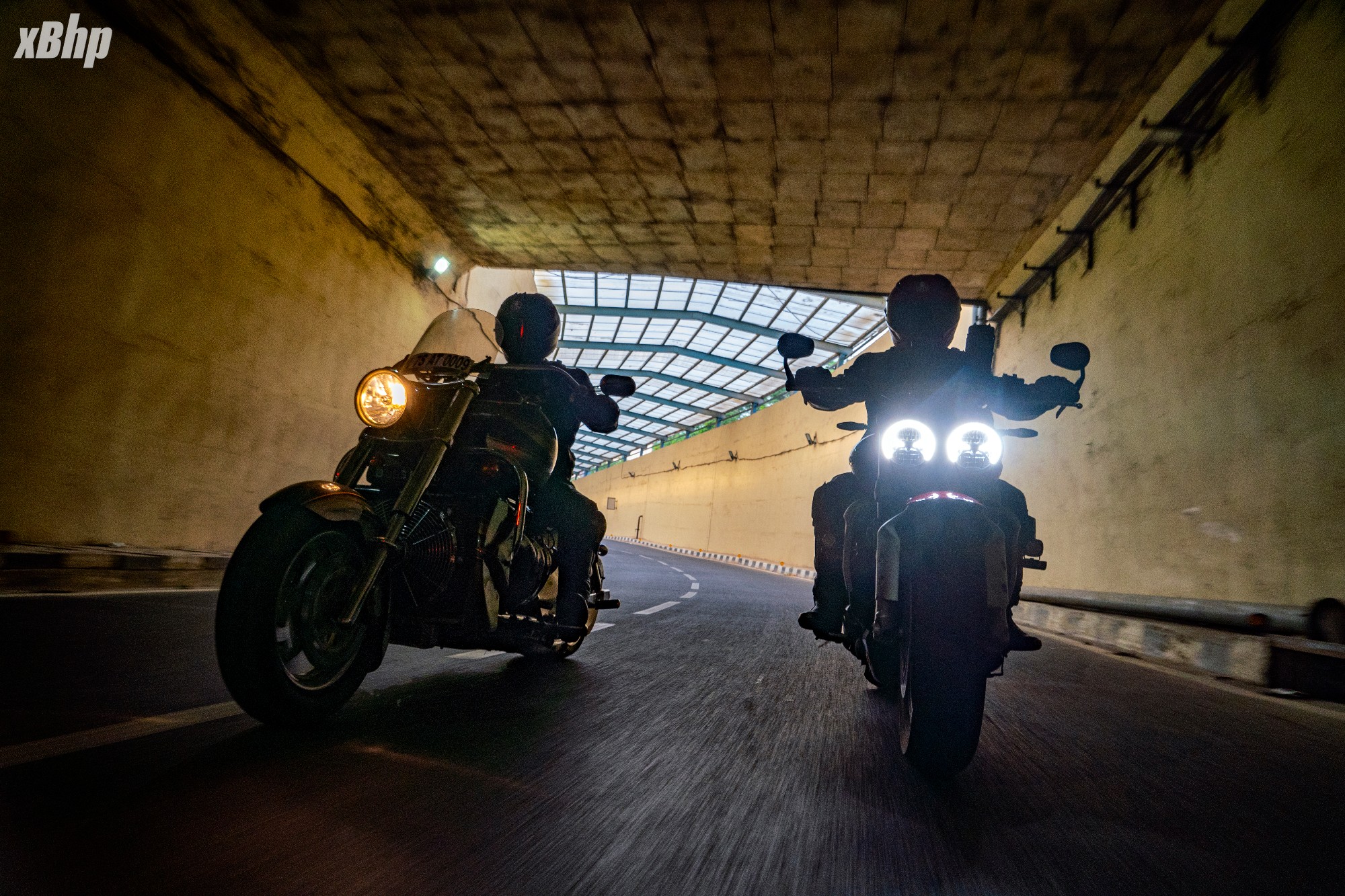
One of the very first things that I wanted to do was to ride them one after the other to see the immediate difference. I started with the Boss Hoss and right off that bat, the thing runs hot. Really hot. Another thing that I could notice right away was that it made the Rocket 3 R seem like a motorcycle much smaller than it actually is. Next up, the Boss Hoss is heavy, really, really heavy. Naturally, it is difficult to handle as well.

The Triumph Rocket 3 R on the other hand is finesse personified. Despite its proportions, it is much easier to deal with. And that is the difference between years of engineering evolution and the outright aim to be the biggest. Even with the considerable heft that the Rocket 3 R carries, riding it right after the BossHoss made me laugh. It felt so light that for a moment you feel like the motorcycle is nonexistent. The brakes, the suspension, and the technology; everything feels so much more refined.
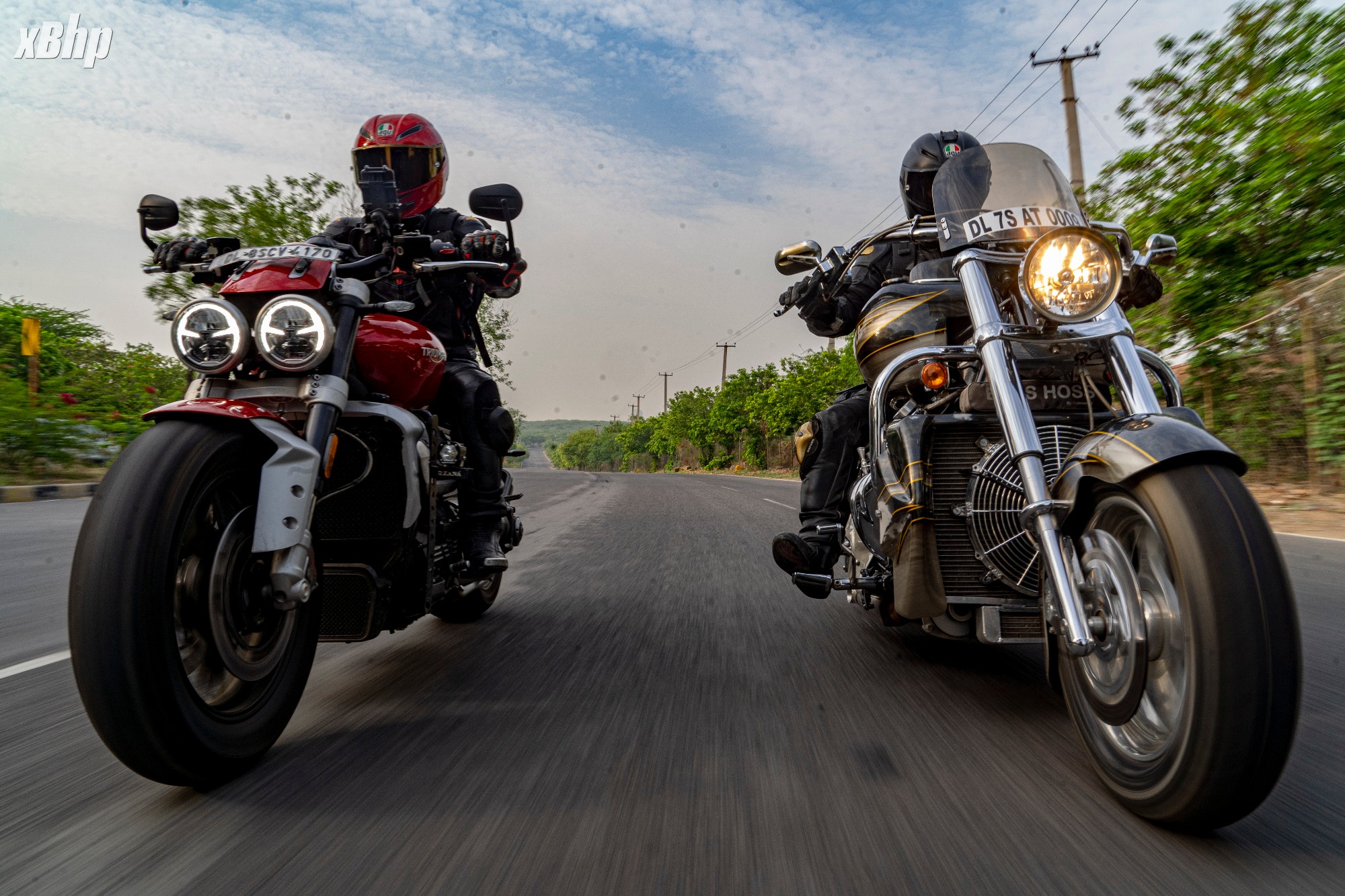
Talking about that, the Boss Hoss is difficult to handle overall but less than what I expected from a motorcycle like that. Braking though, is a different story. Due to the inhibition and the size of the motorcycle mostly, bringing it to a stop takes effort. Then, once you are at a standstill, parking is a task too. That is why I believe that the stand is one of the most important parts of this motorcycle. It is complex but then, when the Boss Hoss goes, it goes hard! The way the thing gathers speed and the sound… drives you crazy.
Now, my opinions aside, for a more apples-to-apples comparison, let us go to the numbers. The Triumph Rocket 3 R is powered by a 2,458cc three-cylinder engine. It makes 167 PS of power and 221 Nm of torque. All that grunt propels a motorcycle that weighs 291 kg (dry). The Boss Hoss, on the other hand, is propelled by a 6,200cc V8. It makes 445 bhp of power and 574 Nm of torque. All of that mammoth power propels all 484 kilograms of the Boss Hoss.

Now, I mentioned the specs for one more reason. More often than not, the power-to-weight ratio of a motorcycle is used to determine how good a motorcycle is. In this case, Boss Hoss comes close to 900 bhp per tonne while the Rocket 3 R sits at somewhere around 450. That is a massive difference. Despite that, the Rocket 3 R seems like the better motorcycle overall. And that is why, it is important to not just stick to the numbers when it comes to comparing to motorcycles.
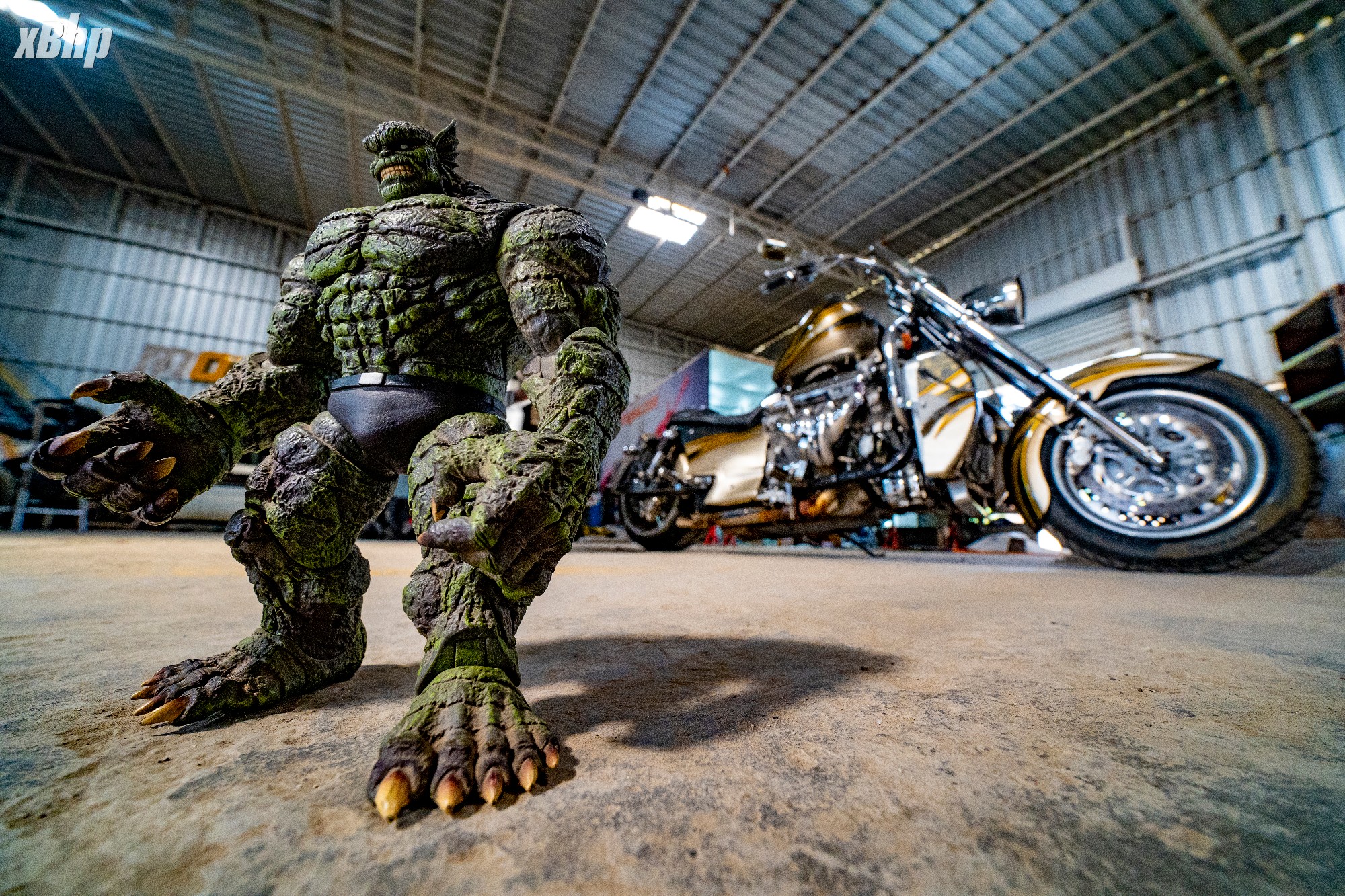
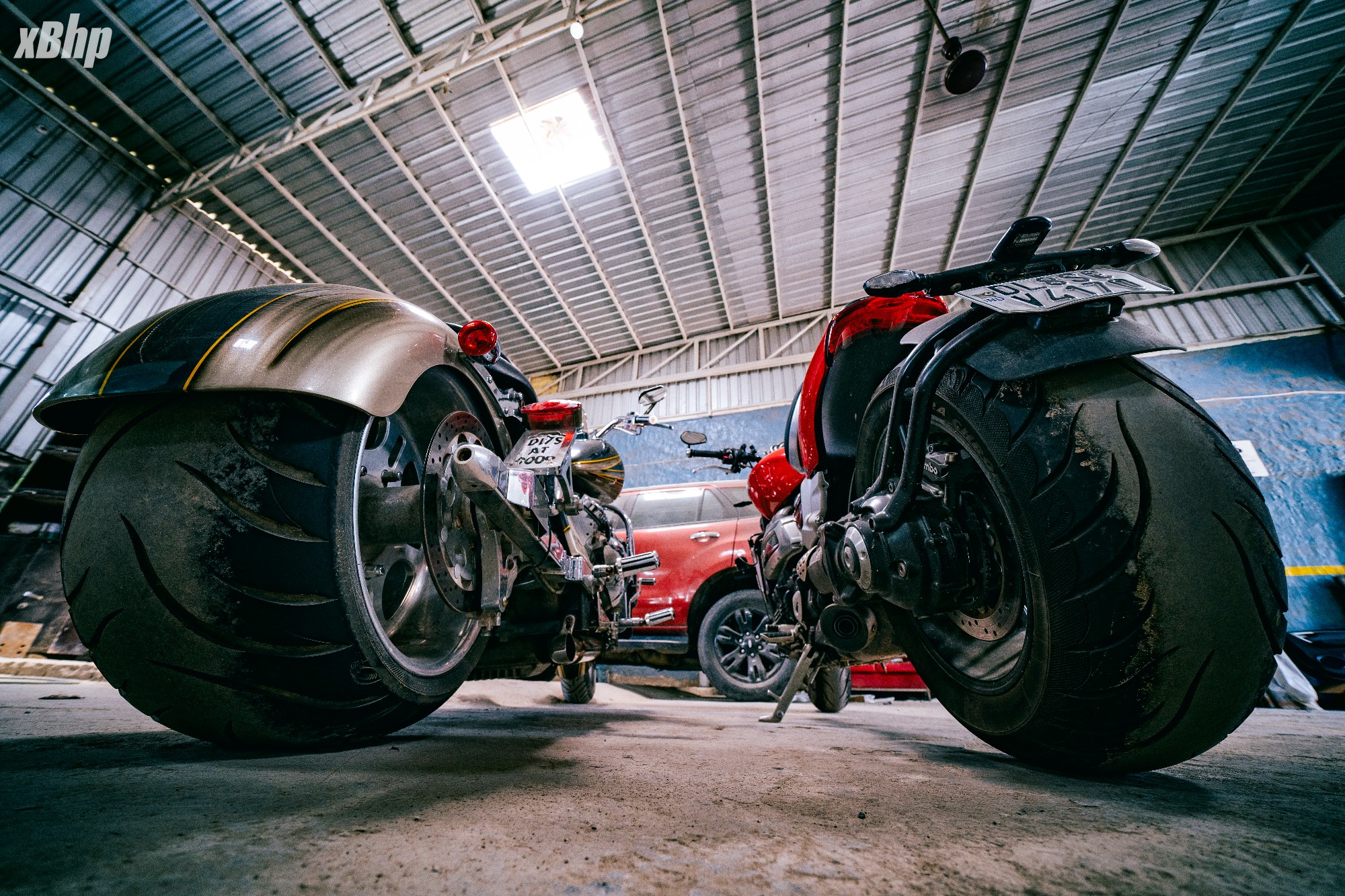
That said, it happens because, for Boss Hoss, it is difficult to put all the power down safely. Even if it could, the way it accelerates is almost terrifying and very difficult to tame for even the most seasoned of riders. An example of how big the Boss Hoss is could be its fuel tank which is comparable to two Fat Boy tanks. Do not get me wrong, the Boss Hoss has more than enough power and torque to make up for all that but it is difficult to put it down on the road despite the massive rear tyre.
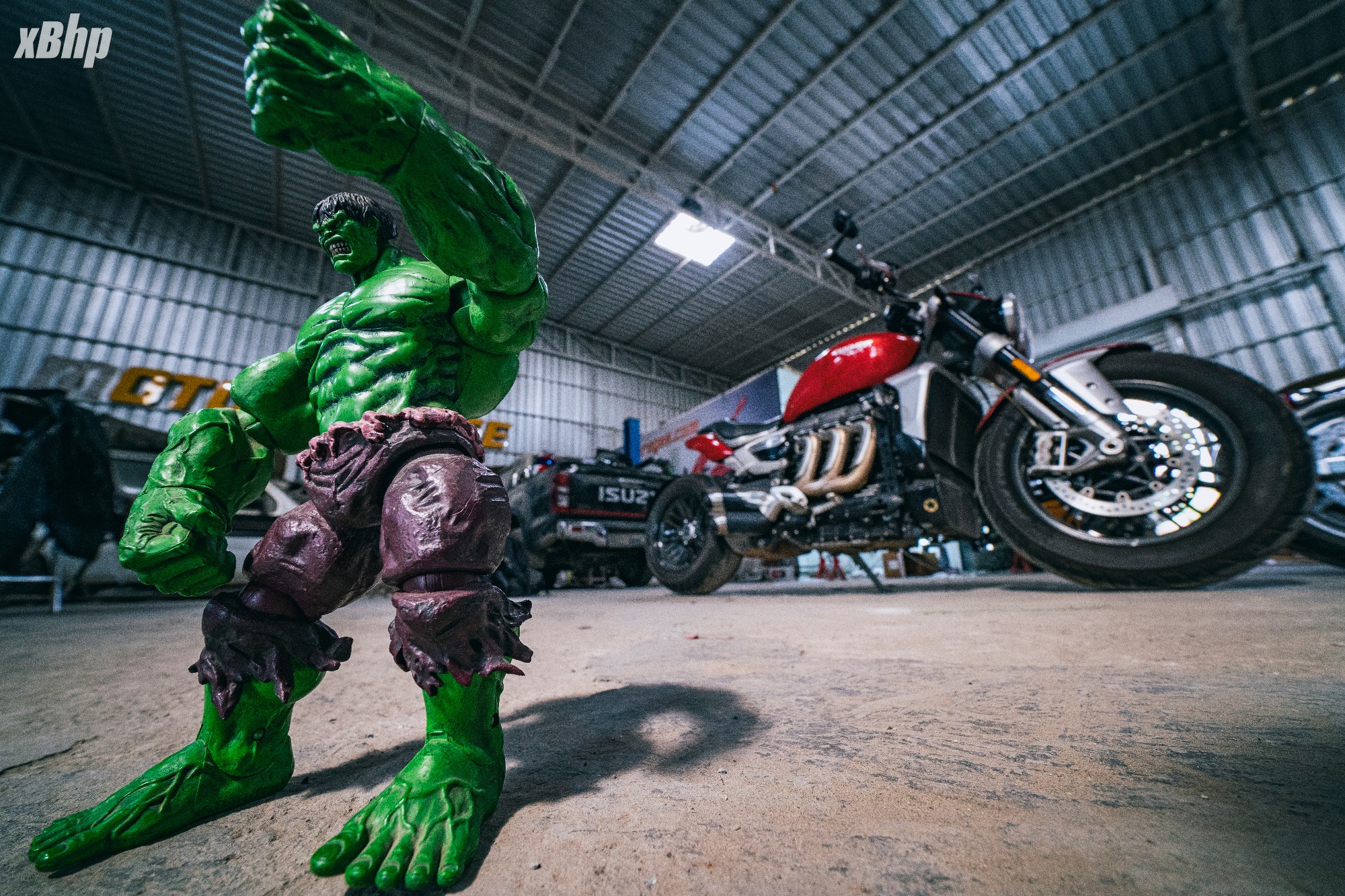
That leads to another interesting finding; both the Boss Hoss and the Triumph Rocket 3 R use Avon Cobra tyres. Coming back to the topic at hand, the Rocket 3 R is less powerful but it is easier to put that power down and control it. We can go back to braking to ascertain this. With the Rocket 3 R, you can let loose every once in a while knowing that the brakes will bring it to a stop at an ungodly rate. With Boss Hoss, you have to be more careful. In that regard, The Rocket 3 R almost feels like a sportbike.
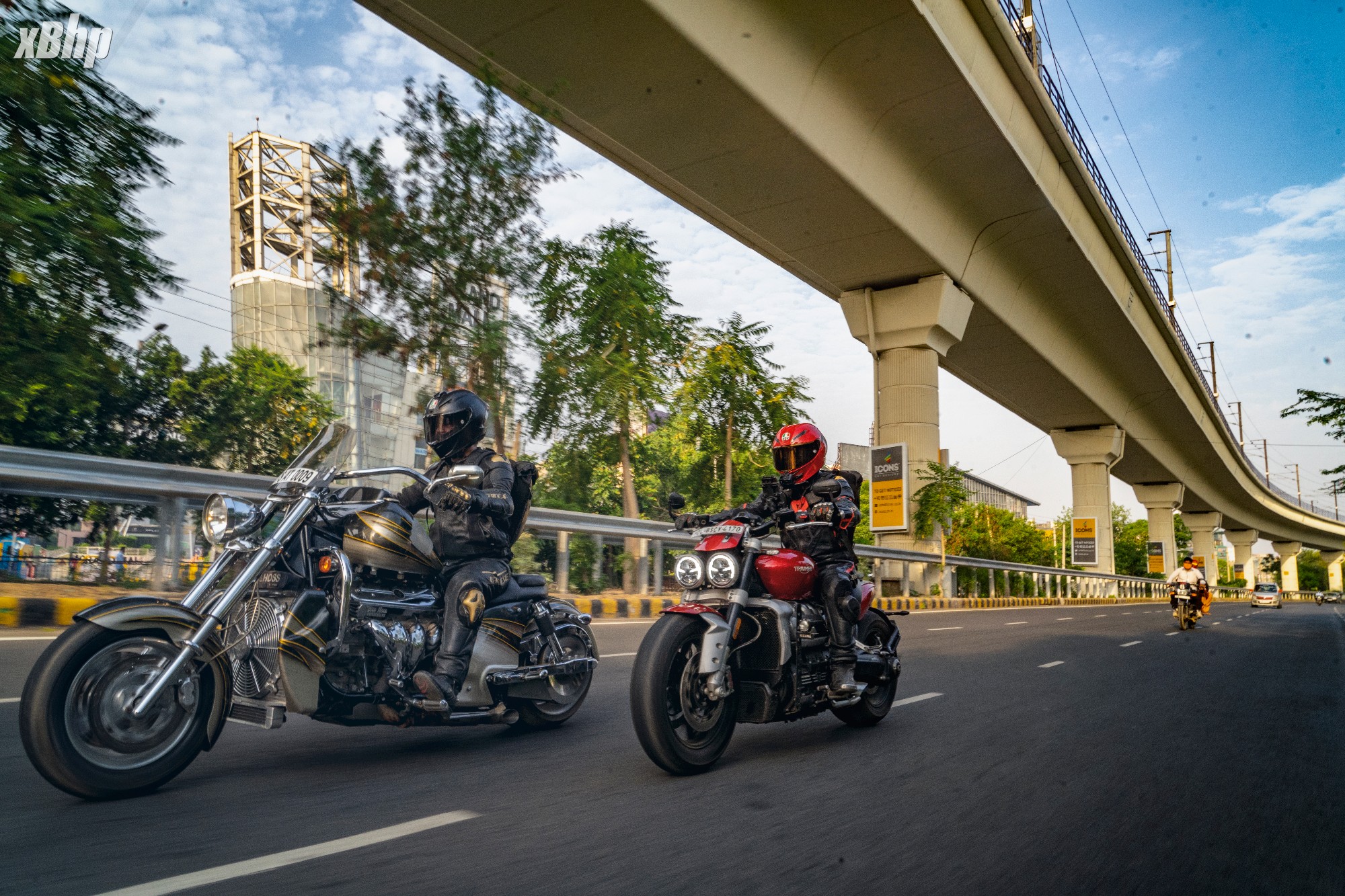
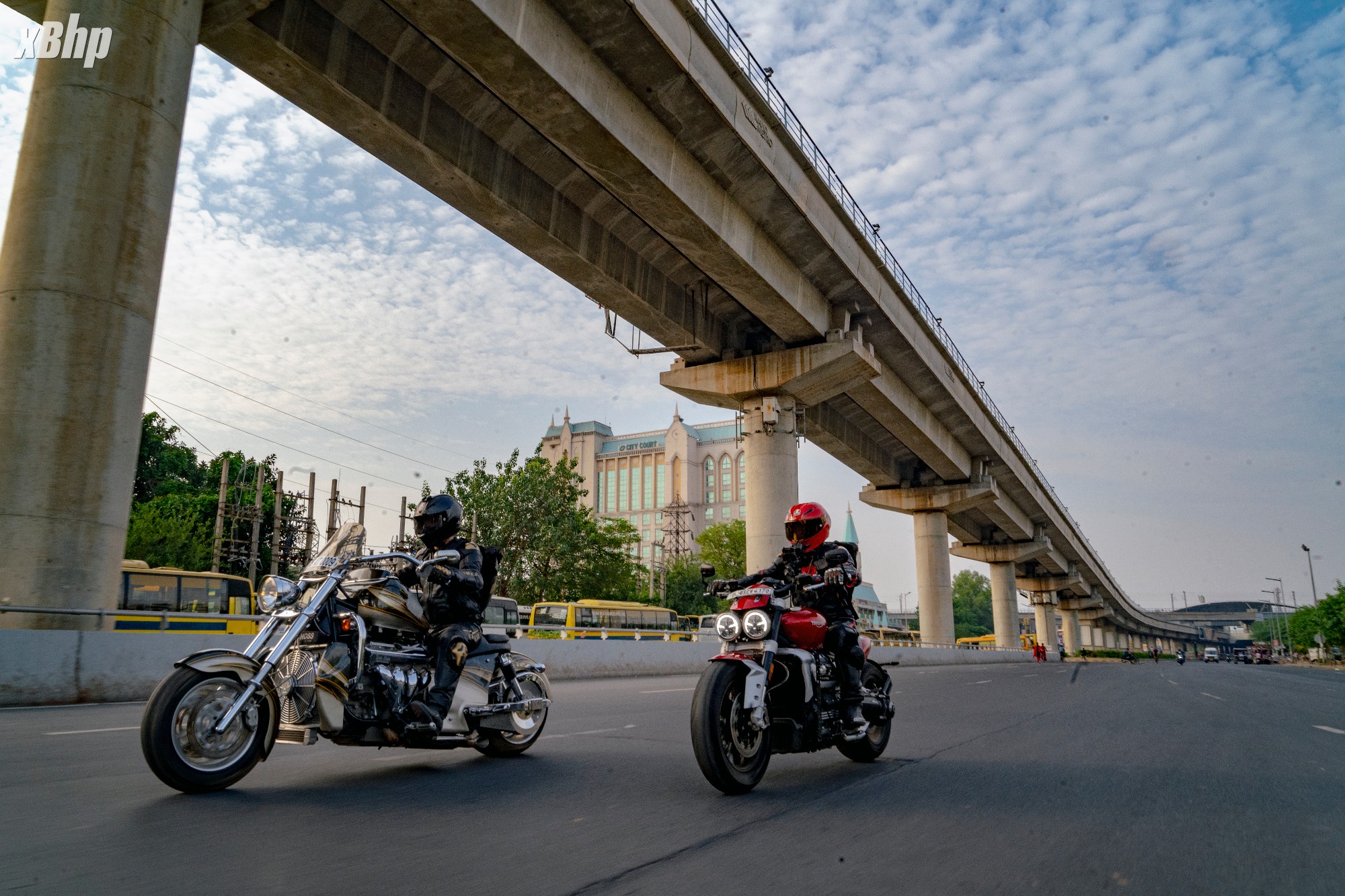
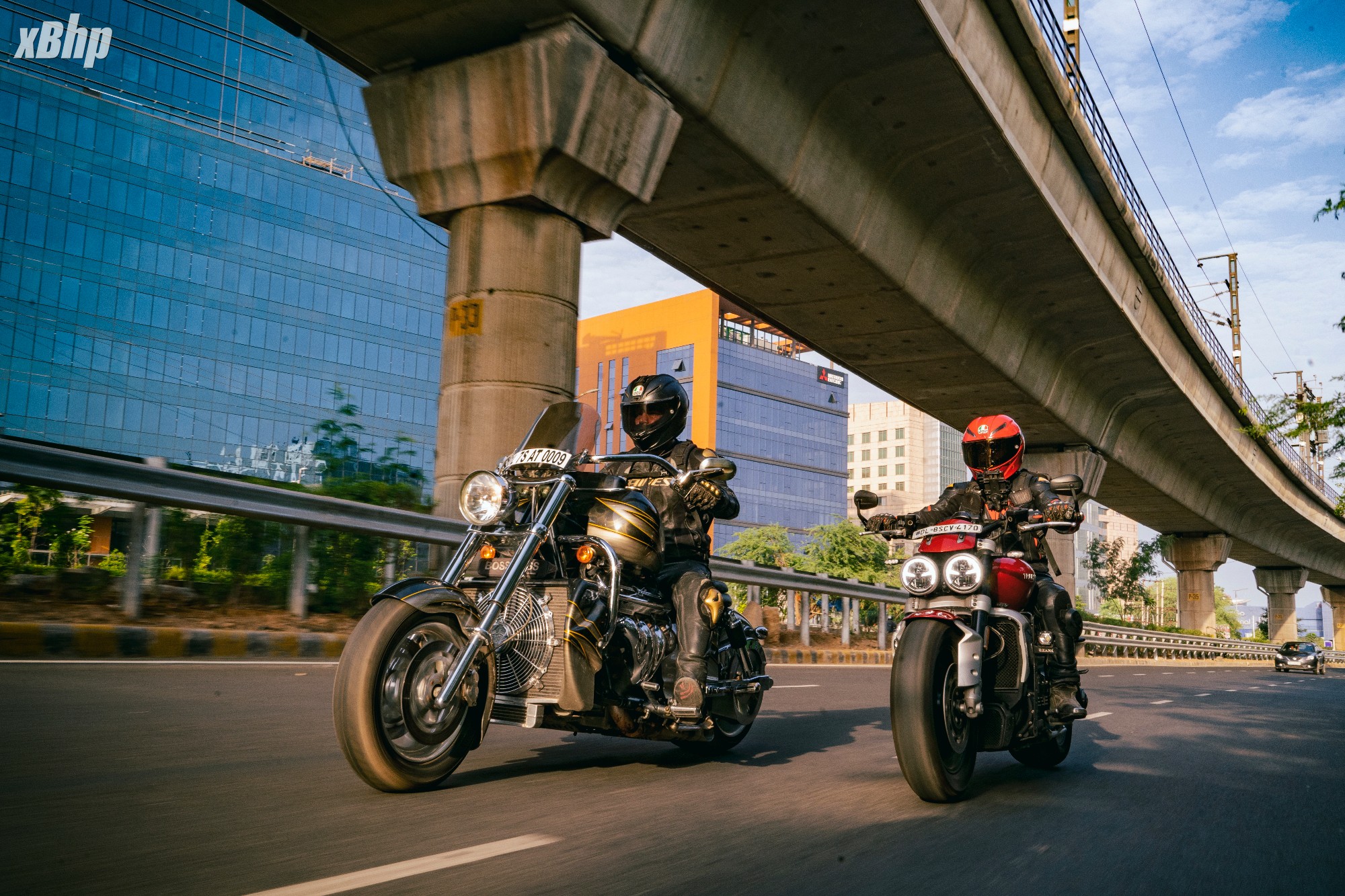
Out on the roads, both of these bikes are attention magnets. I remember being out on the Rocket 3 R and hordes of people will be found ogling it. It is a big and beautiful motorcycle so that is natural. With the BossHoss though, the Rocket 3 R felt a little left out, a little ignored by the masses. People were befuddled by the sight of Boss Hoss and to be honest, I do not blame them.

The brashness of the Boss Hoss aside, this particular example is from around 2012. I am sure that the newer ones are more refined. I also read about some trikes from Boss Hoss with the same engine that are quicker and slightly easier to deal with. Not a surprise considering they have one extra wheel to put all that power down. So it is safe to say that the Boss Hoss is evolving too. Fun fact: the first Boss Hoss actually had a car tyre at the rear. So yeah, they have already come a long way from that.

Ultimately, the Boss Hoss is exceedingly rare and costs a bomb. It is truly one of a kind; no clutch, a two-speed gearbox, a reverse gear, and if you have forgotten, a car engine. Because of all that, it is a motorcycle that takes effort. From owning it to maintaining it and to being able to ride it safely. In a country like ours where there are speed-breakers every few kilometres and the weather gets really hot in the summer, it takes a certain amount of physical and mental effort to keep it in tow. With the right kind of roads, it can be a bit more fun. But then, exclusivity does come at a price. If you are not into that, the Rocket 3 R will surely take care of no replacement for displacement.





This article was published in the Oct-Nov’22 Issue of the xBhp Print Magazine.
Order your copy here, or read it online here.