


Keep up the Good Work and the posts flowing..
Announcement
Collapse
No announcement yet.
The story so far.. My Honda CBR 250R
Collapse
This is a sticky topic.
X
X
-
Re: The story so far.. My Honda CBR 250R
Shv18....A very useful and Technically relevant post from you.... You continue to surprise me with the depth of understanding you are able to bring forth in your posts..not that I ever doubted it, just that your choice of words and presentation is praise worthy.Originally posted by shv18 View Post
Keep up the Good Work and the posts flowing..When Was The Last Time,You Did Something For The First Time.
-
Re: The story so far.. My Honda CBR 250R
Wow, what an update! Shiv bhai, I so wish either of us were in the same city so that I could drop by and learn a thing or two from you.
Got a $5 head? Get a $5 helmet.
Because everyone who passes, isn't a martyr!
Bullet Service Guide CBR 250R Parts Manual Fz16 service manual - https://drive.google.com/file/d/0B1-...VFQmJzakk/view
Hero Moto Corp Bikes' Parts RE STD 350 Wiring Diagram (CI) Service Manual - Classic 350/500
ZMR parts - https://drive.google.com/file/d/0B-U...it?usp=sharing
P200NS Spares' prices - https://docs.google.com/spreadsheet/...taGd5R2c#gid=0
Comment
-
Re: The story so far.. My Honda CBR 250R
I couldn't stop myself from praising you.. It is very rare to see people share their experience and knowledge.. but from your FZ18 and this thread, I seem to be learning more than I could imagine.. I will get the response body of my inspected as well.. looks like this could be the solution to a little sluggish behavior of my bike
I am sticking to this thread
Splendor - 2k to 2006
Karizma - 2k3 to 2009
P180 - 2k6 to 2k9
Hunk - Oct 2k7 til now
ZMR - 2010 to Forever
RX135(2k) - 2013 to 2018
Ninja 250R (2010) - 2016 til now
RayZ - 2015 til now
Ninja 650 (2014) - 2017 til now
Delhi to Narkanda
Delhi to Coimbatore
Delhi to Nepal
Comment
-
Re: The story so far.. My Honda CBR 250R
Thank you sir still learning a lot from you..Originally posted by psr View PostShv18....A very useful and Technically relevant post from you.... You continue to surprise me with the depth of understanding you are able to bring forth in your posts..not that I ever doubted it, just that your choice of words and presentation is praise worthy.
Keep up the Good Work and the posts flowing..
All praises actually should be routed to @psr sir for educating me.. i still have many miles to go and i am still learning something new, everytime i tinker with my bike.Originally posted by Divya Sharan View PostWow, what an update! Shiv bhai, I so wish either of us were in the same city so that I could drop by and learn a thing or two from you.
Thanks but i am just expressing my mere thoughts and whatever little i have learned from other senior riders. As mentioned earlier, knowledge when shared becomes much more valuable than knowledge which is learned and then locked up in a safe... The idea is to share our experiences and learn from each other on this thread..Originally posted by rreneav1987 View PostI couldn't stop myself from praising you.. It is very rare to see people share their experience and knowledge.. but from your FZ18 and this thread, I seem to be learning more than I could imagine.. I will get the response body of my inspected as well.. looks like this could be the solution to a little sluggish behavior of my bike
I am sticking to this thread
CheersLast edited by shv18; 06-15-2015, 03:06 PM.A quote by a toilet, " use me well, keep me clean, i would never tell anybody whatever i have seen.." :P
Comment
-
Re: The story so far.. My Honda CBR 250R
Shv18.....If my knowledge sharing had been helpful, I am happy for you, at the same time I have to Appreciate your eagerness to Learn and Understand, which is the primary reason for your enhanced knowledge.Originally posted by shv18 View PostThank you sir still learning a lot from you..
All praises actually should be routed to @psr sir for educating me.. i still have many miles to go and i am still learning something new, everytime i tinker with my bike.
Thanks but i am just expressing my mere thoughts and whatever little i have learned from other senior riders. As mentioned earlier, knowledge when shared becomes much more valuable than knowledge which is learned and then locked up in a safe... The idea is to share our experiences and learn from each other on this thread..
Cheers
I would like to add a little about Throttle Body , it's cleanliness and why it is so important to keep it clean.
The Throttle Body is an important part of the Air Intake System and hence proper Engine tune and performance.The air intake system increases the amount of oxygen used for combustion with fuel. You can either gain or lose power with the air intake system depending on the condition of the Air Intake System Tune. The throttle body is a part of this air intake system. Keeping the throttle body in good operating condition will keep the car running without costly occurrences.
Careful and regular throttle body service will keep the emissions from the engine’s exhaust system in check.The Carbon and Sludge gummy deposits we see on the Throttle body and Butterfly valve are the result of the Valve Overlap, and Also due to the Positive Crankcase Ventilation System, which sends part of the Crankcase fumes into the intake.
This carbon and sludge is cleaned out during the throttle body service. How well the engine operates is determined by the way the automobile starts, how well it idles when it’s cold or warm, and when accessories such air conditioning and heat are operating. The carbon and sludge will also affect the way the car starts from a total stop. A service such as this will keep the idle valve, which is computer controlled, clean.
So in the case of your Ford Ikon, neglect of the cleaning had led to accumulation of the carbon and gummy deposits, leading to less Air at idle and less throttle operation. This explains why engine was Gasping for Air at low RPMs , leading to idle problem and engine cut off during low speeds with A.C on.
In any Throttle body engine wherein a Butterfly valve controls the intake Air/Fuel Volume , cleaning it is necessary every 20,000 Kms....The more you delay more the problem.
In the cleaning process, there are Two School of thoughts...
1. Spray Carburetor cleaner into intake while Engine is idling, till the muck gets washed away. At this time, engine will smoke a bit due to the cleaner+ residue, but ultimately the throttle body will be clean and engine performance improved.
2. Remove throttle body from Engine and by spraying the Carburetor cleaner, clean the Throttle Body thoroughly, including the Idle Air valve.
Of the Two methods the Second one is the best...Spraying Cleaner while engine is running will dissolve the muck and send it into the engine to be burnt. In theory it is a simple less problematic approach, since the throttle body is not removed and less Labor intensive...The down side of this method is, the muck which gets dissolved and sucked into the inlet ,goes past the Inlet valve and into the combustion chamber. Since the Valve is cooler due to intake air+fuel a part of the muck will get deposited At The Back, and Seating areas of the Valve, and Burns during the Ignition . This form hard Carbon deposits in the Sealing area and back of the Intake Valve, leading to failures at a later Date......
Hence it is better to remove the Throttle body from the engine, spray the cleaner and do a proper Throttle body Cleaning.
Hope this is HelpfulLast edited by psr; 06-16-2015, 11:18 AM.When Was The Last Time,You Did Something For The First Time.
Comment
-
Re: The story so far.. My Honda CBR 250R
ROAD TO RECOVERY PART 4:
Now that a lot of things have been put into place, my Honda CBR 250R is slowly making its way back to what it was when she rolled off from the Honda factory. Both the front and rear brake pads had been replaced and after 200 kms of break-in i was witnessing the brakes becoming slowly more progressive. However, at the back of my mind bleeding off the old brake fluid was something that had now jumped up to top priority in my "To Do" list. Due to time crunch i was not in a position to visit the SVC center. So i took help of my mechanic in my work base to carry out the next set of simple work. The base mechanic in my office is nothing short of spectacular when it comes to leaving him alone with machines and a right set of tools. This little guy can literally fix anything!!
At first the brake fluid was purchased. Due to limitations of brand availability in my place, i finally managed to get hold of KBX brand DOT 4 brake fluid.

Pic 1: KBX Super 5 DOT 4 brake fluid purchased for my CBR 250R.
I have witnessed a lot of local mechanics routing for DOT 3 brake fluid or at times they simply mix DOT 3 brake fluid with DOT4 while topping up the brake fluid in the reservoir cap which is an absolute no no! A lot of NON-ABS CBR 250R owners had initially complained about the woody feeling they got from the lever when engaging the brakes. It was later found that simply switching from DOT 3 grade brake fluid to DOT 4 made a massive difference to the brake bite and feeling to all those who went for it. In layman language, using DOT 4 brake fluid is simply better as it has a higher boiling point thus, it is much more resilient to the heat generated at the calipers during deceleration by application of brakes. So would recommend the readers, especially those who have disc brakes in their respective bikes to switch over to DOT 4 and ensure that the mechanic/the SVC guys completely bleed out the old oil and that no residual remains or air pockets are there in the brake lines.
Anyways, when we opened up the front brake reservoir cap, we were in for a shock! The brake fluid in the front brake reservoir had slowly changed its colour and started looking like muddy water. It is usually an indication that the brake fluid has gone bad which may eventually lead to brake failure. Brake fluid is hygroscopic in nature i.e. it has tendency to absorb moisture. Due to exposure to elements over a period of time, it is quite normal for the brake fluid to absorb water and slowly turn darker in colour as shown in the image below.
Pic 2: Front brake reservoir cap opened up. Note the colour of the brake fluid.
This colour is a clear indication that the decision i took to get rid of the old brake fluid was spot on. As it is one of the critical items related to the safety of the rider, one should ideally get the brake fluid replaced @every 20,000 kms or 2 years (whichever is earlier). So after discussing with the senior riders, it was decided to refer to the workshop manual of Honda CBR 250R in order to understand the correct procedure to bleed the brakes properly. Unlike the Standard NON-ABS CBR 250R, in the ABS version the procedure to bleed the brakes is slightly different.

Pic 3: The brake system on a C-ABS Honda CBR 250R
If one refers to the pic above, the front master brake line cylinder passes through an ABS modulator, where out of the 3 pistons in the front caliper, the first and the last one are independent, whereas the middle piston is controlled by a delay valve which becomes engaged the moment the ABS unit detects a possibility of wheel lock-up. If i have understood the layout properly, the center piston is connected and controlled by the rear master cylinder (would request senior riders to chime in and help me clarify this). In order to ensure that the brake bleeding is done properly, we followed what was directed in the workshop manual and first hooked up a transparent pipe onto the top nipple valve of the front brake caliper.


Pic 4 & 5: The transparent pipe being connected to the top bleed nipple valve of the front brake caliper. As instructed on the manual the brake lever is being squeezed multitude of times to start the bleeding process of the old brake fluid from the master cylinder and the reservoir.
As per the instructions on the manual, while the reservoir cap being kept open, we then loosened the top bleed nipple valve on the front brake caliper and then started squeezing and releasing the front brake lever till the old brake fluid started coming out into the transparent pipe. One must bear in mind that the brake fluid is highly corrosive in nature so the transparent pipe helps to keep the fluid away from any paint surface. Also it allows one to collect it in a used 500ml PET bottle for safe disposal. One must also avoid any possible skin contact with brake fluid. If it happens then one should immediately wash their hands under running water. Now while the older brake fluid is being slowly bled, my base mechanic slowly kept filling the front brake reservoir in order to ensure that no air enters the brake lines. One must keep in mind never allow the front reservoir run dry when the brake bleeding process is going on otherwise, one air gets locked in between, it will make braking force useless at a later date and may even lead to brake failure. So one must always keep the brake resevoir topped up periodically till all the old brake fluid comes out from the front nipple valve.
Once we were satisfied, the front brake bleed nipple valve was shut and the reservoir was topped up to the recommended lever and the reservoir cap was bolted on. We then unhooked the transparent pipe from the front top nipple valve and then connected it to the middle nipple valve on the front brake caliper to start the next step of brake bleeding.


Pic 6 & 7: The Front caliper middle brake bleed nipple valve being loosened and then the transparent pipe being connected to ensure easier bleeding and clollection of old Brake fluid.
We first loosened the front center bleed nipple valve slightly and then gently squeezed in the transparent pipe into place. We then referred to the workshop manual for understanding the proper procedure (Reference pic above). As suggested in the picture above, we then unbolted the rear brake resevoir tank from its place and unscrewed it.


Pic 8 & 9: The rear brake fluid reservoir unbolted from its place and opened up for starting the bleeding procedure.
We then opened up the front caliper, center bleed nipple valve completely and started pumping the rear brake pedal multitude of times, till the brake fluid started coming out into the transparent pipe. Just as it was done with the front brake reservoir, the rear reservoir also was being topped up at given intervals while the rear brake pedal was pumped to bleed out the old brake fluid. Once we were satisfied that the prroces was complete, the center bleed nipple valve in the front brake caliper was tightened back and the transparent pipe was removed. We then moved to the rear brake caliper's bleed nipple valve and hooked up the transparent pipe.

Pic 10: The transparent pipe connected to the rear brake caliper's bleed nipple valve. The wrench is there to unlock the bleed nipple valve in order to allow the old brake fluid to come out from the designated place.
Mind you, the rear reservoir cap was still kept open and once the rear brake caliper's bleed nipple valve was opened, the rear brake lever was pumped many times till the brake fluid coming out from the nipple valve was visible. We ensured that the the rear brake reservoir was topped up as in when required in order to ensure that no air gets sucked in while the brake bleeding process is going on. After we were satisfied that the old brake fluid has been drained we then locked the rear bleed nipple valve. Just to be on the safe side, we again followed the same procedure with the front caliper's center bleed nipple valve and pumped the rear brake pedal multitude no. of times till we were absolutely sure that no air lock or old brake fluid was present in the system. We then closed the bleed nipple valve, topped up the rear brake reservoir and then bolted it back into its place.
After the brake bleeding process ws completed, i took my CBR out for a test ride to see what all changes have taken place post the completion of the procedure. It was pretty evident that the front and rear brake bite had become very progressive and responsive too. So at the cost of around 250 bucks for the brake fluid bottle and a packet of Samosa, sweets and tea gave me exactly what i needed: more braking confidence.
I was very happy that things had started shaping up just the way i had envisioned when i got hold of this CBR. In the mean time i received a good news that Michelin pilot Street Radial rear tire had arrived at my friend's place who had ordered it for me since, getting hold of Michelins is quite difficult in my town.


Pic 11, 12 & 13: Michelin pilot Street Radial tires. (reference images courtesy: @deville_56 )
Michelin Pilot Street Radial tire is one of the best i have come across for Honda CBR 250R. I had already tried my hands on one of them long back and was extremely impressed wih the road grip and the positive feedback it gave to the rider. I must blame senior rider @gopakumar s pillai for letting me try his CBR with set of rubber from Michelin and believe me, i was completely blown away by the confidence it gave to the rider... so naturally, i had to have them on mine as well!!
As the readers may be already aware, due to the urgency and the need of the hour, the front tire was already changed to MRF Revz FC (KTM Duke 200) radial tire. MRF Revs is surprisingly good and offer plenty of feedback and grip on the tarmac. However, i found them to be slightly skittish on roads with chiiped stones and small layer of gravel and dust. I guess it has been designed to be a proper street tire and does a pretty good job and it would be unfair on my part to expect it to be an all rounder. for the price (Rs. 2,200/-) MRF Revs FC is really good.

Pic 14: MRF Revz FC tire for front.
While, the rear tire at the moment on my Honda CBR 250R is CEAT ZOOM which is of BIAS PLY in nature and the grip and feel is something not exactly to my liking. Also, as @muztariq had rightly pointed out the rear tire had a tube inside which is something i didn't want at all in the first place. So along with the experience i got from riding Gopkaumar sir's bike and the current state of the rear tire with a tube inside, the decision was already made that this one had to go. Now that Michelin has already arrived and is currently kept at my friend's place, i am now impatient and waiting eagerly for this rear tire to arrive so that next set of changes can take place. We shall cover the tire topic in detail, in another post. Till then... ciao..
Cheers,Last edited by shv18; 06-29-2015, 01:09 AM.A quote by a toilet, " use me well, keep me clean, i would never tell anybody whatever i have seen.." :P
Comment
-
Re: The story so far.. My Honda CBR 250R
Hi all,
thanks for all your support and appreciation. I was not at all expecting such a response with my mere experiences being shared on xbhp. Thanks a ton!!
Anyways, i believe the next update is due so let us not wait any further and get on with the story.
ROAD TO RECOVERY PART 5:
Now that things are slowly taking shape and my CBR is coming back to life: being joyous and rev happy, i decided to go ahead and change its rear footwear with Michelin Pilot Street Radial. I remember having discussion with a senior rider where we both shared our perspectives about tires Vs cost Vs functionality Vs usage. From the constructive discussions i have had with the senior rider, there arose two school of thoughts regarding tires:
1) No compromise, irrespective of the price: one should try and get the best street tires which offer plenty of grip, safety and give you the road confidence when riding on the highways of India: be it a tourer, regular commuter or just being spirited rider over the weekends.
2) If one is a tourer then going for the best tire along with a higher price tag may not make any sense as within a short duration, the amount of kms one would clock would making the overall ownership and operating cost way too expensive! Thus, going for a slightly OK tire which can do high mileage and offer OK grip should be good enough, especially when one is not bothered about lean angles or agressive riding. It is all about reaching the destination while enjoying the ride.
Now naturally, i for one was from the 1st school of thought where no compromise on safety and grip mattered the most. The Rear tire currently doing duty on my CBR 250R is CEAT ZOOM (profile:140-70-17). Post the recovery work i had carried out so far, when i took my bike out on the highways what i found was something quite unexpected. The front being a Radial tire (MRF REVZ FC), the grip on the tarmac was phenomenal while with the rear CEAT ZOOM (which i believe is a low cost radial and not of good make!), it felt like there was literally no grip at all! The front felt heavy while the rear felt extremly light and non responsive. Plus thanks to the horrible road conditions in and around my current place of stay, the whole journey was literally back breaking to the extent that by the time i came back home, i had to resort to hot water bag treatment for my sore back.
Initially, I suspected that the previous owner might have tweaked the rear suspension setting on towards the stiffer side. When i shared my concerns with respective senior riders almost all of them came back with two suggestions:
a) Suspension might be on the stiffer side.
b) The rear tire may be the culprit: not being able to give the right amount of cushioning required. As a result, transferring the whole bump/stronger feedback from the tarmac to the rear suspension and ultimately giving my back the unwanted jerks.
I remember having this chat with senior rider @gopakumar s pillai where he kept on repeating the same thing: route for Michelins and you will not regret it! He has covered so far: about 16k+ kms and has nothing but praise for the brand (he has kept both front and rear ones from Michelin). After having tasted the real thing thanks to @gopakumar s pillai 's CBR almost a year back, where during one of the test rides i had literally leaned the vehicle (well beyond my capabilities if i might add!!) almost to the point where the footpeg was about to kiss the tarmac while carrying a good amount of speed and on wet weather conditions, this tire literally stuck to the road like a leach: no skittish behaviour, no hesitiation.. just plain grip, grip and grip which was quite astonishing!
Though from personal experience and his feedback gave me the push i needed: for sometime i did have second thoughts and tried reasoning from a cost perspective: It is an understood thing, Michelins are indeed quite expensive!! The rear one alone retails anywhere close to Rs. 4900-5500/- depending on where you are based in India. Plus the make senior rider @gopakumar s pillai recommended was specifically "Made in Thailand" ones which post the "ISI marking on tires" fiasco became quite a task to get hold of especially, in the North East. I was in two minds which i am sure any motorcyclist will always have to deal with whether: to follow the head or follow the heart? Head said," it is a bit too much of an expense involved so think before taking the plunge" whereas the heart said,"WHAT ARE YOU WAITING FOR?? GO FOR IT!!" For a moment i did consider the second school of thought and started looking for an alternative. However, at the back of my mind the the experience while riding @gopakumar s pillai 's CBR kept on coming back! so after much deliberation, i simply had enough of thinking and used simple method of doing my bit: the research part!
I started visiting various forums, taking feedback from fellow CBR owners who have experimented with these tires in order to get an idea whether it is worth all the money i was thinking of parting away with!
Not surprisingly, all i received was positive reviews from the respective owners. All of them were very happy with the way the Michelins behaved and some have managed to clock close to 26-28,000 kms on one set of Michelin pilot Street Radials (Both front & rear). Even the Ninja 300 owners had good reviews about the tire. So i bit the bullet and ordered for one through a friend of mine. I used to trouble him everyday, insisting that he sits on the head of the Michelin tire dealer to ensure that he only orders the "Made in Thailand" Pilot Street Radials: otherwise i will simply not accept it!! This kept on going till one fine day i received the confirmation from my friend that finally my tire has arrived and my friend on my behalf has literally chewed the brains of the tire shop owner to only get the "Thailand Walla" tires
.


Pic 1 & 2: Michelin Pilot Street Radial (Made in Thailand). Incidentally, this tire also bears an ISI mark. As per my discussion with the dealer later, he confirmed that unless the tires from Michelin came with an ISI mark it is not possible to sell it India atleast through an authorised dealer as the govt. agencies have become extremely strict.
But here came the problem. My friend was some 500 kms away from me and transporting this was becoming bit of an arduous task especially when my friend got busy with his work. So i had to wait it out for a few days and believe me the OCMD (Obsessive Compulsive Motorcycling Disorder) didn't allow me to rest in peace. As luck would have it incidentally, my boss suddenly made an announcement that i will have to go on an official field trip to the North East state: Aizawl, Mizoram.


Pic 3 & 4: Food for thought.. beautiful Aizawl, Mizoram. Believe me when i tell you this: we are no where close to the biking culture that exists there. Men & women both ride!! i have never seen such a vast array of Choppers (RE version) and skinny women riding them.. it is fascinating!! A must visit for all passionate bikers and tourers!!
This allowed things to set in motion and after finishing my office trip in this beautiful state, i could then meet my friend on the return leg of the journey, collect my tire and then do the deed. I now do believe: there exists a motorcycling god somewhere - watching over me, always!!
So once i landed up in my hometown, i kept on pestering the my uncle's Honda SVC mechanics to let me in ASAP and install the Michelin Pilot Street at the earliest. By now, all the workshop people: staff and mechanics have realised my obsession with mechanicals, motorcycles and i believe they have understood: there is no point of stalling, just let him do what he wants and let them be in peace! The next day, i landed up in my uncle's workshop and we started with the work of dismantling the rear tire.


Pics 5, 6, 7, 8: A few comparo pics of Michelin pilot Street and the CEAT ZOOM. Michelin is an H rated tire which means it is good till 210 kmph. However, the true speed of the CBR i believe is limited to a max 140 - 145 kmph so we are well under the safe limit of the tire.
While the rear tire was getting installed, i noticed that the rear mud guard on the CBR was slightly bent towards the right hand side. When i made the query, the mechanic simply mentioned that this is one of the few niggles every CBR 250R owner will have to deal with and is a common problem amongst all CBR 250Rs. Eventually the rear mud guard will start bending towards one side. Unconvinced, i immediately whipped out my phone and started troubling @AK3D and @psr sir as always and they too verified that this is a known issue amongst the CBRs, specially in India.

Pic 9: Note the bend of the rear mud guard. Apparently it is quite common amongst Honda CBR 250Rs.
I somehow started missing the build quality of Yamaha, there is no doubt this is one place where Honda has made quite a bit of cost cutting and i am still not able to wrap my head around one fact why there exists so much panel gaps on CBRs which was not at all the case with my Yamaha FZ nor the R15 owners i have come across. Somehow Yamahas have been a step ahead of Honda in this regard! I shall cover a detailed post on this along with pictures to put my case forward for the readers to analyse and later comment on.
Interestingly, the CEAT ZOOM tire, once dismantled we found 6 puncture fixes and two nails in the tire.


Pic 10 & 11: CEAT ZOOM tire post dismantling. Note the puncture fixes and the two nails inside the tire wall. I would not recommend this tire to any of the CBR owners.
Anyways, before the tire was installed, we inspected the rear rubber cush dampers and it was decided to replace them. In the span of 20,000 kms covered so far, the rear cush dampers had shown initial signs of wearing out. I was surprised when i found out the price of the rear rubber cush dampers for Honda CBR 250R: it is available for just a mere Rs.22/-


Pic 10 & 11: Note the one worn out rear rubber cush damper in between the sprocket hub. The rear rubber cush dampers only costing 22 bucks!
For those readers who have no clue what a rear rubber cush damper is and what role does it play, please do check out the video link below:
The rear cush damper helps to dampen the impact of sudden jerk/power on to the rear tire from the engine via the sprocket hub to the tire hub. It plays a vital role especially in motorcycles where the engine generates quite a lot of power and the amount of force/load the rear hub has to go through (in case of sudden hard acceleration), the dampening effect allows smoother power delivery without any weird noises coming from the rear wheel. The rear cush dampers may wear out quickly under circumstances where the rider does quite a lot of sudden acceleration or enjoys red light to red light throttling. I believe in the Indian motorcycling scenario, the same would also apply for KTM Duke 390 owners where knee jerk acceleration may lead to early demise of the rear rubber cush dampers. The most noticeable noise that emanates from the rear tire is the "Khat" noise, the moment one accelerates quickly from stop or while doing a quick roll on throttling. Because of the inexpensive cost and the important role played by the rubber cush dampers, i would personally recommend my fellow CBR riders to replace them @20-25k kms.
Anyways, the rear rubber cush dampers were installed the the rear mag wheel now sporting the Michelin Pilot Street radial tire was put back into its place. My Honda SVC mechanic then suggested that we should get the clutch cable lubed. Now that the rubber clutch bellow was doing quite a good duty of keeping dirt and mud off the earlier exposed cable, i felt lubing it properly will also reduce any chances of rust formation which may lead to early demise of the same. So the mechanic took out the clutch cable from the Clutch lever, poured some fresh engine oil into his palm and then rapidly pulled and pushed the cable till we noticed a bit of oil trickling down from the bellow near the engine case.
Pic 12: Fresh engine oil lubing done on the clutch cable from the top.
Post application of fresh engine oil on the clutch, it became even more smoother. So i am not the one complaining on this one.
Once, all the work was carried out, the bills were cleared and i then went ahead with a test ride, a proper highway ride in order to see if my theory that a good tire should make quite a lot of difference when it comes to feedback and cushioning from crappy roads i faced in my earlier stint.
OBSERVATIONS:
* The vehicle became super responsive to throttle inputs.
* The acceleration was much more smoother. I believe the new cush dampers were doing their work beautifully.
* The back breaking experience became a pleasurable one. On the same patch of road, where earlier the vehicle was extremely bumpy, now the rear became much more cushioned and comfortable.
* The rear felt grippy even though i was yet to break in the rear Michelin.
* CBR was very very eager to lean at a moments notice, i believe it is because of the oval profile of the Michelin Pilot Street tire.
* The earlier skittish behaviour of the fron MRF REVZ FC tire completely vanished!! I am still not able to understand the real reason behind that.
* Acceleration became even better, a lot of vibrations vanished from the vehicle almost immediately.
* Braking distance reduced considerably.
* Though seat on pants experience, it felt like the engine suddenly managed to get hold of 1 extra BHP. Any throttle input and the vehicle would immediately lunge forward, assist the rider in overtaking any vehicle in matter of seconds.
Though the initial feedback is very positive, i shall continue monitoring the changes and report back on this thread. Michelin has held its reputation and gets a complete Thumbs up from my end!! For anyone looking for a good alternative to crappy contigos and who doesn't want to compromise on the above mentioned aspects, this is the tire to go for.
Cheers,
Thank you for your encouraging words..Originally posted by Fmeeran View PostShv18, thanks for a brilliant thread. My decision to buy a pre-worshipped CBR was influenced heavily by your and aargee's
posts. Thank you for your efforts.
The journey to recovery is still on so this is not the right time to share expense part. At a later date will post a comparative expense sheet Vs owning a 1st hand motorcycle.Originally posted by Dandamudi Mohan Krishna View PostWhat's the total amount you have spent so far....A quote by a toilet, " use me well, keep me clean, i would never tell anybody whatever i have seen.." :P
Comment
-
Re: The story so far.. My Honda CBR 250R
Some lovely inputs once again!A bike on the road is worth two in the shed.
Weekend Rides Around Kolkata
My Ride To Sunderbans - Hemnagar & Samsernagar
Saagar Kinare - Bakkhali Calling
Comment
-
Re: The story so far.. My Honda CBR 250R
Shv18.........Another post with great details . Since my knowledge on tires is next to nothing, I cannot truely contribute much except Learn from your post. I do have some observations on Tire profile and compound. The Michelin Pilot street tire profile looks more like a track inclined one. ie., the center of the tire compared to the sides is less. This gives less friction in upright riding condition, and a better road grip while cornering. This could be the reason for the seat of pants feel of better acceleration in straight line and good road grip while cornering. Beside the tire contour, the Compound of the Michelin should also be considered. My guess is it is medium to soft compound, which adds to the grip factor....The Fact it is also a Radial tire adds to the overall improved tire performance. A Radial Tire outperforms a conventional bias ply in all aspects.Originally posted by shv18 View PostHi all,
thanks for all your support and appreciation. I was not at all expecting such a response with my mere experiences being shared on xbhp. Thanks a ton!!
Anyways, i believe the next update is due so let us not wait any further and get on with the story.
ROAD TO RECOVERY PART 5:
Now that things are slowly taking shape and my CBR is coming back to life: being joyous and rev happy, i decided to go ahead and change its rear footwear with Michelin Pilot Street Radial. I remember having discussion with a senior rider where we both shared our perspectives about tires Vs cost Vs functionality Vs usage. From the constructive discussions i have had with the senior rider, there arose two school of thoughts regarding tires:
1) No compromise, irrespective of the price: one should try and get the best street tires which offer plenty of grip, safety and give you the road confidence when riding on the highways of India: be it a tourer, regular commuter or just being spirited rider over the weekends.
2) If one is a tourer then going for the best tire along with a higher price tag may not make any sense as within a short duration, the amount of kms one would clock would making the overall ownership and operating cost way too expensive! Thus, going for a slightly OK tire which can do high mileage and offer OK grip should be good enough, especially when one is not bothered about lean angles or agressive riding. It is all about reaching the destination while enjoying the ride.
.................................................. .................................................. .................................................. .................
The journey to recovery is still on so this is not the right time to share expense part. At a later date will post a comparative expense sheet Vs owning a 1st hand motorcycle.
The Bias ply tire construction.
The Radial Tire construction.
Here are some major differences between the Two types of tires, as mentioned in Michelin site...
Last edited by psr; 07-07-2015, 10:34 AM.When Was The Last Time,You Did Something For The First Time.
Comment
-
Re: The story so far.. My Honda CBR 250R
Hi all,
it has been a long break since, the last post but then work load kept me away from xbhp for a bit. Anyways, without keeping the readers waiting let us move on with the story and that too with an interesting twist where, in between my beloved steed gave me a big migrane but the end result was quite a revelation... and i am sure it will benefit all those who are hungry for knowledge!!
So with my bike slowly coming back to its former glory, i decided to gift her with a brighter headlight bulb. Not that the stock bulb's illumination is inferior in any manner and believe me when i tell you this: it is coming from an ex -FZ owner, where the low beam spread of the FZ's was pretty much useless!! I personally found the low/dipper and high beam of the OEM stock bulb on a CBR to be pretty decent. But the OCMD of getting something better always kept on bothering me... I then started the hunt, looking for a brighter bulb which provides more illumination and as a result will offer better low beam spread. After a bit of searching around i landed up with Hella Powerlight for my CBR 250R.


Pic 1, 2 & 3: Hella Powerlight. Costed me around Rs. 1,300/- for a pair
The illumination is more on the whiter side and in dry weather the beam spread in both low and high is ridiculously good. I had the privilege of trying out Philips Extreme vision on @gopakumar s pillai 's CBR almost a year back and i found it to be pretty good in illuminating the tarmac in front. The Hella powerlight seemed to be a notch up the ladder in terms of total output in comparison to sir's Philips Extreme Vision. I believe the downside of using such bright bulbs is that the operating life is about 300 - 500 hours in comparison to stock bulb which if i am right has an operating life span of about 1,000-1,300 hours. For the readers, please bear in mind that the size of the bulb which fits directly into the CBR 250R's socket is H4. I am yet to try the new bulb under rainy conditions to confirm if the brighter and whitish light tends to merge with the wet tarmac, reducing visibility as reported by other riders in the forums i had visited before making the purchase decision on the same.
Regardless, all was hunky dory till one fine day i noticed that when riding at night and letting the bike idle, my CBR would skip a heart beat, there was a mild amount of miss-fire happening. After a week or so the illumination started dimming and then the next morning my bike simply refused to start! So called up my trusted Honda SVC and the mechanic push started the vehicle and got it to the SVC. We then got the battery voltage checked and it was hovering round 10.09 volts which meant more or less the battery is a goner! The stock OEM Exide battery which comes factory fitted along with the bike is one of worst brands one can look for. I have observed most no. of complaints with this brand battery in other forums and not just limited to motorcycles. Exides have been known to die on tourers on their respective in CBRs, leaving them stranded in the middle of nowhere. However, the funny thing is, deep inside i was really happy that this battery died an early death as i had every intention of getting rid of it. May be i am the only idiot motorcyclist who was smiling in such a situation where any normal owner would start cursing his vehicle. The SVCs mechanics and staff had a puzzle look on their face observing my reactions!
But the staff did manage to convince me to atleast put the battery on charge and see if we can revive it. So i relented and we did try to charge up the battery in the SVC's battery tender/charger. However, the battery was heating up like anything which was a clear indication, that the inner cells could no longer retain charge anymore.


Pic 4 & 5: Exide battery hooked up to the battery tender/charger. We tried to charge the OEM factory fitted battery but then the battery simply refused to charge up instead it started heating up.
Fearing of an iminent explosion and the whole SVC turning into a huge fireball, i told the mechanic the abandon the plan, push started the bike, reached home and then went ahead to order a new battery from the market as legally, the SVC could sell only what Honda wants them to. But before i went ahead with the purchase decision, I had a chat with a lot of riders in order to understand which brand would be the one i should route for? The one which is far more resilient and will offer trouble free operation unlike the crappy EXIDE. All hands pointed towards one direction:
AMARON
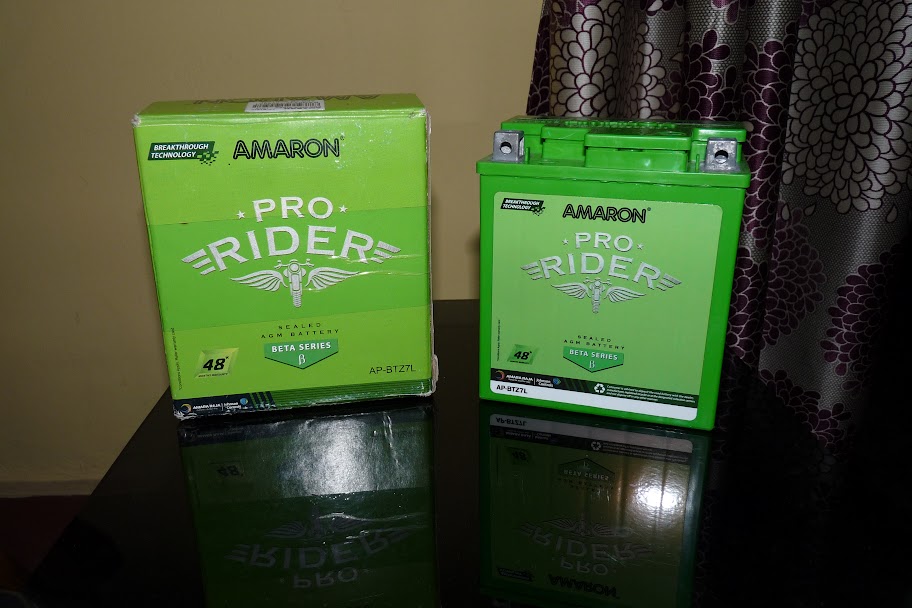
Amaron amongst the Indian brands, manufactures the best batteries one can look for their respective motorcycles especially, the maintenance free AGM (Absorbent Glass Mat) ones: on which Amaron offers 48 months/4 years warranty (2 years free replacement and after that 2 years on pro-rata basis). Since, Honda CBR 250R requires a specific model (AP-BTZ7L thanks to @AK3D 's post on the CBR's ownership thread), i really had a tough time to get hold of it as being in a remote place, this model was nowhere to be found. I did get alternate options like from Sonic SF and other brands but i simply wanted what is best for my CBR. So my mind went into "NO COMPROMISE" mode.
So after running from pillar to post, i finally managed to convince one car Amaron battery dealer to get this battery for me from anywhere he could and that i am even willing to pay extra for it! He then requested me to wait for a day so that he can ask around in the near by cities and see if there are any stocks of the same with any of Amaron battery dealers there. Reluctantly, i agreed and headed home with a non-functional bike. The next day afternoon, i got a call from the local dealer that he has managed to find only one piece remaining with another dealer who is some 50 kms from my current place of stay and only if i say yes, he will get it shipped to my hometown and then i can collect it from him. I thanked him many times and requested him to get the darn battery here as soon as possible so that i can plonk it in the CBR and get my bike back up and running. By the time the battery arrived in the dealer's place it was post 8:45 pm. So i simply collected the battery from him and reached home, kept the next day as the due date to install it in my bike.
Pic 6 & 7: Amaron Beta series Maintenance Free AGM battery. The correct model no. for Honda CBR 250R is AP-BTZ7L
The next day, i managed to find some time from office and went about removing the seat, unplugging the old battery and then installing the brand new Amaron into the designated battery compartment. I then connected all the terminals as per the instructions, checked for lose contact, put the seat back in place and then pressed the thumb starter.

Pic 8: Amaron battery installed into the battery compartment. I am in the process of connecting the +ve and -ve terminals connected in the respective slots.
Normally, one would expect with a new battery the vehicle will start without any fuss and then we can go ahead with our daily lives. But destiny had something else in mind!! There was literally no response from the bike, in the MID console the neutral light was flickering mildly and so was the engine light. The tachometer refused to do its pre-inspection turning of 180' and back to 0 rpm. I started scratching my head for a while wondering if i accidentally wired the battery with the terminals with the wrong polarity. So i unhooked the seat and checked the wiring again. It was fine! After checking the fuse box and everything, i decided it was better to call the SVC guys and let them have a look at it. When the mechanic arrived, he saw the new Amaron battery, checked the terminal connections and told me that the new battery is low on charge and will need proper charging. I then asked him how on earth is it possible that a brand new battery won't retain any charge at all? He smiled and told me to simply push start it and let us take it at the SVC and confirm if what he suspects is true.
So left with no other option, we push started the bike and i told the mechanic to ride my CBR to the SVC and i will see him after my office is over. The moment he left, i checked the date of manufacturing for the Amaron battery and kicked myself when it showed that the battery was more than 4 months old. It is a known thing that if a battery is left alone sitting idle, it will discharge naturally and lose voltage on the terminals. I then called up the dealer and asked him why was i sold an old battery. He told me that the AP-BTZ7L model sells rarely and this was the only piece available so he got it after i had confirmed the order with him. He assured me that the battery is fine and all i need to do is simply charge it for a few hours. If i am still not satisfied then he shall ask for a replacement battery from Amaron as the warranty on the battery starts from the date of purchase for me. But he also mentioned that it may take upto 3 weeks for the new battery to arrive due to limited stock. Not that i had much of choice in this remote place, so i kept aside the argument and after finishing my office work, reached the SVC to see what was in store for me.
When the voltage on the battery terminals was measured, it showed a puny 10.2 volts which confirmed the mechanic's suspicion that the Amaron battery was flat. Keeping my fingers crossed, i then put the battery on charging and gave a call to the senior riders to confirm if this battery is also on the verge of death and will it make any sense to keep it even if it somehow retains the charge? The senior riders assured me that the AGM batteries are designed to be robust and they can take a lot of abuse where one can literaly bring the charge down to 20%, and then charge it back to 100% without the battery breaking any sweat. I did get a sigh of relief when the mechanic informed me that within 5 minutes of riding and reaching the SVC when the mechanic switched off the bike and tried to start it again on battery power, the Amaron battery was able to crank up the engine and start it once, after which the battery couldn't do a second run. So it meant that the battery was able to charge and retain voltage which was a good sign and was in line with whatever the senior riders had shared with me over telephone. It was getting late so i requested the staff members in the SVC to kindly leave the battery on charge for atleast 4 - 5 hours, we will then see whether the battery is able to revive or i will have to go on round 2, getting the replacement battery from Amaron.
That night, i couldn't sleep properly (OCMD!!
), my mind was filled with doubts and so many questions wondering how on earth can an AGM battery survice such low voltage period and will putting the battery on charge work or is it simply a wasteful exercise? I then shot an email to Amaron to help me understand if this thing will work. I was happy to note that the next day i received a response and a courtesy call from the local sales office. They assured me that the battery will remain absolutely fine and that they have never heard of an Amaron battery die.. In the event, i am one such unfortunate customer they will try and get hold of a replacement battery at the earliest for me. (Might be mostly sales pitch but i am happy with the instant response i received from the company!). So the next day, i landed up at the SVC. Post the completion of charging of the Amaron battery, we then installed it in the battery compartment and hooked up the terminals. The battery was also checked to see what voltage was it currently giving out.

Pic 9: Battery voltage output digital reader indicating 13.48 volts. Green light illuminating in the system above meant that the battery was able to retain the charge and also by now was fully charged up.
So the Ignition switch was turned on and we pressed the thumb starter and the bike came to life instantly! I was very happy that finally this ordeal is over and thanked the staff and the mechanic and left for home. The next day i started the bike and then was on my way to a friend's place when suddenly the bike sputtered, jerked violently and the meter console simply died and the engine shut off completely. Luckily it happened just 200 meters from the Honda SVC. I had no choice but to do a little bit of work out and pushed the bike to the SVC. By now i was getting really pissed with the battery thinking that Amaron made a fool out of me by pushing me to retain a crappy battery and let me suffer this irritation. The mechanic at the SVC, at first was surprised but then looking at my state, he immediately left everything and put the bike on the service stand. We took out the battery first and checked for voltage readout. By now, after normalising, the battery was showing a total output of 13.35 Volts

Pic 10: Battery voltage output 13.35 volts checked using a multimeter
As per the mechanic the battery was absolutely fine and he was rather shocked that a 4 month+ battery in such a discharged state, post charging was happily able to retain the voltage given out by a normal battery. Unconvinced, i then requested him to take the battery out and test it on another CBR and see if battery is actually functioning fine or it is simply giving false read outs. The mechanic then took the battery out and connected it in another CBR 250R. He then did over 30 cranks back to back and the other CBR started without any fuss, each time! So it was pretty clear by then that whatever Amaron guys had told me turned out to be totally true! This battery came back from dead to fully charged in just 5 hours..
Now that it was verified that the battery was fine, we then started checking the fuses in the fuse box, under the starter relay and any fuses i could find ( i am a lay man when it comes to electrical wiring!! honest confession!!) and everything seemed fine. So it was a clear indication that there was some sort of electrical fault in my CBR which was causing all this mess. The mechanic then suggested, just for the heck of it to push start my CBR once and see what happens. So we tried that.. the bike didn't start but then with the sudden jolt it received the moment i left the clutch while keeping the gear on 2nd, everything came back online: the MID console was normal, the horn, everything worked as if nothing had happened. I said to myself, might be a simple glitch, thanked the mechanic and went on with riding my bike to my friend's place only to find that in under 200 mtrs from the SVC, the console again went blank and the bike stalled. Nothing came on the console: horns lights, electric starter everything became non-functional.. The neutral light would glow very faintly and nothing else would happen. I believe the readers can imagine the colour of my face by the time i pushed my bike back once again into the SVC service bay.
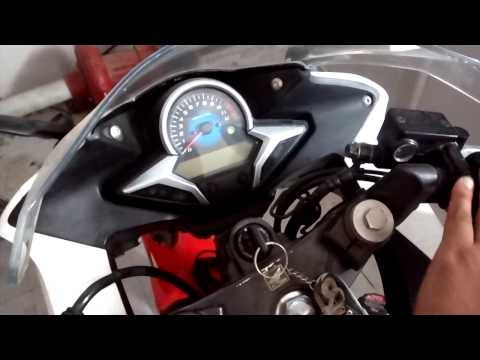
I am posting a small video highlighting the issue:
As the video above clearly shows that the Tachometer doesn't do its pre-inspection check and nothing happens when the thumb starter it pressed. I pressed the engine kill switch multitude no. of times to negate that it might be the probable culprit behind this weird behaviour displayed by my CBR. However, incidently i had replaced the old right hand side switch gear with a brand new one as the headlight beam switch had gone bad in the older switch gear and no matter how much amount of WD 40 ws sprayed into it, the switch would not turn on the headlight. So i ended up ordering a new piece and replaced the old switch with a new one. This was done over 2 weeks back so in my mind there is no way on earth a new switch would go bad so early. Using a multi meter we tested the terminals and we found everything was fine with the new switch gear.


Pic 11 & 12: A new headlight switch gear assembly bought and installed on my CBR 250R.
Now with the SVC nearing its closing time, i had no choice but to leave the vehicle there. I had already started fearing the worst and was wondering if i actually ended up buying a lemon! However, the truth was something else and totally quite unexpected!!
Watch out this space for the upcoming posts.. you will not be disappointed!!
Cheers,A quote by a toilet, " use me well, keep me clean, i would never tell anybody whatever i have seen.." :P
Comment
-
Re: The story so far.. My Honda CBR 250R
Shv18..... A post after a long time in hibernation....and again you have come with a detailed and Interesting post.Originally posted by shv18 View PostHi all,
it has been quite a long break since, the last post but then work load kept me away from xbhp for a bit. Anyways, without keeping the readers waiting let us move on with the story and that too with an interesting twist where in between my beloved steed gave me a big migrane but the end result was quite a revelation... and i am sure it will benefit all those who are hungry for knowledge!!

Pic 6 & 7: Amaron Beta series Maintenance Free AGM battery. The correct model no. for Honda CBR 250R is AP-BTZ7L
Watch out this space for the upcoming posts.. you will not be disappointed!!
Cheers,
Regarding the whitish light, it could be because of the silverish inner coating in front of the bulb, and also the blue tint on the bulb's glass body. Since whitish light has lesser penetration and visibility in Misty and Rain condition, you may have to go back to a bulb with less than 4,000 K color temperature .
Regarding the OE EXIDE, many owners of ZMA/ZMR have had good experience while equal numbers have had bad experience. I guess it is one's luck...just as in getting a good Vehicle ..
You have rightly observed that the AGM Amaron of 4 months old was still able to come back alive with a terminal voltage of only 10.+ volts.
I wish to share my little knowledge on how the AGMs are different from the rest of the types of Automotive Batteries.
Basically there are two types of lead acid batteries The two main types are Starting (cranking), and Deep Cycle . The starting battery , is designed to deliver quick bursts of energy (such as starting engines) and therefore has a greater plate count. The plates are thinner and have somewhat different material composition. The deep cycle battery has less instant energy, but greater long-term energy delivery. Deep cycle batteries have thicker plates and can survive a number of discharge cycles. Starting batteries should not be used for deep cycle applications because the thinner plates are more prone to warping and pitting when discharged.
Wet Cell (flooded), and Absorbed Glass Mat (AGM) are various versions of the lead acid battery. The Wet cell comes in two styles; Serviceable and Maintenance free. Both are filled with electrolyte and are basically the same,and the AGM batteries are specialty batteries that typically cost twice as much as a premium wet cell.An AGM battery is a completely maintenance-free lead-acid electric storage battery that is sealed using special pressure valves
Absorbent glass mat (AGM) is a class of VRLA battery in which the electrolyte is absorbed into a mat of fine glass fibers. The plates in an AGM battery may be flat like a wet cell lead-acid battery in a rectangular case. In cylindrical AGMs, the plates are thin and wound, like most consumer disposable and rechargeable cells, into spirals so they are also sometimes referred to as spiral wound. Their unique (for lead-acid chemistries) construction also allows for the lead in their plates to be purer as they no longer need to support their own weight as in traditional cells. Their internal resistance is lower than traditional cells due to plate proximity and the pure lead plates have lower resistivity, they handle higher temperatures better, and self-discharge more slowly.Absorbed Glass Mats are used to absorb almost all of electrolyte and provide channels for oxygen gases which will be participated in recombination reaction to prevent the escape of hydrogen and oxygen gases. However they store very well and do not tend to sulfate or degrade as easily as wet cell.
There is little chance of a hydrogen gas explosion or corrosion when using these batteries; these are the safest lead acid batteries you can use. AGM batteries will hold their charge better that other types. In most cases AGM batteries will give greater life span and greater cycle life than a wet cell battery. The Absorbed Glass Matt construction allows the electrolyte to be suspended in close proximity with the plates active material. In theory, this enhances both the discharge and recharge efficiency.
Here is a cross section of an AGM battery construction...
Here is a graphic representation for a 12V 80 AH AGM battery Depth of Discharge(DOD) and number of cycle it can withstand..
Till now AGM batteries were only used in Luxury Cars and High end SBKs...Now Aamaron had introduced affordable AGM batteries for motorcycles.
Hope this is helpful in understanding about AGM's superiority over flooded and SMF battery types.
Shiv18, keep the flow ....When Was The Last Time,You Did Something For The First Time.
Comment


Comment