








All posts by Sunil Gupta
KTM RC 250 Review!

 Mar 2016
 Sunil Gupta
 Bikes,KTM,Motorcycles
Austrian manufacturer KTM, has been running quite the successful partnership with homegrown for Bajaj for a few years now. The 200 and 390 twins have seen considerable success in both the domestic and international market as well. KTM has been riding high on the success of the bikes being produced at the Chakan plant, so much so that the once tiny niche manufacturer is now running neck and neck with the European giant BMW Motorrad in terms of sales volume! Did that inspire BMW to partner TVS for a similar production arrangement? Maybe!
Most developed markets unlike India have a graded licensing system, which allows riders to get a licence to ride vehicles of specified power and capacity. This has resulted in most manufacturers tailoring their small capacity bikes to fit these licensing requirements. KTM was losing out in this regard, as the competition all had a 250cc single for this segment, while KTM had the RC 200, which was smaller and the RC 390, which didn’t meet the licence requirements. So the Austrian manufacturer came out with the RC 250 for these markets, designed to cater specifically to this group of licence holders.
It is manufactured in India, but it isn’t sold here. And it is unlikely it will either. We already have the RC 200 and the RC 390, we have no license restrictions and therefore even an 18 year old with zero experience can buy a 200bhp fire breathing superbike. A RC390 is surely not a problem.
The KTM RC 250 will directly compete with the likes of the Honda CBR 250R and the Kawasaki Ninja 250SL. Even though this bike will not be sold in India, the interest in this motorcycle is palpable. Therefore we take the opportunity to bring to you a review of the KTM RC 250 by our good friends at BikesRepublic.com
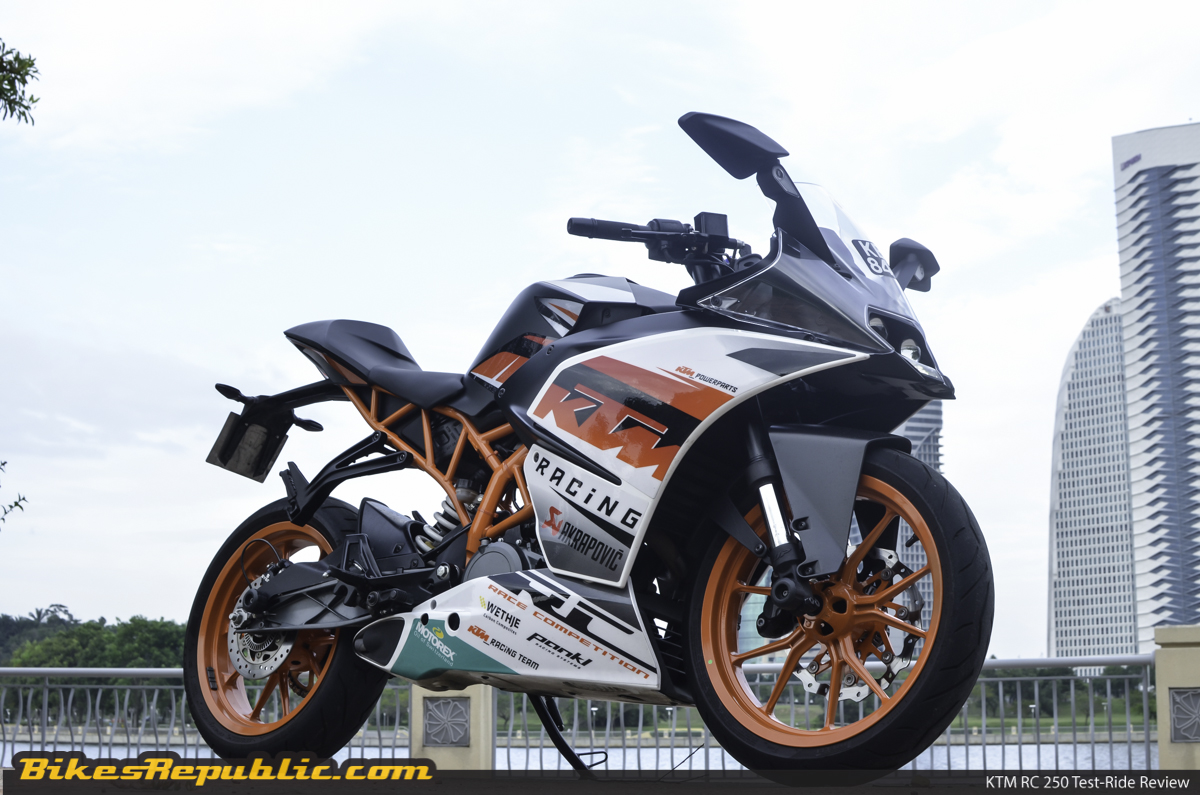

KTM RC 250 Review
It goes without saying that KTM bikes, especially its small capacity and locally assembled (CKD) models, have become extremely popular on our soil. However, there was just one problem for many Malaysians: you technically needed a B-Full class license to own the desirable two in the range, which is the 390 Duke and its RC 390 sibling.
With both sharing the same 373cc single-cylinder engine, its capacity above 250cc meant that B2 class license holders were limited to just the 200 Duke or RC 200 that shared a ’tiny’ 199cc single-cylinder unit. Needless to say, the 200 series were no match against the onslaught of 250cc single-cylinder machines made by the rivalling Japanese brigade.
Thankfully, that situation changed drastically not too long ago when KTM Malaysia officially introduced the RC 250 and 250 Duke models. As far as many B2 license holders were concerned, their arrival finally gave them the chance to own and ride a proper European quarter-litre bike that not only looked good, but also promised better performance over its Japanese segment rivals.
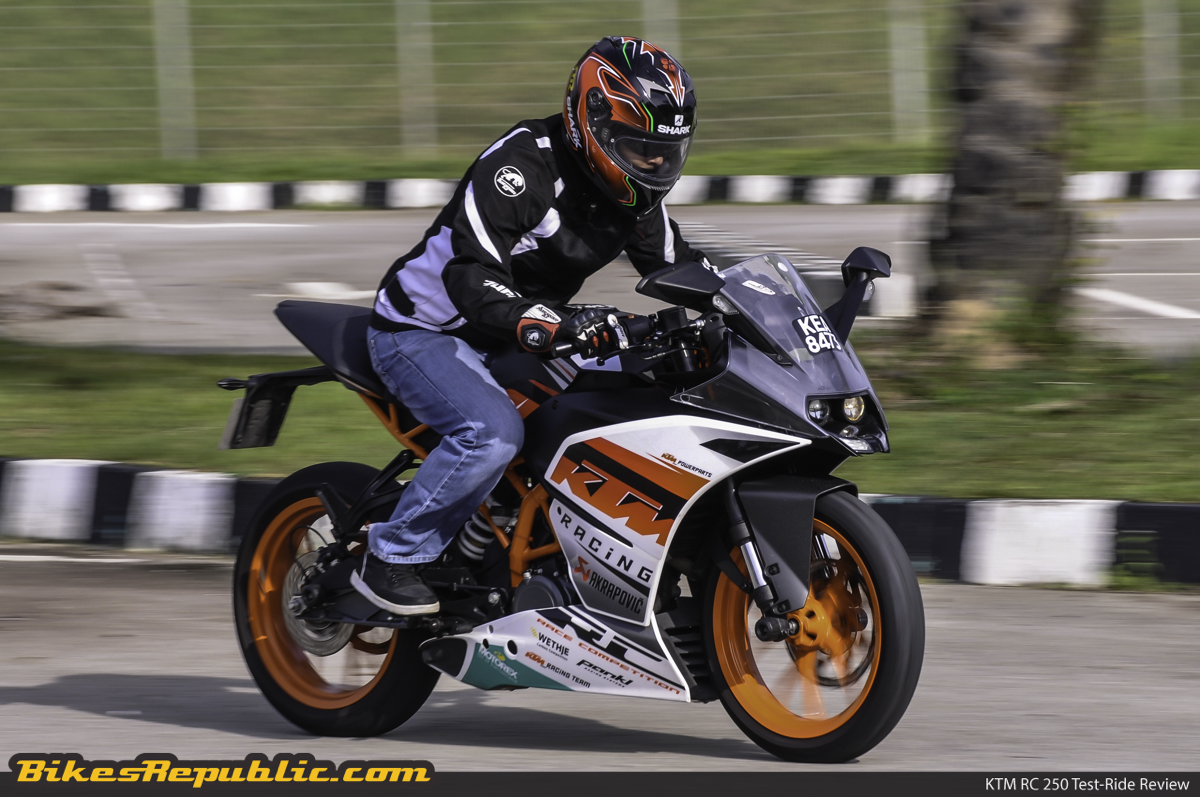

We recently spent a week test-riding the sport-bodied KTM RC 250 and here’s what we managed to garner out of it.
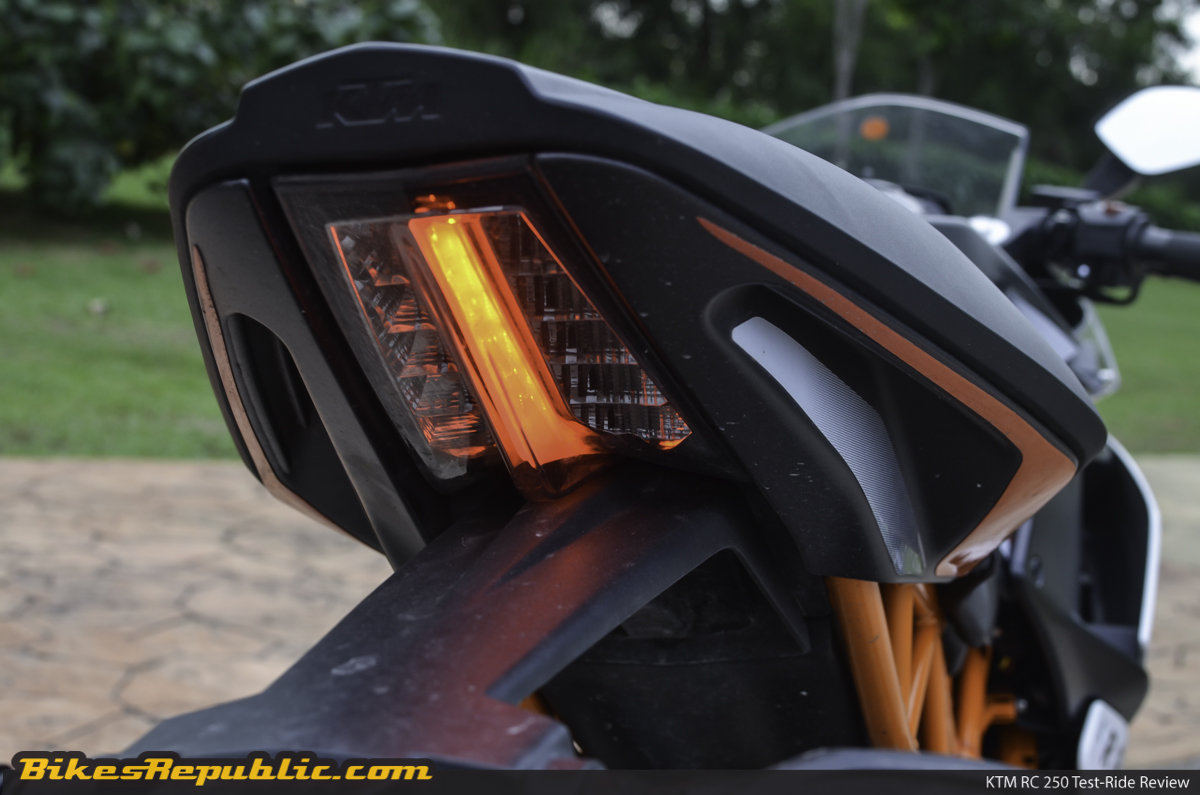
At first glance, the KTM RC 250 looks just like its RC 200 and RC 390 siblings, which isn’t a bad thing entirely. All the good parts from the other two remains unchanged in the RC 250, especially that distinctively modern and sharp styling language. Matching that are the equally impressive details such as the LED DRLs up front that complement the twin projector headlamps, plus the cool LED tail light unit at the rear as well. In short, this is one good-looking bike in the eyes of its target buyers – novice riders.
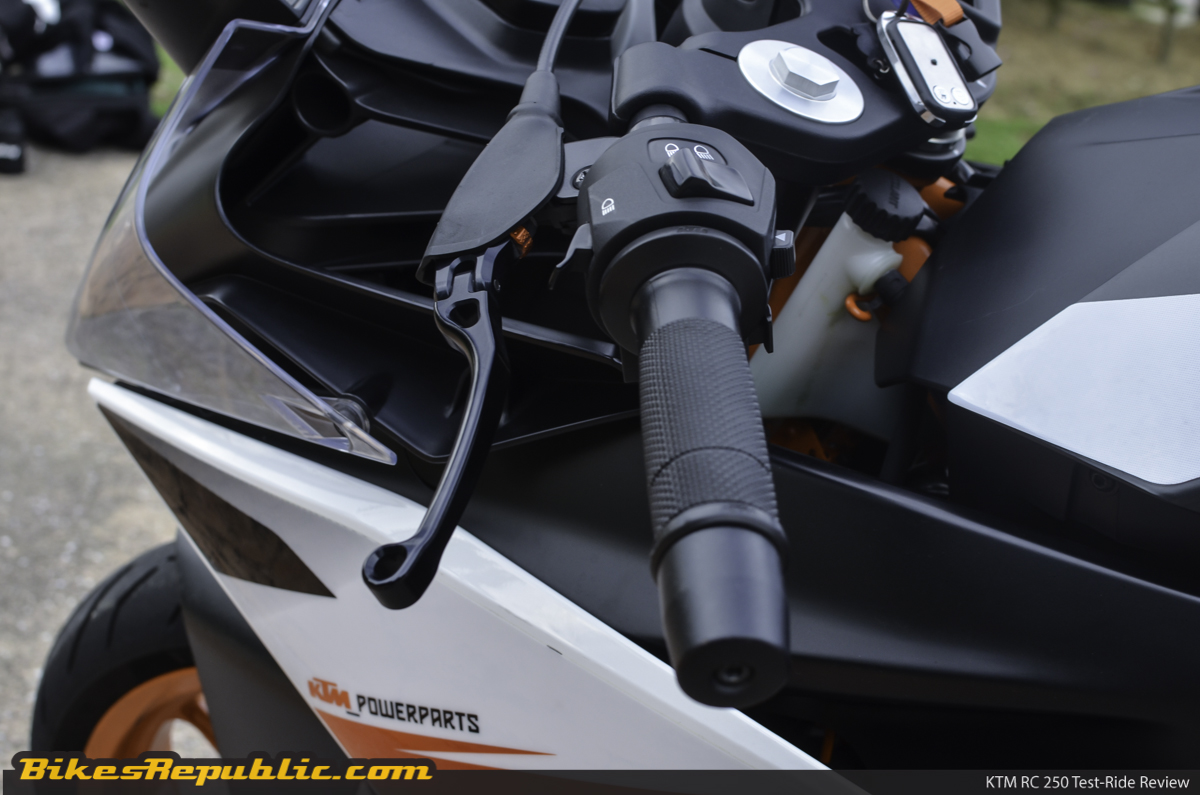
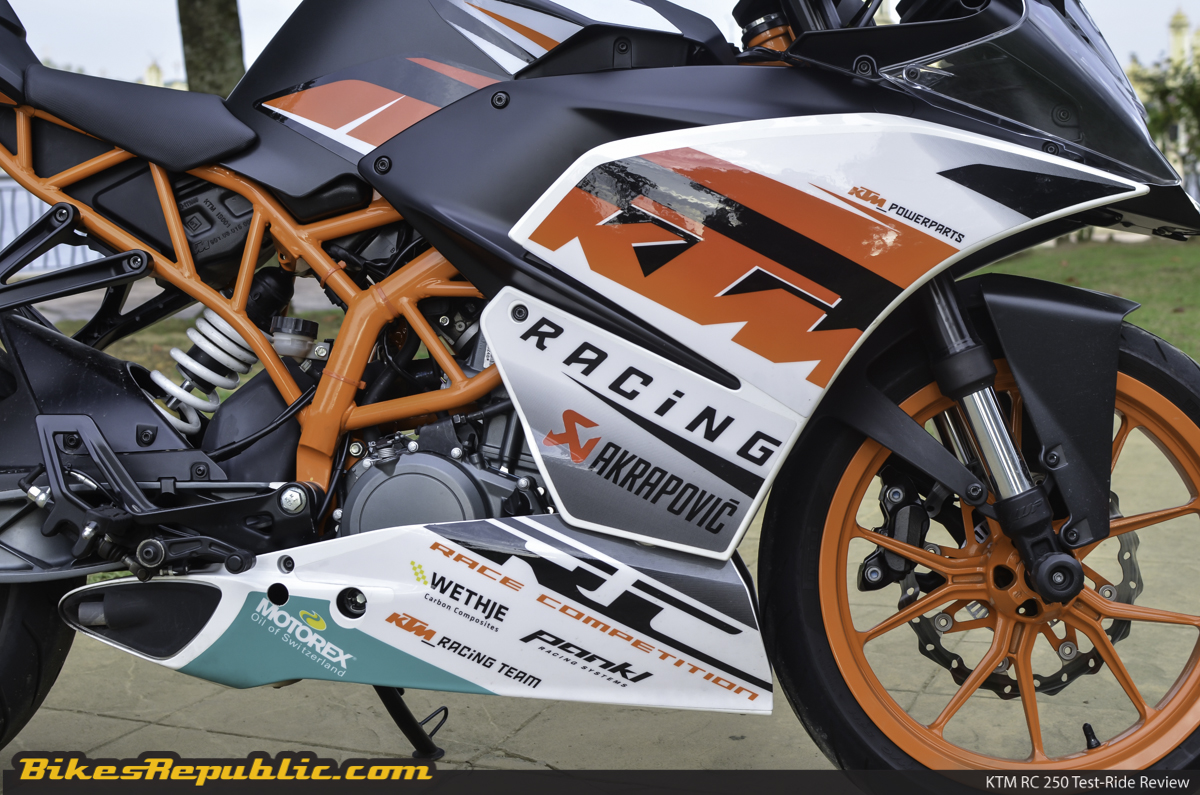
Eagle-eyed readers would already notice our test unit’s rich array of optional items from the KTM PowerParts catalogue. Highlights here besides the race graphics donned on the fairings include a pair of adjustable clutch and brake levers made of CNC-machined aluminium, followed by the wavy brake disc up front, as well as the larger sprocket and the colour-matched X-ring chain set. All of these were not bad to say the least, enhancing the bike’s basic outlooks further.
Also retained here from the RC 200 and RC 390 are the riding ergonomics and sitting position. Having tested the RC 390 previously, things felt the same in the hot seat of the RC 250. This being a sport-bodied bike with clip-on handles, swept back foot pegs and a tall seat height of 820mm, you will need to beef up with upper body muscles to don the typical sportbike crouch when riding the RC 250 up to speeds. (Read our previous special twin-test of the KTM RC 390 and 390 Duke here)
In our weeklong stint, we managed to put the KTM RC 250 through its paces across highways, twisty back roads and the urban traffic condition. Predictably, this bike showed its disadvantages almost immediately when tasked for the urban commute.


Besides the sport riding position, the tall seat sees shorter riders tiring out quicker from having to tip toe on the bike at stops, not to mention this bike’s harder setup dialled into the WP suspension primed all-round, making you dread the sight of potholes and road imperfections. As far as city riding goes, this is still best left for any of the Duke naked bikes as their upright riding position and standard ergonomics makes said task a lot easier.
For the RC 250, it actually shines better when taken for blasts through highways and twisty backroads, feeling truly at home in the latter. With its dry weight of just 147kg and adequate ground clearance of 178.5mm, the KTM RC 250 is a natural born lean, mean, orange cornering machine, making this highly chuck-able bike a perfect platform to master your knee-down techniques. It really lives up to the Austrian brand’s motto of “Ready>>To>>Race” straight out of the box.
What adds to this bike’s high agility besides the grippy Pirelli Rosso II tyres is that wavy front brake disc option. Swapping from the stock 300mm disc to the larger 320mm wavy disc unit is a sound move as it matches well with the quad-piston caliper primed up front. As a result, both stopping power and braking abilities felt noticeably better too.
Rounding off the braking suite is a standard-equipped Bosch two-channel ABS system. The suite does feel a tad spongy with its lever pull, but the catalogue’s adjustable CNC-machined aluminium levers allows you to combat this easily too. Nevertheless, the presence of ABS also feeds a greater sense of security and safety as it offers better control under braking.

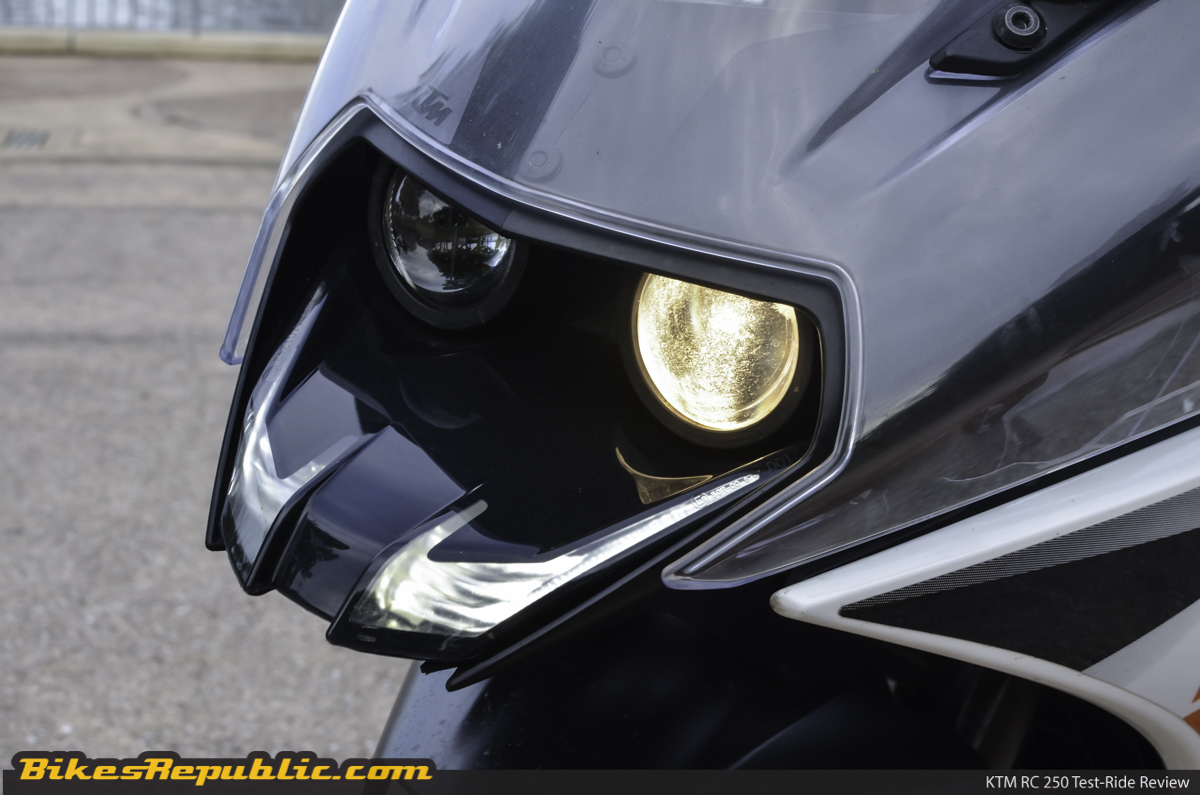
Perhaps the only let down here is the RC 250’s liquid-cooled 249cc single-cylinder engine sitting underneath those stylish fairings. The mill is essentially a downsized version of the 390 series’ 373cc unit, which KTM developed specifically for markets with laws that favoured the quarter-litre capacity.
Yes, it healthily develops 31hp @ 9,000rpm and peak torque of 24Nm at 7,250rpm, but the delivery is somewhat subdued compared against some of its Japanese peers. We also need not mention that embarrassing puttering soundtrack of this single-cylinder’s exhaust note. Nevertheless, we reckon the Akrapovič exhaust system available in the KTM PowerParts menu will resolve this easily, provided you don’t mind the extra cost of course.
Unlike the 390 series’ larger mill, the RC 250’s 249cc unit lacked that big punch of torque in the low rev-ranges. Furthermore, peak power comes only in the top-end of the rev-band, which is rather typical of a single-cylinder unit. Thankfully, the larger sprocket from the KTM PowerParts range means sustaining high-speeds is made easier, making said component worthy of consideration.
Despite these minor setbacks, this quarter-litre single-cylinder is remarkably easy to exploit and master. It not only trumps the smaller RC 200’s 199cc unit with greater power and torque figures, the six-speed transmission paired with it also boasts a PASC anti-hopping mechanical slipper clutch – a feature absent in the entry-level RC 200. No doubt, the clutch-less up- and down-shift capability made this RC 250 feel right at home when conquering twisty back roads, and we reckon it would feel the same during a trackday too.
Adding to that, especially for novices, is that neat digital instrument display panel. Equipped across the range, the screen is easy to read even with just a quick glance. KTM cleverly placed the rev-counter bar to run across the top of the screen, followed by the large speedometer in the middle, not forgetting the all-important gear indicator just to the left of that – a feature many of the RC 250’s rivals still lack. The icing here is the shift light placed at the top that blinks rapidly as you approach the mill’s 11,000rpm red-line.
While it may lack a little in the power delivery department, the KTM RC 250’s mighty impressive list of standard features sees it eclipsing the bulk of its Japanese rivals. Match that with its highly nimble handling abilities and an affordable basic selling price tag of RM18,888* sans options, the KTM RC 250 is hard to resist for many eager newbies.
For us though, the RC 250’s minor drawbacks carry little consequences simply because of that magical ‘250cc’ figure. This means you don’t need to spend more money on upgrading to a B-Full license whilst the RC 250’s price tag sees you saving more than RM8,000 from the RC 390’s steeper RM27,500* price tag.
The only question left is how much one is willing to spend on the wide variety of parts and accessories available in the KTM PowerParts catalogue.

Text & Photos: Thoriq Azmi/ BikesRepublic.com


Bajaj V15 – Torque of the Town
 Mar 2016 Sunil Gupta
Bajaj,Bikes,Motorcycles
Mar 2016 Sunil Gupta
Bajaj,Bikes,Motorcycles
Remember the visuals of India’s first and much celebrated aircraft carrier, INS Vikrant, flashing on your TV and computer screens in the last week of January this year? A brief intro of the INS Vikrant was followed by the painful images of her getting scraped. And before you could finish cursing the authorities for not taking care of our 1971 war hero, there came a reassuring message as to how Bajaj had acquired the metal from the dismantled Vikrant, melted it and was using this metal to make a new motorcycle – giving new life to a legend or making it immortal! What a masterpiece of a marketing strategy! And what better time to unleash it than the Republic Day! I so badly wanted to own one of that mystery motorcycles even before it was born! The mystery motorcycle was ultimately unveiled by Bajaj just before the Auto Expo 2016. This turned out to be a 150cc motorcycle with which Bajaj wanted to target the creamy layer of commuter segment (the commuters who would want a ‘little more’ than just commuting from home to work and vice versa). The bike was christened V15 and got people talking about it due to its rather unusual appearance, which doesn’t fit anywhere in our usual classification of motorcycles. It is a bit of commuter and a bit of café racer and a bit of cruiser as well! We got to ride the V15 in Pune yesterday and here’s our take on it.
As we said, the Bajaj V15 is a rather unusual looking creature. You find it hard to understand its form and categorize it as a café racer or a simple commuter, but it does manage to stimulate your senses. It manages to capture your attention for a lot longer than you would otherwise give to a commuter motorcycle. And after you are done trying to understand it, there are certain elements in the V15 which force you to appreciate the thought process behind its design – be it the muscular tank, the generous amount of chrome, the neatly designed instrument console, the trendy rear with LED tail lamp, that 3-dimensional ‘V’ logo on the tank, or that ‘made with INS Vikrant steel’ logo unit inscribed on the chrome fuel tank cap. It has a road presence that would be enviable for any motorcycle slotted into the commuter segment. While we were riding it in Pune and out near the villages, we got so many curious questions from both young and old who stopped us and enquired about the bike. At one point, I was riding behind an army truck for some time near Baner and the soldiers sitting in it had their eyes constantly glued to the bike. I so wanted to stop them and tell them the ‘war machine’ background of the V15 and see their reactions! I am sure a few would’ve been instantly interested in buying it just because of its INS Vikrant story.


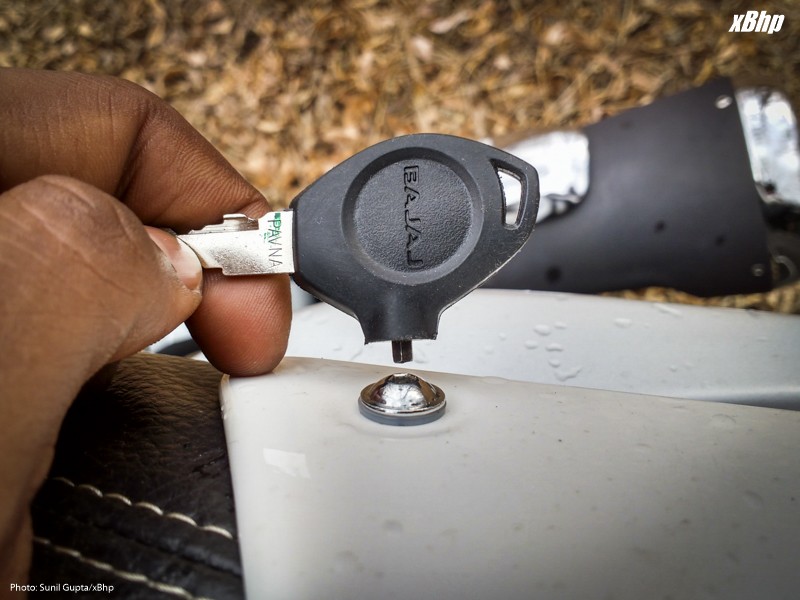
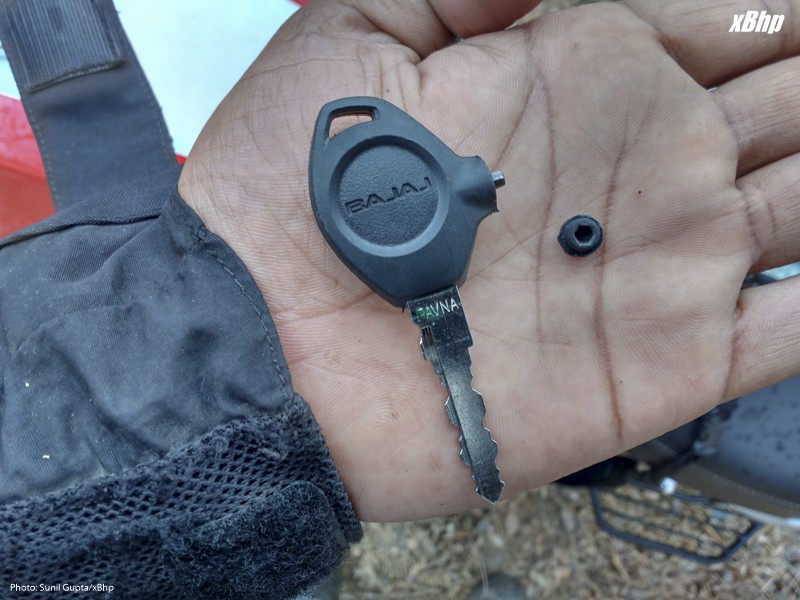
A rear seat cowl comes bundled with the standard accessory set of the V15, which is rather easy to put on the bike. All you need to do is to slide it in and tighten two screws with the help of the tiny Allen key integrated in the key of the bike itself. The fat tyres on the 18-inch wheel at the front and a 16-incher at the rear enhance its cruiser appeal.

A special mention here needs to be given to the exhaust note of the bike, which plays a big role in the overall imagery of the bike. Bajaj has spent quite a bit of time to fine tune the aural note from the V15’s exhaust and as a result we have an exhaust note which feels meaty and bassy.
The plastic quality on the switchgear was acceptable. The overall fit and finish & the paint quality of the V15 is just top notch.
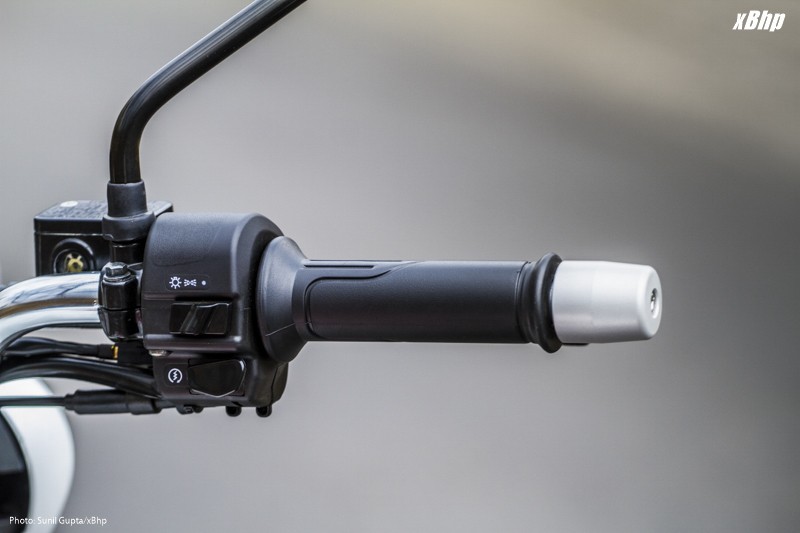


But there are things in the V15 that looked a bit overkill. The headlamp assembly in particular looked out of proportion when seen from certain angles. Also you badly miss the engine kill switch on it. Essential goodies like trip meter and a tachometer have also been given a miss on the V15.


The Bajaj V15 comes fitted with an all-new 149.5 cc power plant that makes 12 bhp at 7500 RPM and 13 Nm of torque at just 5500 RPM. The 12 odd horses that V15 produces doesn’t sound like a lot when you compare it with other 150 cc machines that are there in the market. With these horses, it manages to reach around 80 kmph mark before it starts losing its breath and sounding harsh. But Bajaj says, this motorcycle is intentionally made to not go really fast! They say that if you want to judge it, judge it from the amount of torque it produces and how easily and early it comes. And evidently, the V15 has ample amount of low and mid range torque that makes it such a pleasure to ride within the city. Frequent overtakes were a breeze without having to shift down. The bike is capable of managing mild city traffic in fourth gear with occasional downshifts to third gear, most of the time. Oh, by the way, the V15 is fitted with a 5-speed, all-up-pattern gearbox that is not really the best we’ve seen from Bajaj. The gearbox did not provide satisfactory or reassuring feedback and we found it particularly tough to downshift when stationary. The clutch had a late bite point as well and the bike wouldn’t move an inch until the clutch was fully released – It was a minor adjustment issue but an extremely irritating one. Otherwise, the engine felt really smooth and the power delivery was linear as long as you don’t try riding it beyond the 75-80 kmph mark. You could also feel some vibrations in the bike beyond this point.

Photo Courtesy: Preetam Bora
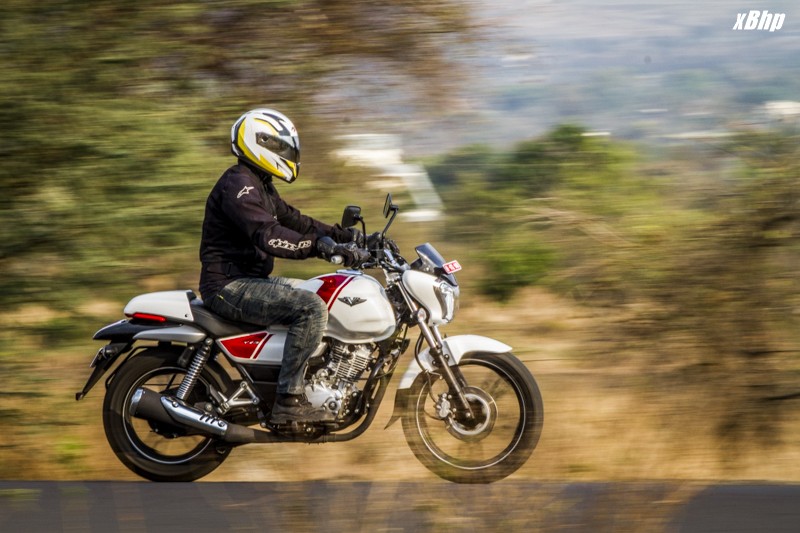
Photo Courtesy: Preetam Bora
The low seat height, wide handlebars and footpeg position give it a very distinctive commuterish stance. The seat was comfy and offered generous amount of saddle space to the rider as well as the pillion. The handling of the V15 is neutral and you are warned not to treat it as a corner craver, but it is not as lazy as a cruiser either and you can manage to cut through city traffic rather effortlessly. The skeleton of the V15 is made up of a new double cradle chassis that is mounted on conventional gas charged shock absorbers at the rear and telescopic suspension at the front. This setup, though on the stiffer side, manages to neutralize most of the potholes and speed breakers thrown at it with utter ease. It feels stable and planted at straight line high speeds and manages to hold the line into corners as well if ridden sensibly.


The brakes (a 240 mm disc at the front and a 130 mm drum at the rear) felt adequate for the kind of velocity this bike can attain.

Bajaj V15 Review: Spec Comparo

Bajaj V15 Vs. Other 150-160 cc in the market. Click to enlarge the image!

This spec comparison sheet was provided to us by Bajaj. It clearly gives us an indication as to where Bajaj wants to position the V15!
2015 Ducati Multistrada 1200S: Looks like a Beauty, Kills like a Beast
 Feb 2016 Sunil Gupta
Bikes,Ducati,Motorcycles
Feb 2016 Sunil Gupta
Bikes,Ducati,Motorcycles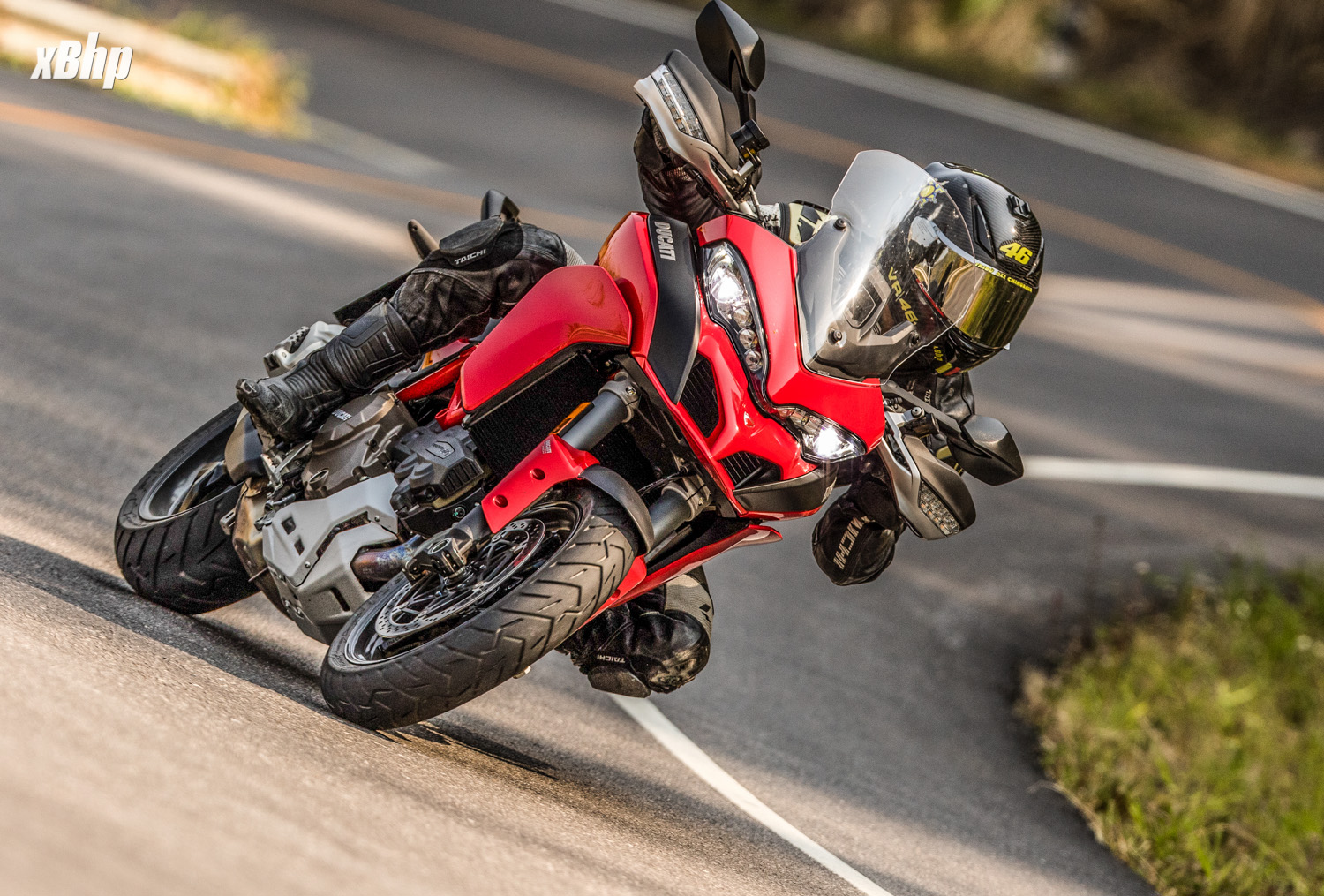
Quick Dip
This is for those who just want to know – buy or no?
Buy the Multistrada 1200S in India (16.56 lacs ex-Showroom Delhi) if you want to have the thrill of a superbike, a legacy of a great Italian marque, the looks of a spaceship, some of the best safety features out there on a motorcycle, want to go fast on a track and then want to go to Ladakh (with a few modifications, primarily belly pan and dual purpose tyres).
Do not buy this bike if you plan to just ride it the nearest McDonalds (by all means this bike will coerce you to flaunt it everyday) or if prefer the refinement of an inline four. Then your only other option (in the same segment) is the BMW S1000XR which will be a cool 10 odd lacs (!) costlier than this! And you cannot say you own a Ducati. So perhaps you can buy the MTS 1200S and also get a Scrambler and also have some money left over for some cool accessories.
If you have time and sipping some fine coffee, read on.
The Rantings
I am a bit off you know. We were invited to the party pretty darn late by Ducati. The rest of the world had already raised a toast to this fine Italian red wine while we were made to look at its brochures on the internet.
Ok. I have made peace with that. Better late than never.
So a handful (and a bit more) of Indian journalists were stuffed into flights and invited over to the Asian test ride center for Ducati – Thailand. If it is someone who knows how to take advantage of the Asian economic boom and low cost labor force it’s the Europeans (more recently that is), more viz. KTM and Ducati with BMW also well on its way.
For a brand like Ducati it was a big step to start manufacturing outside of its iconic Bologna factory. The place had to be just right – the government support, quality workforce and who would have thought – a place where you can invite the ‘choicest’ of international journalists (forgive me that extravagant expression for it includes me too) to ride the masterpieces they produce.
There is still some resistance from the west to Ducatis being produced in Thailand, but just think about this – what if they were being manufactured in China with the same quality ethos and checks? Sounds hard to gulp down, isn’t it?
This is the third made-in-Thailand Ducati which I had been asked to ‘test ride and review’ as part of a journalist contingent. The first two being the Monster 1200S and the Scrambler. Wait, was the Hypermotard 821 too made in Thailand that I rode in Bali? Too much going on!
Coming back to the subject at hand, we were flown into Bangkok and then after a short layover, another flight to Chiang Rai from where it was another hour or so by bus to the Golden Triangle, which is the confluence of three countries – Laos, Thailand and Myanmar! We were checked into an absolutely stunning Anantara Elephant Camp resort. I could see vast forests and the confluence right from my hotel room with elephants taking a stroll and bathing in the forests below. Truly incredible.

Beautiful Morning before the ride:

Food For Thought
I have this habit of mildly digressing from the topic, but not at the risk of being entirely disconnected. Here I would ask myself why couldn’t India put up such a show (there was perhaps just this once when HD called international journalists to Rajasthan)? Why cannot journalists from around the world be called here for a change? Despite KTM making the smaller Dukes here, never have we seen a launch for those in India. The answer may be pretty simple – because it is logistically too much of a headache working with government and various authorities. Now where did this crop from? The next paragraph details out on how I was blown away (yet once more) by what I experienced in this ride.
Thailand has to be one of my favorite places to enjoy a new launch ride in. It is close to India, it is cheap, people are so friendly, the weather is usually fantastic, the roads are usually great and there is no guerilla warfare type fund raising happening in the name of teaching us how to ride within the speed limit by vehicles sporting psychedelic disco lightings – read that as the local police. And yes, fantastic shopping malls where I could get some great scale models to add to my collection!
But that’s from my perspective. From a company’s point of view, especially with respect to this ride, this is what I experienced – we were given around 20 brand new Multistrada 1200Ss and none of them had a registration number. And we had two police escorts on decently fast motorcycles. And we had a fully equipped Ambulance. And we had world class photographers. And the police created a green corridor for hundreds of kilometers, through many towns and traffic lights (not that these were littered with stray dogs and cows and unruly traffic- see my frustration is quite evident regarding apna Bharat (my India) as far as road etiquettes go).
Not only this the police actually stopped traffic both ways on big country roads in two instances for the Ducati photographers to do th-eirrr MotoGraphyTM, if I can term it that. And no one was honking or complaining. The traffic waited patiently.
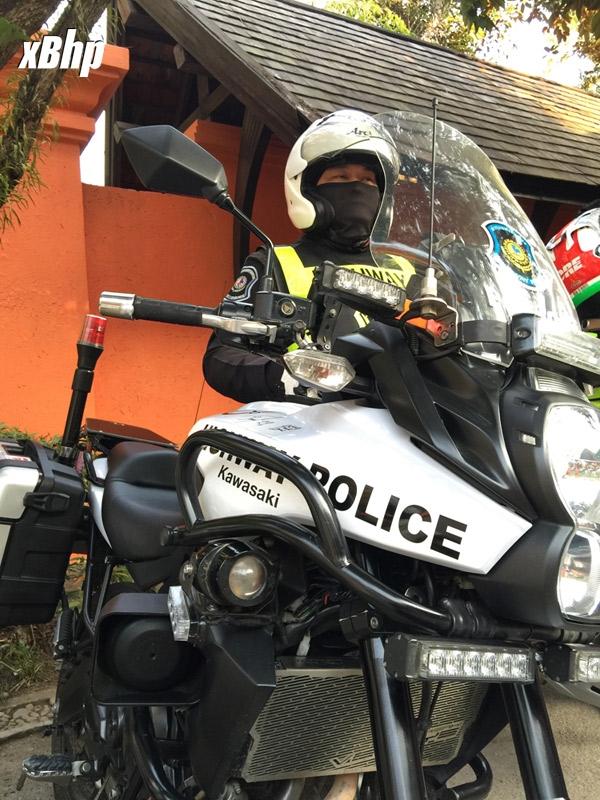
They respect the police, the men at work. Yes attitude and etiquettes, that’s why you want to do something like this in Thailand. I found it way better than the overrated European countries. Australia and NZ is a big no-no for this kind of thing, they are nanny states. USA can be a tad better, going by the number of launches being done there, but I reckon you can’t get the government support like this elsewhere; after all there are benefits of being in a Kingdom!
Hold on, one more benefit of doing this thing in Thailand – FTA. India gets things cheap from Thailand under the Free Trade Agreement, so this new Multistrada which costs 16.56 lacs (ex-showroom Delhi) would have cost north of 20 lacs if it were to be imported from Bologna – at the very least. And all spares would have been more expensive as well, and time consuming to get it shipped to here in India.
So you see, Thailand is that good!
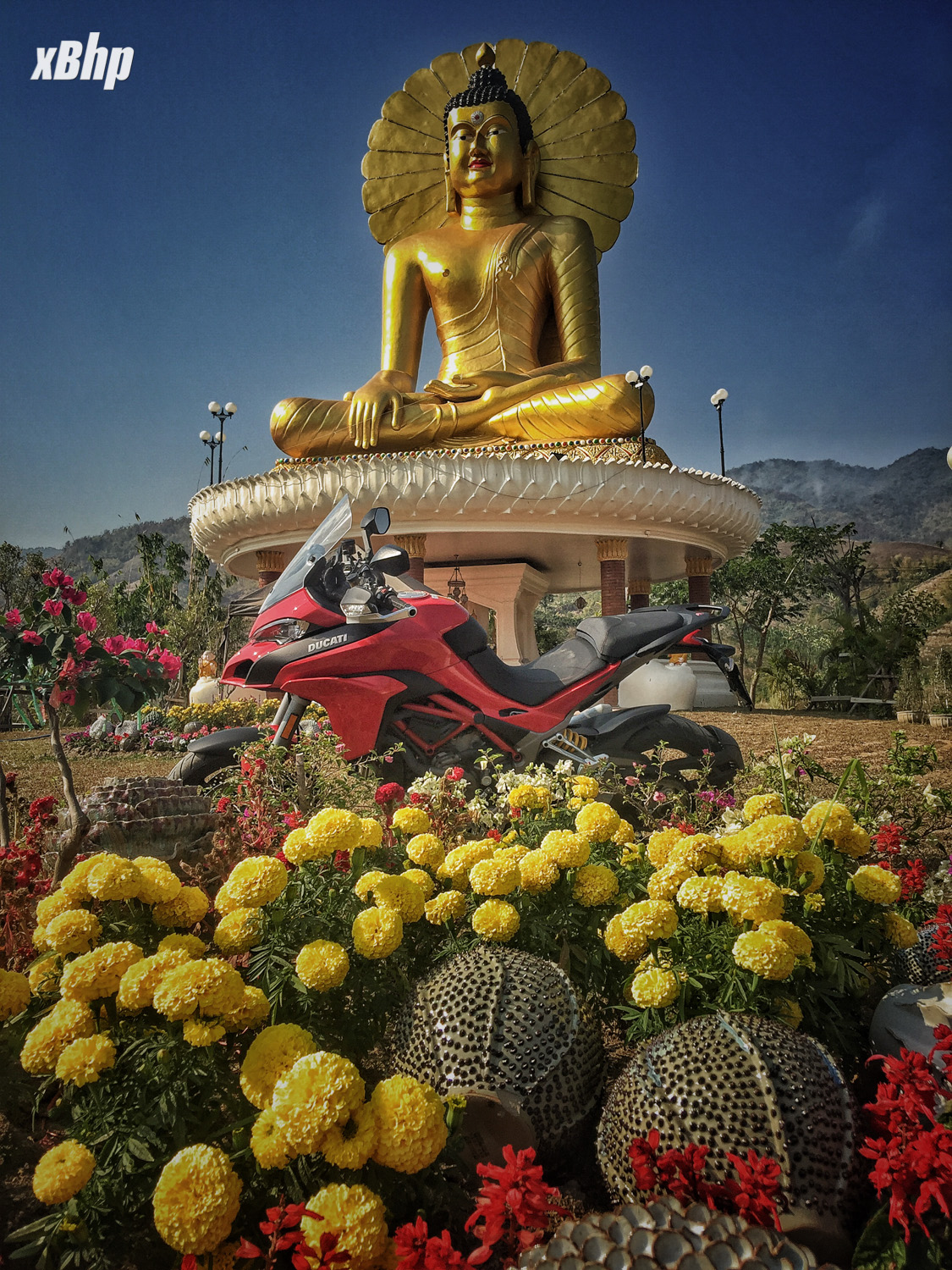
We did 300 kms in Thailand around Chiang Rai and Chaing Sen starting from Golden Triangle. Good roads and beautiful spots like these made it worthwhile for the phone camera as well.
800 words and still no word about the bike? Oh come on. You let the damn engine warm up before riding it hard, don’t you. And I gotta rant somewhere. It is too stressful for me these days.
La Bella Moto: The beautiful motorcycle and a bit of its history
Someone told me Biology is millions of years old. Laws of society are mere infants in front of it. What he probably meant to say is that it is hard to ignore a beautiful woman and for us petrol heads it is hard to ignore a beautiful motorcycle. There is no second thought about it – the Multistrada 1200S 2015 is a beautiful motorcycle worthy of being shot in the middle of the Colosseum. And very few people can challenge that, san art purists, maybe.

Let me go back a little in history of this motorcycle.
The Ducati Multistrada 1000DS, when it was initially launched, was quite a risky attempt by the Italian manufacturer with it promising to be a tourer, city and sportster bike all rolled into one. With 90 odd bhp it wasn’t going to be a tarmac scorcher, but with the upright seating position and steel trellis frame, the bike promised to be a fast comfortable tourer. And it did that with aplomb, it gave any candidate Ducatista a motorcycle on which they could tackle any kind of road, urban/ rural/ twisties. It handled like a charm. On the flipside, the bike was uncharacteristically ugly. Almost like it started off being designed by an Italian who then got kidnapped by Ducati rivals and produced this under duress. Still not sure how it passed the top management approvals though, especially with the front not living up to what one expects from the Bologna based manufacturer. Nonetheless, it built up a reputation for itself and has grown and evolved over the years to become what the latest Ducati Multistrada 1200 S is.

The biggest change to the Multistrada came in 2012, seven years since the DS was launched in 2003. And it was a giant leap and improvement in all departments.
This was the Ducati Multistrada which the world was waiting for – with a power of 150 Bhp out of a 1198CC Desmodromic V Twin. The Multistrada 1200 (or MTS 1200) underwent another improvement in 2013 with the engine getting twin-plug cylinder heads for smoother and more efficient combustion leading to a 5% increase in torque and 10% improvement in fuel consumption. It also got an active suspension system christened Sky Hook and has got 6.7 inches of travel both ends.
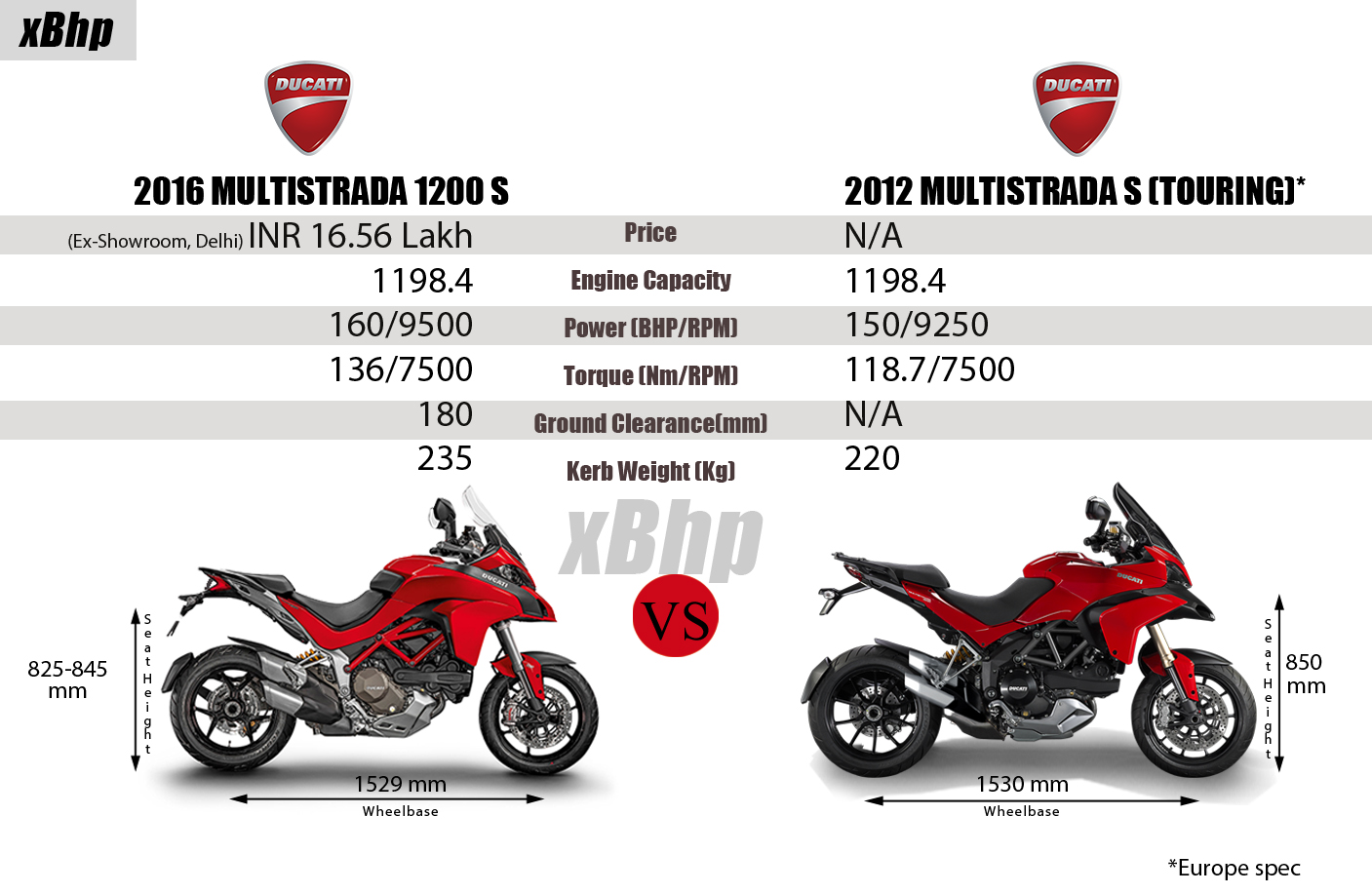
The biggest change on the new Multistrada as compared to the 2012 version is the motor that powers this bike. The Desmodromic Variable Timing (DVT) is the first variable valve timing system inside the cylinder head for a motorcycle. The bike might not look very different on the outside in comparison to the outgoing version, but the DVT is a big step up from the previous Testatretta 11 degree used in the previous iteration (2013-14). The engine has more flexibility as it gets real time adjustment of camshaft position based on load and rpm. This gives the engine a far greater range of overlap, making it much smoother than previously. The intake and exhaust camshafts are independently controlled thus providing good power at high revs, great low-end torque, low fuel consumption and as a result it meets the stringent Euro 4 regulations (and Bharat Stage IV!) comfortably.
The bike also gets a host of new electronics. The tech wizardry sets this bike apart in more ways than one. ABS is not the regular run-of-the-mill stuff, but is ‘Cornering ABS’ which senses when you are in a corner and accordingly regulates the amount of brake pressure required. ABS can be switched off, but since it is so good and unobtrusive, you will probably never feel the need to switch it off. The Bosch 9.1M1 ABS unit coupled with Brembo M50 brakes and a 20mm larger diameter rear disc, means that stopping power has improved greatly.
The Inertial Measurement Unit (IMU) is also Bosch powered, like most of the other techno-ammo. This measures the lean angle on the bike, which helps with the ABS as well as the Skyhook Semi-active suspension. The Skyhook is similar to the 2012 model, but is more evolved and rounded now. This IMU has five axes to measure roll, pitch, yaw angles, lean and rate of change, all of which help control the Skyhook and Cornering ABS. Anti-wheelie and the Traction Control system also gets all its information from the IMU. The Ducati Lights Control also uses the lean angle sensors, thus it knows in which direction the bike is headed and adjusts the headlight spread to illuminate the road in front of you. This was probably first seen in the fantastic BMW K1600 GTL in 2010 – adaptive headlights.

The Ducati Multistrada 1200S also gets a new frame and swingarm. This allows the engine to be fitted higher within the frame, increasing ground clearance, which is a boon in a motorcycle meant to tour on any sort of tarmac, especially if you want it to roll on the Spiti river beds (with a change of tyre and reinforced bottom plates).
So that’s a bit of tech rundown. But how is it to ride? Ultimately isn’t that’s what everything about. I have come to realize that it is not as objective as us ‘moto journalists’ make it out to be. It depends on a lot of factors – where you live, what kind of roads you take it out on, what’s your riding style, how do you like your engines to sound, do you like Vs or I4s and so on. And of course what style of bike you prefer and do you like them flashy, purposeful, inconspicuous (then this bike is definitely not for you, at least not in red or white!).
About The Ride
I may very well have the distinction to be the Asian who has ridden a Multistrada for the maximum number of kms so far – over 85,000 kms across 21 countries. So does that put me in a position to review this bike without any bias?
The biggest draw for me with any Ducati is its character which amalgamates the following:
- Brand Legacy
- Brand Positioning
- The Sound (yes!)
- The brotherhood, induction as a new Ducatista.
Should you one day decide to ride any Ducati across the world, or even a part of it you will understand what I mean. In my rides across countries I was treated as a part of a big family by Ducati owners, Ducati showrooms both offline and online. It is a crazy big joint family.
The Multistrada is the big daddy which symbolizes the touring spirit in Ducati with its positioning and usability, and no better bike to meet Ducatistas around the world than this mile muncher.
It comes under the Adventure bike category, right along with the Triumph Tigers and BMW Adventures of the world, yet they will never have the global camaraderie like owning a Ducati, be it even the Cucciolo, no especially if it is the Cucciolo!
So let me take you through my ride experience, as I unfolded it one by one.
The new MTS 1200S looks amazing. Solid built, top-notch quality. Nothing to say it was built in Thailand or Bologna if you judge them by these parameters. The S version is top of the line and has one of the biggest visual differentiating factors: The horizontal multiple LED light cluster gives it a fantastic futuristic look. Then my eyes start spreading out around the front. They have cleverly added a black side overlay with Ducati written on it with individual embossed letters. That looks and feels very premium. Until the 2012, the Multistrada only had a sticker on the tank.
Then I see the sharp beak, it is impossible to miss that and defines the overall look. Gives it a look which partly resembles a predator and partly a very sleek deep space probe, or at least this is how I would want my space pod that takes me to planet Mars to be. Musk, you hear me?
The Ducati 3D insignia on the front beak is a very thoughtful and tasteful addition. This could well be worthy of a front end on any superbike. It is that aggressive, yes.
Zoom back a little and the elements that make it an adventure tourer start becoming more apparent. The high and narrow wind-screen, the upright handle bars, the lower belly engine guard plate, the awesome brushed aluminum knuckle guards.

Further down the plush seat beckoned me to sit on it and ride another 10 countries. That reminds me of my 2500 odd kms trip in these very parts on the 2013 Multistrada 1200. I started from the Ducati HQ in Bangkok and rode the 1864 curves of the Mae Hong Son Loop. Here is a shot:
One of the most immediate visible changes were the use of LED in the tail lamps and the tear drop shaped end on the twin vertically stacked exhausts that now almost all Ducatis seem to be following (even with the new Panigale 959).
As I swing my legs over the bike (the seat height for my bike was in the lower setting) I can’t help but notice the giant TFT console ahead of me. Ever since 2010 the Multistrada has a Keyless FOB with a great looking key for the new edition. You just need to keep it in your pocket and use the starter button to bring the bike to life. The all color TFT console comes to life as the bike performs the usual checks. There is a lot to see on the console and sometimes in can be confusing. But Ducati has made it really easy to control most of the options using just your left thumb.

It is also quite easy to change the ride modes with just your left thumb. It is almost like playing a video game with so many buttons (ergonomically placed though). Since this is the S version, I connected my phone with the bike using the DMS (Ducati Multimedia System) and the bike to the Ducati App on my iPhone which then transmitted all my ride data to it, including lean, average and top speeds and more. I found the link to take some fiddling around with the settings on the phone (it connects via Bluetooth) and the app proved to be buggy as well. But I think it’s a great start and things will improve on this end. But it is impressive to see what bikes have become today!
The sound of the bike was good enough for me to want it to rev more. It’s meaty. The engine felt substantially smooth compared to the previous versions of the MTS, and definitely the one which I rode the most – the 2012 one. Low speed handling was good, with a good turning radius (one of the major things to see on an Adventure bike).
I would have liked the handle-bars to be a tad higher for more confidence while standing up on the pegs on those long hauls, but probably you can get that done with cheap spacers.
The power was excellent. I felt I was riding a darn superbike a few times. Absolutely phenomenal. The only thing which is probably stopping Ducati from making this a 190 bhp beat from the hell is the customer base they want to target. David James, the Marketing Head of Ducati Asia mentioned that Ducati aimed to woo the veterans in motorcycling with this bike back into the motorcycling scene. Obviously the veterans will be old and prone to, well, violently achieved high speed induced rhythmic issues in their heart (I am trying to be polite). Due to the DVT the power was pretty much available at any revs and right up to the top gear. I found the acceleration off the block to be pretty incredible with the DWC working overtime. However I still feel that Ducati needs to work a bit more on the DTC (Traction Control). I am not entirely comfortable with those power cuts if the rear loses its grip, not in such a perceivable way at least. But it is far better than the 2012 MTS which I was riding. The brakes felt absolutely fantastic and confidence inspiring; even without the added placebo of the cornering ABS it was great.
I’ll be very frank – I never changed the modes. Well I did once switch to Urban, but the loss of 60 bhp just didn’t appeal to the petrol head in me. But it’s a useful thing to have, no doubt. So much for four bikes in one.
The MTS 1200S uses Pirelli Scorpion Trail 2 tyres, which are supposed to be good general purpose dual compound tyres. I have done a lot of riding on Scorpion Trails so definitely this should have been even better. For some reason the rear was losing it in many places. I assume the issue was with the roads and the diesel spread on the tarmac due to the heavy vehicles. Obviously Pirelli knows what they are doing though.


I was watching others ride ahead of me. I did not like the way the rear indicators and number plate vibrates on roads, for practical purposes it is supposed to, but I would have loved a body integrated turn signal setup, like the Hayabusa perhaps. Another useful thing to have was the single hand adjustable mechanical wind screen. Though there is always room for improvement when wind protection is concerned, primarily due to the varying heights and sizes of the riders and their sitting stances, it did the job pretty well for a stock screen.
The bike should take you to the other side of 250 kms on one single tank (20.5 litres). It also a confortable pillion seat on which you can go from Kashmir to Kanyakumari without taxing the pillion. The suspension is also dynamically adjustable (Skyhook) but I felt it should have been more hard in the Sport settings. Maybe I could have changed using the many available parameters using just my left thumb.


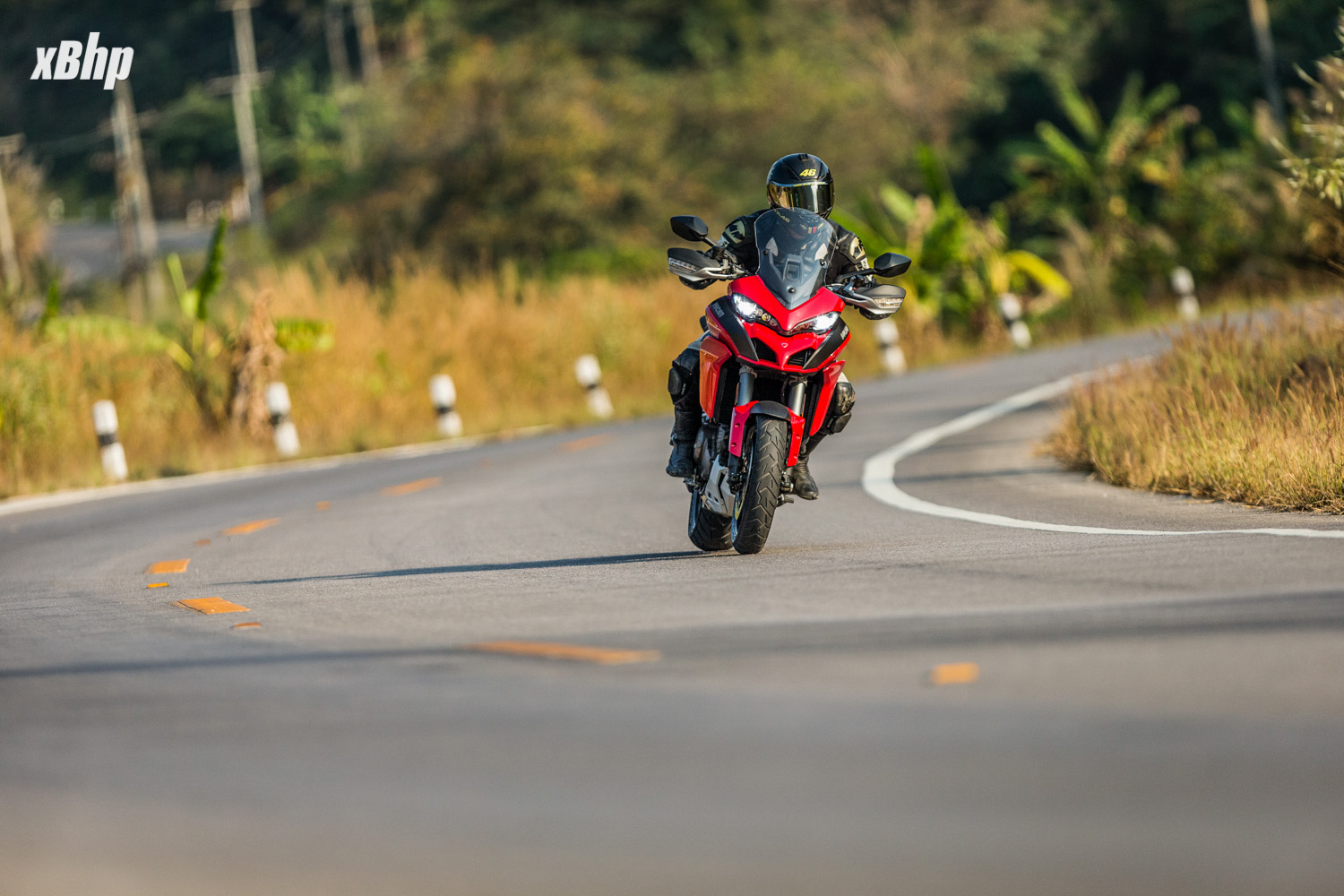


Service Backup? Truth be told – India is not an easy country to setup base in and to service high end motorcycles. They don’t get sold enough (though sales are increasing for sure!). And some of you already know what the erstwhile distributor (read : crook) did to the Ducati brand in India leaving the company hapless. Fortunately, the Ducati brand is so strong that it has more than bounced back with a subsidiary in India. And one of the largest showrooms in Delhi NCR with a good service facility it is going the right way. Do not expect spares to be available right off the block, but yes they will come sooner and cheaper thanks to Thailand route.

This is humungous Ducati service facility in Gurgaon, India. I hope they get their sales up to justify the space they have here.
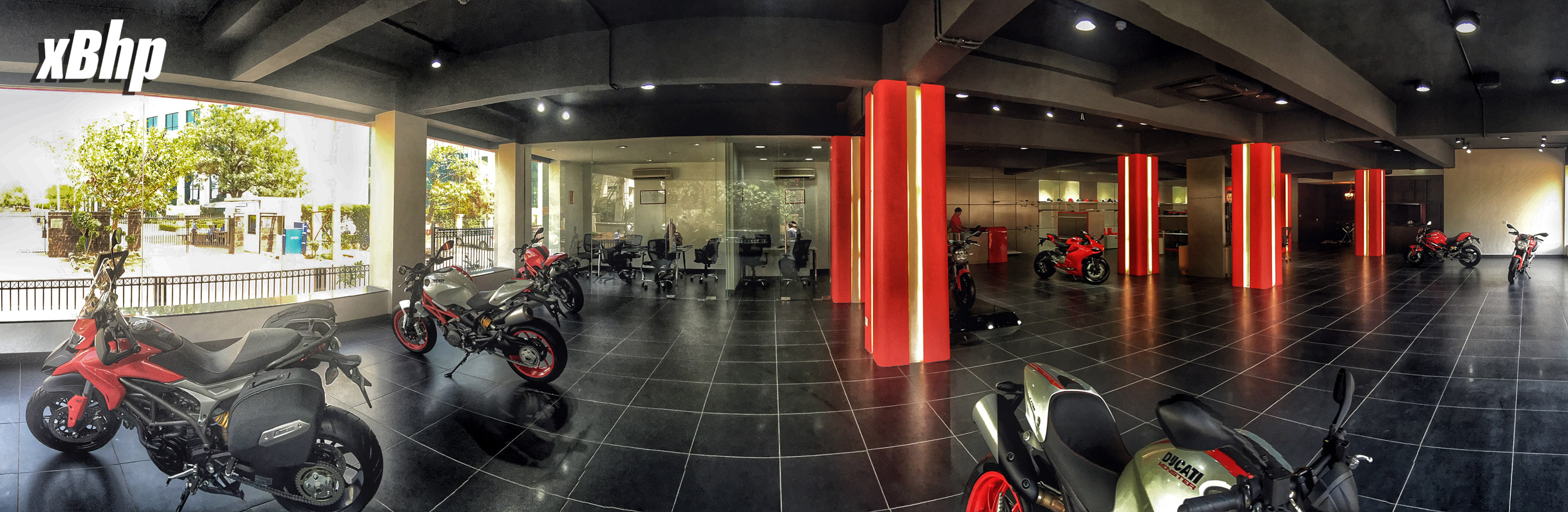
And the showroom in the same building. Not too many bikes, but getting there
Also since Pirelli has come to India with CEAT as their distributors, things are looking even more bright should you feel an immediate urge to sacrifice your tyre to the petrogods in a burnout.

Before I end, here is a quick recap of the various models of the Multistrada 1200 available today for you : Multistrada 1200, 1200 S and 1200 S D|air and two new additions will be made in 2016 to this already compelling lineup – the 1200 Enduro and Pikes Peak Edition.
The Multistrada 1200S and Multistrada 1200 actually are quite a bit different as highlighted below:
Multistrada 1200 S (and Multistrada 1200 S D|Air)
Colors
-Ducati Red (Multistrada Non S version is only available in this) with black wheels rims (1200 S and 1200 S D-Air)
-Iceberg White with black wheels rims (1200 S only)
I am particularly sad that they don’t have a more purposeful color – like the gray in the 2012 MTS 1200. This was the bike I rode around Australia, isn’t she a beauty!
 You can click here for lots more photos from my 24000 kms ride around Australia on the 2012 MTS 1200.
Features
-Ducati Testastretta DVT engine
-Bosch IMU: Inertial Measurement Unit
-Bosch-Brembo ABS 9.1ME Cornering braking system
-Front brake discs with diameter of 330 mm, Brembo M504 4-piston radial calipers (1200 S only)
-Electronic cruise control
-Ducati Multimedia System (DMS) (1200 S only)
-Riding Modes
-Ride-by-Wire Power Modes (PM)
-Ducati Wheelie Control (DWC)
-Ducati Traction Control (DTC)
-Height-adjustable seat
-Electronic Sachs suspension (front and back) with the semi-active Ducati Skyhook Suspension (DSS) Evolution system (1200 S only)
-Full LED headlamp with Ducati Cornering Lights (DCL) (1200 S only)
-Instrument panel with 5” full colour TFT screen(1200 S only)(Non S version features only a simple LCD console)
-D-Air® system (Multistrada 1200 S D-Air only). What is D-Air?
There are various packs available for the MTS 1200 as well (I am not sure how much extra is for each pack, or its availability in India):
Touring Pack :

Enduro Pack:

Urban Pack :

So, will it go to Ladakh? For sure! Just add the right tyres! We took the 2012 Multistrada 1200 to Spiti Valley and the then World’s Highest Motorable Village, but with the wrong tyres, the bike performed flawlessly, but the rear tyre got insane amount of punctures! Here is a video:
Will it go from Delhi to Thailand? Hell yes, again the right tyres and preparations matter. Will it just go the grocery store? Yes, just get the panniers…
Comparos
With the Yamaha Super Tenere

With the Triumph Tiger Explorer 1200XC
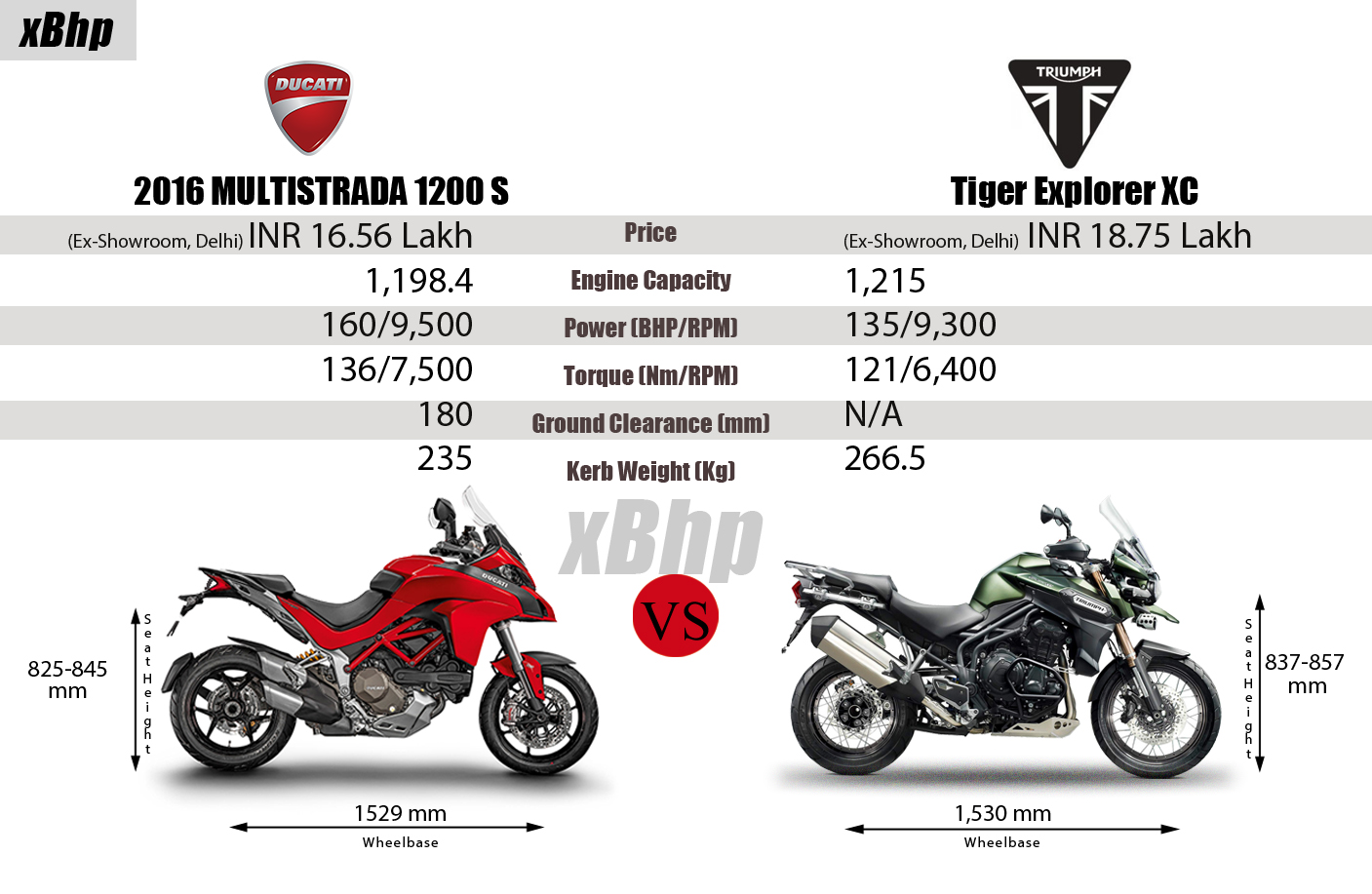
With the Suzuki V-Strom 1000

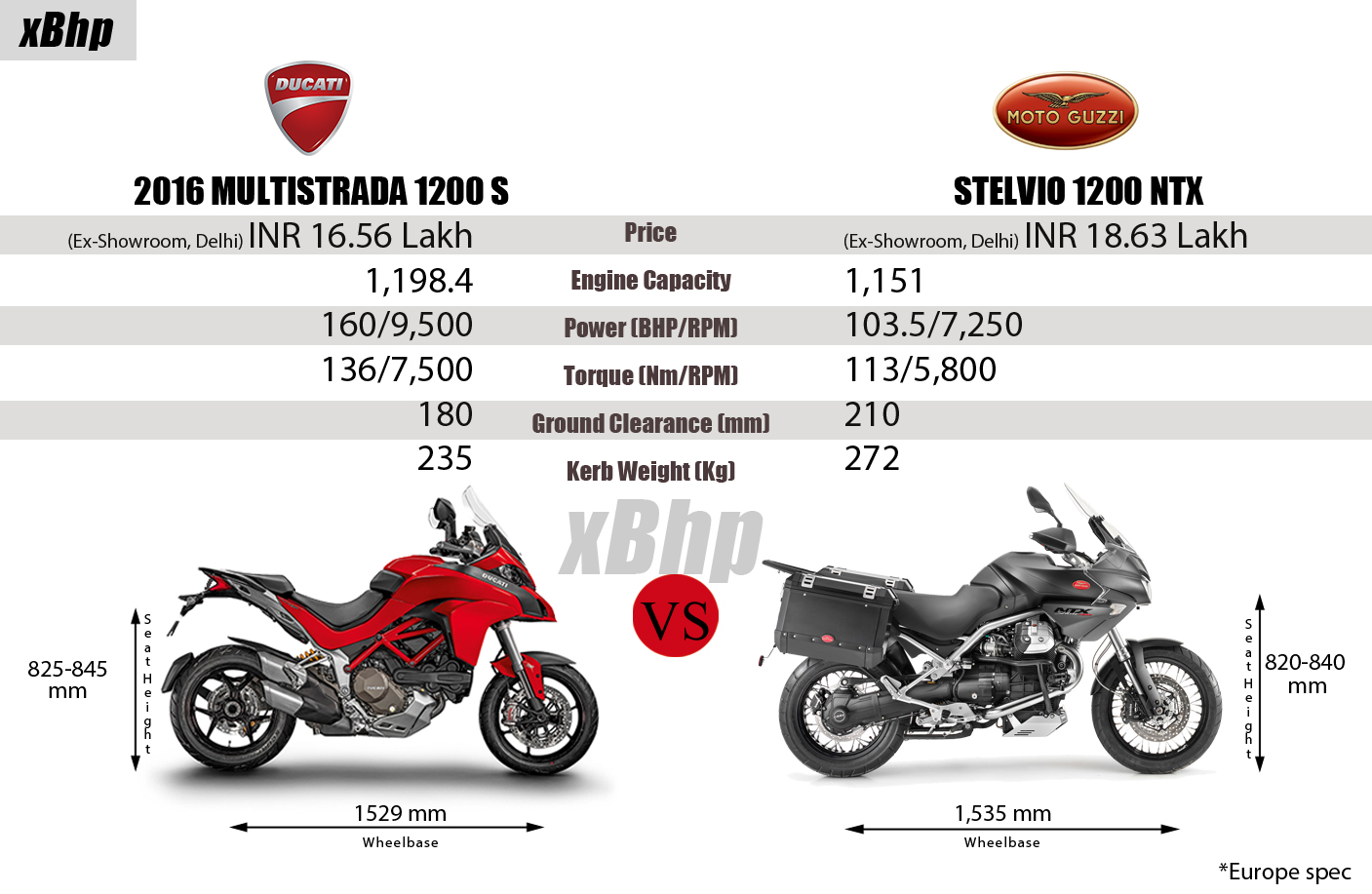
With the Moto Guzzi Stevio 1200NTX
With the KTM 1290 Super Adventure

Here is a comparison with a bike which is 10 lacs cheaper than the MTS 1200S, compare what you are getting with the BMW S1000XR which 10 lacs more than the MTS!


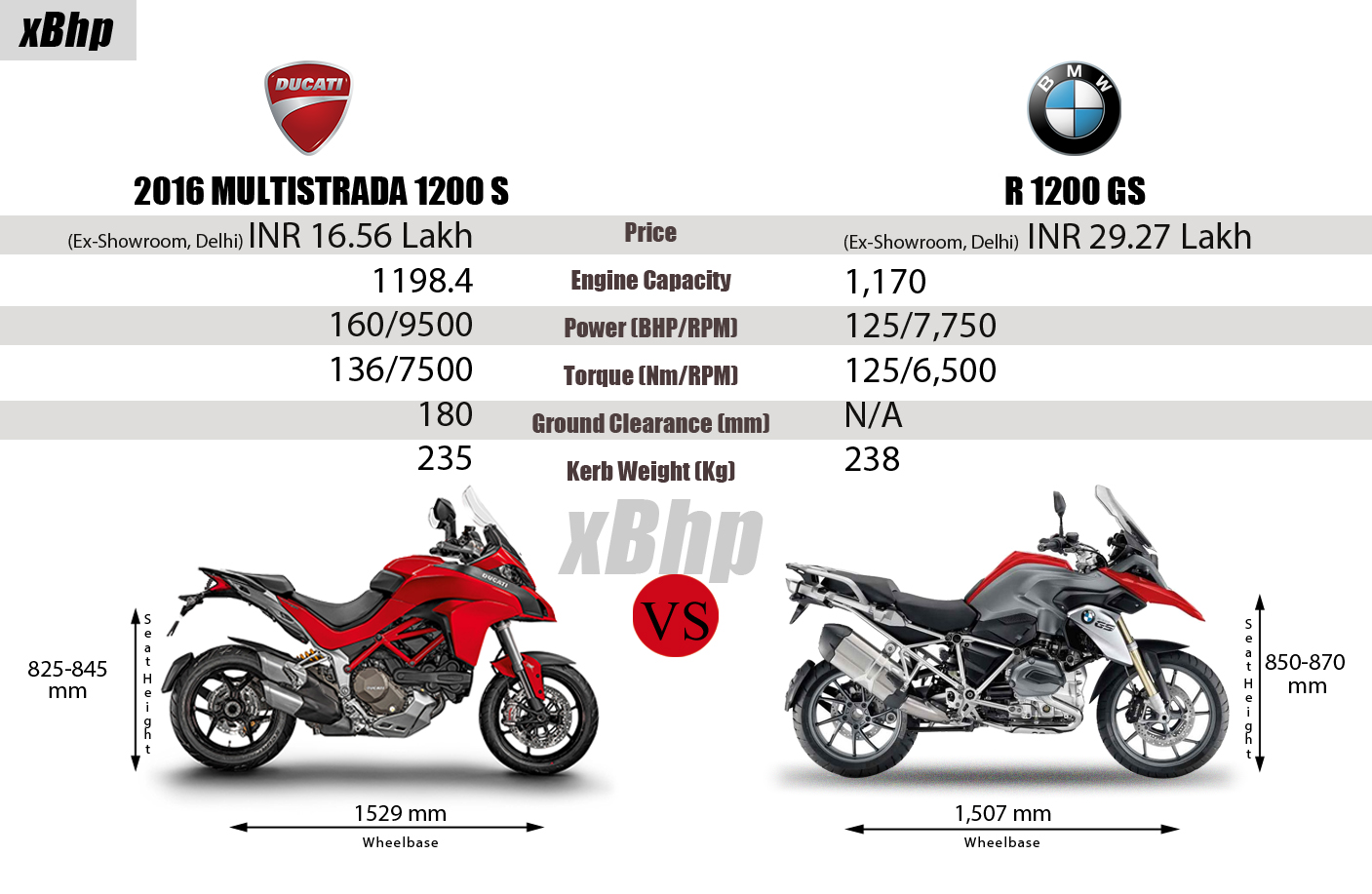
With the BMW R1200GS
With the Benelli Trek Amazonas 1130

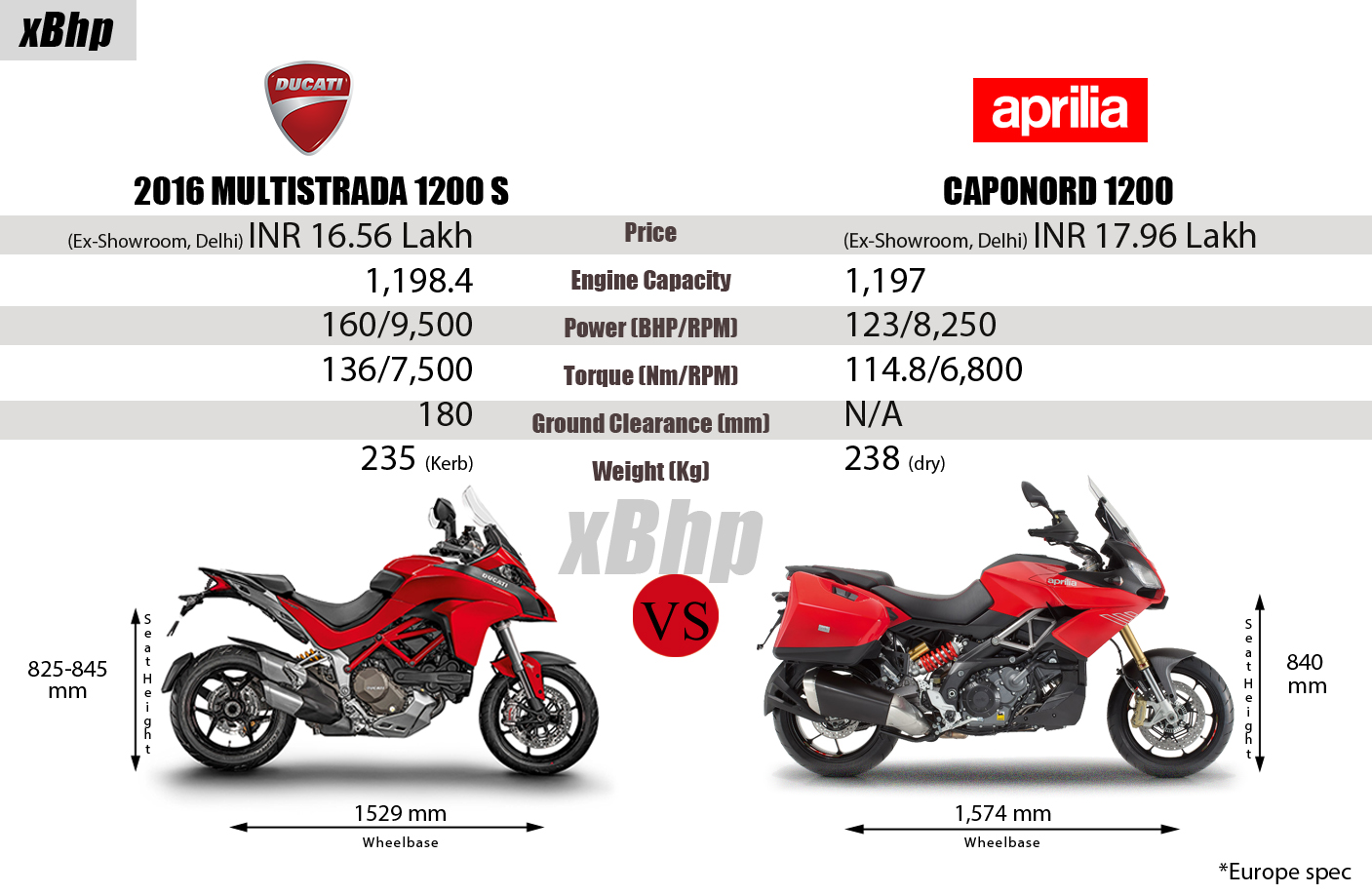
With the Aprilia Caponord 1200
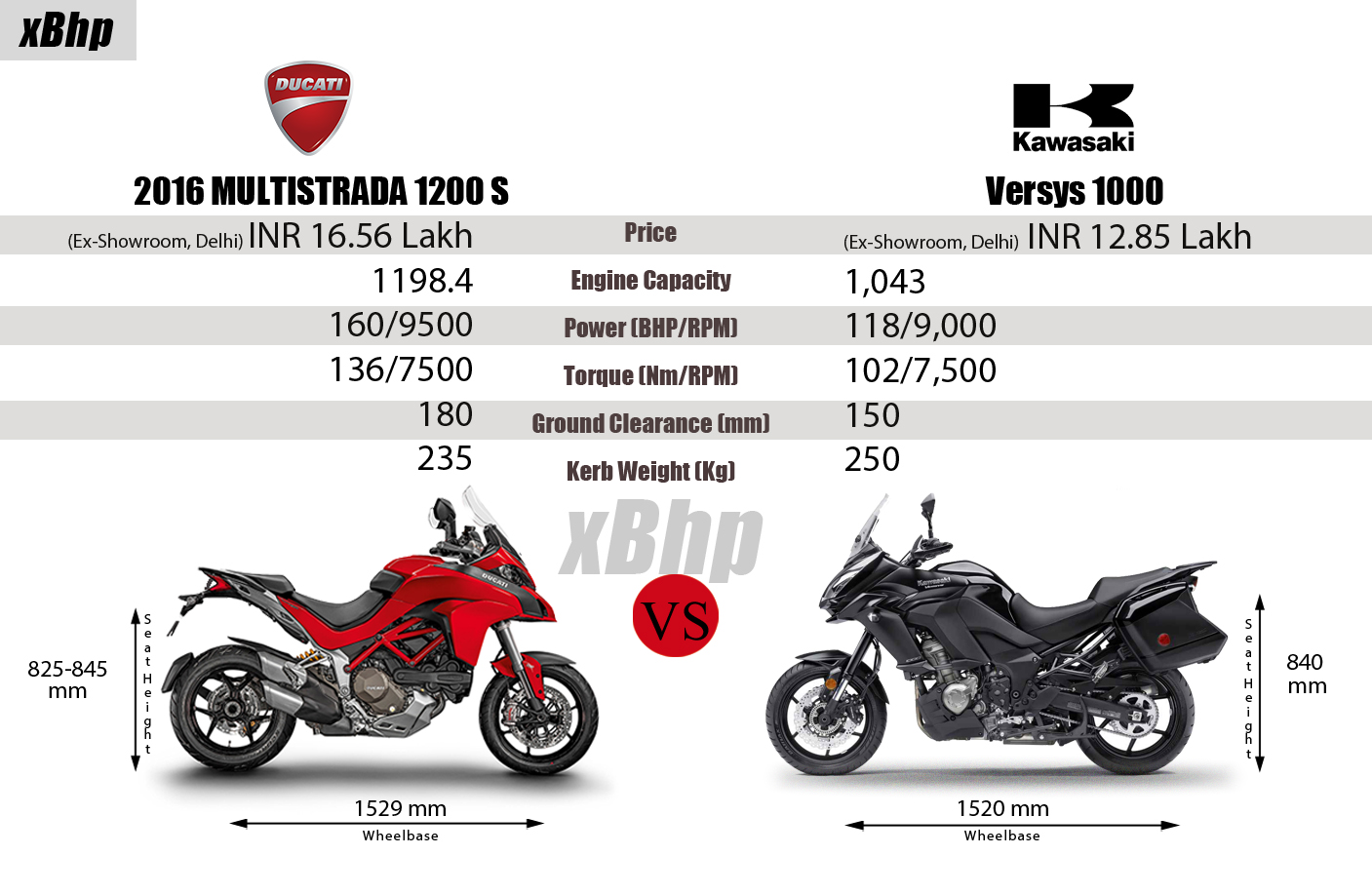
With the Kawasaki Versys 1000

Harley-Davidson Sportster 1200 Custom
 Feb 2016 Sunil Gupta
Bikes,Harley Davidson,Motorcycles
Feb 2016 Sunil Gupta
Bikes,Harley Davidson,MotorcyclesWe were recently invited to a part of a ‘treasure hunt’ ride by Harley Davidson India. Working in a group of four (yours truly and 3 others from different publications), we had to solve a puzzle and make sense of a set of clues given by the folks at HD India to reach a destination somewhere near Jaisalmer, some 300 km from our starting point in Jodhpur. And to cover those 300 km, we had a variety of bikes available from their Indian stable. Cracking the clues, we reached our destination a little past sunset to join two other teams of auto journos who were already there.

The final set of clues gave revealed our final destination for the day!
The treasure ultimately hunted out was the new Sportster 1200 Custom that was launched on that evening against the grand backdrop of the Suryagarh Palace Hotel. The 1200 Custom joins the Sportster range in the Harley Davidson India family where it will sell alongside the Iron 883 and the oh-so-gorgeous Forty-Eight. The other member of the Sporster range, the SuperLow which also happened to be the most affordable HD after the Street 750, was discontinued recently.

Vikram Pawah, Managing Director, Harley-Davidson India on the 1200 Custom during the launch
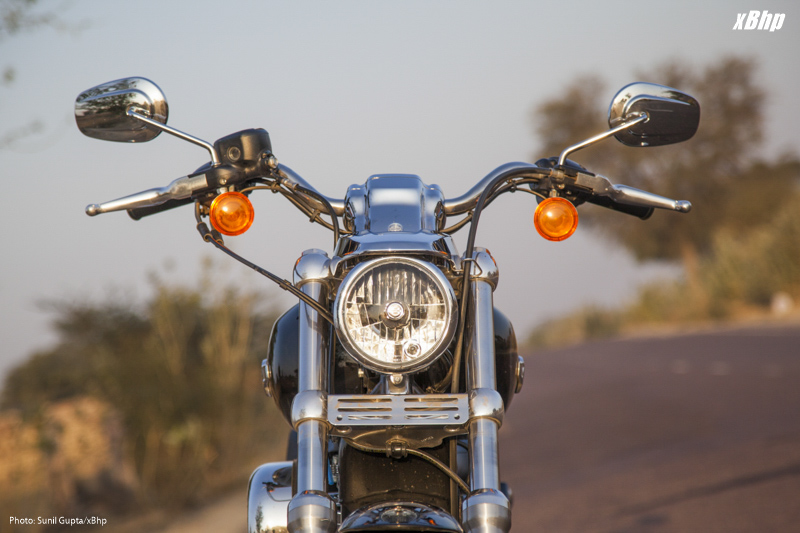
The new Harley Davidson Sportster 1200 Custom will come to India via the CKD route to be assembled at their Bawal Plant and is priced at INR 8.9 lakh ex-showroom Delhi, which puts it 50K below the Forty-Eight and 1.5 lakh above the Iron 883. What you get for the 8.9 lakh rupees is classic cruiser styling with a round headlamp, low seat, slightly raised handlebar, and tons of chrome. Other goodies on offer are the tastefully designed 5-spoke alloy wheels, which have a steel coating on them. Also adding to the visual bulk of the bike is the biggish teardrop shaped tank. Visually the most distinct feature of the 1200 Custom is its fat front end, which primarily comes from the Michelin Scorcher rubber with a roundish profile. The saddle looks spacious enough to accommodate even the biggest of bottoms without much fuss, though we cannot say the same about the pillion seat which is comfortable but wide enough and requires a pillion backrest if you don’t want to see your pillion falling off of the bike in case of sudden acceleration! The instrument cluster is a round shaped one, which houses an analogue speedometer along with a small digital window that displays gear position, clock, distance-to-empty, tachometer and trip meter in digital format. The switch gear assembly on either side of the handlebar is the familiar Harley one, which uses top quality plastic and has a good solid feel to it. The overall fit and finish leaves nothing to worry about.


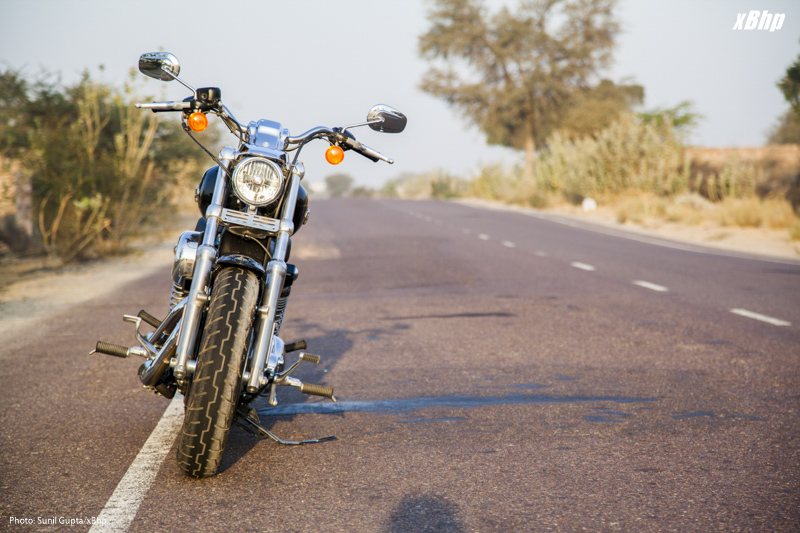

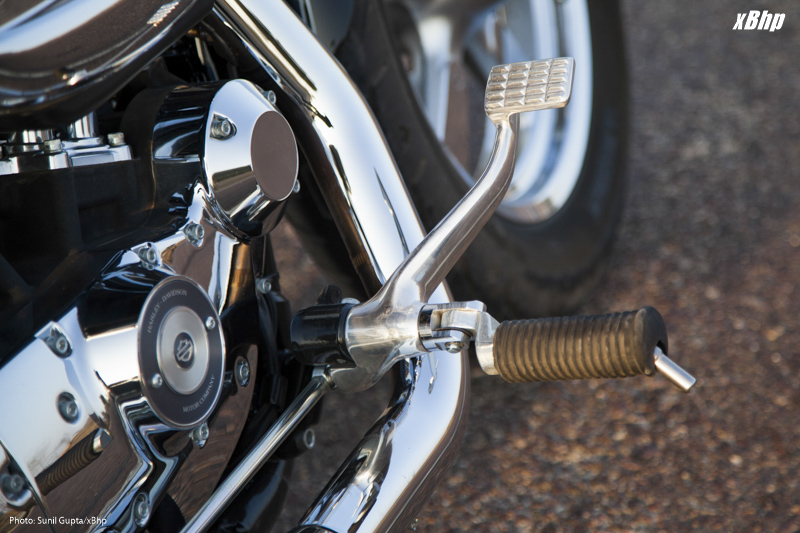
Powering this latest Harley in the country is the 1200cc, air-cooled, V-Twin Evolution engine, which makes a healthy 96 Nm of torque at 3500 rpm. This is mated to a 5-speed gearbox that transmits the power to the rear wheel via a belt drive. The bhp figures, as customary with cruisers, were not disclosed by Harley Davidson. There is generous amount of chrome sprinkled over the engine covers as well. The same engine also powers the Harley-Davidson Forty Eight. Thumb the starter and the engine comes to life vividly with a sweet rumbling exhaust note as it settles to idling.


Photo: Harley Davidson India
You realize the compactness of the 1200 Custom as soon as you sit on it. No, it doesn’t feel tiny but also doesn’t intimidate the rider with its bulk either. The low seat height also adds to the rider confidence. The rider sits with his/ her leg positioned comfortably on the forward set foot pegs and the hands on the slightly raised handlebars. And as soon as get used to the bike you realize how nimble it is. The 268 kg of mass moves ahead smoothly with a gentle twist of the wrist and you realize soon enough how much fun it is have 96 Nm of torque that is available at just around 3500 rpm. You get a meaty low and mid-range. Getting in the triple digit speed range was effortless where it felt firmly planted and seemed to be capable of cruising at around 120 kmph mark the whole day without any visible stress to the engine at all. You do feel some vibrations, but not enough that you can’t live with. The narrow roads of Rajasthan with a generous sprinkle of desert dust held us back from trying to test the top whack. The suspension setup felt a little on the stiffer side and negotiating big bumps and potholes was an event in itself. The smaller ones were dispatched with utter ease though.


The brakes felt adequate and had a nice and reassuring bite to them. Sadly, there is no ABS option as of now but will soon be introduced on the 1200 Custom as per the folks at Harley Davidson.

So if you are out in the market with around 9 Lakh rupees in your pocket and are looking for a nice mid-range cruiser, take a test ride of the new Harley Davidson Sportster 1200 Custom. We do believe that the chances of that test ride converting into a purchase decision would be quite high if you keep your expectations realistic. What you get for those 9 lakh rupees is a bike that is compact, yet has good presence on the road. It is planted at high speed straight line runs and feels agile and nimble to tackle city traffic with relative ease. It has that big bike feel to it, yet it doesn’t intimidate you. The saddle is comfortable and spacious. The overall ride quality is good. Though the ground clearance of just 105 mm and the lack of ABS do take some shine off of the deal.





TVS Apache RTR 200 4V Review: Conquistador Conqueror!
 Jan 2016 Sunil Gupta
Bikes,Motorcycles,TVS
Jan 2016 Sunil Gupta
Bikes,Motorcycles,TVSSo the much awaited TVS Apache RTR 200 4V is finally out in the open. It’s been launched at Rs 88990/- Ex-Showroom Delhi. Was the wait and anticipation worth it? Is the bike right up there amongst the exclusives? Does it disappoint or delight the modern Indian motorcyclist? Time to get up and close with the new Apache. We were given the opportunity to spend a couple of hours with the bike at TVS’ Hosur test track and even though so short a time is not all that much to thoroughly get to know the bike. But the fact that the track allowed a pretty free hand at riding (or thrashing – whatever you prefer) the bike and the ready availability of TVS’ entire technical team ready with answers to curious queries meant we could get a fair idea of the bike on the whole.
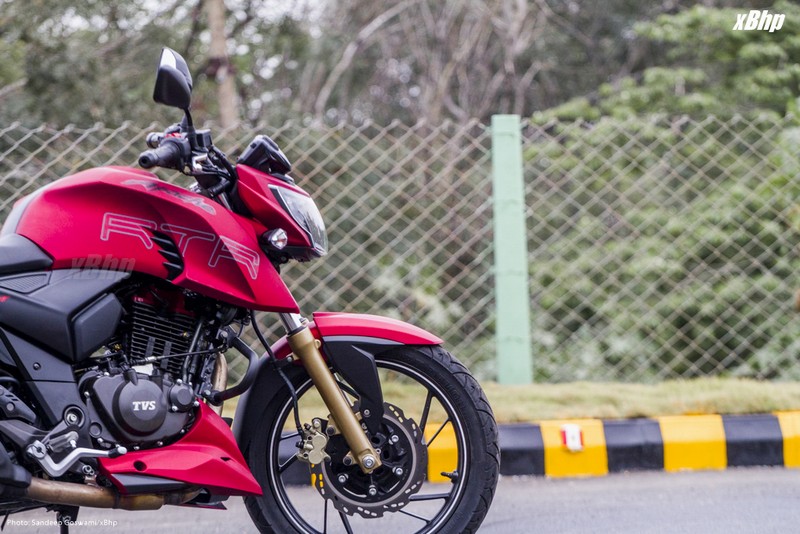
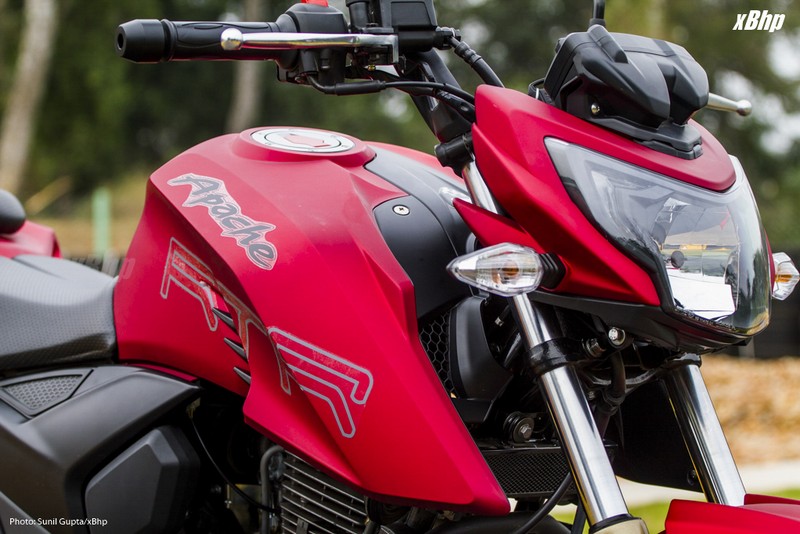
That the Apache RTR 200 looks smashing was the general consensus between a gaggle of auto-journos who, by default, don’t agree with each other often. Of the four colours displayed with élan right outside the R&D Study Center, the gold yellow won hands down as the universal favourite. It was followed closely by the white and the red. The black was left in the wake not because it is not a good looker but in a mercilessly comparative world, it lost vital marks to the chutzpah, glitz and glamour of the other colours. The bike is visually right there in proportion and stance. And even though bikes with engines making 20+ bhp (cause it eventually is all about power – ain’t it?) are considered ordinary these days, this one steps right beyond the reach of ordinariness just on its looks alone. The matt paint finish is great (though we wonder how will they cover the decals with a coat or hardener while avoiding the gloss that accompanies it), the instrument console more than comprehensive, the switchgear right up there in touch, feel and quality, the seat and the bike comes with all practical bits (main stand, grab rail, acceptable pillion seat, half chain cover et al) in place. The aggressive street fighter stance and the sharp yet flowing contours of the bike make it look fetching.

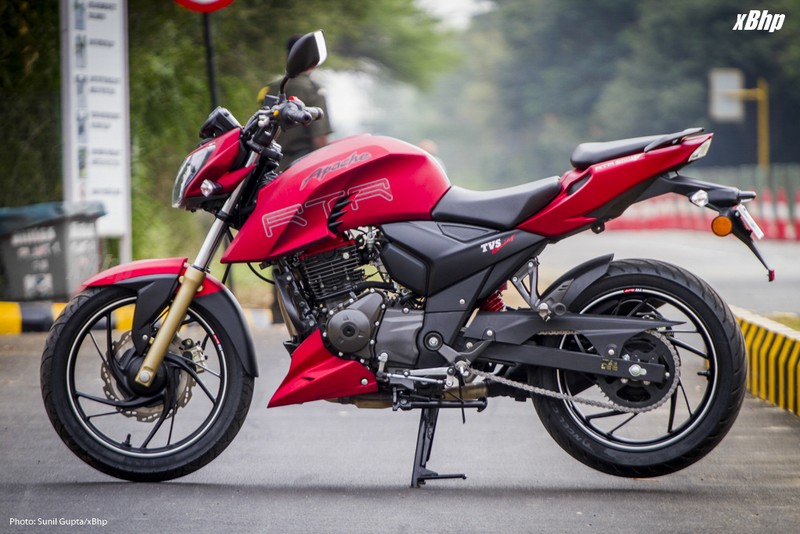

The TVS design team led by their quietly capable New Product Development Head Mr. Vinay Harne worked to a theme unabashedly biased towards user-friendliness of a performance bike rather than chasing outright performance alone. Makes sense as a wider market base would find a bike like this acceptable – the target customer would include both those aspiring for performance as well as those who are more inclined to usability than dramatic power. The engine specs as well as the entire setup of the bike reflects this design philosophy and so has resulted in a pretty well-rounded package in the new RTR 200. The 200cc 4-valve SOHC oil-cooled engine puts out some 20.5 bhp @ 8500 and wrings out a peak torque of 18.4Nm @ 7000 rpm. Nothing dramatic here but not incapable of exciting performance either. A lot of work on the engine has been done in the areas of reducing NVH (Noise Vibration Harshness), improving thermal efficiency through better thermal stability in the engine (the oil cooler for example), improving mechanical efficiency through reducing friction and part inertia, tuning the engine for a wider fatter torque curve through (unusual for 4-strokes) a tuned exhaust, meeting emission standards of the future via a 2-stage catalytic converter (there’s a TVS patent pending on this cat con design), attention to the exhaust note via a thorough acoustic study and then some more.
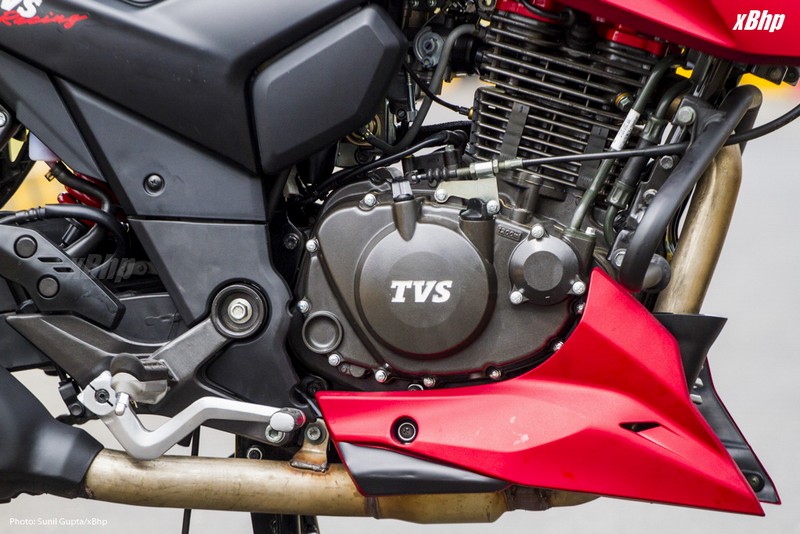


The silent timing chain

Wet multi plate clutch, the primary drive pinion and the oil filter

Engine cut away

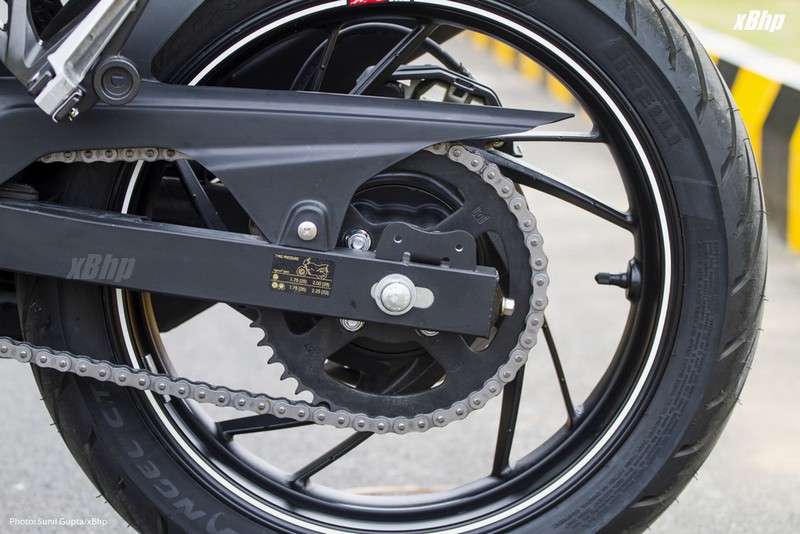
Final drive sprocket

The FI system
The Apache RTR 200 comes 4V in two different fuel feed versions – the CV carburettor equipped and the Fuel Injected, the latter of course provides better perceived performance mainly due to the excellent control fuel injection allows over combustion. The FI is a closed-loop system with a Lambda sensor that makes the system independent of weather, fuel quality (to a limited extent) and altitude variations. The CV carb version of course will cost less but is no slouch with a quick right wrist. The Apache even comes with a tuned exhaust pipe and a dual catalytic converter that allows it to meet emission standards that shall come into force some 2 years from now. The engine internals come with a Nano particle coating that reduces harsh wear and tear especially during the running in period of the engine.
Over to the ride experience. That the bike is ergonomically spot on for a variety of riders was obvious by the way other reviewers straddled it with ease and rode away in the first instance as if they’d been riding the bike for quite some time. The handlebar (sorry – clipons actually) seat – footpeg relationship makes this one a natural for most of us. And TVS has again got the seat right, both in terms of placement and comfort. Even the pillion seat is a seat and not a perch as is sadly becoming the norm these days. The very comprehensive fully digital instrument console comes to life as you switch on the ignition, goes through a complete self test and cheekily displays ‘Race On’ for you! The self start button fires the engine and it thrums to life with a growl. This one sounds good – better than almost every other 200cc offering, of course with the exception of the Benellis who seem to have mastered bike engine acoustics!
The wet multi-plate clutch is light and gear shifts slick. The bike pulls well right from low rpms and accelerates well through the gears. The three lower gears seem a trifle short in ratios while the top two (4th and 5th) felt tall enough for being usable over a wide rpm range. The strong torque right from close to idling rpm seems to be the bike’s forte and it shows an eagerness to get moving and gather speed. Acceleration is good for its power and the difference lies in the exceptional smoothness of the engine right till its 10000 rpm redline. Pull through the gears and the bike accelerates well till about 90 kph whereon the briskness fades away and inertia begins to gradually take over. The carburetted version tops out at an indicated 117-118 kph as was the general consensus at the track while the FI one could go up to some 123 kph or so. Nothing dramatic here too but within the 50 – 90 kph band where most of these bikes will live, this one will thrive.


A stiff chassis with the engine as a stressed member, conventional geometry and excellent rubber (our track bikes came shod with excellent Pirellis which will be offered as an option with the bike) made for a sweet handling bike that did not hold any remotely nasty surprise up its sleeve. It handled in a very consistent and predictable manner irrespective of the speed the rider was doing. Flickability was great and it came without an iota of compromise on the stability front. Brakes too were great, the front disc giving good feedback and progressiveness in response. Of course the excellent tyres were also partly responsible for this.
The switchgear felt good and functioned with definite clicks, the overall fit and finish was right up there with the best, the lights are bright and the headlamp beam intensity and spread has been worked on quite a bit and is claimed to be the best in class – of course it being a bright sunny day we couldn’t verify the claim but we will in a more comprehensive road test sometime later. All said and done the new Apache RTR 200 4V is a pretty balanced offering into a market that of late appears more inclined to excitement than utility. We do hope this becomes a trend setter in that context and gets utility back into the ambit of performance motorcycling once more. Disappointment or delight – take your pick. To those who were looking for some 10 more bhps from this 200cc engine – disappointment. To those who see a motorcycle as a tool – there’s loads of delight.


TVS Apache RTR200 4V Review Technical Specifications






TVS Apache RTR200 4V Review and Spec Comparison with the competition!



Benelli TNT25 Review – The Italian Quarter
 Jan 2016 Sunil Gupta
Benelli,Bikes,Motorcycles
Jan 2016 Sunil Gupta
Benelli,Bikes,MotorcyclesEver since the DSK Motowheels group brought the iconic brand Benelli to Indian shores a little over a year ago, the brand has seen considerable growth thanks to its competitive pricing and the value for money tag apart from other goodies that the DSK-Benelli bikes offer. Apart from these, it has also caught the fancy of the motorcycle aficionados in the country is the poser value (read radical design) and/or the aural pleasure that they get when they go for a Benelli. And there is one Benelli available for every pocket, starting from the TNT 300 to a litre class TNT-R, and in between you have the inline four 600s and an alien looking 899. Buoyed by the response they got, the folks at DSK-Benelli recently brought the TNT25, a single cylinder 250cc machine, to make further inroads in the Indian market. The pocket friendly Benelli TNT25 was launched evidently to reach out to a bigger pie of Indian audience and to give some volume to their sales. We were there at the launch of the baby Benelli in Pune and were really impressed with the overall package that was offered. What remained was a road test to actually see how the bike performs and we got to do that last weekend when we got the bike for a couple of days to ride in and around Delhi. Here’s what we could make out of our date with the Benelli TNT25.
Styling
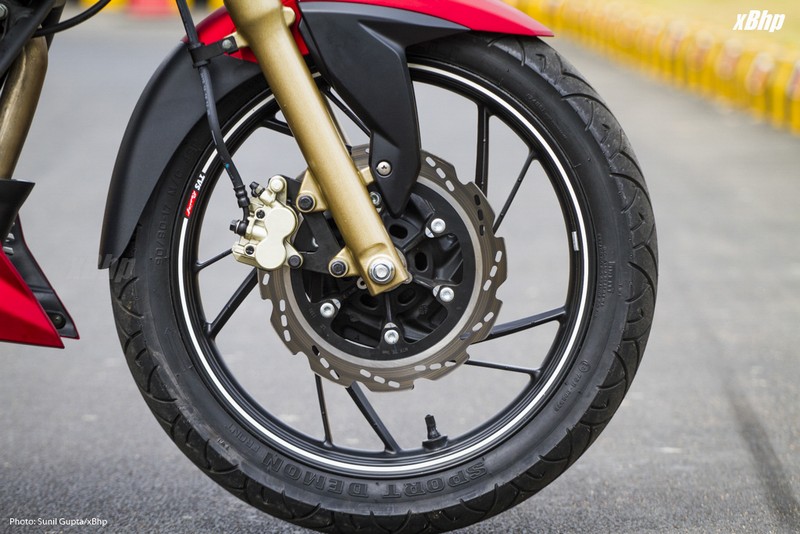
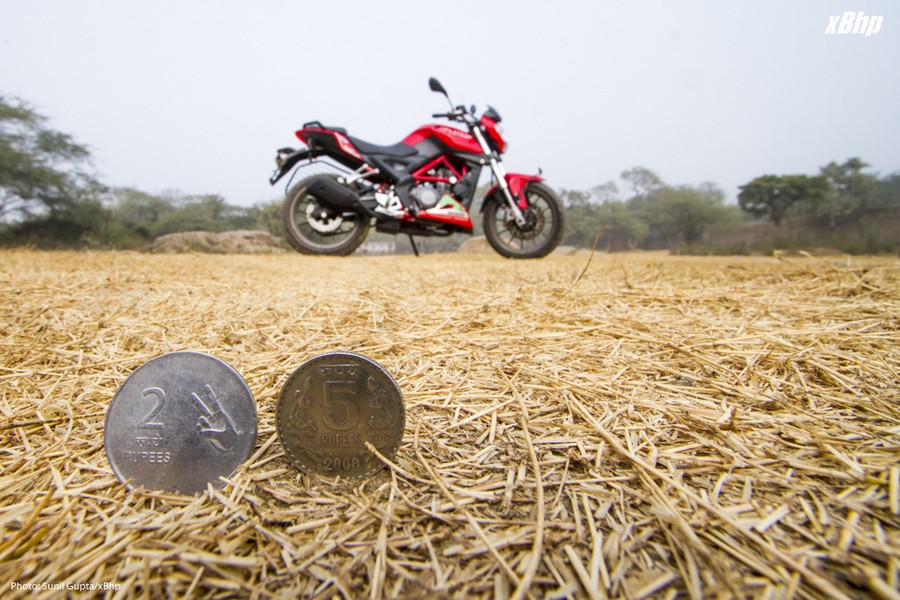
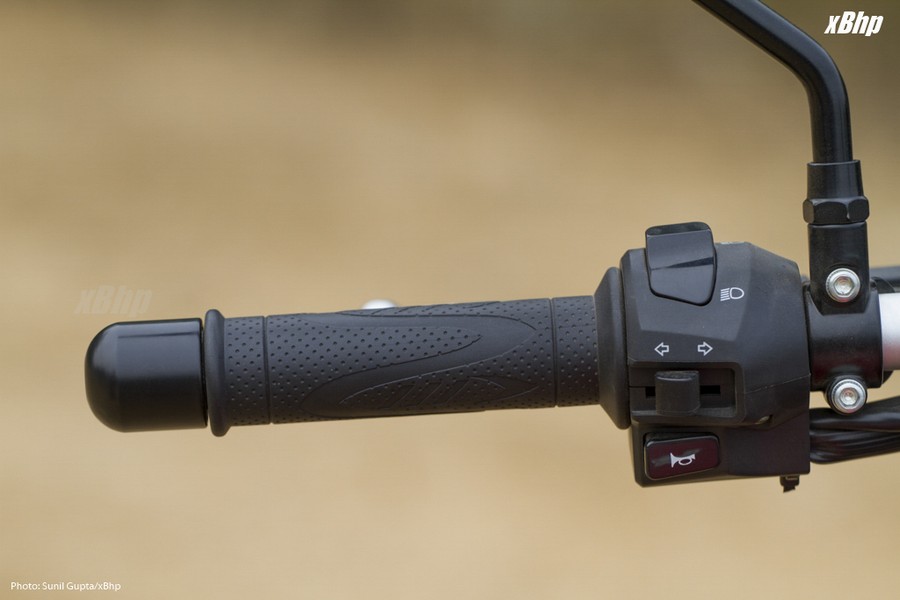
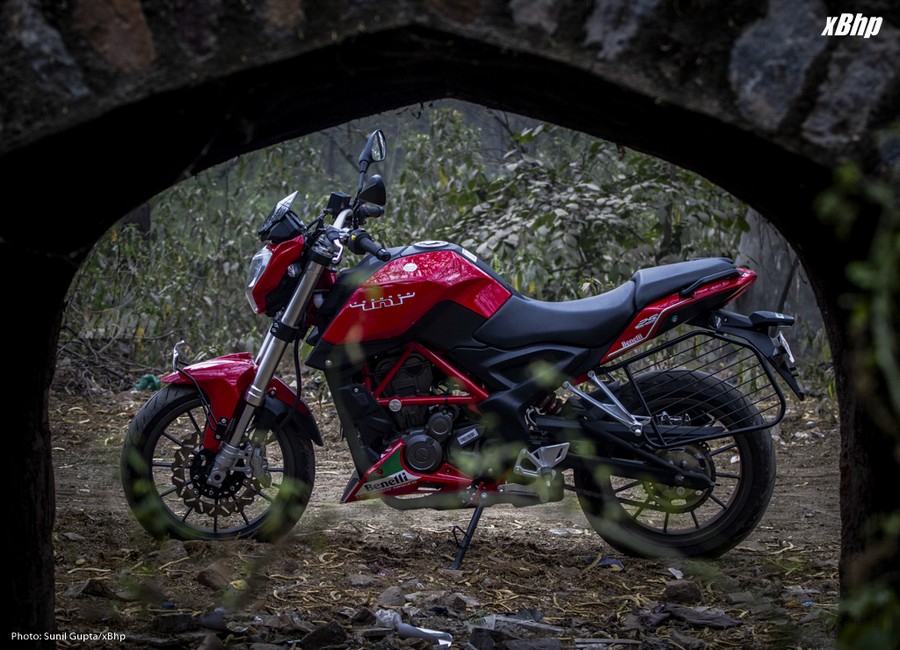
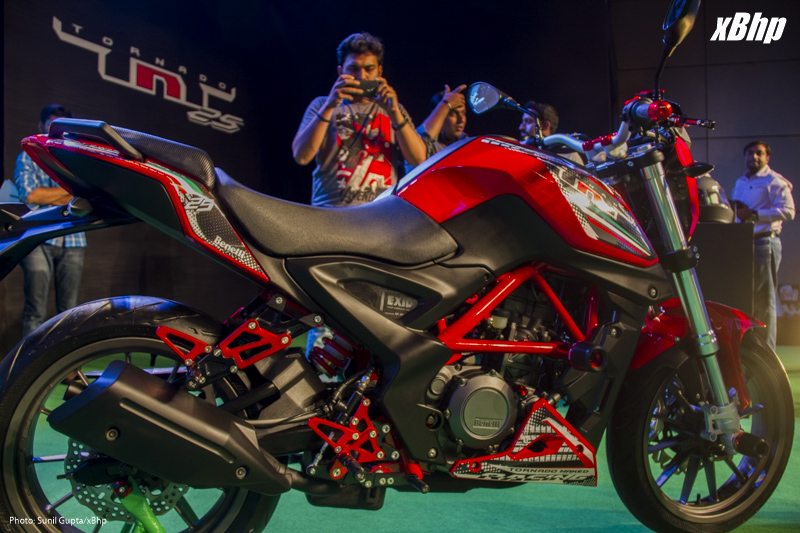
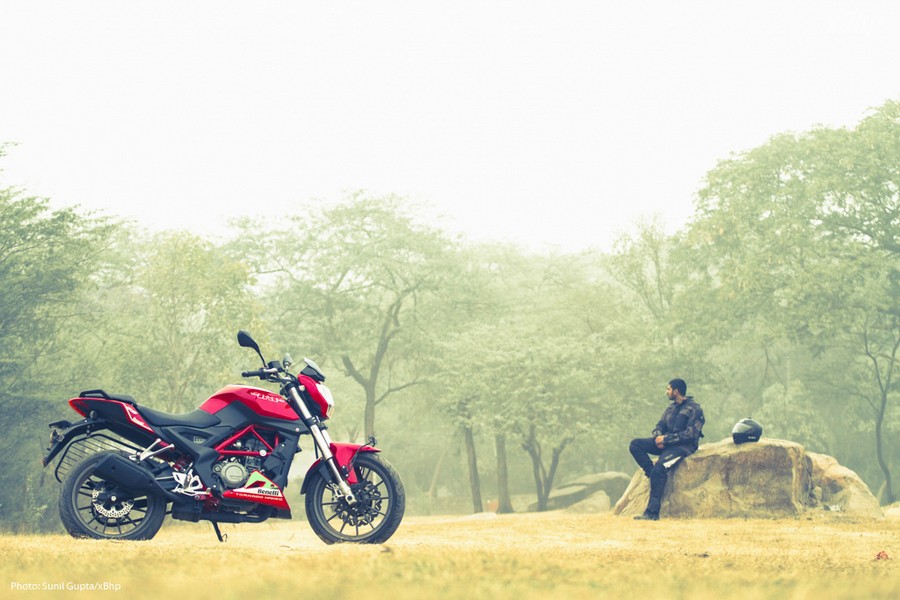
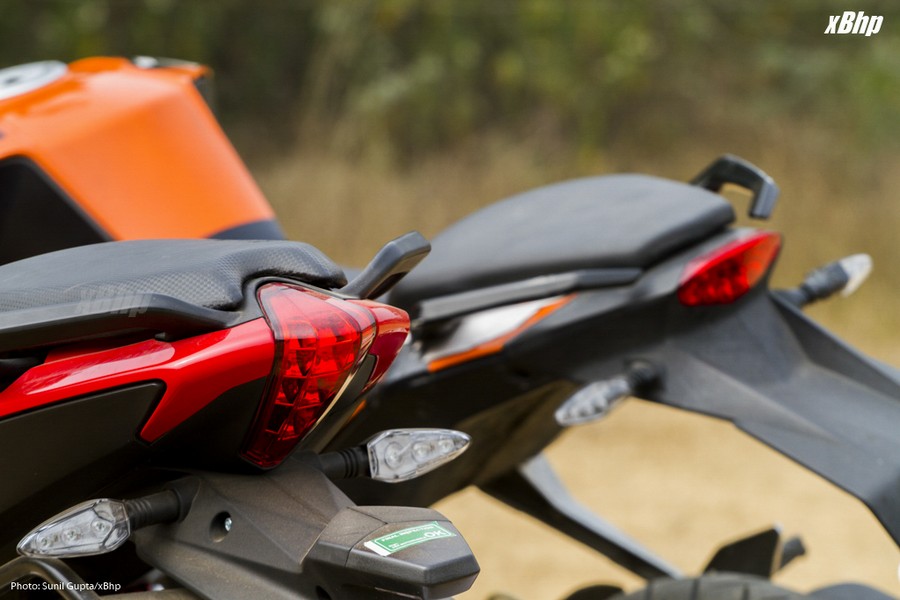
Overall, the Benelli TNT25 offers mean and muscular streetfighter looks that are minimalist in nature. The bike get a large portion of its muscular character from a tastefully designed tank with 17 Liter fuel capacity that has a black tank pad/ plastic tank lining running all the way from the beginning of the tank to the edge of the rider seat. The engine is held together by a trellis frame that also adds to the visual appeal of the bike. The headlight has a tiny wind screen on top and looks similar to its elder sibling, the Benelli TNT300. Apart from the red, white, and green stripes on the underbelly hood and on the tail portion that add an Italian flavour to its styling, the TNT25 sports minimal graphics on the tank and elsewhere on its body. The digital + analogue console doesn’t offer anything fancy except for a gear indicator; however, it has all the necessary information that you’d need during your rides, like the speedometer, tachometer, 2 trip meters, digital fuel gauge, and a digital clock as well. The grips are comfy and plastic on the switchgear is of good quality as well. The rear view mirrors do their job without hiding too much from the rider’s field of vision. Other goodies on the bike include LED tail light and the turn indicators. The material on the seat has been given a carbon fiber type finish. The paint quality and the overall fit and finish is very upmarket.




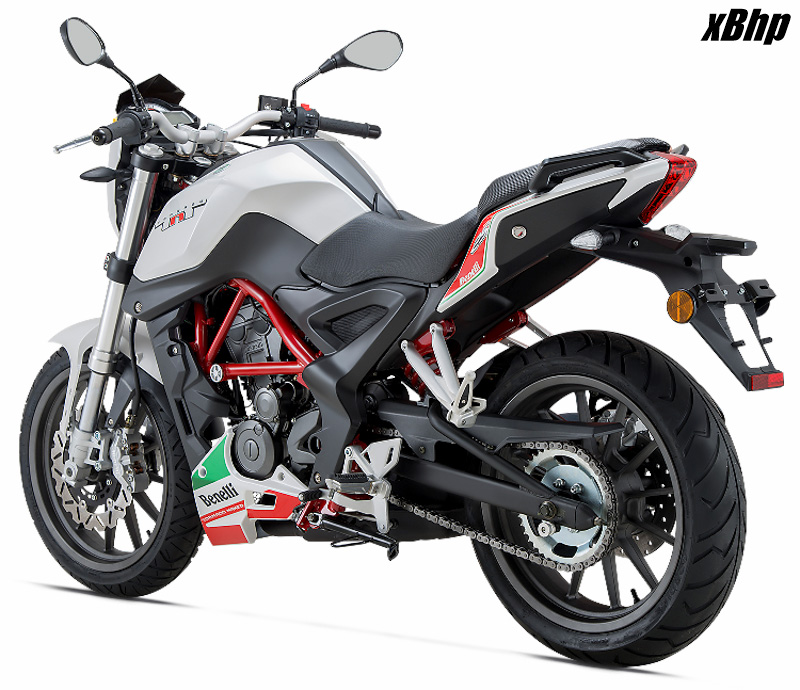
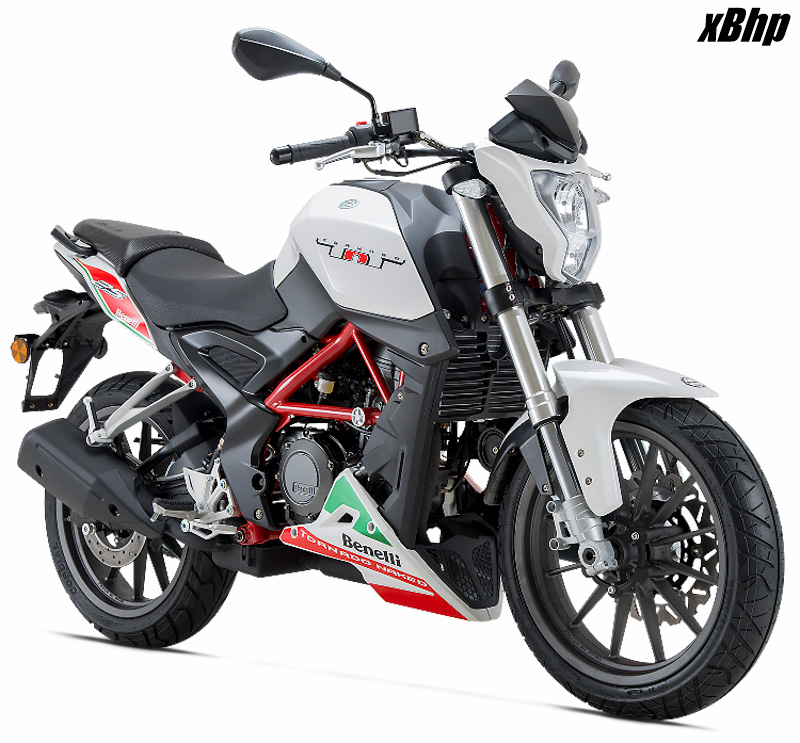
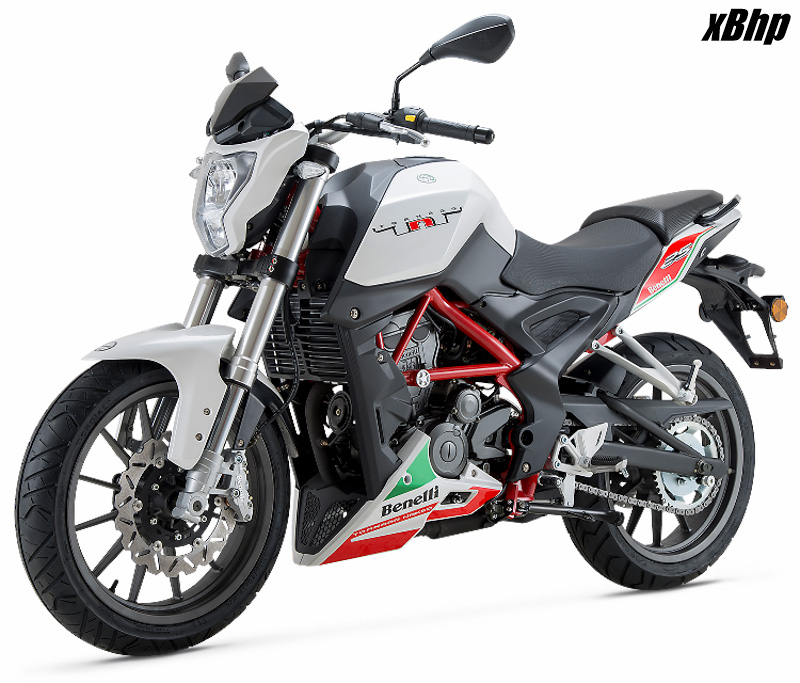
Click to see the enlarged images
Engine
The Benelli TNT25 has a 4-stroke, single-cylinder, 249cc, liquid-cooled engine that makes a healthy 28.16 bhp at 9800 rpm and a torque of 21.61 Nm at 8000 rpm. This engine is mated to a six-speed gearbox that was smooth and functioned flawlessly. The engine itself was rev-happy and quite responsive to throttle inputs. The bike moves effortlessly from standstill. There is truckloads of bottom and mid-range torque available, making the TNT25 super fun to ride in the city and for those highway sprints. The power delivery is smooth and linear. The engine holds itself effortless in the high revs too. Needless to say, with the TNT300, the DSK-Benelli folks have set a benchmark when it comes to the exhaust note, and the TNT25 does well to match up to that. There is a lot of grunt and volume to that exhaust note. It makes you feel like you are going much faster than you actually are. Such an aural pleasure it is.
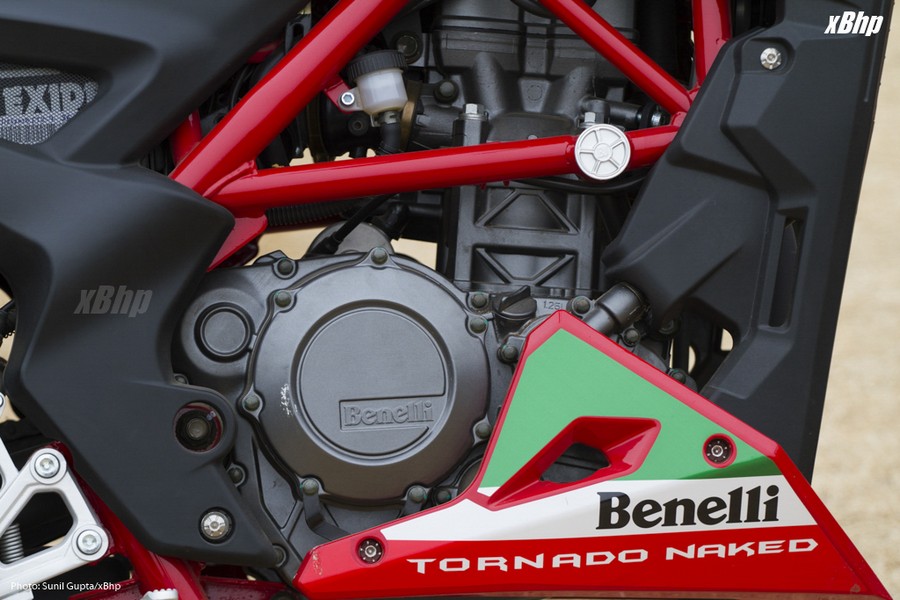
Ride comfort and handling
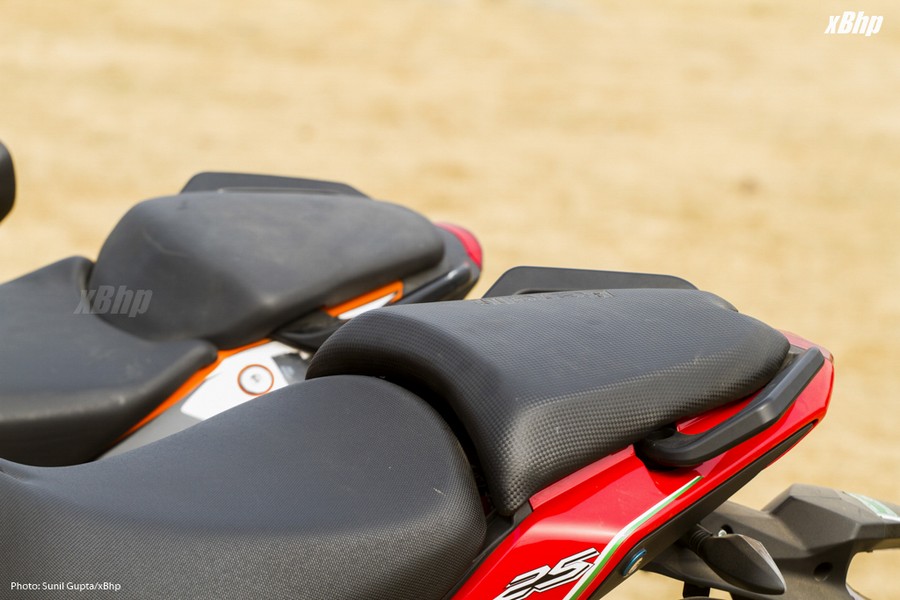
The split seat on the Benelli TNT25 offers a generous saddle space for the riders, even for those with big bottoms. Though we could not say the same for the pillion seat. It is comfortable but not big enough. Otherwise, with the flatter handlebar and the rearset footpegs, the overall riding stance and ergonomics give it a big bike feel. Even the riders with large body build would find it comfortable with an upright sitting posture with perfectly placed footpegs that are neither too commuterish nor too awkward like the Duke 200. It handles well too. The meaty upside down forks at the front and a monoshock suspension at the rear are well sorted and keep the bike planted in all sorts of riding condition. The ride felt balanced and neutral to take on those quick turns and never-ending long curves quite effortlessly. Though it didn’t feel as sharp or as intuitive as a Duke 200 does.


Braking
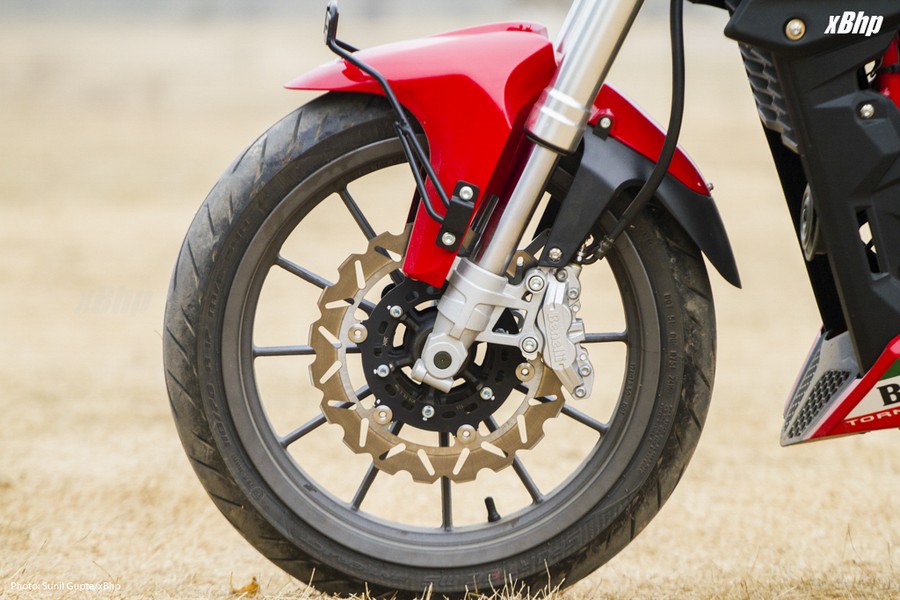
To tame the 28 horses of the TNT25, Benelli has fitted a 280 mm single petal disc upfront with 4-piston caliper and a 240 mm petal disc with twin-piston caliper at the rear, which felt enough on paper, but not in real world. The brakes on our test mule felt spongy and did lack the bite, and the same was the feedback from a couple of other riders from other cities who rode the bike. Clearly, this is one area where there is a scope of improvement. The good news is that Benelli is working on an in-house ABS system and will be fitting it on the TNT25 and the ABS version should be available in the market in around 8-9 months from now.
Customization options
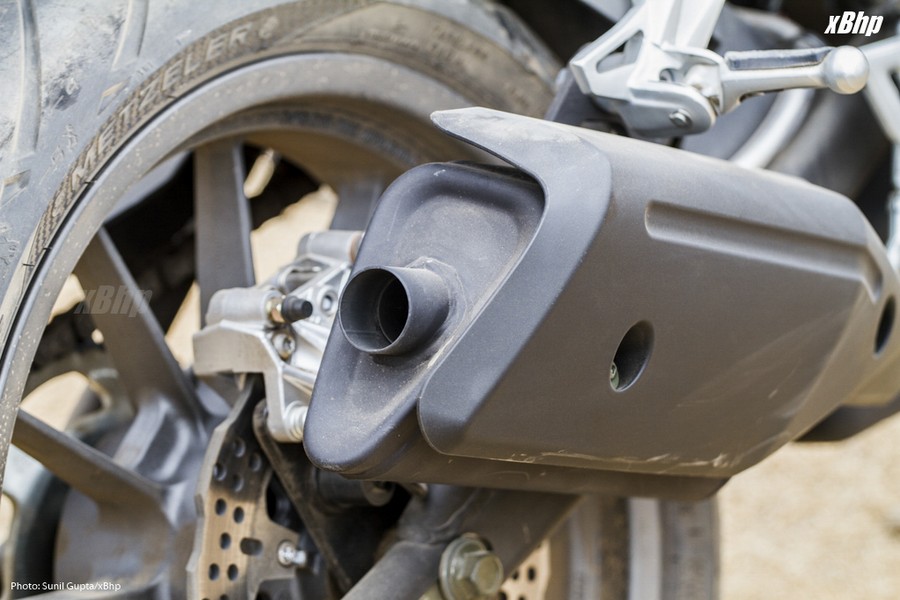
To make it stand apart from the crowd, DSK-Benelli has thrown in a set of sticky Metzeler rubber and a bunch of customization options for the buyers, which is available at a price of course. The standard variant of the TNT25 comes fitted with MRF tyres; however, those willing to pay an extra 8 grand, can get the premium version that has Metzeler rubber. Quite a deal we must say. Do go for it if you can because you can have much more fun on tyres that offer extra grip and that extra grip can be a lifesaver as well.
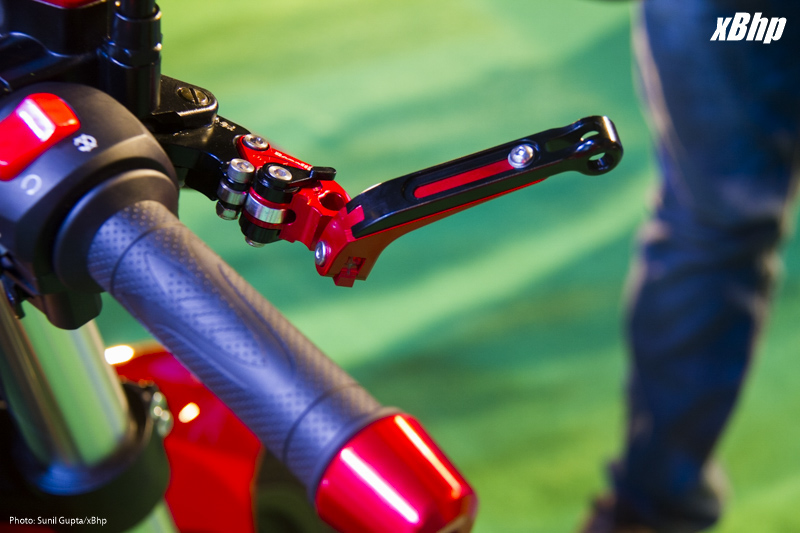
And like we said, DSK-Benelli is offering a bunch of other customization options in the form of decals and accessories like foldable brake and clutch levers, custom brake oil reservoir cap, and other CNC machined parts which would let the buyers customize their bikes according to their taste.


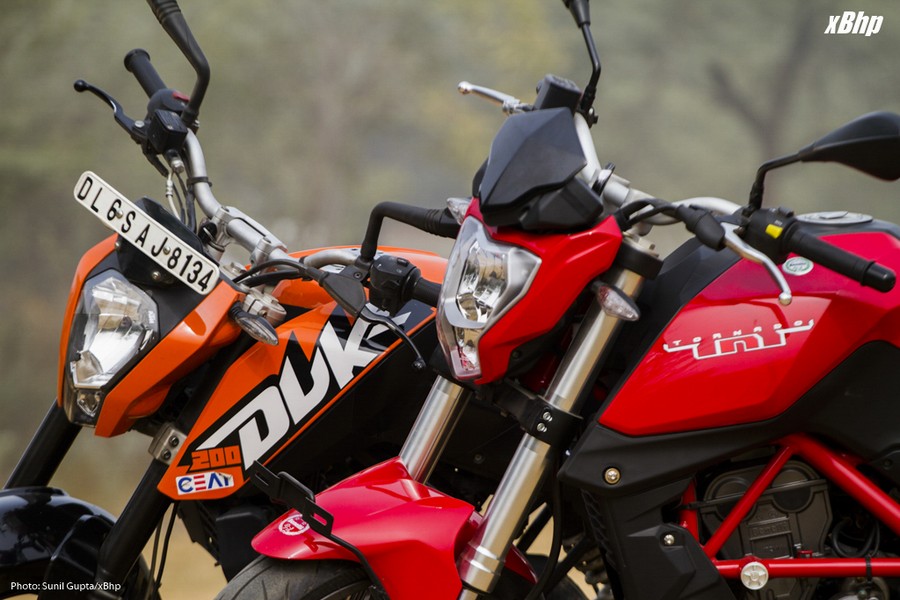
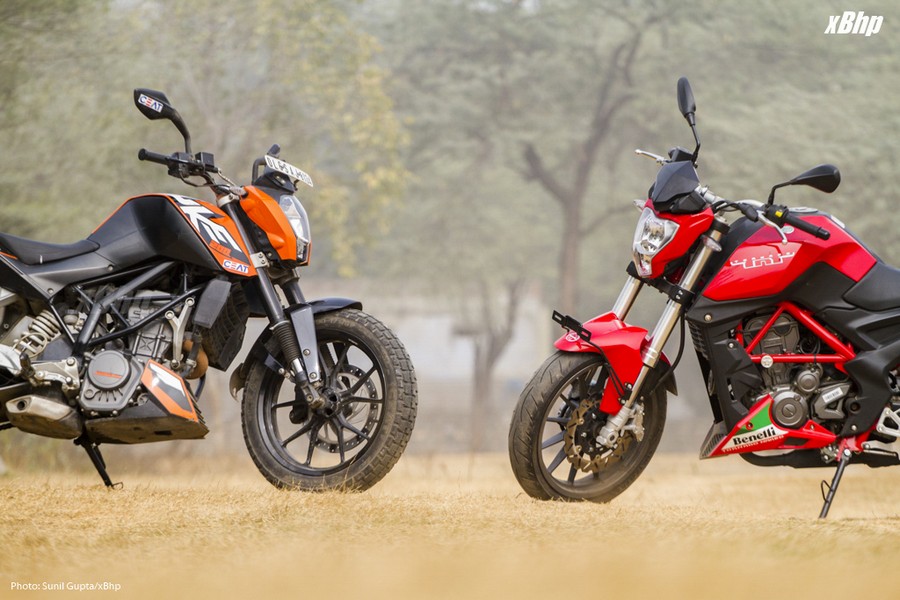
Benelli TNT25 Review and Comparison with KTM Duke 200

Let’s talk about the design and aesthetics first. Fundamentally, both the Duke 200 and the Benelli TNT25 follow a similar design philosophy of a minimalistic naked streetfighter. The Duke 200 adopts a bare-bone and sharp/edgy styling, while the TNT25 goes for more muscular looks. The Duke 200 evokes a sense of hooliganism, while the TNT25 settles for more sophisticated and a little subdued looks but overall a big bike feel. And since this is a very subjective matter, it will ultimately boil down to the individual choice of the buyer.
Performance
The Duke 200 is a versatile performer that has already proven itself over the years in a variety of roles, be it a rally bike, a street bike, or a tourer. Much credit goes to its ultra-responsive and torquey engine, a sorted chassis, and its ultra-light weight. While riding, it lets you do things which you probably didn’t even think that you could do.
The TNT25 has a herculean task ahead of itself if it wants to reach or breach the parameters set by the Duke in terms of performance. But the fact that it has all the ingredients to perform as well as the Duke gives us a lot of confidence. The rigid chassis, a responsive engine, linear power delivery, and power/ torque figures of the TNT25 all indicate a bright future for it. Of course it is approximately 30kg heavier than a Duke 200 and the handling and riding stance also seem to be tweaked towards comfort and ease of riding than pure performance.
Talking about ride quality and comfort, the TNT25 has plentiful of it. The feet rest perfectly on the rearset footpegs. The fuel tank provides enough space even for tall riders to grab it with their knees and move around. The seat space is generous as well. On the other hand, the word comfort and Duke 200 don’t even go together. And no, we don’t mean to say that the Duke is uncomfortable. It just has a very peculiar riding stance that literally keeps you on your toes, wanting you to push the performance envelope. Not to mention its tiny seat, particularly for the pillion. So the TNT clearly scores better than a Duke 200 when it comes to ride comfort.
Price/Value for money
The KTM Duke 200 is retailing at around 1.6 lakh on road in Delhi and the standard variant of the Benelli TNT25 can be bought for INR 1.96 lakh on-road Delhi. Considering the goodies Duke 200 offers in terms of performance and style, this price point seems hard to beat for anyone. Bajaj manufactures the KTM bikes locally, so it has much better control on the price. The TNT25 on the other hand comes as a CKD and is assembled at DSK plant in Maharashtra with very little to almost no localization. So the final retailing price of the TNT25 contains a big chunk of the tax component that DSK-Benelli pays to the government. But is the 2 lakh plus price tag justified for the TNT25? Well, almost! We’d say! For those extra cash, you are getting a marquee Italian brand and extra riding comfort without losing too much on the performance front.
So to conclude, we’d say that although KTM Duke 200 and the Benelli TNT25 have a lot of similarities that would confuse a prospective buyer, you just need to set your priorities right before deciding as to which one of these is for you. If you have budget constraints and are looking for an out and out performance machine, then you should look no further than a Duke 200. But if riding comfort tops your priority list and you want something sober and have 40k extra lying in your pocket, then the Benelli TNT25 is for you.
Technical Specification comparison of the Benelli TNT25 and its closest rivals
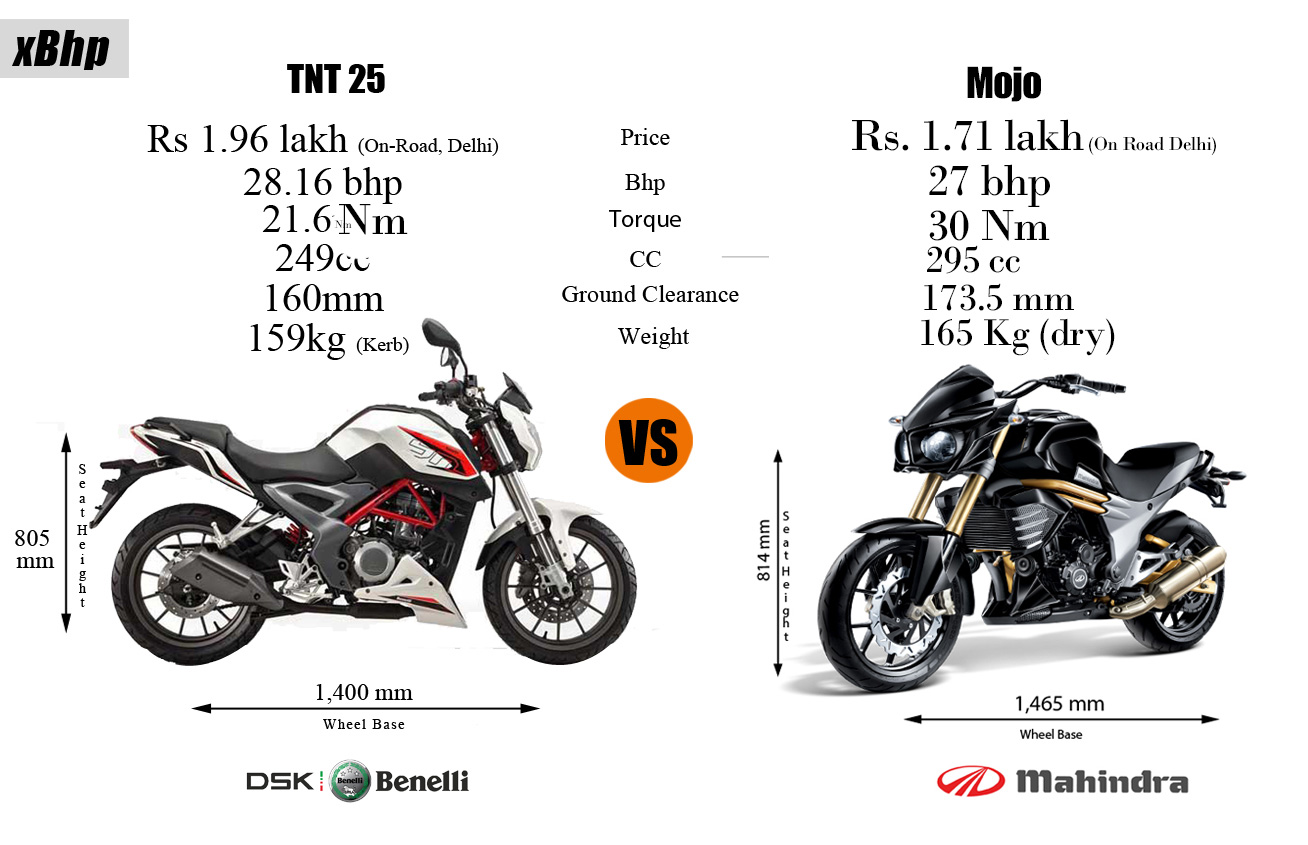
Benelli TNT25 Vs Mahindra Mojo
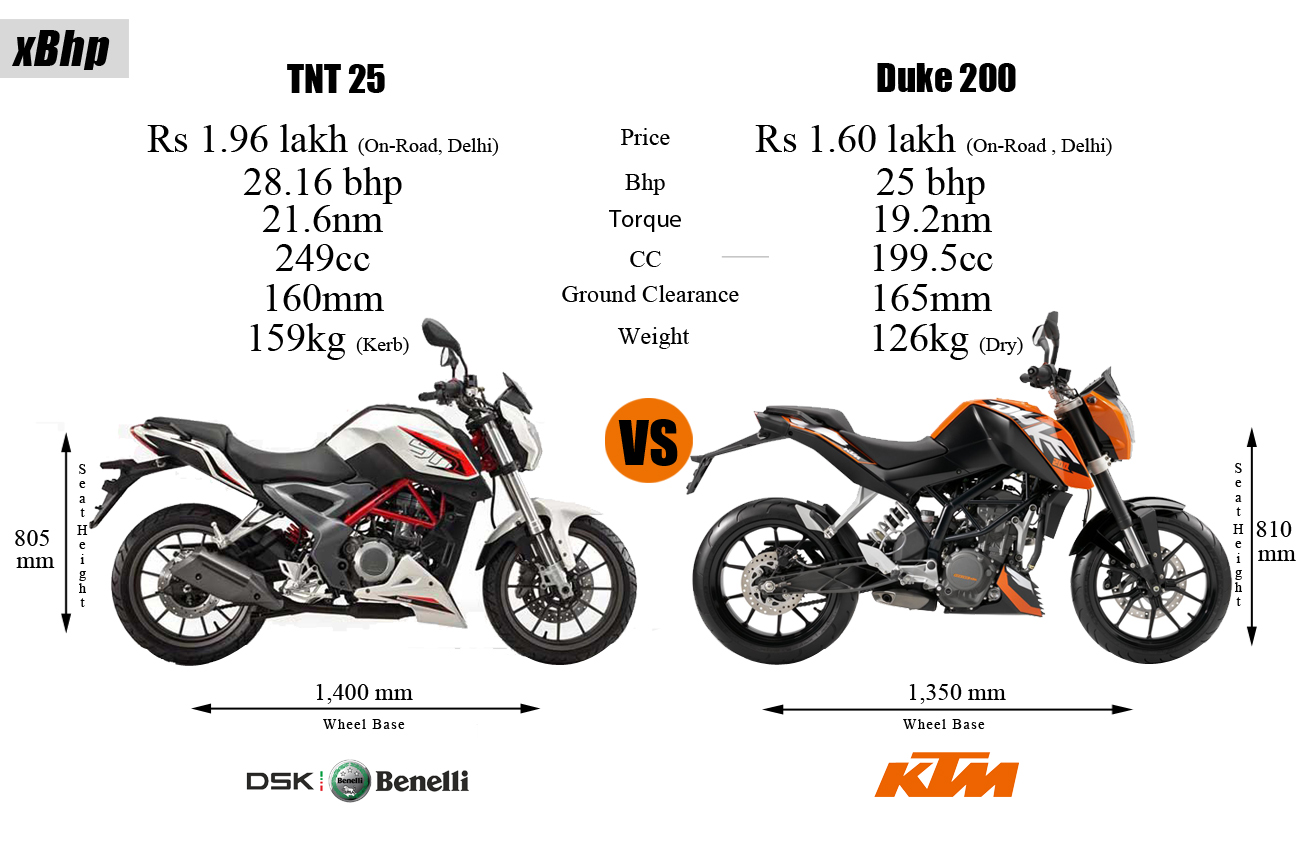
Benelli TNT25 Vs KTM Duke 200
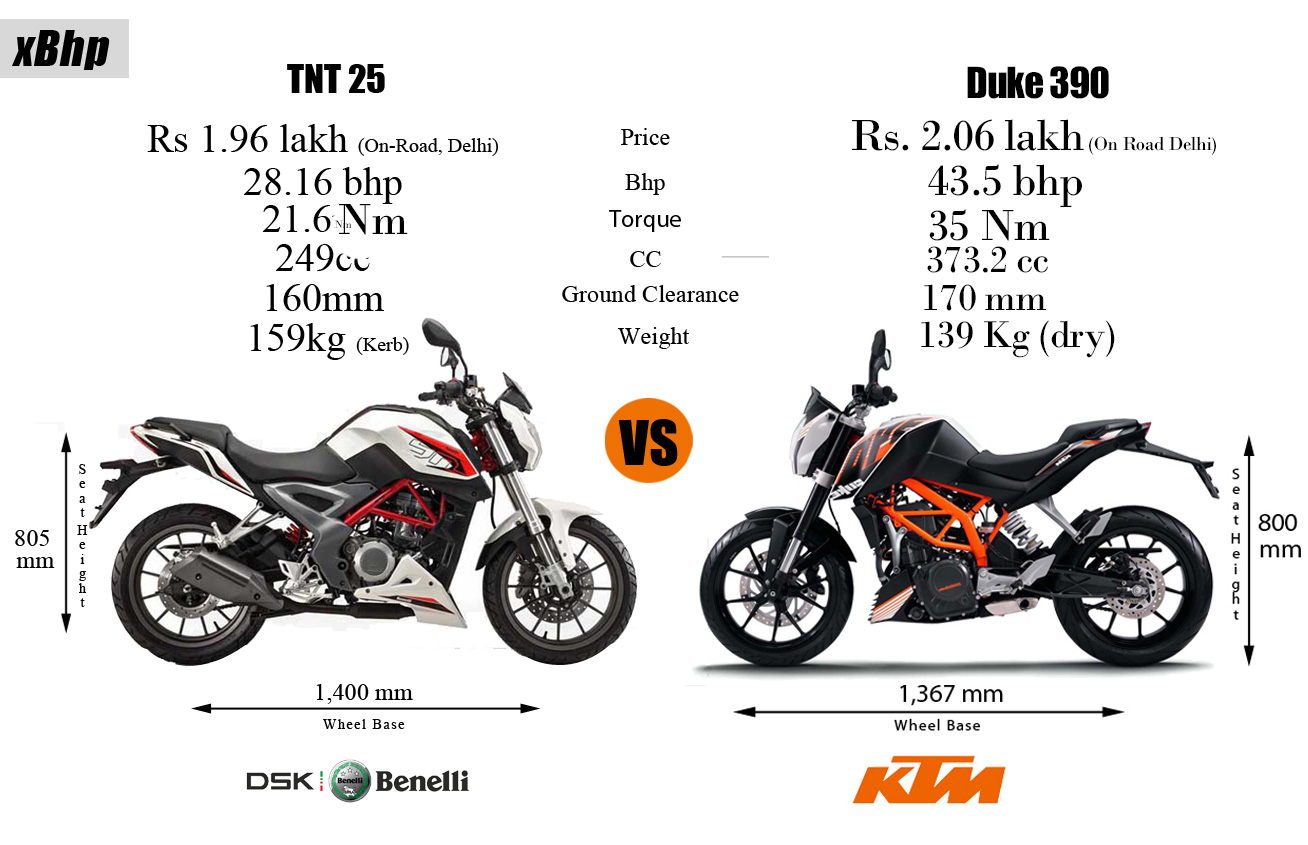
Benelli TNT25 Vs KTM Duke 390
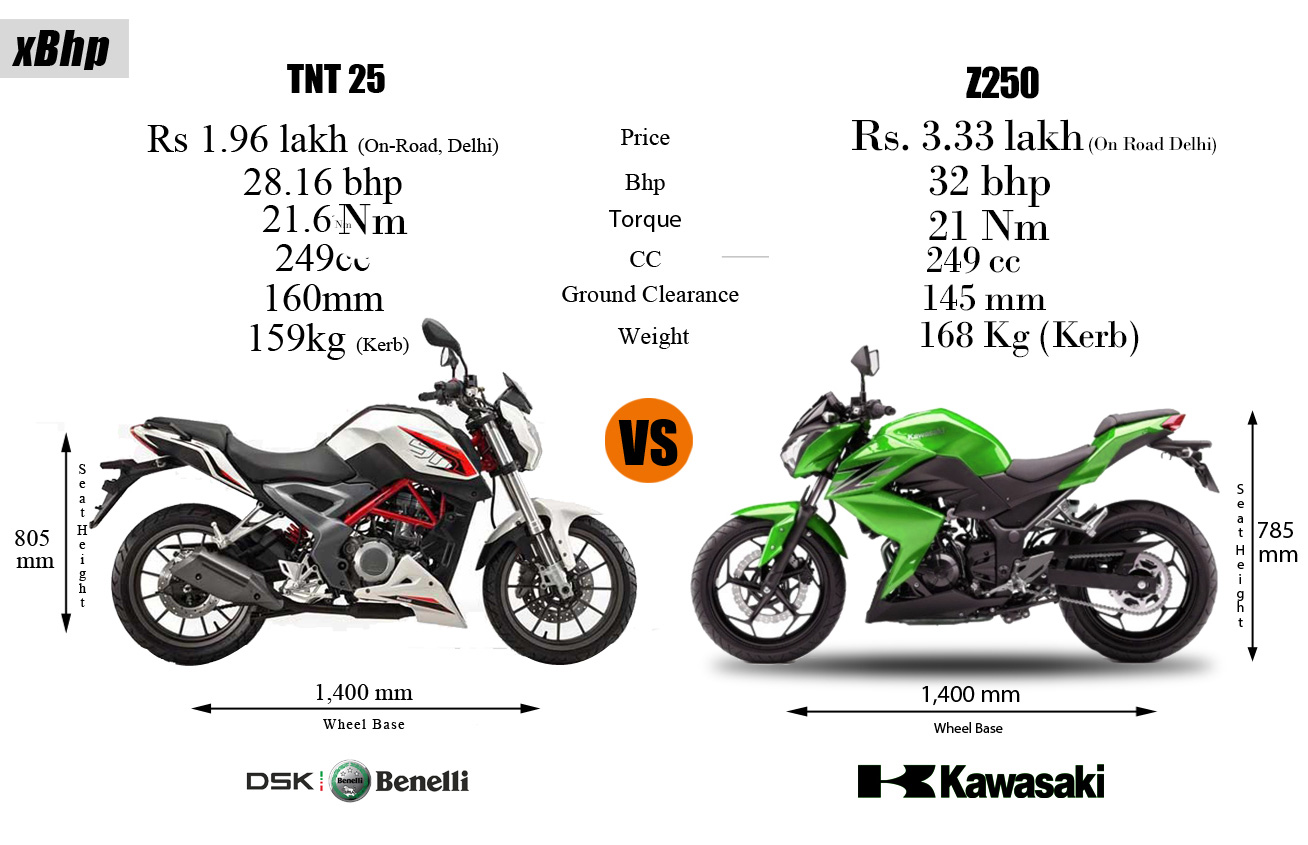
Benelli TNT25 Vs Kawasaki Z250

Driver Vs Rider: Benelli TNT 899 vs BMW Z4
 Jan 2016 Sunil Gupta
Benelli,Bikes,BMW,Cars,Motorcycles
Jan 2016 Sunil Gupta
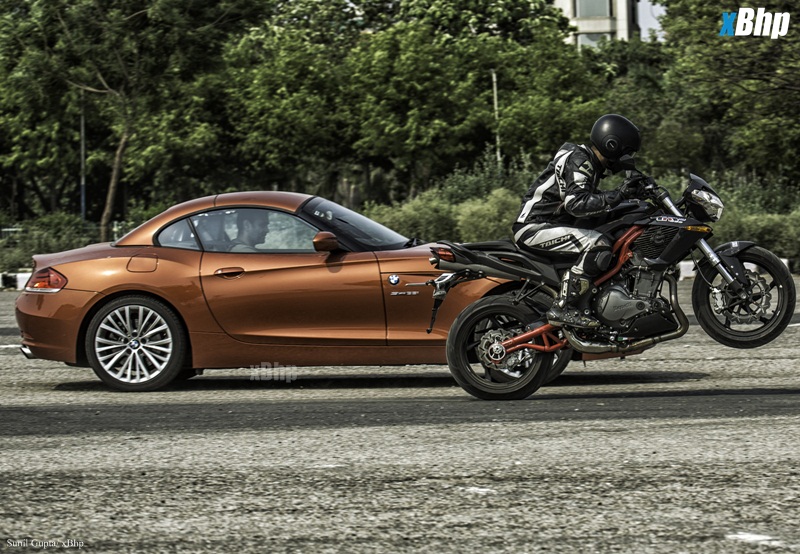
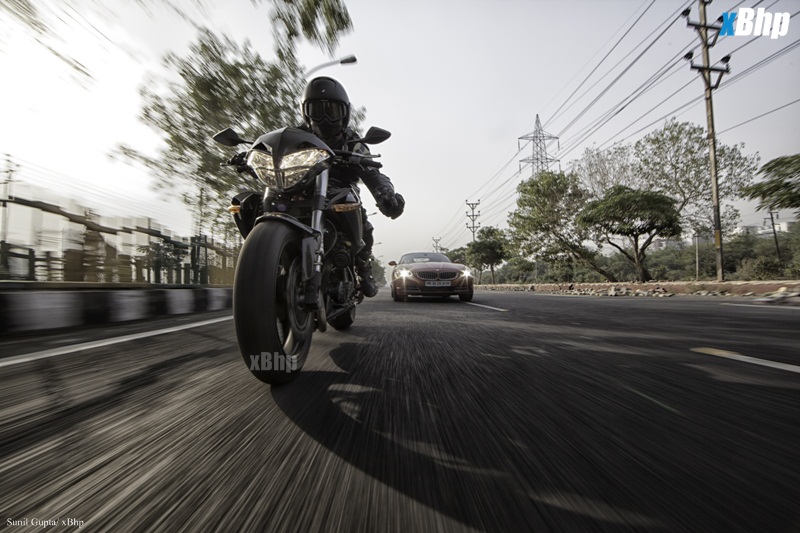
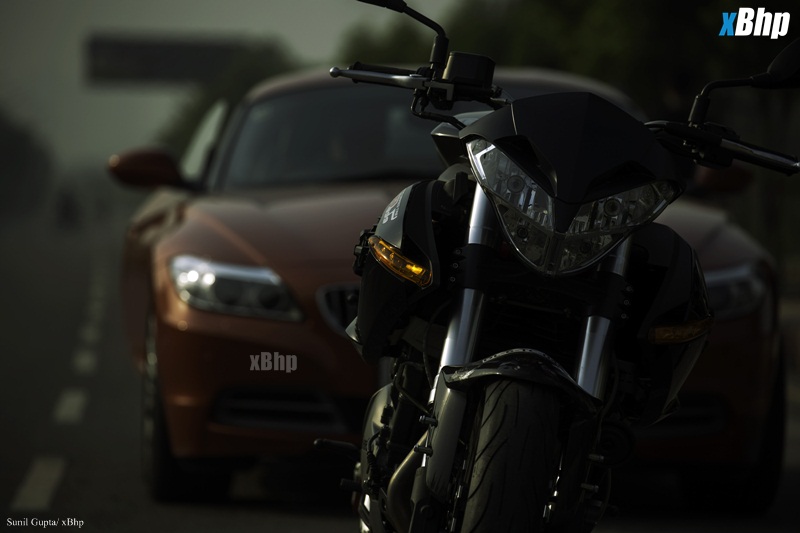
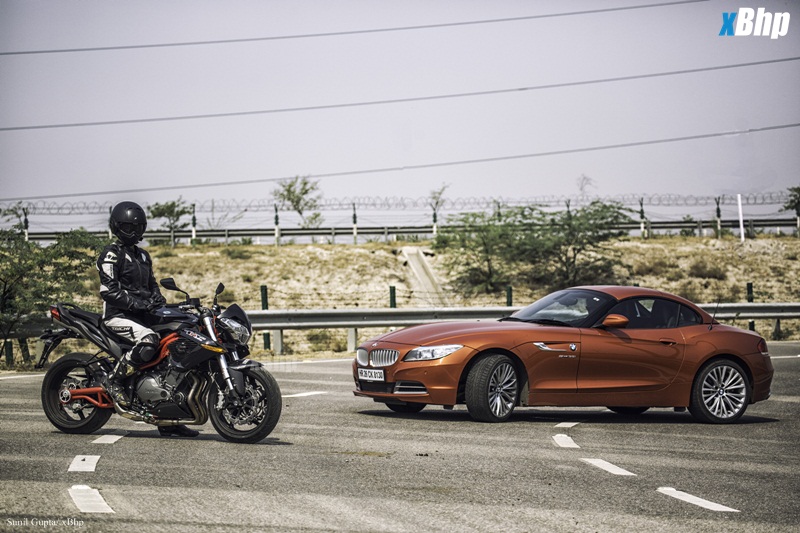
Benelli,Bikes,BMW,Cars,MotorcyclesIn yet another iteration of our popular Driver vs Rider series, we take two razor-sharp machines – the Benelli TNT 899 and BMW Z4 for a spin and see how they stack up against each other!
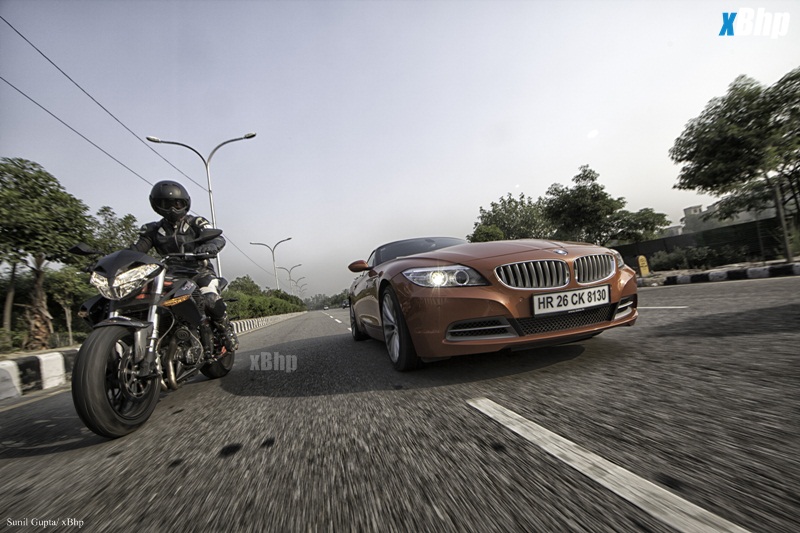

THE RIDER (Sundeep Gajjar/ MotoGrapher) – BENELLI TNT 899
The first Driver VS Rider was with a Mercedes CLS 63 AMG and a Ducati Diavel in 2011 for a good 8000 km in the US of A. Subsequently we have had cars like the SLS 63 AMG, Audi TT and the Mini Cooper to go along with equally great machines on two wheels.
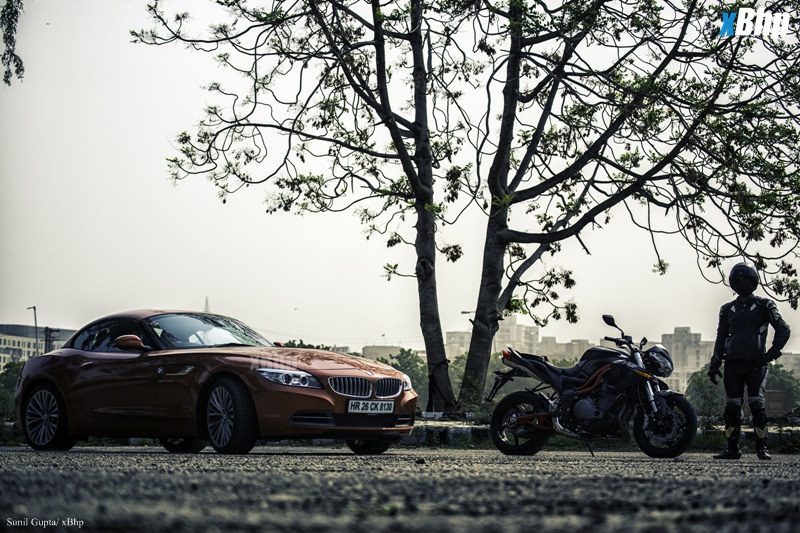
This time we had the BMW Z4 and the Benelli TNT 899 pitted against each other. Both the machines are in a league of their own. While the Z4 has seen transformations into the current avatar today, the 899 is pretty much unchanged ever since it was launched in the early 2000s, especially the looks, but it still manages to stand out of the crowd today.
We have written much about the Benelli TNT 899 earlier as well, and it was the star bike for the India trip during the #thankYouRide. However, here is a recap from the review.
The 899 being Italian had to look radical. The first look will leave you intrigued. There is a lot going on to keep your eyes busy. From the unique side mounted radiators to the suave petal discs and the unique front static headlight arrangement that is complemented by the underseat exhaust flanked by interesting two piece taillights and a red swingarm and frame which stands out. The front 3/4th view looks the best and very meaty for the 899. The instrument console is pretty basic but again pretty functional too. The build quality and workmanship is excellent.
The 899 is an inline three setup. The sound of the engine is literally music to your ears, it is not as refined as an inline four, but it is not as raw as a V-twin either. It is loud enough to warrant some sort of modification while being homologated for sale in India. The throttle response is great and even though the bike sounds like a diesel engine while idling, add even a few more revs above idling and it metamorphoses into a 3 cylinder bike engine.
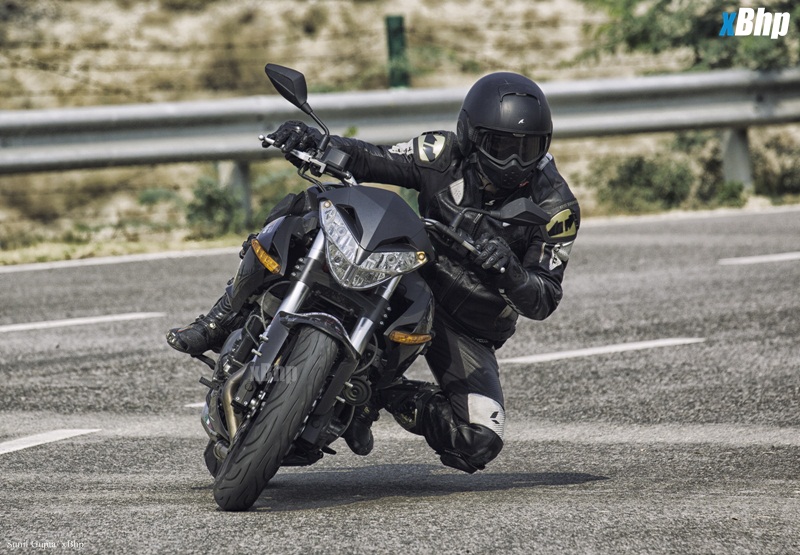
The bike feels solid once you sit on it. I was a little disconcerted when I realized that the front headlight is static, taking away a bit from the naked theme, but after a while I didn’t notice it. The gear shifts are precise and the first gives you a reassuring thud. Release the clutch and the 118 Bhp/ 88 Nm of torque do their bit to coax you into twisting that throttle until the bike gets into a frenzy, which it does at around 8000 rpm. Soon enough you want to be a hooligan. The upright stance coupled with slightly aggressive rear-set pegs encourages you to flick the bike in corners. In no time I was thrashing it like a superbike, the sound goading me on.
I took it off-road and over potholes too. The suspension, I felt, was a little too stiff but then I was riding it on not the best of roads a little too hard at that! Make no mistake, even though it is ‘just’ 118 odd bhp, it’s from a 900cc mill and it is Italian. The overall package is attractive, though I would have loved to have ABS and Traction Control to complete it. What is interesting though is that Kawasaki offers ABS as standard on the Z800 in India. But the 899 is a lot lighter than the Z800. What is more interesting is the Ducati Streetfighter is the only modern Ducati that doesn’t have ABS! Makes me wonder what might be the reason? However, I am used to riding a Yamaha FZ1000, which is 150Bhp without these aids; but all said and done they do make life easier and safer on the roads. The Brembo brakes have enough bite via 2 x 320 mm discs up front and one 240 mm disc at the rear, giving the motorcycle sufficient stopping power. The acceleration, handling and sweet braking giving the rider a feeling of being on the razor edge, let’s see how sharp did the driver feel in his BMW!
THE DRIVER (Sandeep Goswami/ Old Fox) – BMW Z4 sDrive35is
The rider and the driver. The contrary twins. Poles apart and yet in synergy. Bound within by the common religion of power, speed and control. But different enough to stand apart and yet stand tall. Pushing the limits of man and machine. Exploring the boundaries of the physics governing motion. On two wheels and four.
Who is the better of the two? Who skirts the chasms of risk and danger more often and with lesser margins? Who is the greater adventurer of the two? The rider seems like an obvious pick but is it really so? Four wheels might mean the cushion of twice the rubber and little apparent need for balance but are these really such huge advantages. Think of six times greater momentum, the inertia induced reluctance to change direction and speed and think of the space those four rubber feet need and the equation tends to balance between the two.
But then does it really matter? They are not modern day gladiators for us. There’s no combat at the edge involved. In fact, there’s serenity in performance too. Even though both the rider and the driver shall be using high-performance vehicles, they are not at loggerheads by pitting the machines and their skills against each other. They travel in synergy as partners revelling in the beauty of precision machinery in motion. They move in such mutual admiration.
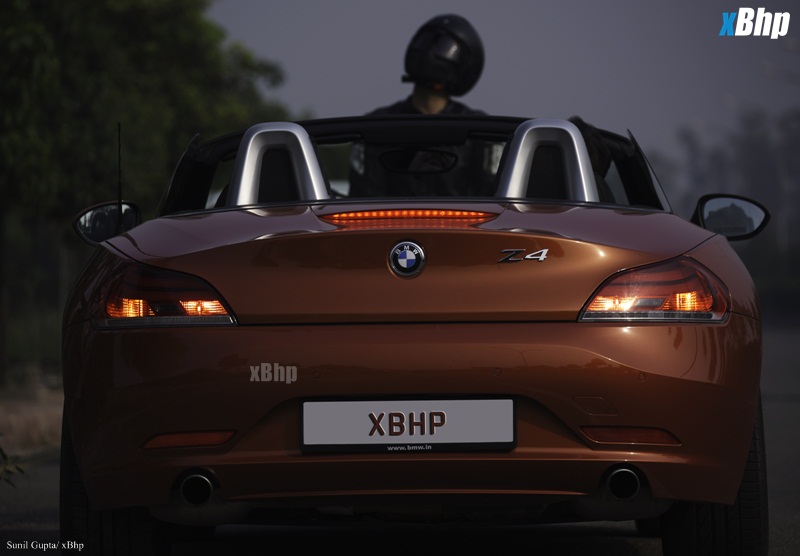
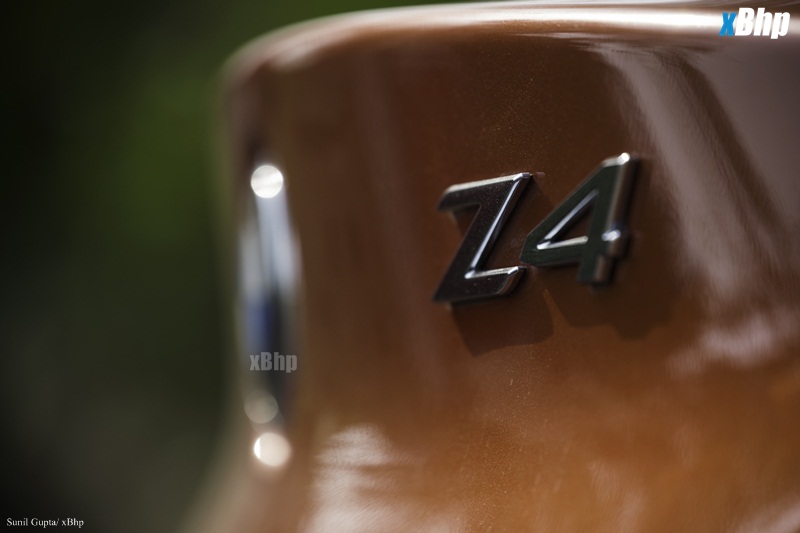
The driver this once had what is arguably one of the best looking convertible roadsters around. The BMW Z4. Ah! What a machine. More so because we drove the top of the line Z4 sDrive35is with its lusty 306 bhp twin-turbo 3 litre In-line 6, peak torque 400 Nm (flat between 1300-5000 rpm) and the 7- speed dual clutch automatic gearbox. It is a lovely car, no doubt about that. The classic long bonnet with that visually compact two seat cabin and the short boot. Takes you back almost to the 30’s when drivers sat almost on the rear axle of their roadracers! Fit and finish is top notch and the car seems poised for high speed action even when parked by the road. The LED DRL’s make for a distinctive profile in the RVM’s of cars ahead. The Z4’s body is a study in aerodynamics as much as it is about aesthetic beauty. The lip spoiler in the boot lid, a similar looking protrusion up front again adds to downforce and blends perfectly with the design. This is one rare convertible which manages to look equally stunning, with or without the hard top in place.
The inside is spacious, luxurious and functional. The Z4 is probably the roomiest of all two seat roadsters, comparing it to its contemporaries like the Porsche Boxster, the Mercedes SLK and even the Audi TT Coupe. The long bonnet does not obstruct forward vision, allowing even its far side to be seen by the driver. The A-pillar too, the usual suspect in giving nightmarish blind spots to these low-slung sports car drivers is not obstructive and sightlines from the pilot seat are pretty clean. The seats in the version we drove had good side support and was 10-way adjustable to boot. I guess my 5 decade old body has lesser scope for adjustment. Features are a long list with auto stop/ start, adjustable throttle and steering response, adaptive xenon headlamps, cruise control, rain sensors, ABS, front and side airbags for both driver and passenger, Cornering Brake Control, Dynamic Stability Control and Dynamic Traction Control, roll-over protection, run flat tyres etc.
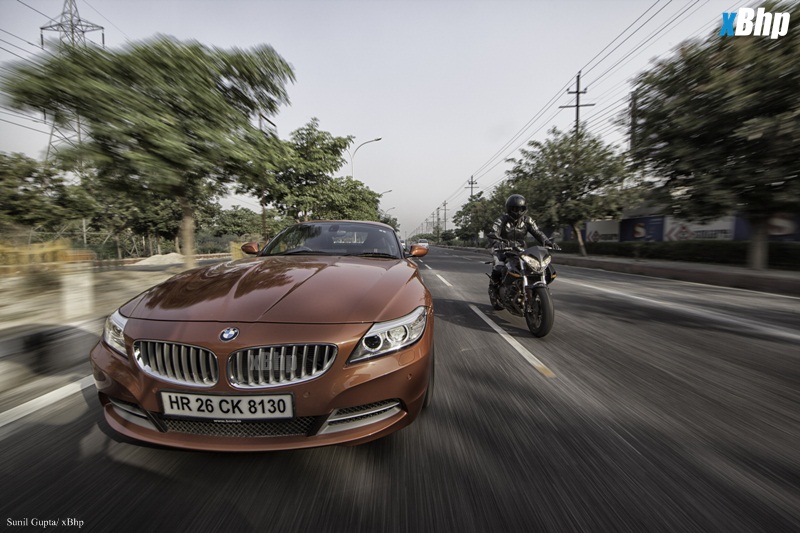
Getting in and out needs a bit of body contortion not unlike other cars in this category. The Z4 in fact is the easiest of the lot in that sense. Drive selector in P, foot brake pressed, USB key into the slot, thumb the starter button and the six pistons come to life under the long bonnet as does the 8.8 inch touch panel in the dash swinging out into its face out position. Blip that throttle and you just get a hint of what will happen when the drive selector is in Sport+ mode and the real deal is dealt. All right, let’s deal it and so we shift and press that throttle and wow! It doesn’t get more real than that. The raucous bunch of 300 odd ponies does pull strongly with no hesitation and the Z4 slingshots past a 100 kmph in well under 6 seconds. The Servotronic Electronic Power Steering is precise and sharp enough and the suspension talks to you incessantly. Of course we would have loved that dialogue to be softer as our native roads are not really a great place to have hard suspension set ups. The Z4 is stiff but then if that’s what’s needed to enable it to be swung through the curves, the tail sliding around mischievously; we are game for the trade-off discomfort of that stiffness. The driver chased the rider as he banked knee down into a curve on his Benelli TNT 899. The car was sniffing the bike, magnanimity won the day and the driver hung back.
The Z4 redlines at some 7000 rpm but there’s the music of enrapture to be heard from 5000 rpm onwards, best with the top down of course. Hard top up to down is less than half a minute, the mechanical origami a treat to watch as the top folds into the boot. Of course boot space is compromised when the top is down but not as much as it is in the SLK. Wind noise is minimal with the top up (Drag Coefficient CD a commendable and slippery 0.35!) and surprisingly well controlled even when it is down. The audio system sounds great though methinks the music from the engine is a whole lot better than any MP3 player.
The sDrive35i has shift paddles on the steering wheel and the car is more than fun to drive in the manual mode. You pull in each gear right up to the red line before up shifting, the punch is addictive and for me as a stick shifter for the majority of my life, this is when I feel I am the complete driver of the car. No smarty pants electronics deciding for me when the revs have been enough. And they are never really enough. You do have the option of 3 driving modes – Comfort, Sport and Sport+ and we did toggle through the three, the first two very briefly more as a needed ritual and showed undying loyalty to the third. Don’t blame us. 300 plus bhp, 18 inch low profile RFT’s, taut handling, sharp steering and race-car quick paddle shift all put together are much too persuasive, well capable of invoking the devil in the saintliest amongst us.
As for the accountant lurking within, the car retails at some 70,00,000 INR, returns about 12 kmpl on the highway and some 8 kmpl in city, has long service intervals and retains good value over the years like any nice BMW. The fuel tank brims up at 55 litres of 95 octane and should be good for at least 400 km within the city and around 600 km on the high road.
Of course as a motorcyclist I wouldn’t give up an exciting pair of two wheels for any 4 wheeler – unless it happens to be what I have gone gaga over the past thousand words or so. The BMW Z4 makes for a worthy barter between a bike and a cage. No, I even feel bad calling it a cage you know, so good is this performance sportster on 4 wheels. The rider may have left me in his dust because we hit some traffic. But give me the Z4 on an open road and the ‘pedal to metal’ shall write a very different story from the twisty right wrist!
xBhp First Ride: MV Agusta Turismo Veloce 800
 Jan 2016 Sunil Gupta
Bikes,Motorcycles,MV Agusta
Jan 2016 Sunil Gupta
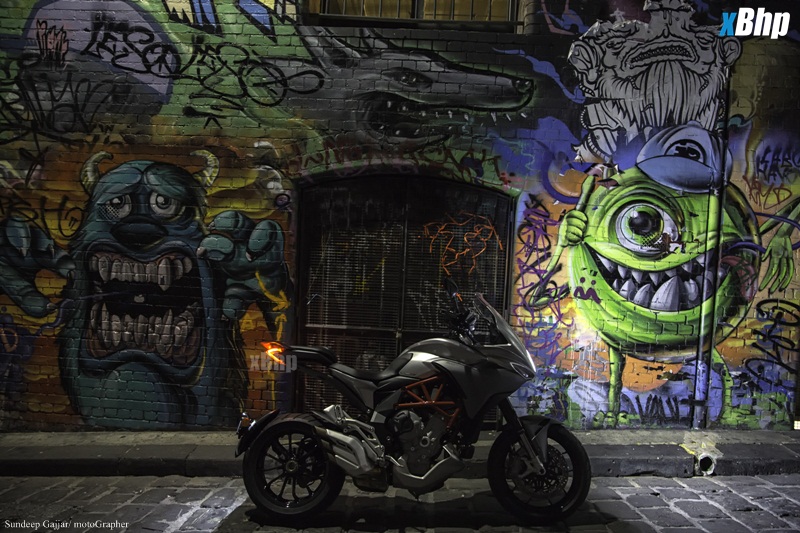
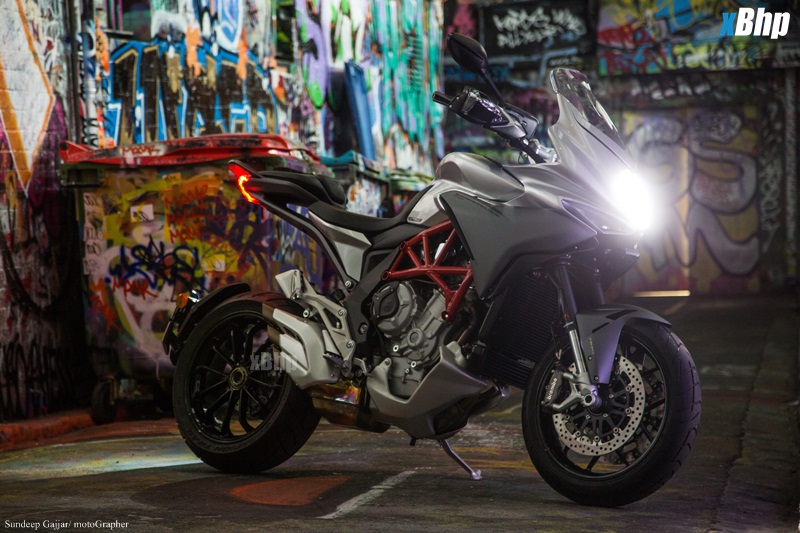
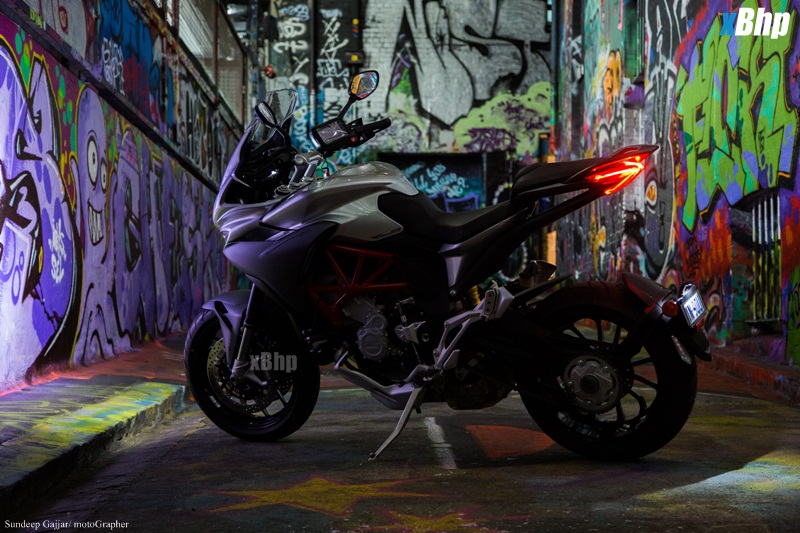
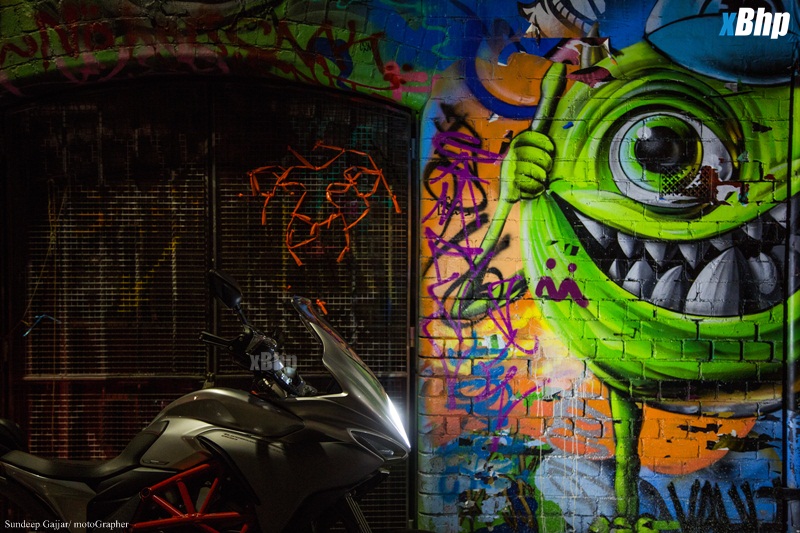
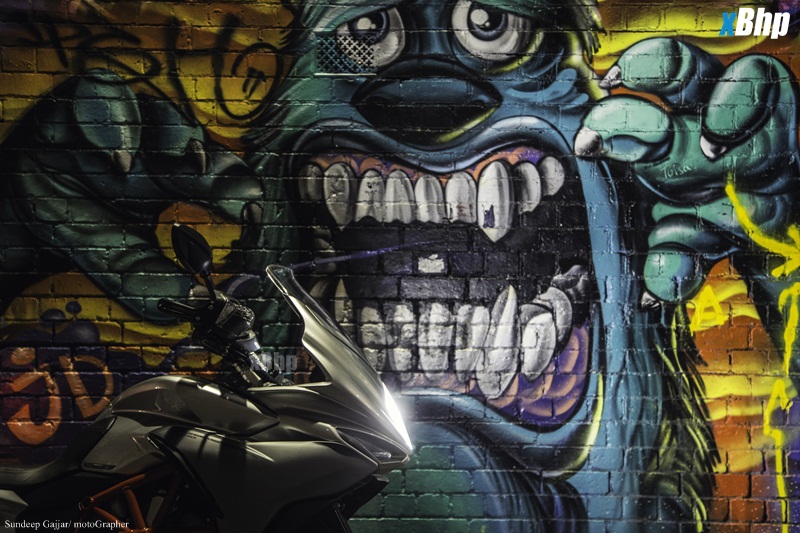
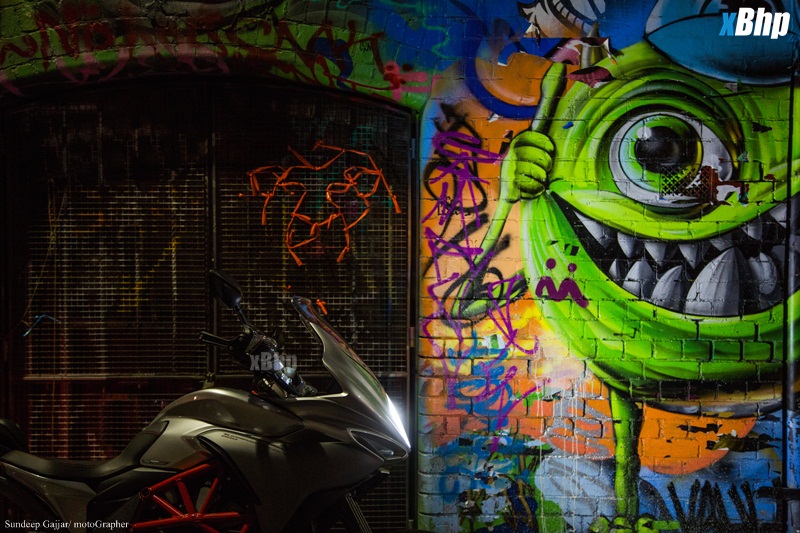
Bikes,Motorcycles,MV AgustaxBhp rides the MV Agusta Turismo Veloce 800 in Australia where we were present for the launch of the MV Agusta brand in Melbourne, Australia. We had also ridden and reviewed the MV Agusta Brutale 800 Dragster there.
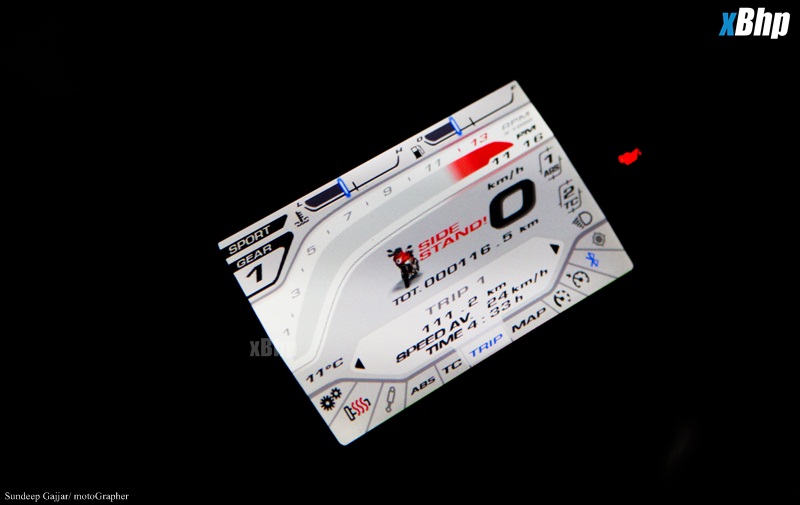
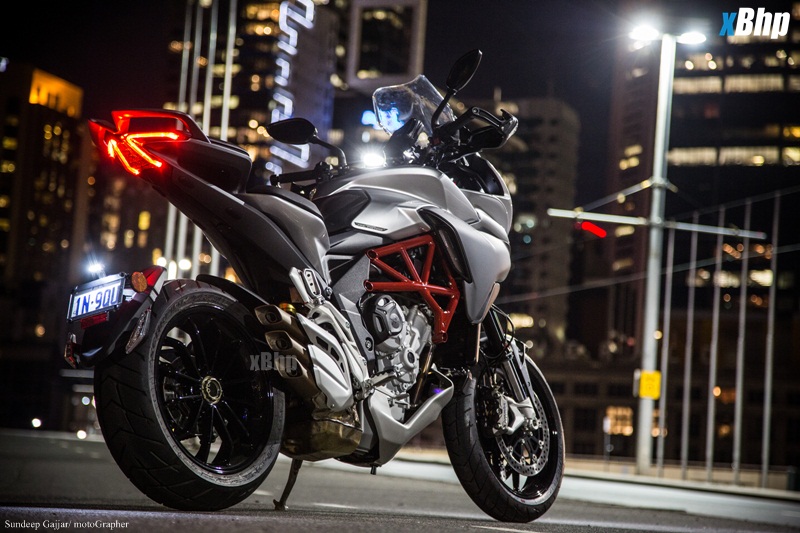
The beautiful and organic looking Turismo Veloce 800, MV Agusta’s first foray into the adventure bike segment. It is also a beautiful machine but looks a bit too simple and empty from up front, otherwise by no means is it a bland machine! The colour TFT console which even has a visual indicator for side stand down is a delight to see and displays all the necessary information the tourer requires. The touring mode gives 90Hp, while the sport bumps it up to 110Hp, and rain produces 80Hp. The Veloce is a ‘bit different’ compared to the regulars from the stable. This was built for those who want to tuck their luggage in and go off for a long ride. The torque is bumped up by 20% coming at 2100rpm less. Along with that service intervals have been increased from 6000km to 15000km, perfect for someone wanting to get up and Go!
This is the first attempt by the Italian manufacturer into this segment, and it has given a fresh new perspective towards adventure bikes. It mates touring comfortably on a motorcycle with the sportiness you would expect from MV Agusta. The Turismo Veloce is fast, flickable and a hoot to ride. And can easily make you forget that it is built for munching miles sedately. That is until you decide to munch miles sedately! The ergonomics are comfortable for getting the job done, and the saddle is plush with adequate cushioning. We didn’t ride the bike for a lot of kilometres, but enough to believe that it will make for a happy bum!
The 17 inch wheels itself tell you half the story. The Turismo is meant for tarmac use and not really meant for off-roading. Why then have MV Agusta fitted the bike out with Pirelli Scorpion Trail tyres, which are meant for light trails? It is also much lighter than the traditional Adventure Tourers at 191kg dry, compared to the Multistrada at 209kg dry and the R1200GS at 238kg wet. This results in ease of use and makes it an extremely practical motorcycle for most. And the power figures which are lower than the competition is not felt so much while riding.
The Veloce uses the same three-cylinder 798cc engine which is found on many other MV Agusta models and is tuned for more torque and usable power in the mid range. The engine is smooth, though at times one can notice a bit of vibrations. But that is generally put down as Italian character! The bike also comes with a bunch of electronics to keep you safe and does its job without being intrusive. The rider still feels connected to the engine through the right wrist! The bike does have a bit of fuelling issues at crack of the throttle, which even the electronics are unable to mask.
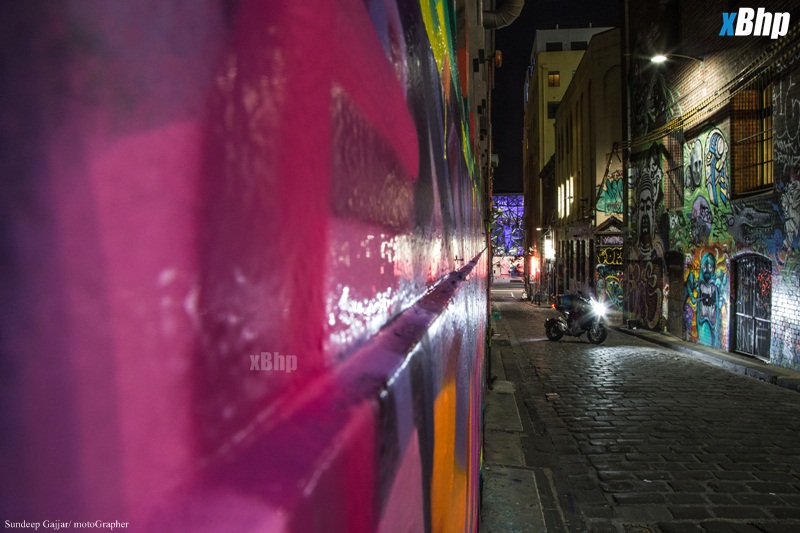
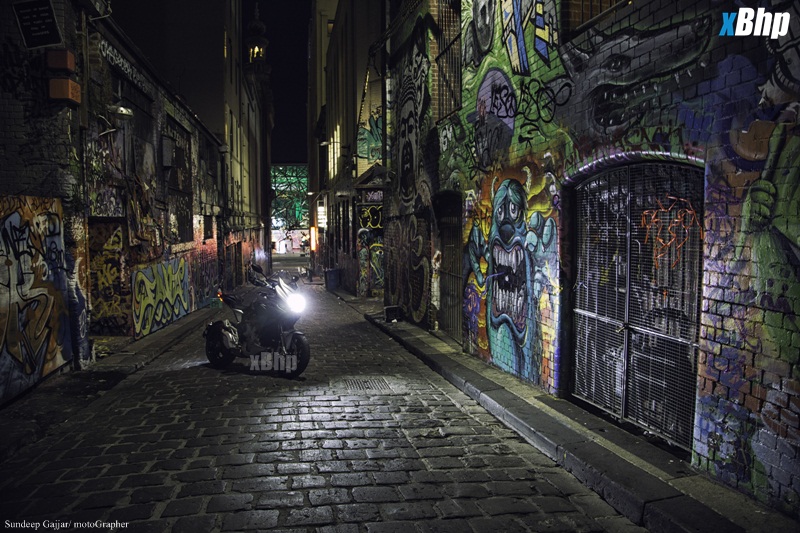
To sum up this MV, it cannot be compared with the likes of the Multistrada or BMW R1200GS, but by no means is it an incapable machine. And no matter which landscape it is photographed in, it will make everything look more beautiful! The bike has a few minor niggles, but is a fantastic first attempt by MV Agusta into the Adventure Motorcycle segment.
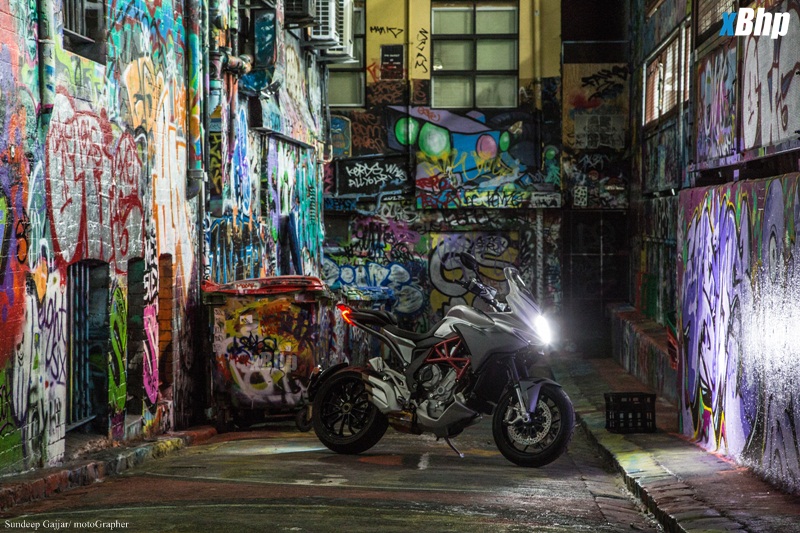
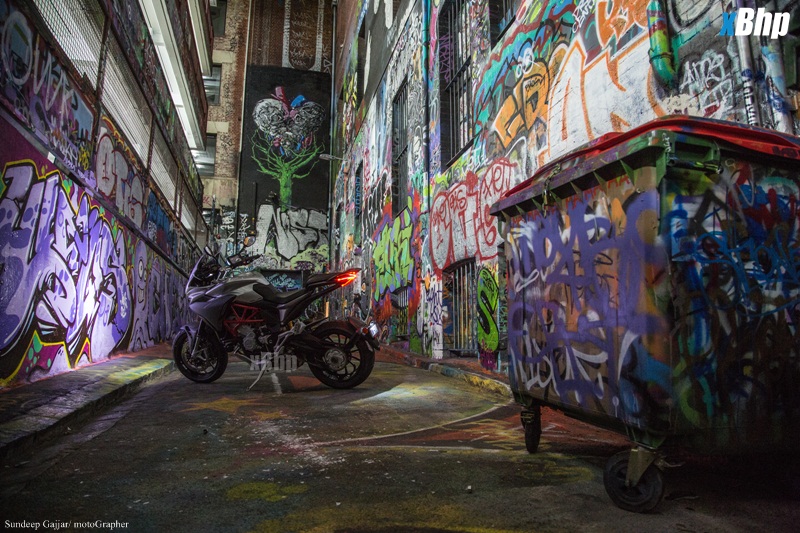
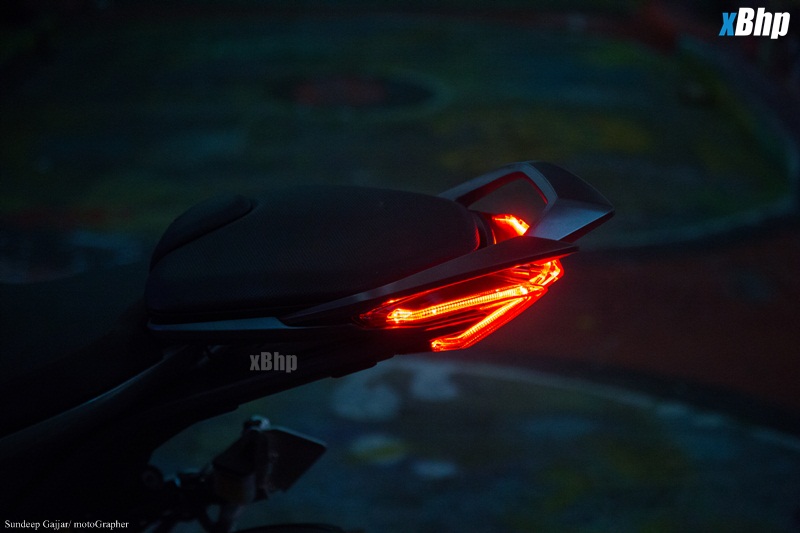
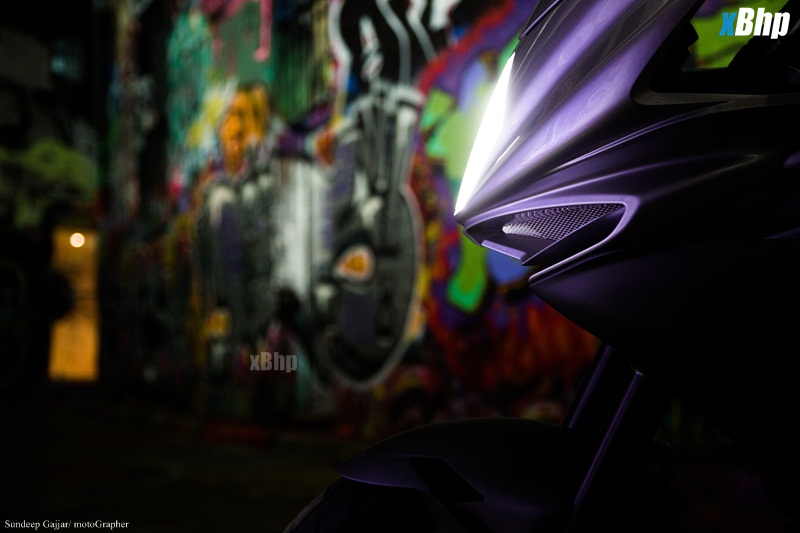
MV Agusta Turismo Veloce 800 Review Technical Specifications
ENGINE
Type: Three cylinder, 4 stroke, 12 valve
Total displacement: 798 cc
Compression ratio: 12.2:1
Starting: Electric
Bore x stroke: 79 mm x 54.3 mm
Max. power- r.p.m. (at the crankshaft): 110 hp at 10000 r.p.m.
Max. torque – r.p.m.: 80 Nm at 8500 r.p.m.
Cooling system: Cooling with separated liquid and oil radiators
Clutch: Hydraulic clutch, wet multi-disc
Transmission: Cassette style; six speed, constant mesh | Electronic quick-shift MV EAS 2.0 (Electronically Assisted Shift)
GEAR RATIO
Primary drive: 19/36
First gear: 13/37
Second gear: 16/34
Third gear: 18/32
Fourth gear: 19/30
Fifth gear: 21/30
Sixth gear: 22/29
Final drive ratio: 16/41
ELECTRICAL EQUIPMENT
Voltage: 12 V
Alternator: 450 W at 5000 r.p.m.
Battery: 12 V – 11 Ah
DIMENSIONS AND WEIGHT
Wheelbase: 1424 mm
Overall length: 2084 mm
Overall width: 900 mm
Saddle height: 850 mm
Min. ground clearance: 140 mm
Trail: 108 mm
Dry weight: 191 kg
Fuel tank capacity: 20 l
PERFORMANCE
Maximum speed: 230 km/h
FRAME
Type: ALS Steel tubular trellis (MAG welded) Rear swing arm pivot plates material Aluminium alloy
FRONT SUSPENSION
Type: Marzocchi “UPSIDE DOWN” telescopic hydraulic fork with rebound-compression damping and spring preload external and separate adjustment
Fork dia.: 43 mm
Fork travel: 160 mm
REAR SUSPENSION
Type: Progressive Sachs, single shock absorber with rebound and compression damping and spring preload adjustment
Single-sided swingarm material Aluminium alloy
Wheel travel: 160 mm
BRAKES
Front brake: Double floating disc with 320 mm diameter, with steel braking disc and flange
Front brake caliper: Brembo radial-type, with 4 pistons 32 mm
Rear brake: Single steel disc with 220 mm dia.
Rear brake caliper: Brembo with 2 pistons – 34 mm
ABS System: Bosch 9 Plus with RLM (Rear wheel Lift-up Mitigation)
WHEELS
Front: Material/size Aluminium alloy 3.50” x 17”
Rear: Material/size Aluminium alloy 5.50” x 17”
TYRES
Front: 120/70 – ZR 17 M/C (58 W)
Rear: 190/55 – ZR 17 M/C (75 W)
FAIRING
Material: Thermoplastic
ORIGINAL EQUIPMENT
Included accessories: Immobilizer – Bluetooth – Adjustable windshield
xBhp Rides the MV Agusta Brutale 800 Dragster
 Dec 2015 Sunil Gupta
Bikes,Motorcycles,MV Agusta
Dec 2015 Sunil Gupta
Bikes,Motorcycles,MV AgustaLooking up Google archives one can find news about Cagiva tying up with Kinetic Engineering in 2008 to produce low capacity models in India and MV Agusta also making an entry into the Indian market around that time. Fast forward seven years and that dream is now real.
Kinetic Engineering, especially Ajinkya Firodia is super excited and driven as ever to get the brand into India. This is a better time than 2008 to get such an exotic brand into India. Buyers are more discerning, have more buying power and there is a healthy competition from its Italian neighbours in Ducati and Benelli.
I was lucky. I was present physically in Australia when the MV Agusta brand was being officially launched in Melbourne along with the new AMG strategic and marketing partnership. I almost gate-crashed the party and took hold of two fantastic models that were launched down under along with the overall brand launch. The MV Agusta Tourismo Veloce 800 and the MV Agusta Brutale 800 Dragster.
The evening in Melbourne started with the showcasing of a select range of MV Agusta bikes along with the Mercedes AMG cars. You might be aware that AMG had done a marketing tie up with Ducati in 2011, when the Diavel AMG edition was produced. But this one is a more ‘solid’ tie up, with AMG acquiring 25% stake in MV Agustas business. This meant that MV Agusta would also be displayed at the AMG showrooms, which will help both the brands, but MV Agusta more. So if someone buys a 150,000 AUD Mercedes AMG he might probably pick up an 18,000 AUD MV Agusta as well. Just might! The initial press release mentioned this tie up as ‘cooperation in area of marketing and sales’.
I was given a chance to sample the MV Agusta Brutale 800 Dragster first. Truth be spoken, it was one of the most beautiful motorcycles I had ever seen. The finish was beyond words and the design was truly ‘Motorcycle Art’. It was a cross between a cruiser and a street naked bike, the most striking detail being the short tail and the overall extended swingarm look, and hence the name ‘Dragster’. There was one more RR variant which was black and red. The difference between the RR and the stock version was 15Hp of power, 5Nm of torque, 200 extra revs before the limiter kicks in, a better power to weight ratio and a whole lot of oomph!
The engine seemed smooth and refined and it was very peppy, producing an incredible 140 Bhp out of a 800cc mill and a dry weight of only 167Kg! You can imagine what kind of pocket rocket that makes it! The look is complete with the aid of a 200 rear tyre. Anything else that is probably close to this in the market is the Ducati Diavel.
I rode the Dragster through the beautiful Yarra Valley and the vineyards there provided the perfect intoxicating backdrop (I am a teetotaller though!). This is not only delightful to ride but a photographers dream too. You can pull wheelies in third gear on this despite the visibly long wheel base. Put on a fly screen and it can take any distance too.
The inline 3 cylinder is built to put a smile on your face and the exhaust looks sensational stacked three up on the right. The engine is equipped with 4 different mappings, Rain, Sport, Normal and customisable. With the last allowing the rider to set up the engine response, rev limiter, engine torque response, throttle sensitivity and engine braking. The bike also sports an 8 step Traction Control system, which can be switched off, if you want to live on the wild side!
True to MV Agusta character, the bike is its elements at the top of the rev range, while it loses out a bit in the bottom end. Once rolling though you won’t notice, as you automatically wring the throttle to plaster a wide grin across your face. The rear 200 section adds considerably to the looks, but probably makes the handling a tad lazier! Though once the rider has pushed on the bars to enter a corner, the Pirelli tyres grip the tarmac beautifully, giving the rider complete confidence to push that little bit more. And if you do get the bike out of line the Brembos with ABS make life a lot easier. The fancy electronics help this bike be good enough not just to have a blast, but at the same time staying safe with the rubber side down!
I can’t wait to see the MV Agusta range on Indian roads!


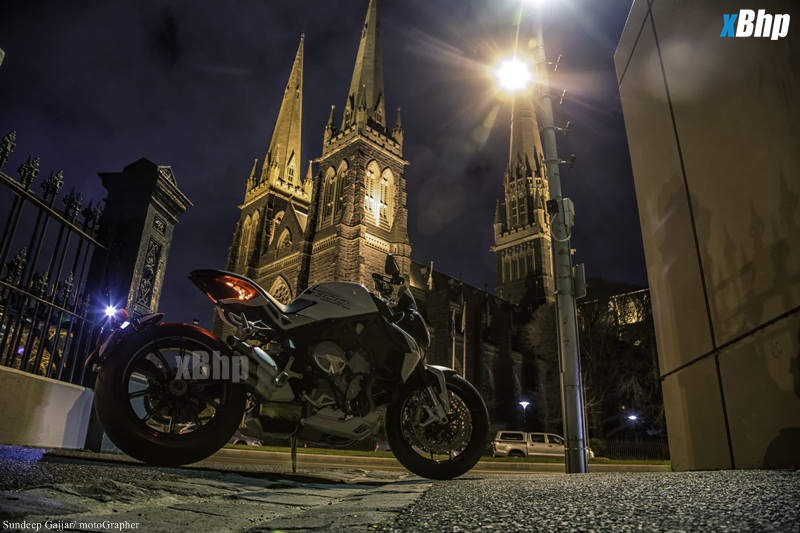


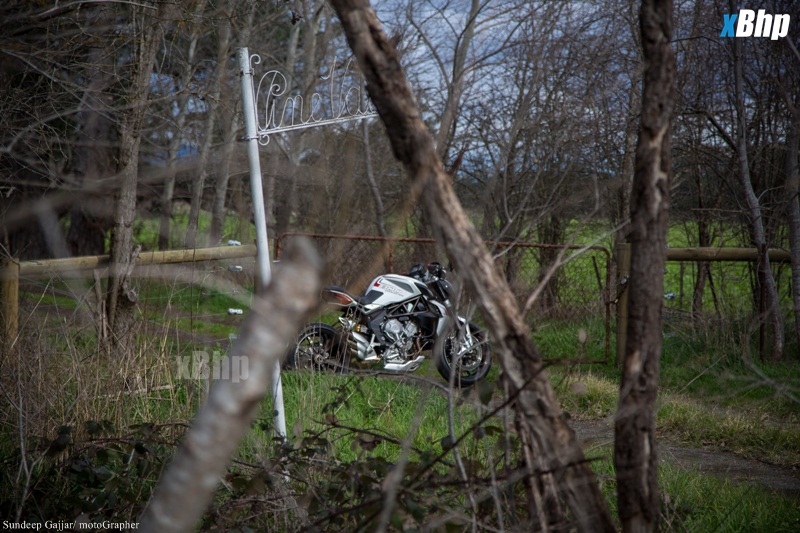


MV Agusta Brutale 800 Dragster Technical Specifications (Australia Specs)
ENGINE
Type: Three cylinder, 4 stroke, 12 valve
Timing system: “D.O.H.C”
Total displacement: 798 cm3
Compression ratio: 13.3:1
Starting: Electric
Bore x stroke: 79 mm x 54.3 mm (3.1 in. x 2.1 in.)
Max. power- r.p.m.: 92 kW (125 hp) at 11.600 r.p.m.
Max. torque – r.p.m.: 81 Nm (8.25 kgm) at 8.600 r.p.m.
Cooling system: Cooling with separated liquid and oil radiators
Engine management system: Integrated ignition – injection system MVICS (Motor & Vehicle Integrated Control System) with three injectors.
Clutch: Wet, multi-disc with mechanical drive
Transmission: Cassette style; six speed, constant mesh | Electronic quick-shift MV EAS (Electronically Assisted Shift)
Primary drive: 19/36
Gear ratio
First gear: 13/37
Second gear: 16/34
Third gear: 18/32
Fourth gear: 19/30
Fifth gear: 21/30
Sixth gear: 22/29
Final drive ratio: 16/41
ELECTRICAL EQUIPMENT
Voltage: 12 V
Alternator: 350 W at 5000 r.p.m.
Battery: 12 V – 8.6 Ah
DIMENSIONS AND WEIGHT
Wheelbase: 1380 mm (54.30 in.)
Overall length: 2060 mm (81.06 in.)
Overall width: 825 mm (32.46 in.)
Saddle height: 811 mm (31.91 in.)
Min. ground clearance: 149 mm (5.86 in.)
Trail: 95 mm (3.74 in.)
Dry weight: 167 kg (368.2 lbs.)
Fuel tank capacity: 16.6 l (4.39 U.S. gal.)
PERFORMANCE
Maximum speed*: 245.0 km/h (153.1 mph)
FRAME
Type: ALS Steel tubular trellis Rear swing arm pivot plates material Aluminium alloy
FRONT SUSPENSION
Type: Marzocchi “UPSIDE DOWN” telescopic hydraulic fork with rebound-compression damping and spring preload external and separate adjustment
Fork dia.: 43 mm (1.69 in.)
Fork travel: 125 mm (4.92 in.)
REAR SUSPENSION
Type: Progressive Sachs, single shock absorber with rebound and compression damping and spring preload adjustment | Single-sided swing arm material Aluminium alloy
Wheel travel: 125 mm (4.92 in.)
BRAKES
Front brake: Double floating disc with 320 mm (12.6 in.) diameter, with steel braking disc and flange
Front brake caliper: Brembo radial-type, with 4 pistons 32 mm (1.26 in.)
Rear brake: Single steel disc with 220 mm (8.66 in.) dia.
Rear brake caliper: Brembo with 2 pistons – 34 mm (1.34 in.)
ABS System: Bosch 9 Plus with RLM (Rear wheel Lift-up Mitigation)
WHEELS
Front: Material/size Aluminium alloy 3.50 ” x 17 ”
Rear: Material/size Aluminium alloy 6.00 ” x 17 ”
TYRES
Front: 120/70 – ZR 17 M/C (58 W)
Rear: 200/50 – ZR 17 M/C (75 W)
FAIRING
Material: Thermoplastic

HORN(et) OK PLEASE! Honda CB Hornet 160R Review
 Dec 2015 Sunil Gupta
Bikes,Honda,Motorcycles
Dec 2015 Sunil Gupta
Bikes,Honda,MotorcyclesThe Honda CB Hornet 160R Review by xBhp. We ride the latest from Honda in the 150cc executive commuter segment and see how the Hornet matches us with stiff competition from the Suzuki Gixxer 155, Yamaha FZ-s Fi V2 and Bajaj Pulsar AS150.
Ever since Honda set out on its own to sell two-wheelers in India, it has tasted success with almost every product it has launched here – the most notable of them being the Activa and the Dream series, riding on which Honda is giving Hero MotoCorp a tough fight in becoming the undisputed leader of motorcycle manufacturers in India. Honda has covered its base well with Activa and the Dream series in the entry level segment.
However, the one area that has proven to be not-so-fruitful has been the 150cc premium commuter segment. Honda enjoyed reasonable success in this segment with the launch of the Unicorn around a decade ago. The Unicorn was well received by the buyers who were looking to explore something beyond the then hot favourite – the Pulsar 150, which happens to still rule this segment. Courtesy the 25,000 + kilometres that I did on the Unicorn, I can vouch for the fact that it was a superbly comfortable motorcycle for urban commuting with its smooth engine and ultra-smooth handling.
The one area where it lacked was its styling. Its over-commuterish riding stance made it a not-so-favourite among young riders who went for something that gave them more poser value. Honda tried to cover that shortcoming with the Dazzler and Trigger motorcycles, but they both failed to trigger the passion among the buyers as much as Honda would’ve liked. Determined to make headway, Honda showcased their new motorcycle to cater to this segment, the CB Hornet 160R at their RevFest event in August 2015 and finally launched it now in December at a grand launch ceremony in Goa, ending 2015 with a remarkable 15 product launches this year.


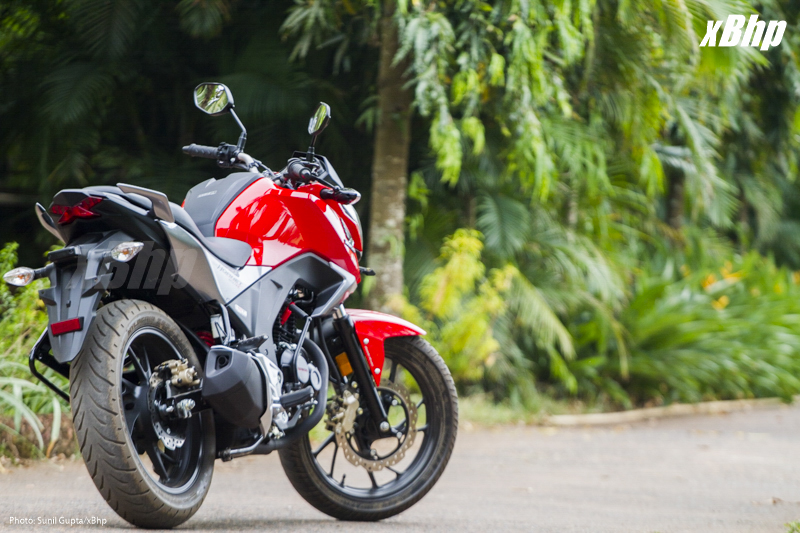

We got to ride the bike for a short time in Goa at the launch and here’s what we think of it.
Styling: The styling of the CB Hornet 160R is definitely positive and it looks inspired from their naked concept bike the CX-01 that they had displayed at Auto Expo 2014 and got positive feedback for it. It is a very refreshing design that makes it stand apart from the crowd. The most striking aspect of this CB Hornet 160R design is its edgy and muscular tank that gives it very aggressive looks and makes it look bigger than it actually is when viewed from certain angles. The angular headlight further enhances the looks from up front. These sharp design lines carry all the way to the back where the mono-shock suspension and the beefy and shortened exhaust add to its overall design appeal. The wide 140 section rear tyre, which is fast becoming a standard in this segment, and the x-shaped tail light give it a very distinct characteristic. The carbon-fibre finish plastic cover on the tank also adds a few brownie points, though it looked prone to scratches. The CB Hornet 160R is available in 5 colour options, namely the Neo Orange Metallic, Sports Red, Pearl Amazing White, Pearl Night Star Black and Pearl Siren Blue.


Honda CX01 Concept and CB Hornet 160R
The CB Hornet 160R gets a fully digital instrument panel that is taken directly from the Unicorn 160. This shows you the odometer, speedometer, tachometer, 2 trip meters apart from time and fuel gauge and other tell-tale lights. The switchgear on the Hornet was a let down. It is the same standard switchgear that you will see on a lot of other Honda bikes including the Livo. This is a very old design and didn’t go well with the otherwise modern persona of the bike. The most irritating thing about this switchgear is the absence of the engine kill switch. It might not be an actual deal breaker for most of the prospective buyers, but surely a negative for an otherwise spotless design. Also the plastic quality on the switchgear is not among the best in town.
The CB Hornet 160R is powered by the same 160cc engine that you’ll find fitted on the Unicorn 160. However, it is tuned for a more eventful and aggressive ride than the Unicorn. This engine comes to life with a very light touch of the thumb starter and now produces 15.6bhp at 8500rpm and a max torque of 14.76Nm that comes at the 6500rpm mark. The CB Hornet 160R engine produces 1 BHP more than the Unicorn 160 but is 5 kg heavier. It is a long stroke engine (Bore x Stroke = 57.3 x 63.09mm) that has a compression ratio of 10:1. It has got a very good bottom and meaty mid-range that makes the CB Hornet 160R a delight to ride in city traffic. You could accelerate from as low as 30kmph in fifth gear without any trouble at all. The 5-speed gearbox of the Hornet runs a taller gearing. This engine carries the trademark smoothness of Honda and is completely vibration free even during high revs. We didn’t find the narrow Goa roads suitable and safe enough to test the top speed, but Honda claims that the max speed of the Hornet 160R is 110kmph.
Like almost all the current Honda engines in the commuter segment, this engine also gets the HET (Honda Eco Technology) tag and is Bharat Stage IV emission norms compliant, which is a first in the country and is much ahead of the April 1, 2016, regulatory deadline.
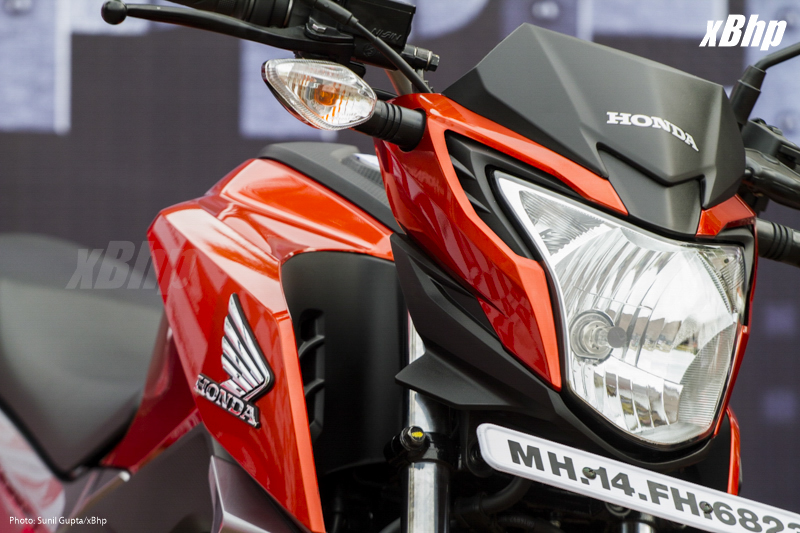


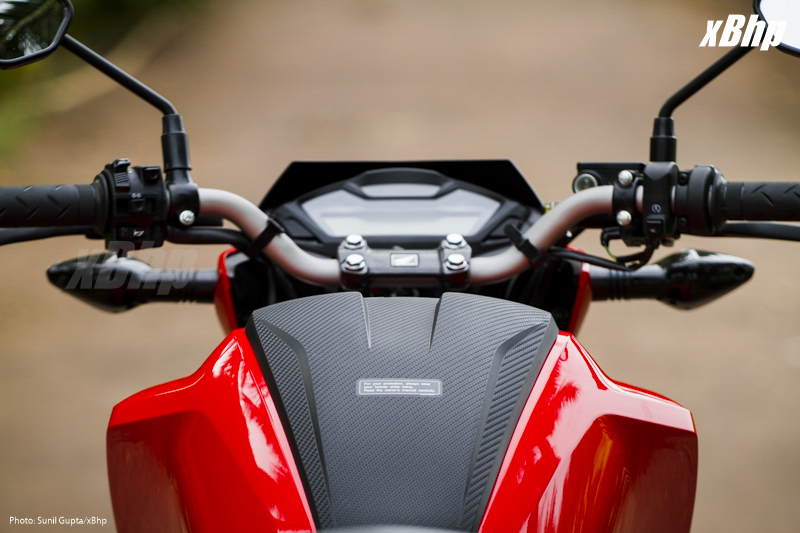

Handling & Comfort: The CB Hornet gets a very comfortable and roomy rider seat, which is true for the pillion seat as well. There’s plenty of room for tall riders as well. The riding posture is not very aggressive or commuterish; instead it is a fine balance between the two. The rearset footpegs are positioned comfortably. The suspension setup is on the softer side of the scale and the bike seemed to glide over potholed filled tarmac, transferring very little discomfort to the riders’ back. The bike feels firmly planted at both low and high speeds and felt eager to turn, making those sudden evasive manoeuvres super easy. It has got a very small turning radius as well, again a plus point when riding in city traffic conditions. The high speed turns on the CB Hornet 160R again left us mighty impressed. The bike seemed to follow the rider’s mind with utmost precision.
Braking is taken care of by a 276mm, 3 pot piston petal disc at the front and a 220mm petal disc at the rear in the CBS version. The standard version comes with a 130mm drum at the rear. The one we rode was a CBS version and the brakes did their job well. The bite was adequate and progressive.

Photo Courtesy: Mohit Soni

Photo Courtesy: Mohit Soni
Conclusion: The CB Hornet 160R seems like a very impressive overall product that ticks all the right boxes and has a lot of things working in its favour. It is priced sensibly and is now retailing at INR 79,900 ex-showroom Delhi for the standard version and INR 84,400 ex-showroom Delhi for the CBS version. It has got style and comfort. It has got a super smooth engine with plenty of low and mid-range torque and handles like a charm. The power it produces makes it only inferior to the Pulsar AS150 in the 150-160 naked bike segment. The Hornet would is direct competition for the Yamaha FZ and the Suzuki Gixxer, which are among the hot favourites of urban youth because of their aggressive looks and good performance. On paper, Hornet does better than the Yamaha FZ on all counts, including the price, power and torque figures. So is the case with Suzuki Gixxer, though it is approximately 4000 rupees cheaper than the CB Hornet 160R. Riders with large physical frames and those who will be clocking a lot of kilometres with a pillion on board should definitely prefer the Hornet over the FZ and Gixxer. We could hardly find anything negative about the Honda CB Hornet 160R during the short date we had it, though we’d definitely like to ride it again for a longer period of time and give you a more detailed and comprehensive review.
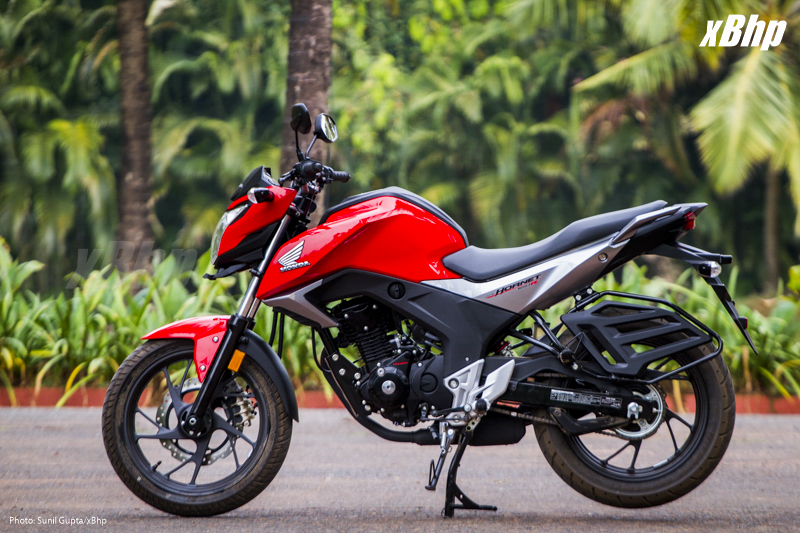

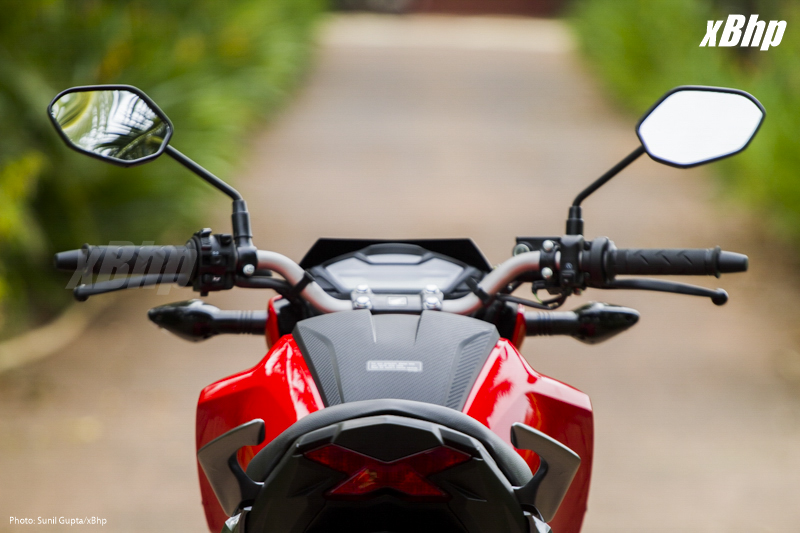


Honda CB Hornet 160R Review Technical Specifications