Since '02 xBhp is different things to different people. From a close knit national community of bikers to India's only motorcycling lifestyle magazine and a place to make like-minded biker friends. Join us

Castrol Power 1

Scan – see – think – act.

Our Partner

Announcement

Collapse
No announcement yet.

An INTRO to Locomotives..Steam /Diesel Electric / Electric.

Collapse
This is a sticky topic.
X
X
 
  • Filter
  • Time
  • Show
Clear All
new posts

  • #46
    Very informative thread sir.
    I want to learn more about diesel-electric locos.

    Comment


    • #47
      The Diesel Locomotive:

      While England was the prime innovator in the field of Steam Locomotives, The US of A became the innovator in Diesel Locomotive technology..
      The First Diesel Engine was invented by Rudolph Diesel of Germany in 1892...and a proper working model was built and shown in 1897.He foretold in 1912 while showcasing his Diesel Engine, "the use of vegetable oils for engine fuels may seem insignificant today, but such oils may become, in the course of time, as important as petroleum and the coal tar products of the present time".He mysteriously disappeared from a Ferry in Sept.,29 1913..His body was never found..
      Here is a simple 4 stroke Diesel Engine operation .


      Here is an animation of the 4 stroke diesel engine..


      There are TWO stroke Diesels Engine also..
      http://www.epicphysics.com/An animation of a two stroke diesel engine cycle. A 2 stroke diesel engine is powered on every down-stroke. It has a high power to...


      Here is an image of the Initial Diesel Locomotive of 1904..this is a pure Diesel Loco which did not succeed.

      The world’s first Diesel locomotives were operated in the summer of 1912 in Switzerland, but was not a commercial success.
      Thomas Edison possessed an outstanding patent on the electric locomotive, his design actually being a type of electrically propelled railcar.
      GE (General Electric)built its first electric locomotive prototype in 1895. However, high electrification costs caused GE to turn its attention to Diesel power to provide electricity for electric railcars.
      Problems related to co-coordinating the Diesel engine and electric motor were Often encountered,but through continued R & D GE succeeded in designing a working system.
      The first significant breakthrough occurred in 1914, when Hermann Lemp, a GE electrical engineer, developed and patented a reliable direct current electrical control system.
      In 1917, GE produced an experimental Diesel-electric locomotive using Lemp's control design, the first known to be built in the United States.
      Following this development, the 1923 Kaufman Act banned steam locomotives from New York City because of severe pollution problems. The response to this law was to electrify high-traffic rail lines. However, electrification was uneconomical to apply to lower-traffic areas.
      In the mid 1920s, Baldwin Locomotive Works produced a prototype Diesel-electric locomotive, using electrical equipment from Westinghouse Electric Company,....for "special uses" for example places where water for steam locomotives was scarce,
      Here is a picture of one of the ALCO diesel made in 1926,with 300 hP. It's top speed was 30 Mph.


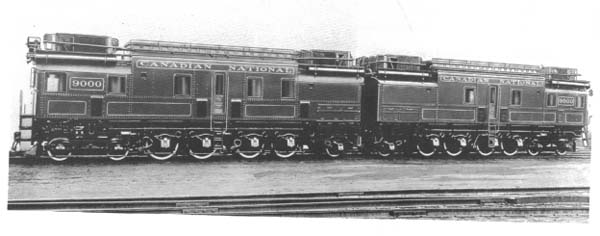
      Industry sources were beginning to see the outstanding advantages of this new form of motive power. In 1929, the Canadian National Railway became the first North American railway to use diesels in mainline service with 2 units, 9000 and 9001, from Westinghouse.

      for more on these Locomotives...


      The first regular service of Diesel-electric locomotives was in switching applications. General Electric produced several small switching locomotives in the 1930s.
      Diesel locomotive and diesel-electric railroad locomotion entered the mainstream when the Union Pacific used Diesel streamliners to haul passengers.
      Following the successful 1939 tour of General Motors demonstrator freight locomotive set, the transition from steam to Diesel power began, the pace substantially quickening in the years following the close of World War II.
      Last edited by psr; 08-13-2012, 01:44 PM.
      When Was The Last Time,You Did Something For The First Time.

      Comment


      • #48
        Diesel locomotive advantages over steam locomotives

        Diesel locomotive engines slowly started to overtake those powered by steam as the manufacturing and operational efficiencies of the former made them cheaper to own and operate.While initial costs of diesel engines were high, steam locomotives were custom-made for specific railway routes and lines and, as such, economies of scale were difficult to achieve.
        Though more complex to produce with exacting manufacturing tolerances of 1/10,000th of an inch vs. 1/100th of an inch for steam engines, diesel locomotive parts were easier to mass production.
        Steam locomotive manufacturer Baldwin offered almost five hundred steam models in its prime, other diesel manufactures offered fewer than ten diesel varieties.

        Diesel vs.steam locomotive

        Diesel locomotive offered significant operating advantages over steam locomotives. They can safely be operated by one person, making them ideal for switching/shunting duties in yards and the operating environment is much more attractive, being much quieter, fully weatherproof and
        without the dirt and heat that is an inevitable part of operating a steam locomotive.
        Diesel engines can be started and stopped almost instantly, meaning that a diesel locomotive has the potential to incur no costs when not being used. Steam locomotives require intensive maintenance, lubrication and cleaning before, during and after use.Steam locomotive preparation
        took many hours, especially if the locomotive is being fired from cold. However, it is still the practice of large North American railroads to use straight water as a coolant in diesel engines instead of coolants that incorporate anti-freezing properties.
        This resulted in diesel engines being left idling when parked in cold climates instead of being completely shut down. Still, a diesel engine can be left idling unattended for hours or even days, especially since practically every diesel engine used in locomotives has systems that automatically shut the engine down if problems such as a loss of oil pressure or coolant loss occur.
        A steam locomotive, by comparison, may be kept in readiness between uses with a small fire to maintain a slight heat in the boiler, but requires regular and frequent attention to maintain the fire and the level of water in the boiler.
        Moreover, maintenance and operational costs of steam locomotives were much higher than diesel counterparts even though it would take diesel engines almost 50 years to reach the same horsepower output that steam locomotives could achieve at their technological height.
        Annual maintenance costs for steam engines accounted for 25% of the initial purchase price. Spare parts were machined from wooden masters for specific locomotives. The sheer number of unique steam engines meant that there was no feasible way for spare-part inventories to be maintained.
        Steam engines also required large quantities of coal and water, which were expensive variable operating costs. Further, the thermal efficiency of steam was considerably less than that of Diesel engines.
        Diesel’s theoretical studies demonstrated potential thermal efficiencies for a compression ignition engine of 35~55% compared with 6-10% for steam locomotives, and an 1897 one-cylinder prototype operated at a remarkable 30% efficiency. By the middle of the twentieth century, Diesel engines had effectively replaced steam engines.
        Last edited by psr; 06-12-2012, 11:25 AM.
        When Was The Last Time,You Did Something For The First Time.

        Comment


        • #49
          Diesel locomotive transmission types

          Diesel locomotive unlike steam engines, is an internal combustion engine and require a transmission to power the wheels. The engine must be allowed to continue to run when the locomotive is stopped.A diesel engines transmission is almost similar to that employed in most road vehicles. This type of transmission is generally limited to low-powered, low speed shunting/switching locomotives, lightweight multiple units and self-propelled railcars.
          The mechanical transmissions used for railroad propulsion are generally more complex and much more robust than road versions. There is usually a fluid coupling between the engine and gearbox, and the gearbox is often of the epicyclic/planetary type to permit shifting while under
          load.


          Diesel electric locomotive

          In a Diesel electric locomotive, the Diesel engine drives an electrical generator whose output provides power to the traction motors.
          There is no mechanical connection between the engine and the wheels. The important components of the Diesel locomotive propulsion is the Diesel engine, the main generator, traction motors and a control system consisting of the engine governor as well as electrical or electronic
          components used to control or modify the electrical supply to the traction motors, including switchgear, rectifiers and other components.
          In the most elementary case, the generator may be directly connected to the motors with only very simple switchgear.Originally, the traction motors and generator were DC machines.
          The generator was called a Dynamo...here is a picture of same in Older version of WDM2 of ALCO....with it's shield in place....


          Same dynamo with shield off....Notice the Brushes with their Pig Tails connection....


          Following the development of high-capacity silicon rectifiers in the 1960s, the DC generator was replaced by an alternator using a diode bridge to convert its output to DC. This advance greatly improved locomotive reliability and decreased generator maintenance costs by elimination of
          the commutator and brushes in the generator.
          The elimination of the brushes and commutator, in turn, disposed of the possibility of a particularly destructive type of event referred to as flashover, which could result in immediate generator failure and, in some cases, start an engine room fire.
          A electric diesel locomotive's power output is independent of road speed, as long as the unit’s generator current and voltage limits are not exceeded.

          Therefore, the unit's ability to develop traction effort which is what actually propels the train will tend to inversely vary with speed within these limits.
          Maintaining acceptable operating parameters was one of the principal design considerations that had to be solved in early electric diesel locomotives development and, ultimately, led to the complex control systems in place on modern units.


          Last edited by psr; 08-13-2012, 11:49 AM.
          When Was The Last Time,You Did Something For The First Time.

          Comment


          • #50
            Here is the Picture of the ALCo "V" 16 cylinder Diesel Engine capable of 3,300 HP. The huge circular part at the end of the engine is the Alternator..

            Last edited by psr; 08-13-2012, 11:50 AM.
            When Was The Last Time,You Did Something For The First Time.

            Comment


            • #51
              Here is a cross section view of GM's "V" TWO STROKE diesel engine for Locomotives.This engine came in different configuration of 8 to 16 cylinders and 1,000 to 2,000 + HP. The engine is 45 degrees V configuration...The Alco engine is more or less same Except it is 4 STROKE and less powerful.


              Last edited by psr; 08-13-2012, 11:54 AM.
              When Was The Last Time,You Did Something For The First Time.

              Comment


              • #52
                Originally posted by psr View Post
                Here is a cross section view of GM's "V" TWO STROKE diesel engine for Locomotives.This engine came in different configuration of 8 to 16 cylinders and 1,000 to 2,000 + HP. The engine is 45 degrees V configuration...


                OMG...from where you getting all these drooling stuff bro....I could not even finish understand your previous post and you post another next info...

                Even I have forgotten my own questions while reading your excellent posts...
                KTM RC390 - Current
                Yamaha R15 v2 - Sold
                Hero Hunk - Sold
                An IT Engineer by profession and a rider by soul.


                Delhi to Sach Pass - http://www.xbhp.com/talkies/tourer/3...h-ka-darr.html
                Delhi to Mana - http://www.xbhp.com/talkies/tourer/2...xperience.html
                Delhi to Munsyari - http://www.xbhp.com/talkies/tourer/2...ttrakhand.html
                Spiti circuit - http://www.xbhp.com/talkies/tourer/3...cuit-solo.html

                Facebook

                Comment


                • #53
                  Originally posted by itsmevini123 View Post
                  OMG...from where you getting all these drooling stuff bro....I could not even finish understand your previous post and you post another next info...

                  Even I have forgotten my own questions while reading your excellent posts...
                  Since there weren't any queries,I thought members have understood and so proceeded with my posts...the infos are in my disk , a work of nearly 15 yrs of gathering info...
                  Think of the questions you wanted to ask and post...I will wait till to-morrow
                  Last edited by psr; 06-12-2012, 07:44 PM.
                  When Was The Last Time,You Did Something For The First Time.

                  Comment


                  • #54
                    I cannot post details of all of the aspects and details of Diesel Locos since it is voluminous and will take up Xbhp's Server disk space....it will end up more like the year long serial in our TV shows..
                    So Here is a link to Various Diesel Loco Engine's Service and operator's Manual...

                    The Link contains both ALCO and GM's EMD series engines..so those who want to get into the depth of it..please dive into the details given there in.


                    Operator Manuals


                    Last edited by psr; 06-12-2012, 11:18 PM.
                    When Was The Last Time,You Did Something For The First Time.

                    Comment


                    • #55
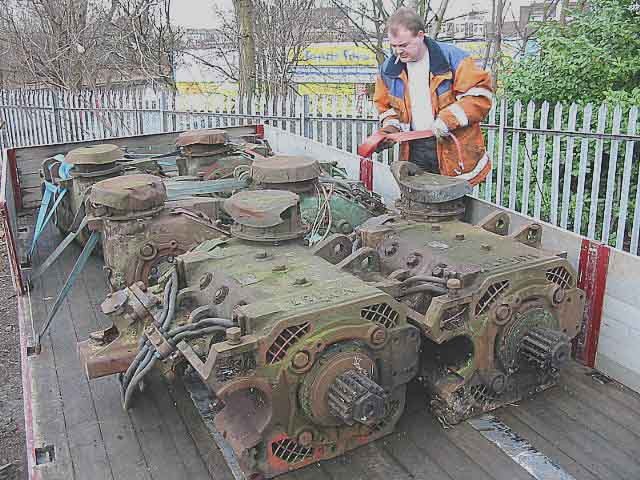
                      Here is a picture of different DC traction motors. note the Gear milling on the drive shaft which will engage directly on to the gear on the wheel Axle.


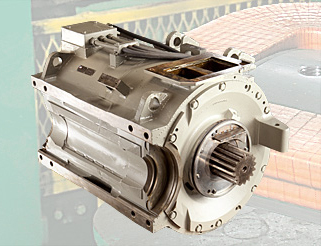
                      here is a pic., of the AC drive motor..


                      and here is the picture of the Main high power Alternator


                      Here is the Picture of the main Powered Axle ,removed, rechecked and ready,....showing the Gear for mating with the Drive motor.

                      Last edited by psr; 08-13-2012, 12:06 PM.
                      When Was The Last Time,You Did Something For The First Time.

                      Comment


                      • #56
                        We will now see the Diesel Electric Locomotives used by Indian Railways...
                        ALCO supplied Diesel engines of 251 series 251-B and 251-C are the most used models in Indian Railway. These were actually time proven for reliability and efficiency ,since these Engines were developed and used in World War 2 in boats, Tanks,Locomotives and other areas where reliable Diesel engine was called for.After the initial suply , ALCO agreed to a technology transfer of the these engines to India...Chitharanjan, DLW Varanasi was formed and started making these engines..Later on Patiala and other places also benefited . At present Indian Railways have more than 4,000 of these engines in various IDs of WDM-2 to WDM3 C..with Horse power ranging from 2,300 HP to 3,300 HP....the older versions are now getting upgraded to higher Horse Power...

                        The Idling RPM is 400 and highest is 1,100 RPM.
                        Here is a brief spec about the ALCO 251 engines...
                        Specifications

                        6 cylinder in-line, 12 and 16 cylinder Vee, 4-cycle, high pressure turbo-charged with charge air cooling.
                        Cylinders: Bore 9 in. (228 mm.). Stroke 10 in. (267 mm.). Swept volume 668 cub. in. per cylinder. Compression ratio 12-5 : 1. Cast iron water cooled heat treated cylinder liners, chrome plated on inner surfaces. Cast iron-nickel alloy cylinder heads.
                        Pistons: Forged aluminium, with ring grooves machined into a replaceable ring carrier shrunk-fit onto the piston and fusion-welded at the crown. Ni-Resist (nickel-alloy) insert fitted into ring carrier provides groove for top ring. Pistons cooled by pressure-circulated oil, and piston pins arc full-floating type.
                        Connecting Rods: Drop-forged steel in an ,,H'' beam cross-section. Piston-pin end has pressed steel-backed bronze bushing. Crank-pin bearing is grooveless in the load-carrying area.
                        Crankskaft: Alloy-steel forging, precision machined and heat-treated for hardness. Fully counter-balanced. Rifle-drilled oil passages through crankshaft.
                        Crankcase: Fabricated steel.
                        Valve Gear: Air und exhaust valves are of wear-resistant alloy and are completely interchangeable. Cast iron valve guides are replaceable, and cylinder-head wear is reduced by use of replaceable stellite valve-seat inserts in the head. Two camshafts, one for each bank. located inside engine block, gear driven from crankshaft.
                        Fuel Injection: Designed for flat fuel-consumption curves. System in high-pressure, with fuel supplied to cylinders by individual single-acting plunger pumps.
                        Turbocharger: High pressure ratio exhaust gas driven turbo-charger. ALCO designed and built with replaceable blades on the turbine wheel. Water cooled charge air cooler.
                        Fuel: A.S.T.M. specification 2-D. Other fuels can be used (heavy oils, natural gas, crudes etc.) with suitable standard modifications ot fuel injection equipment and governing apparatus.
                        Lubrication: Forced feed with one gear driven pump.
                        Cooling System: Varies with type, locomotive or other installation. One ALCO pump, gear driven from engine.
                        Starting: Motored main generator.
                        Mounting: 4 point


                        To Know more about ALCO's contribution during WW 2, here is the link...

                        American Locomotive Went to War

                        The Diesel Electric engine consists of various parts ...


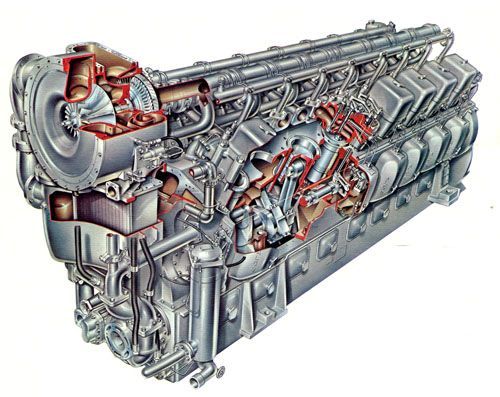
                        Here is a cross section view of the ALCO 251 "V" Engine...


                        Here is a pic of the diesel pump


                        Here is a cross section pic of the Turbo used..


                        Piston with Steel Top


                        The side cover for the Mechanical Injector..


                        The Diesel Injector with the cover removed...


                        The Expressor...compressor + Vacuum unit.


                        The top head, with valves
                        Last edited by psr; 08-13-2012, 01:15 PM.
                        When Was The Last Time,You Did Something For The First Time.

                        Comment


                        • #57
                          PSR Sir, I'm traveling in Sealdah-New Delhi Duronto Express right now, and what I saw on the dabbas that it was written 160 kmph. Does that mean that these new trains are safe till 160 kmph?
                          In other superfast trains its written as 110 kmph and they run around 110 kmph even.
                          Then why dont they increase the maximum speed of Duronto trains from 130 kmph to atleast 150kmph?
                          (I have seen videos on youtube showing shatabdi doing ~156kmph)
                          Last edited by sunny_; 06-14-2012, 11:03 PM.

                          Comment


                          • #58
                            Originally posted by sunny_ View Post
                            PSR Sir, I'm traveling in Sealdah-New Delhi Duronto Express right now, and what I saw on the dabbas that it was written 160 kmph. Does that mean that these new trains are safe till 160 kmph?
                            In other superfast trains its written as 110 kmph and they run around 110 kmph even.
                            Then why dont they increase the maximum speed of Duronto trains from 130 kmph to atleast 150kmph?
                            (I have seen videos on youtube showing shatabdi doing ~156kmph)
                            Each coach of any train is certified for a specific speed based on its construction ...A wording "Fit to run 160 Kmph" means the coach can do 160 Kmph Max....but what about the tracks ? and the train scheduling ? if you have to travel 400 Kms non stop and running time is 5 hrs, then the train will not be run at the rated speed ,but adjusted to "Running Time".
                            Happy to know you have noted the Coach rated speeds,and learning....if possible try to see which engine Electric or diesel is pulling the train...Diesels have WDM written near the crash buffers, and Electric Locos are WAP...both will have a number suffix to the ID..ie.,for diesel 2, 3a,3c etc, and 4 ,5 , 7, for the electric
                            When Was The Last Time,You Did Something For The First Time.

                            Comment


                            • #59
                              Hello PSR sir,

                              I have some questions in my mind:-

                              I travel trough metro on daily basis, we know there is no separate engine in metro, even I cant see any big engine around the wheel also, there are only some normal round shape kind of metal pieces in between the wheel excel, how these motor works and how their wheels moves? and how they generate lots of power, they motor/engine are really very powerful, how they suddenly start moving the train like a car, they only took 15sec (approx) to reach 80kmph (i have checked it with my stopwatch while travelling), even on the high up it performs like they running on normal track...

                              One more technology I have noticed, that to reduce the shock of normal/sudden or brakes/start, wheels and its assembly along with excel moves a bit before the coaches to reduce the start shock, while happening this it create a sound like some air pressure release and same like in when it stops, when they brakes train moves forward a bit more in cam prison to wheel/assembly, to reduce the break shock on the train and passengers...how these stuff works
                              KTM RC390 - Current
                              Yamaha R15 v2 - Sold
                              Hero Hunk - Sold
                              An IT Engineer by profession and a rider by soul.


                              Delhi to Sach Pass - http://www.xbhp.com/talkies/tourer/3...h-ka-darr.html
                              Delhi to Mana - http://www.xbhp.com/talkies/tourer/2...xperience.html
                              Delhi to Munsyari - http://www.xbhp.com/talkies/tourer/2...ttrakhand.html
                              Spiti circuit - http://www.xbhp.com/talkies/tourer/3...cuit-solo.html

                              Facebook

                              Comment


                              • #60
                                Originally posted by itsmevini123 View Post
                                Hello PSR sir,

                                I have some questions in my mind:-

                                I travel trough metro on daily basis, we know there is no separate engine in metro, even I cant see any big engine around the wheel also, there are only some normal round shape kind of metal pieces in between the wheel excel, how these motor works and how their wheels moves? and how they generate lots of power, they motor/engine are really very powerful, how they suddenly start moving the train like a car, they only took 15sec (approx) to reach 80kmph (i have checked it with my stopwatch while travelling), even on the high up it performs like they running on normal track...

                                One more technology I have noticed, that to reduce the shock of normal/sudden or brakes/start, wheels and its assembly along with excel moves a bit before the coaches to reduce the start shock, while happening this it create a sound like some air pressure release and same like in when it stops, when they brakes train moves forward a bit more in cam prison to wheel/assembly, to reduce the break shock on the train and passengers...how these stuff works
                                The Delhi Metro is powered by Electric Locomotion ...more or less like the EMUs of other metros,and if you notice, there is a overhead line for this..This line carries 25,000 Volts AC at 50 Hz..so like all Electric locos the acceleration will be immense because of the efficiency of nearly 95 % and the instant power available from the 25 Kv line.
                                You have both Broad gauge (1,676 mm) and Standard gauge (1,435 mm) rail forms in Delhi Metro...
                                The Phase I of broad gauge coaches were built by the consortium of Hyundai Rotem, Mitsubishi Corporation, and MELCo.
                                Initially the coaches were built in South Korea and after Technology transfer at BEML Bangalore....The Standard Gauge coaches are built by BEML Bangalore. In Phase II Bombardier was the supplier and ,now Bombardier Corp., is doing the same through their Vadodara factory.

                                The reason for the smooth ride is because of the Secondary Air Suspension in all these coaches and the Braking is Microprocessor controlled to give the best braking.
                                Hope I have clarified your query.

                                Get ready to levitate....since Govt., had proposed to Introduce Mag Lev in Delhi Metro
                                Last edited by psr; 06-15-2012, 07:16 PM.
                                When Was The Last Time,You Did Something For The First Time.

                                Comment

                                Working...
                                X