







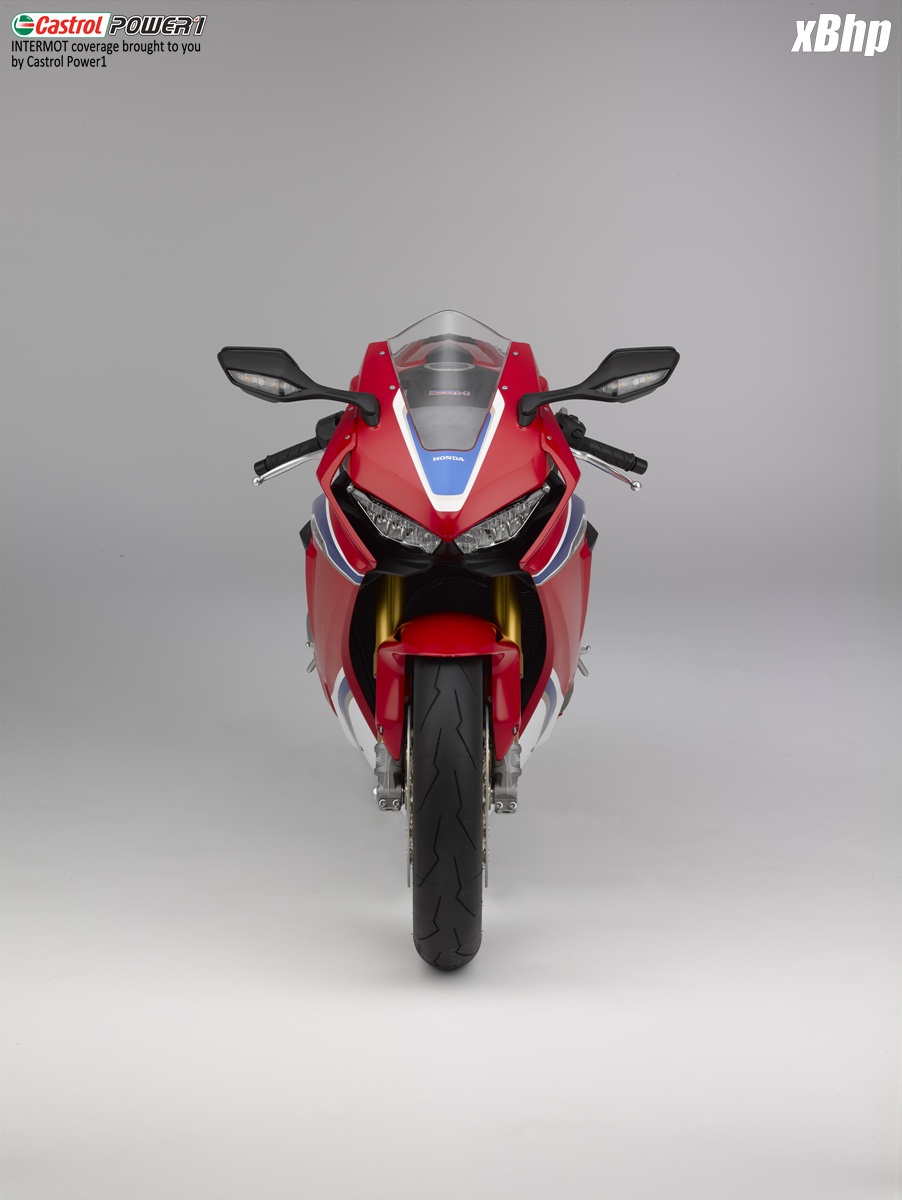
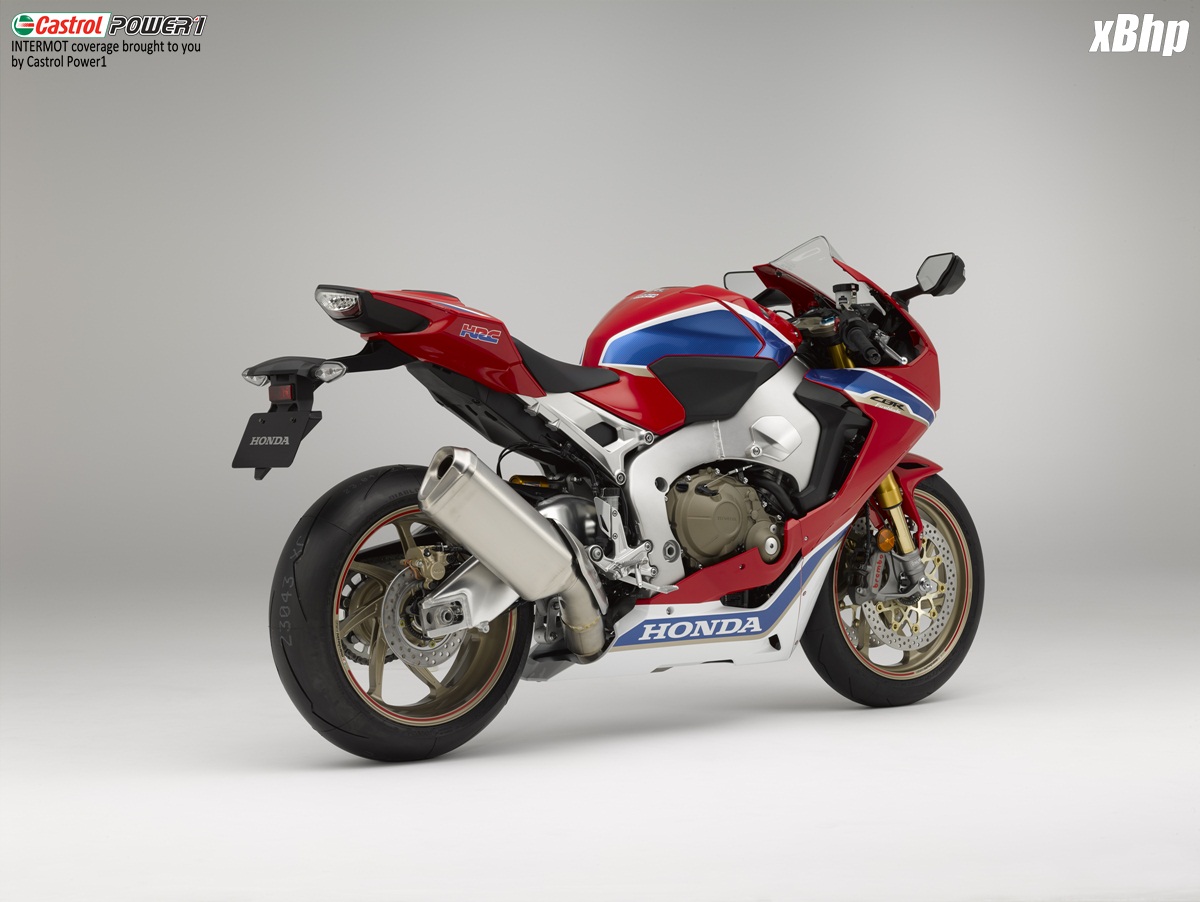
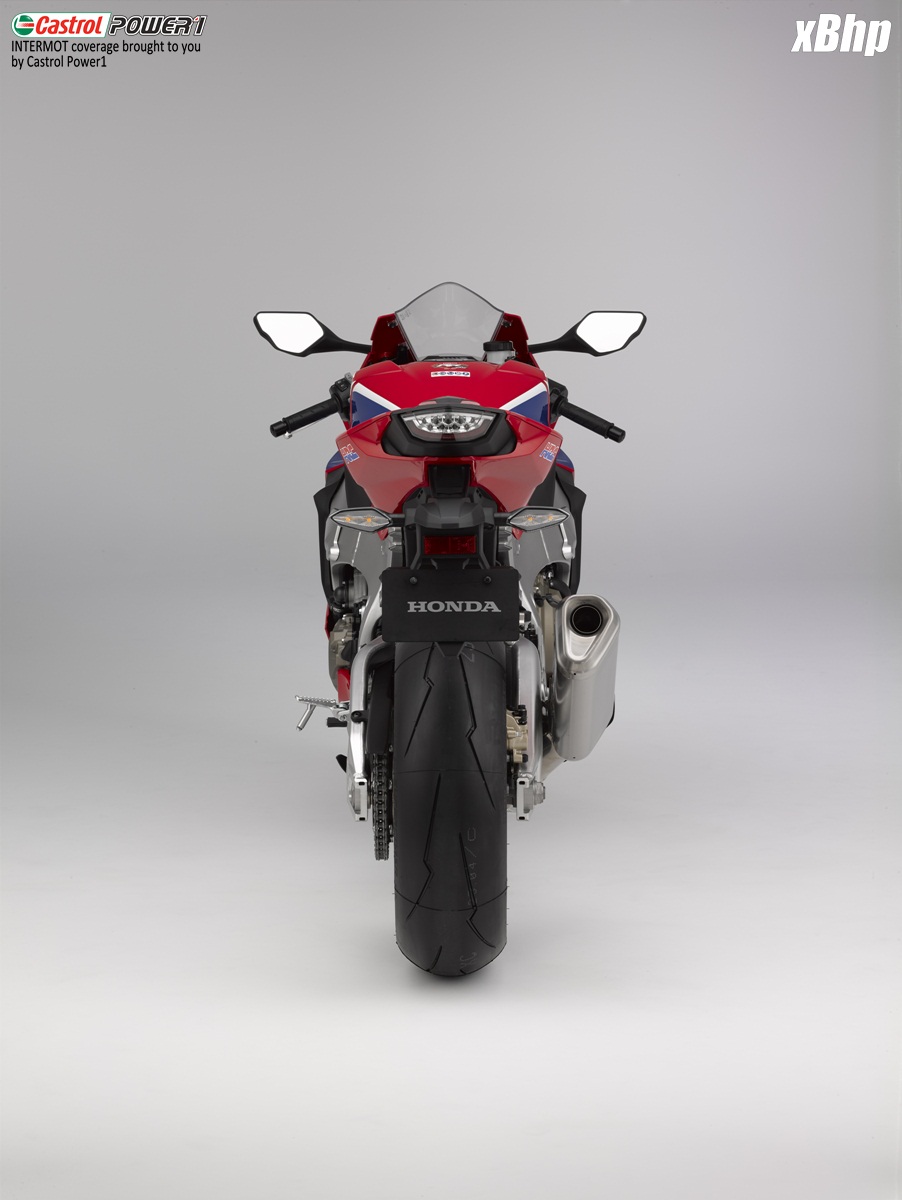
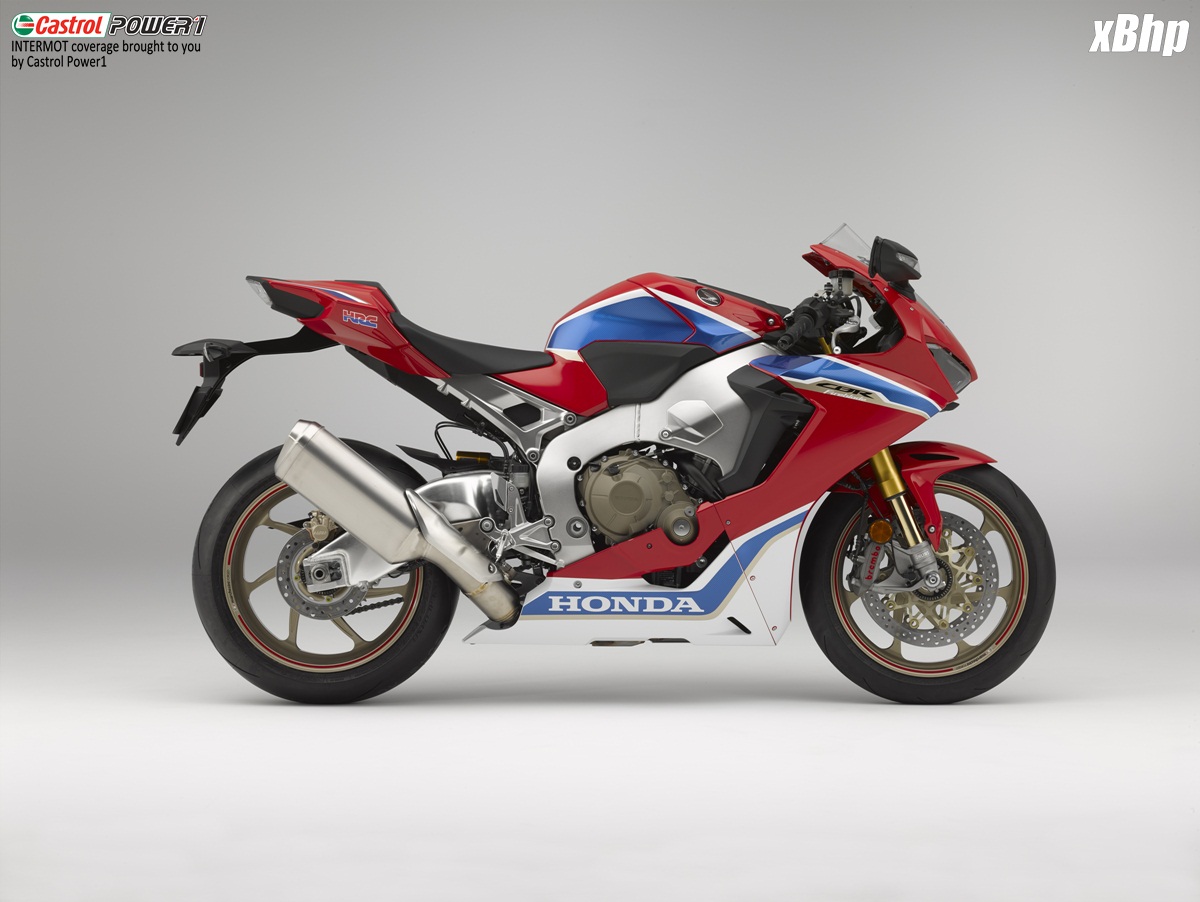
Honda has unveiled the CBR 1000RR SP as well as SP2 Fireblade at INTERMOT in Cologne, Germany on 4th October 2016.
The new Fireblade SP is of less weight, more power and electronics to help the rider wherever and however they’re riding.
The new electronic control system provides constant, selectable and fine-tunable rider support. Central to the system is the 5-axis Inertial Measurement Unit (IMU), which measures exactly what the machine is doing, in every plane. It works the Honda Selectable Torque Control (HSTC) that precisely manages rear wheel traction via the FI-ECU and Throttle By Wire (TBW). The new ABS (also managed by the IMU) offers Rear Lift Control (RLC) and the ability for hard, safe trail braking into corners. Any difference measured between the front and rear wheel speeds engages Wheelie Control, depending on settings.
It also works with the Ohlins Objective Based Tuning Interface to adjust both the compression and rebound damping force of the semi-active Öhlins Electronic Control (S-EC) front fork and rear shock. For the rider this means access to a whole new level of handling ability, with suspension reaction – whether working through pre-sets or manual input – that delivers exactly the right amount of control in every situation. It functions as well on the road as it does the track, and for Honda a new era begins.
At the same time as the S-EC is working the suspension, the Honda Selectable Torque Control (HSTC) is precisely managing rear wheel traction through the IMU, FI-ECU and Throttle ByWire (TBW). It also delivers a Wheelie Control function.
Three standard display modes – Street, Circuit and Mechanic – provide all theinformation required for the rider relevant to the type of riding. The information displayed can be fine-tuned and adjusted while riding by using the left hand switch gear and TFT liquid crystal display, just as on the RC213V-S, Honda’s road going version of its RC213V MotoGP machine.
While the electronic control is very much a new departure for the Fireblade, the combination of the other two factors draws faithfully on the philosophy of the original 1992 machine: the optimal balance of power and weight. The engine revs harder and higher, with a much higher compression ratio and revised cam timing, and uses the TBW (a first for an inline four-cylinder Honda) and Acceleration Position Sensor (APS) which have been inspired by the technology developed for the RC213V-S
Bottom end torque and power are improved, with a significant increase in top-end power –up 8kW to 141kW @13,000rpm and 3modes of engine output character can be chosen from. A Quickshifter is fitted as standard, as is Downshift Assist (with autoblipper) and new assist slipper clutch.
The smart use of magnesium and careful assessment and lightening of individual parts the engine also carries 2kg less. The new titanium exhaust muffler saves further weight and aids mass centralisation, as does the titanium petrol tank. Overall the Fireblade SP is 15kg lighter than the outgoing model, with a wet weight of 195kg.
The twin-spar aluminium frame’s rigidity balance has been finely adjusted, and the swingarm is stiffer to match. A new rear subframe is lighter as are the redesigned wheels, while Brembo monobloc four-piston front brake calipers use high-performance track-ready brake pads.
The Fireblade SP’s bodywork outlines an aggressive, functional minimalism, and the machine is slimmer and much more compact with a single seat unit fitted as standard. All lighting is LED and the stunning Tri-Colour paintwork – on a red base – harks back to Honda racing history.

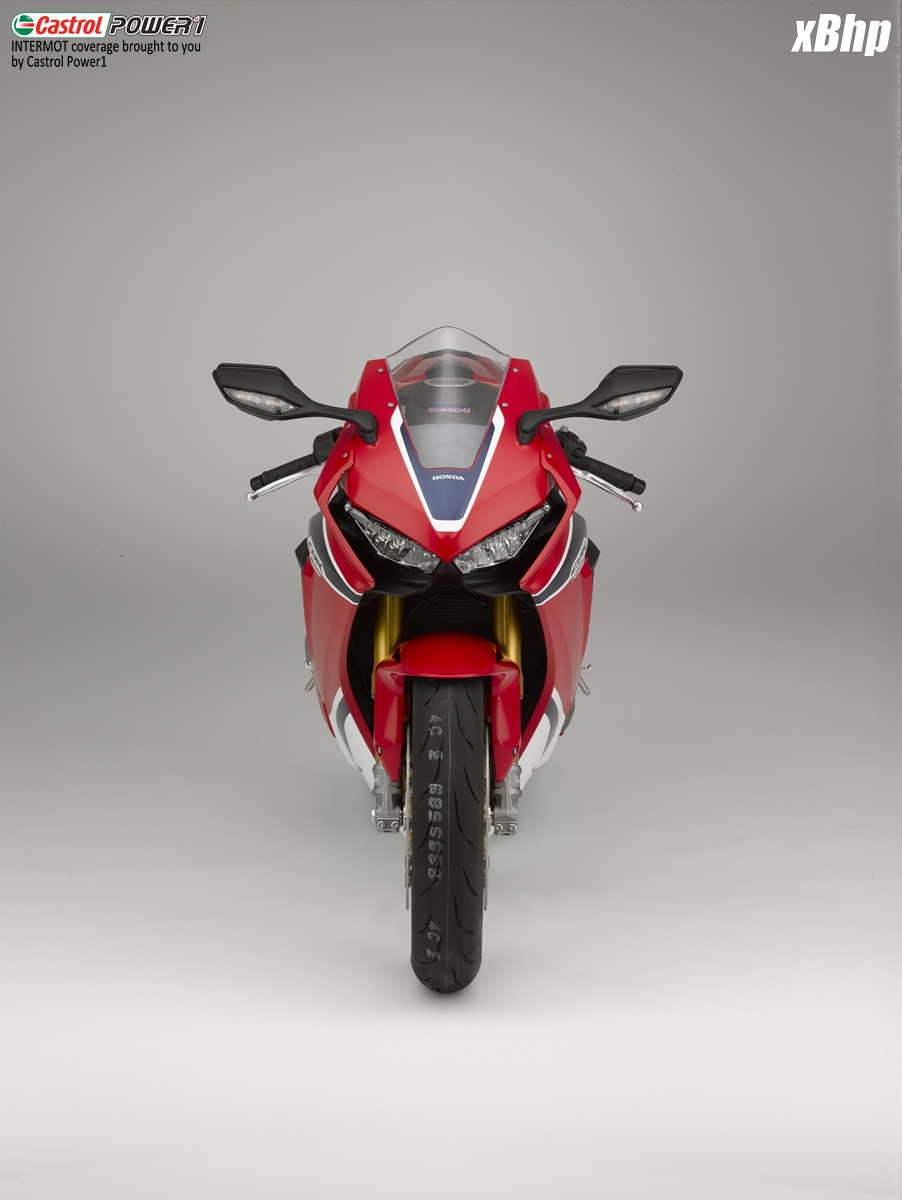
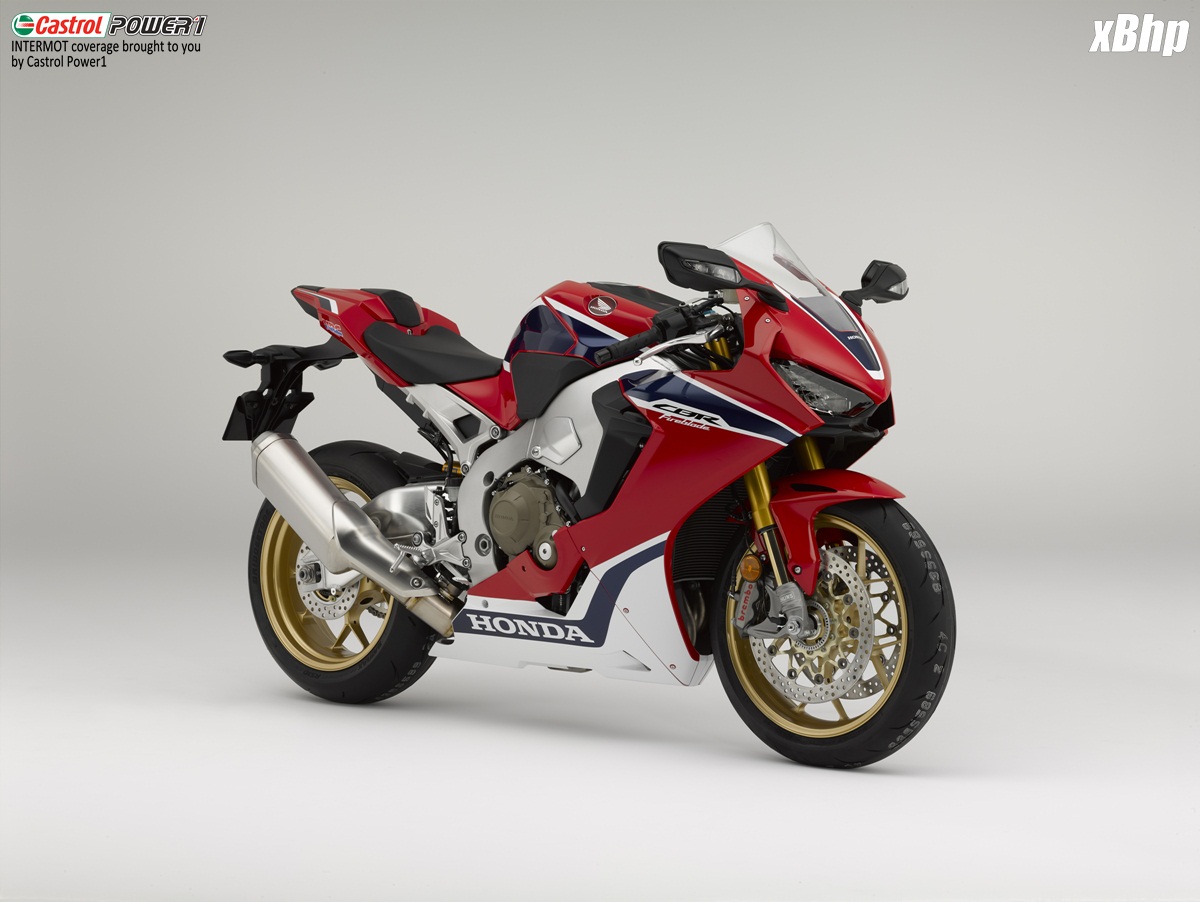
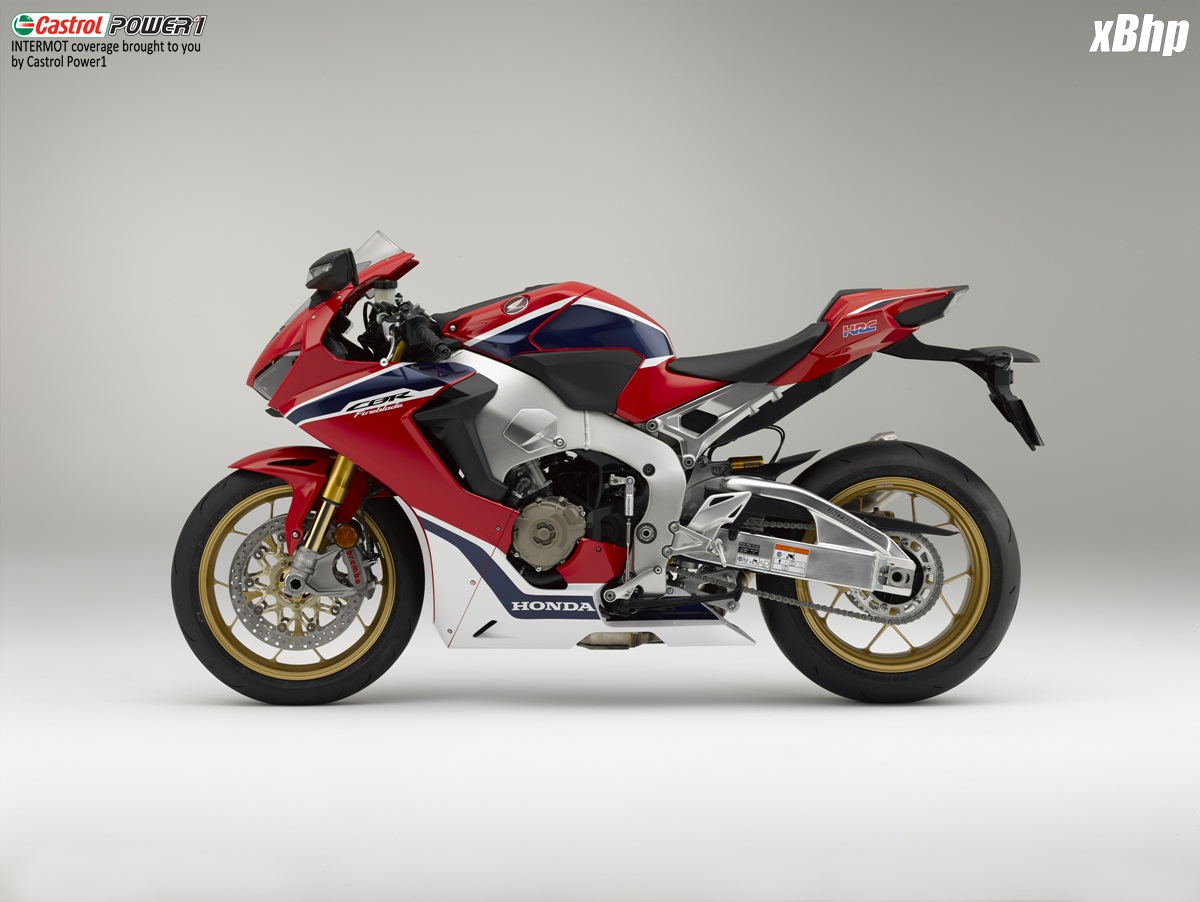

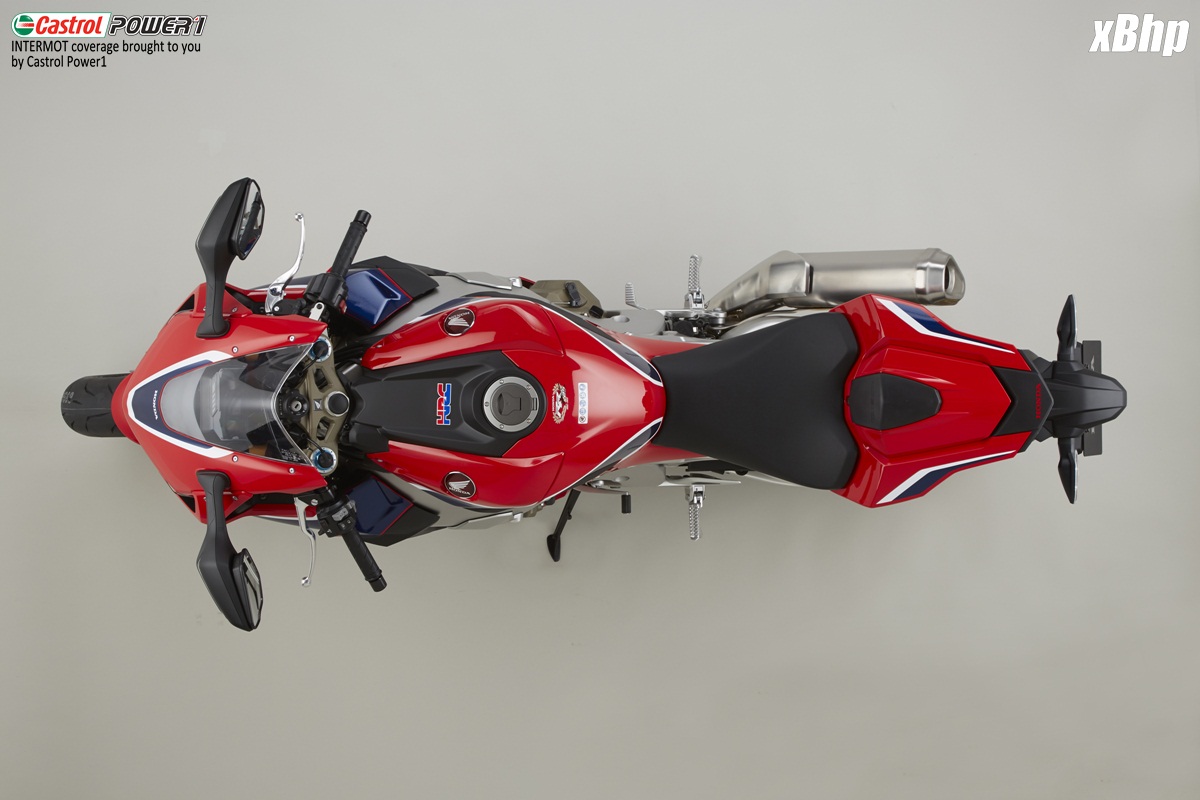
The CBR 1000RR SP2 is a road legal homologation special using the Fireblade SP as a base having some of the key features like, Marchesini wheels, revised cylinder head; valves, combustion chambers and pistons and an available racing kit.
Visually the carbon pattern insets and gold striping interwoven into the Tricolour paint mark the Fireblade SP2’s difference over the ‘stock’ machine and gold Marchesini wheels (reducing front/rear wheel inertia by 18/9%) are another clue. But the real differences – and what gives the Fireblade SP2 ultimate racing potential – lie inside the engine and, in turn, the parts that can be added from the two race kits that will be available.
While the 76mm bore is identical to the SP1 the Fireblade SP2 cylinder head runs 1mm larger 31.5mm diameter intake valves and 1.5mm larger 25.5mm diameter exhaust valves, with 10°/12° included valve intake/exhaust included valve angles (from 11°/11°). The valve pitches are identical, maintaining cylinder head width.
It runs the same 13.0:1 compression ratio but uses valve shapes and combustion chambers optimised for efficiency. Elongated spark plugs and a water jacket tightly wrapped around the combustion chambers improve cooling; this technology is derived directly from Honda’s RC213V MotoGP machine.
The pistons use an exclusive crown design with heat treatment that strengthens the area around the piston boss, which itself employs a 2.5mm shorter (and 8g lighter per cylinder) piston pin. Ready to house high-lift camshafts the outer diameter of the valve lifter has grown 2mm to 28mm, while total height and thickness have been reduced saving weight.
The Fireblade SP2’s electronic control devices are the same as those of the SP, with exclusive SP2 settings. For both race and general circuit use, a racing kit will be available.



xBhp’s Coverage of Intermot 2016 brought to you by Castrol Power1