






The term Holy Trinity has a nice ring to it. But personally, my fascination with it began a while ago. I am a motorcyclist but I have nothing against cars. Especially when they have a super or hyper prefix. Anyway, back to the topic at hand, being a petrolhead, the famous Holy Trinity of Hypercars had me very interested in the term. A term that encompasses McLaren P1, Ferrari LaFerrari, and Porsche 918? It had to be special.
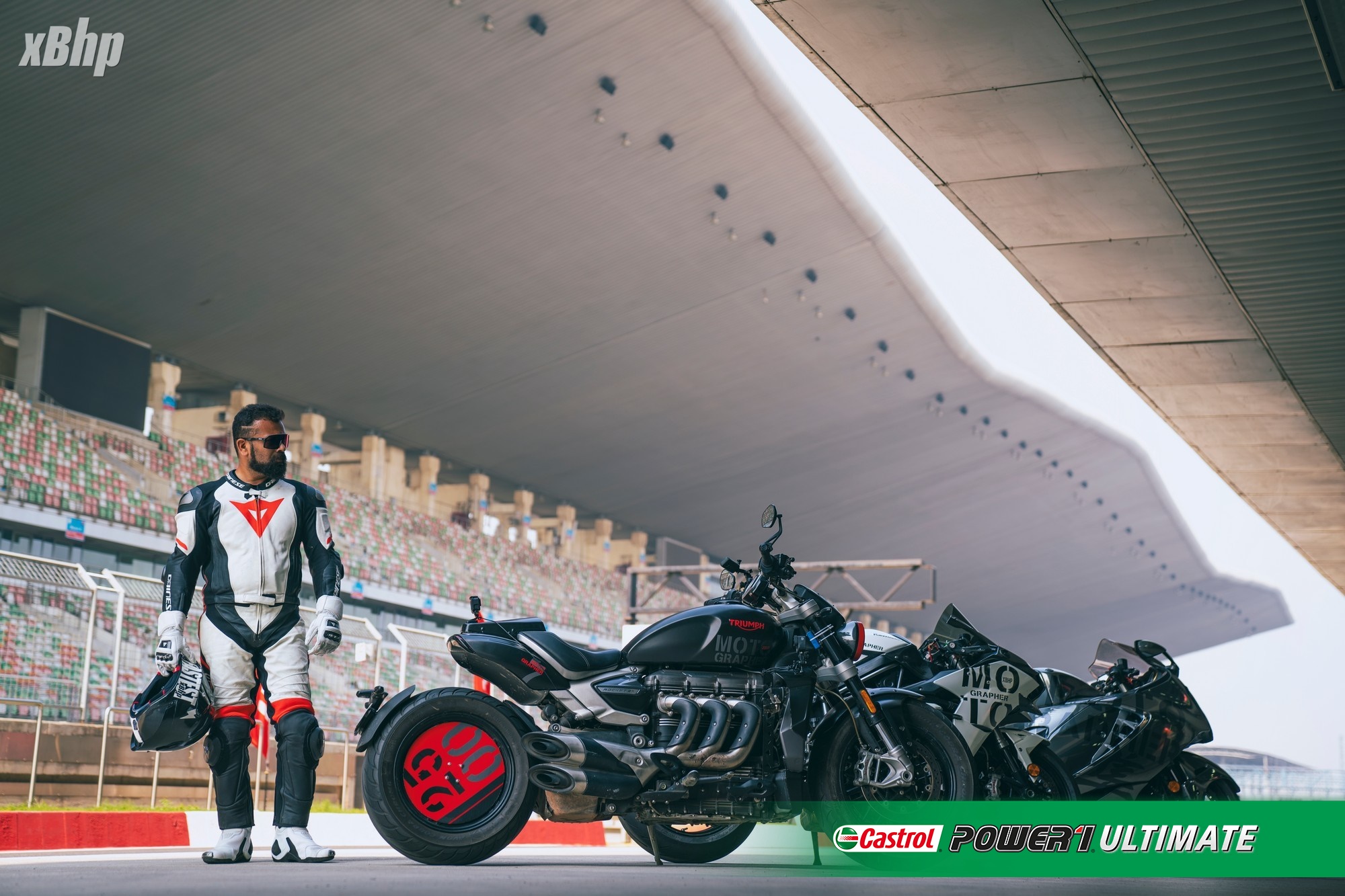
Now, onwards to why I am talking about it. By God’s grace, I have something of a personal Holy Trinity in the xBhp Garage. Triumph Rocket 3 R the world‘s largest capacity production motorcycle, Kawasaki Ninja H2, the world’s fastest street-legal production motorcycle, and the Suzuki Hayabusa (3rd Gen), perhaps the most fabled motorcycle ever made. If they don’t qualify to define the Holy Trinity of motorcycling, I do not know what can.
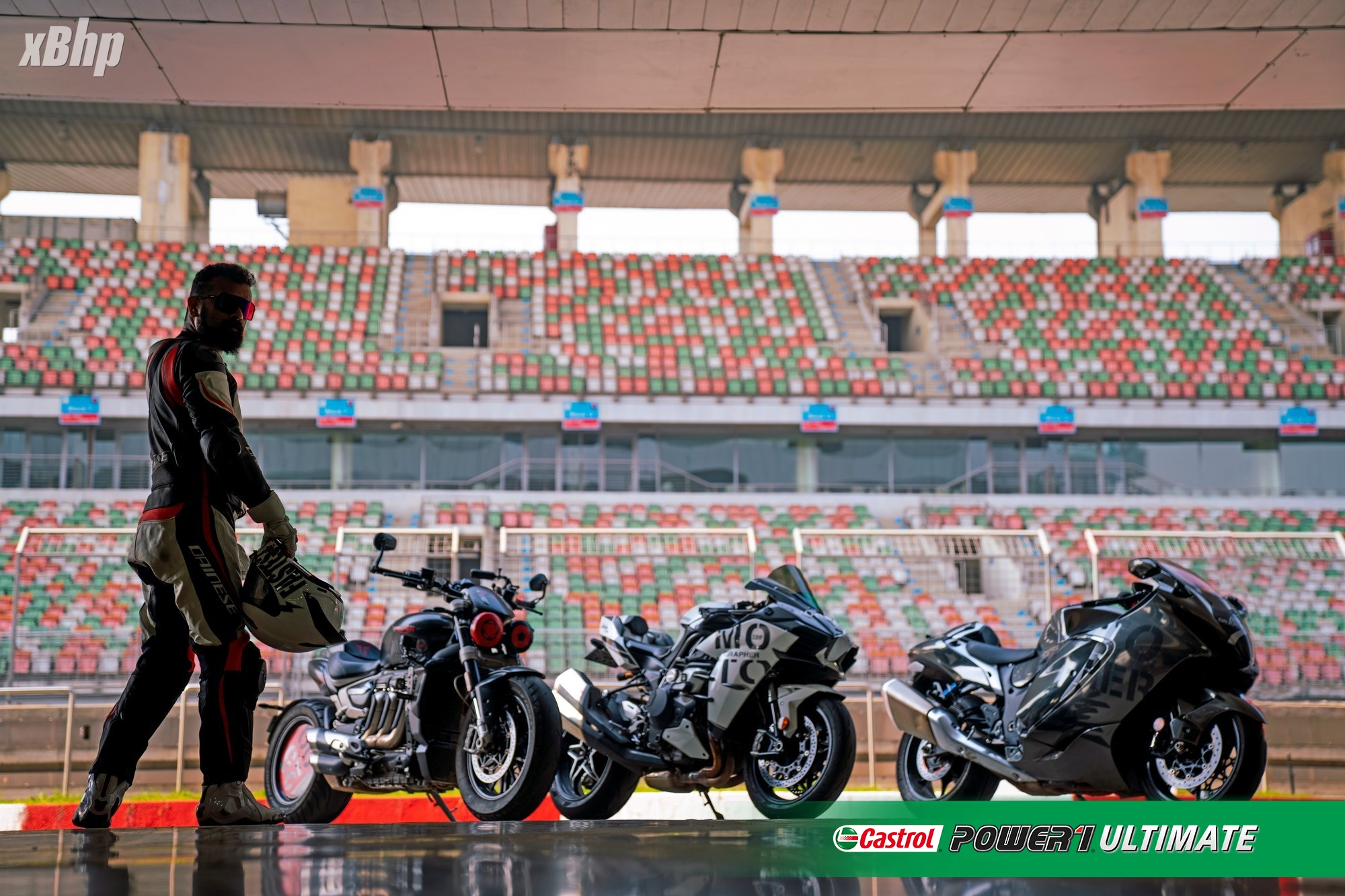
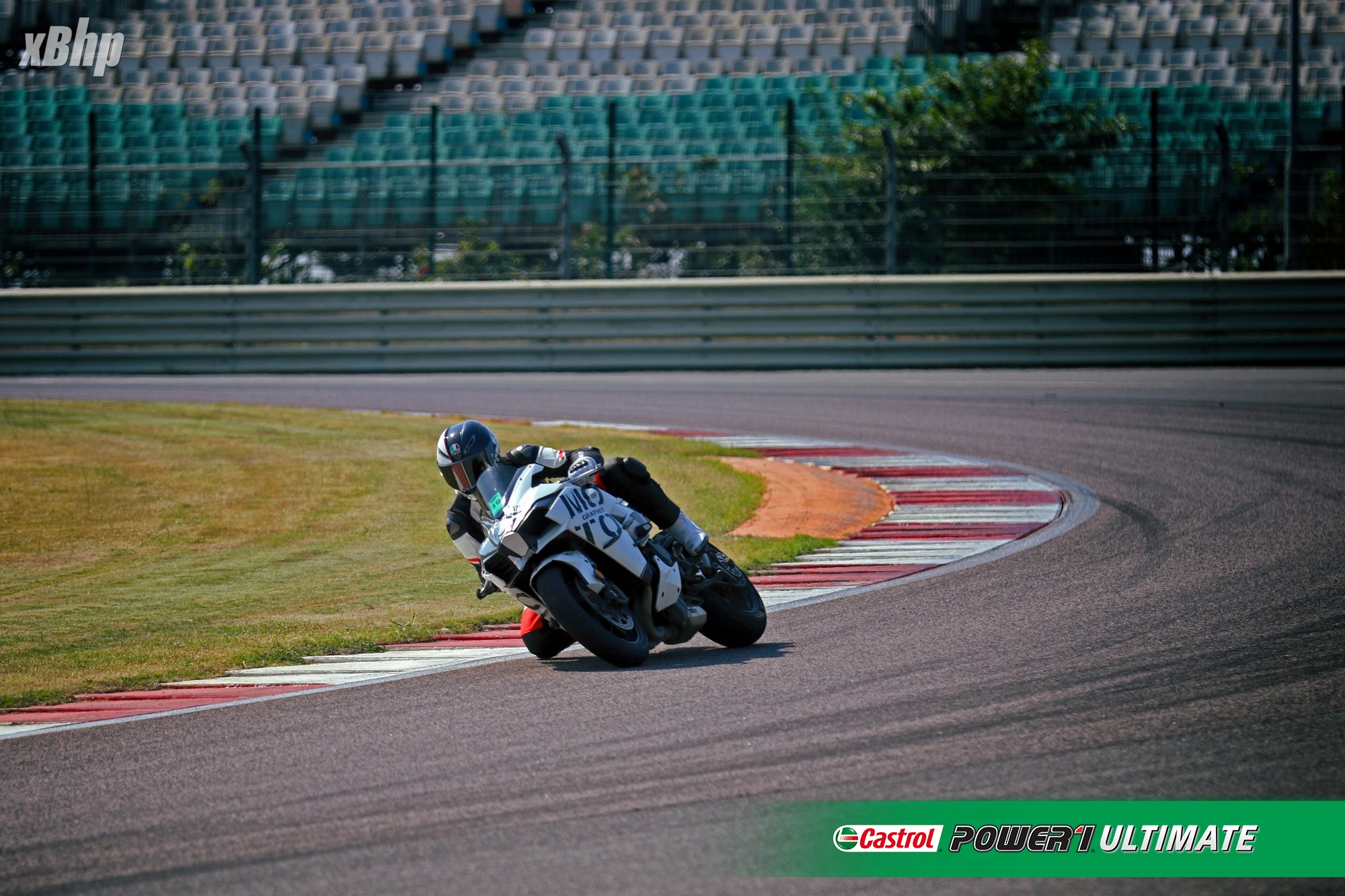
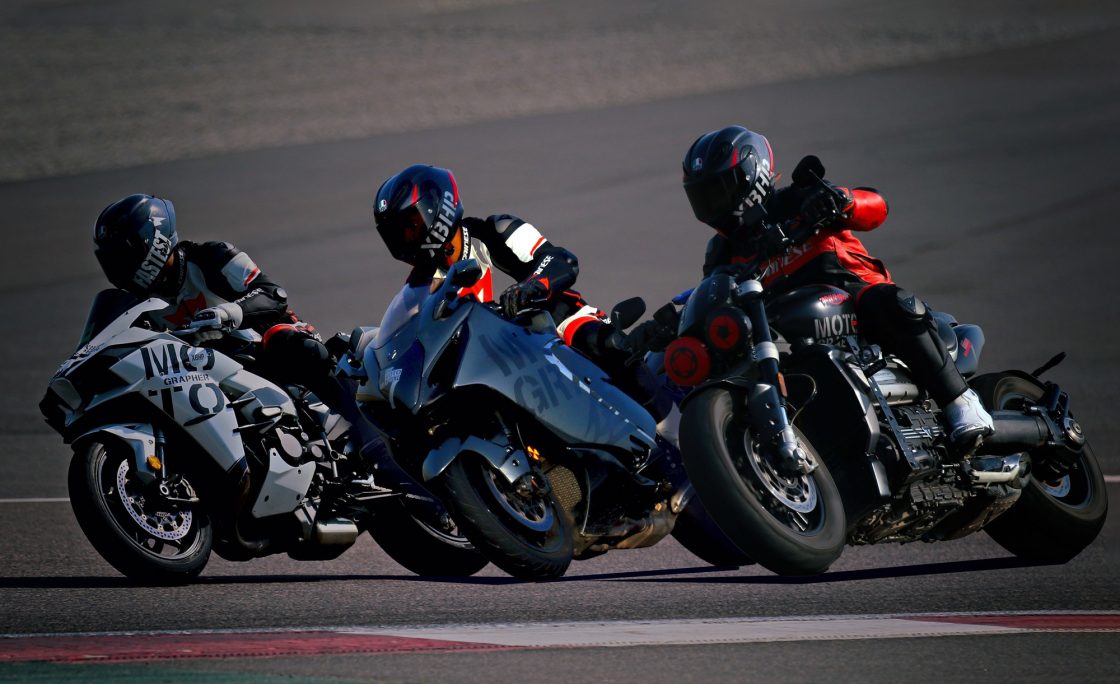
I have ridden all three of these motorcycles extensively. But side by side on an F1-grade track? That’s a different story altogether. It is also a story I got to write recently during the track day hosted by ISBK. Powered by Castrol POWER1 ULTIMATE, I rode the bejesus out of the three motorcycles knowing full well that I had the best engine oil taking care of my steeds. More than that, the performance we could extract thanks to its 5-in-1 Full-Synthetic Formula… bonkers!
TRIUMPH ROCKET 3 R
Powered by
Castrol POWER1 ULTIMATE 15W50
It weighs over 300 kg fully loaded. It has a nearly 1,700mm wheelbase. It has a 240-section rear tyre. It has no fairing. It has no wind protection. It is a cruiser. It is meant for a dragstrip. And finally; IT WON’T GO ON A RACETRACK! But do you know what doesn’t give a flying monkey about all that? The Triumph Rocket 3 R.
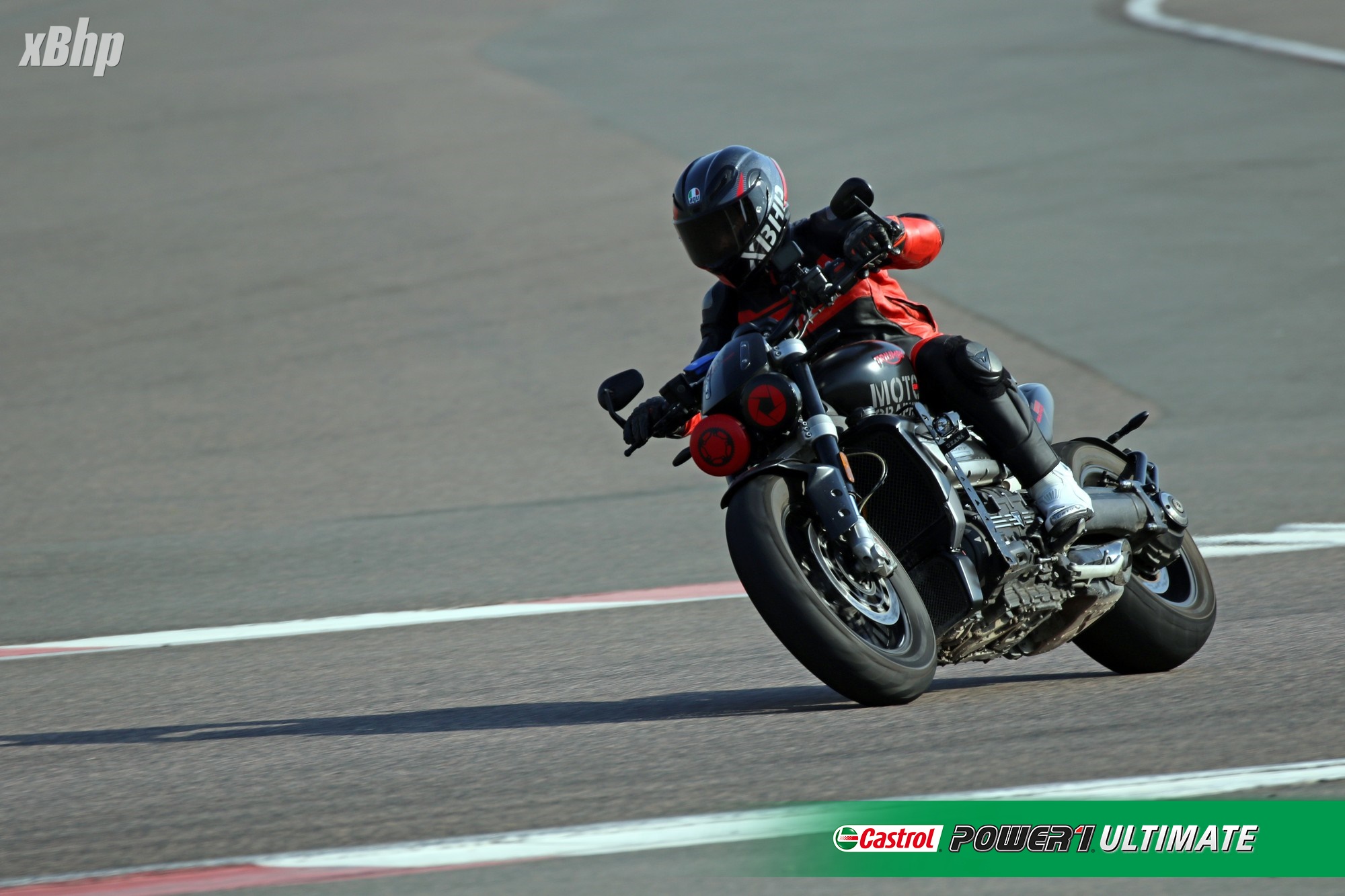
I have owned the Triumph Rocket 3 R for a while now. And it still surprises me, it still keeps me engaged… it still thrills me to no end. For most motorcycles and motorcyclists, things dampen a bit after the novelty has worn off. But this thing, this hellspawn; it is perhaps the single-most marvellous example of motorcycle engineering.
It is powered by a 2.5-litre triple that makes 221 Nm of torque and nearly 170 bhp of power. That’s a lot and very usable on BIC’s straight. With the racket of a sound it makes at full-song, you almost don’t hear the wind being hurled at you when you are riding at almost 200 kays an hour. I enjoyed it but even some spectators were thrilled to listen to a massive triple’s thunderous roar over the scream of other much sportier motorcycles.
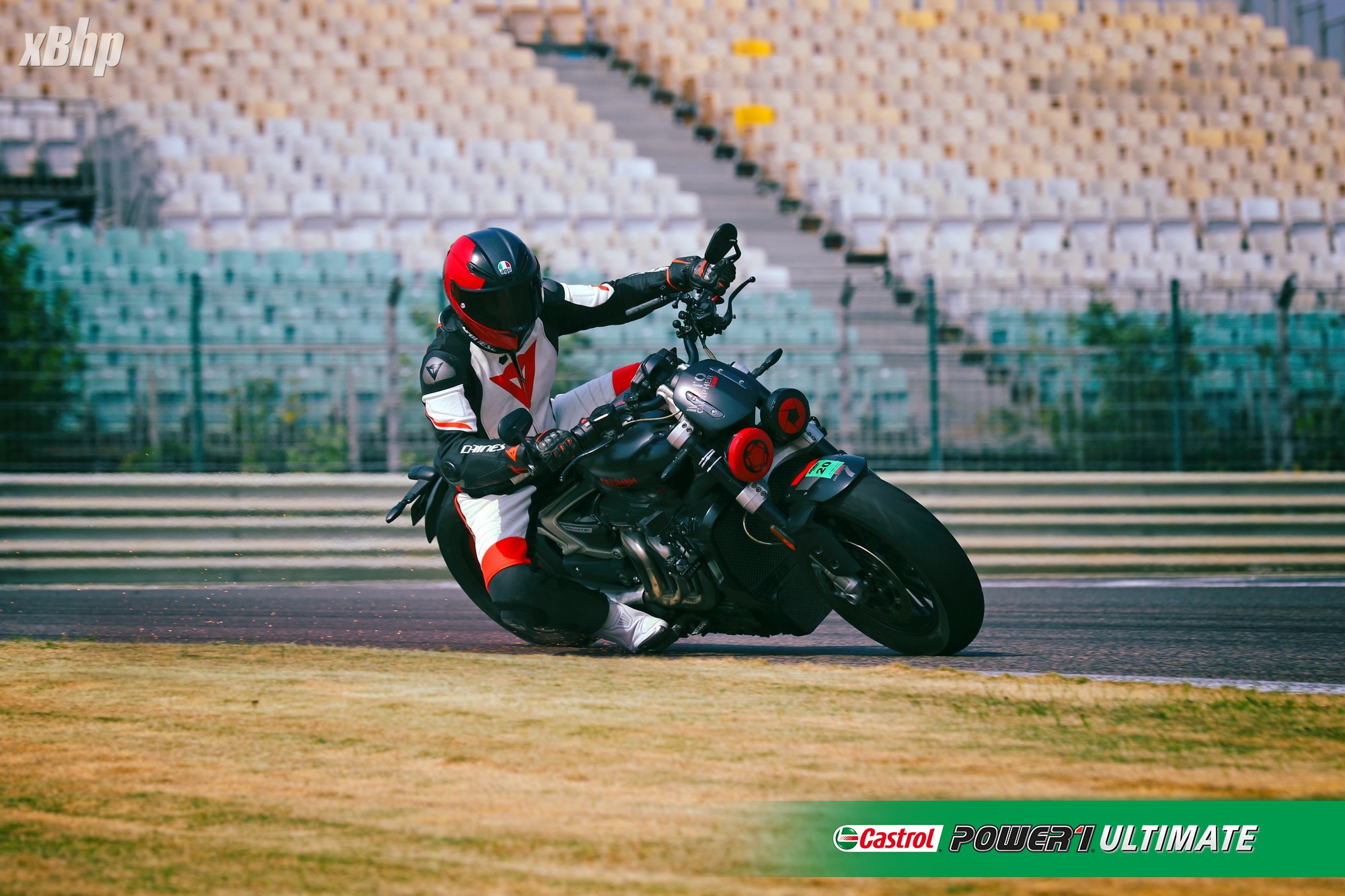
Another factor here was Castrol POWER1 ULTIMATE 15W50 that powered my Rocket 3 R. From heat management to smoothness, and from acceleration to endurance; Castrol POWER1 ULTIMATE and its 5-in-1 Full-Synthetic formula work wonders in accentuating the Rocket 3 R’s acceleration and in mitigating the ill effects of the heat generated by that massive engine.
But we were at BIC and not the high-speed track of NATRAX. The biggest difference? BIC has turns, tight ones too, and a lot of them. That is where everything that I mentioned in the first paragraph comes into play. But mind-blowingly enough, the effects are not as profound as one may think. And that is why the Rocket 3 R is a gem, an unadulterated result of British engineering acumen and their passion!
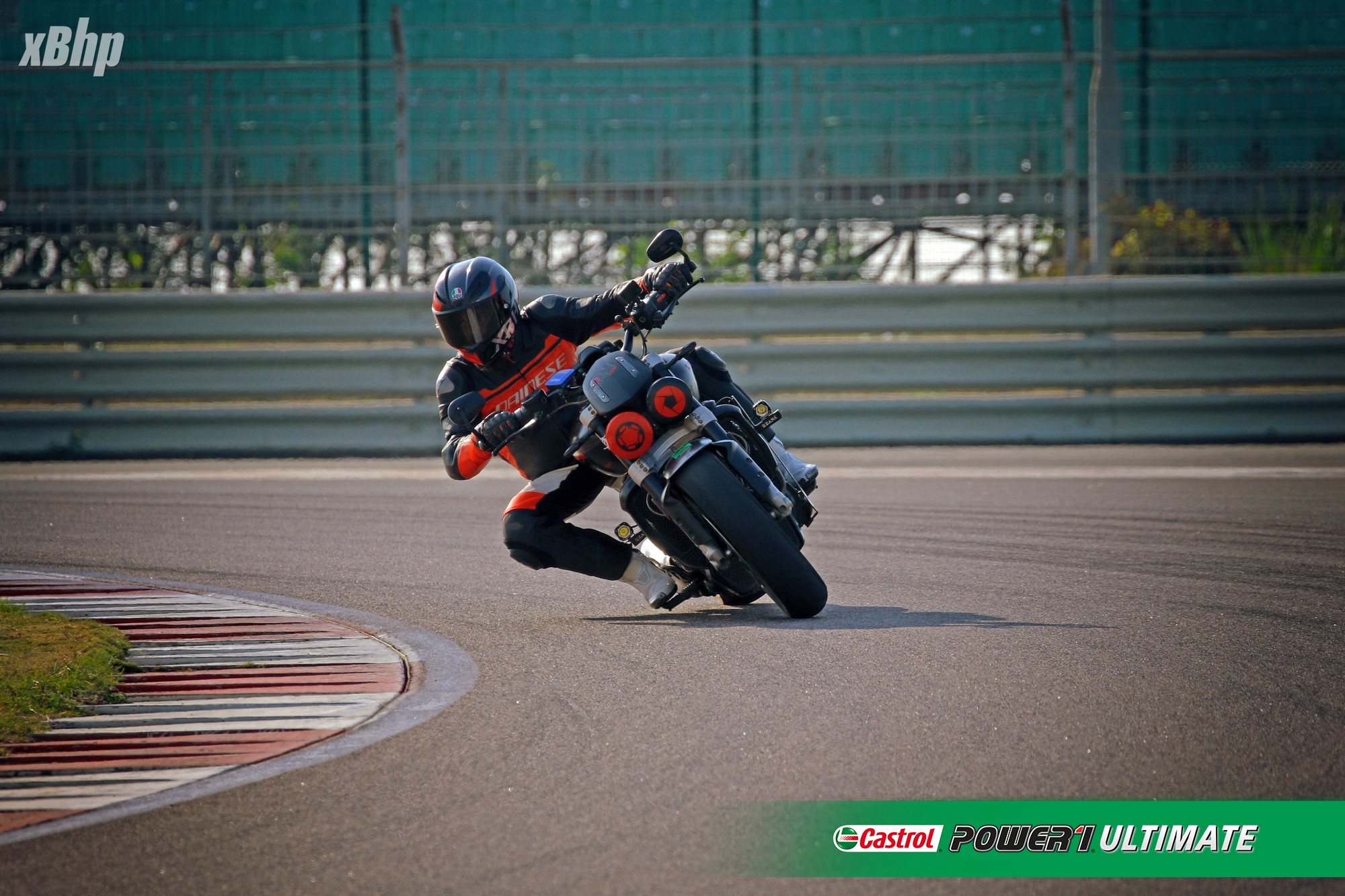
The dynamics of the motorcycles are important and we’ll get to them but the single most important factor is the handlebar. Why? Because that’s what you use primarily to turn. To muscle a motorcycle like this around a corner when it’s moving at quote-unquote fair speeds, it is a handful. Or it would have been a handful if not for the wide handlebar that gives a truckload of leverage.
Trust me when I say this, physics does its best to push you towards the outside of the corner and finally, in not a pretty place. But the Rocket 3 R arms you with stuff that you can fight physics with. You may not go through it, but you sure will be able to ride around it. Anyway, another important factor that aids Rocket 3 R in handling is its low CoG. Overall, the motorcycle is low and so the engine sits lower too.
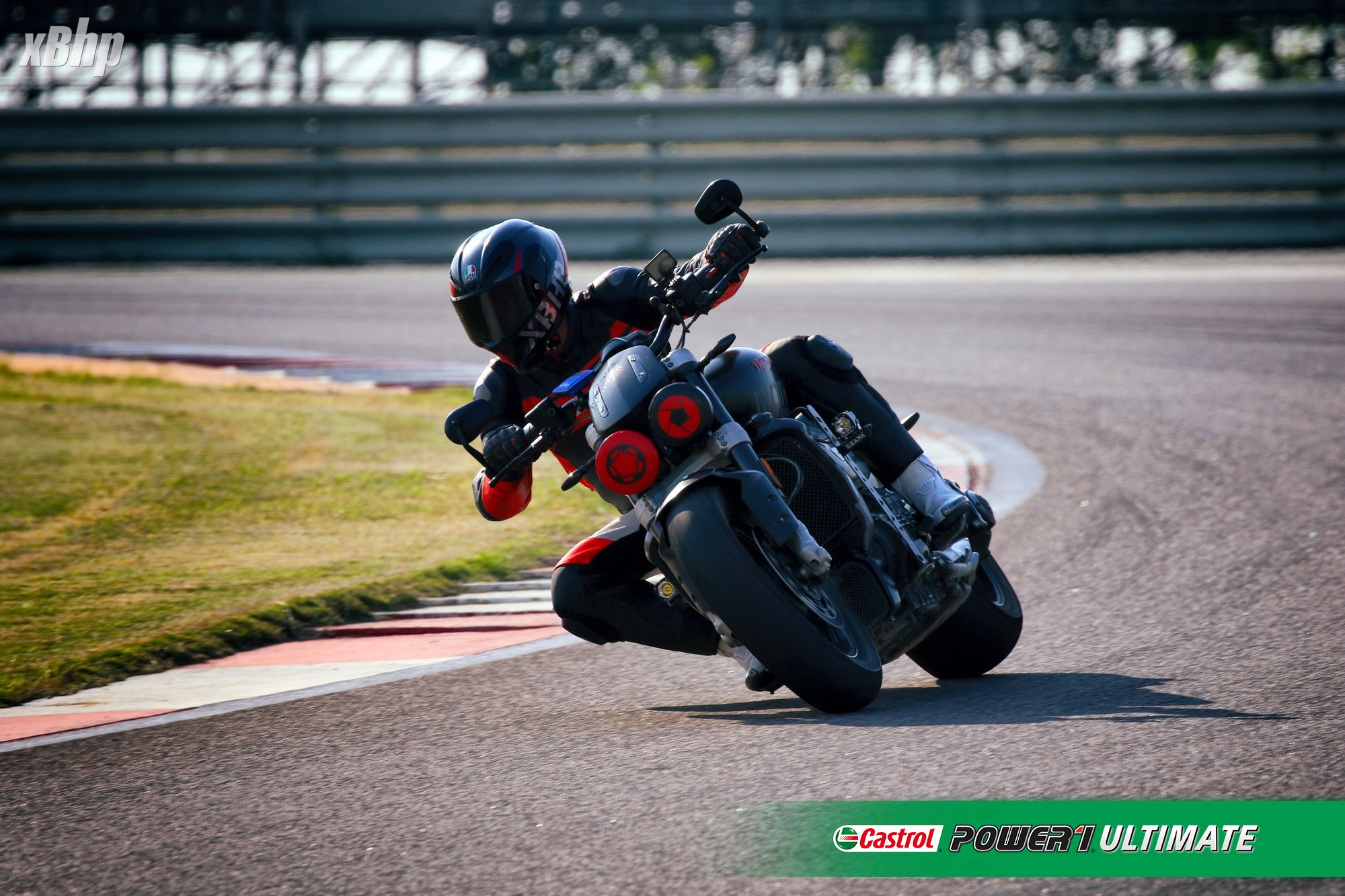
Finally, the geometry and the resulting dynamics. I am thinking out loud but what I felt Triumph did was; “We need big engine with big torque, then we need big wheelbase, weight, and tyres to handle all that. Finally and crucially, we need to offset the negative impacts of those things on handling.” And that is what they did. The impact of the long-wheelbase is offset by a sharp-ish rake, the impact of the weight is offset by the brutish handlebars, and the tyres, well… they’re okay.
The result is a motorcycle that makes you want to push harder with every lap. It is not a full-fledged superbike by a long shot and it was not meant to be a racetrack machine. But that does not mean that it won’t go on one. It will and it will blow your mind.
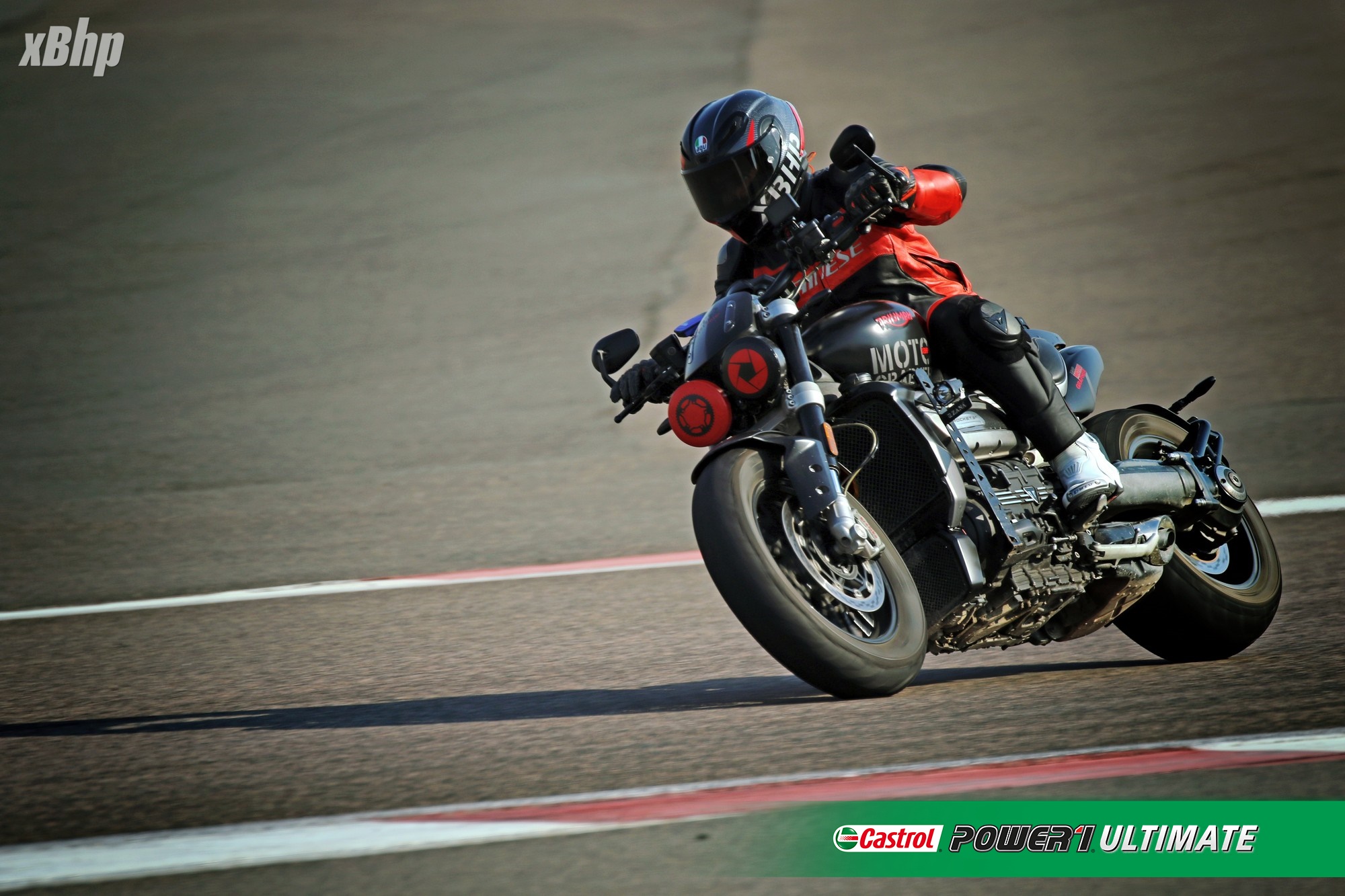
SUZUKI HAYABUSA
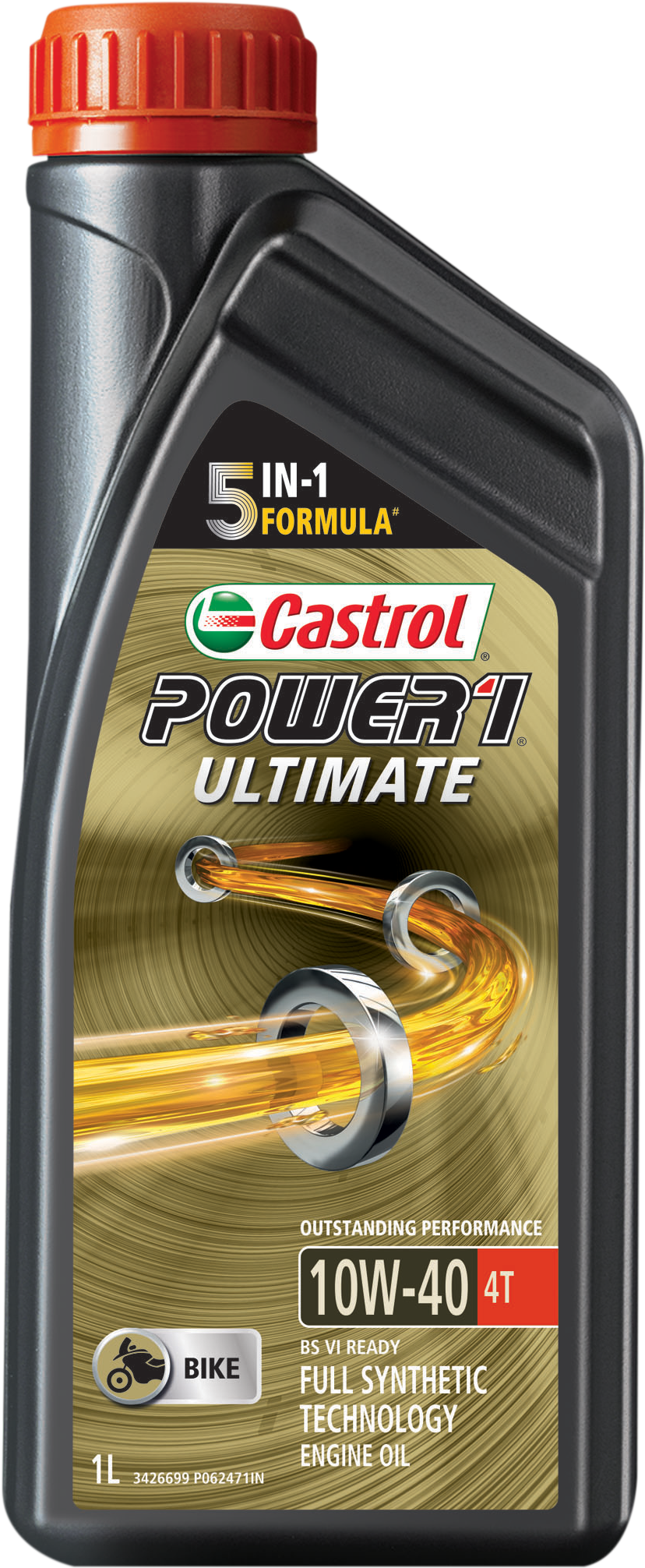
Powered by
Castrol POWER1 ULTIMATE 10W40
…and then there’s the Falcon. You see, there’s this theme around motorcycles. The most brutal ones, the nastiest ones, the loudest ones, the scariest ones; they get all the attention because, on top of being exciting and engaging, they can kill you. The Suzuki Hayabusa on the other hand can also kill you but it will be reluctant. Even then if it did that, it’ll kill you with kindness. That is as weird as intros get but there’s so much about the Busa everywhere that it all sounds the same. So, if one has to depict their feelings on the Busa, raw is the way to go. And that description is as raw as it can get.
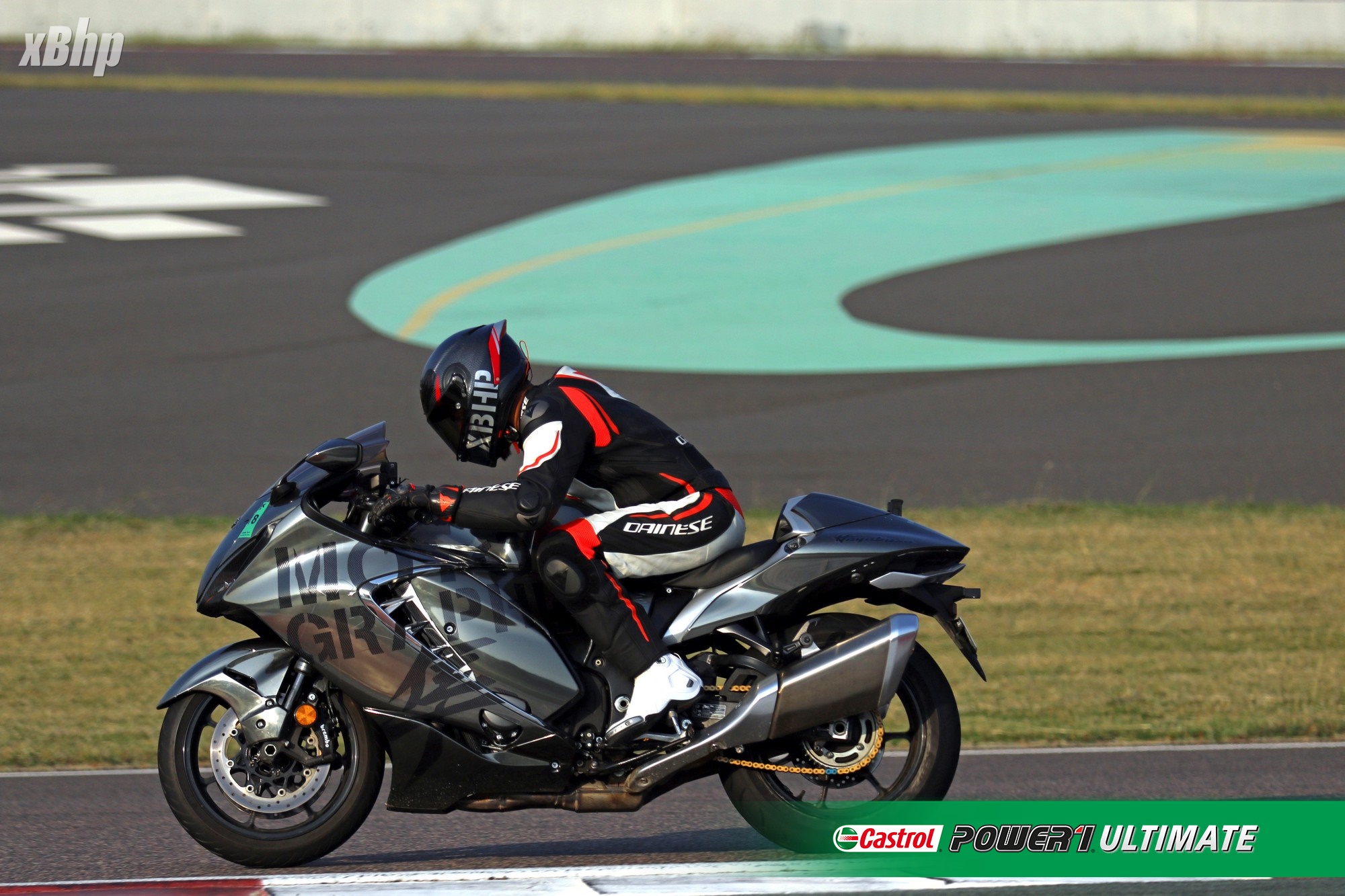
I say that because the Falcon is legendary, it is a fabled motorcycle that sits in the pantheon of greats. It has been the fastest motorcycle in the world and in its third generation, it is still among the fastest. Yet, you will seldom see a rider describing it with words like brutal, insane or the sort. It is because in becoming one of the fastest motorcycles in the world, it has not lost its manners. Perhaps that is why people call it deceptive too because it does 300 like it does 200 or 100. If all your sensory inputs from the outside world were blocked and the only source of sensations was the motorcycle itself, you’d never know what speed it is going at.
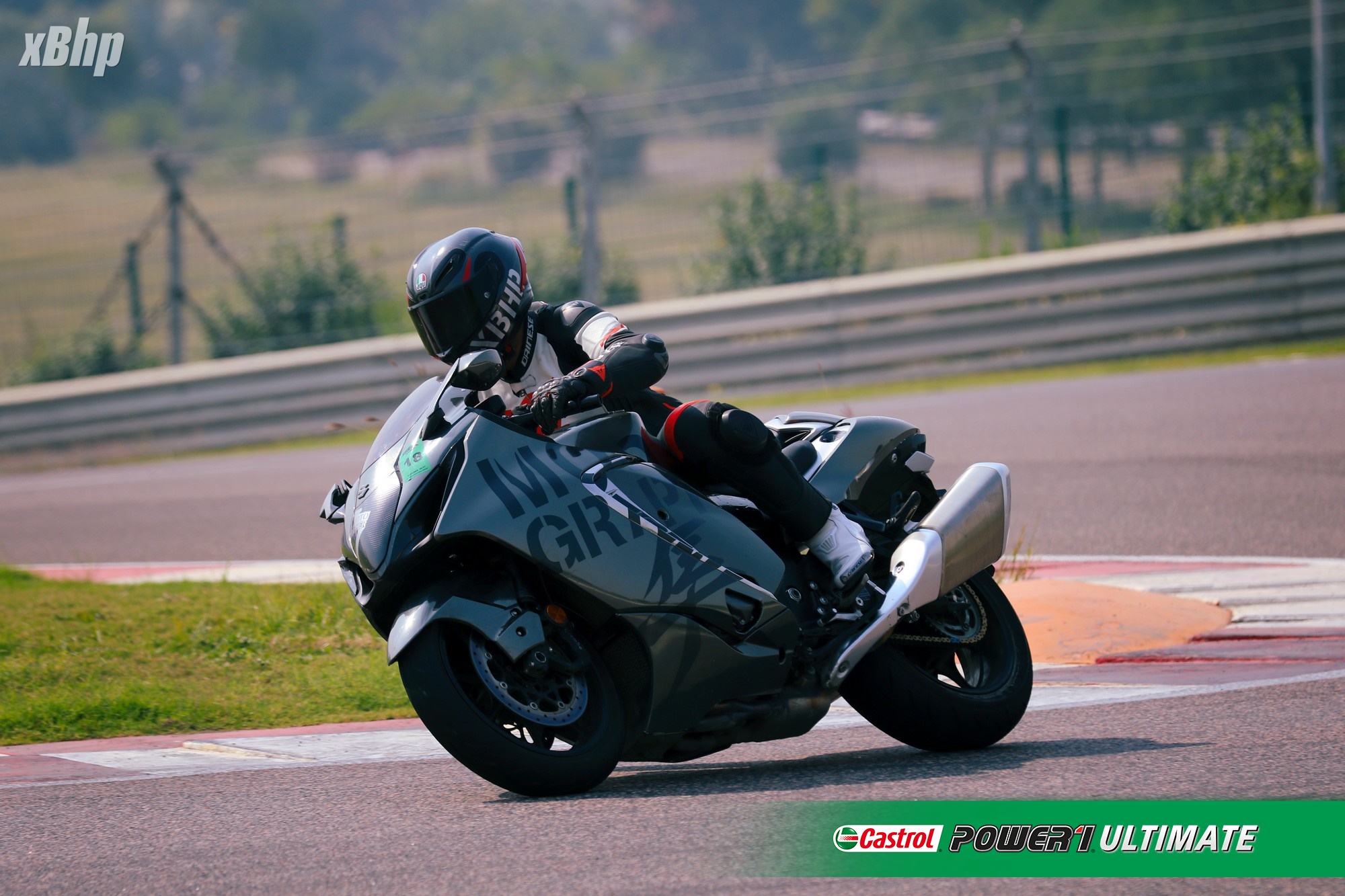
Philosophy aside, let’s talk brass tacks now. 1,340cc and 4-cylinders. Unlike the Rocket, the Hayabusa has fairing and in fact, one of the best drag-coefficients. But it is not lithe by a long shot, it is certainly sharper than before but still does to compare to a litre-class superbike. To be honest though, for me it is the other way around; no superbike can compare to the Busa. Also, the apprehensions about it being less powerful than the 2nd-gen? Numerically right but in the real world… I call BS.
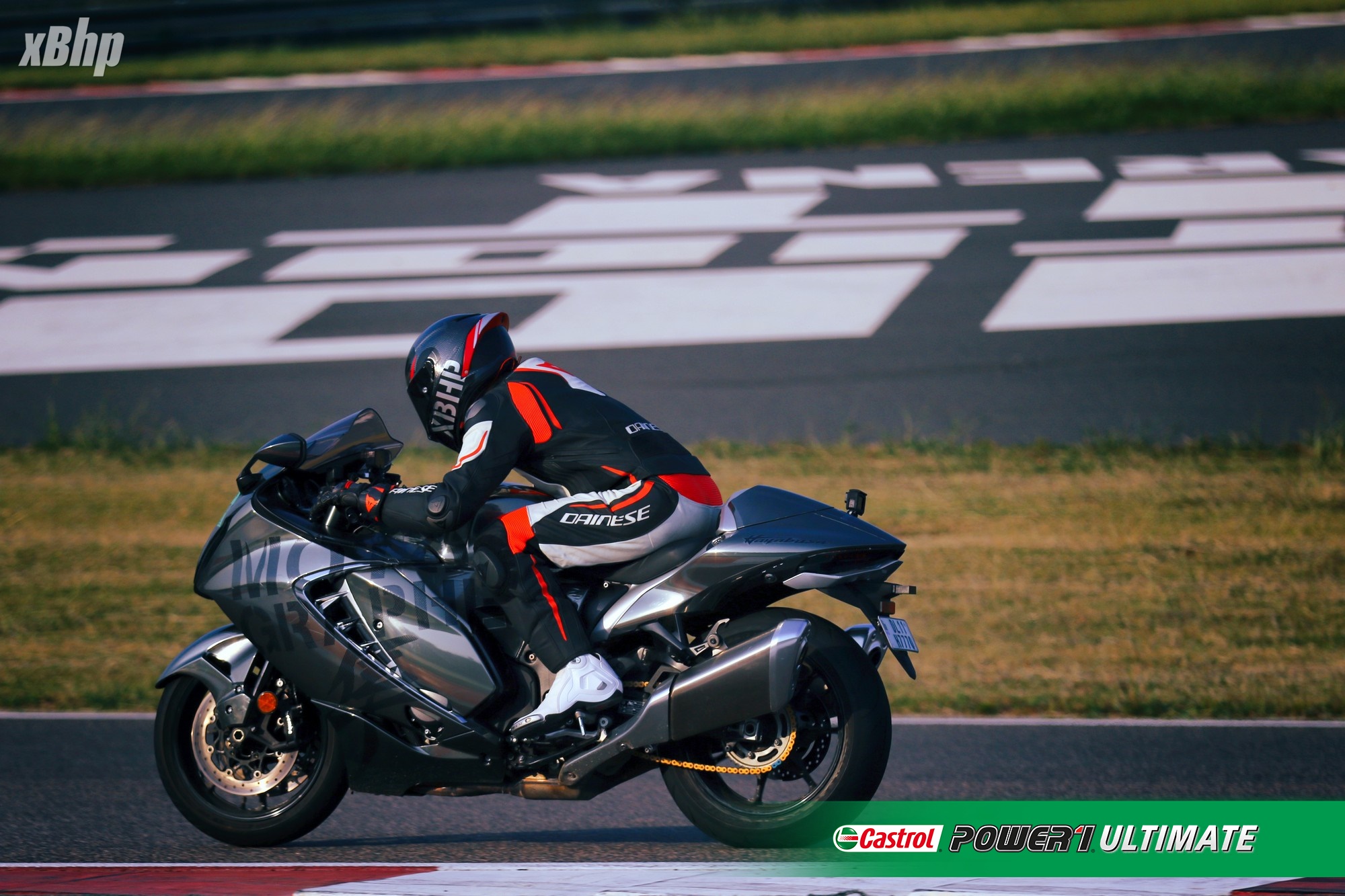
Anyone without a dyno and without having read the spec sheet cannot differentiate the two. On the contrary, they may find the new one to be faster where it matters. From the low-end to midrange, it actually is. And because of better aerodynamics, it has not lost much at the top end either. There are not a lot of motorcycles faster than the Busa but then, the magic lies in how it gets there.
The engine of the Busa is silk dipped in honey. It is buttery smooth throughout and the acceleration is intoxicating. And note that I say intoxicating and not maddening. It may possess similar acceleration numbers to many motorcycles but the way the Busa does it is insurmountable.
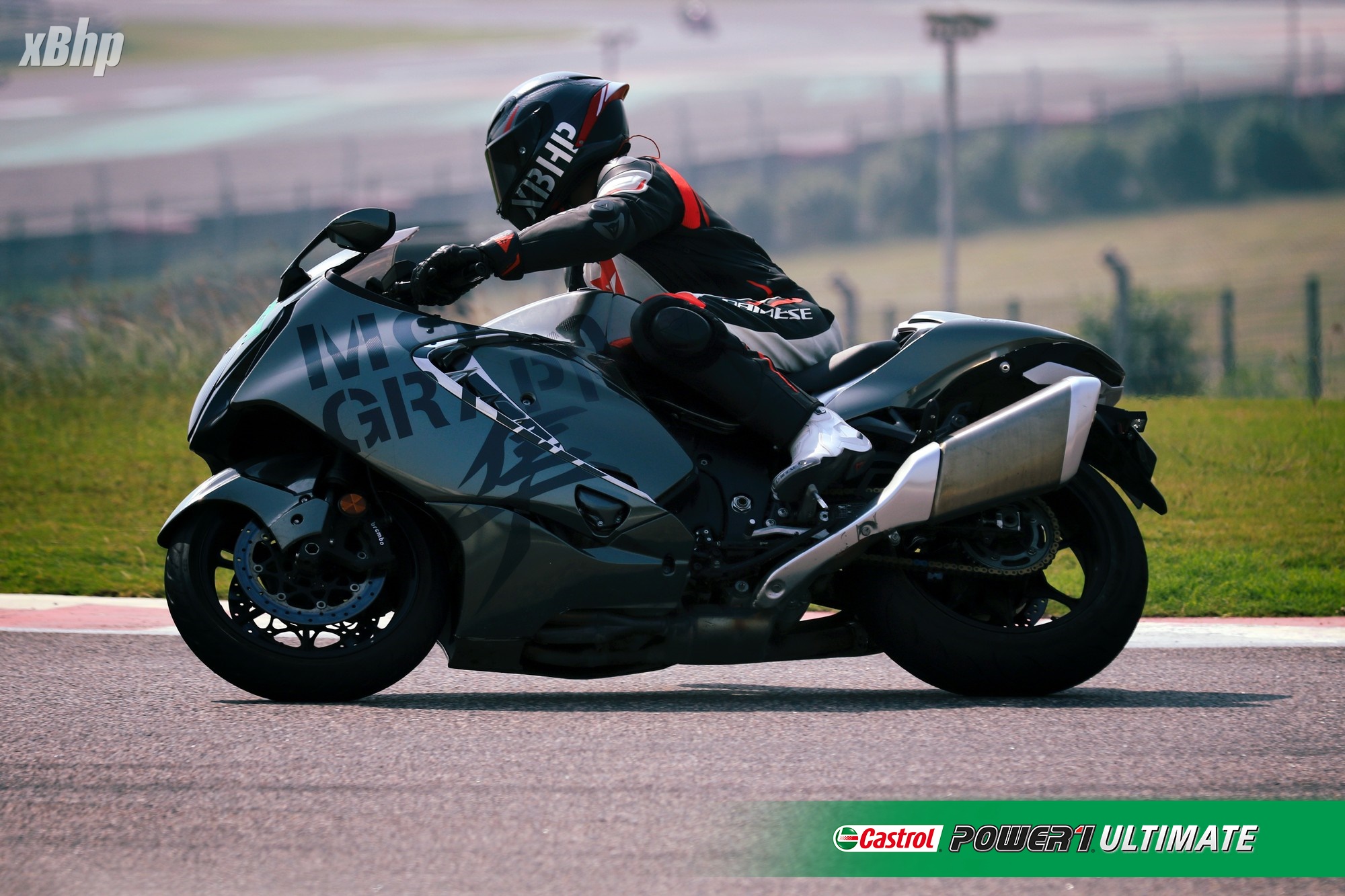
Then there’s the sweet but prominent howl of its inline-4. The characteristics of its engine are further accentuated by Castrol POWER1 ULTIMATE 10W40 that powers it. Its 5-in-1 Full-Synthetic formula makes the Busa feel even smoother. Experiencing that legendary inline-4 is an experience that is further intensified because of Castrol POWER1 ULTIMATE. Man… every time I ride it, I realize how much I love this motorcycle along with the why of it.
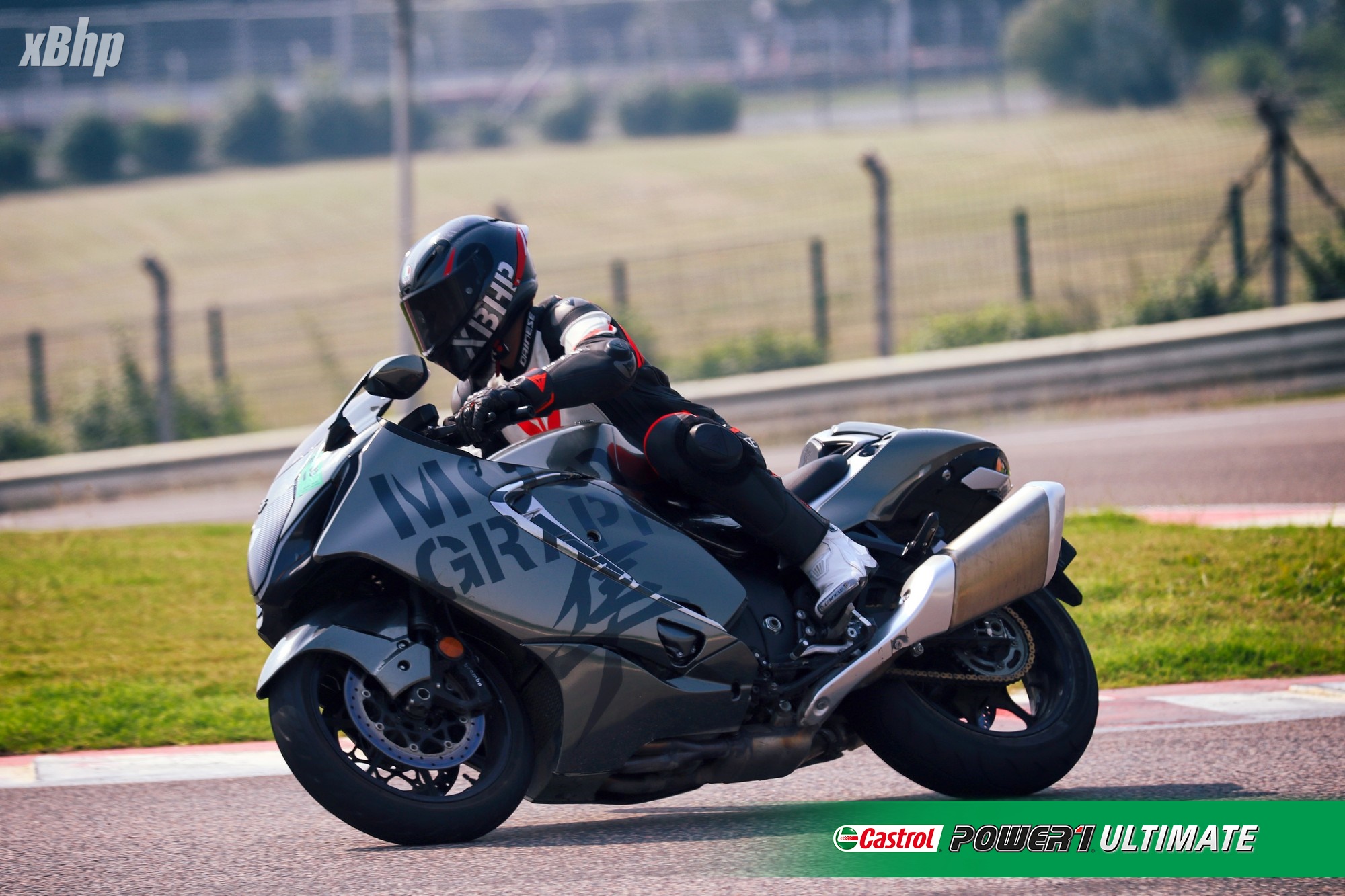
The thing that the 3rd-Gen Busa does differently though is going around corners. The older Busas were very good around bends and they were always lauded for that. But something was amiss. I felt that the package was not optimized enough to utilize the full potential of the chassis and geometry that Suzuki went with.
With the 3rd-gen though, things are different. This right here is a motorcycle that can hang with the best even in the twisties. Only in the most extreme of lean angles do you somewhat reach its limits. But you will likely run into your own limits much before that. So in the end; not a track machine per se but… a track machine as well!
KAWASAKI NINJA H2
Powered by
Castrol POWER1 ULTIMATE 10W40
Kawasaki Ninja H2. Every word that I said cannot be used to describe the Busa feels right at home on the H2; brutal, visceral, maddening, and the likes. It is not a track machine but it is nearly as committed as one. And it needs serious commitment from the rider to make the most out of even when riding normally. On the racetrack, you need a whole lot more. It is not an inline-4 and they are supposed to be friendlier than big Vs. But it is an inline-4 on steroids, a special drug called supercharger.
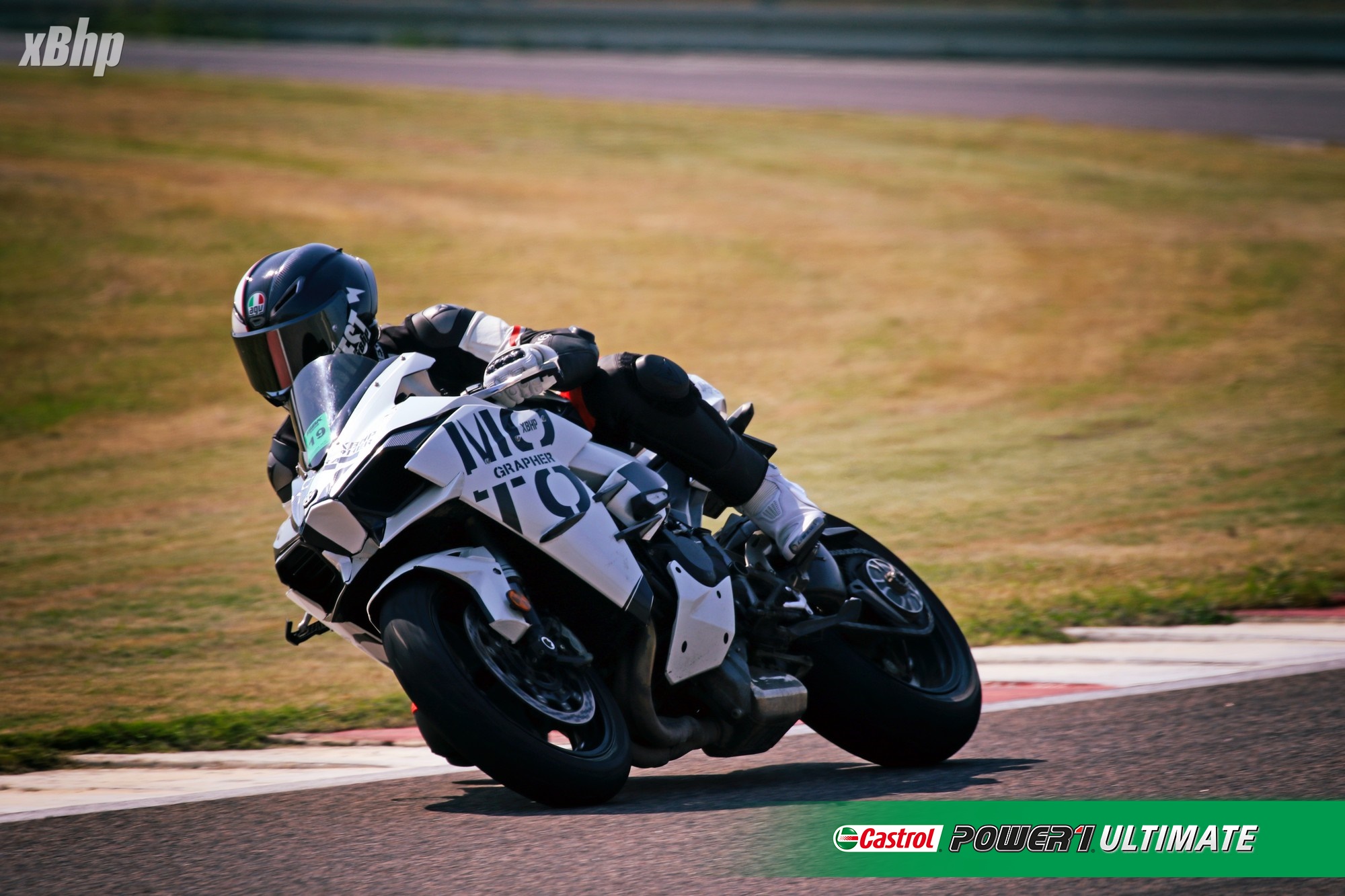
Because of that one thing, the Ninja H2 feels like no inline-4 ever can. The boost, the acceleration, the sound, and the sheer grunt. Different bikes behave differently on the racetrack but in general, the rule remains the same. Brake, enter the corner, maintain RPMs where the power starts to kick in and then, open the throttle on the exit.
On the H2, maintaining that RPM means that in addition to the drive from the engine, the supercharger also has the boost ready to kick you into the stratosphere if you’re not careful. It is not a track machine so it enters generally slower and remains that way throughout the corner but on the exit… you more than make up for the lost time. On the straight where the H2 is at full song, you can catch up and pass motorcycles that had much more speed throughout the corner and therefore more drive than the H2.
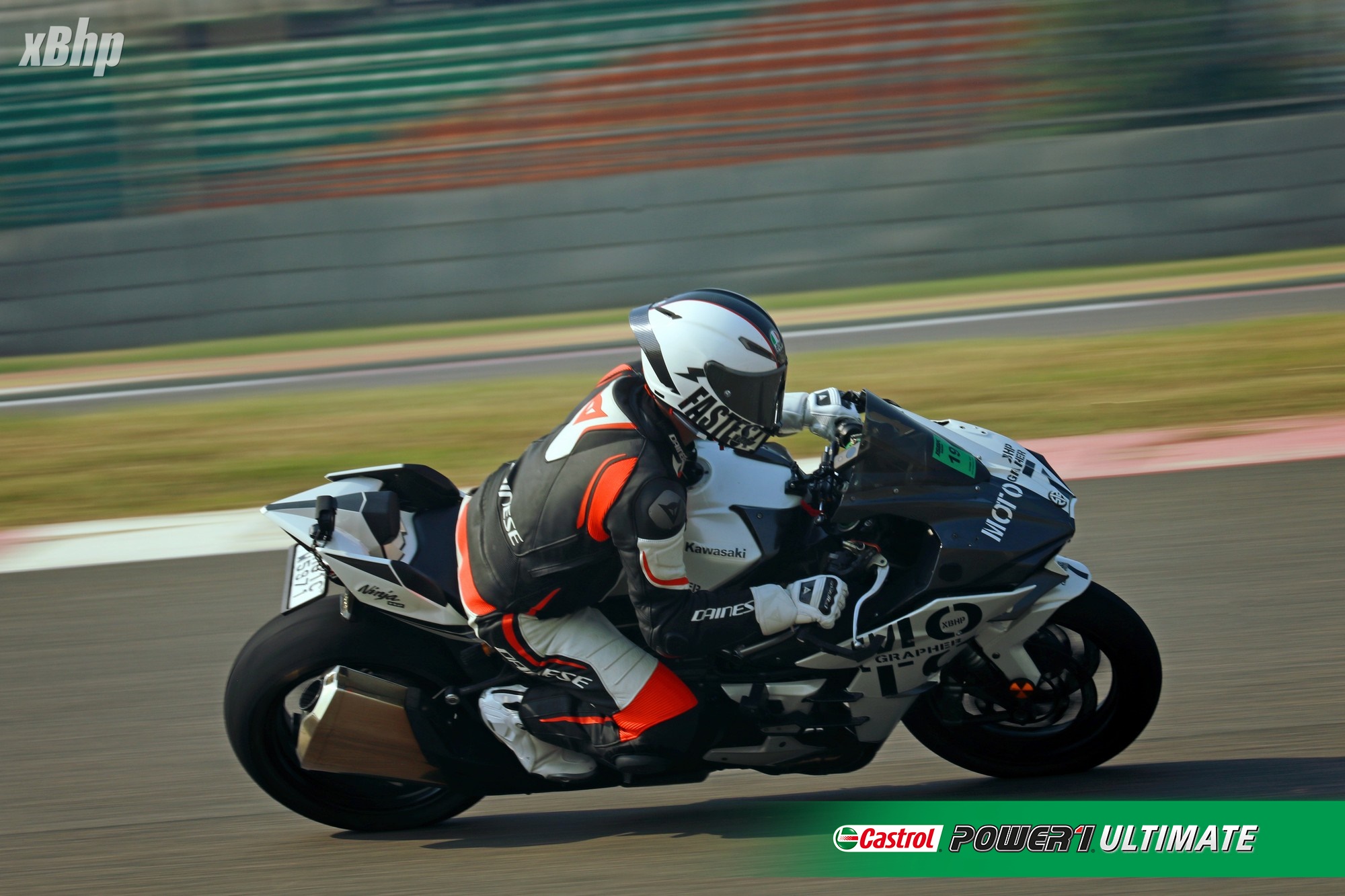
It doesn’t stop there either. The boost is dependent on the engine RPM. The faster the engine spins, the faster the supercharger sucks in the air and shoves it into the combustion chamber. So more RPMs equals more boost which means more power. It is a visceral experience and something that makes you thank your lucky stars for being able to ride a motorcycle like this.
Then there’s the noise; the raspy roar of the inline-4 is accompanied by the howl of the supercharger as it speeds up. If you brake, you make the supercharger sad which was ready with a healthy dose of boost for you. It “lets off steam” via the means of those chirps. This is one bike describing which brings me the closest to swearing.
Again, this is one motorcycle that I have ridden a lot, a whole lot. But I can never get enough. It just has so much in store that you simply have to keep playing catch up to match up to it. And that’s the engine department alone. This is one motorcycle that pushed me the most towards not believing in numbers seen on the spec sheets.
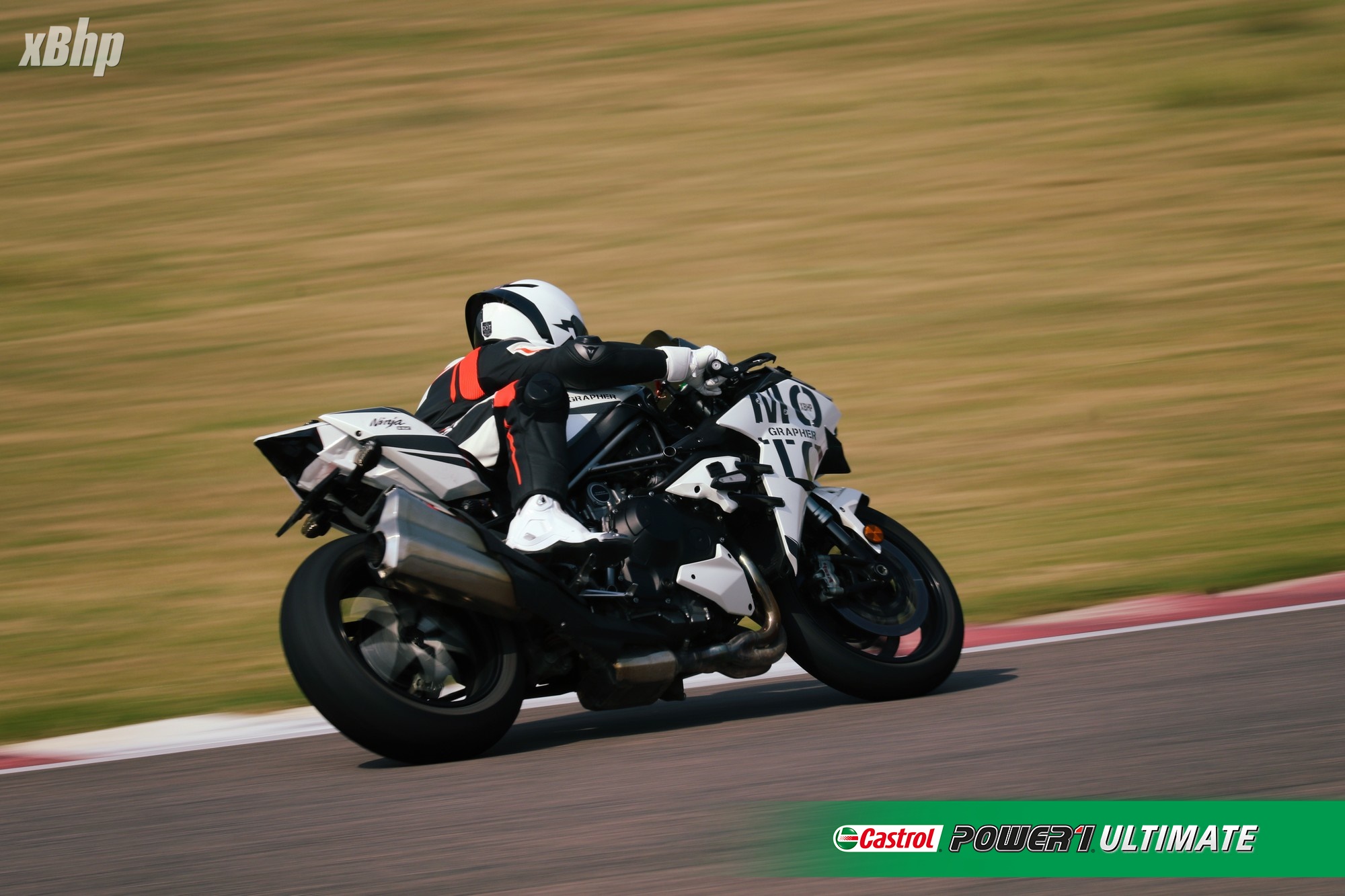
Talking about the engine, ever since I have been riding the Ninja H2, I have been riding it with engine oils from Castrol POWER1 ULTIMATE. This H2 of mine that’s a part of the xBhp Garage has always been treated with Castrol POWER1 ULTIMATE 10W40. Everything in nature is ‘give and take’. That much power comes at a price. From wear and tear to the added heat from the supercharger, the engine of the H2 is a difficult thing to take care of. But Castrol POWER1 ULTIMATE does a perfect job in not only taking care of the engine but making it feel even more ballistic than it already is.
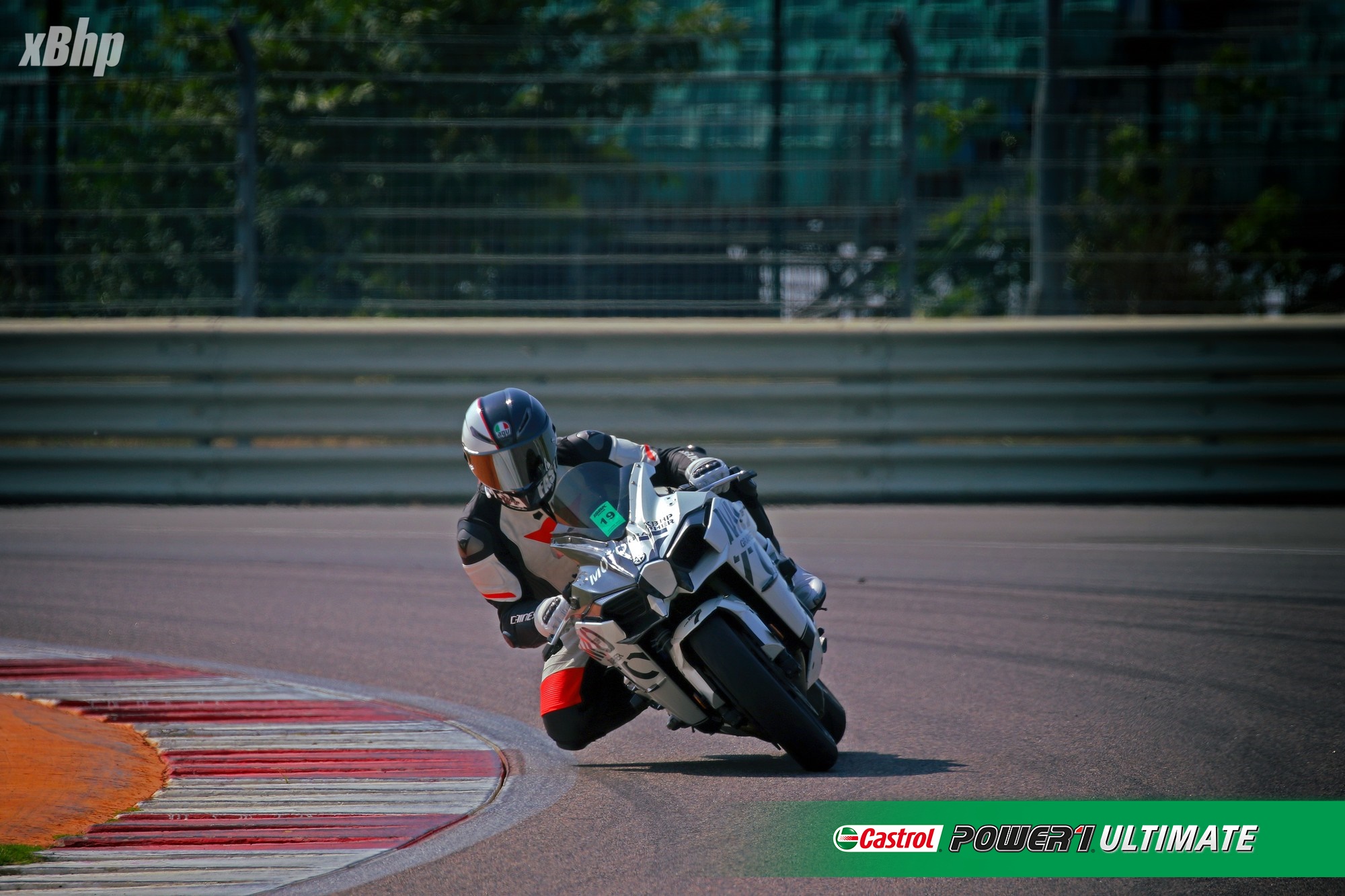
Now when you have passed other guys on the straight and the corner shows up, that’s when things get a bit more difficult. The Ninja H2 has a very aggressive geometry. That is good but the heft means that all the sensations you get while braking and turn-in are amplified. It takes a while to get used to because it feels like it is on the limits even if it is not. So in simpler terms, it is very demanding. But then, if you fulfil those demands, it is just as rewarding.