







 Tweet
Tweet
Leo Vince LVI full exhaust and AreaP Micro Fuel Controller Installation. Part III
Leo Vince LVI full exhaust and AreaP Micro Fuel Controller Installation. Part III
Installation of AreaP/ Fuel Moto Micro Fuel Controller
The Micro Fuel Controller comes in plain white box. The box contains the Micro Controller, software DC, USB cable, installation instructions and Velcro strips.
The Micro Fuel Controller consists of the following features:
1. Store up to 3 different fuel maps which can be switched by simple turn of knob.
2. Real time tuning for injector control with +250% to -100% range control.
3. OEM type plug and play connectors. No cutting and splicing of wiring required.
4. Ability to tune for individual cylinders with 250 rpm resolution. Upto 600 tuning points including deceleration and idle.
5. Included software (PC based) allows full control over tuning points.
6. Compatible with Power Commander V maps.
Not included in the kit was the O2 sensor eliminator. The U.S. version of the Ninja 300 does not have an O2 sensor, therefore, the same is not included in the kit. I had to order it as extra.

The Micro Controller was put in the storage box under the rear seat.


And the wiring loom was then rooted through the right side of the bike along the sub frame.

The connector box on top of the battery was moved aside and battery terminals were disconnected.

The primary TPS sensor connector (grey colour) was disconnected. Note the black connector for secondary TPS sensor and the servomotor below it. The Ninja 300 uses 2 butterfly valves in the throttle body. The first one (primary) is connected to the throttle cable and the primary TPS measures the opening of butterfly valve and sends a signal to the ECU. Based on the inputs and other parameters the ECU then signals the servomotor to open the secondary butterfly valve. The secondary TPS reads the opening of the second (secondary) butterfly valve and sends a signal to the ECU. The throttle body, TPS sensors and the injectors are of Keihin make.

Connectors to the fuel injectors (green female socket) were disconnected.

The O2 sensor eliminator was installed into the socket for O2 sensor.


Unlike the Ninja 250, the Ninja 300 comes with a nifty bracket on which the O2 sensor mounts securely and is not kept hanging about.

The role of the O2 sensor: It is generally assumed that a bike with an O2 sensor has a closed loop fueling system. This is not exactly true. While there are high-end bikes that have a true closed loop fueling system most bikes have a semi closed loop system. For a truly closed loop system a wide band O2 sensor is required. Most bikes are mounted with a narrow band O2 sensor. These bikes actually have their fueling divided into 2 areas. One area is closed loop and the second is open loop. The role of the O2 is very specific and narrow with such sensors. More than performance, these sensors are configured to measure for the closed loop area of the fuel, which is calibrated to operate at or around Air Fuel Ratio (AFR) of 14.6:1. In most cases the closed loop area is from 0% throttle to about 60% of the throttle. A narrow band sensor can only measure a very narrow value i.e. is the AFR 14.6:1 or not (it has a tolerance level of +/- 0.3). Based on its inputs the ECU adjust the fueling to ensure the next fuel cycle tries achieve the desired AFR.
Although the system has some ability to adjust and adapt for factors such as variation in fuels, production tolerances of stock components, etc., it simply is not tuned for free flow exhaust components. It has one agenda and one only i.e. to maintain AFR at or around 14.6. Therefore, the O2 sensor needs to be removed. However, simply removing the O2 sensor generates an error from the ECU and the engine check light will come on. Therefore, a sensor eliminator is used to lock the system into open loop mode and prevent the system from throwing an error.
Once the O2 sensor eliminator was connected, the connector from the connector from ECU to the TPS was connected in line with the Micro Fuel controller and the cable from the Micro Fuel controller was connected to the TPS connector.


The fuel injector connectors were installed in line with the Micro Fuel controller. The 2 connectors from the Micro Fuel controller are marked by orange and yellow cables in the respective looms. The socket with the orange cable is to go to cylinder # 1 i.e. the right side cylinder. The socket with yellow cable is go to cylinder # 2 i.e. the left side cylinder.


Once all the connectors were connected, the whole assembly was checked and rechecked for proper fastening and correctness of the assembly.
Vikram then switched on the ignition (the battery was disconnected) to drain any residual power still in the sensors and reset the complete system.
After waiting for couple of minutes, the ignition was switched off and the ground wire from the Micro Fuel controller was attached to the negative terminal of the battery. Vikram then took a small bulb and connected one end of the bulb to positive terminal and ground the other end to the chassis. Upon inquiring about this he informed me that this is to ensure that there is no abrupt surge of charge when we connect the main cable to the positive terminal. Vikram then attached the main cable to the positive terminal.
It was time to test the outcome of all our efforts. Fingers crossed, switch on the ignition and the bike does its self-diagnostic check. No signs of any errors, looks like the O2 sensor eliminator is doing its job. Flick the engine kill switch and push the start button. The bike starts in the first instance and settles to warm up just as the stock bike would.
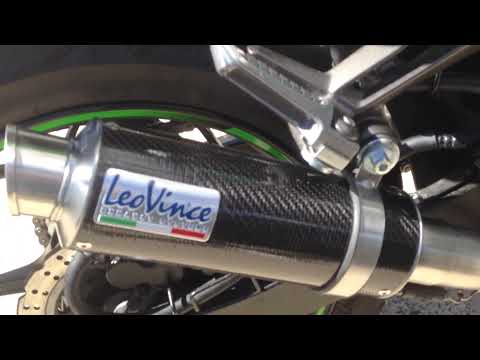
The first thing that you will invariably notice is the sound of the exhaust. It will give you goose bumps. It is like an Italian opera. It is like Luciano Pavarotti of motorcycles is himself present here. The sound just has NINJA written over it. The complete character of the bike has just been transformed from Bruce Wayne to Batman. The bike sounds as Italian and delicious as the Ducati 848 EVO. It is guaranteed to make heads turn. After allowing the bike to warm up. It was switched off and all the bodywork was put together.
Unfortunately, we were all so excited that all of us forgot to take any video or photos of the test run that was done. Vijay took the bike out for a spin outside. He did couple of runs while Vikram and I stood by the side and watched. The results were unbelievable. Under acceleration, the rear suspension was squatting noticeably and the rear was wiggling and struggling to maintain grip. These runs were normal acceleration runs and not high rpm launches with clutch slipping. On the second run the bike popped wheelies when changing from 1st to 2nd gear and 2nd to 3rd. If the rear suspension is firmed up further it will be even more wheelie prone. According to Vijay, he was not pushing to the max as it was still new.
So there is definitely more power being made than stock and from the seat of the pants it feels substantial. The throttle response is very quick and sublime. Someone in the earlier post has queried about the amount of db. Well, it is loud and has bass to the exhaust note. At idle while loud, no cop is going to think much about the sound and give it a second glance. Upto 5,000 rpm the sound is within acceptable limits. It is not louder than any other vehicle running besides it, though its different. After 5,000 rpm, all hell brakes loose. It sounds and feels like a superbike.
I am extremely happy with the way the bike has transformed from a gentleman in Brooks Brothers 3 piece suit to a assassin clad in white Shinobi Shozoko with a Shinogi Katana sword. Welcome home Ninja San!!!
Leo Vince LVI full exhaust and AreaP Micro Fuel Controller Installation. Part III
Installation of AreaP/ Fuel Moto Micro Fuel Controller
The Micro Fuel Controller comes in plain white box. The box contains the Micro Controller, software DC, USB cable, installation instructions and Velcro strips.
The Micro Fuel Controller consists of the following features:
1. Store up to 3 different fuel maps which can be switched by simple turn of knob.
2. Real time tuning for injector control with +250% to -100% range control.
3. OEM type plug and play connectors. No cutting and splicing of wiring required.
4. Ability to tune for individual cylinders with 250 rpm resolution. Upto 600 tuning points including deceleration and idle.
5. Included software (PC based) allows full control over tuning points.
6. Compatible with Power Commander V maps.
Not included in the kit was the O2 sensor eliminator. The U.S. version of the Ninja 300 does not have an O2 sensor, therefore, the same is not included in the kit. I had to order it as extra.
The Micro Controller was put in the storage box under the rear seat.
And the wiring loom was then rooted through the right side of the bike along the sub frame.
The connector box on top of the battery was moved aside and battery terminals were disconnected.
The primary TPS sensor connector (grey colour) was disconnected. Note the black connector for secondary TPS sensor and the servomotor below it. The Ninja 300 uses 2 butterfly valves in the throttle body. The first one (primary) is connected to the throttle cable and the primary TPS measures the opening of butterfly valve and sends a signal to the ECU. Based on the inputs and other parameters the ECU then signals the servomotor to open the secondary butterfly valve. The secondary TPS reads the opening of the second (secondary) butterfly valve and sends a signal to the ECU. The throttle body, TPS sensors and the injectors are of Keihin make.
Connectors to the fuel injectors (green female socket) were disconnected.
The O2 sensor eliminator was installed into the socket for O2 sensor.
Unlike the Ninja 250, the Ninja 300 comes with a nifty bracket on which the O2 sensor mounts securely and is not kept hanging about.
The role of the O2 sensor: It is generally assumed that a bike with an O2 sensor has a closed loop fueling system. This is not exactly true. While there are high-end bikes that have a true closed loop fueling system most bikes have a semi closed loop system. For a truly closed loop system a wide band O2 sensor is required. Most bikes are mounted with a narrow band O2 sensor. These bikes actually have their fueling divided into 2 areas. One area is closed loop and the second is open loop. The role of the O2 is very specific and narrow with such sensors. More than performance, these sensors are configured to measure for the closed loop area of the fuel, which is calibrated to operate at or around Air Fuel Ratio (AFR) of 14.6:1. In most cases the closed loop area is from 0% throttle to about 60% of the throttle. A narrow band sensor can only measure a very narrow value i.e. is the AFR 14.6:1 or not (it has a tolerance level of +/- 0.3). Based on its inputs the ECU adjust the fueling to ensure the next fuel cycle tries achieve the desired AFR.
Although the system has some ability to adjust and adapt for factors such as variation in fuels, production tolerances of stock components, etc., it simply is not tuned for free flow exhaust components. It has one agenda and one only i.e. to maintain AFR at or around 14.6. Therefore, the O2 sensor needs to be removed. However, simply removing the O2 sensor generates an error from the ECU and the engine check light will come on. Therefore, a sensor eliminator is used to lock the system into open loop mode and prevent the system from throwing an error.
Once the O2 sensor eliminator was connected, the connector from the connector from ECU to the TPS was connected in line with the Micro Fuel controller and the cable from the Micro Fuel controller was connected to the TPS connector.
The fuel injector connectors were installed in line with the Micro Fuel controller. The 2 connectors from the Micro Fuel controller are marked by orange and yellow cables in the respective looms. The socket with the orange cable is to go to cylinder # 1 i.e. the right side cylinder. The socket with yellow cable is go to cylinder # 2 i.e. the left side cylinder.
Once all the connectors were connected, the whole assembly was checked and rechecked for proper fastening and correctness of the assembly.
Vikram then switched on the ignition (the battery was disconnected) to drain any residual power still in the sensors and reset the complete system.
After waiting for couple of minutes, the ignition was switched off and the ground wire from the Micro Fuel controller was attached to the negative terminal of the battery. Vikram then took a small bulb and connected one end of the bulb to positive terminal and ground the other end to the chassis. Upon inquiring about this he informed me that this is to ensure that there is no abrupt surge of charge when we connect the main cable to the positive terminal. Vikram then attached the main cable to the positive terminal.
It was time to test the outcome of all our efforts. Fingers crossed, switch on the ignition and the bike does its self-diagnostic check. No signs of any errors, looks like the O2 sensor eliminator is doing its job. Flick the engine kill switch and push the start button. The bike starts in the first instance and settles to warm up just as the stock bike would.
The first thing that you will invariably notice is the sound of the exhaust. It will give you goose bumps. It is like an Italian opera. It is like Luciano Pavarotti of motorcycles is himself present here. The sound just has NINJA written over it. The complete character of the bike has just been transformed from Bruce Wayne to Batman. The bike sounds as Italian and delicious as the Ducati 848 EVO. It is guaranteed to make heads turn. After allowing the bike to warm up. It was switched off and all the bodywork was put together.
Unfortunately, we were all so excited that all of us forgot to take any video or photos of the test run that was done. Vijay took the bike out for a spin outside. He did couple of runs while Vikram and I stood by the side and watched. The results were unbelievable. Under acceleration, the rear suspension was squatting noticeably and the rear was wiggling and struggling to maintain grip. These runs were normal acceleration runs and not high rpm launches with clutch slipping. On the second run the bike popped wheelies when changing from 1st to 2nd gear and 2nd to 3rd. If the rear suspension is firmed up further it will be even more wheelie prone. According to Vijay, he was not pushing to the max as it was still new.
So there is definitely more power being made than stock and from the seat of the pants it feels substantial. The throttle response is very quick and sublime. Someone in the earlier post has queried about the amount of db. Well, it is loud and has bass to the exhaust note. At idle while loud, no cop is going to think much about the sound and give it a second glance. Upto 5,000 rpm the sound is within acceptable limits. It is not louder than any other vehicle running besides it, though its different. After 5,000 rpm, all hell brakes loose. It sounds and feels like a superbike.
I am extremely happy with the way the bike has transformed from a gentleman in Brooks Brothers 3 piece suit to a assassin clad in white Shinobi Shozoko with a Shinogi Katana sword. Welcome home Ninja San!!!

 .
. .
.



Comment