









Triple
A favourite of many, the triple-cylinder engine is like that all-rounder kid of the class. Good at academics, good at sports, good at extracurricular activities but… the top dog of none. The triple or the inline-triple though does claim the top spot (personally) in at least one aspect.
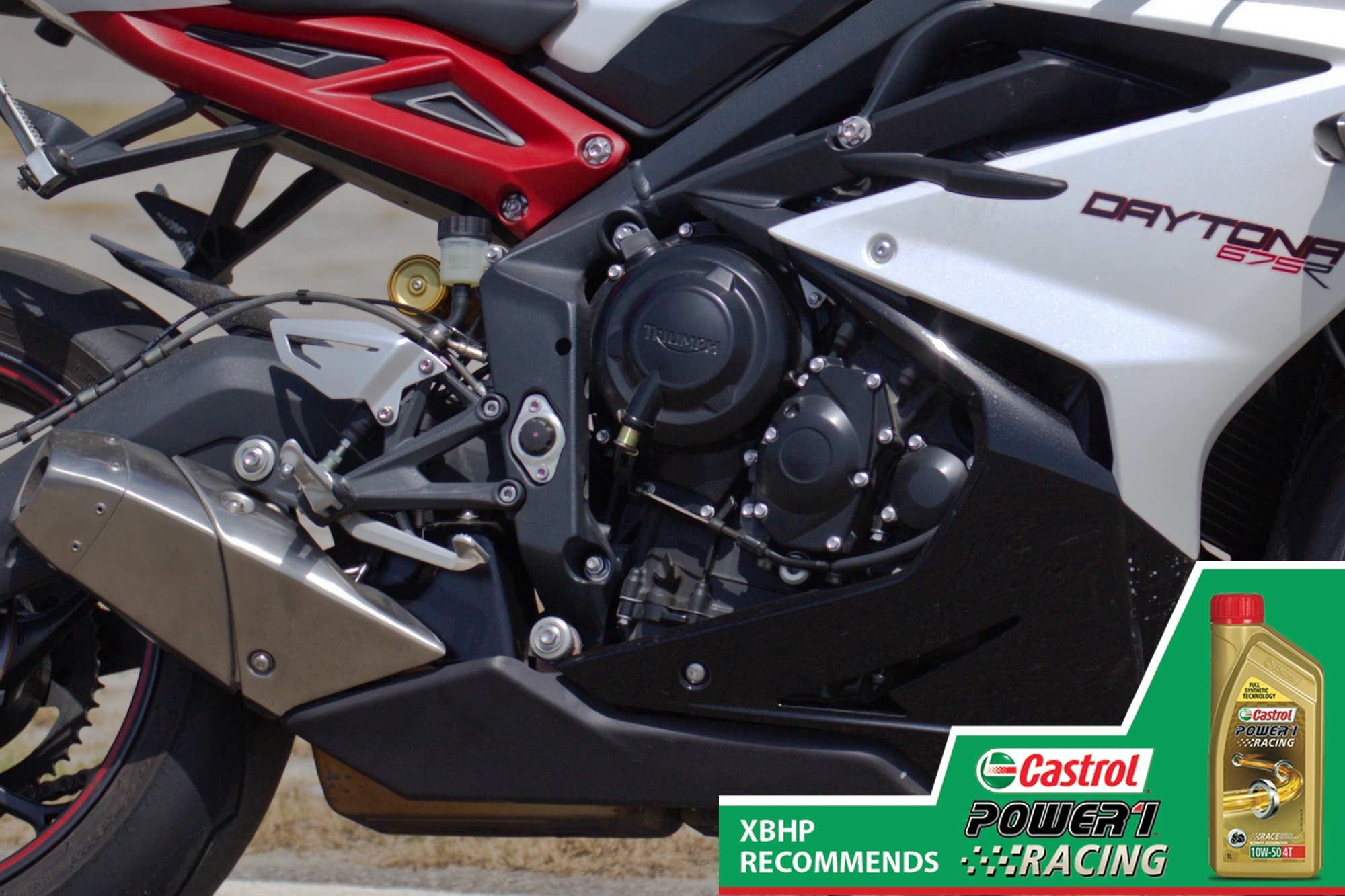
675 cc | 117 bhp | 70.2 Nm | Recommended engine oil > Castrol POWER1 RACING 10W50
We’ll talk about that in a bit. First, the engine is like a parallel-twin with another cylinder added. What that means is that these kinds of engines are generally mounted transversely (except the rocket which has its massive engine mounted longitudinally).
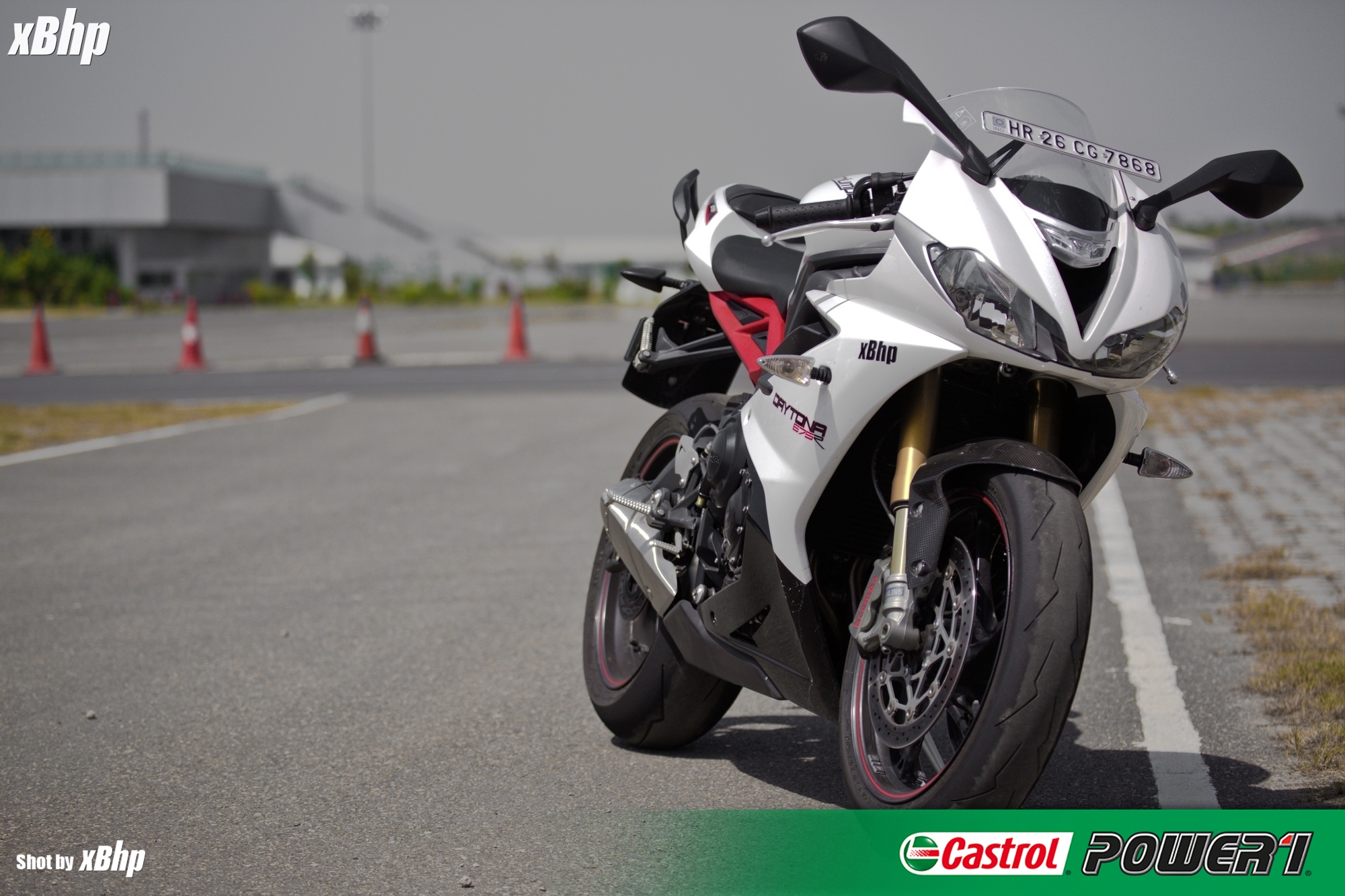
While there are many great motorcycles that have made a name for themselves using this configuration, there isn’t one quite like the Triumph Daytona, a motorcycle that combines the low-end grunt of a twin and the top end of an inline-4. Daytona is a motorcycle that Triumph got right on so many levels that its discontinuation was a source of great sadness. And the ace in the hole, in addition to the already established ballistic performance, was the sound. Inline-triples sound like a million bucks and there is simply no arguing with that.
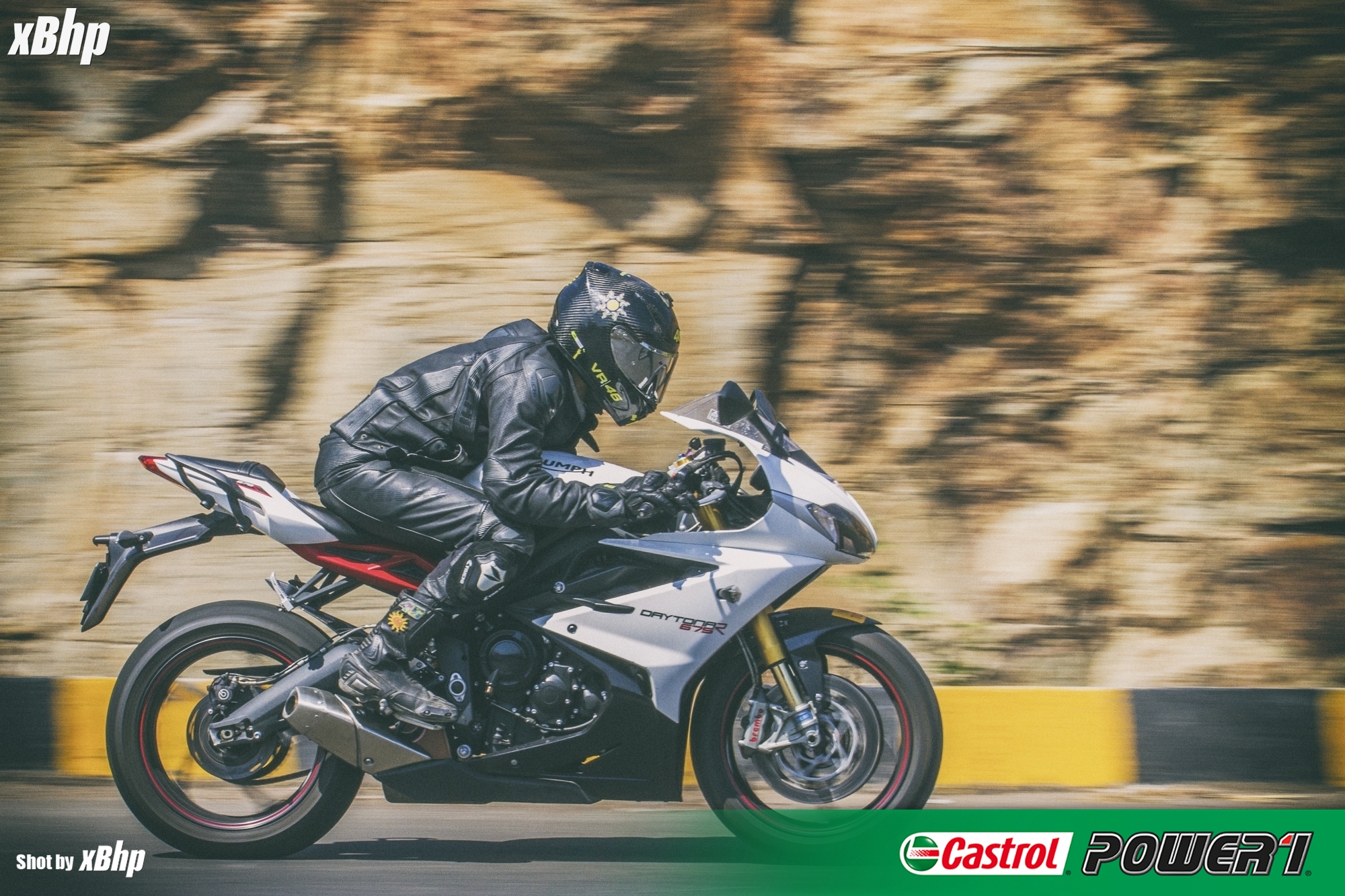
While there are no disadvantages of a triple per se, it is something that gets hurt when one asks for more. It has a good low end but not quite like a V-twin and a good top end but not quite like an inline-4… and yet, it strikes a balance between the two that not many can.
Inline-4
This particular engine configuration is perhaps the definition of a ‘superbike’. It may not be that literally, but figuratively it is. The reason… Japan. All the Japanese superbikes use this configuration for their halo products i.e. litre-class superbikes. Another reason is the sound produced by inline-4 engines. The sheer scream of an inline-4 at the top end is a sure shot identifier of a motorcycle on the sharp end of the performance spectrum.
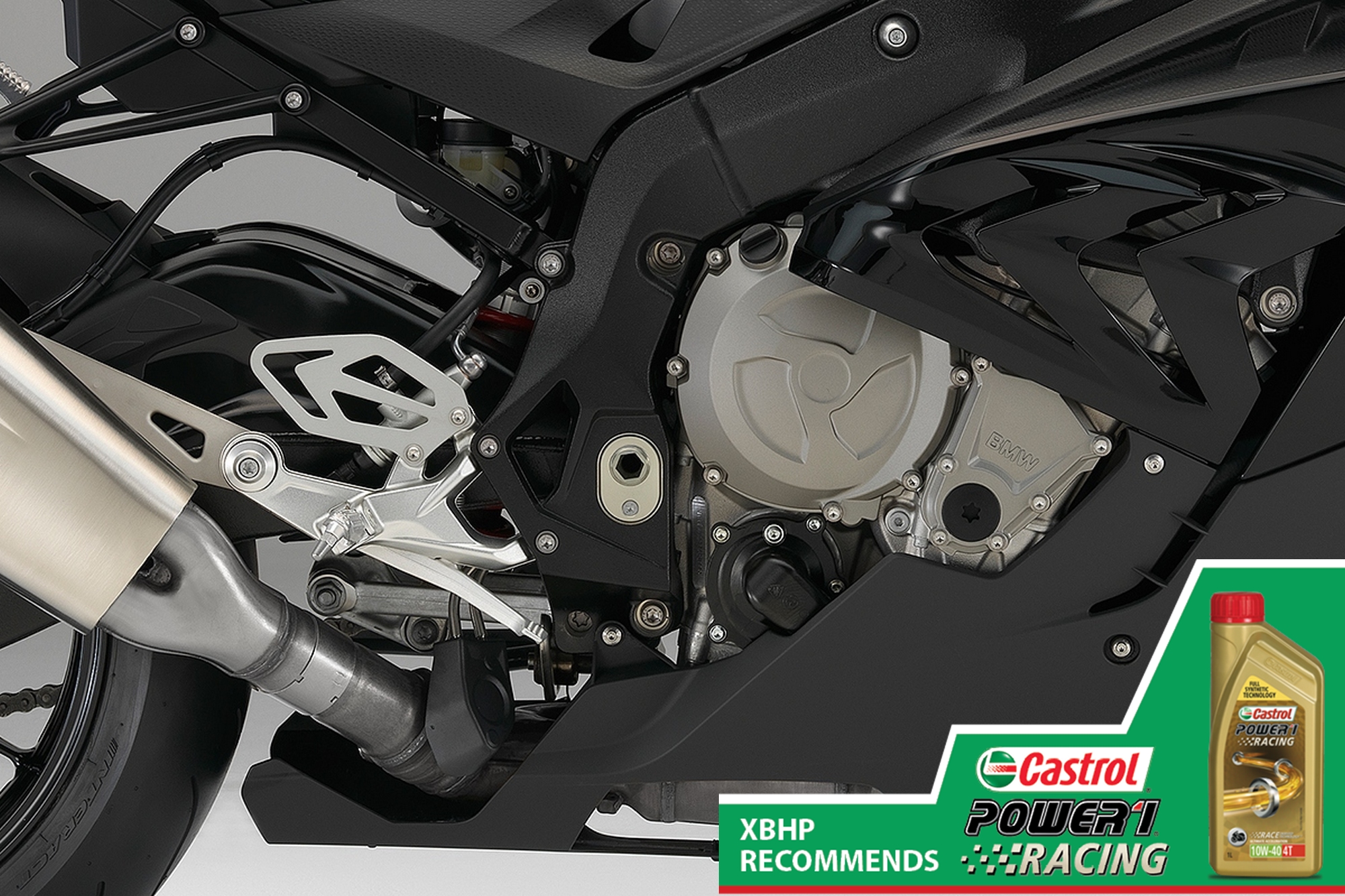
999 cc | 199 bhp | 113 Nm* | Recommended engine oil > Castrol POWER1 RACING 10W40
The example that we are using for this engine type is a superbike that literally blew the roof off the so-called ‘superbikes house’. And it wasn’t Japanese. It had massive power, it handled like a dream, it had an aggressive design and it was loaded with tech. We are talking about the very first iteration of the BMW S1000RR.
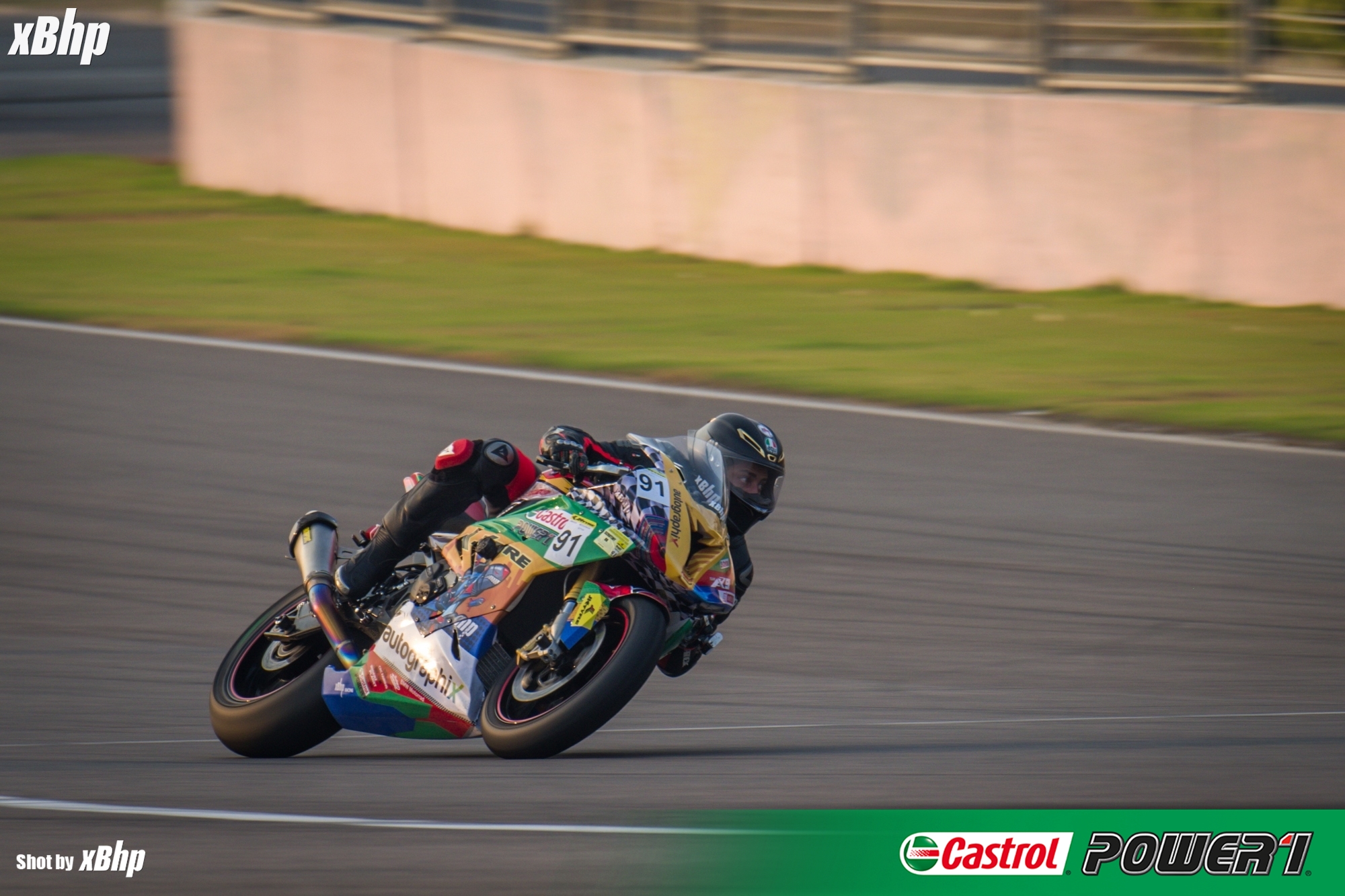
It kept receiving updates till it got a major overhaul in design in 2019. We had the pleasure of having a 2018 S1000RR as a part of our garage and we got it for the purpose that it was meant to serve… racing! And that’s why it served as the flagship of Team #xBhpRacing’s maiden outing.
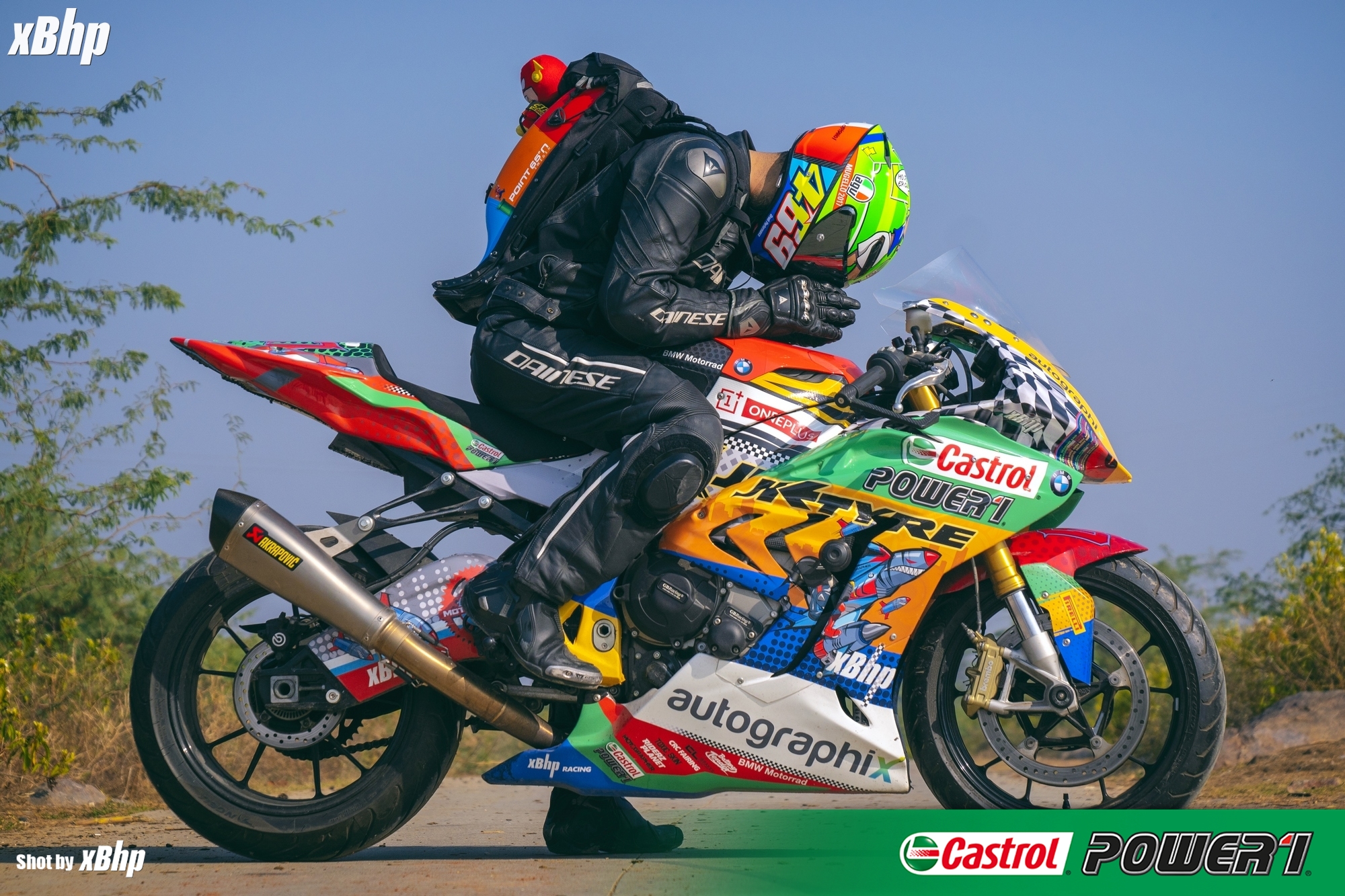
There aren’t many disadvantages to an inline-4 engine but the ones that exist are glaring in comparison. An inline-4 is rev hungry and has a punchy top end but at the bottom end, they aren’t as enjoyable. They aren’t as grunty as V4s and because of 4 cylinders, they are more difficult and expensive to maintain. But the sound more than makes up for it.
*Our Race-Spec S1000RR made over 208 bhp
Crossplane inline-4
Now, this particular configuration did not make its way into this list based on the configuration. It made its way here out of respect. Respect for Valentino Rossi. Respect for the Yamaha YZR-M1. And, of course, the respect for the Yamaha YZF-R1. The engine configuration is more or less the same as the inline-4 with one difference. The similarities include the arrangement of cylinders and transverse mounting (usually). The difference is the angle between the crankpins of each cylinder.
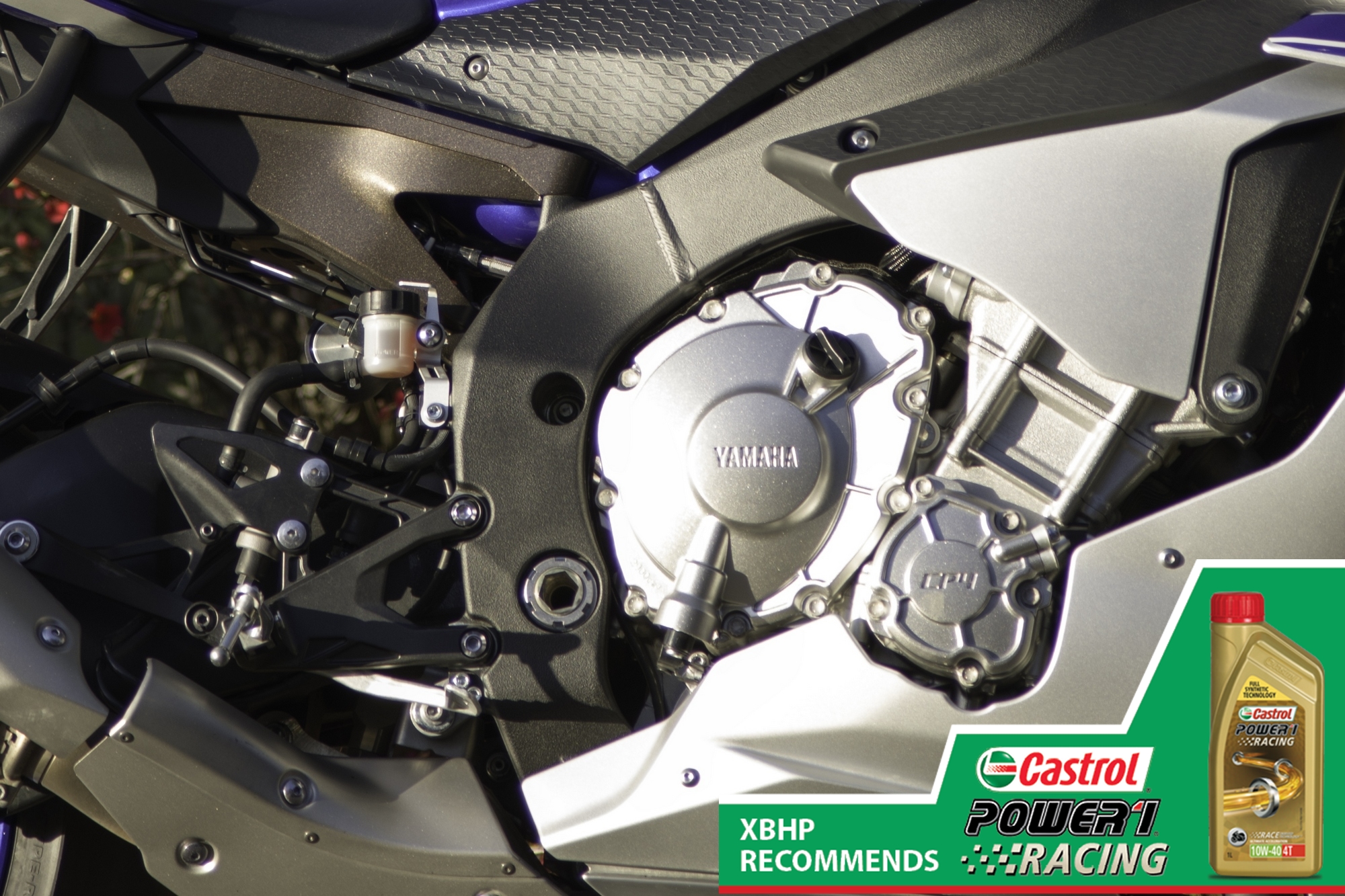
998 cc | 200 bhp | 112.4 Nm | Recommended engine oil > Castrol POWER1 RACING 10W40
In simple terms, each of the crankpins is set at a 90° compared to the next one. This means that each of the crankpins exists in two planes that cross at a 90° angle and therefore the name. Yamaha has been using this technology in their MotoGP effort for a long time and it made it to the R1 in 2009. The difference stated here may not seem like a lot but in riding it makes a lot of difference.
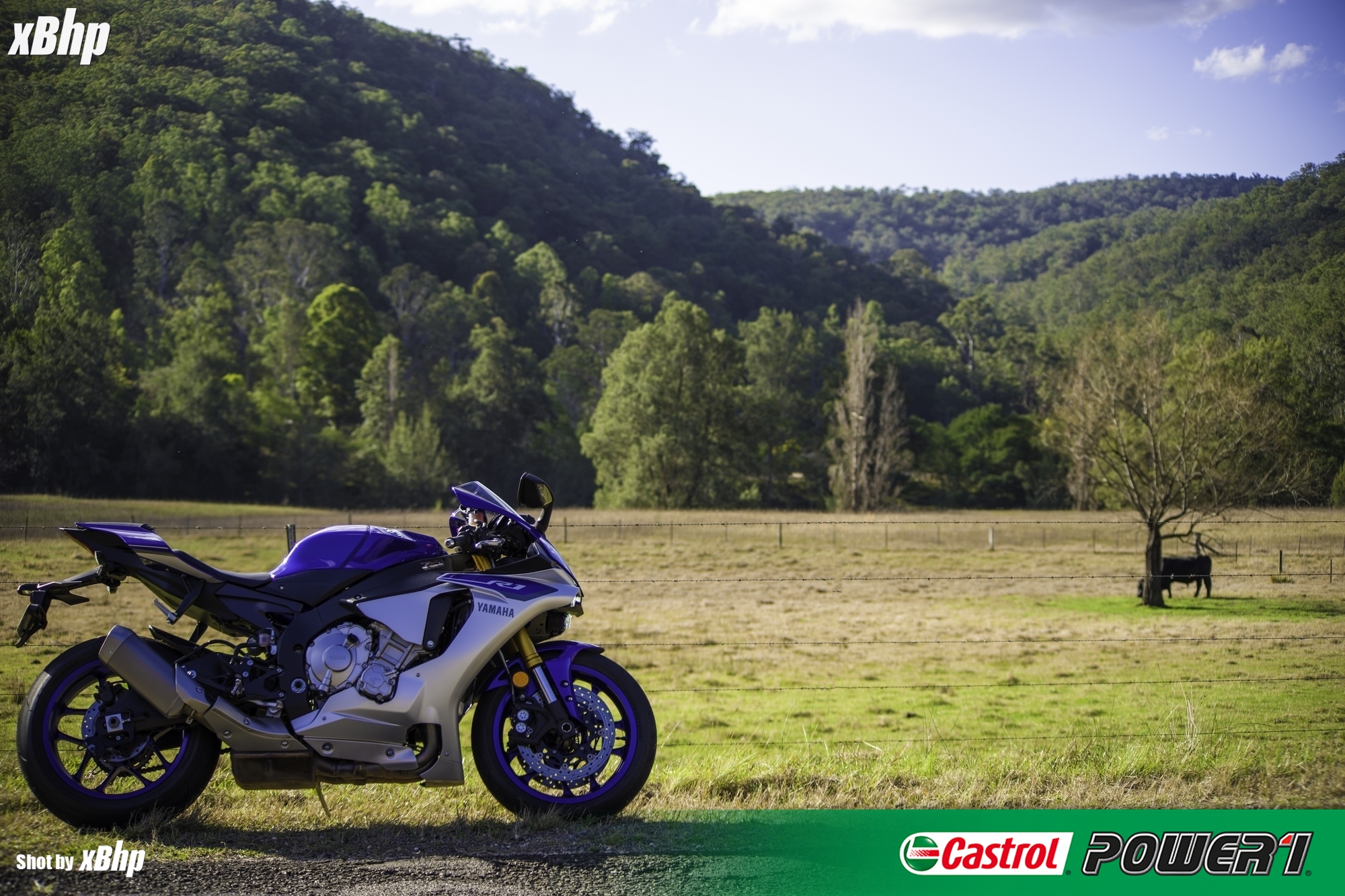
We have ridden both the R1s; pre crossplane and post. According to Yamaha, this configuration reduces the inertia torque produced within the engine. According to us, the R1 does feel gruntier than the regular inline-4s.

The disadvantages are limited to those faced by an inline- 4. A rather weak low end (remedied to some extent by the crossplane tech) and complex design and therefore, maintenance. On the plus side, it revs like a beast and sounds like a hybrid of an inline-4 and a V4.
Supercharged inline-4
There are not a lot of problems that cannot be solved via supercharging. You may not agree with us but you have to agree with Kawasaki when they bring the Ninja H2 in the picture. And if for some absurd reason, the H2 is not enough, there’s also the H2R which isn’t even street legal! And we have no reason to disagree with the opening statement since we have had the firsthand experience of ballistic H2.
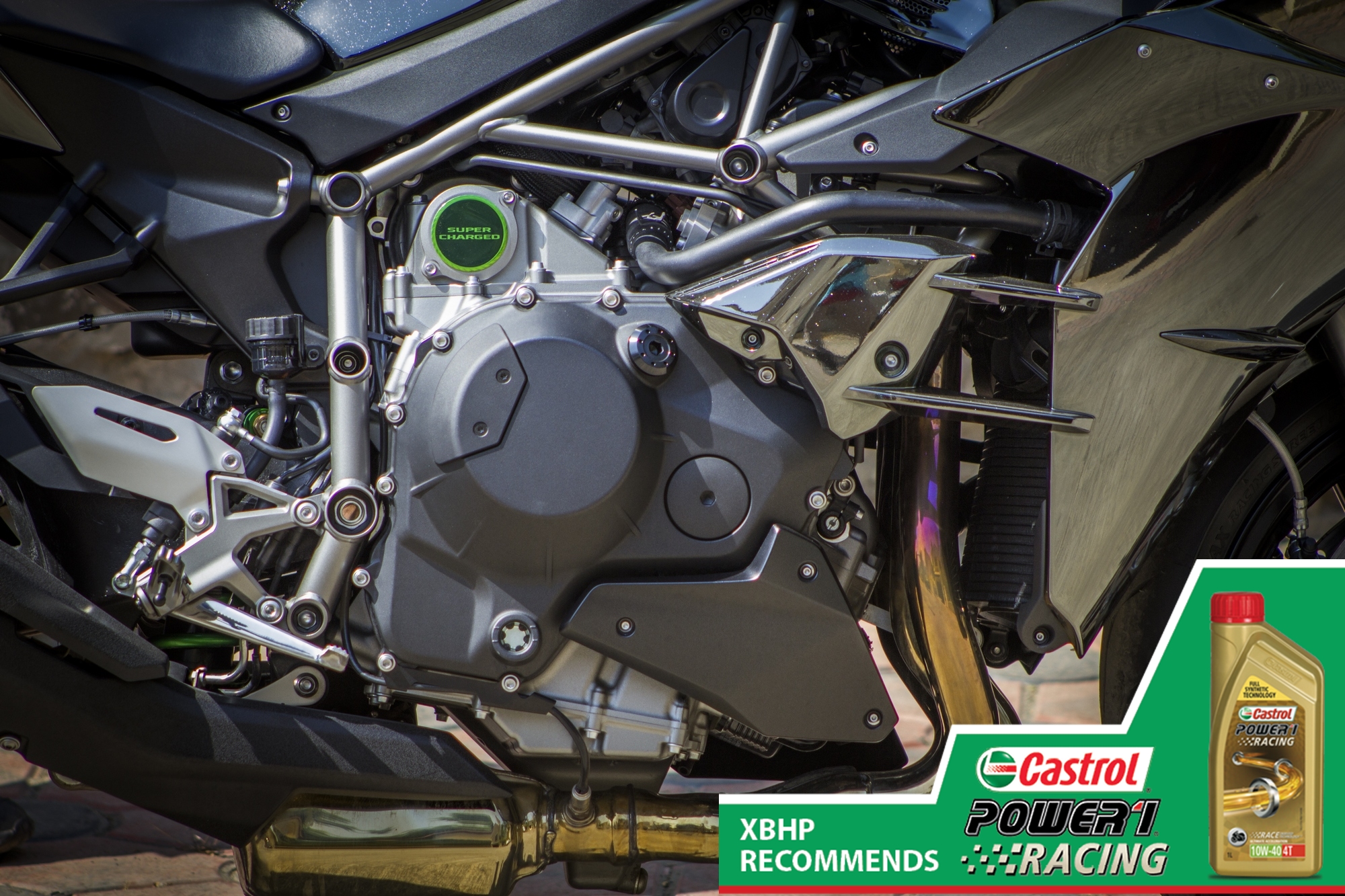
998 cc | 280 bhp* | 141.7 Nm | Recommended engine oil > Castrol POWER1 RACING 10W40
Kawasaki went with a supercharged 998cc when the superbike class was seemingly suffering from stagnation. Now, Kawasaki could have gone with supercharging the hyperbike ZX-14 but sometimes, making a statement is more important. The H2 also dons the Kawasaki Heavy Industries logo to further accentuate that statement.
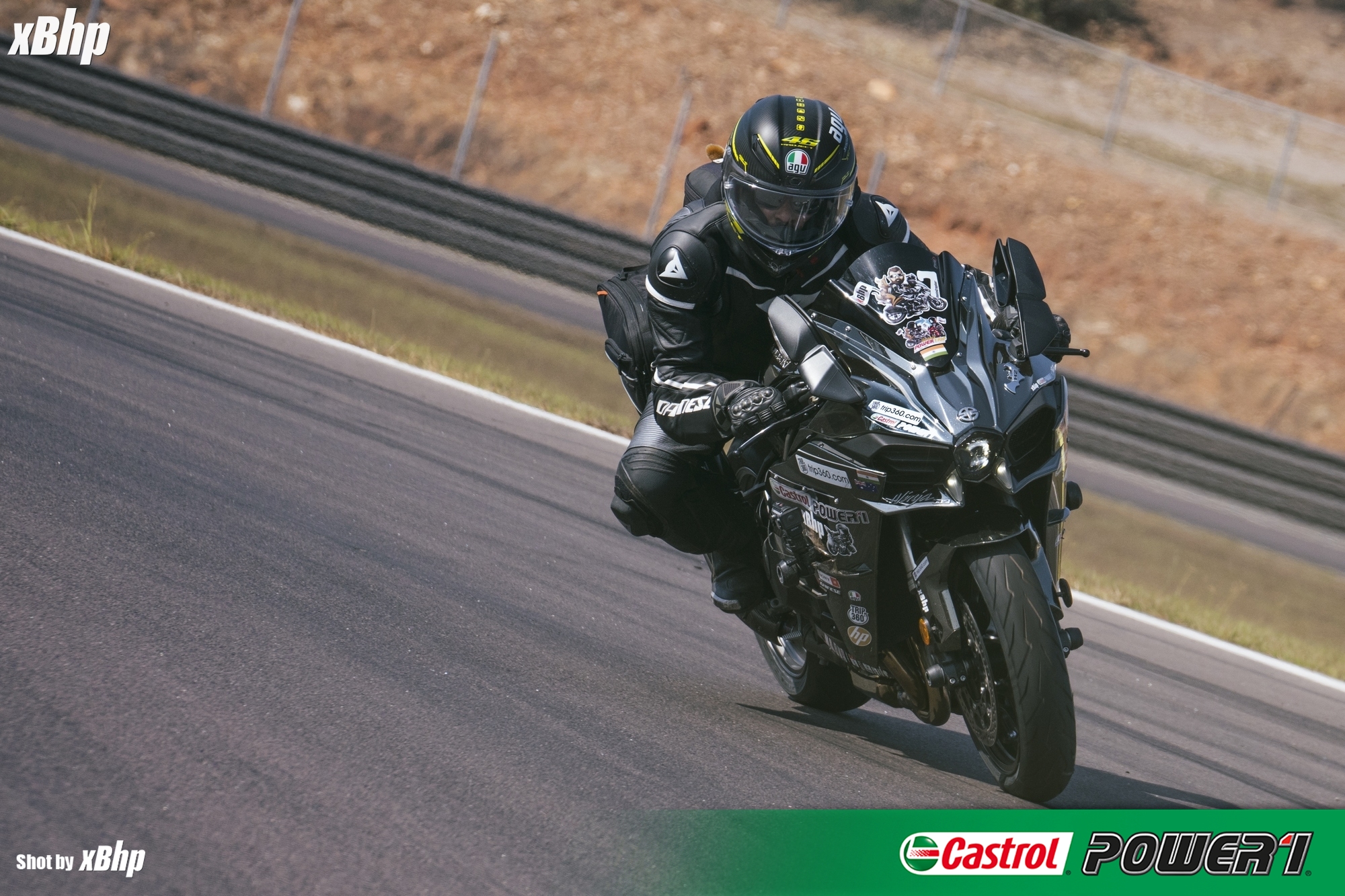
So a regular inline-4 with a centrifugal supercharger… seems simple enough? Except it isn’t. The supercharger on the H2 is a centrifugal supercharger which is mechanically operated in contrast to turbochargers that work with the help of exhaust gases. The benefit is that there is no turbo lag i.e. the time turbochargers take to spool up and provide the boost. The supercharger on duty in the H2 provides near instantaneous boost. How much boost? The latest iteration of the H2 makes around 240 bhp. And the H2R… over 320 bhp. The latter boasts of a top speed of almost 400 km/h.
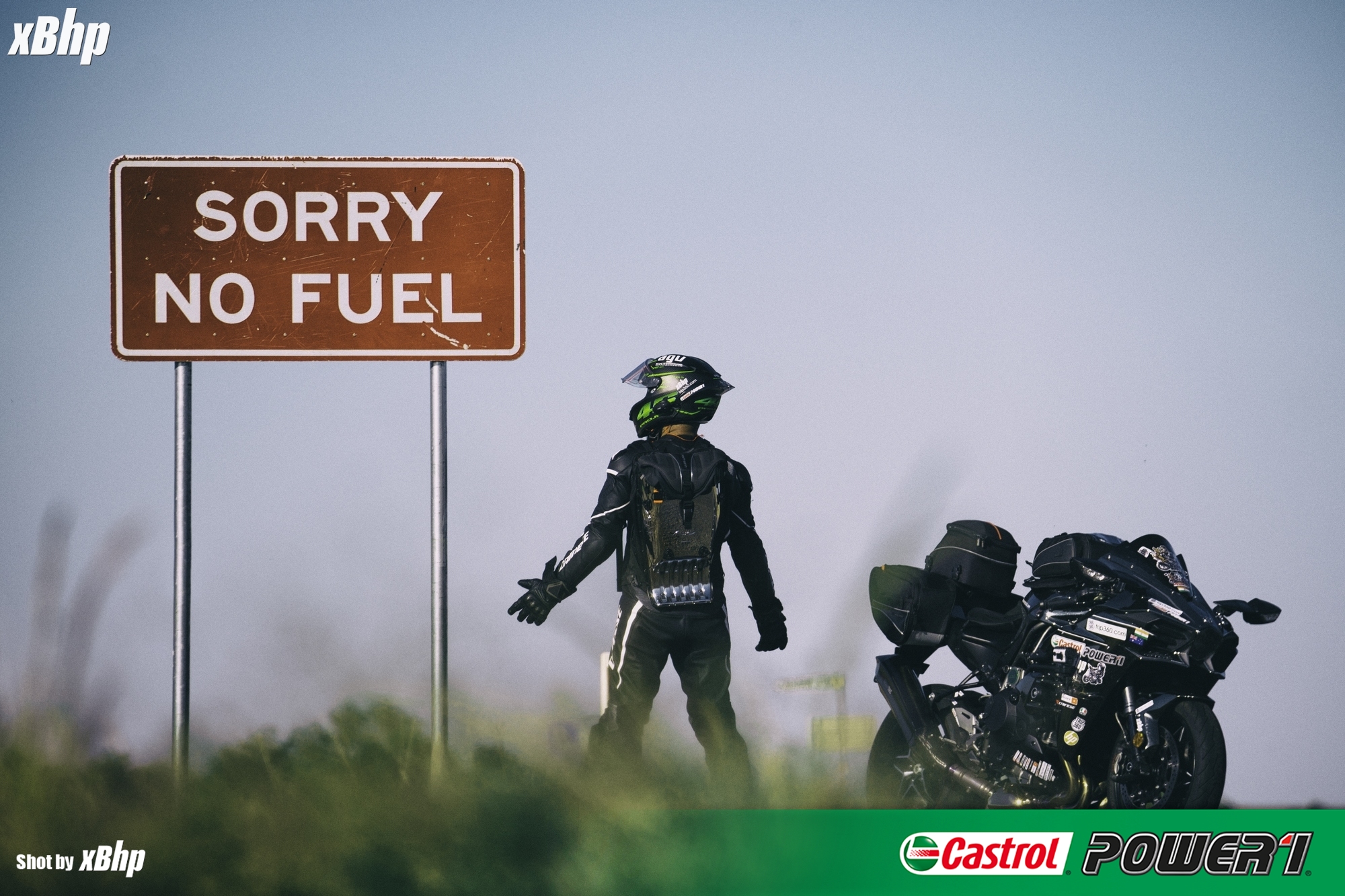
The disadvantages? The complexity and the cost. More than that, efficiency. Since the supercharger is mechanically operated, it reduces the overall efficiency. But that supercharger whistle… damn!
*Our Ninja H2 was spruced up to make 280 bhp
V4
And now, the top dog of performance motorcycling and road-racing… the mighty V4. A V4 engine is a preferred configuration for many grand tourers but it also has a special place in superbikes and MotoGP. V4s make a boatload of power, have lots of grunt virtually everywhere in the rev range and they sound like a battle of angered Vikings! And that is why a Honda, which usually sticks to inline-4 for its production superbikes, employs a V4 in MotoGP.
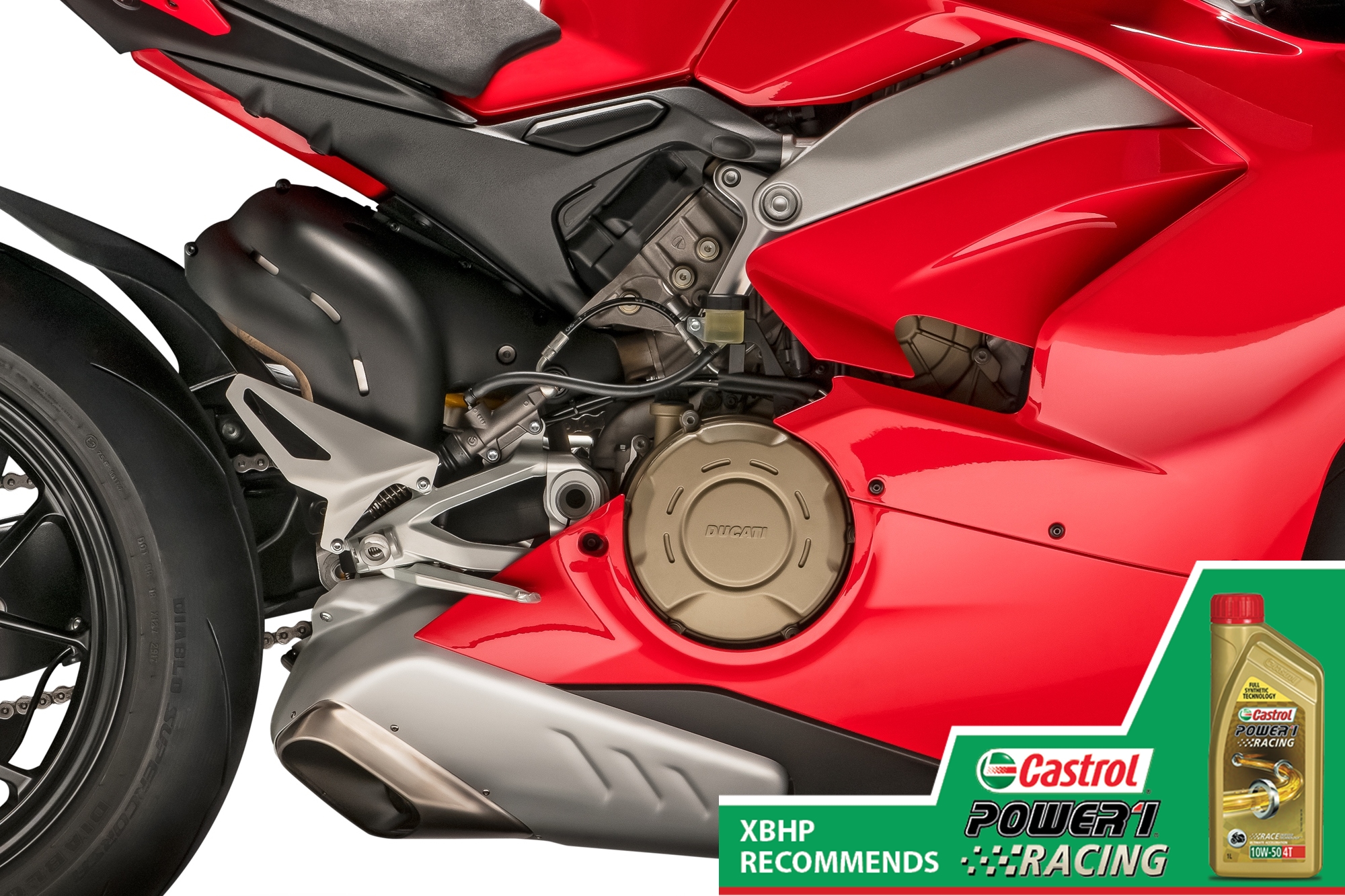
1,103 cc | 214 bhp | 124 Nm | Recommended engine oil > Castrol POWER1 RACING 10W50
But let us stick to the motorcycle in question. V has been associated with Ducati for long like we have been (Clever XP Boost earned!). The Panigale used an L-twin (essentially a 90-degree V) for a long time till the arrival of the new era of V4 with the Panigale V4. The Desmosedici Stradale, a gem of V4 packed with MotoGP tech propelled the Panigale V4 to the top of superbike power game. Those who cried foul because of the higher displacement were shut down by the litre-class compliant V4 R.
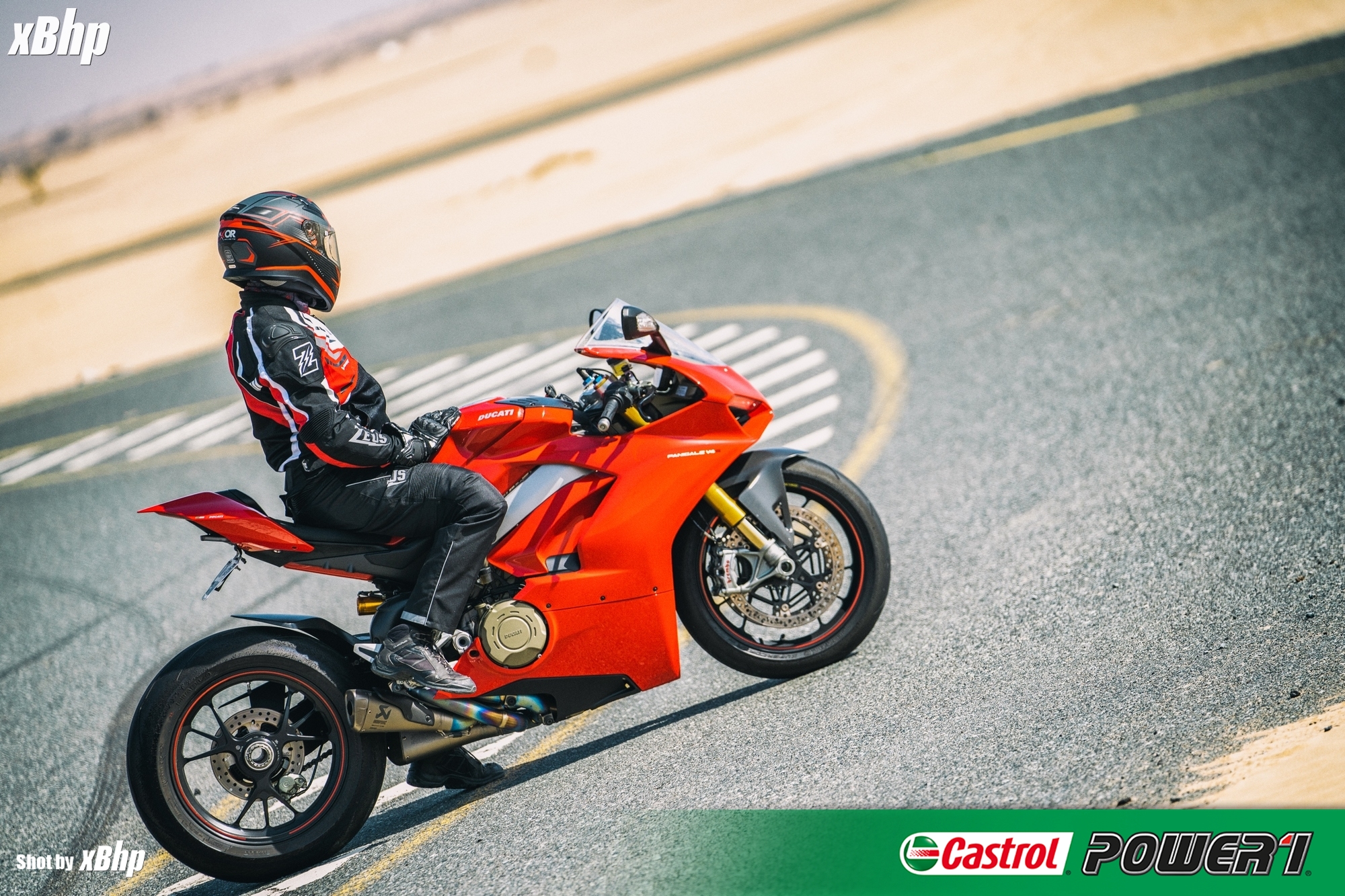
We rode the 214 bhp Ducati Panigale V4 at the Sepang International Circuit and though it was not our first time with a V4, it certainly redefined the experience. The 90° V4 of the new Panigale V4 reiterated the absolute madness that a V4 engine can produce… and that includes the sound.
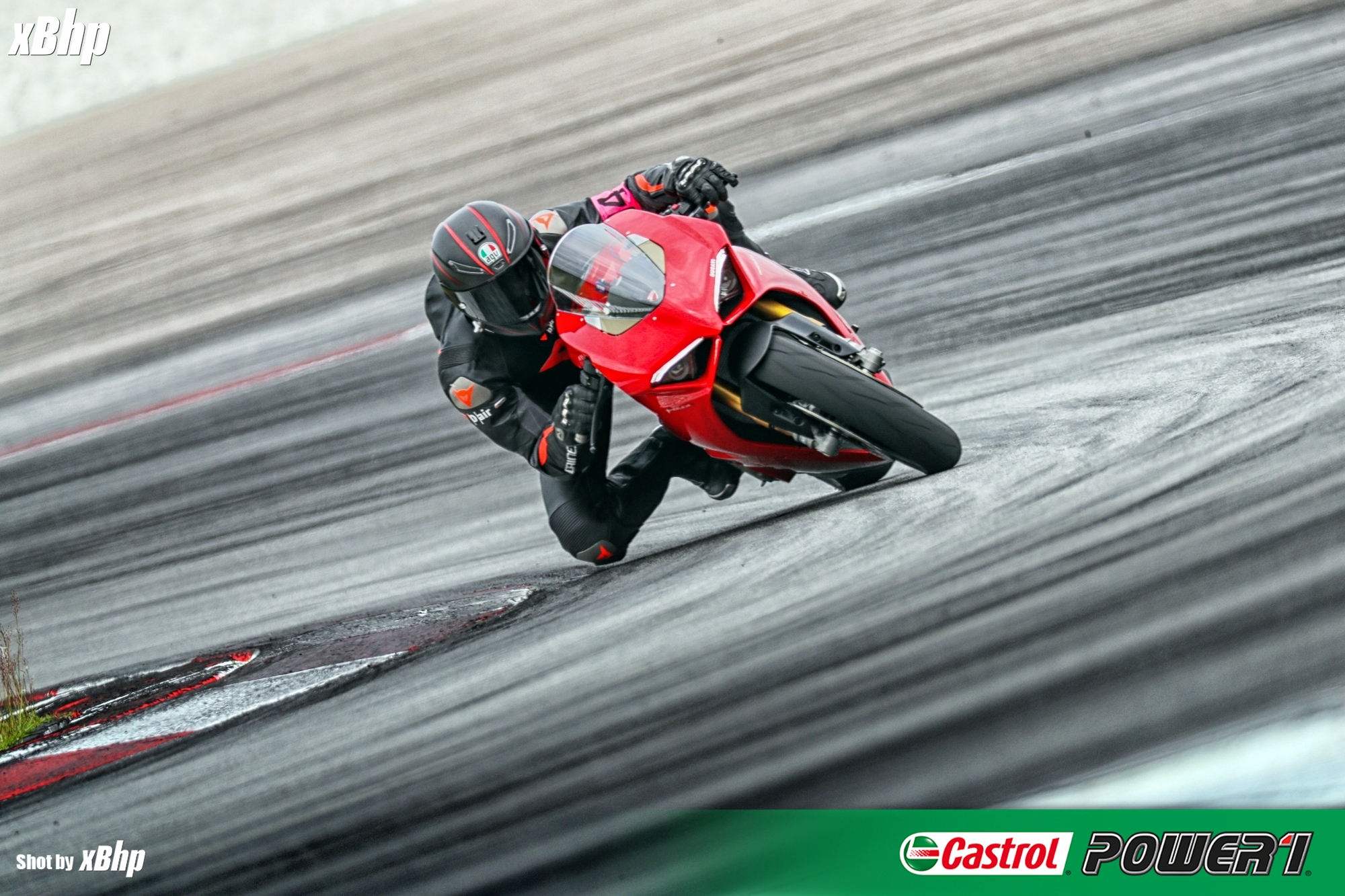
The disadvantages? V4s are heavy and like inline-4s, expensive to maintain. In addition to that, the more challenging disadvantage of a V4 is the heat. These buggers are very difficult to cool!
Flat-six
Usually, the engine configuration for motorcycles ends at 4 cylinders… usually. In some odd cases though, it goes up and well… the results are massive, both visually and numerically. So, with 6-cylinders in tow, we’ll talk about the Flat-six. Like a Flat-twin, this engine can also be referred to as a Boxer-6 because of the arrangements of the pistons.
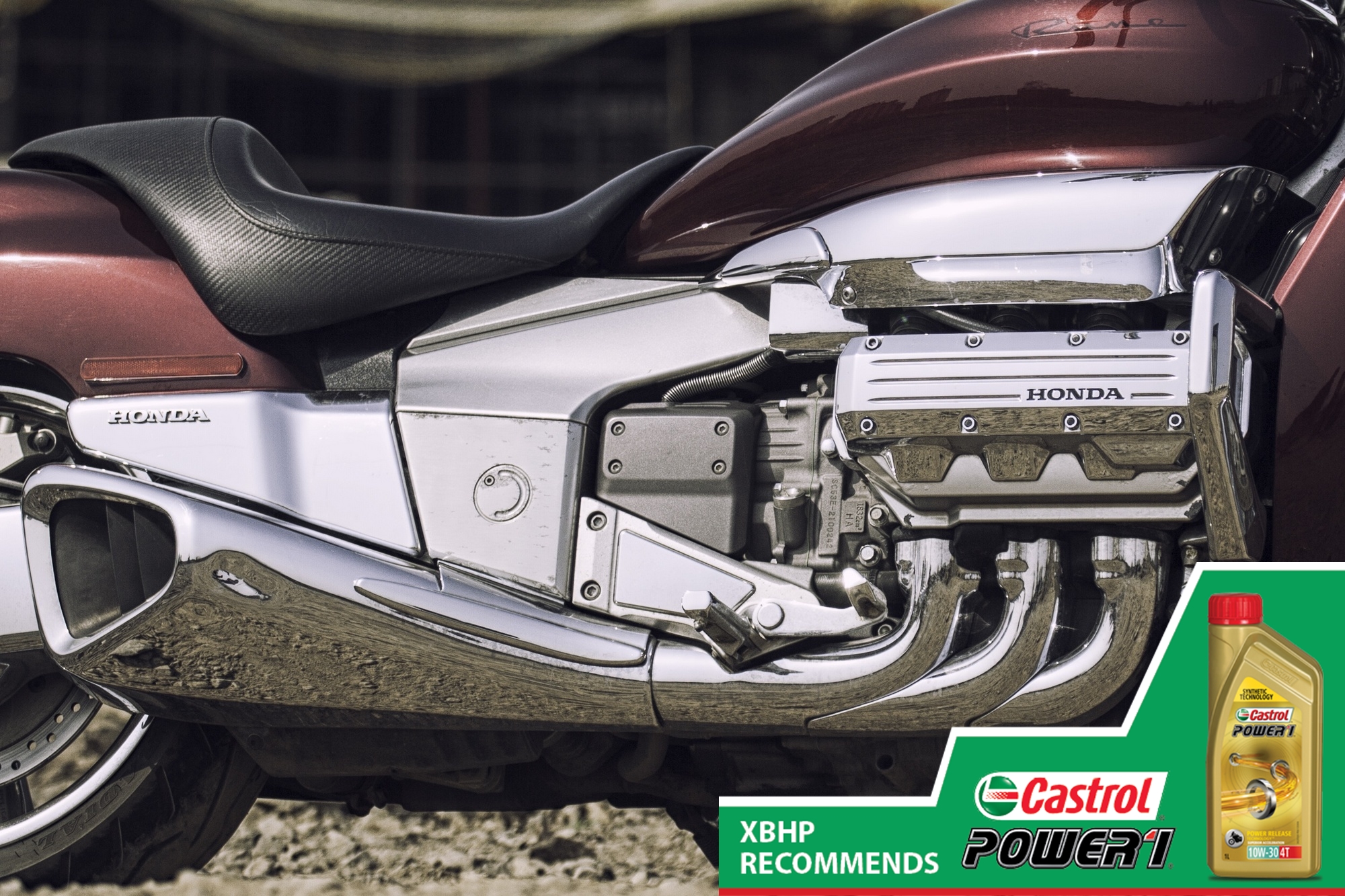
1,832 cc | 118 bhp | 167 Nm | Recommended engine oil > Castrol POWER1 10W30
We’d like to reiterate that not a lot of motorcycles use this configuration. It is quite rare. The Honda Goldwing uses this configuration but we thought of going with something even rarer… just like this configuration. We found the answer to that in the form of Honda Rune.

The motorcycle is massive. 367 kg of massive! Quite a bit of it is because of the engine. And the rest of it is there to make the motorcycle go with the engine. Now, as we discussed before, flat engines have the cylinders opposing each other horizontally. So the smoothness is unparalleled. And with the massive displacement, comes massive torque. Once on the move, the 367 kg of weight practically disappears. That is the true might of a Flat-six.
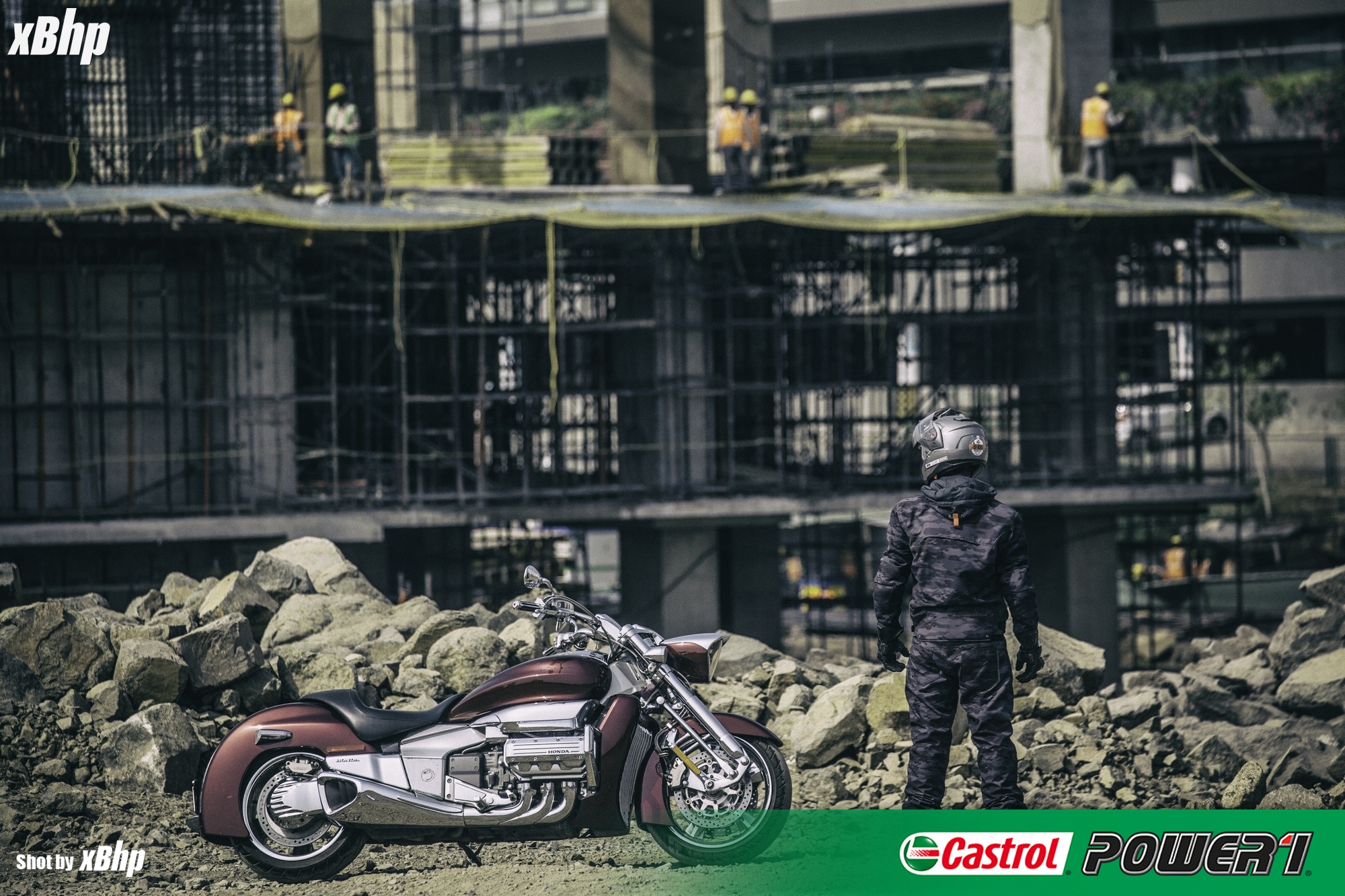
But all that might is accompanied by some glaring flaws… the size is the first one. The engine is massive and the flat configuration makes the motorcycle even wider. The engine is longitudinally mounted increasing the length of the motorcycle considerably. The complexity, the maintenance and the expense seem smaller in front of the big disadvantage we just listed.





