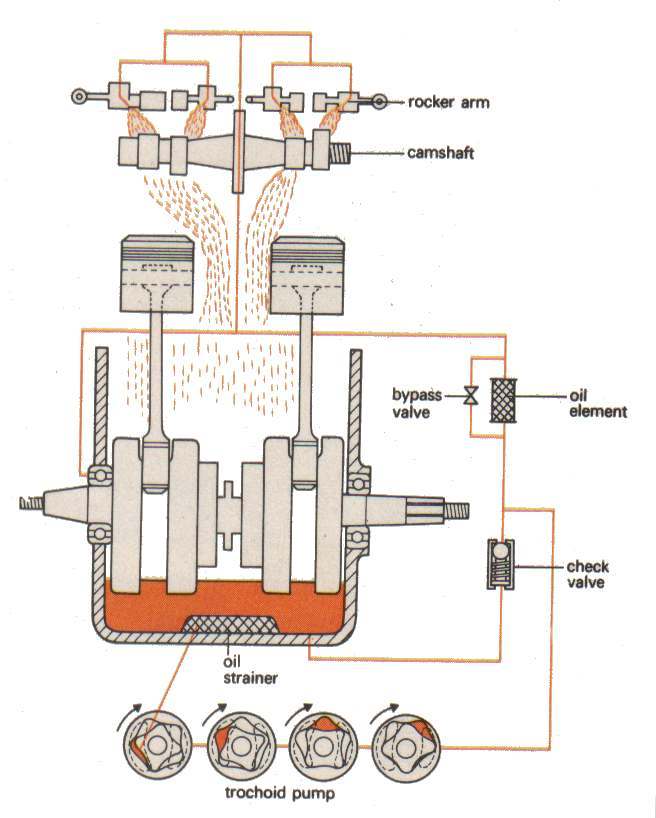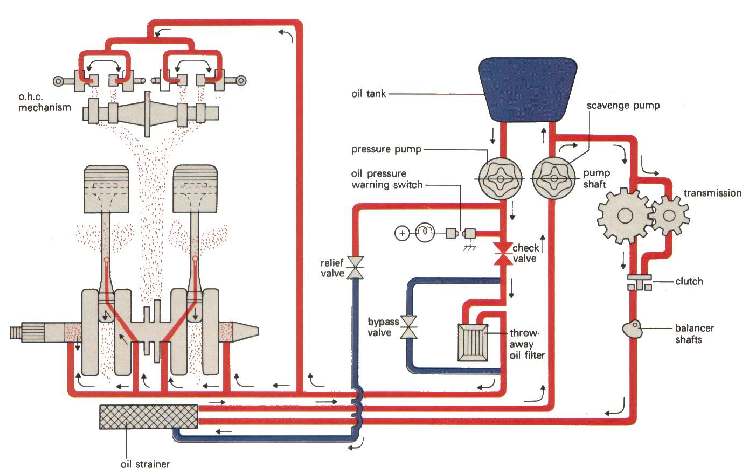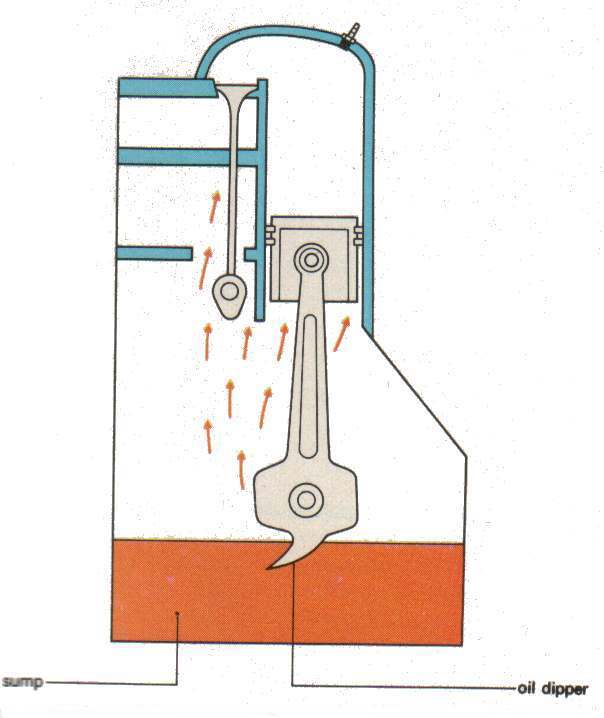


I was under the assumption that it was crank splash + piston skirt which lubes the cylinder wall, but according to what Shoeb bro said, there seems to be something different.
Announcement
Collapse
No announcement yet.
Karizma/Karizma R Ownership Experience
Collapse
X
-
Re: Karizma Zma
Oil does pump but only at x rpm there is enough pressure buildup. But that's not the question here. How is the cylinder wall lubed?Originally posted by ravi@17bhp View Post
I was under the assumption that it was crank splash + piston skirt which lubes the cylinder wall, but according to what Shoeb bro said, there seems to be something different.Motorcycling Experience:
2000 ~ 2017 Y2K Kinetic Zoom (Disposed at 15k)
2011 ~ 2015 Hero Honda Karizma R (Sold at 56.5k)
2013 ~ 2014 Bajaj Discover 100 4G (Sold at 16.5k)
2015 ~ 2017 TVS Wego (Totaled at 18k)
2015 - Bajaj Pulsar 220F (Currently 31k) < Garage Queen!
2017 - Bajaj CT100B (Currently 21k) < 'Golden Quadrilateral' Runner!
The Ride was Good, but Life is short, spend it Wisely!
Adios Comrades!
A.P. 2018
-
Re: Karizma Zma
As soon as the crank shaft rotates, the conrod rotation splashes oil on the piston and cylinder walls. Also oil pump forces oil through hollow passage-ways in the crankshaft to the main and rod bearings. Pressurized oil is actually squeezed between the big ends of the connecting rods which is splashed on the cylinder walls.Originally posted by ashwinprakas View PostOil does pump but only at x rpm there is enough pressure buildup. But that's not the question here. How is the cylinder wall lubed?
I was under the assumption that it was crank splash + piston skirt which lubes the cylinder wall, but according to what Shoeb bro said, there seems to be something different.HH Karizma (Current) || CBF Stunner PGM-FI || Honda CB Unicorn Dazzler
Honda Aviator || Kinetic Flyte || Kinetic Blaze || HH Splendor
Two ZMAs, 9 Days in Western Ghats
Comment
-
Re: Karizma Zma
In a 4 stroke engine ,Oil in the crankcase is pressure fed through the holes in piston , on to the cylinder wall .Cylinder and piston does not require oil pump for this. The oil pump is used for Upper Cylinder/Head lubrication of Cam,rocker etc..When Was The Last Time,You Did Something For The First Time.
Comment
-
Re: Karizma Zma
But PSR ji what I have seen in various engines of bikes that I have opened is that the oil from the oil pump gets split into two passages :-Originally posted by psr View PostIn a 4 stroke engine ,Oil in the crankcase is pressure fed through the holes in piston , on to the cylinder wall .Cylinder and piston does not require oil pump for this. The oil pump is used for Upper Cylinder/Head lubrication of Cam,rocker etc..
1. For the Cam,rockers etc through an oil gallery passing though one of the main studd or via a separate metal line as in Fiero and Caliber.
2. For the rest of engine. Routed to the clutch cover -> centrifugal filter -> crank big-end -> the sides of the connecting rod have a small opening from where the pressurized oil is squirted on the piston and main transmission shaft (also) depending upon the design .
Depending upon the crank angle, bore-piston and transmission is lubricated.
In some bikes there is separate oil gallery for lubrication of transmission and clutch.
Just what I have seen. Please correct me if I am wrong.
EDIT : @ashwinprakas
That splash type lubrication can be seen in some portable generator-sets.
Last edited by shoeb2015; 02-11-2014, 04:44 PM.
Comment
-
Re: Karizma Zma
There are Four types of Oil circulation methods .
1. The Popular and much used WET SUMP method
2. The DRY SUMP method.
3. The total Loss method
4. The Splash Method.
The Wet Sump is the most Popular method since it is simple and fool proof . In this method the oil sits at the bottom of the crank case ,using it as the sump, and a pump is used to take the oil to higher levels in the engine...

This method is used in majority of engine.
The Second one of Dry Sump stores the oil in a separate container ,and oil is pumped through various orifices by a oil pump's pressure...

The Total Loss method was used in the first designed engines, when a separate Hand Pump was used to pump the oil as the engine was working. If the operator failed to pump or less in quantity, then engine seizure was common...hence this method was given up soon.
To do the pumping automatically, a primitive scoop was designed and attached to the Crankshaft for oil SPLASH circulation. this proved effective for low RPM engines only.

So depending on the design various oil circulation methods were implemented ...
Some of the engines employ jets of oil to be sprayed from under the piston to improve upon wetting of bore and PistonLast edited by psr; 02-11-2014, 05:13 PM.When Was The Last Time,You Did Something For The First Time.
Comment
-
Re: Karizma Zma
Just for info sake, this is the oil flow diagram of CRF230. I had the chance of thoroughly examining the flow of oil when my bike's engine was dismantled. I had checked the crankshaft too, for the oil passage vents, when it was dismantled for repair.
HH Karizma (Current) || CBF Stunner PGM-FI || Honda CB Unicorn Dazzler
Honda Aviator || Kinetic Flyte || Kinetic Blaze || HH Splendor
Two ZMAs, 9 Days in Western Ghats
Comment
-
Re: Karizma/Karizma R
you can do it yourself , though personally k and n does not make much of a differenceOriginally posted by viper008 View PostHey guys just bought a k&n rc-1060 air filter now the problem is how to install it properly as out here there is no proper mechanic to install this kind of mods.M3:15
Comment
-
Re: Karizma/Karizma R
Faced an issue while riding my Karizma R (2009) today. The engine and all the electricals had shut itself completely down suddenly while riding back home !
Tried kickstarting it, push starting it in 2nd gear but in vain
There was absolutely no response at all !

Called up my friend, towed it to a two wheeler electrician. He removed a plug somewhere near battery, replaced the fuse inside it and tried cranking it up. But the fuse went kaput.
Then he did some technical wizardry and started the bike and gave it to me. He said that its the rectifier that has been damaged and it needs to be replaced. When i asked him how did he start it, he said he has given the main supply directly and there wont be any problem in self starting it until there is enough juice left in the battery.
At a point of time, while he was working on the bike, he told me kill the engine. I turned off the key, but the engine was still running, which i dont understand.
Now everything is working except headlights, and the horn is feeble.
Any suggestions/opinions on this issue ? Experts please throw some light on this and pardon me for my lack of knowledge. I would like to learn from this, thank you in advance.Last edited by YashwanthBK; 02-14-2014, 01:32 AM.TVS Apache RR310 - "Diablo" - 2018
Hero Honda Karizma R - "RedBull" - 2009
ATGATT - Its better to sweat than bleed !
Comment
-
Re: Karizma/Karizma R
Same thing happened to me. Rectifier needed to be replaced. I did a DIY heatsink at the time. The 20a fuse will keep blowing when connected to the RR unit if it's gone bad. The mechanic you went to was wise enough to diagnose it so fast. Please do a search to find my earlier post on the same..Originally posted by YashwanthBK View PostFaced an issue while riding my Karizma R (2009) today. The engine and all the electricals had shut itself completely down suddenly while riding back home !...........
Any suggestions/opinions on this issue ? Experts please throw some light on this and pardon me for my ignorance. I would like to learn from this, thank you in advance.
Nevermind : Here you go.
Please don't run the battery down as it will affect it adversely. Just disconnect and use kick start till the RR is replaced.
Comment
-
Re: Karizma/Karizma R
The plug that was opened near the batter is the main relay which houses the main 20A fuse. If the fuses are blowing, then its the problem with RR (regulator/rectifier) unit, which is not regulating the AC current from the alternator.Originally posted by YashwanthBK View PostFaced an issue while riding my Karizma R (2009) today. The engine and all the electricals had shut itself completely down suddenly while riding back home !
Tried kickstarting it, push starting it in 2nd gear but in vain
There was absolutely no response at all !
Called up my friend, towed it to a two wheeler electrician. He removed a plug somewhere near battery, replaced the fuse inside it and tried cranking it up. But the fuse went kaput.
Then he did some technical wizardry and started the bike and gave it to me. He said that its the rectifier that has been damaged and it needs to be replaced. When i asked him how did he start it, he said he has given the main supply directly and there wont be any problem in self starting it until there is enough juice left in the battery.
At a point of time, while he was working on the bike, he told me kill the engine. I turned off the key, but the engine was still running, which i dont understand.
Now everything is working except headlights, and the horn is feeble.
Any suggestions/opinions on this issue ? Experts please throw some light on this and pardon me for my lack of knowledge. I would like to learn from this, thank you in advance.
The engine was still running even when the ignition key off because he directed the power bypassing the ignition switch.
From what you wrote, my guess is that, the electrican disconnected lines from RR unit, which means your battery will not get charged and bike would run only on the remaining power from battery. The battery would last only for 50-60 kms max depending on usage. Once the battery runs out of charge, your bike will not start (even kick start won't work); so, you better replace the rectifier ASAP. Meanwhile, you can ride by charging the battery externally.
Replace the RR unit (around 1800 INR) and everything would be fine. If your bike is under warranty, you may get free replacement.Last edited by ravi@17bhp; 02-14-2014, 02:48 AM.HH Karizma (Current) || CBF Stunner PGM-FI || Honda CB Unicorn Dazzler
Honda Aviator || Kinetic Flyte || Kinetic Blaze || HH Splendor
Two ZMAs, 9 Days in Western Ghats
Comment


Comment